So, you’re thinking about sanding your floors in your Manchester flat? Great idea for a refresh, but let’s be real, that noise can be a big issue for your neighbors. Living in close quarters means we all have to be a bit mindful. This guide will help you get through the floor sanding process without starting a flat war, covering everything from understanding noise to knowing the rules, and even some tips for keeping things quiet.
Key Takeaways
- Figure out how loud floor sanding machines typically are and when the noise crosses the line from acceptable to annoying for your neighbors.
- Check your lease agreement and local Manchester council rules about noise and renovations, as there might be specific floor sanding flat regulations you need to follow.
- Plan your sanding work for times that are less likely to bother people, like mid-morning on a weekday, and always give your neighbors a heads-up before you start.
- Look into using newer, quieter sanding equipment and dust extractors that can help muffle the sound, making the job less disruptive.
- Consider temporary soundproofing with things like thick blankets or rugs, or even hiring professionals who have quieter methods and can offer advice on noise reduction.
Understanding Your Neighbours’ Peace
Okay, so you’re thinking about sanding your floors. Exciting stuff! But before you get all gung-ho with the sander, let’s chat about the folks living around you. In a place like Manchester, where flats are often stacked on top of each other, noise is a big deal. Your DIY project can quickly become your neighbour’s headache if you’re not careful.
What Are The Typical Noise Levels?
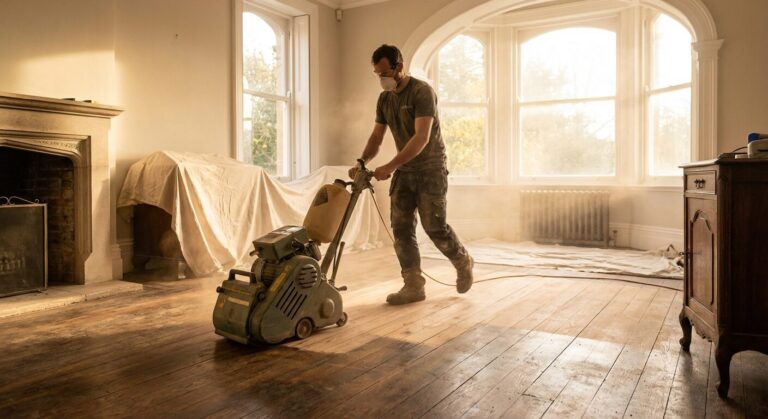
Floor sanders aren’t exactly quiet. Think of a really loud vacuum cleaner mixed with a jackhammer, and you’re getting close. Most sanders can hit around 90-100 decibels (dB). For a bit of perspective, a normal conversation is about 60 dB, and a lawnmower is around 90 dB. So yeah, it’s loud. The type of sander matters too. A big drum sander is usually louder than a smaller orbital sander.
Here’s a rough idea:
| Equipment Type | Approximate Noise Level (dB) |
|---|---|
| Drum Sander | 95-105 |
| Orbital Sander | 90-100 |
| Edger Sander | 90-100 |
When Is It Too Loud?
Honestly, anything over 85 dB for extended periods can be a problem. But in a flat, any significant noise during certain hours can feel like too much. It’s not just about the raw decibel count; it’s about the disruption. If your neighbour is trying to work from home, has a baby napping, or just wants a bit of peace after a long day, your sanding session can be really annoying. Generally, if it’s loud enough to make it hard to hear someone talking in the next room, it’s probably too loud for comfort.
Think about it from their side. They didn’t sign up for a construction site next door. A little consideration goes a long way in keeping the peace.
So, before you even buy sandpaper, give some thought to when and how you’re going to tackle this. It’s all about being a good flatmate to the people you share a building with.
Navigating Manchester’s Building Rules
So, you’re thinking about sanding those floors in your Manchester flat. Before you get too excited about that fresh wood look, we gotta talk about the rules. It’s not just about making your place look good; it’s about not driving your neighbours up the wall. Manchester, like any city, has its own set of guidelines, and ignoring them can lead to some awkward chats or even bigger headaches.
Checking Your Lease Agreement
First things first, dig out your lease agreement. Seriously, this is your bible for what you can and can’t do in your flat. Most leases have a section on noise or ‘nuisance’ clauses. It might say something about ‘reasonable hours’ or ‘minimising disturbance’. Your lease is the primary document that dictates your rights and responsibilities as a tenant or owner in a multi-storey building. It’s worth a read-through to see if there are any specific rules about noisy DIY projects. Sometimes, you might even need written permission from your landlord or the building management company before starting major work like floor sanding.
Local Council Guidelines On Noise
Beyond your lease, Manchester City Council has its own rules about noise. They’re generally more concerned with persistent or excessive noise, but floor sanding can definitely fall into that category if it’s not managed well. They usually have specific ‘quiet hours’ – often something like 11 pm to 7 am on weekdays, and maybe later on weekends. But even during the day, if your sanding is causing a significant disturbance, a neighbour could technically complain. It’s always a good idea to check the council’s website or give them a quick call if you’re unsure about the specific times that are considered acceptable for noisy work in residential areas. They often have a dedicated environmental health team that deals with noise complaints.
Understanding Floor Sanding Flat Regulations
When it comes to floor sanding specifically in flats, there aren’t usually super-detailed, flat-by-flat regulations. It’s more about general noise control and building management. However, some newer apartment blocks might have specific rules set by the developer or management company about renovations. These could include:
- Approved working hours: Stricter times than the general council guidelines.
- Notification requirements: You might have to inform building management or your neighbours in writing before you start.
- Equipment restrictions: Some places might have rules about the type or noise level of machinery you can use.
- Waste disposal: How you deal with the dust and debris is also often covered.
It’s really about being a good neighbour. Think about how much noise you’d be happy to put up with if you lived below or next door. A little bit of consideration goes a long way in a shared building.
Basically, don’t assume you can just start sanding whenever you feel like it. A bit of homework on your lease and local rules will save you a lot of hassle later on.
Scheduling Your Sanding Project Wisely
So, you’ve decided to tackle that floor sanding project. Awesome! But before you fire up the sander, let’s talk about timing. Nobody wants to be that neighbor, right? A little planning goes a long way in keeping the peace.
Best Times To Avoid Disturbing Others
This is pretty straightforward, but worth saying out loud. Think about when people are most likely to be home and trying to relax. Weekends are usually a no-go, especially Saturday mornings when folks might be sleeping in or enjoying a quiet coffee. Sundays can be a bit better, but still, early mornings are probably best avoided. Weekdays are generally your friend, but even then, avoid the typical rush hours when people are coming and going.
Here’s a quick rundown of times to steer clear of:
- Early Mornings (before 9 AM): Most people are still waking up or getting ready for the day.
- Lunchtime (12 PM – 1 PM): Some might be taking a break, but others could be out.
- Evenings (after 6 PM): People are usually winding down after work.
- Weekends (especially Saturday mornings): Prime relaxation time for most.
The sweet spot? Mid-morning to mid-afternoon on a weekday. This is when most people are out at work or running errands, meaning less chance of disrupting their day.
Giving Your Neighbours A Heads-Up
This is honestly the most important part. A little courtesy can prevent a lot of grumbling. Before you even start, take a few minutes to let your immediate neighbors know what’s happening.
- Knock on their door: A personal chat is best. Explain what you’re doing, roughly how long you expect it to take, and when you plan to start.
- Leave a note: If you can’t catch them, a polite note through their letterbox works too. Include your flat number, the nature of the work, and the expected dates/times.
- Be specific about the noise: Mention that it will be loud and dusty, so they aren’t caught off guard.
A quick heads-up shows you respect their space and peace. It makes them more likely to be understanding if a bit of noise spills over.
Think of it like this: if you knew a bit of noise was coming, you’d mentally prepare for it. If it just hits you out of nowhere, it’s way more annoying. So, be that considerate neighbor and give them the heads-up. It really does make a difference.
Quieter Sanding Techniques

So, you’re looking to make your floor sanding project a little less of a sonic assault on your neighbours? Good thinking. While sanding floors is inherently a noisy business, there are definitely ways to dial down the racket. It’s all about using the right gear and being smart about how you work.
Modern Equipment For Less Noise
Forget those old, clunky sanders that sound like a jet engine taking off. Today’s equipment is a whole different ballgame. Many newer models are designed with noise reduction in mind. They often have better motor insulation and more balanced components, which means less vibration and, you guessed it, less noise. Look for sanders that specifically advertise low noise levels or vibration dampening. It might cost a bit more upfront, but your neighbours (and your own ears) will thank you.
Dust Extraction Systems That Muffle Sound
Dust extractors are a must for any sanding job, not just for keeping your place clean but also for health reasons. But did you know they can actually help with noise too? A good dust extractor, especially one with a well-designed housing and a powerful but quiet motor, can act as a bit of a sound buffer. The process of sucking up the dust and debris can sometimes drown out some of the higher-pitched whines from the sander itself. It’s not a magic bullet, but it contributes to a more bearable soundscape. Think of it as a secondary muffling effect.
Here’s a quick rundown of what to look for:
- Integrated Silencers: Some high-end extractors have built-in mufflers.
- Robust Casing: A solid, well-sealed casing helps contain the noise.
- Efficient Motors: Quieter motors mean less operational noise from the extractor itself.
Sometimes, the combination of a modern, quieter sander and a decent dust extractor can make a surprisingly big difference. It’s about layering these small improvements to create a less disruptive experience for everyone around you. Don’t underestimate the power of good equipment.
Temporary Soundproofing Solutions
So, you’re in the middle of a floor sanding project in your Manchester flat, and the noise is starting to get a bit much for your neighbours. Before you throw in the towel, there are some simple, temporary things you can do to help muffle that sound. It’s not about creating a silent sanctuary, but more about taking the edge off the racket.
Using Blankets And Mats Effectively
This is where you get a bit creative. Think about what absorbs sound. Soft, thick materials are your best bet. You know those old, heavy blankets you have tucked away? Or even thick rugs and carpets? You can use these to your advantage. Draping heavy blankets over doors and windows can make a surprising difference. It’s not a perfect seal, but it stops some of that sound from bouncing around and escaping.
Here’s a quick rundown of what to try:
- Doors: Hang thick blankets or duvets over internal doors, especially those leading to hallways or shared spaces. Make sure they cover as much of the door as possible.
- Windows: If you have thin windows, draping blankets can help. You can even use temporary window coverings made of thick fabric.
- Floors: Lay down thick rugs or old carpets in the areas you’re not actively sanding. This helps absorb some of the vibration and noise that travels through the floor.
- Walls: While harder to do temporarily, if you have large, freestanding pieces of furniture, you could position them against shared walls to act as a minor buffer.
Creating A Sound Barrier
Sometimes, you need something a bit more structured than just blankets. This is where you can get a bit DIY. Think about creating a temporary wall or barrier. You don’t need anything fancy, just something to block the direct path of the sound.
- Plywood and Blankets: You can lean sheets of plywood against walls or doors and then cover them with thick blankets. This creates a denser barrier.
- Furniture Forts: If you have large pieces of furniture like wardrobes or bookshelves, you can strategically place them to block sound. You can even stuff blankets into any gaps.
- Temporary Partitions: For a more robust solution, you could look into temporary partition walls, though this might be getting a bit too involved for a quick fix. The idea is to add mass and density between the noise source and your neighbours.
Remember, the goal here isn’t professional soundproofing. It’s about making a noticeable effort to reduce the nuisance factor for those living around you. Small steps can go a long way in keeping the peace.
When To Call In The Professionals
Look, sometimes you just gotta admit defeat. Floor sanding is a noisy, dusty business, and while DIY can save you some cash, it’s not always the best route, especially in a block of flats. If you’re feeling overwhelmed or just want to get it done with minimal fuss and maximum quiet, bringing in the pros is a smart move.
Hiring Experts For Quieter Jobs
Professional floor sanders have access to some seriously good gear. We’re talking about machines that are designed to be quieter than the old-school models. They also know how to use them efficiently, meaning the job gets done faster, and therefore, the noise is over quicker. Plus, they’re usually pretty good at managing the dust, which, let’s be honest, is half the battle with sanding.
Professional Advice On Noise Reduction
These guys do this for a living, so they’ve got tricks up their sleeves. They can tell you:
- What times are genuinely the least disruptive in your building.
- If there are any specific building regulations you might have missed.
- The best way to prep your space to keep noise contained.
Sometimes, the cost of hiring professionals is worth it just to avoid the headache of dealing with angry neighbours or council complaints. They know the drill.
Don’t be afraid to ask potential companies about their noise-reduction strategies. A good company will be happy to explain how they minimise disruption. They might use specific types of sanders, or have techniques for sealing off rooms. It’s all about finding someone who understands the unique challenges of working in a multi-storey building where sound travels.
If you’re facing a problem that seems too big to handle, don’t hesitate to get help. Sometimes, the best solution is to call in the experts. We’re here to help you figure out the next steps. Visit our website to learn more about how we can assist you.
So, What’s the Takeaway?
Look, sanding floors in a block of flats in Manchester isn’t exactly a quiet job, is it? It’s loud, it’s messy, and it can really get on your neighbours’ nerves if you’re not careful. But with a bit of planning – like talking to people first and picking the right times – you can get through it without too many angry knocks on the door. It’s all about being considerate. You want nice floors, and so do they want some peace. A little bit of communication goes a long way, honestly. Good luck with your project!
Frequently Asked Questions
How loud is floor sanding, really?
Think of it like a really loud vacuum cleaner or a small, noisy power tool running for a while. It can get pretty darn loud, often around 85-100 decibels, which is definitely enough to make your neighbors notice. It’s not a quiet job, that’s for sure!
Can I sand my floors any time I want?
Nope, not usually. Most places have rules about when you can make a lot of noise, especially during early mornings, late evenings, and on Sundays or holidays. It’s best to check with your building manager or the local council to see what the quiet hours are.
Do I need to tell my neighbors I’m sanding?
Absolutely! It’s super important to give your neighbors a heads-up. A friendly note or a quick chat can go a long way. Letting them know when you’ll be making noise and for how long helps them plan their day and can prevent a lot of grumbling.
Are there quieter ways to sand floors?
Yeah, there are! Newer sanding machines tend to be a bit quieter than older ones. Also, machines with good dust collection systems can help muffle some of the sound, making the whole process less of a racket.
What can I do to make it less noisy for my neighbors?
You can try putting down thick blankets or rugs on the floor, especially near shared walls or ceilings. Some folks even hang heavy blankets on walls or use temporary room dividers to try and block some of the sound from traveling.
Should I just hire someone to do it?
If you’re worried about the noise or don’t have the right gear, hiring professionals is a great idea. They often have quieter equipment and know the best ways to get the job done with less disruption. Plus, they’re pros at managing noise!