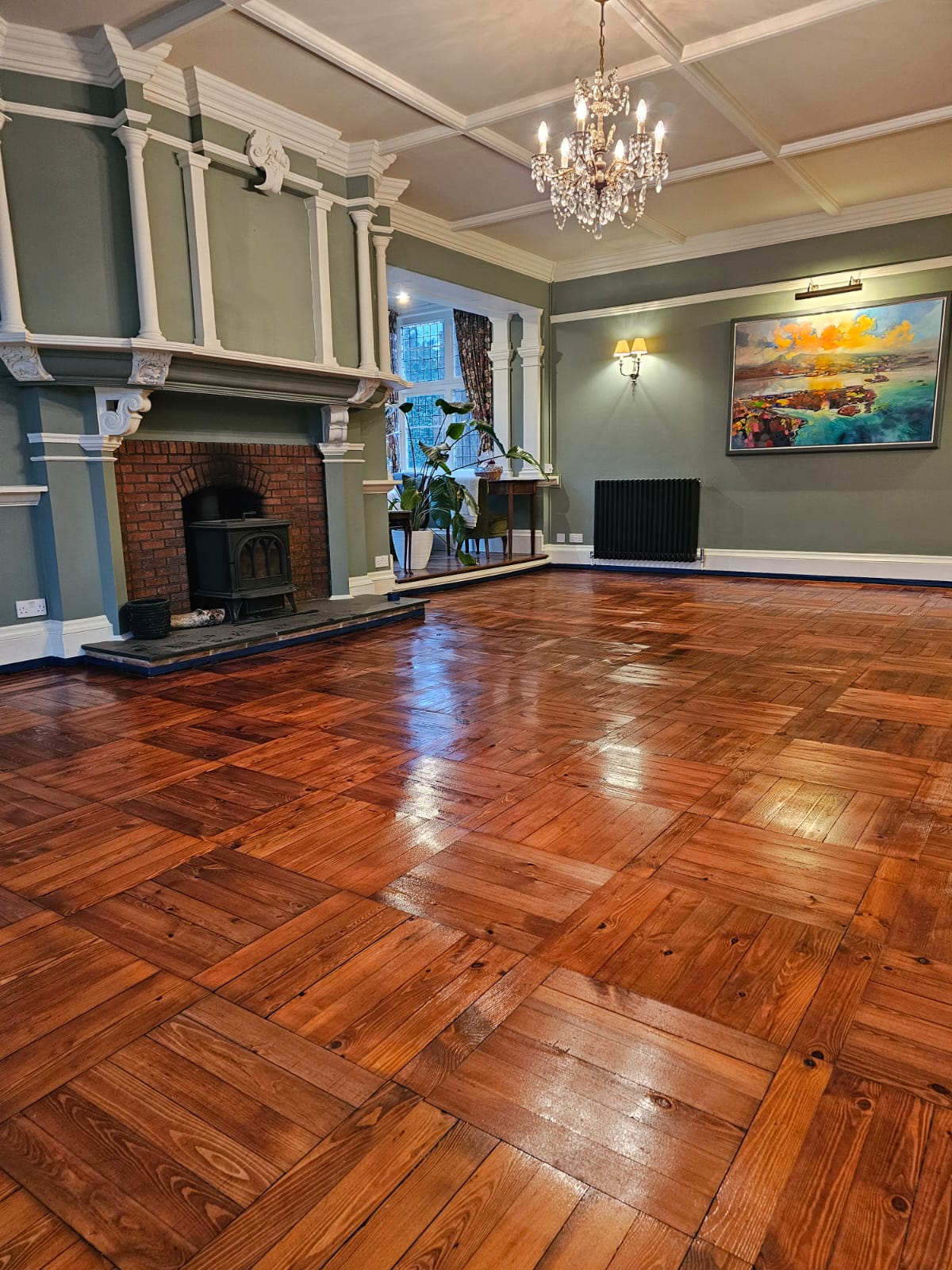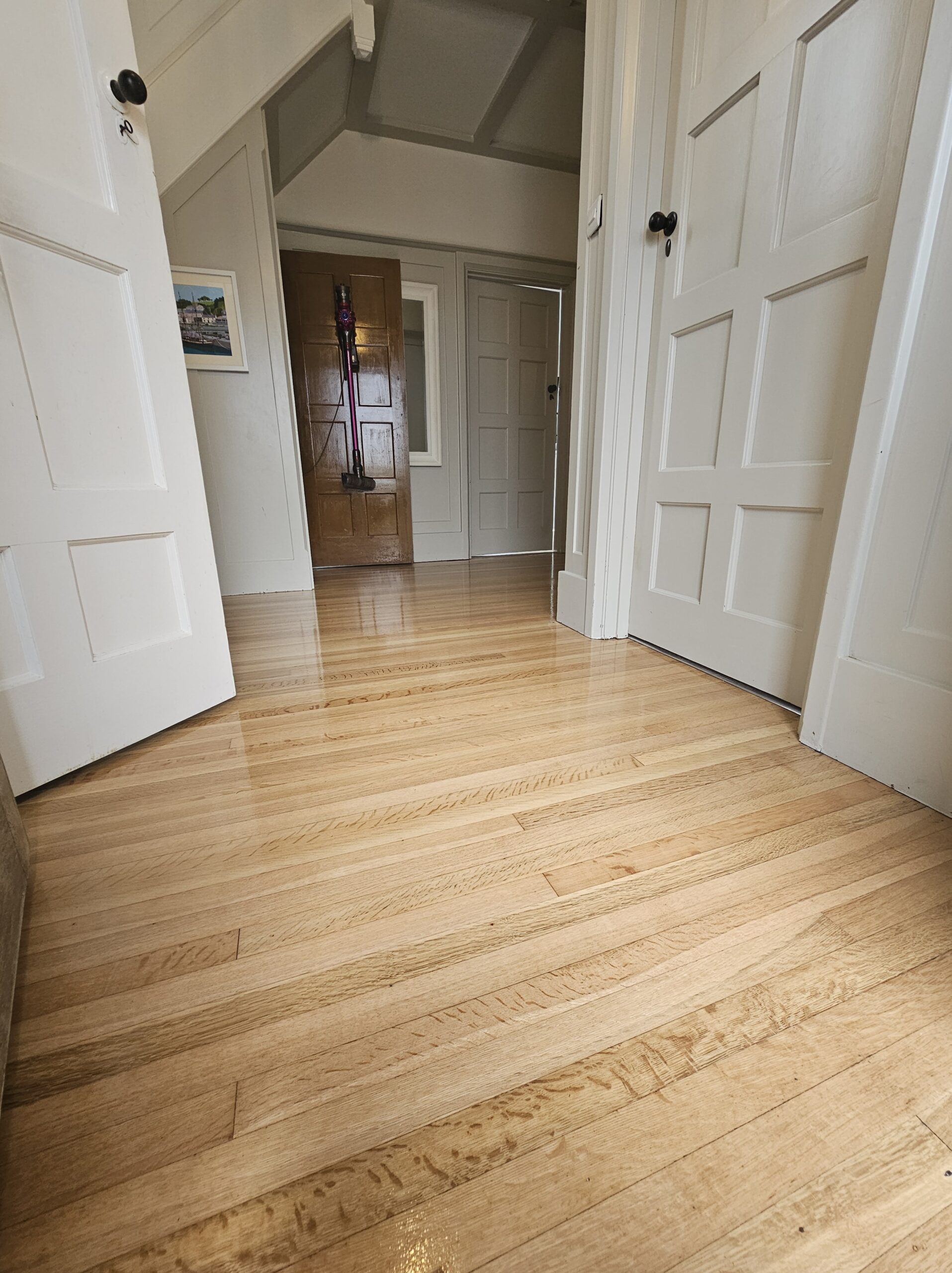
Real projects, photographed before and after
Every project below is a floor we restored ourselves, photographed before we started and again when we finished. No stock images, no supplier photographs, no jobs borrowed from anyone else.
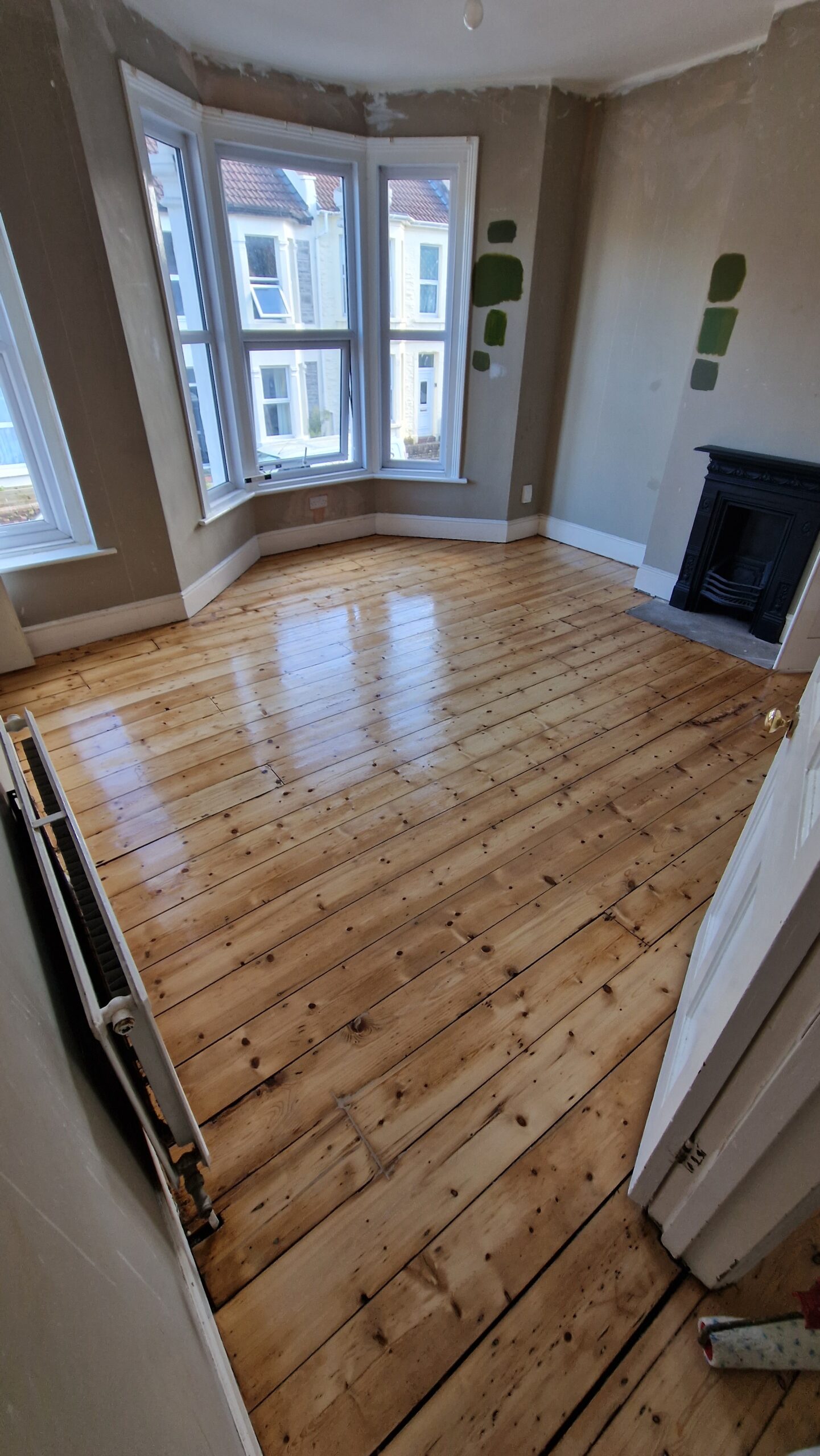
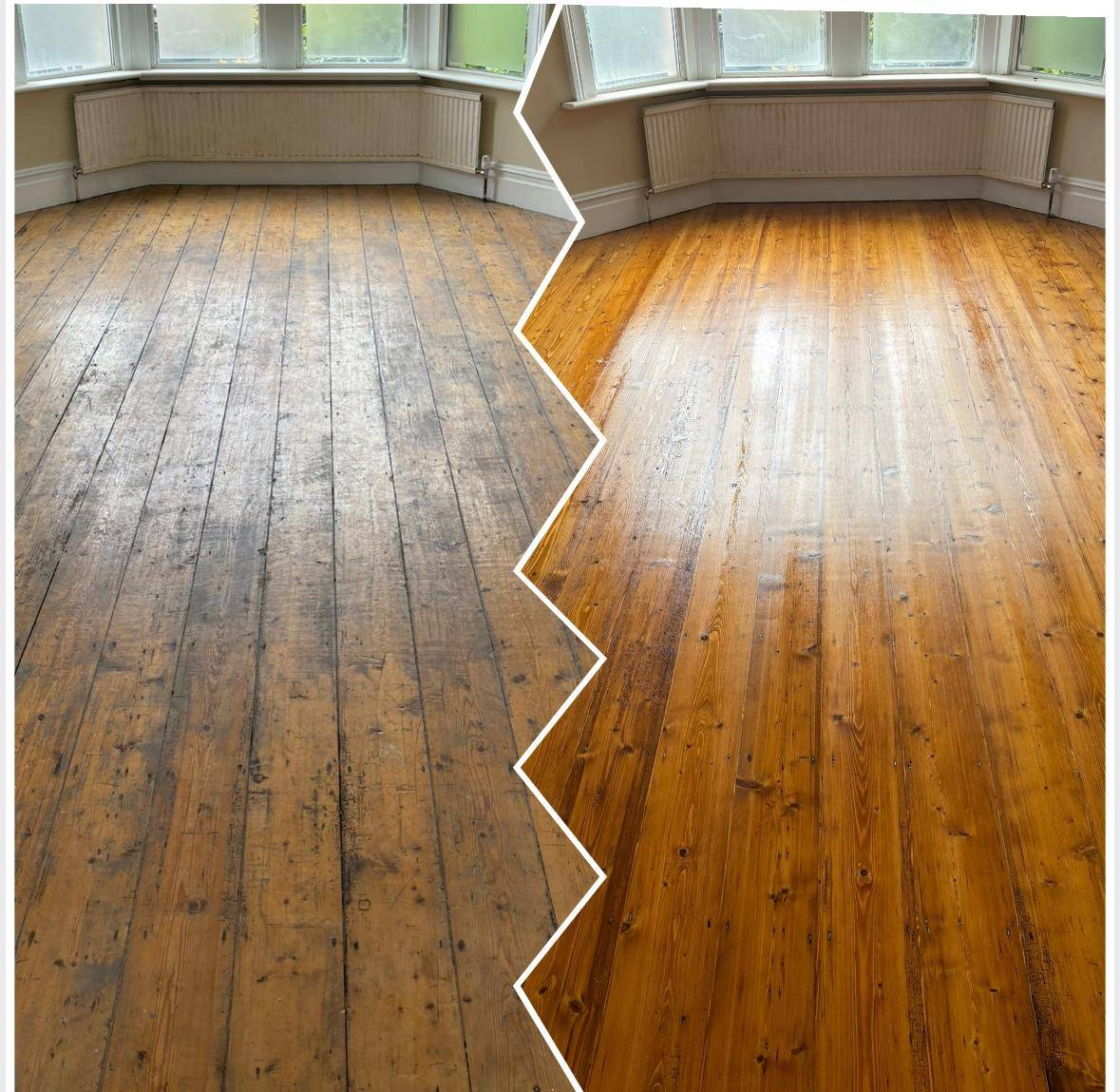
We think that matters. Anybody can write that they restore wood floors. Showing you a Victorian pine floor in a Bristol bay window with the carpet gripper still visible in the before shot, and the same floor finished natural in the after, is a different kind of claim.
If one of these looks like your floor, say so when you get in touch. We will tell you what that particular job involved, how long it took and roughly what it came to.
Most of these jobs followed the same broad shape, even though the floors were very different.
We start by assessing what is actually there — timber species, remaining board thickness, moisture readings, the state of the joists where we can see them, and what finish is already on the surface. That assessment decides everything afterwards, and it is why we prefer to survey rather than quote from a photograph.
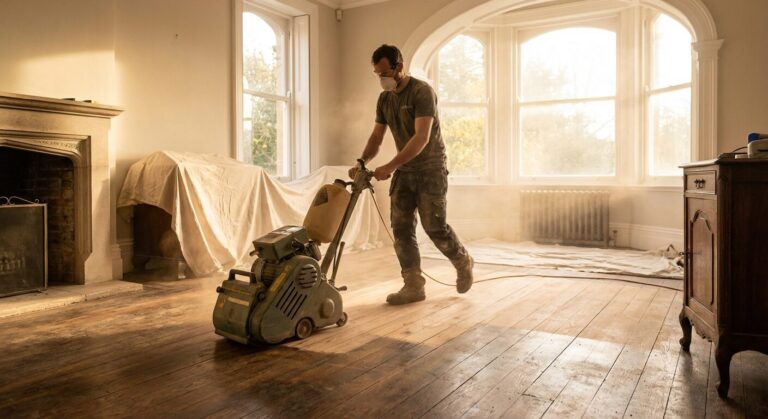
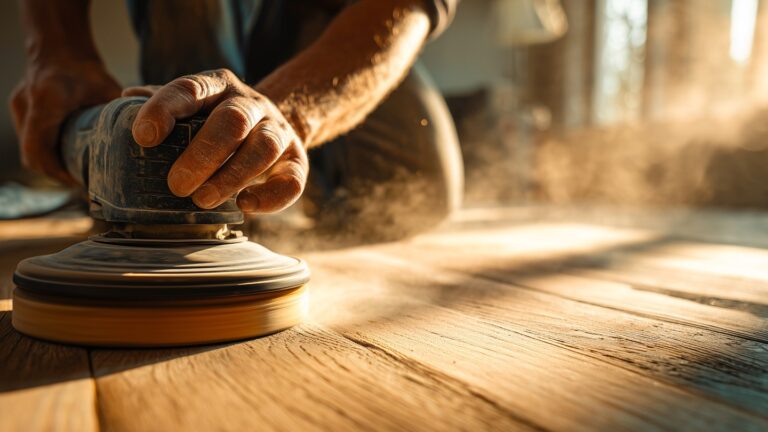
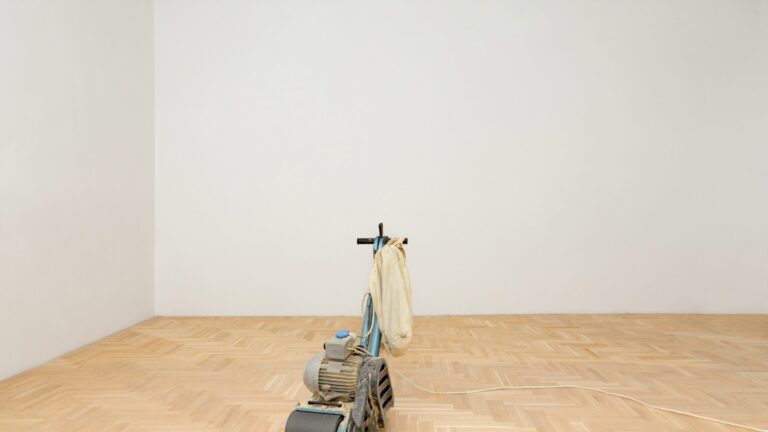
Then repairs: loose boards refixed, damaged ones replaced with reclaimed timber of the right age and species, gaps filled with timber slivers where the boards move seasonally. Only then does the sanding start, working up through the grit sequence that particular floor needs — a previously sealed floor in fair condition might begin at 40 or 60 grit, a neglected Victorian floor with old bitumen might need 24 to start.
Finally the finish, applied in the number of coats specified, with the floor walkable in socks the same evening and ready for furniture after three or four days.
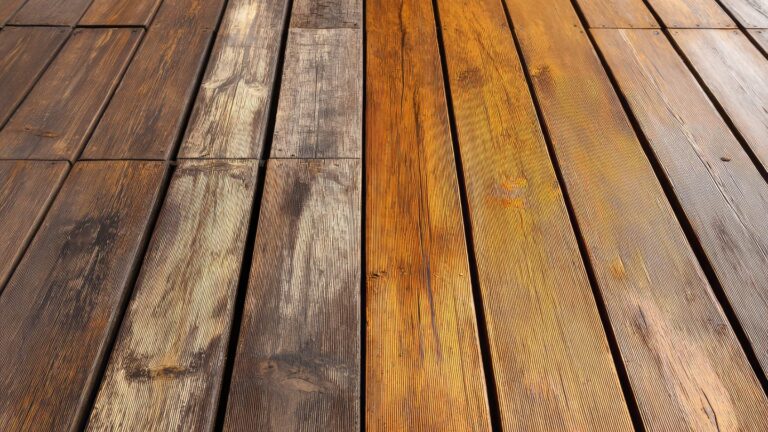
The before shots are the useful ones. They show the tack holes down every board where carpet gripper was nailed, the dark border round the perimeter where the carpet stopped short of the skirting, the black rings around old nail positions where iron reacted with the timber, and the worn tracks through doorways.
Almost all of that comes out. What does not come out — deep tannin staining, industrial oil that has soaked right through, boards sanded so thin the nail heads are showing — we point out at the survey rather than after the money has changed hands.
If your floor looks worse than anything here, it is still worth sending us a photograph. We have restored floors that owners had written off entirely.
Send us a photograph of the room from the doorway and a couple of close-ups of the worst patches, with rough measurements. We will come back with a realistic range, usually the same day.
For larger properties, listed buildings and commercial floors we will come and survey properly, free of charge and with no obligation.
Call 01823 674562, email info@ryansrestoration.co.uk, or use the form on this page.
Every project shown here was quoted as a fixed written price before any work started, broken down by element so the customer could see exactly what the sanding cost, what any repairs came to and what the finish added.
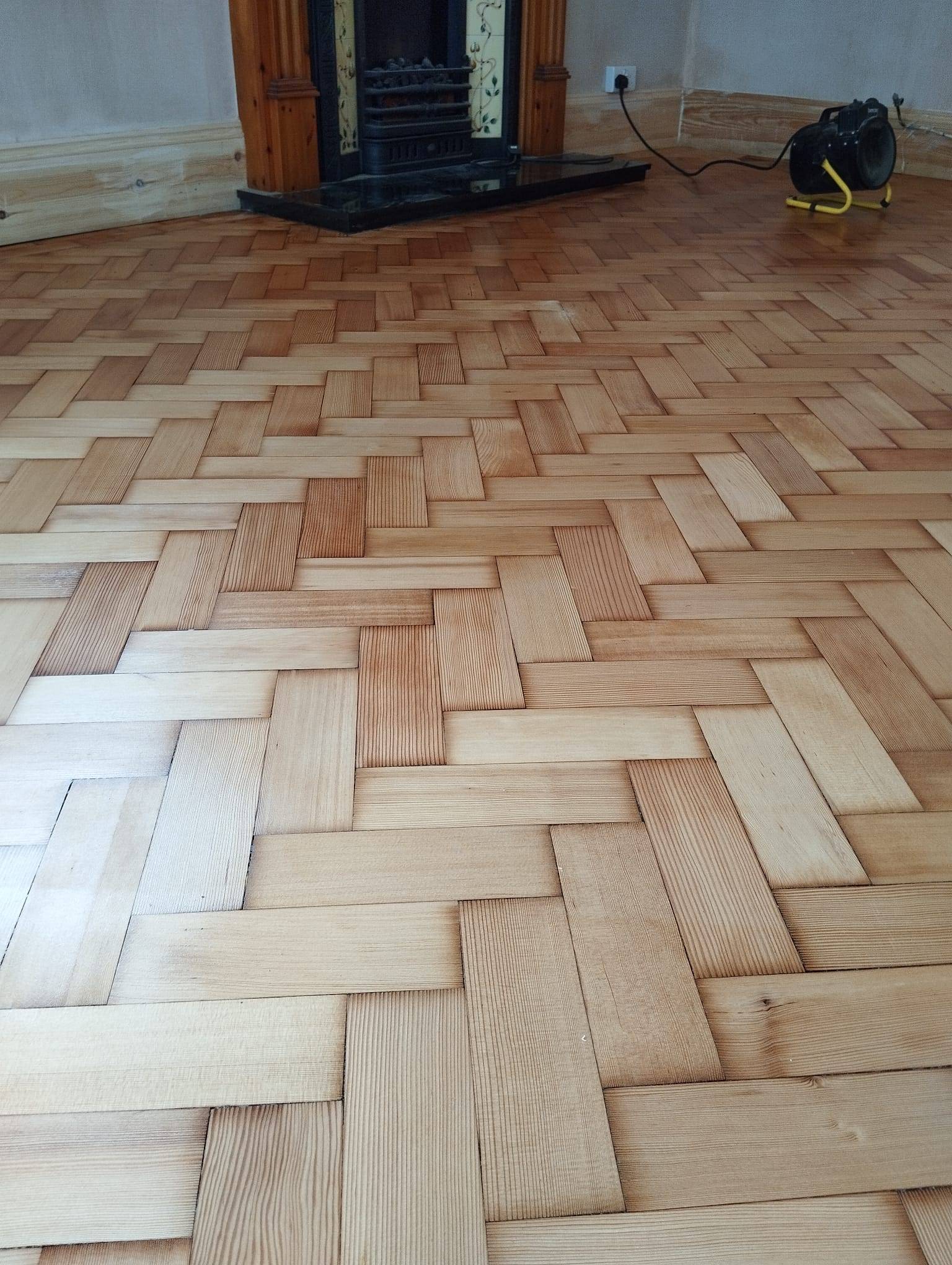
The variables are always the same: the area, the condition of the boards, the timber species, how much repair work is needed and which finish you choose. Pitch pine costs more than softwood because it clogs abrasives and takes longer. Parquet costs more per square metre than plain boards because the blocks run in several directions and usually need re-laying. Stairs are priced per tread rather than by area because almost all of it is hand work.
What never appears afterwards is a surprise. The only things that fall outside a quote are problems nobody could see until the carpet came up — rot in a joist, cables stapled under the boards, an old repair hidden beneath. When that happens we stop, show you, and price the extra work before touching it.
Several of these projects were in period or listed buildings, where the job is as much about restraint as about restoration.
A Victorian or Georgian board has already had a century or two of wear and quite possibly a previous sanding. There is a finite amount of timber left, so we measure before committing and start at the finest grit that will lift the damage rather than the coarsest that works quickly.
We also leave things alone deliberately. Slight undulation across an old floor is character, not a defect, and sanding hard to chase a factory-flat surface just cuts through the high spots on boards that cannot be replaced. Over-sanding strips out colour depth that took a century to develop and no finish will put it back.
Where boards genuinely need replacing we source reclaimed timber of the right age and species so the repair disappears once the floor is sanded. New softwood in a Victorian floor is visible forever, however carefully it is fitted.
Alongside domestic work we restore floors in pubs, restaurants, hotels, village and church halls, schools, gyms and sports halls, shops and offices across the South West and beyond.
Commercial jobs are governed by the calendar more than the technique. Schools want the holidays, halls want the gap between bookings, restaurants want us in and out before the weekend. We work evenings and weekends where that helps, phase the work so you can keep trading, and run full dust extraction so neighbouring areas stay usable while we work.
The specification differs too. Heavy-traffic commercial floors generally want a commercial-grade lacquer rather than an oil, and where slip resistance matters — kitchens, entrances, sports use — the finish is selected for that specifically. For sports floors we can handle line marking as part of the job rather than leaving you to arrange it separately.
Most of these started as an ordinary enquiry. The relevant service pages are wood floor sanding, wood floor restoration, parquet floor sanding and commercial floor sanding, and the guides explain the methods behind them.
These jobs were in and around Bristol, Taunton, Exeter, Paignton and Tiverton. Wherever you are, there is probably a page for it on areas we cover.
Once your floor has been professionally sanded and finished, it is important to take steps to maintain its appearance and durability.

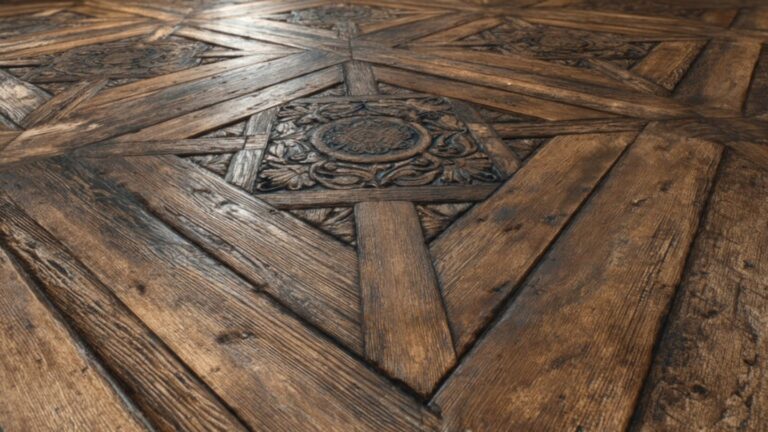
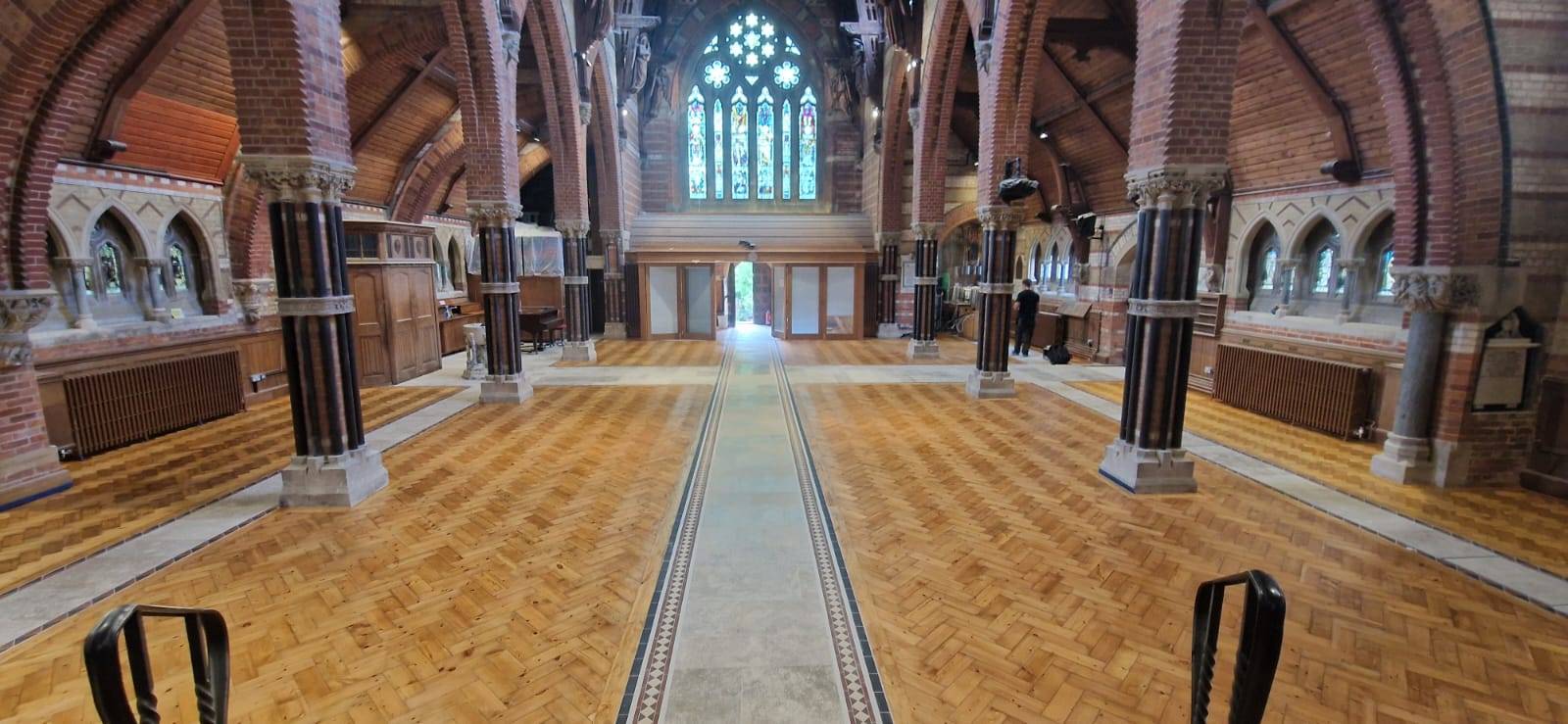
Project Type: Parquet floor restoration in a historic church
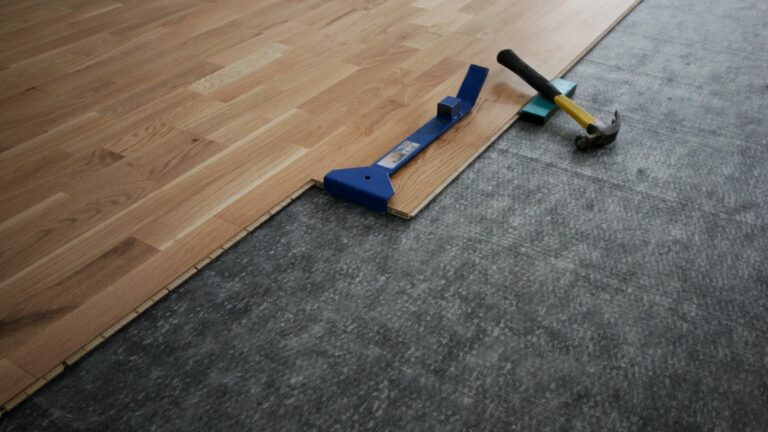
Project Overview: Ryan’s Restoration undertook the comprehensive restoration of the parquet flooring at St Michael & All Angels Church in Lyndhurst. This project involved carefully removing the existing flooring, preparing the subfloor, and expertly reinstalling and refinishing the original parquet to restore its beauty and functionality.
Challenges
Process
Results
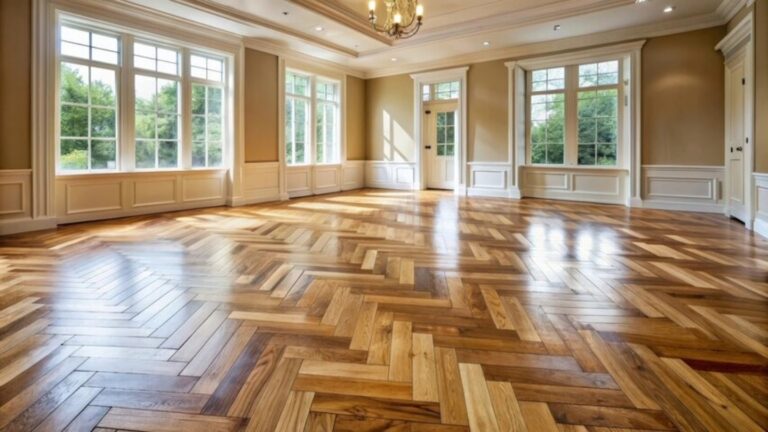
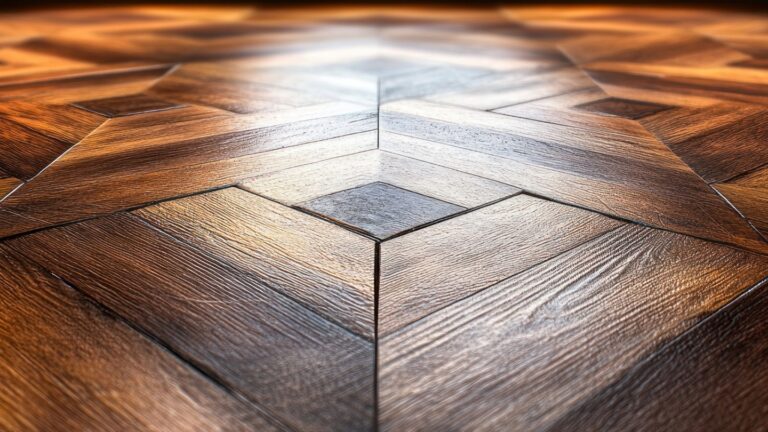
The restored parquet flooring beautifully complements the church’s historic architecture while providing a durable, functional surface. The careful restoration process preserved the floor’s original character while significantly improving its appearance and longevity.
This project showcases Ryan’s Restoration’s expertise in handling delicate restoration work in historic settings. Our team’s attention to detail and commitment to quality craftsmanship ensured a stunning result that will serve the church community for years to come. For expert wood floor restoration services, contact Ryan’s Restoration today.

Once your floor has been professionally sanded and finished, it is important to take steps to maintain its appearance and durability.