Pine Floor Restoration

Victorian and Georgian pine floorboards restored — paint off, gaps filled, boards matched, finished without the orange.

QUICK QUOTATION

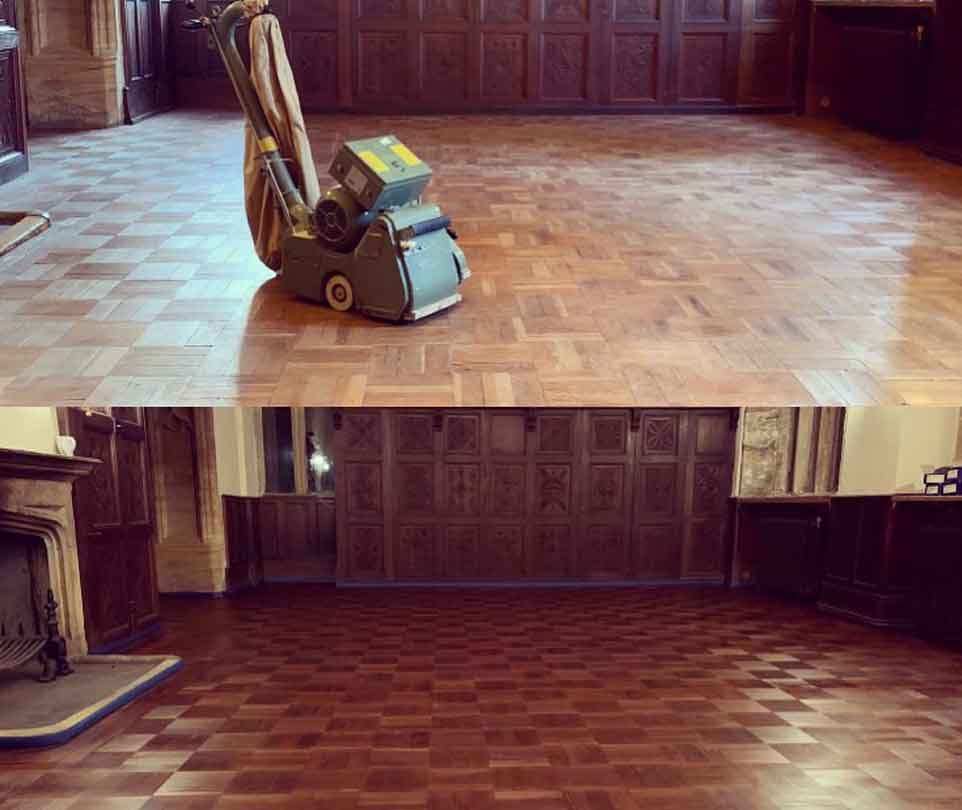
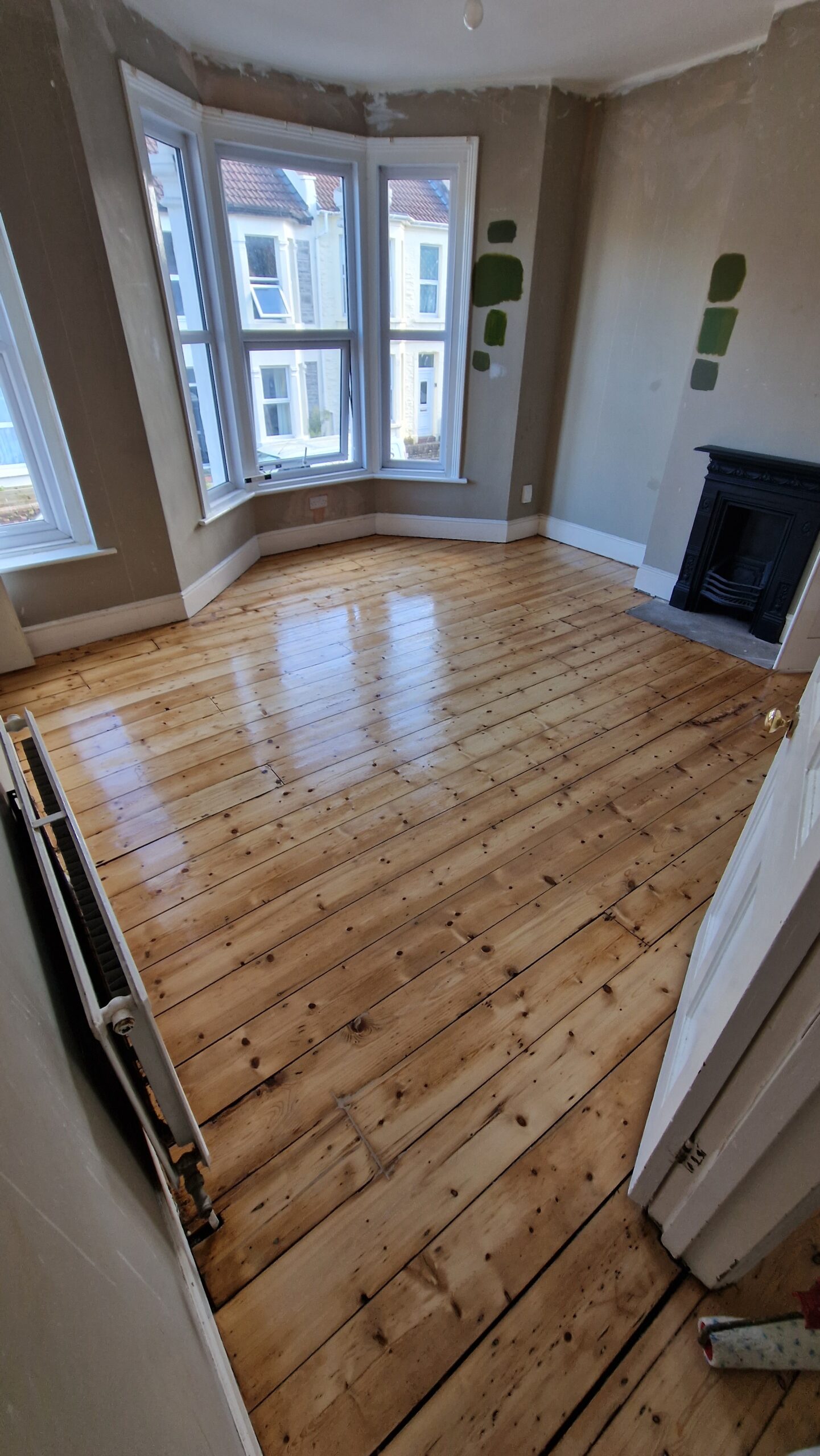
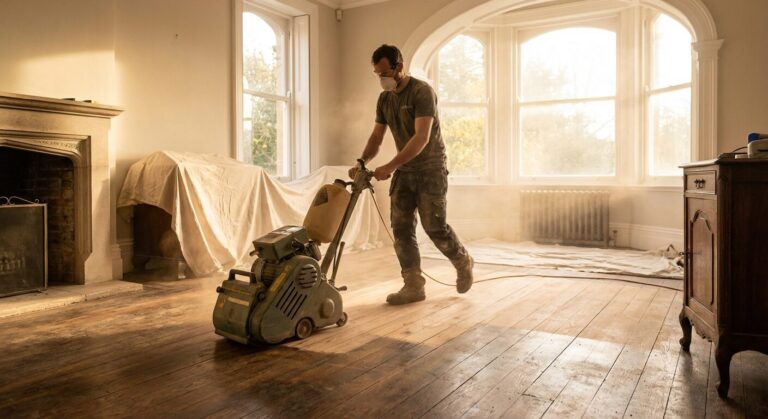
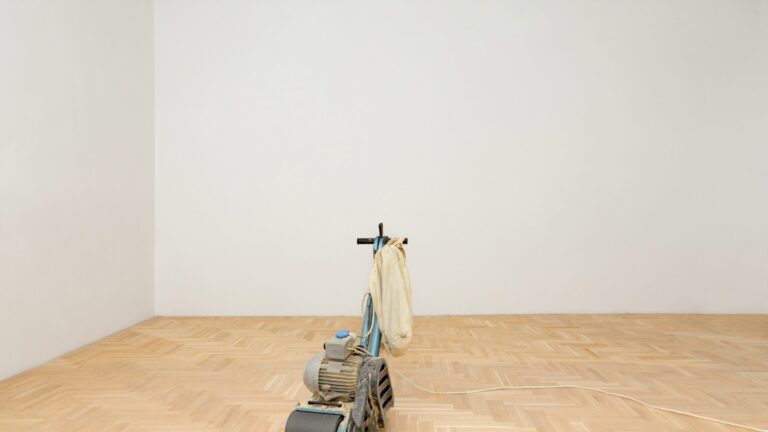
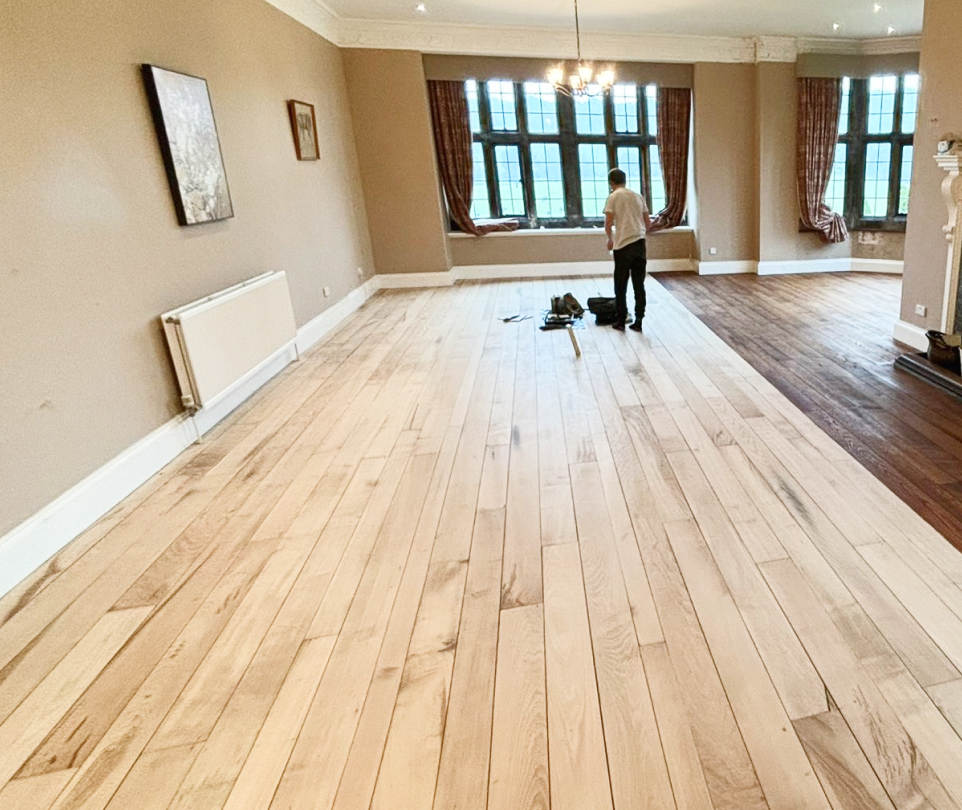
Newly sanded floorboards in a bay-windowed room mid-restoration

The Floor Under Half the Houses in Britain

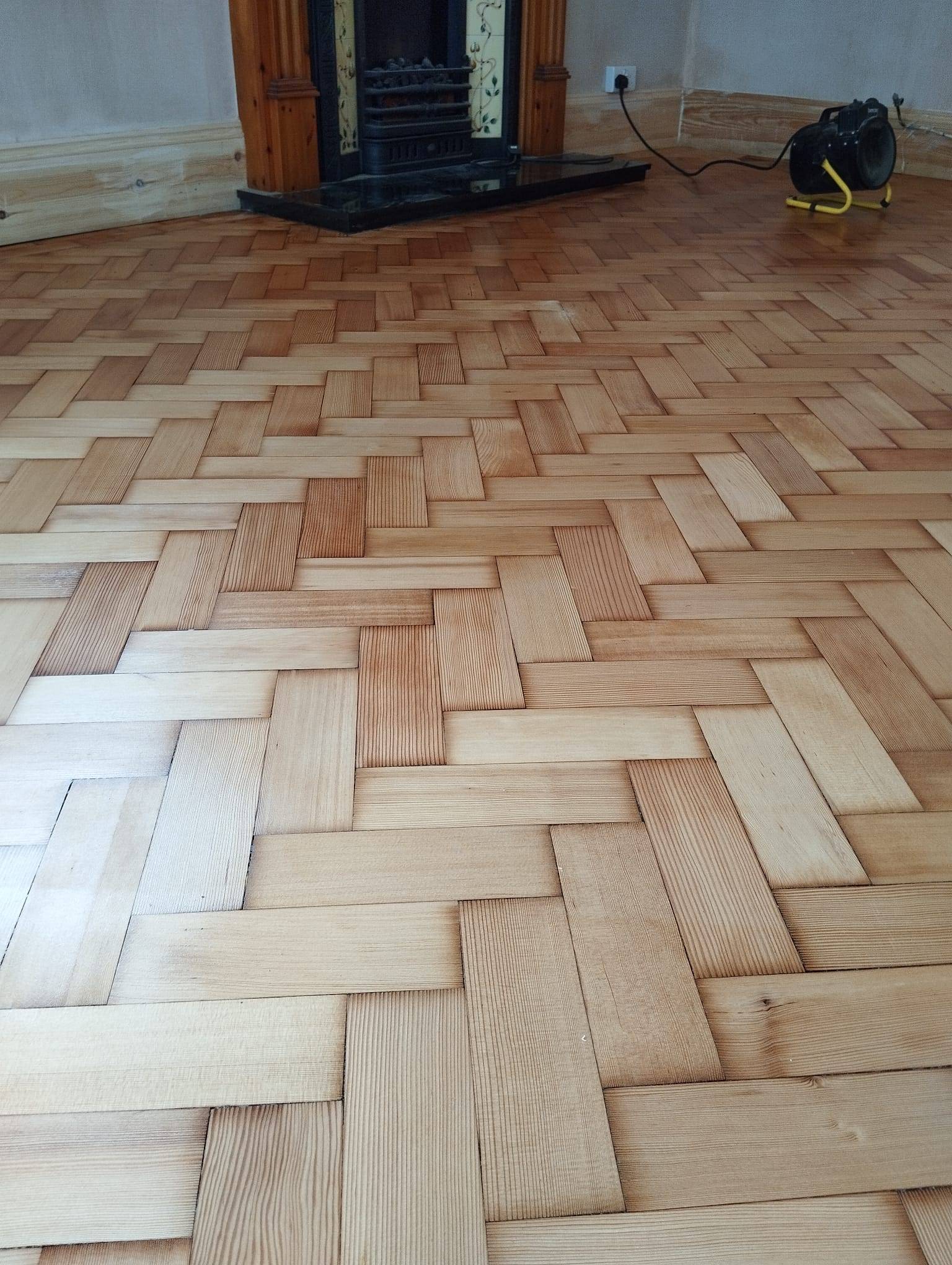
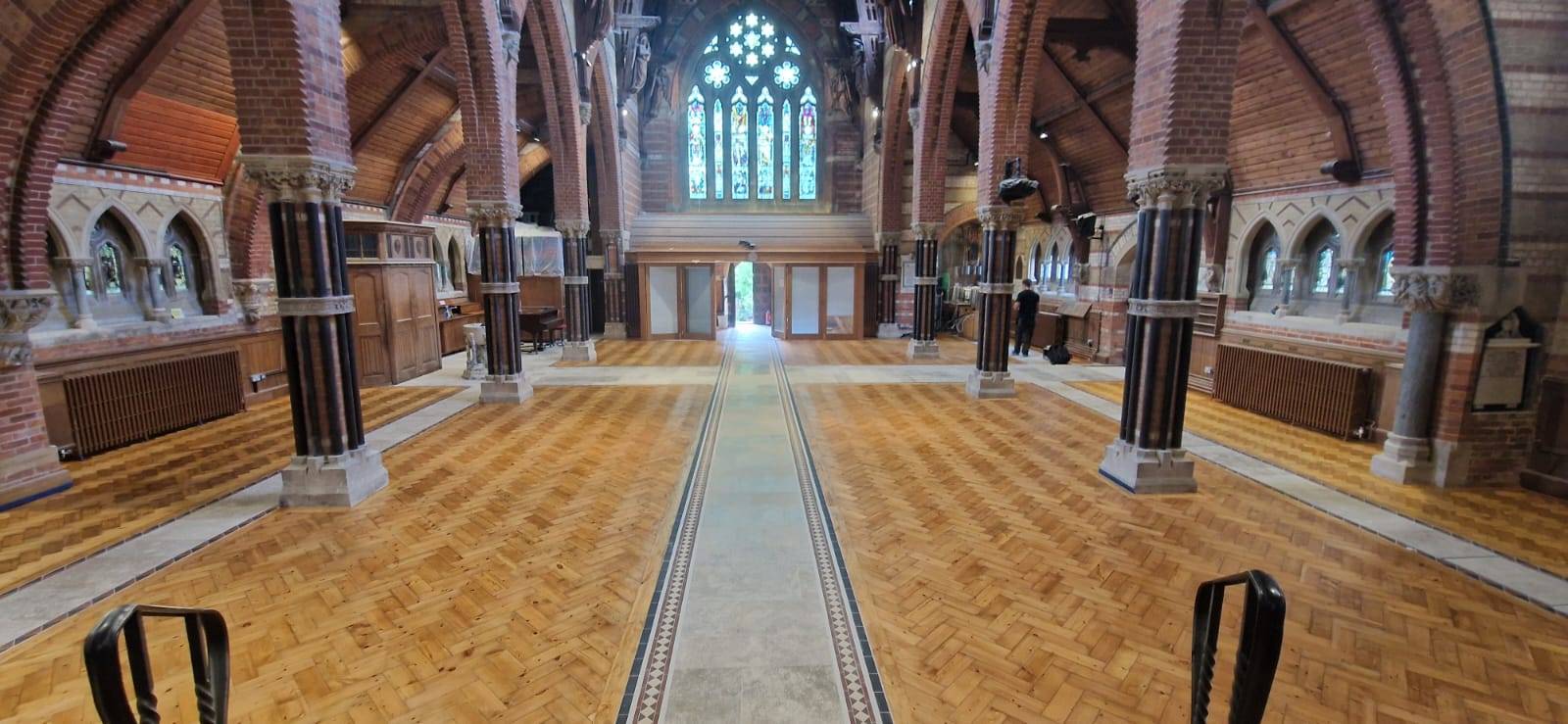
If your house went up between 1780 and 1940, the odds are the boards under your carpet are pine. It was the workhorse timber of Georgian terraces, Victorian villas and Edwardian semis — cheap then, irreplaceable now, because those boards were cut from slow-grown Baltic and Scots pine with a density and grain that modern plantation softwood simply does not have. Pine floor restoration is most of what we have done for thirty five years, and the transformation from carpet-gripper wreckage to glowing boards never stops being satisfying.

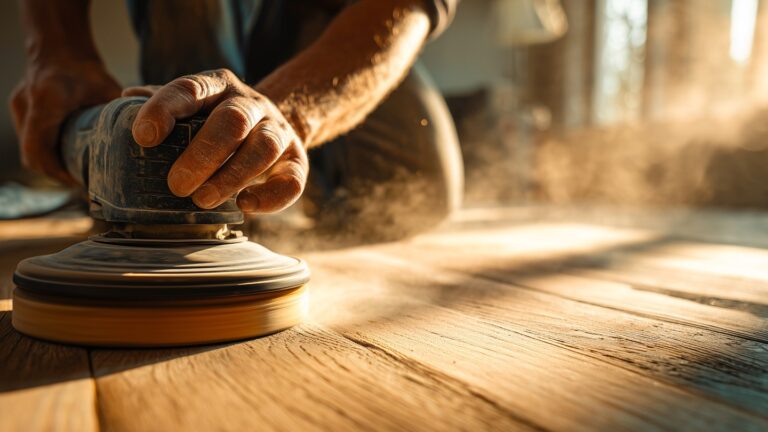
Pine cuts fast under the machine, which sounds like good news and is actually the trap: an impatient sander takes too much, too unevenly, and the floor never recovers. Our sequence is gentler and flatter, sympathetic to the soft grain, and it is why our pine floors look calm rather than scalloped when the light rakes across them.
Paint, Bitumen and A Century of Coverings

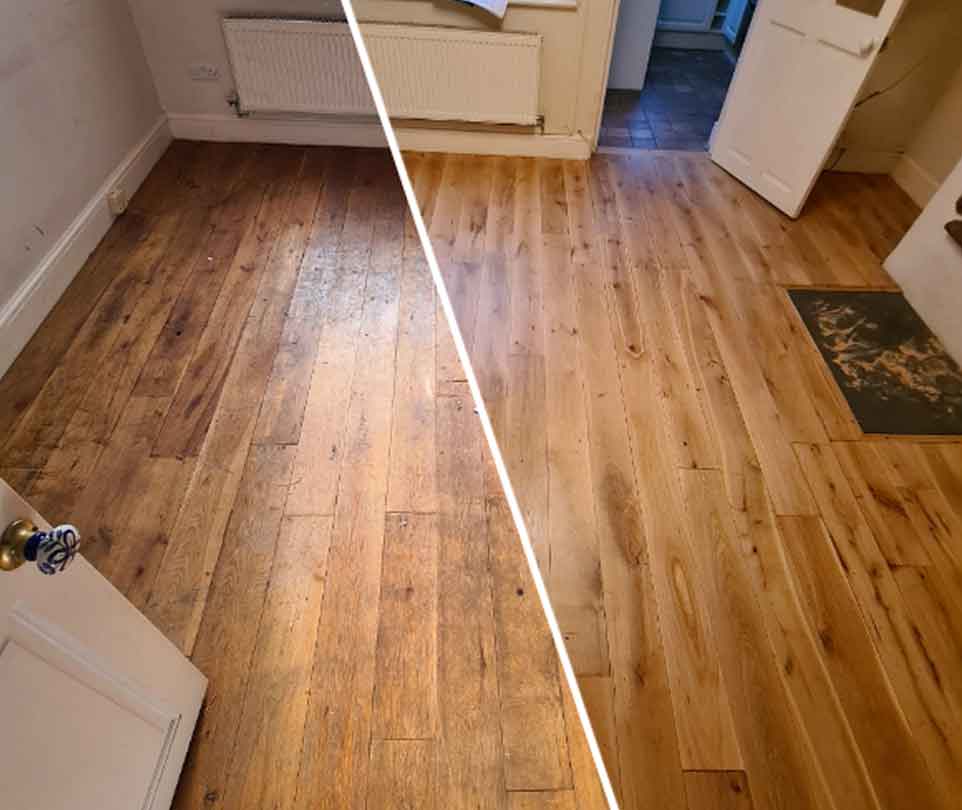
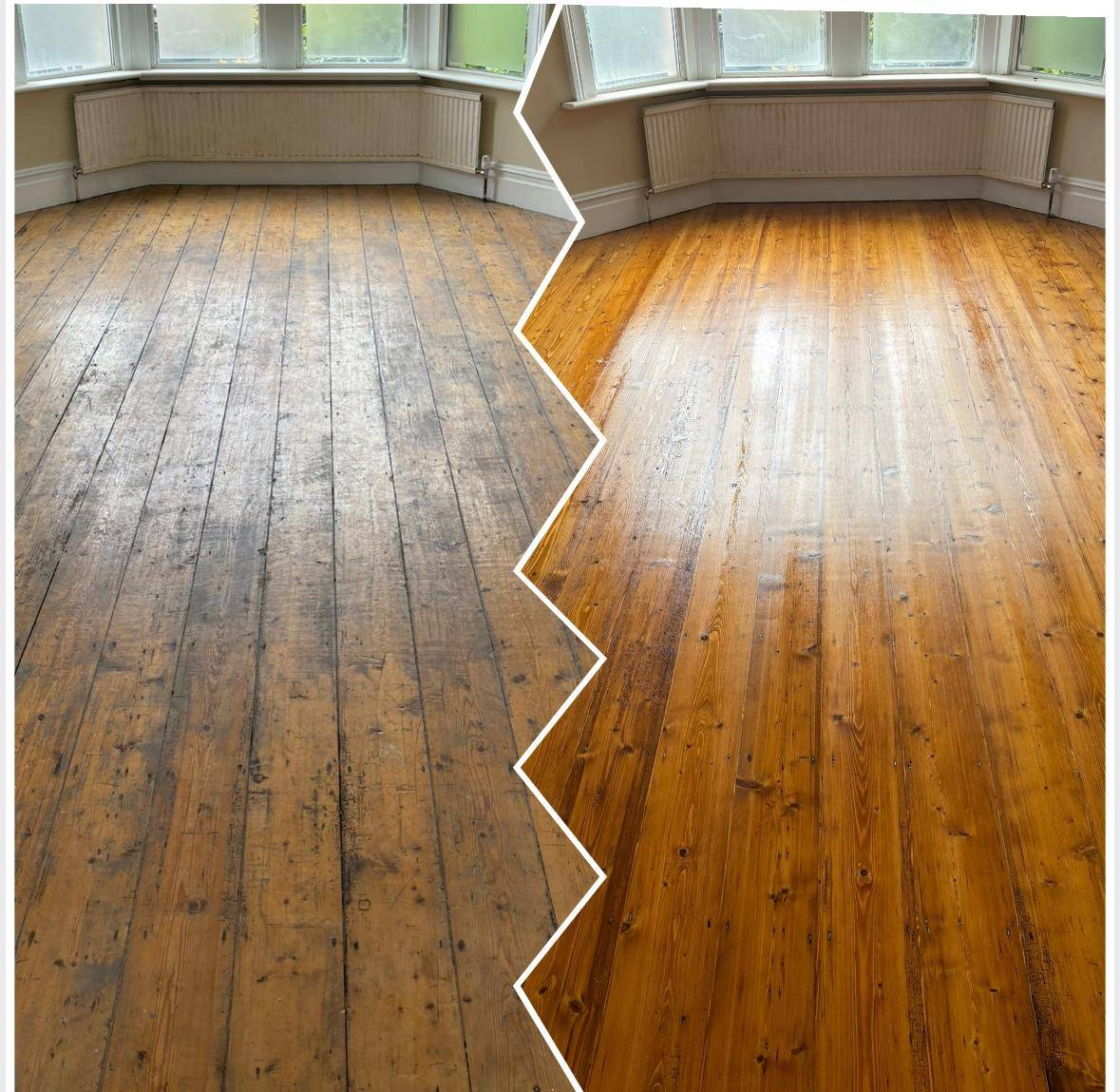
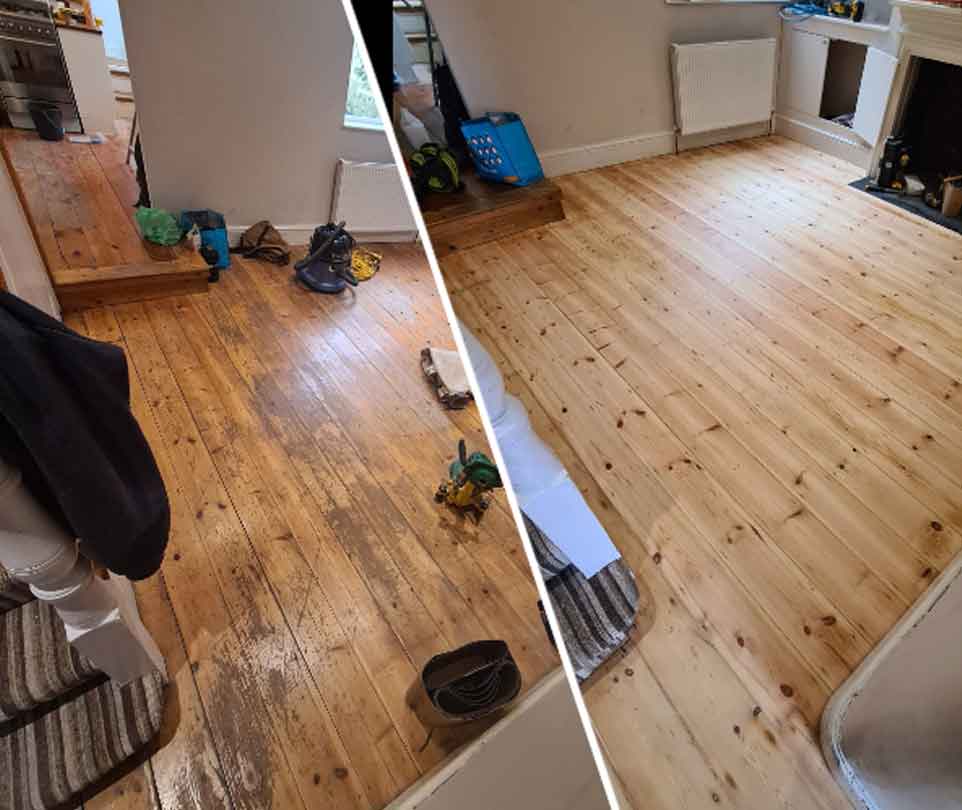
Almost no pine floor arrives clean. The borders were painted black or stained with bitumen from the 1900s onward — the fashionable frame for a central carpet square — and the middles have collected varnish, lino adhesive, hardboard pins and gloss splatter from every redecoration since. Getting through that honestly is half the job: heavy old coatings are cut with coarse abrasive before the real sanding starts, edges are worked patiently where bitumen has soaked in, and stubborn borders sometimes keep a whisper of shadow, which on a period floor reads as history rather than fault.

What we never do is attack it with chemical strippers that soak into the soft grain and haunt the finish later. Machine, patience and the right grit sequence — slower, and right. Our guide to removing stains and marks covers what shifts and what stays.

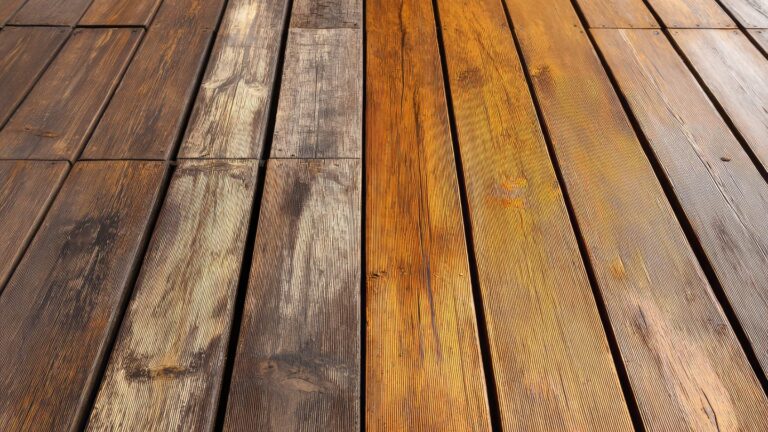
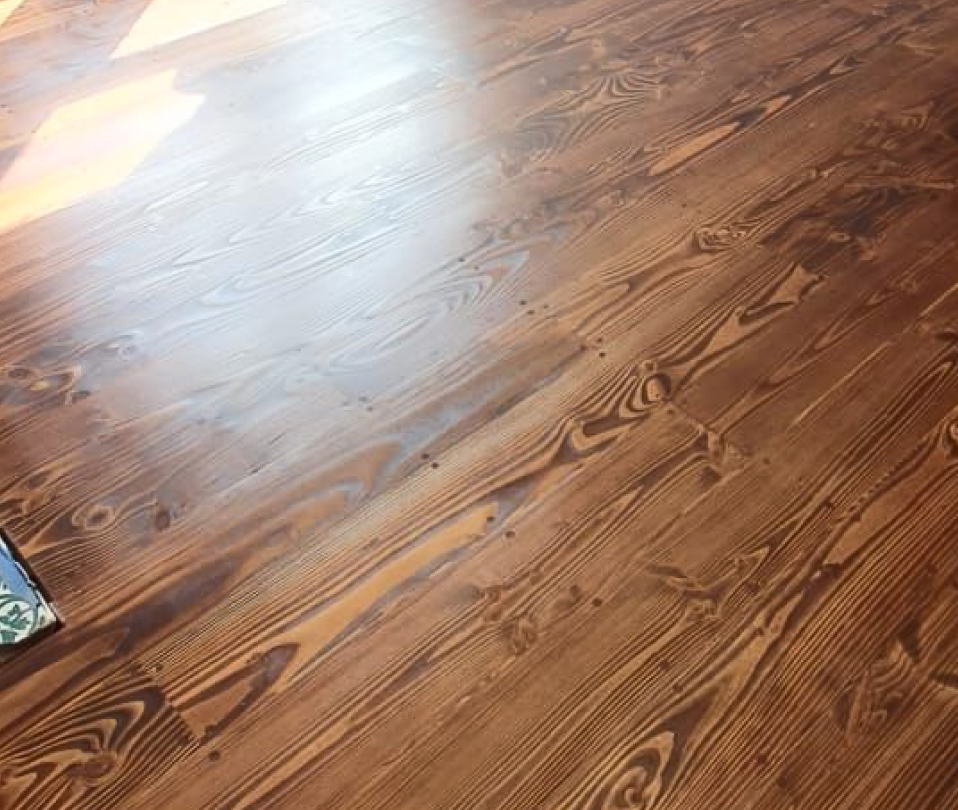
Dark-stained wooden floorboards after sealing
Wood floor waxing

Gaps, Draughts and the Slivers That Fix Them

Victorian pine boards were laid tight and have spent a century shrinking, which is why a boarded ground floor can feel like sitting in a colander. Gap filling is the unglamorous hero of pine restoration: strips of matching reclaimed pine — slivers — glued into every gap, planed flush, and sanded with the floor so they disappear. Draughts drop, the room warms, and the floor reads as one surface again.

Resin filler mixed with sanding dust does the same job in tighter gaps and moves better with narrow boards. Which method suits which floor is a judgement call we make at the survey — slivers for the wide-gapped ground floors, resin for the tighter upstairs runs — and both are itemised separately on the quote so you can see the cost. The gap filling page explains both methods properly.

Repairs and Matching Old Pine

Pine forgives, which makes it the best floor to repair. Boards chewed by woodworm at the ends, sawn through by a 1970s plumber, or rotted by a leaking radiator are cut out and replaced with reclaimed pine matched for width and age — we keep stock at the workshop precisely because merchant softwood never matches Victorian boards in width, colour or character. Within weeks of finishing, a good repair vanishes into the floor.

Whole missing sections — old hearth gaps, removed walls, pipe runs — are pieced in the same way, board by board. The rule is always repair before machine: everything solid, fixed and flush first, so the sanding makes one floor out of the patchwork. The floorboard replacement page covers matching in more detail, and the squeaky floor page deals with the noises.

Wood floor waxing
Wood floor waxing

Finishing Pine: Warmth Without the Orange

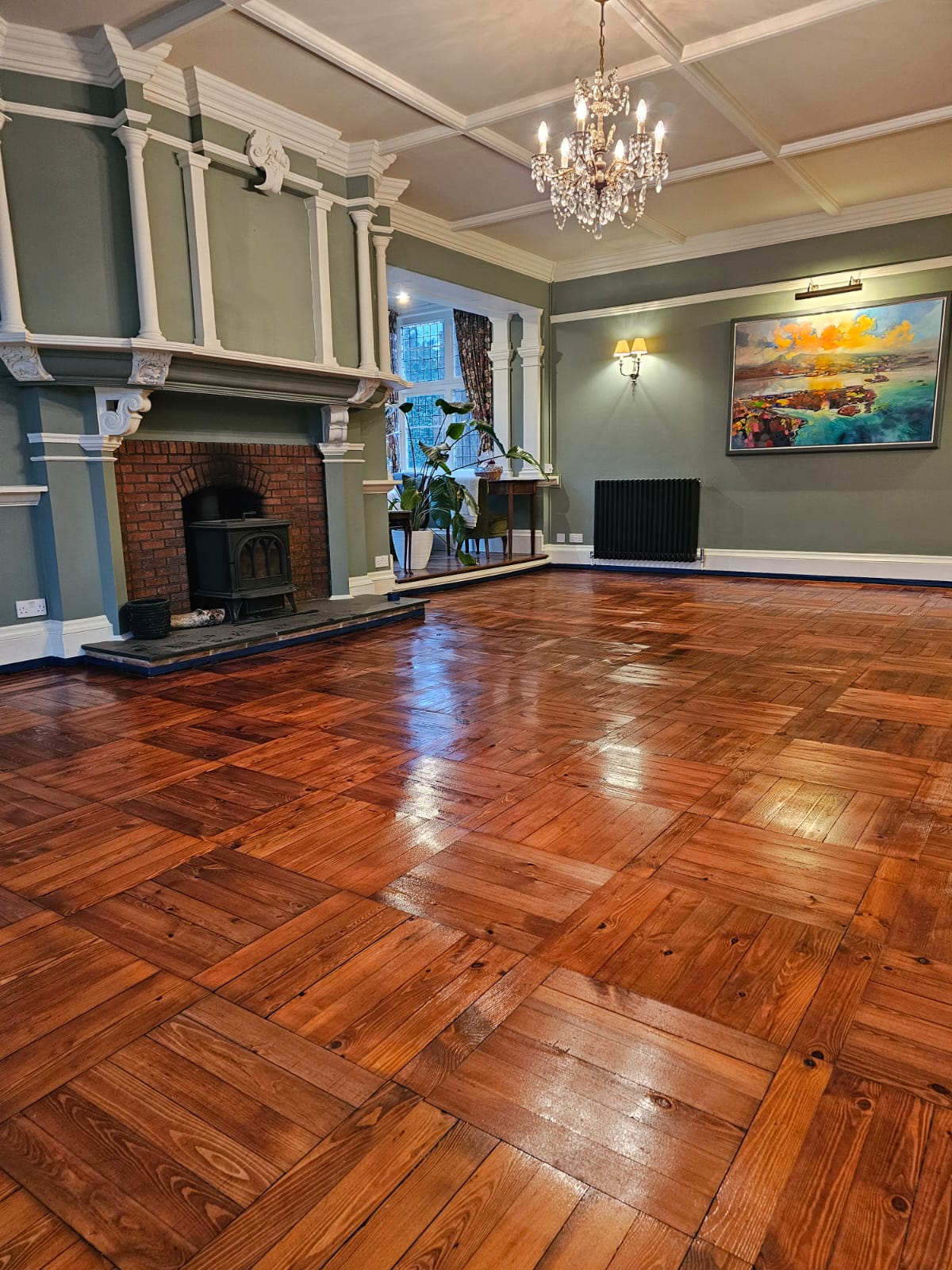
The great pine anxiety is orange — the memory of 1990s polyurethane that turned every stripped floor the colour of marmalade. Modern finishing solves it. Raw and natural-effect hardwax oils keep pine pale and fresh; water-based lacquers stay clear and never yellow; and where you want the classic warm honey glow, a simple clear oil delivers it without the neon. White-oiled and limewashed looks are possible on pine too, though its tight grain takes pigment differently from oak — we test on your boards first, because the difference between lovely and patchy is one trial patch.

Old pine has one more trick: patina. Two hundred years of oxidation gives board surfaces a depth new timber cannot fake, and a careful sand keeps that colour rather than bleaching through it. It is another reason the machine sequence matters more on pine than on any other floor — see choosing a finish for the options.

Stairs, Landings and Painted Everything

Pine staircases follow the same story as pine floors — good timber buried under generations of paint — and we restore them tread by tread: paint off, repairs made, sanded by hand and machine where each fits, then finished to match the landing boards. Stairs are priced per tread, and the transformation of a gloss-painted staircase back to timber changes a hallway more than any other single job in the house.

Whether treads, risers and strings are all stripped, or the treads restored against painted risers — the smart two-tone that suits Victorian halls — is a taste decision we can show you examples of. The stair sanding page covers the details, and stairs are usually done alongside the hallway floor so colours and finish match exactly.

Wood floor waxing
Wood floor waxing

Get a Pine Floor Restoration Quote

Pine restoration is quoted the honest way: free survey, fixed written price, with gap filling, repairs and board replacement itemised line by line and stairs priced by the tread. Two photographs to 01823 674562 usually get you a same-day steer: one of the whole room, one close-up of the worst boards.

We restore pine floors everywhere from Taunton and Bristol to Plymouth and Bournemouth — the full list is on areas we cover. Domestic floor sanding in a terraced house or commercial floor sanding in a pine-boarded pub, the advice is the same quality and the survey costs nothing.

FAQ: Pine Floor Restoration

Almost always. Victorian and Georgian pine was cut from slow-grown timber that is denser and more stable than anything sold today, and restoration costs far less than any replacement of comparable quality. The character — knots, patina, wear — is the point, not the problem.

Usually, yes — the black is Victorian and Edwardian border paint or bitumen stain, and it machines off with the right coarse sequence. Where it has soaked deep, a faint shadow can remain at the very edges, which most owners rightly read as period character.

With slivers of matching reclaimed pine glued in and planed flush for wider gaps, or resin filler mixed with sanding dust for tighter ones. Both cut draughts dramatically and are itemised separately on the quote.

Not unless you want warmth. Modern raw-effect hardwax oils and water-based lacquers keep pine pale and completely un-orange. The marmalade floors people remember were 1990s solvent polyurethane, which we do not use.

Often. Old flight holes are usually historic and cosmetic; boards with active or structural damage are replaced with matched reclaimed pine. We check activity at the survey and treat or replace honestly rather than dramatising.

Yes — priced per tread, stripped of paint, repaired, sanded and finished to match the landing. Full strip or restored treads against painted risers both work; stairs are usually done alongside the hallway so everything matches.

We do not publish rates, because honest pricing starts with looking at the floor. The survey is free, the written quote is fixed and itemised line by line, and photographs are usually enough for a same-day steer before anyone visits.

Not with sealed extraction — the dust goes down the hose as it is cut, not into the house. Pine produces more volume of dust than hardwood, which is exactly why proper extraction machines matter.