45 years’ experience  ·  Rated 4.9 on Google  ·  Family-run, from our workshop near Wellington

45 years’ experience · Rated 4.9 on Google · Family-run

Floor Sanding and Wood Floor Restoration in Hampshire

Larger Hampshire floor sanding projects for period homes, churches, halls and commercial premises, from Winchester townhouses to Portsmouth’s coastal terraces.

QUICK QUOTATION

Floor Sanding Taunton

Floor Sanding in Hampshire: How Far We Travel and What We Take On

We should be straightforward about geography first. Hampshire is not home ground for us. Our family firm runs from Higher Poole near Wellington, a long way west of Southampton Water, and our week-to-week work is in Somerset and the neighbouring counties. We still come east for it, but selectively: whole-house floor sanding in Hampshire, large reception rooms and long runs of hall and landing, church and village hall floors, and commercial premises such as restaurants, hotels, schools and offices. A single small bedroom in Andover is usually better served by someone closer to home. A Georgian house in Winchester with four rooms of oak, or a parish hall with a tired woodblock floor, is exactly the sort of work that justifies the drive.

The county gives us an unusually wide spread of floors once we arrive. Winchester and the older market towns, Alresford, Romsey, Petersfield and the like, hold medieval, Georgian and Regency buildings whose floors are often oak or elm boards of considerable age. Portsmouth and Southsea are dominated by dense Victorian and Edwardian terraces with pine boards on joists, plus a coastal climate that does its own damage. Basingstoke grew rapidly in the post-war decades, so much of its housing has strip, block or engineered floors laid from the 1960s onwards. In between lie New Forest villages, Test Valley farmhouses and plenty of converted barns. Each of those calls for a slightly different plan.

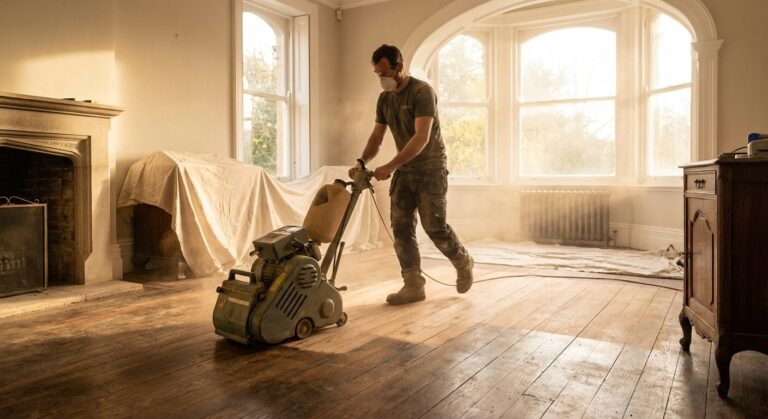
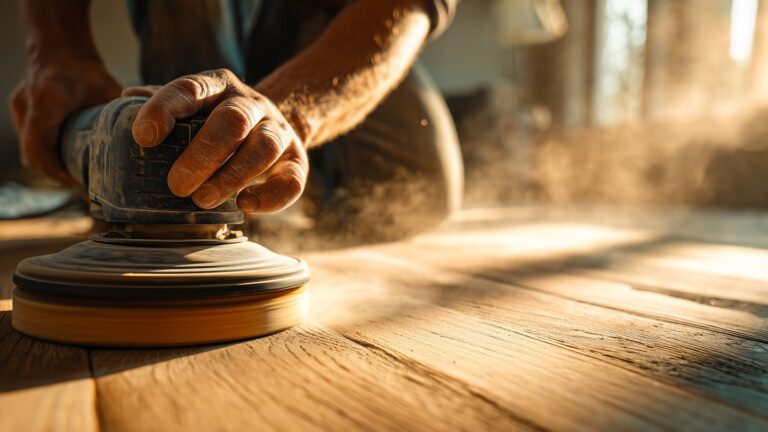
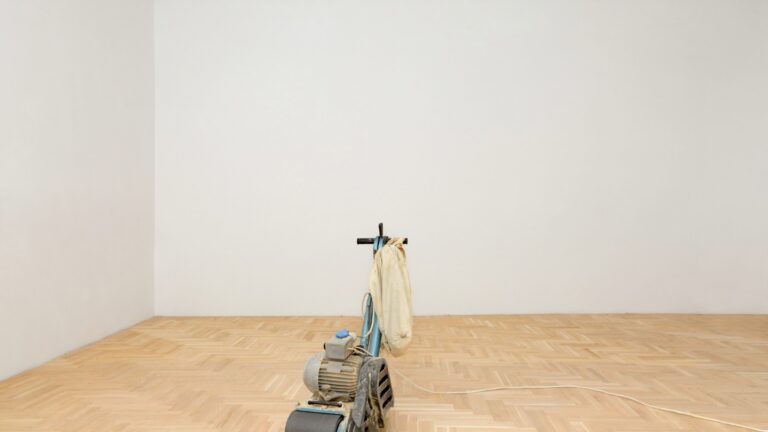
Our wood floor sanding starts from that plan rather than from a fixed routine. Grit choice, the angle of the first cuts and the decision about how flat to make an old floor all depend on what the boards are and how much timber they still have. In homes that stay occupied, dust-free floor sanding with sealed extraction makes the difference between a few dusty skirting tops and a fine layer over every surface in the house.

The town pages look more closely at individual places: floor sanding in Winchester for the cathedral city and its older streets, floor sanding in Portsmouth for the island city and Southsea, and floor sanding in Basingstoke for the north of the county. For places beyond Hampshire, our list of areas we cover sets out where else we work and how often.
Wood Floor Restoration in Hampshire: Winchester Oak Against Portsmouth Pine

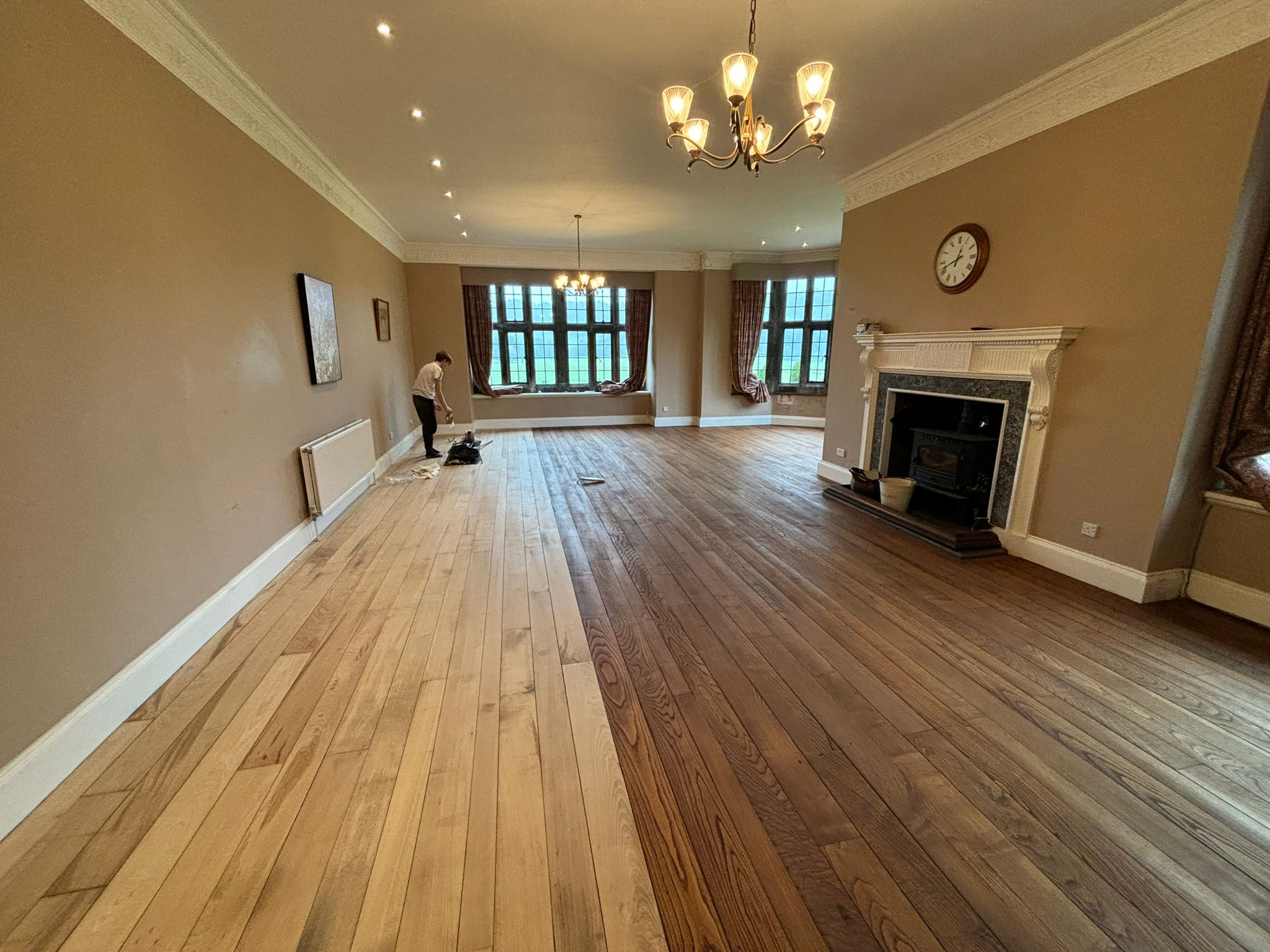
The contrast between the cathedral city and the naval city is a useful way to understand wood floor restoration in Hampshire, because the two places produce almost opposite problems.

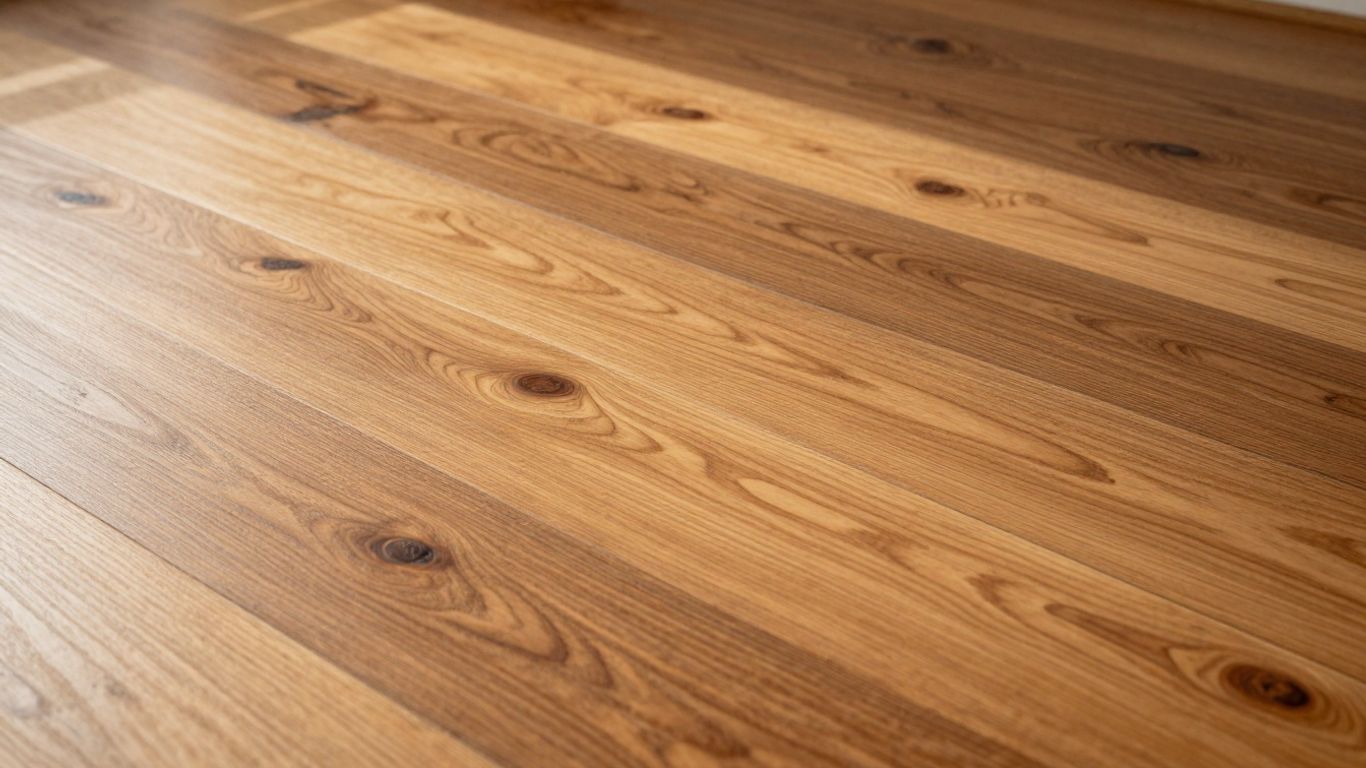
In Winchester’s older houses the floors are frequently hardwood, oak above all, sometimes in wide boards that have been in place for two centuries or more. They are hard, slow to wear and full of character, but they are often thinner than they look. Repeated sanding in the twentieth century, uneven wear and boards that were planed by hand to begin with mean that thickness varies across a single room. The right approach is light: lift the surface coatings and dirt, take out the worst of the scratches, and leave the patina of age and the soft hollows in place. The tannin in mature oak is chemically busy. Iron nails leave blue-black halos, a leaking vase leaves a dark ring, and a poorly matched waterborne lacquer can give the timber a faint grey or greenish cast over the following weeks. Our oak floor restoration work takes those reactions into account when picking a finish.

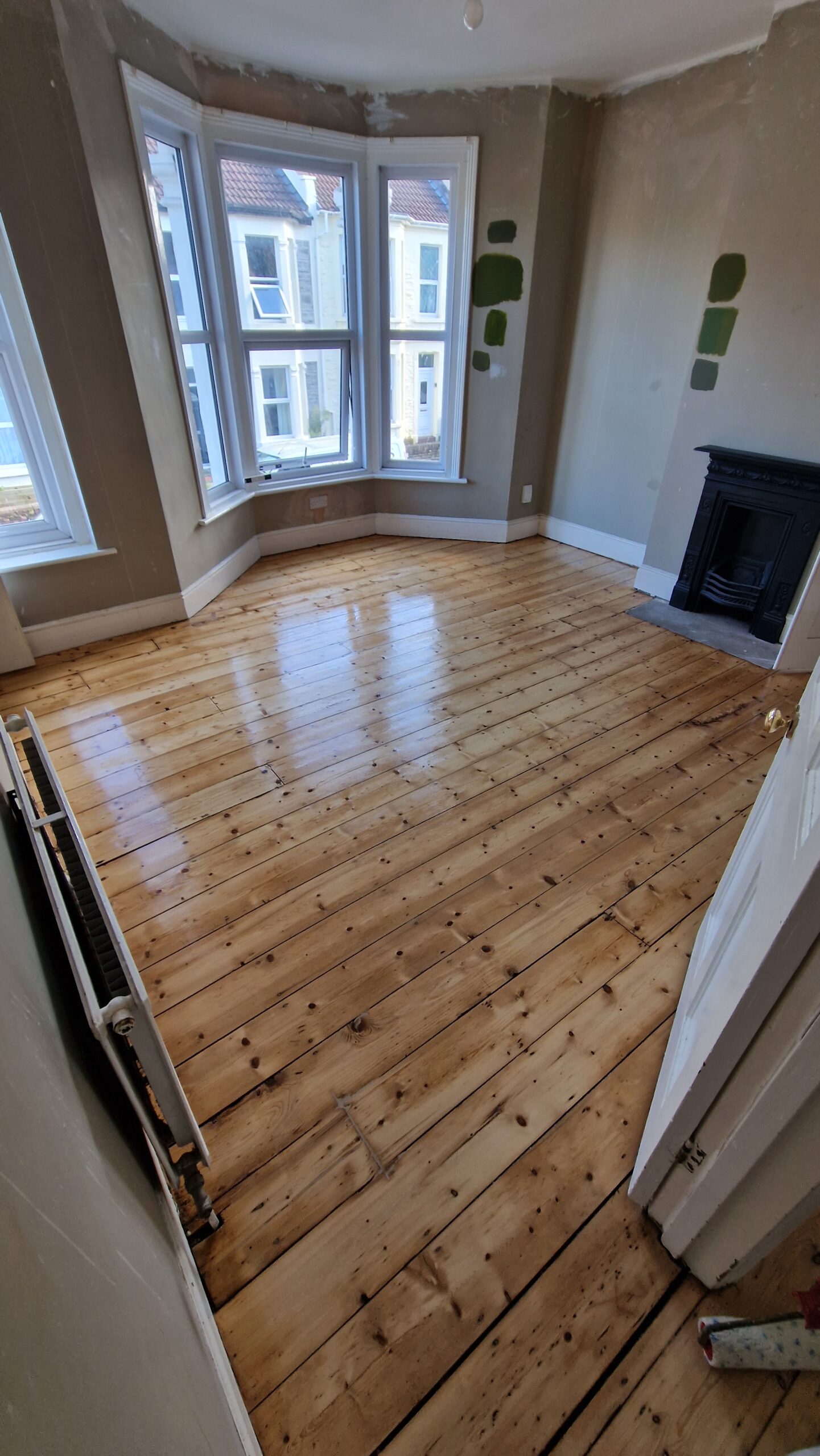
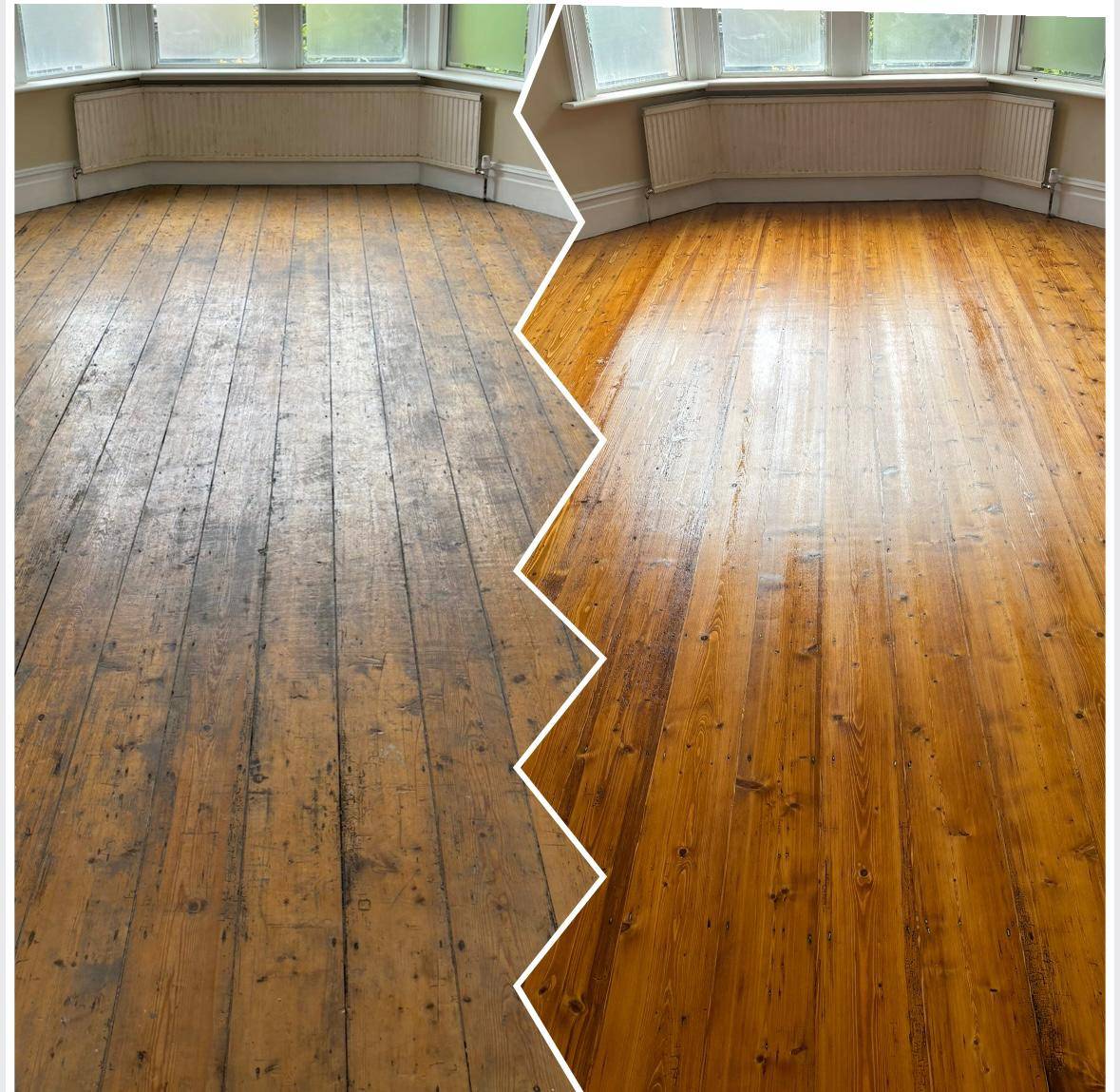
Portsmouth is the reverse. Most of its terraced housing went up quickly in the Victorian and Edwardian expansion of the city, and the floors are softwood: pine boards of modest width, nailed to joists over a ventilated void. They sand quickly, sometimes too quickly, and they show every flaw in technique. They are also exposed to sea air. Salt-laden moisture, sand carried in from the beach on shoes and the high humidity of a dense coastal city all take a toll. Boards near the front door wear grey and rough, gaps open and close with the seasons, and airbricks blocked by later alterations leave some voids damp. [[Pine-floor-restoration|Pine floor restoration]] in these houses often begins with a moisture check and some ventilation work before any sanding is planned.

The finishes differ too. Winchester oak usually suits a natural oil, hard wax oil or a carefully chosen lacquer that keeps the colour honest. Portsmouth pine, particularly in a busy family house close to the sea, generally needs a hard-wearing lacquer to stand up to grit. Both fall within our wood floor restoration work; the difference lies in the decisions taken on site about how much to cut, what to repair and which coating to use.

Floor sanding south east London
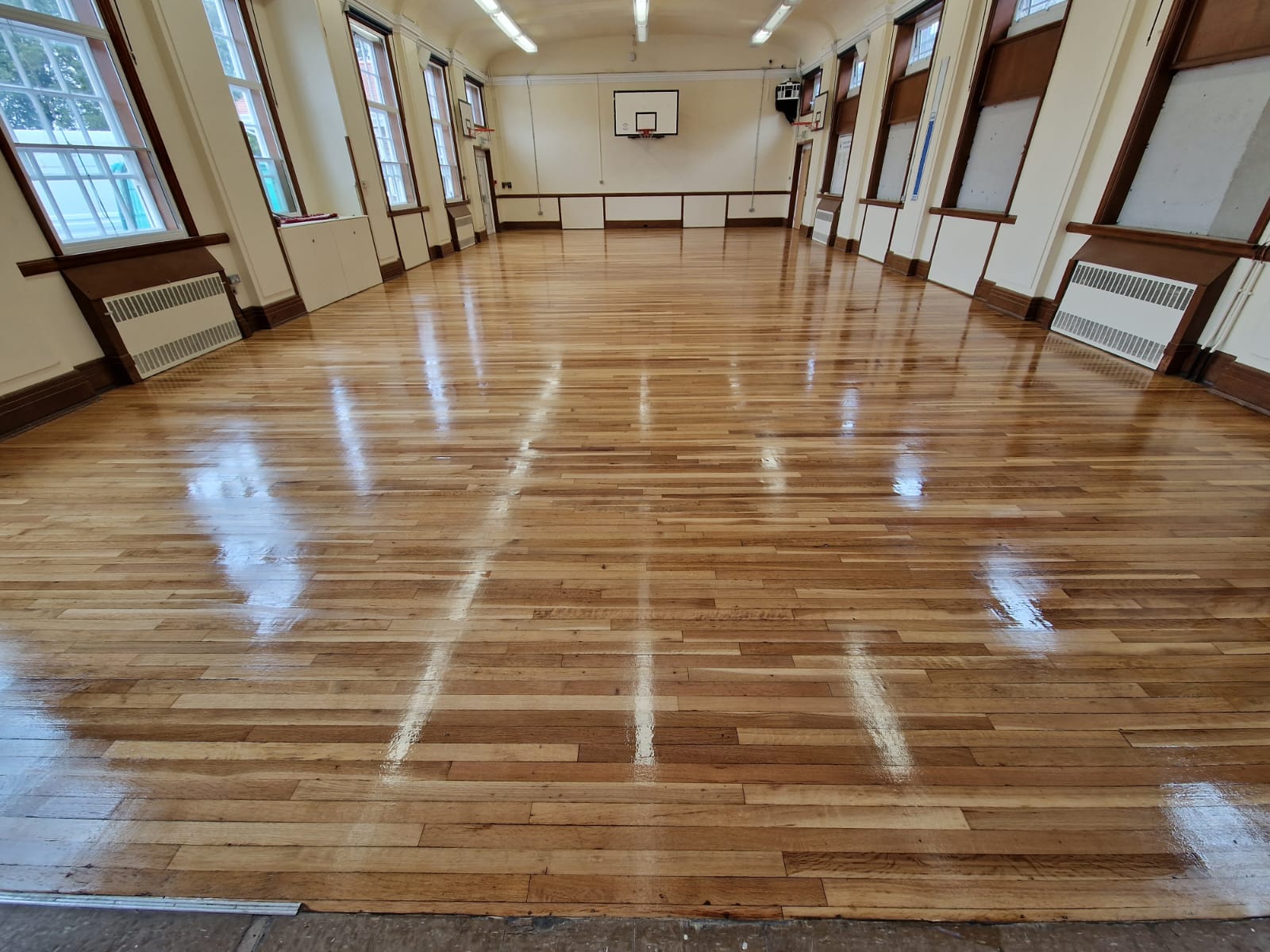
Commercial Hall Floor Refurbishment

Commercial Floor Sanding in Hampshire, and a Church Floor in Lyndhurst

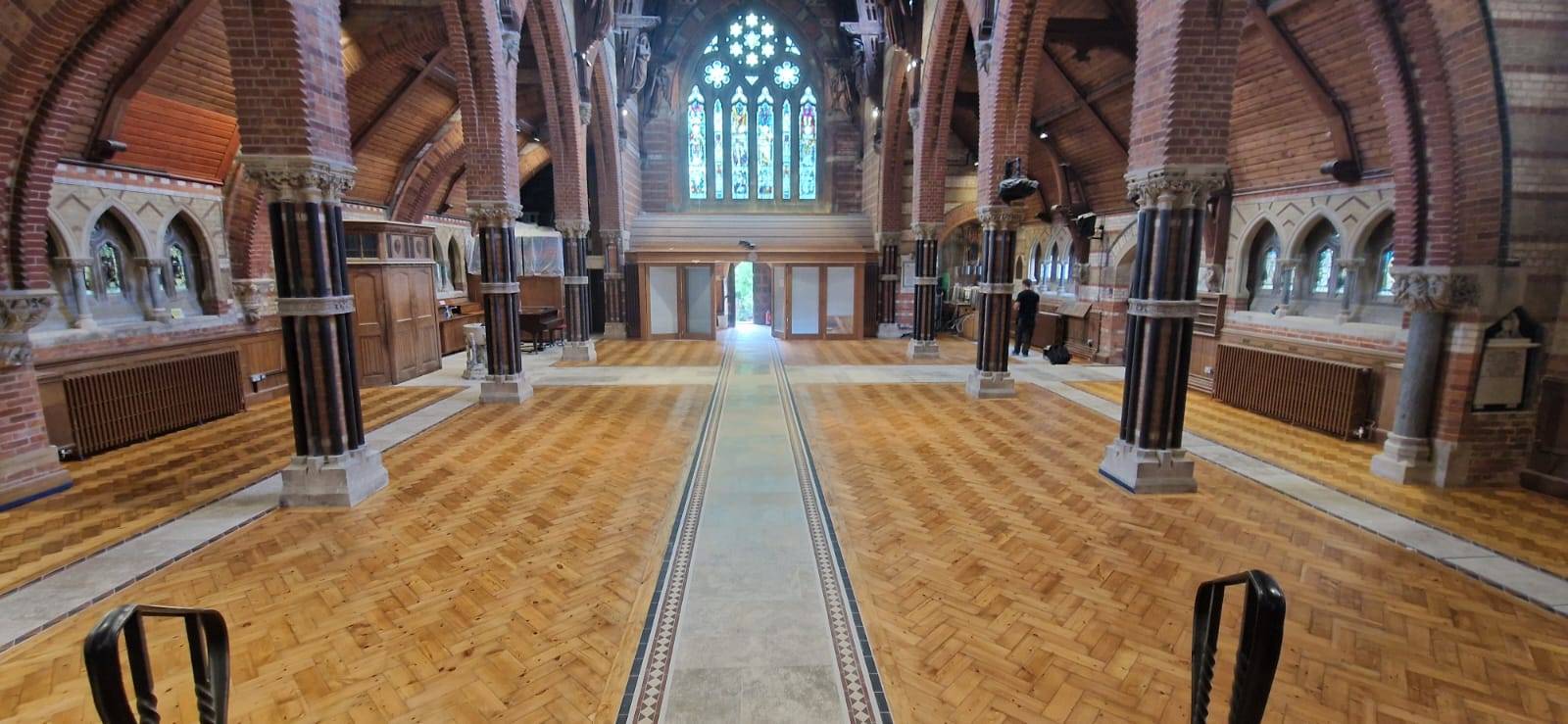
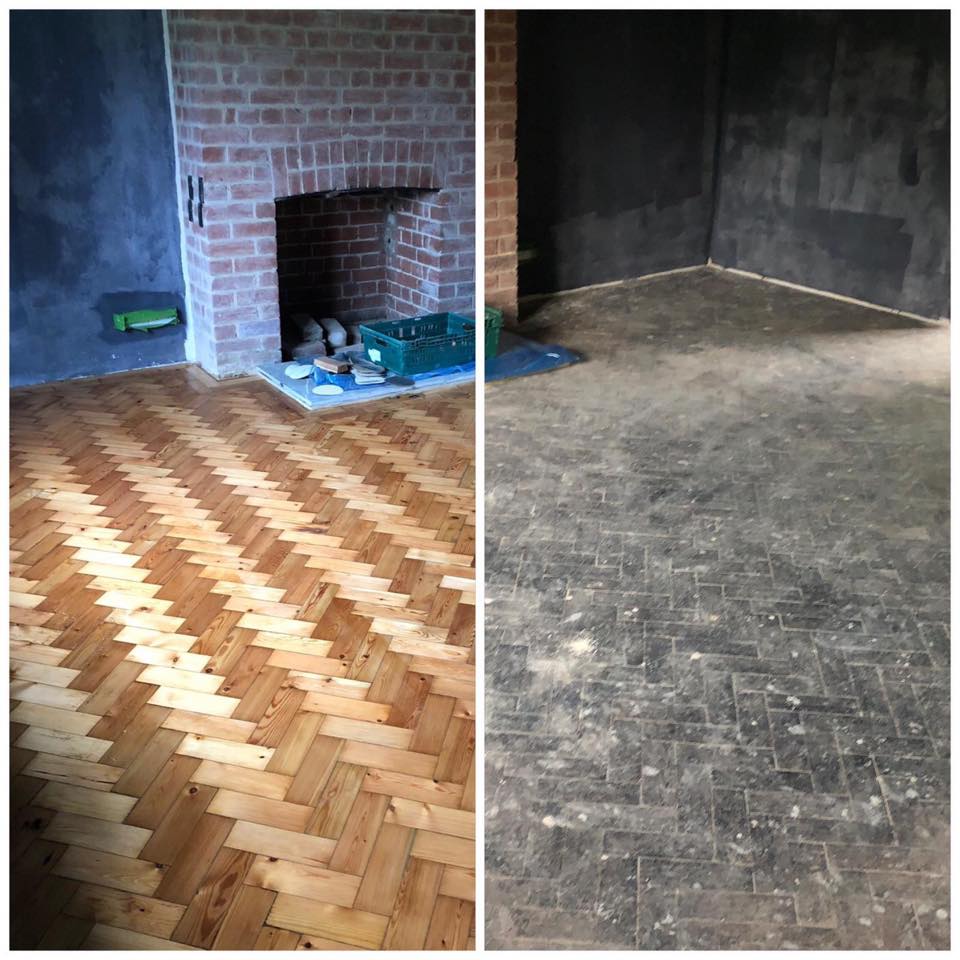
One Hampshire project shows clearly the kind of work that brings us east, and it is a church floor. At St Michael and All Angels in Lyndhurst, in the New Forest, the parquet had reached the point where sanding alone would not have been enough. The blocks were lifted and catalogued so they could go back in their proper places, the base beneath was prepared and levelled with screed, and the original parquet was then relaid, sanded across the whole floor, stained to suit the church interior and sealed. The details are set out in our Lyndhurst church parquet project, and it shows what is involved when a historic floor has to be brought back rather than replaced.

That kind of work sits at the heart of commercial floor sanding in Hampshire for us: churches, parish rooms, community halls, schools and similar buildings with large areas of woodblock or strip that justify the journey. Many of these floors were laid in the early or middle part of the twentieth century, often in bitumen adhesive, and when blocks start to lift the cause is usually a failing bond or moisture coming up from below. Simply sanding and resealing a floor in that condition would hide the problem for a season at most.

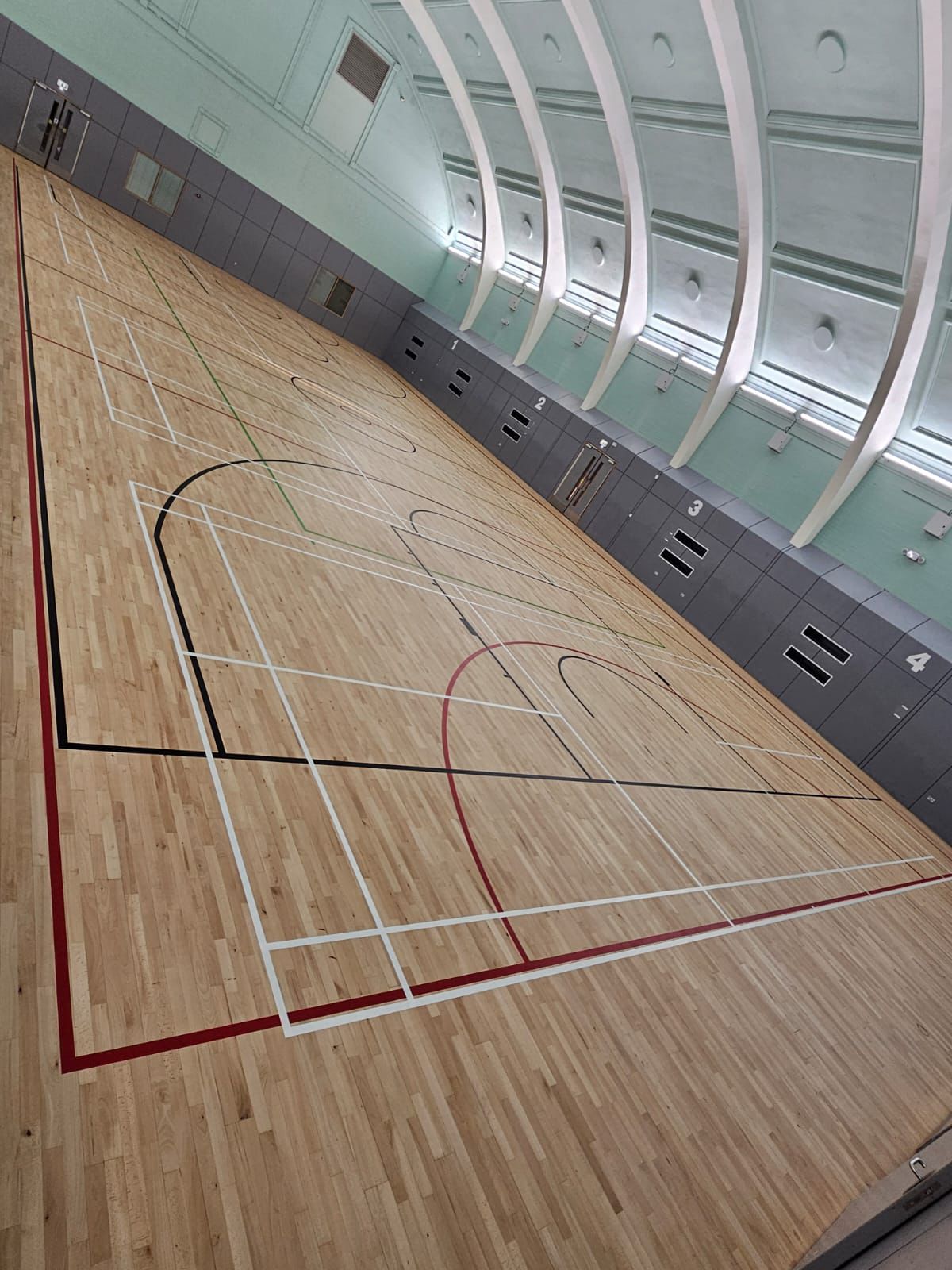
Schools and halls are scheduled around the holidays, with long summer breaks used for full sanding and refinishing, and our school floor sanding includes court marking painted to governing body dimensions as part of the same job. Leisure buildings come under sports hall floor sanding, with finishes chosen for grip as much as for durability.

Hospitality has its own timetable. Restaurants in Winchester, pubs in the New Forest and hotels along the coast cannot simply close for a week, so the work is phased: a dining room overnight, a bar on the quiet day, bedrooms a few at a time. Restaurant floor sanding and hotel floor sanding use fast-curing two-component lacquers so areas return to service quickly. Retail units are handled through shop floor sanding, and offices across the county, from Basingstoke business parks to Southampton, through the broader commercial floor sanding service. Clients who need a method statement or proof of insurance before agreeing dates can have them, and because of the travelling involved, Hampshire commercial dates are best fixed well ahead.

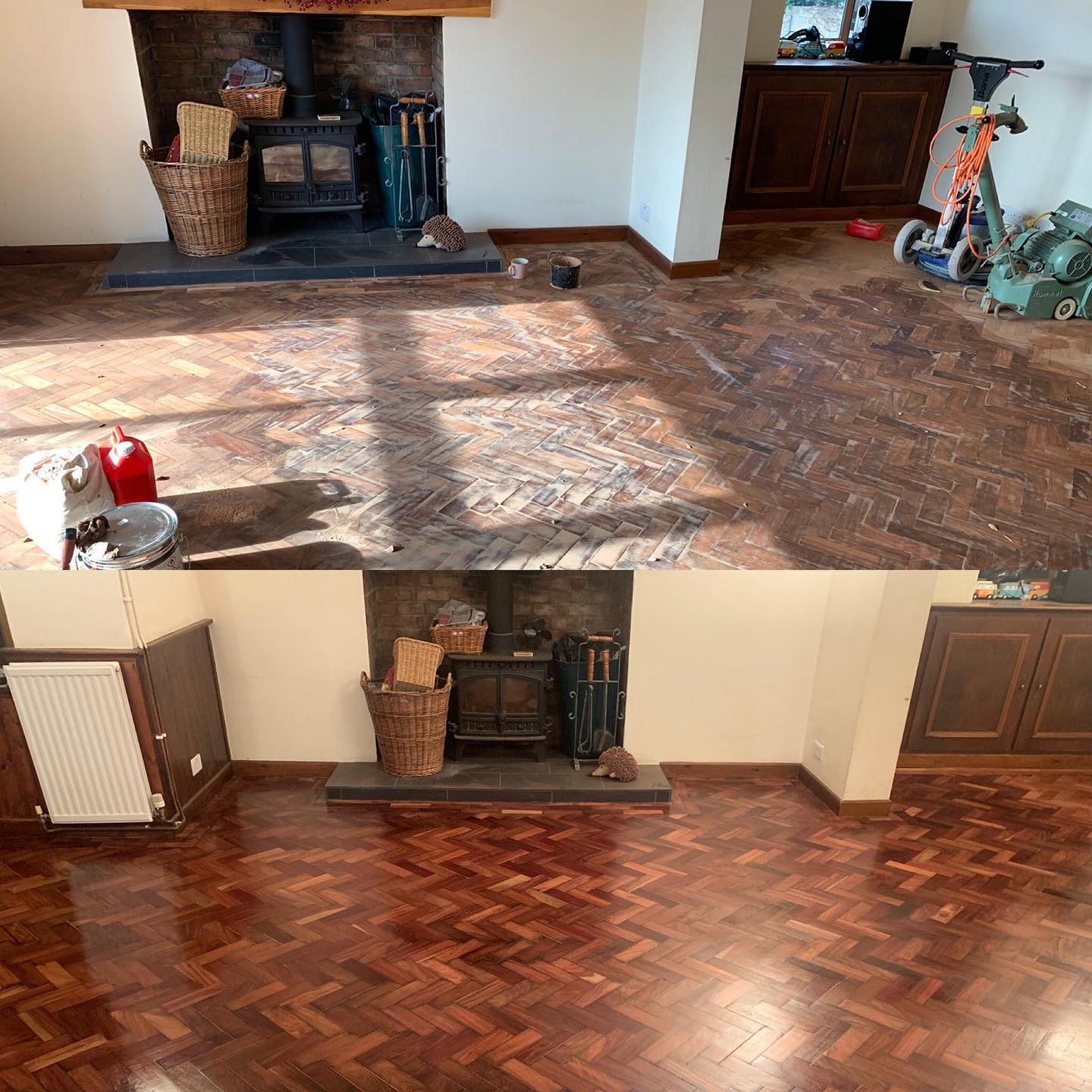
Church and Hall Parquet: Lifting, Re-Bedding and Sanding Woodblock

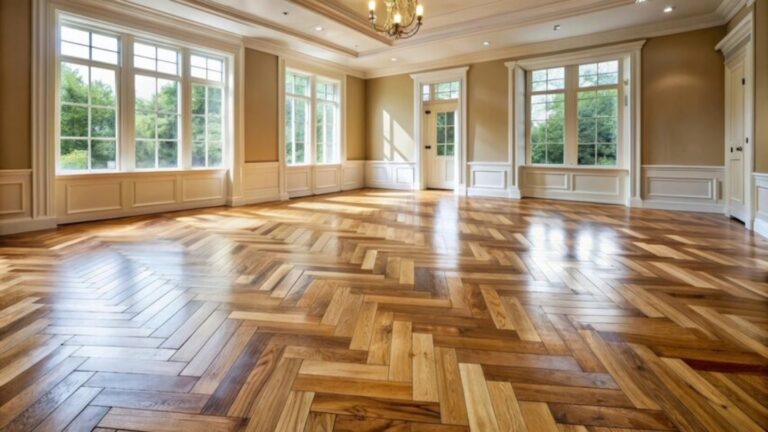
Parquet is where Hampshire projects most often become interesting, so it is worth explaining what a large woodblock floor actually needs.

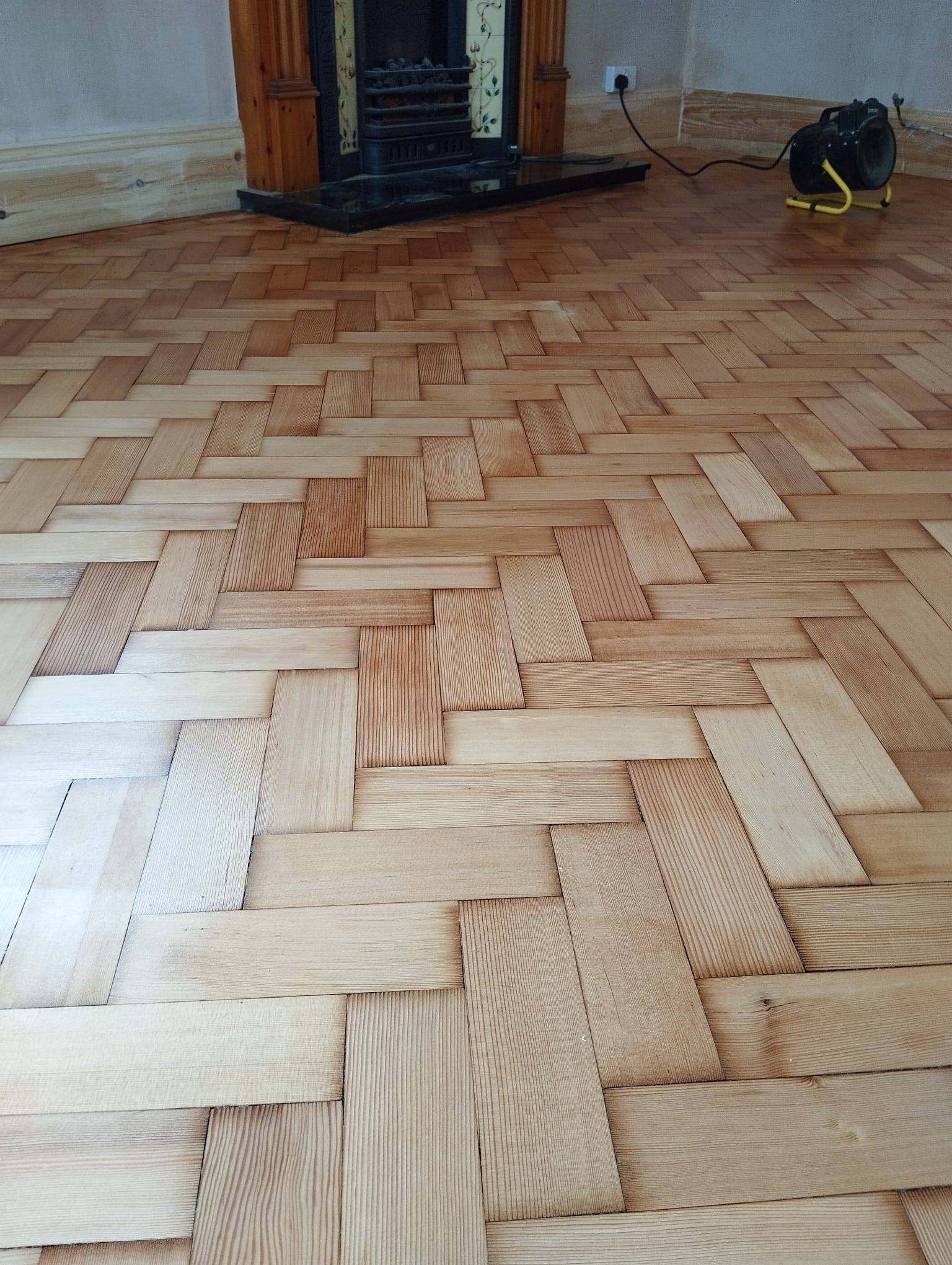
Most church, school and hall parquet in the county was laid in hot or cold bitumen onto a concrete or screed base. Bitumen turns brittle with age, and in a Victorian church where the concrete was poured without any membrane, ground moisture rising through it speeds that failure up. The first sign is a hollow sound underfoot, then individual blocks start to rock, and finally whole sections of herringbone lift as the blocks expand and push against each other. Sanding a floor in that state only makes things worse, because the machine catches loose blocks and tears them out.

The proper sequence depends on how much has failed. Where only a few blocks are loose, they are lifted, the old adhesive is scraped from both block and base, and they are bedded back in a modern flexible adhesive. Where large areas have failed, or the base itself needs attention as it did at Lyndhurst, the blocks are lifted in order and recorded so they return to the same positions, the base is cleaned, repaired and levelled, and the floor is relaid. That is slow work, but it preserves the original timber, which in a church may be over a century old and impossible to match from new stock.

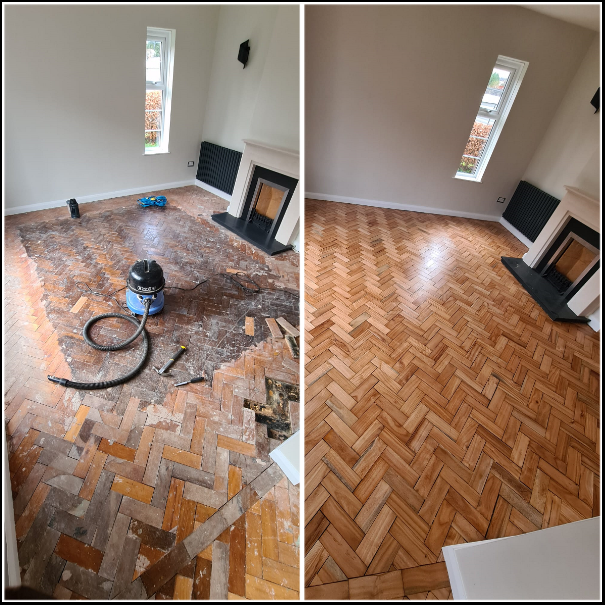
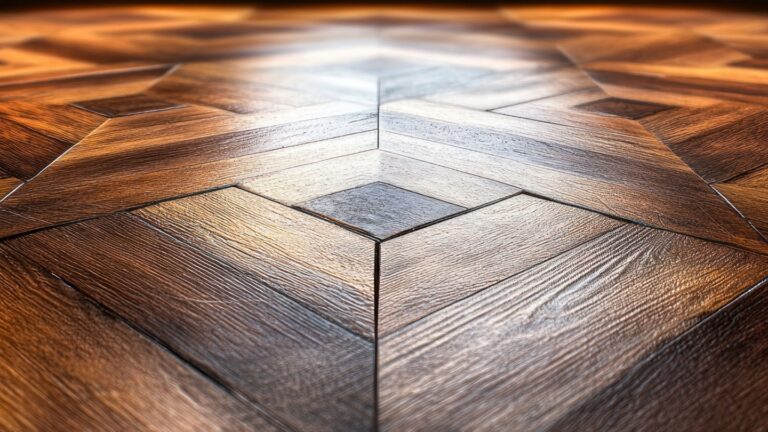
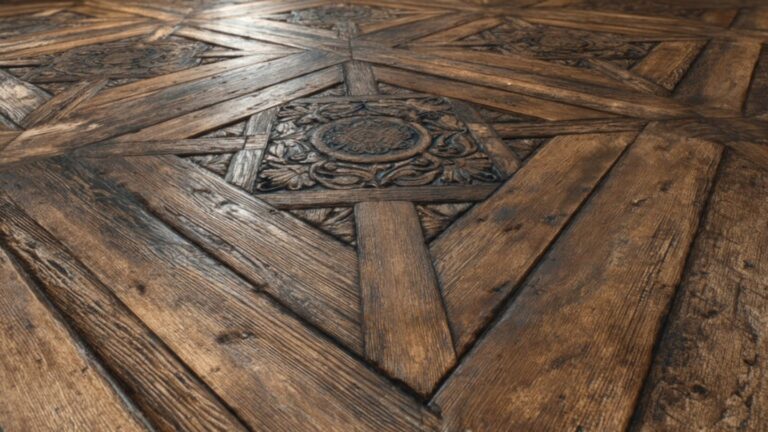
Sanding then follows. Herringbone and other patterns are cut on a diagonal first, so both directions of block are levelled evenly, before finer passes with a multi-head machine remove the scratches that cross the grain. Bitumen squeezed up between blocks has to be kept off the sanding paper, as it smears and clogs. Block floors of every common layout, from basket weave to double herringbone, fall under our parquet floor sanding service.

Stairs come up less often in churches but frequently in the larger Hampshire houses we visit, with long open-string staircases and polished handrails. [[Stair-sanding|Stair sanding]] on those is done tread by tread with hand-held machines and scrapers, protecting balusters and painted strings. On older painted joinery, lead should be ruled out before any sanding starts.

Floor Sanding Essex
parquet floor restoration near me

Repairs, Movement and the Right Finish for Hampshire Floors

Repairs are where a floor is made sound enough to be worth finishing. In Portsmouth terraces, the commonest faults are cut-out sections from old plumbing and wiring, boards split around nails, and soft ends beside external walls where a damp void has been at work. In Winchester’s older houses, it is more often worm-damaged sapwood, shrinkage gaps in wide oak and boards that have been patched with mismatched timber. All of these are handled through our wooden floor repairs, and the work is done before any sanding so that new and old pieces finish level together.

Replacements are only as good as the timber chosen. That is why salvaged timber is stacked at the Higher Poole workshop: a Hampshire repair can then be cut from wood of the same kind, dimensions and vintage as the floor it joins. Floorboard replacement in old oak is particularly demanding because new oak is paler and its grain is usually straighter, which is why reclaimed stock matters.

Gaps in a coastal city behave differently from gaps inland. The air in Southsea is damper for more of the year, so boards stay fuller and gaps are often narrower than in a centrally heated house in the north of the county. The right method of gap filling therefore depends on where the house is: a damp seafront terrace may need little more than fine resin work, whereas a dry, heated villa further inland can justify glued slivers in every other joint.

Creaks are usually down to loose nails or joists that have moved, and squeaky wood floor repair is far simpler with the boards bare. A single bad gouge from a dropped pan, or a scrape where a sofa was dragged, may be handled locally through wood floor scratch repair instead of taking the room back to bare wood.

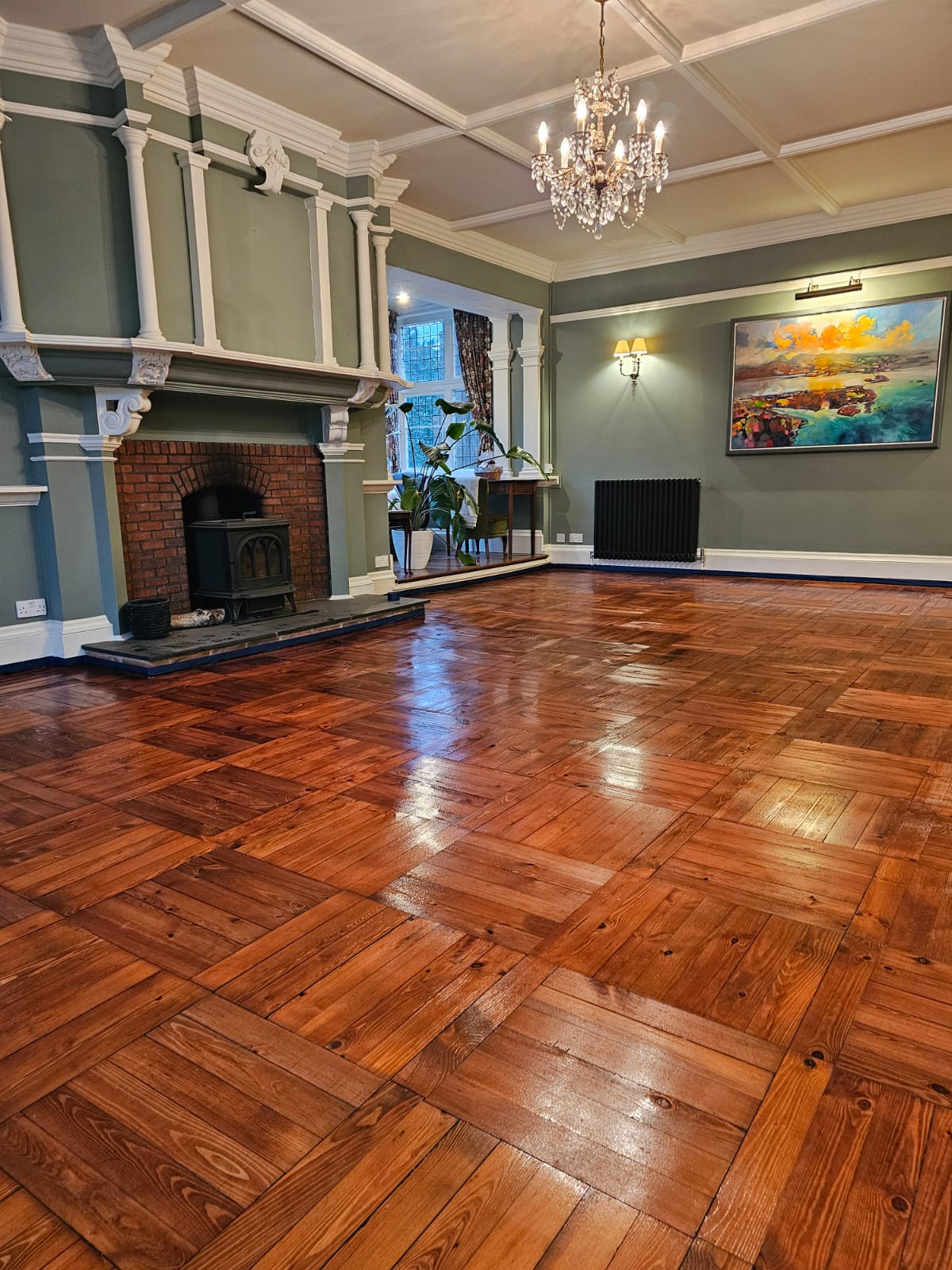
Then the finish. Southsea hallways gritty with shingle dust and parish halls booked for badminton, bingo and choir practice both point towards wood floor sealing with a two-pack product. A Georgian drawing room in the Test Valley is a different case; there the matt depth of hard wax oil or natural oil through wood floor oiling often sits better, and a few period interiors still call for wood floor waxing in the traditional way. At Lyndhurst a stain brought the relaid blocks into harmony with the church interior, and wood floor staining can do the same in a house, provided samples go onto the actual boards first, since every timber takes colour differently. A polished wood floor is the option where a deep shine matters most.

Aftercare, New Timber and Planning a Hampshire Project With Us

Our team will be back in Somerset by the time the new surface faces its first real test, so Hampshire households need to know the rules before we leave. The room is best left completely alone for the first twenty-four hours. On the second day it will bear people in socks or soft slippers, though not outdoor shoes, and heavy pieces such as a dresser, a piano or a bed wait until the third day at the earliest, then come back lifted between two people with felt already stuck under every foot. Rubber-backed runners and rugs are the last to return, after roughly seven days, because a coating still hardening can take an imprint of the latex. In a Southsea house the biggest single threat afterwards is beach sand, so a coir mat outside and a long textile mat inside each door will save more finish than any cleaning product. Vacuum often, mop rarely and with very little water, and leave steam cleaners and bleach in the cupboard.

The busiest paths through a room, from door to sofa or kitchen to garden, will dull first. Catch them before the timber shows and a single maintenance coat, keyed in with a fine pad, brings the sheen back; that is what our wood floor buffing covers. With that sort of care, oak in a cathedral-city family house often goes the best part of a decade, eight or ten years, before the machines need to return. Guesthouse landings and brasserie floors work far harder and generally come round again after four or five.

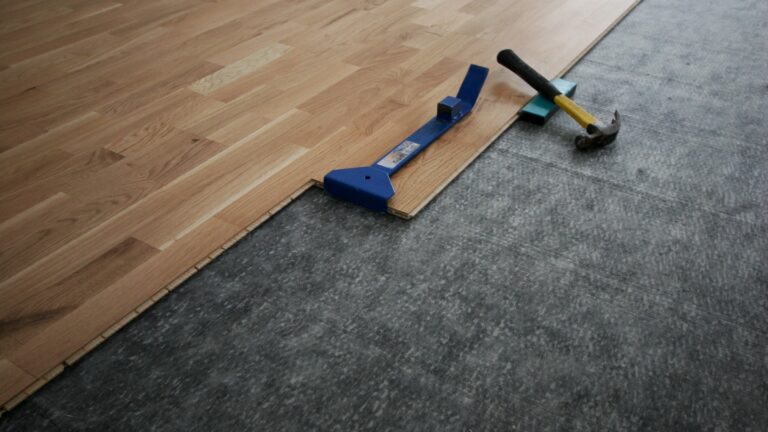
Every so often a Hampshire survey turns up boards worn to the tongue, or a conservatory slab where the owners would like oak. Through wooden floor installation we can lay a new Junkers, Bona or similar floor ourselves or deliver it for your builder, and either way the packs want a few days opened up in the house first.

Because Hampshire is a journey for us, the first exchange does a lot of the work. Email info@ryansrestoration.co.uk with one photograph that takes in the whole room and another, closer, that shows the boards, plus a rough idea of how many rooms or square metres are involved. That lets us decide honestly whether the project suits the trip. When it does, the survey is free. Allow about half an hour a floor for us to check how much wood is left, meter the boards for damp and inspect airbricks and old patches. Our written quotation then breaks the job into its parts, and it is honoured as written so long as the work described stays the same. Hampshire callers can reach the Wellington office on 01823 674562 during the working week, 8am to 6pm; Saturdays are by arrangement.

Parquet Flooring Restoration

Hampshire Floor Sanding Questions

Not routinely. We are based near Wellington in Somerset, several hours west, so we make the trip when the work is substantial: a house with several floors to do, or a church, school, hall, hotel or restaurant. If you are unsure, send a couple of pictures and an approximate size, and we will be straight with you about whether it is worth our coming.

Yes, provided the cause is dealt with. Lifting parquet usually means the original bitumen bond has failed, often with moisture coming through the base. Loose blocks are lifted, cleaned and re-bedded, and badly affected areas can be lifted in order, the base prepared and the blocks relaid. Our Lyndhurst church project followed that approach before the floor was sanded, stained and sealed.

It does not have to. Old oak is often thinner than it looks, and a light sanding that removes dirt and old coatings while leaving gentle hollows and patina is usually the right approach. Thickness is checked at the survey. The finish is chosen with oak’s tannin in mind, as some lacquers can discolour it slightly.

It can. Damp coastal air keeps boards fuller for more of the year, beach sand scratches finishes quickly near the door, and blocked airbricks can leave voids damp. We check moisture and ventilation before sanding, and usually recommend a hard-wearing lacquer for busy coastal homes. A deep doormat at each entrance makes a big difference afterwards.

Yes, and that is usually the best time. Sanding, several coats of fast-curing lacquer and court line marking can all be done within a holiday period if dates are booked early. Because we travel to Hampshire, booking well in advance is particularly important. Governors and hall committees can be sent the written method statement and our insurance certificate in good time for their meetings.

Usually, with phasing. A New Forest pub might have its bar done between Sunday closing and Tuesday opening, while a hotel releases a corridor of rooms at a time. Fast-curing two-component lacquers mean each area is ready for service again quickly. We plan the sequence with the manager before work starts, so bookings can be managed around it.

Usually, yes. Salvaged boards are held at our workshop near Wellington, built up over many years of work on older floors. Aged oak and nineteenth-century pine are both in the racks, and a piece chosen for its grain and tone disappears into the floor once everything has been sanded and coated together.

A domestic floor is typically one to three days on site. Relaying parquet, as at Lyndhurst, or working through a large house adds time, and in a busy venue the work is broken into overnight stints. On a job some distance from home it helps a great deal to have rooms cleared beforehand, so the work can run straight through from start to finish.

Start with a pair of photographs, one taking in the entire floor from the doorway and one showing the boards up close. Attach them to an email or send them through the contact form, adding the town and an approximate floor size. If the project fits, a free visit is booked and our first observations come with the reply. A written itemised quotation follows the survey, holding unless the scope changes.