45 years’ experience  ·  Rated 4.9 on Google  ·  Family-run, from our workshop near Wellington

45 years’ experience · Rated 4.9 on Google · Family-run

Floor Sanding and Wood Floor Restoration in Hemel Hempstead

Woodblock and board floors in Hemel Hempstead’s post-war homes, and school hall floors over the holidays, sanded and sealed by a Somerset family firm.

QUICK QUOTATION

Floor Sanding Taunton

Floor Sanding in Hemel Hempstead, and Why We Travel There

Ryan’s Restoration works from a family workshop outside Wellington in Somerset. Hemel Hempstead is not on our doorstep, and you should know that before you pick up the phone. We head up to Dacorum when a project is substantial enough to make the journey sensible: a house where the woodblock runs from the front door to the back, a run of rooms that all need doing together, or commercial premises such as a school hall, an office or a shop. For one modest room, a sander who lives nearby will serve you better, and we will happily say so.

So what does floor sanding in Hemel Hempstead actually involve on a typical house? A day-by-day outline gives the clearest picture, although every floor differs a little.

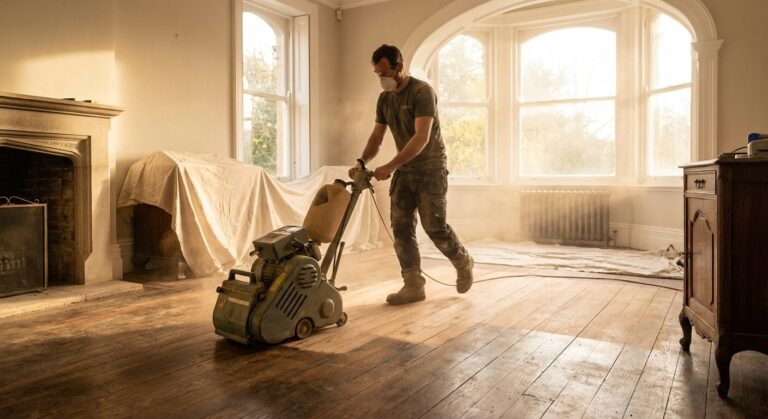
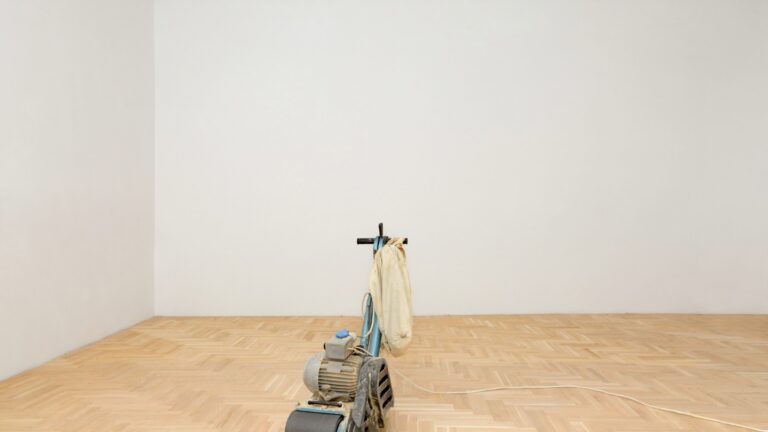
The first morning is preparation. Furniture comes out, skirtings are checked, and any loose blocks, lifted boards or proud nail heads are dealt with, because a sanding drum that strikes a raised nail rips its abrasive and can gouge the surface. The first cut then goes in on a coarse grit, enough to strip the old seal and take down minor unevenness. By the afternoon the main field of the floor is usually bare.

Day two is refinement. Every grit after the first exists to erase the scratches of the one before, and the edger works round each wall to the same ladder of grades. Corners and the strips under radiators are scraped and hand sanded. Once the floor has been vacuumed and tacked off, the first coat of finish goes on, which is exactly when a skipped grade would reveal itself as swirls or lines.

The third day, where it is needed, is for further coats with a light de-nib between them. A small bedroom may be finished inside a day; a ground floor of parquet often takes the full three. The sequence is set out machine by machine on our floor sanding service page.

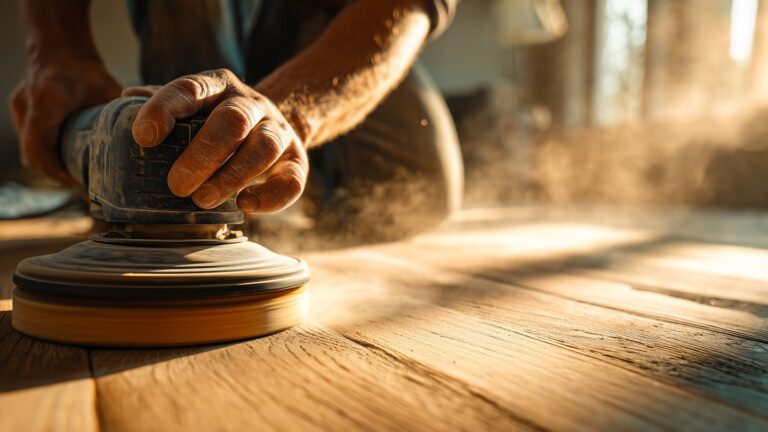
A word on dust. Each sander and edger we run is coupled to sealed extraction, which pulls the dust away right at the abrasive. It captures the great majority, though some fine particles can still settle on a high shelf, so we never call the work completely dust-free. In a compact new-town terrace where the kitchen opens straight off the living room, sanding with dust extraction is what keeps the rest of the house usable during the job. Hemel is one of a handful of Dacorum and wider county towns we drive up for, all gathered on the Hertfordshire floor sanding hub.
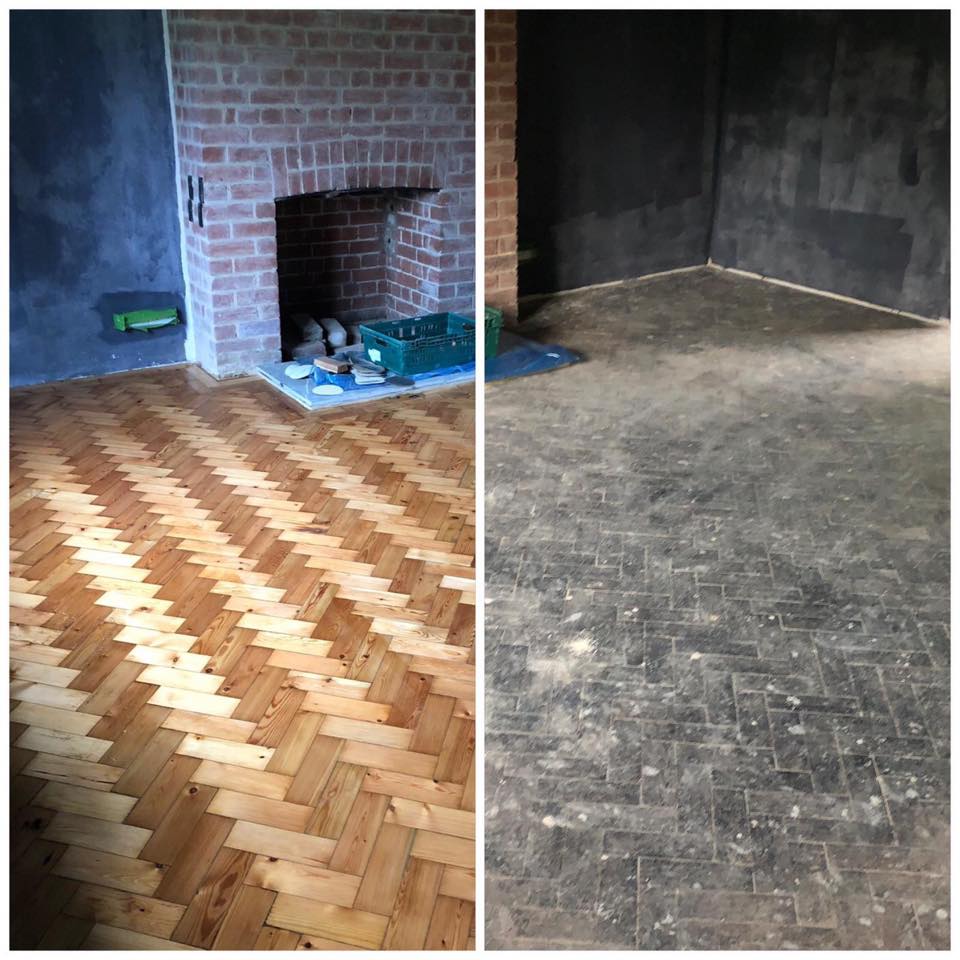
Post-War Hemel Hempstead Homes: Woodblock, Mosaic Panels and Concrete Slabs

Hemel Hempstead was designated a new town in 1947. Adeyfield was the first neighbourhood the development corporation built, Bennetts End followed from 1951, and more neighbourhoods came after. The result is a town where a large share of homes date from the 1950s, 1960s and 1970s, much of it brick terraces and semi-detached houses. That shapes wood floor restoration in Hemel Hempstead, because the floors of that era are quite unlike the suspended pine boards of a Victorian market town.

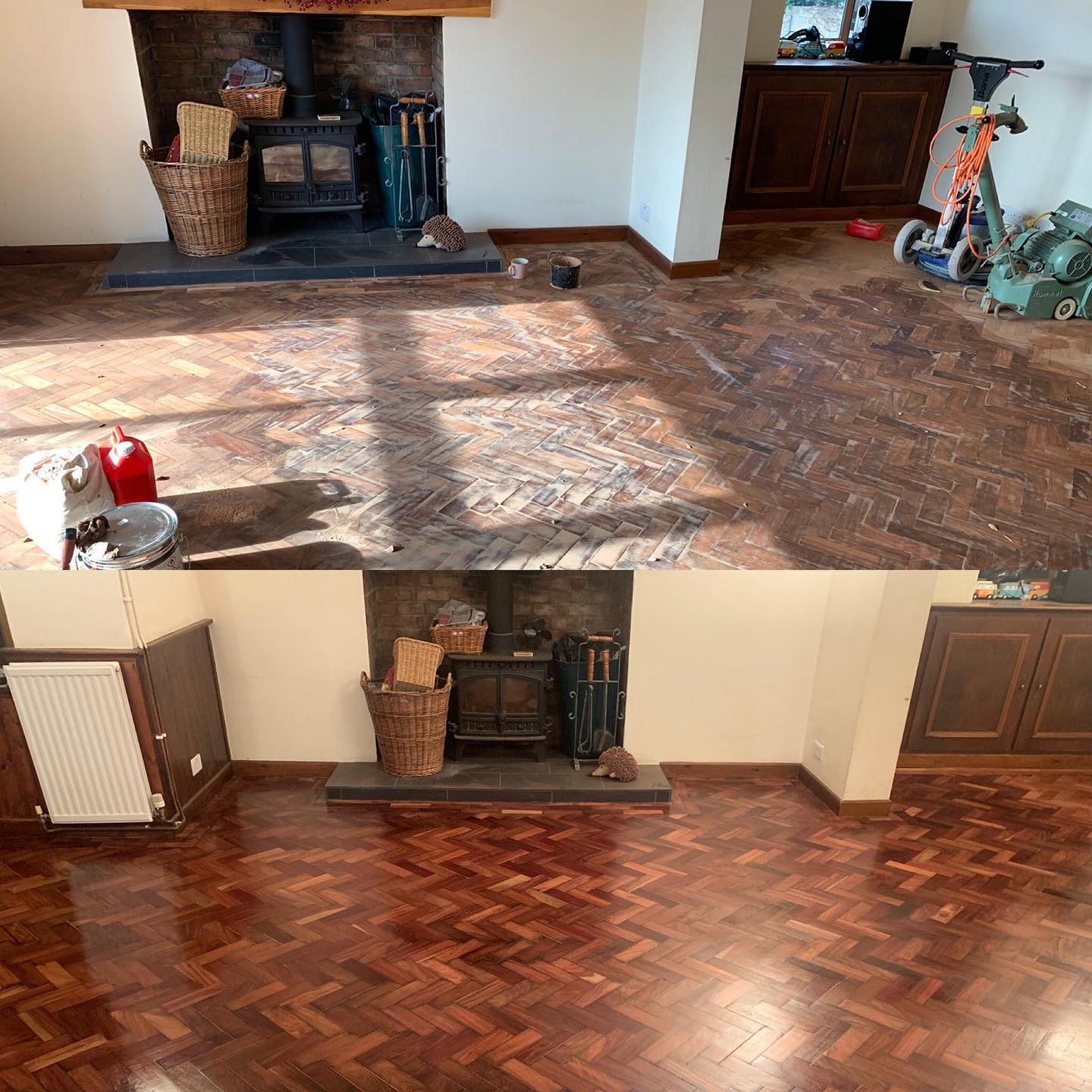
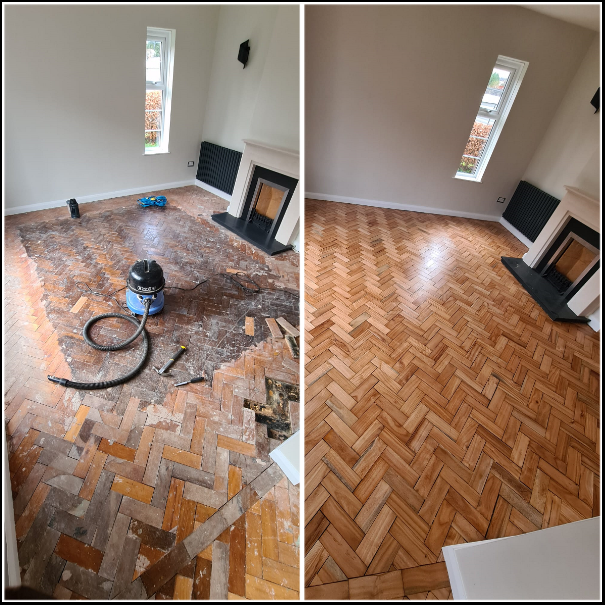
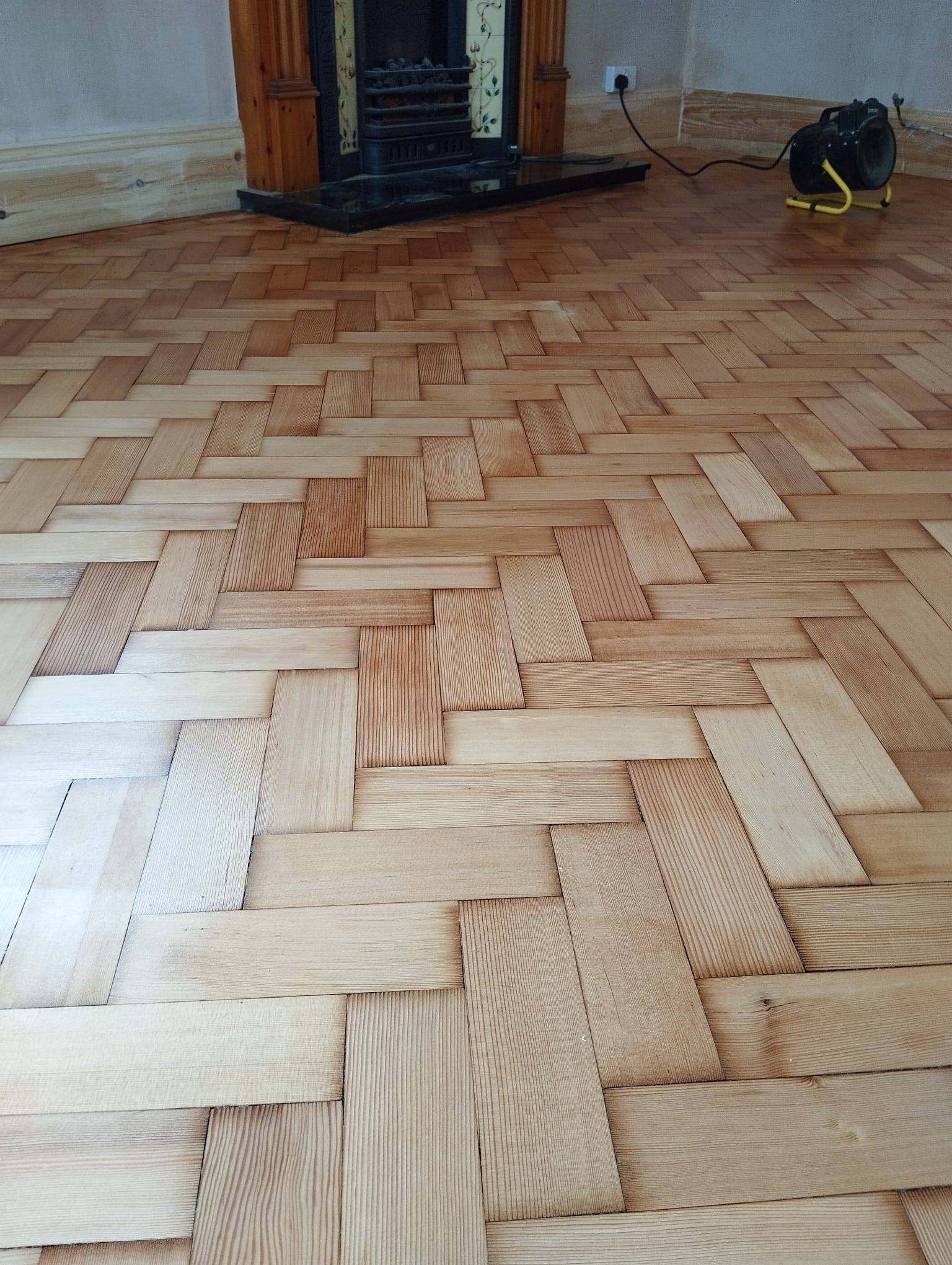
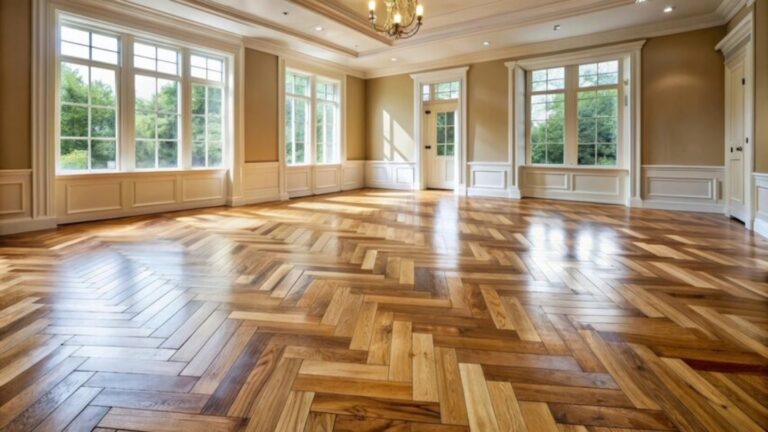
Houses of that period were very often built with a solid concrete ground floor, and what went on top of the concrete varied. Some had woodblock laid in hot bitumen, in herringbone or in a simpler brick-bond or basket pattern. Many had thermoplastic tiles, those hard, brittle squares in black, red or marbled brown that still turn up under carpets. In the 1960s and 1970s, mosaic parquet became popular: small fingers of hardwood assembled into square panels and glued straight onto the screed.

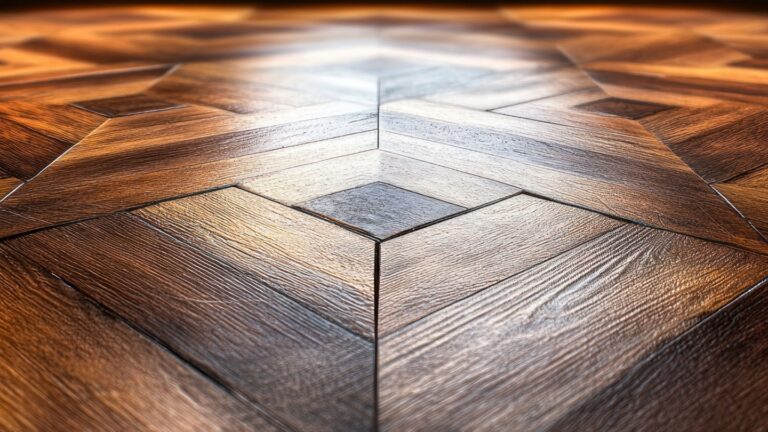
Each calls for a different approach. Traditional solid woodblock is generally deep enough to stand several sandings over its life. Mosaic panels are another matter. They are typically only around eight millimetres thick, and the fingers are held by nothing but the adhesive underneath, so sanding has to begin on a finer grit than usual and remove no more than it must. Loose fingers are glued down before the machine reaches them. Our parquet floor sanding service covers solid blocks and mosaic panels alike.

Two cautions before anything is lifted or sanded. Some thermoplastic tiles and some old black bitumen adhesives from the mid-twentieth century contain asbestos. They are generally stable while left alone, but breaking, scraping or sanding them is a different matter, so a test by a qualified asbestos surveyor should come first. The second caution is damp. A slab laid in the early post-war years may lack an effective damp-proof membrane, and moisture rising through the concrete is the usual reason ground-floor woodblock starts lifting or tenting. Moisture readings at the free survey show whether the slab is dry enough for the floor to be re-bonded, or whether the damp has to be dealt with first.

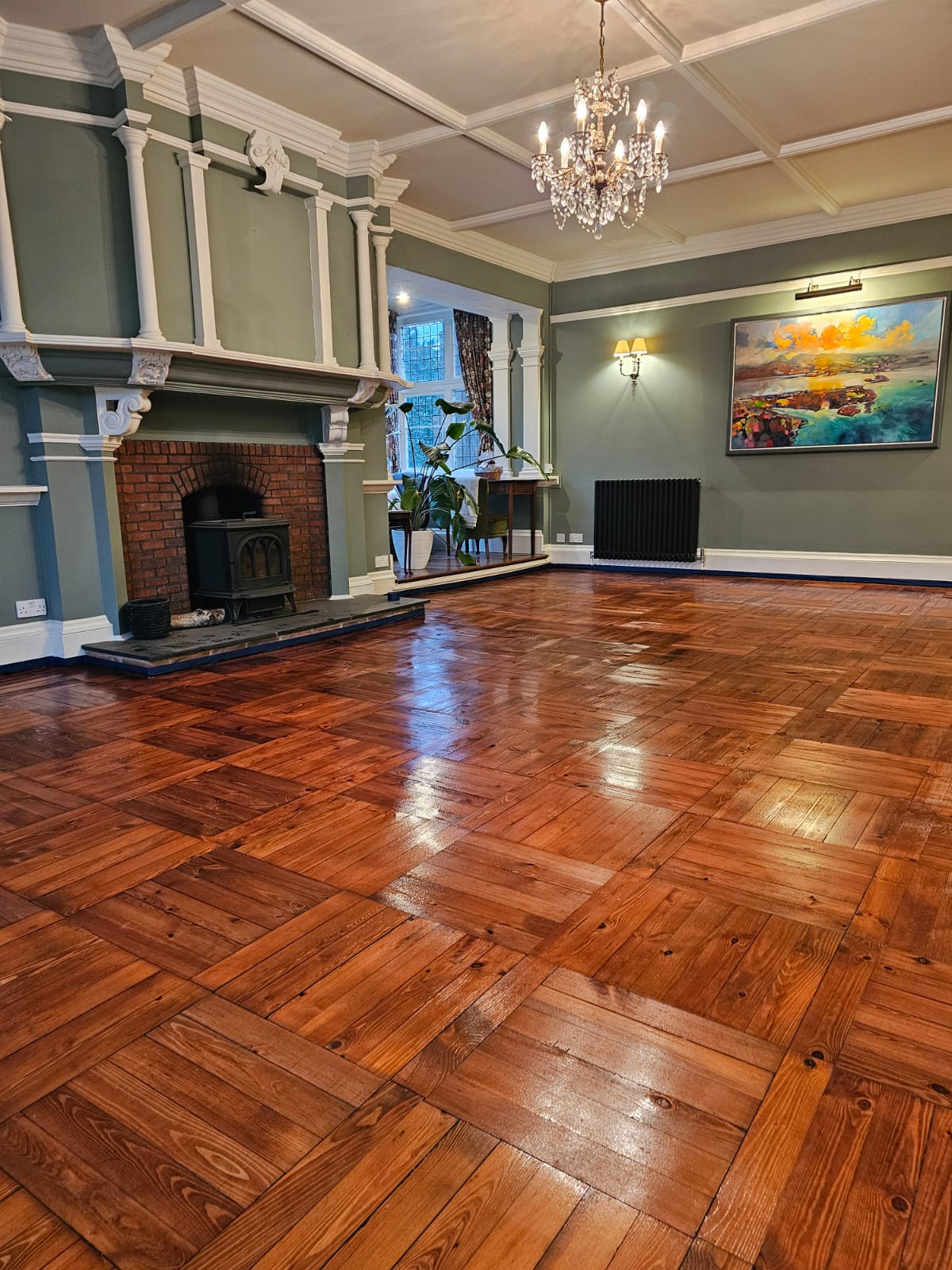
The species varies more than people expect. Oak is commonest, but post-war blocks were also cut from tropical hardwoods such as iroko or sapele, which sand differently and react differently to finishes, as the finishes section below explains. Where the blocks are oak, the work overlaps with our oak floor restoration service. The wider case for reviving old timber rather than ripping it out is made on our wood floor restoration page.

Floor sanding south east London
Commercial Hall Floor Refurbishment

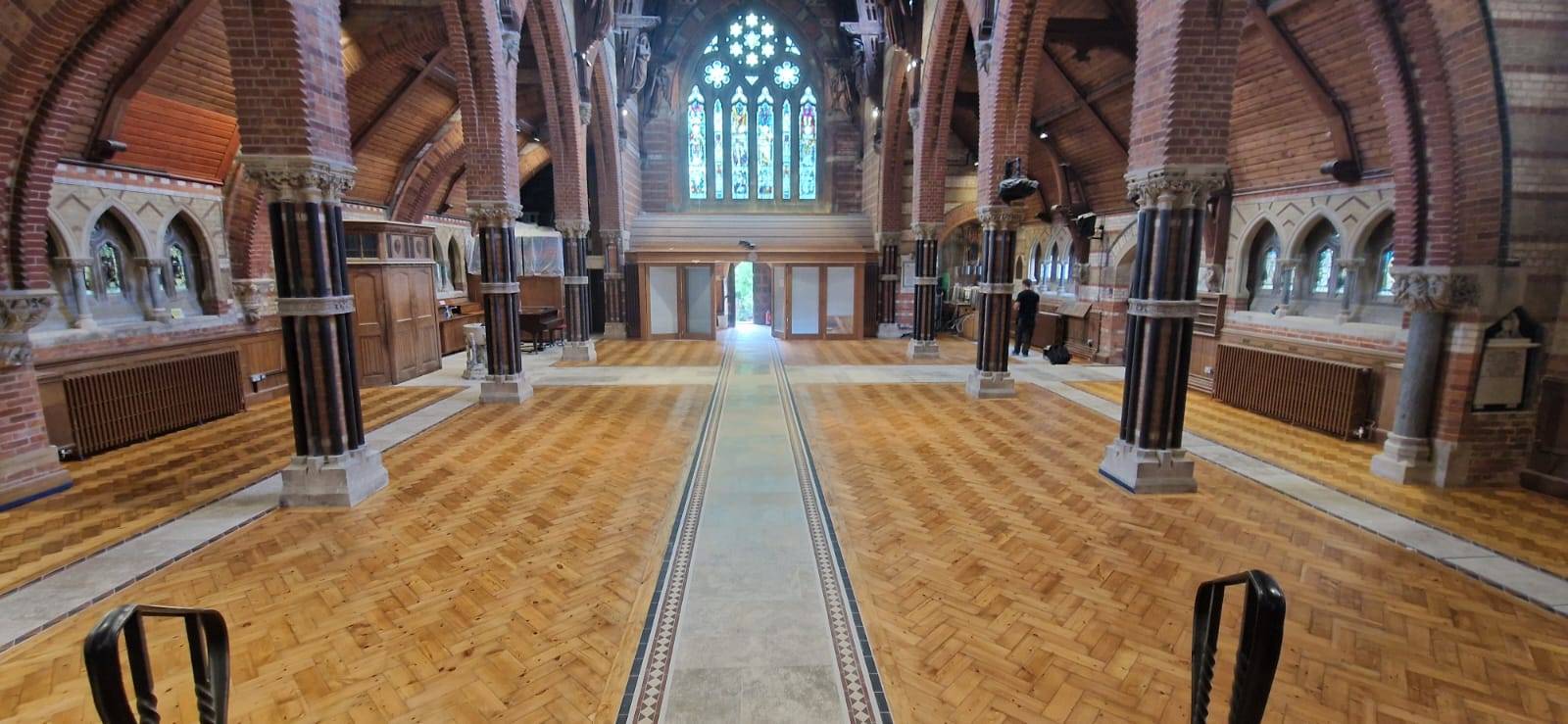
Commercial Floor Sanding in Hemel Hempstead: School Halls Over the Holidays

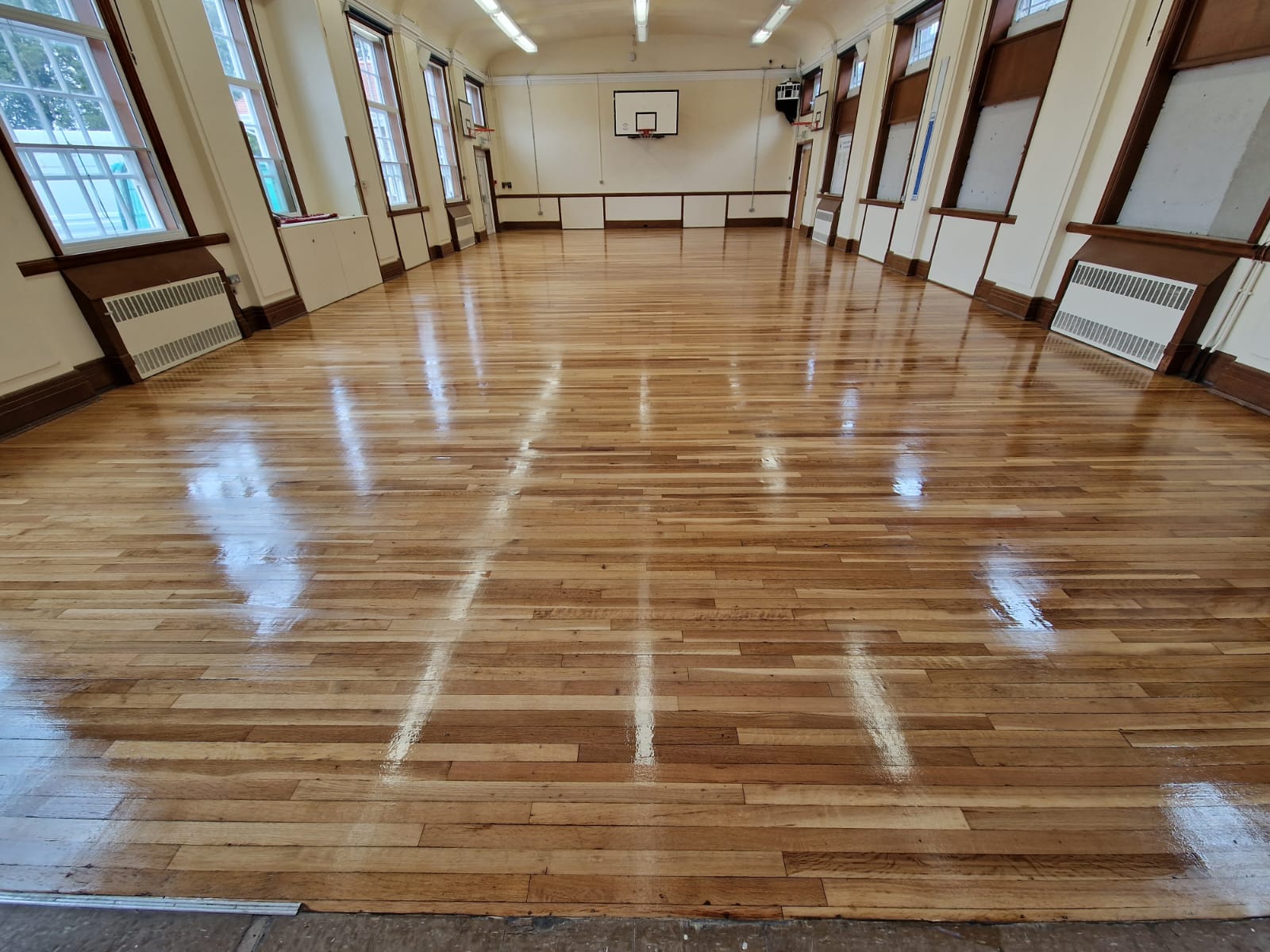
School halls are the commercial work that most often justifies the drive, and a primary school hall is one of the hardest-working floors anywhere. In a single day it might host assembly, two or three PE lessons, a lunch sitting with tables and benches dragged in and out, and an after-school club. By the end of a school year the finish is worn grey along the routes from the doors, scuffed pale where tables are pushed about, tacky where squash has been spilled, and slippery where it has been polished by thousands of small trainers.

Commercial floor sanding in Hemel Hempstead for a school is planned around the school calendar. In practice that means the summer holiday for a full sand, with shorter breaks suiting a recoat. Those weeks fill quickly. Schools tend to book during the spring term, and once a slot is agreed we keep it for them.

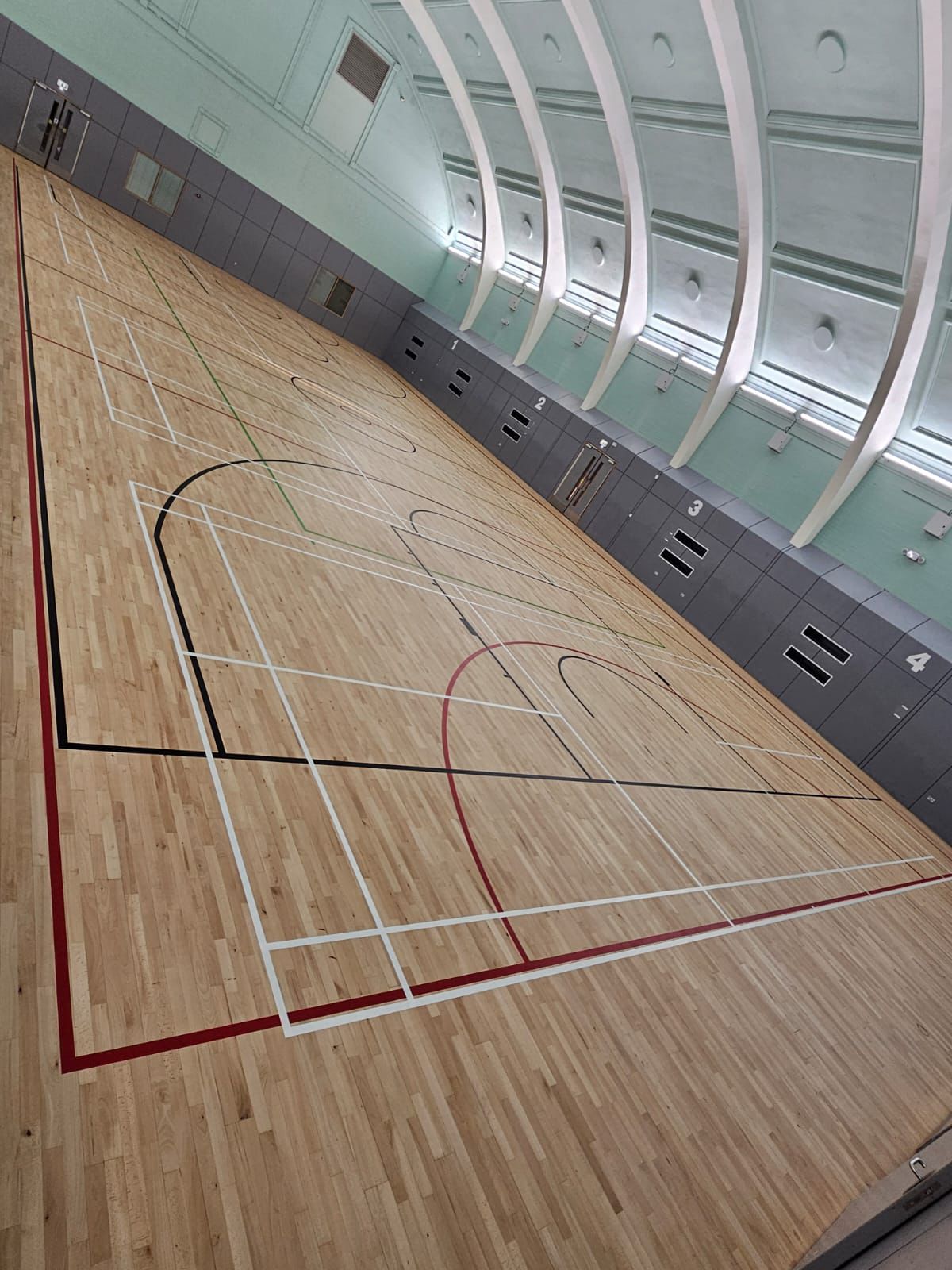
The work follows a settled order. The hall is cleared, staging and PE apparatus are moved or protected, wall bars and fixed equipment are masked, and the floor is sanded back to clean timber. Court markings come next. Our own crew sets out the netball circles, badminton boxes or basketball keys the PE department asks for, measured to each sport’s official layout, and paints them once the bare timber has its first coats, so the topcoats lock the colour underneath. That avoids the familiar problem of lines that scuff away within a term because they were painted on top of the lacquer.

Picking the topcoat for a hall is a balance between footing and toughness. A sports-grade lacquer in a satin or matt sheen gives children reliable footing and cuts glare from high windows, while still standing up to chair legs and dinner spills. Water-based, low-odour products with fast curing times mean the hall can be aired and ready long before the new term begins.

Business managers and governors usually need paperwork before they commit. A method statement for the bursar’s file, a copy of our insurance and references from other clients can all be sent before the governors sign anything. A busy hall generally needs taking back to bare wood every four or five years, with a recoat in the years between. See school hall floor sanding, sports hall sanding and line marking and our wider commercial floor sanding service. The same planning applies to retail floors in shopping parades and to offices on the town’s business estates, where weekend working usually replaces the school holiday.

Gaps, Creaks and Damaged Boards in Hemel Hempstead Bedrooms and Landings

Upstairs, most post-war houses have suspended timber floors on joists, and here the work looks more like conventional board sanding. The boards are usually softwood, and often narrower tongue-and-groove than the wide square-edged boards of older houses. Tongue-and-groove rarely opens into the draughty gaps Victorian floors suffer from, but gaps do appear, typically along a run that has dried and shrunk beside a radiator. For hairline cracks, the usual answer is a resin binder worked into the joint with fine dust saved from the first sanding passes; for anything wider, slim timber strips glued in place hold up better. The trade-offs are explained on our gap filling page.

One thing to check before getting excited about what is under the bedroom carpet: in some houses the original boards were replaced with chipboard sheets at some point, often during rewiring or a heating upgrade. Chipboard cannot be sanded and refinished in any meaningful way. If that is what you find, a new timber floor is the realistic route.

Creaking is very common on landings and outside bathroom doors. Joists shrink as they dry out over the decades, nails loosen, and boards rub against each other or ride up and down on the nail shank. Screwing the boards down into the joists, after checking for pipes and cables below, usually stops it. Our squeaky floor repair service covers that, and it is quick to do while the furniture is out of the room anyway.

Boards cut for central heating pipes are the other usual culprit. Short sections get lifted and put back on battens, or not put back properly at all, and they dip when stood on. Where a board is split or badly patched, floorboard replacement with reclaimed softwood of the same width and depth gives a repair the sanding then blends in. Pine floor restoration covers how softwood floors of this kind are best finished.

Downstairs, woodblock has its own repairs: lifting and re-bedding hollow blocks, replacing missing ones and filling the space where a hearth or partition wall was taken out. Surface scratches from pets and furniture generally disappear with the sanding, while deeper dents and gouges may need scratch repair first. The full range of jobs sits under wooden floor repairs.

Floor Sanding Essex
parquet floor restoration near me

Stairs and Finishes: What Suits Woodblock, Iroko and Family Life

Staircases in new-town houses are usually straight flights with risers, and many have been carpeted for most of their lives. Under the carpet the treads may be decent timber worth revealing, or plain softwood with a painted margin where the carpet stopped. Some houses of the 1960s and 1970s had open-tread stairs, which are easier to sand because there are no risers to work round, though each tread edge needs care. Either way, gripper, tacks and staples come out first, the treads are sanded with small machines and by hand, and the nosings are shaped so they keep a clean edge. Old paint on strings and spindles should be tested for lead before it is sanded. Stair sanding is often paired with the hall floor so colour and sheen run unbroken from the front door to the landing.

Finish choice depends on the timber as much as the room. Woodblock in a busy hall usually gets a lacquer. Floor sealing comes in water-based, oil-based and two-component forms, and the last is the toughest for a hall that takes school bags, bikes and wet boots. Oily tropical species such as iroko and teak contain natural oils that can stop some lacquers bonding properly, so a primer suited to the timber goes down first. Oak goes the other way: its natural tannin chemistry can tint certain water-borne finishes slightly grey-green unless a compatible primer is used.

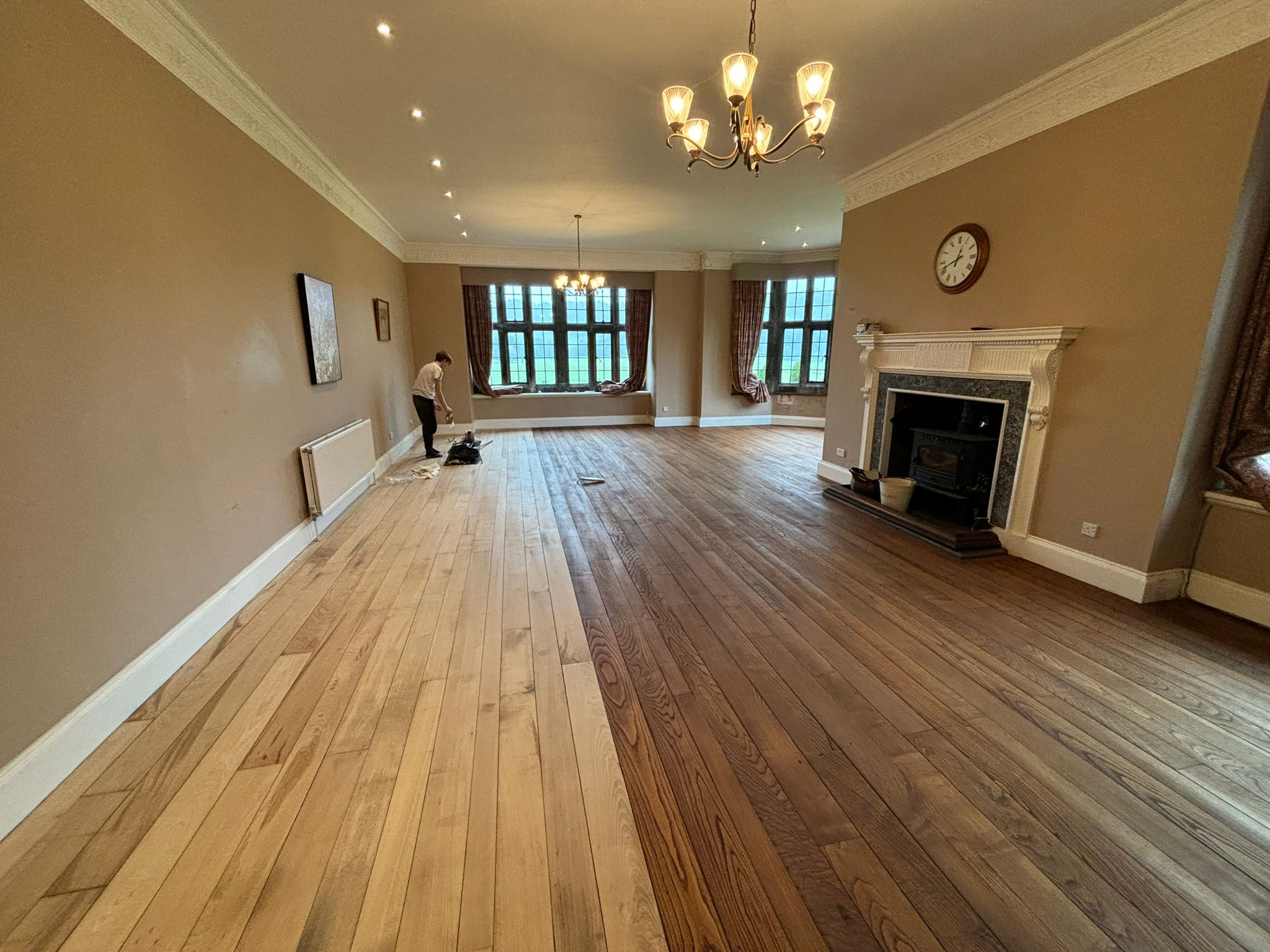
Many post-war woodblock floors were first finished with an oil-based seal that has turned a deep orange over the decades. Sanding removes that completely, and a water-based lacquer keeps the fresh timber close to its natural colour. If you liked some of the warmth, an oil-based product brings part of it back.

For a softer look, oiling with natural oil or hard wax oil soaks into the timber and can be touched up in a small patch. Waxing gives the most traditional finish and suits a little-used front room better than a kitchen. Colour changes are possible with floor staining, always tested on your own floor first, because one stain can look entirely different on oak, iroko and softwood. For a floor that is sound but simply dull, polishing lifts the sheen without any sanding.

After the Last Coat: Care, Recoating, New Floors and Your First Enquiry

Give the floor time. For the first 24 hours or so it is socks only; sofas, beds and tables should wait 48 to 72 hours, and anything heavy is better carried in than slid across. A new lacquer goes on hardening for a fortnight or so, and putting a rug down early risks a faint pale square, so keep it rolled for now.

Routine care needs very little kit. A soft brush or a vacuum with a hard-floor head, a well-wrung mop with a wood floor cleaner, felt pads on the dining chairs and a decent mat inside the front door will keep grit off the finish. Avoid steam mops, bleach and anything abrasive.

Treated that way, a home floor generally needs a full resand roughly every eight to ten years. Before then, when the finish has gone dull but the timber is unmarked, buffing and recoating puts a fresh wearing layer on top without cutting into the wood. That is especially worthwhile on thin mosaic parquet, where every sanding uses up depth that cannot be replaced.

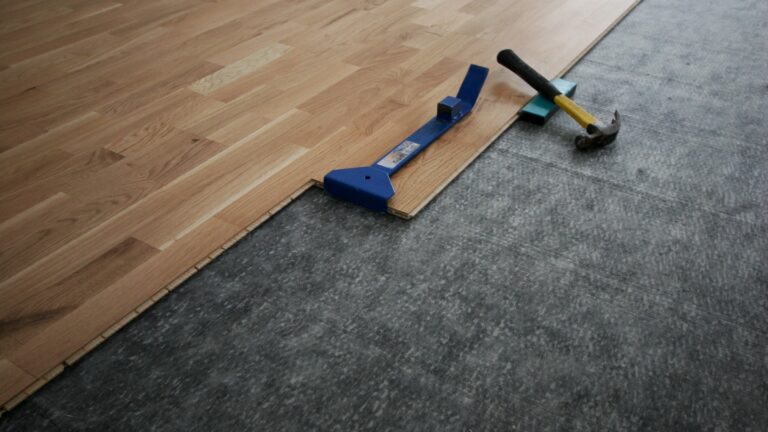
A number of Hemel lounges hide nothing under the carpet except screed, and some old blocks are too thin to rescue; either way, wooden floor installation is an option, done by us or with the materials delivered for a fitter you already use, from ranges that include Junkers and Bona. On a post-war slab, the concrete needs a moisture test before any timber goes down, and a membrane or suitable underlay may be required.

A sensible opening is an email to info@ryansrestoration.co.uk with a Dacorum postcode and two pictures attached, the full room plus a close-up of where the blocks or boards look worst. When the job is big enough for the journey up the motorway, the next stage is a free visit of roughly thirty minutes. On a post-war house, the moisture reading on the slab is often the most important figure we take, alongside timber thickness, ventilation and any earlier repairs. Afterwards you receive the quotation in writing with each element listed separately, and the figure only moves if the agreed work does. For a conversation first, 01823 674562 is staffed on weekdays between eight and six, with Saturday calls by appointment, and our website enquiry form reaches the same office. We travel to nearby Watford for floor sanding on the same basis.

Parquet Flooring Restoration

Hemel Hempstead Floor Sanding Questions

No. Our workshop sits close to Wellington on the Somerset and Devon side of the country, several hours from Dacorum by road. We travel to Hemel for larger home projects, such as a whole ground floor of woodblock, and for commercial work including school halls, offices and shops. A lone box room is better handed to a sander based in or near the town.

Probably not. Black, brown or red squares under carpet in a post-war house are usually thermoplastic tiles stuck directly to the concrete. Some of these tiles, and the adhesive beneath them, can contain asbestos, so do not break them up or sand them until they have been tested. Depending on the result, a new timber floor may be an option.

Usually once or twice, with care. Mosaic panels are thin, often about eight millimetres, and the small fingers rely entirely on the adhesive below. Loose fingers are glued down first, sanding starts on a finer abrasive than normal, and only enough is taken off to clear the old finish and marks. Recoating between full sands helps preserve the depth that remains.

On a concrete ground floor the commonest cause is moisture coming up through the slab, sometimes because the original damp-proofing was limited or has failed, sometimes because of a leak or a blocked drain outside. The blocks swell and push against one another. The source of the moisture has to be found and resolved before re-bonding, or the same patch will lift again.

As early as possible, ideally during the spring term. The summer holiday is the main window for a full sand and line marking, and those weeks fill up. Once dates are agreed they are held for the school. Shorter breaks such as half term can suit a recoat, which takes far less time than sanding back to bare timber.

Yes. Line marking for halls is carried out by our own team, to the dimensions set by the relevant sport’s governing body. Marking happens on freshly sanded timber partway through the coating stage, which means trainers wear the lacquer above the paint rather than the paint itself. Tell us which sports the hall is used for when you first get in touch.

Usually, yes. The orange colour normally comes from an old oil-based seal that has aged, and sanding takes it off completely. A water-based lacquer then keeps the timber much closer to its natural shade. If the blocks are a darker species such as iroko or sapele they will still be warm in tone, but far less orange than before.

One to three working days covers most houses here, and a ground floor of woodblock needing re-bonding tends to use all three. From the next morning you can pad across it in socks; the heavy furniture waits two or three days. If both the hall and stairs are being done, mention it early, because it affects the order of work and access to the bedrooms.