Floor Sanding Luton

Floor Sanding and Wood Floor Restoration in Luton

QUICK QUOTATION

Floor Sanding Taunton

Floor Sanding in Luton and Dunstable

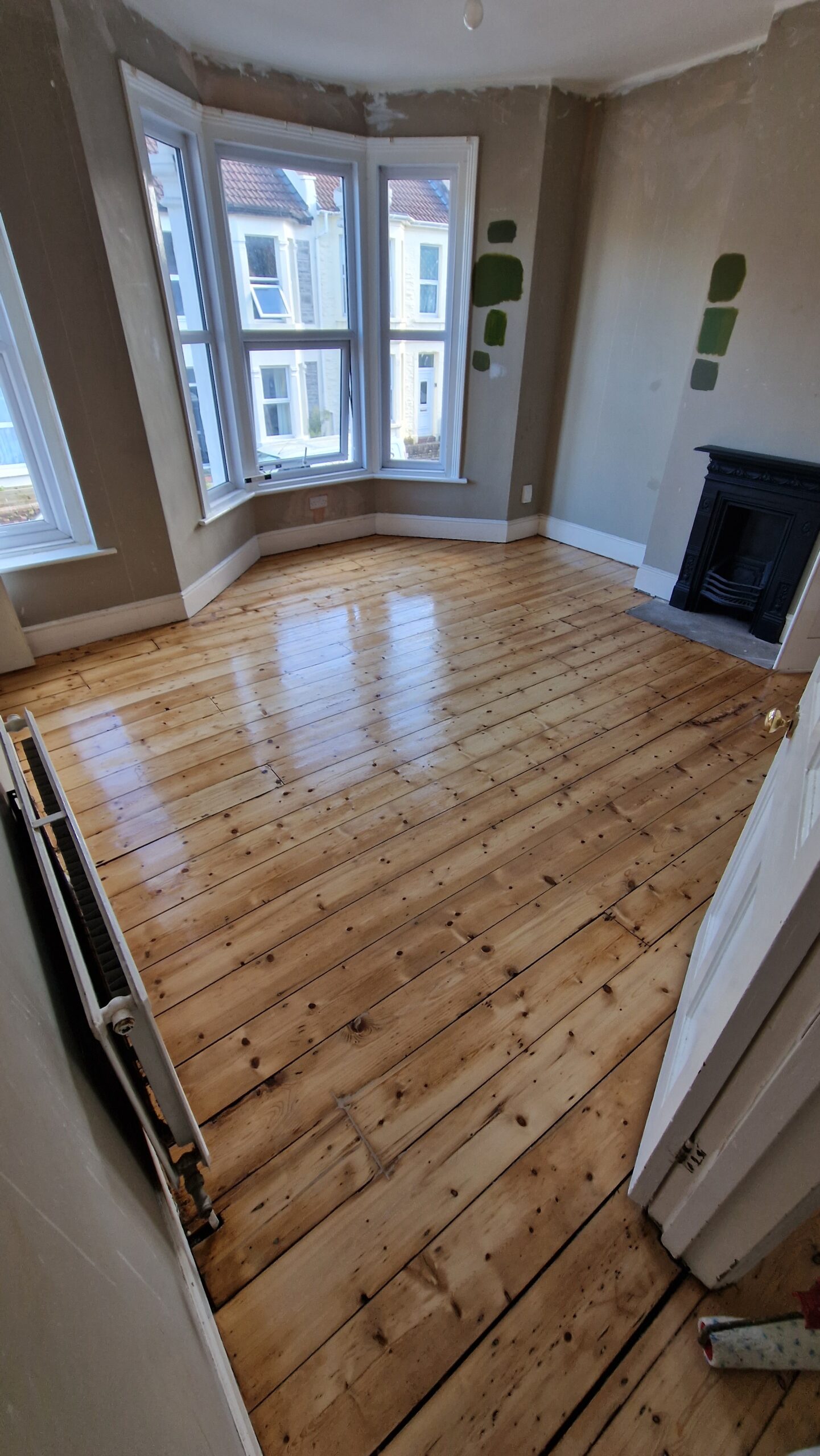
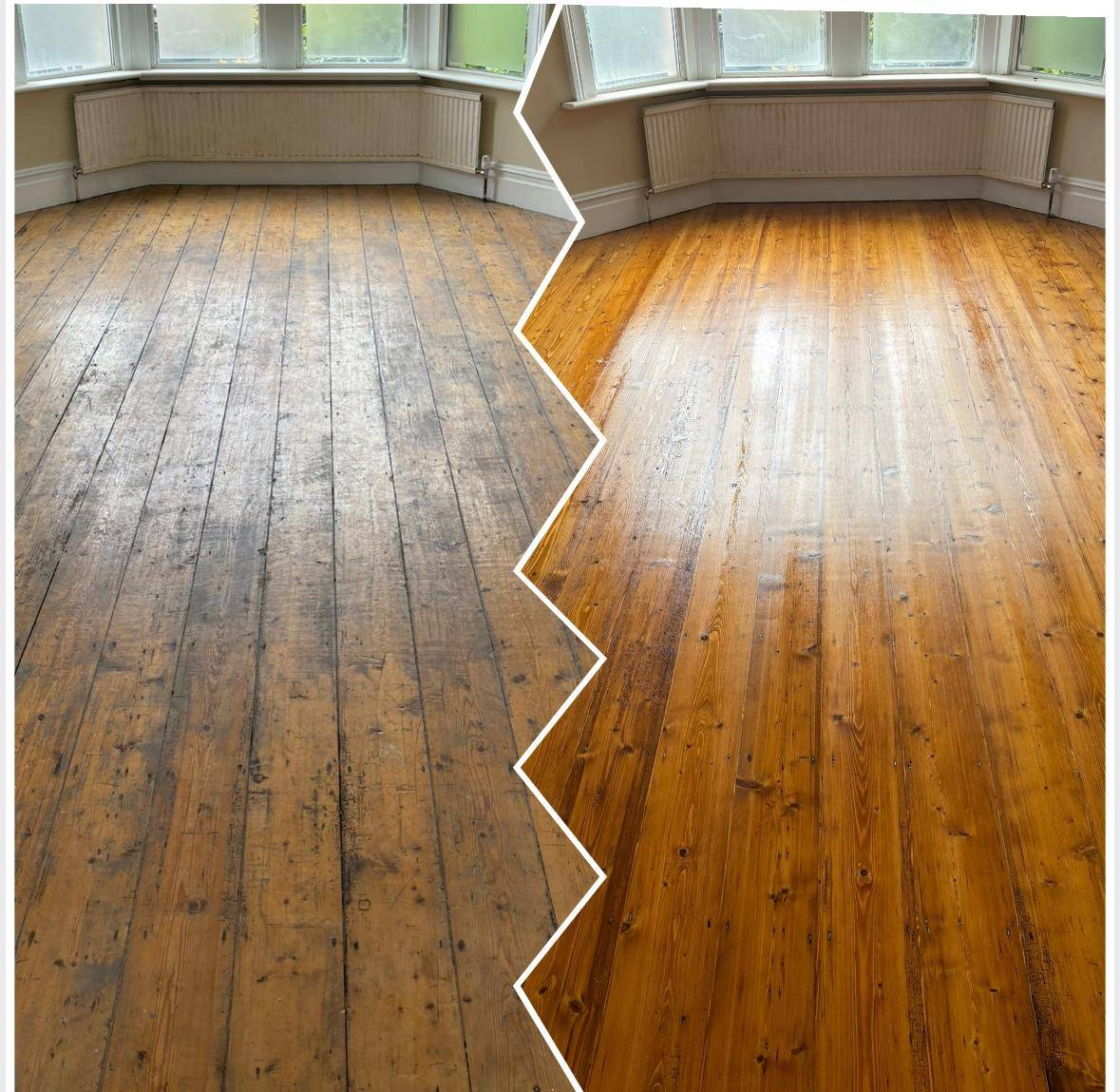
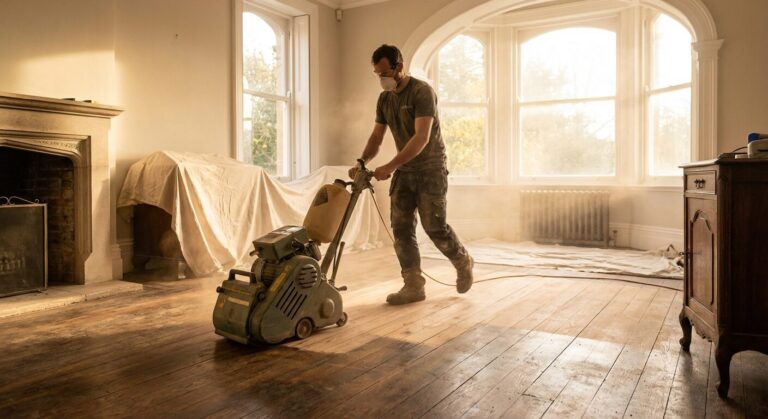
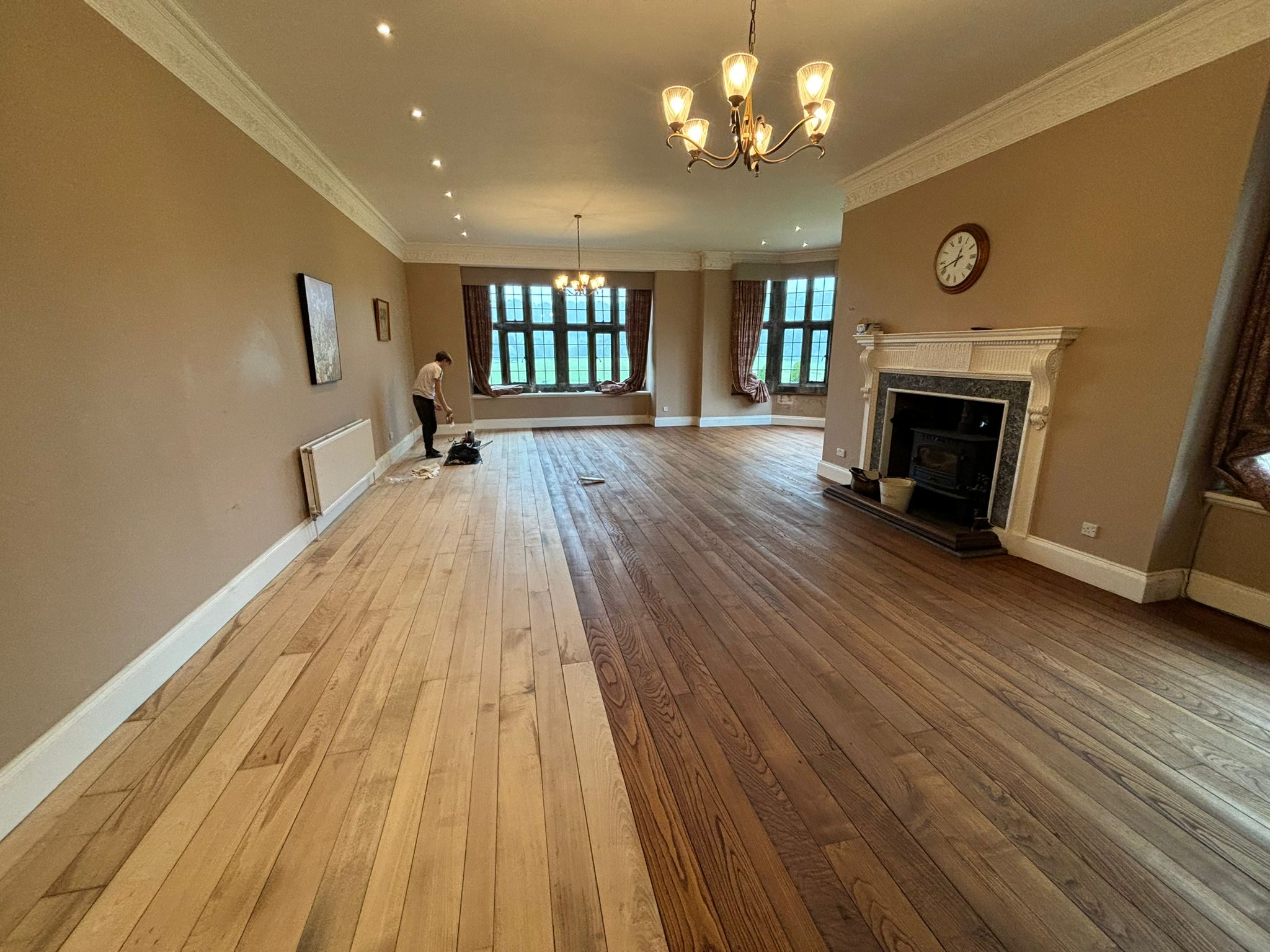
From the Victorian terraces of High Town and Bury Park to the post-war estates, Luton and Dunstable hold far more good timber than they get credit for, and our wood floor sanding service brings it back into daily use — redwood boards, oak strip and wood block alike.

Ryan’s Restoration has been family-run for over 45 years. We machine under sealed extraction, judge each floor on what it actually needs — sometimes that is a light refresh rather than a full sand — and confirm everything with a fixed written quotation before work is booked.

A good share of Luton floor work happens inside wider renovations, and where we come in the sequence matters. The floor is sanded after the wet trades — plastering, first-fix painting — because plaster dust and splashes ruin fresh finishes, but before the final coat of wall paint, so the decorators can cut in over our masking rather than the other way round. We are used to slotting into a builder’s programme, saying plainly how many days we need and which trades can share the house with us, and protecting the new floor properly before handing the rooms back to everyone else’s boots.
Commercial Floor Sanding in Luton

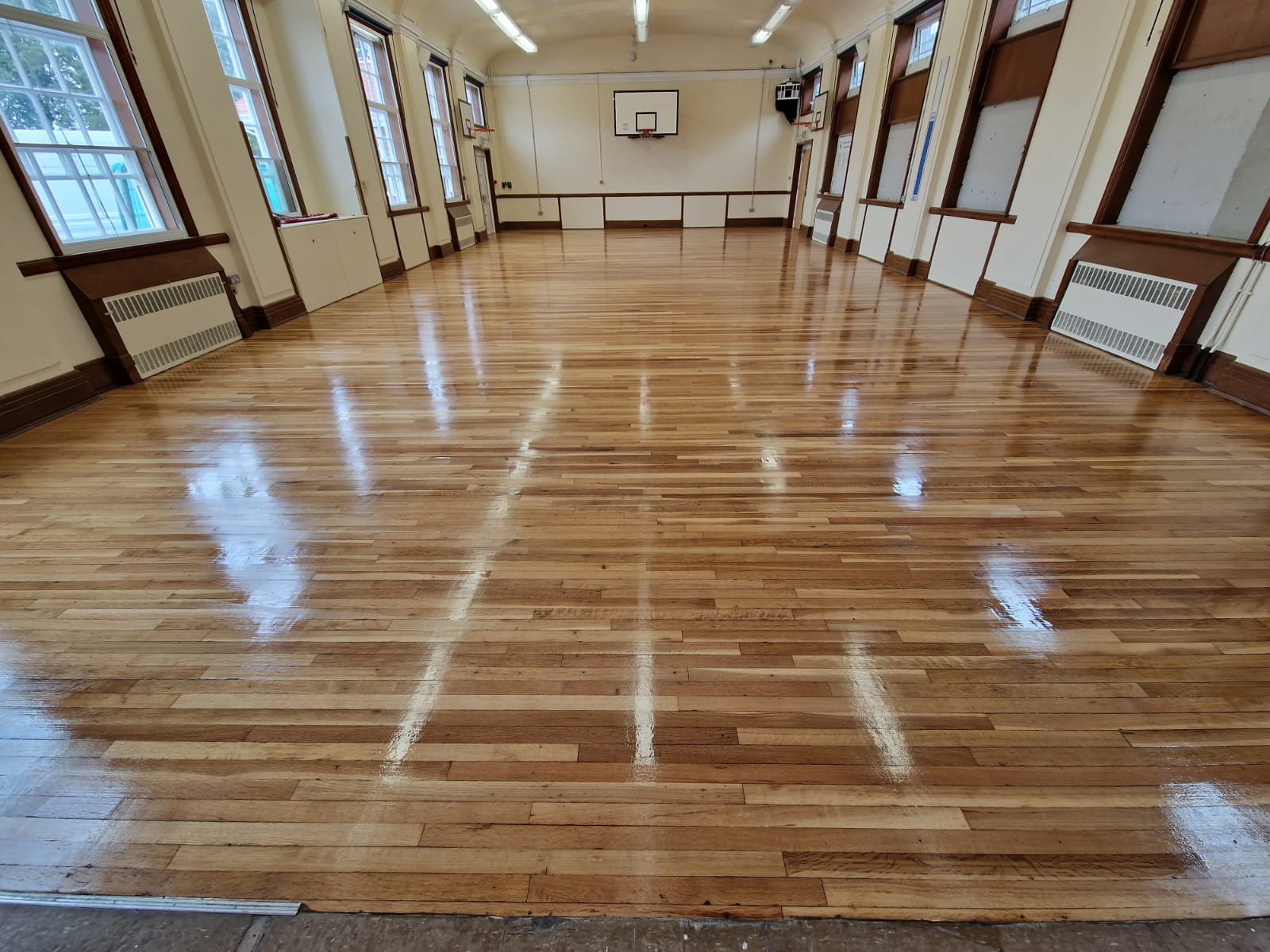
Our commercial floor sanding service works around Luton’s businesses, not against them: floors are sanded and sealed overnight or over weekends, cured before reopening, and preceded by method statements and insurance documentation for building managers.

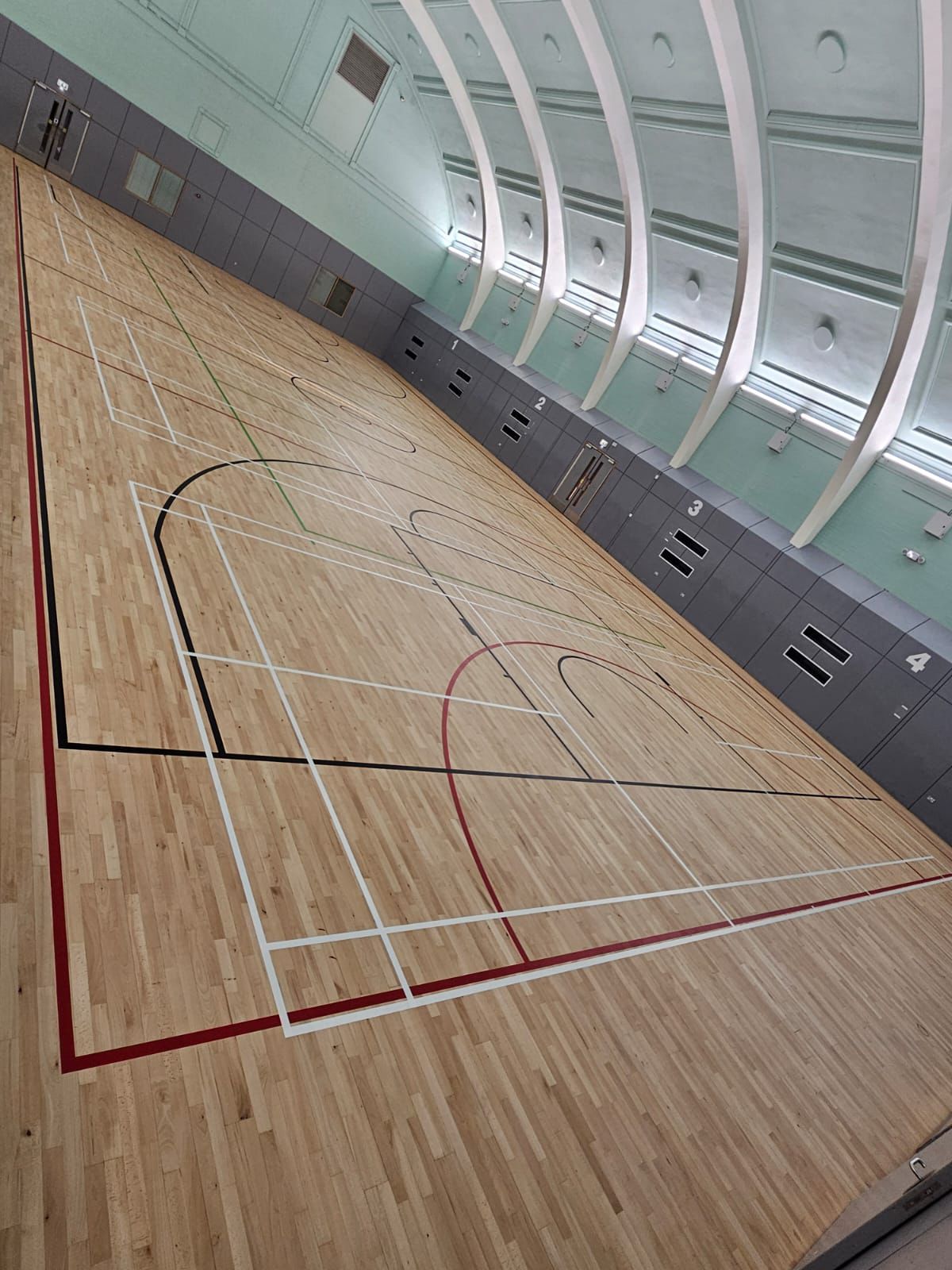
Experience spans school halls — refinished in the holidays with lines re-marked to governing body specification — together with restaurants, shops and hotels across the town and Dunstable.

Clinics, surgeries and waiting rooms bring requirements retail floors do not: surfaces that wipe down to a hygienic standard, finishes with minimal odour because the premises are occupied by patients the next morning, and zero grit left behind in treatment areas. For these spaces we specify fully sealed lacquer systems — one continuous wipeable surface, with no wax layer to harbour anything — apply low-odour water-based coats, and ventilate thoroughly before handover so the first appointment of the day notices nothing but the floor.

Floor sanding south east London
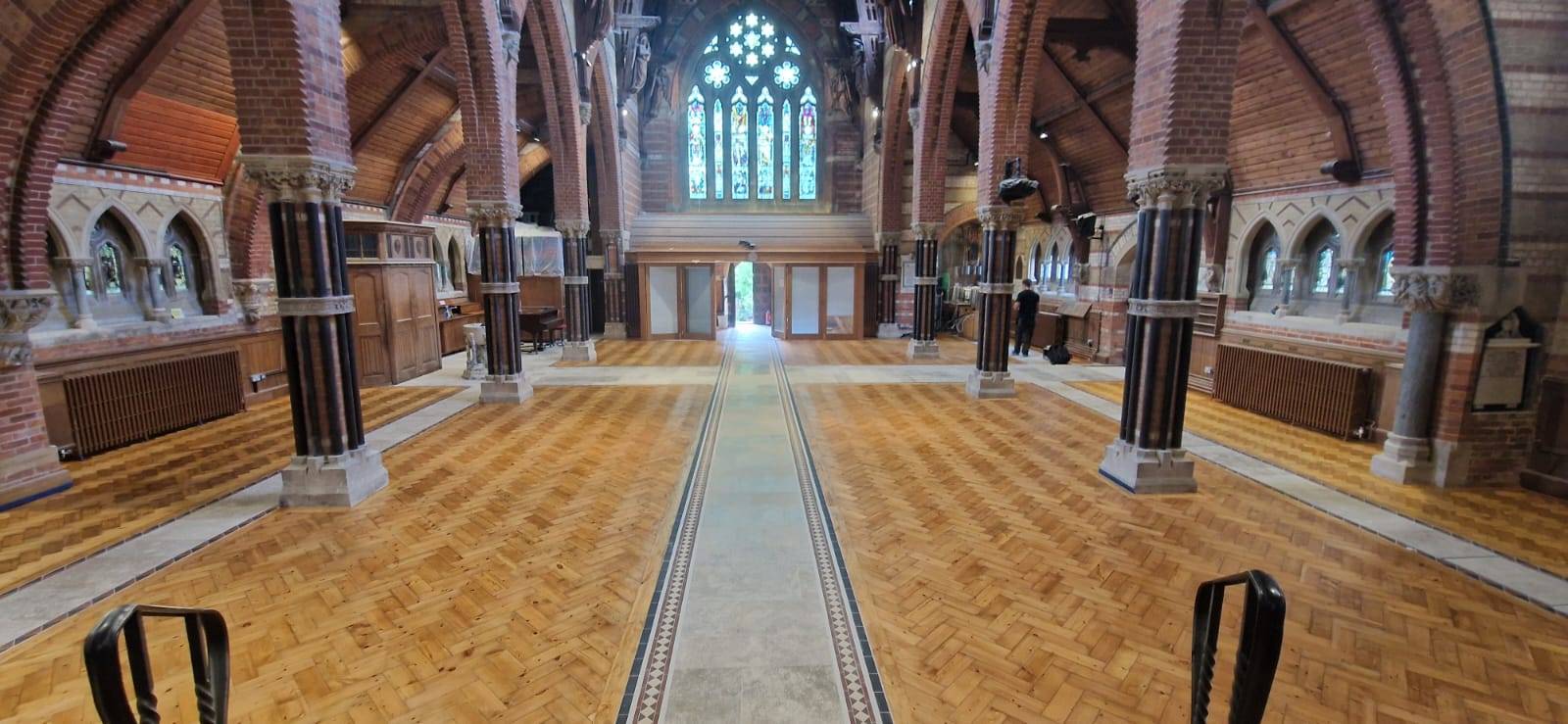
Commercial Hall Floor Refurbishment

Repairs, Squeaks and Gap Filling

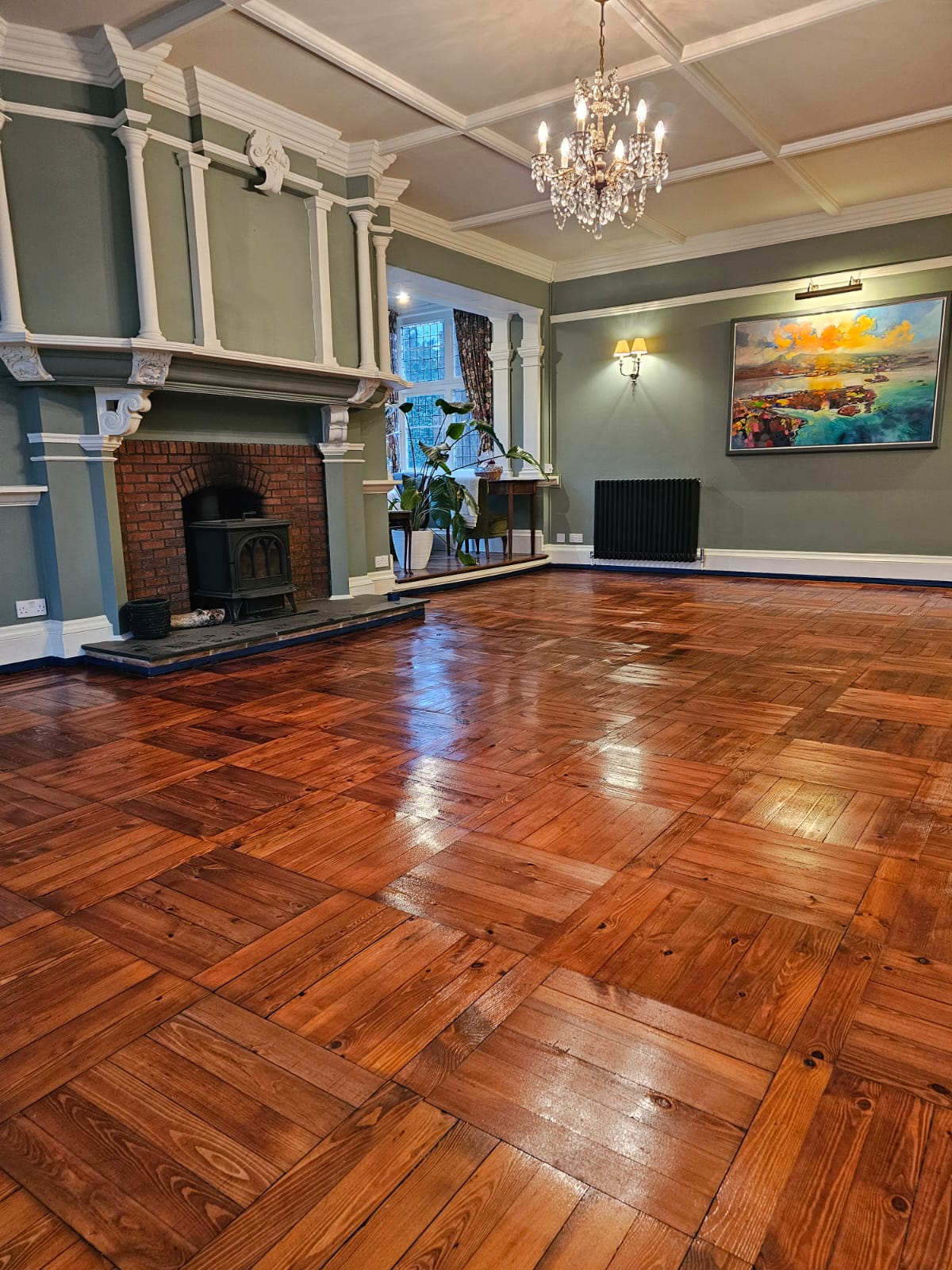
Terrace floors that have carried a century of family life usually need some structural attention first. Wooden floor repairs deal with splits, burns and worn patches; squeaky boards are refixed to their joists; and scratches are lifted out before finishing.

Floorboard replacement uses reclaimed pine from our own stock so patches blend into old floors, and gap filling — slivers or resin depending on the joint — stops the draughts that make bare boards feel cold.

“Worn patches” in softwood floors are usually traffic hollows — shallow depressions worn into the pine along the routes everyone walks, most visible in low evening light. Whether they sand out is a question of depth against remaining board thickness: shallow hollows feather away in the levelling passes, deeper ones may be better left as honest wear or, at the extreme, addressed by replacing the worst boards in the lane. We measure rather than guess, and tell you which of the three answers your hallway is going to get.

Burn marks from open fires and dropped irons follow the same logic: shallow scorching feathers out in the sanding passes, while charring that has bitten into the grain is cut back and pieced with reclaimed pine before the room is machined — the repair vanishing under the same finish as everything around it.

Post-War Wood Block Floors

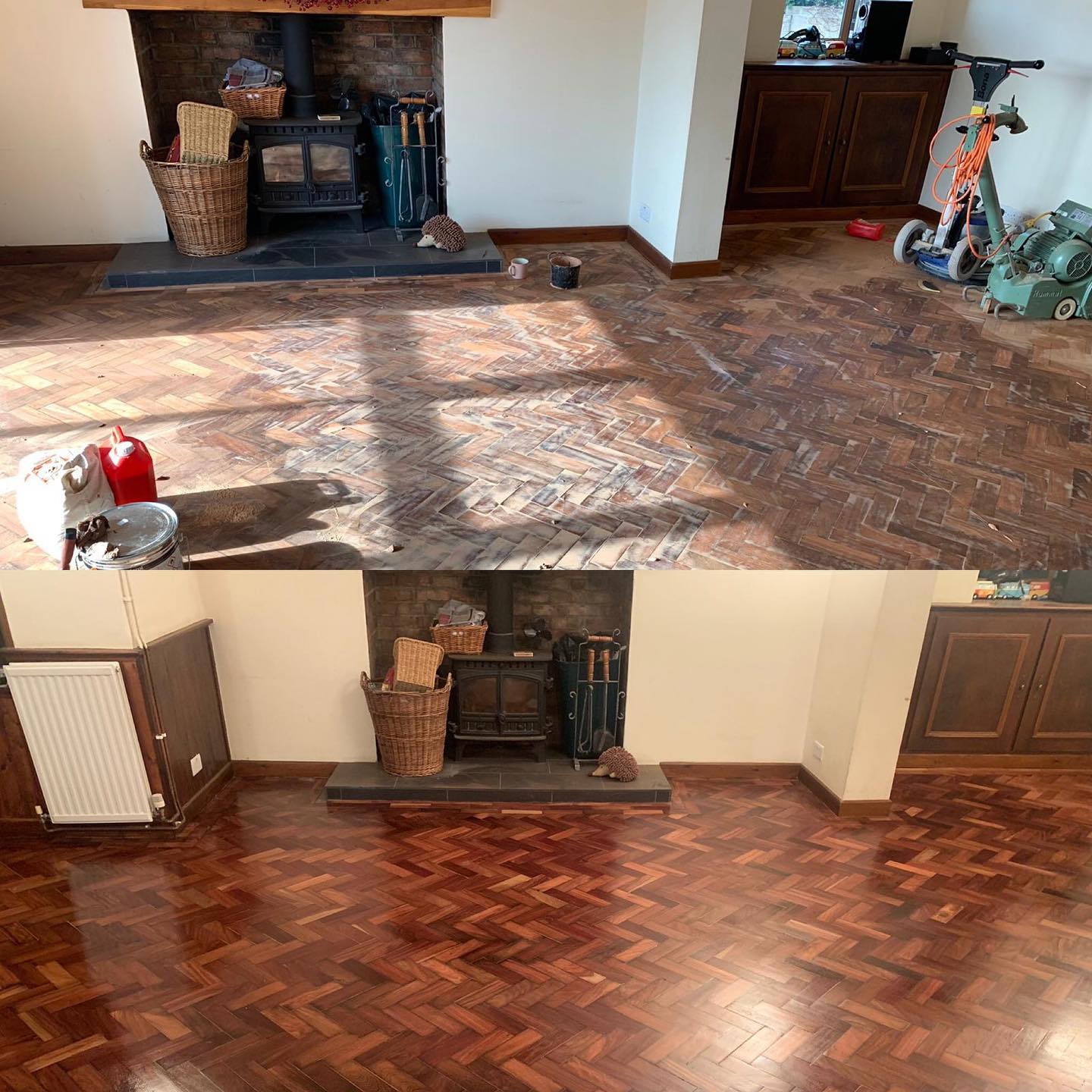
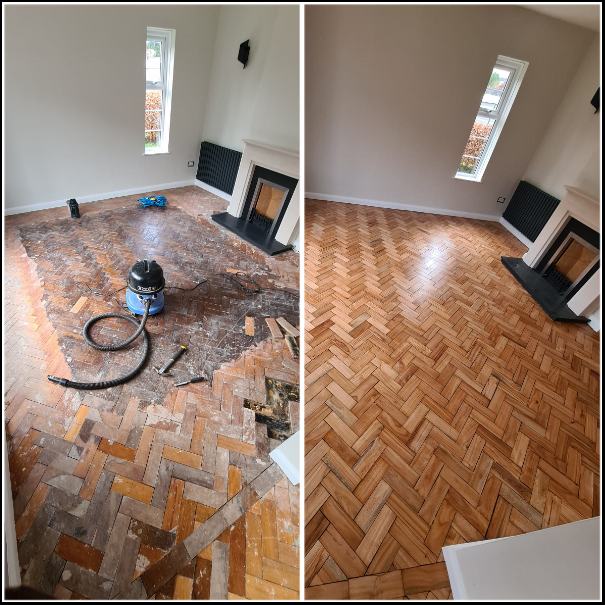
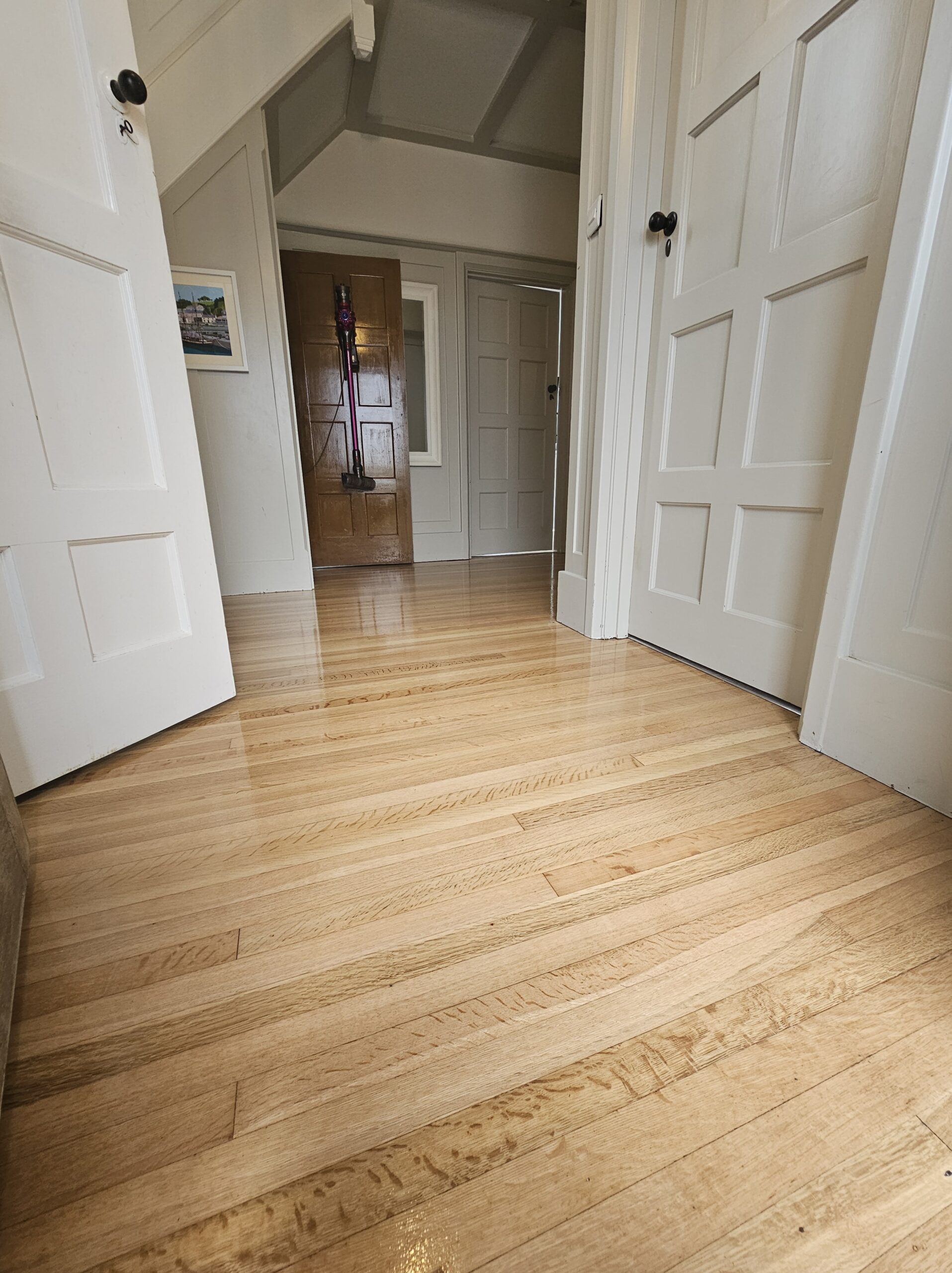
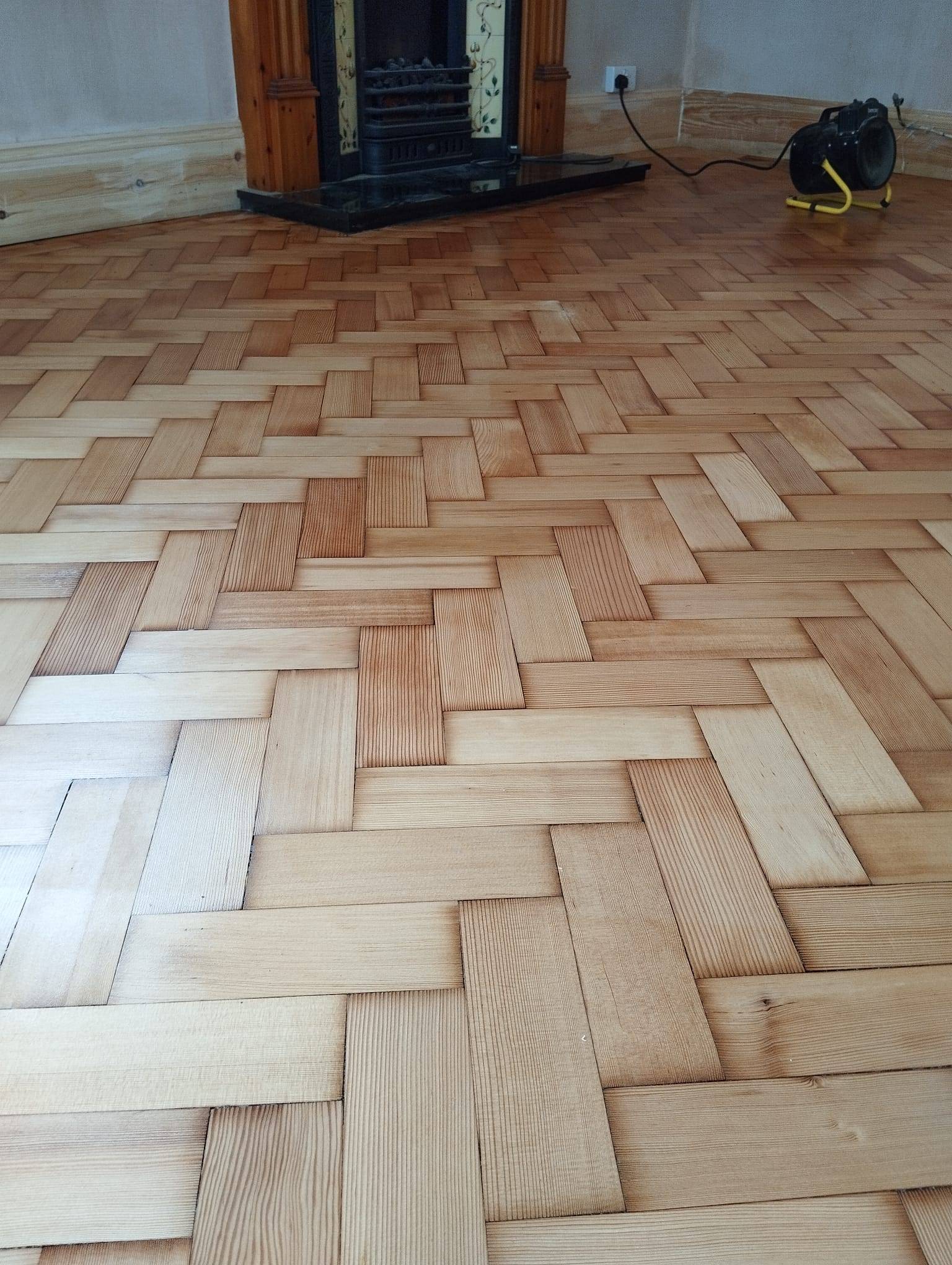
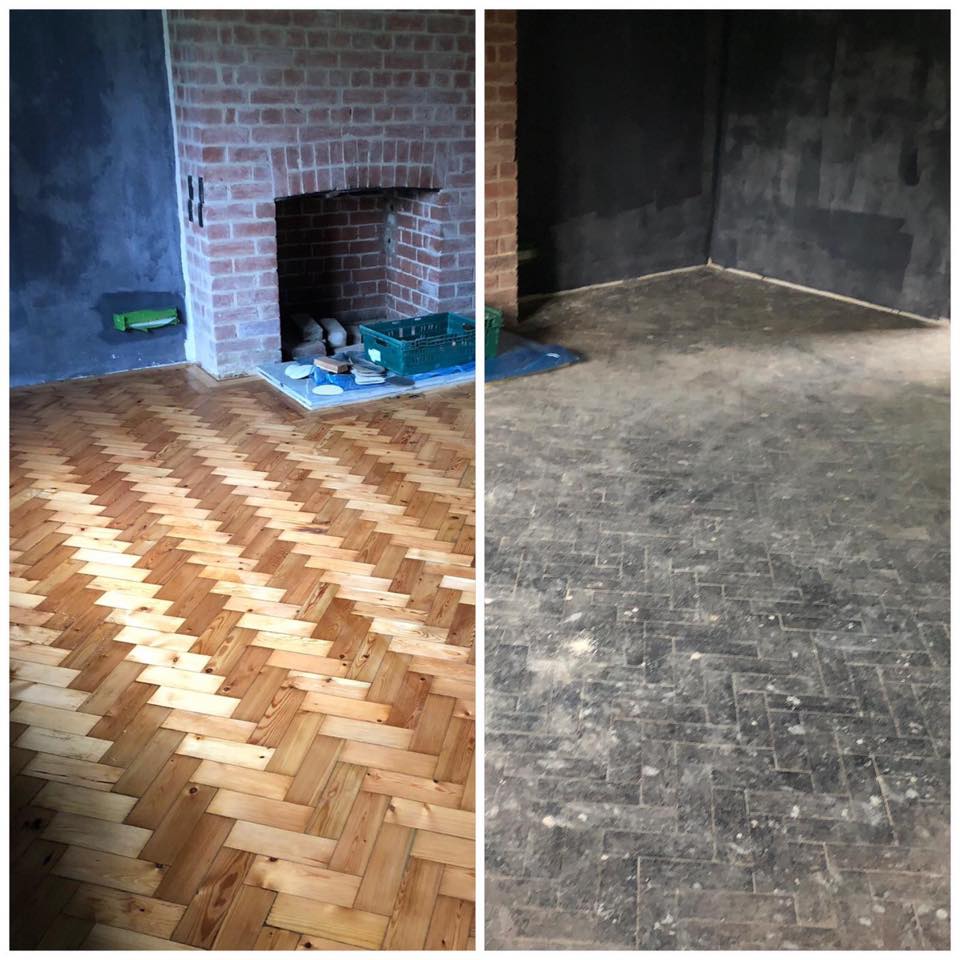
The estates built from the late 1940s to the 1960s used wood block flooring generously, and a surprising amount survives under carpet across Luton. Our parquet floor sanding service restores it completely — loose blocks re-bonded, missing ones cut and fitted, and the floor machined flat before sealing in your chosen sheen.

These floors were built to last and nearly always reward the effort. If yours has been sanded hard in the past we will measure what remains and, where sensible, propose a restoration without sanding instead.

Post-war blocks were cut from whatever good hardwood the timber trade could supply, so Luton floors turn up in oak and beech but also iroko — a dense, golden-brown African timber that darkens handsomely with light and age. Iroko’s natural oils mean the same rule as teak: the surface is degreased before sealing so the finish bonds, and adhesives are chosen to suit. Identifying the species correctly at survey matters for colour expectations too, because iroko will not stay the pale gold it shows when freshly sanded — and we would rather you knew that on day one.

The restoration sequence for these estates is well worn by now: hollow blocks found by tapping and re-bedded, replacements trimmed from reclaimed stock to the original module, the field levelled with angled passes so neither run of grain tears, joints filled with resin and the floor’s own dust, and the seal built up in coats with a light abrade between. Done in that order, a 1950s block floor comes back tight, flat and ready for another half-century of family traffic.

Floor Sanding Essex
parquet floor restoration near me

Stains, Seals, Oils and Waxes

Luton sits on Chiltern chalk and the water is hard, so we pair every floor with a finish and care routine that resists mineral dulling: staining where you want the colour moved, tough lacquer sealing for busy family rooms, hardwax oils for a natural feel, and wax for period interiors.

Shades and sheens are sampled on your own boards during the free survey, and the surface is later renewed with a quick buff and recoat rather than another sand.

For hard-working households — and hard-worked rental houses — the sensible specification is usually a mid-sheen or matt commercial-grade lacquer: forgiving of scuffs, tolerant of quick cleaning, and renewable with a single-day recoat when a bedroom changes occupants or a hallway starts to show its miles. We build the coat count for the traffic, leave written care guidance that survives being pinned to a kitchen noticeboard, and spec the felt pads and doormats that do more for a floor’s lifespan than any product in a tin.

As everywhere we work, colours and sheens are decided on sample patches applied to your own boards at the free survey, not from a chart.

Get a Floor Sanding Quote in Luton

Wondering what is under the hall carpet? Lift a corner, photograph it, and send it over — with a second shot of the worst area — for an honest opinion and a fixed written quotation. The site survey is free, carries no obligation, and covers Luton, Dunstable and Houghton Regis.

Call 01823 674562, email info@ryansrestoration.co.uk, or use the form on this page.

All services available in Luton: sanding, parquet restoration, repairs, board replacement, gap filling, staining, sealing, oiling, stair sanding and installation.

Nearby areas we also cover: Hitchin, Harpenden, St Albans and Hertfordshire. There is a page for each, and the full list of towns is on our areas we cover page.

Luton and Dunstable sit naturally in our eastern multi-day runs alongside the Hertfordshire towns, so flexible dates usually mean an earlier start. If the job is part of a renovation, send the builder’s rough programme too — we will tell you exactly where the floor stages fit and how many days to allow between them.

Parquet Flooring Restoration

FAQ: Floor Sanding in Luton

The lot — sanding, parquet and block restoration, repairs, board replacement, gap filling, squeak and scratch repair, staining, sealing, oiling, waxing, stair sanding and new floors.

Yes — we do the work while you are shut, overnight or over a weekend, and the finish is ready for feet by opening time.

Definitely — it is solid hardwood laid to last, and under carpet it has usually been well protected. Restoration almost always succeeds.

It just means the old adhesive has failed there. We lift and re-bond those blocks before sanding, and the floor goes back to solid.

Yes — cooler stains or white-tinted oils calm it right down, and modern water-based seals will not re-yellow the way old lacquers did.

Engineered boards usually take one or two sands depending on the wear layer we measure first; laminate cannot be sanded at all.

No — sealed extraction captures the overwhelming majority at source, doorways are screened, and we clean down at the end of every day.

Send two photographs for an honest opinion and a fixed written quotation, or book the free no-obligation survey — 01823 674562 or the form on this page.

Usually oak or beech, though iroko — a dense golden African hardwood — is common in this era too. We identify the species at survey, since it affects adhesives, sealers and how the colour will age.

After plastering and the messy trades, before final decorating — so plaster dust cannot spoil the finish and painters can cut in over our masking. We slot into the builder’s programme and say how many days we need.