Floor Sanding Northampton

Floor Sanding and Wood Floor Restoration in Northampton

QUICK QUOTATION

Floor Sanding Taunton

Floor Sanding in Northampton

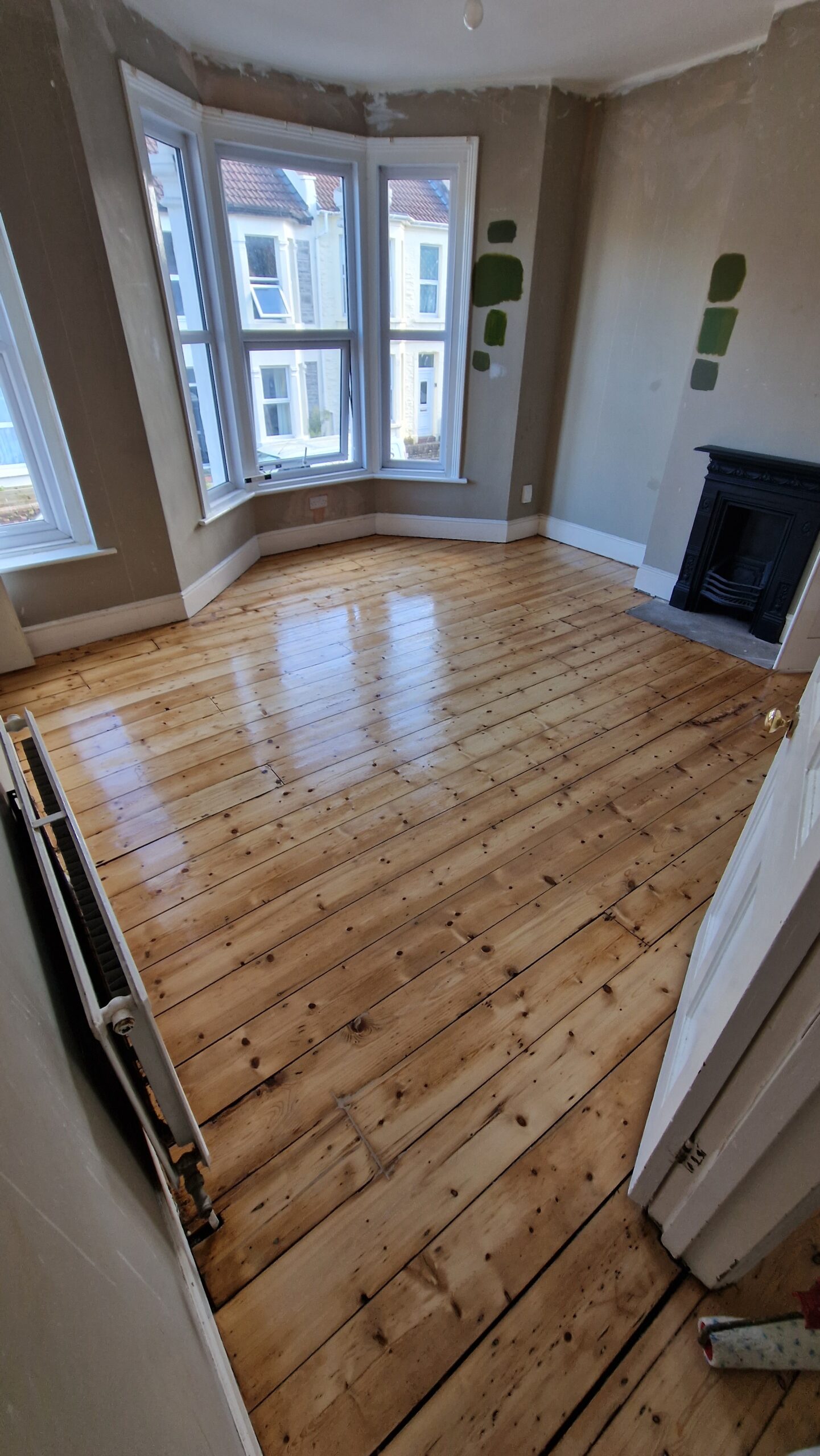
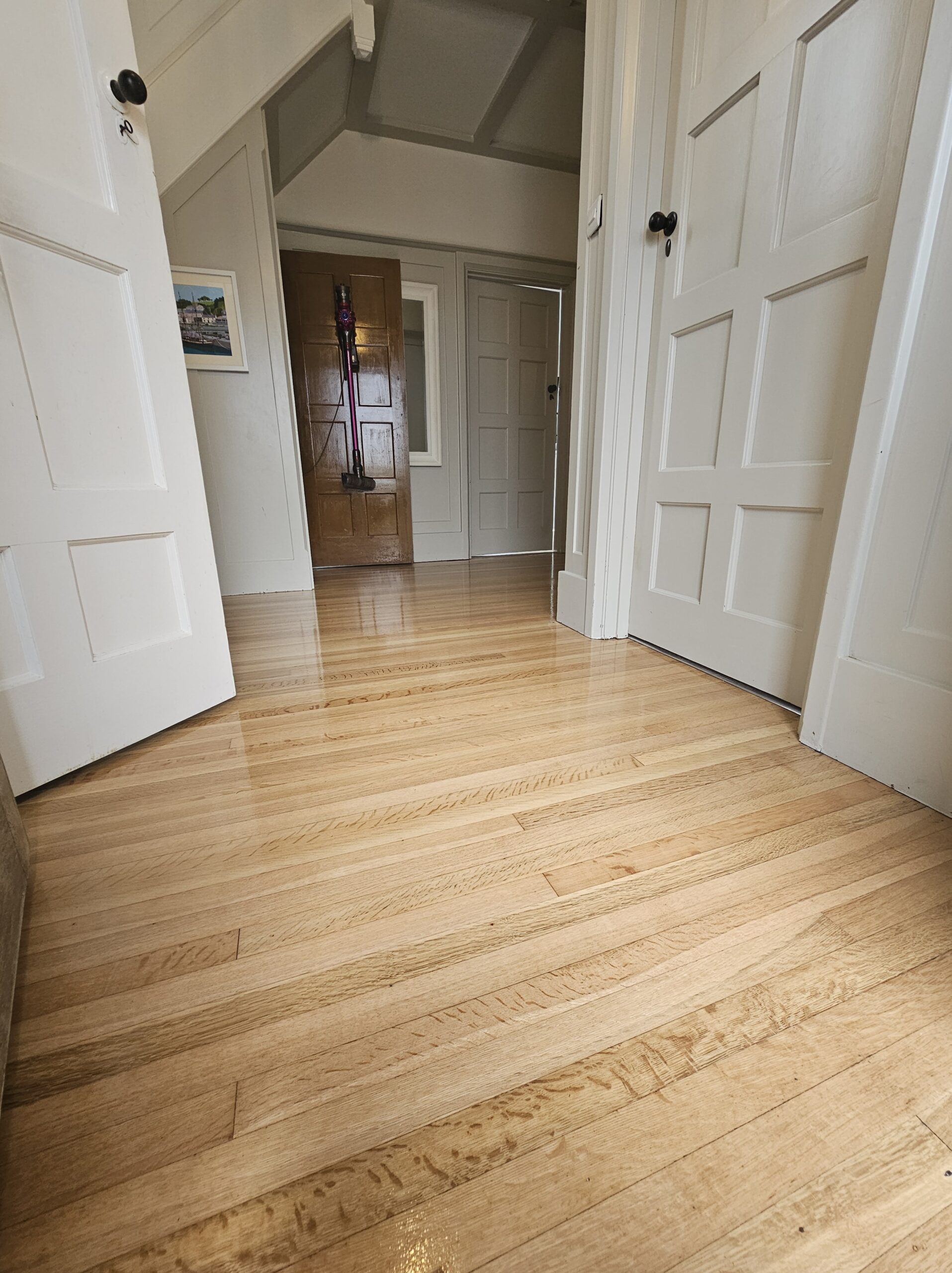
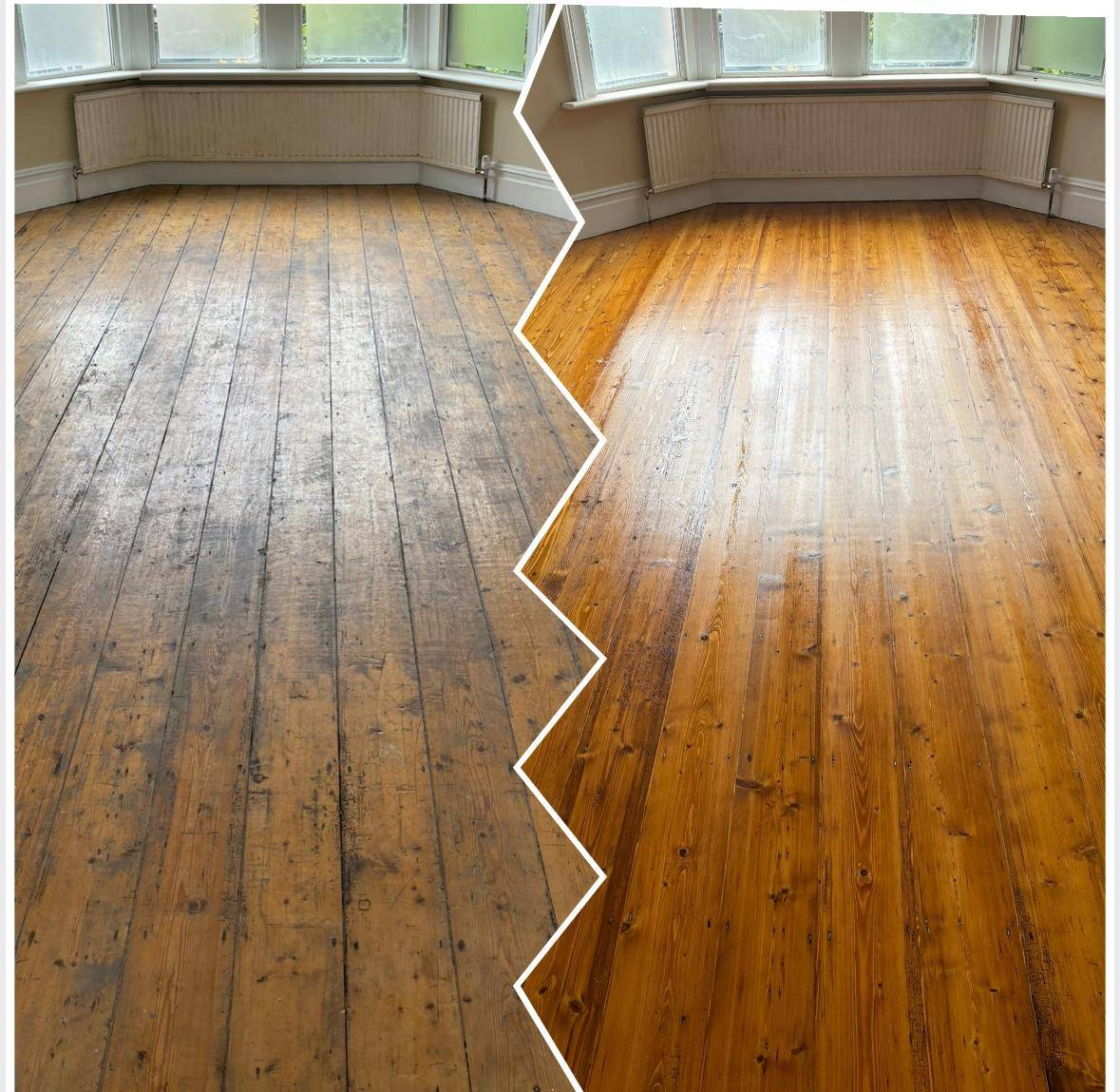
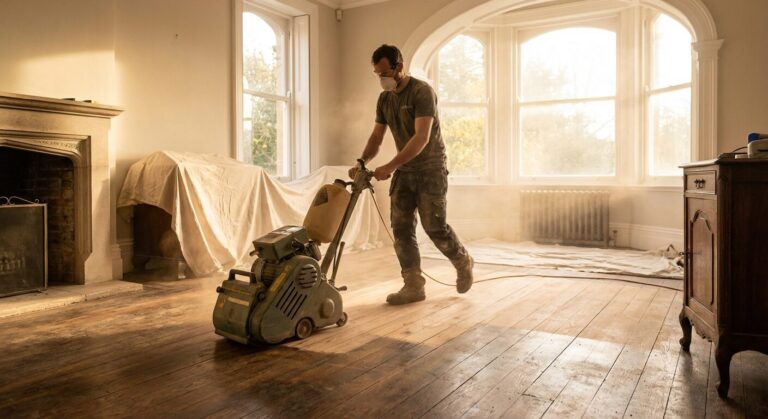
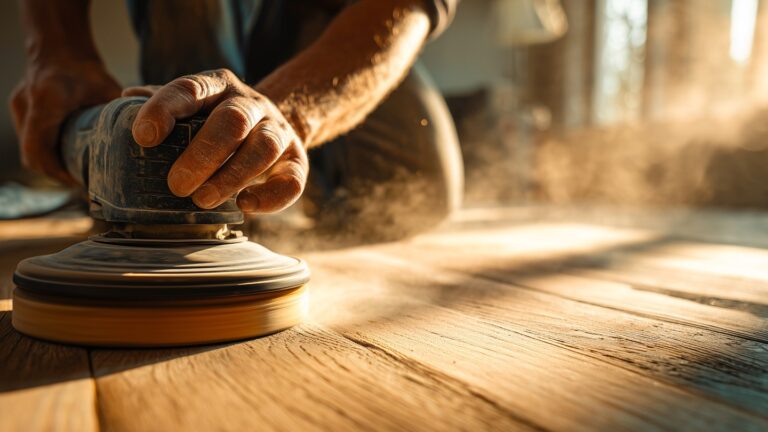
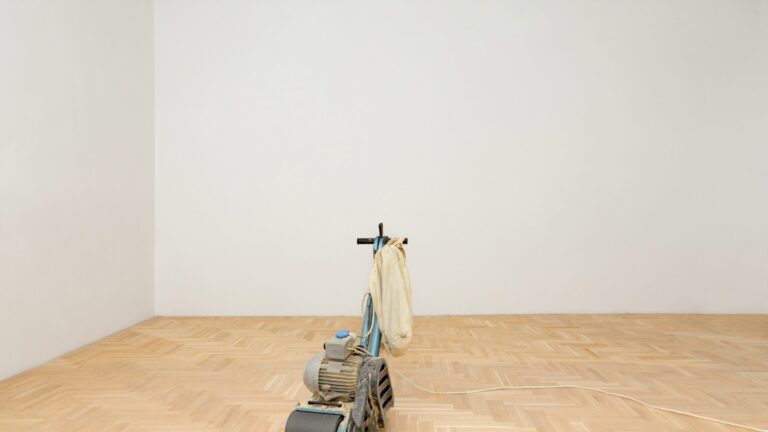
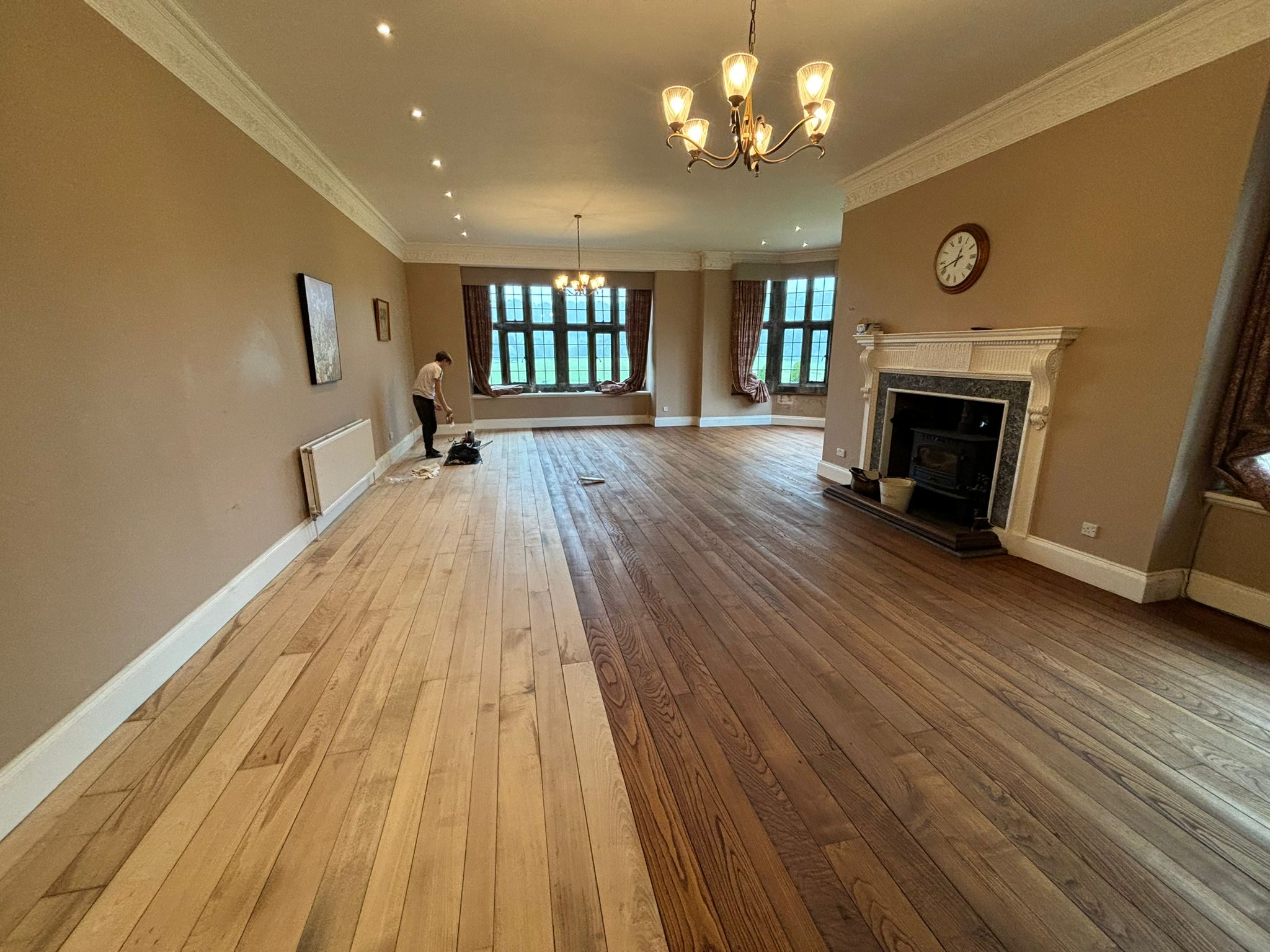
With over 45 years in the trade, our family firm handles wood floor sanding across Northampton and the county — Wellingborough, Kettering, Daventry, Towcester, Rushden and the villages between. The boot-and-shoe terraces bring us thin redwood boards that have often been sanded before, so we measure remaining timber before committing; where a floor has had its last sand, a screen and recoat or restoring without sanding preserves what is left. Sound boards are taken through coarse to fine grits with sealed extraction capturing the overwhelming majority of dust at source, then finished to suit the room.

Cupped or uneven boards change how the first cuts are made. Where boards have curled at their edges, sanding straight along the grain simply rides the high spots, so the opening passes run at a shallow angle across the floor to bring everything to one level, and only then does the machine follow the grain to remove the angled scratches. Getting this order right is most of the difference between a floor that looks flat and one that shows a wave in low evening light.

In occupied houses we plan the work room by room so family life can carry on around it. Furniture migrates ahead of the machines, doorways are sealed while their room is being cut, and each space is coated as soon as its sanding is complete so the drying happens while we work elsewhere. Because Northampton is a run from our Somerset workshop, jobs are booked as consecutive days with everything carried on the van from the start, and the programme we agree in the written quotation is the programme you get.
Commercial and Sports Floor Sanding in Northampton

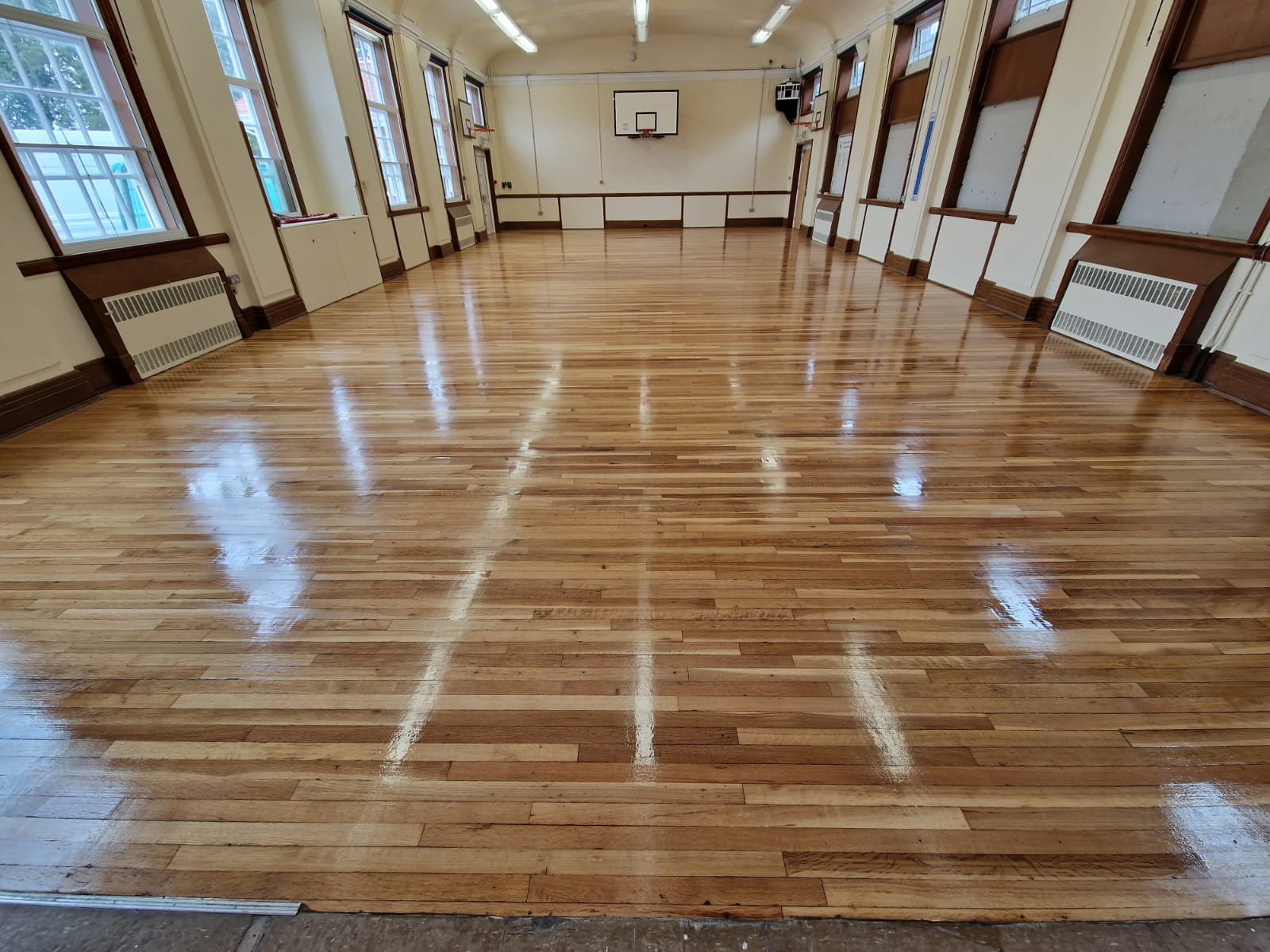
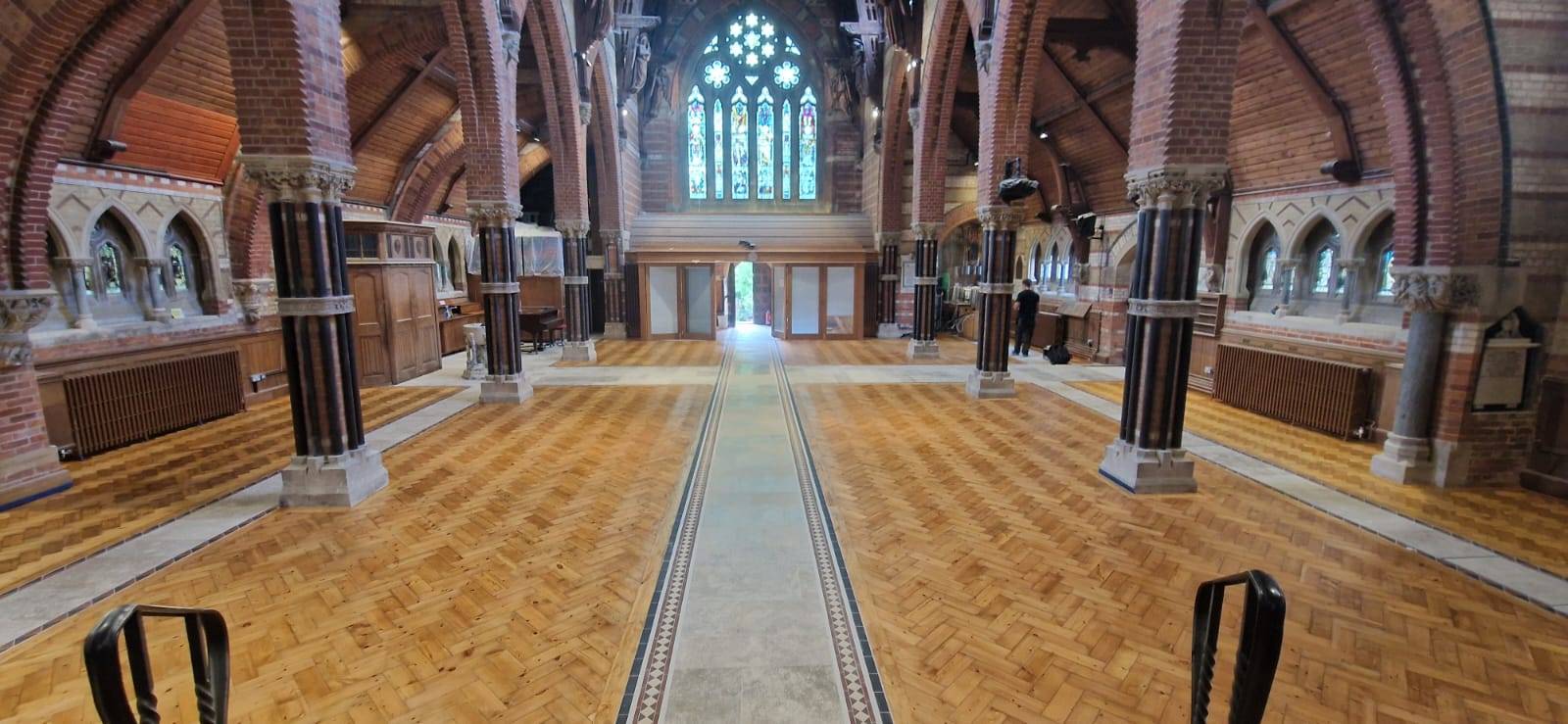
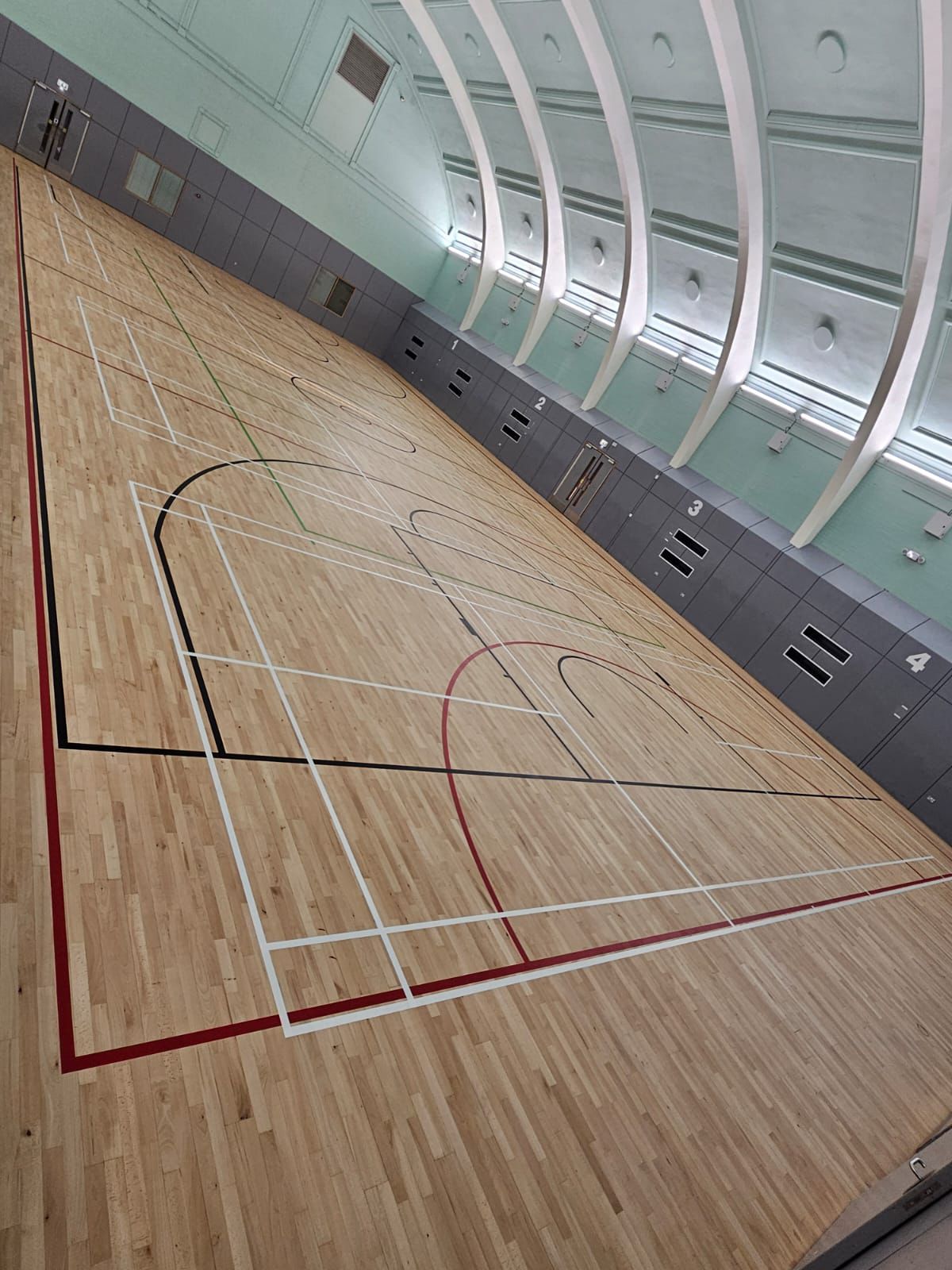
Halls and businesses run on calendars, so commercial floor sanding is scheduled to yours: summer holidays for school floors, gaps between bookings for village halls, and overnight or weekend shifts for restaurants, shops and hotels. Sports floors get slip-resistant seals and line marking to governing body specification, and method statements and insurance documentation are issued before the first machine arrives.

A sports floor is built up in layers, in a strict order. The bare timber is sealed first, court and badminton lines are then painted onto that keyed surface, and further lacquer coats go over the top, locking the markings inside the finish where shoes cannot scuff them away. Layouts are set out to the dimensions the relevant governing bodies publish, colours are agreed with the school or club beforehand, and the whole programme is timed to the summer shutdown or half-term so the hall is back in play the day term restarts.

For offices and public buildings that cannot close at all, the answer is phasing: the floor is divided into agreed zones, each sanded and sealed in turn outside working hours, with safe walkways maintained across finished areas. Documentation covers every phase, so facilities teams have method statements, risk assessments and insurance certificates on file before anyone signs the work off.

Floor sanding south east London
Commercial Hall Floor Refurbishment

Repairs, Floorboard Replacement and Gap Filling

Structural honesty comes before cosmetics. Wooden floor repairs sort out rot, splits, burns and worm-eaten timber; floorboard replacement uses reclaimed stock of the right species and age, so a mended Victorian or ironstone-cottage floor keeps its face; squeak repairs silence movement over shallow joists; and gap filling in resin or slivers closes draughty joints for good. Isolated damage often needs nothing more than scratch repair.

A replacement board has to match in more than colour. Old floors mix tongue-and-groove and square-edged boards, and thicknesses vary far more than modern stock allows, so a new piece must be chosen or machined to sit level with its neighbours without packing or planing tricks that weaken it. Where the tongue must be removed to drop a board into the middle of a floor, we fix it so it cannot rock or creak later. This is the sort of small, invisible carpentry that decides whether a repair lasts thirty years or three.

Gap treatment follows the character of the floor. Resin bound with the floor’s own dust suits stable boards with fine, even gaps; hand-fitted pine slivers are the better answer for the wide, wandering gaps of older cottages, since they tolerate seasonal movement and plane back flush with an undulating surface. Either way the joints are filled after the coarse sanding and refined by the final passes, so filler and boards finish as one.

Restoring Parquet Floors

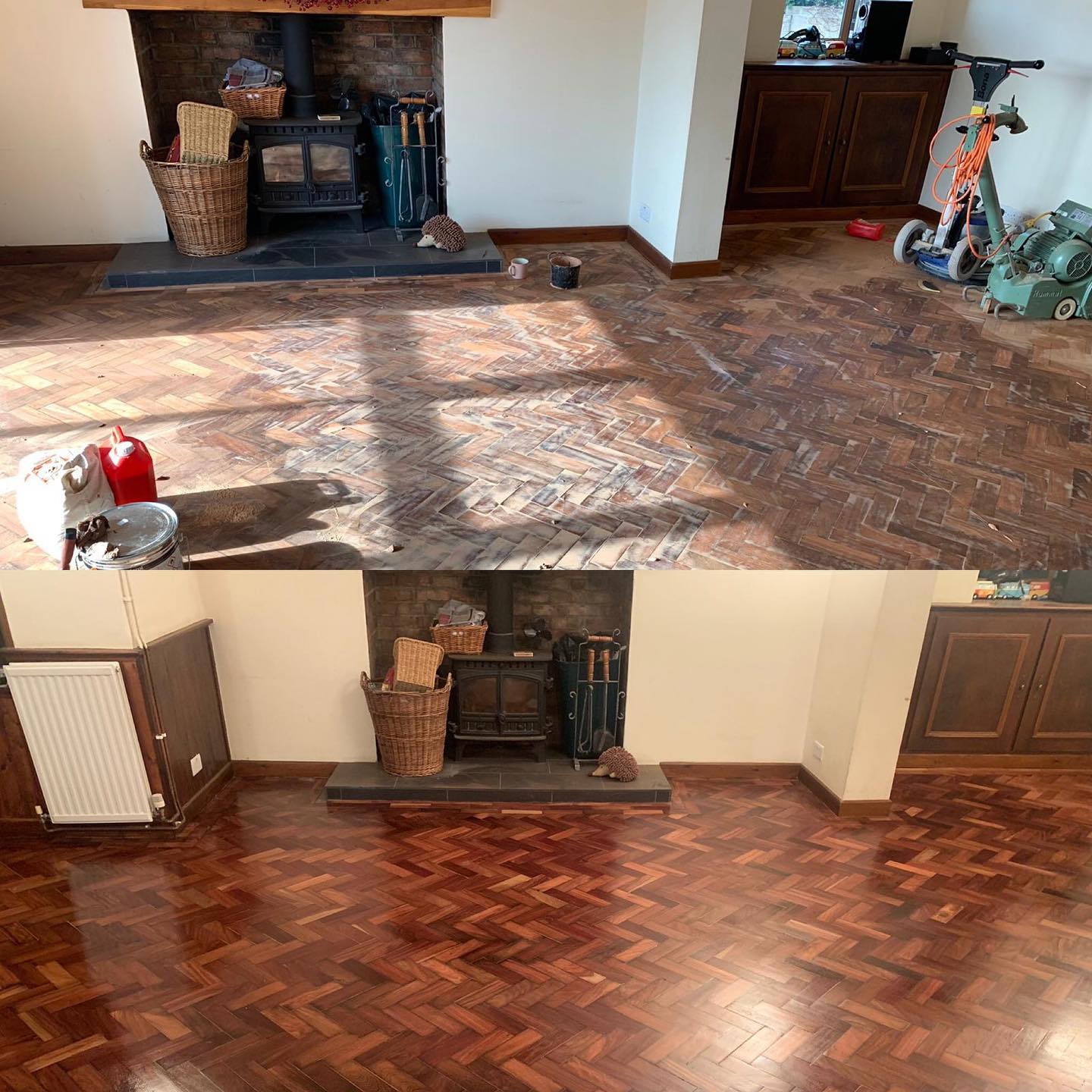
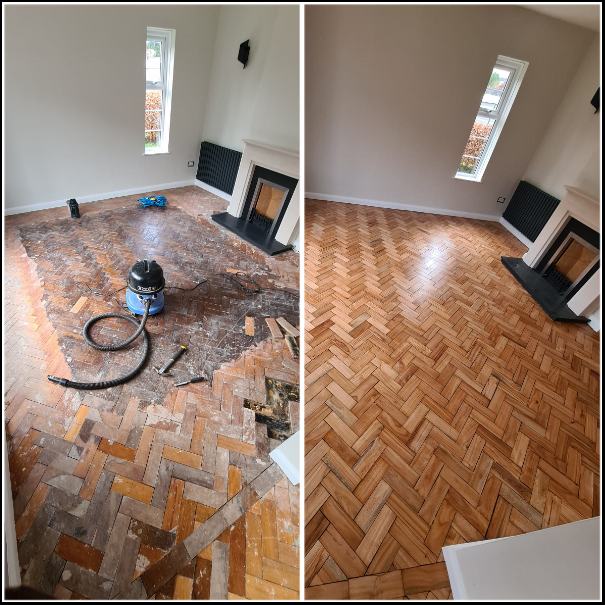
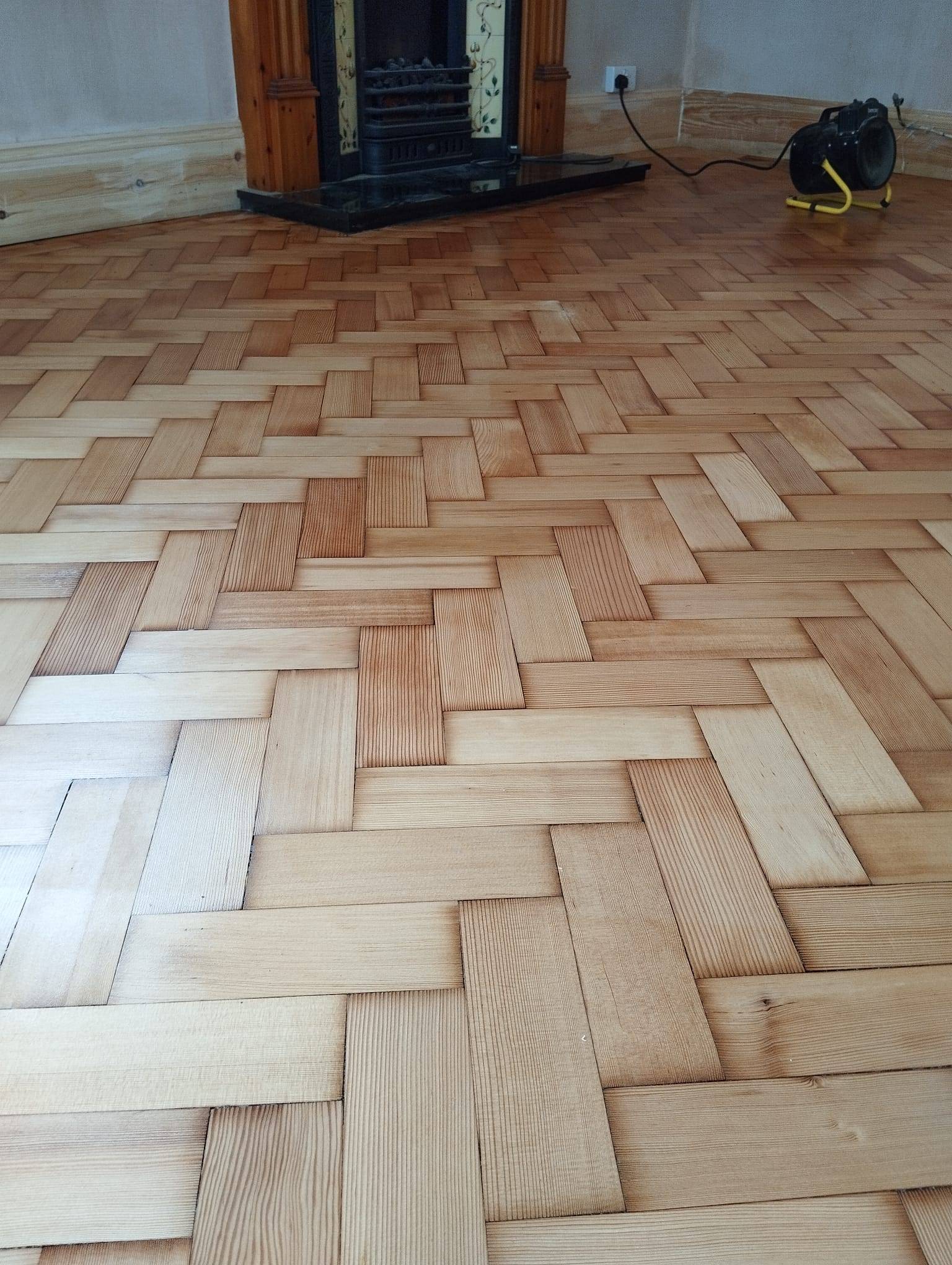
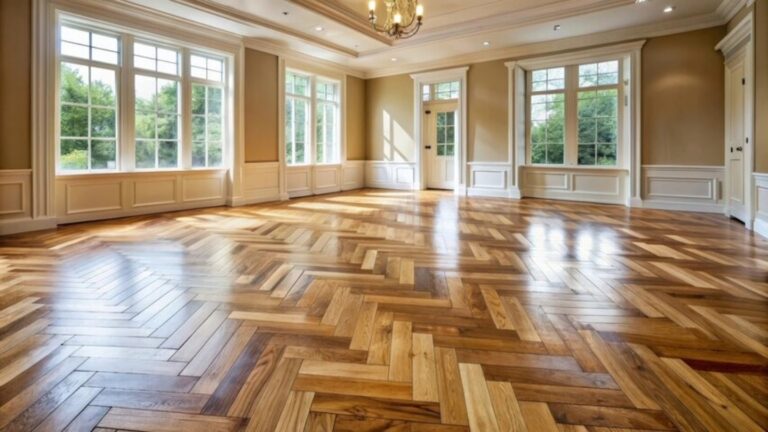
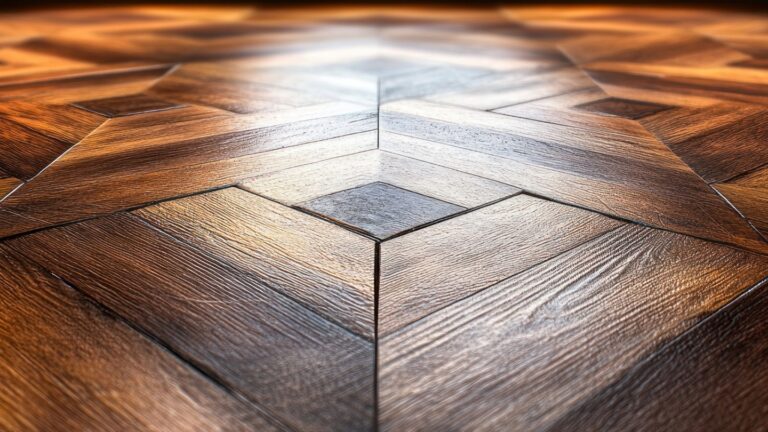
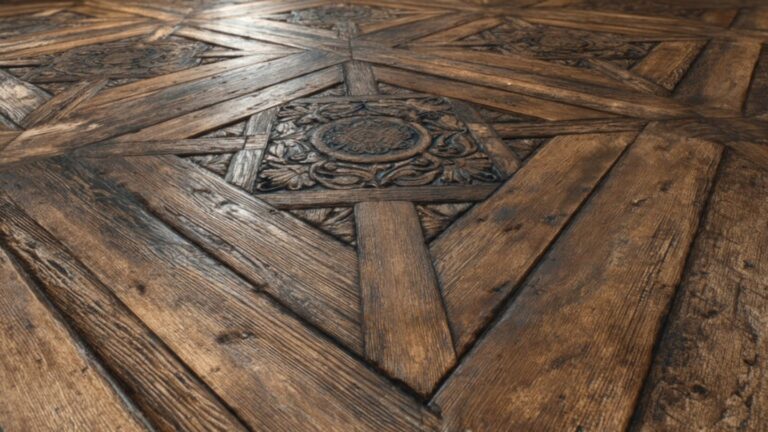
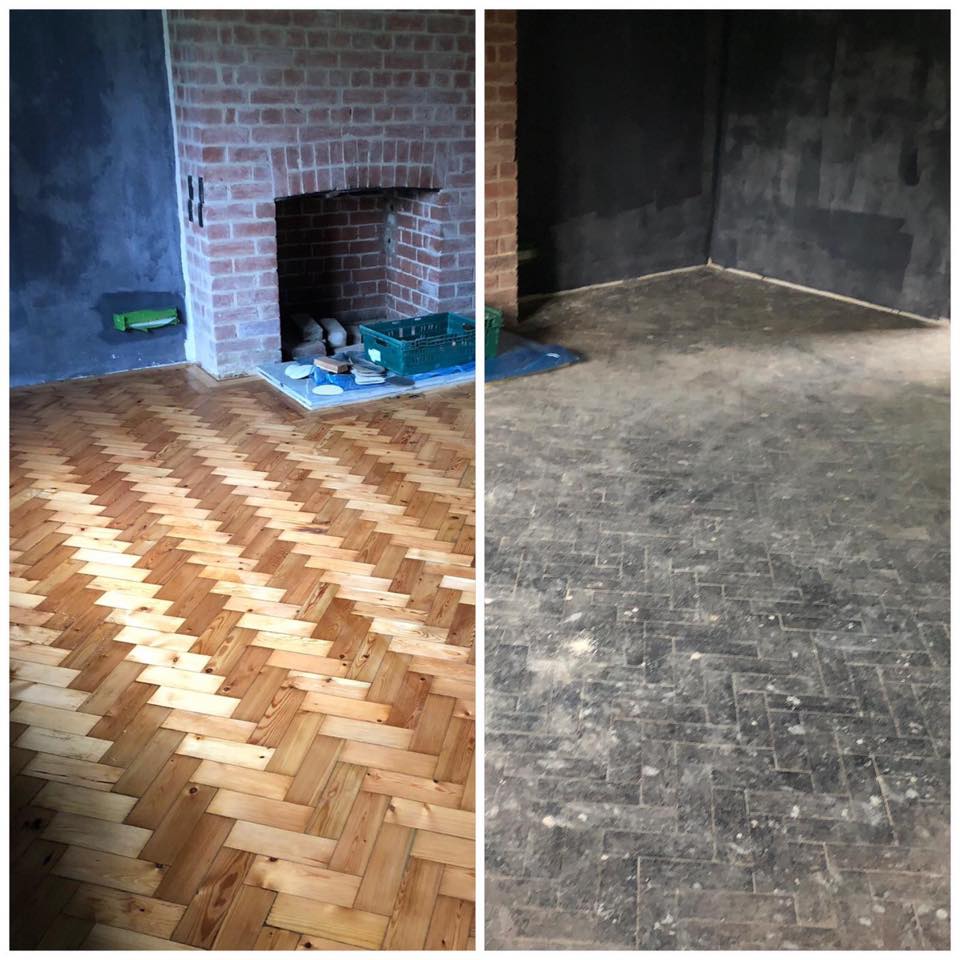
Plenty of Northampton schools, offices and mid-century houses still carry original block floors. Parquet floor sanding puts them right: loose blocks re-bonded, missing ones pieced in, bitumen adhesive ground off and the whole pattern levelled before sealing. A restored herringbone floor will comfortably outwear anything laid on top of it.

Parquet needs room to breathe at its edges. Original floors were laid with a perimeter margin, often hidden under the skirting or filled with a cork strip, and when we restore a floor we make sure that expansion allowance still exists rather than filling it solid, because a block field with nowhere to move will eventually lift itself. In halls and offices we usually finish restored parquet in a matt or satin commercial lacquer, which lets the pattern do the talking and copes with chair castors and daily footfall far better than the soft waxes these floors originally wore.

Floor Sanding Essex
parquet floor restoration near me

Staining and Finishing: Seal, Oil or Wax

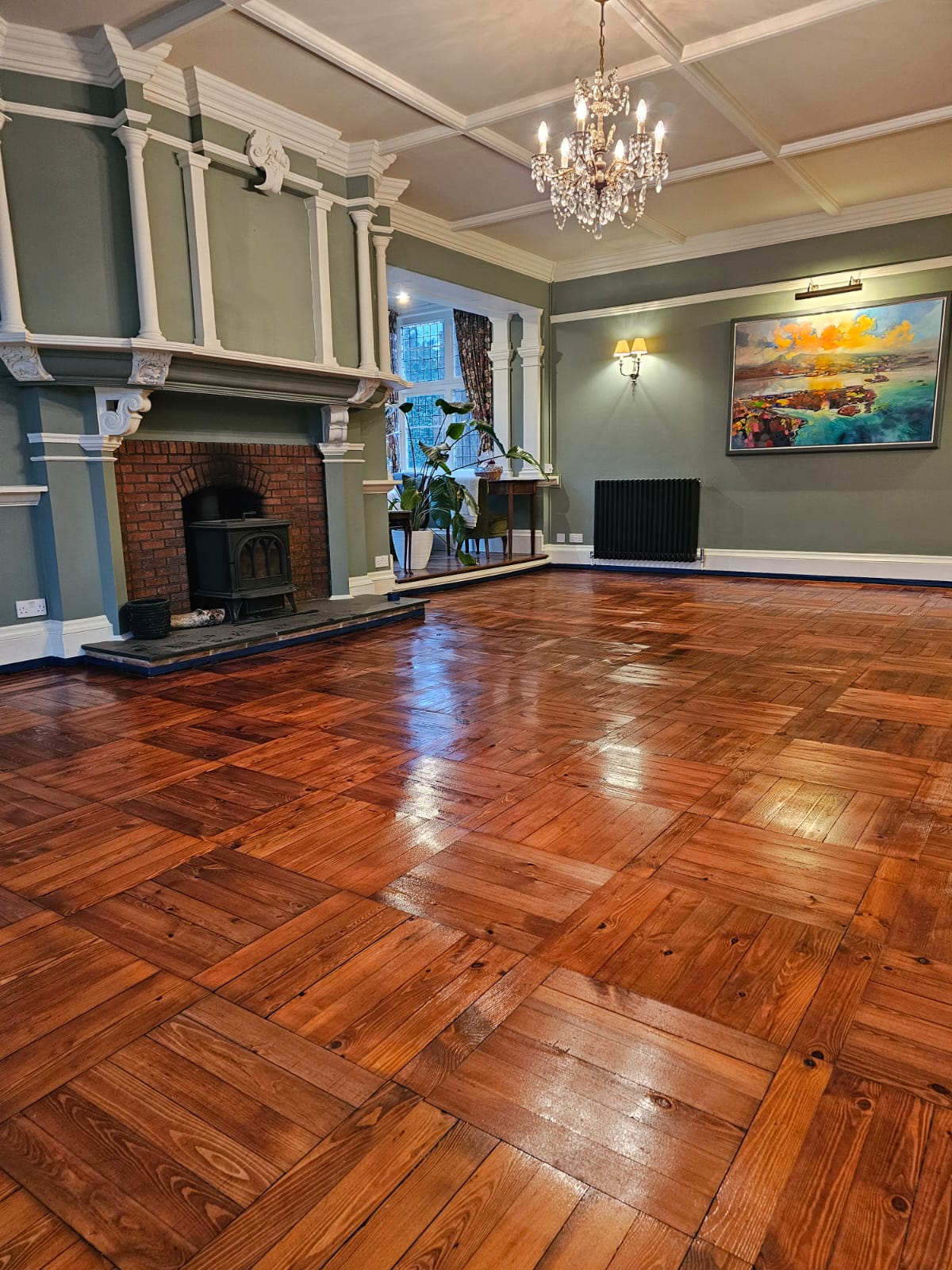
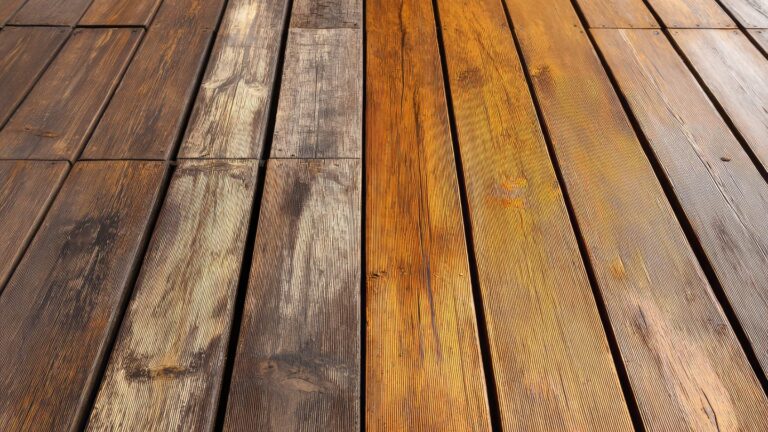
After sanding, the choice of finish sets the floor’s character and maintenance. Staining handles colour, from pale limed looks to dark oak tones tested on your own boards first. Then it is sealing with hard-wearing lacquer for busy households, oiling for a natural surface that patch-repairs cleanly, or waxing where a period interior calls for it. A future polish or recoat extends the finish for years.

Pine deserves a special mention when staining is on the table. Softwood absorbs stain unevenly — thirsty spring growth drinks deeply while dense late growth resists — and dark shades can turn blotchy without preparation, so we fine-sand carefully, condition where needed and always trial the exact product on your boards before the room is committed. Wax has its own realities too: it gives a depth and glow nothing else matches in a period room, but it wants re-buffing through the year and is unhappy in kitchens or anywhere water lands regularly, so we will steer you towards oil or lacquer in those rooms and keep wax for the spaces where it can shine.

Get a Floor Sanding Quote in Northampton

Two photographs — one of the whole floor, one close-up of the damage — earn you an honest opinion and a fixed written quotation. For halls, schools and larger houses we offer a free site survey with no obligation, and we will say plainly if the floor does not need the work yet.

Call 01823 674562, email info@ryansrestoration.co.uk, or use the form on this page.

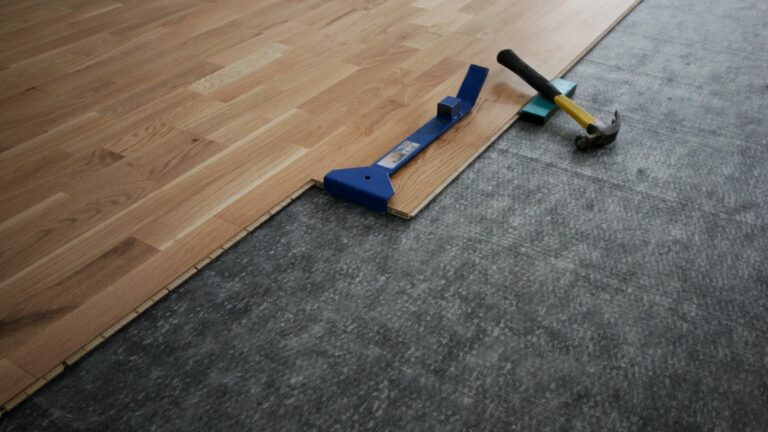
All services available in Northampton: floor sanding, commercial sanding, repairs, board replacement, gap filling, parquet restoration, staining, sealing, stair sanding and new floor installation.

Nearby areas we also cover: Brentwood, Cambridge, Chelsea and Dulwich. There is a page for each, and the full list of towns is on our areas we cover page.

Parquet Flooring Restoration

FAQ: Floor Sanding in Northampton

Sanding and full restoration, board repairs and replacement, gap filling, parquet work, staining and every finish type, stair sanding, screen-and-recoat maintenance and new wooden floor installation.

Nearly always. Work is slotted into closed hours — nights, weekends or holiday shutdowns — so the finish cures before anyone walks back in.

Yes, first. Failed boards are cut out and replaced with reclaimed timber matched by species and age, so the repair vanishes once the floor is sanded and finished.

Usually, even after decades under carpet. Re-bonding, piecing-in, adhesive removal and a level sand leave the pattern ready for whichever finish suits the room.

Yes. Sanding exposes bare timber that takes stain evenly, lighter or darker, and we prove the shade on your actual floor before treating the whole area.

Engineered boards, yes, provided the wear layer measures up — we check before quoting. Laminate has no sacrificial timber and cannot be sanded.

Very little escapes. Sealed extraction on every machine traps the overwhelming majority of dust at source, so homes stay habitable and adjacent rooms in halls and schools stay in use.

Send over two photographs for an honest opinion and a fixed written quotation, or arrange the free no-obligation survey. Call 01823 674562, email info@ryansrestoration.co.uk, or use the form on this page.

Lines are painted between coats of lacquer rather than on top of the finished surface, so the markings are sealed inside the finish where trainers and equipment cannot wear them away. Layouts follow the dimensions published by the relevant governing bodies.

Often, but not always. We measure how much timber remains above the tongue first; if a floor is near its limit we recommend a screen and recoat or restoration without sanding instead, which preserves the remaining wear layer.