45 years’ experience  ·  Rated 4.9 on Google  ·  Family-run, from our workshop near Wellington

45 years’ experience · Rated 4.9 on Google · Family-run

Floor Sanding and Wood Floor Restoration in Bovey Tracey

Floor sanding, repairs and low-odour finishes for Bovey Tracey homes, galleries and studios, from engineered oak in newer houses to old pine boards near the town centre.

QUICK QUOTATION

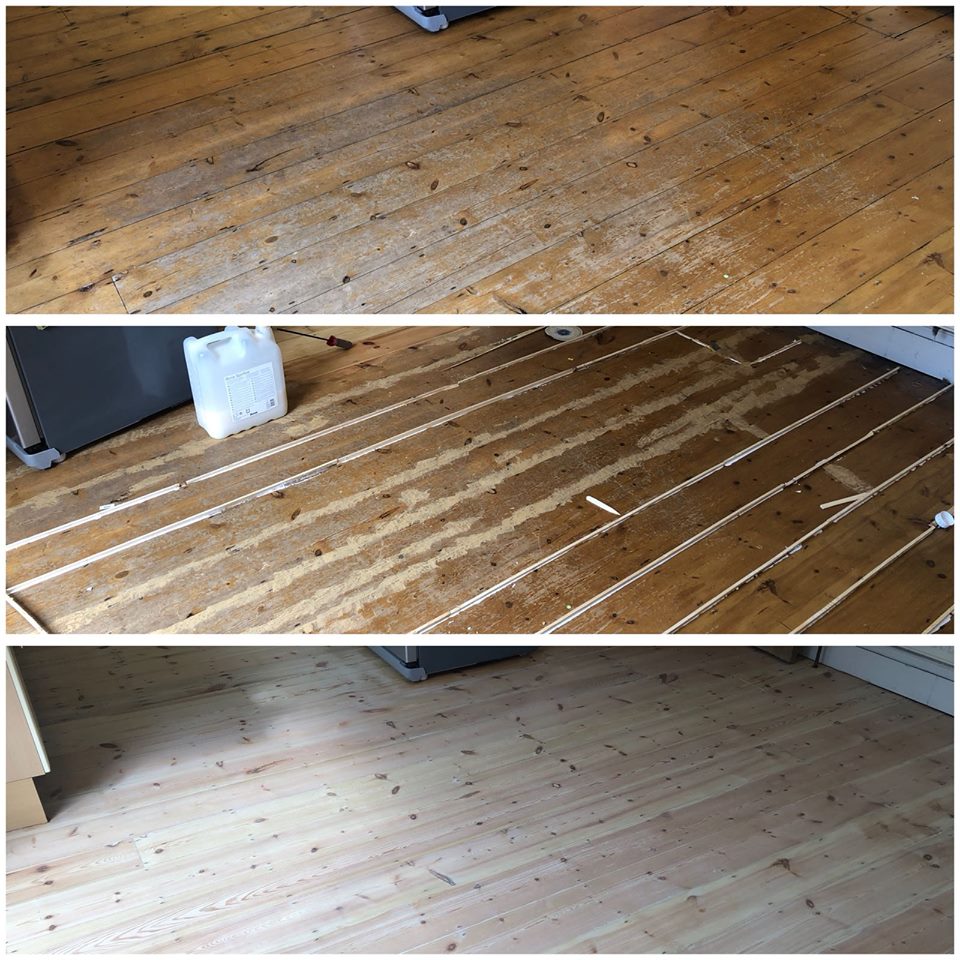
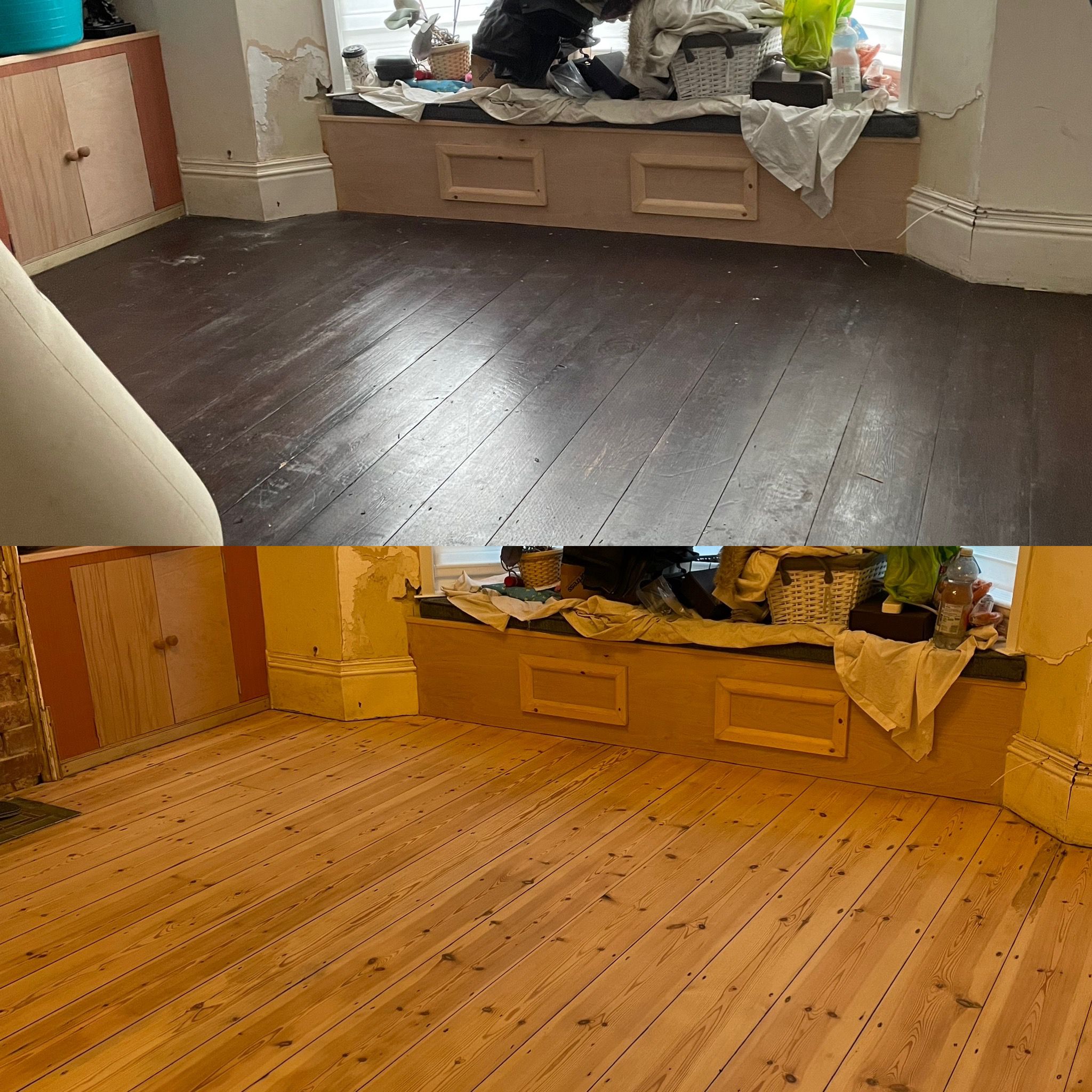
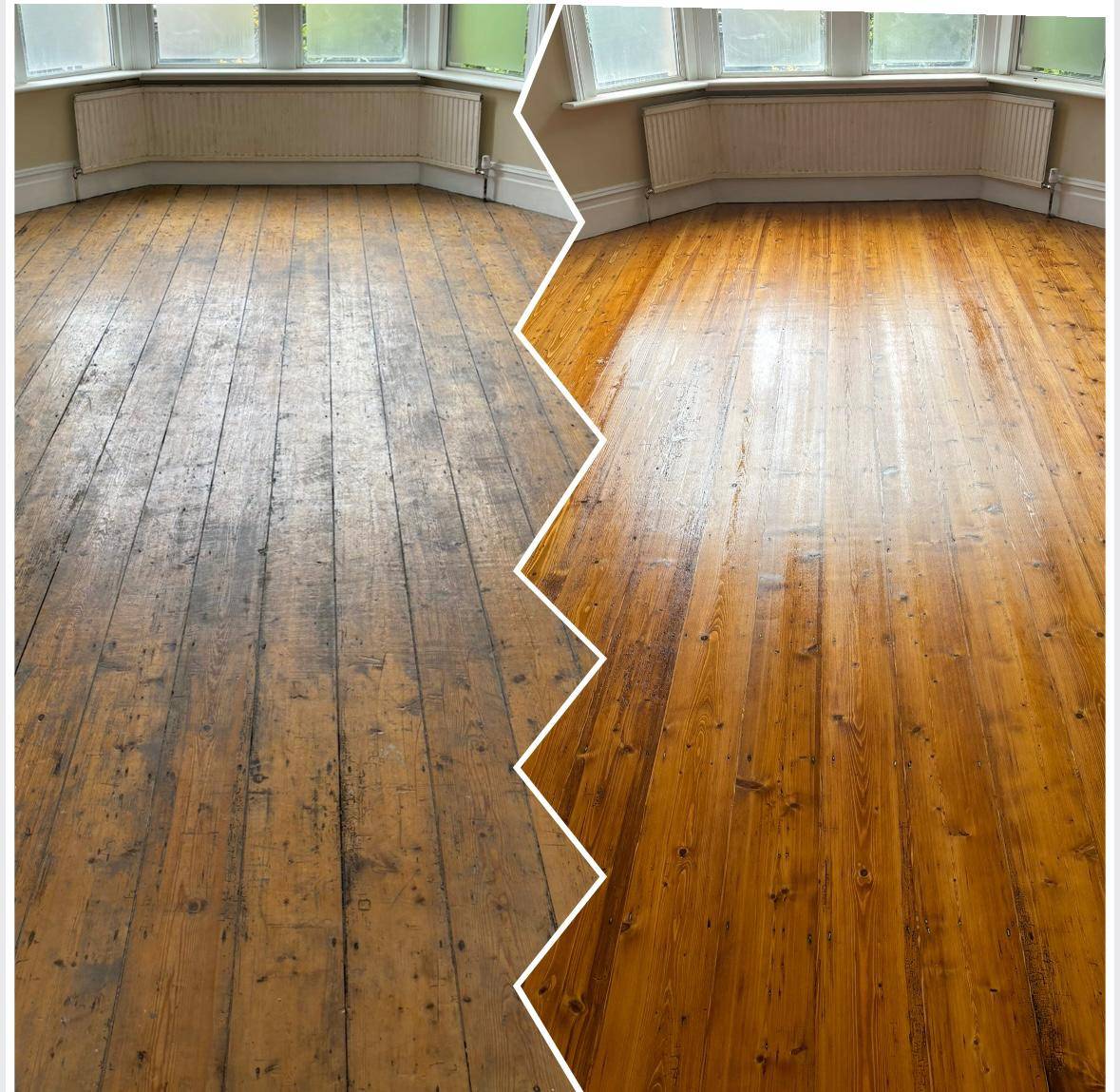
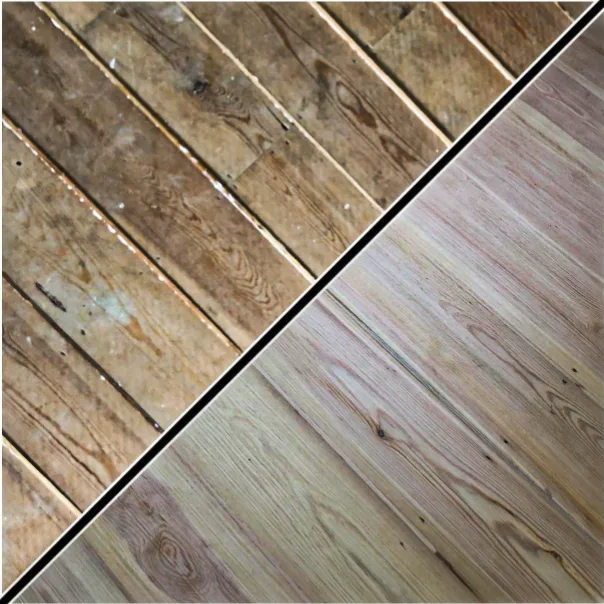
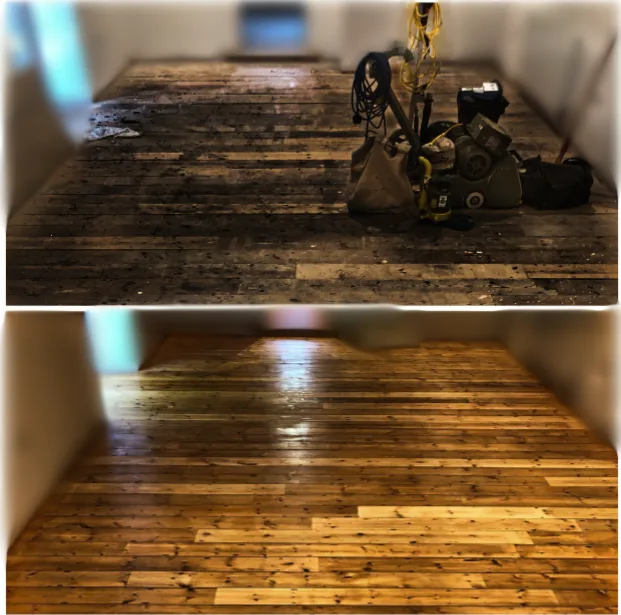
Floor sanding before and after

Floor Sanding in Bovey Tracey, From First Look to Final Coat

Bovey Tracey enquiries tend to split neatly between two quite different kinds of floor. Older houses towards the middle of town tend to have softwood boards nailed straight to the joists, often with a painted border and a few decades of carpet on top. Newer homes on the edges of town are more likely to have engineered oak, either glued to a screed or floating on a thin foam underlay. Each can be brought back, yet they respond to the sander in their own way, so identifying the construction and measuring the remaining timber comes before anything else.

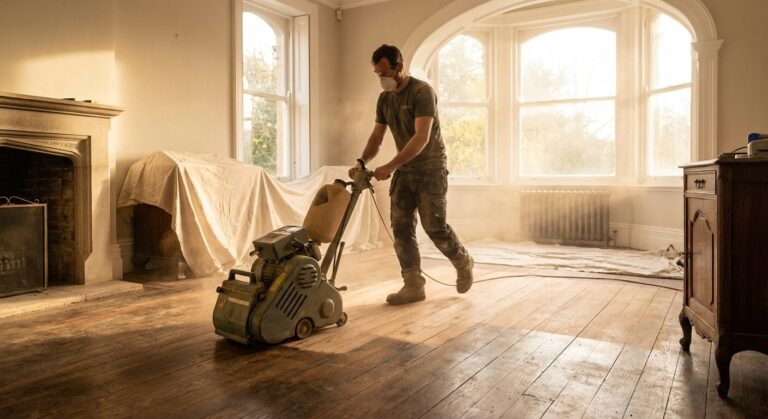
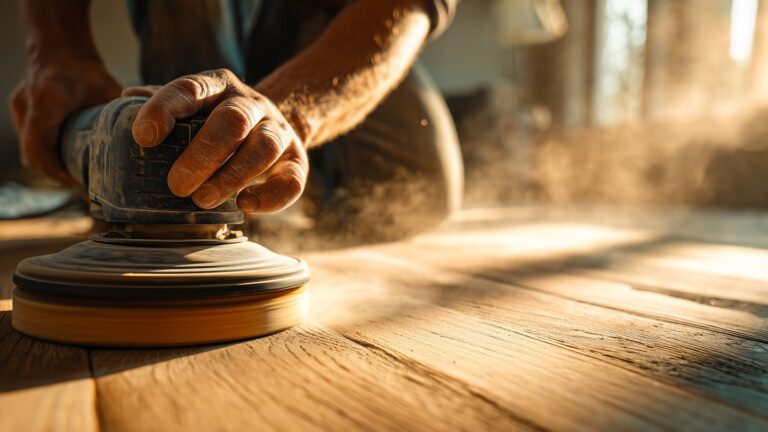
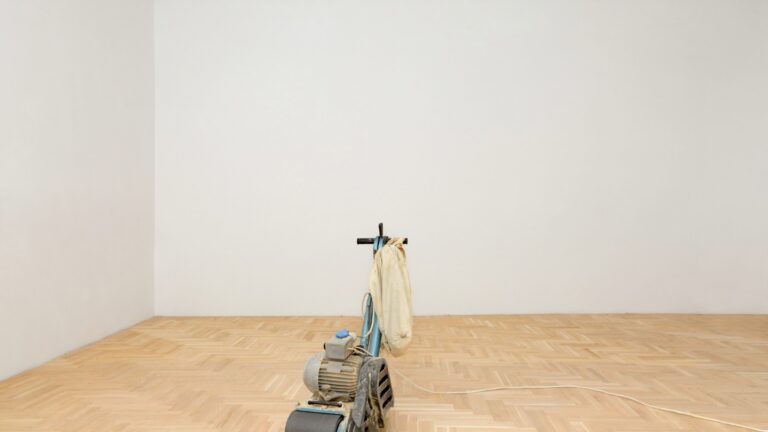
Sanding a wooden floor properly is a sequence rather than one pass. A large belt or drum machine takes the open area of the room back to clean wood, starting with a coarse grit only where the surface really needs it. An edging sander follows along the skirting, and a scraper and hand tools reach the corners, door linings and radiator pipes that neither machine can get near. The grits step up gradually, each one removing the scratch pattern left by the one before. Skip a step and the marks appear as soon as the first coat goes down. A rotary or multi-disc machine then evens out the whole surface so the middle of the room and the perimeter look the same.

Dust is the other thing people ask about straight away. The machines run with sealed extraction, drawing fine dust away at the sanding head into collection units instead of letting it drift over bookshelves and curtains. A trace of fine powder on a windowsill is still possible, so we never claim perfection, yet with dust-free floor sanding the kettle, the sofa next door and the dog basket all stay clean enough to use.

Bovey Tracey is part of the patch we work routinely, and the floor sanding we carry out across Devon takes in the neighbouring towns too. Booking floor sanding in Bovey Tracey is not a special trip for us. Expect one day for a single small room, and up to three where a hall, lounge and dining room are all on the list.
Engineered Oak in Bovey Tracey: How Many Sandings Are Left?

An engineered plank is a sandwich, with a slice of genuine oak glued over a stable backing of birch ply or spruce lamellas. Only that top layer can be sanded. Once it has gone, it has gone, and the core beneath cannot be made to look like oak. So before anyone switches on a machine, the useful question is how thick the wear layer still is.

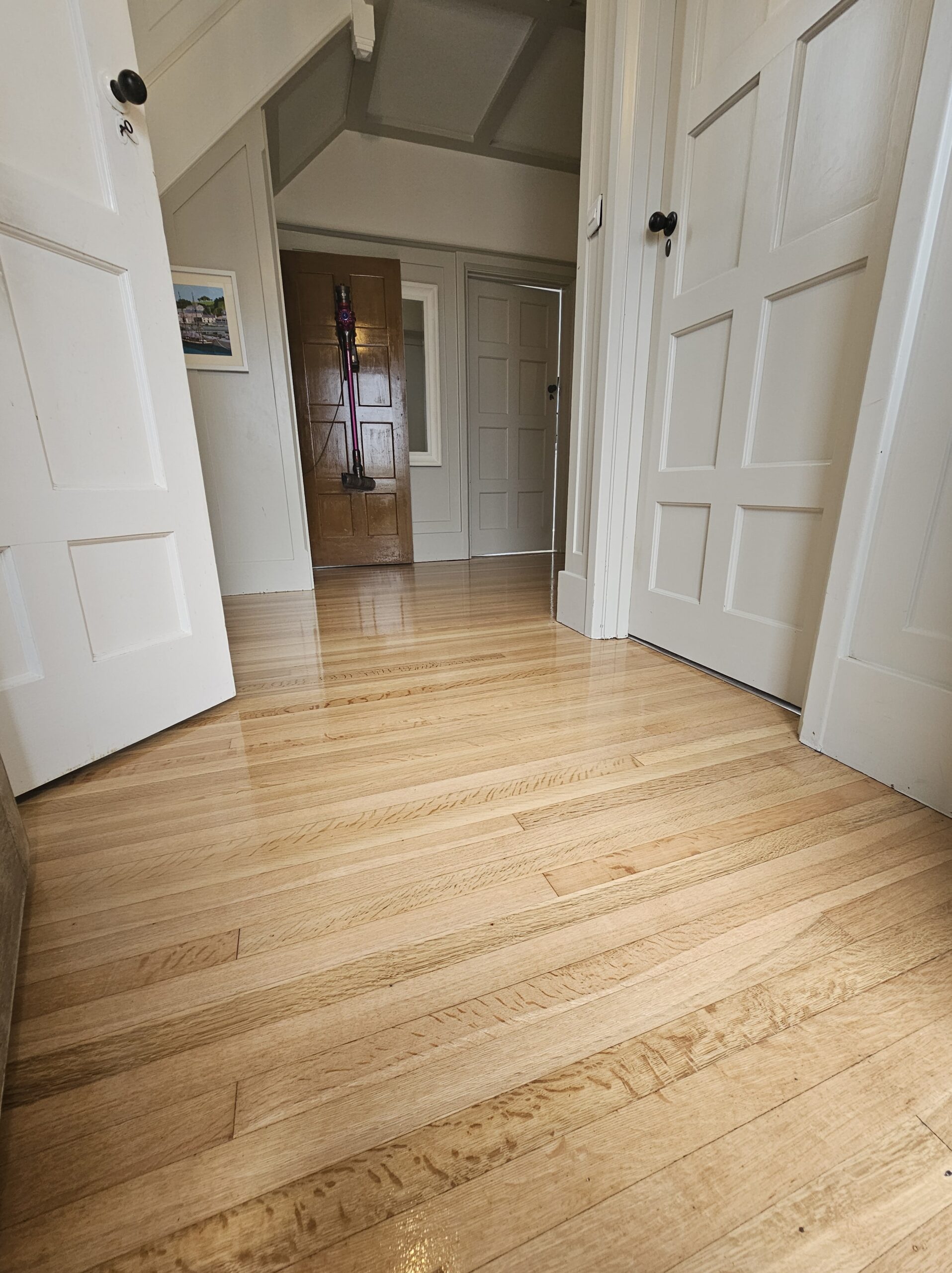
There are a few ways to find out. Prise off a door bar or a vent cover and the sliced edge of a plank is usually visible, with the oak layer showing as a paler band you can put a steel rule against. Where the floor runs to a step, the nosing sometimes shows the same thing. Manufacturer details help if the original paperwork survives in a kitchen drawer. As general guidance, a wear layer of four millimetres or more leaves room for several full sandings over the life of the floor. Around two to three millimetres, one careful sand is usually fine. Below that, and particularly with thin veneers under a millimetre, a light abrade and fresh coats is the sensible route, because there is not enough oak to cut back through deep scratches.

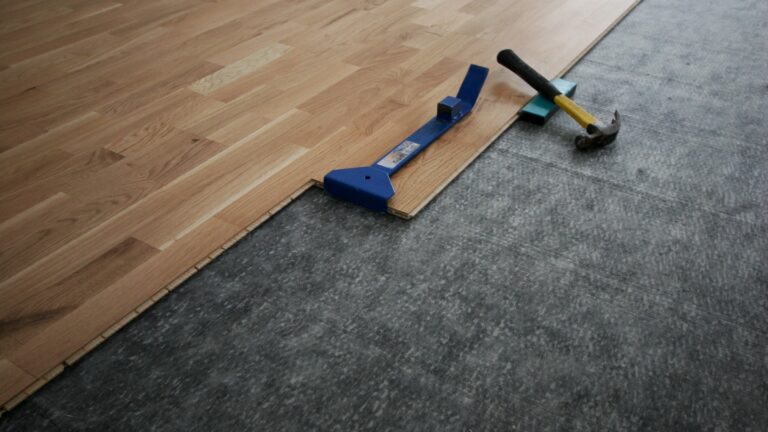
Click-fit floating floors bring a second complication. The boards sit on an underlay rather than being fixed down, so they can flex under a heavy machine, and many have bevelled edges. Sanding lowers the surface, but the old finish sitting down in the bevels stays put, and those grooves then need hand attention or a decision to leave them alone. That is worth knowing before committing.

Laminate is a different product altogether. Its wood effect is a printed layer under a plastic wear coat, and it cannot be sanded.

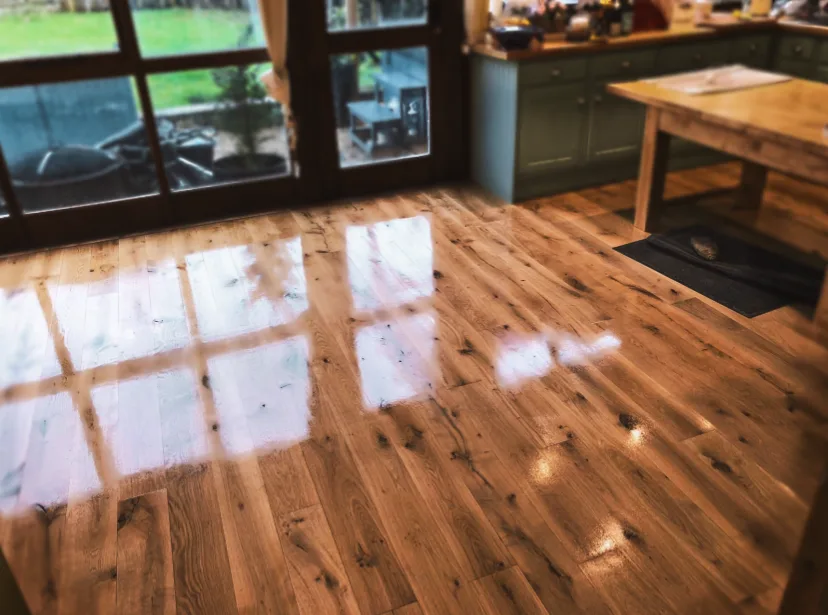
When the wear layer allows, wood floor restoration in Bovey Tracey on engineered oak can be very rewarding: grey traffic lanes and chair-leg dents disappear and the boards look close to newly laid. Solid boards are a different proposition, and our wood floor restoration service and oak floor restoration work cover them in depth. Light surface scuffing on either type can sometimes be dealt with through targeted scratch repair instead of a full sand.

parquet wooden floor sanding
wooden floor sanding

Commercial Floor Sanding for Bovey Tracey Galleries, Studios and Cafés

Bovey Tracey has a lively arts and crafts scene, with studios and galleries spread through the town, and premises like that ask for something slightly different from a house floor. Gallery lighting is the main reason. Spotlights on tracks are angled to rake across walls and plinths, and they rake across the floor too. Low, glancing light picks out every swirl, chatter ripple and patch of uneven sheen. A floor that looks perfect in a sitting room lit by one central pendant can look tired under display lighting. The answer lies mostly in the sanding rather than the coating: a disciplined grit sequence, careful edge work so the perimeter matches the middle, and a final flattening pass before anything is applied. A matt or extra-matt finish then helps, because it does not bounce the spotlights back into visitors’ eyes.

For commercial floor sanding in Bovey Tracey, timing usually matters as much as technique. Galleries and studios often have a quiet or closed day in the week and the work can be planned around it, or done overnight, with quick-curing lacquers chosen so the room reopens without a lingering smell. Dates are agreed well ahead so exhibitions and opening hours can be arranged around them. Plinths and display stands need emptying beforehand, and heavy pieces should go back on felt-backed feet.

Cafés and small food premises have a different set of problems: spills, chair legs scraping all day and wet footwear by the door. Restaurant and café floor sanding leans towards harder-wearing lacquers for exactly those spots. Retail units with constant footfall between till and doorway fall under shop floor sanding, and a studio used for movement or exercise classes needs a surface with some grip, which is the subject of dance and studio floor sanding.

The wider side of this, including the paperwork a landlord or managing agent may want to see first, such as a method statement or a copy of our insurance, sits under our commercial floor sanding service.

Low-Odour Finishes for Occupied Rooms and Working Premises

The smell of a freshly finished floor depends almost entirely on what the finish is carried in. Traditional oil-based lacquers use solvents that evaporate as the coat dries, and that is where the strong, lingering odour comes from. Water-based lacquers carry the resin in water instead. They still smell while wet, but far more mildly, and the odour fades within hours of airing rather than over days. That matters in a gallery where staff are on site, a café with food being prepared next door, or a house where someone is working from the spare bedroom.

Water-based products have other traits worth knowing about. Most go on almost colourless, leaving Scandinavian-style pale oak looking much as it did on the day it was laid rather than ambering over the years. They dry quickly enough for several coats in a day. They also lift the grain slightly on the first coat, so a light abrade between coats is part of doing the job properly. Oil-based lacquer, by contrast, warms the tone of the wood, which some people prefer on old pine or darker oak.

A gallery entrance or café counter run is better served by a two-component lacquer; the hardener is mixed into the base on site, minutes before it goes down, and the cured film resists scuffs and spills far longer than a single-pack product. The full range of lacquers is covered under wood floor sealing.

Oils sit at the other end of the scale. Rather than forming a skin on top, natural oils and hard wax oils penetrate the fibres and cure within them, giving a quieter, low-sheen look; a worn patch in front of the sink or the sofa can be refreshed on its own without redoing the entire floor. Low-odour versions exist, though curing takes longer. Oiling a wood floor suits homes and quieter rooms well.

Colour is a separate decision, and on any wood floor refinishing job it is best settled before the first coat. If a darker, warmer or greyer tone is wanted, stain goes on first and the protective coat over it. We test stains on your own boards, because the same tin looks different on oak, pine and engineered surfaces. Floor staining has its own section, and a high-sheen look is a different route again through wood floor polishing.

flooring sanding company
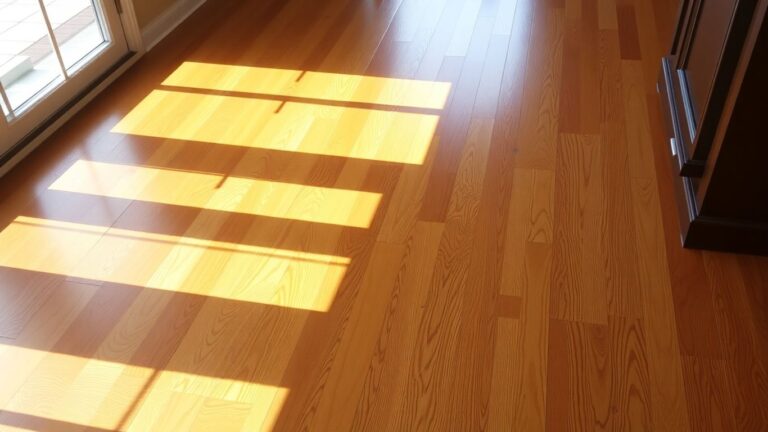
Sunlight across freshly lacquered wooden floorboards

Gaps, Creaks and Tired Boards in Older Bovey Tracey Houses

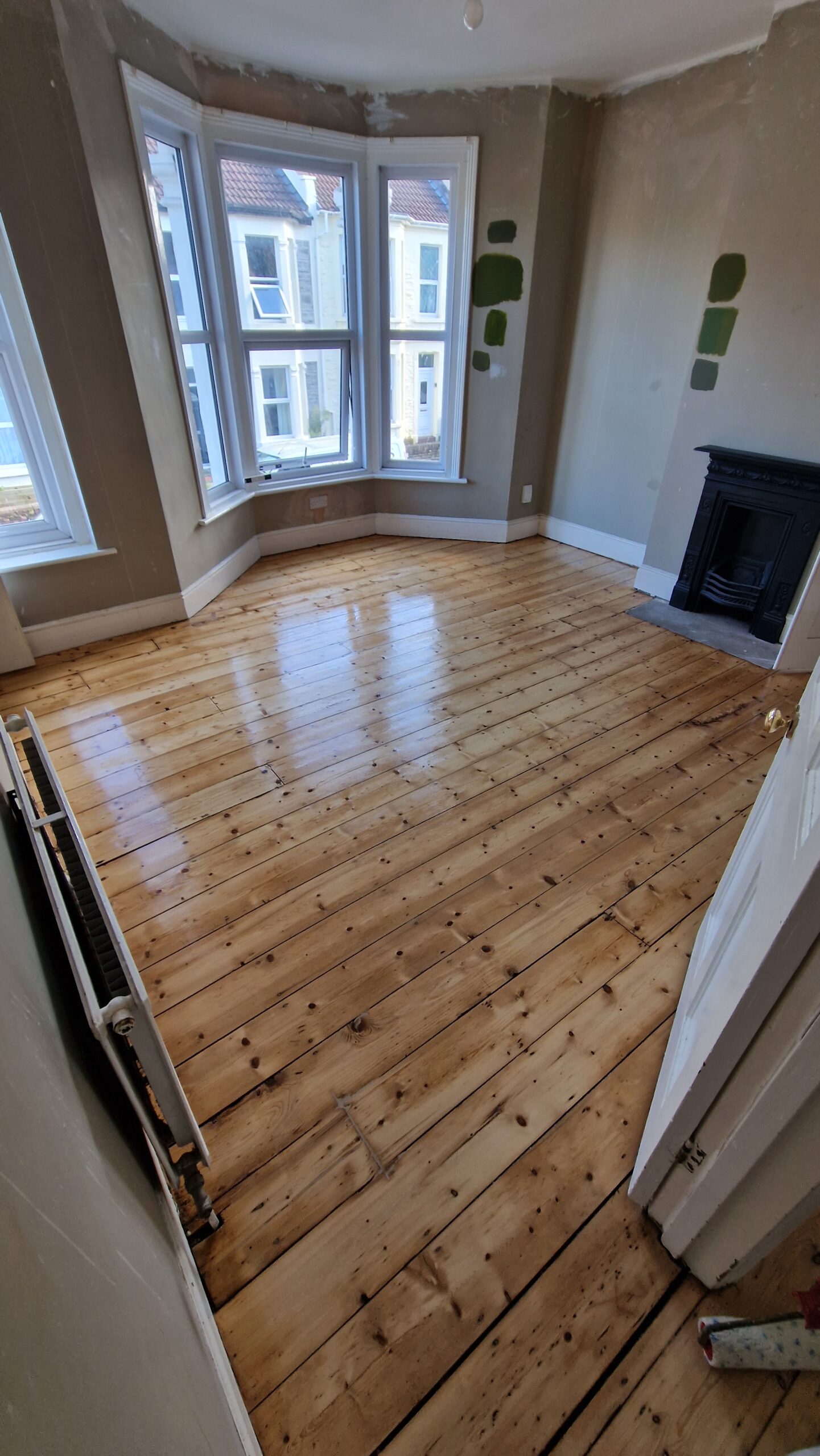
Sanding will not hide a structural problem, and good wood floor restoration starts underneath. A loose board rocks under the machine, a proud nail head tears the abrasive, and a split board can catch and splinter. So repairs come first, and in older houses there are usually a few to deal with.

Creaks are the most common complaint. The noise is friction: a tongue chafing its neighbour, or a board riding up and down a nail shank that decades of wet winters and dry summers have slowly loosened in the joist. Once a cable and pipe detector has been run over the spot, a countersunk screw driven down into the joist generally silences it for good. Squeaky floor repair goes into the approach in more detail.

Boards that were cut for plumbing or wiring, then patched with whatever was to hand, are the next issue. Short lengths of plywood and odd bits of mismatched timber show up badly once a floor is sanded and sealed. Proper floorboard replacement uses timber chosen to suit the existing boards, and our reclaimed stock is useful here, since old pine has a colour and tight grain that fresh softwood from a timber merchant cannot copy. Broader wooden floor repairs, from split tongues to soft board ends beside a damp wall, are tackled at the same stage.

Whether to fill gaps at all depends on the floor. In an old pine floor they are partly seasonal: boards shrink in a heated winter and swell slightly in a damp summer. Fine slivers of timber glued into wider gaps give a lasting result, while a resin filler mixed with dust from the floor’s own sanding suits narrow, stable gaps. Gap filling is worth doing for draughts as much as for looks, especially over a ventilated void where cold air rises through every joint in winter.

Where a house still has its original softwood throughout, these repairs simply become part of a wider pine floor restoration, with the sanding and finishing planned around what the boards will take.

Herringbone Blocks and Staircases

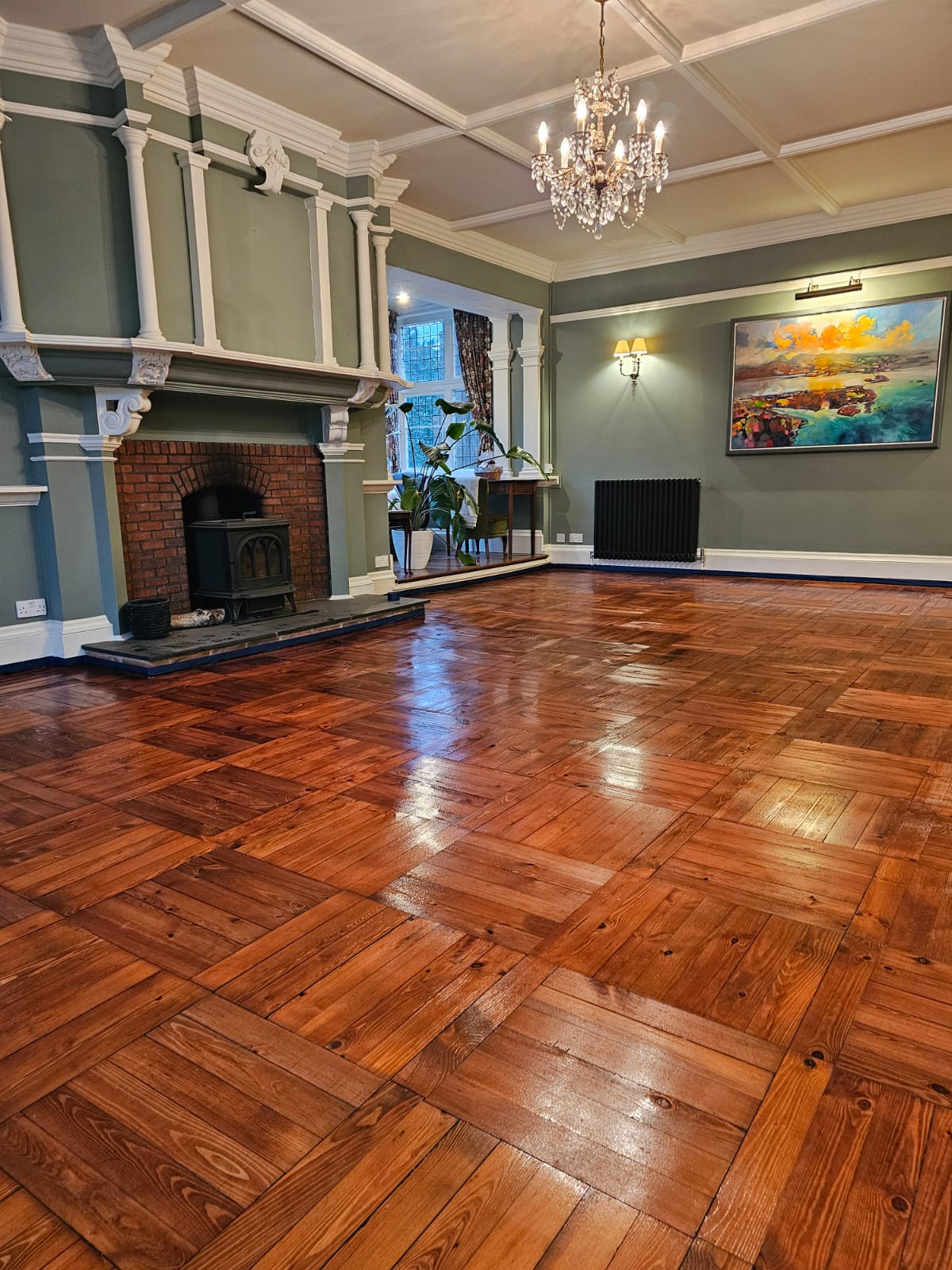
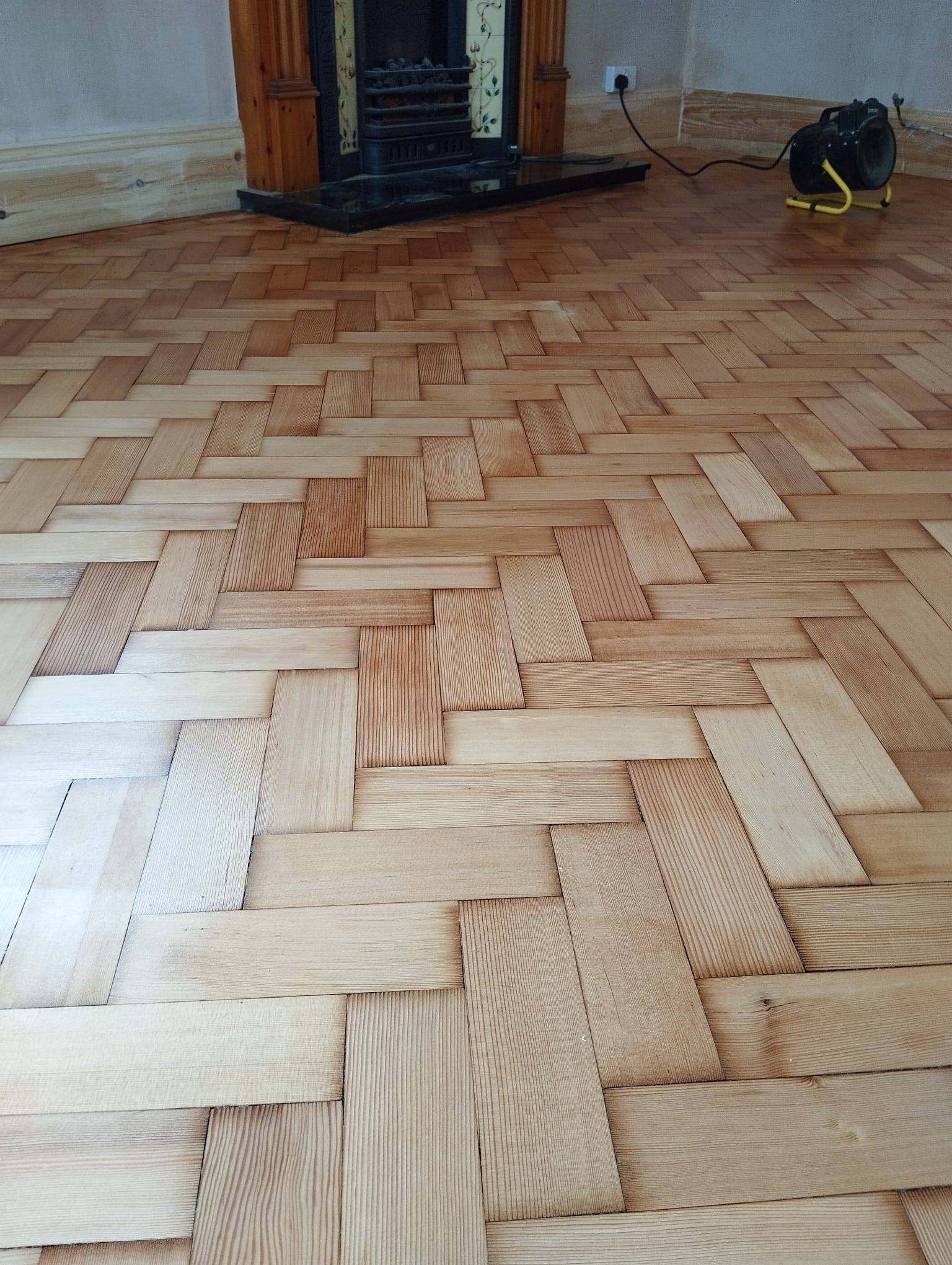
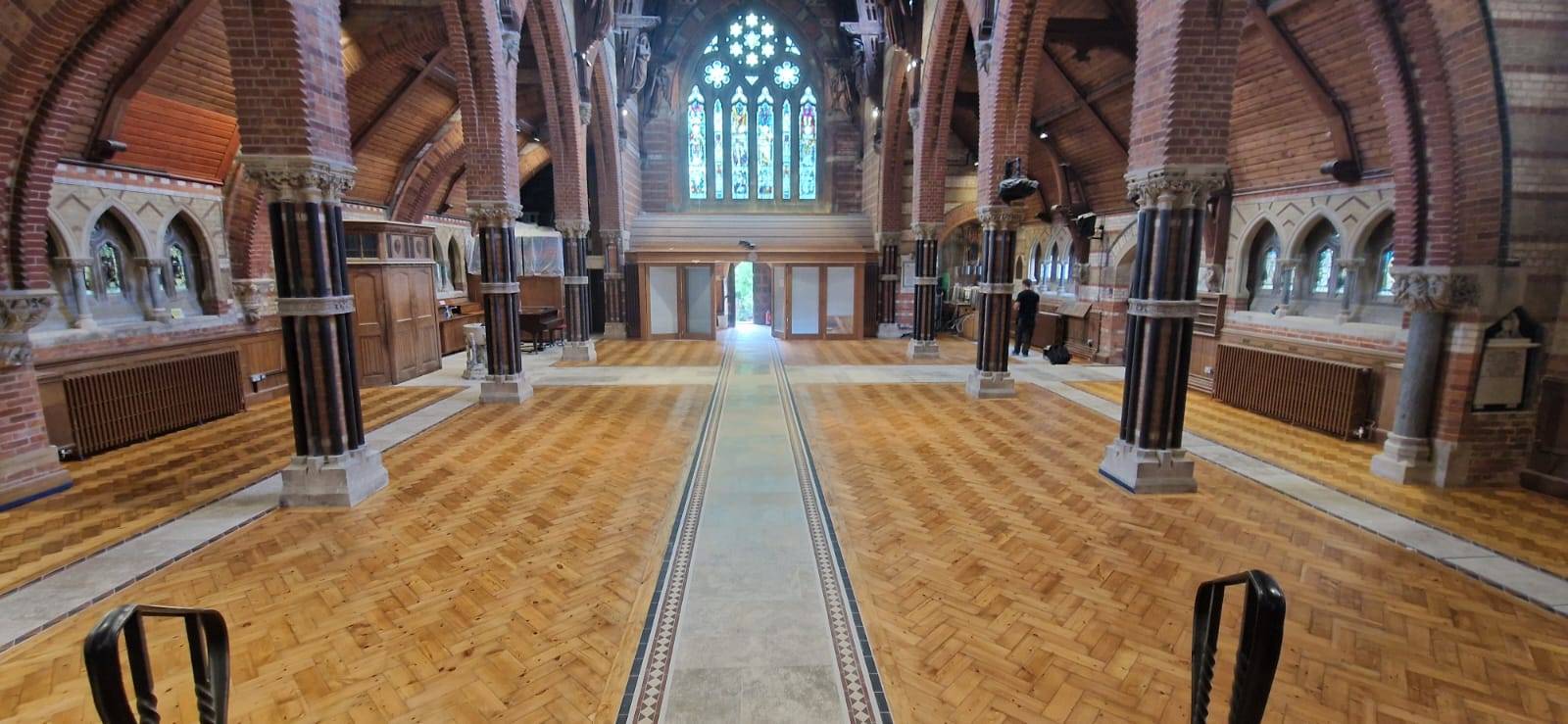
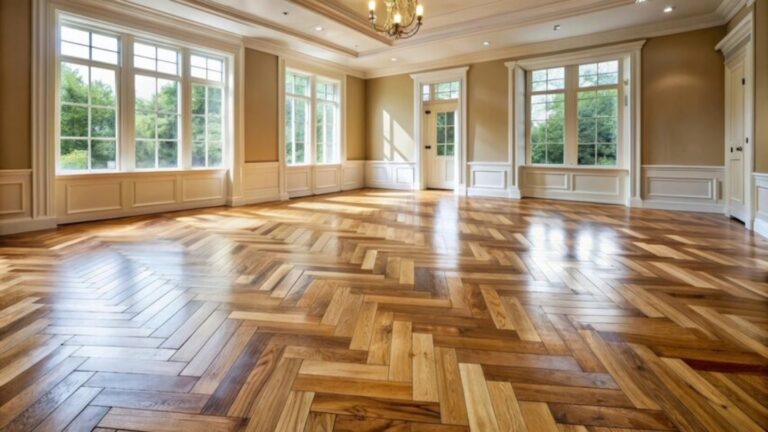
Parquet turns up in all sorts of buildings around this part of Devon: hallways in older houses, church and village halls, and the occasional room where it was laid over a concrete slab in the middle of the last century. Blocks were usually bedded in black bitumen adhesive, and the state of that bond decides how the job goes. Blocks that sound hollow when tapped, or shift underfoot, need lifting, cleaning and re-bonding before sanding starts, otherwise the machine will pull them loose.

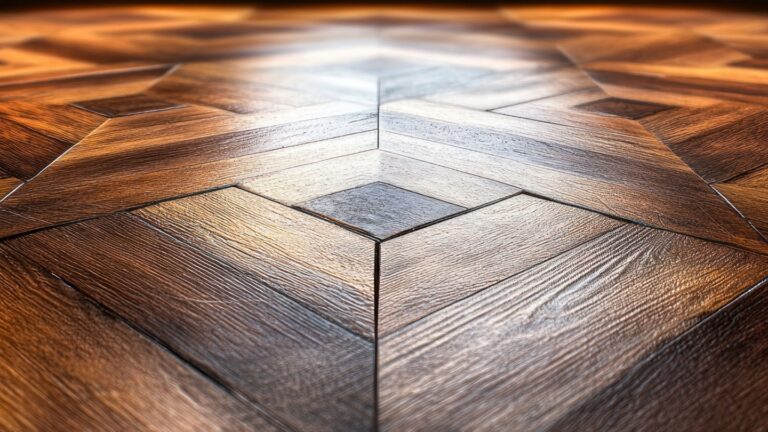
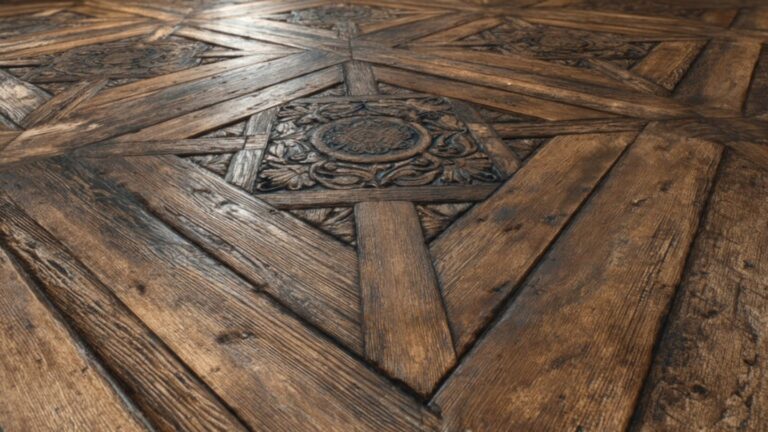
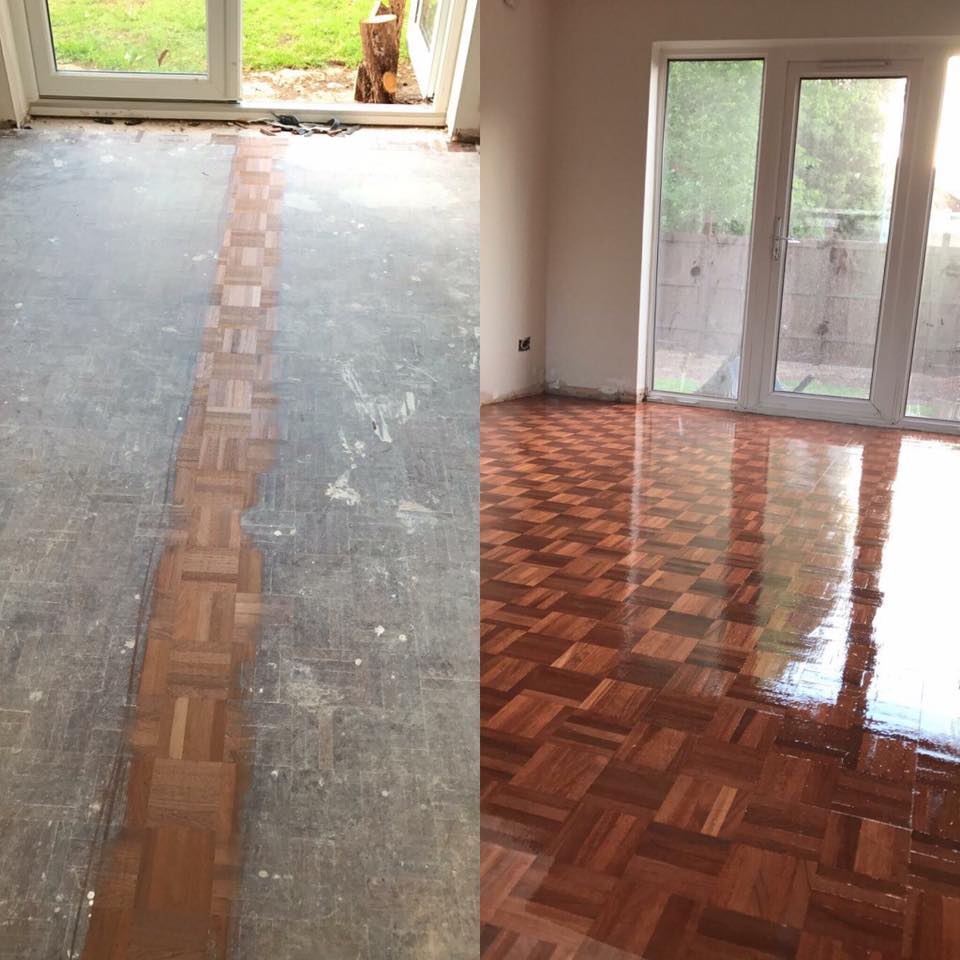
Herringbone is slow going because every alternate block lies at ninety degrees to its neighbour, so the grain direction flips constantly beneath the drum. The machine is always cutting across some of them, so the finer grits matter more than they do on a board floor, and any shortcut shows up as fine cross-grain scratches once the lacquer goes on. Parquet floor sanding covers the whole process, and our Paignton parquet sand and seal shows a block floor elsewhere in Devon brought back to life.

Stairs are mostly hand work. A big machine has no place on a tread, so treads, risers and nosings are sanded with smaller machines, detail sanders and scrapers, and the finish has to cope with heavier, more concentrated wear than anywhere else in the house. Nosings take the most punishment and are usually the first place a worn coating shows. Old carpet gripper and staples need pulling out first, and paint on the strings and spindles can be a job in itself. Where painted woodwork might be old enough to contain lead, it should not be dry-sanded without proper precautions.

In newer houses where the downstairs is engineered oak, the staircase is often softwood that was always meant to be carpeted. Once the carpet comes up, those treads can be sanded and stained so they sit closer to the colour of the oak below. Stair sanding can be booked on its own or alongside the hall and landing so the timber matches throughout.

Wood floor sanding company
Floor sanding taunton

Looking After the Finish, New Floors and Arranging a Visit

The first day after the last coat is the delicate one. Walk on it in socks once about twenty-four hours have passed, and leave the furniture out for another day or two after that. When it does go back, lift each piece rather than sliding it, and stick felt pads under every foot. Rugs can wait a little longer still, because the finish carries on hardening underneath well after it feels dry to the touch.

Long-term care is mostly about keeping grit off the surface, since grit under a shoe acts like sandpaper. Put a stiff doormat by each entrance, swap the rotating brush on the vacuum for its flat nozzle, and mop sparingly with a mild, neutral floor soap. Steam belongs on bathroom tiles; on timber the hot vapour forces its way between planks, and over time the lacquer may turn milky or start peeling. In a studio where clay or plaster dust gets tracked about, a daily sweep does more good than any cleaning product.

Before a finish wears right through, a machine buff and fresh topcoat brings back protection without sanding into the timber again, which on engineered oak keeps the wear layer intact. Waxed floors are looked after differently, by rewaxing and buffing, and traditional floor waxing still suits older pine where a soft, low glow is wanted. Domestic floors looked after this way usually go eight to ten years before needing the machines again, whereas a gallery or café with visitors through the door all week is nearer four or five.

Sometimes the honest answer is a new floor, perhaps because an extension has only a bare screed or old engineered boards are worn through to the core. Either our team lays it start to finish, or the timber arrives on site for your own builder to lay; Junkers and Bona products both feature in what we can offer. New wooden floor installation sets out both routes.

To get started, take two photos: the whole room from a doorway, and one close to the boards in the most worn spot. Both pictures can go by email to info@ryansrestoration.co.uk. Phone calls to 01823 674562 are answered from eight until six through the working week, and Saturdays can be fitted in by prior agreement. After that comes a visit of roughly thirty minutes, free of charge, in which we measure the wear layer or board depth, take moisture readings and look at ventilation and earlier patching. You then get our figures on paper, broken down room by room and task by task, and they hold firm unless the brief is altered. You can also reach us through the contact form.

Common Questions About Floors in Bovey Tracey

Look for a place where the edge of a board is visible, such as under a threshold strip, beside a floor vent or at a step. The top hardwood layer should show as a distinct band. Around four millimetres usually allows several sandings over the floor’s life; with much less than two, a light abrade and fresh coat is normally the safer route.

Water-based lacquers are the mildest. They still smell while wet, but the odour is far lighter than a solvent-borne lacquer and usually fades within a few hours of the room being aired. That makes them the normal choice for galleries, cafés and homes where someone is working in the next room. Some hard wax oils come in low-odour versions too, though they take longer to cure.

Not in the room being sanded, but the work can be arranged so it barely touches opening hours. Many small galleries and studios have a closed day, and a single room can often be sanded and coated around it, or overnight, using a fast-curing lacquer. In a bigger gallery, one room can be closed off and finished while visitors carry on browsing in the others.

Matt, in most cases. Track lighting is angled low, and a shinier finish reflects it straight back and makes every small scuff and footprint stand out. A matt or extra-matt lacquer reads more like bare timber and is more forgiving of daily wear. Satin suits a house well, but under gallery lighting it tends to show traffic paths sooner than people expect.

No. What looks like grain on laminate is a photograph sealed beneath a hard plastic film, and an abrasive would go straight through it to the fibreboard. The quickest test is to look at a cut edge or under a threshold: real engineered boards show a band of solid timber on top, while laminate shows a thin paper-like film over fibreboard. Laminate that has worn out needs replacing instead.

Shallow dents usually disappear, because sanding takes the surface down below their depth. Deep dents, particularly in soft pine, may only fade rather than vanish, since removing enough timber to lose them completely would thin the boards too much. On engineered oak, the depth of the wear layer decides how far it is sensible to go, and the survey is the place to judge that.

Yes, and it often makes sense to plan them together. The two floors are prepared differently and usually take different finishes, but sequencing them in one booking means the house is disrupted only once. Pine generally needs more repair and gap work first, while engineered oak is about protecting the wear layer, so the schedule is built around both.

The room being sanded needs to be clear, including rugs, curtains that touch the floor and anything standing on it. Fitted furniture can usually stay, with the floor sanded up to it. It helps to have the rest of the house arranged so you can live around that room for a day or two while the coats harden.

Walking in socks is generally fine after about a day. Give it forty-eight to seventy-two hours before the furniture returns, carried rather than dragged and standing on felt pads, and hold back the rugs a few days more so the coating can finish curing beneath them. Commercial rooms finished with a fast-curing lacquer can usually reopen sooner than that.