45 years’ experience  ·  Rated 4.9 on Google  ·  Family-run, from our workshop near Wellington

45 years’ experience · Rated 4.9 on Google · Family-run

Floor Sanding and Wood Floor Restoration in Bridport

Bridport floors sanded, repaired and coloured, from terraced-house pine to studio, hall and dance floors that need the right grip.

QUICK QUOTATION

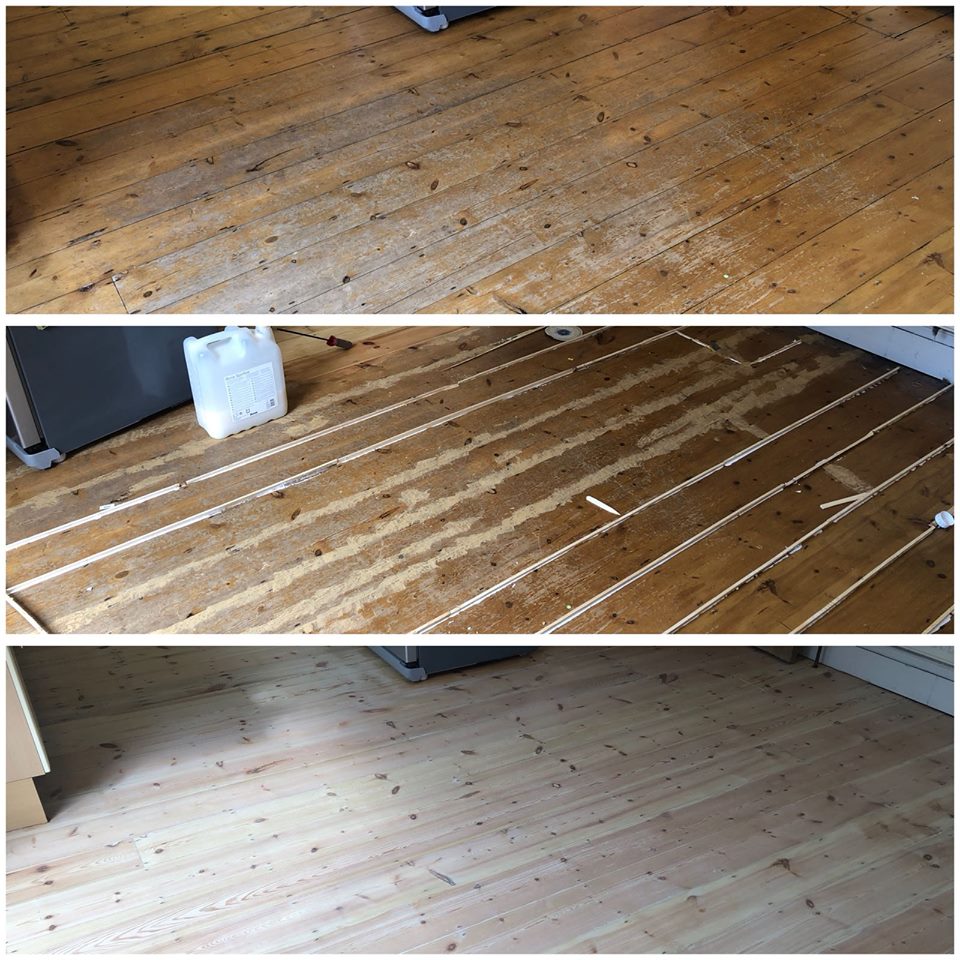
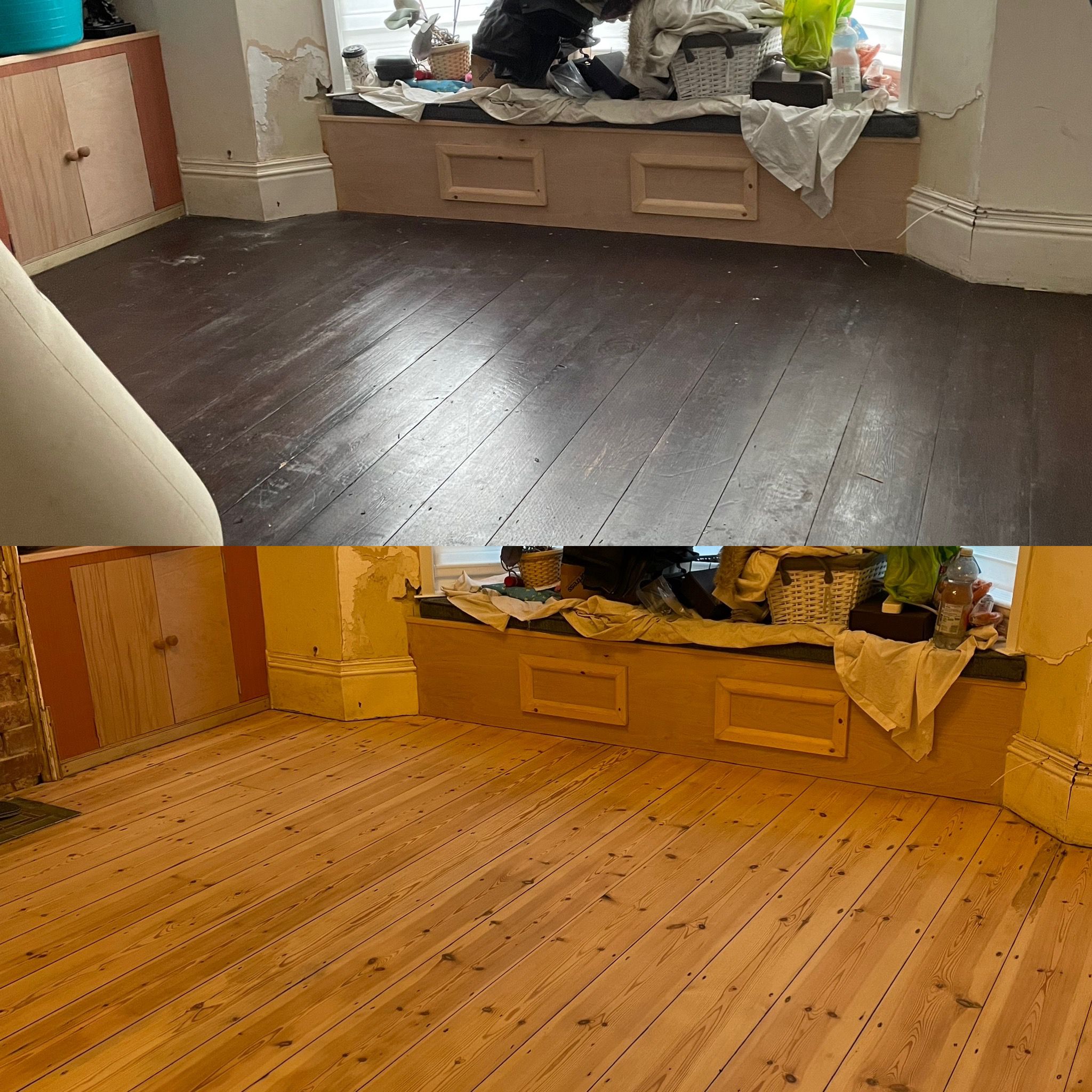
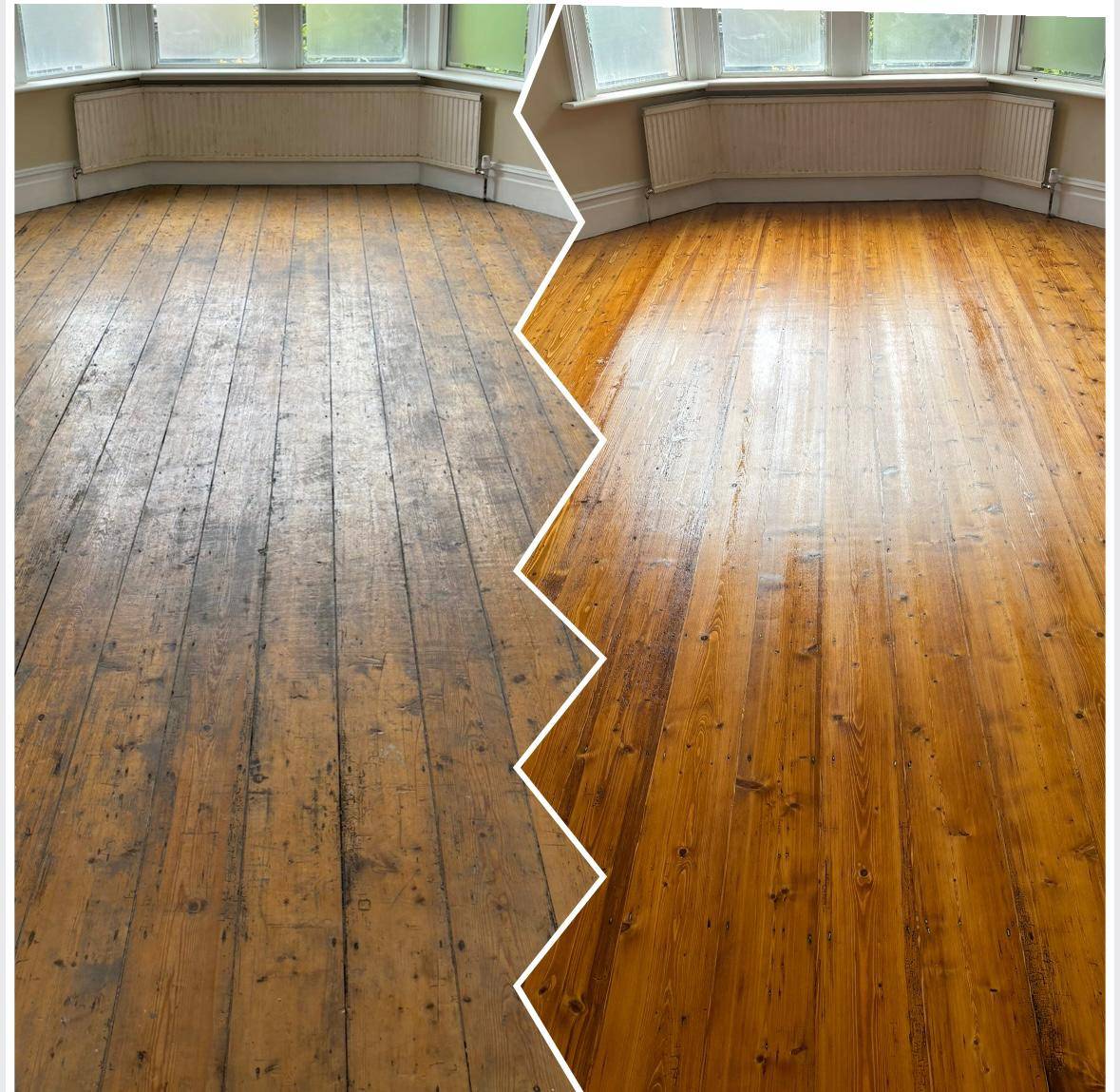
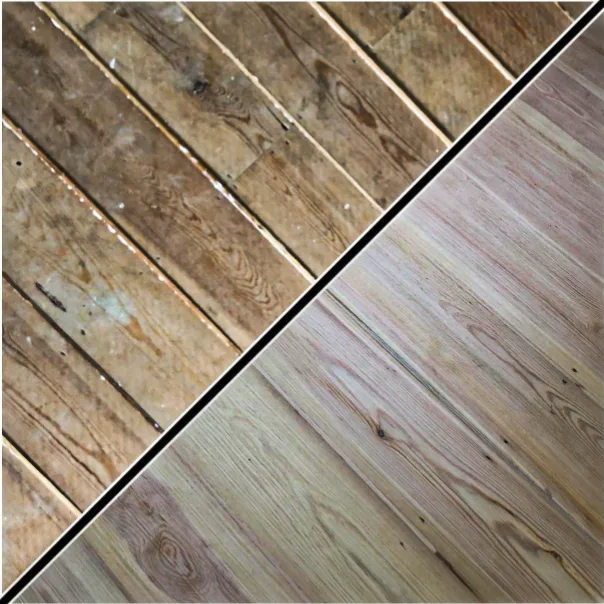
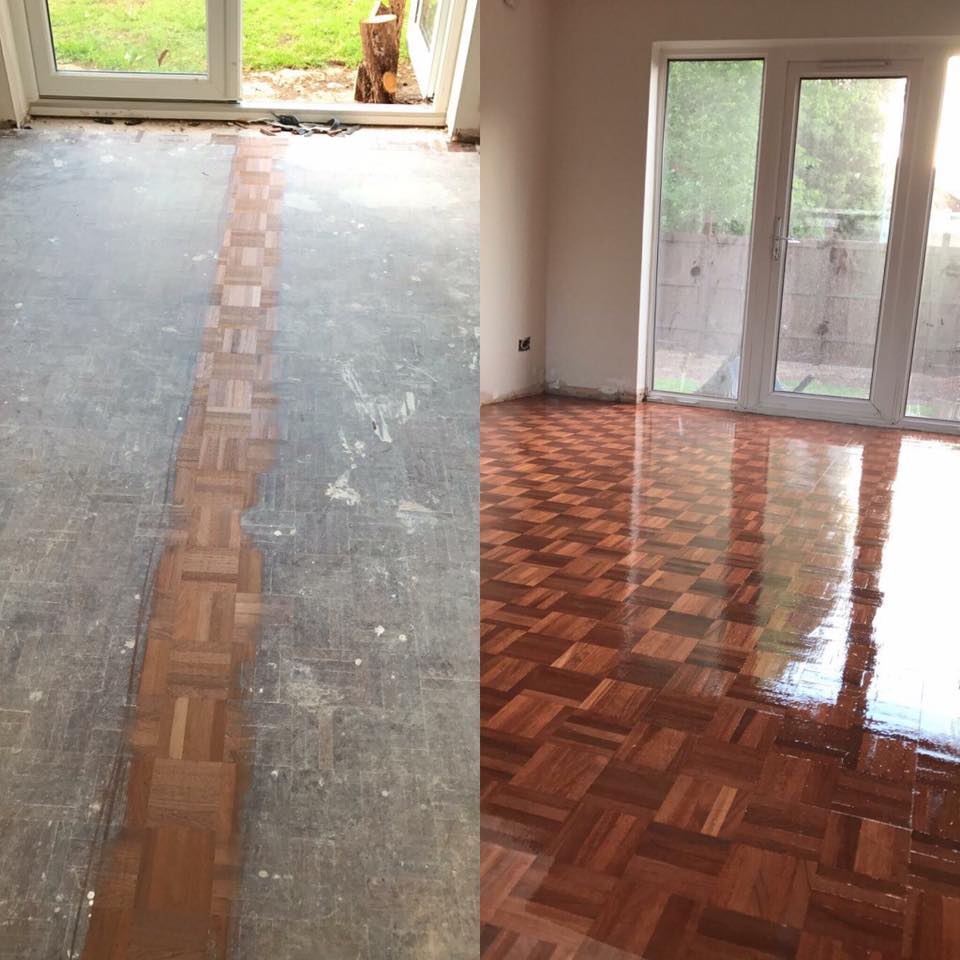
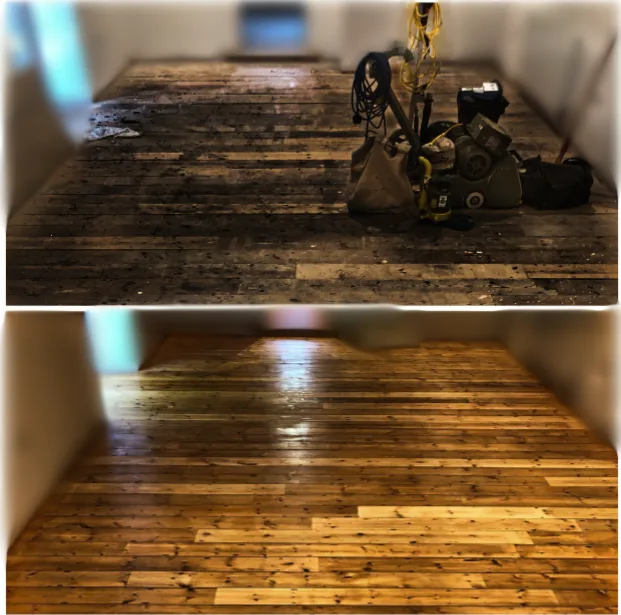
Floor sanding before and after

Floor Sanding in Bridport: Terraces, Town Houses and Converted Workshops

Bridport has an unusual spread of wooden floors for a market town. There are the softwood boards you would expect in rows of Victorian terraces, oak and pitch pine in the bigger houses on the main streets, and then a layer of former rope and net works buildings that now house studios, workshops and event spaces. Those industrial floors are often thick, wide and heavily marked, and they reward careful sanding more than almost anything else we work on.

The principle of sanding a wood floor is the same in all of them: remove the tired coating, take the surface back to clean timber that is flat enough to finish well, and lose as little wood as possible on the way. How that is achieved varies. A cottage floor of narrow pine might need nothing heavier than a medium paper to start. A workshop floor that has had machinery bolted to it, oil soaked into it and decades of boots across it may need a coarse first pass across the boards to cut down ridges before the machine is turned to run with the grain. Choosing that opening grit is the single most important decision on the day, because it decides how much timber is taken and how many later passes are needed to clear the scratches.

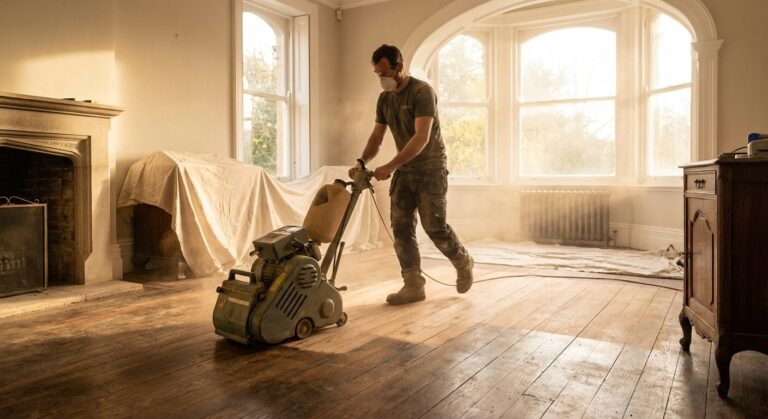
Inside occupied homes, extraction matters as much as abrasive. Every machine runs through a sealed collector that swallows the powder at the point of cutting, and the kit behind our dust-free floor sanding is set out on its own page. In a small terrace with a staircase rising from the front room, it is still worth closing doors and covering anything precious upstairs.

Floor sanding in Bridport is everyday work for us. West Dorset sits within the area we cover week in, week out from our family-run base near Wellington in Somerset, so a visit here is routine. What changes between jobs is the floor, and that is why every one starts with a look at the boards before any plan is made. Floor sanding in Bridport for a studio, a hall or a family kitchen begins in exactly the same place: with the timber itself.
Commercial Floor Sanding for Bridport Venues, Halls and Dance Studios

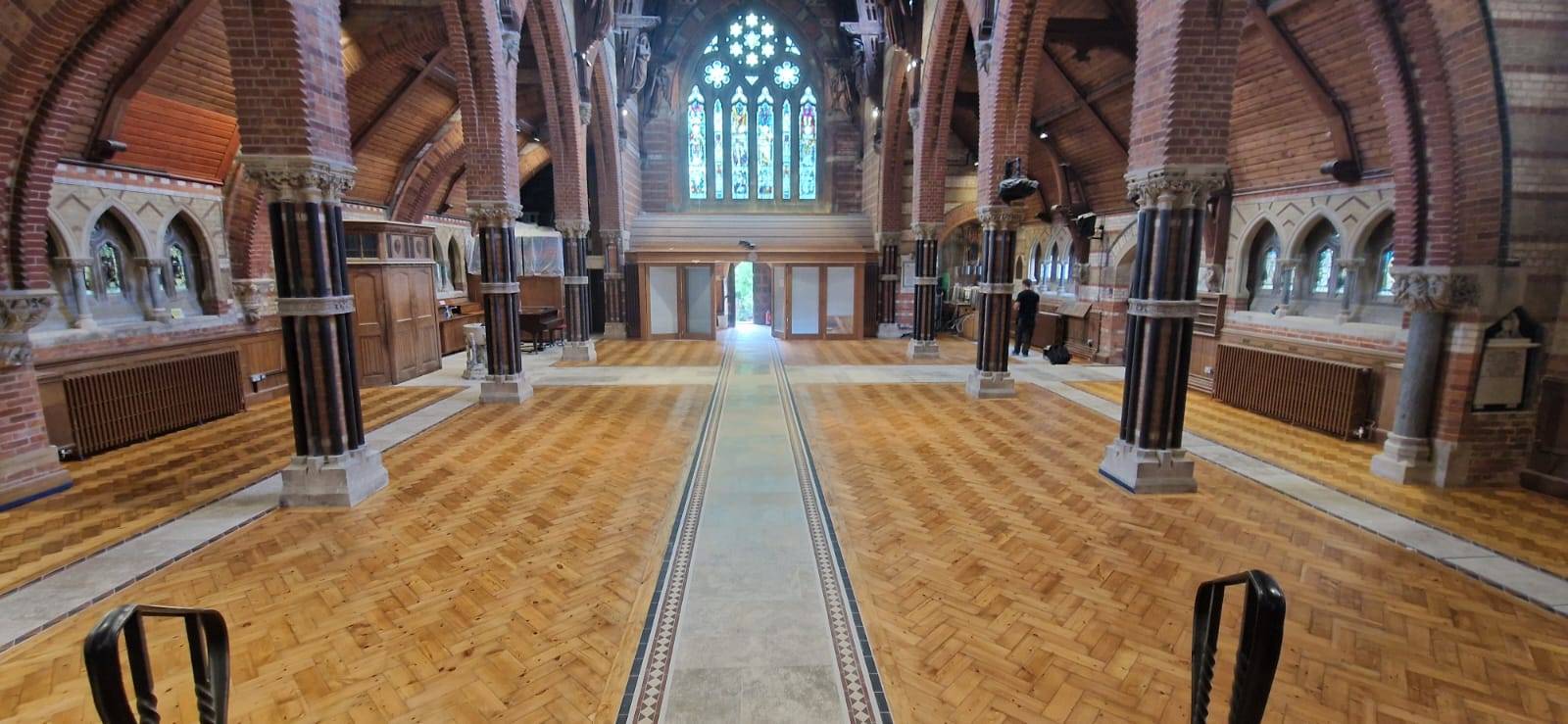
Creative and community spaces put unusual demands on a timber floor. A dance studio needs a surface that lets a foot turn without catching, yet will not send someone sliding across the room. A hall that hosts a yoga class in the morning, a craft fair at lunchtime and a ceilidh in the evening needs a finish that copes with bare feet, trestle tables and hard-soled shoes in a single day. Commercial floor sanding in Bridport for those spaces is less about appearance and more about how the floor behaves underfoot.

Grip is set largely by the finish and its sheen. High-gloss coatings feel slick; matt and satin give more purchase. Many dancers prefer a surface with a little controlled slide, while barefoot disciplines such as yoga and contemporary dance want something closer to neutral grip. The right answer depends on what the room is mainly used for, so it is worth listing the regular classes before the finish is chosen. Our dance floor sanding page describes the options, and studios that double as exercise spaces may also find the notes on gym floor sanding useful.

Old halls bring a hidden problem: residue. Decades of floor dressings, slip sprays and silicone-based polishes leave contamination in the surface. Lacquer applied over it can pull back into small craters, a fault known as fish-eyeing. Sanding through to clean timber removes most of it, and a careful clean between coats deals with the rest.

Sprung floors need a lighter hand again. They flex, the boards are sometimes thinner than they look, and too much pressure from a heavy machine in one spot can dish the surface. Each pass is kept even and no deeper than necessary.

Timing fits the venue. Work can run overnight, across the days a building is closed, or through a quiet week in the programme, with fast-curing finishes so classes resume soon after. Cafés and bars attached to arts spaces come under restaurant and bar floor sanding, and galleries or shops under retail floor sanding. Method statements, insurance details and references can be supplied for a committee or landlord, and the broader commercial floor sanding service covers the rest. A busy commercial floor generally needs a full sand every four to five years.

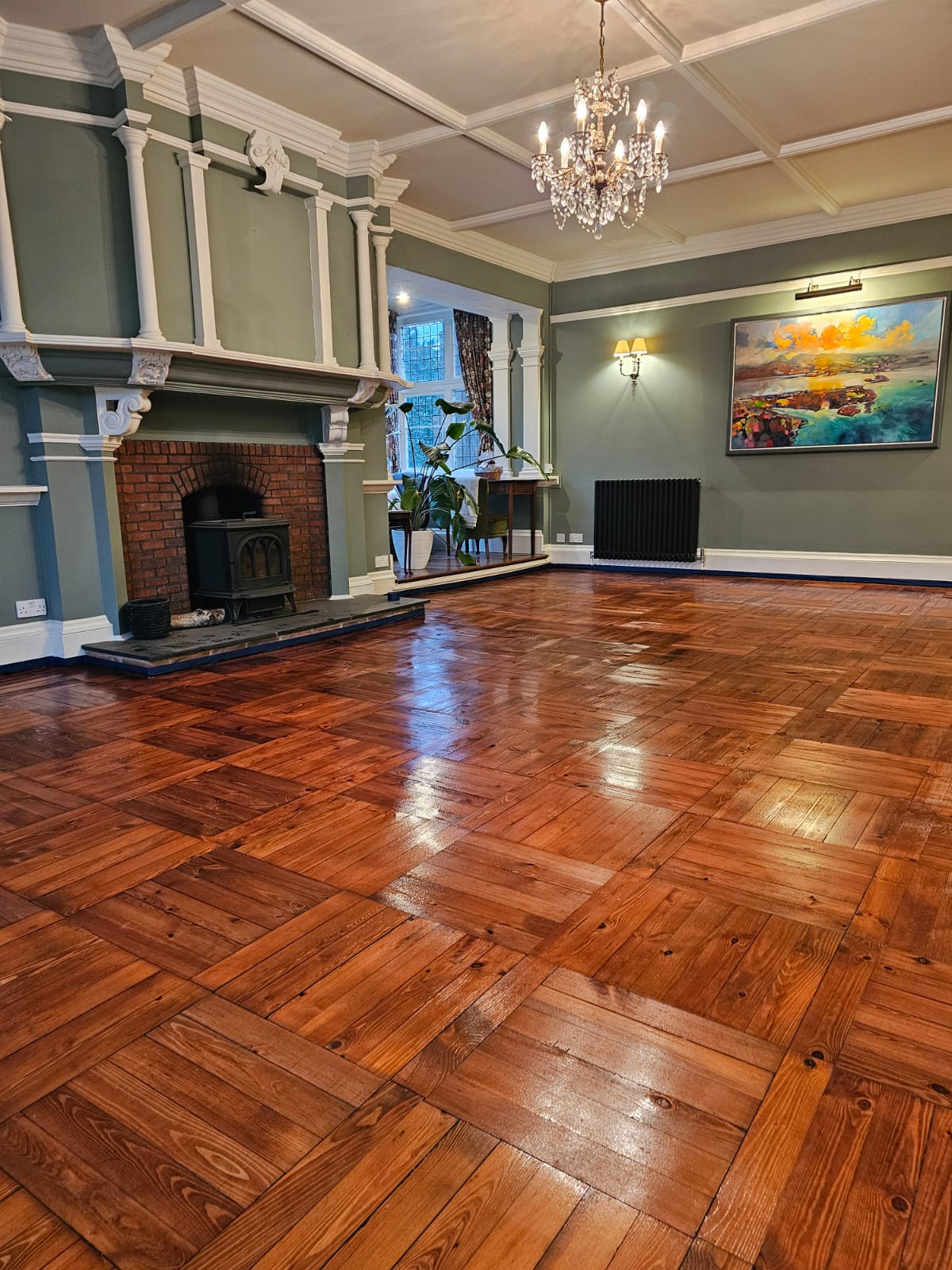
parquet wooden floor sanding
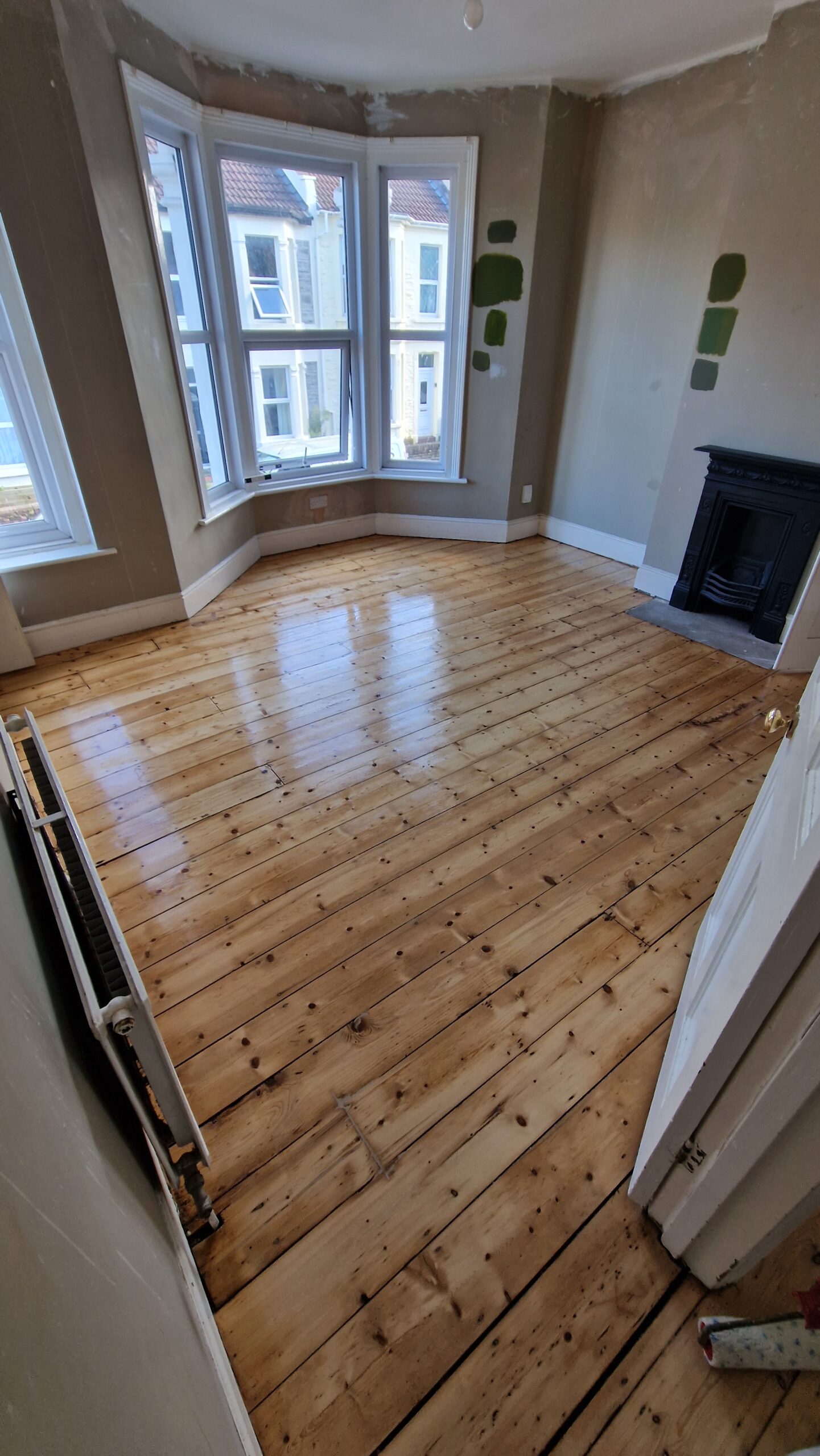
wooden floor sanding

How Stain Takes on Pine, Oak and Reclaimed Boards

Colour is the question we get asked about most in Bridport, and it is the one where expectations and timber most often part company. A stain chart shows a colour on a perfect, uniform sample. Your floor is not uniform, and the stain will tell you so.

Pine is the hardest to colour evenly. Each growth ring has a soft, pale band of earlywood and a hard, darker band of latewood. Stain floods into the soft band and barely touches the hard one, so a mid-brown on pine can come out striped and patchy, with knots staying stubbornly pale where resin repels it. Lighter, warmer tones are kinder to pine; very dark colours are where blotching shows most. Sometimes the best result is no stain at all and an oil-based lacquer that warms the wood to honey by itself.

Oak takes colour more predictably, but it has its own habits. Its open grain holds pigment, which can make grey and white tones look grainy and deliberate, an effect many people like. Oak is also rich in tannin, which can react with certain products and darken in a way a sample never showed. A technique sometimes used on oak is to dampen the sanded surface lightly before staining, which raises the grain and lets it accept colour more evenly; it needs a full drying time afterwards.

Reclaimed boards used in repairs have their own history, so they rarely take stain exactly as the original floor does. Testing deals with all of this. So sample patches go down on the actual floor, tucked where a bookcase will later stand, and each patch gets a coat of the intended lacquer, because colour seen wet from the tin lies.

Two more points. Colour is not fixed: oak deepens over time and pine yellows under daylight, so a pale result will drift a little warmer. And darker floors show dust, pet hair and grit far more than mid tones. Our wood floor staining page shows the range, and the stain always sits under a protective topcoat.

Wood Floor Restoration in Bridport Houses

Restoration is a bigger job than sanding and recoating, and it begins with a survey rather than a machine. A wood floor restoration in Bridport might involve a hallway of Victorian pine that has had three different carpets, a lino and a coat of brown varnish around the edges, or an oak floor in a Georgian house that has been sanded once too often and needs a gentler approach this time.

At the survey, about half an hour on site, the boards are measured for remaining thickness wherever an edge can be seen, moisture is read in the timber, airbricks and ventilation are checked, and earlier repairs are noted. Those readings decide what is possible. A floor with plenty of wood left above the tongue can be sanded hard; one that is already thin needs a lighter cut or a different plan altogether.

The old painted surround is a frequent feature. Many houses had a strip of dark stain or paint laid round the edge of the room to frame a rug. It is often several layers thick, goes deeper into the wood than the rest of the floor, and, in an older house, may contain lead. Lead paint must not be dry-sanded until it has been tested; chemical stripping is the safer route where it is found.

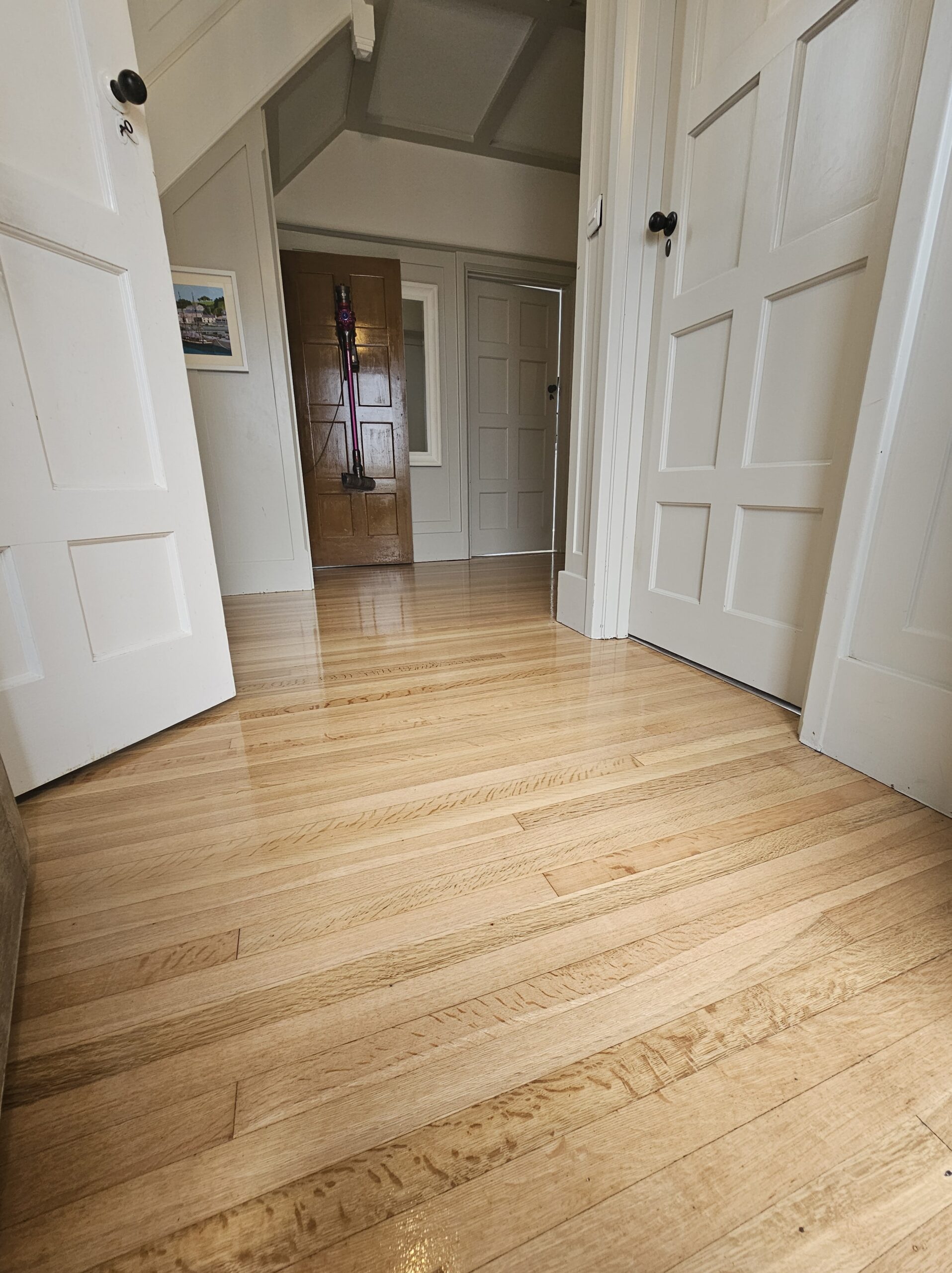
Pine and oak each have their own route. Pine floor restoration tends to focus on repairs, filling and a durable lacquer, because softwood dents easily under chair legs and heels. Oak floor restoration gives more scope for oils and waxes, and older oak sometimes shows quarter-sawn ray figure once the grime comes off. The full process sits under our wood floor restoration service.

The aim of good wood floor restoration is a floor that looks like itself again, not a new one. Small marks from a long life can stay. Splits, rot and loose boards cannot, which brings us to repairs.

flooring sanding company
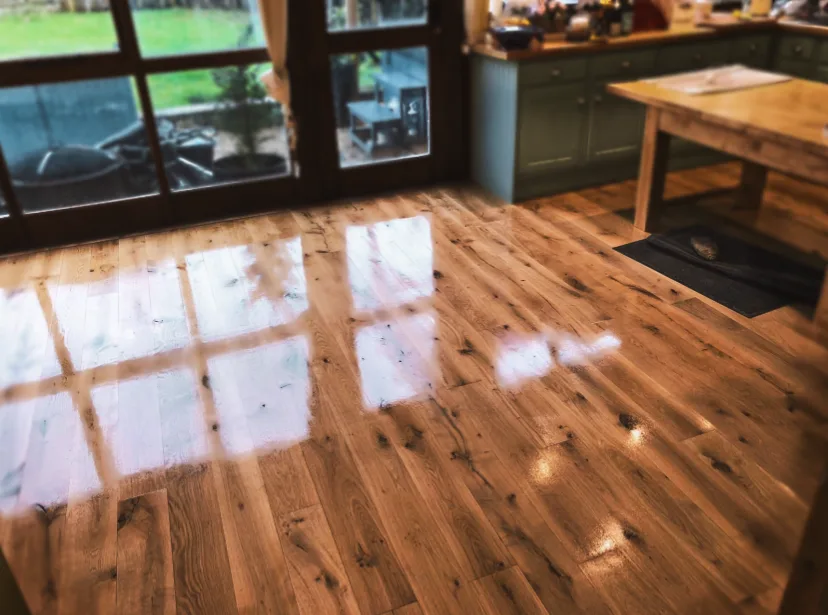
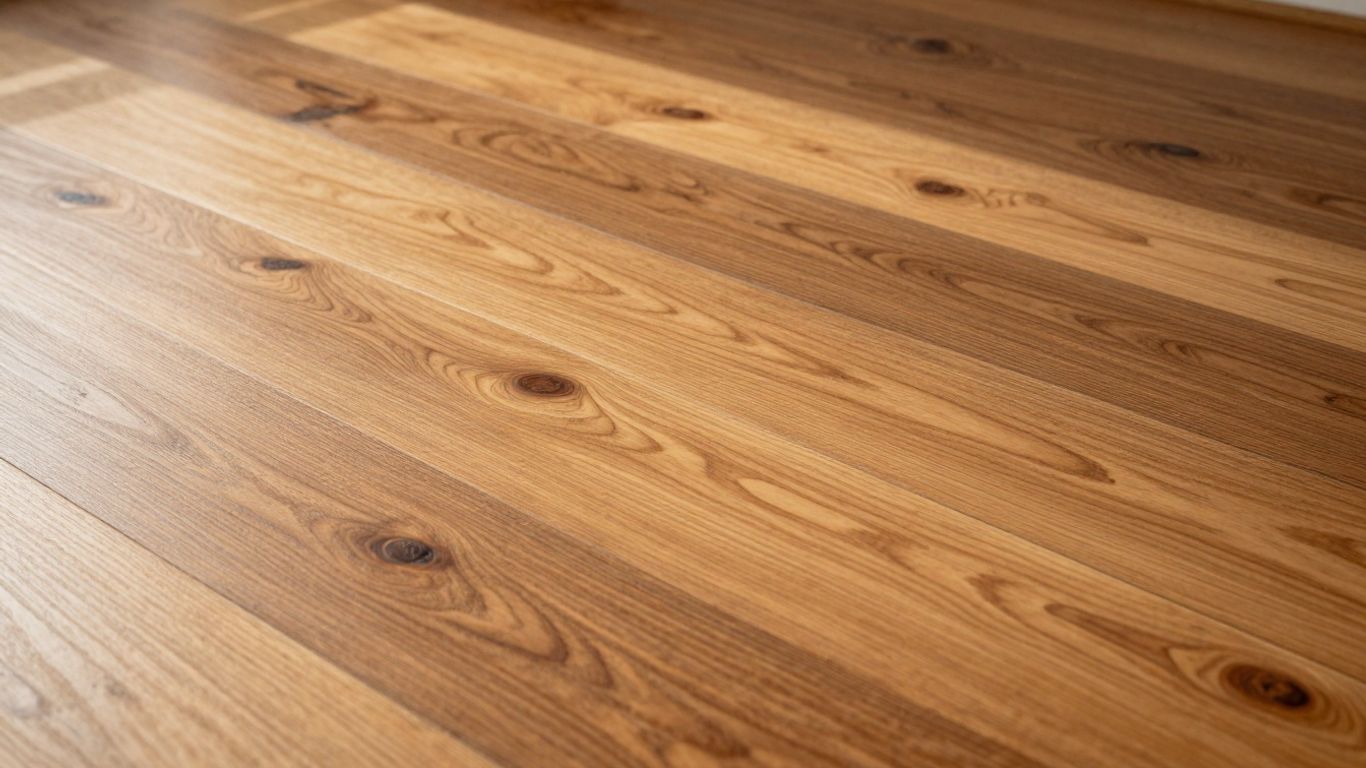
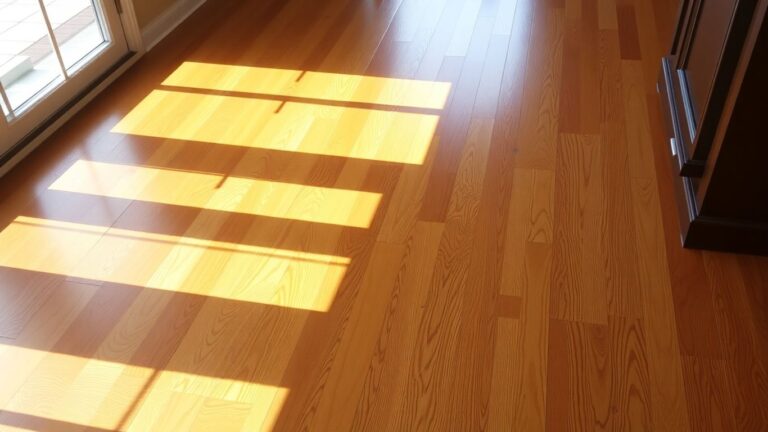
Sunlight across freshly lacquered wooden floorboards

Mending Boards, Quieting Creaks and Closing Gaps

Repairs come first because sanding cannot fix structure. A sander follows the floor it is given; if a board rocks, the drum bounces over it and leaves a ripple, and if a board is split along its length the crack is still there under the finish. So before any sanding, the floor is walked, tapped and fixed.

The typical wooden floor repairs in Bridport terraces are short pieces cut out for heating pipes and badly refitted, boards split by a nail driven too close to the end, and patches where a radiator leaked for years. Small pieces are re-supported from below. Where a length is beyond saving, floorboard replacement is done from the reclaimed boards we keep in the workshop, with an eye on grain, age and how the old timber has weathered. Fresh softwood would stand out as a bright yellow strip and would also take stain differently, which matters on a floor that is being coloured.

Noise is the next complaint. Boards creak because they move: against a loosened nail, against each other, or across a joist that flexes. Securing them with new fixings into the joist usually silences them. The squeaky floor repair page goes into the causes.

Gaps are a matter of judgement. Draughty gaps between boards in a ground-floor room are often worth closing, both for comfort and to stop dust and crumbs collecting. Thin slivers of timber, glued on one face and planed down flush, move with the board and suit wider gaps. A resin mixed with the floor’s own dust suits fine joints. Where a floor is being stained, slivers usually match the colour better because they are wood. Our gap filling page sets out both methods.

Surface marks are sometimes worth tackling without a full sand. A few deep scores from a dragged table may respond to targeted scratch repair work if the rest of the finish is sound.

Herringbone Blocks and Stair Treads

Parquet turns up in Bridport in places you might not expect: halls and community rooms, old shop units, and the front rooms of interwar houses. Much of it has been hidden under carpet for decades and comes back remarkably well.

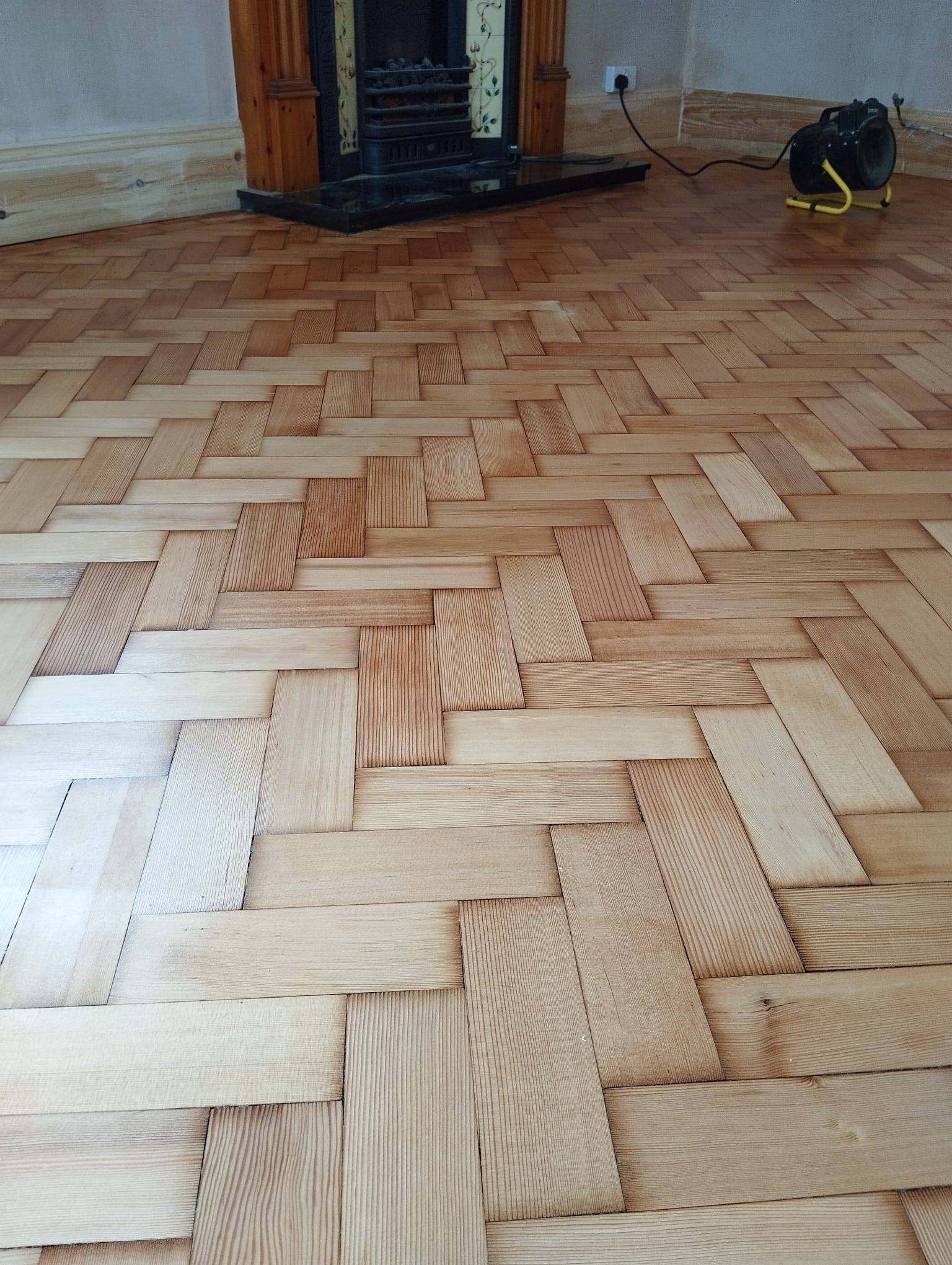
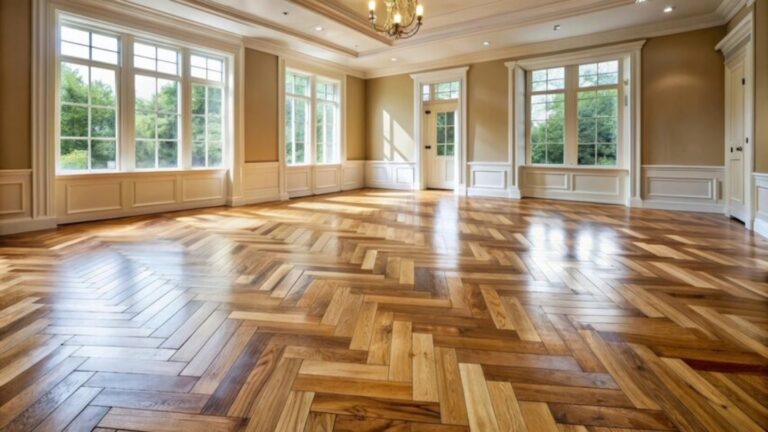
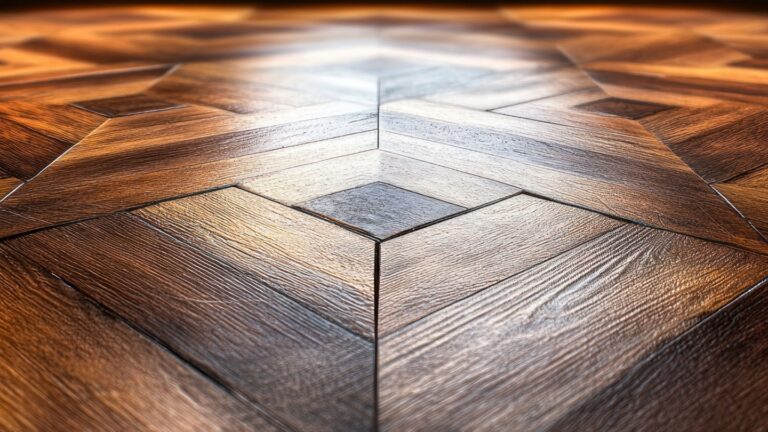
Block floors are sanded differently from boards. Herringbone parquet sets every second block at right angles to its neighbour, so the opening passes are run at forty-five degrees to the room, which cuts all the blocks at the same angle instead of ripping half of them along the grain. Later, finer passes bring the surface level and clear the cross-grain scratches. Loose blocks are lifted, the old adhesive scraped back, and each one re-bonded before the sander goes near it. Many older parquet floors were laid on bitumen, which can soften with heat and stain the edges of blocks, so care is taken over adhesive choice when re-fixing. Gaps where blocks have gone missing can be made good from salvaged blocks, and parquet floor sanding has more on how those floors are handled.

Stairs are another separate skill. Each tread, riser and nosing is sanded by hand with compact machines, because a full-size sander cannot sit on a step. The front edge of every tread wears fastest; it is often rounded and bare while the back of the step is still glossy. Spindles and handrails can be included if they are bare timber, though painted balustrades in older houses are again a case for lead testing before anything is sanded.

Carpeted stairs uncovered for the first time usually reveal gripper rods and many staples, all of which come out before sanding starts. Nosings that have split can be repaired with matching timber. Choose a matt or satin sheen on stairs for grip. Stair sanding can be done on its own or combined with a hallway floor so the colours match.

Where a staircase rises out of a stained hall, the stain is tested on the stair timber separately, because treads are often a different species or age from the floor below.

Wood floor sanding company
Floor sanding taunton

Keeping a Coloured Floor Looking Right, and Arranging a Survey in Bridport

Stained floors show wear in a particular way. When the topcoat wears through on a coloured floor, the stain goes with it, leaving a pale track. That makes protection more important, not less. Two or three coats of a hard-wearing lacquer over the stain, a mat at each outside door and felt pads under furniture all help.

The topcoat is part of the colour decision. Sealing with lacquer gives the toughest protection; water-based lacquer keeps a grey or white stain cool, while oil-based lacquer adds warmth that can push a grey towards beige. Oiling the floor with hard wax oil keeps a natural feel and allows patch repairs, and some oils are made with pigment, combining colour and finish in one product. Traditional floor waxing suits period oak but marks easily and needs buffing. If what you are picturing is a deep shine, our wood floor polishing page shows what each finish looks like.

Give the last coat overnight before anyone crosses it, and keep shoes off it for the first day of use. The coating keeps curing for several days, so the dresser, piano and rugs wait a further two or three before going back. Clean with a pH-neutral floor cleaner on a well-wrung mop; steam mops and harsh cleaners strip both finish and colour.

Before the topcoat wears through, a buff and recoat restores protection without disturbing the stain beneath. A home floor typically needs a full sand again after eight to ten years. For rooms that need a new floor, installing a new wooden floor is available as supply-and-fit or supply only, with Junkers and Bona among the brands.

For a survey, the office on 01823 674562 answers weekdays from 8am until 6pm, with Saturday appointments possible by arrangement. Alternatively, send info@ryansrestoration.co.uk one wide picture of the room and one of the patch that bothers you most. The quotation is written and itemised, and stays as quoted unless the scope changes. For nearby towns, see our Dorset area page or floor sanding in Beaminster.

Bridport Floor Sanding Questions

Yes. Grip comes mainly from the finish and its sheen, not the sanding. A matt or satin lacquer gives more purchase than gloss. Tell us what the room is used for, such as ballroom, tap, contemporary or yoga, and the finish can be matched to how much slide or grip the dancers need. Any old polish residue is removed in the process.

Pine has soft and hard bands in every growth ring, and stain soaks into the soft parts much more than the hard ones. Knots resist it altogether. That produces stripes and blotches, particularly with darker colours. Testing on your own boards first shows exactly how it will look, and lighter tones or an oil-based lacquer often give a better result on pine.

Often, yes. Oak’s open grain takes grey and white tints well and the grain pattern tends to show through attractively. A water-based lacquer over the top keeps the colour cool, whereas an oil-based one would warm it. As oak tannins can react with some products, a test patch on your own floor is always done before the whole room.

Usually, but it needs care. Sprung floors flex and their boards can be thinner than standard floorboards, so passes are kept even and no deeper than needed. The structure underneath is checked for loose fixings or damaged sections first. If the floor has been sanded several times before, a lighter refresh may be a better option.

In most cases. Work can be scheduled overnight, on days the building is closed, or in a quiet week between events. Fast-curing finishes allow the floor to be back in use quickly. Dates are agreed well in advance so they fit around bookings, and the floor can be split into sections if the space must remain partly open.

It will be close, but no stain gives an exact match on different timber. That is why replacement boards come from reclaimed stock of similar age and species. Old timber takes stain more like its neighbours than new wood would. Testing the stain on both original and replacement boards shows how close the match will be.

Yes, and it often comes up well. Carpet tends to protect parquet from wear, although grippers and tacks leave holes around the edges. Loose blocks are re-fixed, missing ones replaced, and the floor is sanded diagonally before finishing. If the original adhesive was bitumen, the method of re-fixing is chosen with that in mind.

Walking on it in socks is fine from the following day. A heavy sofa or bookcase should stay in another room for a further two to three days, since the coating is still curing underneath the touch-dry surface. Put felt pads on chair and table legs before they go back. Hold off on rugs for a little longer, as the finish underneath needs air to cure fully.

Two pictures to info@ryansrestoration.co.uk are the quickest start: one showing the room end to end, one up close on the area you most want fixed. That gives enough for first advice, and a free survey can then be booked. You receive a written, itemised quotation afterwards. For other ways to reach us, see our contact page.