Floor Sanding Clifton, Bristol

Floor Sanding and Wood Floor Restoration in Clifton and Redland

QUICK QUOTATION

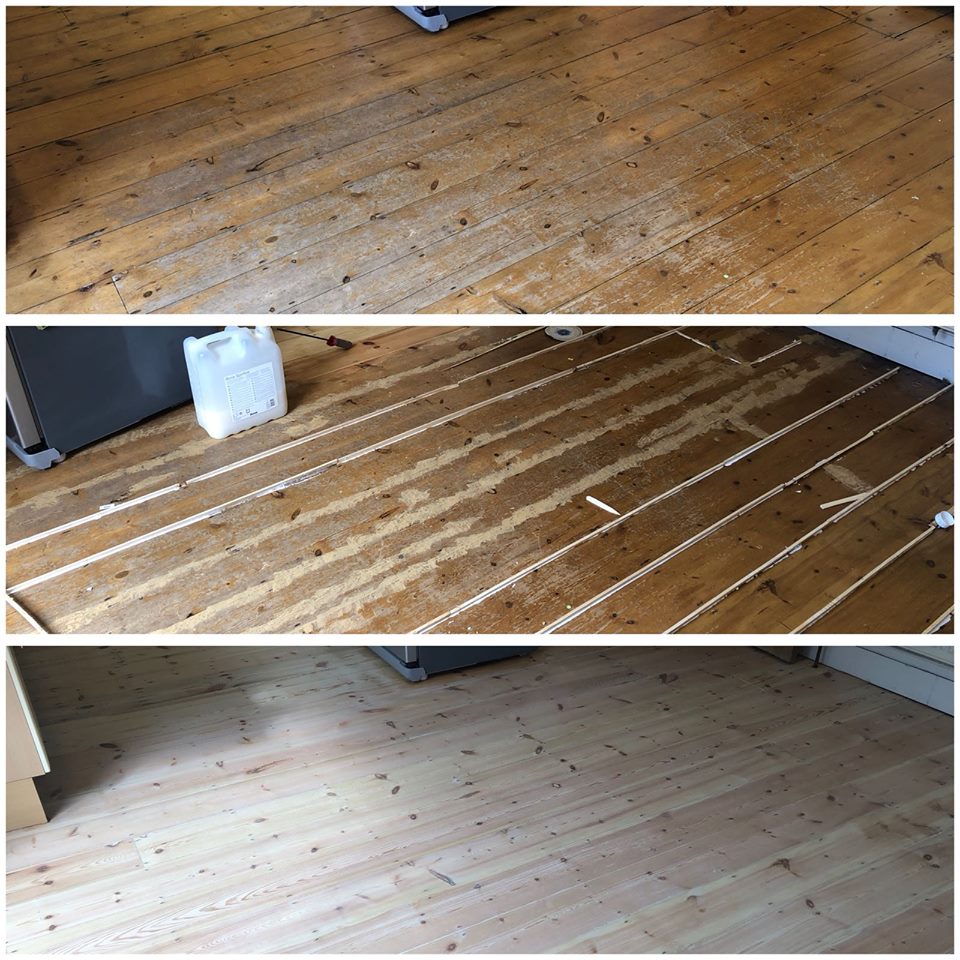
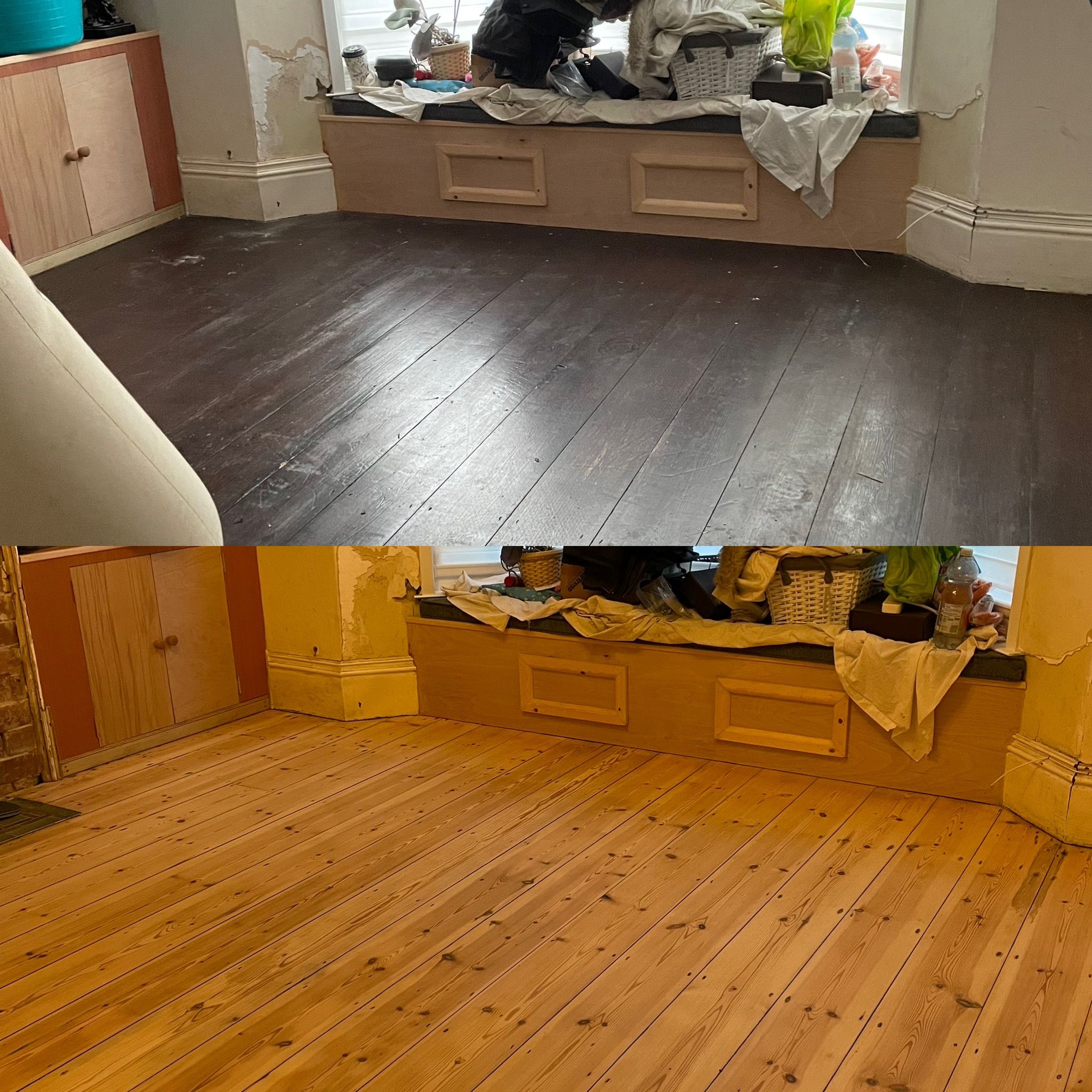
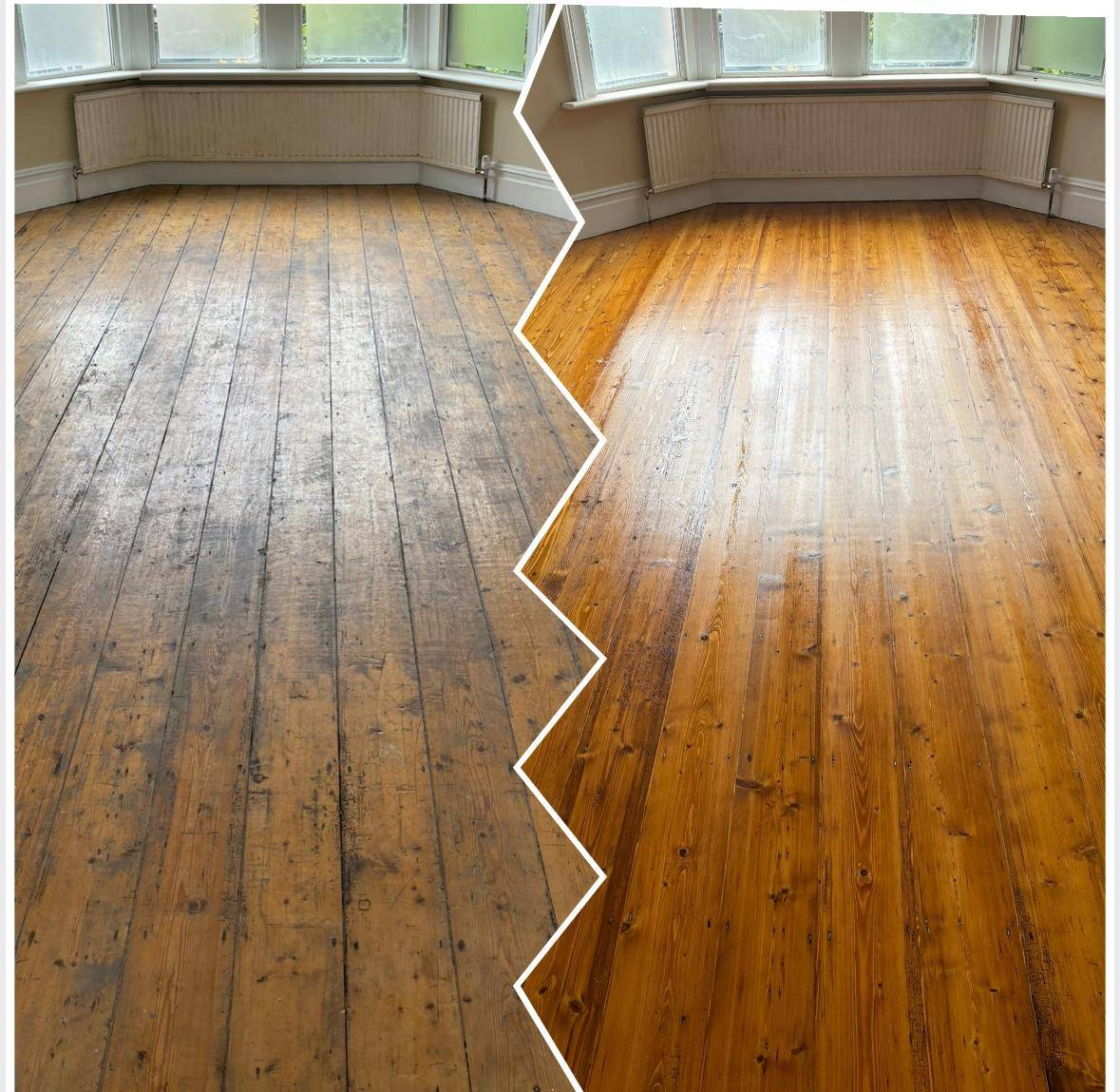
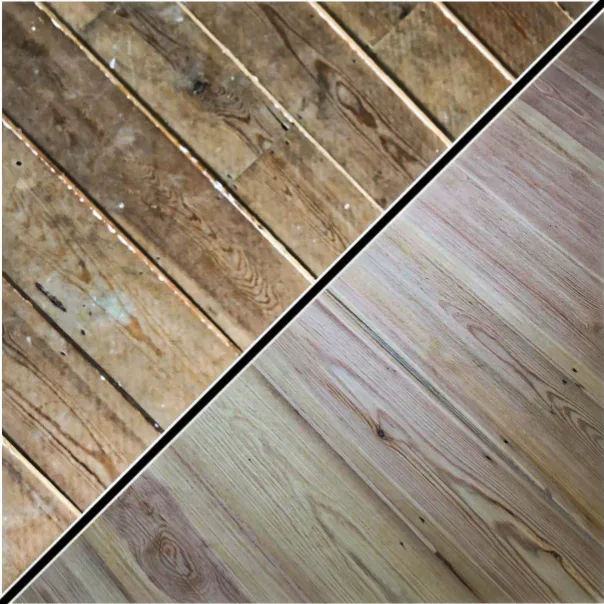
Floor sanding before and after

Floor Sanding in Clifton

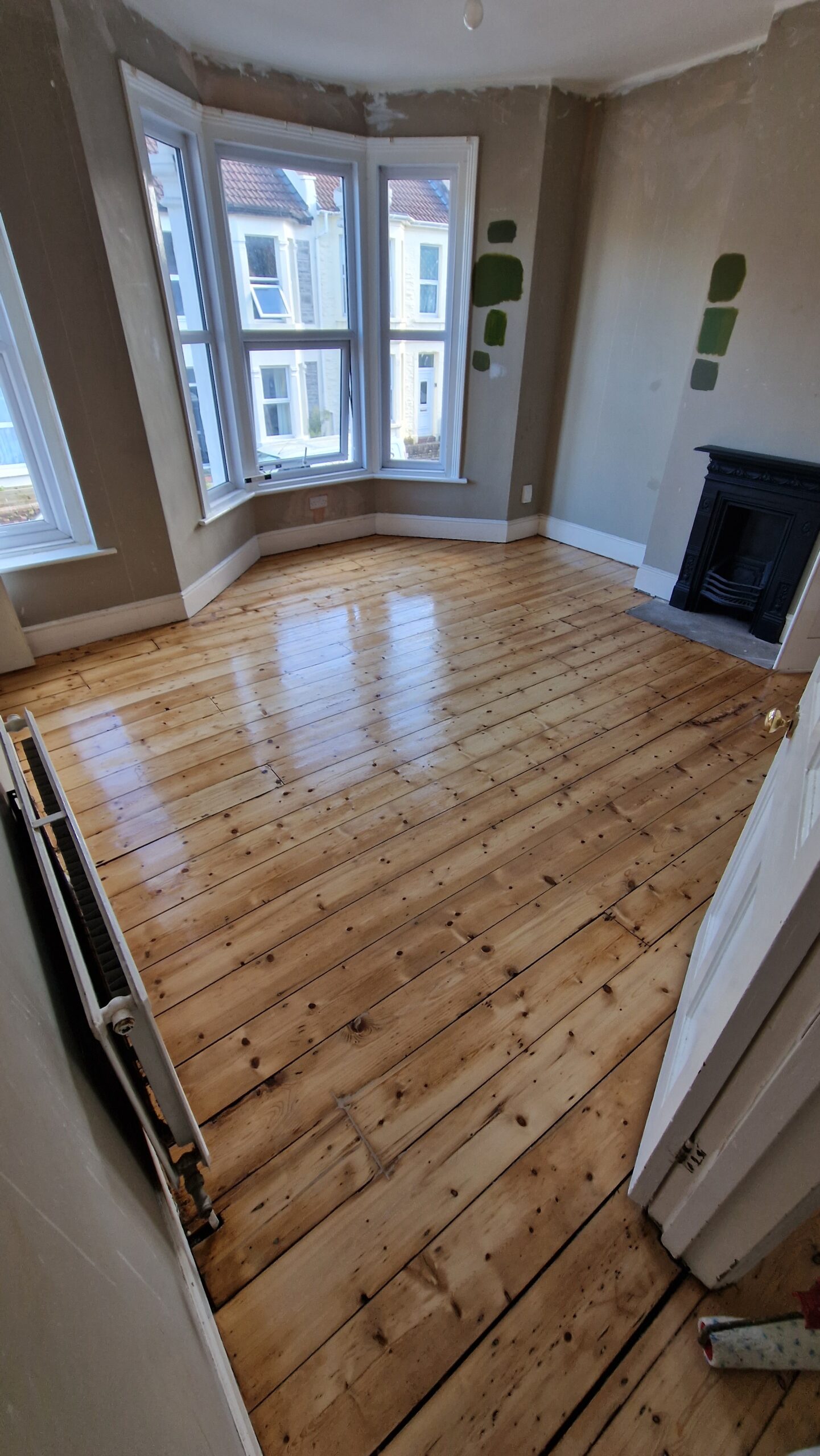
Clifton’s Georgian crescents and the tall Victorian houses of Redland, Cotham and Kingsdown hold some of the finest boards we ever sand, and our wood floor sanding service is shaped around them. Georgian pine is often thinner than it looks, especially where floors were stripped in the eighties, so we measure the remaining timber first and work with finer grits and more passes rather than an aggressive cut.

Family-run with over 45 years’ experience, we are in Bristol constantly; surveys in Clifton, Hotwells, Sneyd Park and Westbury Park are usually arranged within the week.

Boards that went through the caustic stripping fashion of the eighties need particular care. Dipping leached the natural oils out of the timber and often left the surface fibres soft and grey, so these floors get a conservative programme: the minimum cut needed to reach sound wood, then finishes chosen to feed some flexibility back into the boards. Thickness is checked at pipe holes and hatches before we commit to anything, because a floor can look generous on top and be nearly through at the tongue.

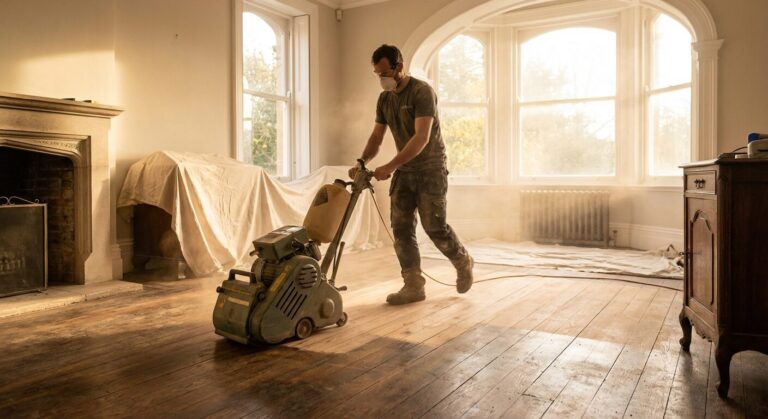
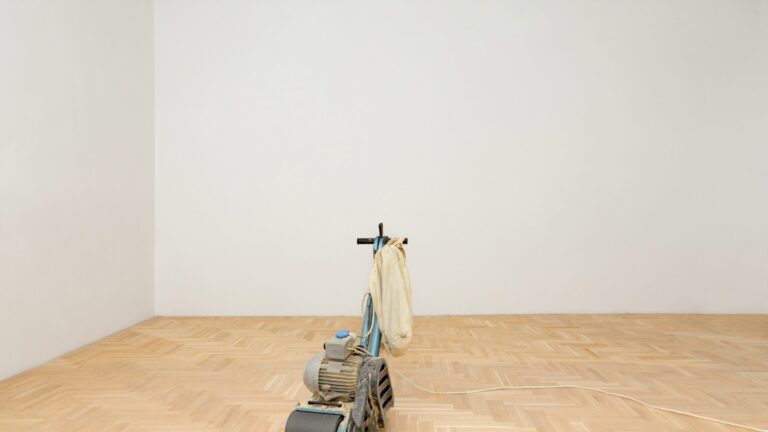
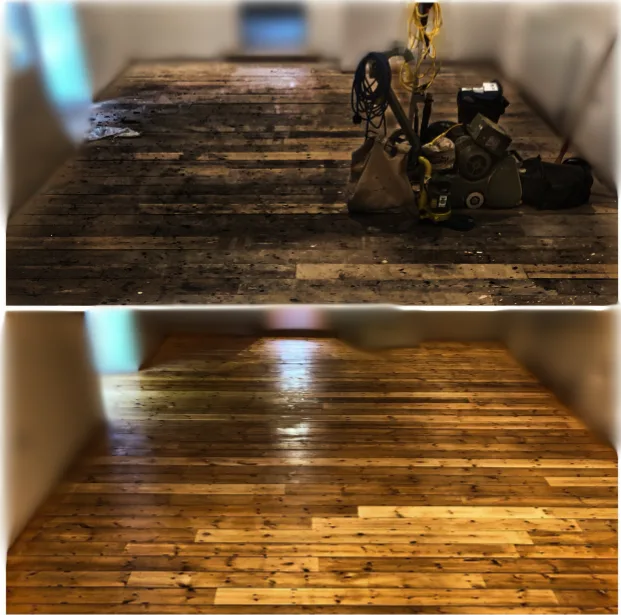
Where a previous sand has left plenty of good timber, the routine is happier: nails set below the surface, a graduated run through the grits with the belt machine following the boards, edges matched in with the edging sander, and corners finished by hand under the shutters and around the hearths these rooms tend to keep.
Wood Floor Repairs in Converted Houses

Flat conversions leave scars: boards cut where partitions went in, chased service runs, and patches that no longer match. Our wooden floor repairs service makes these good, along with squeaks, splits and scratches, while floorboard replacement draws on reclaimed timber matched for age and section, essential when the surrounding boards are two centuries old. In listed buildings we keep intervention minimal and will happily speak with your conservation officer.

Where a partition has come out, the scar is usually a straight run of butchered short boards down the middle of a fine room. Rather than dropping in a strip that reads as a stripe, we weave the repair: existing boards either side are lifted and re-spaced, and reclaimed boards of matching width are let in at staggered lengths so the joints scatter across the floor the way the original layout intended. It takes longer than a straight patch and is the only approach that truly disappears.

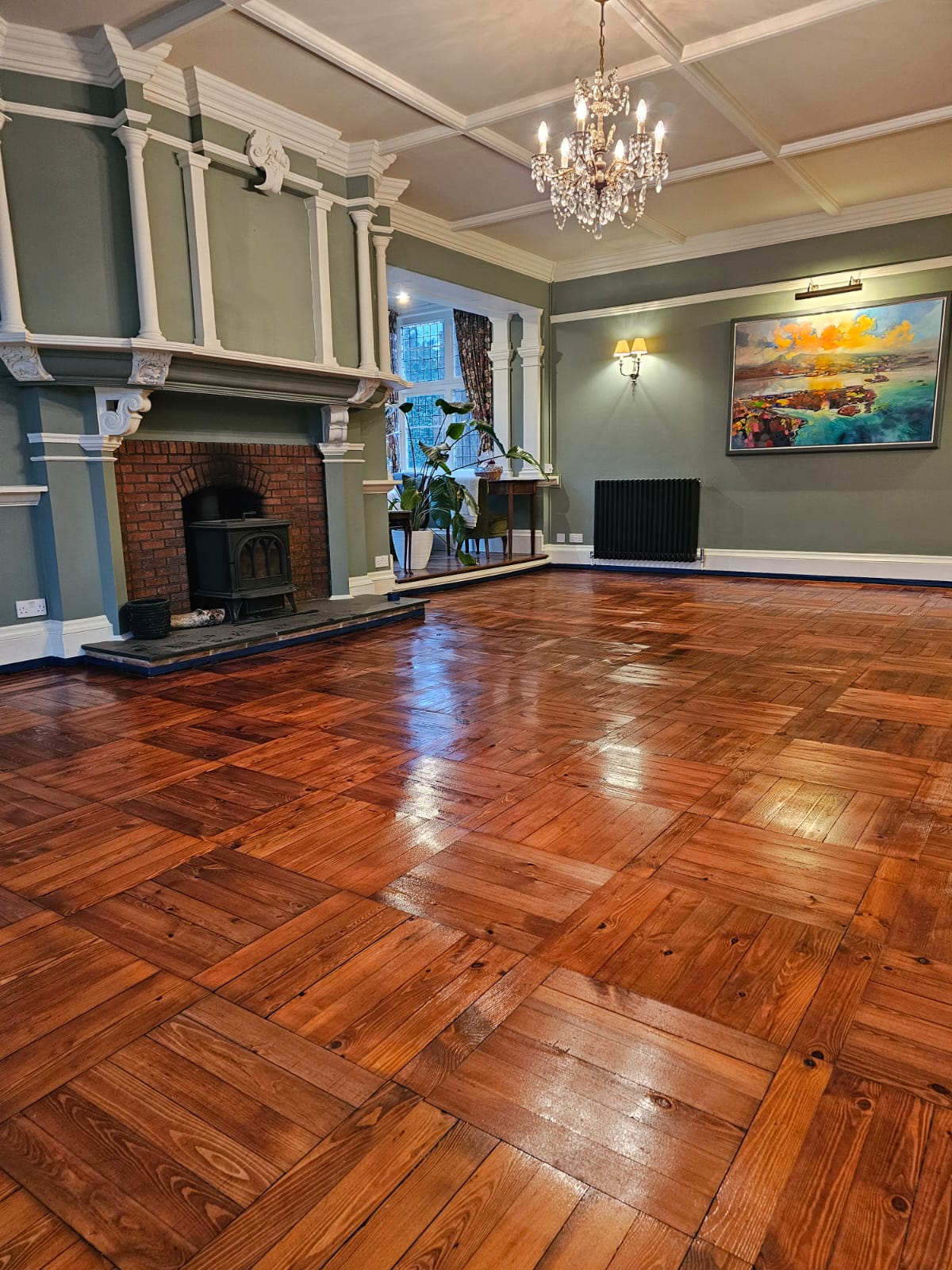
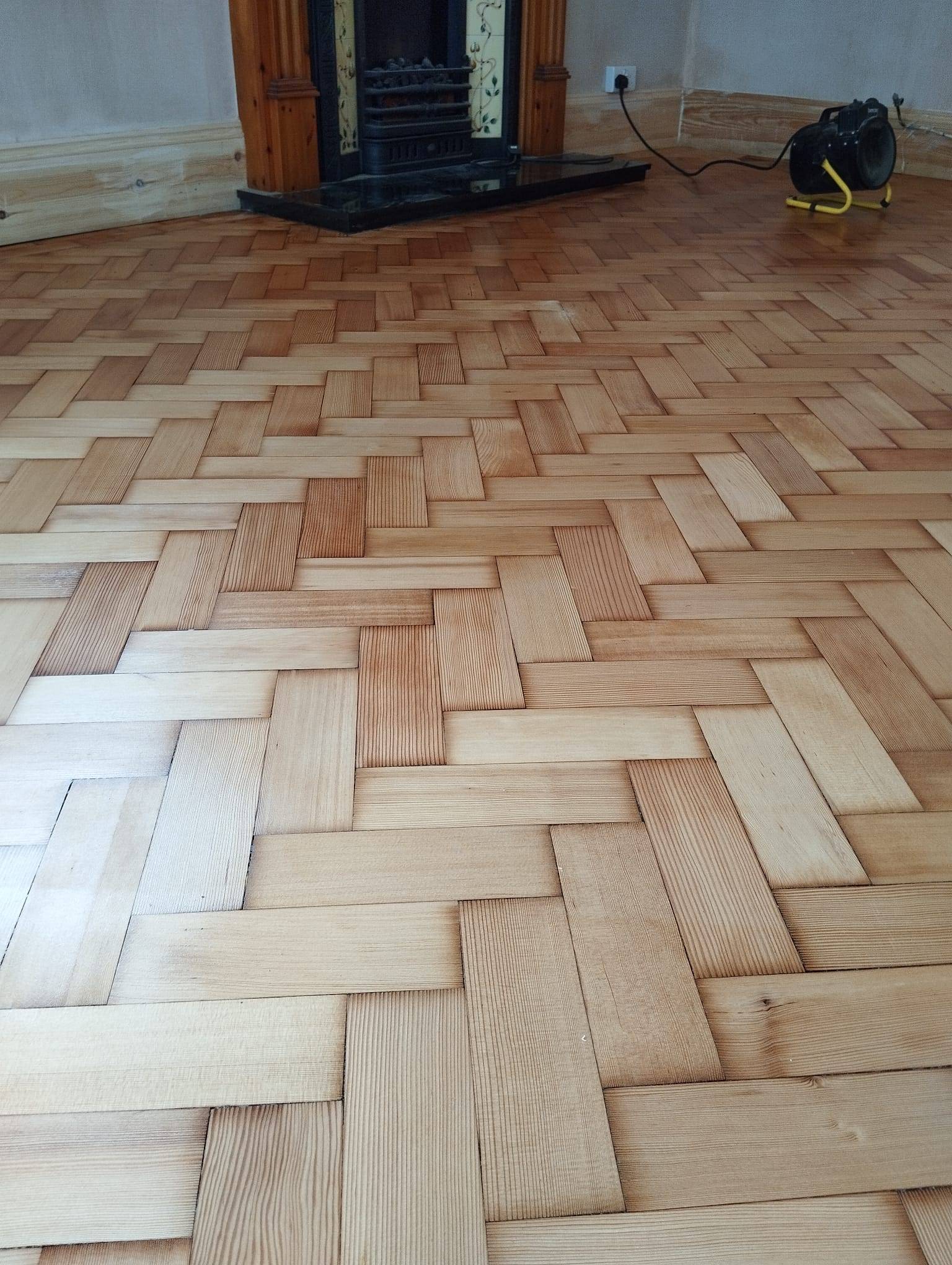
parquet wooden floor sanding
wooden floor sanding

Gap Filling Georgian and Victorian Boards

Tall solid-walled terraces breathe, and so do their floors, which is why our gap filling method favours timber slivers in the wider joints: they move with the boards through the seasons instead of cracking out. Finer gaps take resin bound with the floor’s own dust for an exact colour match. Filled floors cut draughts from the void below and stop decades of grit collecting between boards.

In converted houses, gap filling earns its keep twice over. Besides the draughts, open joints in an upstairs flat let sound, light and cooking smells travel between floors in a way solid Georgian construction never intended, and closing the gaps with slivers and resin noticeably calms all three. Ground-floor rooms over a ventilated void keep their airflow below the boards; the filling closes the joints in the walking surface, not the ventilation the building relies on.

Parquet and Block Floor Sanding

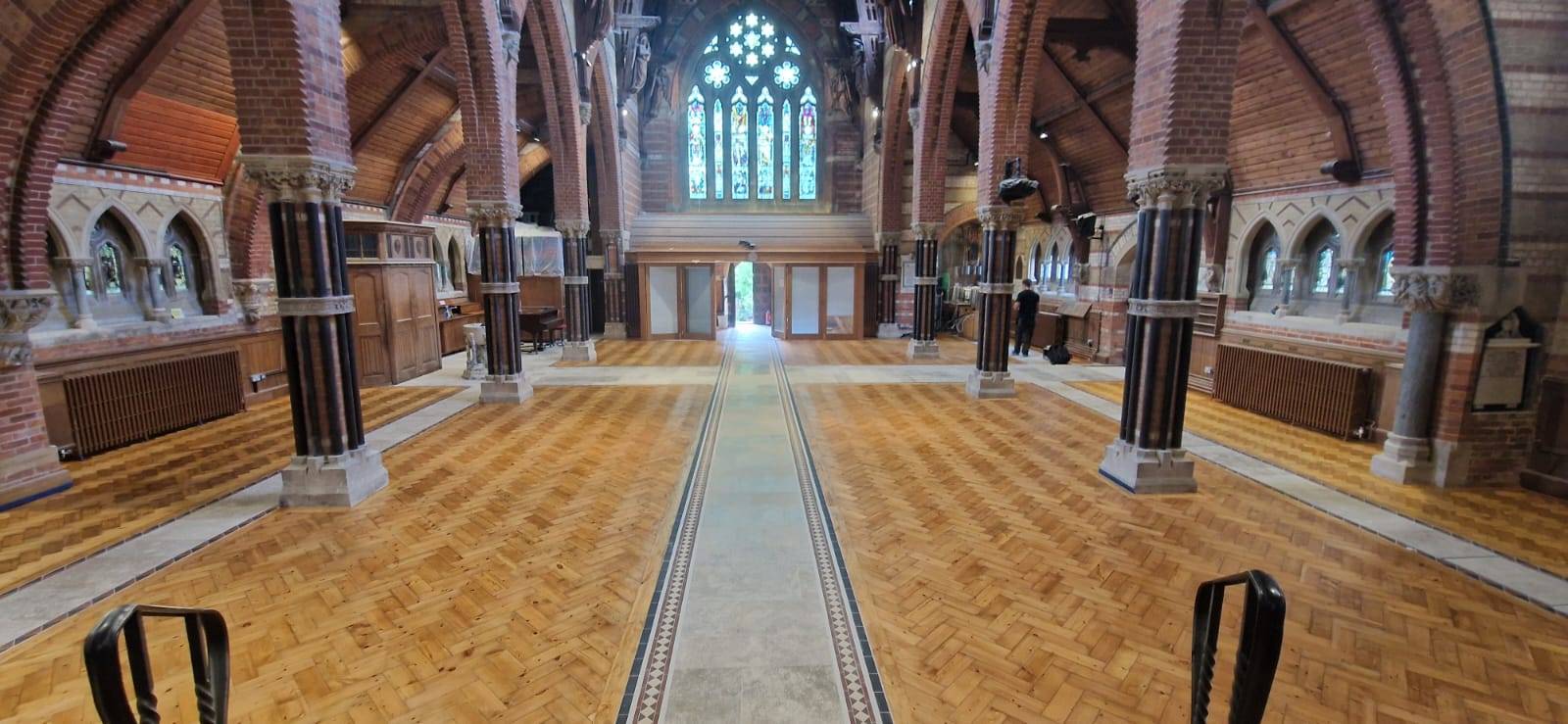
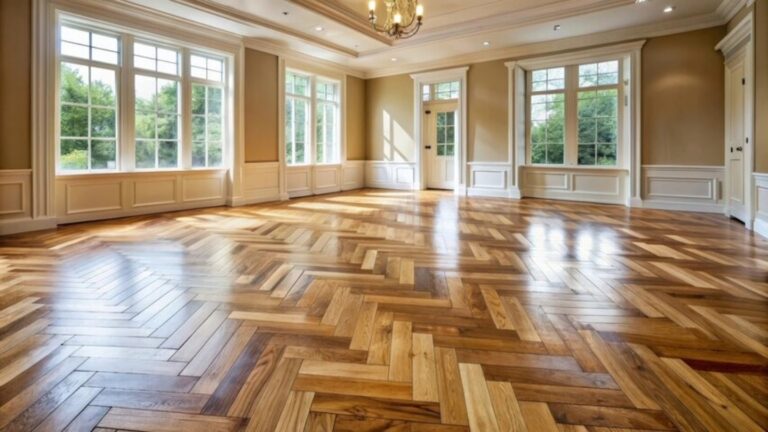
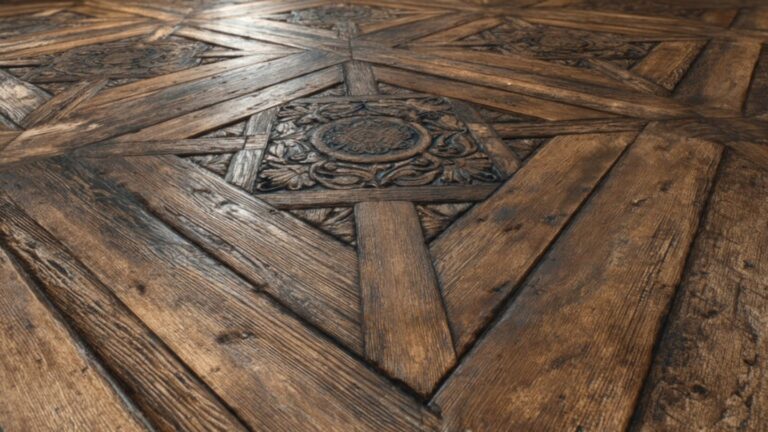
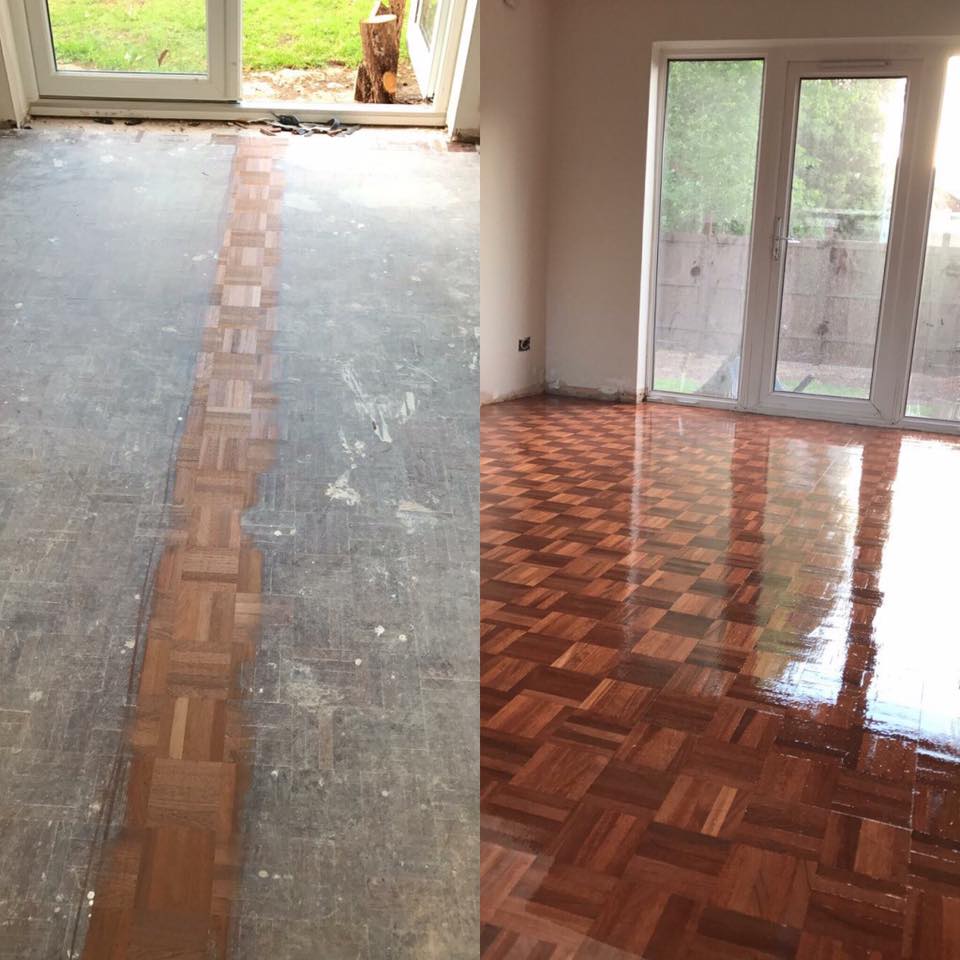
Herringbone and block floors appear across Clifton, in entrance halls, schools and converted institutional buildings, and our parquet floor sanding service restores them properly. Loose blocks are re-bedded, missing ones replaced with matched oak or pitch pine, old bitumen removed, and the pattern sanded flat before sealing. Where reception rooms carry oak or mahogany borders, we sand and finish these with the same care as the field of the floor.

Bordered floors demand a change of technique at every edge. The field of the floor runs one way, the border another, and mitred corners meet at forty-five degrees, so the big machines stop short and the transition zones are worked with orbital sanders and hand scrapers that leave no cross-grain scratching in either direction. Dark hardwood borders are also unforgiving of over-sanding, having less thickness to give than the deal they frame, so the passes there are lighter and more frequent rather than fewer and heavier.

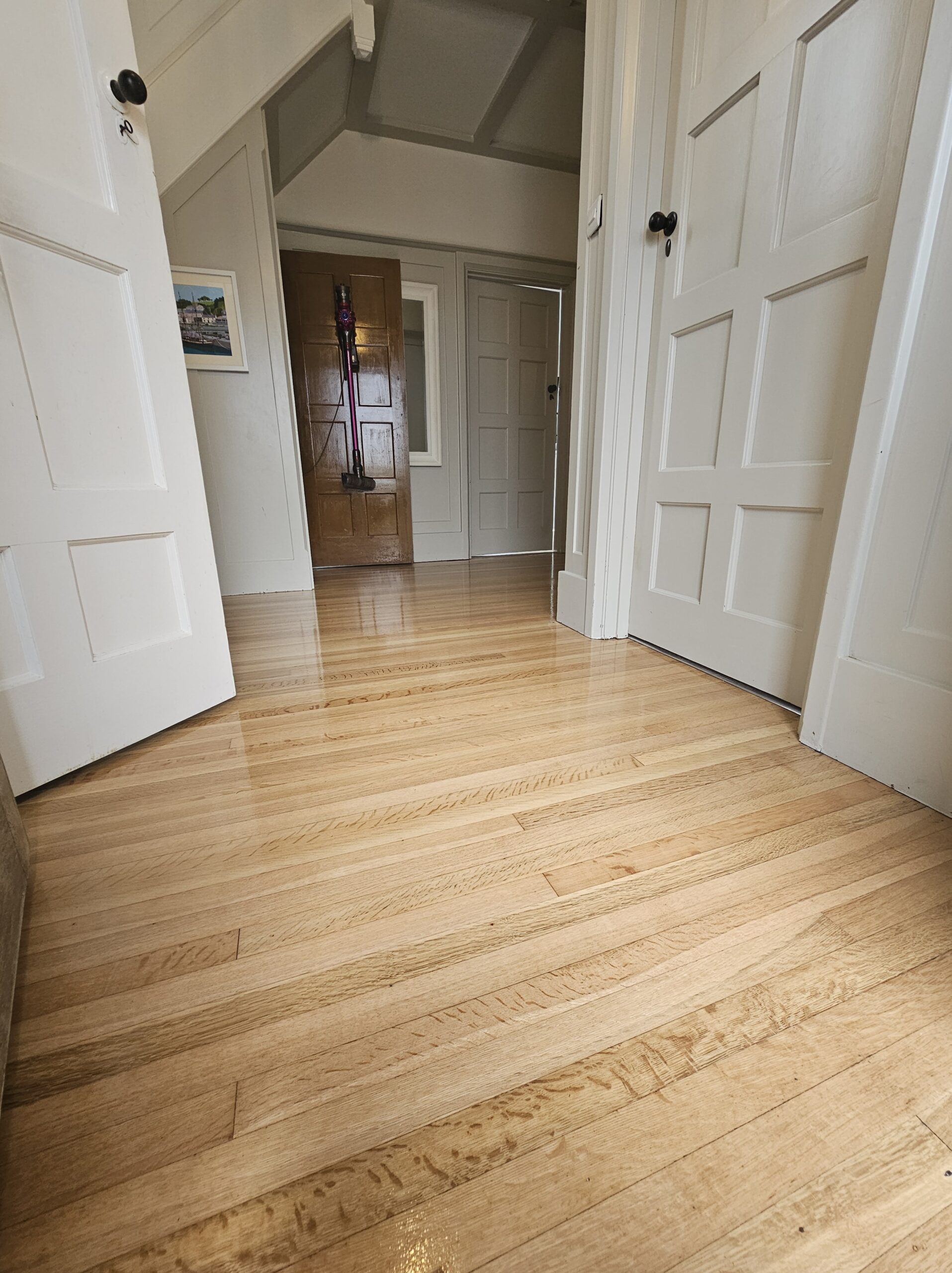
flooring sanding company
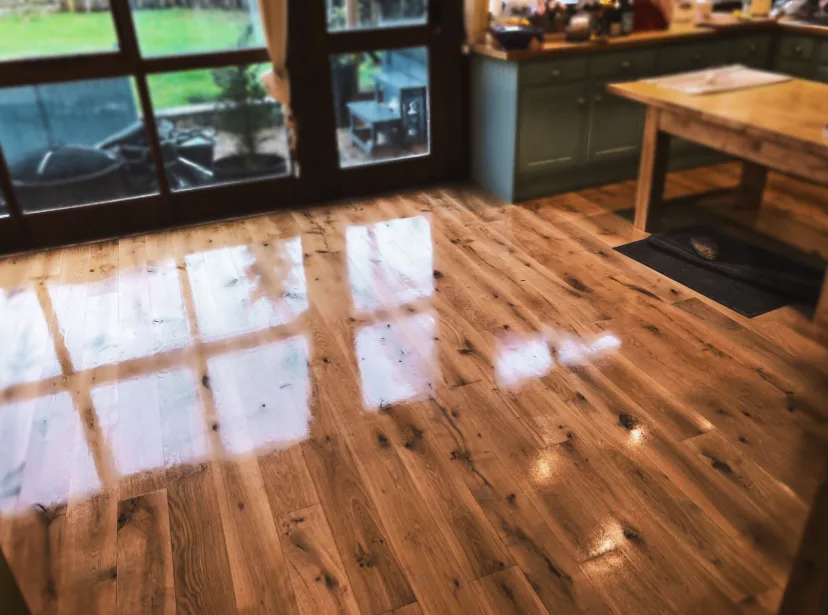
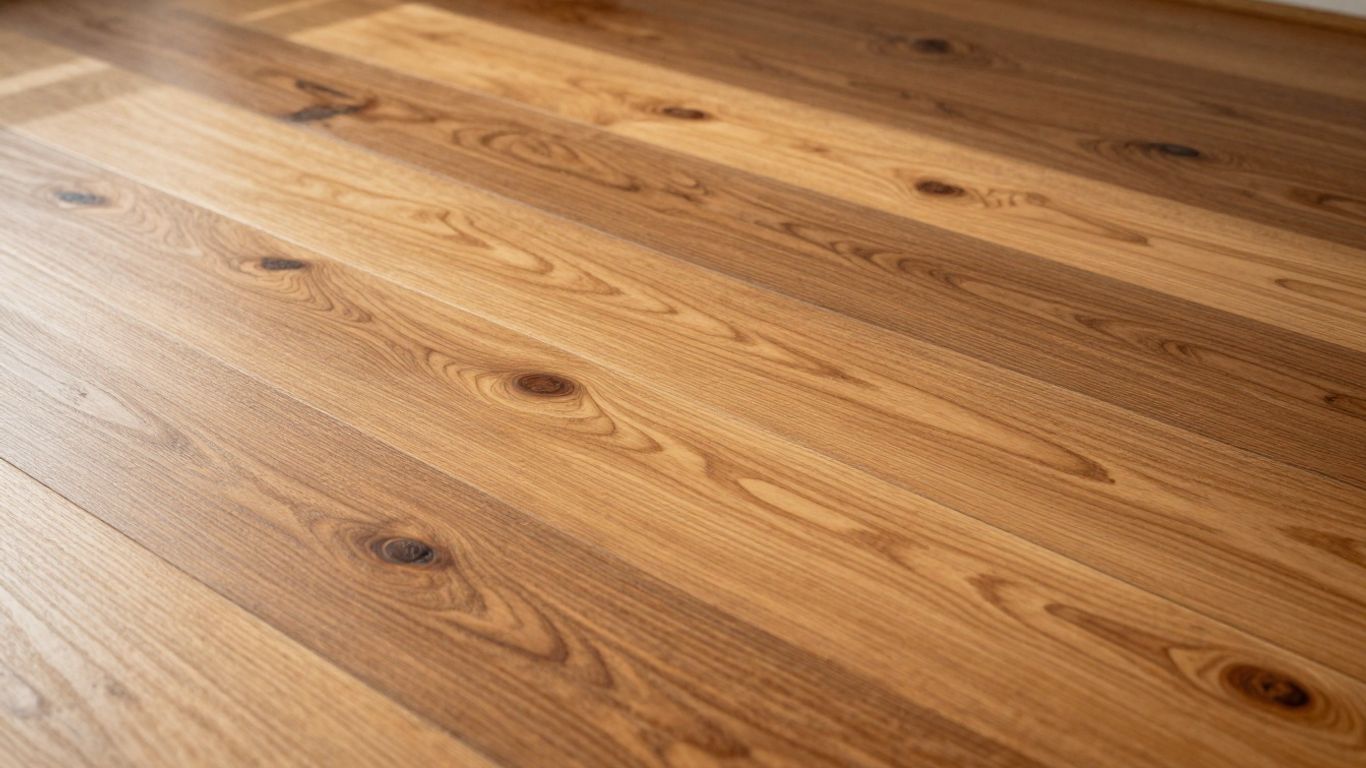
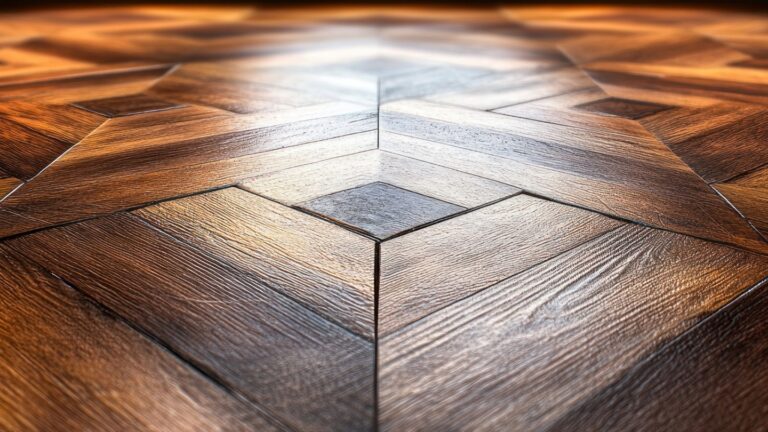
Sunlight across freshly lacquered wooden floorboards

Finishes for Clifton Interiors

Pitch pine takes a deep honey colour under hardwax oil, and our floor oiling service is the usual choice in these houses: breathable, grain-enhancing and repairable in place. Lets, family hallways and shops get two-pack lacquer through floor sealing for hardness and fast curing. Staining is trialled as patches on your own boards and judged in your own light, and waxing suits formal Georgian rooms. Floors sanded within the last decade often need only a buff and recoat.

One trap we check for at every Clifton survey is historic wax. A floor polished for decades holds wax deep in its grain, and any modern lacquer applied over the smallest residue will fisheye or peel within months. The test is simple, the remedy is thorough removal during sanding, and where a floor has been heavily waxed for a century the honest advice is sometimes to stay with wax or move to a hardwax oil, which tolerates its history instead of fighting it.

Commercial Floor Sanding in Clifton

Clifton Village and Whiteladies Road are dense with independent shops, restaurants, bars and galleries, and our commercial floor sanding service keeps them trading: overnight and closed-day working with fast-cure sealers means one lost session rather than several days. We also sand school and college floors in holiday windows and sports and dance floors with line marking to governing body specification, supplying method statements and insurance documentation wherever required.

Shop and gallery work is as much about protection as sanding. Fitted joinery, display plinths and anything that cannot be moved is wrapped and masked before machines start, hanging systems and stock are kept clear of the working zone, and where a floor must be done in sections we split it along natural sight lines so the half-finished stage never faces customers. Handover times are agreed in writing, sealed against the product’s real curing behaviour rather than optimism.

Wood floor sanding company
Floor sanding taunton

Get a Floor Sanding Quote in Clifton

Two photographs, one of the room and one of the worst area, are enough for an honest opinion and a fixed written quotation. The site survey is free and without obligation; mention parking, permits and how many flights of stairs are involved and we will plan the day around them.

Call 01823 674562, email info@ryansrestoration.co.uk, or use the form on this page.

All services available in Clifton: floor sanding, parquet restoration, repairs, board replacement, gap filling, staining, oiling, buffing and recoating, stair sanding and new floor installation.

Nearby areas we also cover: Bedminster, Bradley Stoke, Cheltenham and Gloucester. There is a page for each, and the full list of towns is on our areas we cover page.

For flats above ground level it helps to know at the outset which floor you are on, whether the building has a lift, and whether your street uses residents’ parking. None of it changes the quality of the work, but it shapes how the machines and finish come in and how long the crew allows each day, and building it into the quotation keeps the schedule honest.

FAQ: Floor Sanding in Clifton

The complete range: sanding, restoration, parquet work, repairs, board replacement, gap filling, staining, oiling, sealing, waxing, buffing, stair sanding and installation.

Yes. We schedule overnight or closed-day slots and use fast-curing sealers, so the space is back in use for the next day’s trade.

Yes, this is routine in Clifton. Cut and patched boards are replaced with reclaimed timber matched for age and section, and the repairs vanish under the finish.

We do. Blocks are re-bedded or matched and replaced, and decorative oak or mahogany borders are sanded and finished with the same care as the main field.

Yes, within reason. Stains and tinted oils shift the tone, and trial patches on your own boards, viewed morning and evening, settle the choice before we commit.

Sometimes. It depends on the remaining wear layer, which we measure at a threshold or cut edge first. Laminate, by contrast, can never be sanded.

Sealed extraction captures the overwhelming majority of dust at source, and doorways and stairwells are sheeted, which protects decorative plaster in tall terraces.

Send two photographs for an honest opinion and a fixed written quotation, or arrange the free no-obligation survey on 01823 674562 or via the form on this page.

It can. Caustic stripping leached oils from the timber and often left surfaces soft and grey, so those floors get a conservative sanding programme and a nourishing finish. We assess the boards at the survey before recommending anything.

Not directly. Wax residue makes modern lacquers peel, so it must be completely removed during sanding first. On heavily waxed historic floors we sometimes advise staying with wax or moving to hardwax oil instead.