45 years’ experience  ·  Rated 4.9 on Google  ·  Family-run, from our workshop near Wellington

45 years’ experience · Rated 4.9 on Google · Family-run

Floor Sanding and Wood Floor Restoration in Harpenden

Whole ground floors in Harpenden family homes sanded as one, with careful sheen choice and floors over underfloor heating handled with the patience they need.

QUICK QUOTATION

Floor Sanding Taunton

Floor Sanding in Harpenden: Larger Projects from a Somerset Workshop

Here is the honest geography. Ryan’s Restoration is run by a family based near Wellington in Somerset, and Harpenden is a long way up the motorway from our workshop at Higher Poole. We are not the firm to call for a quick refresh of one spare room; someone closer will do that more sensibly. Where the journey earns its keep is on bigger undertakings: a ground floor where hall, living room, dining room and kitchen all flow into one another, a house with parquet in the hall and oak boards beyond it, or a café, shop or office on the high street that needs its floor renewed without losing trading days.

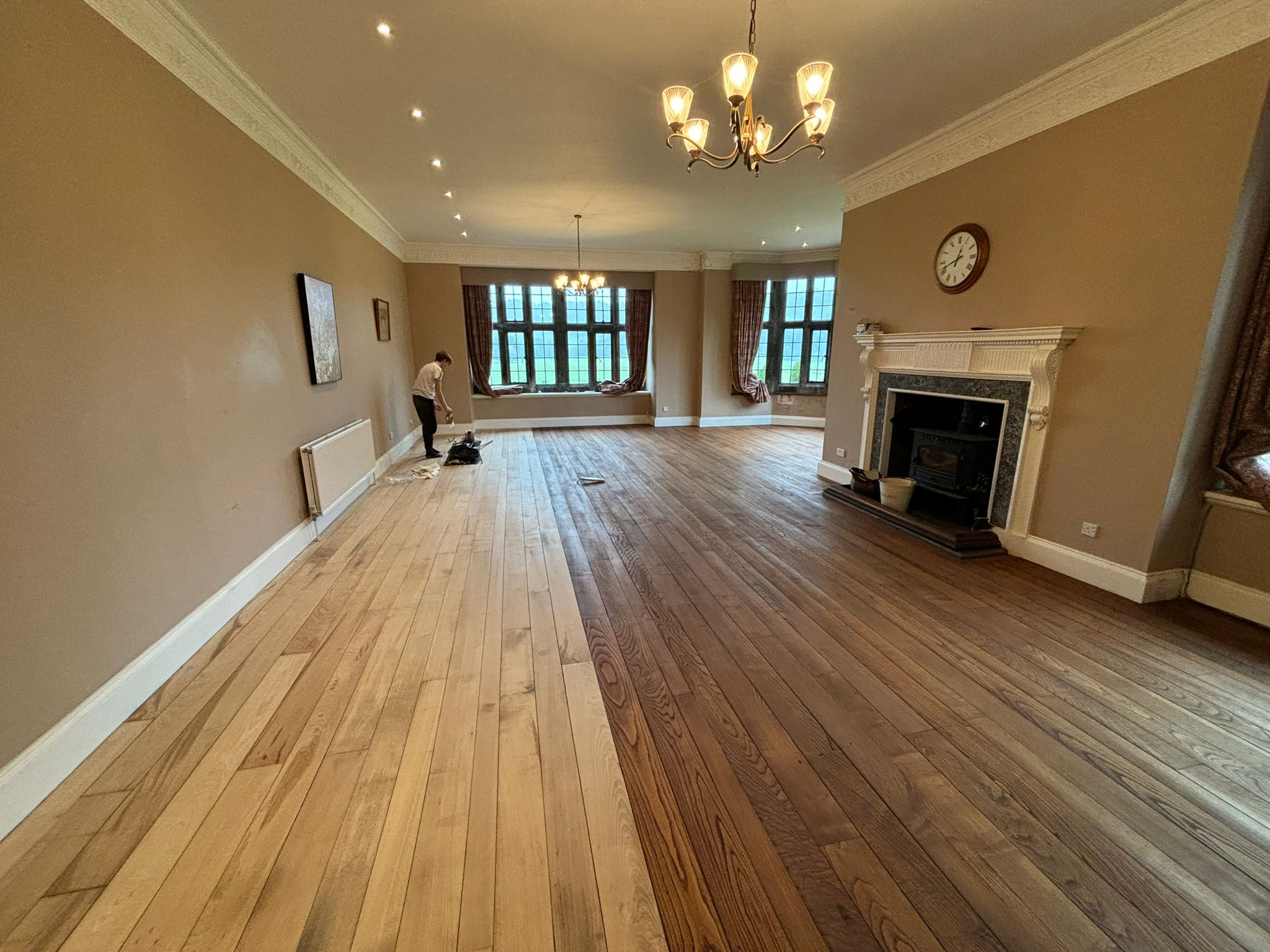
Those larger houses are the reason floor sanding in Harpenden suits us. Much of the town is made up of substantial family homes, many of them late Victorian, Edwardian or built between the wars, alongside newer houses with open-plan ground floors and big glazed doors to the garden. On a floor like that, the real work is planning. Which room is done first, where the family lives in the meantime, how the floor will look as one surface once the doors between rooms are open: those decisions matter as much as the sanding itself.

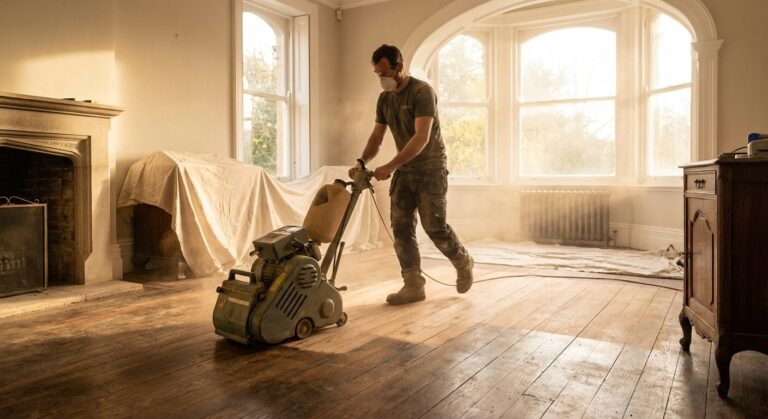
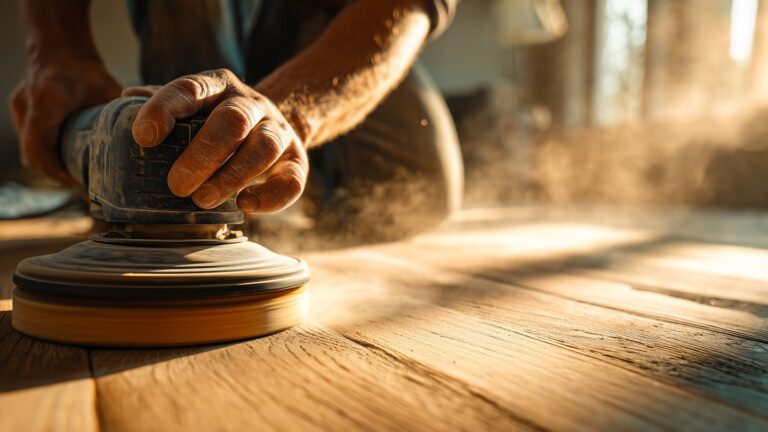
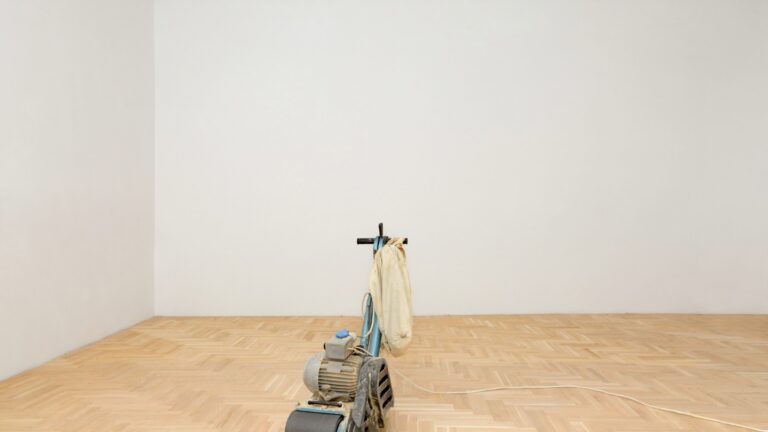
The mechanical side is consistent from house to house. A large belt or drum sander cuts through the old finish on a coarse abrasive, and the grit is then stepped up in stages, each finer paper removing the scratch pattern left by the coarser one. Edging machines follow the skirtings, scrapers deal with the corners, and a final pass with a multi-head machine blends everything together so the edges and the middle of the room carry the same texture. On a 60 square metre ground floor, any inconsistency in that sequence will show once low winter sun comes through the patio doors and rakes across the surface. Our professional floor sanding page describes the machines and grits in more detail.

With a family still living in the house, dust control is not negotiable. Every machine on a Harpenden job runs through a sealed extractor, which drags the fine dust away at the point the abrasive meets the timber and drops it into a closed drum. The kitchen and the children’s rooms stay usable. We do not describe it as absolutely dust-free, because an odd trace can still reach a high ledge, but floor sanding with dust extraction is far cleaner than the old bag-on-the-back machines most people remember. Harpenden sits alongside the other towns we reach on our floor sanding in Hertfordshire page.
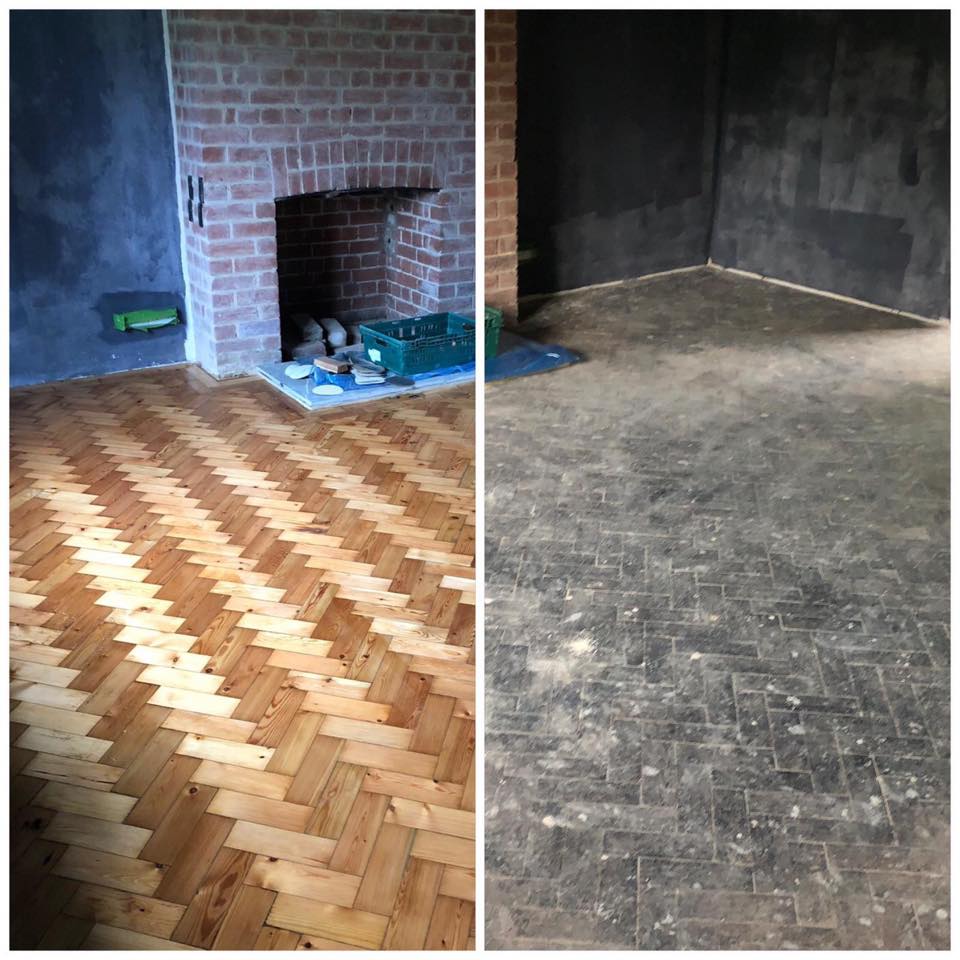
Whole-Ground-Floor Wood Floor Restoration in Harpenden Homes

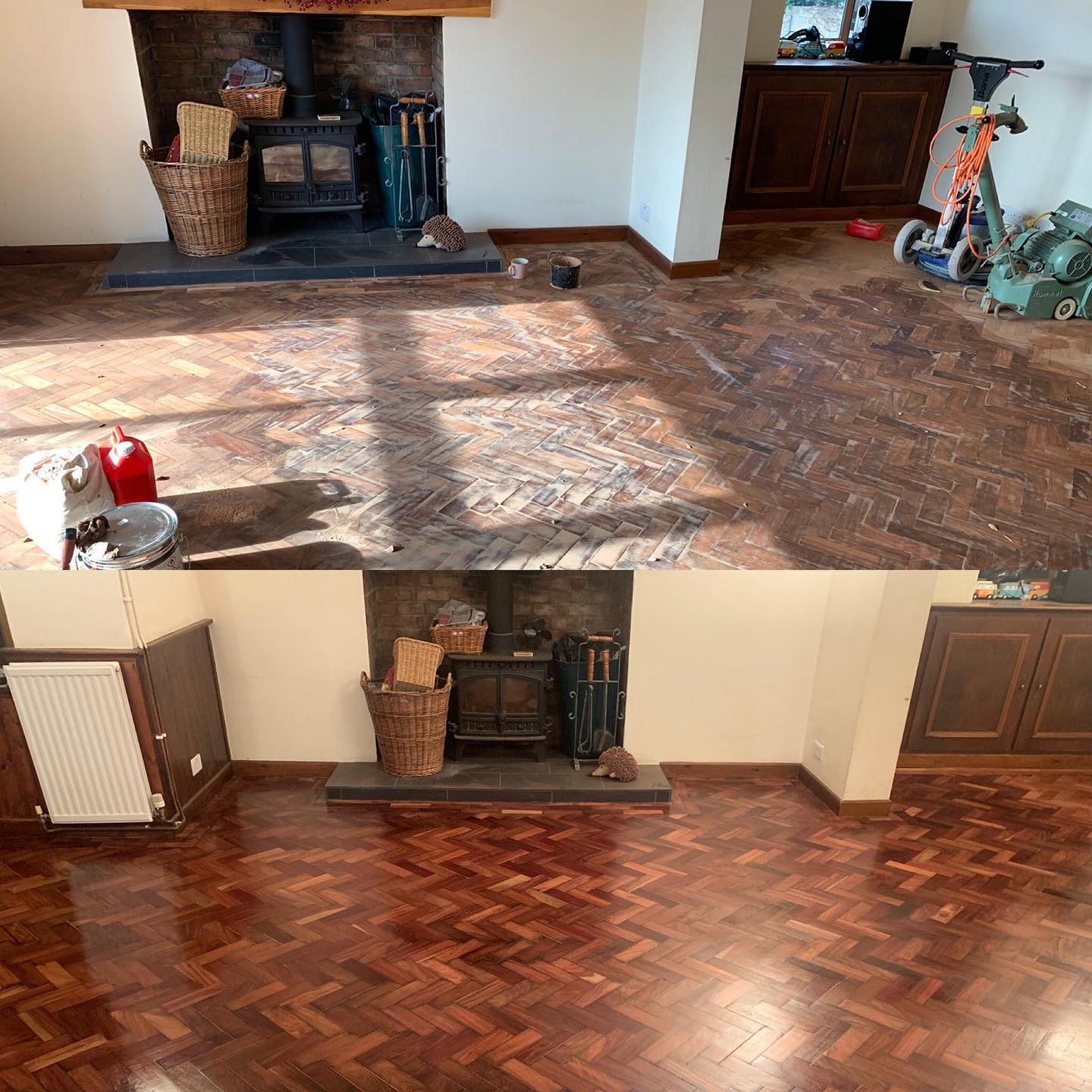
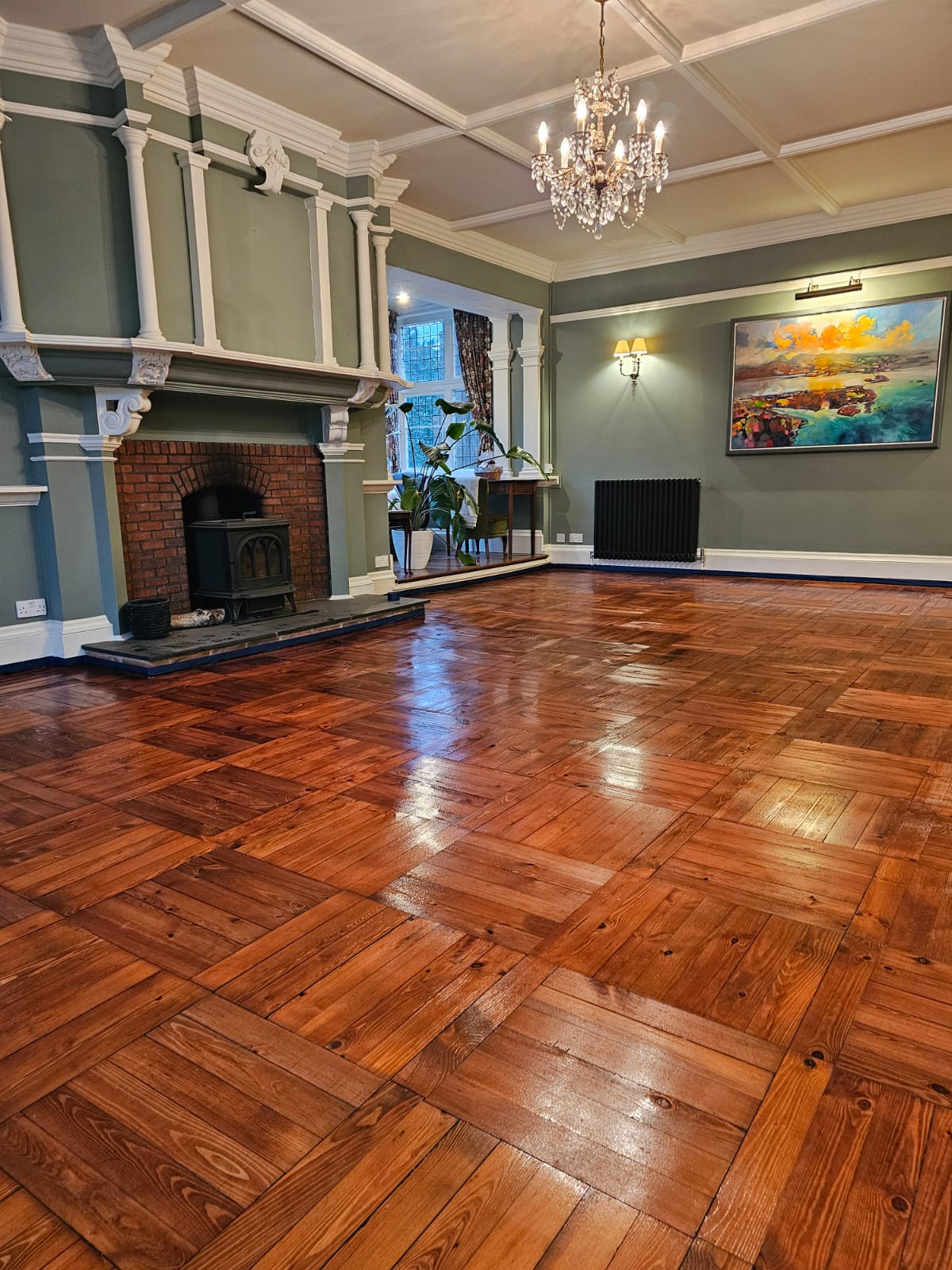
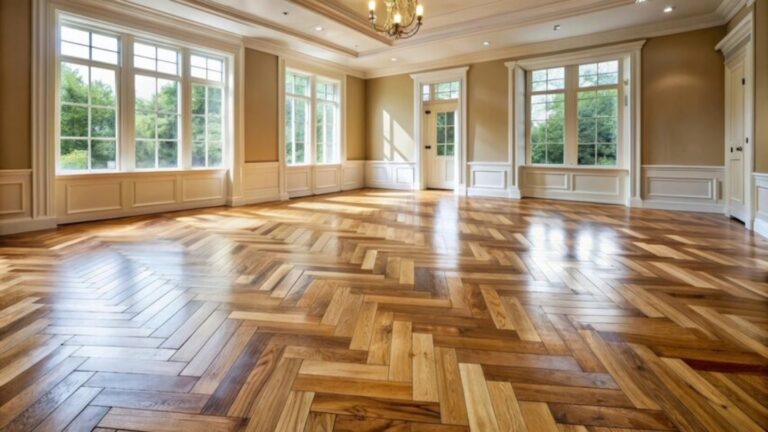
Wood floor restoration in Harpenden often means one continuous surface running through four or five rooms, sometimes in more than one timber. A typical example might be a herringbone hall, oak strip in the living and dining rooms, and older pine boards in a study at the back. Getting those to look as if they belong together is the main challenge.

Sequence comes first. The usual plan keeps one corridor through the house open until near the end: back rooms and garden room first, the middle rooms next, and the hall and staircase saved for last so nobody ends up marooned on the landing. Where the kitchen is part of the open-plan area, it is often the last area sanded and the first to have its final coat dry enough to walk on, so a kettle and fridge can be reached again quickly. Planning that order is part of the survey, and it is worth thinking about where furniture will go before the work starts. A garage, a summer house or one upstairs room usually takes the lot.

Thresholds and level changes need attention. Where an old internal wall has been removed to create an open-plan room, the floor often changes at that line: boards running one way meet boards running another, or a strip of new timber has been inserted where the wall stood. Those joins can be made to look deliberate with a border board or a neat break, rather than a ragged line. Where two rooms differ in height by a few millimetres, a threshold strip or careful local sanding usually solves it.

Mixed timbers take colour differently, so the finish has to be chosen with the whole floor in mind. Oak and pine will never be identical even under the same product, but a well-chosen finish can bring them into the same family of tone. Our oak floor restoration and pine floor restoration pages explain how each timber behaves.

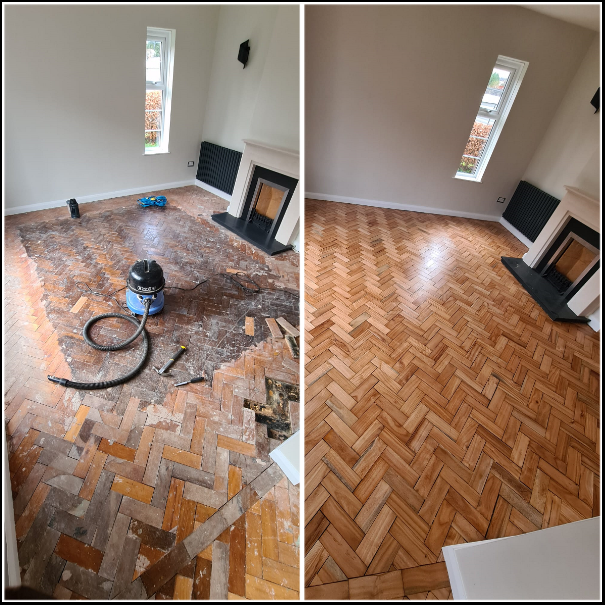
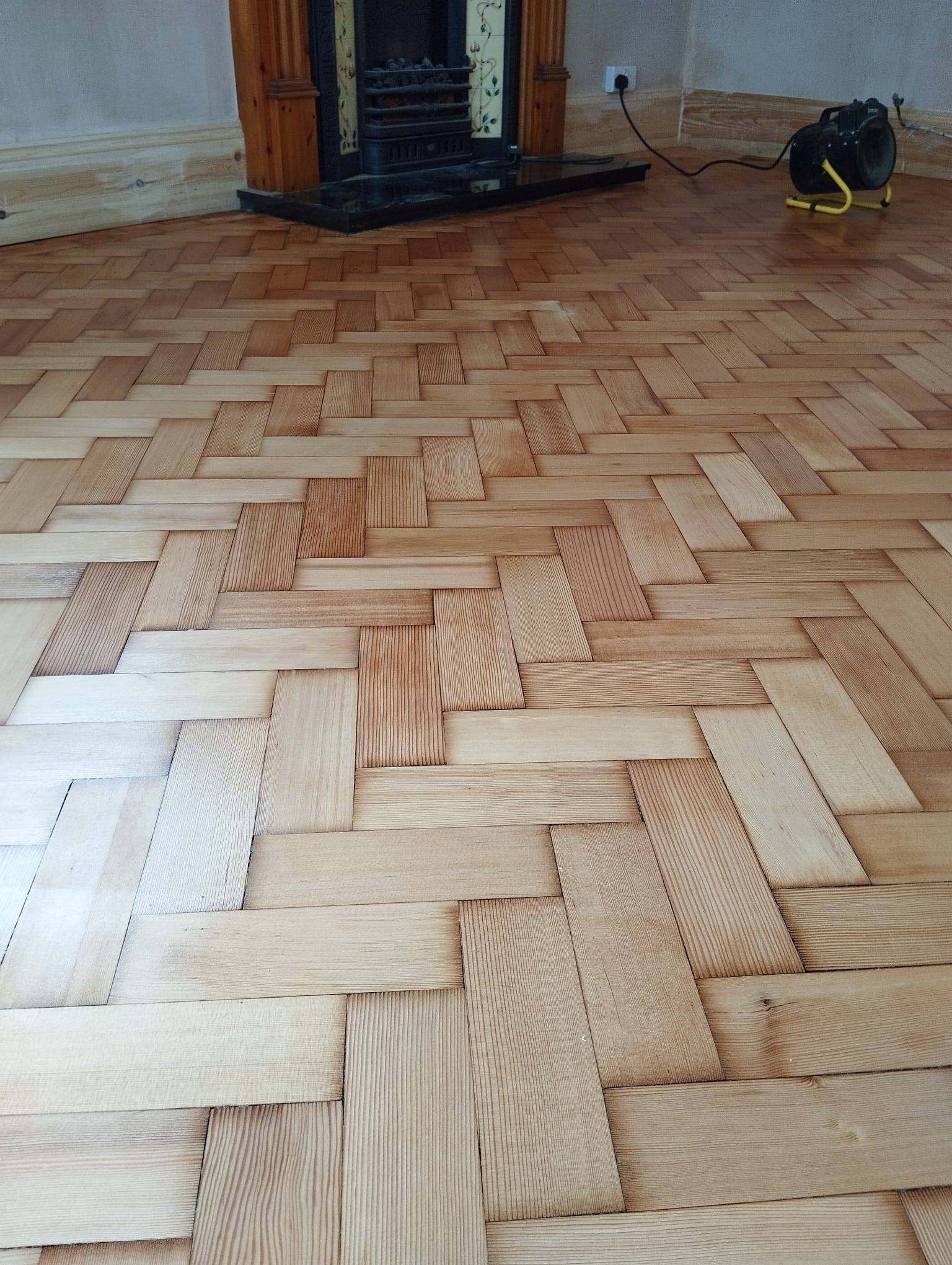
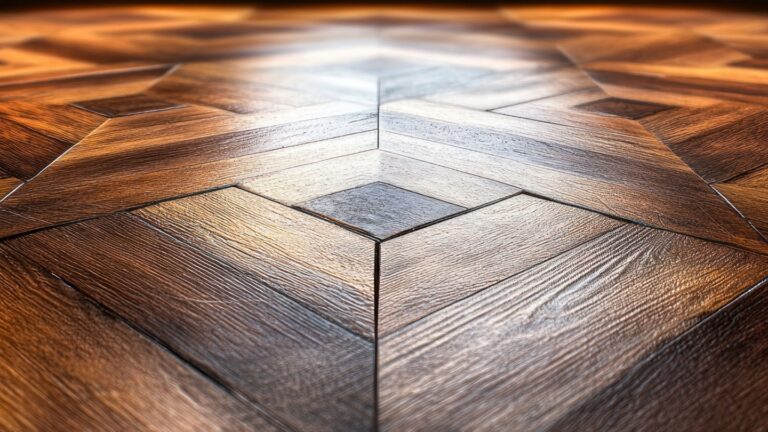
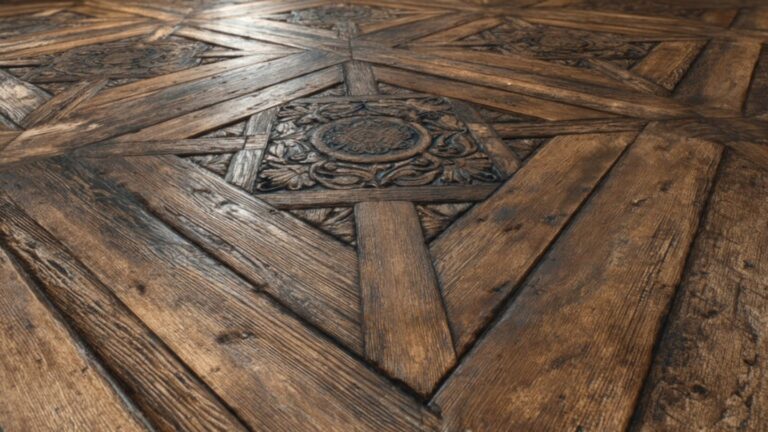
The hall is often the most interesting floor in the house. Inter-war homes in particular often had woodblock laid in herringbone, and plenty survives under carpet. If blocks have come loose from their old bitumen bed they are lifted, cleaned and stuck down again in a modern flexible adhesive before any sanding; gaps where blocks have vanished are filled from salvaged stock. Herringbone is then sanded on the diagonal and finished with an orbital machine so no straight-line scratches are left. See herringbone and parquet floor sanding.

The staircase usually rises straight out of that hall, so it makes sense to include it. Treads and risers are sanded by hand and with small machines, nosings kept crisp, and old paint on spindles tested for lead before sanding. Stair sanding completed in the same visit means the stairs and hall share one colour and sheen. The thinking behind repairing rather than replacing is laid out on our wood floor restoration page.

Floor sanding south east London
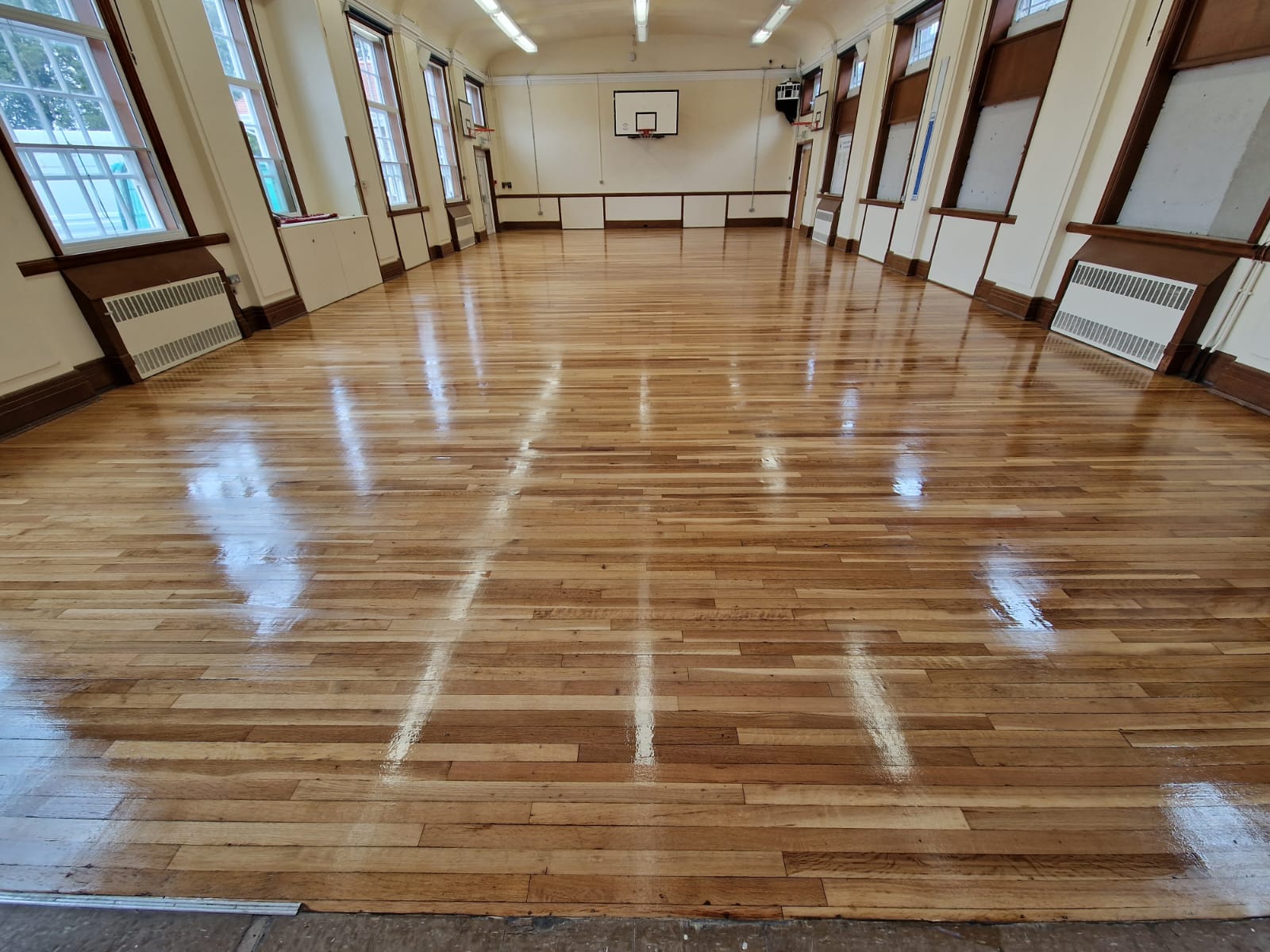
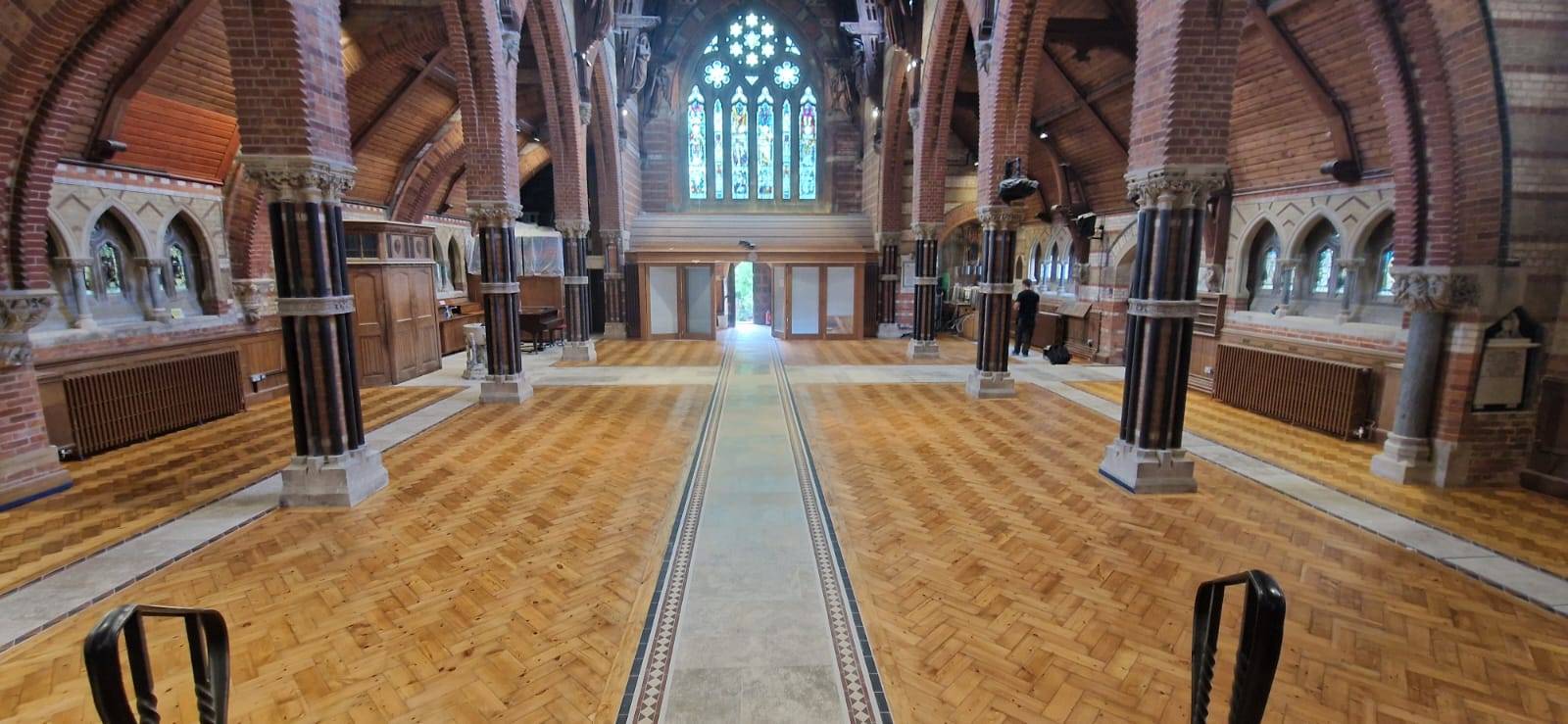
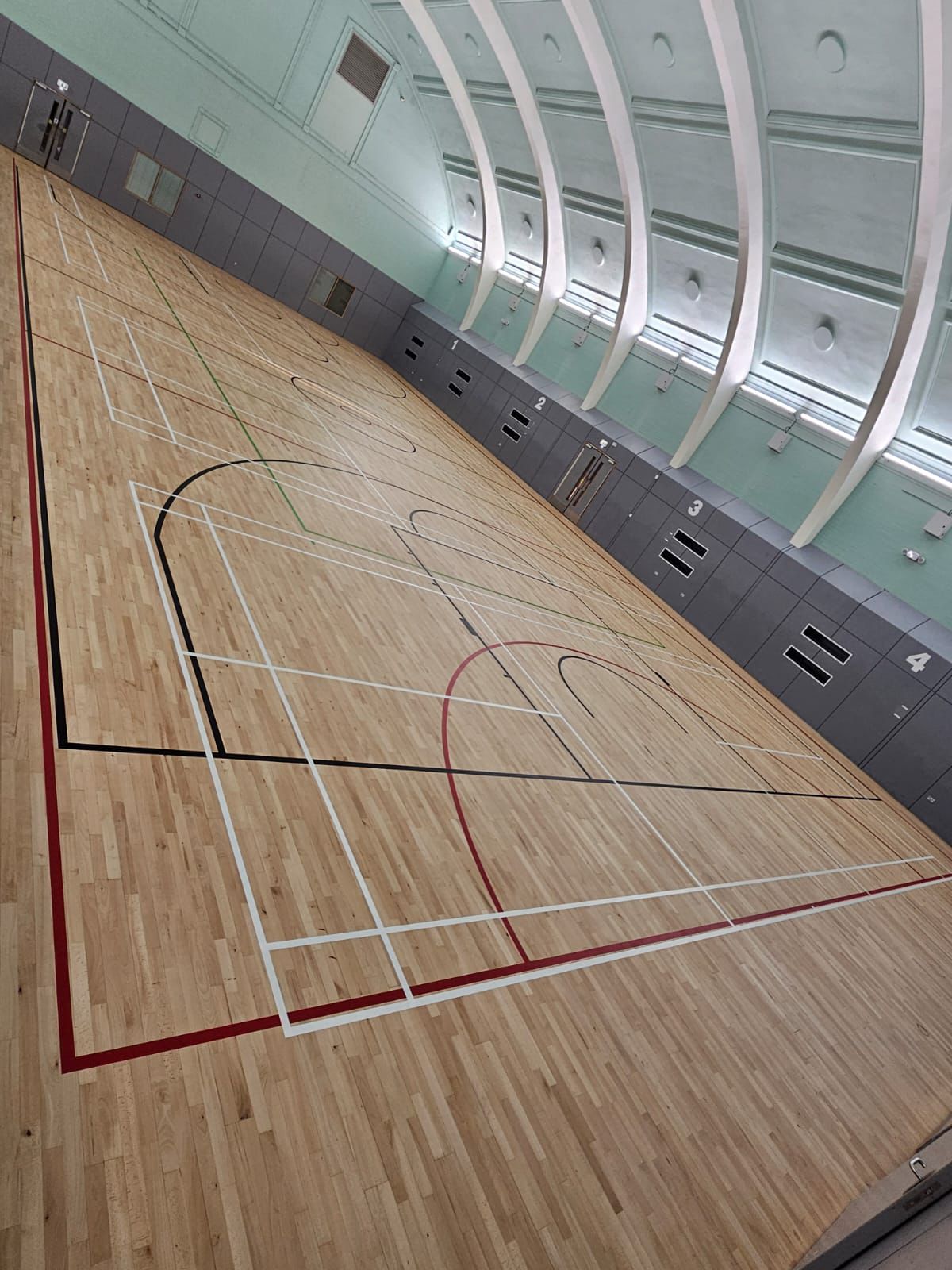
Commercial Hall Floor Refurbishment

Sheen, Colour and Slip: Choosing the Finish for a Large Open Floor

On a big open-plan floor with large windows, the sheen level makes more difference to how the floor looks day to day than almost any other decision. Lacquer manufacturers sell their products in several sheens, broadly matt, satin and gloss, and the exact gloss figures vary between brands.

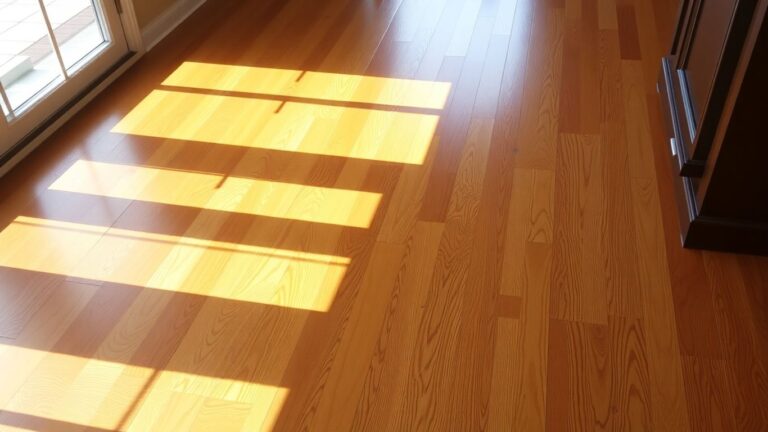
Matt is the most popular choice in family homes, and for good reason. A matt surface reflects little light, so it hides fine scratches, dust and footprints far better than gloss. Light coming in low across a room through bifold doors shows every mark on a glossy floor, and on a floor that size that can be frustrating. Matt also tends to look closer to raw or oiled timber, which is the look many people want now.

Satin sits in the middle. It gives a little more depth and lustre, and suits traditional rooms with period features where a completely flat finish can look slightly dead. Gloss is rarely chosen for homes now, but it does suit some formal rooms and certain styles of parquet.

Sheen and slip are not quite the same thing. A gloss floor can look slippery without being much worse underfoot than a matt one when both are clean and dry. What makes floors slippery in practice is contamination: water, grease, dust and the residue of the wrong cleaning product. In a kitchen where a spaniel takes the corner at full tilt and children run in from the garden, matt tends to feel steadier underfoot, and several lacquers include anti-slip additives for zones near the sink and back door.

Colour is the other half of the decision. Water-based lacquers keep timber close to its fresh-sanded tone, and some are formulated specifically to keep oak looking raw. Oil-based lacquers warm and deepen the colour, which can suit pine. Lacquer sealing comes in single-pack and two-component products; the two-pack is harder and better suited to a kitchen or boot room. Oiled finishes, including hard wax oil, soak into the grain for a quieter, more natural look, and a scuffed patch by the back door can be refreshed locally without touching the rest; across sixty square metres of open floor, that local repair is worth a great deal. Traditional waxing suits a quieter room, such as a drawing room or study. Colour changes are made with floor staining, always tested as patches on your own sanded boards, because the same stain looks different on oak, pine and parquet. And for a finish that is sound but lacks lustre, polishing the floor brings the sheen back.

Underfloor Heating, Seasonal Movement and Mending Damaged Boards

Many Harpenden homes have had kitchen extensions or open-plan conversions, and underfloor heating often comes with them. Timber can work very well over underfloor heating, but it changes how the floor is sanded, finished and looked after.

Engineered boards are generally far more stable over heated screeds than solid boards, because the cross-laid core resists movement. Wide solid boards over underfloor heating tend to cup, gap and shrink. Most manufacturers recommend a maximum floor surface temperature, often around 27°C, to protect the timber, and keeping within it is the single biggest thing an owner can do.

Sanding and finishing on a heated floor needs the heating turned down or off for a period before the work and for a few days afterwards, then brought back up gradually. Applying finish to a warm floor makes it dry too fast, causing lap marks and poor adhesion. Moisture readings at the survey help confirm the timber is settled.

There is also a hidden issue called side-bonding. Some lacquers can flow into the joints and glue neighbouring boards together edge to edge. On a floor that moves with heating cycles, groups of boards then move as a single panel, and instead of many fine gaps you get a few large ones, sometimes with split boards. Using a primer designed to limit side-bonding, or choosing an oil finish that does not form a film between boards, reduces that risk.

Gaps on underfloor heated floors should generally not be filled with rigid fillers, because they will crack as the floor moves. On conventional suspended floors in the older part of the house, though, gap filling with resin or timber slivers is often worthwhile, especially in a draughty Edwardian front room.

The rest of the repair list is familiar. Fixing squeaking floorboards usually means screwing loose boards down to the joists. Replacing damaged floorboards is done with reclaimed timber of matching width and depth so the repair disappears after sanding. Pet and furniture scratches usually sand out, while deeper damage may need repairing scratches and dents. All of these are covered by wooden floor repairs.

Floor Sanding Essex
parquet floor restoration near me

Commercial Floor Sanding in Harpenden: Cafés, Shops and Offices

Harpenden’s high street and station area have a good number of independent shops, cafés, restaurants and offices, and some have timber floors that see constant use. Commercial floor sanding in Harpenden is planned so the business keeps trading as normally as possible.

For a café or restaurant, that usually means working after closing or on a day the business is shut, with fast-curing lacquers so the floor can take chairs and tables again by morning. Larger spaces are split into sections over several nights. Grease near the kitchen, sugary drink spills and harsh cleaning products all damage finishes, so a two-component lacquer is often specified. More detail is on our restaurant floor sanding page.

Shops have their own wear pattern: a worn path from the door to the till, heel marks and trolley marks, and grit carried in on wet days. Work is scheduled around trading hours, often overnight or on Sundays, and display units can usually be moved section by section. Our shop floor sanding page covers this in more depth.

Small offices and professional practices often have wood floors in reception and meeting rooms. A Saturday and Sunday is usually enough for a reception and a couple of consulting rooms, and a low-odour water-based lacquer keeps the upstairs tenants from noticing anything.

Commercial floors need a full sand more often than domestic ones, usually every four to five years, with screen and recoat between. A landlord or agent who wants a method statement, sight of our insurance or the names of referees before agreeing the work only has to ask. Our commercial floor sanding page covers the full service.

Living With the New Floor, Fitting New Timber and Starting a Harpenden Enquiry

A new finish needs time to harden. Socks only for the first day; furniture can return after two or three days. Lift it into place rather than dragging. Fit felt pads to chairs and table legs, and put good mats at the front and garden doors to stop grit being walked in. On an underfloor heated floor, avoid thick rugs that trap heat.

For cleaning, vacuum or sweep regularly and use a damp mop with a cleaner made for wood floors. Avoid steam mops, bleach and abrasive products. With two children, a dog and a busy kitchen, the finish will look tired well before the timber suffers; a recoat at that point pushes the next full sand back by years, often close to a decade. Our buffing and recoating service covers that.

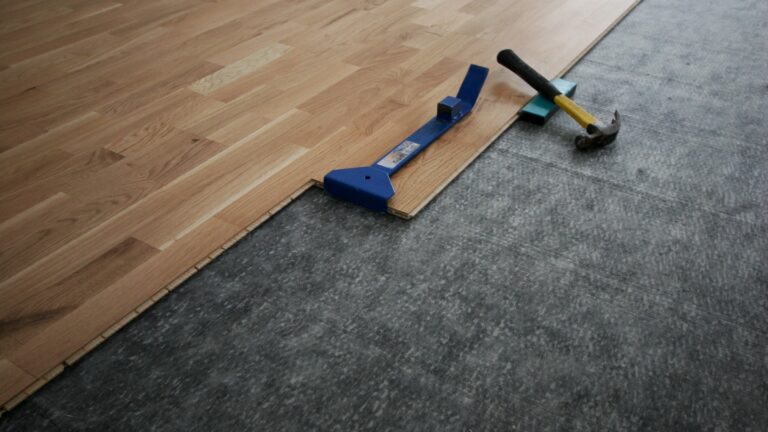
Extensions frequently arrive with a bare screed, and some kitchens have tiles the owners want rid of. For those, wooden floor installation covers fitting new timber ourselves or delivering it for your builder, from ranges including Junkers and Bona, and engineered boards rated for underfloor heating are the usual choice over a heated slab.

For an open-plan floor, the most useful first pictures are one standing at the garden doors looking back into the house and a tight shot of the patch that bothers you most. Once we agree the project is a sensible distance to travel, we book a free half-hour visit and then put the quotation in writing, each room and repair listed as its own line. Photos go to info@ryansrestoration.co.uk; for a chat, the Somerset office answers 01823 674562 from eight until six on weekdays and on Saturdays by appointment, or the enquiry form on our website does the same job. We also travel to Bishop’s Stortford for floor sanding.

Parquet Flooring Restoration

Harpenden Floor Sanding FAQs

No. Our workshop is a long way south-west, near Wellington in Somerset, so Harpenden is beyond our regular round. We travel there for larger domestic projects, such as whole ground floors and houses with several rooms of parquet or oak, and for commercial work such as cafés, shops and offices. For a single small room, a local floor sander is likely to be the better choice.

Usually, yes. The work is sequenced so you keep a route through the house, starting with the rooms furthest from the front door and finishing with the hall and stairs. The extractors keep the kitchen and bedrooms free of all but the faintest trace. You will need somewhere to put furniture, such as a garage or one upstairs room, while the floor is done.

Matt is the most popular choice for family homes because it hides scratches, dust and footprints, and looks close to natural timber. Satin gives more depth and suits traditional rooms. Gloss shows every mark, especially in rooms with big windows or bifold doors, so it is rarely chosen now. A sample area helps if you are unsure.

Yes, with care. The heating needs to be turned down or off before the work and kept low for a few days afterwards, then brought back up slowly. Engineered boards are usually the most stable option over heating, and the depth of their top layer determines how many times they can be sanded.

Side-bonding happens when lacquer runs into the joints between boards and glues them together. The floor then moves in large panels instead of individual boards, causing a few wide gaps instead of many small ones. A primer designed to reduce it, or an oil finish, lowers the risk, especially on floors with underfloor heating.

They can be brought close, but not made identical. Oak, pine and parquet all take finishes and stains differently. Testing stains and finishes on each timber helps choose something that looks consistent when the doors between rooms are open. A border or threshold strip can also make a change of timber look intentional.

Usually, by working after closing time or on a day you are normally closed, with fast-curing lacquers so the floor can take furniture by the next morning. Larger floors can be split into sections. Dates are agreed well ahead so staffing and bookings can be planned around the work.

It depends on the area, the repairs needed and the finish, but a typical family home takes one to three days, and a large ground floor with parquet and stairs may take longer. The survey will give a realistic timetable, including when each area can be walked on and when furniture can go back.