45 years’ experience  ·  Rated 4.9 on Google  ·  Family-run, from our workshop near Wellington

45 years’ experience · Rated 4.9 on Google · Family-run

Floor Sanding and Wood Floor Restoration in Helston

Quiet, sound and freshly finished floors for Helston terraces, halls and schools, with creaking boards fixed at the joist before any sanding begins.

QUICK QUOTATION

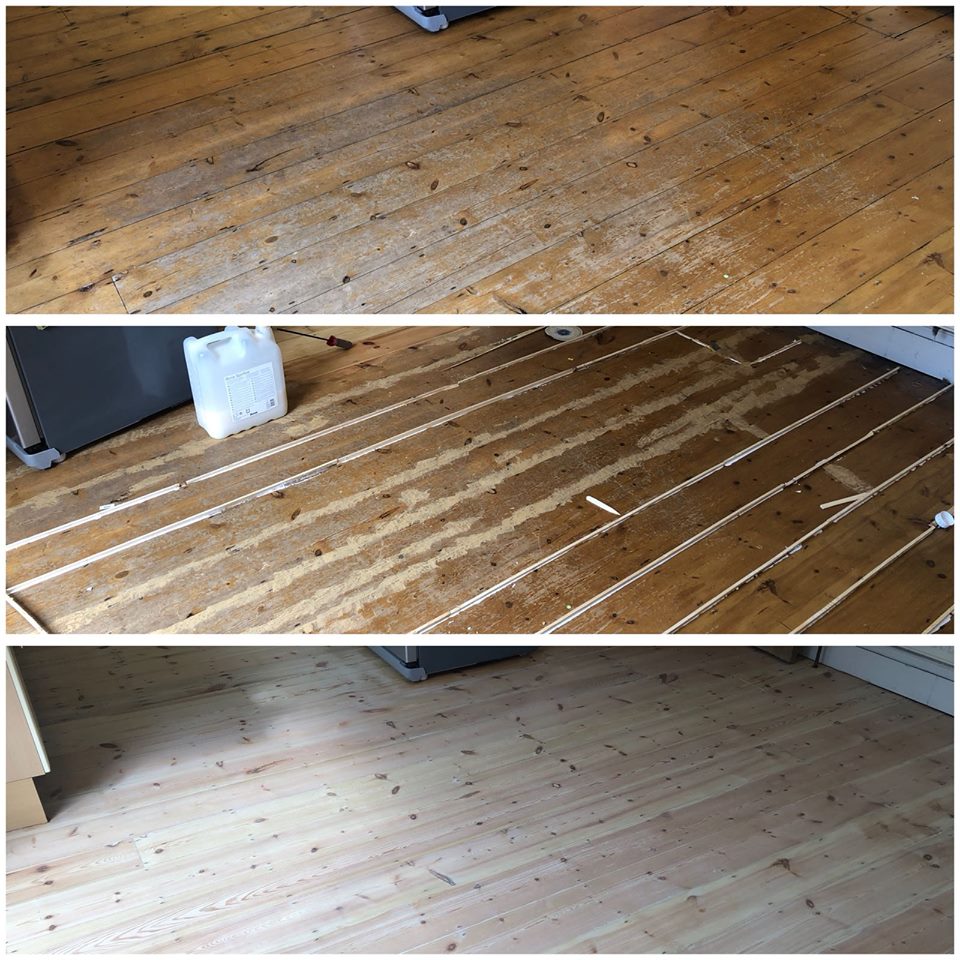
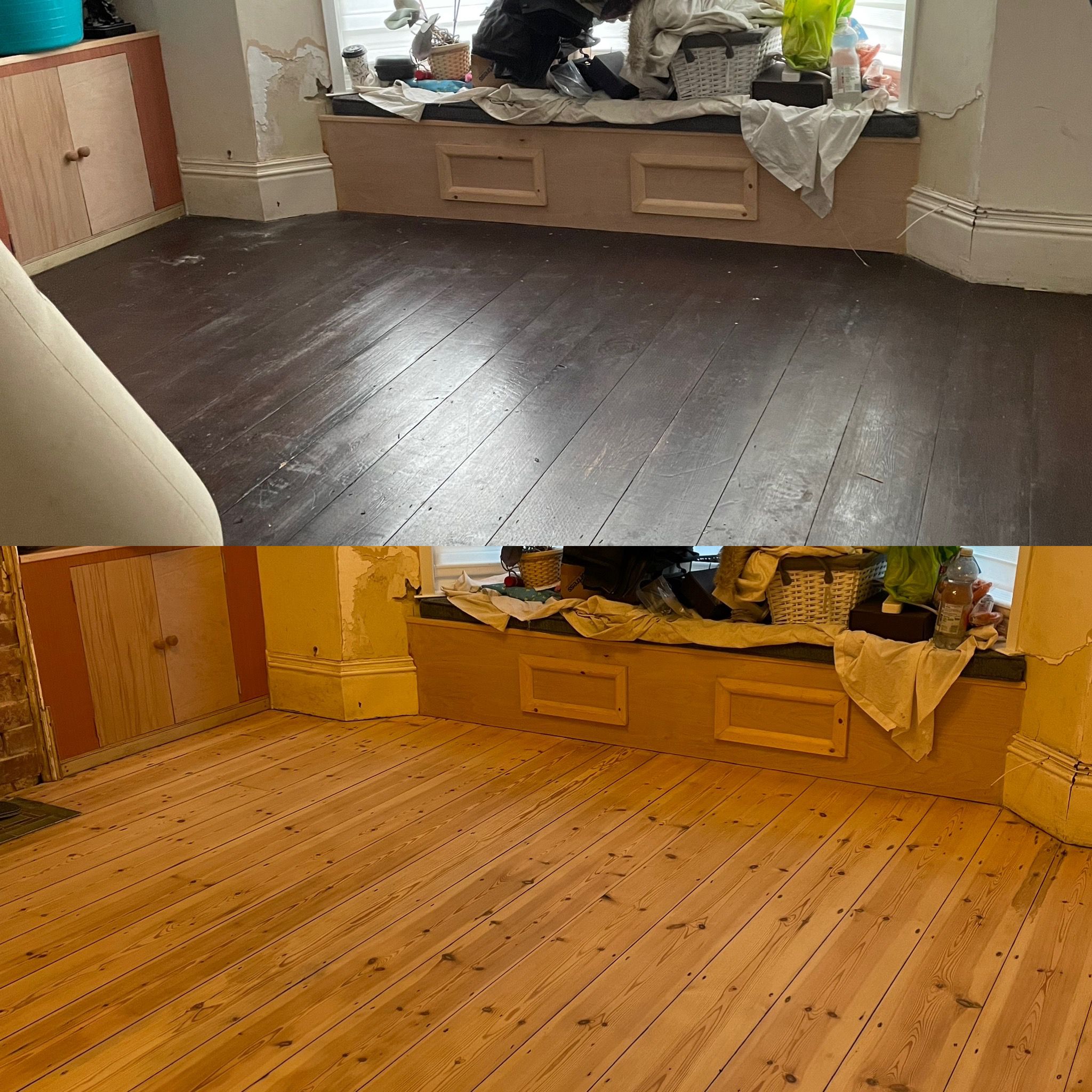
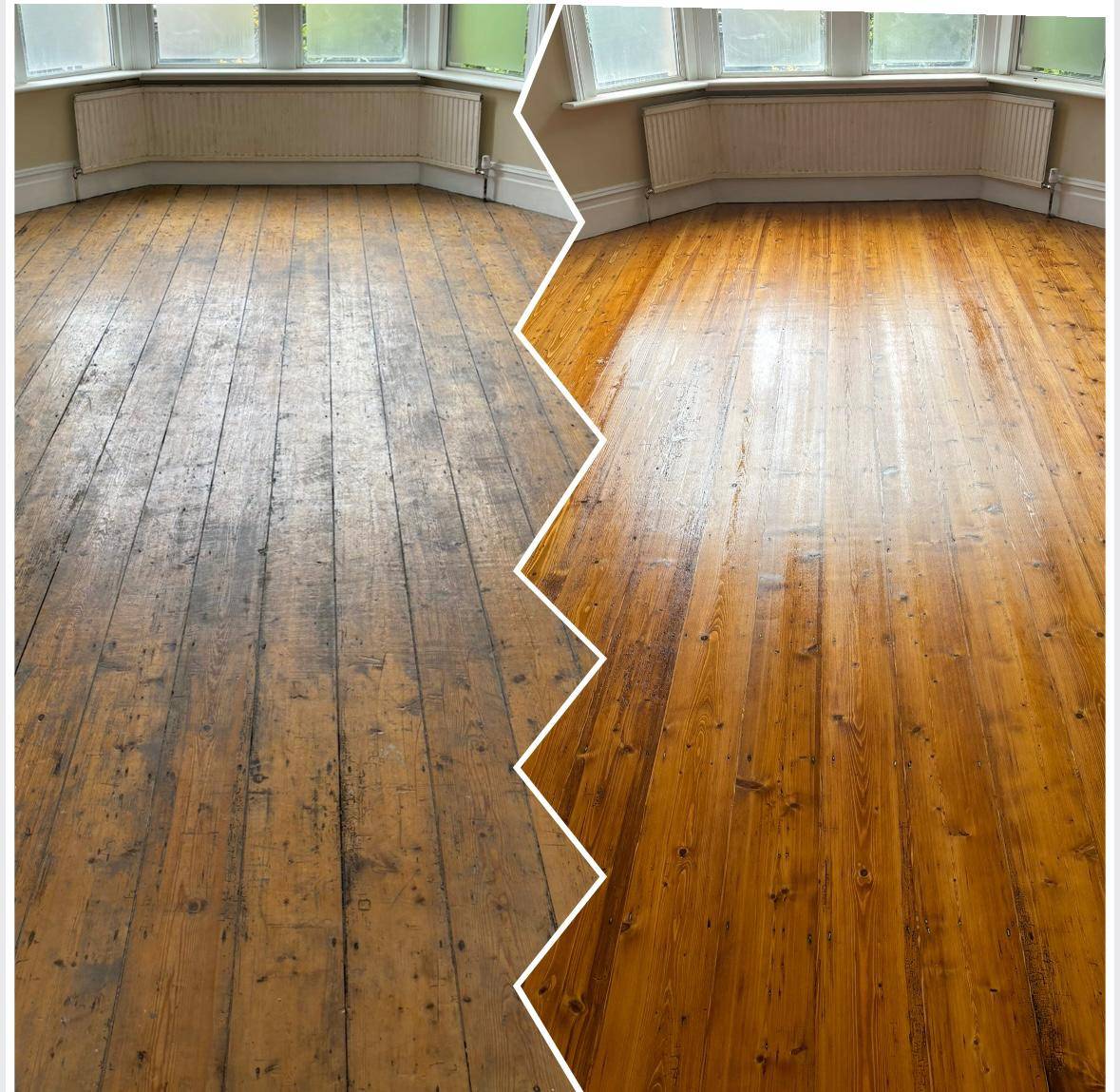
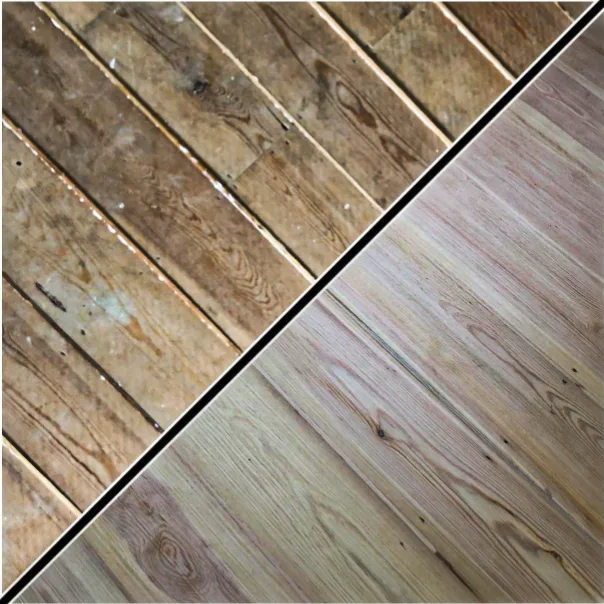
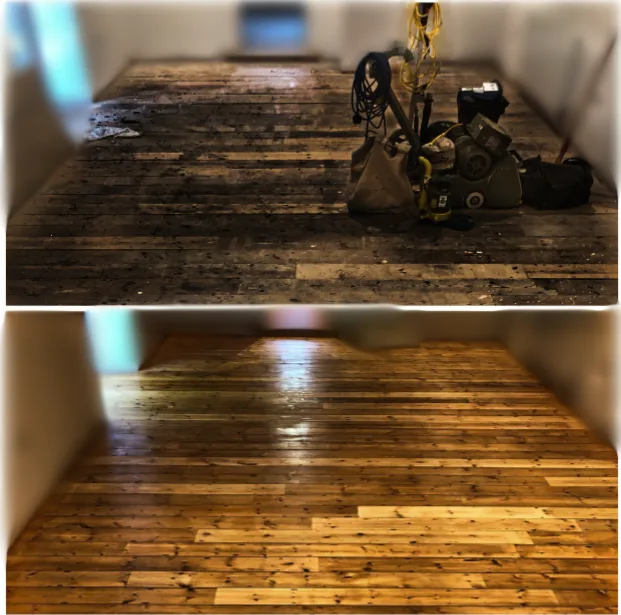
Floor sanding before and after

Floor Sanding in Helston's Market-Town Terraces

Helston is an old market town, and its centre is a designated conservation area with getting on for two hundred listed buildings. Away from the grander frontages, much of the housing is terraced: rows of stone and rendered houses with timber ground floors over a shallow void, boarded upper floors, and narrow stairs climbing between party walls. The floors inside them are typically softwood boards, often laid long before anyone thought of underlay, and most have been carpeted, painted, stained or varnished at least once since.

Floor sanding in Helston terraces tends to raise the same handful of questions. Is there enough timber left to sand? Will the creaks go away? Can the mismatched boards from an old plumbing job be made to blend in? And what will the floor look like once the dark stain round the edges comes off? Measuring at the survey settles the first, the next section of this page deals with the second, and the rest follows from there.

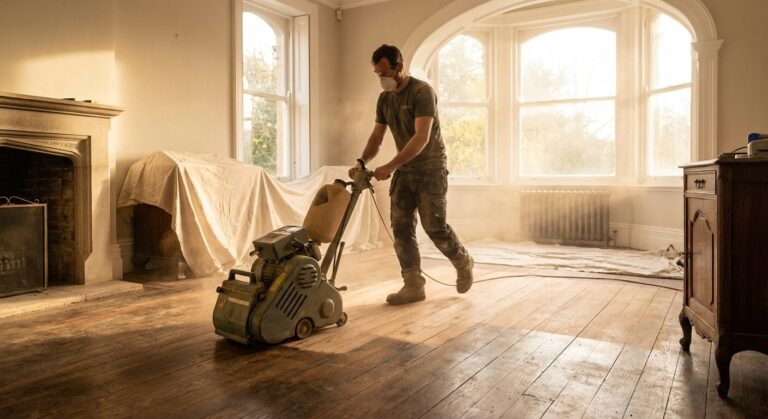
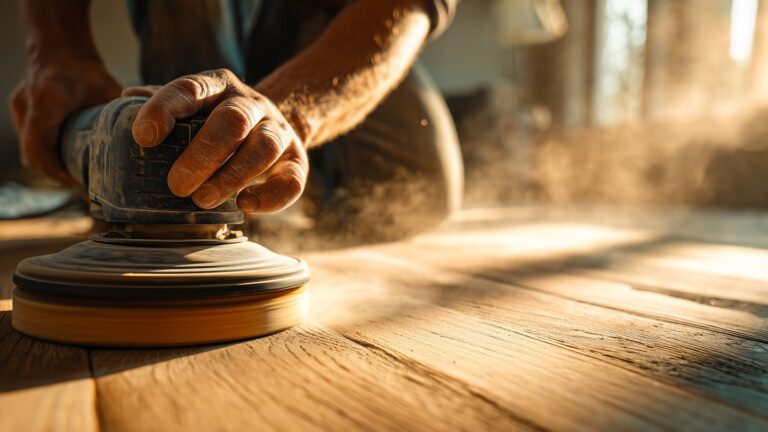
The sanding itself is done in stages. The opening pass uses a coarse belt to cut through varnish, old stain and floor paint, and to bring down board edges that have lifted. After that the grit gets finer in steps, and the job of each step is purely to erase the lines the one before it cut. An edging sander deals with the margins along the skirtings, and a scraper gets into corners and around pipes. A final pass with a fine mesh on a buffing machine blends the edge work into the main floor so the finish goes on to a uniform surface.

Hoses from every sander feed a sealed extractor, so in a narrow terrace the dust is mostly caught before it reaches the stairwell; read about dust-free floor sanding for an honest account of what still settles. The whole floor sanding service is described on its own page. Helston and the Lizard villages around it are regular ground for us. Our family business drives down from its Somerset base, and Helston sits alongside the other towns covered by Cornwall floor sanding.
Why Old Boards Creak: Cut Nails, Joists and Wood Floor Restoration in Helston

Creaking floors are the most common complaint in older Helston houses, and they are worth understanding, because they are nearly always fixable and should always be fixed before sanding.

In a terrace of this age every board was pinned down through its face with cut nails, which are wedge-shaped and rectangular in section, stamped out of metal sheet rather than drawn as wire. A cut nail grips well when new because its rectangular section crushes the wood fibres around it. Over a century or more, though, the timber shrinks and swells with the seasons, and every footstep levers the board very slightly up and down. The hole around the nail gradually wears oval. Eventually the board can move a millimetre or two on the nail shank, and that movement, wood rubbing on wood at the tongue or on the nail itself, is the creak.

Other causes are less common but worth checking. A joist may have dried and twisted so the board no longer bears on it evenly. Plumbers and electricians often notch the top of a joist to pass a pipe or cable through, and a deep notch can weaken it enough to deflect underfoot. Packing that someone once wedged between a joist and a board may have shrunk and fallen out. Where an upstairs floor bounces as well as creaks, the joists may need stiffening by a builder or joiner before any floor work, and that should be dealt with first.

For the ordinary creak, the fix is straightforward: a screw driven through the board into the joist, positioned beside the original nail, pulls it down tight and stops it moving. The screw head is countersunk and later hidden by sanding and a little filler. Pipes and cables under the floor are the main hazard, so it pays to know where they run, and a cable detector is a sensible precaution. Our page on fixing squeaky wooden floors covers this in more detail.

Quietening the boards is where most of our wood floor restoration in Helston begins. Once the floor is quiet and firm, sanding produces a much better result, because loose boards rock under the machine and come out with dips and ridges. Restoring a wooden floor properly starts with getting it solid underfoot.

parquet wooden floor sanding
wooden floor sanding

Commercial Floor Sanding in Helston School Halls and Sports Floors

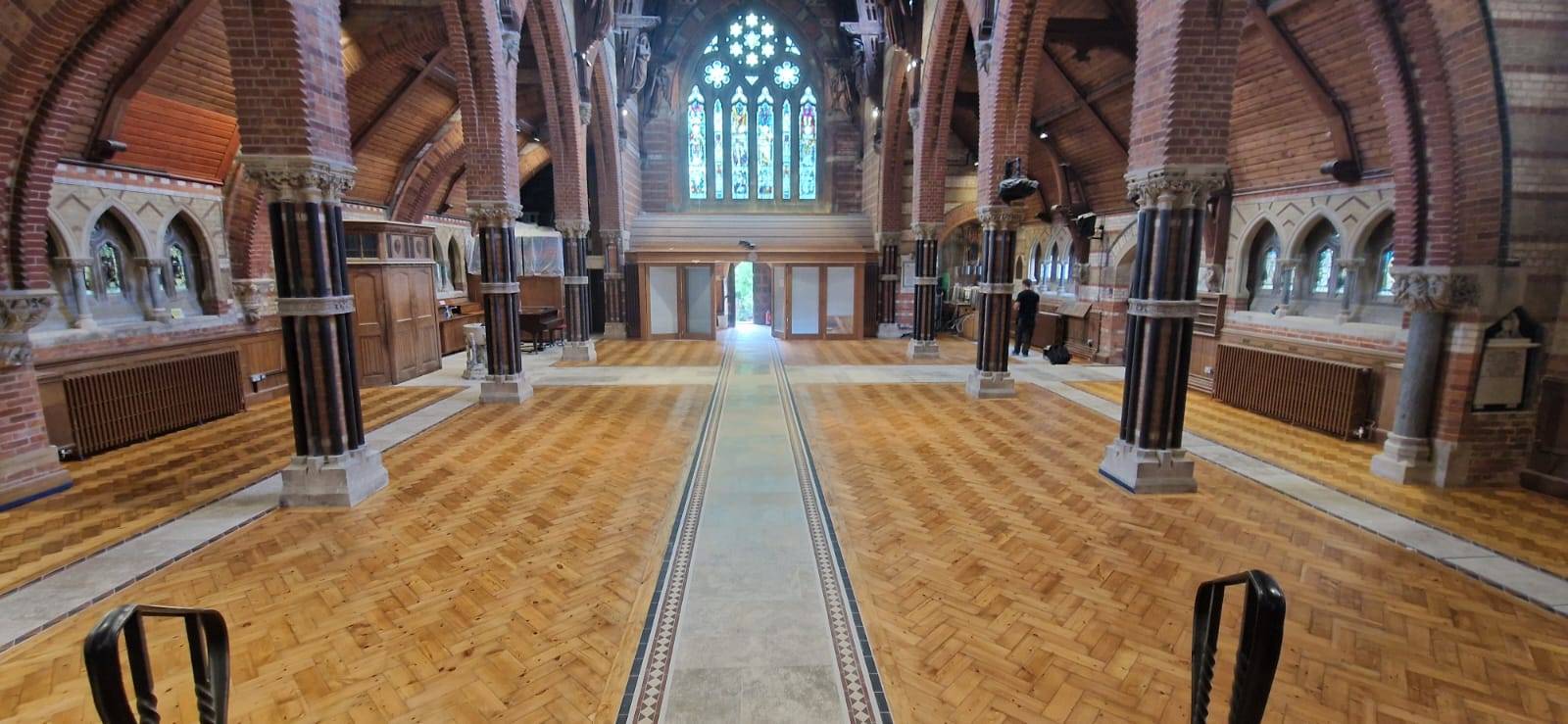
School halls, community halls and sports floors make up a large part of the commercial work in and around a market town like Helston. These floors take enormous punishment: hundreds of feet a day, chairs and tables dragged out for lunch and assemblies, PE equipment, and in a sports hall, the twisting and stopping that wears a finish in particular places.

Timing is everything. School floor sanding is almost always done during the holidays, when the building is empty and the work can run without interruption. Summer is the most popular slot, but Easter and October half-term are often used for smaller halls. Fast-curing finishes help to fit sanding, line marking and several coats into a short window. Because school holidays are fixed and limited, dates are booked well ahead, often a term or more in advance, and held once agreed.

Finish choice is critical. Halls get a two-pack lacquer for its toughness, but on a court the grip of that lacquer under a trainer counts for just as much. Too smooth and players lose their footing; too grippy and they can twist knees and ankles. Sports-specific lacquers are designed to sit in that middle range.

Line marking is the other big part of a sports floor. We set out and paint badminton, netball, basketball and other courts ourselves, measured to the dimensions each sport’s governing body lays down, in paint chosen to bond with the lacquer. Order matters here. Bare timber gets its first lacquer coats, the court is measured and painted onto that sealed surface, and the last coats go over the top, so the lines are protected and fade no faster than the floor around them. Our sports hall floor sanding page goes into this, and gym floors and dance studio floors each have their own considerations around grip.

Commercial floor sanding in Helston covers more than schools, of course: shops, offices, pubs and restaurants all have wooden floors that need attention from time to time. Commercial floor sanding is planned around opening hours, often overnight. Bursars and site managers who need a written method, proof of insurance or referees before signing off a contractor can have them. A hall in daily use usually wants sanding right back every four or five years.

Boards, Gaps and Patch Repairs in Older Helston Homes

As well as creaks, older floors gather a list of other faults that should be sorted before the sanding machine goes on.

Boards lifted for wiring, central heating or plumbing are often put back loosely or cut short. Board ends crack where an old nail was driven too close to the end grain. Old fireplaces leave scorch marks and sometimes a patch where a hearth was removed and filled in with whatever timber was to hand. Repairing wooden floors covers the full range of these problems, from refixing and splicing to cutting out damaged sections and fitting new pieces.

Where a board cannot be saved, it should be replaced with one that matches. A terrace board from the 1800s was sawn to inches, not millimetres, and came from slow-grown trees; today’s merchant stock is a different size and shows broad, pale growth rings. Even stained, it tends to stand out. Reclaimed boards of the same age and species are a much closer match. That is why our floorboard replacement draws on reclaimed stock kept for the purpose.

Gaps come last. Narrow cracks between boards can be filled with a resin mixed with fine dust from the floor so the colour is close. Where a wider gap lets cold air rise from the void under a front room, a slim pine fillet, glued along one edge only and planed level, lasts better. Rigid fillers in wide gaps tend to crack and fall out as the boards move. Gap filling is a balance between appearance, draught-proofing, and allowing the floor to move with the seasons.

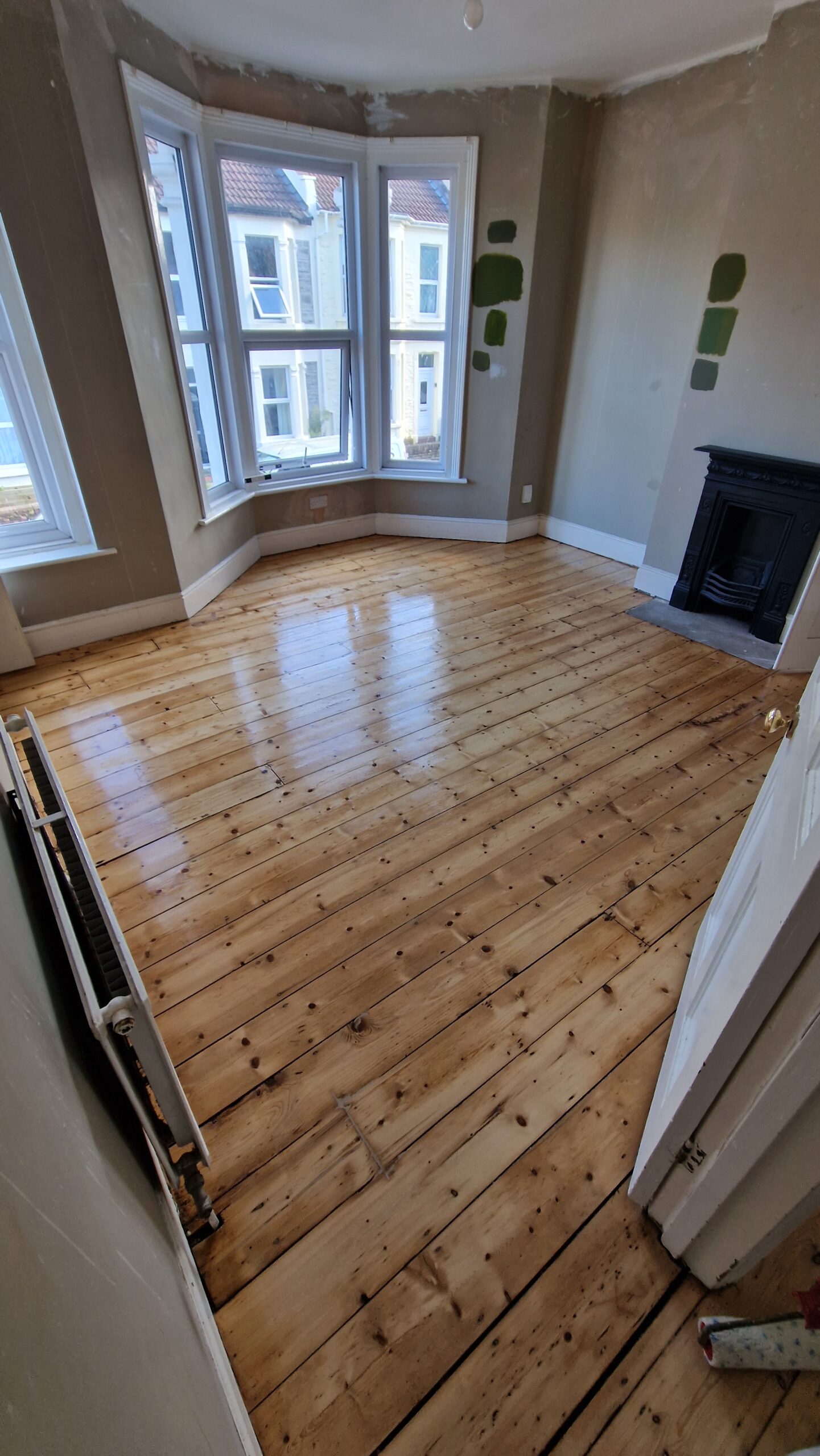
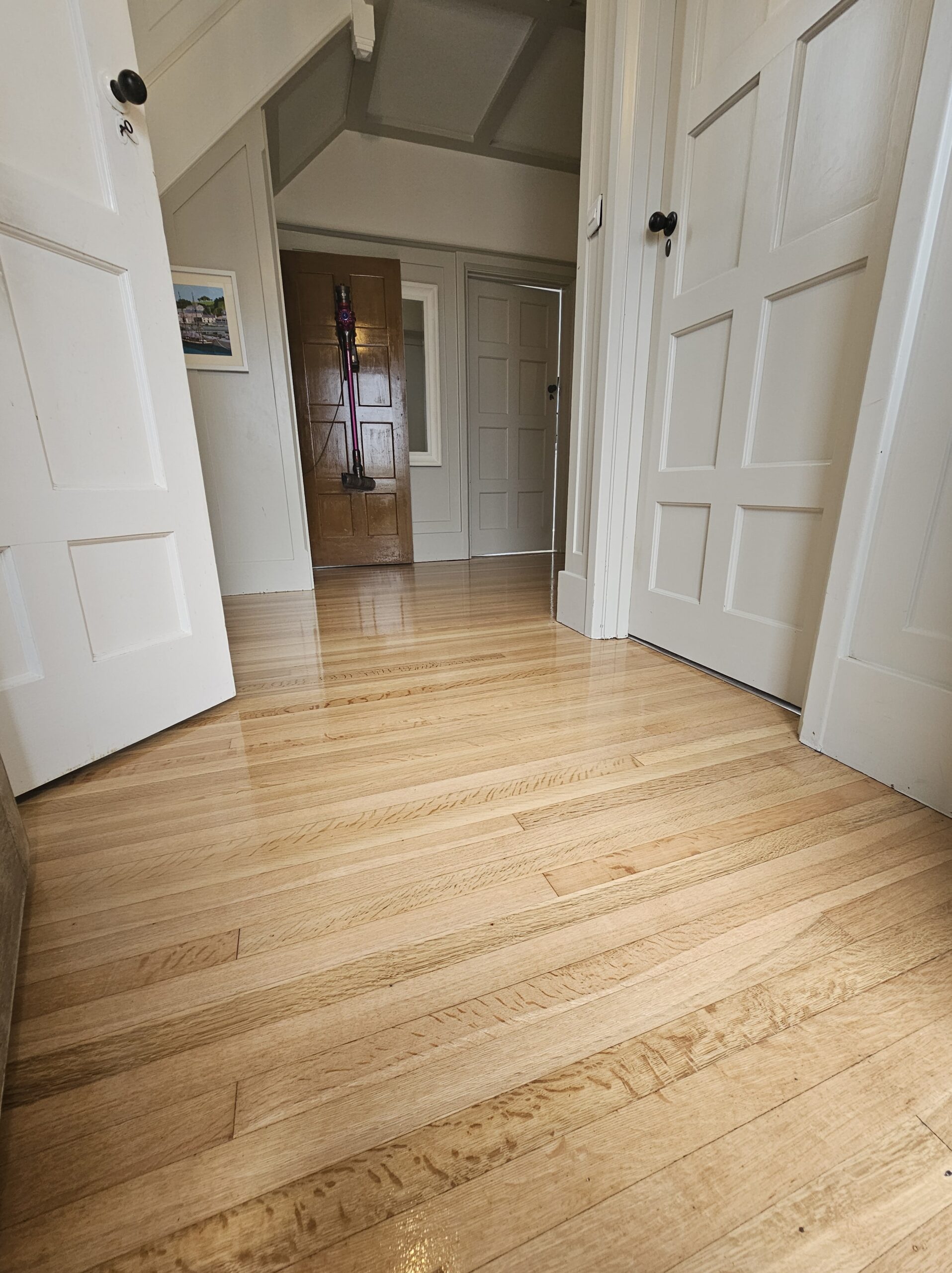
The type of timber matters too. Most older Helston houses have softwood boards, and pine floor restoration brings out their warm colour. Houses from the twentieth century onwards are more likely to have oak strip or engineered boards, where oak floor restoration applies.

flooring sanding company
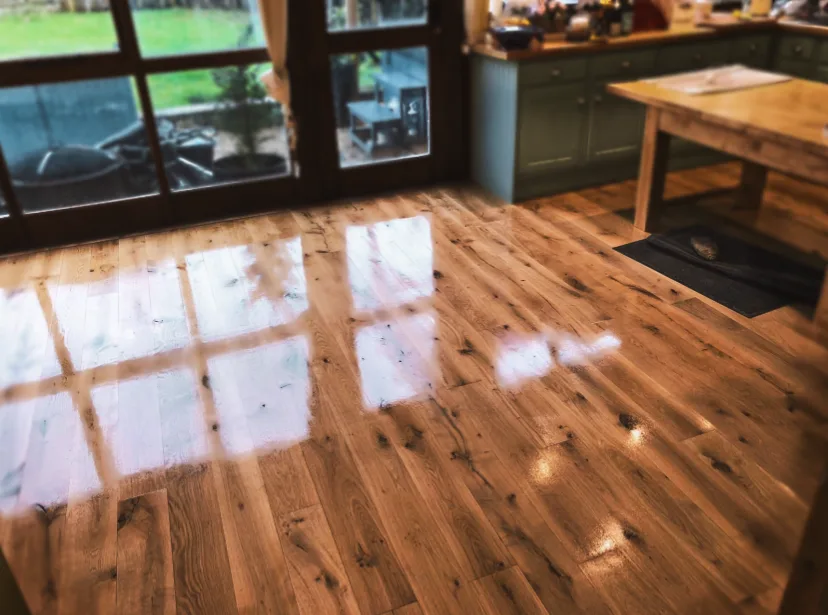
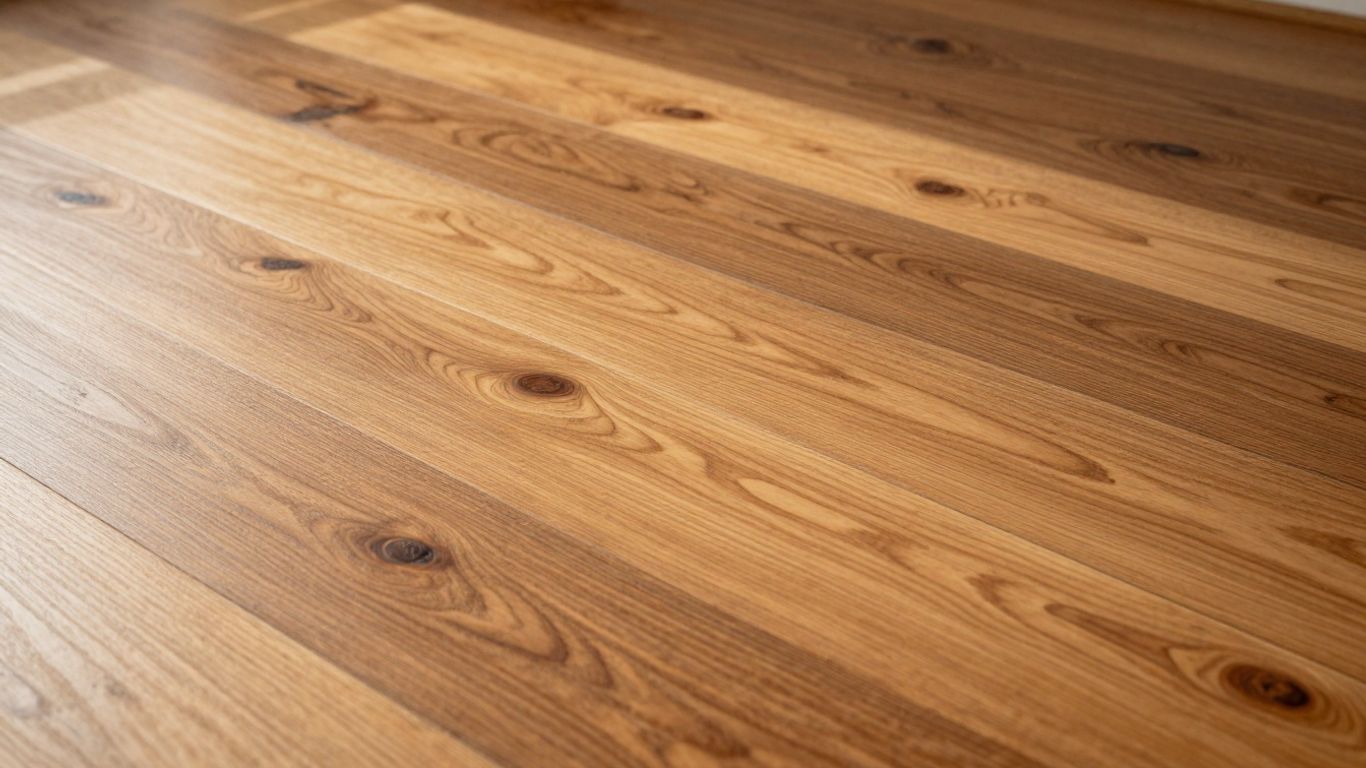
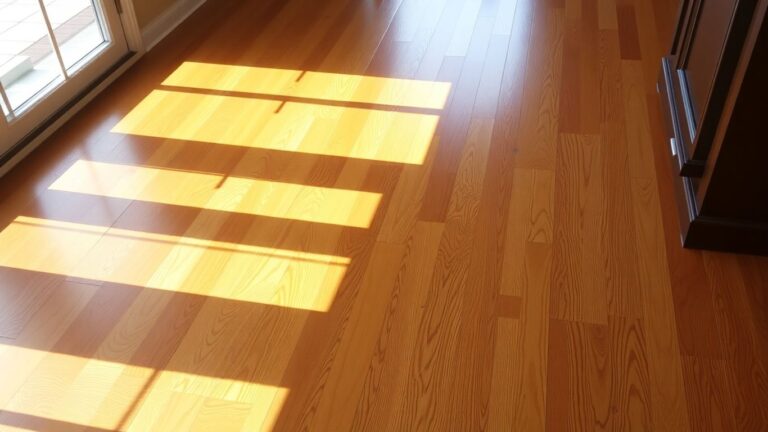
Sunlight across freshly lacquered wooden floorboards

Restoring Parquet Blocks and Narrow Terrace Stairs

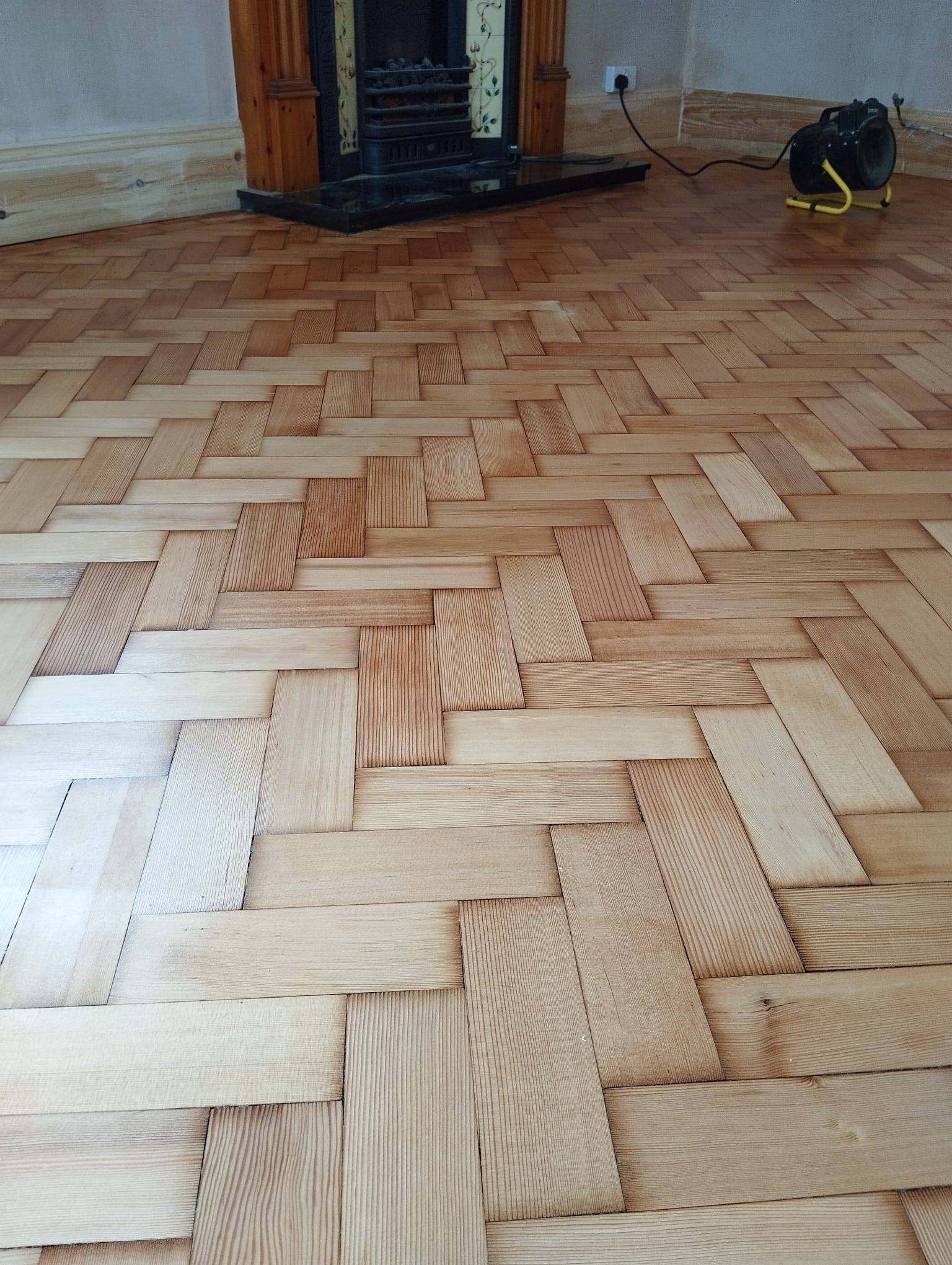
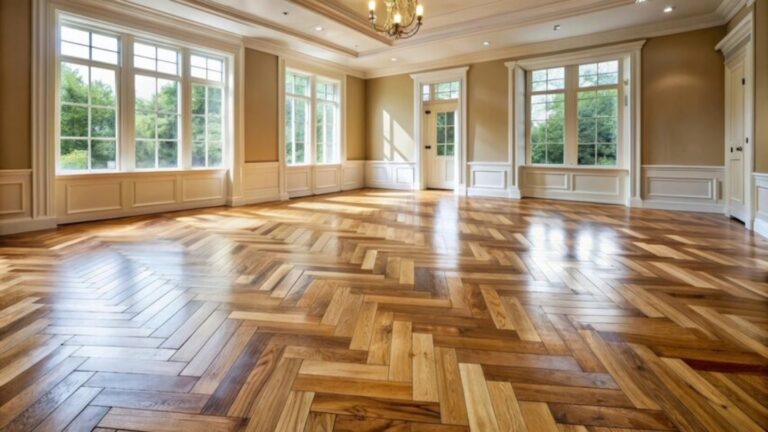
Parquet appears in Helston in larger houses, mid-twentieth-century homes and older public buildings, including some halls. Herringbone parquet is the most familiar pattern; basket weave and plain block patterns turn up too. Nearly all of it sits on a bed of bitumen that has turned brittle with age.

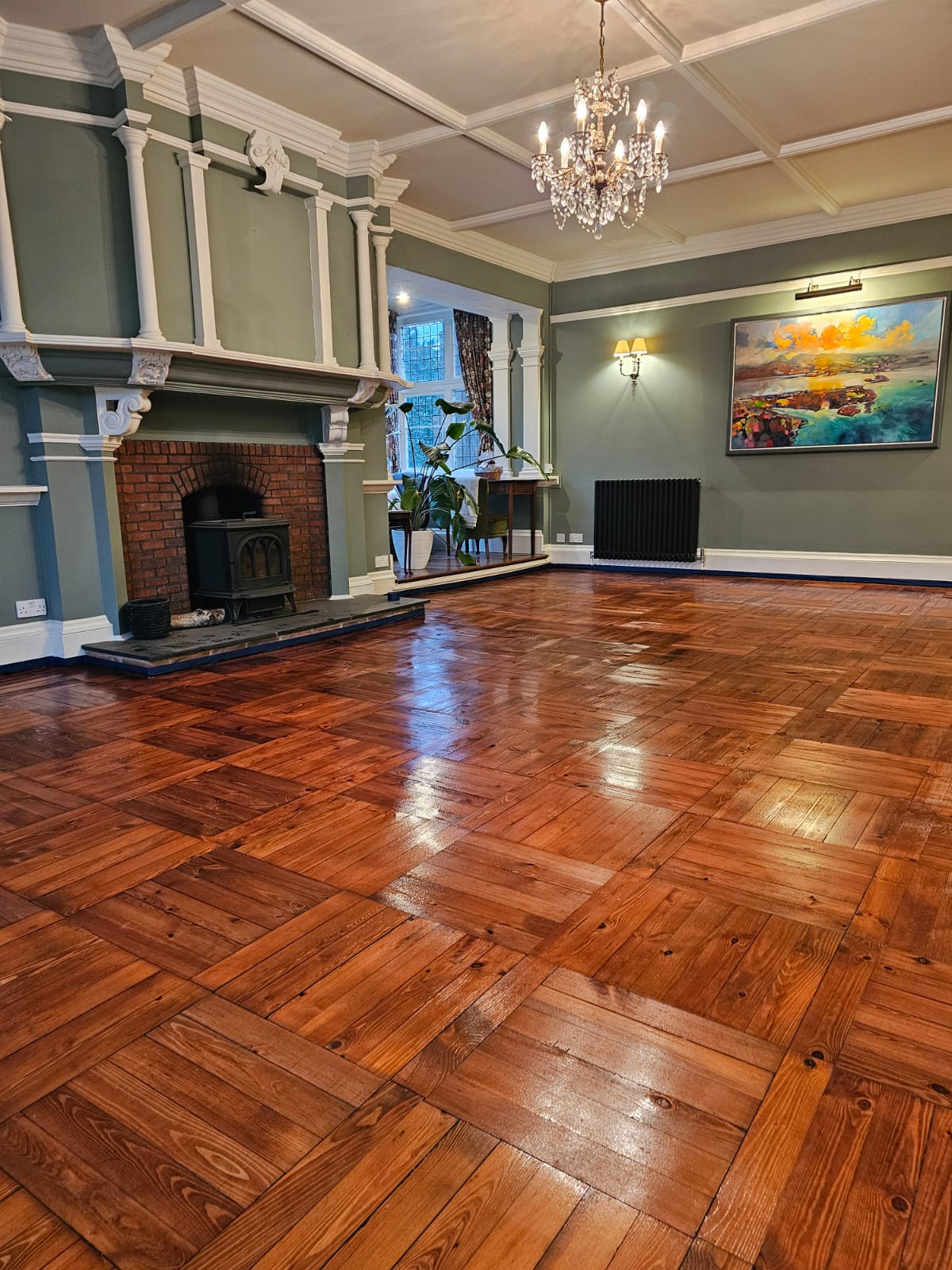
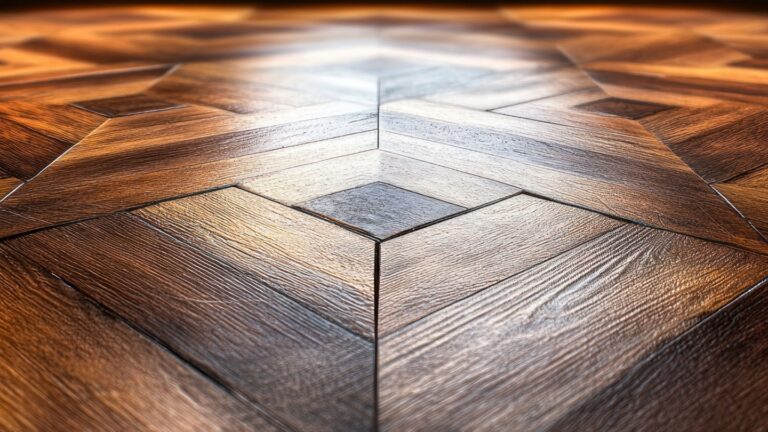
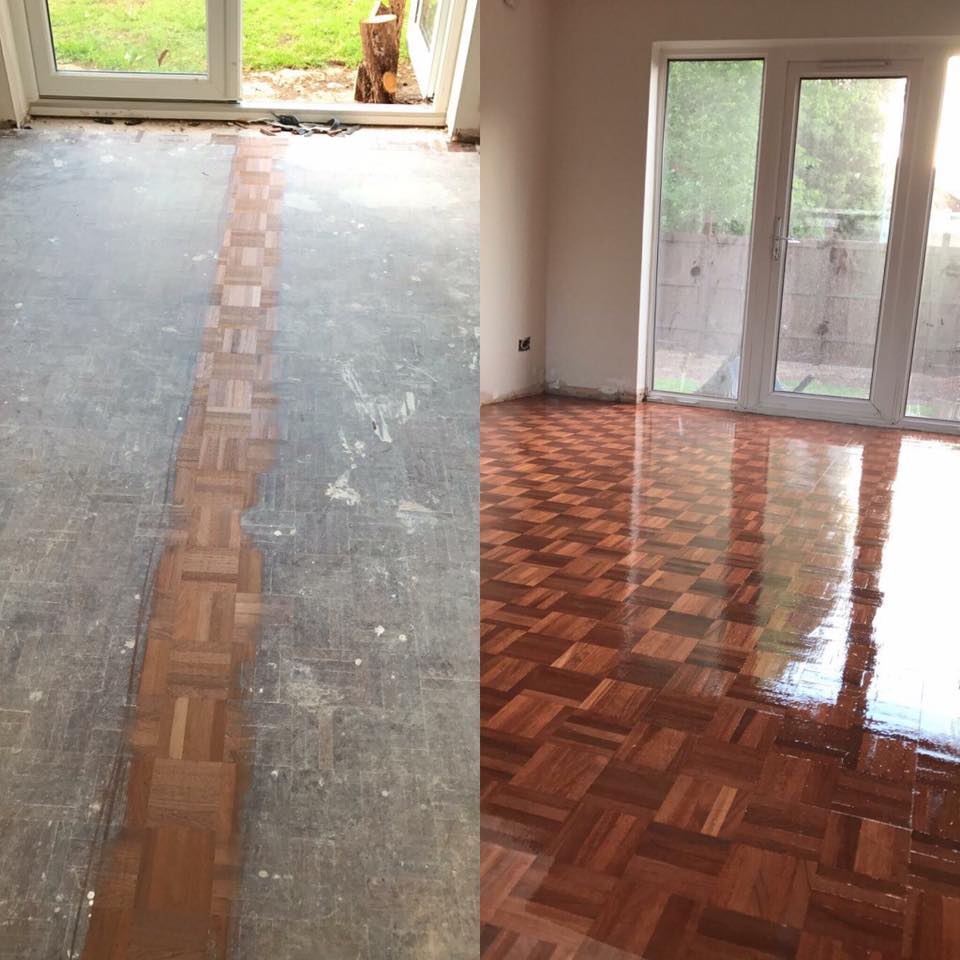
Parquet floor sanding takes care because every block’s grain runs at an angle to its neighbours. The first passes are usually made diagonally across the pattern, and each finer grit has to remove all cross-grain scratches without dishing the softer wood. Any block that has worked free comes up, has the perished tar scraped off its back, and goes down again in fresh glue. Holes where a block has vanished take a salvaged one if the wood matches. In a hall, parquet takes the same tough two-component lacquer as a strip floor and can have lines marked out on it in the same way.

Terraced houses usually have a single flight of stairs, often steep and narrow, sometimes with a turn at the top. Stair sanding on a terrace flight is slow, close work with scrapers and a small detail sander. Nosings take the most wear and need care to keep them crisp rather than rounded. Gloss on stairs invites a slip; matt or satin grips socks better. Many terraces have painted strings and spindles, which can be kept with stripped treads, or stripped as well. Paint that has been on a Helston staircase for generations could well be lead-based, so it is softened with a chemical stripper or scraped wet, never sanded dry.

Finishes for Terraced Homes and Hard-Working Halls

A finish that suits a Helston back bedroom would not last a term on a school hall floor, so the choice starts with how the room is used rather than how a sample board looks in a brochure.

In a terraced house the main fork in the road is a film finish or a penetrating one. A water-based lacquer dries clear, keeps pale pine looking pale and has very little smell, which helps when the family is sleeping upstairs during the job. An oil-based lacquer gives old softwood a deeper amber glow. For a kitchen-diner where chairs scrape every evening, the two-pack version with its added hardener is the one to pick, and lacquer sealing keeps everyday cleaning simple.

Penetrating finishes such as hard wax oil work the opposite way, soaking down into the fibres. Underfoot it feels like wood, not plastic. When the boards inside the yard door go grey, a clean and a thin coat revive that strip alone; the trade-off is an occasional top-up. Oiling a wooden floor suits owners happy with that bit of upkeep. Traditional floor waxing belongs in quiet rooms; a wet glass left on wax leaves a pale ring by morning.

Colour change comes before any of these. Terrace pine soaks stain into its soft rings and around the knots, so a sample patch on your own boards is the only reliable guide, and staining wooden floors runs through the options.

Sheen matters more than most people expect. A gloss floor in a sunny front room shows every footprint and crumb, while matt hides them. In a hall, sheen and grip are linked: the smoother and shinier the film, the more a trainer can skid on it. Sports lacquers are made to sit in a controlled band of slip resistance, and in a studio used for dance the grip has to suit turns as well as sudden stops. The floor polish page compares sheen levels side by side.

Wood floor sanding company
Floor sanding taunton

Looking After the Floor, New Installations and Quotes in Helston

Once the floor is finished, it needs time to cure. The household can usually walk on it in socks by the next morning. The settee and bed frames are happier waiting next door until the third day, and the hearthrug a little after that. Stick felt under every chair leg. A mop wrung nearly dry, with a neutral cleaner meant for wood, handles routine cleaning. Steam mops should be avoided.

Traffic lanes dull first, usually from the front door to the kitchen. Buffing and recoating puts a new wearing layer on without reaching bare timber. On a school hall the same light treatment, done in a holiday, also brightens the court lines. For a family home, the next full sand is usually eight to ten years away. A single bad scar, perhaps where a radiator was dragged off its brackets, may be treated alone through scratch repair.

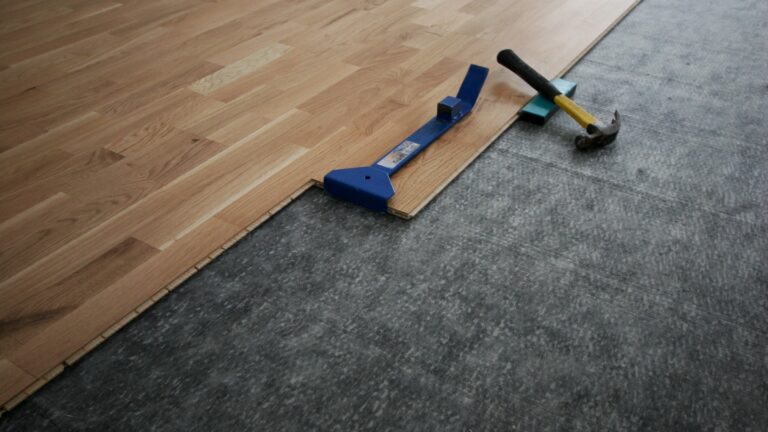
Some floors are past rescue. Then wooden floor installation takes over, fitted by us or supplied for your own carpenter, with Junkers and Bona among the makes.

To begin, photograph the floor twice: once from the doorway to take in the room, and once crouched over the noisiest or most damaged boards. Where the pictures suggest restoration will work, we visit for a free survey of around thirty minutes, checking how much timber is left, taking moisture readings, looking at airbricks and the void, and noting any past repairs. The written quotation that follows lists each item, and that figure stays put provided the job described on it stays the same. A typical terrace is done in one to three days.

Lines are open on 01823 674562 between 8am and 6pm each weekday, and Saturday appointments can be agreed. Alternatively email info@ryansrestoration.co.uk, or fill in our enquiry form and attach the photos there.

Helston Floor Sanding Questions

In most cases, yes. The usual cause is a board that has loosened on its old cut nails, and screwing it down to the joist beside the original nail stops the movement. If the joists themselves are weak or notched, a builder may need to stiffen them first. Creaks should always be sorted before sanding.

Yes, and that is when most school floors are done. Summer is the most common slot, though shorter holidays can work for smaller halls. Fast-curing finishes help fit sanding, line marking and lacquer into the time available. Dates are booked well ahead and held.

Yes, our own team paints the courts, working to the governing body’s dimensions for each sport and using a line paint that is compatible with the lacquer above and below it. Because the paint sits sandwiched between lacquer coats, the top layers shield it and the markings wear away no quicker than the surrounding boards.

Sports lacquers are designed to give a controlled level of grip, enough to stop players slipping without being so grippy that they twist joints. The right product depends on how the floor is used, so it is chosen to suit the hall and the sports played.

Yes. The town and the Lizard peninsula are regular territory, and so is Mount’s Bay to the west, where we also offer floor sanding in Penzance. Since the team is based up in Somerset, near Wellington, holiday-period jobs such as school halls are best pencilled in early.

Raised nails need punching down below the surface before sanding, otherwise they tear the abrasive and can damage the machine. Loose boards around them are refixed with screws at the same time. This is a standard part of preparing an older floor.

A yearly recoat in the long summer break suits plenty of busy halls, and it freshens the court lines at the same time. A full sand back to bare wood is generally needed every four to five years, depending on use and how well the floor is cleaned.

Stand in the doorway for one shot of the whole room, then get down low for a second of the boards that concern you, be they cracked, noisy or worn grey. Those are enough for an initial view. Should a visit be worthwhile, we book a free survey lasting about thirty minutes and afterwards send an itemised quotation in writing.