Floor Sanding Ipswich

Floor Sanding and Wood Floor Restoration in Ipswich

QUICK QUOTATION

Floor Sanding Taunton

Floor Sanding in Ipswich

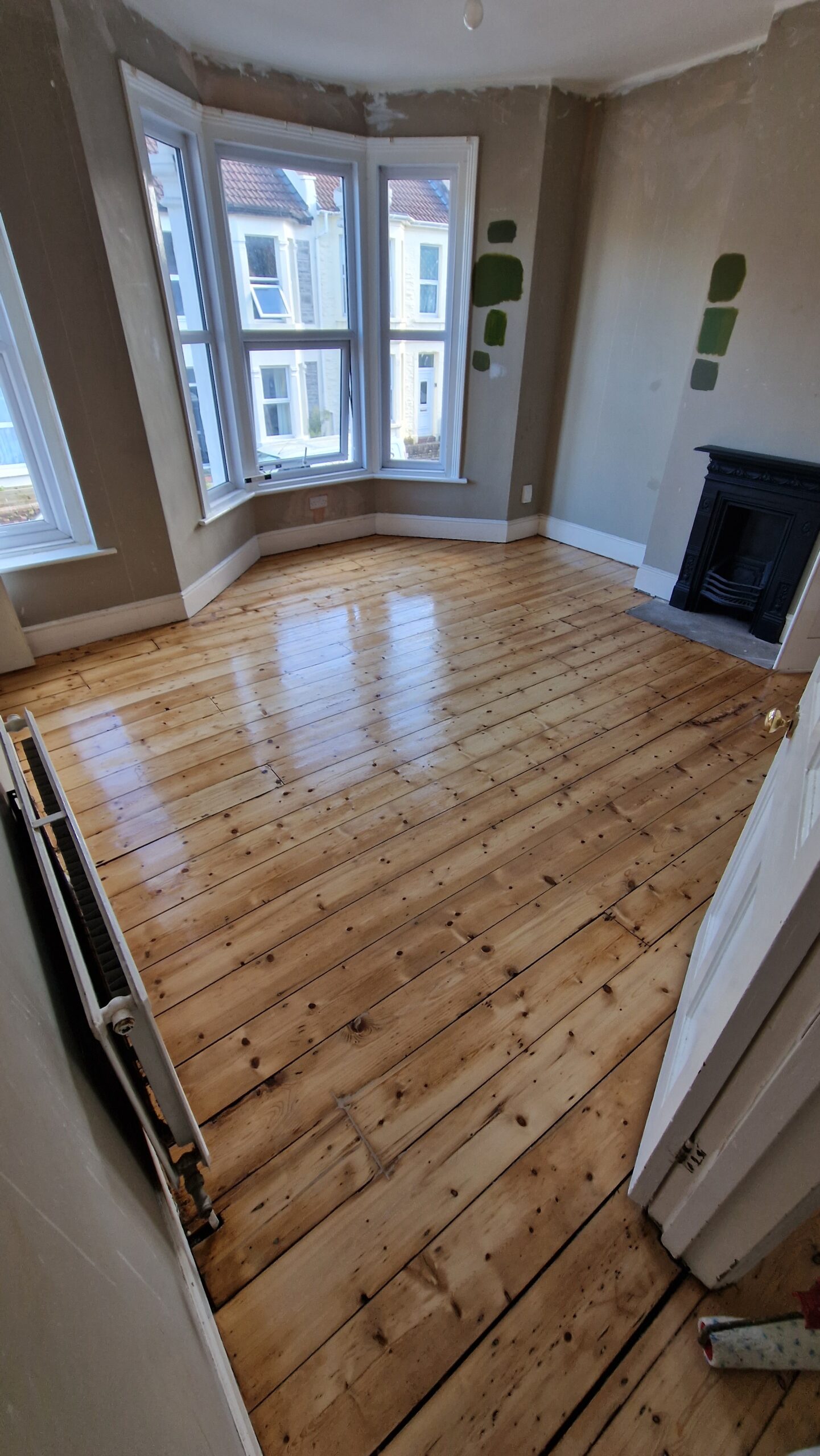
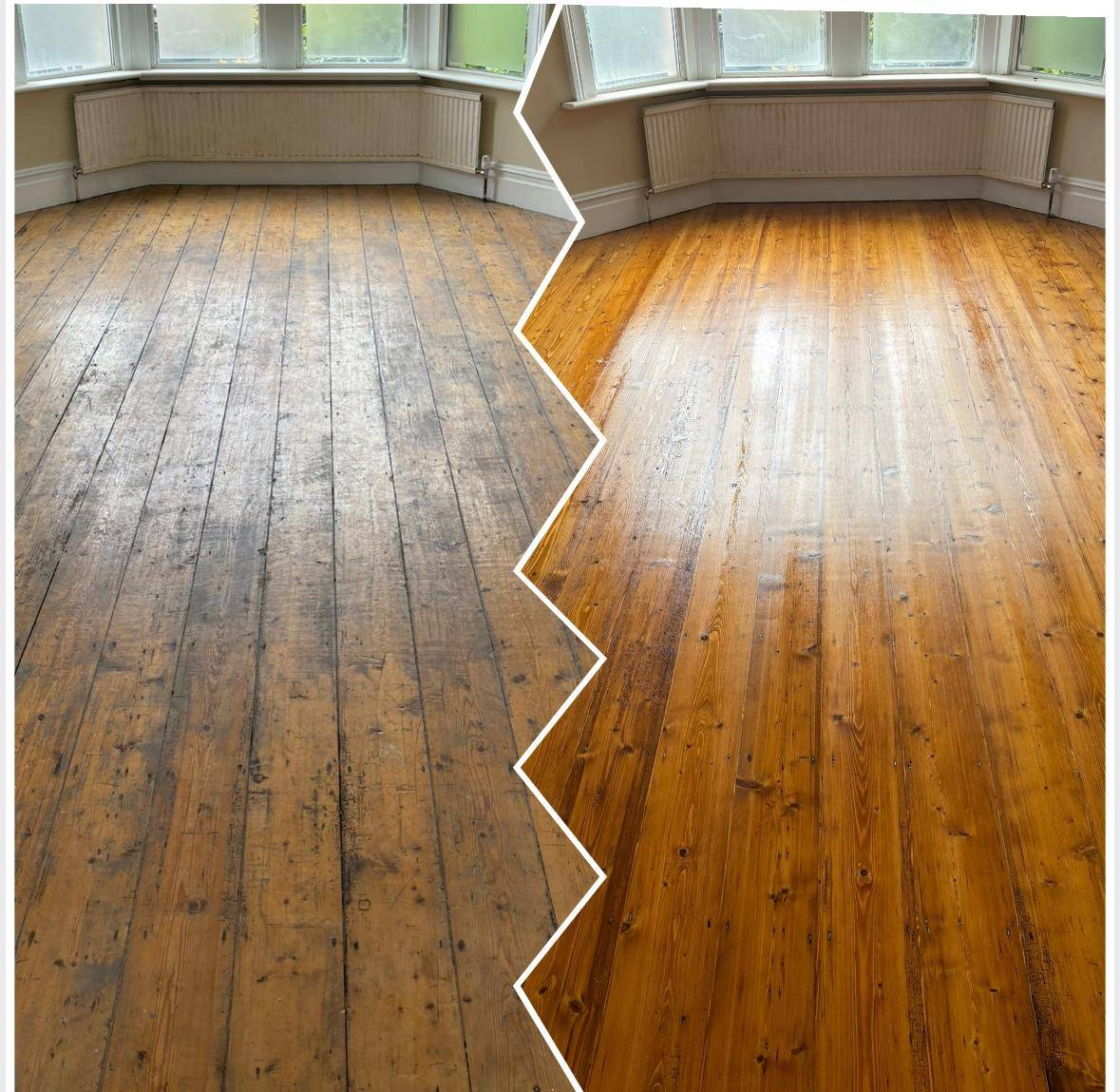
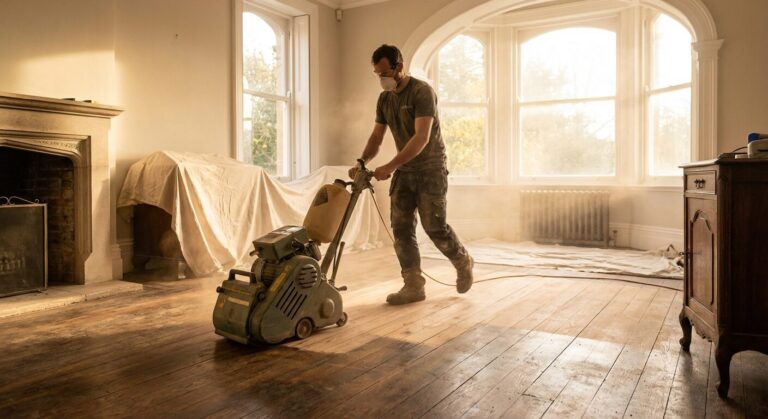
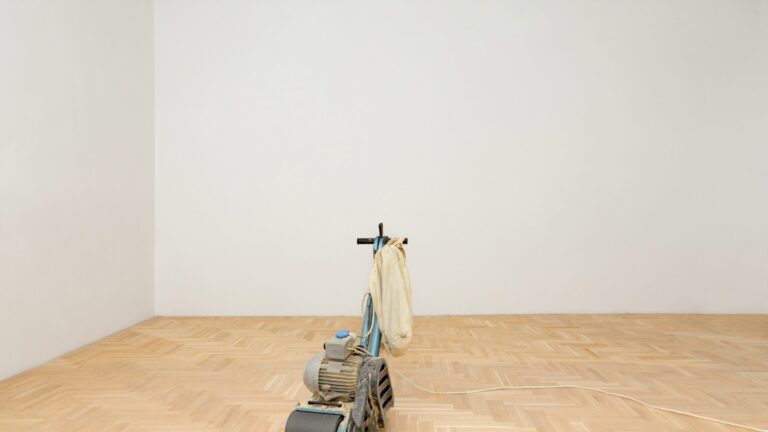
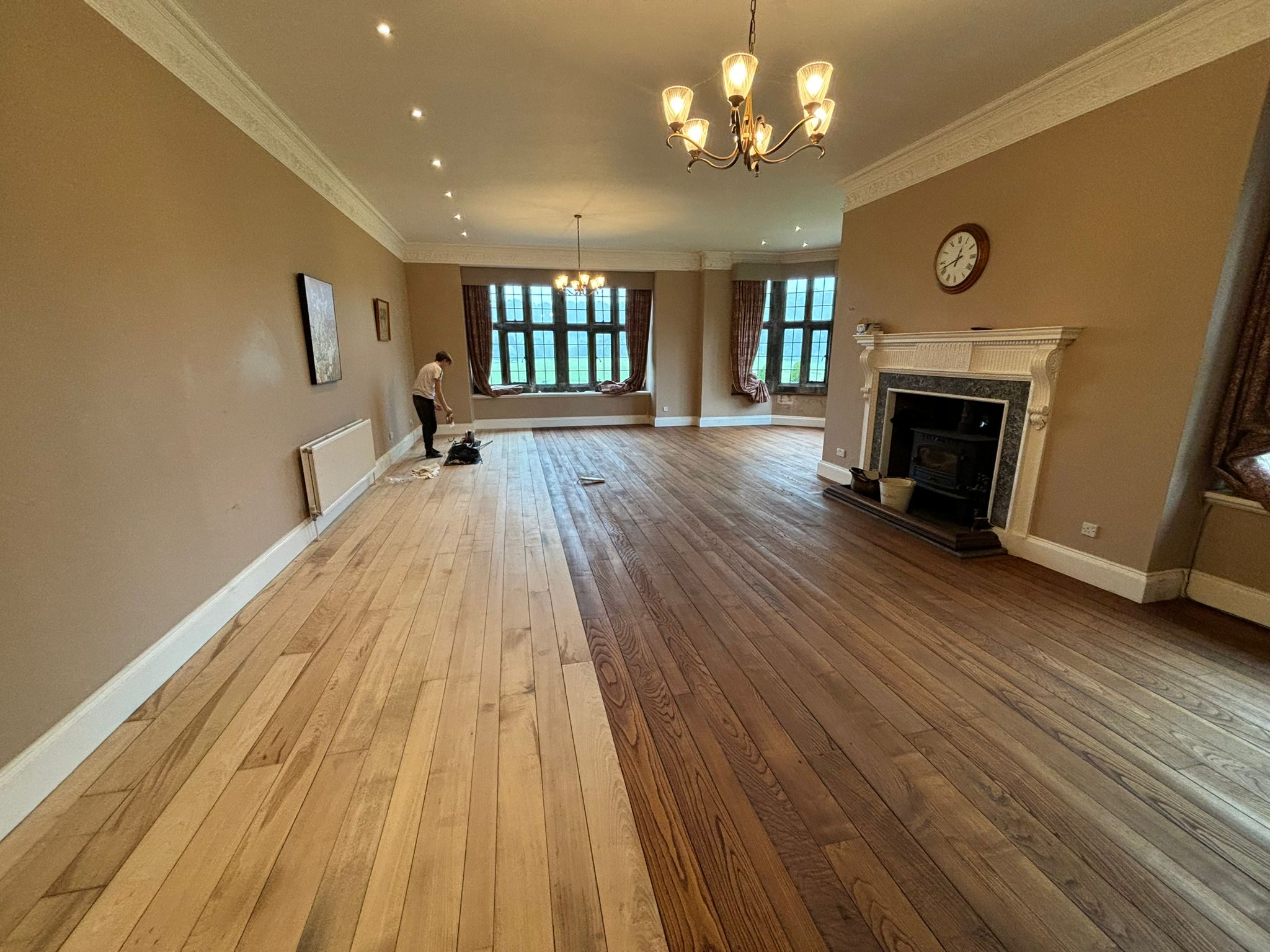
We have sanded and restored wooden floors for over 45 years, and as a family-run business we still survey every job ourselves. Ipswich work ranges from thin, centuries-old oak in timber-framed buildings — where restraint matters more than horsepower — to pitch pine in the Victorian dock terraces and modern engineered boards. Our wood floor sanding uses sealed extraction that captures the overwhelming majority of dust at source, so occupied houses stay habitable throughout. On listed properties we set out our method in writing for the conservation officer before a machine is switched on, and if a floor would be better served by a buff and recoat or by restoration without sanding, that is what we will recommend.

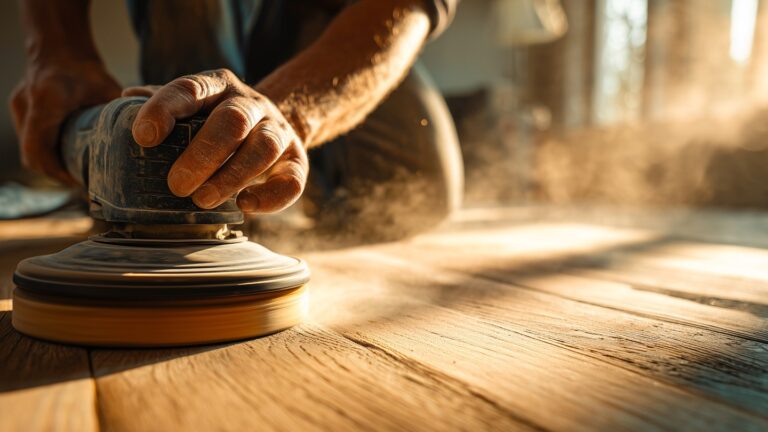
Restraint starts with a measurement. On older floors we check how much timber remains above the tongue before choosing machinery, because a board that has already been sanded two or three times in its life may only have a few millimetres left to give. Thin or fragile boards get a gentler programme: finer starting grits, lighter machines and more passes rather than one aggressive cut. On sound floors the sequence is more conventional, working from coarse abrasives that flatten and strip, through the middle grades, to a fine finishing grit, always running the belt machine along the grain so the scratch pattern disappears into the timber rather than sitting across it.

A typical two-room job runs like this: furniture out and nails punched down on the morning of day one, main sanding and edging through the day, first seal coat by late afternoon, then denibbing and further coats on day two. Ipswich being a distance from our Somerset base, we book the days back to back and bring the full kit — spare belts in every grade, edger discs, fillers and the chosen finish — so the schedule never stalls waiting for materials.
Commercial Floor Sanding in Ipswich

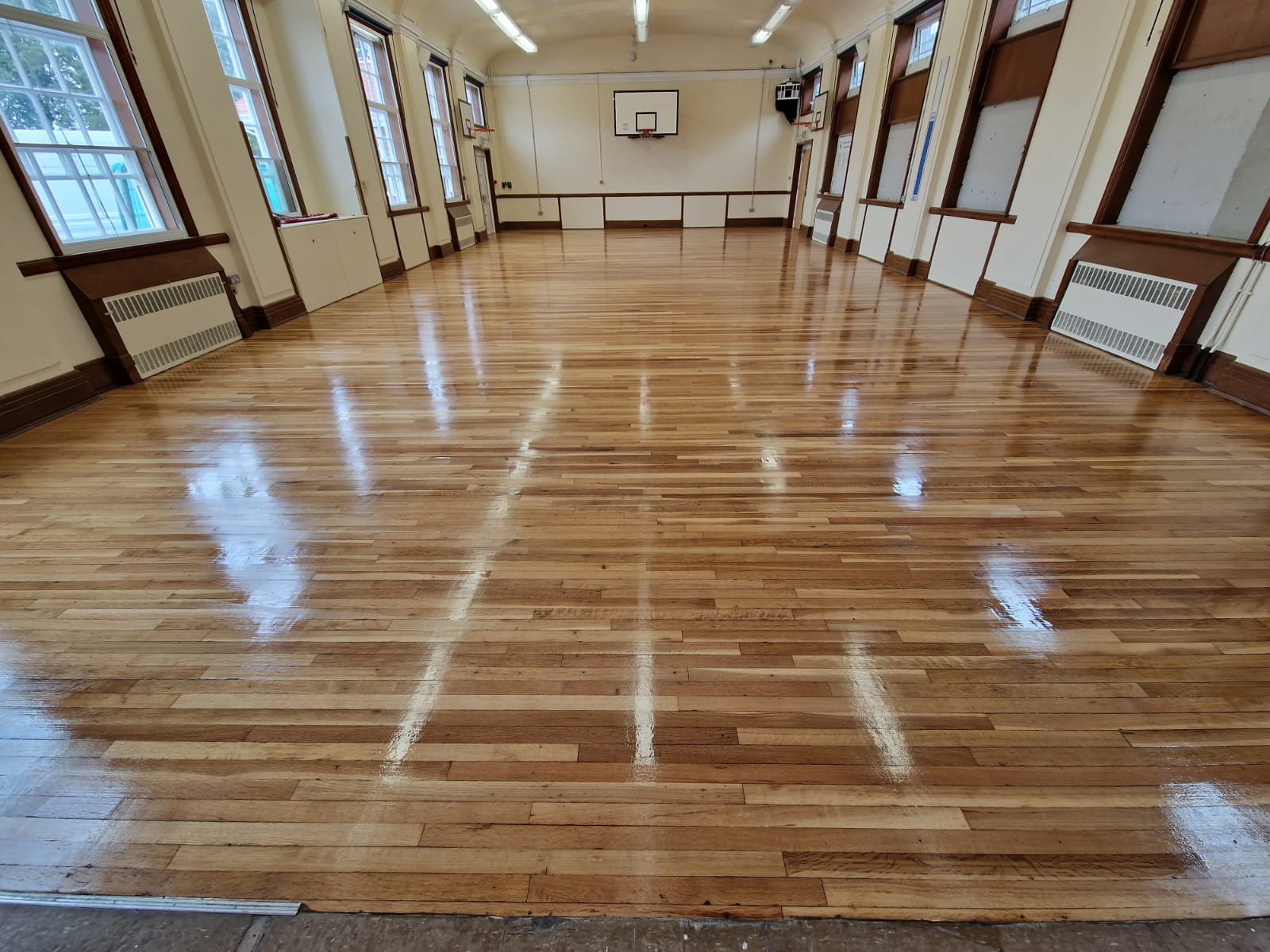
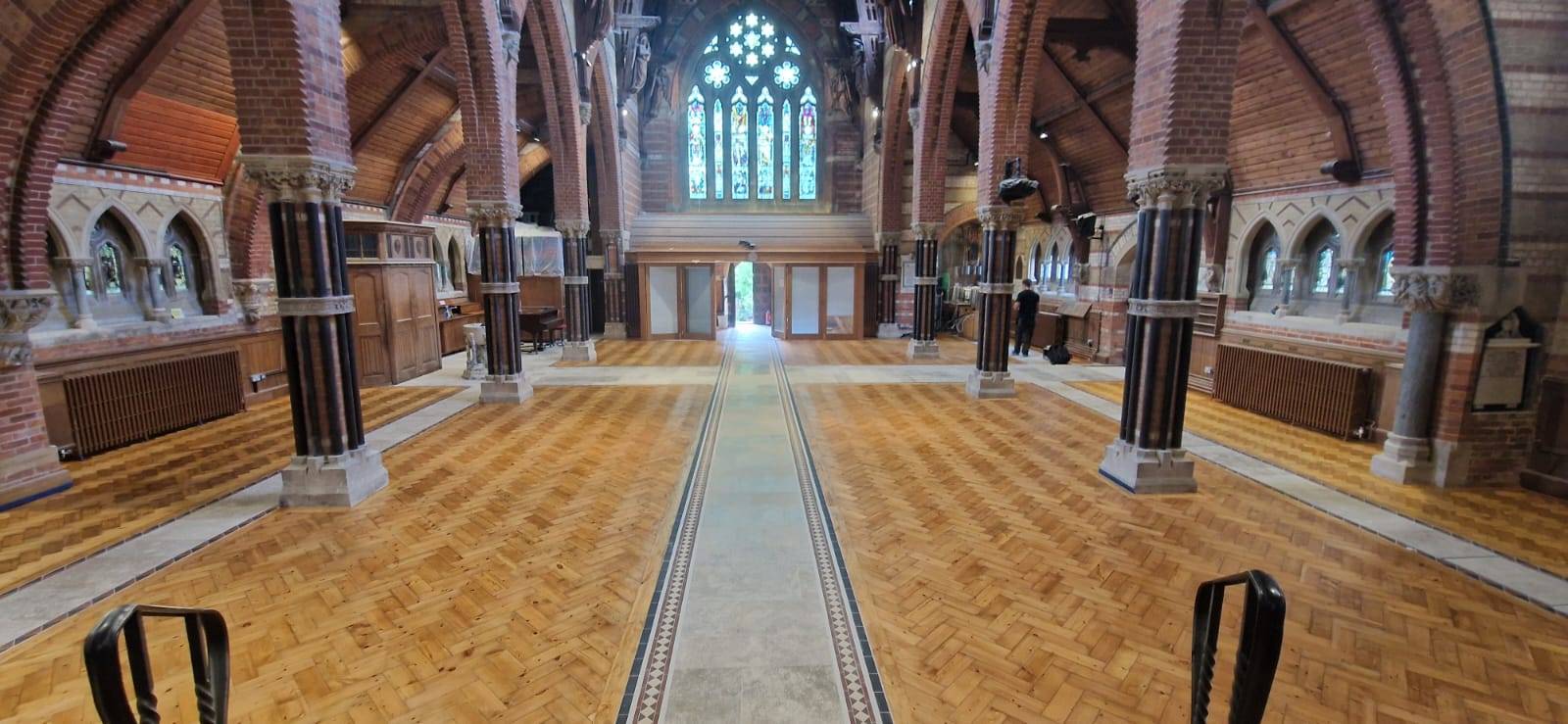
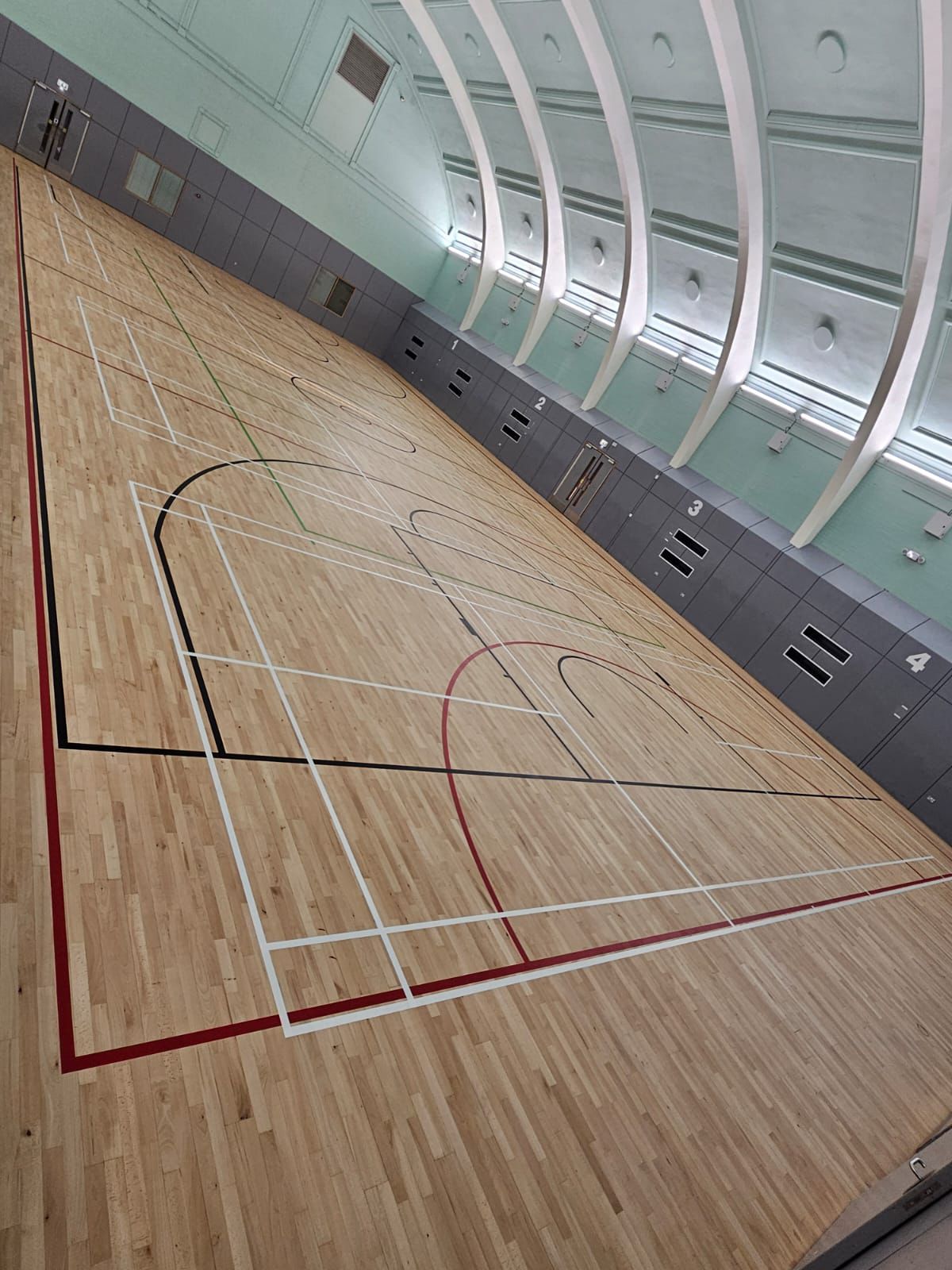
For commercial floor sanding we fit the work around your opening hours, not ours — overnight runs and weekend shifts are normal, and method statements and insurance documentation are issued before we arrive. We look after restaurant and shop floors in the town centre, hotels, and school halls where court and badminton lines are re-marked to governing body specification after sealing.

Night working in food premises follows its own routine. We sheet off serveries and equipment, sand and vacuum, then apply a coat timed so it is touch-dry before staff arrive to prep; the next coats follow on successive nights until the build is complete. Bar and restaurant floors take more punishment than almost any domestic surface, so we usually recommend a commercial-grade lacquer built up in multiple coats, and we will tell you frankly how many hours each coat needs before chairs and barrels can move across it. For halls that host sport, sealing and line marking are sequenced so the paint bonds correctly between lacquer coats rather than sitting on top where it would scuff away.

Floor sanding south east London
Commercial Hall Floor Refurbishment

Repairs, Floorboard Replacement and Gap Filling

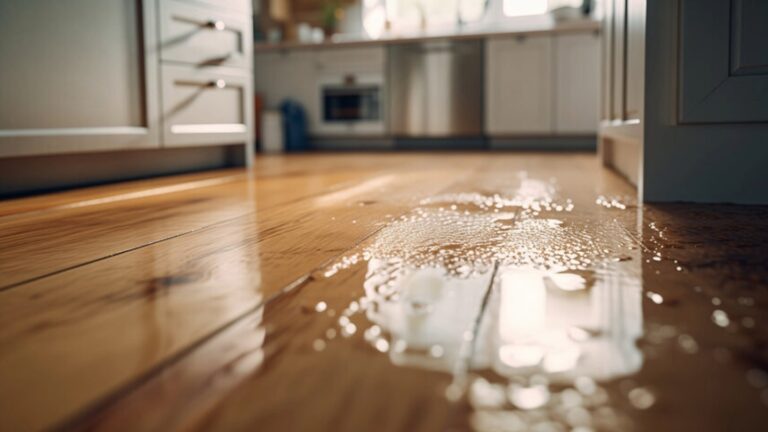
Damaged timber is put right before sanding starts. Our wooden floor repairs cover rot, burns, water marks and woodworm, while floorboard replacement draws on a stock of reclaimed boards so new sections sit quietly among old ones — useful in period Ipswich houses where fresh timber would look wrong. Noisy boards are fixed through squeak repairs, and draughty joints are closed with gap filling in resin or pine slivers matched to your floor.

A squeak is rarely mysterious once you are under the floor. Most come from a board flexing on a loose nail or rubbing its neighbour, and the fix is mechanical: screwing down through the board into the joist, easing a binding edge, or packing where a joist has shrunk away. We trace each noise by walking the floor and marking it before deciding on the remedy. When a board must come out, we match the replacement on four counts — species, width, thickness and surface age — and where only one end of a board is damaged we piece in a part-length rather than sacrificing the whole run, cutting the joint over a joist so it bears properly.

Parquet Sanding and Restoration

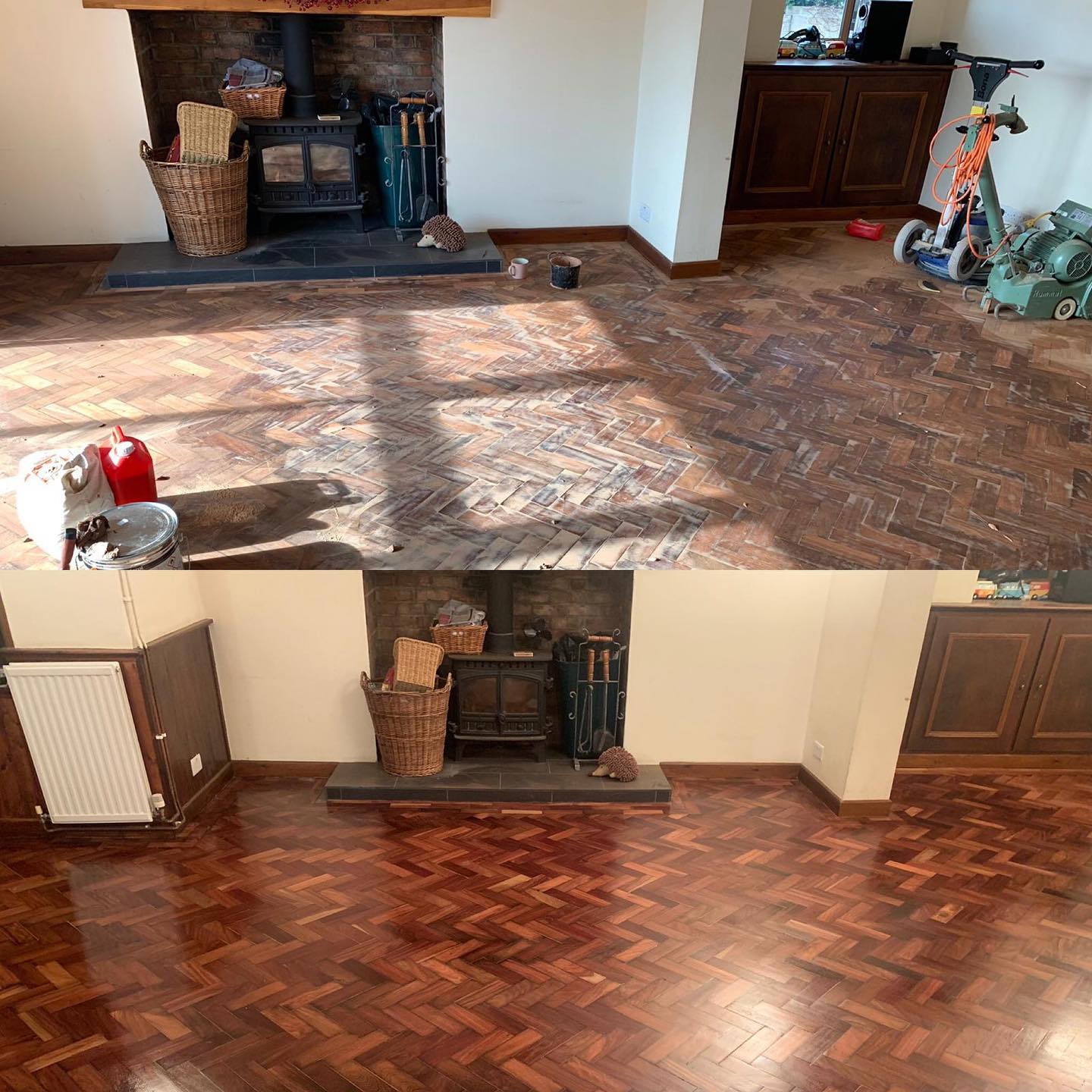
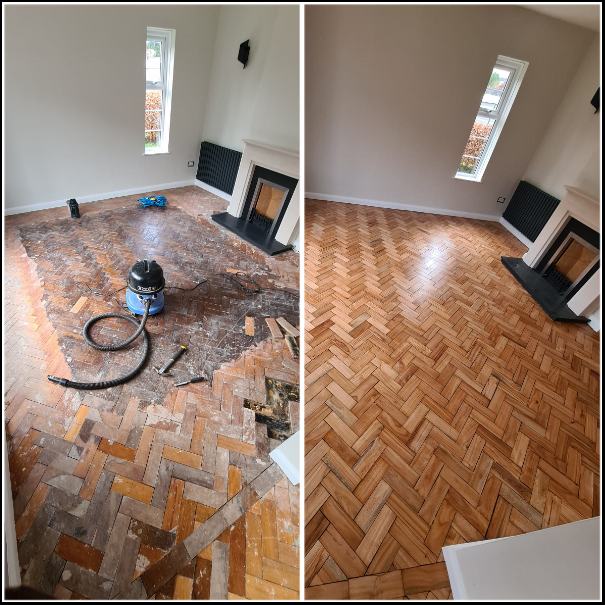
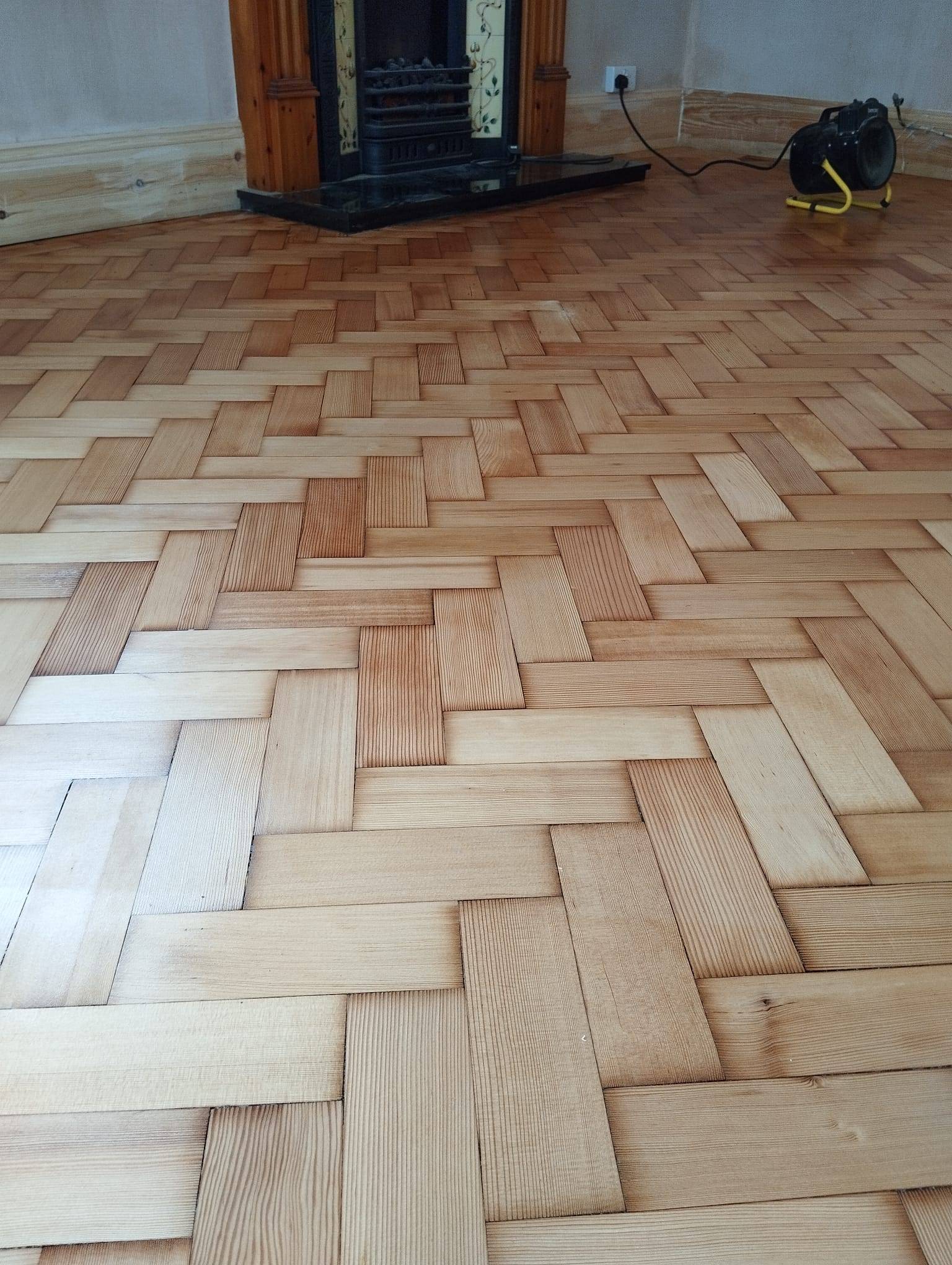
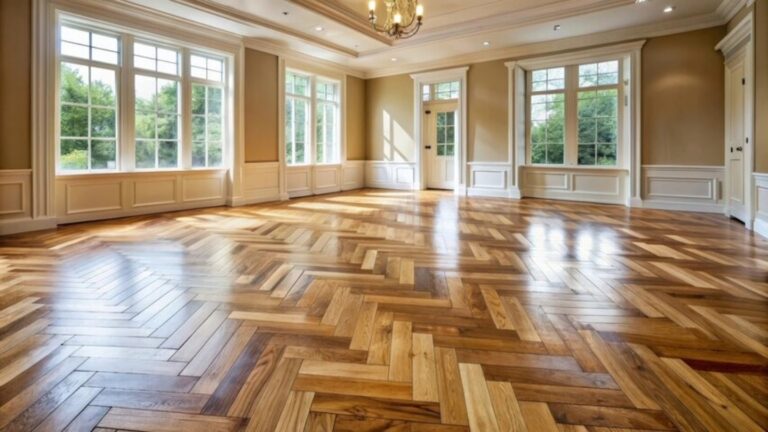
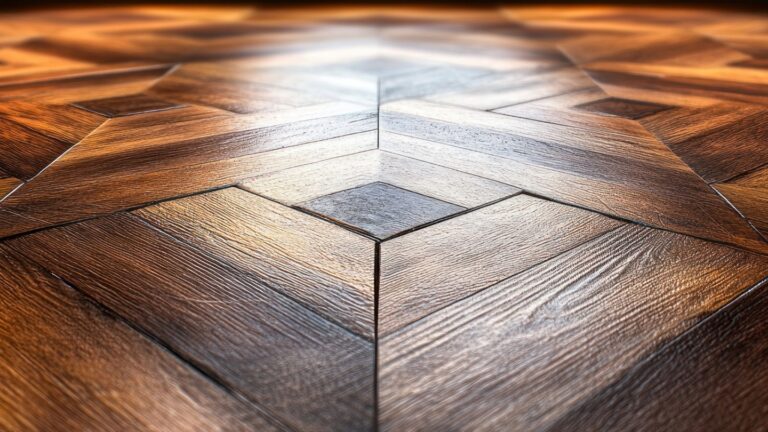
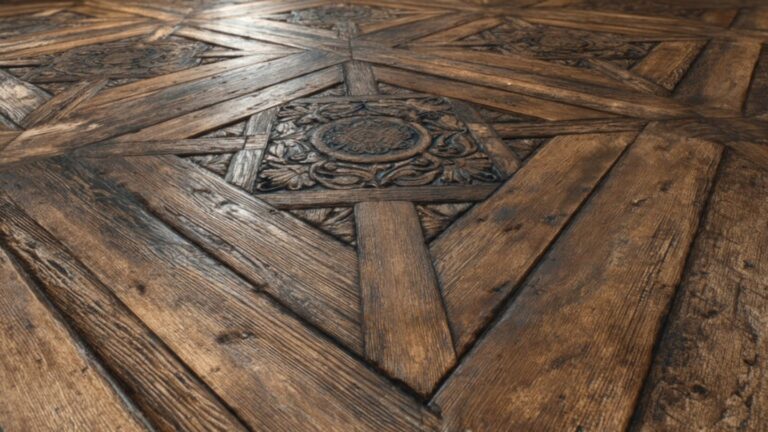
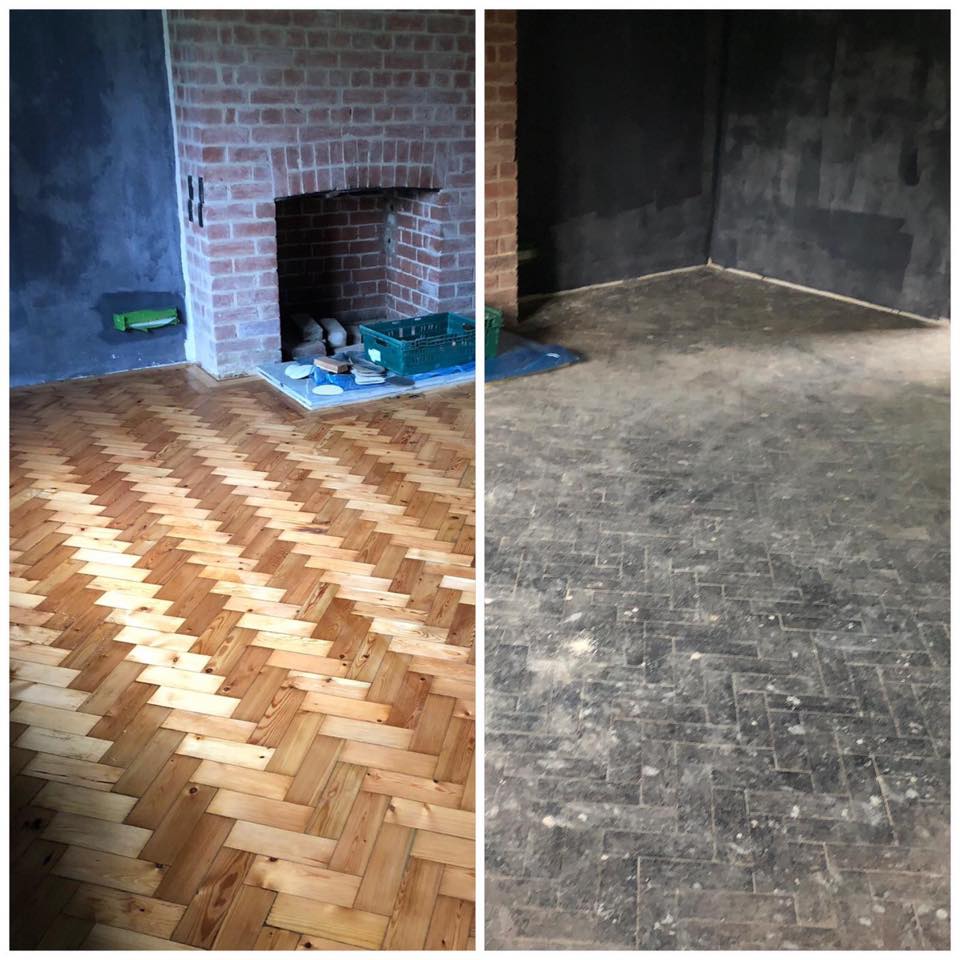
Oak parquet turns up regularly under carpet in the interwar housing towards Rushmere and Whitton, and it is nearly always worth saving. Our parquet floor sanding service re-fixes loose blocks, sources replacements for missing ones, grinds out old bitumen and sands the pattern truly flat before finishing. Herringbone, basketweave and brick-bond layouts are all familiar territory.

Because parquet grain runs in two directions, it cannot be sanded like a plank floor. The first cuts go diagonally across the pattern, splitting the difference between the two grain directions, and only the final fine passes run with the light of the room. After the coarse work, the whole floor is trowel-filled with resin blended with its own sanding dust, which packs the joints between blocks and any small losses at the edges, then sanded back so the surface reads as one plane. Missing blocks are cut from reclaimed oak of similar age and colour; a new block in a seventy-year-old floor never quite lies, so old stock matters.

Floor Sanding Essex
parquet floor restoration near me

Finishes: Staining, Sealing, Oiling and Waxing

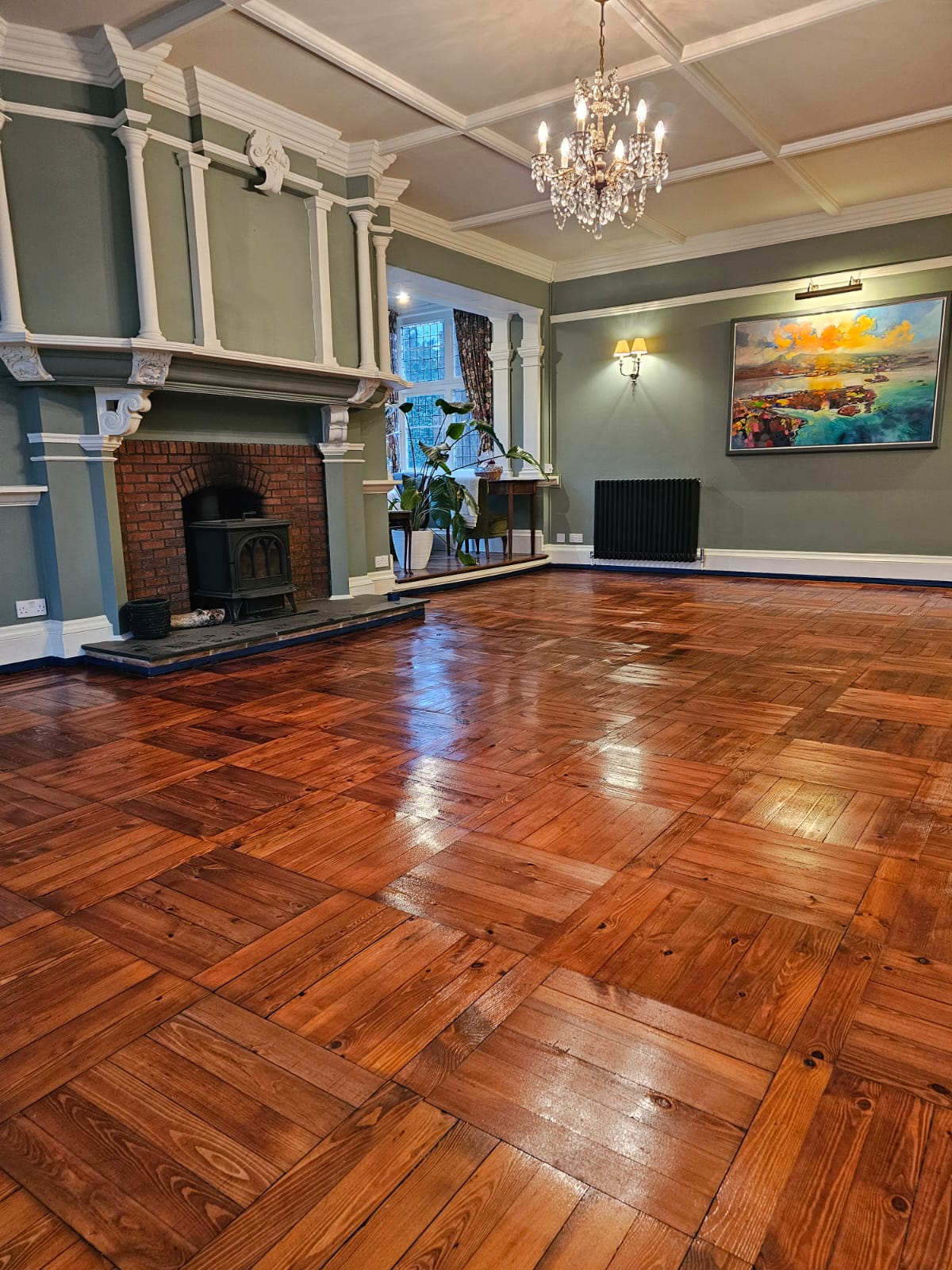
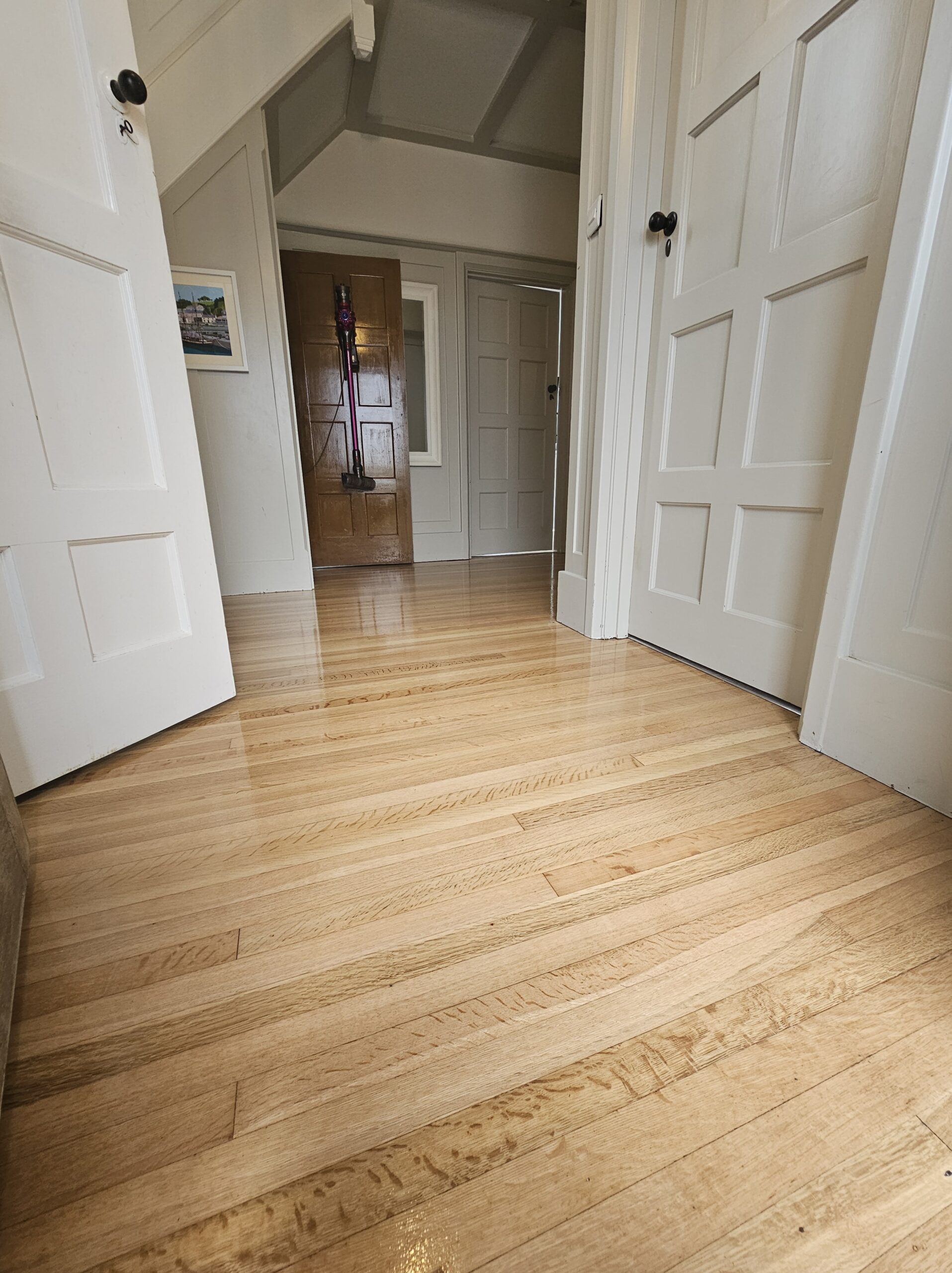
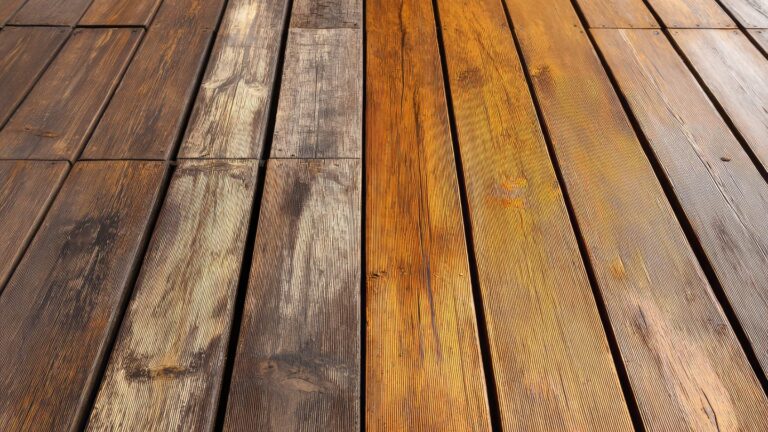
Once the timber is bare you choose how it looks and wears. Staining shifts the colour, from limed tones to dark oak; sealing with modern lacquer gives the toughest surface for hallways and kitchens; oiling keeps a natural, matt character and repairs invisibly; and waxing suits older interiors where sheen would jar. Samples go down on your own boards first. Later on, a periodic polish or recoat keeps the finish ahead of wear.

Each finish has a different relationship with time. Lacquers form a film that resists spills and traffic but eventually wears through, so the sensible habit is a screen and recoat every few years — the surface is abraded and a fresh coat applied in a day, long before bare wood ever shows. Oils need attention a little more often but reward it, because a worn patch can be re-oiled locally without the join showing. And with any finish, drying time and cure time are separate questions: you may walk on a floor in socks the day after coating, yet the chemistry keeps hardening for days afterwards, which is why we ask you to hold off on rugs and wet mopping until the finish has fully cured.

Get a Floor Sanding Quote in Ipswich

Two photographs — the whole room and a close-up of the worst patch — are enough for an honest opinion and a fixed written quotation. If the job needs eyes on it, the site survey is free and carries no obligation either way.

Call 01823 674562, email info@ryansrestoration.co.uk, or use the form on this page.

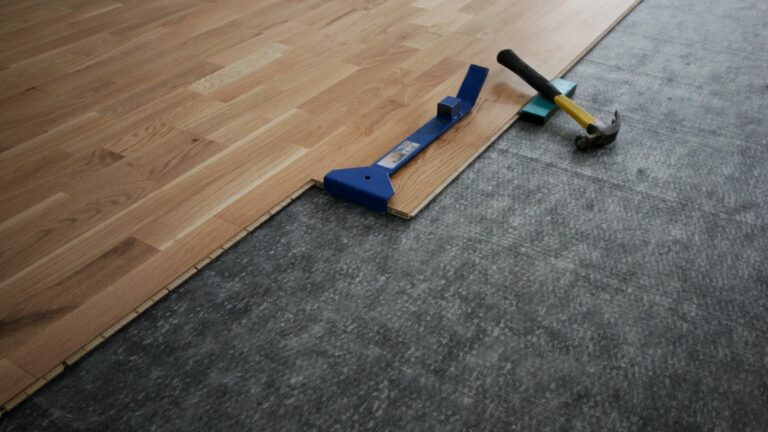
All services available in Ipswich: floor sanding, commercial work, floor repairs, floorboard replacement, gap filling, parquet sanding, staining, sealing, stair sanding and floor installation.

Nearby areas we also cover: Colchester, Suffolk, Essex and Norwich. There is a page for each, and the full list of towns is on our areas we cover page.

Parquet Flooring Restoration

FAQ: Floor Sanding in Ipswich

Sanding, repairs, floorboard replacement, gap filling, parquet restoration, staining and all finishing, stair sanding, buffing and recoating, plus installation of new wooden floors — for homes and businesses alike.

Usually there is no need to close at all. We sand outside trading hours — evenings, overnight or weekends — and hand the floor back cured and ready for customers each morning.

They are cut out and replaced before sanding, normally with reclaimed timber from our own stock so the repair ages in with the surrounding floor rather than standing out as new wood.

Nearly always. Blocks are re-bonded, gaps in the pattern filled from matching stock, old adhesive ground away and the surface finished to your taste. The result routinely outperforms a new floor.

Yes. Stains take bare, freshly sanded timber in either direction, and we trial the shade on your actual floor before doing the whole room so there are no surprises.

Engineered flooring can be sanded when its wear layer is thick enough — we check first. Laminate has no real wood to sand, so we would talk you through replacement options instead.

No. Sealed extraction on every machine captures the overwhelming majority of dust at source, which is why we are comfortable working in furnished homes and food premises.

Email or message us two photographs for a straight answer and a fixed written quotation, or ask for the free, no-obligation survey. Ring 01823 674562, write to info@ryansrestoration.co.uk, or send the form on this page.

It depends on how much timber sits above the tongue. Solid boards often take several sandings over their life; we measure what remains before starting and advise honestly if a floor is close to its limit.

Yes. Method statements, risk assessments and insurance documentation are supplied before work begins, and we plan phasing and access with your management so trading is disturbed as little as possible.