Floor Sanding Maidstone

Floor Sanding and Wood Floor Restoration in Maidstone

QUICK QUOTATION

Floor Sanding Taunton

Floor Sanding in Maidstone

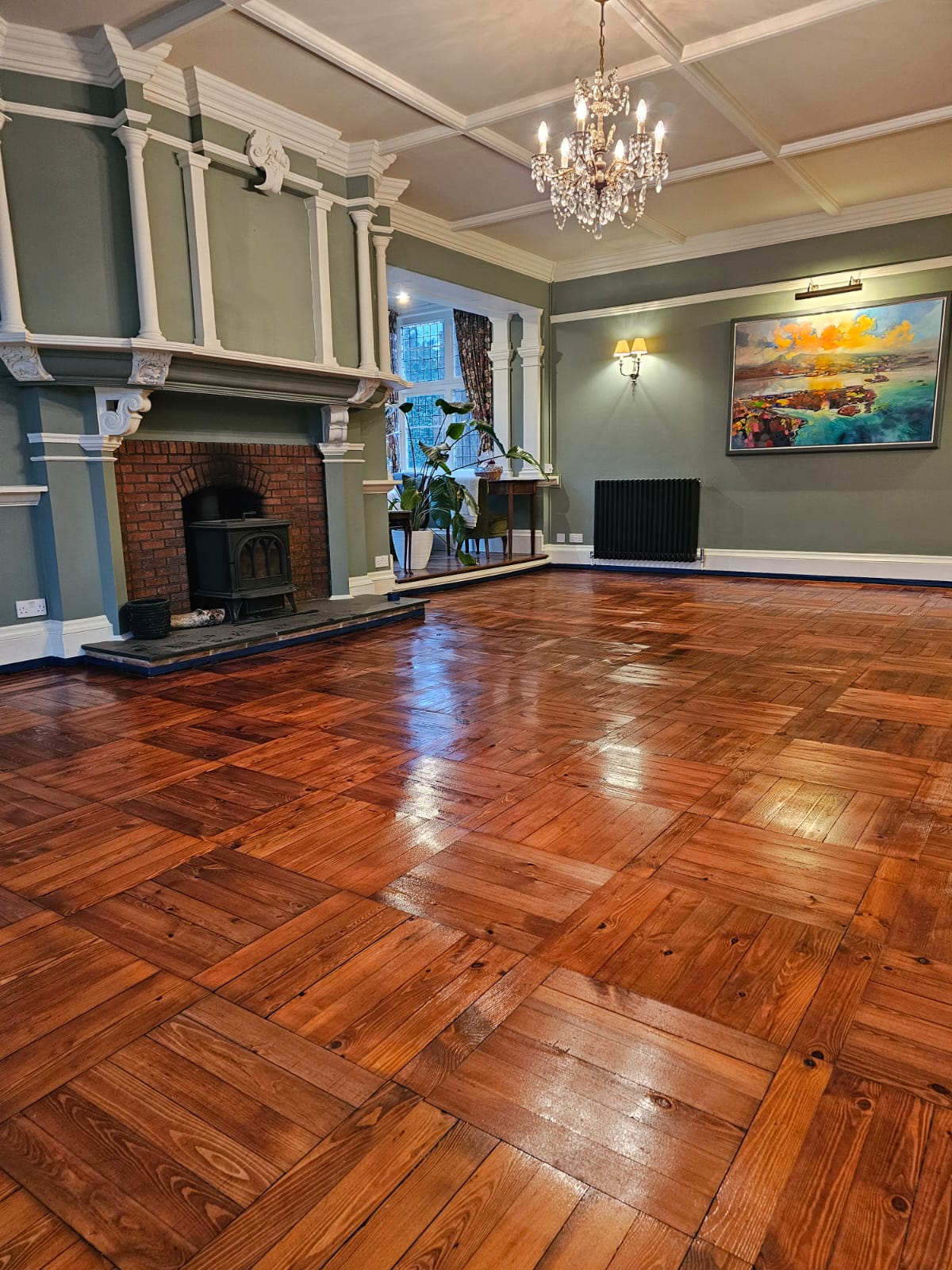
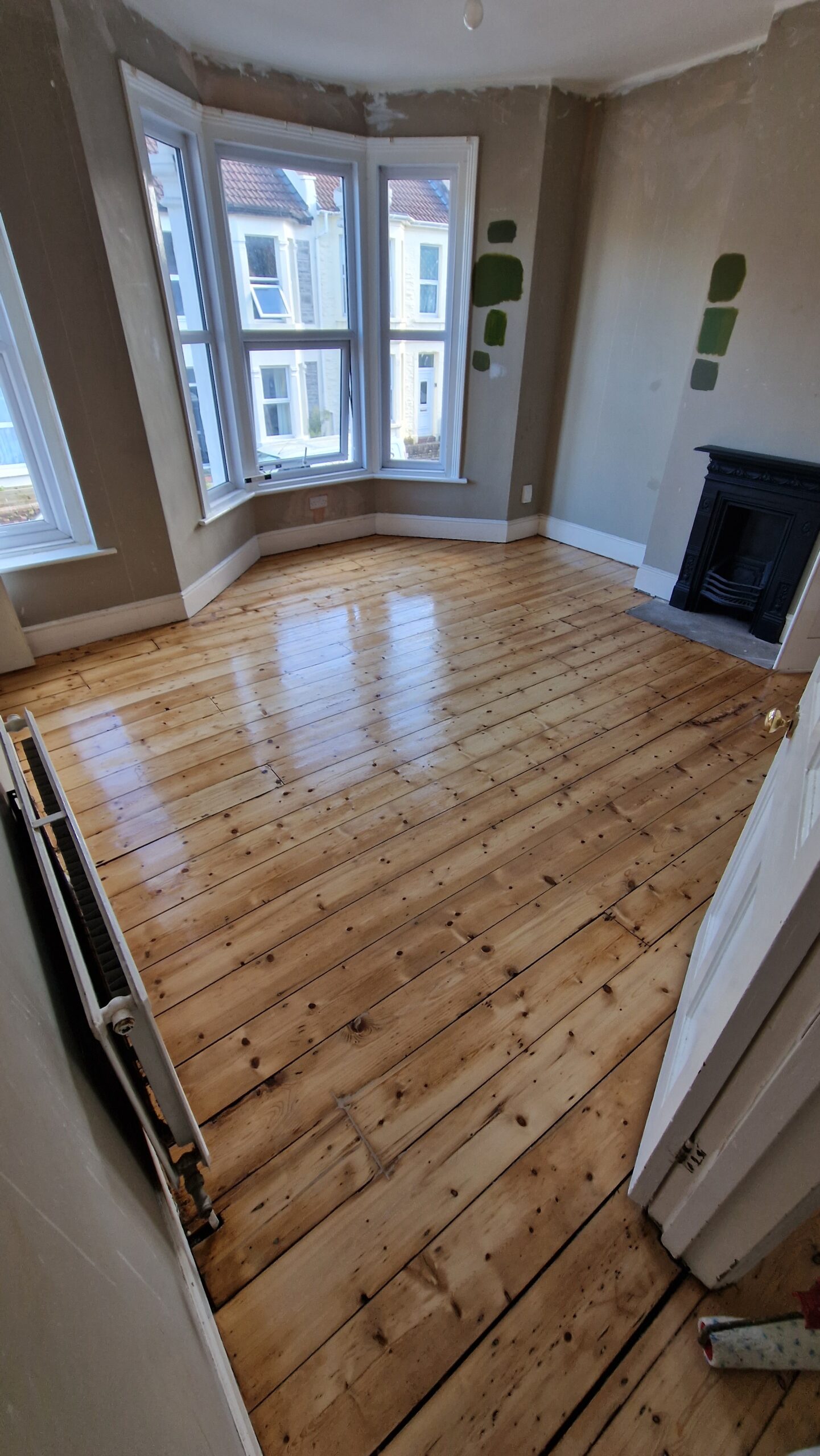
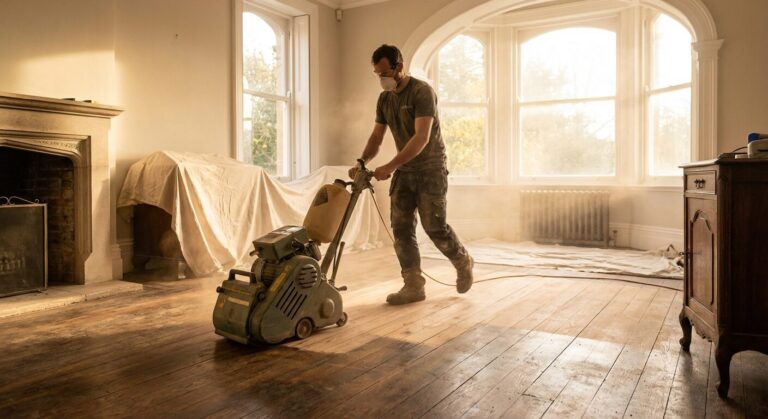
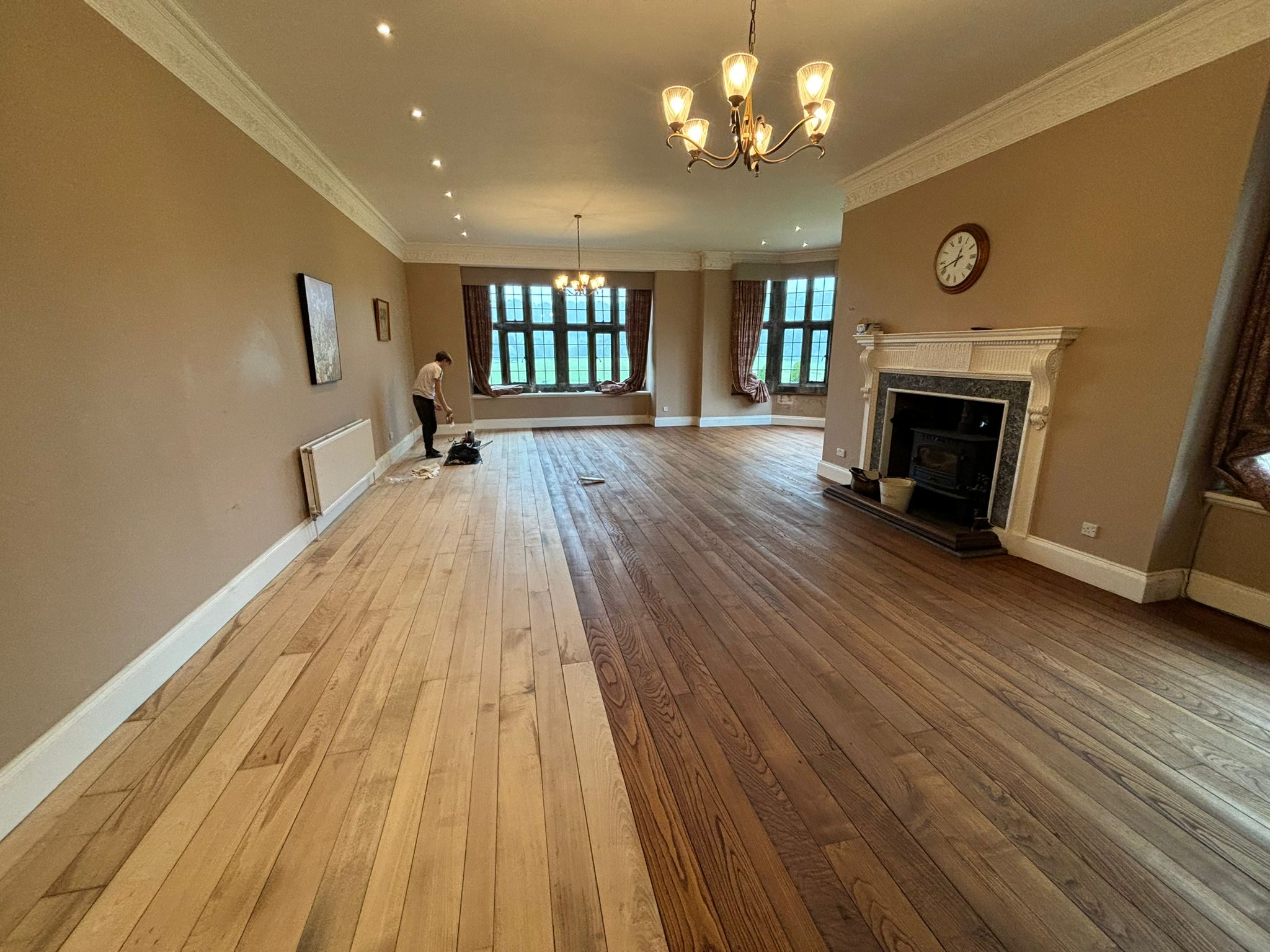
Maidstone’s housing runs from timber-framed buildings in the old streets to Victorian terraces and modern estates, and our wood floor sanding service handles the lot — including the wide elm and oak boards found in the area’s many oast and barn conversions, which reward a patient, fine-grit approach.

We are a family business with more than 45 years behind us, and Kent work is organised into multi-day area runs, so several Maidstone jobs are often completed in the same week. Assessment is honest, the quotation is fixed in writing, and the survey behind it is free.

Barn and oast conversions bring boards that were face-nailed a century or more ago, and those iron fixings dictate the first hour of the job. Every head is found, punched well below the surface and its position noted, because one proud nail will slice an abrasive belt and can gouge the floor as it goes. Around old iron you often find a grey-black halo where the metal has reacted with the tannin in the oak; some owners ask us to sand these ghosts away where board depth allows, others rightly treat them as part of the floor’s story. Wide boards also move more than narrow ones, so we finish them with systems that tolerate seasonal movement rather than fighting it.
Commercial Floor Sanding in Maidstone

Offices, pubs, restaurants and halls across the county town use our commercial floor sanding service because the work happens while they are shut — evenings, nights and weekends — and the floor is trading again by morning. Method statements and insurance documentation arrive before we do.

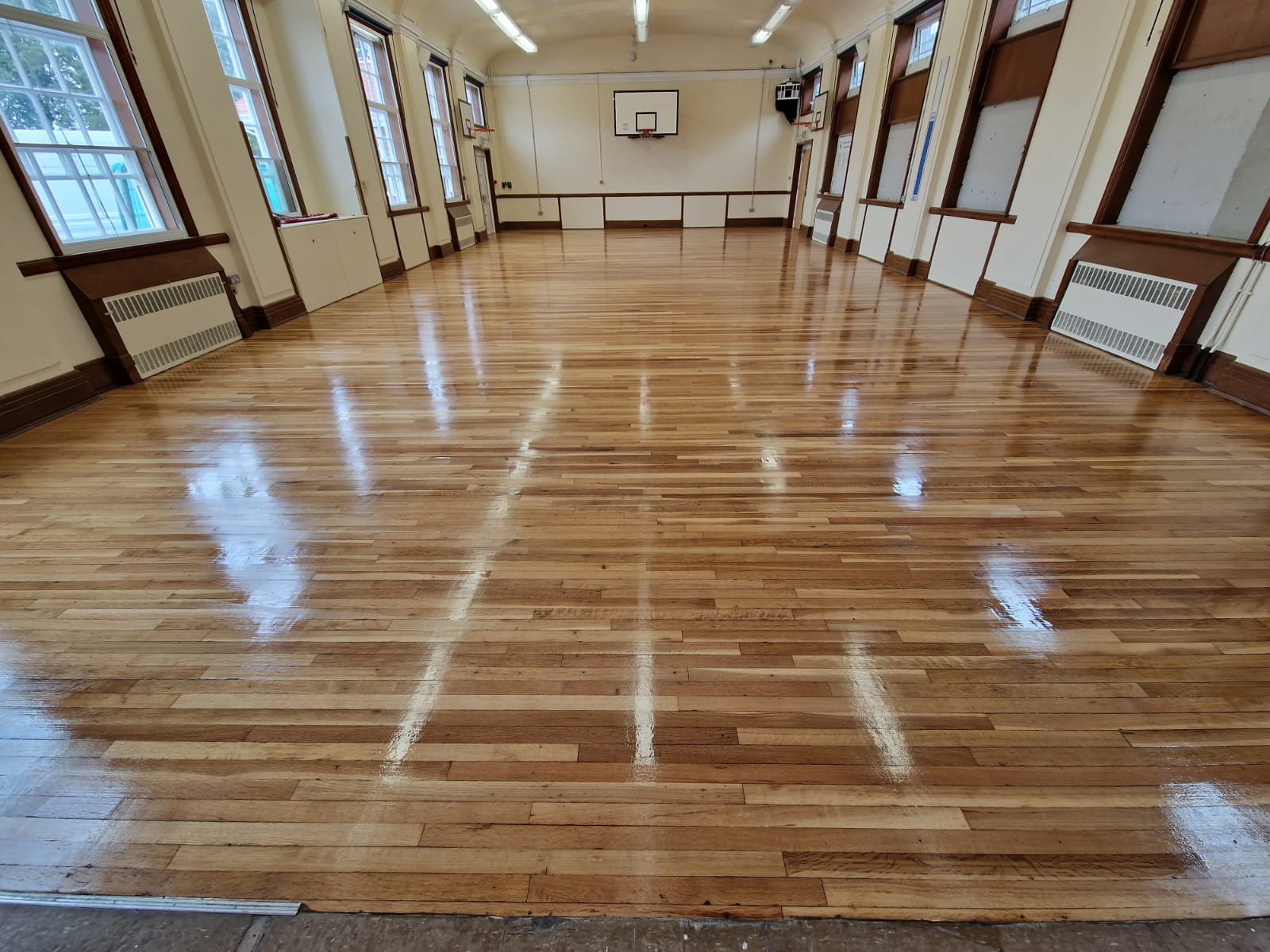
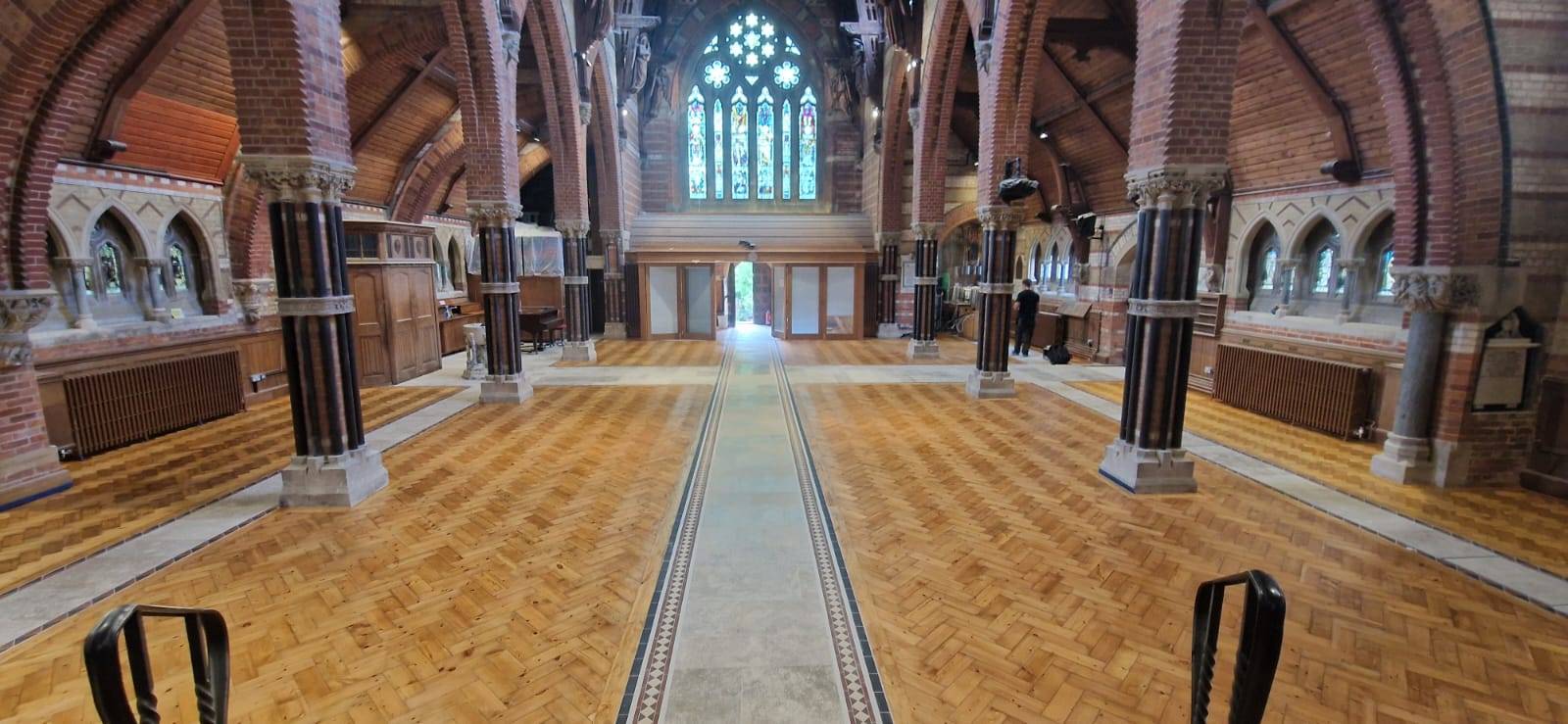
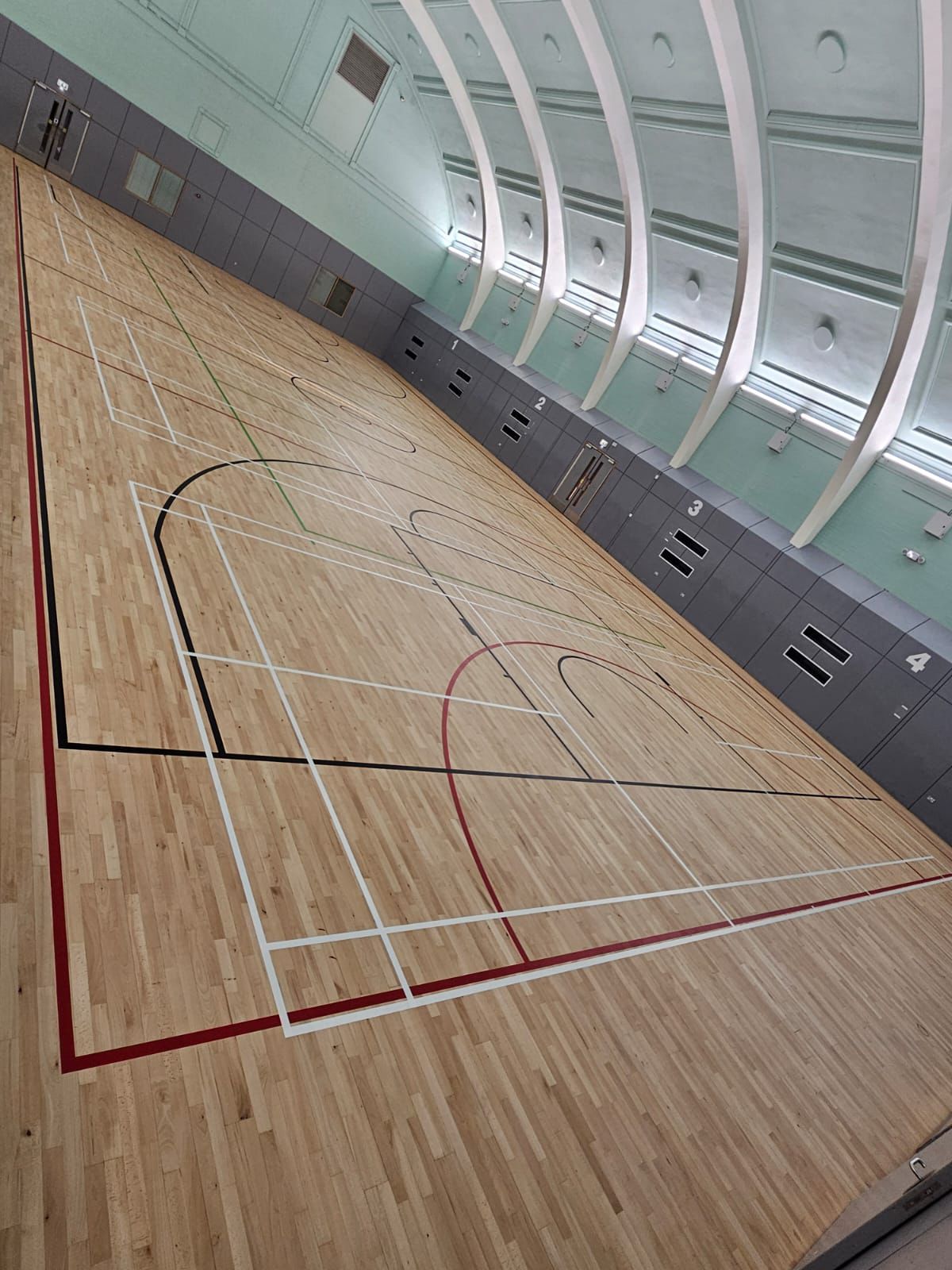
We also sand school halls in holiday windows, re-marking courts and badminton lines to governing body specification, and refinish restaurant and shop floors town-wide.

Halls that live by their hire diary need the programme built around it. We take the bookings list and work backwards: heavy sanding on the emptiest days, coats timed so each has its full hardening window before the next class or club arrives, and the stage edge, wall bars and any fixed equipment masked and hand-finished at their bases. The aim is that the diary never has to be cleared — only shuffled — and the floor comes back into use section by section rather than all at once.

Floor sanding south east London
Commercial Hall Floor Refurbishment

Repairs, Damp-Affected Boards and Gap Filling

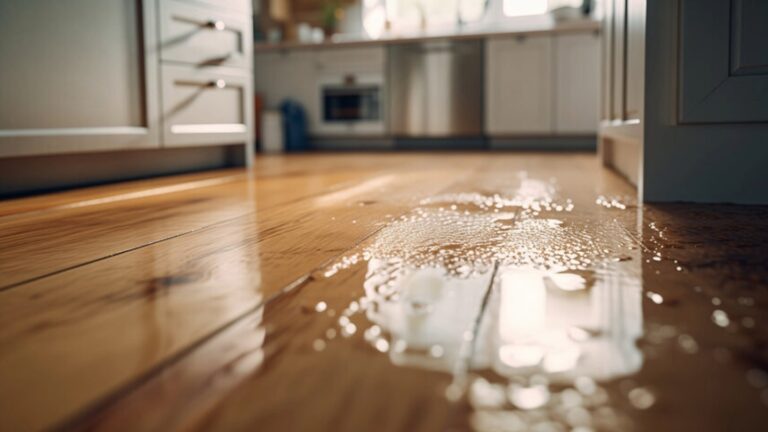
Floors near the Medway often carry more subfloor moisture than those up on the ragstone, and it shows as cupping, lifting nails and swollen joints. Our wooden floor repairs service sorts the symptoms once the cause is understood — we will tell you plainly if ventilation needs attention before sanding is worthwhile.

Floorboard replacement draws on reclaimed timber so patches match, squeaks are fixed at the joist, scratches are blended out, and gap filling closes the draughts for good.

Cupping has a mechanism worth understanding before anyone sands it. When the underside of a board is damper than the top, the board curls upward at its edges; sand it flat while the moisture imbalance remains and the board will finish drying, reverse its curl and leave every edge standing proud — called crowning, and it looks worse than the cupping did. So on damp-affected floors we measure, fix the moisture source, and wait for readings to level before machining. It can add weeks to a programme, and it is the difference between a repair and a repeat visit.

Swollen joints get similar patience — boards jammed hard against each other are relieved before they buckle, and gap filling is deferred until the floor has settled at its normal moisture, so the filling neither falls out in winter nor is crushed in summer.

Parquet Restoration in Maidstone

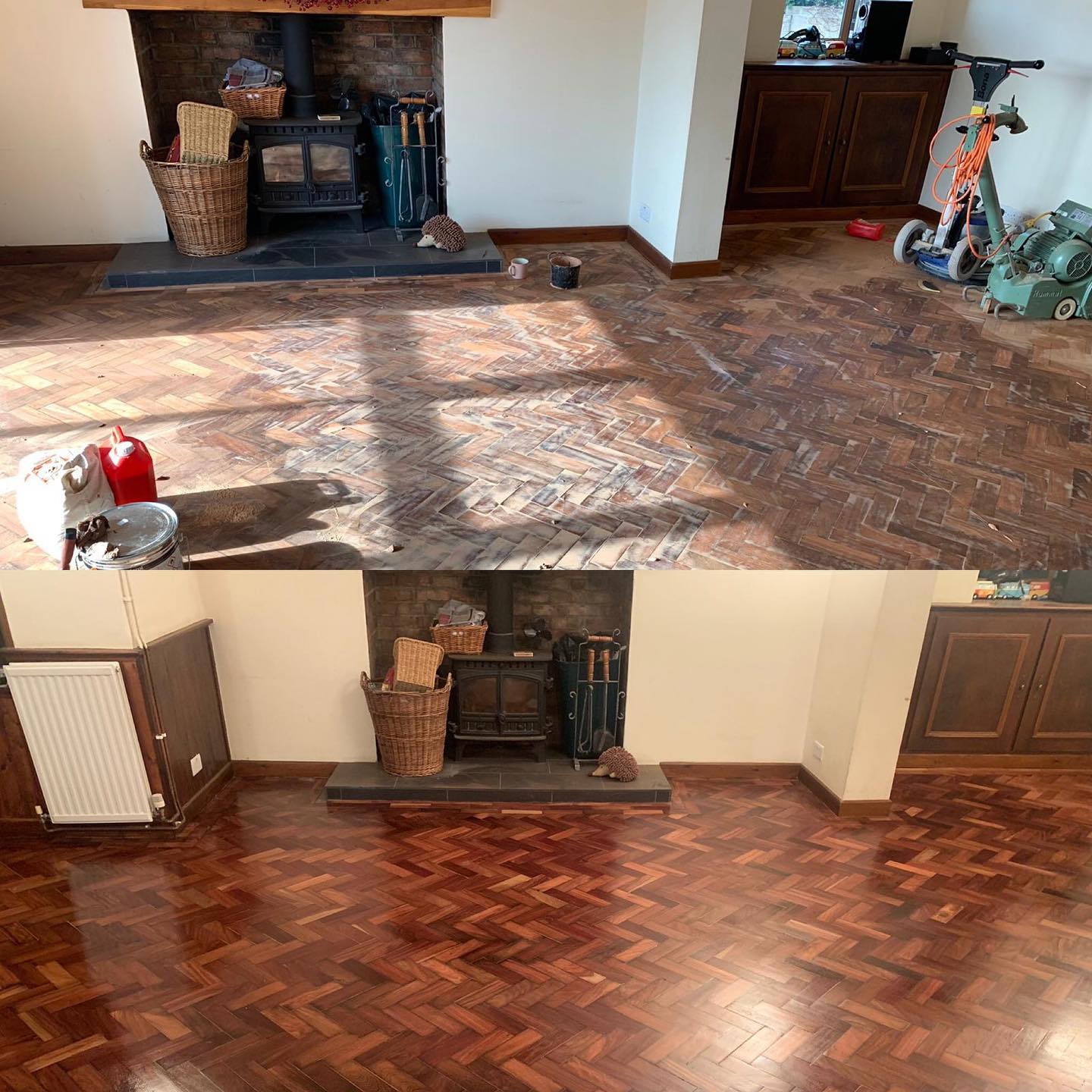
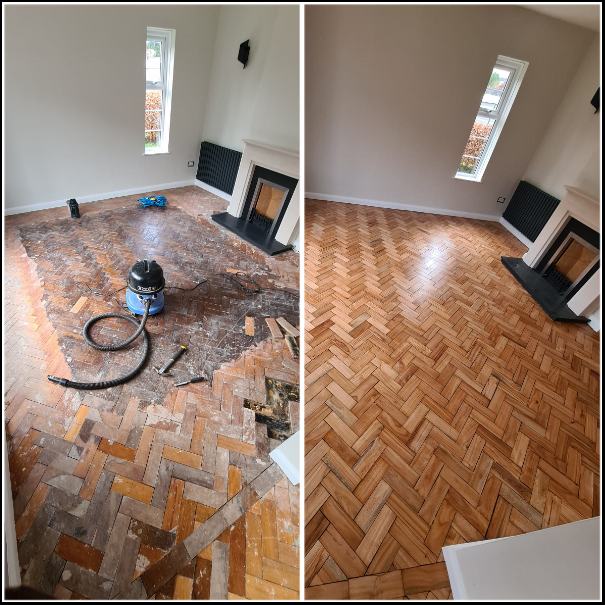
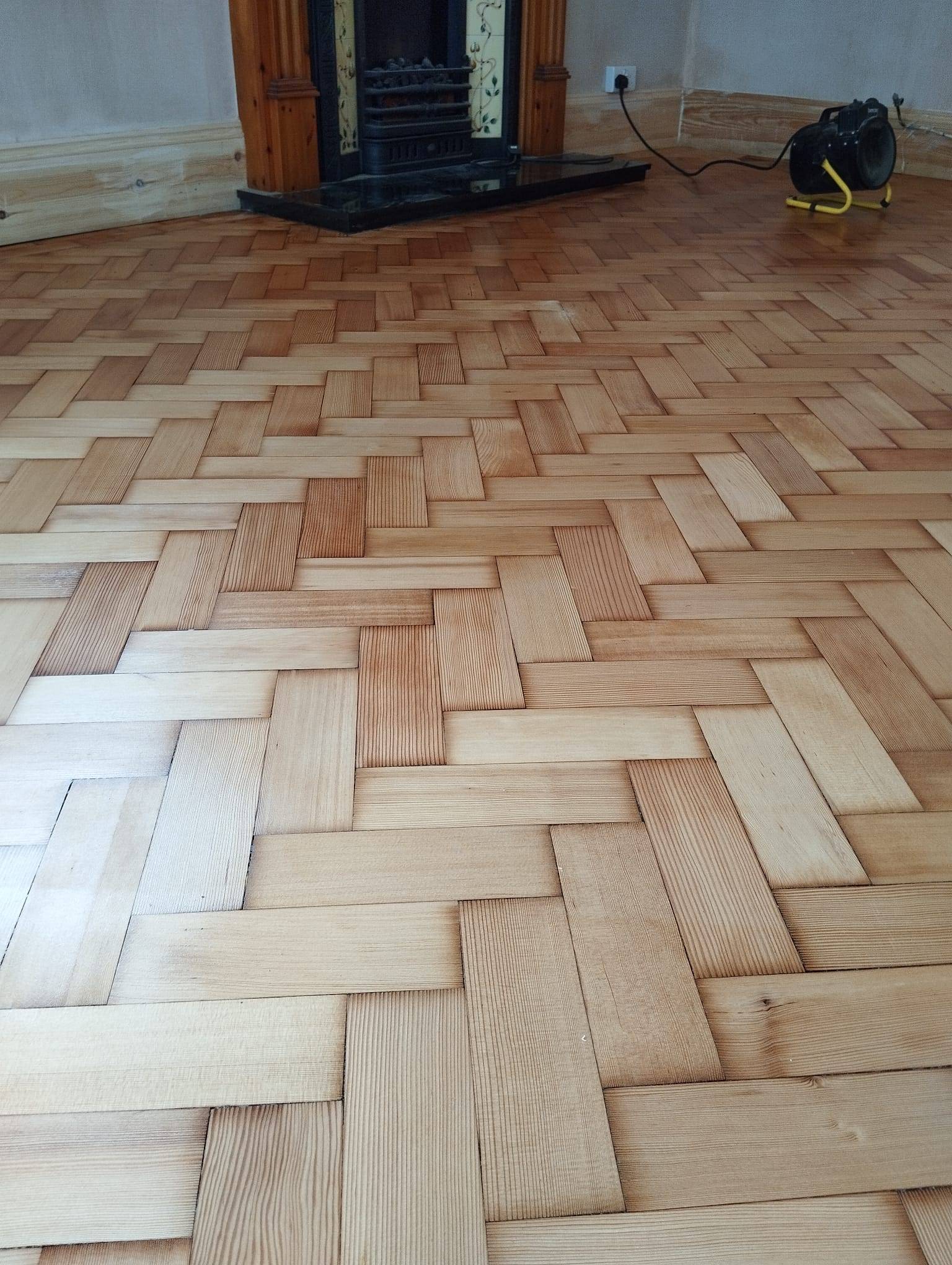
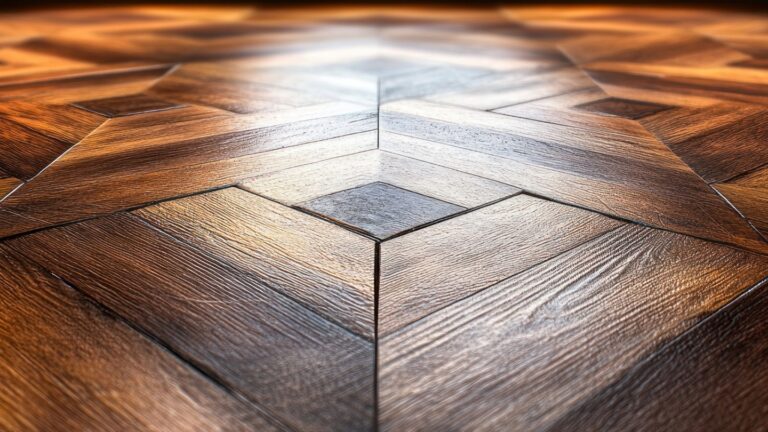
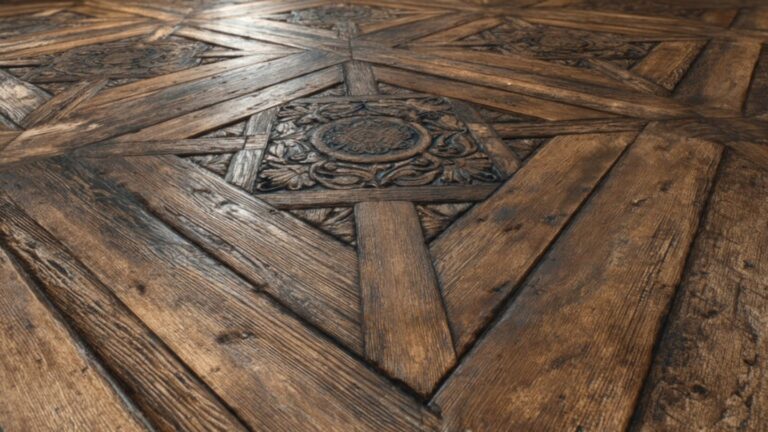
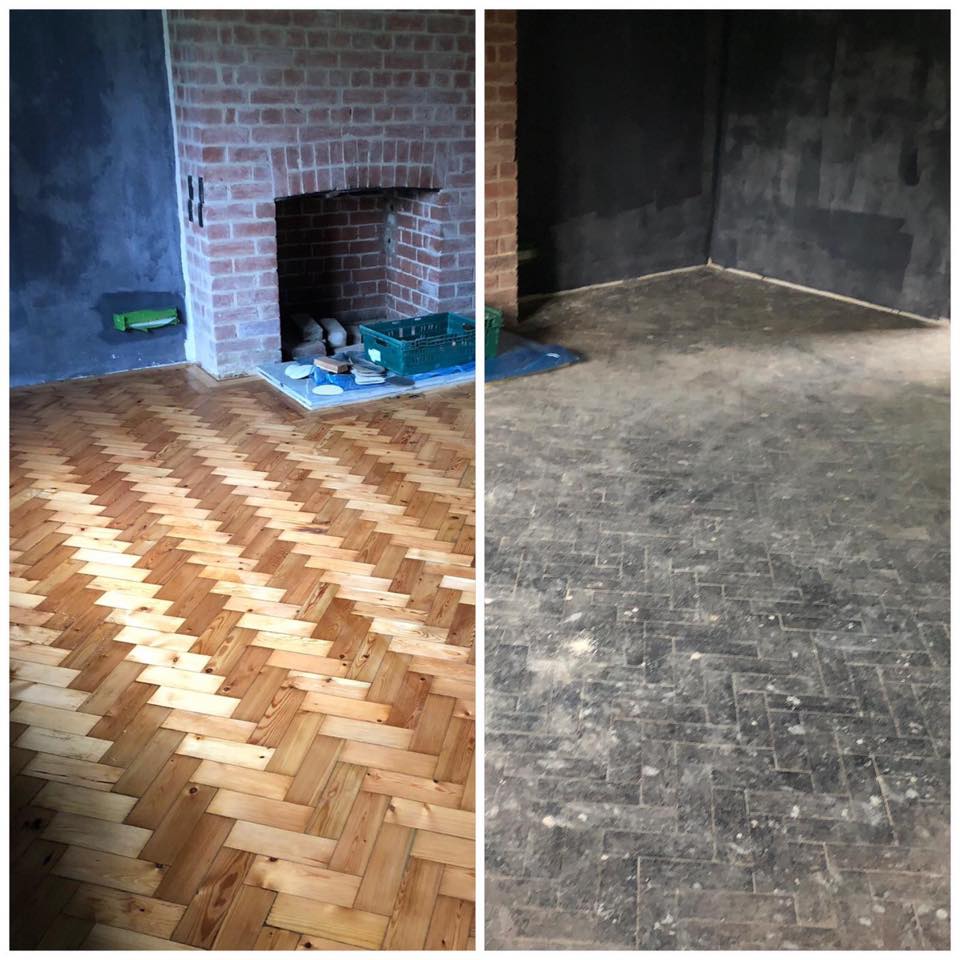
Schools, church halls and interwar homes around Maidstone hold plenty of parquet, and our parquet floor sanding service takes it from tired to superb: loose blocks lifted and re-bonded, missing blocks cut to pattern, then the whole floor machined flat and sealed.

Black bitumen under the blocks and years of polish on top are both routine. Where blocks are too thin for another sand we say so and propose a sand-free restoration — a deep clean and recoat that buys years.

The sand-free option deserves spelling out, because for thin blocks it is often the right call. The floor is scrubbed with machine and pad to strip every layer of old polish and grime, rinsed and dried, then lightly abraded — just enough to key the surviving seal — and recoated with fresh lacquer. No timber is removed at all, the pattern keeps its slightly mellowed surface, and the new coats restore both protection and light. It will not remove deep stains or level worn blocks, and we say so, but as a way of adding years to a floor with nothing left to give a sander, it earns its keep.

Floor Sanding Essex
parquet floor restoration near me

Stains, Seals, Oils and Waxes

Colour and protection are agreed before we finish: staining to move the tone, tough lacquer sealing for hardworking rooms, hardwax oil for a natural low-sheen look that repairs invisibly, or wax where a listed or period interior calls for tradition — with a written method statement supplied for listed buildings.

Samples are tried on your own boards at the survey, and long-term care amounts to the right cleaner plus an occasional buff and recoat.

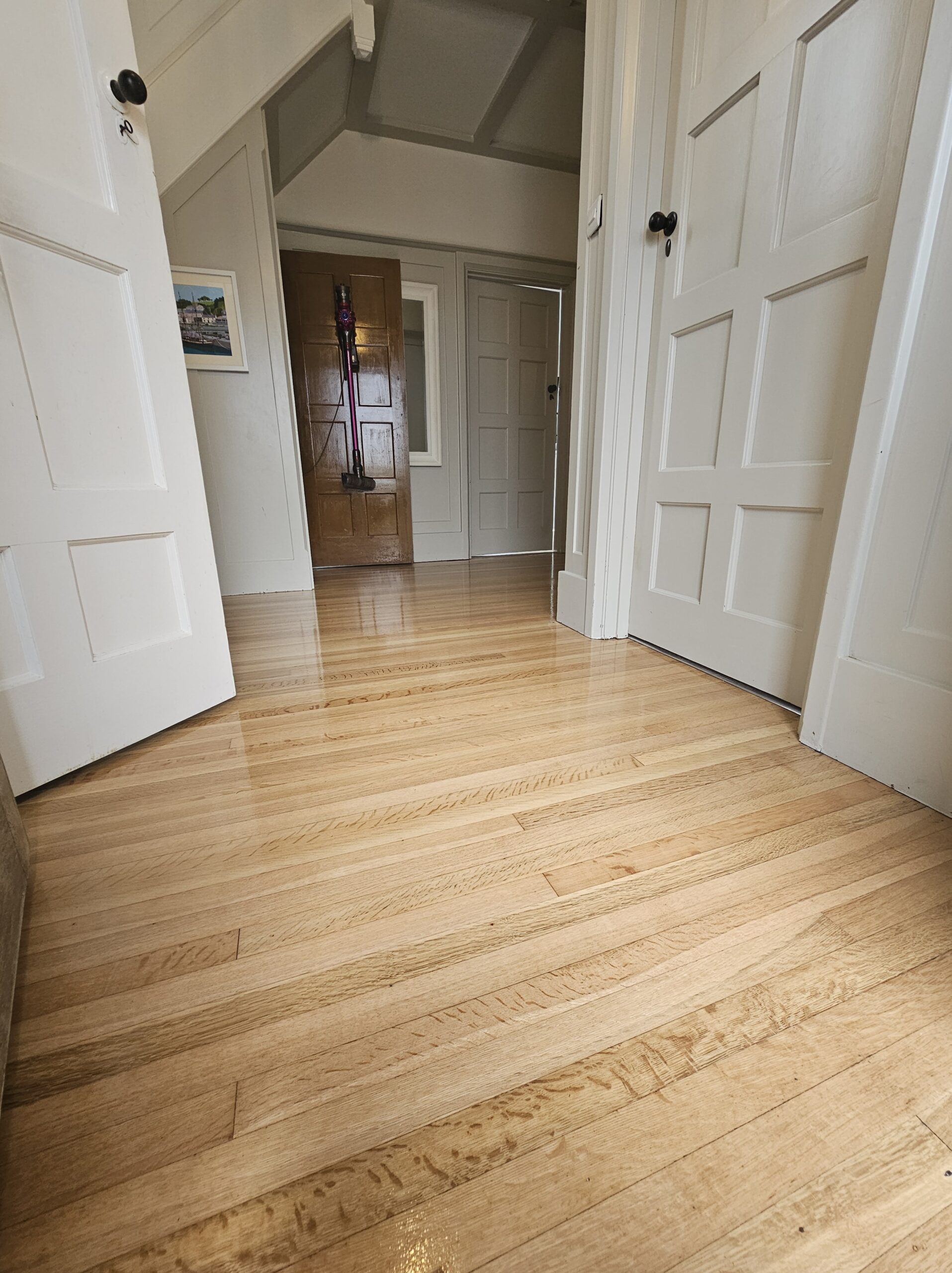
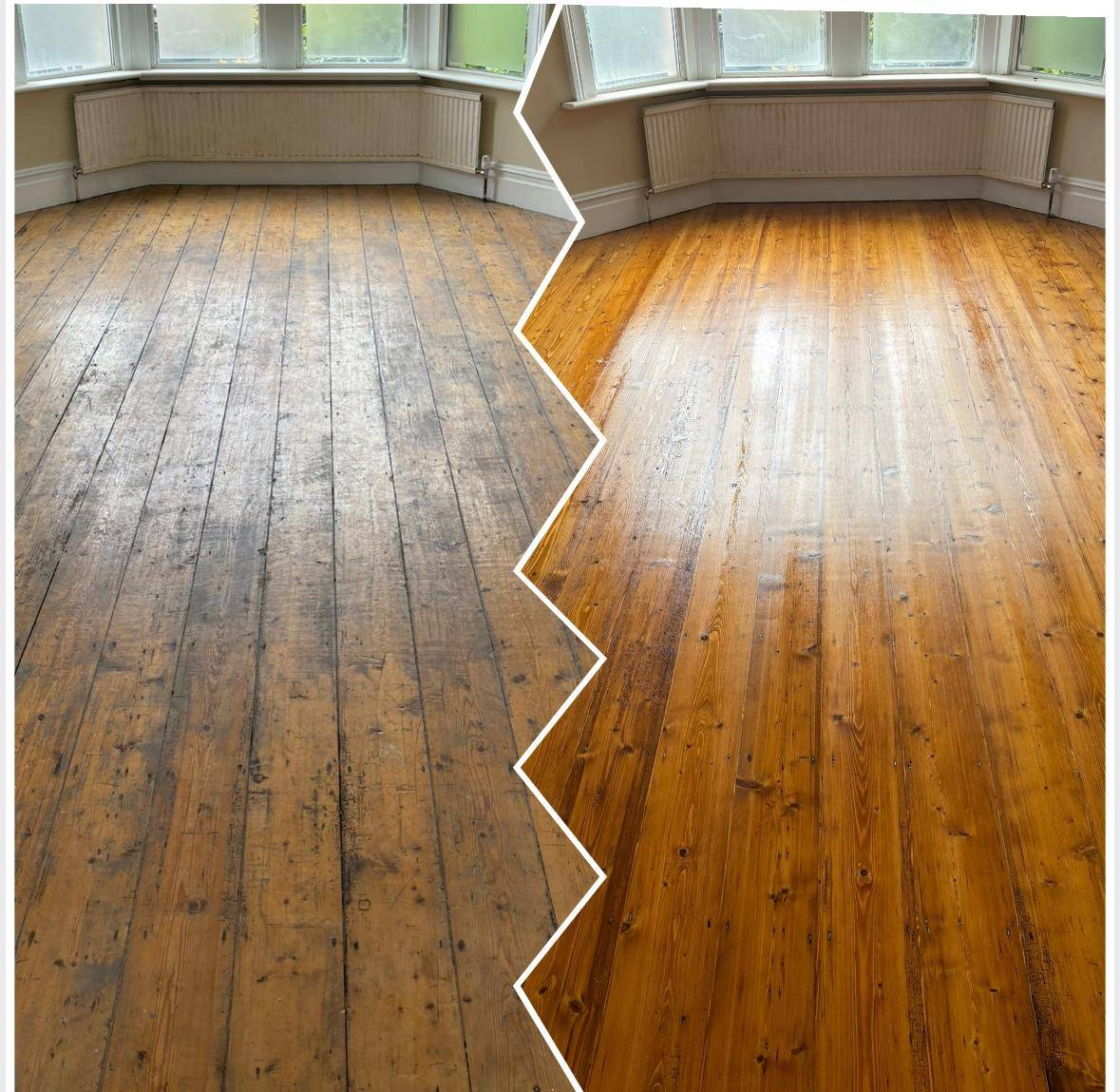
Taking a dark 1970s finish back to natural timber is satisfying work with one honest caveat: old stain does not sit only on the surface. It settles deeper into soft grain, open joints and board edges, so a freshly sanded floor can show faint darker lines where the colour penetrated beyond reach. Usually these read as character and vanish under the new finish; occasionally they justify a coloured oil that evens the tone instead of fighting it. We show you the sanded floor before any finish goes down, so the decision is made on what is actually there.

Sheen and colour are then locked in with the seal coats, each one given its full drying window and a light de-nib before the next, so the finished surface is as smooth to the hand as it is even to the eye.

Get a Floor Sanding Quote in Maidstone

Two photographs — one from the doorway, one close-up of the worst patch — bring an honest opinion and a fixed written quotation, often the same day. The free site survey carries no obligation and can be timed with our next mid-Kent run; mention uneven or damp-feeling floors so we bring the right kit.

Call 01823 674562, email info@ryansrestoration.co.uk, or use the form on this page.

All services available in Maidstone: sanding, parquet restoration, repairs, board replacement, gap filling, staining, sealing, oiling, stair sanding and installation.

Nearby areas we also cover: Rochester, Canterbury, Tunbridge Wells and Kent. There is a page for each, and the full list of towns is on our areas we cover page.

Because mid-Kent visits are grouped, it helps to have your dates flexible by a few days either way — we will offer the slots that fall within our next run through the area, and the job gains from unhurried consecutive days on site. If your floor has a damp history, say so up front: we will bring the moisture meter to the survey and build any drying time into the programme honestly rather than discovering it mid-job.

Parquet Flooring Restoration

FAQ: Floor Sanding in Maidstone

Sand and refinish boards and parquet, repair and replace boards, fill gaps, stop squeaks, remove scratches, stain, seal, oil, wax, sand stairs and fit new wooden floors.

Yes — the work is done outside your hours, overnight or over a weekend, and the finish is cured before you reopen.

Often, once the moisture source is dealt with. Mild cupping sands out; severe cases may need selected boards replaced, which we do with matching reclaimed timber.

The boards are usually wider, older and more characterful, so we machine them gently with finer grits to keep the patina while lifting the dirt.

Yes — sanding removes the old coating entirely, and you choose the new tone from samples applied to your own boards.

Most take one or two sands depending on wear-layer depth, which we measure first. Laminate cannot be sanded at all.

Very little — sealed extraction traps the overwhelming majority at source, doorways are masked, and we tidy fully each day.

Photographs by email get an honest opinion and a fixed written quotation; the free no-obligation survey confirms details. Ring 01823 674562 or use the form on this page.

Because the cupping is caused by a moisture imbalance. Sand it flat too soon and the boards finish drying, reverse their curl and crown at the edges — so we cure the moisture first, then sand once readings have levelled.

A machine deep-clean strips old polish and grime, the surviving seal is lightly keyed, and fresh lacquer is applied — no timber removed. It suits blocks too thin for another full sand.