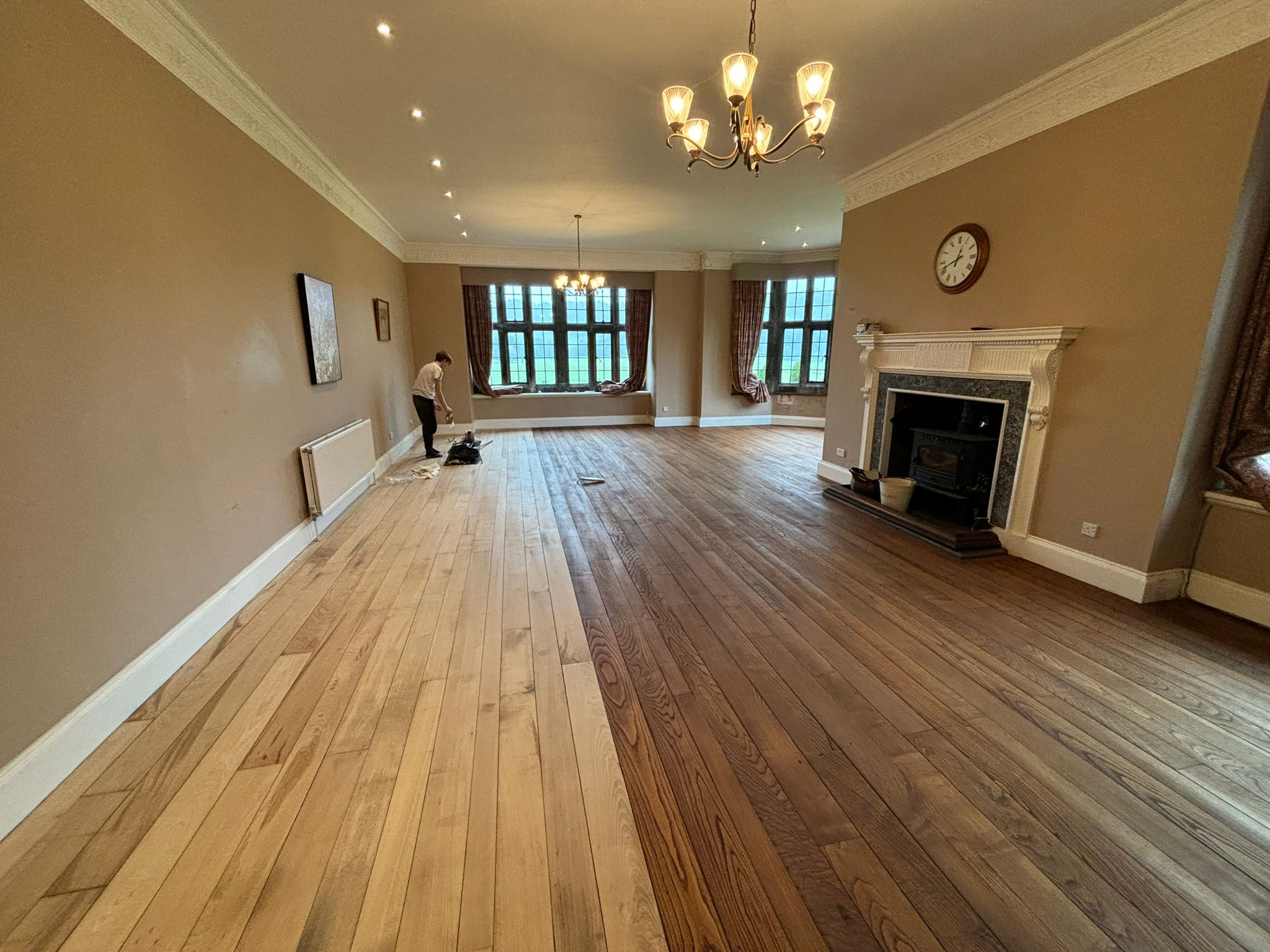
45 years’ experience  ·  Rated 4.9 on Google  ·  Family-run, from our workshop near Wellington

45 years’ experience · Rated 4.9 on Google · Family-run

Floor Sanding and Wood Floor Restoration in Rochester

Worm-holed boards, tired shop floors and steep old stairs in Rochester, repaired and refinished by a Somerset family firm that travels for larger work.

QUICK QUOTATION

Floor Sanding Taunton

Floor Sanding in Rochester's Older Buildings

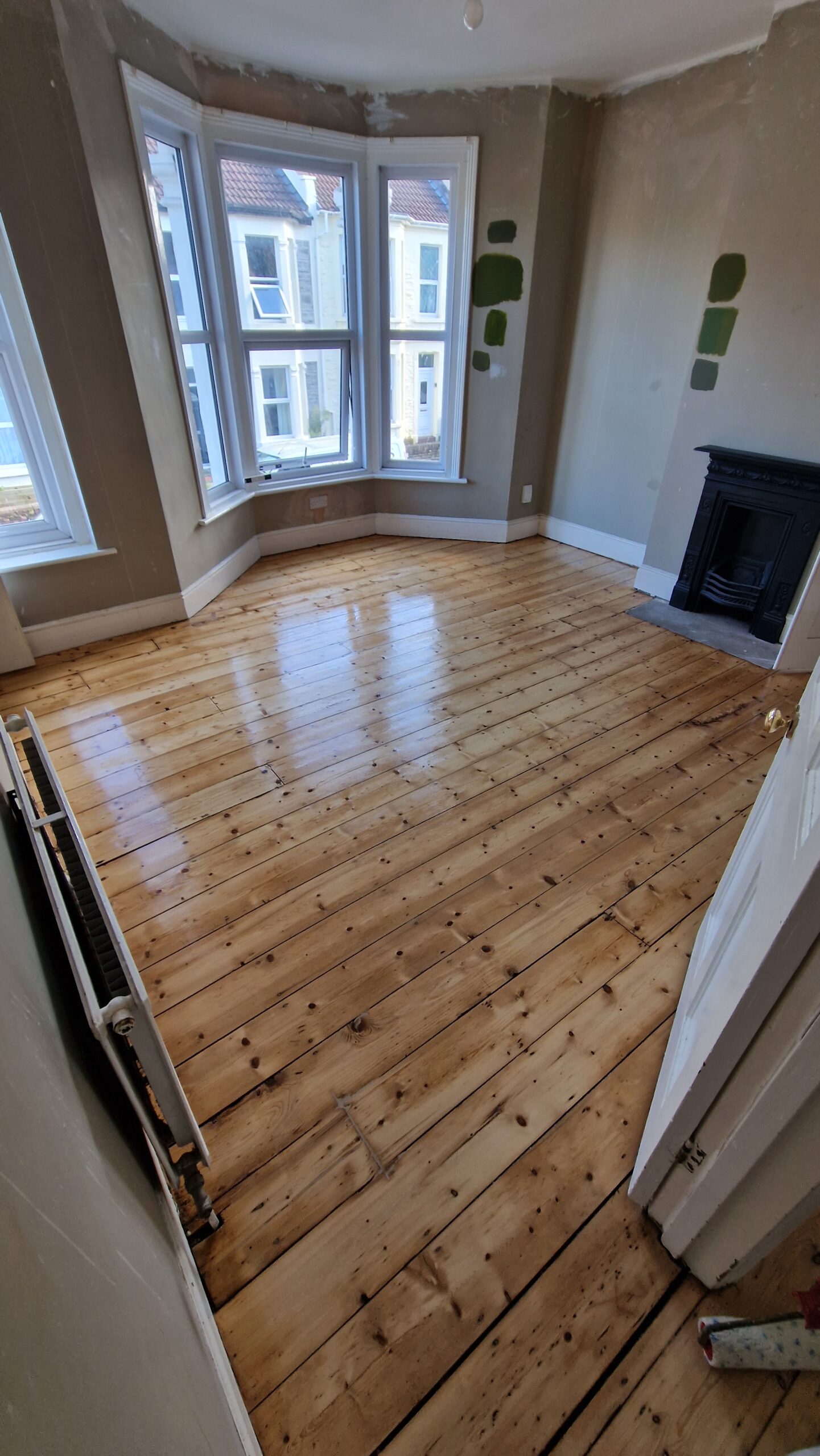
Walk the length of Rochester High Street and most of what you pass is old: Georgian shopfronts, earlier timber-framed buildings behind newer faces, flats over shops reached by narrow stairs, and cellars below. A good many of those buildings are listed. Their floors tend to be the original timber or something close to it, and they have usually been patched, carpeted, tiled over and stripped again more than once. Floor sanding in Rochester is therefore less about producing a showroom finish and more about working out what the floor has been through and what it can stand.

Honesty about distance first. This is a family concern with its base near Wellington in Somerset, and the Medway towns are a long drive east of our workshop at Higher Poole. Rochester is not somewhere we work every week. We come up for jobs that warrant the journey, which in practice means shop, cafe, pub and office floors, flats over premises being refitted, and houses where a run of rooms or a staircase are all being done. If yours is a single small room, we will tell you a Kent-based sander is the sensible call.

Old floors hide things. A carpet that has been down for thirty years can conceal a board that has been cut short by a gas fitter, a patch of hardboard nailed over a hole, a run of floor where the joist ends have softened against a damp wall, or the small round holes that betray woodworm. None of that is a reason not to sand. It is a reason to look properly first and to do the repairs before the machine goes down, because sanding over a weak or rotten board only makes it thinner.

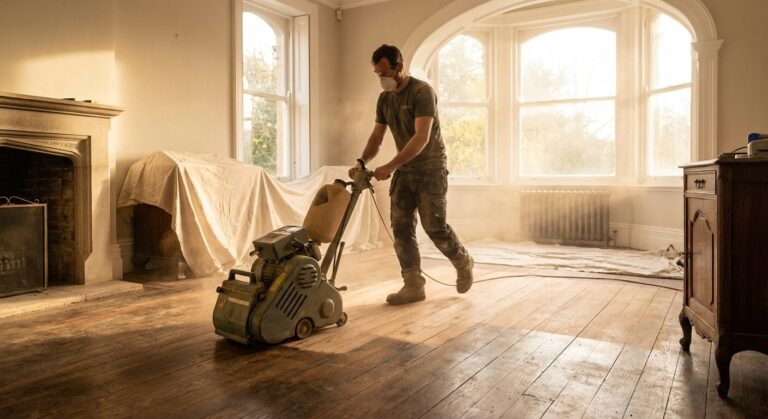
The sanders themselves run on sealed extraction, drawing fine dust down a hose into collection bags. Hence the label dust-free floor sanding, which is fair as far as it goes; above a shop with daylight showing between ceiling joists, though, a whisper of dust can still find its way onto a shelf of stock, so dust sheets over the merchandise are a wise precaution. The grit-by-grit method is explained on our wood floor sanding page, and our coverage across the county is summarised on the Kent floor sanding page.
Commercial Floor Sanding in Rochester Shops, Pubs and Tea Rooms

With commercial floor sanding in Rochester, the age and layout of the premises usually sets the method before the trade carried on inside does. A modern retail unit has a flat slab and a clean rectangle of floor. An old high-street premises can have three different levels across one ground floor, boards that change direction where two buildings were knocked together, a step down into a former back yard now roofed over, and a front doorway where the timber has been worn into a shallow trough by centuries of feet.

Those quirks change how the job is done. Where boards meet at an angle, each run is sanded along its own grain and the junction worked by hand. Where floors change level, edges and nosings are rounded and worn, and they take careful hand sanding so the step stays safe. Thresholds worn hollow are usually better consolidated and finished than sanded flat, because flattening them would mean cutting the surrounding boards right down. On old floors there is also the question of what is underneath: some shop floors sit directly over a cellar, which can be damp, and moisture rising into the boards needs checking before any finish goes on.

Footfall in a busy shop or tea room is heavy and concentrated. Grit carried in from the street does most of the damage, scouring a pale path from the door to the counter. A two-component lacquer resists that far better than oil or wax, and a satin or matt sheen keeps scuffs from showing so quickly. Pubs bring spilt drink, chair legs and sometimes stiletto heels, and a floor behind a bar takes a soaking every shift. A pub lounge can be sanded after last orders and carry quick-drying coats by the time the cleaners arrive, ready for the lunchtime trade; our page on restaurant and pub floor sanding goes into the timings. Shops are often done on the day they close, or across two or three evenings, and shop floor sanding explains how display units and stock are handled.

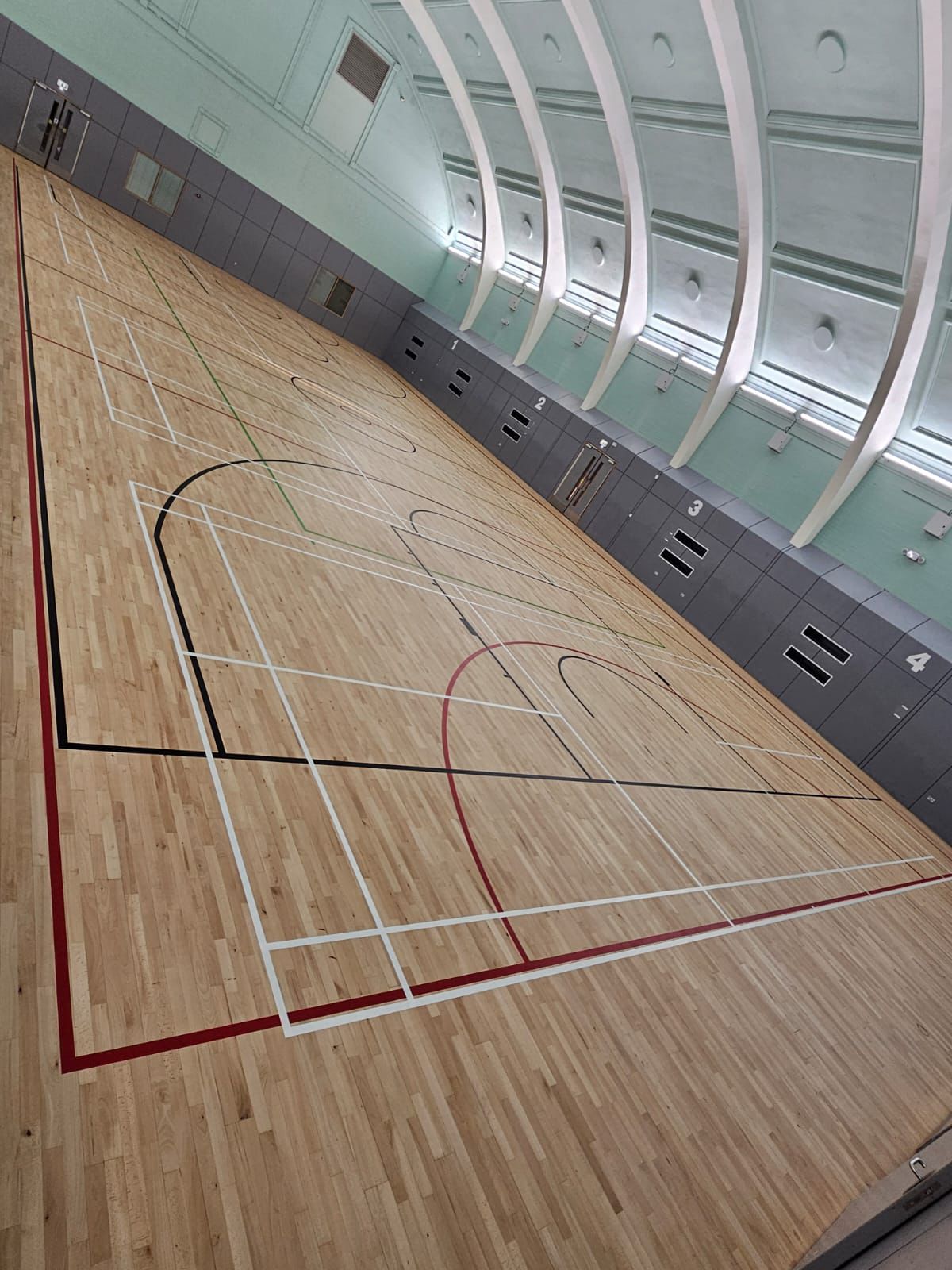
Every commercial job is dated well ahead, which matters to us as much as to the business, since a crew coming up from Somerset needs an unbroken run of nights or closed days. A landlord or freeholder who wants to see our method statement, insurance cover or references before work starts can have them on request. Offices, halls and other business premises are covered under commercial floor sanding, and businesses higher up the Medway have their own page on floor sanding in Maidstone.

Floor sanding south east London
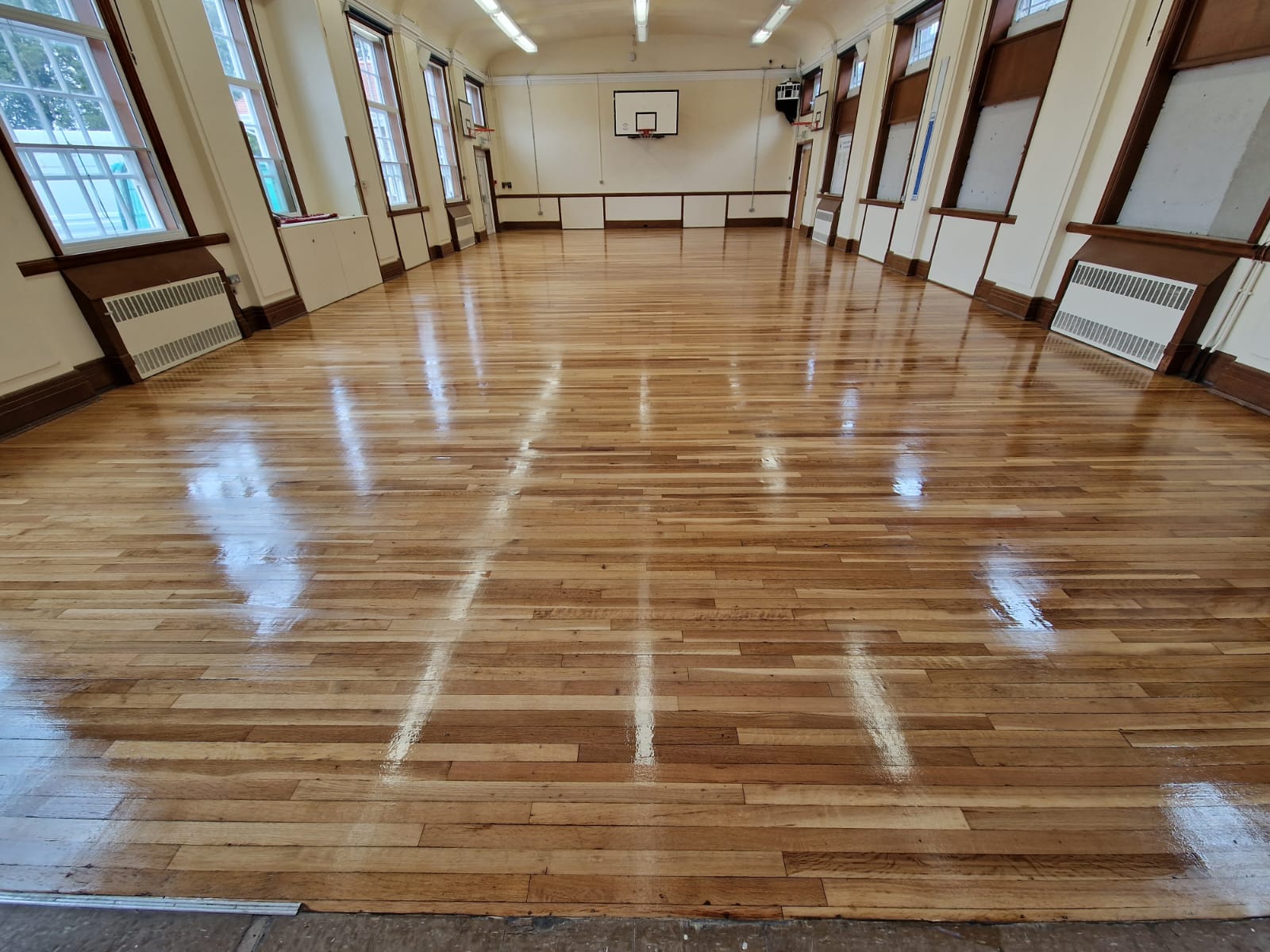
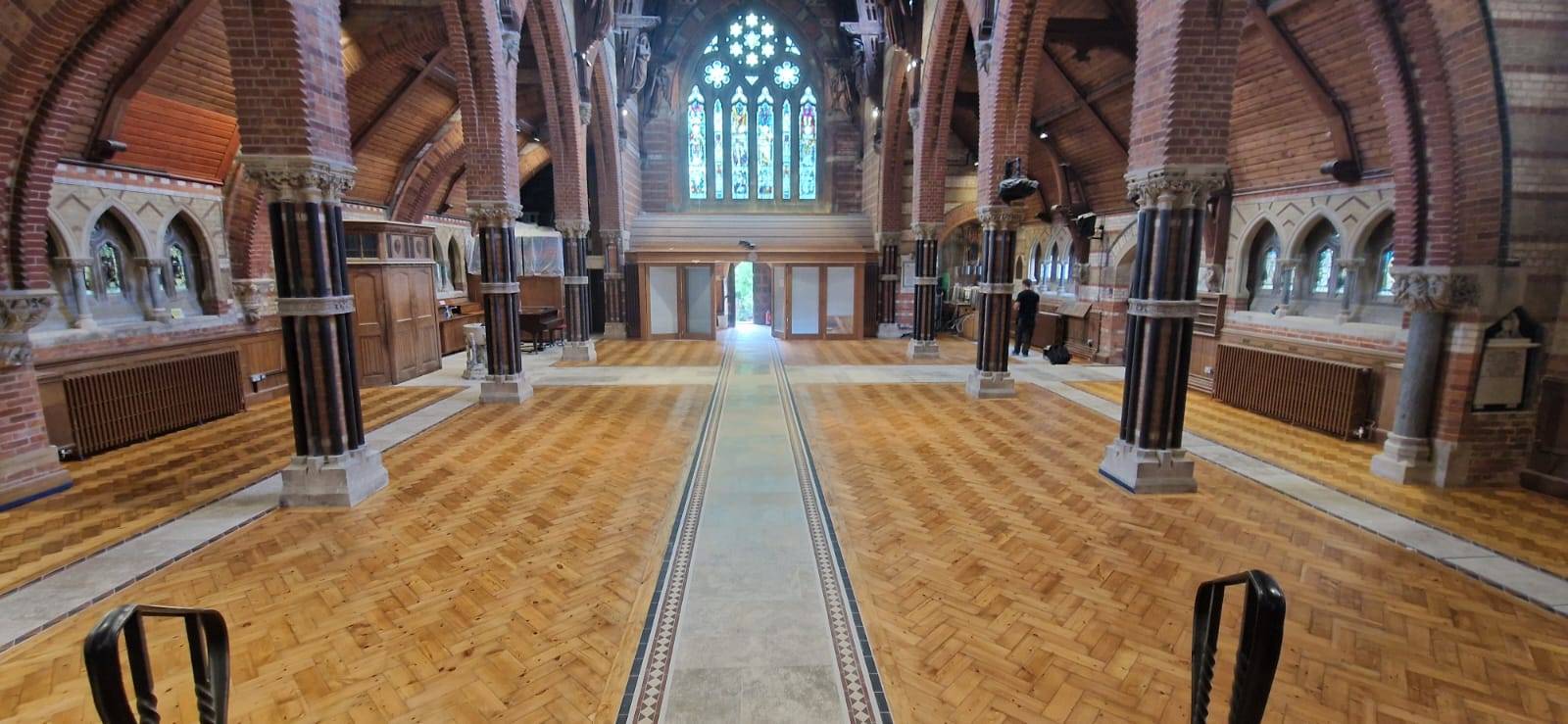
Commercial Hall Floor Refurbishment

Woodworm, Rot and Wood Floor Restoration in Rochester

Wood floor restoration in Rochester’s older properties brings us face to face with two problems more often than almost anywhere else: woodworm and rot. Both are common in buildings of this age, and both need understanding before any sanding is planned.

Woodworm is the larval stage of wood-boring beetles. The common furniture beetle favours softwood and the sapwood of hardwoods, and the larvae tunnel inside the timber for several years before emerging through small round exit holes, typically a millimetre or two across. What matters is whether the infestation is still active. Old holes with dark, weathered edges and no fresh dust around them usually point to long-finished activity, perhaps decades old, and the timber can often be sanded and finished with no further action. Clean, sharp-edged holes with fine, gritty dust (frass) spilling out suggest beetles are still emerging. In that case the floor needs looking at by a timber treatment specialist before restoration, and we will say so rather than finish over the problem. In oak, especially in very old buildings, larger holes can point to deathwatch beetle, which is linked to damp and decay and is also a matter for a specialist.

The practical sanding question is strength. A board riddled with tunnels near the surface can be sound to look at but crumble when a sander passes over it. Probing with a bradawl along the worst runs shows how deep the damage goes. Boards that are badly honeycombed are cut out; boards with scattered old holes can stay, and the holes become part of the character once the floor is finished.

Rot is a moisture problem first and a timber problem second. Wet rot shows up where water has been getting in: under a leaking window, round an old WC, against an outside wall where ground levels have risen above the damp course or airbricks are blocked. The timber goes soft, dark and stringy. Dry rot is rarer and more serious, spreading through masonry with grey strands and sometimes a fruiting body, and it needs a specialist. In both cases the cause has to be put right before the floor is repaired, otherwise any new timber will go the same way.

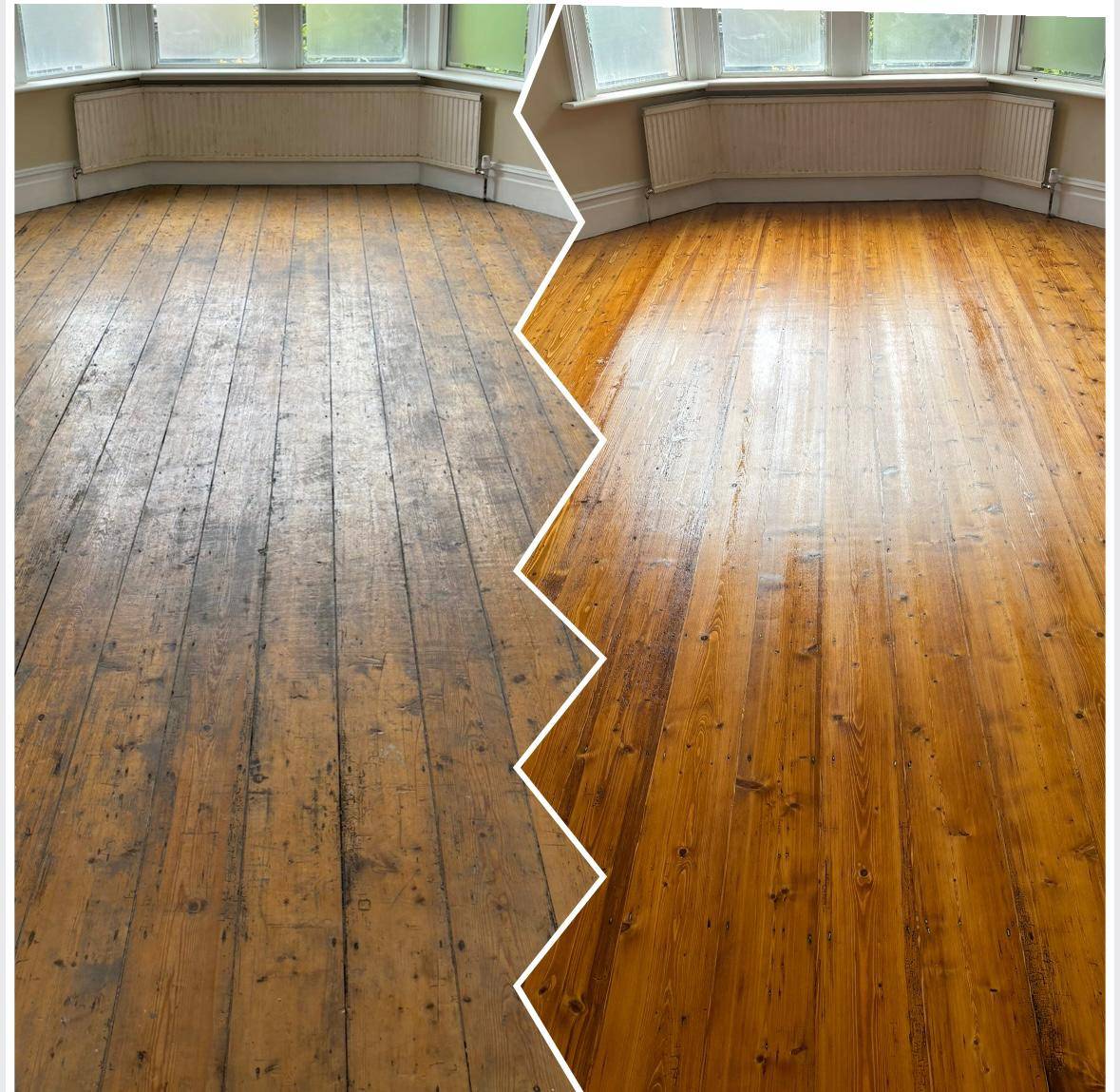
Once the cause is sorted, decayed boards are cut back to sound wood and replaced from our reclaimed stock, which is how floorboard replacement stays sympathetic in an old building. Joist ends that have softened may need sistering or support, which falls under wooden floor repairs. Creaks from loose cut nails are refixed into good timber (curing creaking boards), open joints are closed by gap filling with slivers or resin, and light marks in a sound finish can be handled through scratch repair. The overall approach is on our wood floor restoration page, with softwood floors covered under pine floor restoration.

Steep Stairs, Winders and Block Floors in Rochester

In the old buildings along and behind the High Street, the stairs are often the part of the job that takes longest. Narrow plots mean steep flights, often with winders turning a corner in a tight space, and treads that are shallower than modern regulations would allow. Many go from a shop up to a flat or offices above and have been carpeted, painted, re-carpeted and finally left bare and scuffed.

Sanding a staircase like that is mostly hand work. No big sander will sit on a winder only a few inches deep at its inner end, so these flights are worked with compact detail machines, cabinet scrapers and abrasive wrapped round a block. The nosing of each tread is the part that wears most: rounded over, sometimes split, sometimes repaired with a mismatched strip. Where a nosing has cracked away, the damaged length is trimmed out and a piece of old timber of the same species let in, fixed, then planed and rounded until it follows the line of its neighbours. Winder treads, which taper to almost nothing at the inner corner, are delicate and need a light touch. Where treads are dished in the middle from long use, sanding them flat would take too much wood from the edges, so they are cleaned back following the wear.

Many stairs in buildings of this age have been painted at some point, and old paint can contain lead. Painted treads, risers, strings and balustrades should be tested before any sanding, and if lead is present the paint is removed in a way that does not spread dust. Spindles and handrails can be sanded by hand and refinished to match. Stairs with woodworm are inspected exactly as floors are, tread by tread. Our stair sanding page covers the process in more detail.

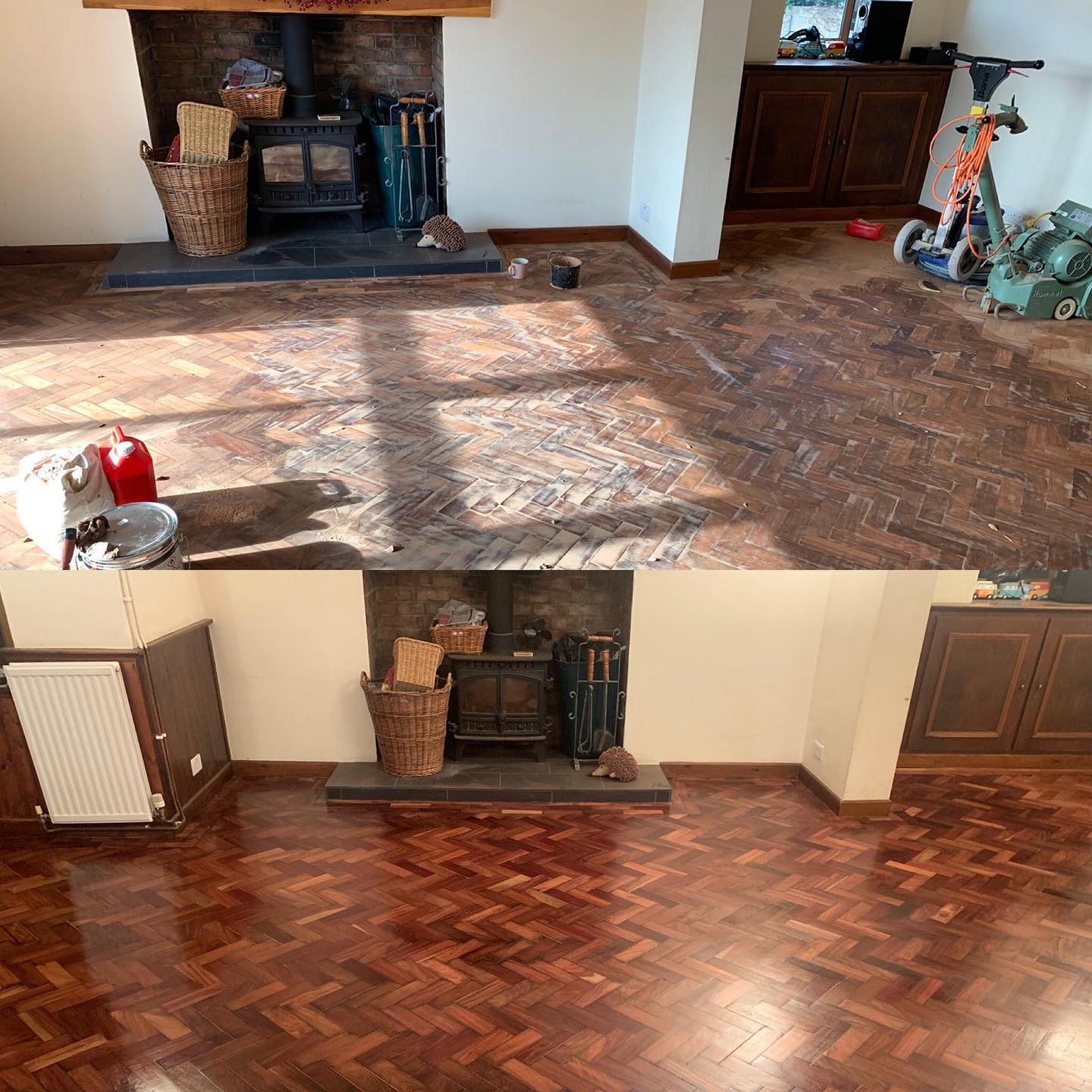
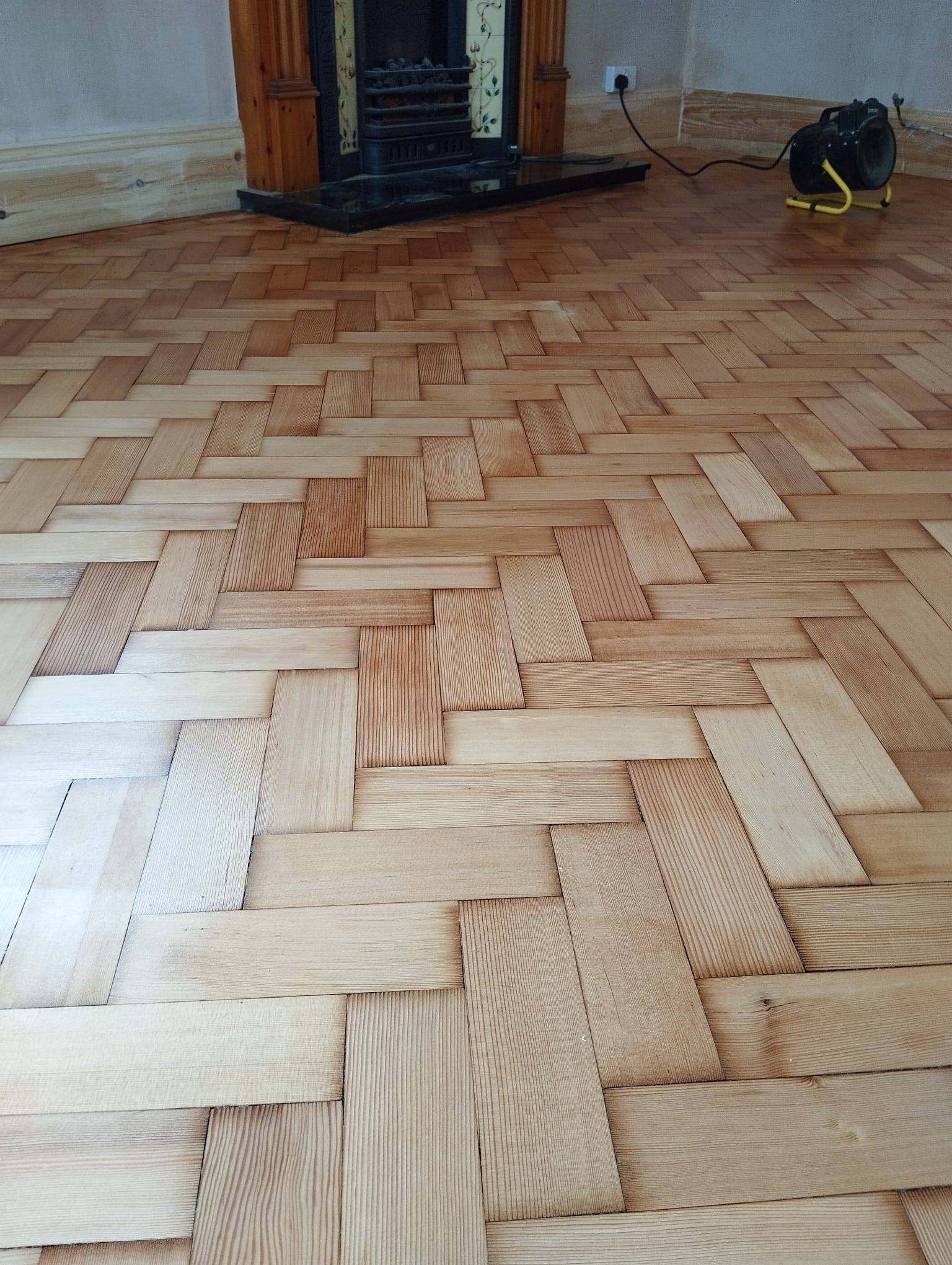
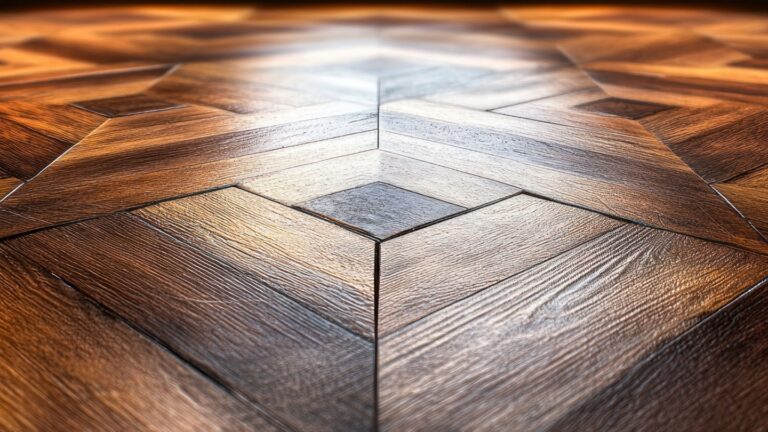
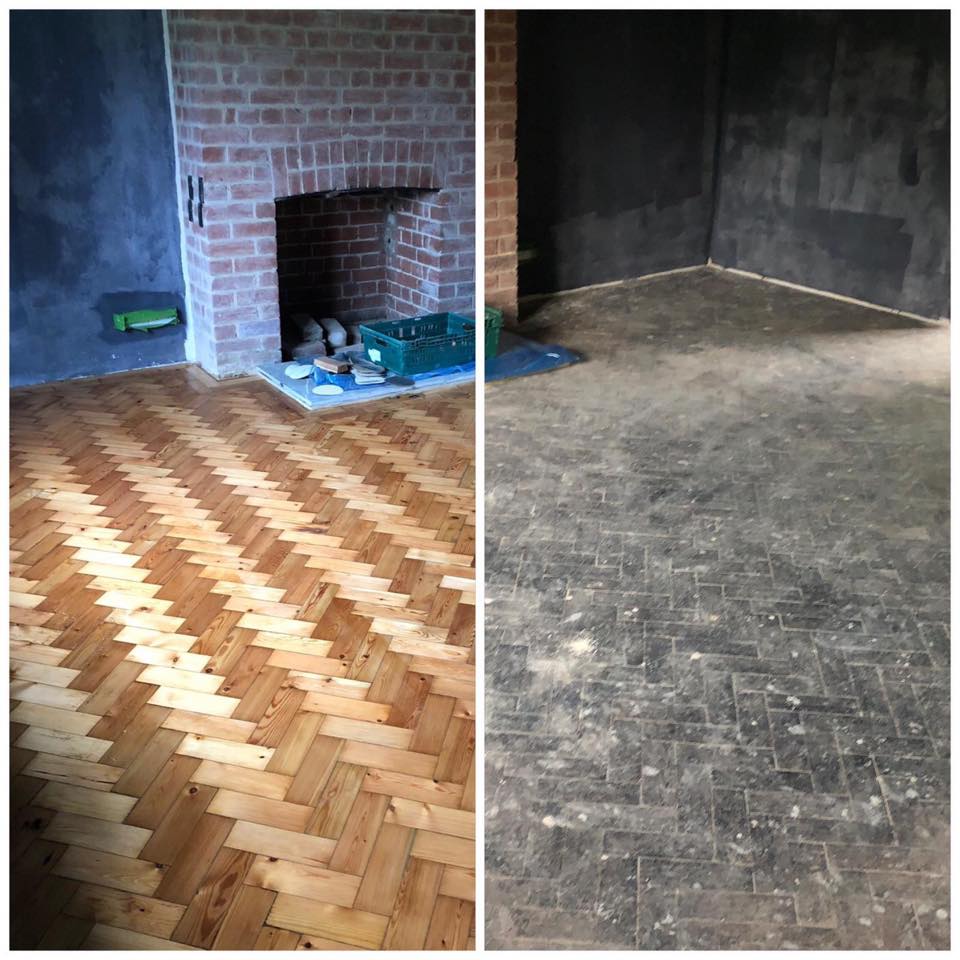
Floors further from the centre have their own character. Victorian and Edwardian terraces around Rochester, Strood and Chatham often have pine boards, and some houses and former offices have woodblock in the hall or front rooms, laid in bitumen in herringbone or basket-weave. The black adhesive under those blocks weakens with age and damp from the slab, so before sanding any block that clicks or shifts underfoot is prised out, its underside scraped and the block reset in fresh adhesive. Missing blocks are replaced from salvaged stock of matching size. That process is described under parquet floor sanding, and oak block or strip is covered more generally under oak floor restoration.

Floor Sanding Essex
parquet floor restoration near me

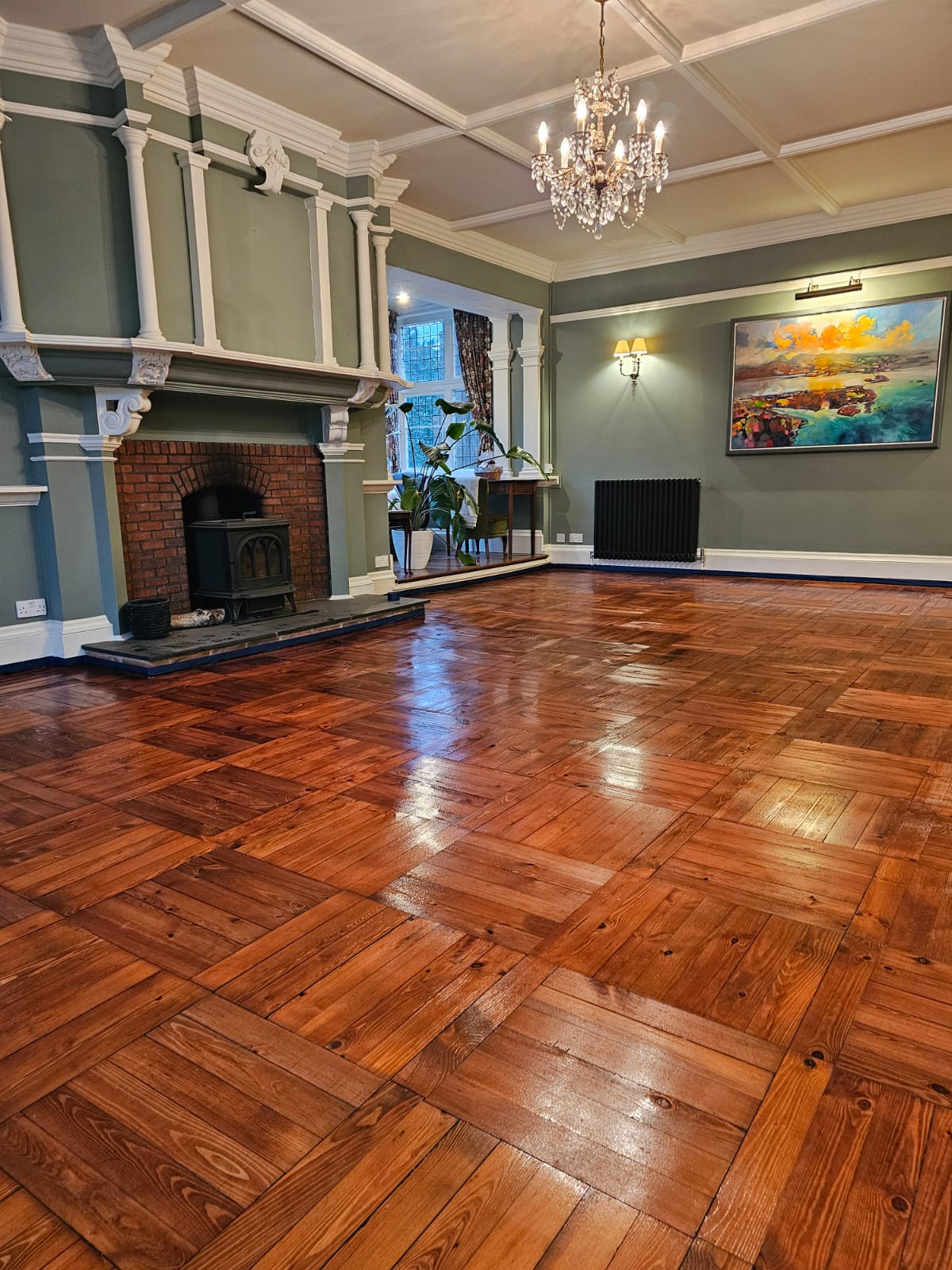
Blending Old and Repaired Timber With the Right Finish

A floor that has had several boards replaced, a staircase with new nosings, a run of worm-holed boards beside clean ones: repaired floors raise a finishing problem that a perfect floor does not. How do you get old and new timber to sit together without the patches shouting?

The first part of the answer is the timber itself. Reclaimed boards that have already aged blend far better than new ones, which is why they are used for repairs. Even so, a freshly sanded reclaimed board can look a shade lighter than its neighbours until the finish goes on.

The second part is colour. A light stain can be used to bring a patched area into line, or to even up a floor where some boards have darkened more than others over the years. Softwood takes stain unevenly, with the soft spring growth absorbing more than the harder late growth, so the result needs testing on your own sanded boards before any decision is made; staining a floor explains how colours are tried out. Stain is hard to undo, so a subtle shade is usually safer than a strong one.

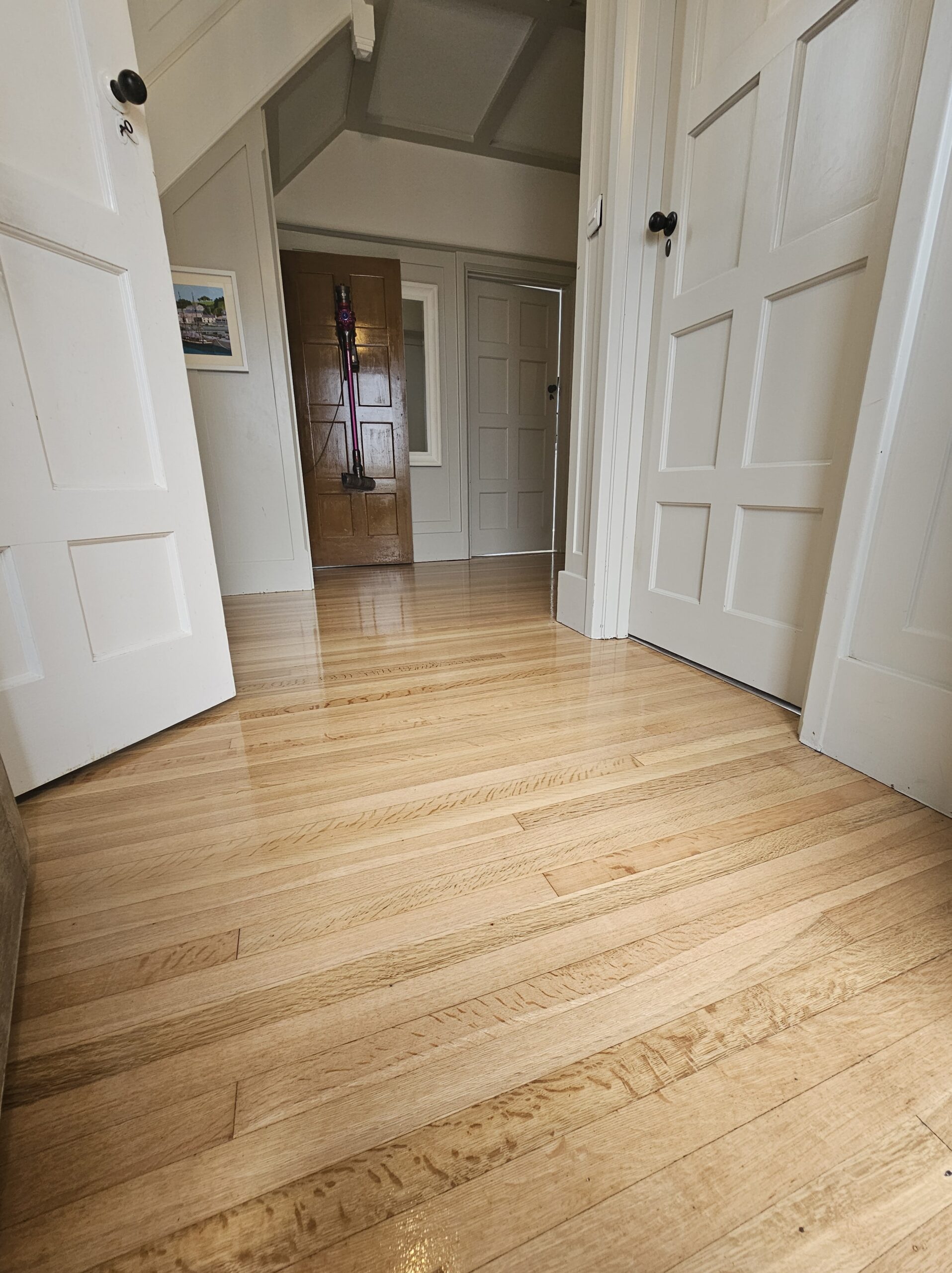
The finish then sets the character. Oil-based lacquers and most oils warm the timber and deepen the contrast between old and new for a while before evening out. Water-based lacquers stay closer to the bare colour and tend to show differences more honestly. For shops and pubs, a two-component lacquer gives the toughest coating; floor sealing with lacquer lays out the options. In older houses and on floors with scattered worm holes, an oil or hard wax oil often suits better, soaking into the timber, filling the look of small holes with shadow rather than glare, and allowing worn patches to be touched up alone. Floor oiling compares the two.

Traditional wax has a place in a quieter room where someone is happy to buff it now and then, and polishing offers a deeper shine for those who want one. All of this is wood floor refinishing in the true sense: choosing the coating and colour so the repaired floor reads as one surface.

Keeping the Floor Right and Starting Your Rochester Enquiry

A newly finished floor in an old building needs a few days of patience. Light foot traffic in socks is fine after about a day. Shop counters, display units, bar stools and heavy household furniture should wait somewhere between two and three days, and rugs a little longer, while the coating hardens. Fast-curing products cut these waits right down for commercial premises.

After that, the threat to most Rochester floors is grit from the street. A barrier mat inside every entrance, swept and shaken regularly, does more than anything else to keep the finish intact. Get the sand and grit off with a vacuum before anything wet touches the boards, then follow with a barely damp mop and a gentle, neutral floor cleaner. Bleach, kitchen degreasers and steam mops all attack the finish. Felt pads under chairs and tables are worth fitting the day the furniture goes back. A sitting room floor under lacquer can run the best part of a decade between sandings, whereas a shop doorway on the High Street, scoured daily, is generally due round about the fourth or fifth year. Before the coating wears through, buffing and recoating restores the surface without taking any timber away.

In old buildings, keep an eye on the things that caused trouble before: check the airbricks are clear, watch for fresh frass under worm holes, and deal promptly with any leak near the floor.

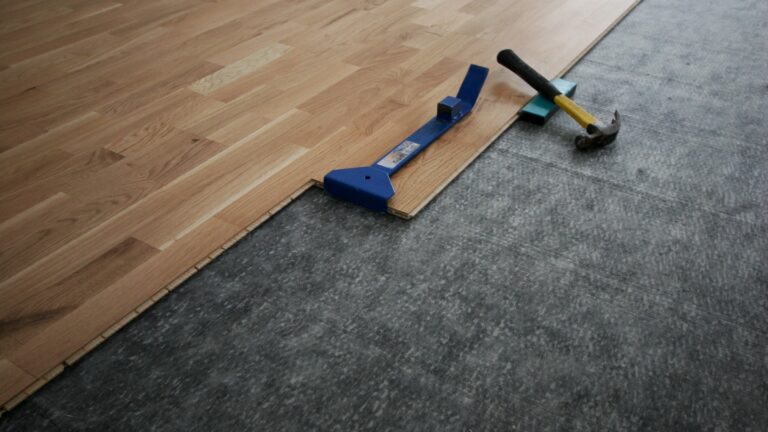
Some old floors are simply too far gone, and some shop refits want new boards from the start; in those cases our wooden floor installation team can lay timber we provide, or hand over the boards to another fitter, drawing on ranges including Junkers and Bona.

To begin, take a wide photo of the room or staircase and a close one of the worst boards, worm holes or worn treads, and email both to info@ryansrestoration.co.uk. Should it be a job for us, a free inspection follows that lasts about thirty minutes, with a probe into suspect boards, a meter on timber and masonry, a look at the airbricks and void, and a hunt for exit holes and soft wood. The itemised written quotation that follows holds unless the scope changes. To talk it through, call 01823 674562 in the working week from eight in the morning to six at night (Saturdays can be agreed beforehand), or use any of the routes on our contact page. Readers to the south-west may also find our page on floor sanding in Tunbridge Wells useful.

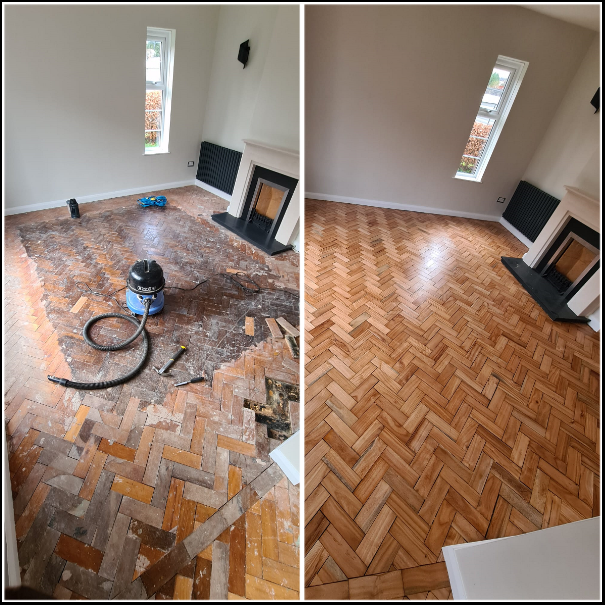
Parquet Flooring Restoration

Rochester Floor Sanding Questions

Not regularly. We work from near Wellington in Somerset, so trips to Rochester and the wider Medway towns are reserved for jobs of some size, such as commercial premises, flats above shops being refitted, staircases and houses where several rooms are being restored together. For a single small room, a local Kent firm will normally serve you better.

Small round holes are usually exit holes from furniture beetle. If the edges are dark and there is no fresh powdery dust, the activity is very likely long finished and the boards can often be sanded and sealed as they are. Sharp, clean holes with fresh dust suggest live beetles, and a timber treatment specialist should look at the floor before any restoration begins.

We are floor restorers, not a timber treatment company, so active infestations and dry rot are passed to the right specialist. What we do is identify the signs on survey, cut out and replace boards that have been weakened, repair joists where needed once the cause has been fixed, and then sand and finish the floor so it is sound and looks right.

Yes, though it is mostly hand work. Narrow treads and winders are sanded with small machines, scrapers and hand blocks, and split or broken nosings can be rebuilt with matched timber. Painted stairs are tested for lead first. Where treads are dished from wear, they are cleaned back following the hollow rather than flattened, which keeps them strong.

Usually. Pubs and restaurants are normally sanded overnight with fast-curing lacquer so trading carries on the next day. Shops are often done on a closed day or over a few evenings. Dates are agreed well in advance, and because we are travelling from Somerset, the work is planned as one continuous run of nights or days.

Replacement boards come from our reclaimed stock, so they have already aged and are close in width, thickness and grain to the originals. After sanding, a light stain can bring them into line if needed, tried first on your own boards. Choosing an oil or a low-sheen lacquer also helps old and repaired timber read as one floor.

Not at all; it is common in old high-street buildings where premises have been joined or extended. Each area is sanded along its own grain, and the steps and edges between levels are worked by hand so nosings stay rounded and safe. Worn thresholds are usually consolidated and finished rather than cut flat, to avoid thinning the surrounding boards.

Often, yes, but it is worth checking with the council first, as some work to listed buildings needs consent. We do not make consent applications, but we can set out the proposed repairs, the amount of timber to be removed and the finish in writing, so the conservation officer has a clear specification to consider.

Expect a typical house, or a flat over a shop, to take between one and three days, longer if there is a lot to put right first. Floors with woodworm or rot damage, or long staircases with lots of hand work, can take longer. Commercial jobs are scheduled around opening hours, and every job is planned as a single visit because of the distance we travel.