Floor Sanding Tunbridge Wells

Wood Floor Sanding and Restoration in Royal Tunbridge Wells

QUICK QUOTATION

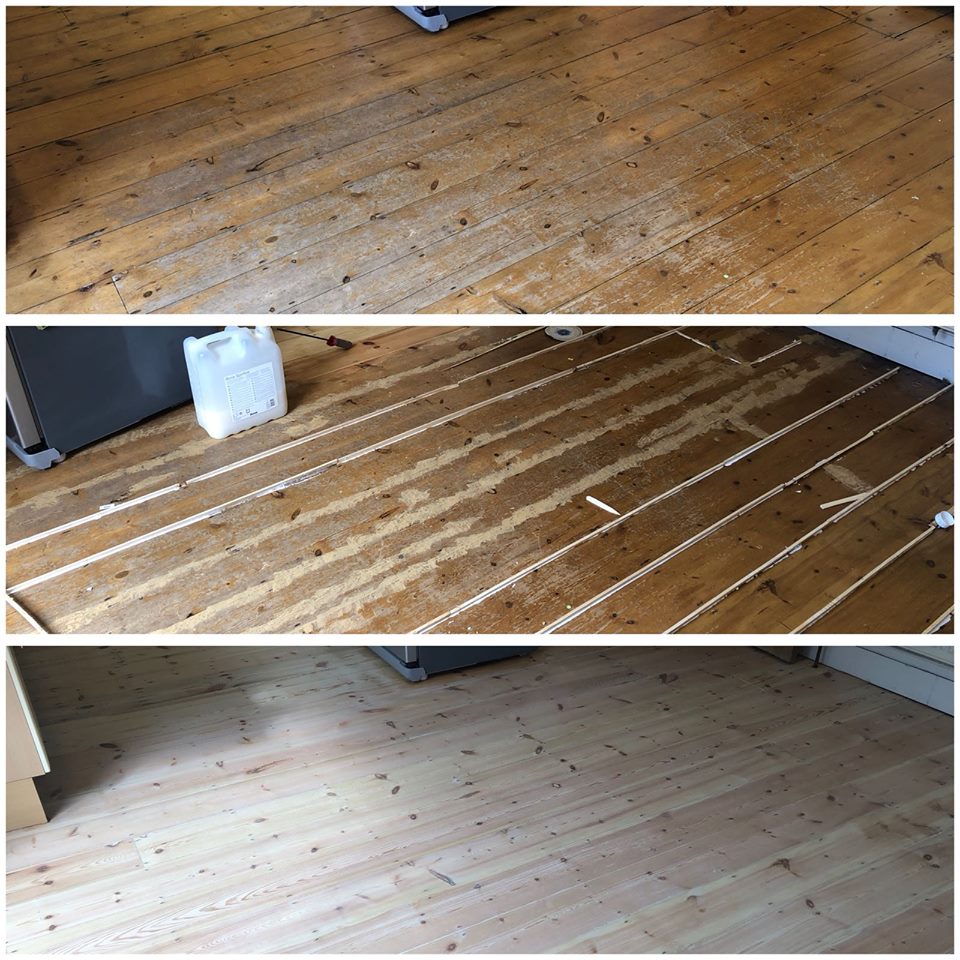
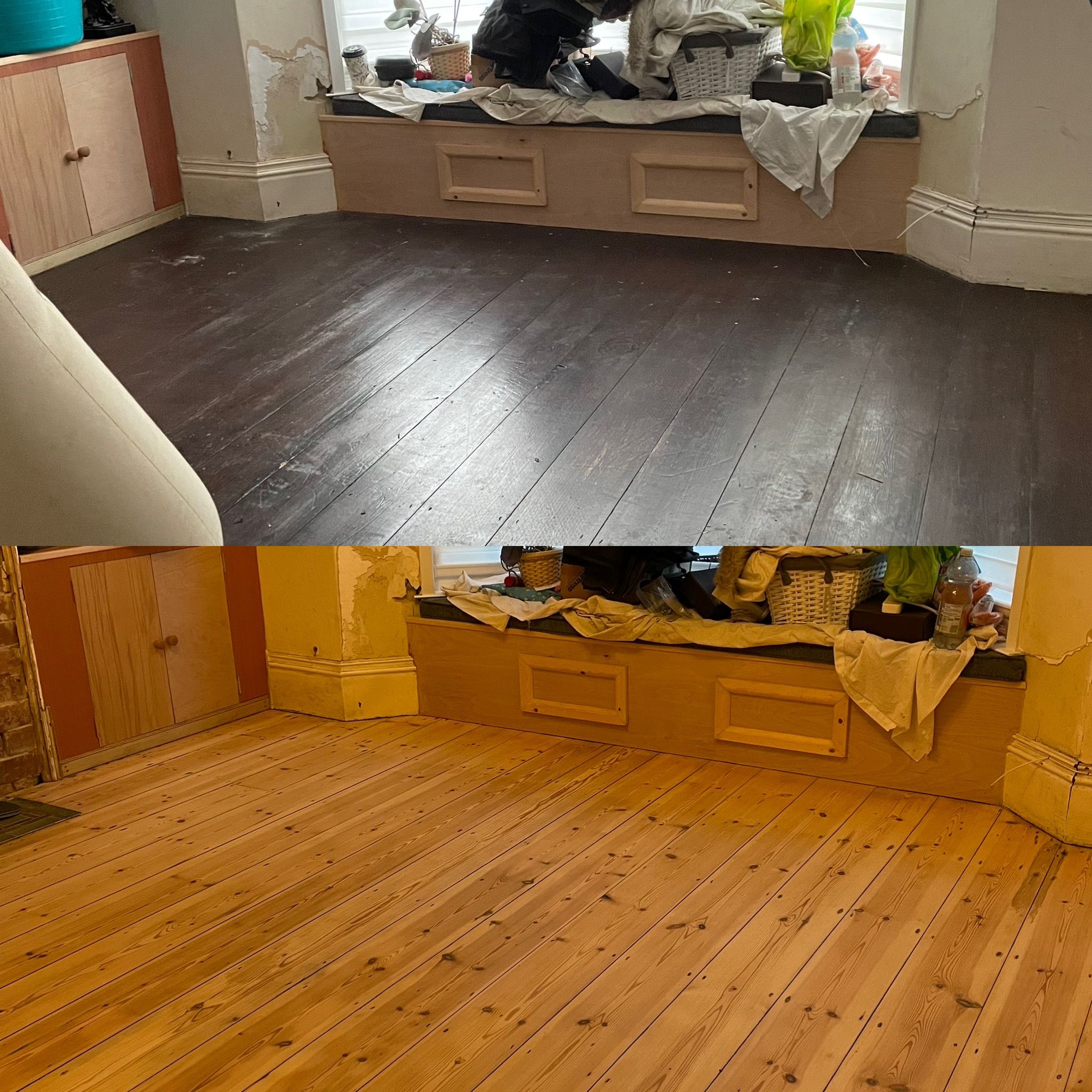
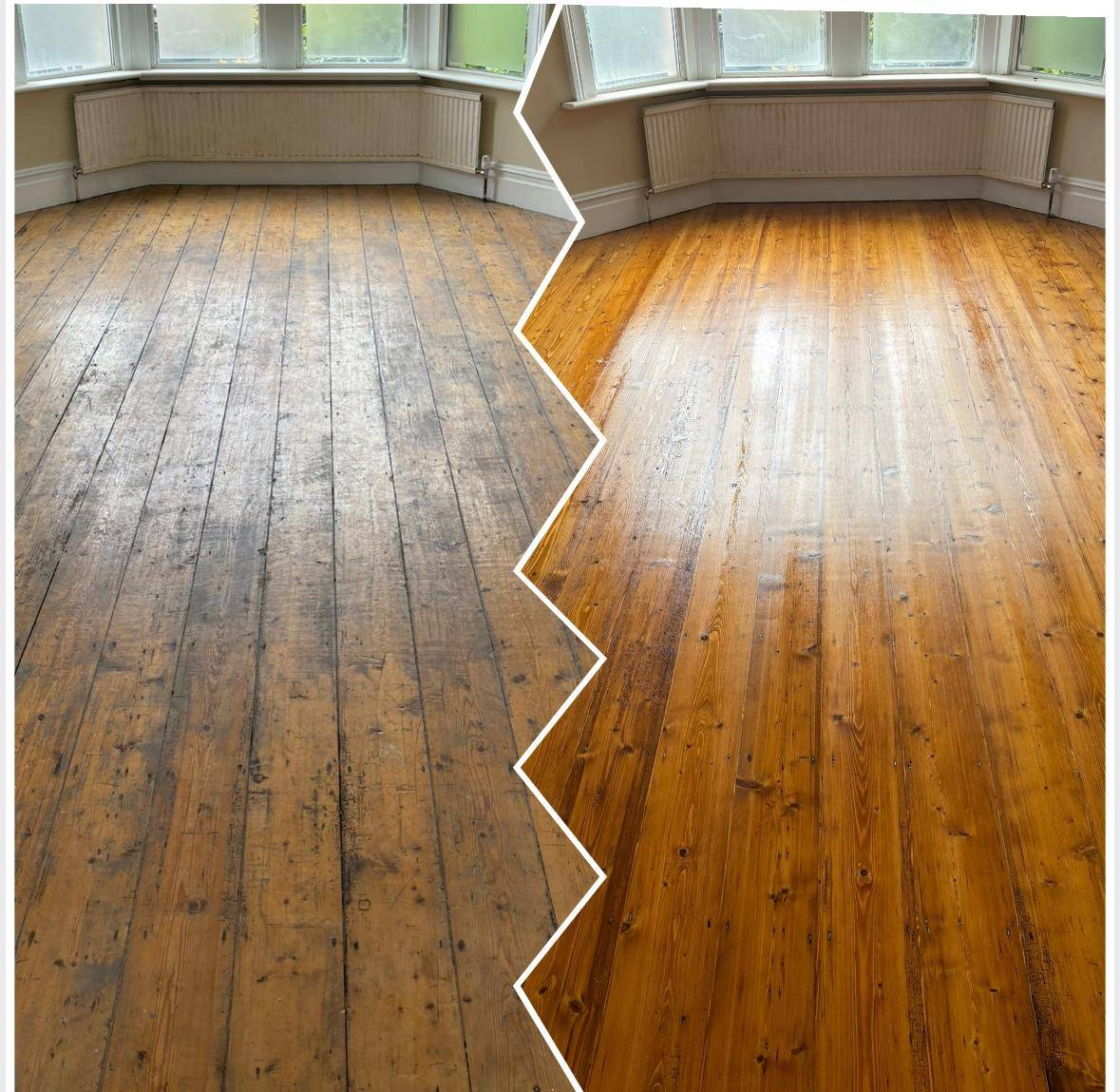
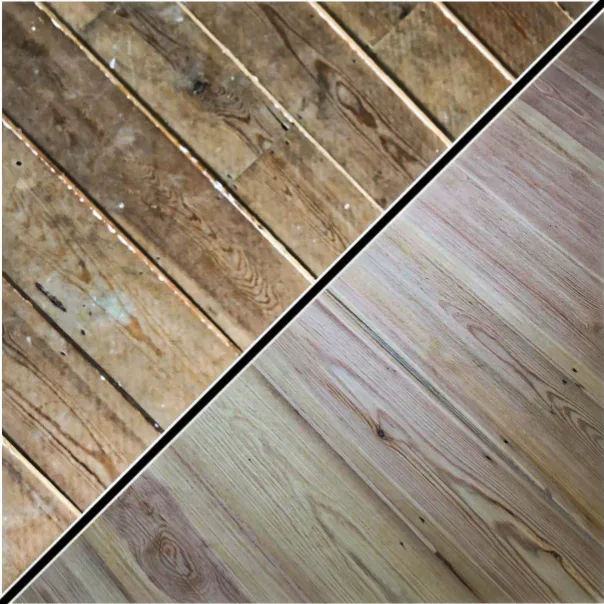
Floor sanding before and after

Floor Sanding in Tunbridge Wells

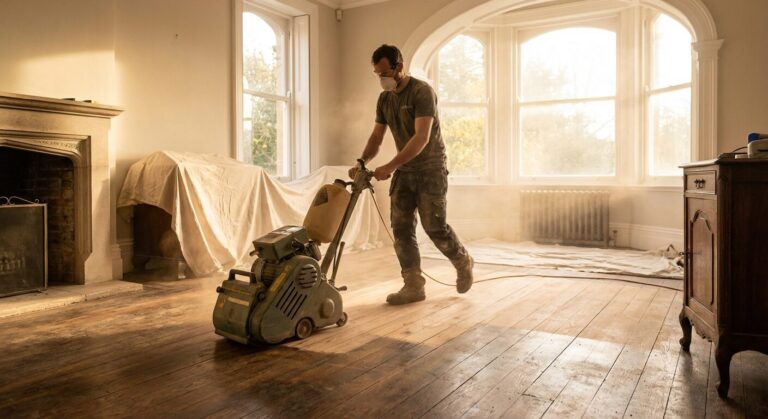
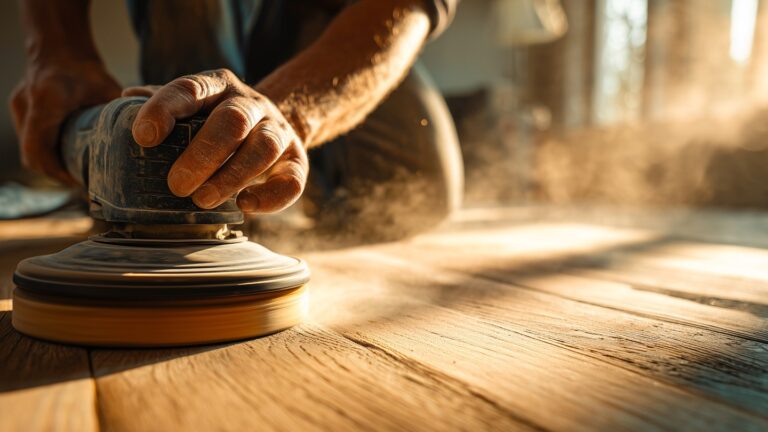
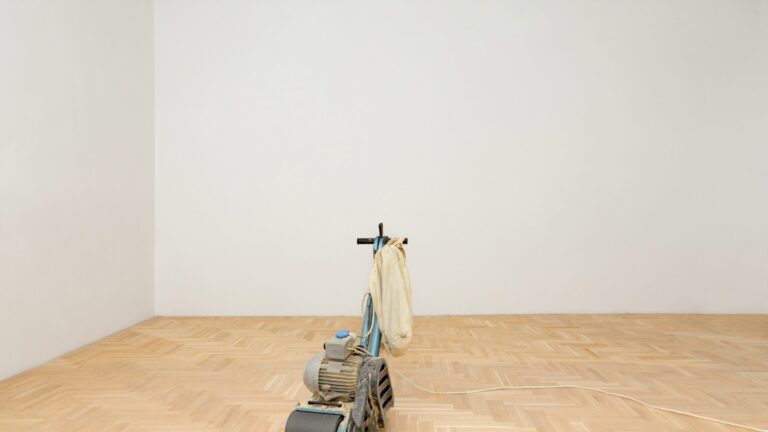
We provide dust-free wood floor sanding across Royal Tunbridge Wells, Tonbridge and the Wealden villages — Regency boards around the Pantiles, Victorian pine in the villa streets, oak herringbone in Edwardian halls, wide elm in Wealden farmhouses and engineered oak in newer homes. Every job begins with assessment and repairs, then staged sanding through the grits and a finish specified for the room and the era. Sealed extraction captures the overwhelming majority of dust at the machine, machine hours stay sociable for close neighbours, and a fixed written quotation is agreed before anything starts.

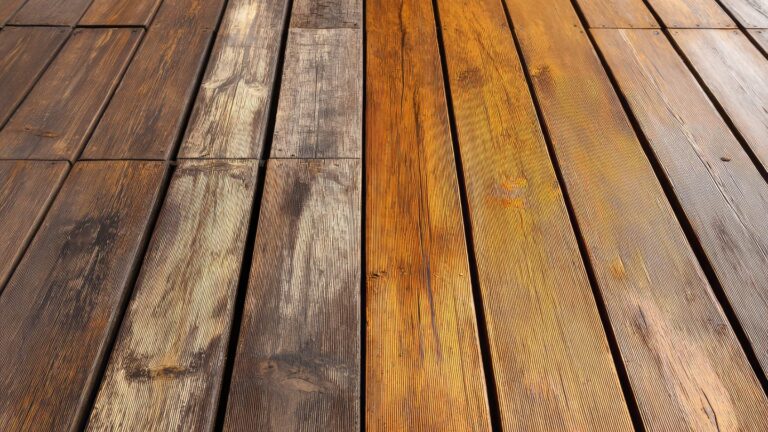
Sun-fade is one of the commonest reasons these floors get restored, and it is worth understanding why sanding cures it. Ultraviolet light only alters the top fraction of a millimetre of timber, so the bleached margin around a long-lived rug or the pale stripe by a south-facing window sits entirely within the depth of a normal grit sequence. The machines take the floor beneath the fade line as a single surface, and the boards come up one colour again — after which we talk honestly about finishes with UV filters and about rotating rugs, because the sun has not gone anywhere.

In a four-storey villa the work runs top-down: upper bedrooms machined and sealed first, then the house worked floor by floor towards the hallway, so finished rooms are never crossed by traffic from unfinished ones and the front door area — the busiest floor in the house — is coated last and left to harden in peace.
Wood Floor Repairs and Board Replacement

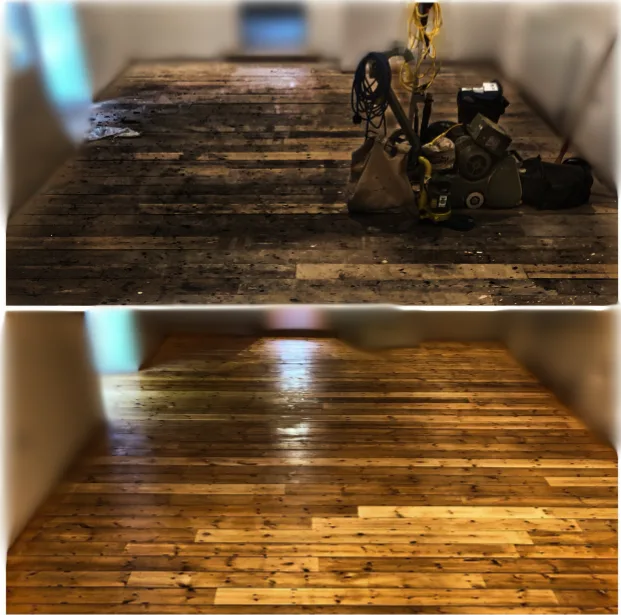
The repair menu runs the full range: wooden floor repairs, squeaky boards silenced for good, floorboard replacement in reclaimed timber matched for species, width and age, deep scratch and pet-damage repair, and gap filling with slivers or resin. Regency and Victorian floors are repaired by piecing in rather than wholesale replacement, so two centuries of character survive while the damage goes; sun-fade, heat marks and old stain borders all come out in the restoration.

The dark borders around old carpet squares are stain and shellac applied a century ago, and they sit much deeper than sun-fade — pigment carried into the grain rather than resting on it. Removing them cleanly means extra passes over the border zone at the coarse stage, feathered wide so the extra cut does not print a step into the floor, and occasionally accepting a ghost of the old line on boards too thin to chase it out completely. We say which outcome a floor will give before the machines decide it for us.

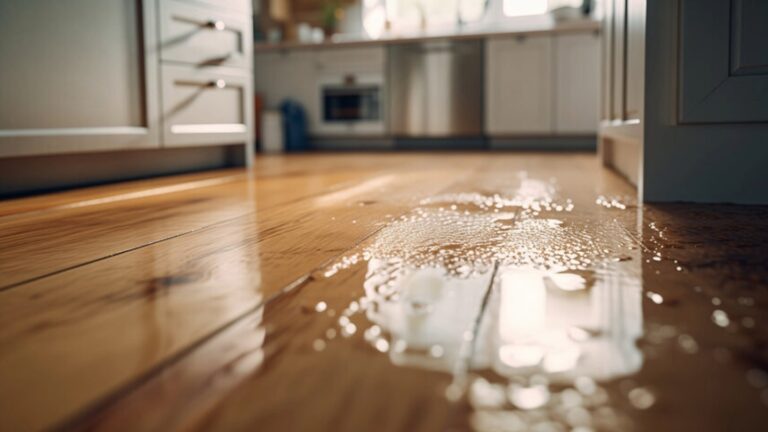
Cupped and split boards are diagnosed before they are dressed. Cupping means the board has taken moisture from below at some point; if readings show it is now dry and stable, the crown is machined out in the normal sequence, but if the moisture is live the cause is fixed first. Splits are stabilised from beneath or glued and cramped where access allows, and a board past stabilising is replaced from reclaimed stock matched to its neighbours.

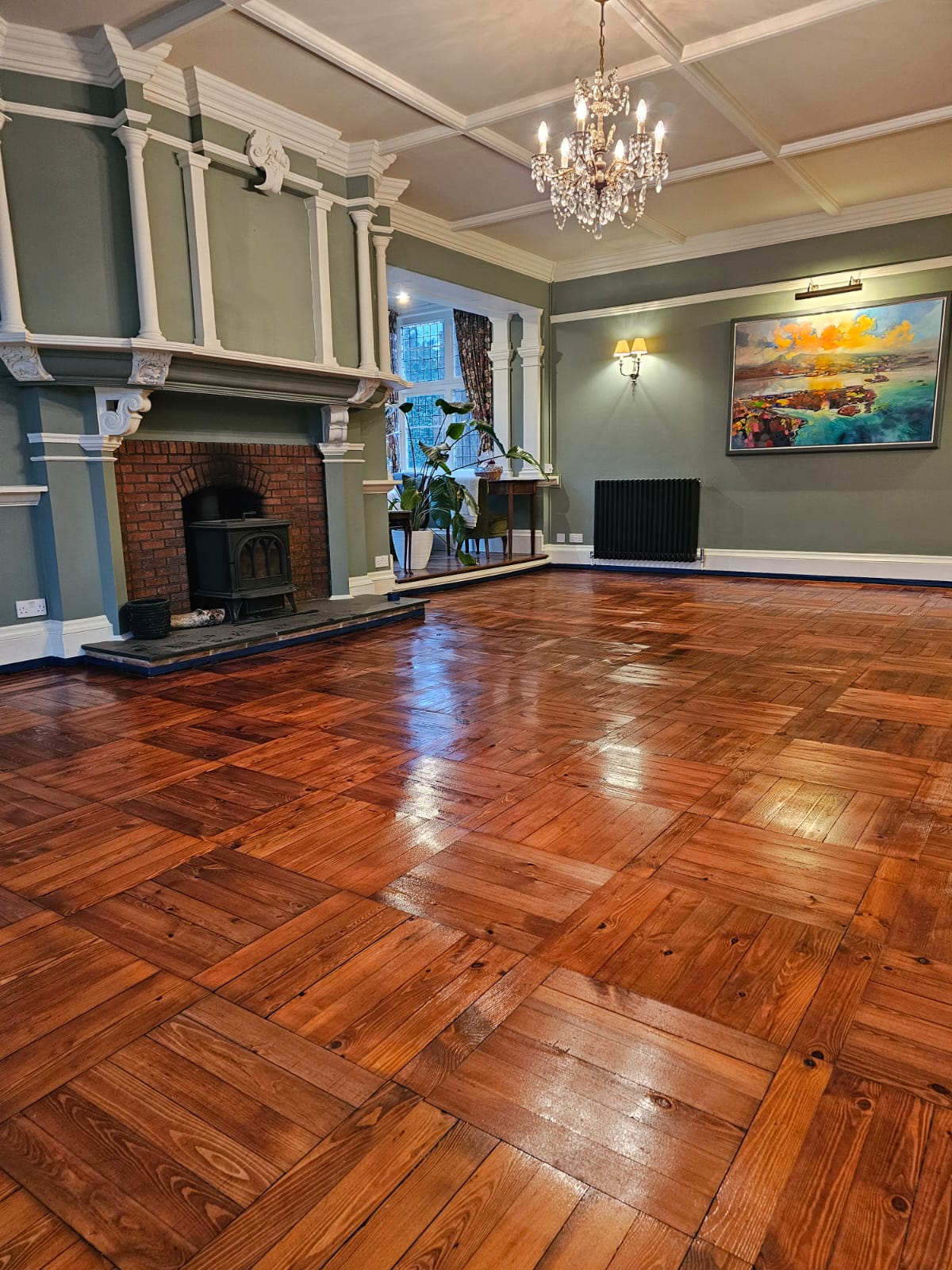
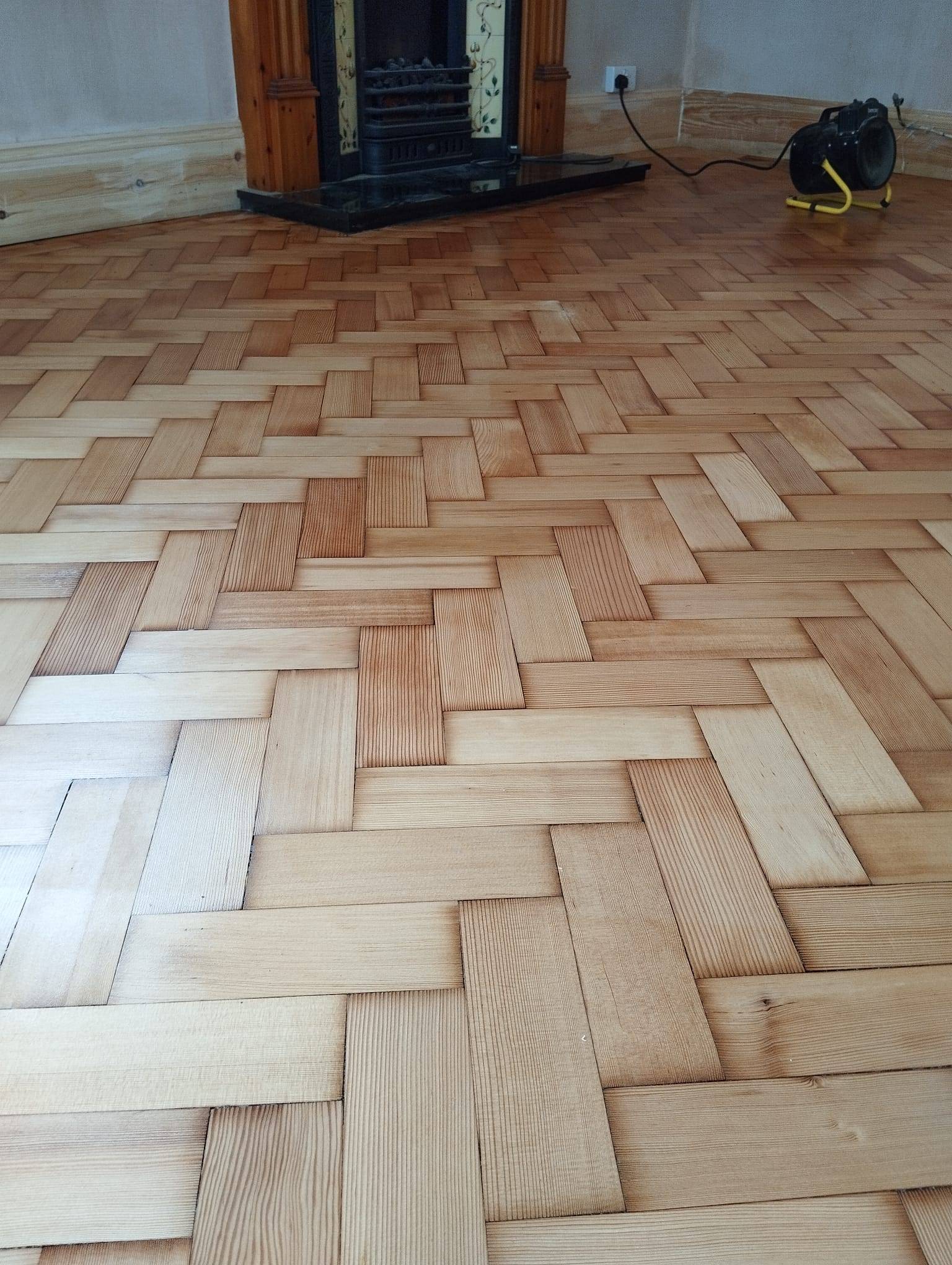
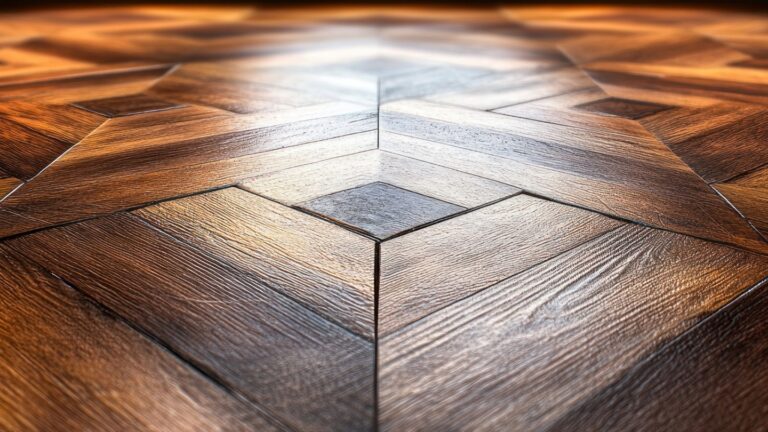
parquet wooden floor sanding
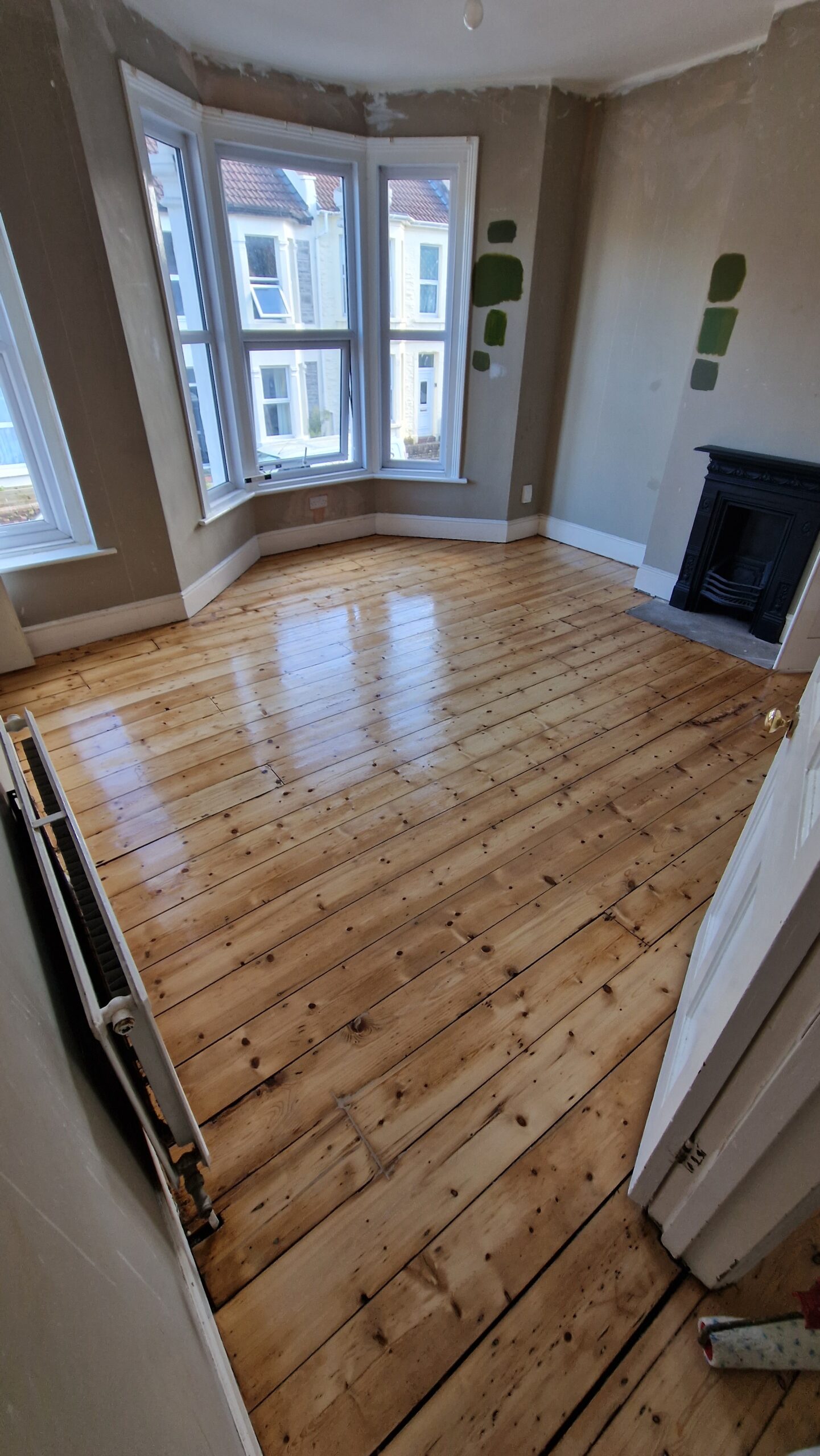
wooden floor sanding

Commercial Floor Sanding in Tunbridge Wells

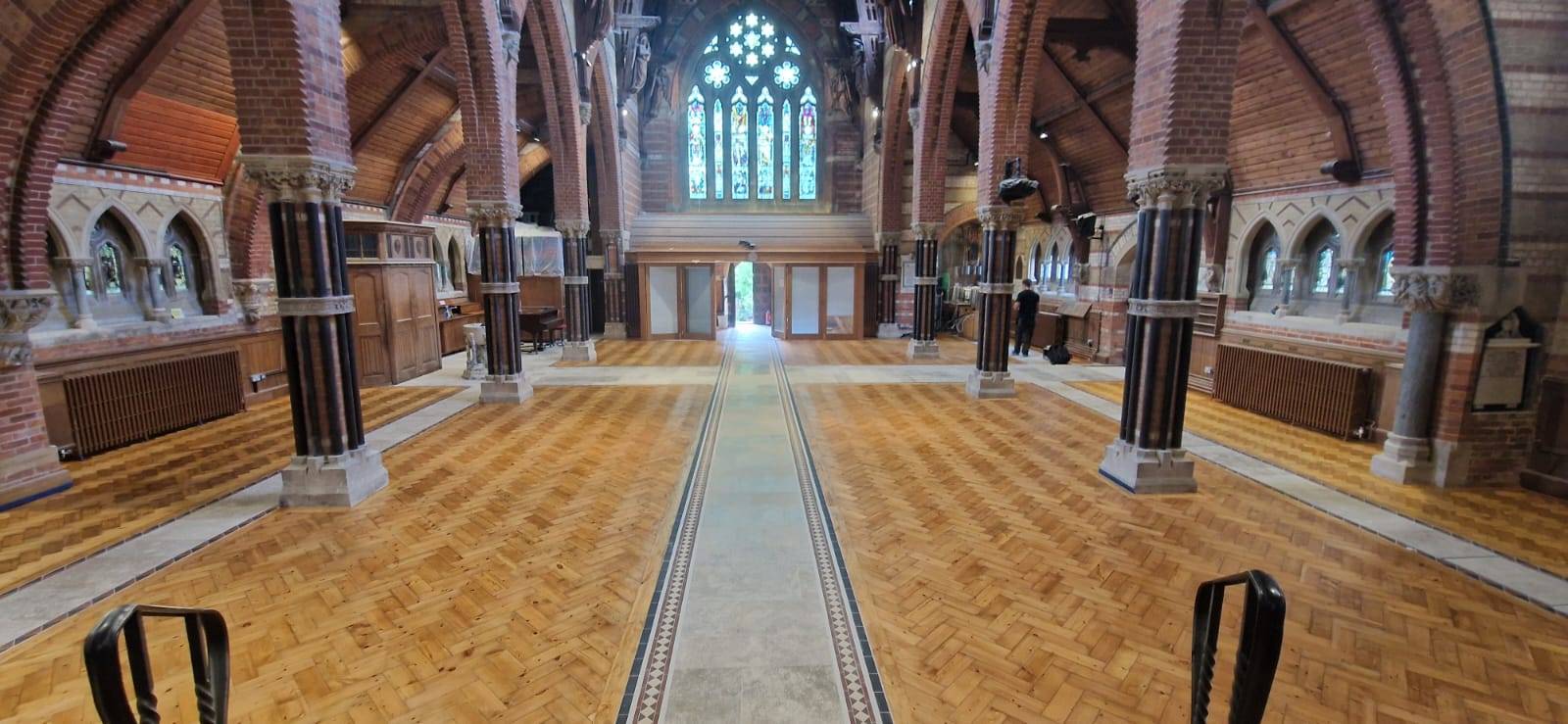
Our commercial floor sanding keeps the Pantiles and the town centre trading while their floors are renewed: restaurants, pubs and cafes overnight or on closed days with fast-curing seals; shops phased behind barriers; offices and salons over weekends; school halls across west Kent in holiday windows with line marking to governing body specification. Method statements, risk assessments and insurance certificates come as standard for every commercial client.

A cafe or small restaurant floor is very often a single closed-day programme: machines in at close on Sunday evening or first thing on the closed Monday, repairs and full grit sequence through the morning, first seal by early afternoon and the final coat late in the day — fast-curing two-component lacquers make the floor walkable for the next morning’s service. The handover sheet does the rest of the work: furniture back in stages, felt checked under every chair leg before it returns, and the mop regime held off until the seal has genuinely hardened rather than merely dried.

Parquet Floor Restoration

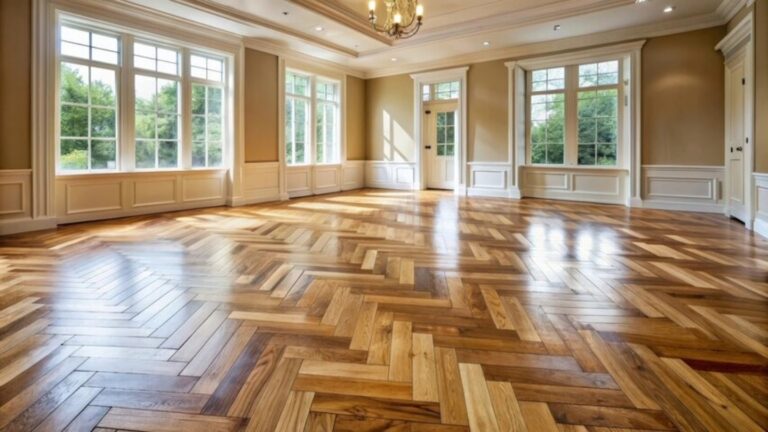
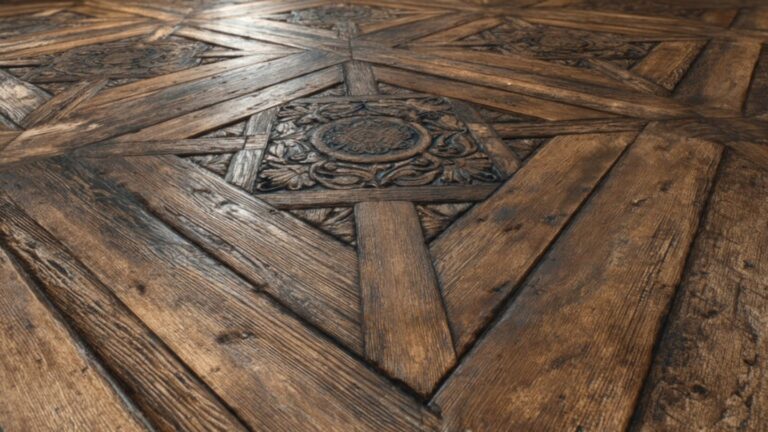
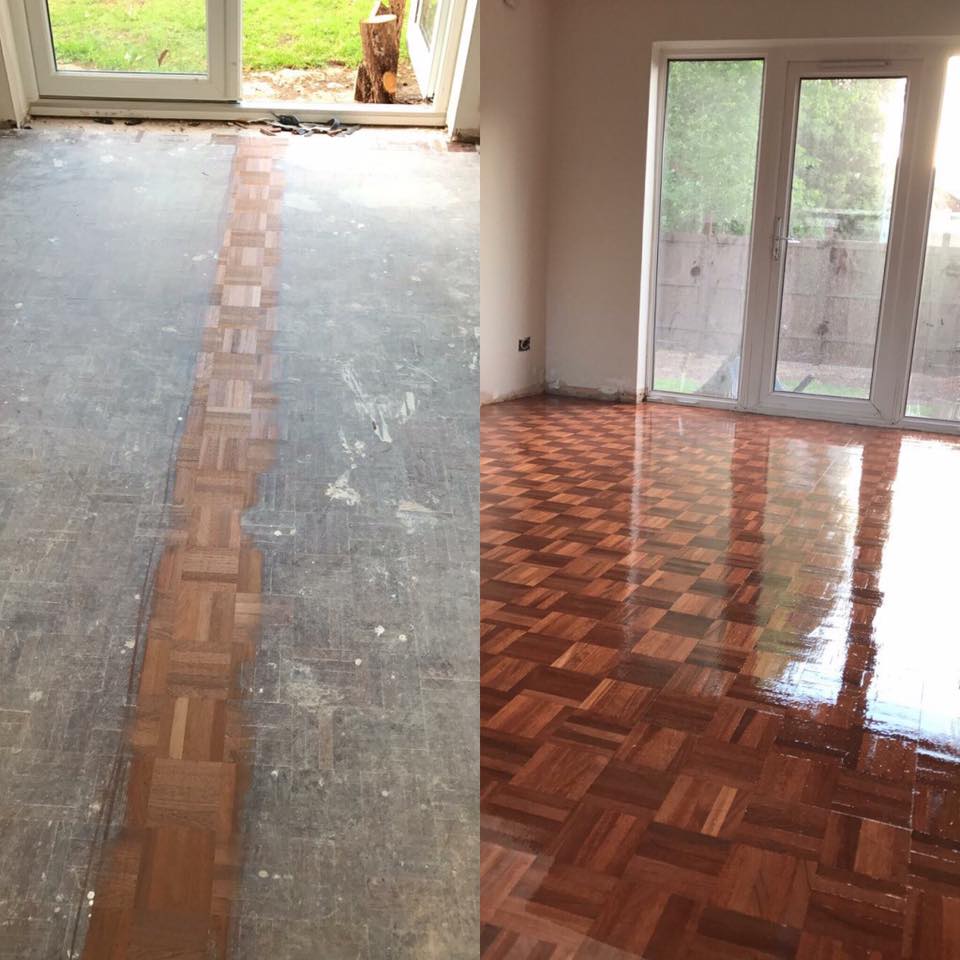
Parquet restoration is a staple in the town’s Edwardian and interwar houses: oak herringbone lifted where loose, cleaned of bitumen, re-laid and patched from reclaimed stock, then sanded with the pattern and sealed. Basketweave, brick-bond and bordered designs are all handled, and previously mis-sanded parquet — cross-scratched or unevenly stained — is usually recoverable with the right sequence. If blocks are too thin for another sand, we say so and quote the honest alternatives.

Cross-scratched parquet — the signature of a hired drum sander run straight down the room — is a recoverable condition in most cases. The scratches sit across the grain of half the blocks, so the cure is to re-machine the floor the way it should have been done: diagonal passes that treat both block directions equally, taken just deep enough to reach the bottom of the old scratch pattern and no further. Depth is checked continually against the block thickness, because the botched sand already spent timber the floor can never recover; where enough remains, the floor emerges as if the first attempt never happened.

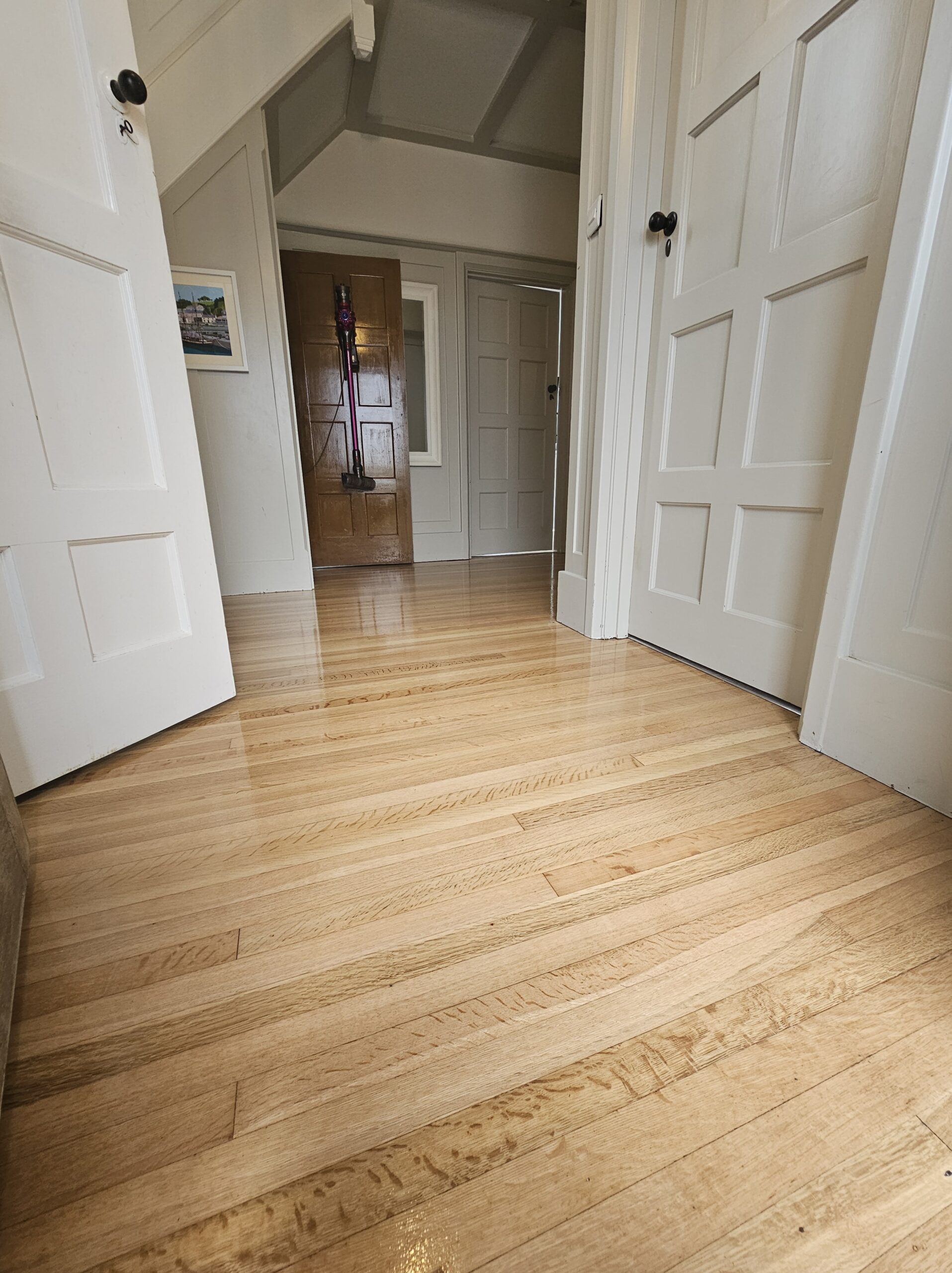
flooring sanding company
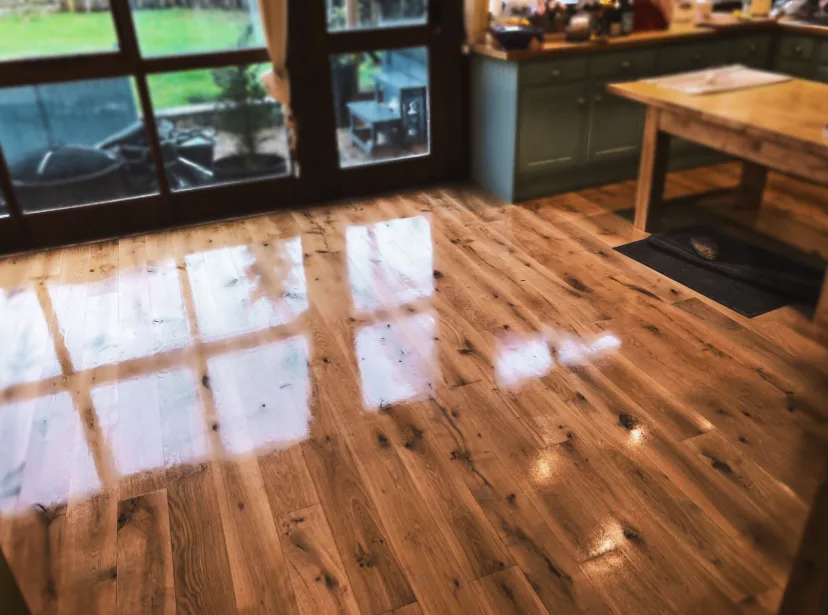
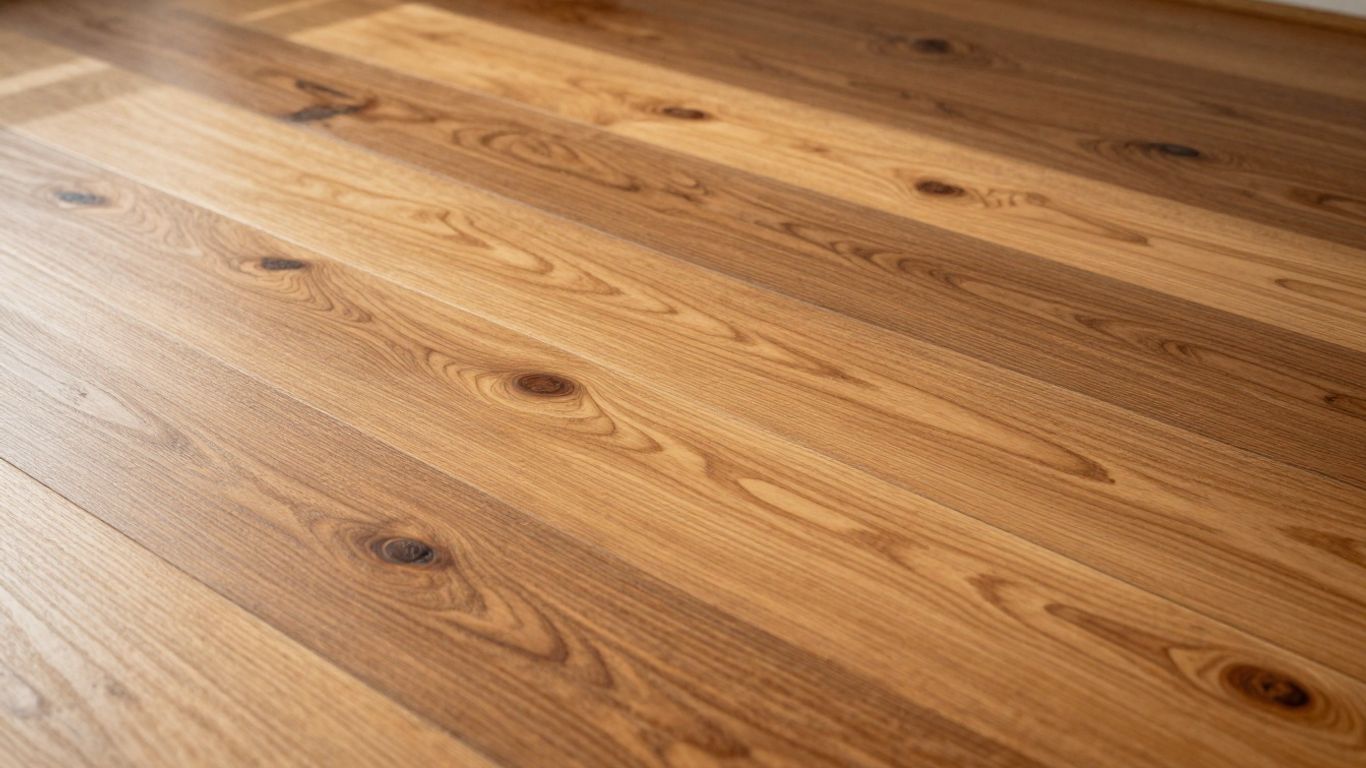
Sunlight across freshly lacquered wooden floorboards

Staining, Sealing, Oiling and Waxing

Finishes are matched to both room and building: professional staining for colour changes, always tested on your own boards first; hard-wearing lacquer seals where children, dogs and commuter shoes share a floor; hard wax and natural oils that mellow handsomely in period rooms; and traditional wax where authenticity matters most. Basement conversions get moisture readings before any finish is promised.

Basement and lower-ground conversions get a different pre-finish routine from the rest of the house. Floors at or below garden level are tested for moisture in both timber and subfloor, readings are compared against the upstairs rooms as a control, and the finish is chosen on the evidence — fully dry floors take the standard menu, while floors showing residual moisture take a vapour-open specification or, where the numbers are genuinely wrong, a pause while the cause is addressed. Sealing moisture into a lower-ground floor is the one mistake that cannot be corrected with more product, so this is the step we refuse to hurry.

Stairs, New Floors and Maintenance

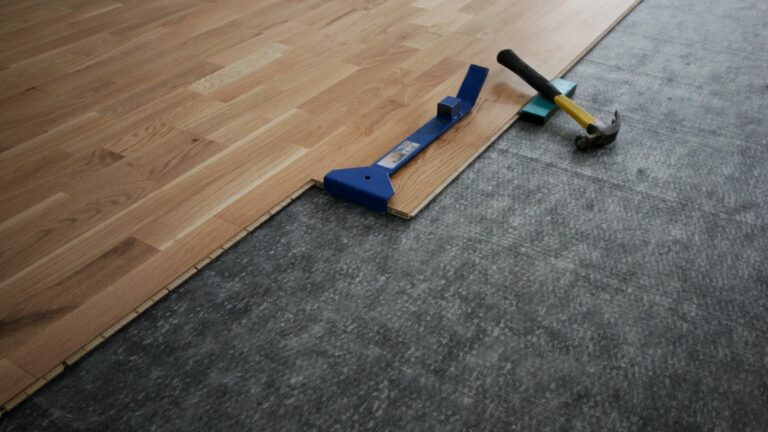
The town’s tall villas make stair sanding a signature service — four flights is not unusual, finished by hand, treads, risers and handrails together. Where a floor is beyond saving, our wooden floor installation service supplies and fits solid, engineered, reclaimed and parquet replacements. Sound floors are refreshed in a day with buffing and recoating, kept bright with polishing, and every job leaves with clear aftercare guidance and recoat timing.

Staircase work in these villas is scheduled around the fact that a house cannot do without its stairs. Machine work — detail sanders on treads and risers, hand tools on nosings, spindle bases and strings — runs during the day while bedrooms remain reachable, and coating is sequenced for the evening so the finish takes its first hard hours while the household sleeps. Treads carry more concentrated wear than any floor in the house, so they are built up with an additional coat, and stair runners or carpet pads go back only after the full cure, never the first morning.

Wood floor sanding company
Floor sanding taunton

Get a Floor Sanding Quote in Tunbridge Wells

Send two photographs — the room from the doorway and a close-up of the worst area — for a quick honest opinion and usually a fixed written quotation. Period houses, parquet and commercial premises get a free, no-obligation site survey.

Call 01823 674562, email info@ryansrestoration.co.uk, or use the form on this page.

All services available in Tunbridge Wells: floor sanding, restoration, repairs, board replacement, gap filling, parquet, staining, installation, stairs and commercial floors.

Nearby areas we also cover: Sevenoaks, Maidstone and the rest of Kent.

FAQ: Floor Sanding in Tunbridge Wells

The full range: dust-free sanding, restoration, repairs, board replacement, gap filling, parquet, staining and finishes, stair sanding, buffing, new floor installation and commercial floor sanding.

Yes — minimal abrasion, pieced-in repairs with matched reclaimed timber and period-appropriate finishes keep the age while removing the damage.

In Edwardian and interwar Tunbridge Wells houses, often — lift a corner or send a photograph and we will tell you what you have.

Yes — treads, risers and handrails finished by hand, and the town’s tall villas make multi-flight staircases a regular job.

Usually a hard-wearing lacquer specified for grip and wear, with oils and waxes reserved for lower-traffic period rooms. We advise room by room.

Yes — overnight and closed-day working with fast-curing seals, or phased sections behind a barrier where the doors cannot shut.

Routinely — refinishing rarely needs consent, repairs sometimes do, and we advise at survey with conservation-friendly specifications.

Two photographs get a fast first opinion; a free, no-obligation site survey and fixed written quotation follow before any work is agreed.