45 years’ experience  ·  Rated 4.9 on Google  ·  Family-run, from our workshop near Wellington

45 years’ experience · Rated 4.9 on Google · Family-run

Floor Sanding and Wood Floor Restoration in Minehead

From seaside villas and guest houses to flats, shops and halls, we sand, repair and refinish wooden floors and staircases throughout Minehead.

QUICK QUOTATION

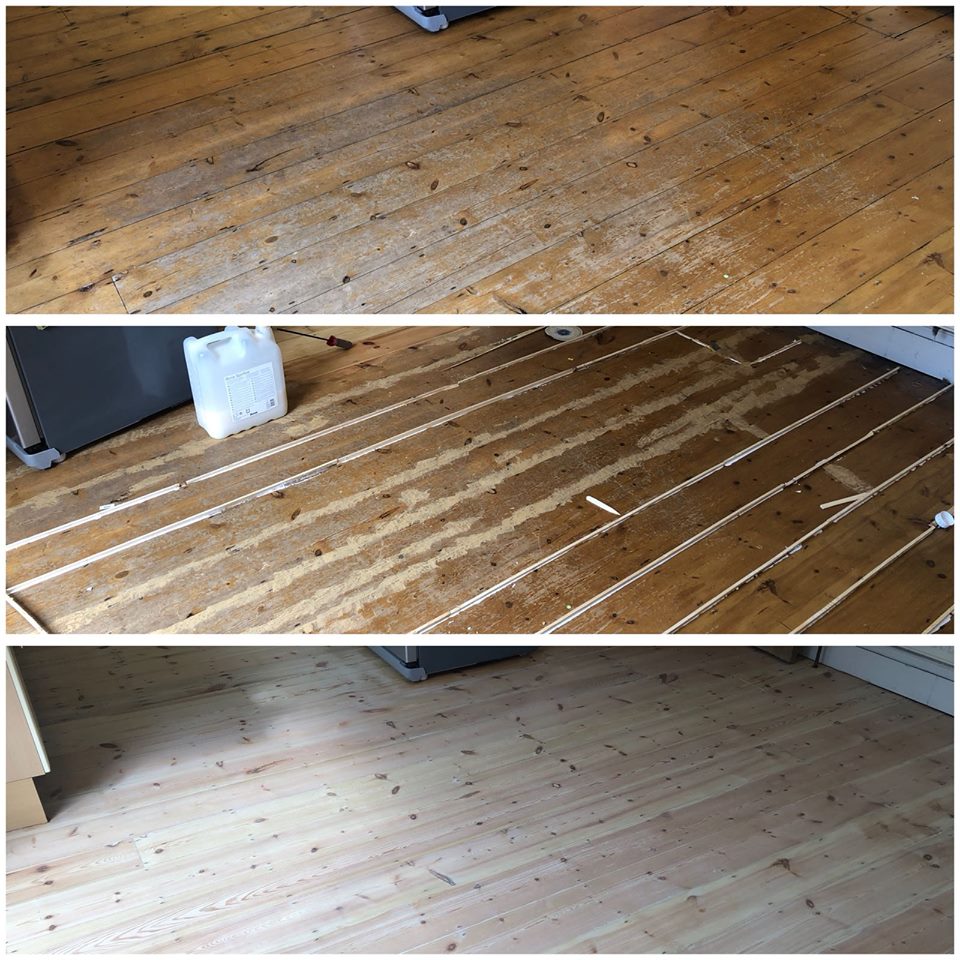
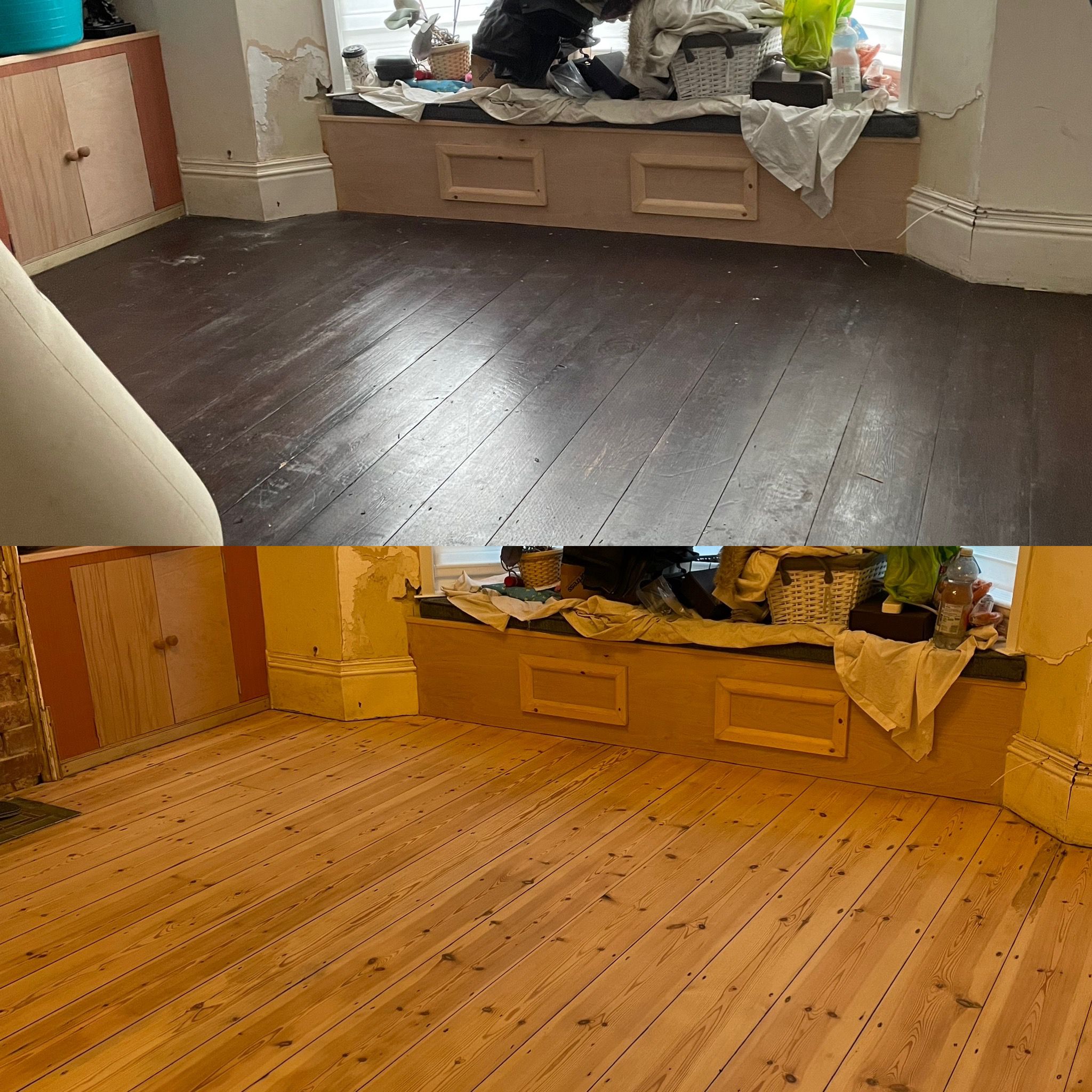
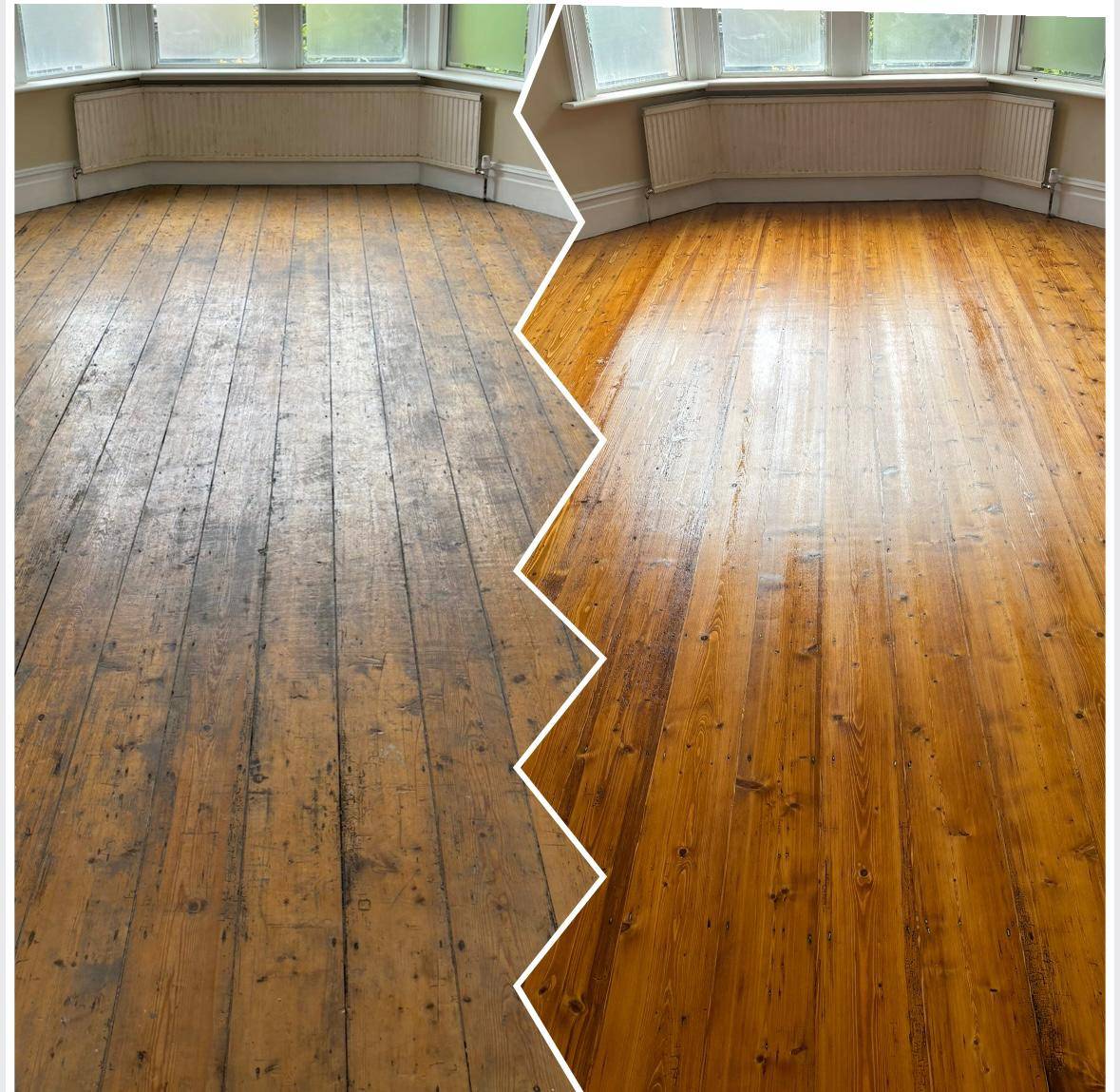
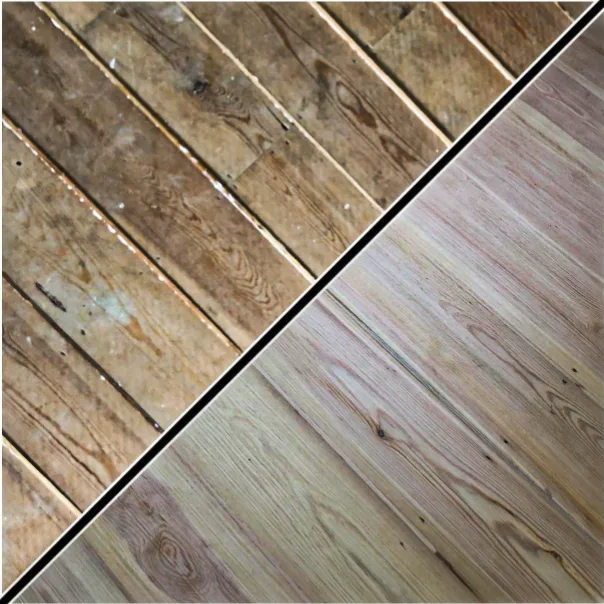
Floor sanding before and after

Floor Sanding in Minehead, Room by Room and Floor by Floor

Minehead grew as a seaside resort, and a lot of its housing reflects that: tall villas and terraces that were built or later run as guest houses, with three storeys of rooms, long landings and stairs that connect them all. Floor sanding in Minehead is often less about one room and more about planning a whole house, so that the work moves through the building in a sensible order and you are never shut out of every room at once.

We begin with a survey. Board thickness is checked at a lifted board or an exposed edge, damp readings are taken along the walls and across each room, and we look at how the floor has been treated before, whether that is old varnish, paint at the margins, carpet tape or the black residue left by lino adhesive. Each of those needs a slightly different approach, and spotting them early avoids torn abrasives and patchy results.

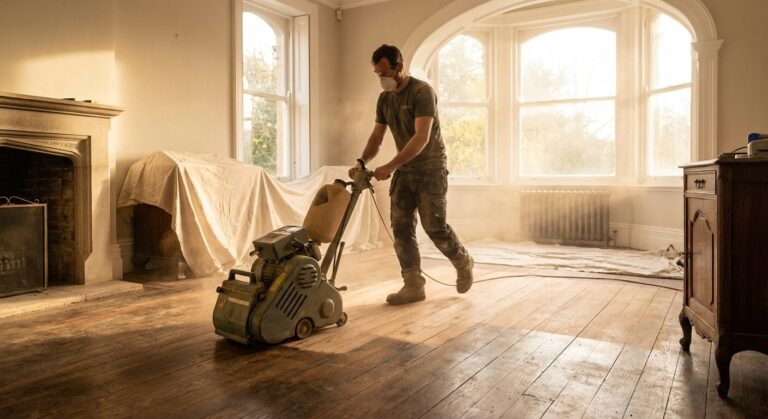
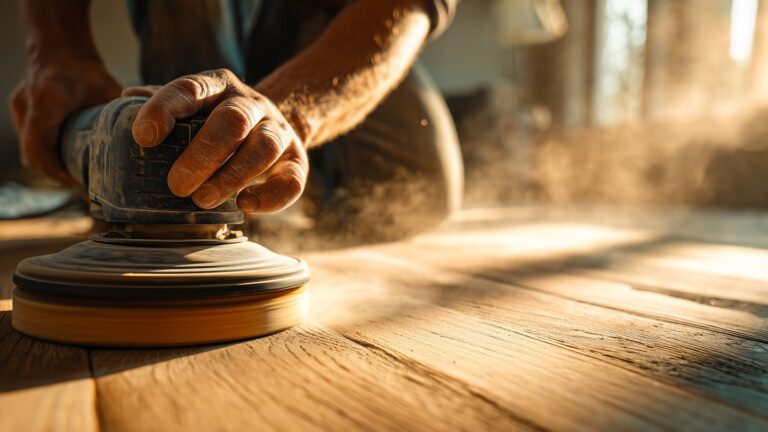
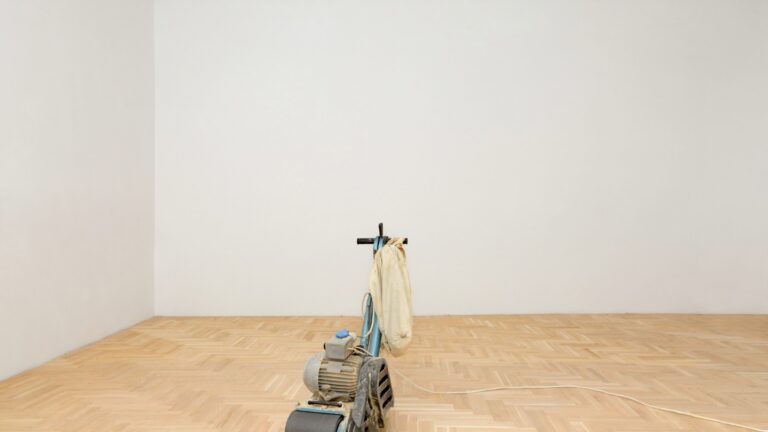
The sanding then runs through a sequence of grits, coarse to fine. Dust is pulled away at the sanding head into a sealed unit outside the room, which is what our dust-free floor sanding rests on, and it is standard on every one of our wood floor sanding jobs. In a house where people are still living, or a guest house that is partly open, that makes a real difference, although we still mask doors and vents because no system captures absolutely every particle. A single room is usually a day or two; a whole house takes longer, and we agree the order of work with you before we start.
Wood Floor Restoration in Minehead's Villas and Terraces

Wood floor restoration in Minehead most often involves softwood boards in Victorian and Edwardian houses, frequently hidden under carpet for decades and marked by every change of owner since. There may be patches where a fireplace was removed, a run of newer boards where heating pipes went in, and dark stain around the edges of each room from the days of rugs and linoleum.

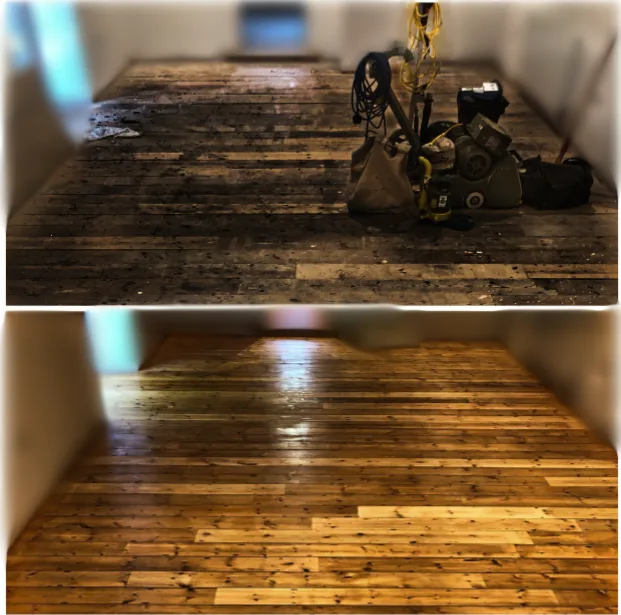
Our wood floor restoration service turns that patchwork into one coherent floor again. Mismatched patches are reworked or replaced with older stock, the stained margins are sanded back, and the whole room is finished together so the floor reads as one surface again.

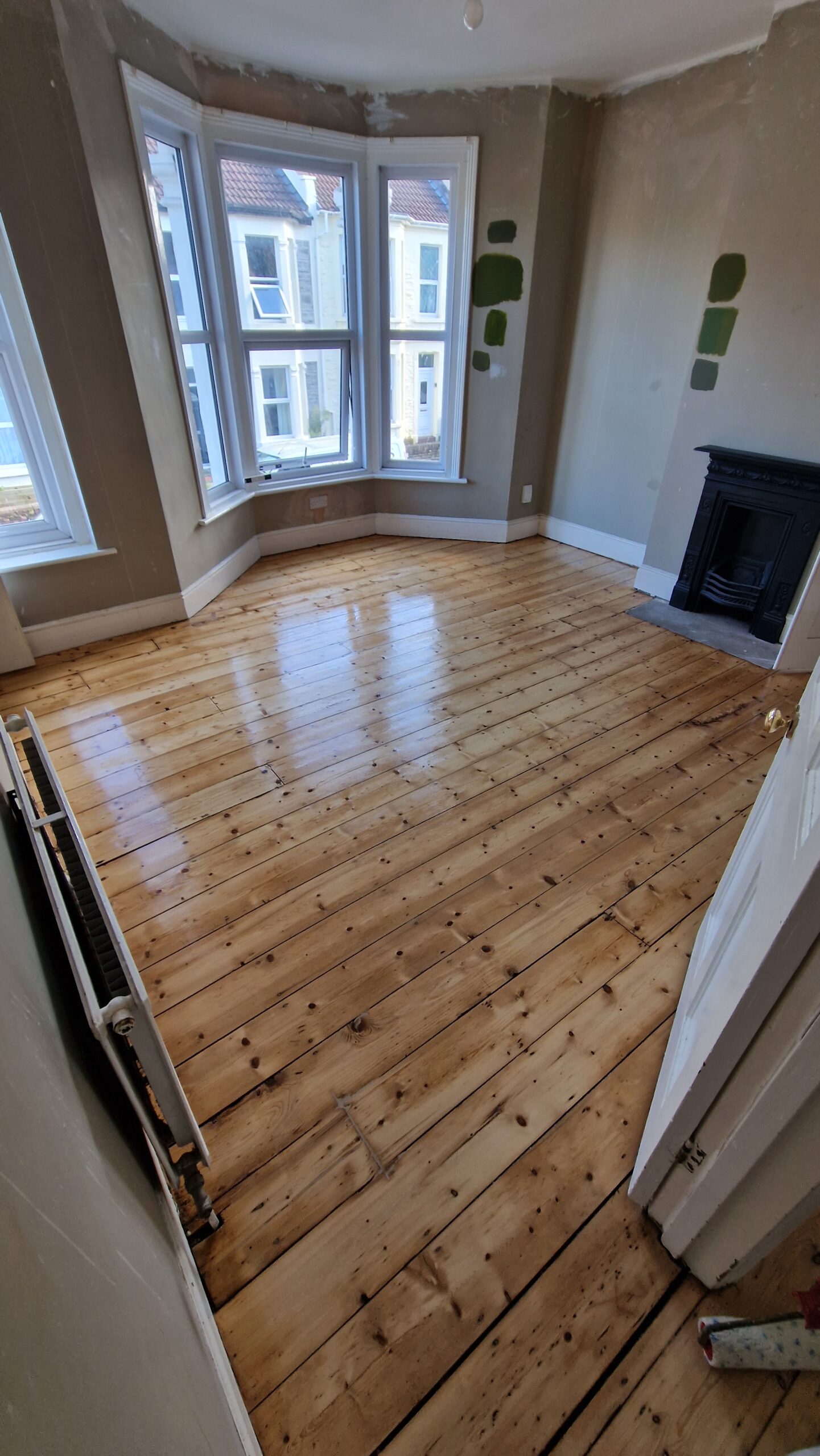
Pine is the usual timber in these houses, and it needs restraint. Pine floor restoration uses a gentler grit sequence than you would choose for oak, with the nail heads punched well down first, so the softer growth rings are not dished out. Done carefully, the result is a warm, mellow floor that suits a period house.

Where a house has oak, the job is more forgiving. Oak takes a firmer sand and almost any finish, and oak floor restoration can turn a dull, greyed floor into something with real depth. Newer flats and houses in the town often have engineered oak, and much of it can be sanded too, depending on how deep its hardwood face is.

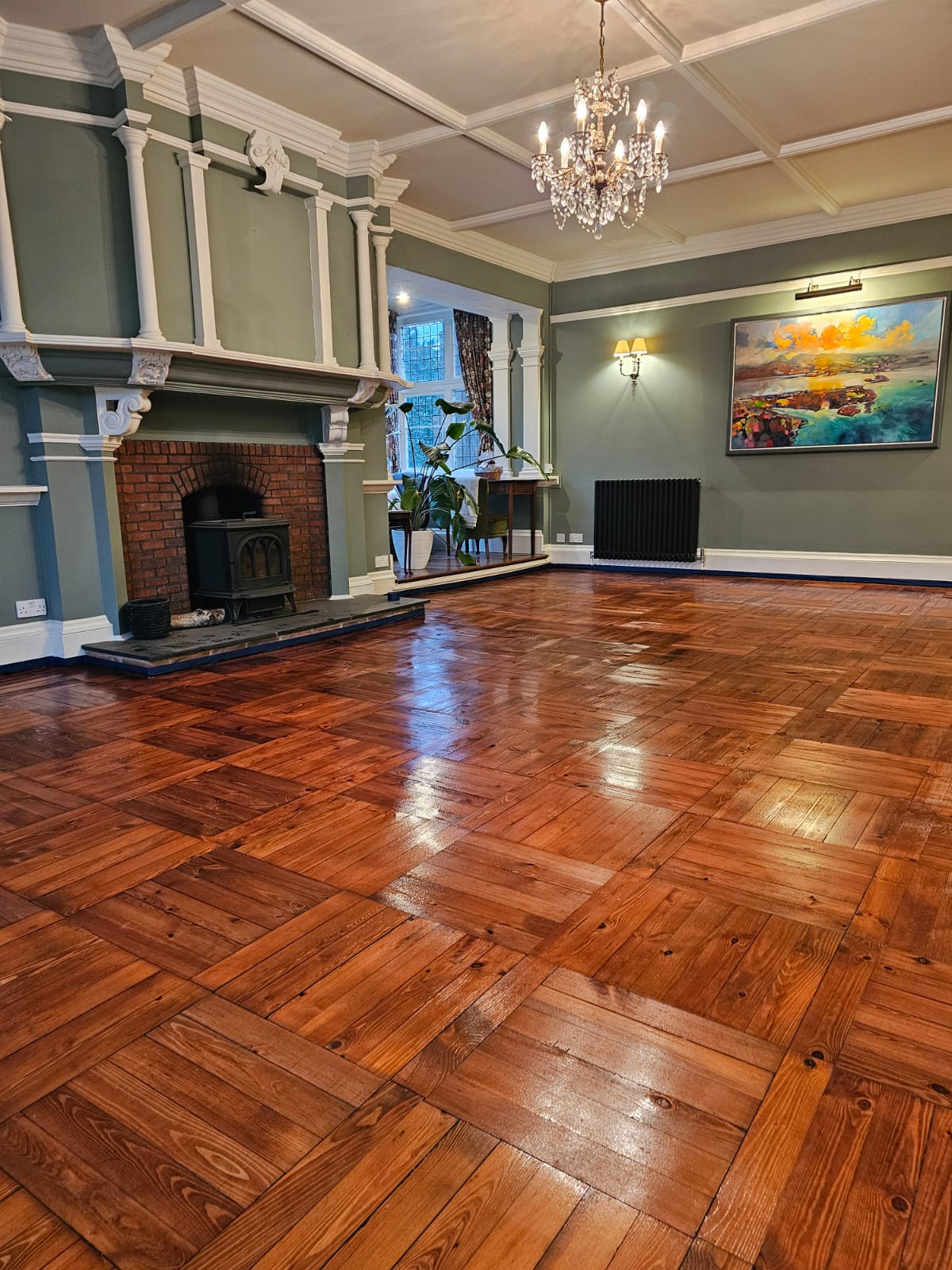
parquet wooden floor sanding
wooden floor sanding

Commercial Floor Sanding in Minehead

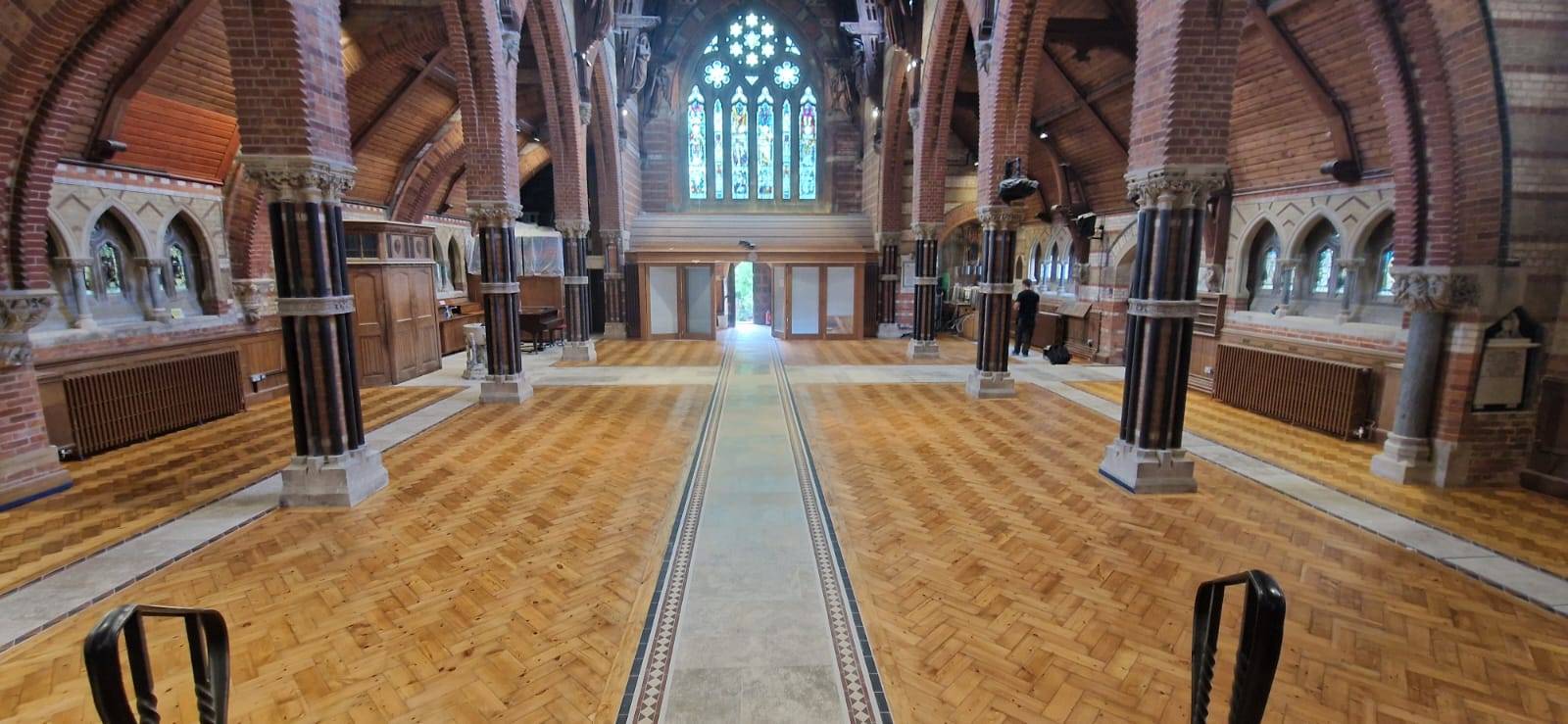
Commercial floor sanding in Minehead covers hotels, guest houses, cafes, pubs and shops along the main streets, as well as schools, halls and leisure spaces. The pattern is nearly always the same: the floor takes heavy wear in the busy months, and the work has to be fitted around trading.

For hotels and guest houses, we work a few rooms at a time so the rest of the building can stay open. Our hotel floor sanding page describes that phased approach. Restaurants, cafes and pubs usually prefer an overnight sand and a fast-curing finish, so that tables are back in place with the least possible disruption; see restaurant floor sanding. Shops can be divided into zones behind barriers, as set out on our shop floor sanding page.

Schools and community buildings normally book into the holidays. Studios used for dance or exercise classes need the right grip as well as durability, which is why dance floor sanding is treated as a specialist job. Where a hall is marked out for sport, lines are reinstated in-house to the relevant governing body specification.

For anything larger, our main commercial floor sanding page explains how surveys, programmes and handover are organised. Before committing, a facilities manager can have the paperwork in hand: method statement, insurance and referees.

Staircases and Landings in Tall Seaside Houses

In a three-storey villa the staircase is often the most used and most neglected piece of joinery in the house. Treads are worn at the centre, nosings are chipped, and the edges are usually caked with old paint or varnish from when a runner was fitted.

Stair sanding is slow, detailed work. A full-size sander cannot reach most of it, so treads, risers, strings and nosings are worked with detail sanders, scrapers and hand abrasives. Gloss paint at the edges is scraped back before any abrasive touches it, otherwise it softens under friction and gets dragged into the open grain. Spindles and handrails can be done at the same time if you want the whole staircase to match.

Worn or split nosings are a common problem and a safety concern on steep stairs. These can often be repaired or partly replaced before refinishing, and a hard-wearing lacquer then protects the treads from the constant traffic that stairs in a busy house receive.

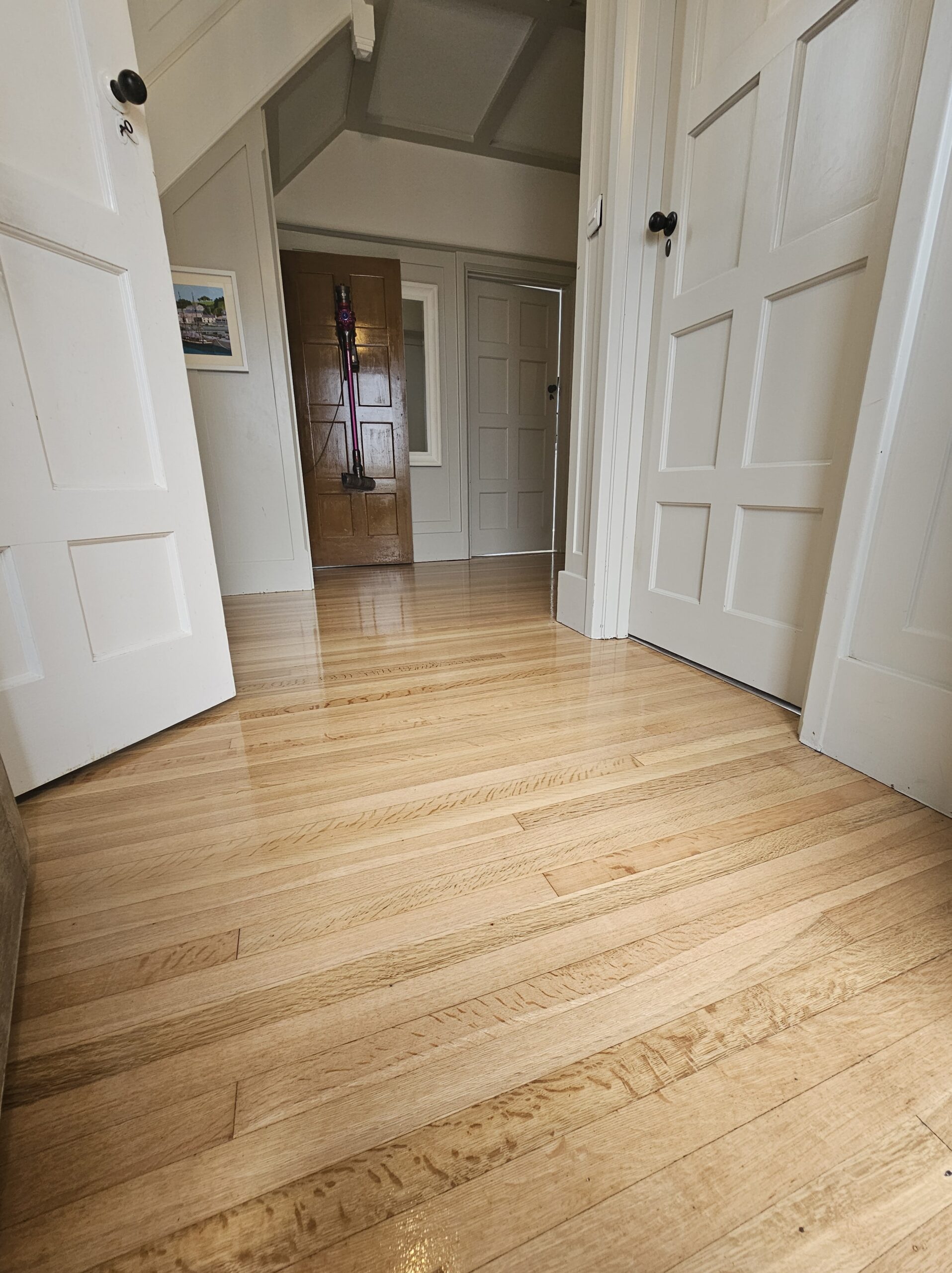
Landings and hallways are best done in the same visit. Sanding the hall, stairs and landings together means a single finish runs right through the house, rather than a newly sanded floor meeting a tired staircase at the bottom step.

flooring sanding company
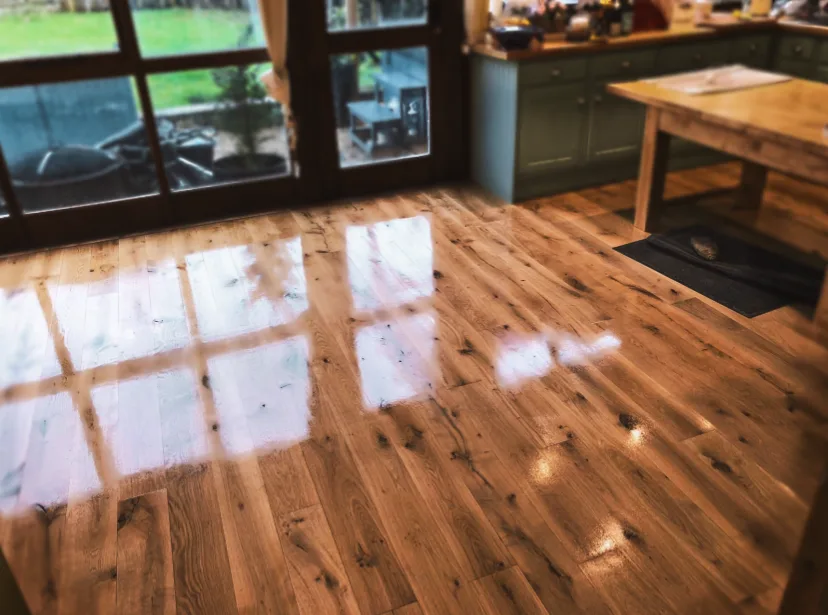
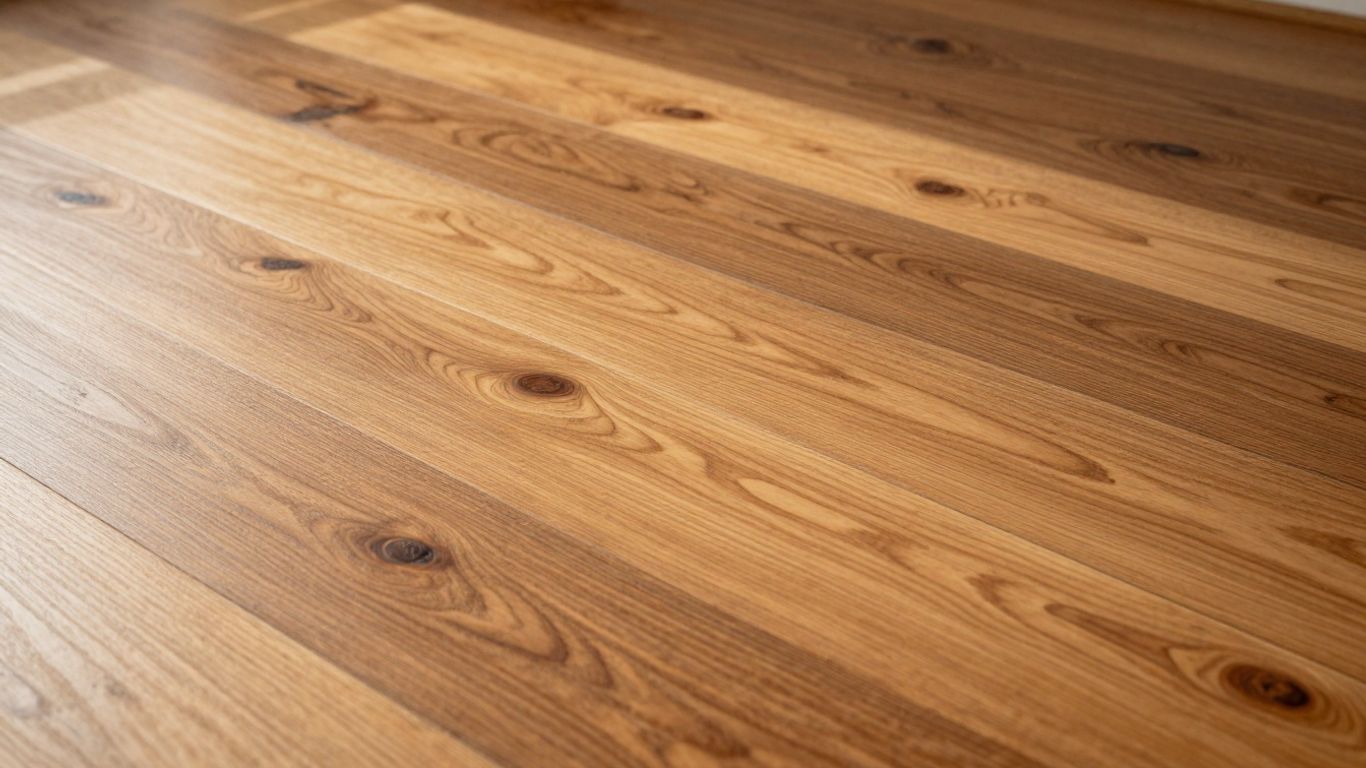
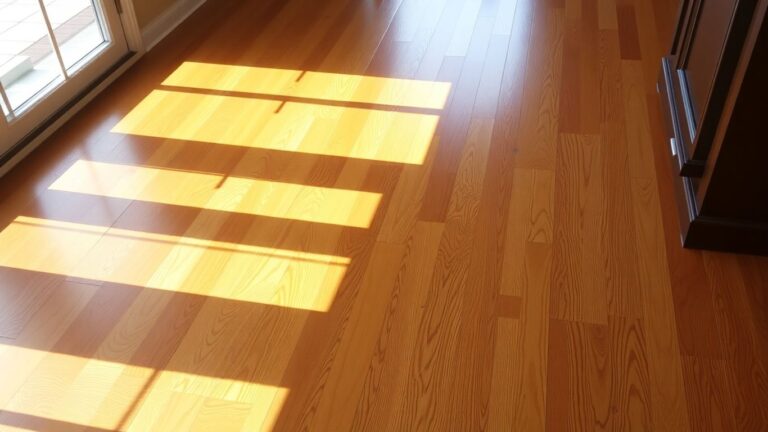
Sunlight across freshly lacquered wooden floorboards

Fixing Loose Boards, Gaps and Creaks

A floor needs to be sound before it is sanded. Our wooden floor repairs cover boards that bounce or lift, split tongues, broken edges at doorways and the uneven patches left when services were run under the floor. Fixing them first gives a flatter, more even sand and a longer-lasting finish.

Boards that are rotten, badly split or missing are replaced. Near the coast, end rot by outside doors and under windows is not unusual. For floorboard replacement we go to our reclaimed stock first, looking for boards that already have some age in them and the same width and depth as yours, so the patch disappears after finishing.

Old pine floors often have wide gaps that let in draughts and collect dirt. Gap filling closes them with either a resin filler made with dust from your own floor, for narrow joints, or slim strips of timber glued in, for wider ones. Squeaks and cracks underfoot, particularly on upper floors, are cured with squeaky wood floor repair. If the problem is only a few marks on the surface, wood floor scratch repair may avoid a full sand.

Herringbone Parquet and the Choice of Finish

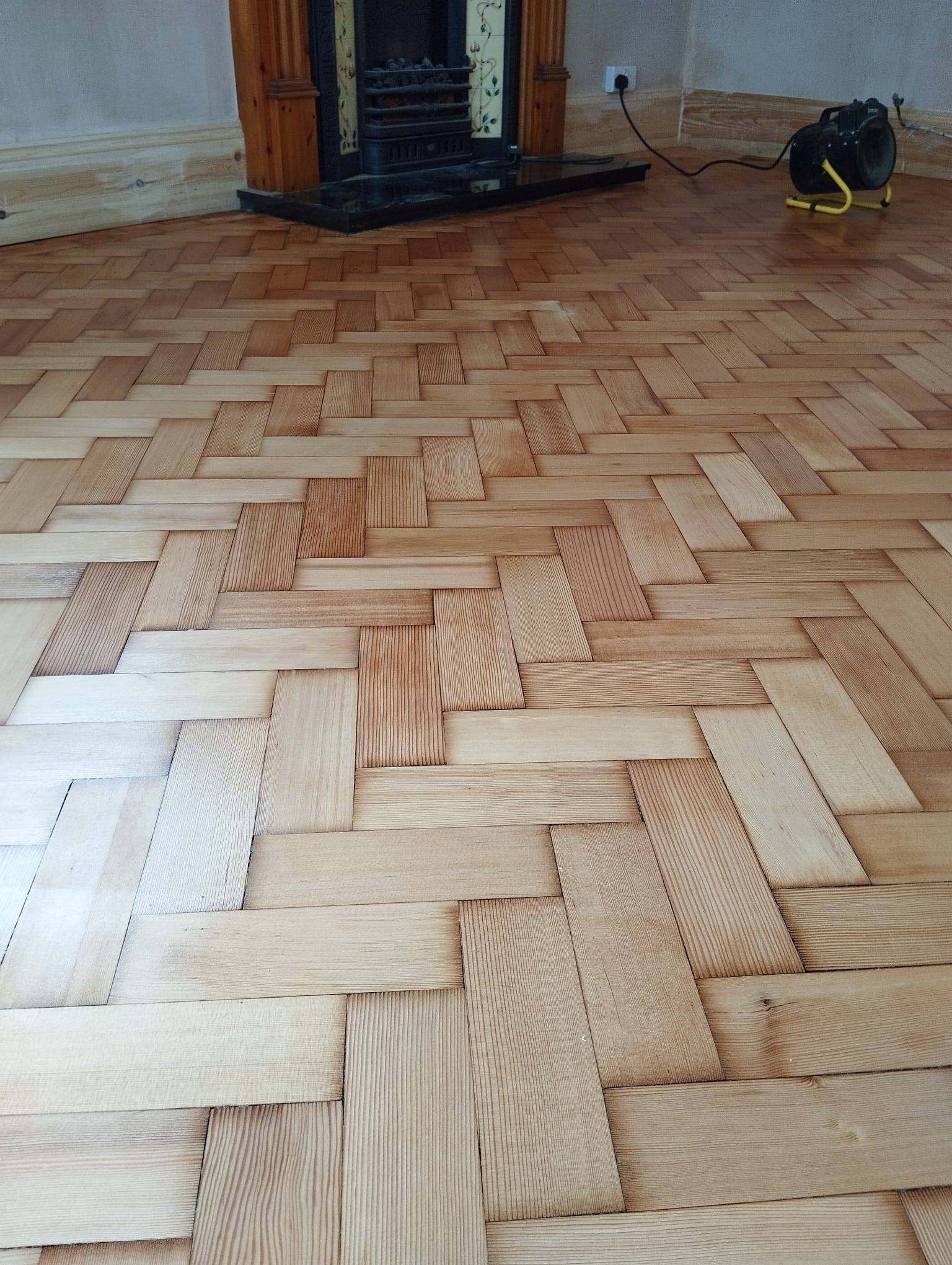
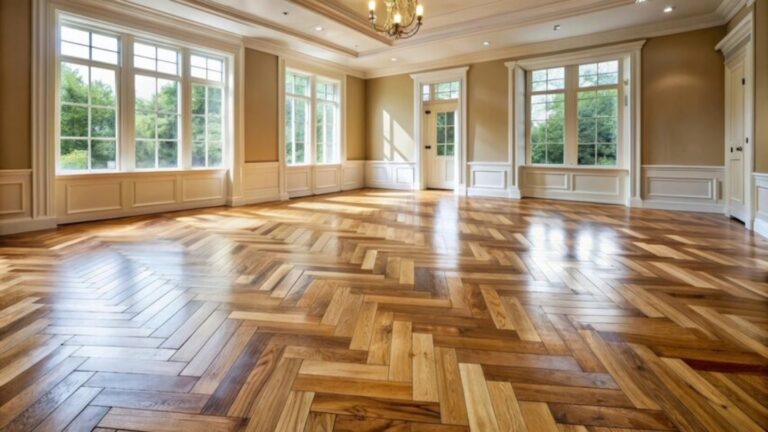
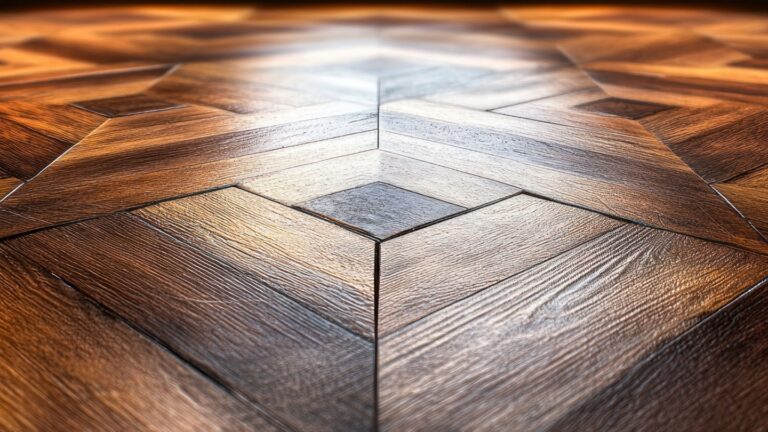
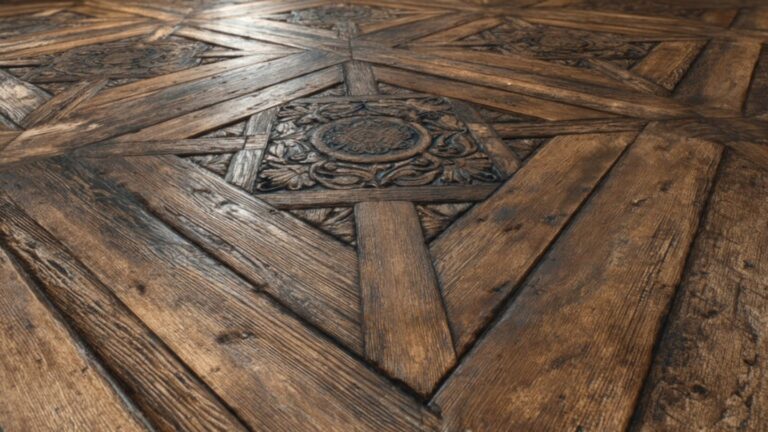
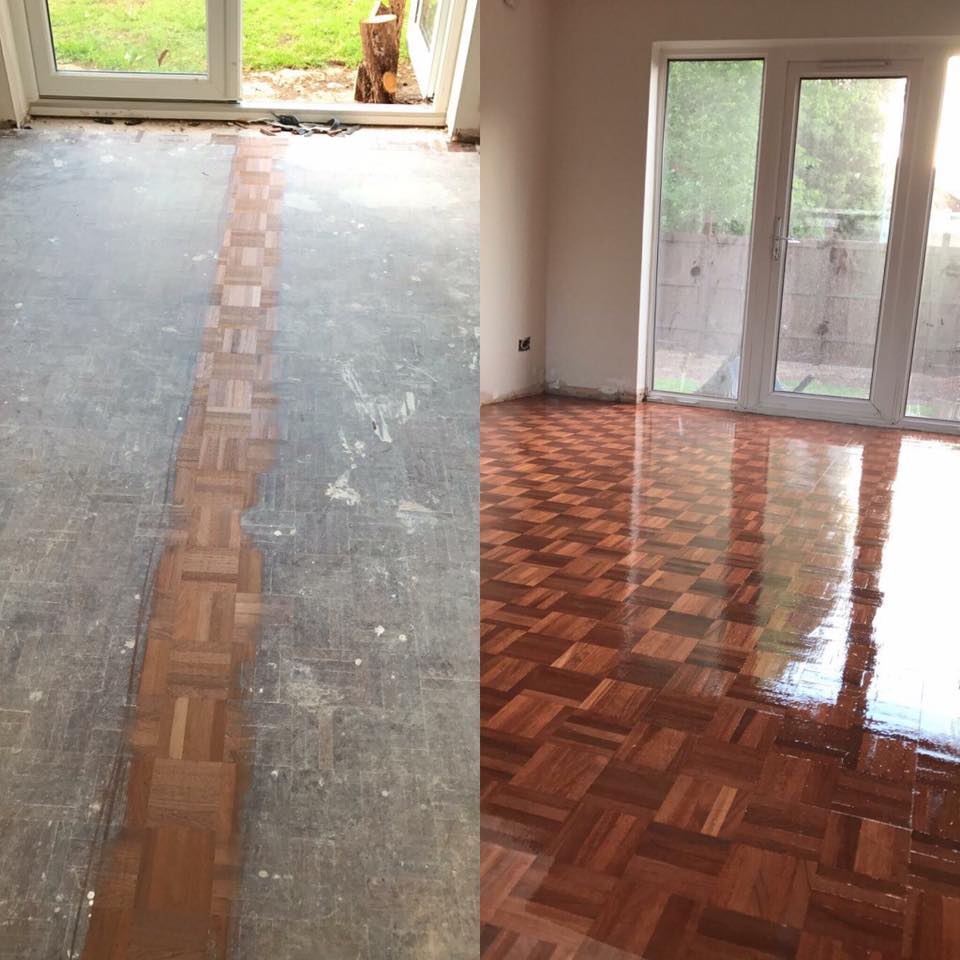
Some Minehead properties, particularly mid-century houses, halls and older hotels, have parquet floors. Under the grime, the blocks themselves are frequently sound. Loose blocks are lifted and re-bonded, and any gaps in the pattern are filled with matching reclaimed blocks. Our parquet floor sanding service covers herringbone, basket weave and block layouts, with the grit sequence adjusted for grain that runs in more than one direction.

Once sanded, every floor needs a finish. Our wood floor sealing uses water-based lacquer, laid on in several thin coats in a matt, satin or gloss sheen, and it dries clear and quickly. It is the best choice for guest houses, halls and family kitchens.

Wood floor oiling gives a more natural look and feel, and worn spots can be refreshed without redoing the whole room. On older boards, traditional wood floor waxing gives a soft, period sheen. A colour change through wood floor staining starts with a test patch on a board from your own floor, because pine and oak react to pigment quite differently. Later on, wood floor polishing with a product matched to the finish keeps the sheen consistent. Allow a day before light foot traffic and two to three days before furniture goes back.

Guest bedrooms make a good case for hard wax oil. Traffic there is lighter than in a hallway, the floor is mostly walked on in bare feet, and a scuff from a dragged case can be cleaned and re-oiled in an afternoon without closing the room for days. Breakfast rooms and entrance halls, on the other hand, take the full force of the season and are usually better under lacquer. Mixing finishes room by room like this is common in guest houses, and we can mark up at the survey which finish should go where.

Wood floor sanding company
Floor sanding taunton

Getting Your Minehead Floor Surveyed and Quoted

Start with your phone: a picture of the room and another of the scruffiest bit of floor. Those two images normally tell us enough to say whether sanding is realistic and which repairs to expect.

If a visit makes sense, the survey is free and takes about half an hour. Afterwards you receive a written, itemised quotation, and that is the figure you pay unless the work required changes. We travel to Minehead regularly from our base near Wellington.

Looking further ahead, a family home rarely needs a full resand more than once a decade or so, but a guest house hallway will want attention well before that. Wood floor buffing, sometimes called a screen and recoat, renews the top coat without sanding into the timber, so it is ideal for keeping a busy floor in good order between full sands.

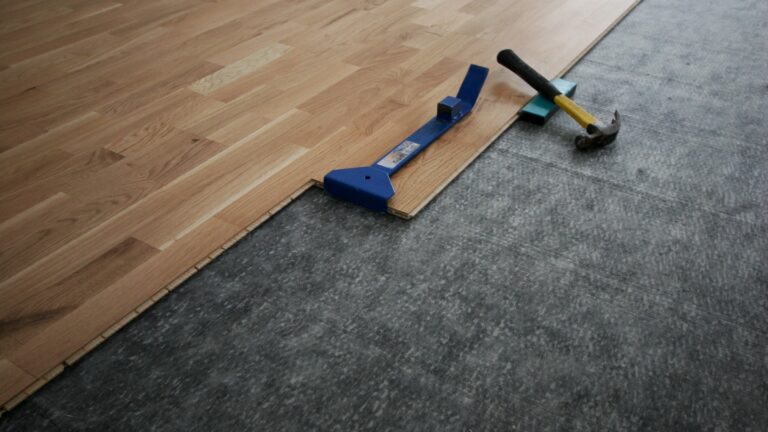
Where the old boards are beyond use, wooden floor installation is the answer: we can lay solid or engineered flooring from ranges such as Junkers and Bona, or deliver it for a fitter of your choosing. See floor sanding across Somerset for the wider county, or contact us with your photographs.

Minehead Floor Sanding: Your Questions Answered

Usually, yes. We work a few rooms or one floor at a time, using fast-curing finishes so each area is back in use quickly. The order of work is agreed with you in advance so bookings can be planned around it, and dates can be held well ahead.

Most stair sanding is done by hand and with small detail sanders. Each tread, riser and nosing is worked individually, old paint is carefully removed from the edges, and the staircase is finished to match the hall and landing.

Usually, if the hardwood surface layer has enough depth left in it, which we measure before quoting. Thicker wear layers take a full sand; thinner ones may only manage a light pass or a fresh top coat. Laminate cannot be sanded at all.

Our sanders run through sealed extraction, so most of the dust is captured at the machine. A little fine dust can still drift, so doors are sealed off with sheeting and fixed items are covered.

Very often, yes. Pine boards that have been under carpet for decades usually sand back well. Loose boards are refixed, damaged ones replaced with reclaimed timber and gaps filled, then the floor is finished to suit the house.

For a hallway a few streets from the beach we would normally recommend a tough water-based lacquer, since it stands up to the grit carried in on shoes. Good doormats help enormously, and a screen and recoat when the finish looks tired will keep the hallway in good condition for years.

Socks only for the first day, please, and hold off on the wardrobe and sofa until day three. Rugs are best kept off a little longer while the finish fully hardens. Commercial timetables are agreed in writing beforehand.

Email us, or use the enquiry form, with a wide shot of the room and a second showing the most tired boards. We will reply with initial advice and, if needed, book a free survey before sending a written, itemised quotation.

Ceilings and walls are best finished beforehand so no drips land on a newly sealed floor. Leave the final coat on the skirting boards until afterwards, though, because the edging sander can touch them. If you are redecorating a whole guest house, we can fit the floor work into your programme.

Yes, and that is often the simplest way to do it. Tell us the gap between bookings and we will plan the sanding, finishing and curing time to fit it, choosing fast-curing products where the window is short.