45 years’ experience  ·  Rated 4.9 on Google  ·  Family-run, from our workshop near Wellington

45 years’ experience · Rated 4.9 on Google · Family-run

Floor Sanding and Wood Floor Restoration in Newport

Uncovering and restoring Newport terrace floorboards hidden under hardboard, plus sanding and line marking for gyms, sports halls and community spaces.

QUICK QUOTATION

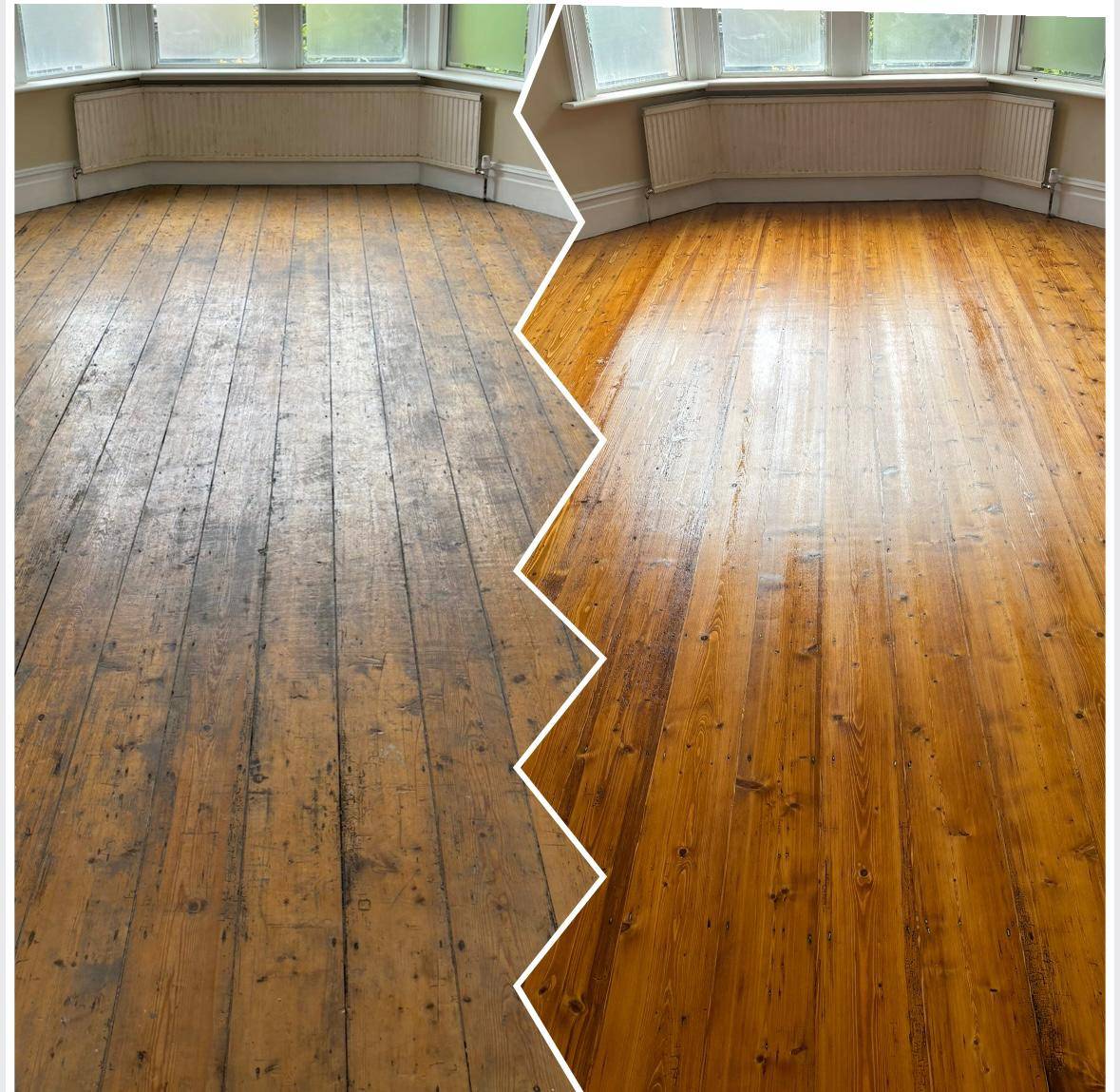
Floor sanding before and after

Floor Sanding in Newport's Victorian Terraces

Newport grew fast in the nineteenth century, and the result is street after street of Victorian and Edwardian terraces on both banks of the Usk. Nearly all of them sit on suspended ground floors. Pine boards are nailed across softwood joists, the joists bear on low brick sleeper walls, and small vents in the front and rear walls are meant to keep air moving through the space below. Upstairs the construction is similar, with the boards forming the ceiling structure for the rooms below. It is a good, repairable kind of floor, and with care it will take floor sanding several times over its life.

The catch is that very few of these floors have been left alone. Over a hundred and more years they have been painted, stained, varnished, covered in linoleum, nailed under hardboard, carpeted, re-carpeted and cut open for every service that came along. The first job of floor sanding in Newport is therefore archaeology rather than abrasion: finding out what is actually there, how much of it is original, and what condition the timber is in once the layers come off.

The boards themselves are usually pine, typically around 22 millimetres thick when laid, tongued and grooved in better houses and square-edged in more modest ones. Previous sanding, if any, has reduced that, and the depth of timber above the tongue sets a limit on how aggressive the sanding can be. A board lifted at a pipe run or an access trap gives a clear view of thickness, joist condition and what is happening in the void, and that look underneath is a standard part of the free survey.

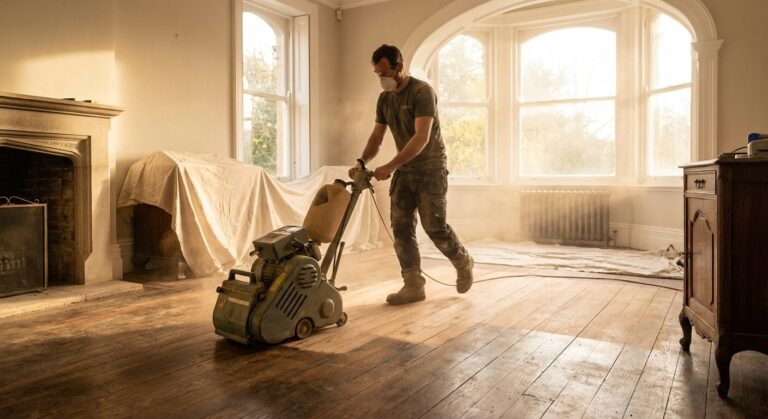
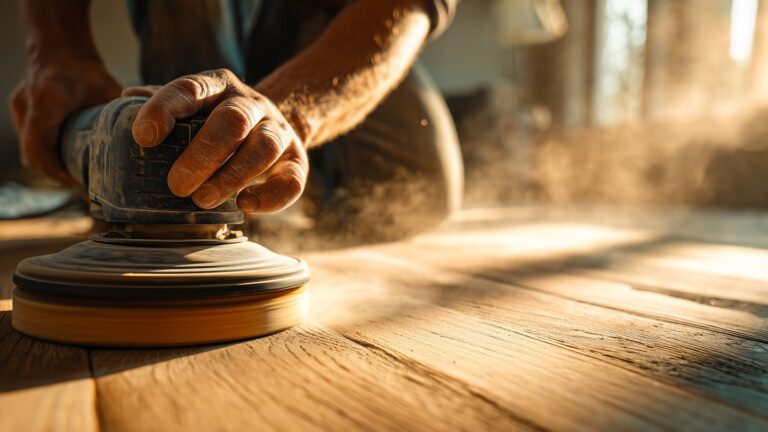
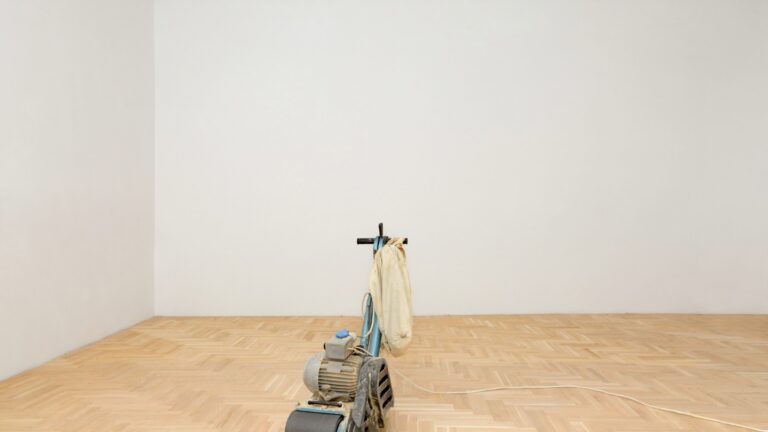
Once the floor is sound and clear, the sanding follows a disciplined sequence of grits with a drum or belt machine across the main area, an edger around the walls and hand scrapers into corners and around pipes. Extraction runs throughout. Our wood floor sanding page walks through those grits one by one. In a two-up two-down, where a front room door opens onto the foot of the stairs, the hoses running from each machine to a sealed collector are what stop the bedrooms getting a coating too; dust-free floor sanding explains the kit. Newport is part of the South Wales patch we work regularly, so jobs of every size are welcome; our floor sanding across South Wales page shows the wider area.
Under the Hardboard: Clearing Old Coverings From Newport Floors

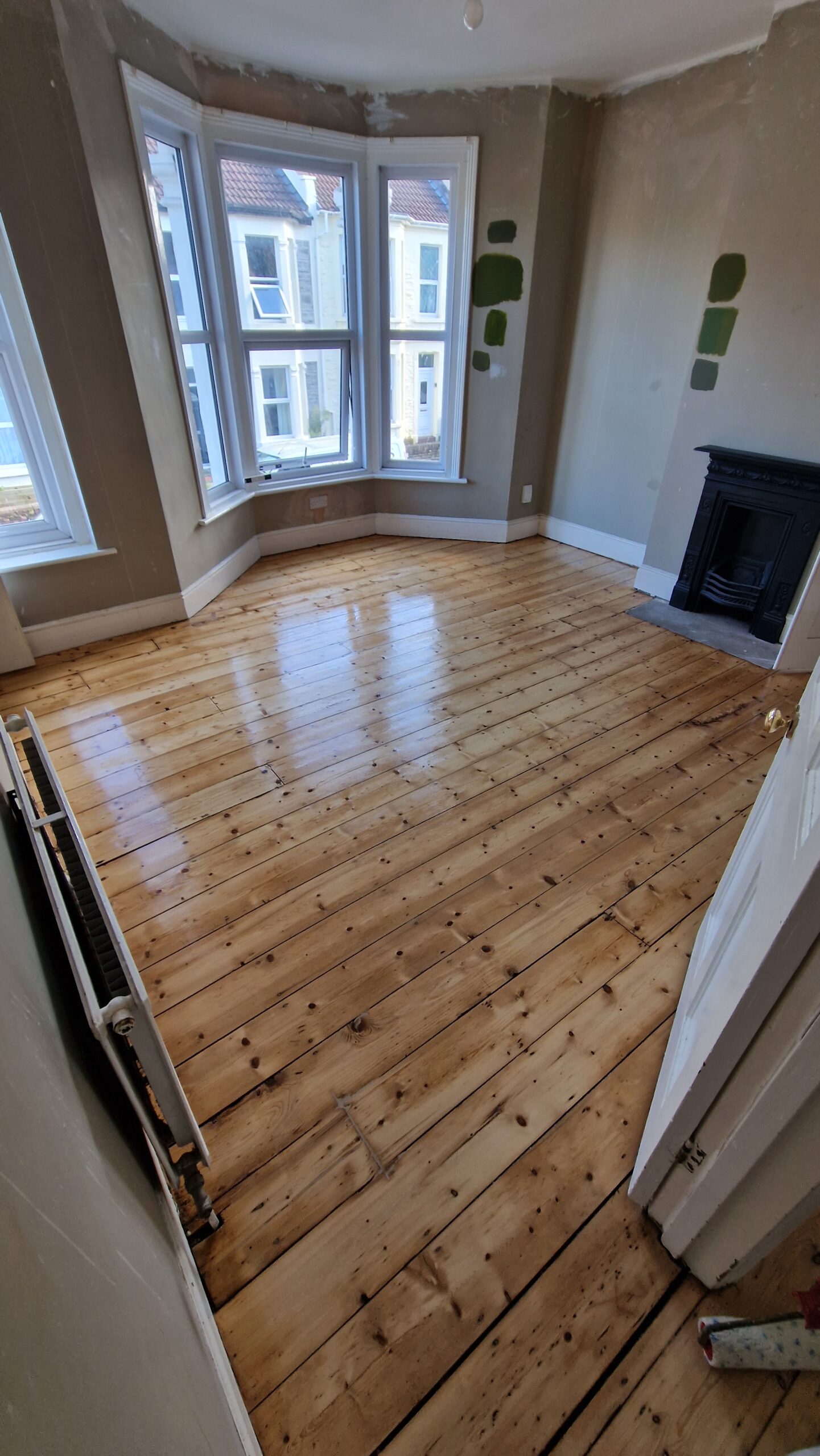
If there is one thing Newport terraces have in common, it is hardboard. From the 1950s onwards, thousands of householders nailed sheets of it over their boards to level them for lino, vinyl or carpet, often with a nail every few centimetres. Underneath there may be anything from pristine pine to a patchwork of repairs, and sometimes a layer of black or brown paint around the edges from the days when a carpet square sat in the middle of the room.

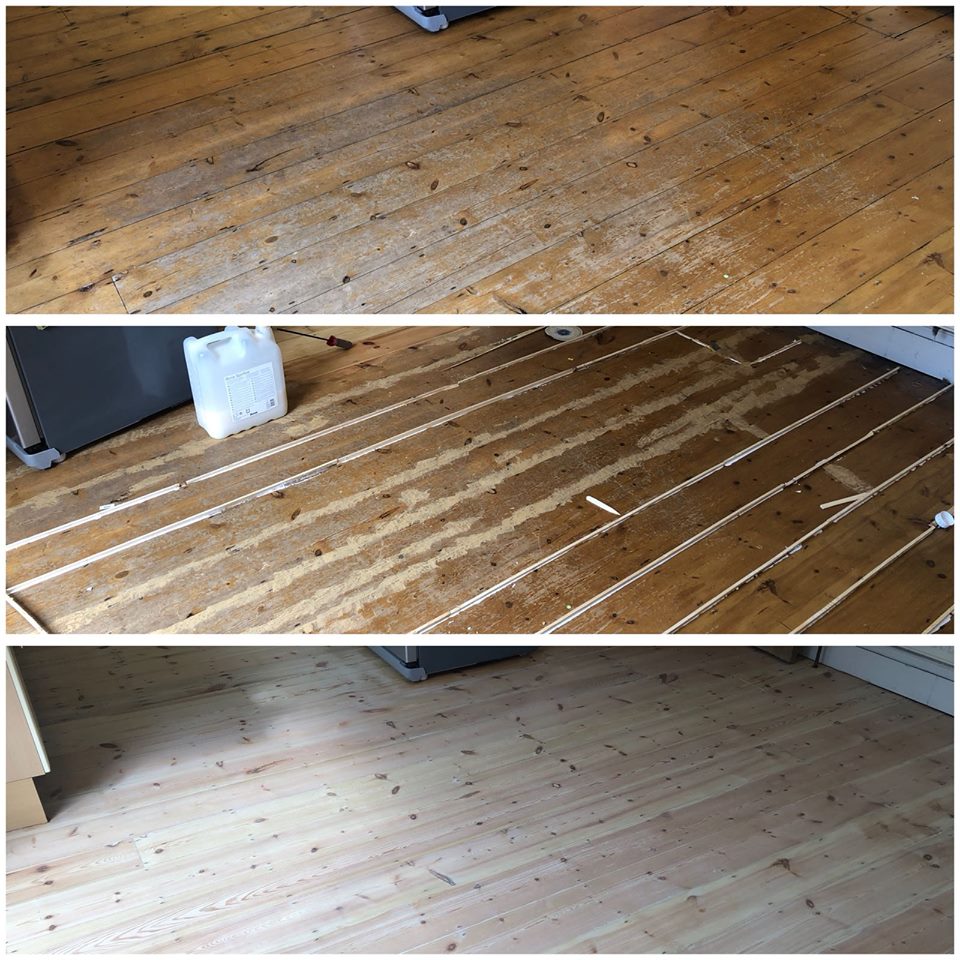
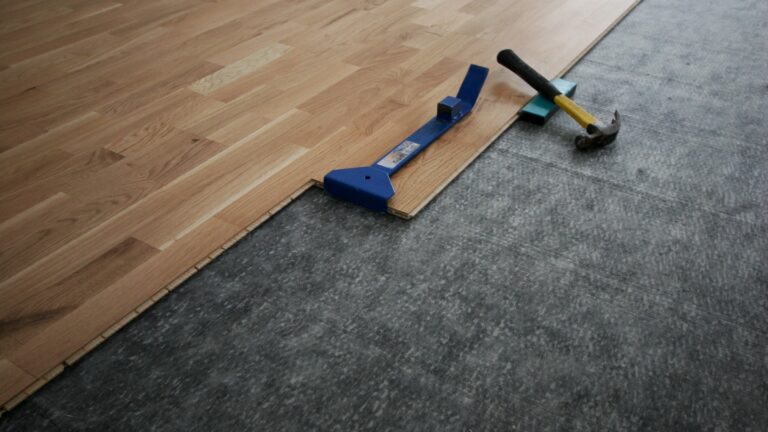
Lifting hardboard properly is slow work. Each sheet is prised up with a flat bar, and the nails either come with it or are left behind as a forest of small steel pins. We go over the room with pincers and a nail punch until nothing metal stands proud; miss one hardboard pin and the drum will shred its paper and plough a furrow down the pine. Staples from carpet underlay and the tacks from old gripper rod need the same attention. On a typical terrace ground floor, clearing fixings can take longer than the first sanding pass.

Adhesives are the next problem. Vinyl and lino were often stuck down with bitumen-based or latex glues that soften and smear under a sander, clogging the abrasive. Heavy residues are scraped off first. Painted borders come off with coarse grit, but paint of that age may contain lead, so it is wise to test a flake before it is sanded, and if it is positive to use wet stripping instead. Some older floor tiles and their black adhesives can contain asbestos; if you find small square tiles or thick black glue, have a sample tested before anyone disturbs it.

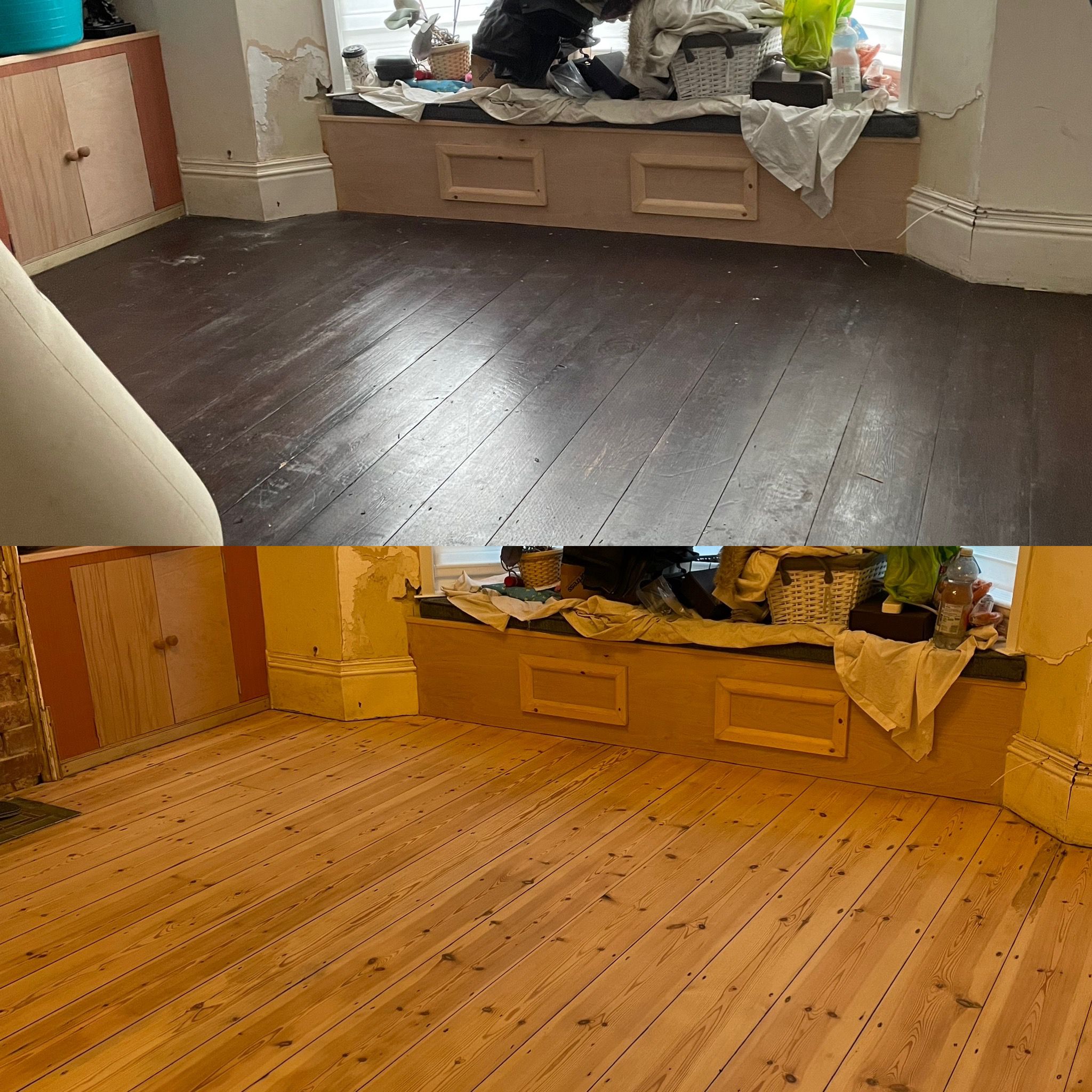
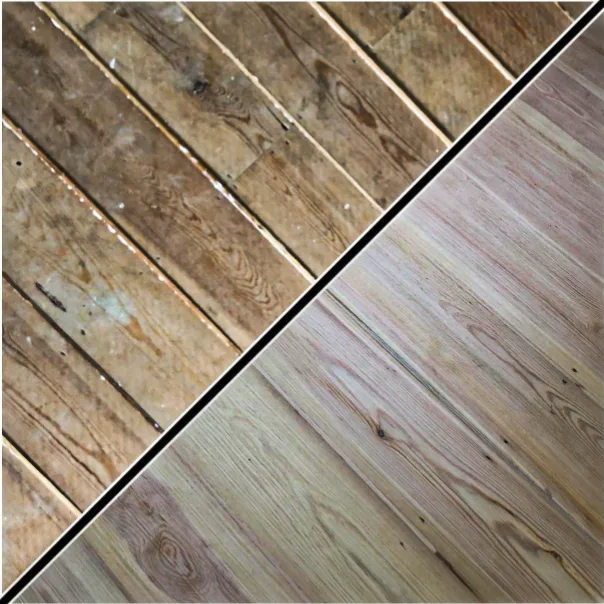
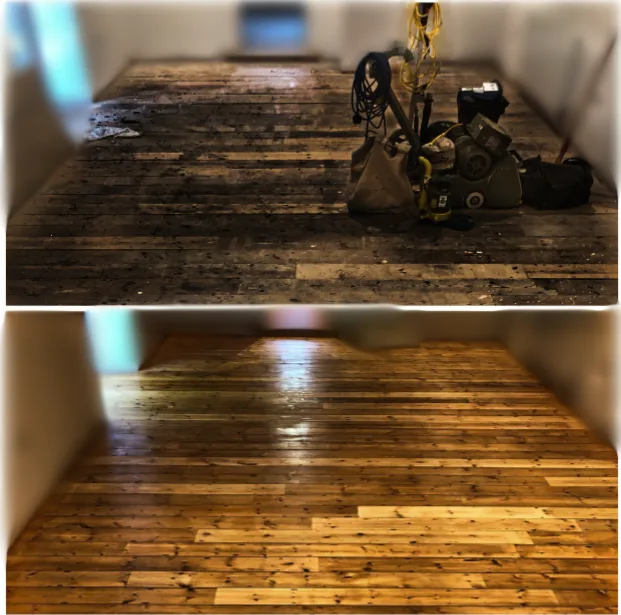
When the floor is finally bare, the picture is usually encouraging. The hardboard has often protected the pine from decades of wear, leaving the boards in better condition than many uncovered floors. Nail holes from the hardboard are small and fill easily with a resin and sanding-dust mix, and once the floor is finished, they nearly disappear into the grain. How we take a long-neglected floor from that point to a finished surface is described on our wood floor restoration page.

parquet wooden floor sanding
wooden floor sanding

Wood Floor Restoration in Newport: Boards, Joists and Draughts

A Newport terrace floor that has been opened up for gas, electricity, water and central heating over the years usually has short lengths of board where pipes were run, odd pieces of newer timber and sometimes chipboard where a fireplace hearth was removed. Wood floor restoration in Newport homes means dealing with each of those properly, so the finished floor is not only sanded but sound underfoot.

Short board ends that stop between joists are the commonest weakness. They bounce, they creak, and eventually they split. A length of timber fixed alongside the joist gives the board a proper bearing, and refixing with screws stops it lifting again. That work falls under our wooden floor repairs service, and the specific causes of squeaks, mainly nails loosened as the joists shrank, are explained on fixing squeaky floorboards.

Where boards are beyond saving, through rot, splits or burns, they are cut out and replaced. Victorian boards were made in imperial sizes, so modern stock rarely matches without packing or planing. Our reclaimed timber store holds old pine of similar age and dimensions, which tones in far better once the floor is finished. The process is set out on our floorboard replacement page.

Rot near the external walls needs particular attention in older terraces. The usual culprits are blocked airbricks, a raised garden or yard level outside the back wall, a leaking downpipe or a failed damp-proof course. The survey checks moisture readings and looks at ventilation, and replacing rotten boards without fixing the cause only buys a few years. Joist ends embedded in damp walls should be checked too.

Gaps are the last piece. On a suspended floor above a ventilated void, open joints are draughty, and in many Newport front rooms the draught is the main complaint once the carpet has gone. Wide gaps are closed with slivers of pine glued in and planed flush; narrow ones with resin filler. Both are described on our gap filling page, along with an honest note that seasonal movement can reopen fine lines in winter.

Commercial Floor Sanding in Newport Gyms, Halls and Studios

Across Newport there are timber floors that are trained on, danced on and played on: fitness gyms, community halls, chapel halls, dance schools and school sports halls among them, and each wears in its own way. Commercial floor sanding in Newport for these spaces is as much about safety and performance as appearance.

Gyms are the toughest. Dropped weights dent and split boards, heavy machines leave indentations, and the constant twisting of rubber soles grinds a grey haze into the finish. Before sanding, damaged boards are repaired or replaced, and the choice of finish has to balance hardness with grip. Free-weight areas often need rubber matting over the timber regardless of the finish. Our gym floor sanding page goes into detail.

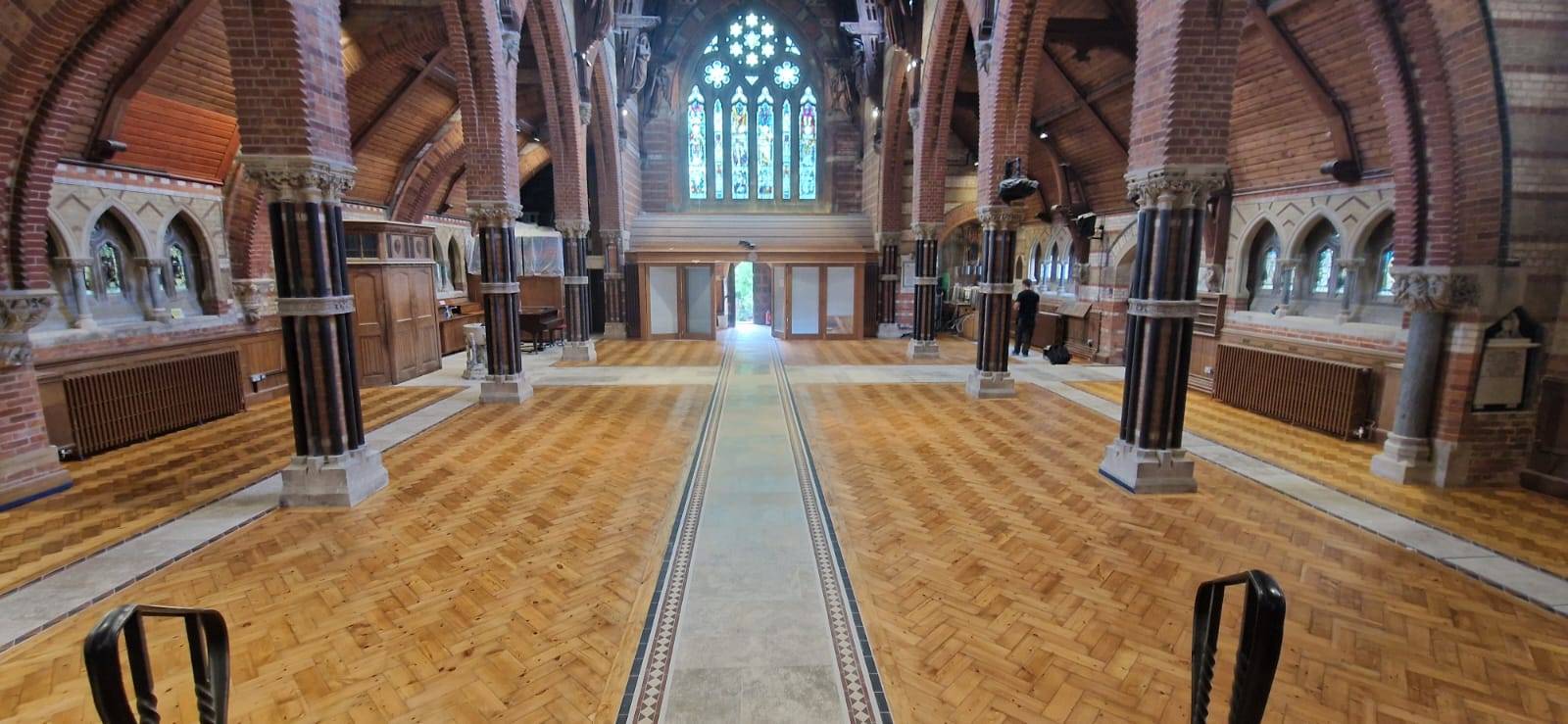
Sports halls and multi-use halls bring line marking into play. Badminton, netball, basketball, five-a-side and short tennis each have their own court layouts and colours, and when a floor is sanded the lines go with it. Our own team paints the courts back on once the base coats are down, following each sport’s governing body layout, and the final lacquer coats go over the paint to lock it in. Many halls have sprung floors, which need careful sanding so the boards are not overloaded, and some have been sanded so often that the wear layer is getting thin. The details are on the sports hall floor sanding page, and halls attached to schools are usually done during holidays, as covered under school floor sanding.

Dance and yoga studios need a surface with the right level of grip: enough for bare feet and safety, not so much that turns and spins become difficult. Sheen and finish choice affect that balance directly, as discussed on our dance floor sanding page.

Commercial projects are scheduled around opening hours, with evening, overnight, weekend and holiday working, and fast-curing finishes to keep downtime short. Hall committees and gym owners can see how we plan this kind of work on the commercial floor sanding page, and we will happily send a written method statement, insurance documents and referees before booking.

flooring sanding company
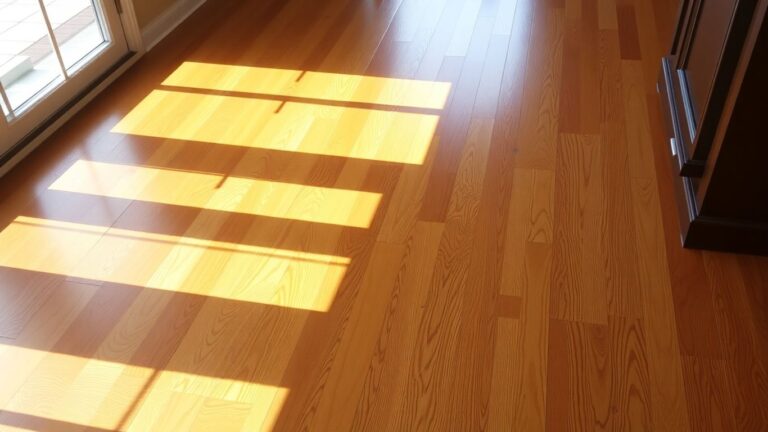
Sunlight across freshly lacquered wooden floorboards

Block Floors, Stair Treads and Newport Landings

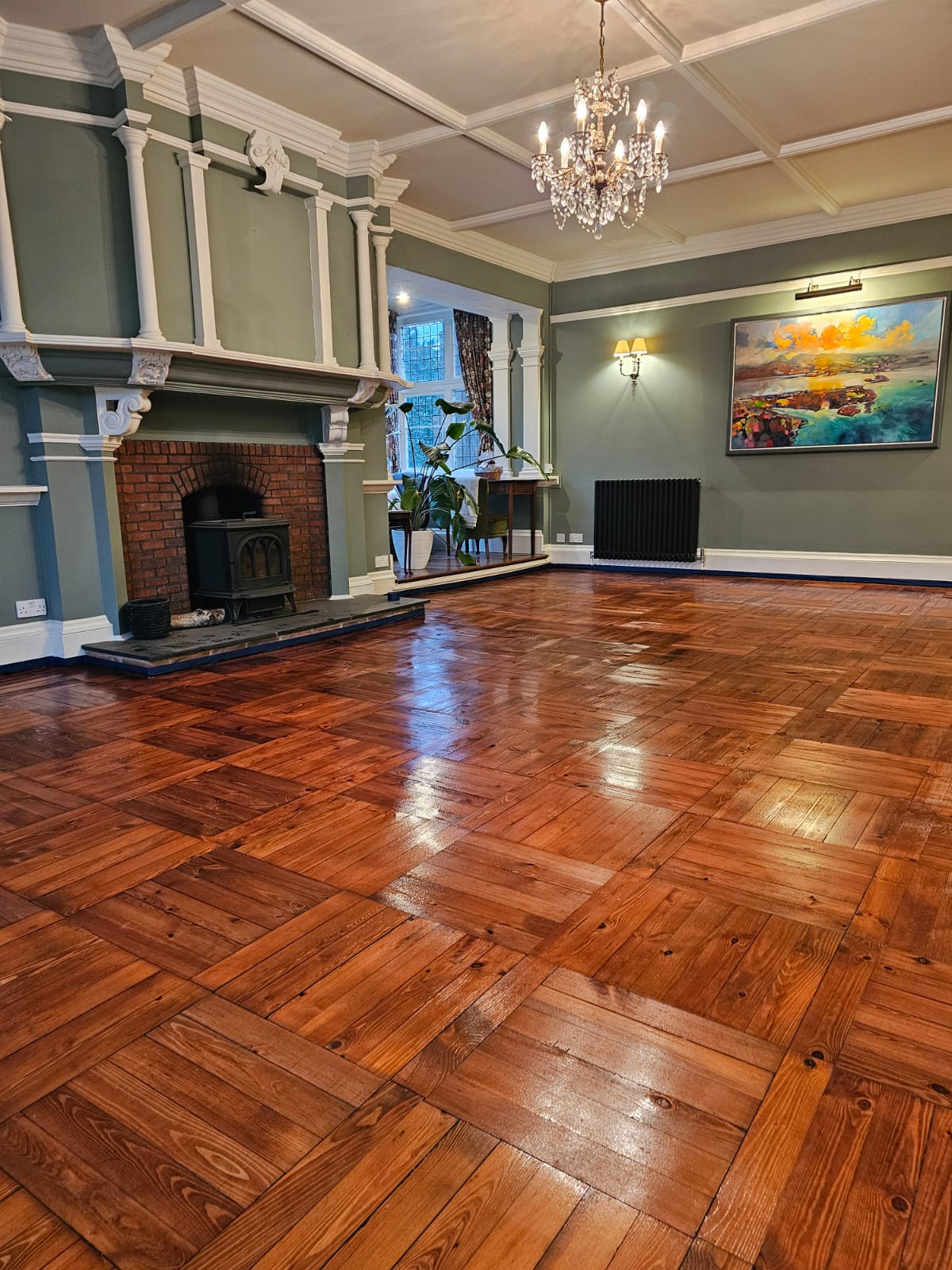
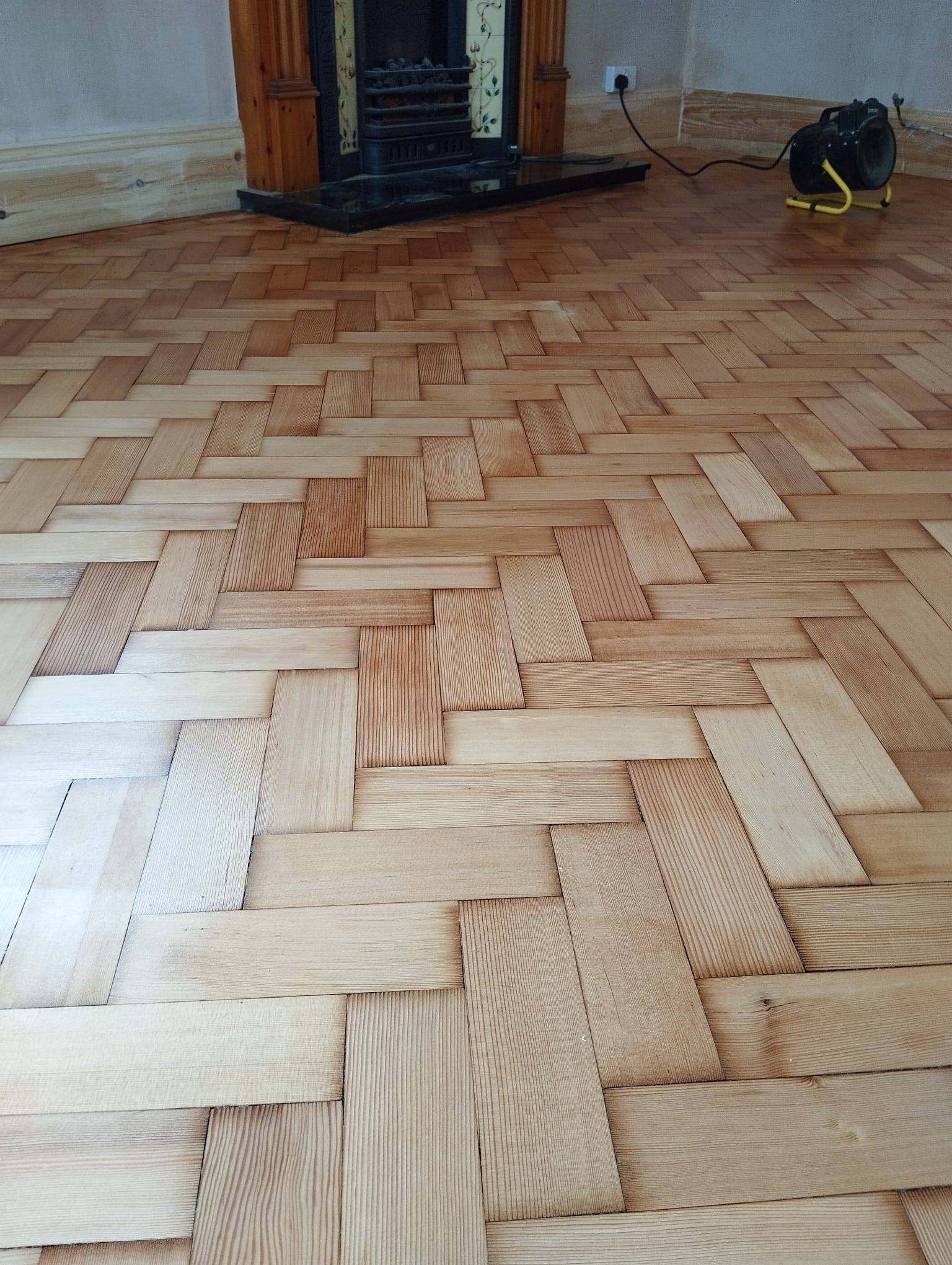
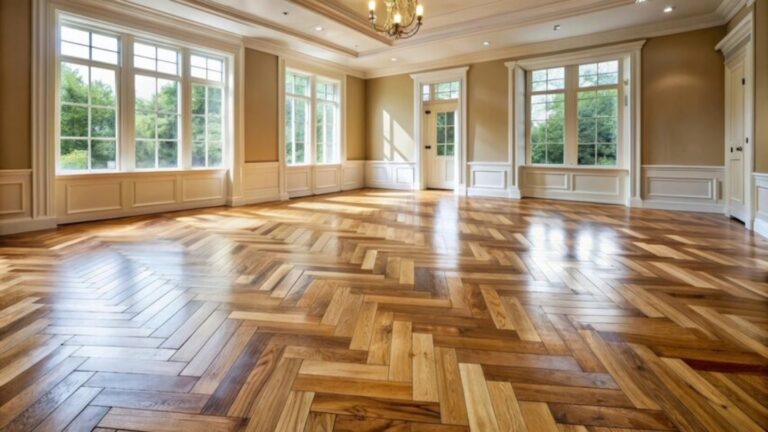
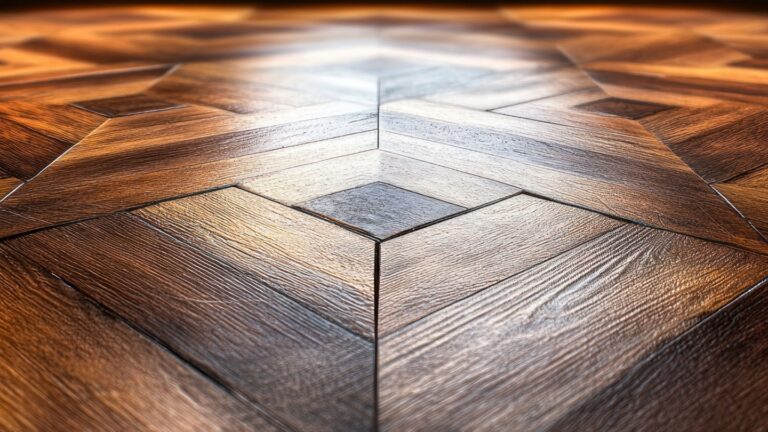
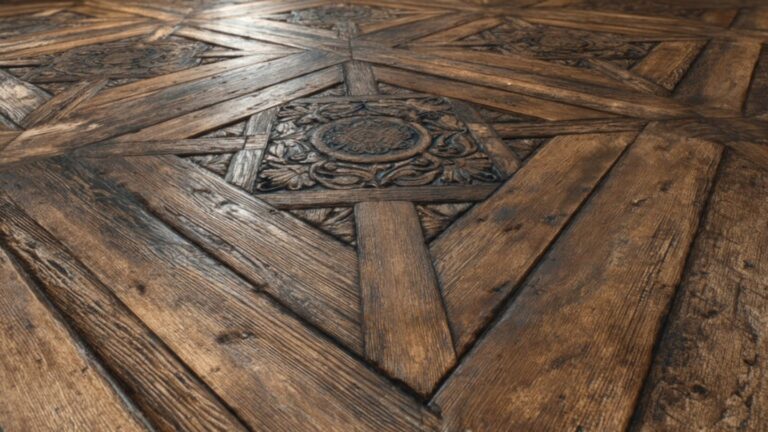
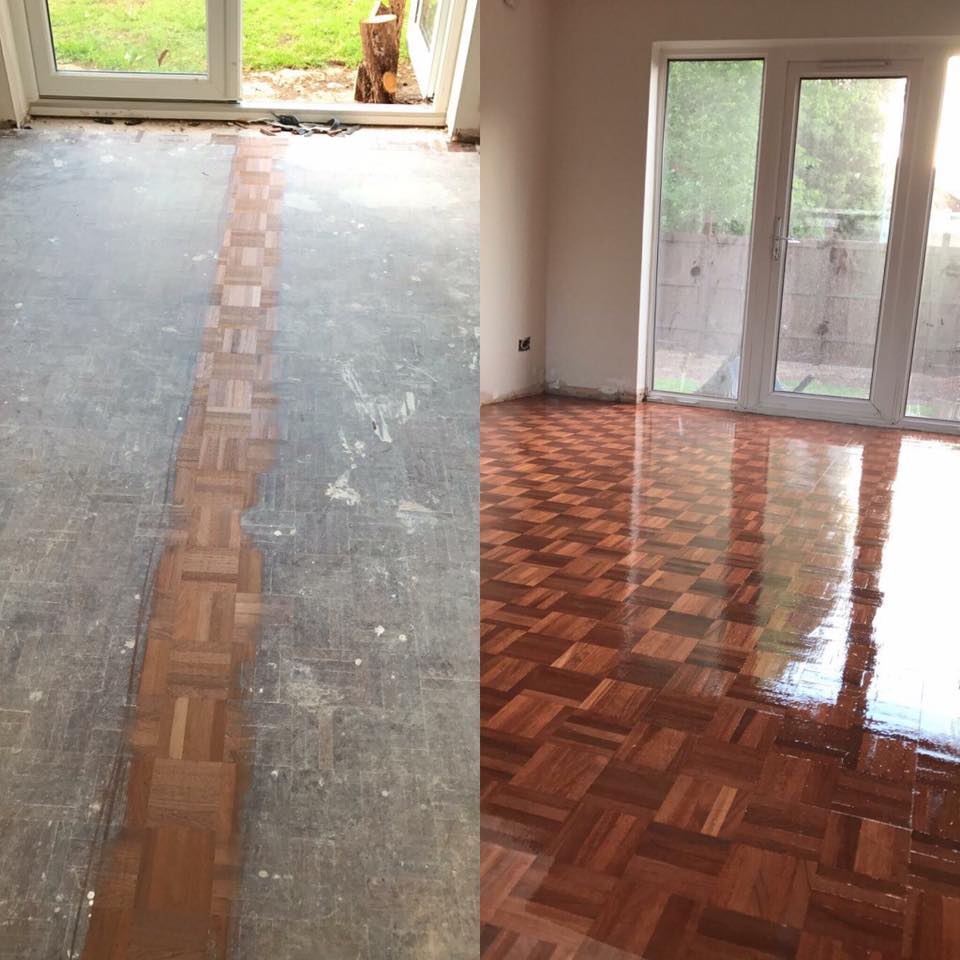
Parquet is found in Newport in inter-war and post-war houses, extensions and a good number of public buildings, halls and chapels. The timber is mostly oak, sometimes a darker imported hardwood, set in herringbone or basket weave. The usual problems are loose blocks where the bitumen has failed, missing blocks where something was removed, and a dull, worn surface. Rocking blocks come up, have the old tarry bed chipped off and go back down in fresh adhesive, blanks are filled with salvaged blocks, and then the sanding works up through the grits until scratches running against either arm of the herringbone have gone. See parquet floor sanding for the stages, and our page on parquet flooring restoration in Cardiff for block floors closer to home along the M4. For oak parquet in particular, see oak floor restoration.

A Newport terrace staircase is typically one steep, straight run of pine, hidden under a runner or fitted carpet for as long as anyone remembers. The treads carry tack holes, the strings carry paint and the nosings are worn round or split. No drum sander fits a tread, so stair sanding relies on small orbital and detail machines, cabinet scrapers and patience, with each nosing rounded back by hand. On a steep stair, gloss is hard to recommend. A flat or eggshell sheen grips better under socked feet coming down at night.

Landings deserve attention because they are often where the hardboard ends and the original boards are most visible. They frequently have the most cut boards too, thanks to pipe runs to the bathroom. Restoring them alongside the stairs makes the whole circulation route consistent from the front door to the top floor.

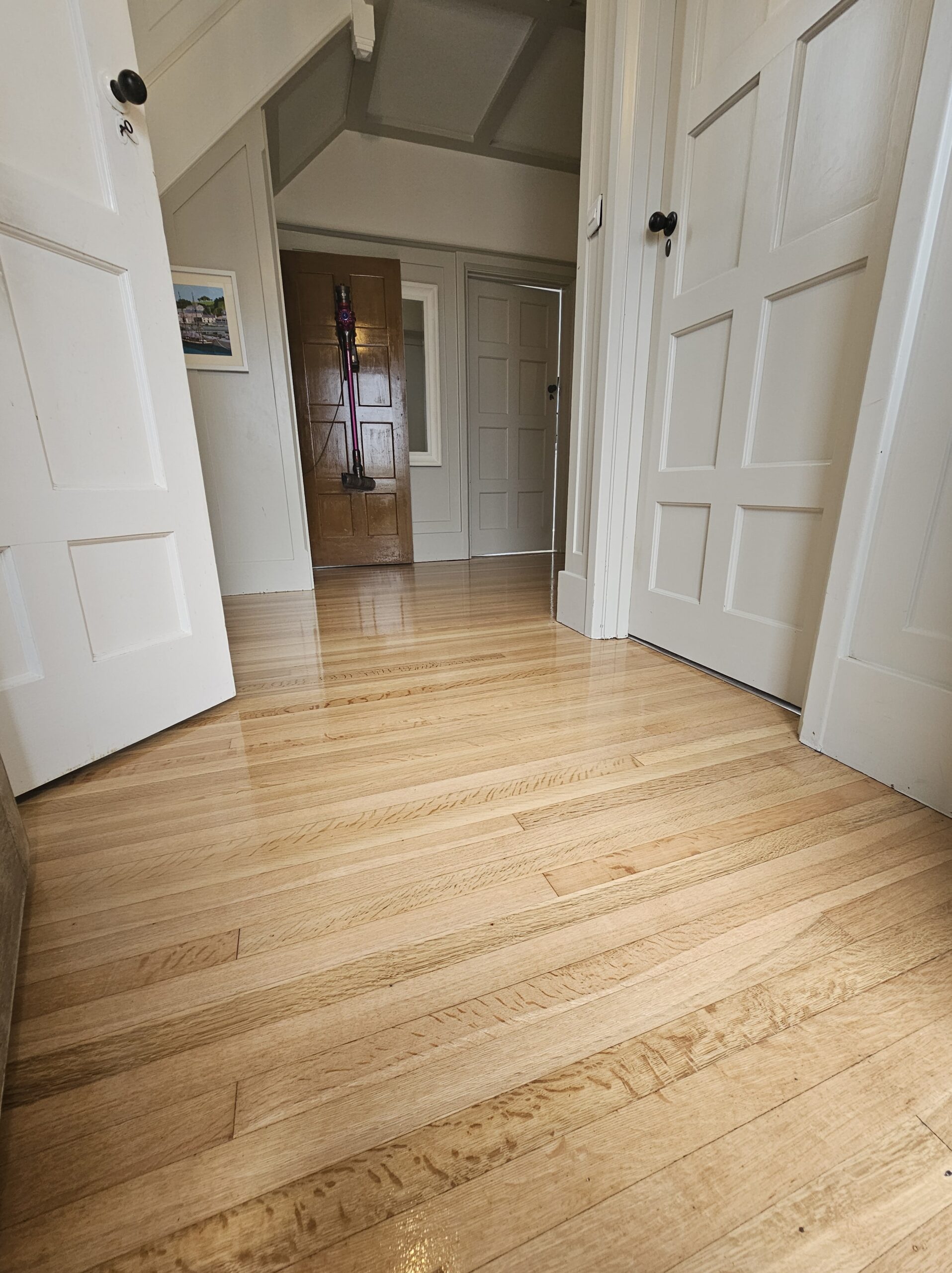
Pine responds well to a range of finishes, from a pale water-based lacquer that keeps it close to its natural colour, to oil-based coatings that warm it towards honey. Pine floor restoration covers how softwood takes finishes and colour.

Colour, Sheen and Protection for Newport Floors

Pine that has spent sixty years under hardboard comes up surprisingly pale, almost white in places, while the strip around the edge that was once painted or stained can stay a shade darker even after sanding. Add a few reclaimed boards and a section of newer softwood by the hearth, and a Newport front room can show three or four tones at once. Choosing the finish is partly about evening that out.

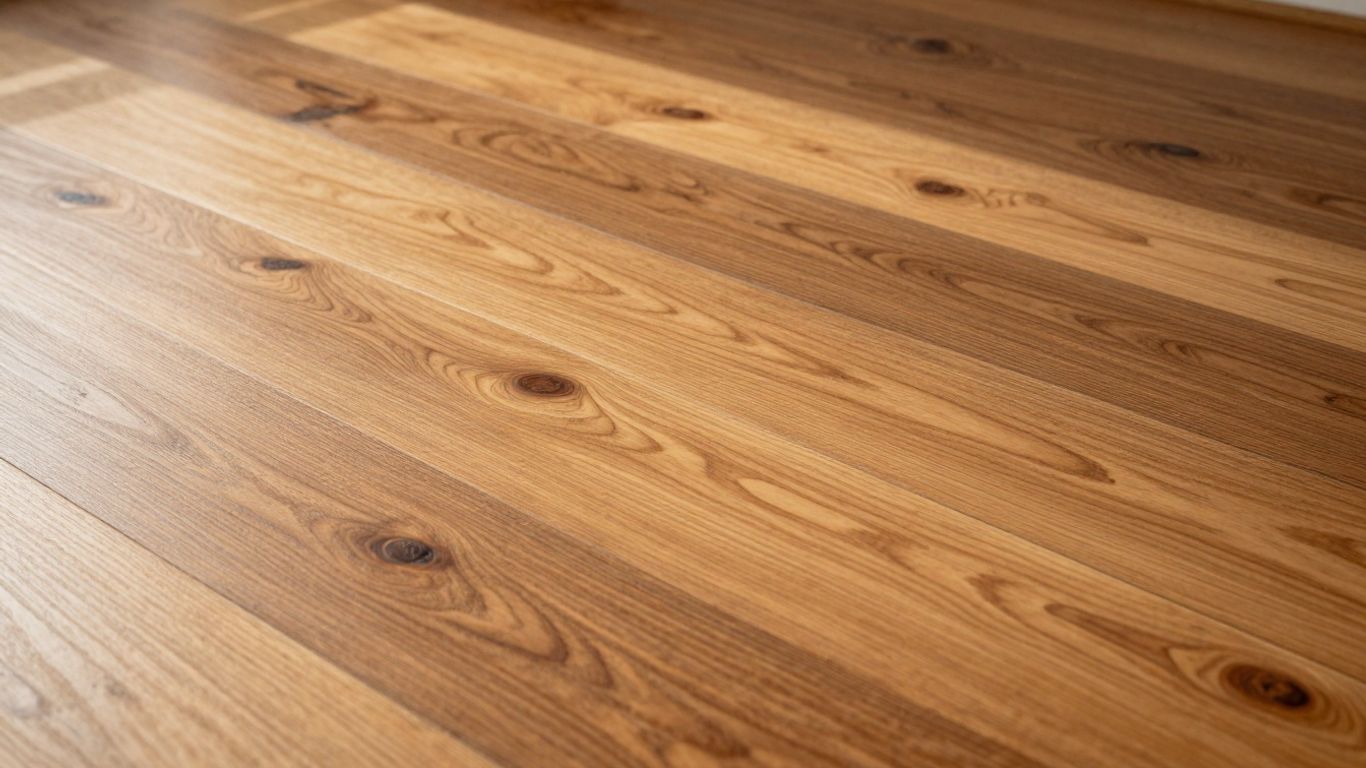
The coating itself changes the colour before any stain is involved. A clear water-borne lacquer leaves freshly sanded pine looking almost raw, which suits a Scandinavian look but can make patchwork boards stand out. A solvent-borne lacquer or an oil pulls the whole floor towards amber and keeps darkening over the next few years, and that warmth is often the simplest way to make old and replacement boards read as one floor. Where the room will take a hammering from children, dogs or a bike in the hall, a two-pack lacquer is the hardest-wearing option. Hard wax oil leaves the boards feeling more like timber than plastic and can be topped up on a worn path without redoing the room. Paste wax has a soft, old-fashioned glow but asks for regular attention. The trade-offs are set out under lacquering and sealing, oiled wood floors and waxing a wooden floor.

For a deeper colour, stain is applied to the bare wood before sealing. Pine is notoriously patchy: the soft spring growth soaks up pigment while the harder summer bands and knots resist it, so a dark stain can look striped. Pre-conditioning or a tinted coat reduces that, and the safest way to choose is a set of sample squares on your own sanded boards, each sealed with the topcoat you intend to use and judged in daylight. Our wood floor staining page explains the method, and a buffed polish can be added once the colour is settled.

Sheen deserves a moment too. On a floor that will collect dog-claw marks and scuffs from school shoes, matt or satin hides far more than gloss.

Wood floor sanding company
Floor sanding taunton

After the Last Coat: Upkeep, New Floors and Your Newport Enquiry

The new coating needs a little patience. Pad about in socks from the following day if you must, but keep the settee and the dresser in the back bedroom until two or three days have passed, and give rugs with rubber backing a bit longer before they go down. After that, protection is mostly common sense. Glue felt dots to every dining chair, put a coarse mat where boots come off, and mop sparingly with a mild soap made for sealed timber. A steam mop forces hot vapour into every board joint, so leave it in the cupboard.

Treated like that, a family’s lacquered pine will usually need nothing more drastic for eight years or more. A gym floor pounded by trainers every evening, or a hall hired out seven days a week, tends to be ready again after four or five. Midway through that cycle a maintenance buff with a new coat keys the old lacquer and adds a fresh layer, and since no wood is removed it spares terrace boards that have already lost a few millimetres to earlier sanding.

Not every floor deserves rescuing. A back kitchen with a concrete slab and failed vinyl, or a room where earlier sanding has left the tongues showing, may be better with something new. For those rooms, installing a new wooden floor is the better route, laid by our own fitters or delivered to site for the builder doing the extension. Junkers and Bona are two of the makes available.

Getting started from Newport is straightforward. Take a wide picture of the room, then get low over its sorriest corner, whether that is a pepper-pot of hardboard pin holes or a charred board where the gas fire stood. Send both to info@ryansrestoration.co.uk. For anyone happier explaining things by phone, the number is 01823 674562 and the office is open eight to six on weekdays. A free visit then lets us check moisture, airbricks and board thickness before a written, line-by-line quotation follows. The enquiry page is there too, and for jobs west along the M4 our Swansea floor sanding page may be useful.

Newport Floor Sanding Questions

It is common in Newport terraces and is not usually a problem for the floor, although it adds time. Each pin needs pulling or knocking below the surface first, and any glue left from earlier coverings is scraped off. The upside is that hardboard often protects the original pine from decades of wear, leaving it in good condition.

Older floor tiles and black adhesives can sometimes contain asbestos, so they should be sampled and tested before being disturbed. If the result is clear, they can be removed and residues scraped back before sanding. If not, a licensed specialist should deal with them first.

Yes. Line marking is done in-house after the floor is sanded and sealed, to the relevant governing body’s specification, and then overcoated so the lines last. Badminton, netball, basketball and other courts can be included, with colours chosen to keep each sport clear where courts overlap.

Usually, yes. Dented and split boards are repaired or replaced first, then the floor is sanded and finished with a hard-wearing coating. Heavy free-weight zones generally need rubber matting over the timber as well, since no finish can fully protect wood from dropped plates.

Yes. Yes. We work in Newport routinely, so a single front room is as welcome as a whole house or a sports hall. Email a wide shot and a close-up of the floor and we will come back with a first view, then book a free visit if it looks worth pursuing.

In older terraces that is usually caused by blocked airbricks, a yard or garden built up above the floor level, a leaking downpipe or a failed damp-proof course. Rotten boards can be replaced, but the cause needs fixing too, or the new timber will suffer the same fate.

Yes, with care. Sprung floors need sanding techniques that do not overload the boards, and the wear layer should be checked first, as many have been sanded several times. The finish also needs to suit the activities in the hall, balancing grip and durability.

We use reclaimed pine of similar age and size from our own stock wherever possible, since modern boards are usually a different width and thickness. Sanded and coated alongside the originals, salvaged pine sits in quietly rather than shouting new.