Floor Sanding Swansea

Floor Sanding and Wood Floor Restoration in Swansea

QUICK QUOTATION

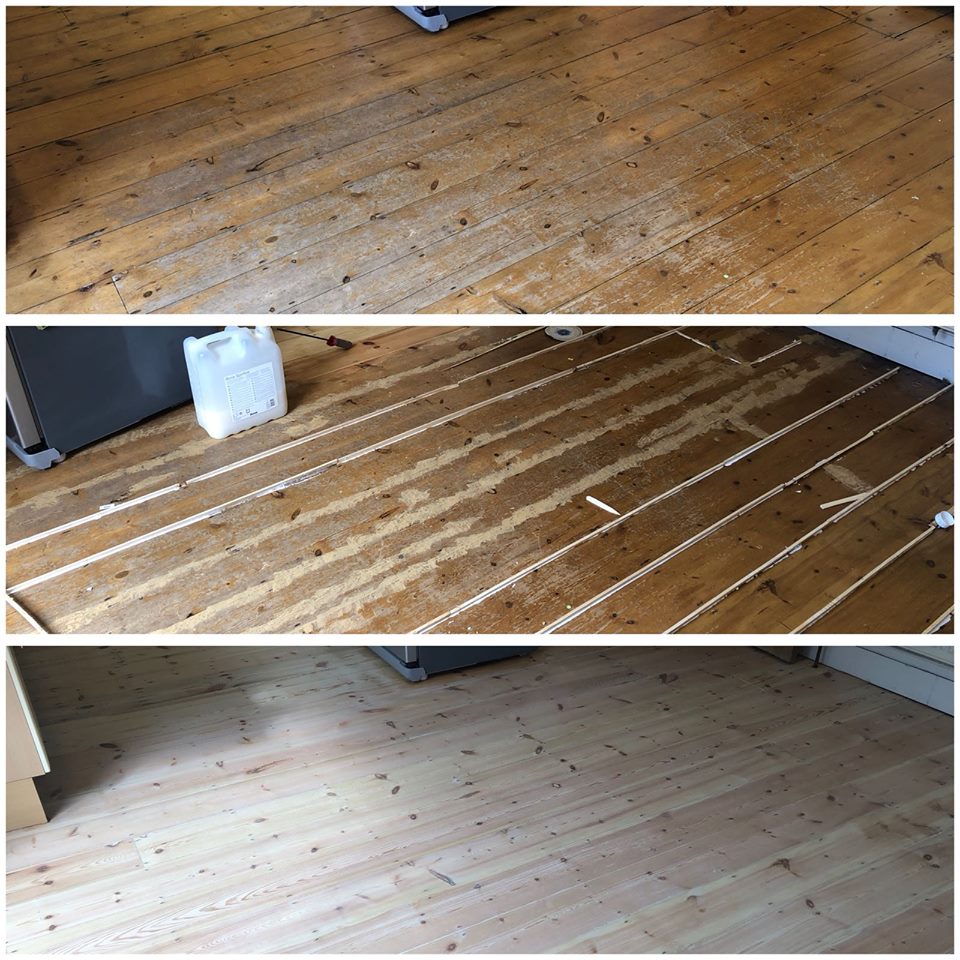
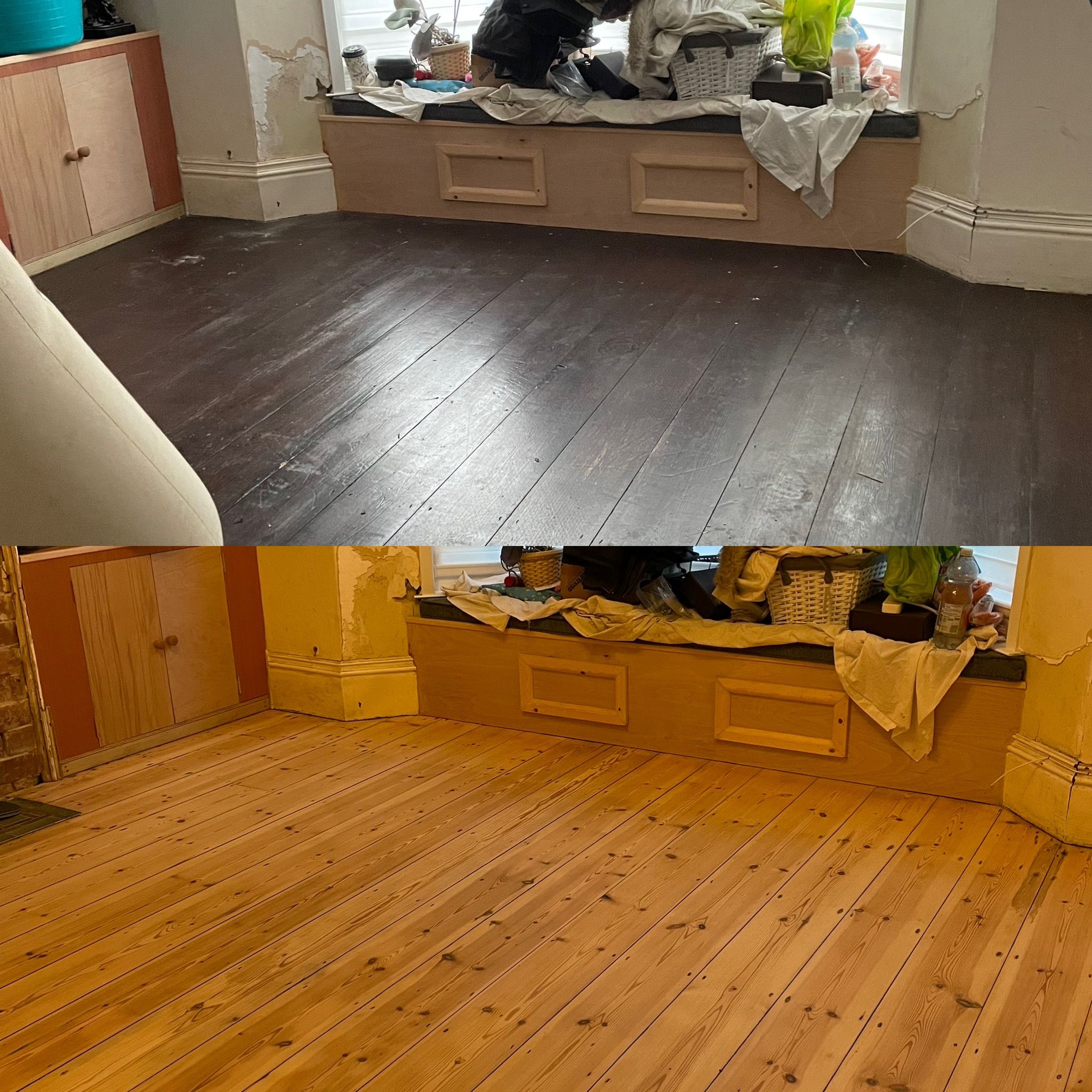
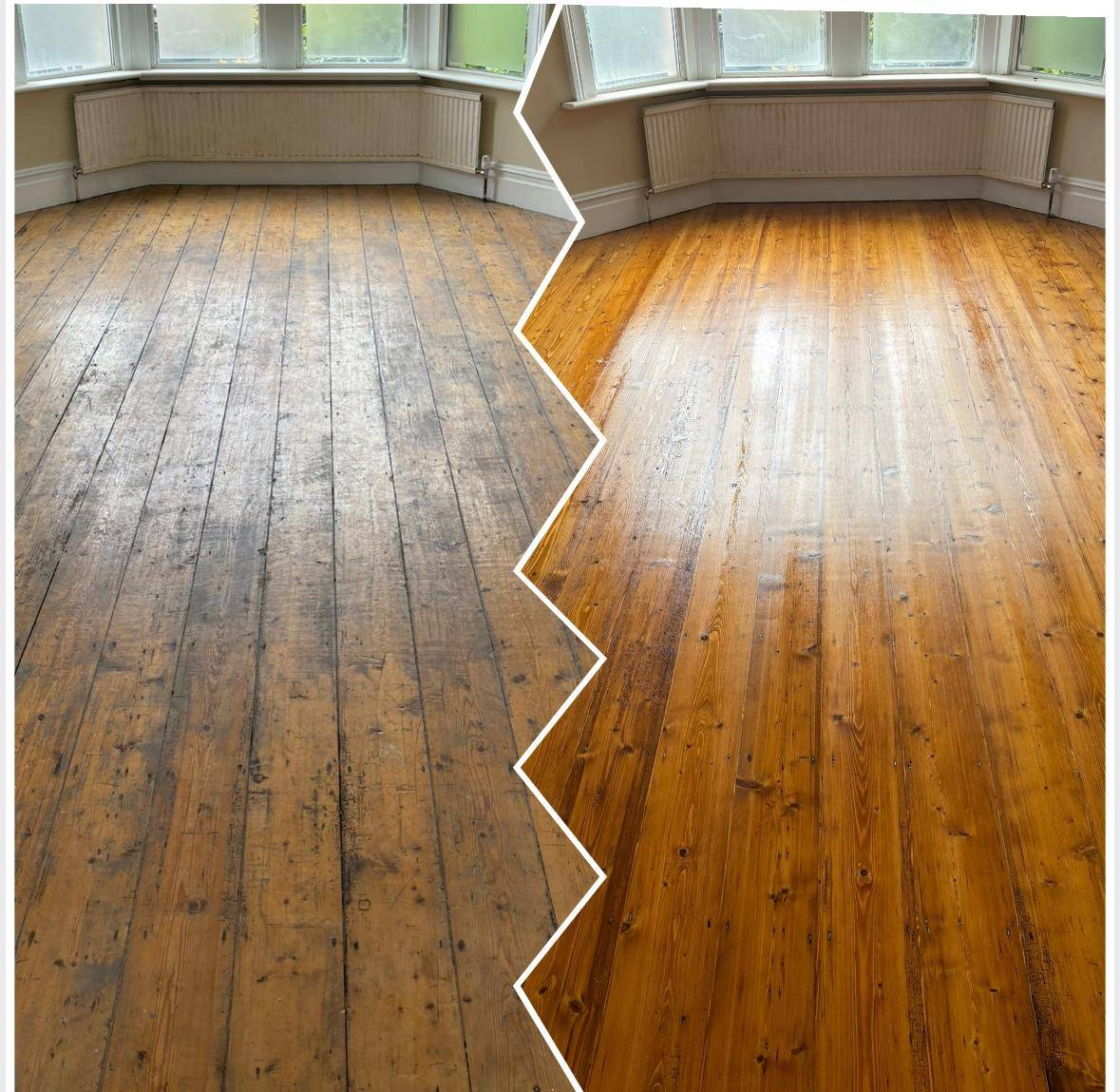
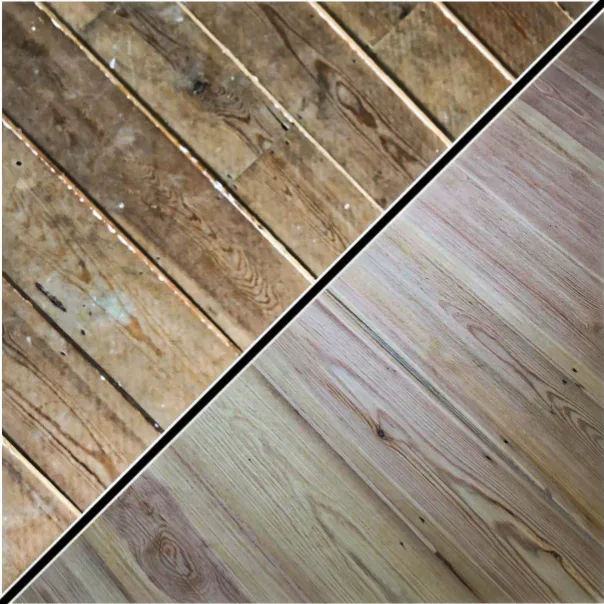
Floor sanding before and after

Floor Sanding in Swansea

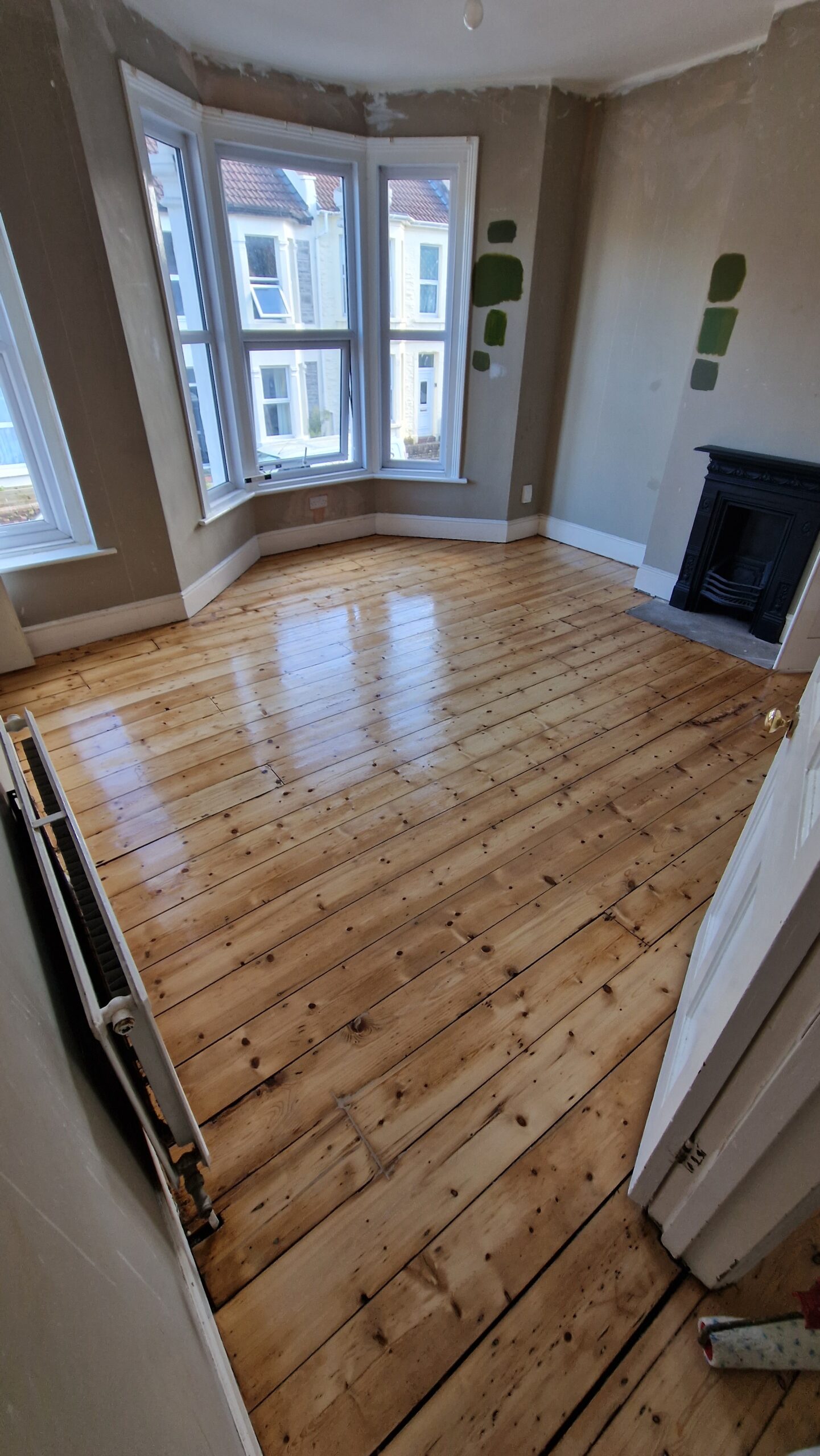
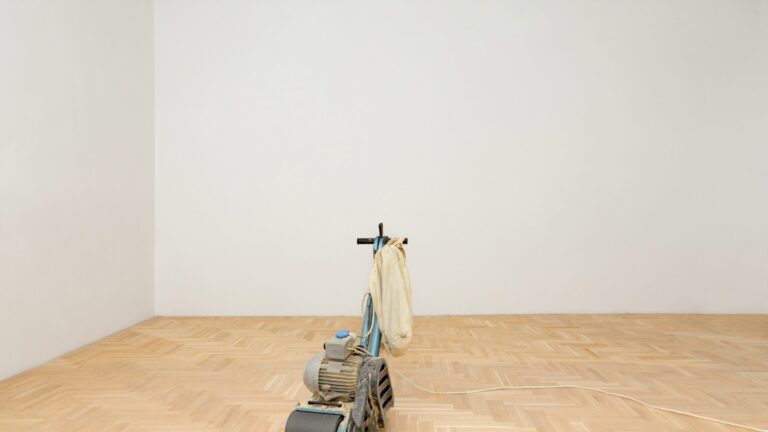
We sand and refinish wooden floors across Swansea and Gower — redwood and pitch pine boards in Uplands and Sketty villas, narrower terrace boards in Morriston, oak and engineered floors in newer homes. Our wood floor sanding always starts with measurement: remaining board thickness, moisture content and flatness, because coastal humidity means Swansea floors are checked for damp before any machine is switched on.

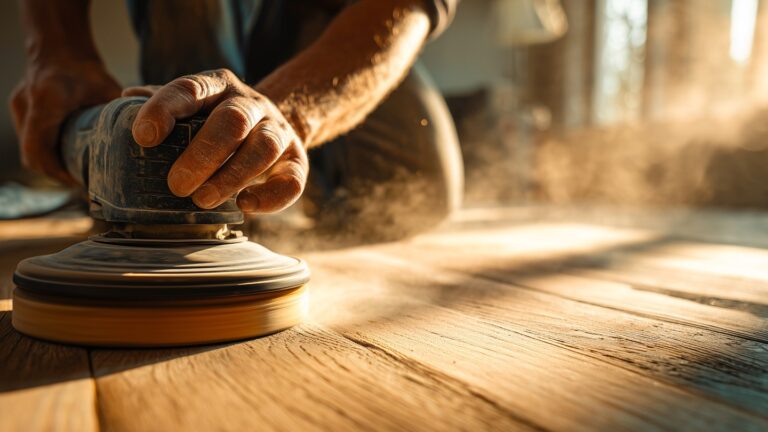
The sand itself steps through progressively finer grits with hand-finished edges, and sealed extraction captures the overwhelming majority of dust at source. Sound boards with a tired finish can often take a no-sand restoration instead — quicker, kinder to the timber, and we will recommend it whenever it fits.

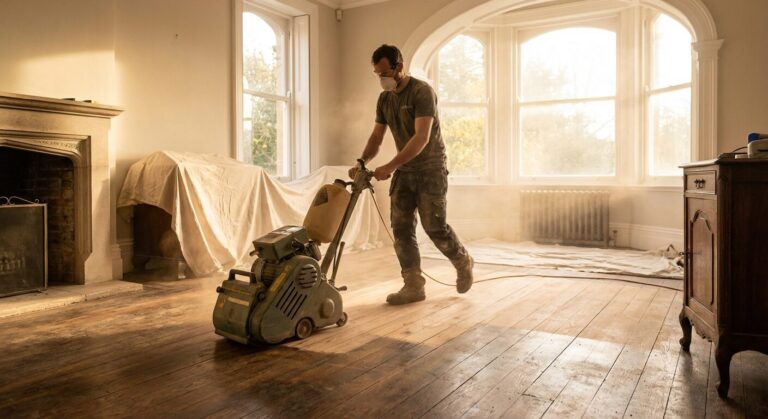
Preparation is half the job done well. Rooms are cleared with the customer beforehand — we advise exactly what needs to move and can help with the heavy pieces — then curtains, built-in shelving and fire surrounds are masked, doorways to the rest of the house are screened, and radiator pipes are guarded before the first machine starts. It takes an hour at the start of the day and saves a great deal of grief at the end of it.

The older redwood in Swansea villas is lovely timber to sand: slow-grown, tight-grained and far superior to modern equivalents, which is exactly why we treat every millimetre of it as worth keeping.
Commercial Floor Sanding — Chapels, Halls, Shops and Schools

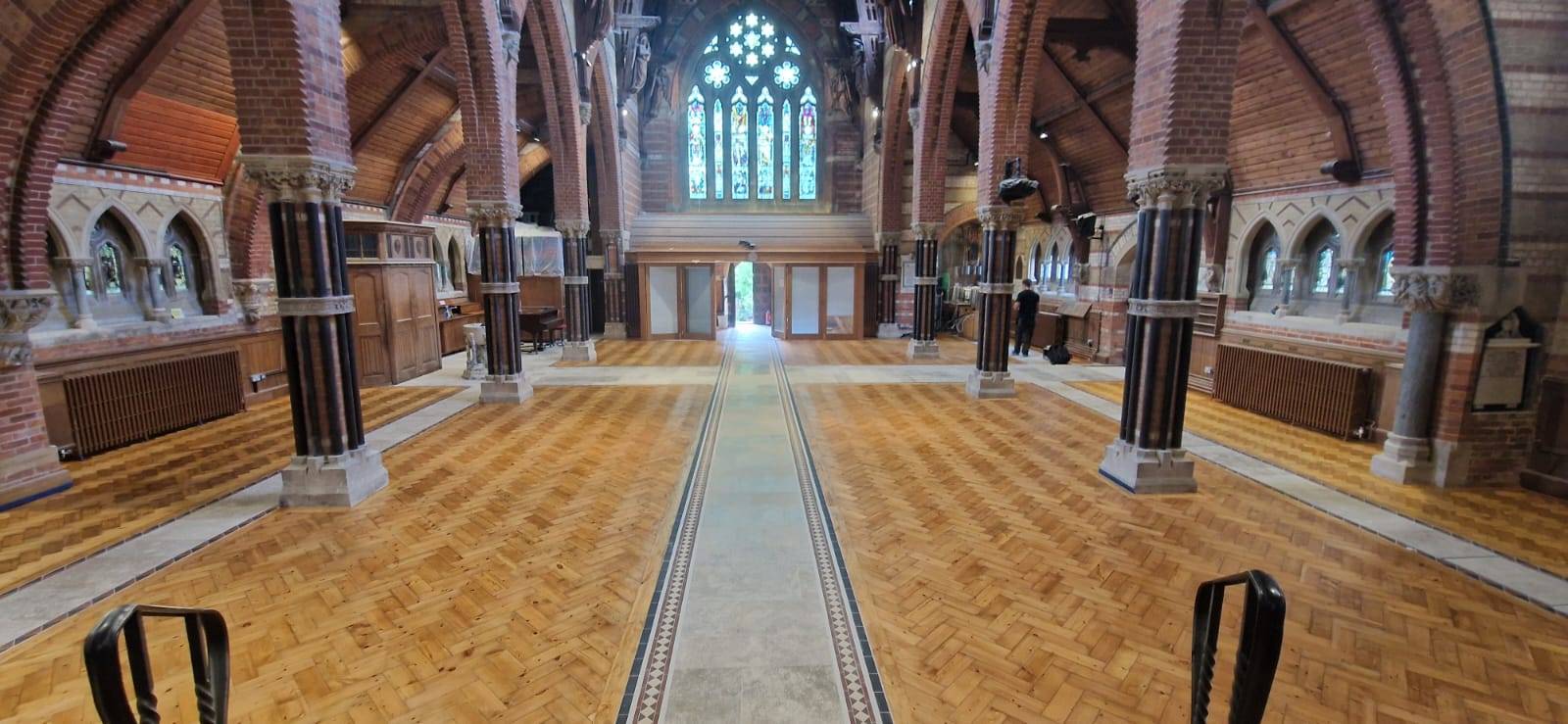
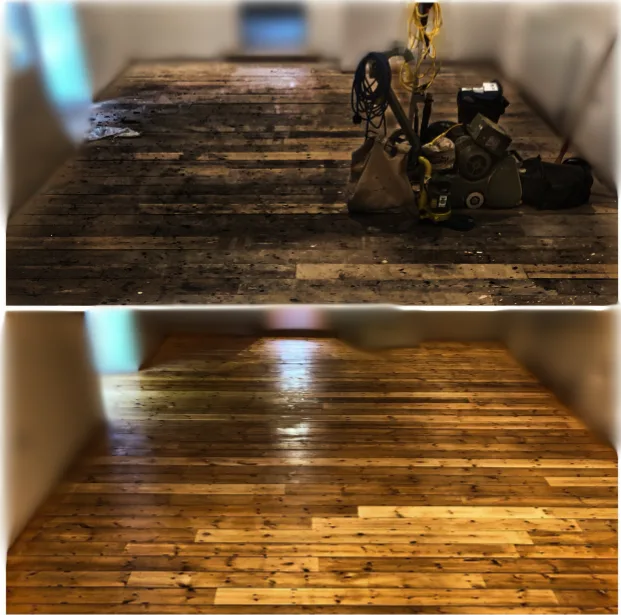
Commercial floor sanding around Swansea takes in an unusual amount of chapel and hall work: big pitch pine floors, worn down the aisles and untouched under the pews, that need patient, well-planned sanding. We work evenings and weekends, phase larger buildings so they stay in use, and supply method statements and insurance documentation for every contract.

Shops, restaurants and pubs, hotels, school halls and gyms are all regular work, with sports line marking applied to governing body specification where needed.

The technical puzzle in a chapel is differential wear. A century of feet has hollowed the aisles while the boards beneath the pews stayed almost untouched, so the two zones start the sand in completely different condition. We blend them — heavier cuts along the worn runs, lighter passes over the protected areas — until the floor reads as one surface without grinding the good timber down to meet the worst. Fixed pews, organ platforms and heating gratings are worked around by hand, and drying times in large, cool spaces are planned realistically, with heating and airflow agreed with the building’s keyholders in advance.

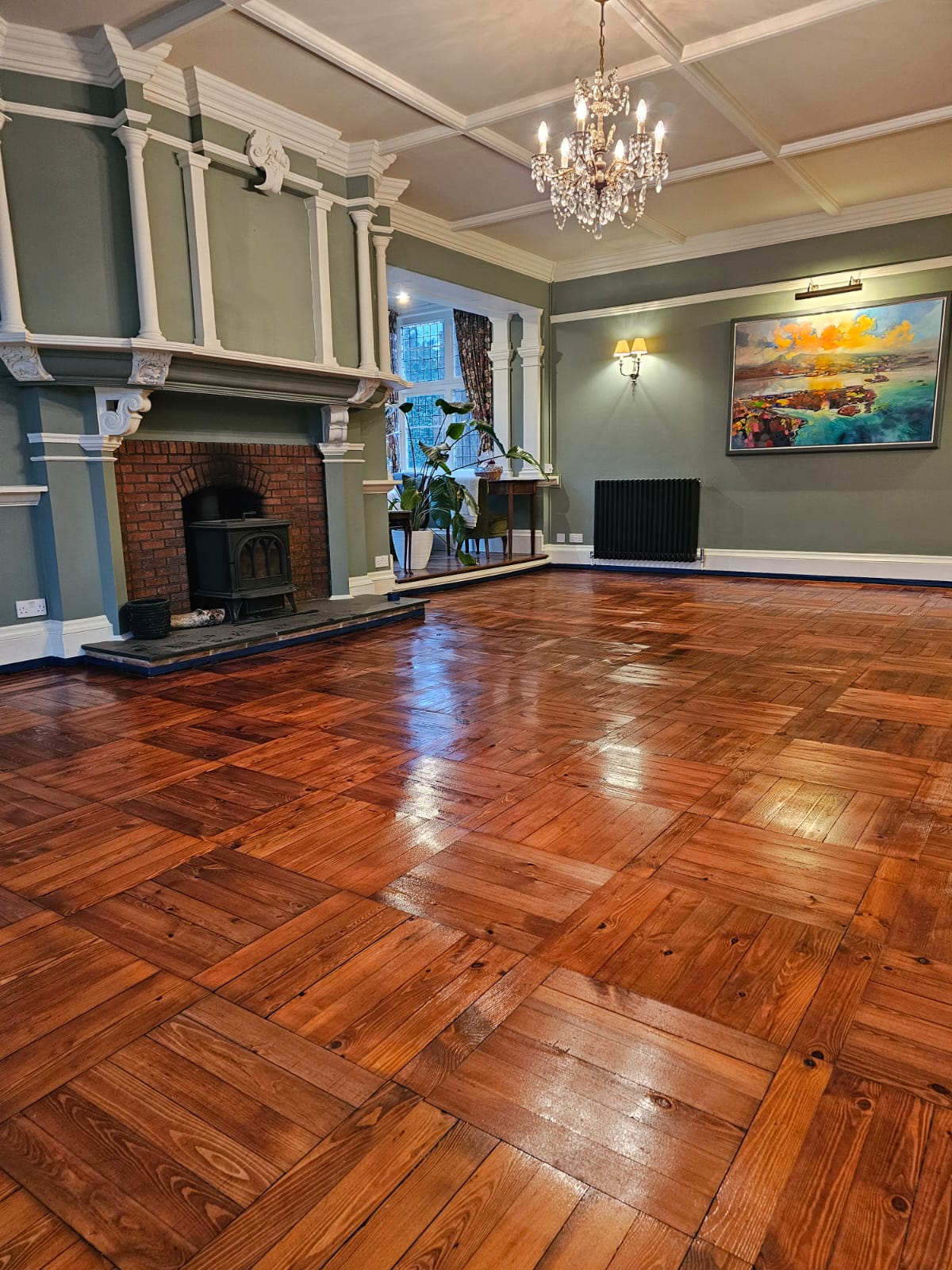
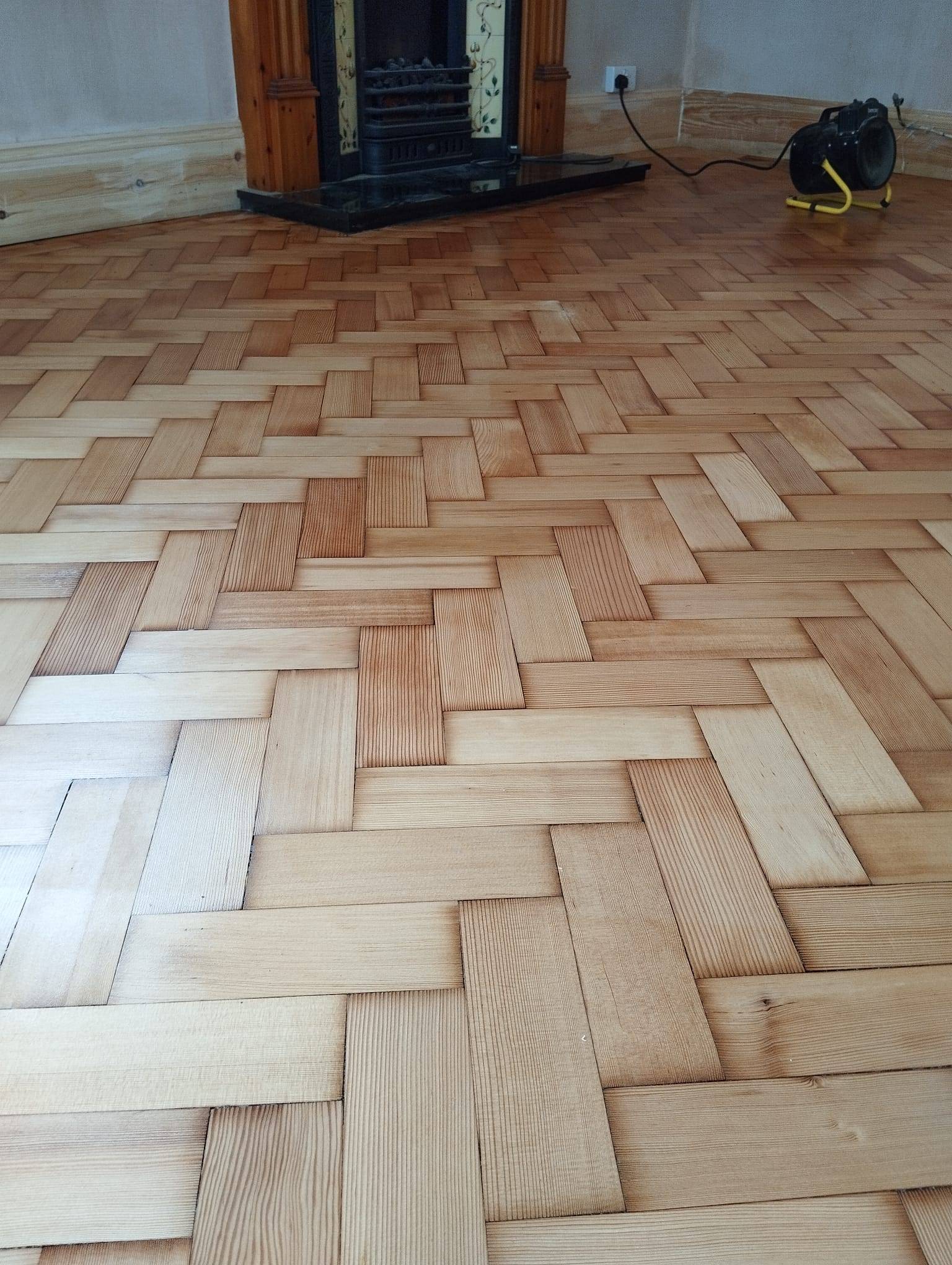
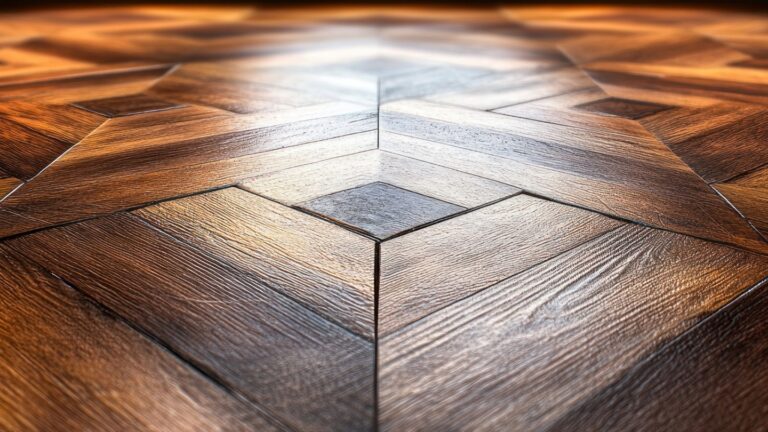
parquet wooden floor sanding
wooden floor sanding

Wood Floor Repairs and Board Replacement

Before refinishing we make the floor structurally right. Wooden floor repairs cover lifting boards, historic patching and damaged edges; squeaky wood floor repair fixes the creaks at their source over the joists; scratch repair tidies isolated damage without a full refinish.

Floorboard replacement uses reclaimed timber from our own stock, matched for species and age so replacement boards weather in with the originals — the difference between a repair you can find and one you cannot.

How a board is lifted decides whether it survives. Tongue-and-groove boards are eased up along their length with the tongue released properly, not levered from one end until something cracks; old cut nails are drawn or driven through rather than ripped free. Re-fixing is done with screws into sound joist timber, countersunk and concealed at the fill stage. It is slower than brute force, and it is why boards we lift go back down as boards, not firewood.

Parquet and Woodblock Floors

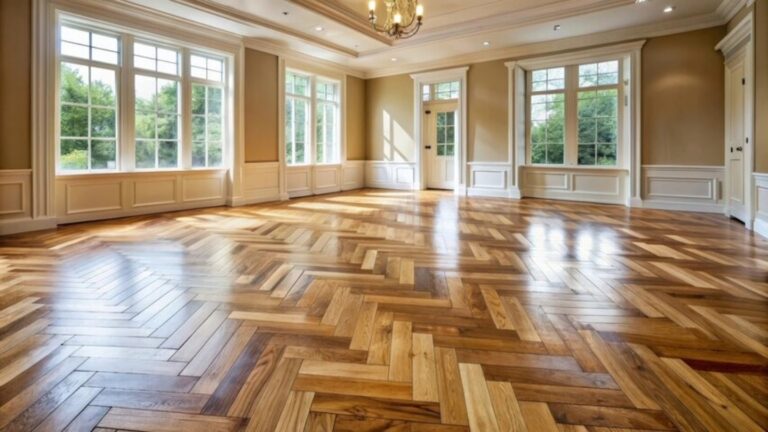
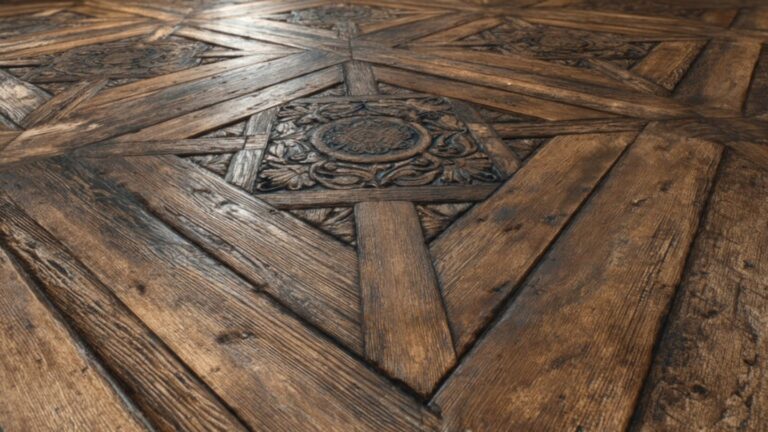
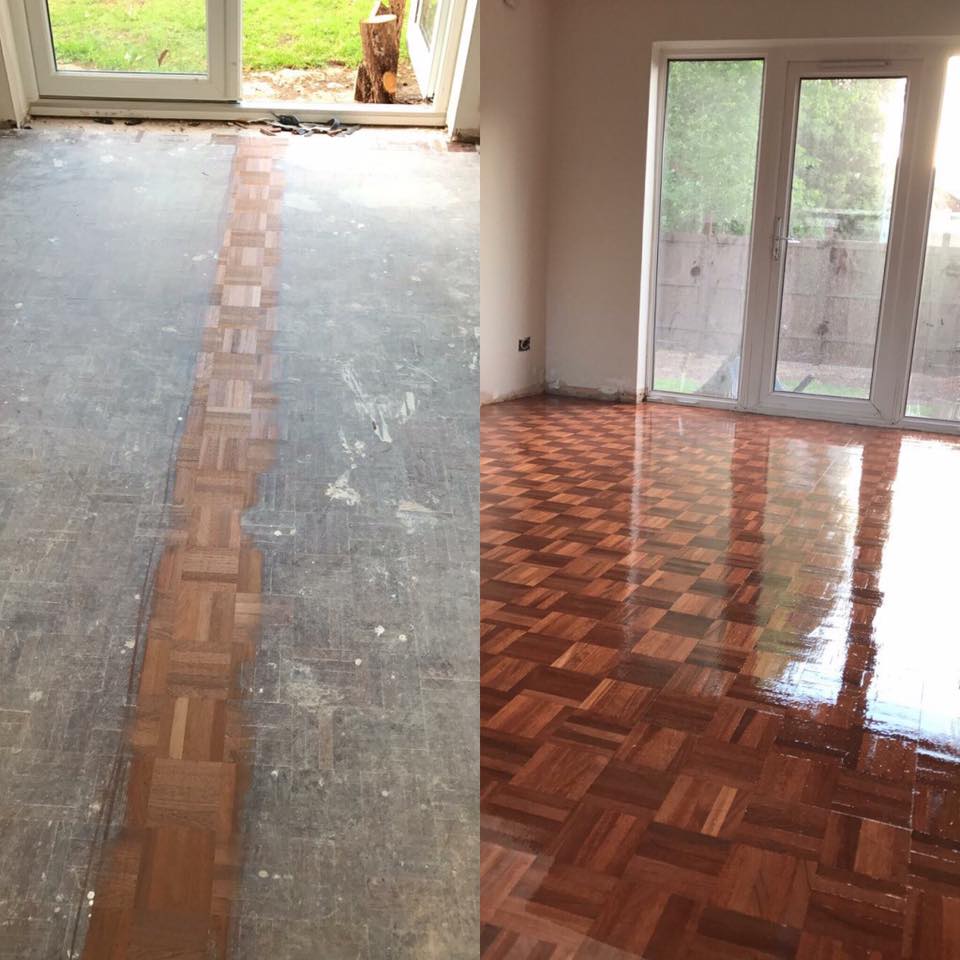
Interwar houses and public buildings around Swansea still hold parquet worth rescuing. Our parquet floor sanding service secures and re-bonds loose blocks, replaces missing ones from reclaimed stock, manages the old bitumen bed correctly and sands the pattern level in multiple directions before sealing. Lift a corner of carpet before writing a floor off — blocks turn up where nobody expects them.

Where a section of blocks has failed completely we record the pattern before touching it — photographs, and numbering on the block backs where the layout is complex — so the field goes back exactly as it was laid. If a collapsed area has lost its geometry altogether, the pattern is re-set from a fresh chalk line at the room’s centre, the way the original layers did it, and worked outwards until it meets the sound floor without a visible seam.

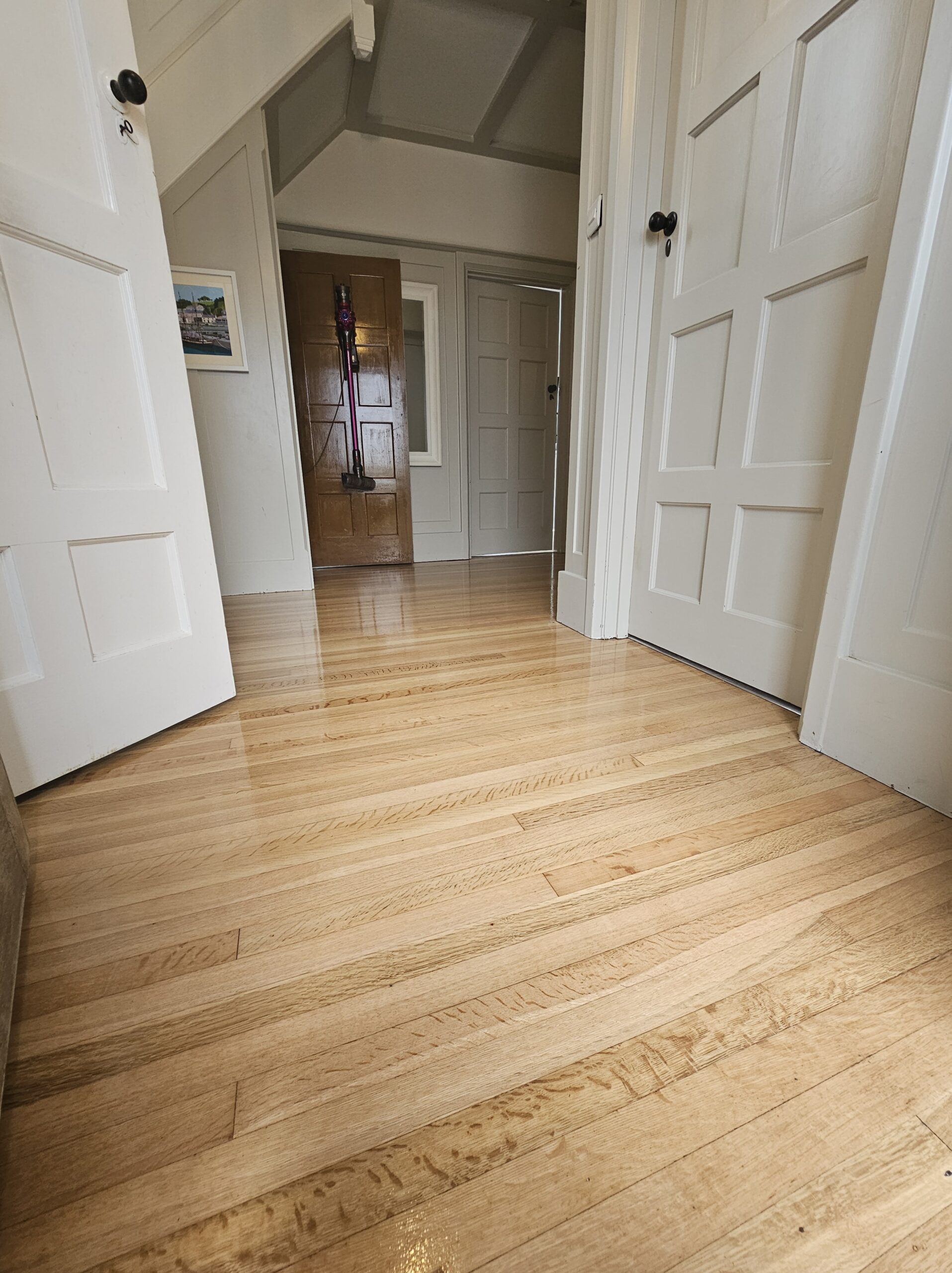
flooring sanding company
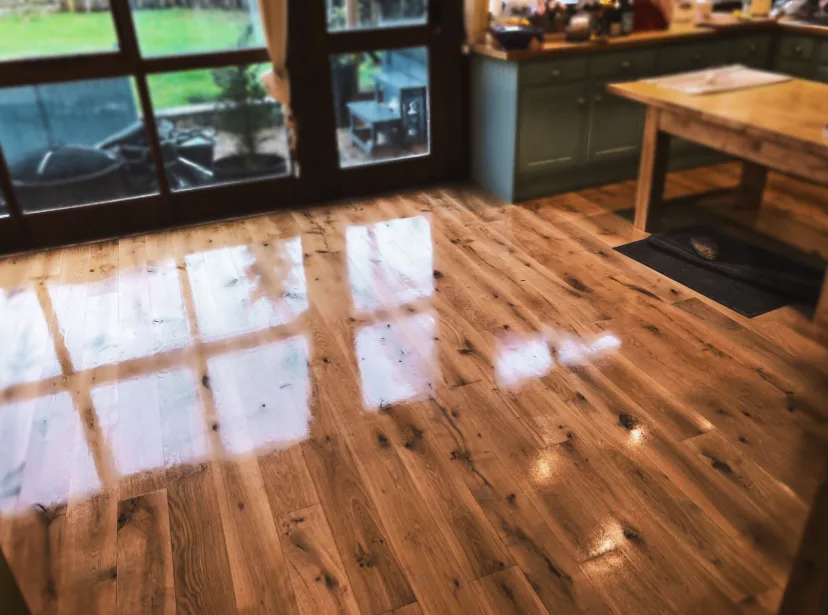
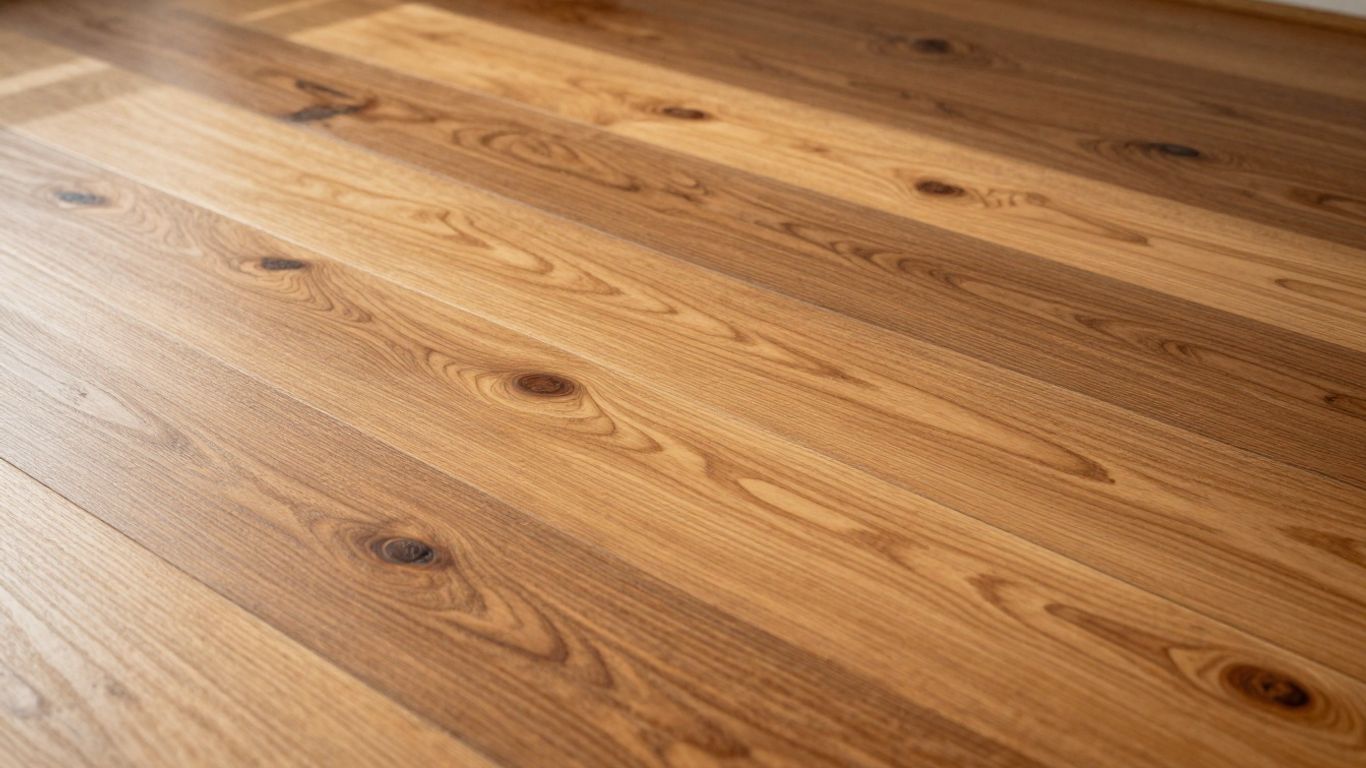
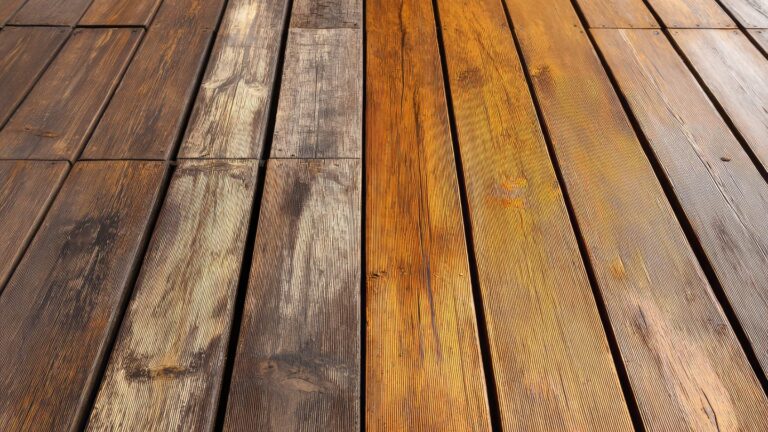
Sunlight across freshly lacquered wooden floorboards

Staining, Sealing, Oiling and Waxing for Coastal Homes

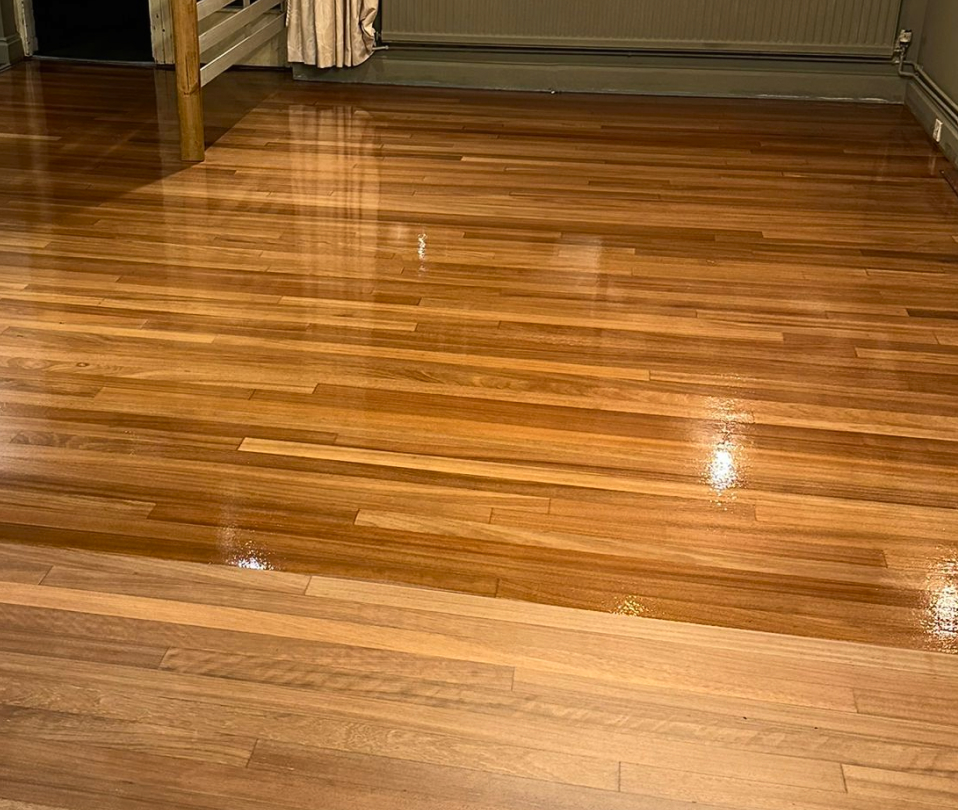
Finish choice matters more by the sea. For Mumbles and seafront property we lean towards hard wax oiling, which moves with the timber and repairs in patches; inland and in hard-working households, lacquer through wood floor sealing gives the toughest surface — the standard recommendation for student lets, recoating quickly between tenancies. Waxing suits period rooms, and wood floor staining changes colour, sampled on your own boards first.

Strong coastal light does something people rarely expect: it changes the colour of timber over time, mellowing some species and bleaching others, so a rug left in place for a year can leave a pale ghost of itself on a seafront floor. We talk this through when choosing finishes — some seals include ultraviolet filtering, and moving rugs occasionally evens the exposure.

A hard wax oiled floor runs on a simple cycle: routine cleaning with an oil-based soap that feeds the surface as it cleans, then a maintenance oil applied to the traffic areas when they start to look thirsty. Kept to that rhythm, the floor never needs stripping back — the finish just keeps being topped up.

Gap Filling, Stair Sanding and Upkeep

Draughty Victorian boards benefit hugely from gap filling — timber slivers in the wide gaps, flexible resin in the fine ones, both sanded flush. Stair sanding restores treads and risers to match a finished hallway. Afterwards, occasional buffing and recoating or a polish keeps the wear layer healthy for years between sands, and we leave every customer with plain-English aftercare notes.

The first fortnight after finishing matters more than any other. The floor can be walked on quickly, but the finish is still hardening beneath the surface, so rugs stay off, furniture goes back gently on felt pads rather than dragged, and cleaning is a soft brush or vacuum only until the coats reach full hardness. Our aftercare notes set out those timings for the exact finish used, so there is no guesswork about what is safe when.

Wood floor sanding company
Floor sanding taunton

Get a Floor Sanding Quote in Swansea

Send two photographs — the room from the doorway and a close-up of the worst area — and we will reply with an honest opinion and a fixed written quotation; good photographs usually settle the answer without a drive. A free no-obligation site survey is available for larger houses, chapels, halls and landlord portfolios.

Call 01823 674562, email info@ryansrestoration.co.uk, or use the form on this page.

All services available in Swansea: floor sanding, commercial floor sanding, wood floor repairs, floorboard replacement, gap filling, parquet restoration, staining, sealing, oiling, waxing, stair sanding and floor installation.

Nearby areas we also cover: Cardiff and South Wales. There is a page for each, and the full list of towns is on our areas we cover page.

FAQ: Floor Sanding in Swansea

Sanding and refinishing, structural repairs, floorboard replacement, gap filling, parquet restoration, staining, sealing, oiling, waxing, stair sanding, buffing and recoating, new installation, plus commercial and chapel work.

Yes. Commercial floors are done in the hours the business is shut — nights and weekends — or in phased sections, so trade continues uninterrupted from first shift to final coat.

Rarely. Pitch pine is dense, hard-wearing timber; even aisles worn hollow over a century usually sand, repair and refinish well, at a fraction of the disruption of replacement.

Yes, and it is often in better shape than expected. Blocks are re-bonded, missing pieces matched from reclaimed stock, and the pattern sanded flat and finished as one surface.

It is — staining can take a floor darker or shift its tone. We put samples on your own boards and let you see them dry in daylight before the whole floor is coloured.

Engineered boards yes, where the hardwood wear layer is deep enough; that gets measured at the free survey. Laminate has no real wood surface and cannot be sanded at all.

No — every machine runs sealed extraction that captures the overwhelming majority of dust at source, so occupied homes and open businesses stay clean throughout.

Email two photographs for an honest opinion and a fixed written quotation, or ring 01823 674562 to book the free no-obligation site survey.

Walk on it freely, but treat it gently: no rugs until the finish reaches full hardness, furniture placed back on felt pads rather than dragged, and dry cleaning only — a soft brush or vacuum. Our aftercare notes give exact timings for the finish used on your floor.

Yes. Aisles worn hollow by a century of use are blended into the protected timber under the pews with heavier cuts along the worn runs and lighter passes elsewhere, so the floor reads as one surface without sacrificing the sound boards.