45 years’ experience  ·  Rated 4.9 on Google  ·  Family-run, from our workshop near Wellington

45 years’ experience · Rated 4.9 on Google · Family-run

Floor Sanding and Wood Floor Restoration in Portishead

Engineered oak refinishing, click-floor advice, new wooden floor installation and full sanding for Portishead marina flats, new-build houses and older homes.

QUICK QUOTATION

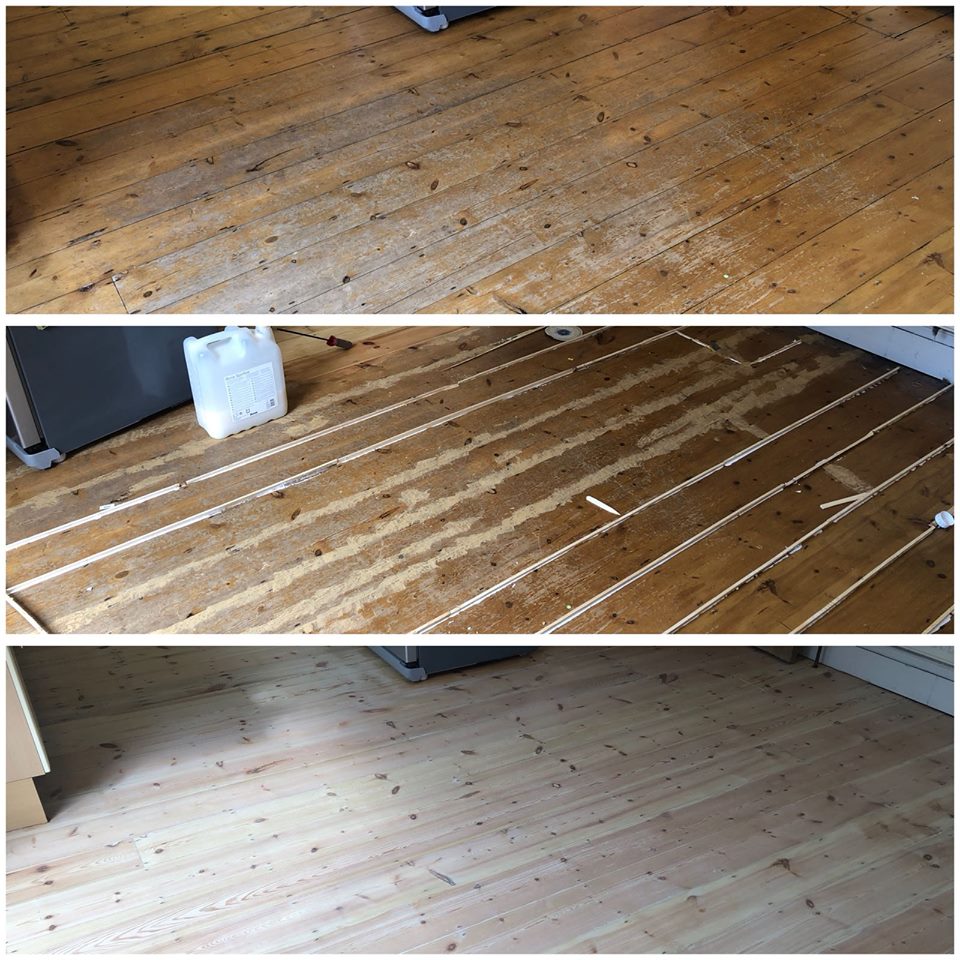
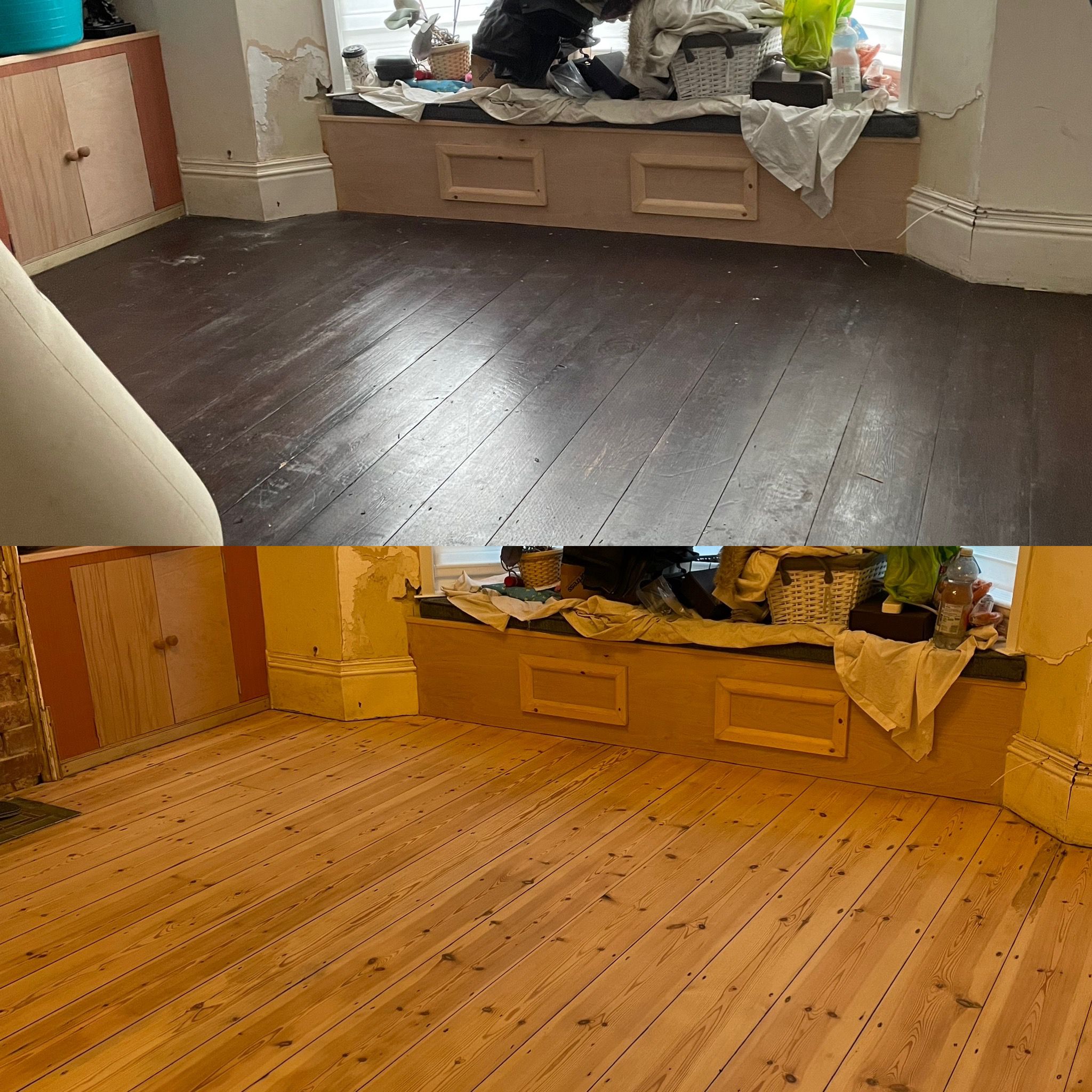
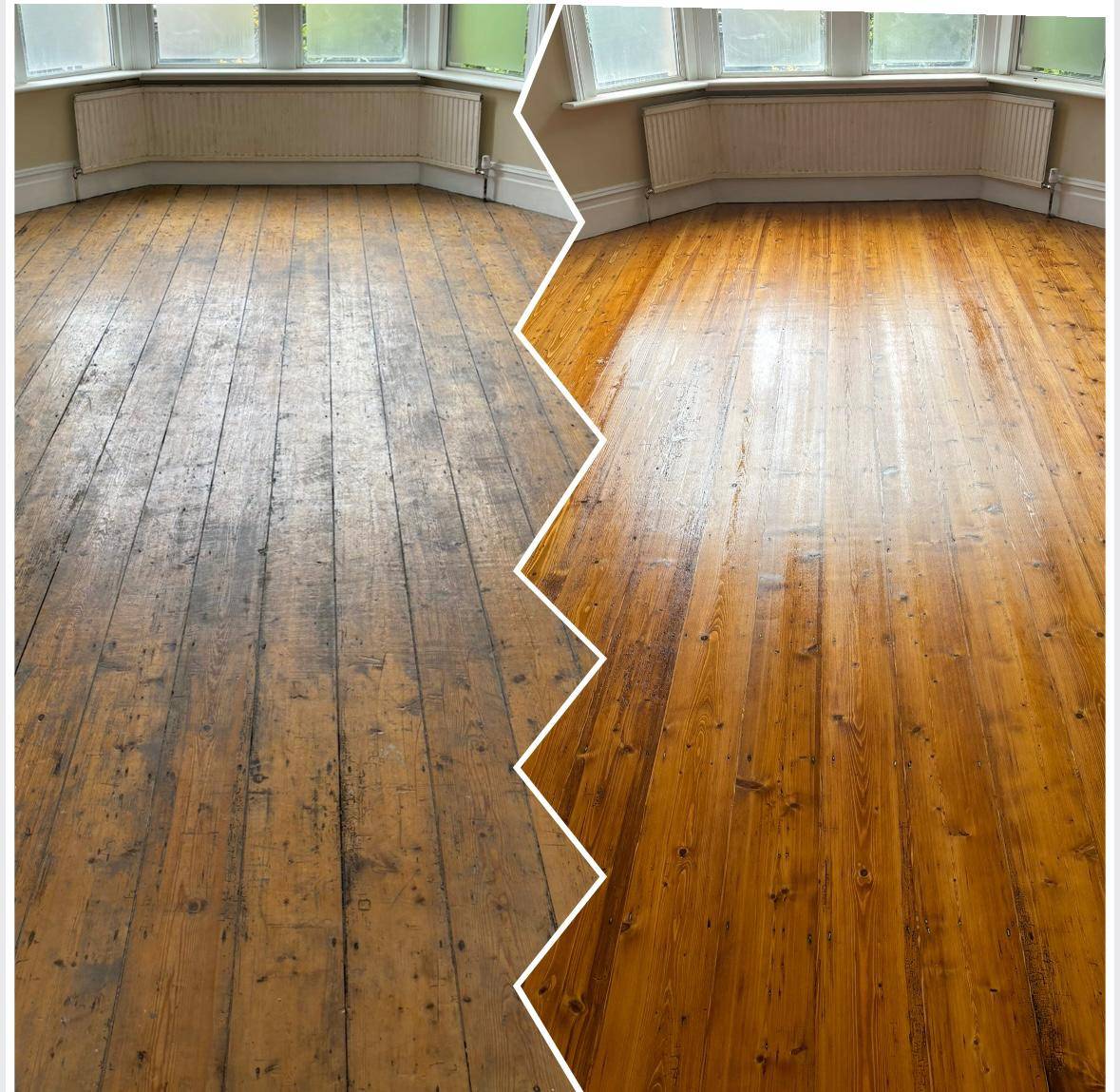
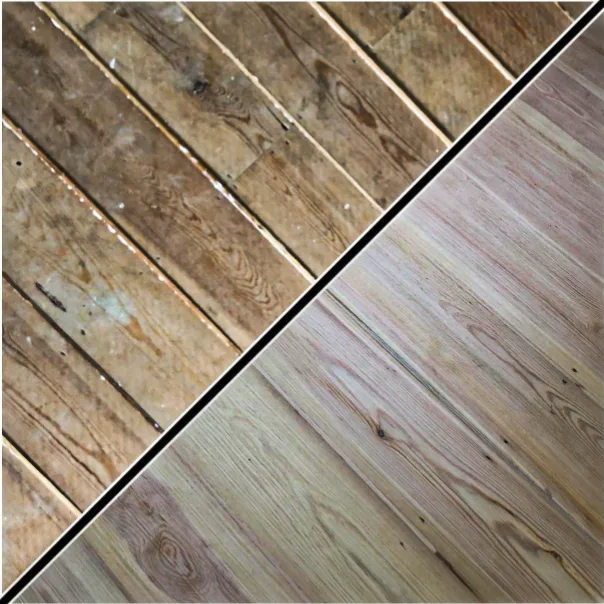
Floor sanding before and after

Floor Sanding in Portishead: Starting With What the Floor Is Made Of

Portishead has changed more in the last twenty-five years than most towns in the region. The old docks and power station land beside the estuary has become Port Marine, a large development of houses, terraces and apartment blocks round the marina, and further estates have gone up on the edges of the town since. Alongside them sit the older streets of Edwardian and inter-war houses up the hill, and a stock of post-war homes. That mix shows up in the floors.

In the newer homes, the wooden floor is very often engineered: a top layer of real oak or another hardwood bonded to a plywood or softwood core beneath. Some are glued or nailed down; many are floating click systems laid over underlay. In older parts of town, solid pine boards and the occasional oak strip or woodblock are still the norm.

That matters because the starting question for floor sanding in Portishead is not which sander to use, but how much real wood there is to sand. Solid oak or pine, laid in an older house up the hill, will usually stand several full sands across its life. An engineered board can be sanded only as many times as its wear layer allows, and on some click floors that is once, carefully, or not at all.

So the first job is measurement. Taking up a threshold strip or a skirting cover, or removing a heating grille, often reveals the edge of a board and shows the thickness of the top layer. The manufacturer’s details from the original sale, if the owner or developer kept them, are even better. Our floor sanding service is built around measuring before cutting.

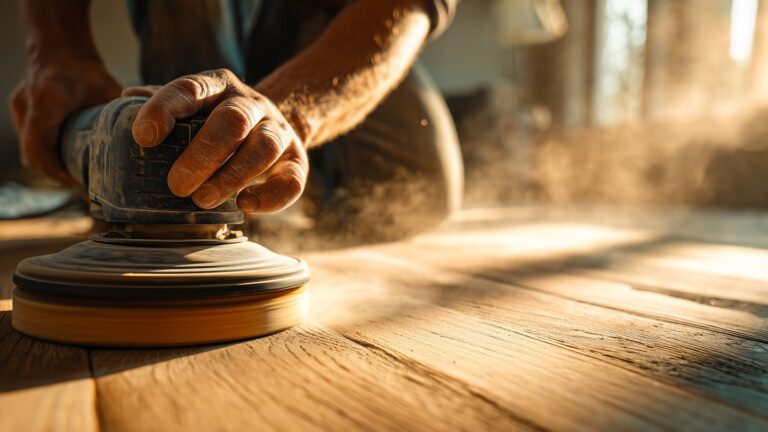
Portishead is in the regular area we cover from our family workshop near Wellington, with the wider county on the Somerset floor sanding page. A typical apartment or house floor takes one to three days, including any repair and finishing. The sanders work with sealed extraction, so an apartment with neighbours on the corridor does not end up covered in fine dust; that is how we offer dust-controlled floor sanding, with the usual honesty that a little settling dust still needs wiping away.
Engineered Boards and Click Floors: How Far They Can Be Sanded

Engineered flooring is made in layers. The visible top, or wear layer, is real timber: usually oak, sometimes walnut, ash or another species. Under it is a stable core, often cross-laid plywood or softwood strips, designed to resist the swelling and shrinking a solid board goes through. Wear layers vary widely. Entry-level products may have a veneer of 1mm or less, which cannot be sanded at all. Mid-range boards often have 2 to 4mm. Better-quality engineered floors may have 6mm or more, which allows several full sands over the years.

The tongue-and-groove or click profile sits below the wear layer. Sanding has to stop well short of it. On a floor with a 3mm wear layer, there is realistically room for one or two careful sands, each taking off as little as possible. A lot of new-build flooring has a slight V-groove where each pair of boards meets. Flattening the floor can grind that chamfer away on some boards and not others, which leaves a patchy, uneven pattern of grooves.

There are alternatives when sanding is risky. A lacquered engineered floor that is dull and lightly scratched can often be cleaned, abraded and given a fresh coat without touching the wood itself. An oiled engineered floor can be deep-cleaned and re-oiled. These lighter treatments fall under buffing and recoating and are often the right first step.

Click floors bring another issue. Because they float, they can move slightly under a heavy sanding machine, and the joints can open if the floor was laid without enough expansion gap or over uneven underlay. Before any machine work, the floor needs to be checked for movement and fixed where necessary.

Laminate is different again. It is a photographic image under a plastic wear layer, not wood, and cannot be sanded. It can be repaired by replacing boards, but not refinished.

Where a section of engineered board is badly damaged, individual boards can sometimes be replaced if matching stock is available. On a glued floor, the old board is cut out and the new one bonded in. On a click floor, it may be possible to unclick from the nearest wall. These are part of our wooden floor repairs.

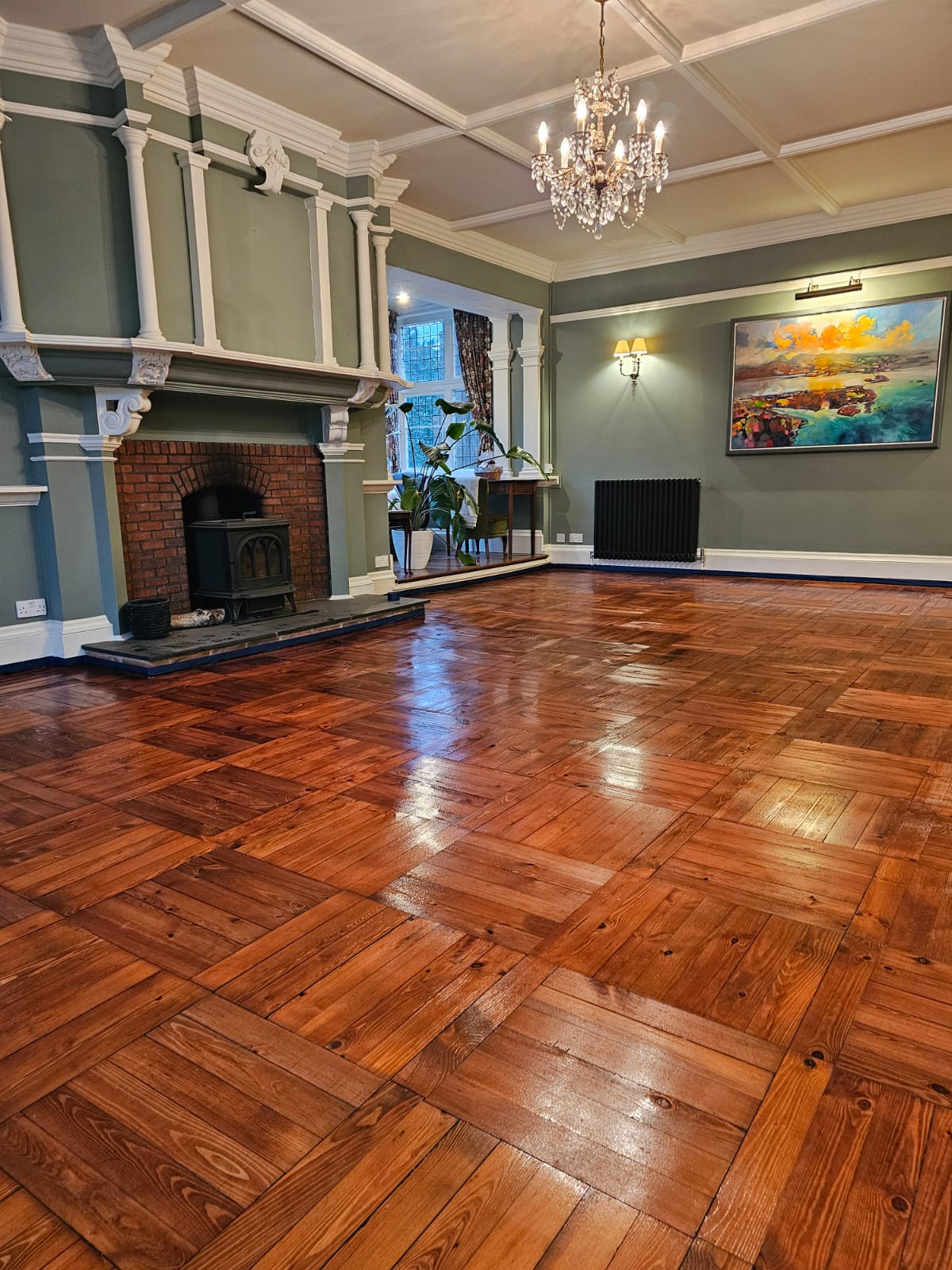
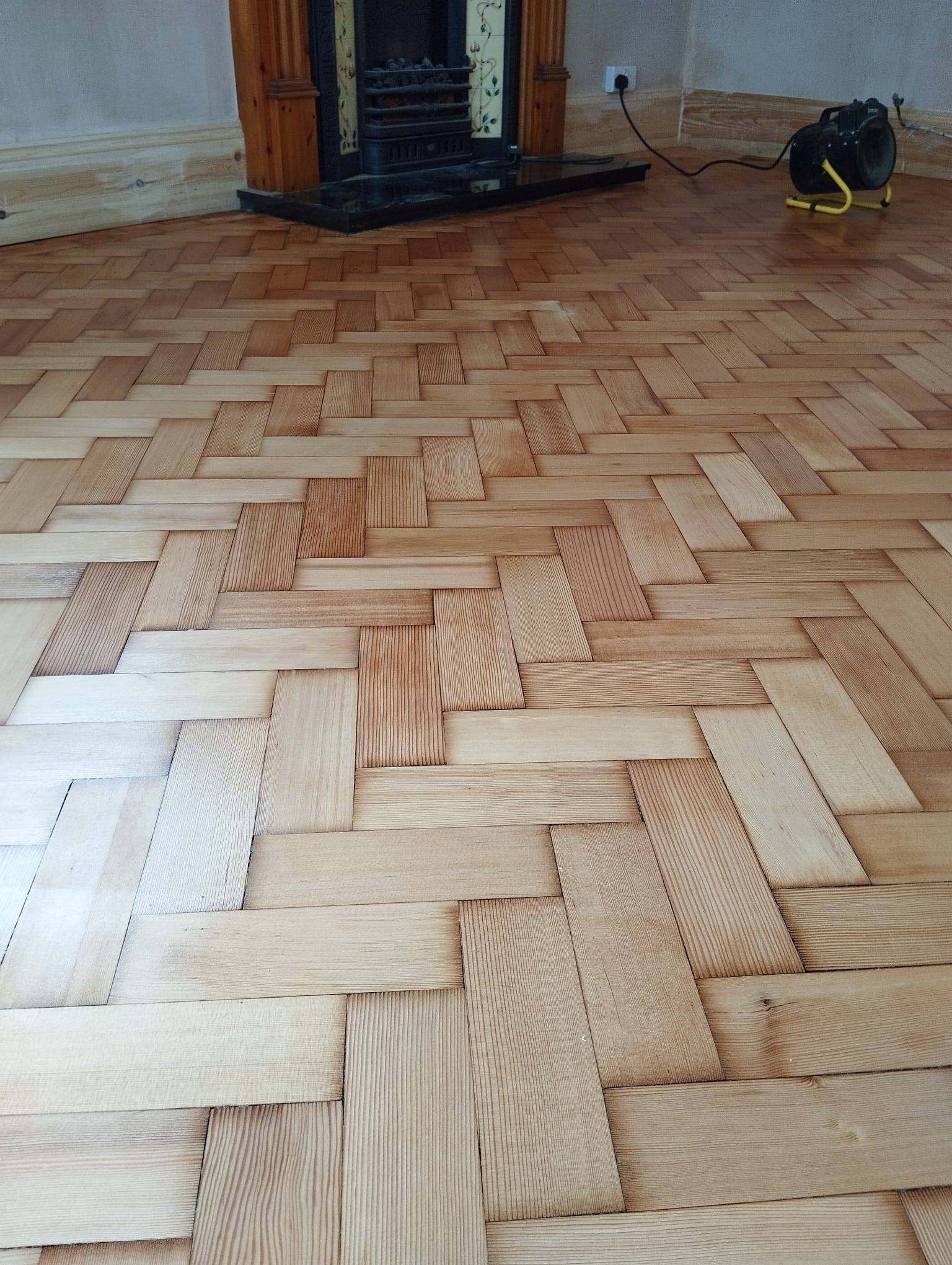
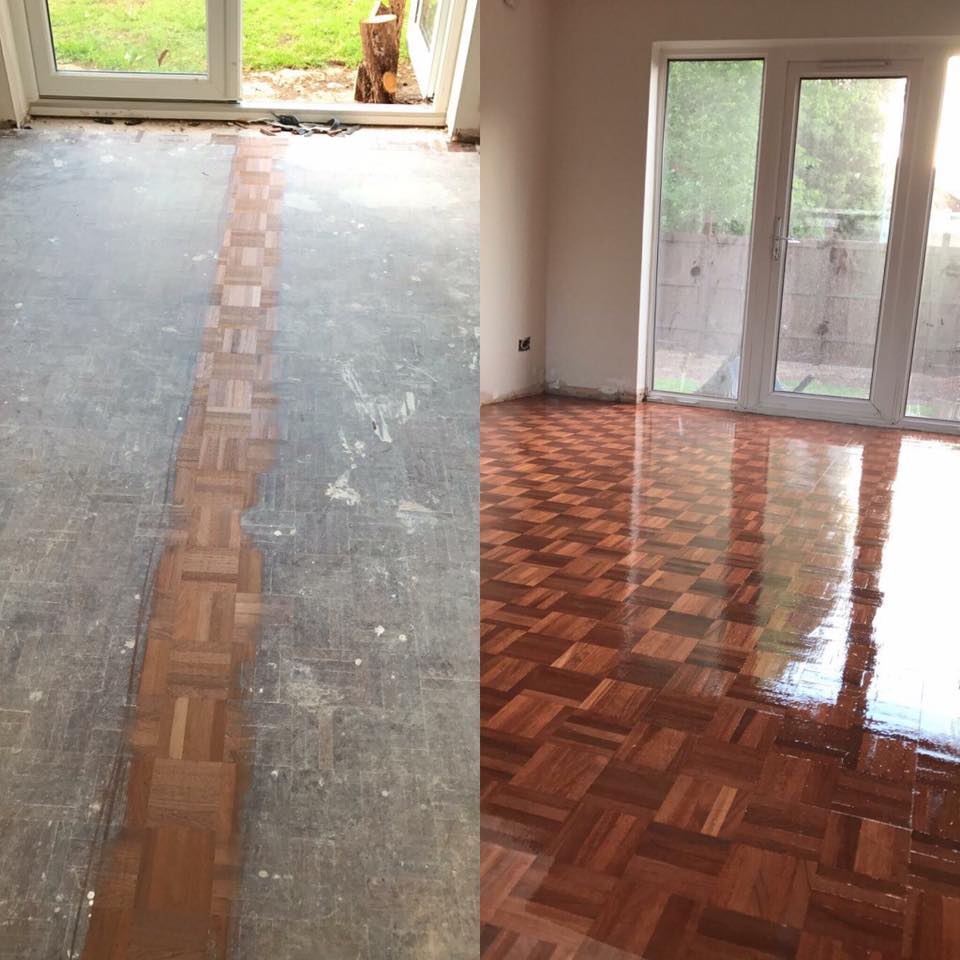
parquet wooden floor sanding
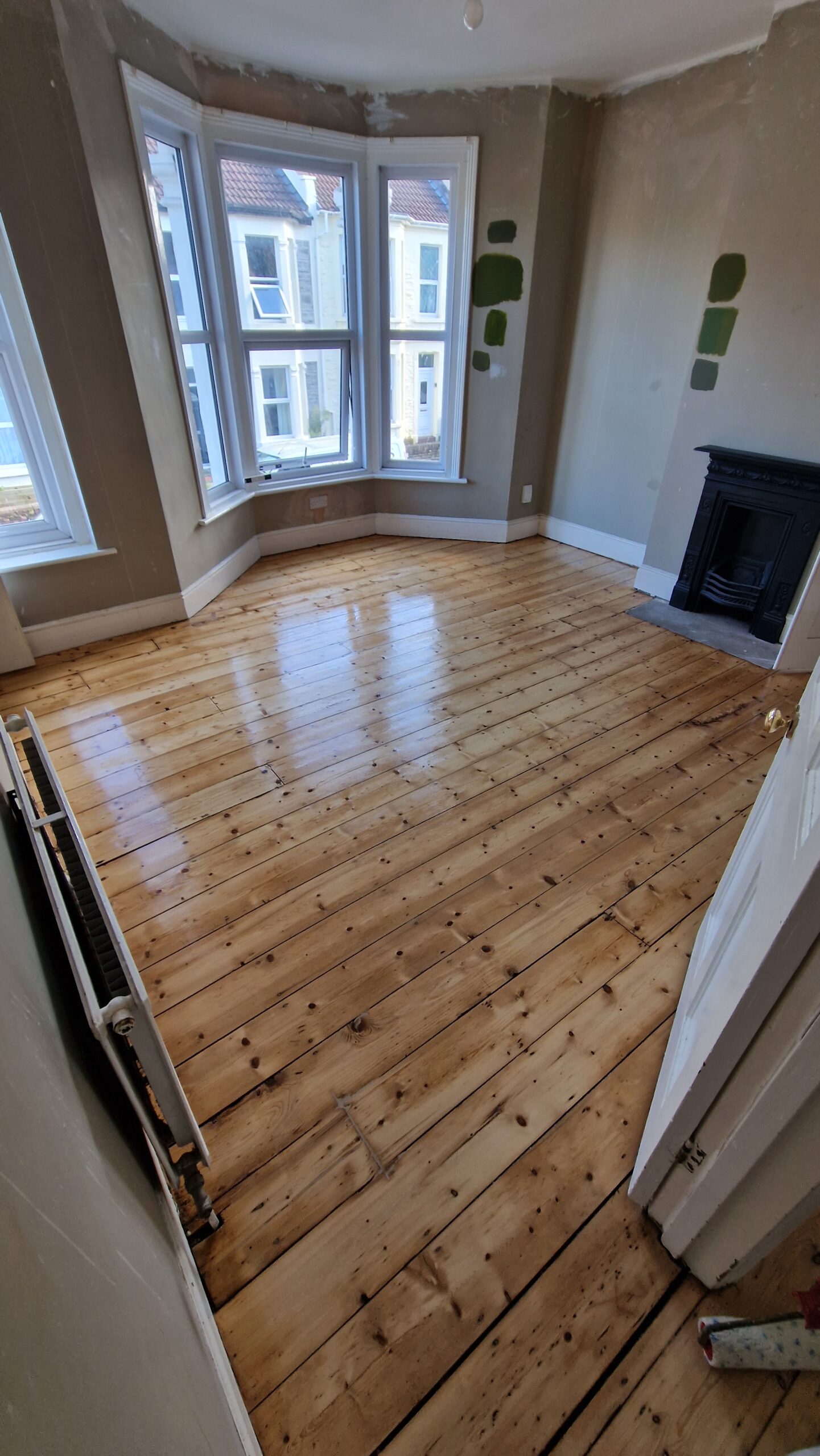
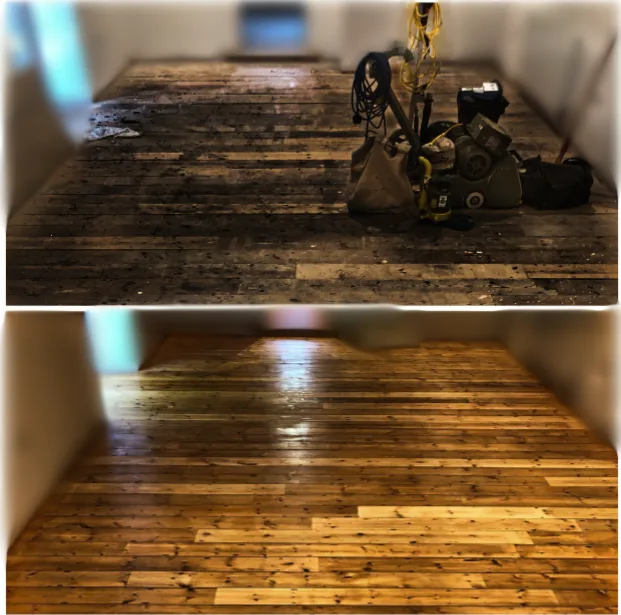
wooden floor sanding

Wood Floor Restoration in Portishead's Older Houses

Away from the marina, Portishead has streets of older houses: Victorian and Edwardian terraces and villas near the High Street and up the hill, inter-war semis and post-war homes. Here the floors are mostly solid timber, which allows a fuller restoration.

Wood floor restoration in Portishead’s older housing usually involves pine boards in bedrooms and front rooms, sometimes with oak strip or woodblock laid later in a hall or living room. A good number spent forty years or more hidden beneath fitted carpet. After the gripper, staples and underlay are removed, they need repairs, then a careful sand, then a finish.

Restoring pine boards in these houses is a familiar job. The boards are often nail-holed and patched where plumbing went in, and older varnish may have yellowed. Pine is soft, so the sanding sequence matters: going too coarse leaves deep scratches in the soft earlywood that show under the finish.

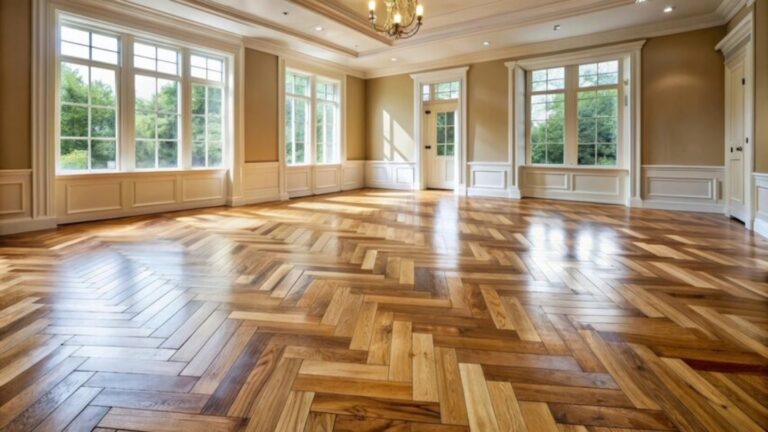
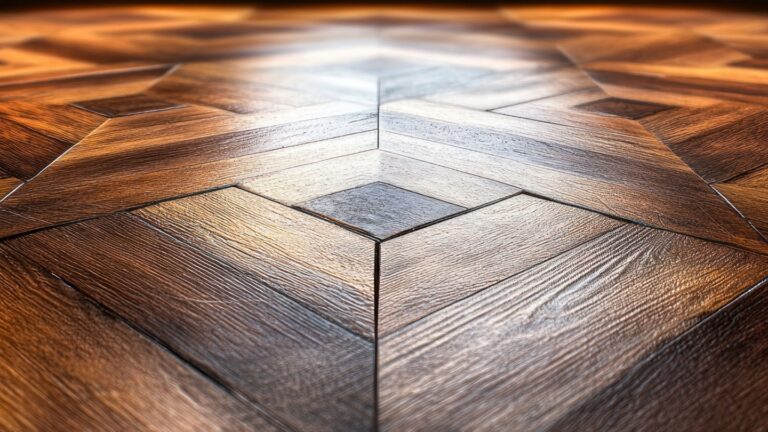
Oak strip and woodblock floors take a different approach. Oak floor restoration is about removing as little as needed and keeping the wood’s aged colour. Woodblock and herringbone floors are covered under parquet floor sanding, which starts by making sure every block is firmly bonded before any machine is used.

A free survey precedes all of this. It takes about half an hour and covers the timber thickness remaining, moisture in boards and walls, under-floor ventilation and any previous repairs. An itemised written quotation is sent afterwards; it only moves if the uncovered floor proves to be different from what the visit could see. Our wider thinking on keeping old timber is set out on the wood floor restoration page.

Stairs in these older houses often have painted margins from runner days. Stair sanding covers treads, risers, nosings, strings and, if wanted, handrails and spindles, mostly by hand and with detail sanders.

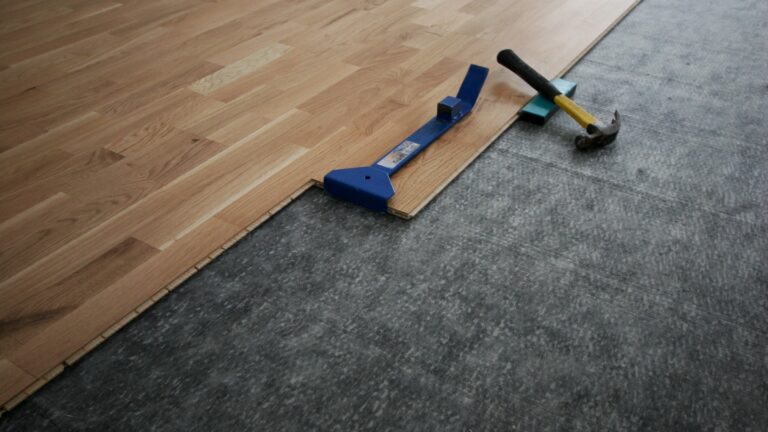
Wooden Floor Installation and Letting New Boards Acclimatise

Many Portishead enquiries are not about sanding an existing floor but about putting in a new one. Some buyers of new homes find the developer laid carpet or vinyl and want wood. Others have a tired engineered floor that has already been sanded down to its limit. Our wooden floor installation service covers supply and fit, or supply only, from solid and engineered ranges including Junkers and Bona.

The biggest single cause of problems with new wooden floors is laying them before the boards and the building are ready. Timber takes on and gives off moisture until it reaches a balance with the air around it. If boards are laid straight from a cold, damp lorry into a warm new flat, they shrink once installed and gaps open. If they are laid into a building where the screed has not dried, they absorb moisture from below, swell and cup.

That is why acclimatisation matters. Boards are normally stored in the room where they will be laid, in their packs, for a period set by the manufacturer, with the heating at normal living temperature. In a new-build, the screed must be tested for moisture before anything goes down, because new screed can take a long time to dry fully. Underlays with a damp-proof membrane are used where needed.

Underfloor heating is common in newer Portishead homes. It is compatible with many engineered floors, but the product has to be rated for it, the heating has to be commissioned and run through its warm-up before installation, and surface temperatures must stay within the manufacturer’s limit. Solid boards are generally less suited to underfloor heating than engineered ones because they move more.

Expansion gaps around the edges, hidden under skirting or beading, let the floor move without buckling. A floating floor laid tight to the walls is one of the most common faults we see.

Preparation also covers levelling. A floor laid on an uneven base will rock and click, and can open at the joints. Self-levelling compound, ply overlay or packing are used to bring the base flat before the new floor goes down.

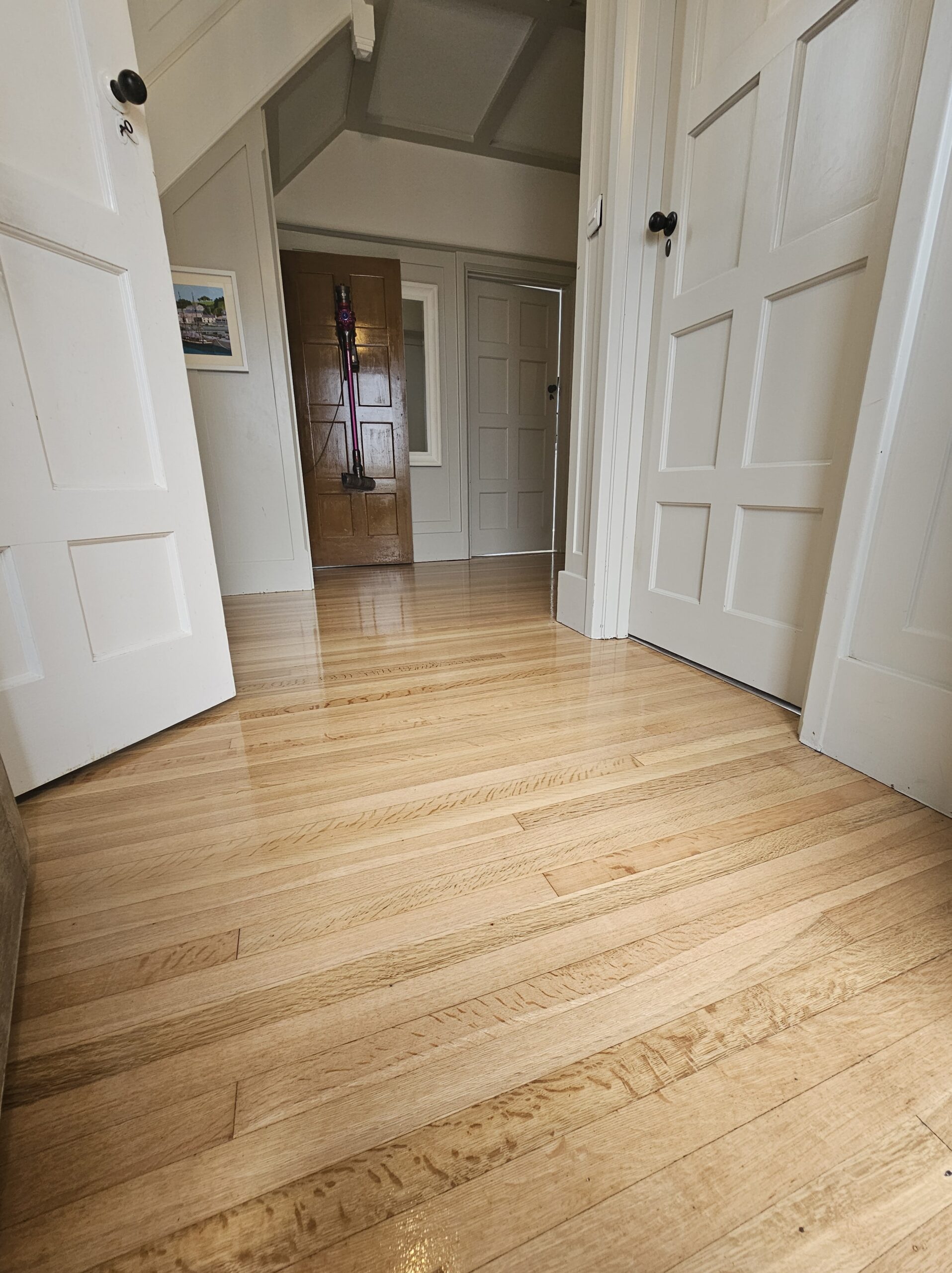
flooring sanding company
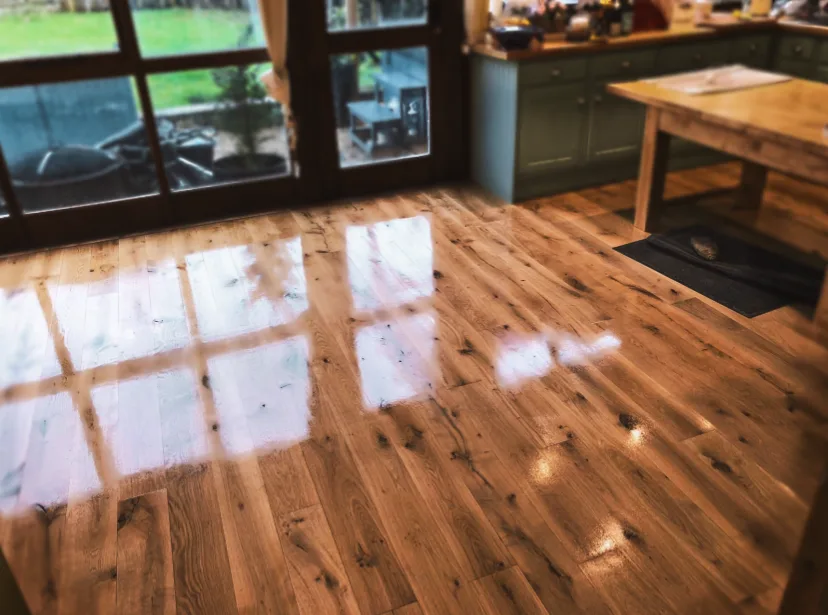
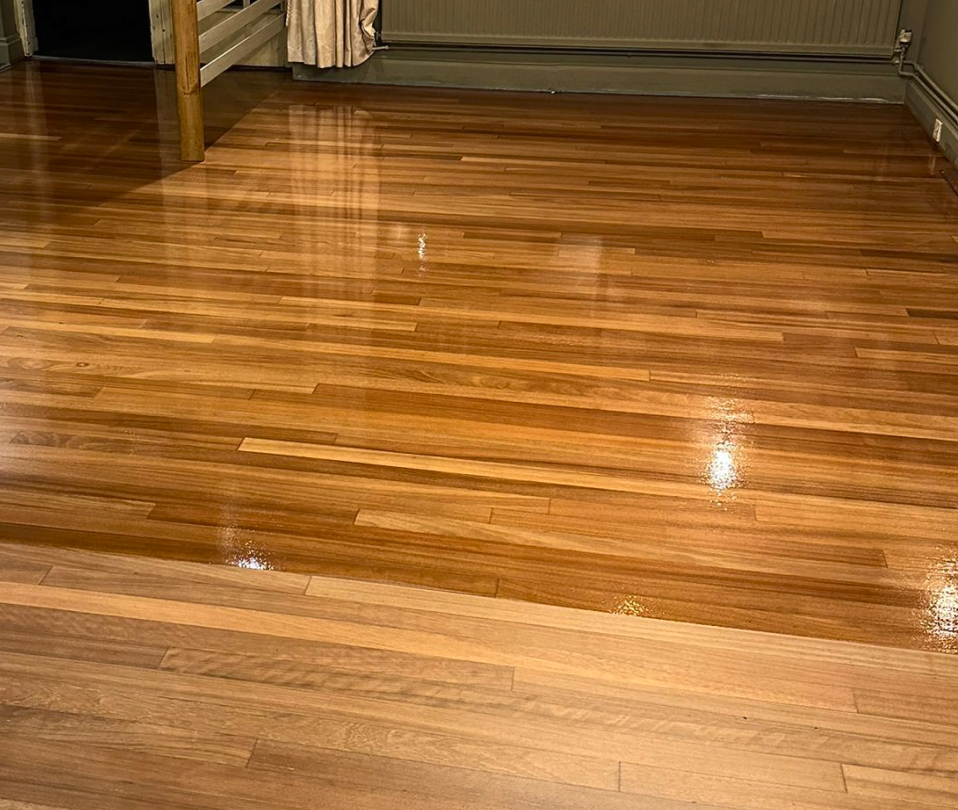
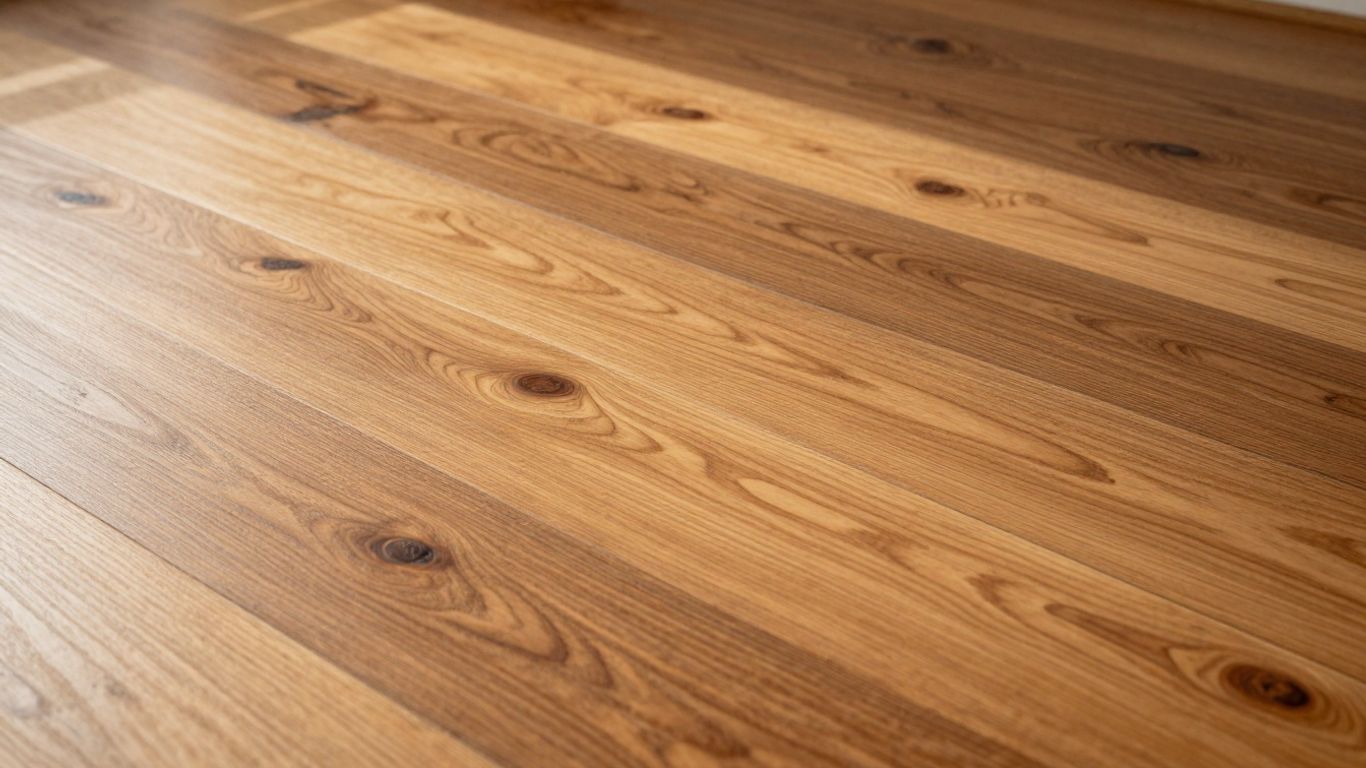
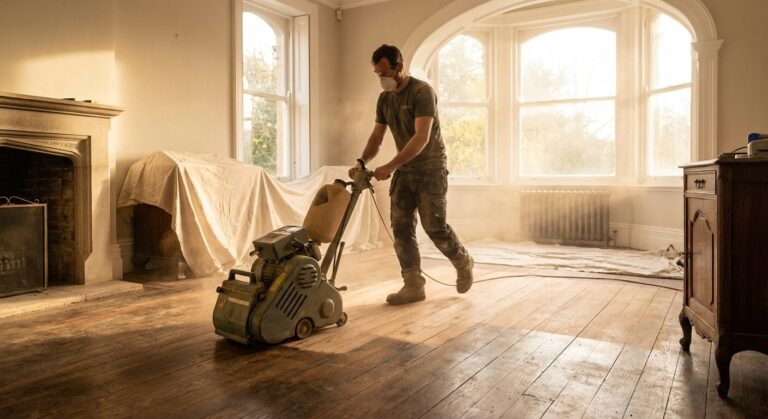
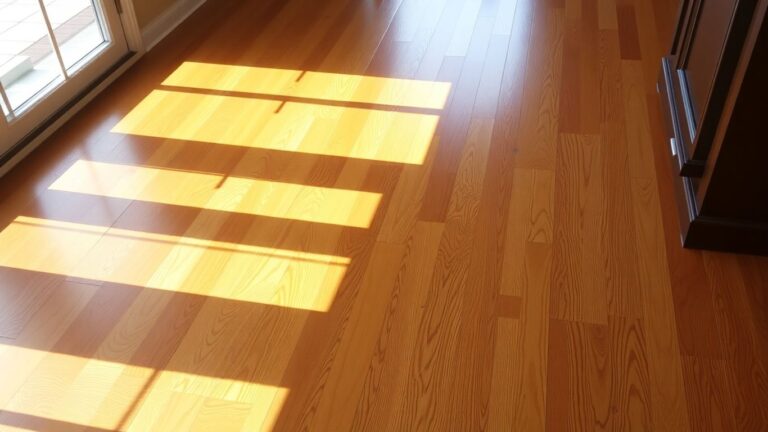
Sunlight across freshly lacquered wooden floorboards

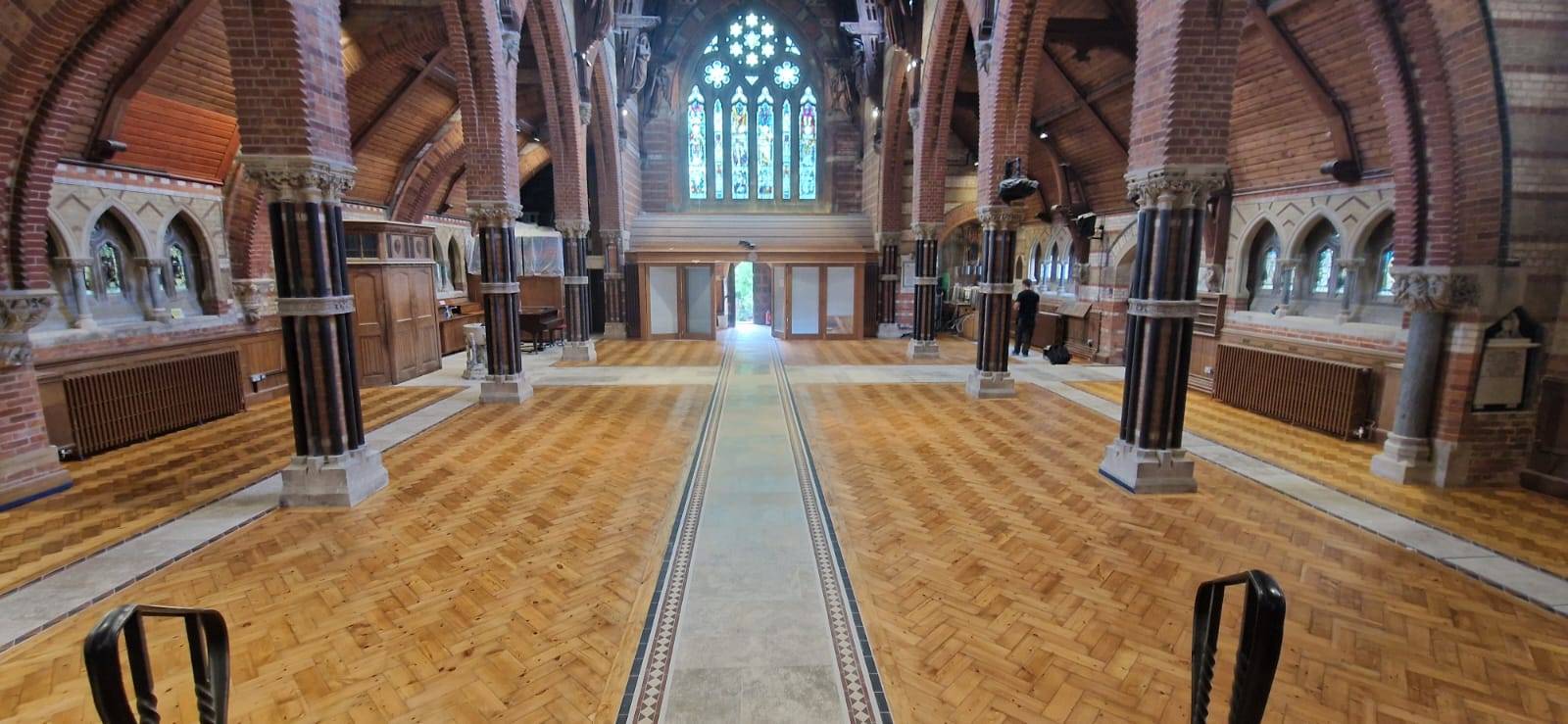
Commercial Floor Sanding in Portishead's Marina Bars, Cafés and Shops

The marina and the High Street have a good number of restaurants, cafés, bars and shops, as well as offices and community halls. Several have timber or engineered floors, and they wear quickly under footfall, chairs, spilt drinks and cleaning.

Around the marina, commercial floor sanding in Portishead is booked so a bar or café loses as few covers as possible. Sanding usually starts after the last orders and the coating is done before the morning shift, or the job runs across a weekly closing day. Dates are agreed well in advance. Our commercial floor sanding page explains how these jobs run.

For bars and restaurants, the finish must handle spills and strong cleaners. A two-component lacquer is the usual choice, and particular care goes into the bar front and the kitchen route. Bar and restaurant floor sanding covers this work.

In a boutique or gift shop the door mat, the till point and the gaps between display units take the worst of it, so retail floor sanding gives those spots extra attention. Gyms and studios need the right grip and durability: gym floor sanding covers sports-grade finishes and slip resistance.

Plan on a full resand of a trading floor around every fourth or fifth year; a house goes roughly twice as long, and well-timed maintenance coats push either interval out. Managing agents for the marina blocks can be sent our method statement, insurance certificate and references.

Repairs, Scratches and Finishes for Newer Homes

Newer floors suffer from different damage than old ones. Scratches from furniture, pets and grit are the most common complaint. On an engineered floor, minor scratches in the finish can often be dealt with by a screen and recoat, without sanding into the wood. Deeper gouges can sometimes be filled and coloured to match. More on this is on our scratch repair page.

Gaps in engineered floors are usually less of a problem than in old pine, but where they do appear, especially at board ends, they can be filled with a flexible filler or resin. In solid boards in older houses, wider gaps can be filled with timber slivers, and gap filling for both types of floor is described separately.

Creaking in new homes is often caused by a click floor laid over uneven underlay or a squeaky joist. Squeaky floor repair identifies the cause before anything is fixed.

In older houses, damaged boards may need cutting out and replacing. Reclaimed timber of the right width and thickness gives a better match than new. Floorboard replacement covers that work.

Finishes complete the job. For a pale Scandinavian look in a new flat, a water-based lacquer leaves oak almost as it came from the sander, whereas an oil-based lacquer gives a deeper, more golden tone. Wood floor sealing with the right primer prevents reactions with oak tannins. Hard wax oil and natural oil give a softer look and allow spot repairs, covered under floor oiling. Colour change is possible on solid and engineered floors with enough wear layer, always tested first: see wood floor staining.

Wood floor sanding company
Floor sanding taunton

Looking After a Marina Flat Floor and Arranging a Visit

A newly coated floor wants a day of being left alone, after which socks are fine. Sofas, beds and dining chairs can return on day two or three, carried in rather than pushed, and every leg should get a felt pad straight away because an engineered surface has less wood to spare than a solid board. Rugs come last, a week or two later, once the lacquer has cured right through.

Apartments with big glazed walls facing the water get a lot of strong light, and sunlight changes the colour of oak over time. Moving rugs and furniture around now and then helps the floor age evenly rather than leaving pale rectangles where things stood. Blinds on the brightest windows help too.

Underfloor heating and sealed modern flats can make the air very dry in winter. Engineered boards cope far better than solid ones, but extreme dryness can still open fine end gaps and make the finish feel brittle. Keeping the room around normal living humidity, and following the heating limits the flooring maker sets, avoids most of that.

Grit from the marina walkway and the beach should be vacuumed up with a soft head before it scratches, and the floor then wiped over with a mop squeezed out hard and a pH-neutral cleaner. Avoid steam on engineered flooring especially, because hot moisture can attack the adhesive that holds the oak top to its core. When the walkways look tired, a maintenance polish will usually restore them before a recoat is needed.

The easiest start is a couple of photographs taken on your phone, one showing the whole room and one close to the most worn boards, plus the brand name if you have the original paperwork. Our inbox for photographs is info@ryansrestoration.co.uk. To speak to someone instead, the office number is 01823 674562, staffed eight till six through the week, with Saturday visits possible by prior agreement. Our enquiry page works just as well. Families a short drive inland can read about floor sanding in Nailsea.

Portishead Floor Sanding Questions

That depends entirely on the thickness of the real wood on top. Boards with 3mm or more of hardwood above the joint usually allow at least one careful sand. Below about 2mm, sanding is a real gamble and a screen and recoat is normally the safer choice. We look at the edge of a board, often under a door threshold, before recommending anything.

Laminate is a printed image of wood sealed under a hard plastic surface, so there is no timber to sand and no way to refinish it. Damaged boards can sometimes be swapped if spare packs from the original batch were kept. If the whole floor is worn, replacing it with real engineered or solid wood is usually the better long-term route.

Not until the movement has been sorted out. A floating floor that was laid tight to the walls, or over underlay on an uneven screed, can shift and open at the joints under the weight of a sanding machine. The base and edges need to be put right first, and sometimes that means lifting part of the floor.

Follow the period the manufacturer gives for that product, which is often a few days in the room where the floor will be laid, with the heating at normal living temperature. In a new-build, the screed also needs testing for moisture before laying, because a screed that is still drying can make new boards swell and cup.

Many engineered products are rated for it, but not all, so check the specification. The heating system should be commissioned and run through its warm-up programme before installation, and the surface temperature must stay within the limit the flooring maker sets. Solid boards are generally less suited to underfloor heating because they move more with heat.

Yes. Typically the sanders arrive after closing time, and a fast-hardening commercial coat goes down through the night, leaving the bar ready for its next service. Booking well ahead means staff rotas and drink deliveries can be moved, and paperwork for your landlord can be sent across beforehand.

Often, yes. Scratches that sit in the lacquer rather than the wood can be removed by abrading the surface lightly and applying a fresh coat. Deeper gouges may be filled and coloured to match, and boards with serious damage can sometimes be replaced individually if matching stock exists.

Two pictures get things moving: one wide shot across the room and one tight on the most worn boards. If the developer’s handover folder names the flooring maker, mention that as well. Next is the free survey, about half an hour on site checking how much hardwood is left on the boards, damp in the screed and the condition of the base. Then a written, itemised quotation arrives.