45 years’ experience  ·  Rated 4.9 on Google  ·  Family-run, from our workshop near Wellington

45 years’ experience · Rated 4.9 on Google · Family-run

Floor Sanding and Wood Floor Restoration in Swanage

Floor sanding in Swanage for holiday lets, guest houses and family homes, with matt, grippy finishes that cope with beach sand, wet feet and quick changeovers.

QUICK QUOTATION

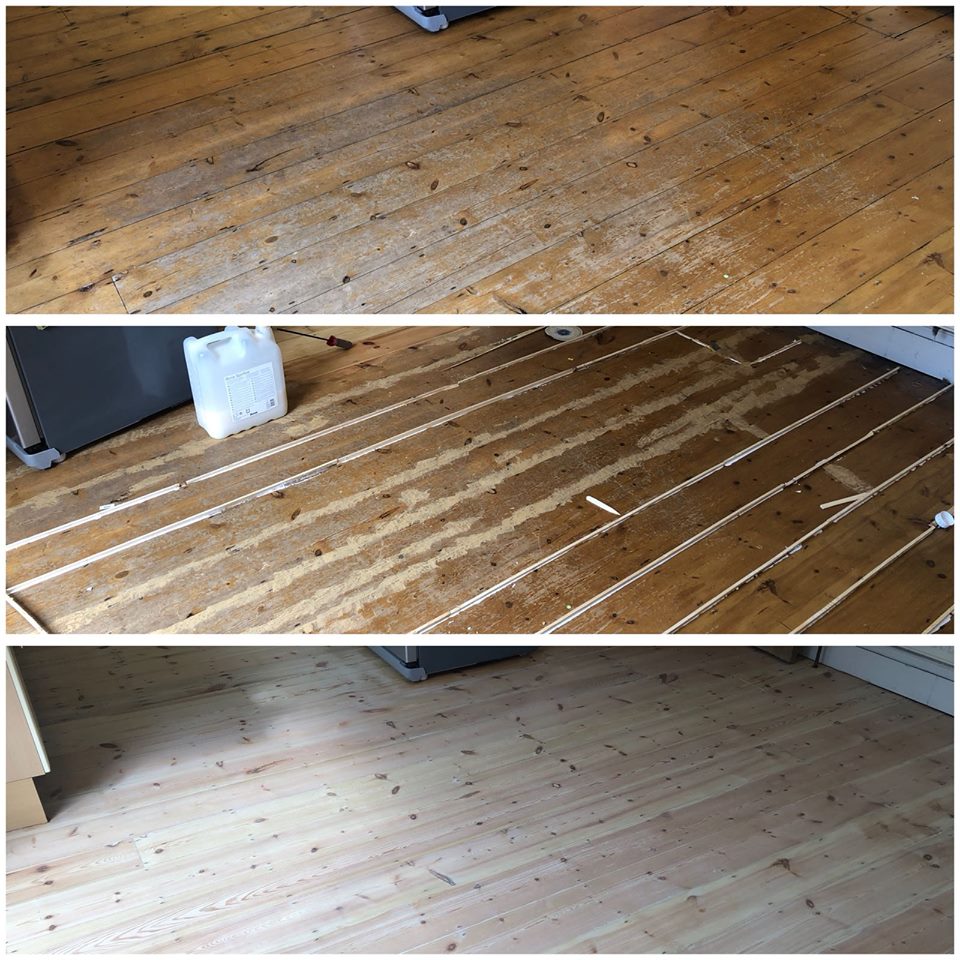
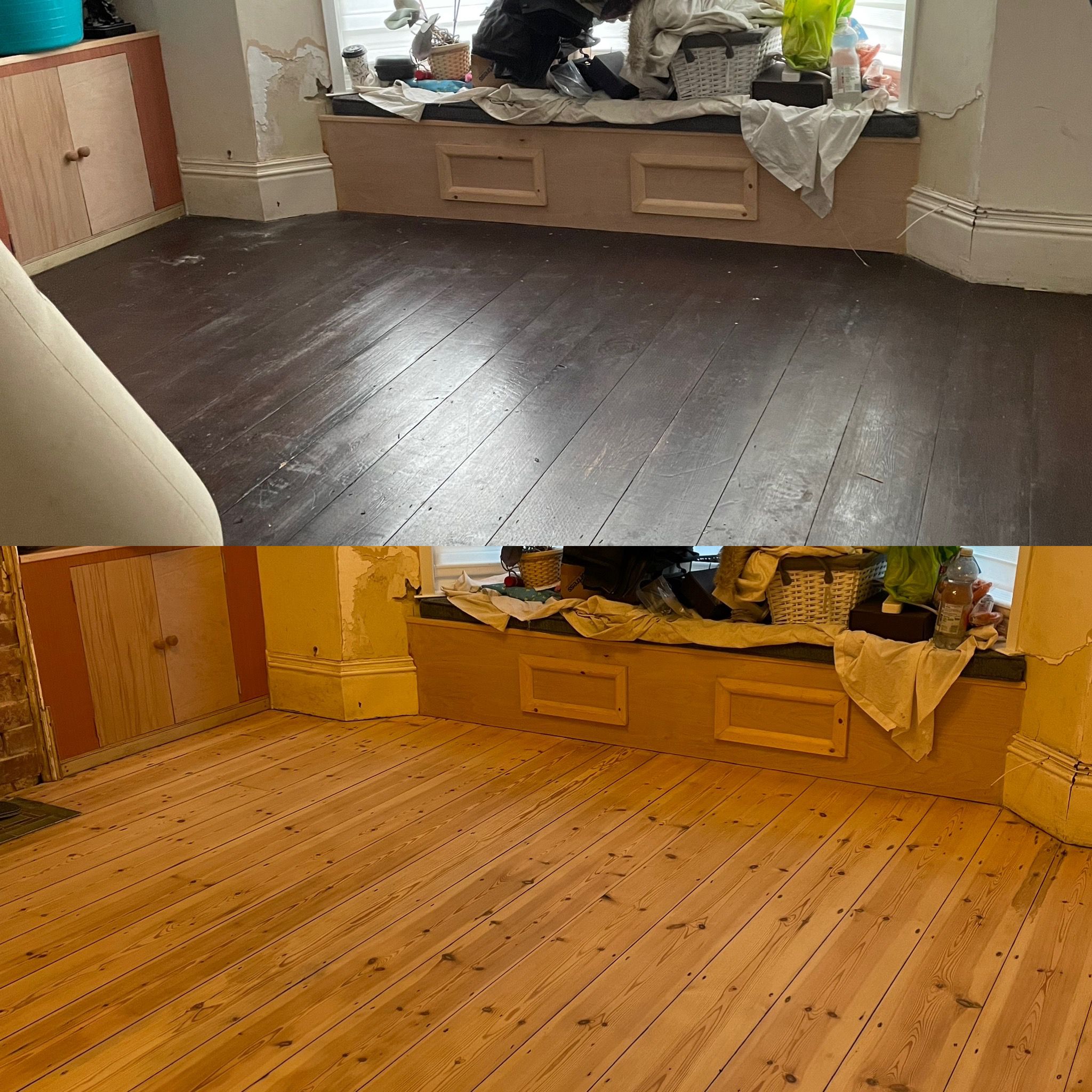
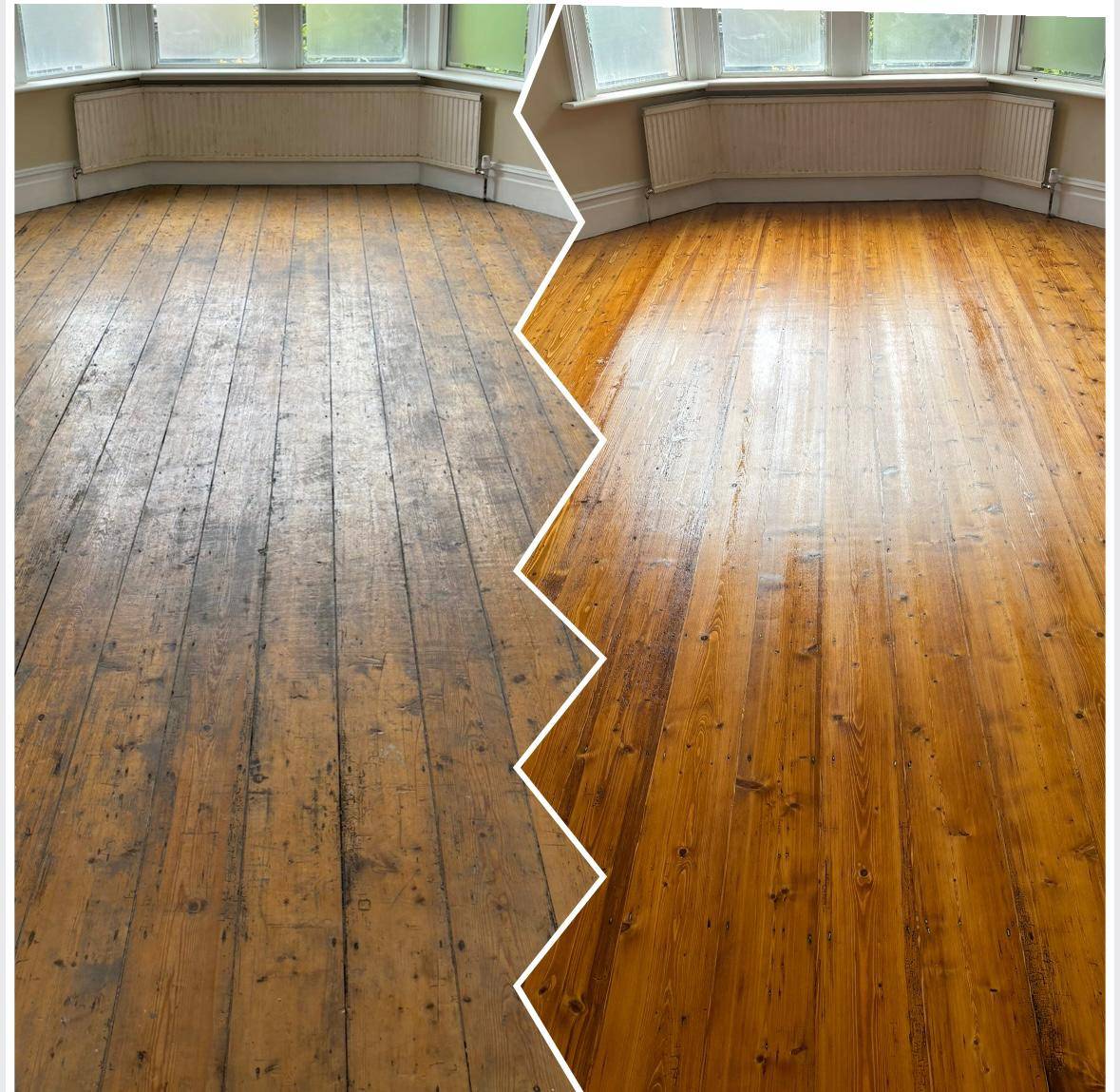
Floor sanding before and after

Floor Sanding in Swanage: Floors That Live With the Beach

A timber floor in a seaside town has a harder life than the same floor inland. In Swanage the beach is a few minutes’ walk from most front doors, and it comes home in shoes, in towels, in children’s buckets and in the folds of a wetsuit. Fine sand is the most abrasive thing a wooden floor ever meets. It rolls under a sole like ball bearings, and every step drags a few grains across the finish. In a hallway or the living room of a holiday let, a single busy summer can wear a dull grey path through a lacquer that would last years in a town house. Floor sanding in Swanage therefore comes with a practical question attached: which finish, which sheen and which routine will keep the floor looking right through the next few seasons?

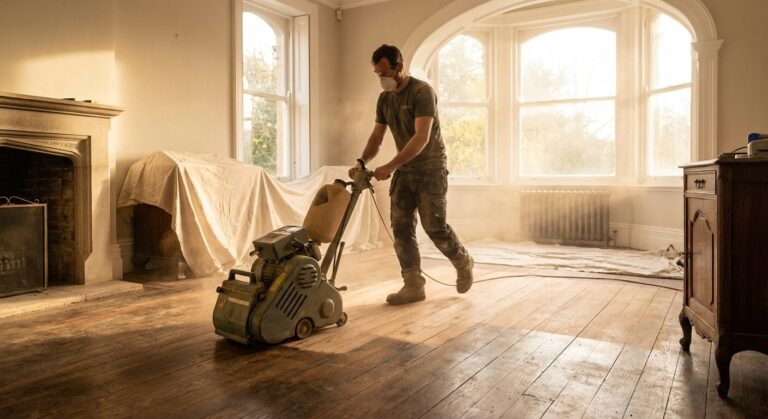
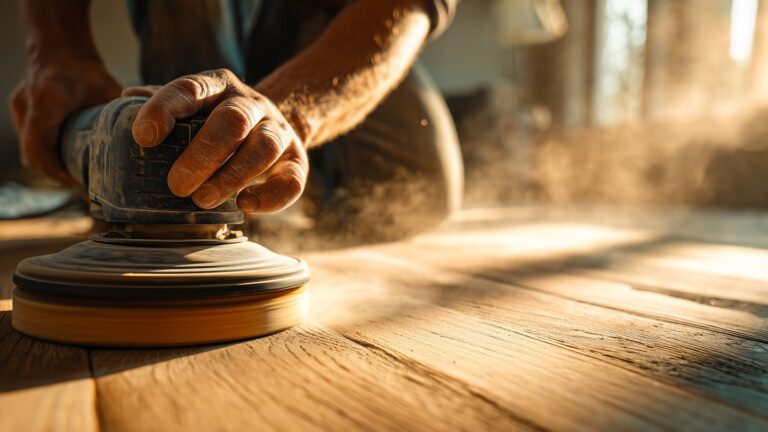
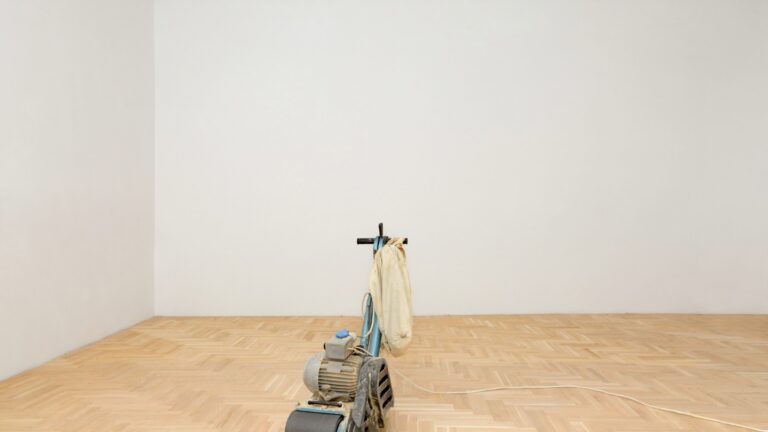
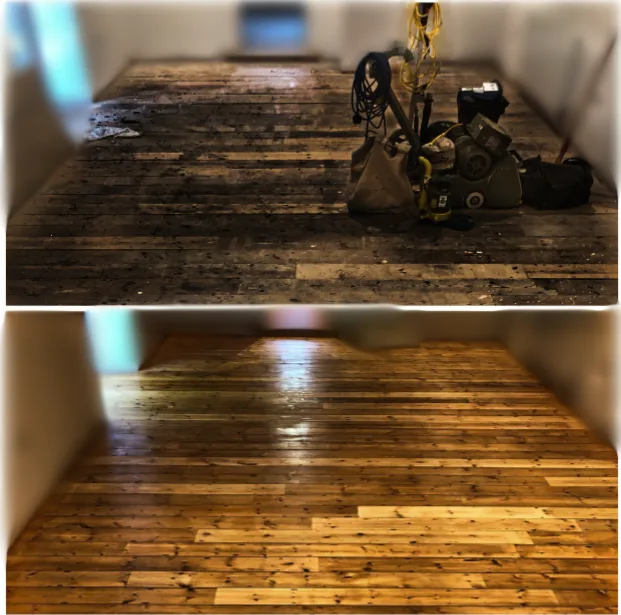
The sanding itself is the usual sequence. A belt or drum machine takes off the worn coating and the marks beneath, an edger runs along the skirtings and into bay windows, corners are scraped by hand, and progressively finer abrasive leaves a surface ready for finishing. Our floor sanding page goes into the machines and grits. Sanding dust is pulled straight off the abrasive into sealed collection units, which keeps soft furnishings in a let largely clean; dust-free floor sanding explains why a whisker of fine dust may still settle.

Purbeck sits inside our normal working patch. The firm is family-run and works from a base at Higher Poole near Wellington, Somerset, and Purbeck is a well-trodden route for us. Elsewhere in the county, see our Dorset floor sanding hub; back up the road towards Poole Harbour, floor sanding in Wareham is mostly about river damp rather than beach sand. Snap the living room from the doorway and then the grey track where the beach traffic goes; those two pictures usually reveal the existing coating and how far through it the sand has scoured.
Sheen, Slip and Bare Feet: Choosing a Surface for a Seaside House

Sheen is usually treated as a matter of taste. In a house where people walk in barefoot from the beach, carry dripping towels upstairs and pad across the kitchen in wet flip-flops, it is a safety question too. A high-gloss lacquer looks dramatic when new, but it is slippery underfoot when wet, and it shows every scratch, every grain of sand that has been dragged across it and every footprint. Within a season of heavy holiday use, a gloss floor can look worn even though the coating is technically intact.

A matt or extra-matt finish works the other way. It scatters light, so fine scratches and the grey haze of sand wear are much less visible. Most products in the matt range also give slightly better grip than their gloss equivalents, particularly with bare or damp feet, although no finish is non-slip when water is pooled on it. For stairs, hallways and the area just inside a garden door, a matt finish is the sensible default. Some manufacturers also make anti-slip versions of their lacquers, with a fine additive in the topcoat, which can be worth considering for steps and the bottom of a staircase in a holiday property.

Sheen is only half the decision; the coating chemistry is the other half. A two-component lacquer cures to the hardest film and resists abrasion best, which makes it a strong choice for the main routes through a holiday let or guest house. Our wood floor sealing page explains how the lacquers differ. Hard wax oil gives a naturally low sheen and decent grip, and worn patches can be refreshed with fresh oil on their own, which suits owners who would rather do a little maintenance between seasons than face a full sand; see floor oiling for the details. Traditional wax, covered on the wax finishes page, is lovely in a quiet sitting room but marks with water and can be slippery when freshly buffed, so it is not ideal for a beach house hallway.

Colour plays a part too. Very pale floors show dirt; very dark ones show sand and dust. A mid-tone, perhaps with a light stain tested on your own boards, tends to hide the realities of seaside living best.

parquet wooden floor sanding
wooden floor sanding

Holiday Lets and Guest Houses: Fitting the Work Between Arrivals

Many of the floors we work on in Swanage belong to holiday cottages, apartments and guest houses, and for those owners the timetable is often the hardest part. A booked week cannot be cancelled to fit in a floor, and a guest house with rooms let out every night needs to keep earning while the work goes on.

For a holiday let, the simplest approach is to use the gap between seasons. Late autumn through to early spring is when most owners have empty weeks, and planning a date then means the floor is fresh for Easter and summer. Where the gap is short, a single changeover day may be enough for one room with a fast-curing lacquer, but a whole house usually needs longer. Owners themselves can tiptoe across in socks the day after, but beds, sofas and dining sets need two or three days off the timber, and nobody should be wheeling suitcases over it until it has fully hardened.

Guest houses can be done in phases. One bedroom or one landing at a time is taken out of service, sanded and finished, then handed back before the next is started. Corridors are trickier because they are the route to every room; they are often done overnight or across a quiet midweek period, sometimes in halves so access is never lost entirely. Breakfast rooms and lounges can be tackled on the day the house has fewest guests. More on planning a guest house in stages is on the hotel and guest house floor sanding page.

For owners who let their property through an agency, a floor with a durable matt lacquer and a simple cleaning routine is far easier to manage than one that needs regular waxing. Clear instructions for the cleaners matter as much as the finish: no steam mops, no strong detergents, and a pH-neutral wood floor cleaner used with a well-wrung mop. Between seasons, a lacquered floor that has started to dull can be given a buff and fresh topcoat rather than a full sand, which saves a great deal of disruption.

Wood Floor Restoration in Swanage: Pine, Oak and Parquet

Wood floor restoration in Swanage covers a mix of homes. Victorian and Edwardian villas and terraces from the town’s growth as a resort, cottages in the older streets, interwar houses and modern flats each have their own typical floors. Our wood floor restoration service aims to bring back what is there rather than replace it.

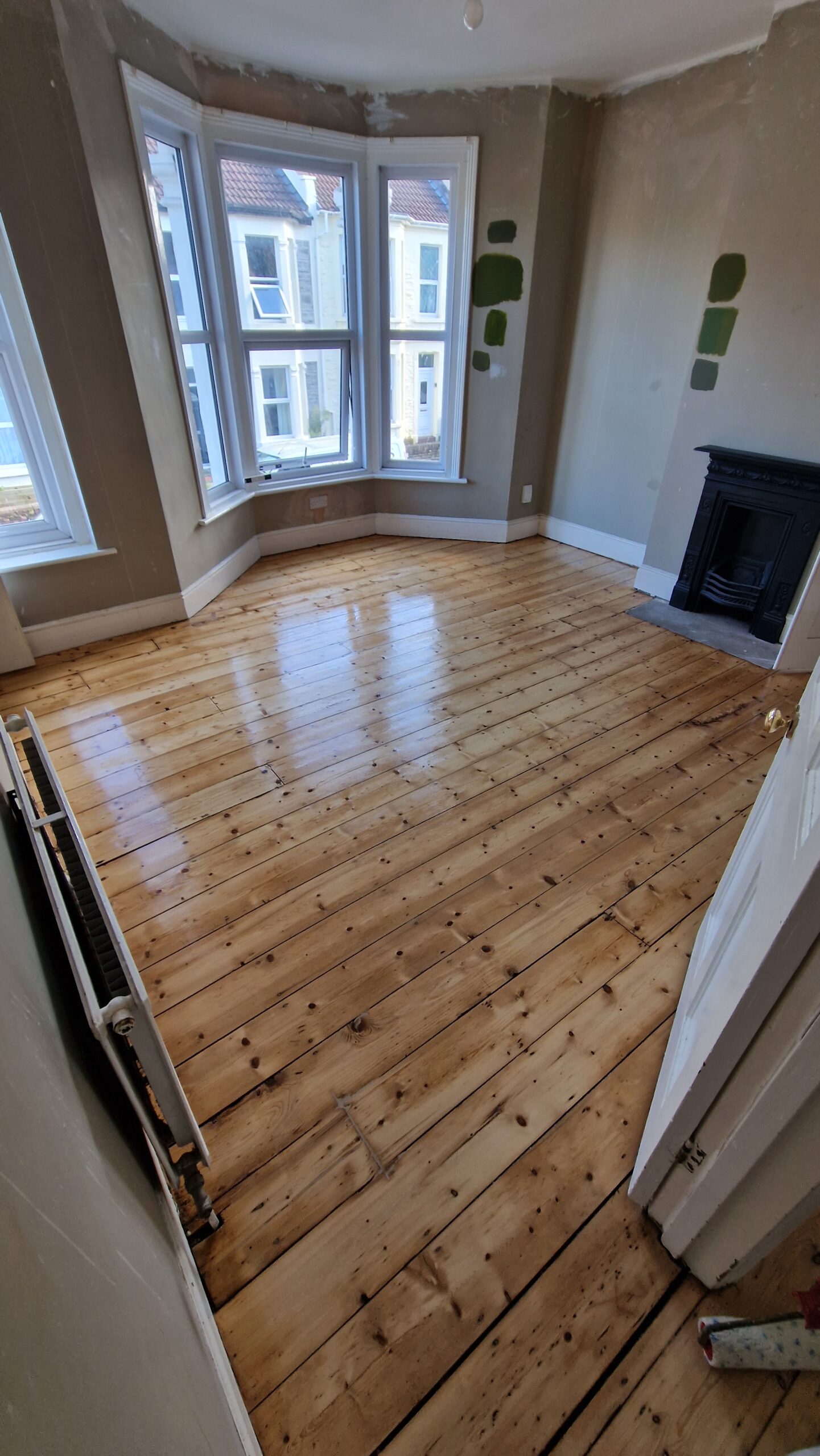
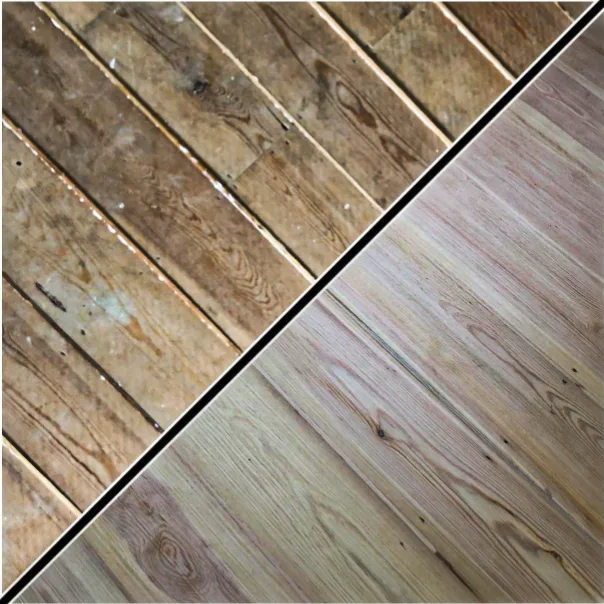
Older houses usually have softwood boards, often under carpet for decades and sometimes painted at the edges. Pine is soft, so the sanding needs restraint, and boards that have been sanded before need their remaining thickness checked. Gripper rods, staples and carpet tacks come out before the machines start. Pine floor restoration explains how a tired softwood floor can be brought back.

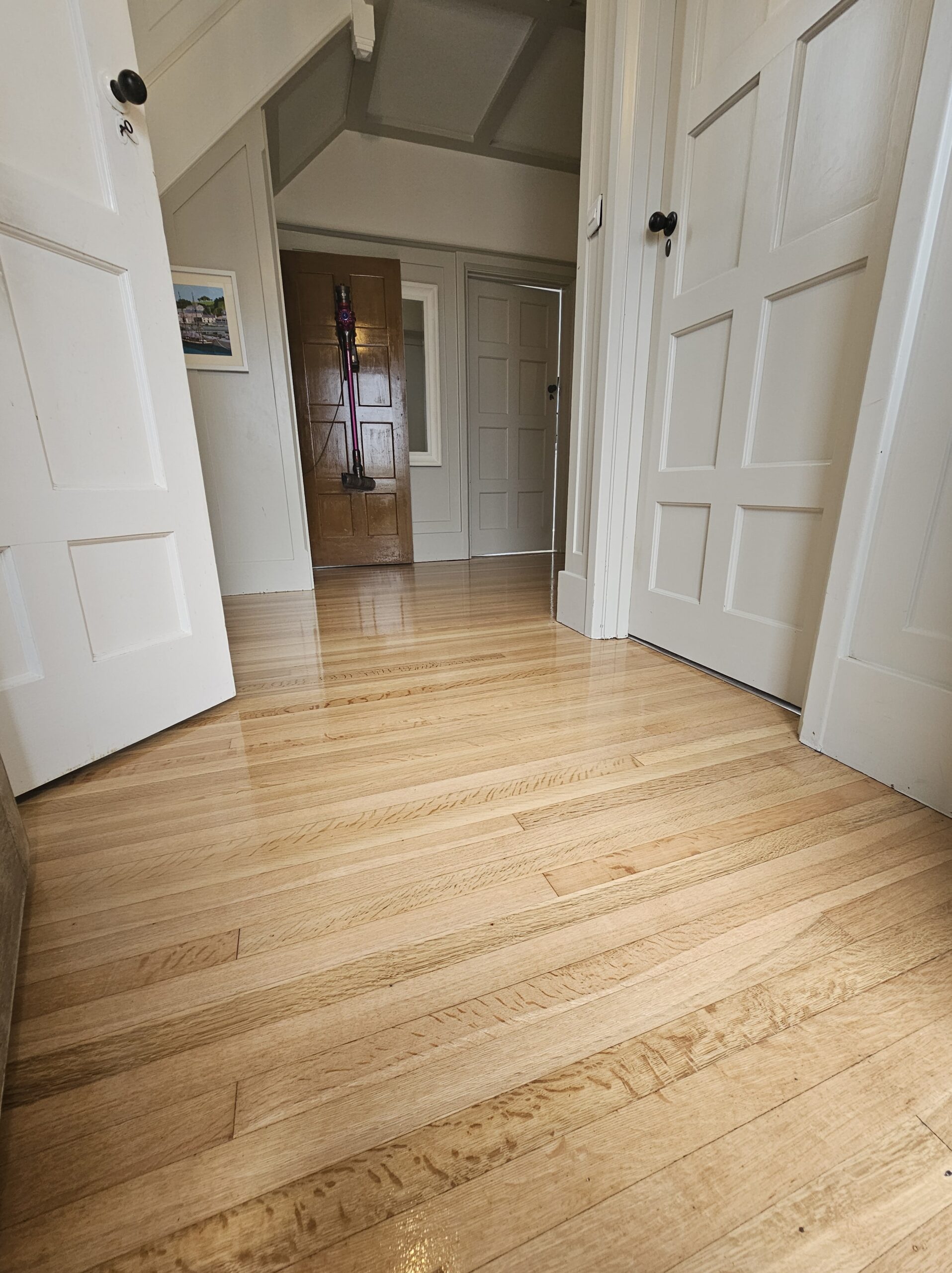
Oak is harder and more forgiving. In seaside properties the commonest marks are grey watermarks from wet towels and swimwear dropped on the floor, and black rings where water has sat long enough to react with the tannin in the oak. Grey marks usually sand out; black ones sometimes run too deep and the board is better replaced. The oak floor restoration page explains what is realistic.

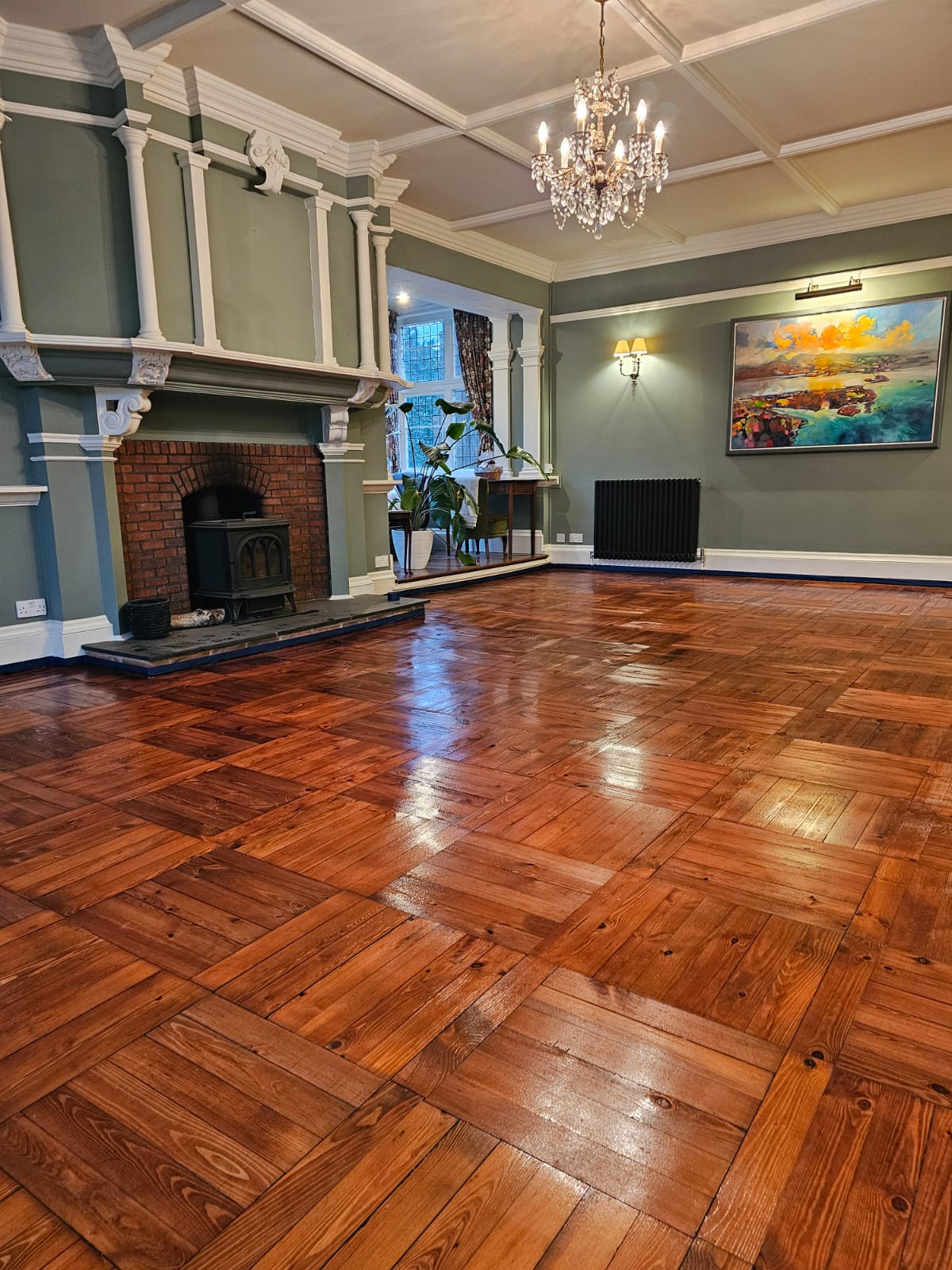
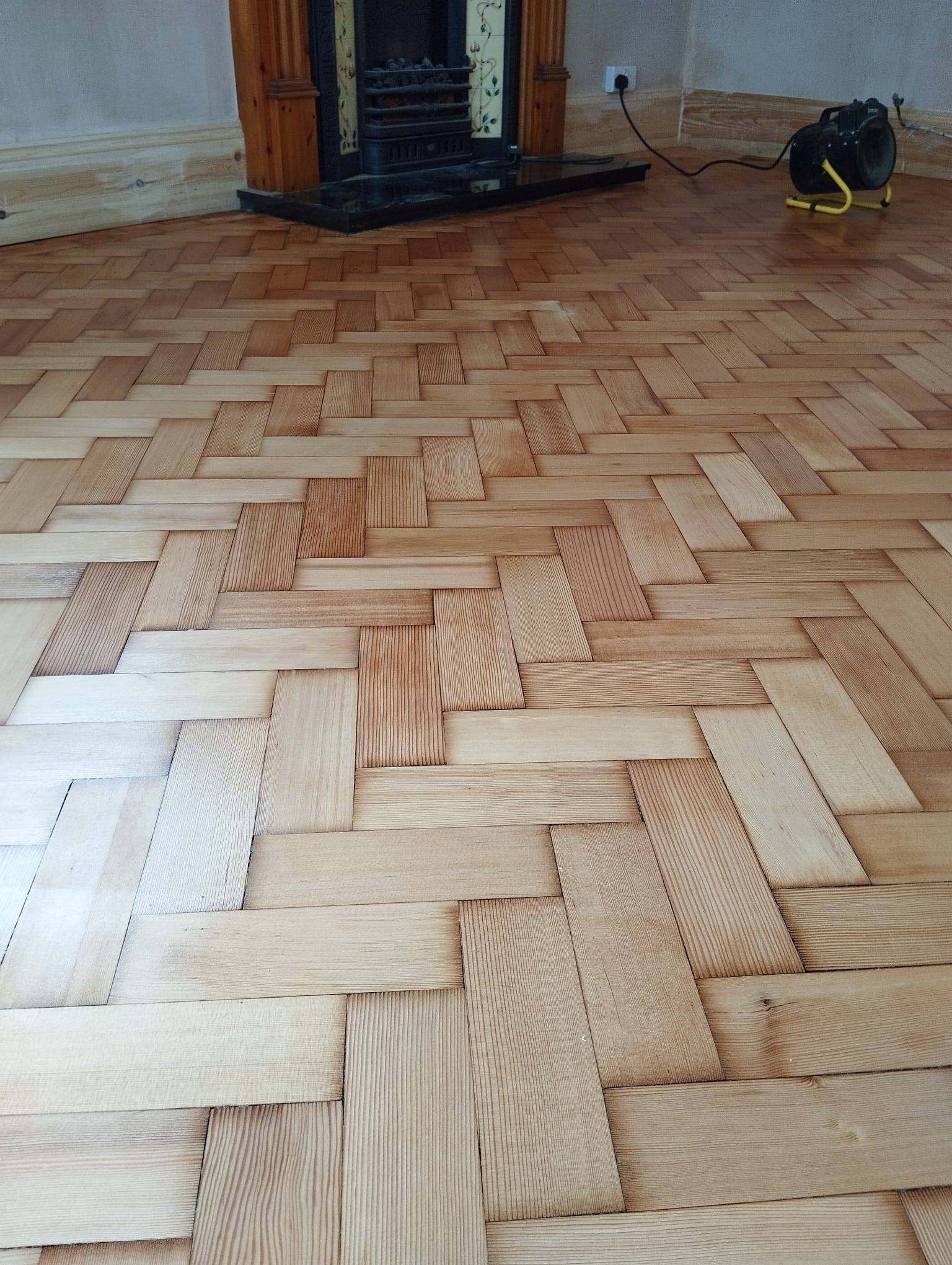
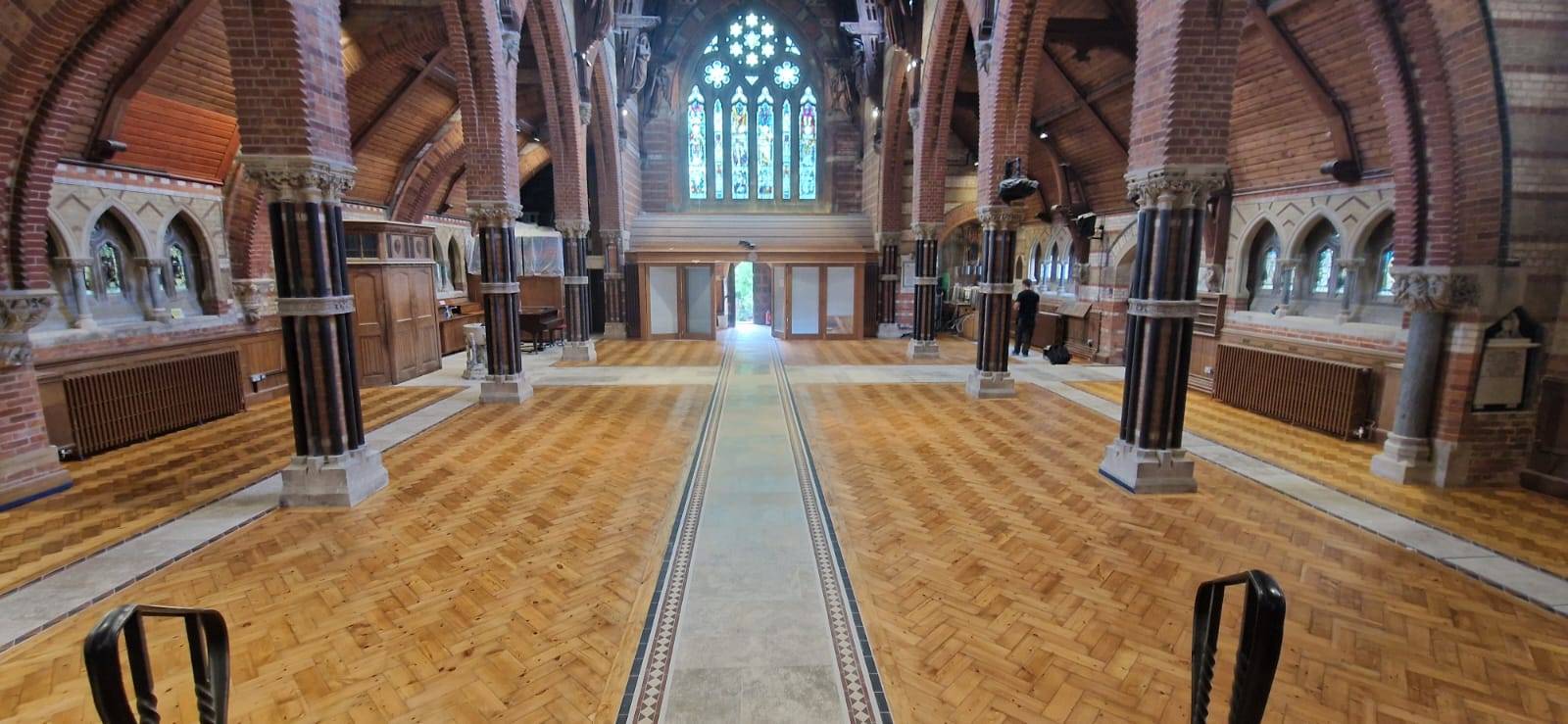
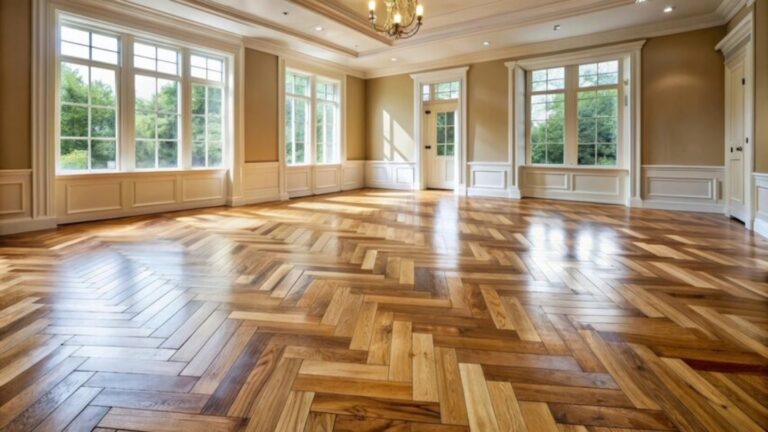
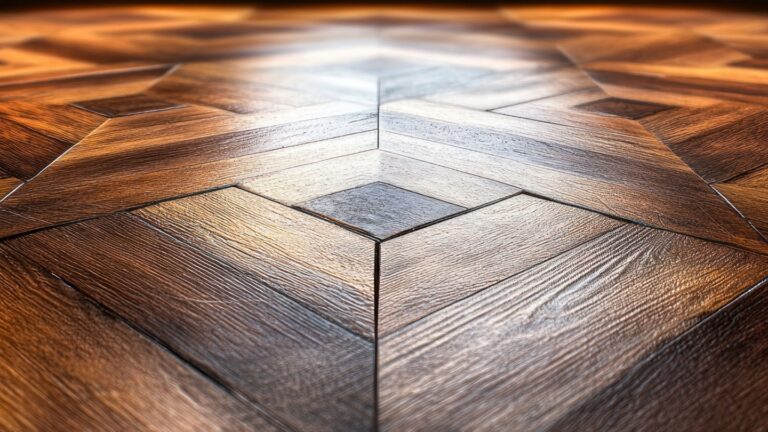
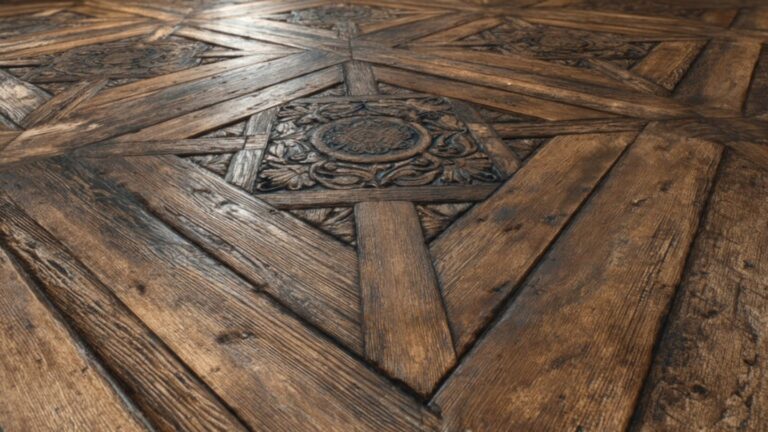
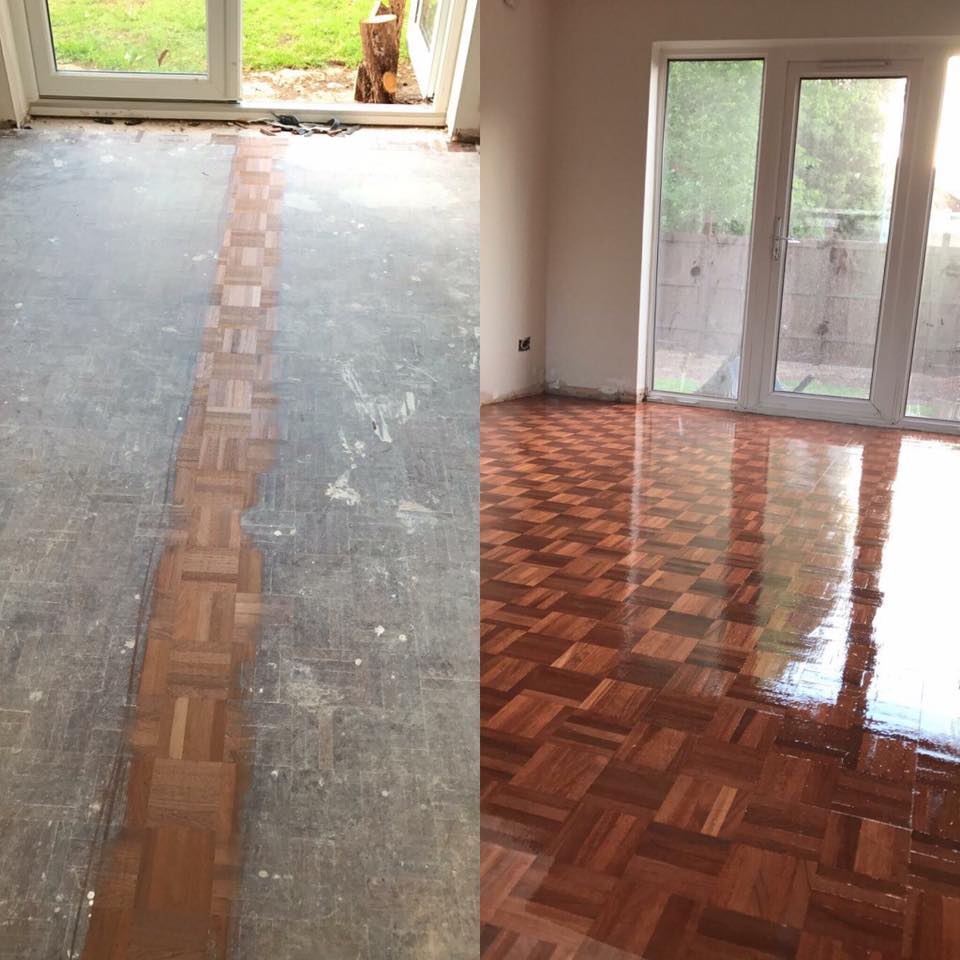
Parquet turns up in some of the larger houses and in older guest houses and hotels, typically herringbone or basketweave blocks on bitumen. Any rocking blocks are stuck firmly back first and gaps made good with old blocks. Sanding then begins on the diagonal, since grain runs two ways across the pattern, and an orbital machine clears the swirl marks at the end. Our parquet floor sanding page covers herringbone parquet and woodblock floors in detail.

Staircases in guest houses and holiday lets take a lot of traffic, often with heavy luggage being dragged up and down. Treads wear at the nosing and in the middle, and the finish is chipped where cases bump. Stair sanding deals with treads and nosings by hand and with small machines, and a matt or anti-slip finish is especially worth having here.

flooring sanding company
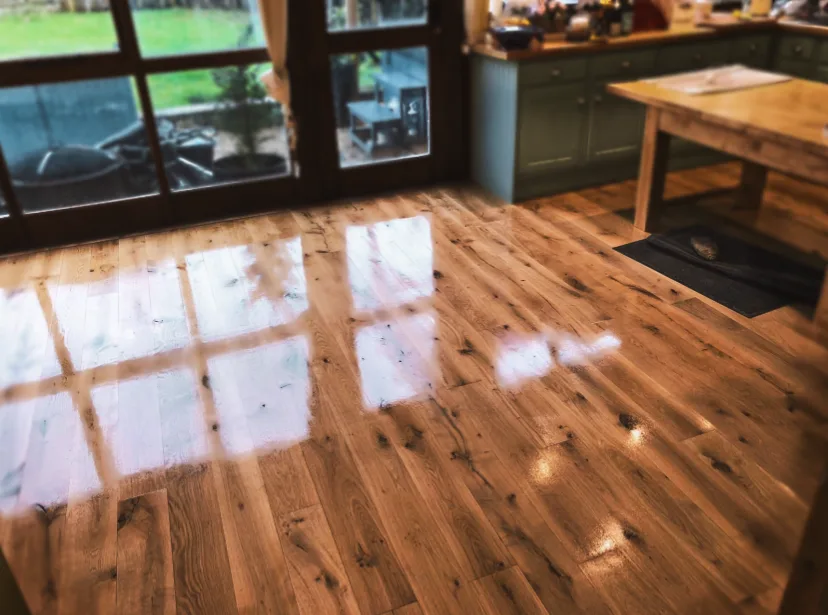
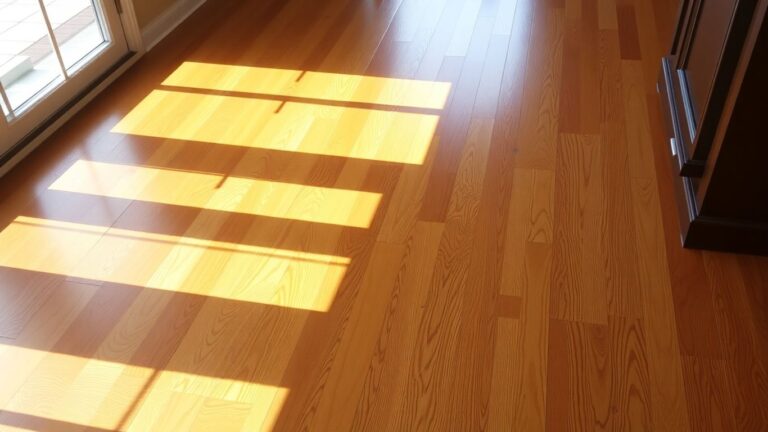
Sunlight across freshly lacquered wooden floorboards

Fixing Boards, Gaps and Sand-Scoured Patches

Before sanding, the floor needs to be sound. Older houses in Swanage have usually had boards lifted for plumbing, heating and electrics, and some have been put back loosely or replaced with odd timber. Wooden floor repairs refix loose boards, cut out split or damaged ones and deal with patches of plywood or hardboard.

Where a board has to be replaced, matching it matters. We keep reclaimed timber at our workshop so that floorboard replacement uses boards of similar width, thickness and colour, which blend into the floor once it is sanded far better than new timber.

Gaps between boards in a seaside house fill up with sand. It sounds a minor point, but it means every sweep pushes more sand into the gaps, and every step on the boards grinds it against the edges. Gap filling closes them off. Where a joint is wide, a thin strip of timber is glued in on one side; a fine crack is closed with a paste of resin and sanding dust from the floor itself. The gap filling page compares the two. It also stops draughts from the void below, which is welcome in a guest bedroom in winter.

Creaks are a common complaint from guests, especially in older houses where bedrooms sit over each other. Loose nails and boards rubbing against each other are the usual cause, and refixing with screws into the joists usually solves it. Squeaky floor repair covers this. Where sand and grit have left scratches but the floor does not need a full sand, scratch repair can sometimes deal with the damage locally.

Commercial Floor Sanding in Swanage: Cafés, Shops and Hotels

Commercial floor sanding in Swanage centres on businesses that serve visitors: cafes, restaurants and pubs along the seafront and in the town, gift and clothing shops, hotels and guest houses, holiday parks and community halls. Their floors take sand, salt water, spilled drinks, ice cream and constant footfall in the summer months. Our commercial floor sanding service plans the work around the trading calendar.

The obvious time for most of this work is out of season, when trade is quieter and closing for a day or a night is easier. A cafe that shuts on Mondays in winter, for example, can have its floor sanded and coated over that single day using a quick-curing lacquer. For restaurants, cafes and pubs, a two-component lacquer in a matt finish gives the best combination of durability and grip, as the restaurant floor sanding page explains. Seafront shops get sand walked in all summer; a deep entrance mat and a tough coating are the main defences, as shop floor sanding describes.

Community halls used for dance classes or exercise need a finish with controlled grip, covered under dance floor sanding. Where a hall has sports lines, our team paints them after sanding to the governing body’s specification.

Dates are agreed in advance and kept. If you need paperwork, we can supply method statements, insurance details and references. A commercial floor in a busy seaside business may need sanding every four or five years, and the sandier the location, the more sense a regular buff and recoat between full sands makes.

Wood floor sanding company
Floor sanding taunton

Looking After a Seaside Floor, New Floors and Arranging a Visit

Most homes and holiday cottages are finished in one to three days. In a holiday let, it is worth allowing a few days after that before the first guests arrive, so the finish is properly hard.

Keeping a seaside floor in good order is mainly about sand control. A coarse outdoor mat and an absorbent indoor one at each door catch most of it. A rack for shoes by the door helps, as does a hook for wet towels and swimwear so they are not dropped on the boards. Vacuum rather than sweep where possible, because a broom can push sand across the surface. Once loose sand is up, a barely damp mop and neutral wood cleaner finish the job; steam has no place on timber. Felt pads under furniture prevent scratches when chairs are pulled out. In a quiet bedroom where the beach rarely reaches, a burnished glow is possible, and floor polishing shows how. In a family home a full sand is generally needed every eight to ten years; a holiday let may need it sooner.

Seafront flats are often converted with concrete or chipboard underfoot and no timber at all. In those, a new engineered or solid floor from makers like Junkers or Bona can be fitted by our team or delivered for your own fitter, and wooden floor installation has the details.

If you are an absentee owner, photos are the easiest start: ask your housekeeper to email a room shot and a close-up to info@ryansrestoration.co.uk. Otherwise the office answers 01823 674562 from 8am to 6pm on weekdays, and a Saturday visit can be arranged. The free survey, around thirty minutes on site, looks at how much wood is left, moisture, subfloor airflow and past repairs. Afterwards the work arrives in writing, broken into items, and stays as quoted unless the scope moves. Our contact page has the details.

Swanage Floor Sanding FAQs

For most holiday lets we would suggest matt or extra-matt. A low sheen disguises the fine grey scuffing that beach sand leaves far better than satin or gloss, and it tends to feel a little less slippery under bare or damp feet. Nothing is truly non-slip with water standing on it, so a towel hook by the door still earns its place.

Several lacquer makers produce a slip-reducing topcoat with a very fine grit suspended in it. On a guest house stair, or the steps down into a garden room where people come in barefoot, it is worth discussing. It feels slightly textured, so many owners use it on treads only and keep a smoother matt finish on the landings.

Sometimes, for a single room with a quick-curing lacquer. A whole cottage really needs a proper gap, because the coating should be left alone for a couple of days before furniture returns and a little longer before guests unpack. That is why most Swanage owners pencil in the work between late autumn and early spring.

In most cases it can. Bedrooms come out of use one or two at a time, landings and corridors are done overnight or in two halves so every room stays reachable, and the breakfast room is tackled on whichever day has the fewest guests. The order is agreed with you beforehand so bookings can be managed around it.

Stop it at the door. A rough mat outside, an absorbent one inside, somewhere to leave beach shoes and a hook for wet towels catch most of it. Vacuum instead of sweeping, since a broom simply rolls sand across the finish, and get gaps between boards filled so sand has nowhere to collect.

Grey, cloudy marks from a damp towel or swimsuit left on the floor usually sit in the finish or the very top of the timber and come out with sanding. Inky black patches are a different matter: oak tannin has reacted with the water, sometimes well below the surface. Where one survives a sensible sand, a matched reclaimed board is often the neater fix.

Give them a neutral wood floor cleaner and a mop squeezed nearly dry. Steam mops, bleach, multi-surface sprays and anything containing ammonia should be kept off it entirely. If the floor is oiled rather than lacquered, a soap made for oiled wood keeps the finish nourished instead of stripping it.

Get in touch by phone during the week, or have someone email two pictures of the floor, wide and close, to info@ryansrestoration.co.uk. A free survey of around thirty minutes follows, and you then receive an itemised quotation in writing, with the work timed around your bookings if it is a holiday let.