45 years’ experience  ·  Rated 4.9 on Google  ·  Family-run, from our workshop near Wellington

45 years’ experience · Rated 4.9 on Google · Family-run

Floor Sanding and Wood Floor Restoration in Trowbridge

Stripping out hardboard and carpet gripper, then sanding and refinishing the pine boards of Trowbridge terraces, plus school hall and sports floor work.

QUICK QUOTATION

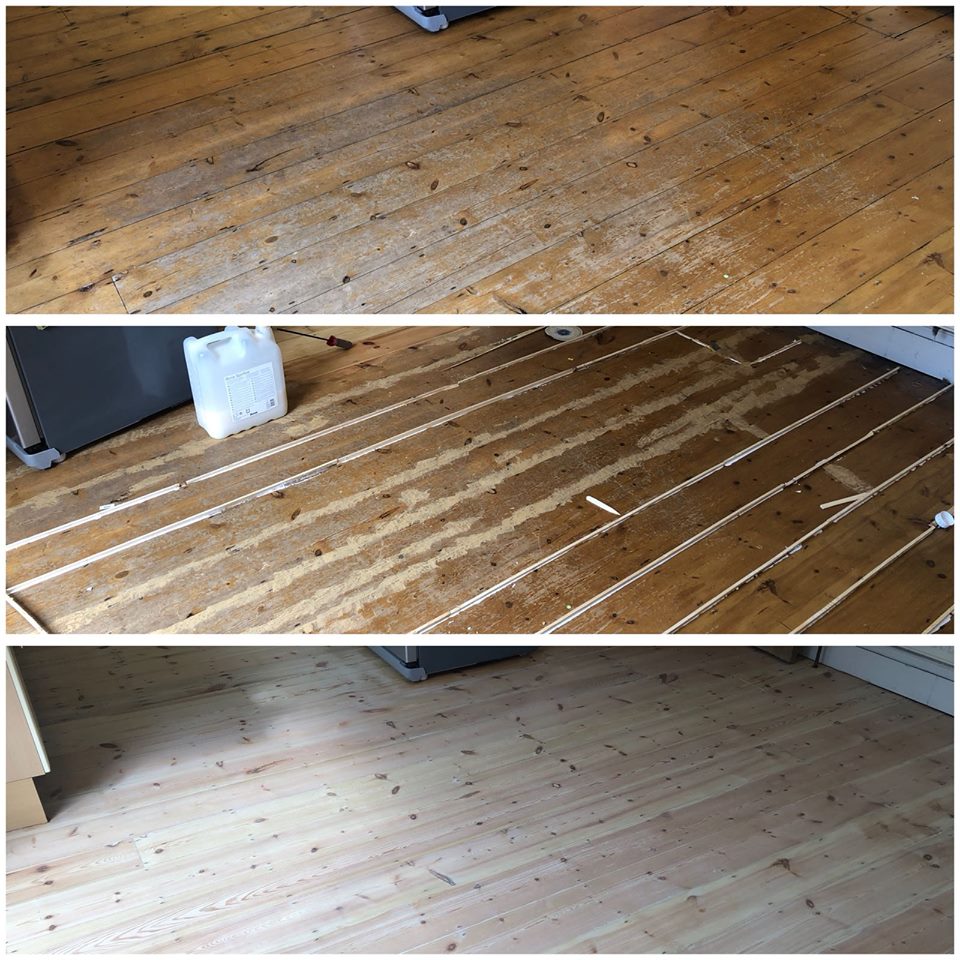
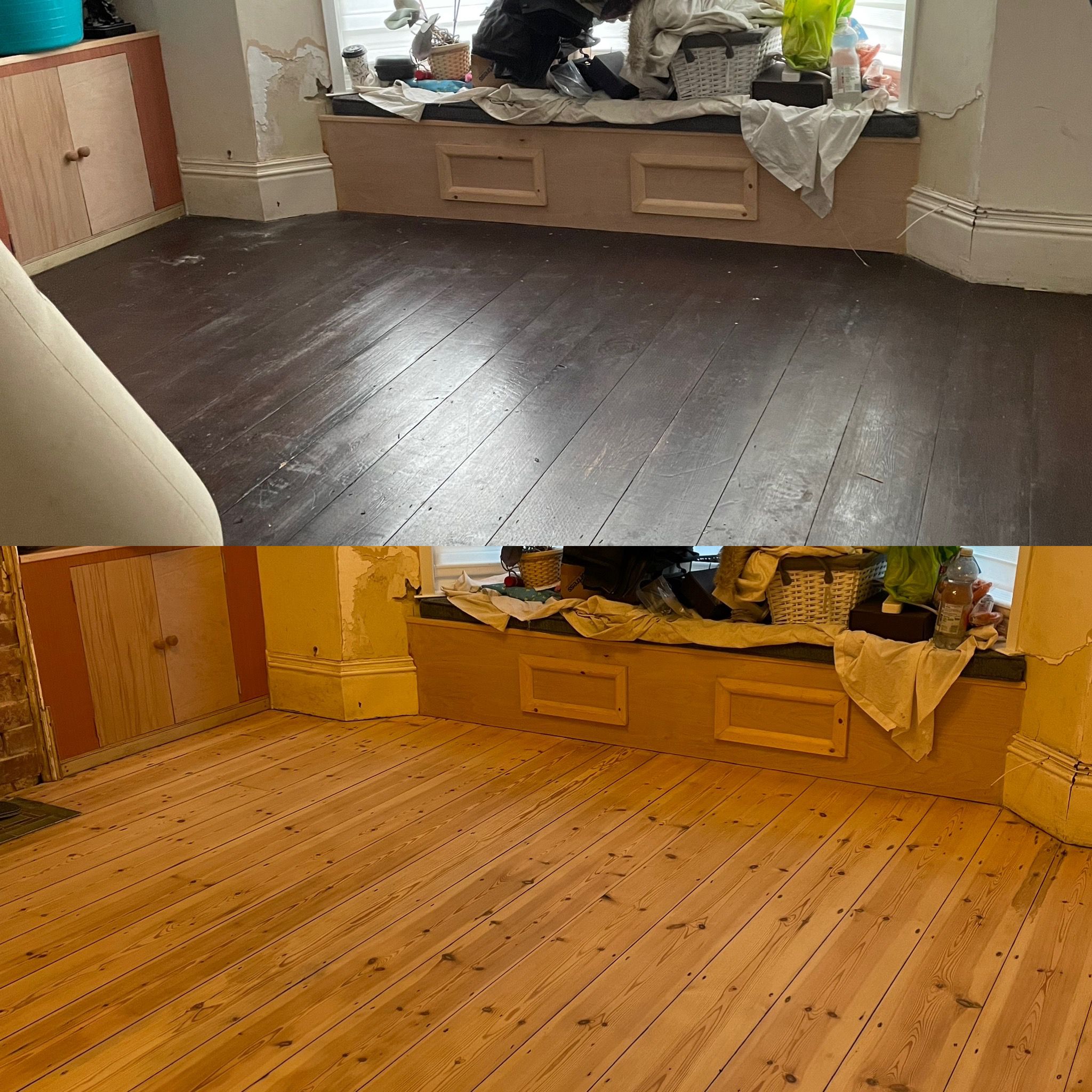
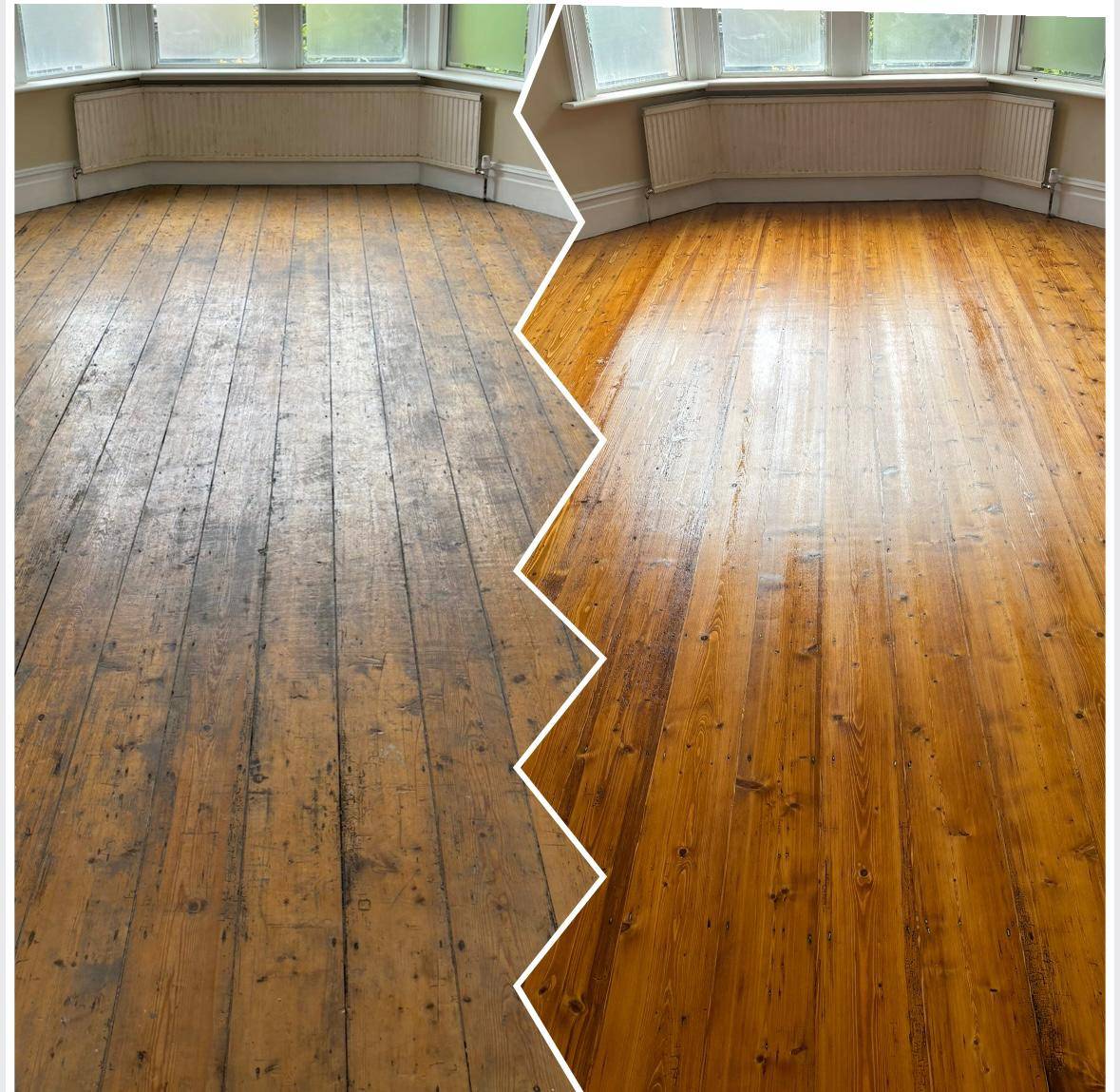
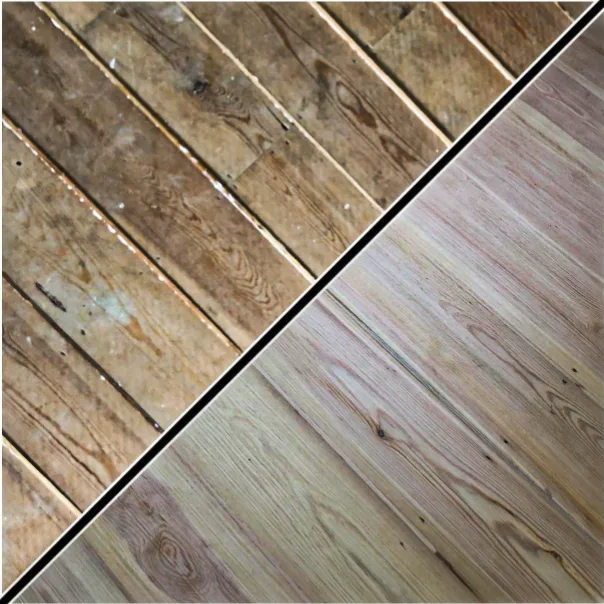
Floor sanding before and after

Floor Sanding in Trowbridge Terraces: Starting With What Lies Underneath

Trowbridge grew as a cloth-making town, and a large share of its housing is the brick and stone terracing that went up in the Victorian and Edwardian years: two-up two-down cottages, bay-fronted villas, and longer terraces with a back extension housing the kitchen. Almost all of them were built with softwood boards laid across timber joists, and almost all of those boards have since spent decades hidden under something else. Carpet, lino, hardboard, vinyl tiles and laminate can be stacked three or four layers deep in the same front room.

That makes the first step of floor sanding in Trowbridge an excavation rather than a sanding job. Before any machine is booked, it pays to lift a corner of the covering in a cupboard or behind the door and look. If you find hardboard, expect it to be nailed every few inches. If you find bare pine, check for dark varnish around the edges, which tells you where a rug sat in the 1930s, and for any long patches of newer timber where pipes or cables were run.

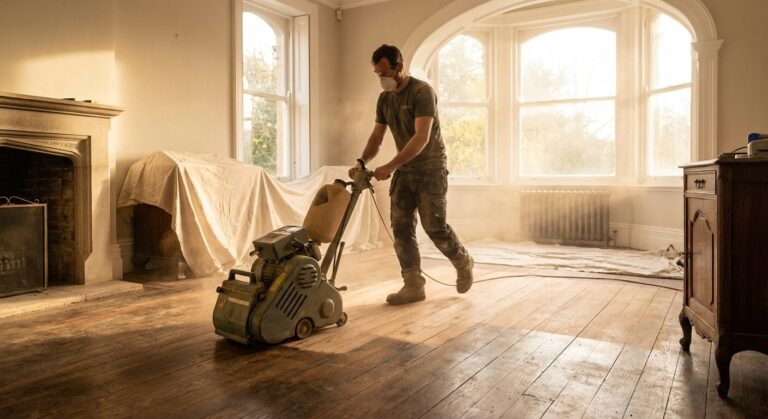
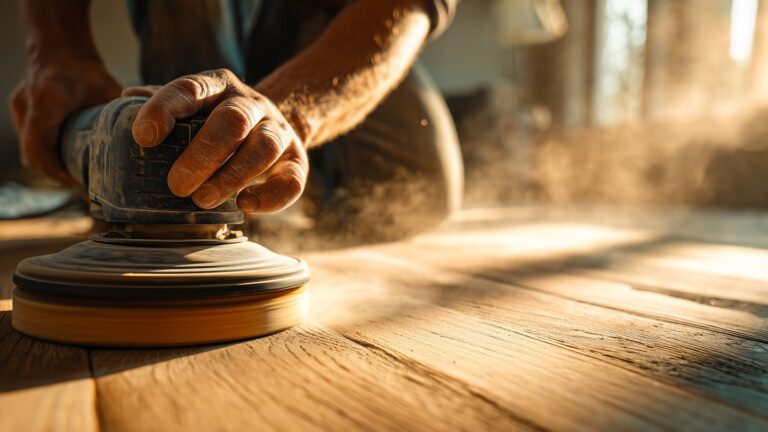
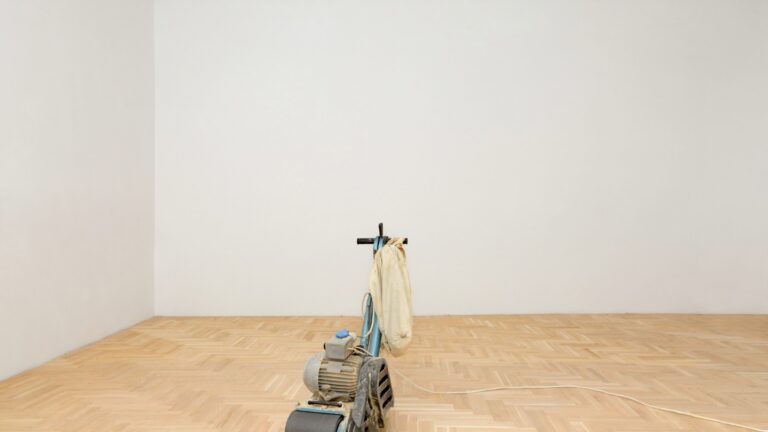
Once the floor is clear, the machine work itself is familiar. A large belt sander runs with the grain across the open room, an edging machine works into the margins, and a lighter pass removes the scratches left by the coarser abrasive. Every machine is hooked up to extraction, so the dust travels down a hose into a sealed bag instead of hanging in the air. In a terrace where the stairs rise straight out of the front room, that is the difference between a quick wipe of the banisters and a weekend of cleaning upstairs. It is dust-free floor sanding in the practical sense, not a promise that not one speck escapes.

Grit sequence matters more on old pine than many people realise. Victorian softwood is often soft between the growth rings and hard on them, so a coarse belt run at the wrong angle can leave a rippled, washboard surface that shows badly under a glossy coat. The usual cure is a careful progression of grits and a final pass with a finer abrasive or a multi-head buffer. The full grit ladder, from first belt to final buff, is explained under wood floor sanding. For Warminster, Melksham and the rest of the county, start from the Wiltshire floor sanding hub.
Hardboard, Carpet Gripper and Staples: Clearing a Trowbridge Floor

Hardboard was the standard fix for an uneven or draughty floor from the 1960s to the 1990s, and in many Trowbridge houses it is still there. It was usually nailed down with short pins at close intervals, sometimes with ring-shank nails that grip hard and snap rather than pull out. The good news is that the boards beneath are often in better condition than exposed ones elsewhere in the house, because they have been protected from wear for decades. The less welcome news is that every one of those pins has to come out.

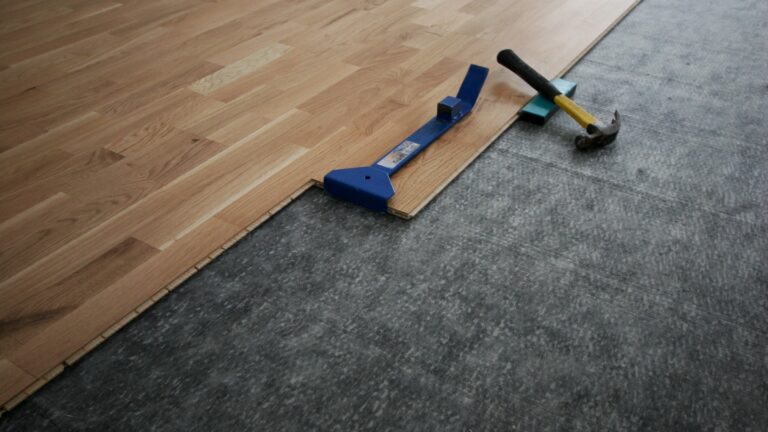
Lifting hardboard is slow, methodical work with a flat bar, starting from a doorway and peeling back sheet by sheet. Pins that pull through the hardboard and stay in the floor are removed one by one with pincers or punched well below the surface. Leaving them proud is not an option: a single nail head can tear a sanding belt in half and score a deep line across several boards. In a front room there may be several hundred pins, laid out in a grid that becomes visible as small holes once the floor is sanded. Most owners accept them as part of the history; a few prefer them filled.

Carpet gripper is the next problem. Those thin wooden strips around the edge of the room are fixed with angled pins, and prising them up carelessly splits the board edges along the skirting, exactly where the edging machine has to work. Underlay brings its own debris: hundreds of staples, perished foam that has turned to crumbs, and rubber backing that has fused to the boards and has to be scraped off before sanding, otherwise it melts and smears under the abrasive.

Old lino and vinyl can leave a layer of black adhesive. Some older tiles and their bitumen-type adhesives may contain asbestos, so if you uncover small square tiles in a kitchen or hallway, have them tested before anyone breaks them up or sands near them. Painted borders on pre-war floors can also contain lead, and should be tested before being sanded.

Once everything is out, the floor can be properly assessed for wooden floor repairs: split edges near the gripper line, boards loosened by years of pin removal, and old cuts for pipework.

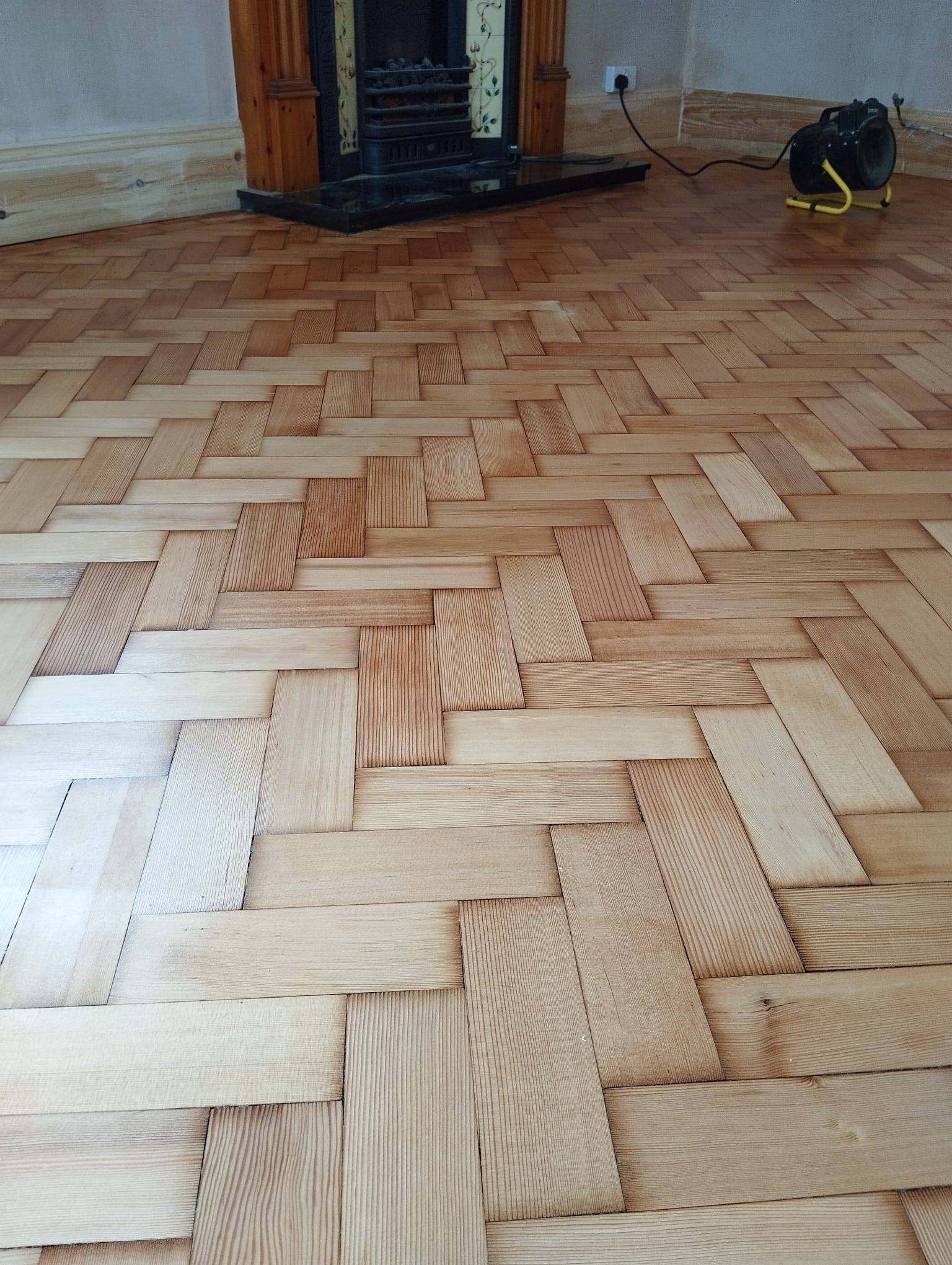
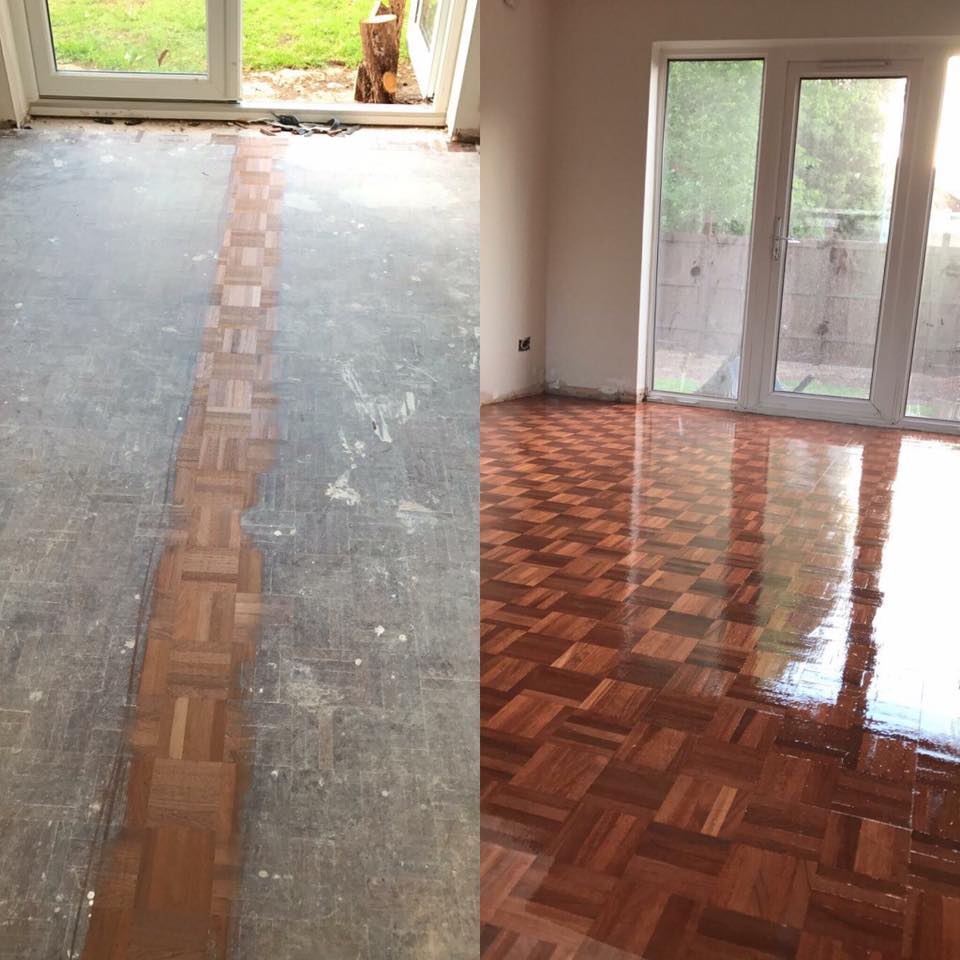
parquet wooden floor sanding
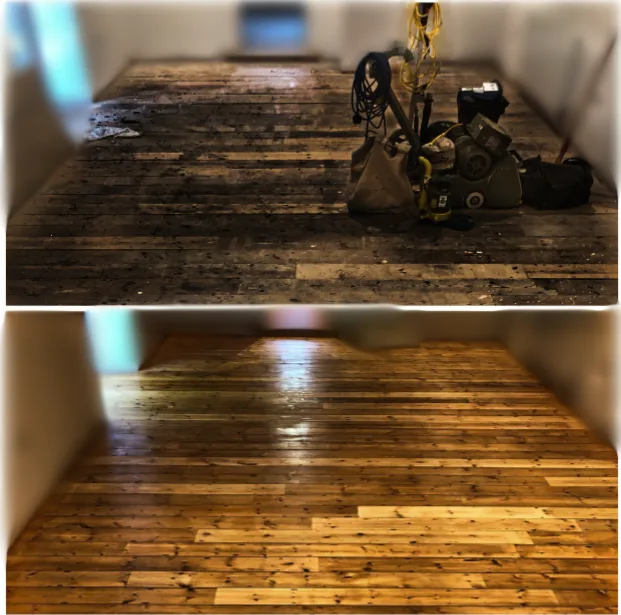
wooden floor sanding

Commercial Floor Sanding in Trowbridge: School Halls, Gyms and Sports Courts

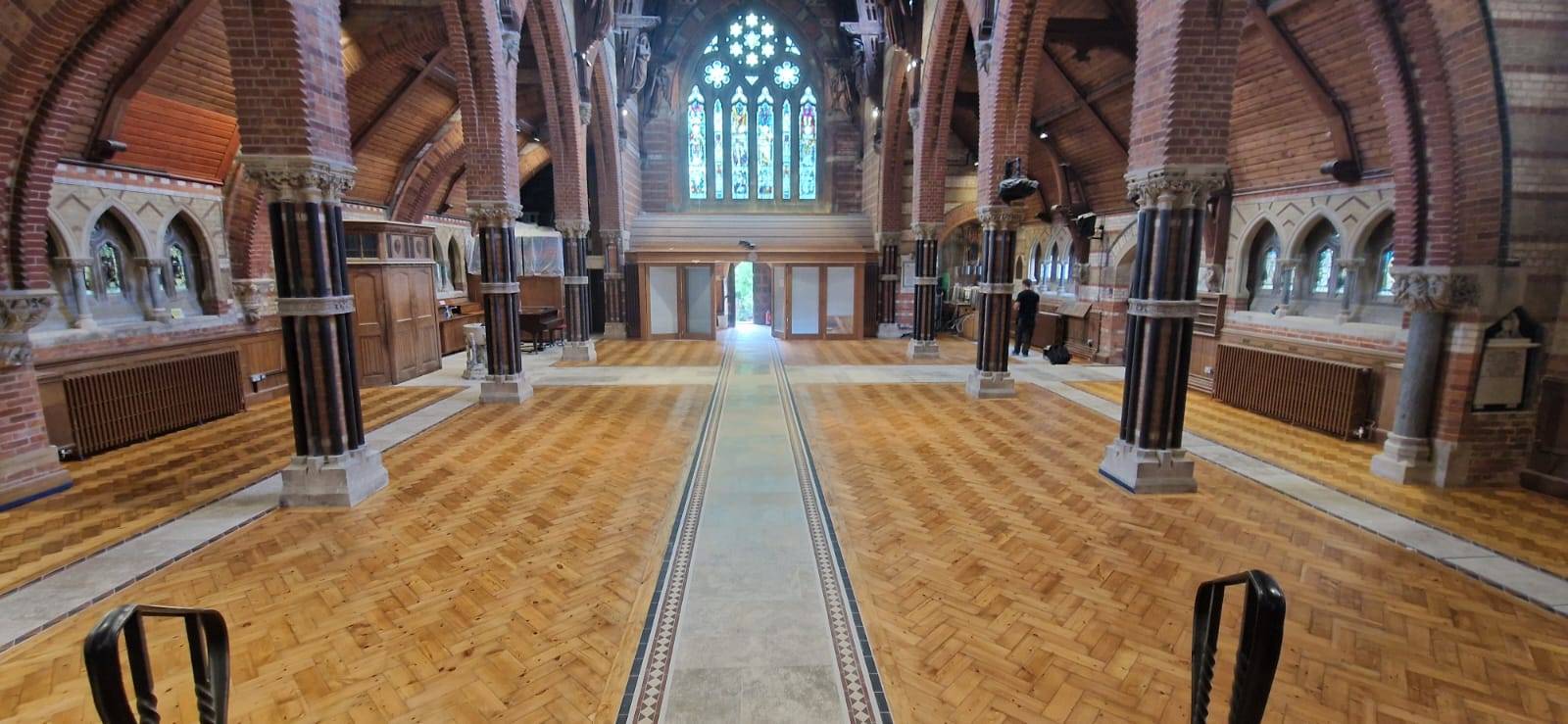
The town and the villages around it have a good number of primary and secondary schools, church halls and community buildings, many of them with sprung or solid timber floors that see hard daily use. A school hall is rarely just a hall. It can be the assembly room at nine, a PE space mid-morning, a dining room at lunch with tables dragged across it, and a stage for the end-of-term play. That mix of uses is what wears a hall floor out.

Commercial floor sanding in Trowbridge for schools is usually planned around the academic year. The work has to fit into the long summer break, or a half-term week for smaller halls, and dates are fixed well in advance so the site manager can arrange caretaking and contractor access. Fast-curing finishes allow several coats to go on within a short window, and the floor needs to be fully hard before tables, PE equipment and staging return. Our page on school hall floor sanding covers the scheduling side.

Slip resistance is the main technical concern. A hall used for PE or by young children running around needs a finish that grips, which means a matt or satin sheen rather than gloss. A two-component lacquer gives the hard-wearing surface needed for chairs, tables and staging, and its sheen can be set to suit the room.

Court markings are part of the job. If the hall is also a games court, the markings go down in the gap between the last sanding pass and the topcoats. Our own team sets them out in-house to the dimensions laid down by each sport’s governing body, so a badminton court or a netball circle sits under the protective film and survives the first winter of plimsolls. Sports hall floor sanding and gym floor refinishing have their own pages.

Outside education, Trowbridge has a busy mix of shops, offices, cafes and pubs. Retail units are usually sanded overnight so the doors open as normal the following day; shop floor sanding covers that approach. For bursars and facilities managers, a method statement, current insurance details and references can be supplied on request. The broader approach is set out under commercial floor sanding.

Wood Floor Restoration in Trowbridge: Pine Boards, Hearths and Pipe Cuts

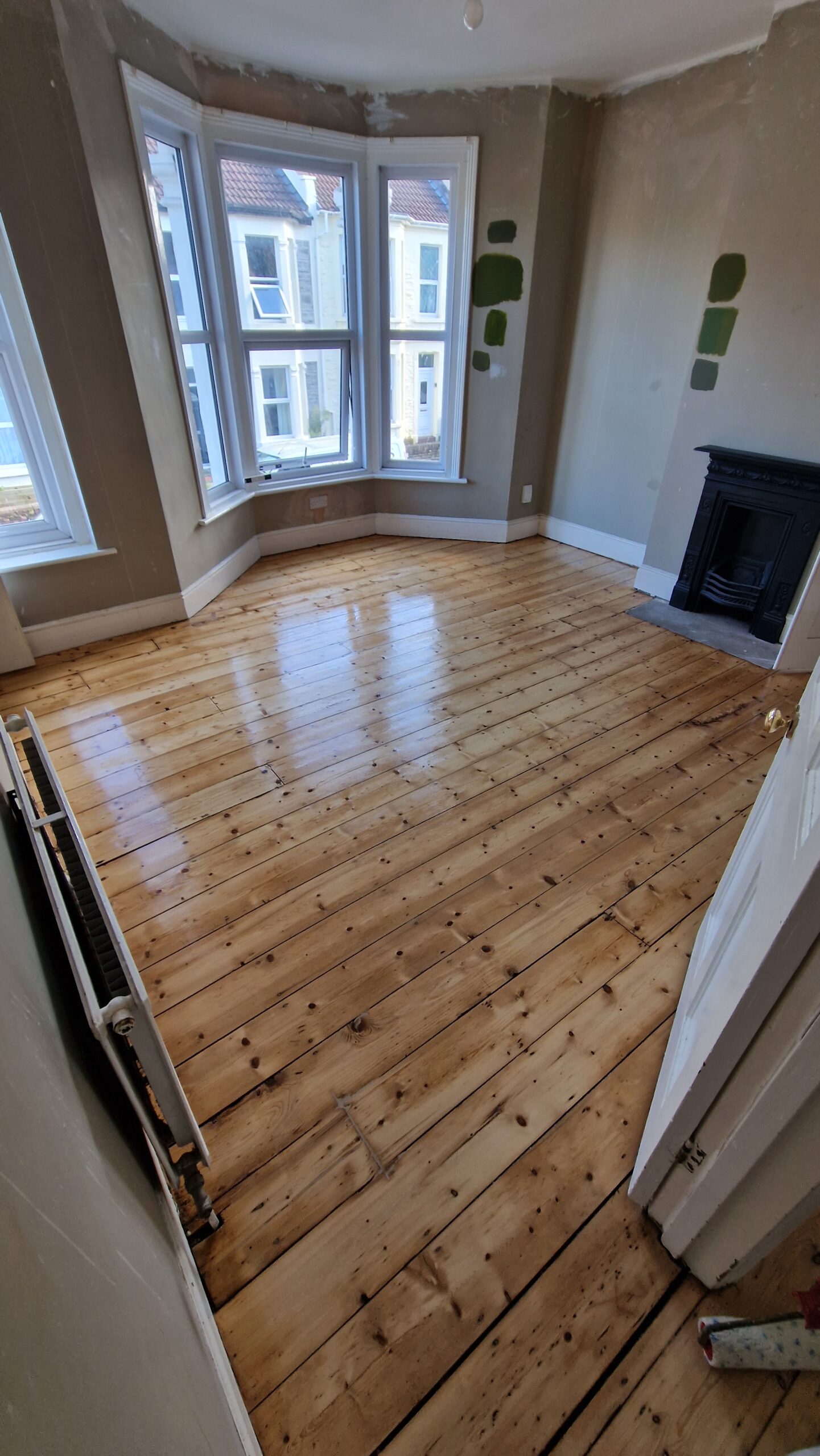
A typical Victorian terrace floor has a recognisable set of faults. The boards are narrow pine, nailed with cut nails into the joists. Around the edges, a varnished or painted border shows where a rug once covered the centre. In front of the old fireplace there may be a stone or tiled hearth, or a patch of newer timber where the hearth was removed. Running across the room, usually near a wall, there is a line of short board sections that were cut and lifted when central heating went in.

Good wood floor restoration in Trowbridge deals with each of these on its own terms. Pipe cuts are often the weakest part of the floor: short lengths of board resting on a single joist, or not on a joist at all, and screwed down in a hurry. These are usually reset properly, with noggins added where the ends are unsupported. A short end that has split or gone soft is swapped out. For floorboard replacement in a Victorian terrace, the new piece comes from our store of reclaimed pine of a similar age, so once the floor is sanded it reads as one floor rather than a patchwork.

Cut nails that have worked loose are the usual source of the creaks people notice on the landing and in front of the bedroom door. Re-fixing the board firmly to the joist, often with a screw set below the surface, usually cures it; more on that sits under fixing a squeaky floor. Deep gouges and dents from furniture can be handled through scratch repair where sanding them out would take away too much timber.

Gaps between old pine boards are common and tend to open up when the heating is on. Hairline cracks between boards can take a resin binder stirred into fine dust from that very floor, whereas the wider joints call for glued strips of pine planed flush; both methods come under gap filling. In a ground-floor room above a ventilated void, slivers usually last better because they flex with the boards.

The overall approach to pine floor restoration is to remove the old finish and the worst wear while keeping as much timber as possible. The full scope of wood floor restoration, including oak and other hardwoods found in some of the larger villas, is described separately.

flooring sanding company
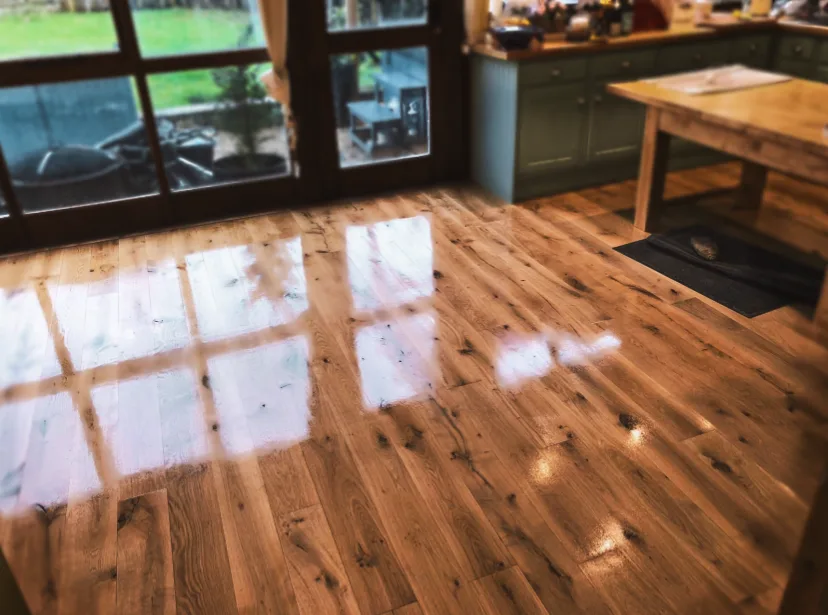
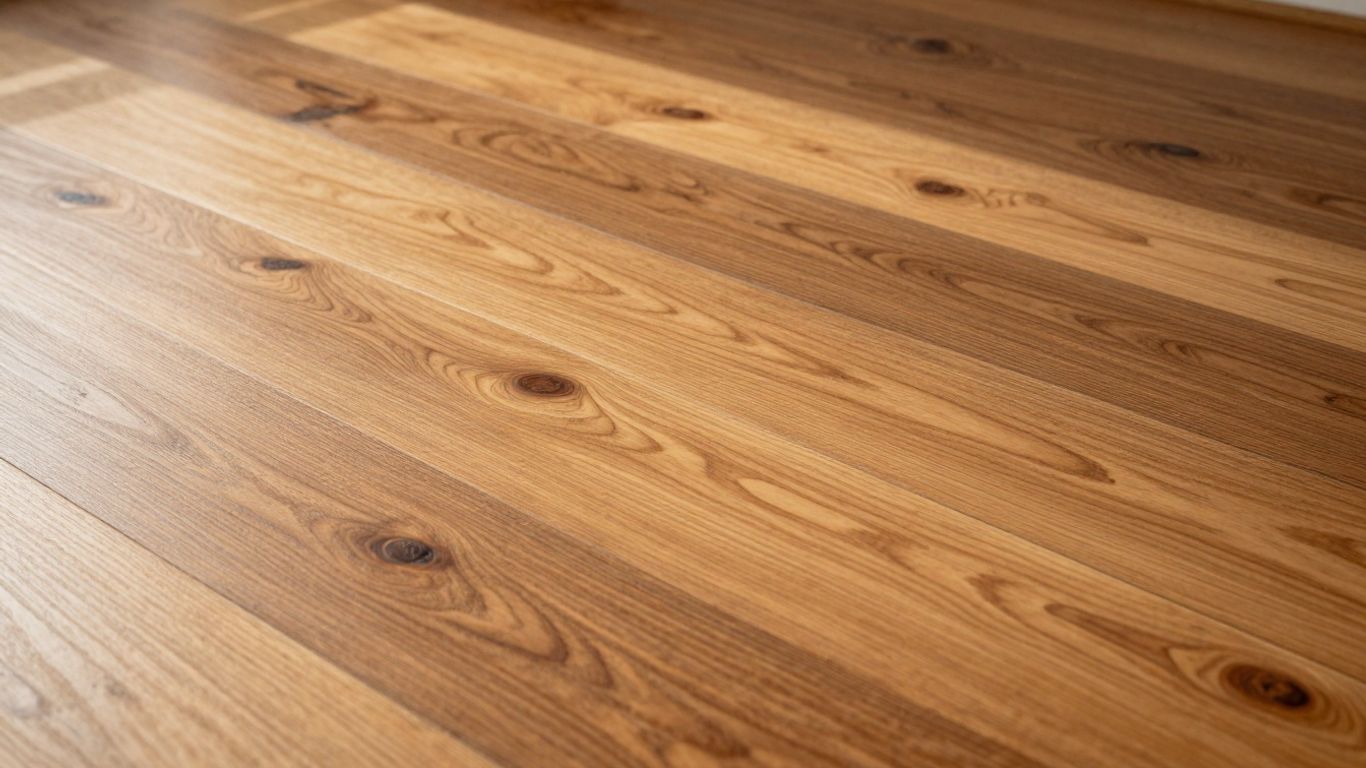
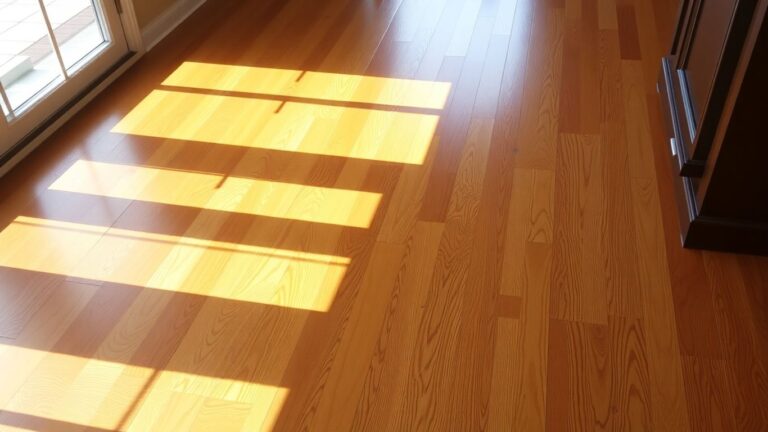
Sunlight across freshly lacquered wooden floorboards

Herringbone Hallways and Terrace Staircases

Some of the larger Edwardian and interwar houses in and around the town have woodblock floors, usually in the hall or the front reception room, and they often come to light when an old carpet is lifted. The blocks are commonly oak or a tropical hardwood, laid in a herringbone or basket-weave pattern on a black bitumen adhesive.

That adhesive is the key to how the floor behaves. Over time it can dry out and let go, so blocks start to rock or rattle underfoot. Before sanding, each loose block is lifted, cleaned back to bare timber on its underside, and re-bonded with a modern adhesive. Any gaps left by lost blocks are made up from our reclaimed woodblock supply. Where bitumen has seeped up between the blocks onto the surface, it is scraped away before the sander is used, because it clogs abrasive almost instantly.

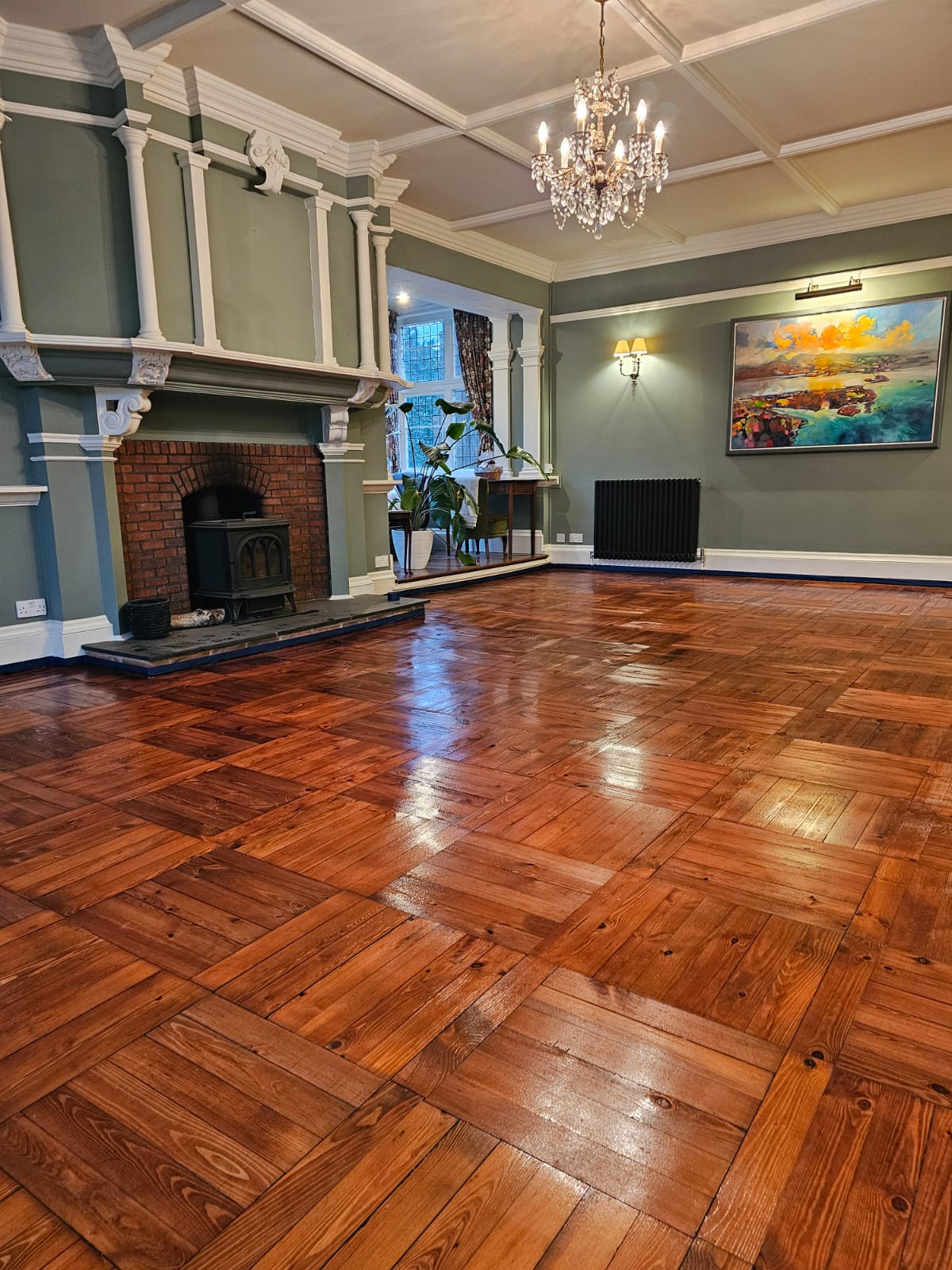
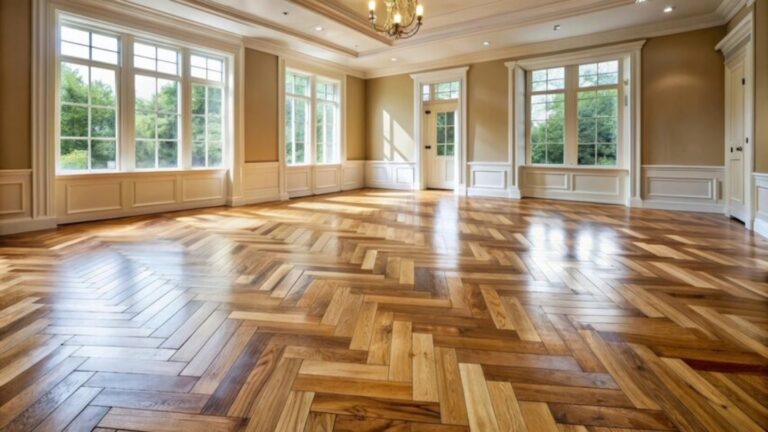
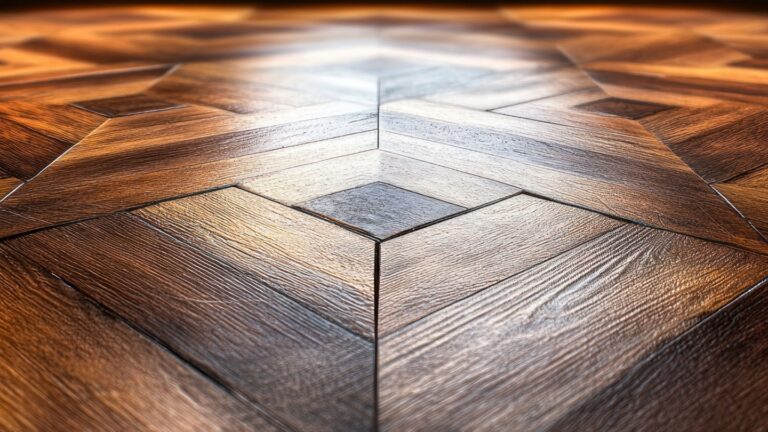
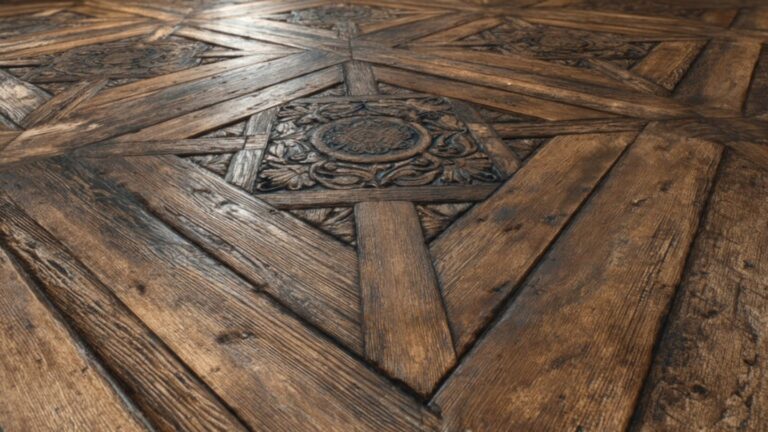
On a herringbone parquet floor, the sanding direction is crucial. Because the blocks run in two directions, the machine is worked diagonally across the pattern, so it never runs directly against the grain on half of the blocks. Finer grits follow, and the final finish depends on how the room is used. Parquet floor sanding covers the method in more detail.

Stairs in a terrace are usually a straight flight of softwood, sometimes painted along the sides with a central runner held by stair rods. Exposing and refinishing them is a different job from the floors. Stair sanding is done with small hand-held machines and scrapers, working each tread, riser and nosing individually. Old paint in the margins can contain lead in pre-war houses, so testing comes first. The nosings are often split or worn and may need small repairs before finishing.

A matt or satin finish is the sensible choice for stairs, as gloss can be slippery underfoot.

Coatings for Busy Family Homes in Trowbridge

The finish has to suit the house as well as the floor. A family home with children, a dog and a back door opening onto the garden needs something tougher than a quiet spare room.

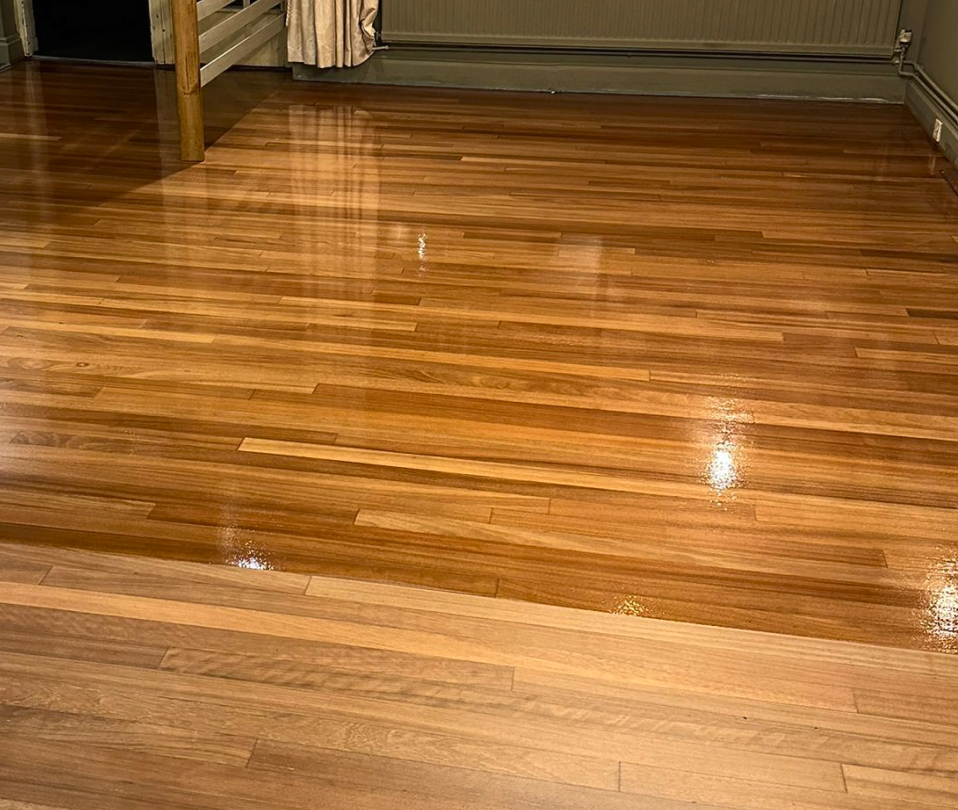
Lacquer is the most common choice. Water-based lacquers have low odour and dry quickly, and can be used in matt, satin or gloss. A two-component lacquer, with a hardener mixed in, gives extra resistance to scratches and is a good choice for kitchens, hallways and homes with pets. Oil-based lacquers give pine a warmer, honey tone. More on these sits under sealing a wooden floor.

Natural oils and hard wax oils sink into the wood rather than forming a film on top. They give a soft, natural look and can be touched up in patches, which suits busy rooms where wear is uneven. Oiling a floor covers the process.

Staining is popular in terraces where the pine has gone orange under old varnish. Pine takes stain unevenly, so it can look blotchy unless the surface is carefully prepared. Testing on the floor itself, in a corner, is the only reliable way to see the final colour. Staining wooden floors goes into this. A final buff can be added with floor polishing.

The household can usually tiptoe across in socks the next day; wardrobes, the piano and the dresser are another matter and belong elsewhere for two or three days.

Wood floor sanding company
Floor sanding taunton

Once the Work Is Done: Upkeep, New Boards and Next Steps in Trowbridge

Terraced houses in the town often have a front door that opens straight from the pavement into the sitting room, which means road grit lands on the new finish from the first morning. A heavy mat on the step and a washable one inside will catch most of it. A soft-bristled vacuum attachment does no harm, unlike a rotating carpet brush. For washing, pick a pH-neutral product made for finished timber and wring the mop until it is barely damp. Keep the steam mop for the bathroom tiles: on timber, the hot vapour soaks into the joints, swells the board edges and can turn a lacquer cloudy. A packet of felt pads for the dining chairs will spare the floor more damage than any other single purchase.

The path from the back door to the kitchen nearly always dulls first. Long before the timber itself is affected, a light abrade and fresh topcoat can bring that walkway back into line with the rest of the room. In a busy household, the full sanding cycle tends to come round after eight to ten years, a little earlier with a large dog or a back door in constant use.

Occasionally the pine under the hardboard has rotted at the joist ends, or a rear extension has nothing but bare concrete. In those rooms we offer wooden floor installation, laying the boards ourselves or simply delivering them, with Junkers and Bona both available.

The business is family-run and has been sanding floors since the 1980s from its base near Wellington, Somerset, and the towns of west Wiltshire are part of our usual round. For a first opinion, take one photo of the room from its doorway and a second, close, of the boards or the hardboard edge you have lifted. From there a free visit is booked, generally lasting about thirty minutes, to measure moisture and board thickness and to look at airbricks, damp and old pipe cuts. Afterwards you receive the job broken down on paper, hardboard lifting, repairs, sanding and coats each set out as its own line, and that total is fixed unless you change what you want doing. Ring 01823 674562 on a weekday between 8am and 6pm (Saturday can be arranged), email info@ryansrestoration.co.uk, or leave your details on the enquiry page. A short drive north-west, floor sanding in Bradford-on-Avon has its own page.

Trowbridge Floor Sanding Questions

In most terraces it is. Hardboard has usually kept the pine underneath out of harm’s way for decades, so it is often in better shape than any exposed boards in the house. The tedious part is pulling every pin out of the floor afterwards, which has to be done before a sander can run. Lift a small piece inside a cupboard first to see what is there.

Some will. Hardboard pins were driven in a tight grid, and once the boards are sanded a pattern of tiny holes can be seen across the room. Plenty of owners like them as a record of the floor’s past. They can be filled, but a filler seldom matches old pine exactly and can draw the eye more than the holes ever did.

It is much better planned for the long summer break or, for a smaller hall, a half-term week. The room has to be clear for several days while the boards are machined, the lines are marked and the coats go on, and the lacquer needs to harden before staging, tables and PE equipment come back. Dates are fixed with the school well ahead.

Yes, and it is done in-house. Badminton, netball, basketball and other markings are set out to the dimensions published by the relevant governing body, painted onto the bare sanded timber, and then sealed beneath the final lacquer coats. That way the lines wear with the floor rather than scuffing off under trainers in the first few weeks of term.

Usually, though old stain borders sometimes soak deeper into the timber than the wear in the middle of the room, and a faint shadow can remain at the margins. If the border is paint rather than stain, have it tested for lead before anyone sands it. A trial patch in a corner shows how far the colour can be taken out before committing to the whole room.

In most cases. Each rocking block is lifted, the old bitumen cleaned off its underside, and it is glued back down with a modern adhesive before the floor is sanded. Holes left by blocks that vanished years ago are made good from our salvaged woodblock store. Herringbone floors are then sanded at a diagonal so that neither direction of block is torn.

A two-component lacquer, where a hardener is mixed into the coating just before it goes on, is the toughest option for a kitchen, a hallway or a house with claws on the floor. Choose matt or satin rather than gloss, as scratches show far less on a low sheen. Hard wax oil looks more like bare wood and is simpler to mend in one spot, at the expense of more frequent maintenance coats.

A terrace with two or three rooms usually takes between one and three days, longer if a lot of hardboard has to come up first. Once the last coat has had about a day, the room can be crossed in clean socks. The sofa, table and bookcases should stay out for another day or two while the coating cures underneath.

Photograph the room from the doorway and take a second, close shot of the boards, or of whatever covering you have lifted. Email the pair to info@ryansrestoration.co.uk, or if you would sooner talk it through, the number is 01823 674562. A free survey is then arranged, and a written, itemised quotation follows, so the full scope is clear before any decision is made.