Floor Sanding Wiltshire

Wood Floor Sanding and Restoration Across Wiltshire

QUICK QUOTATION

Floor Sanding Taunton

Floor Sanding Across Wiltshire

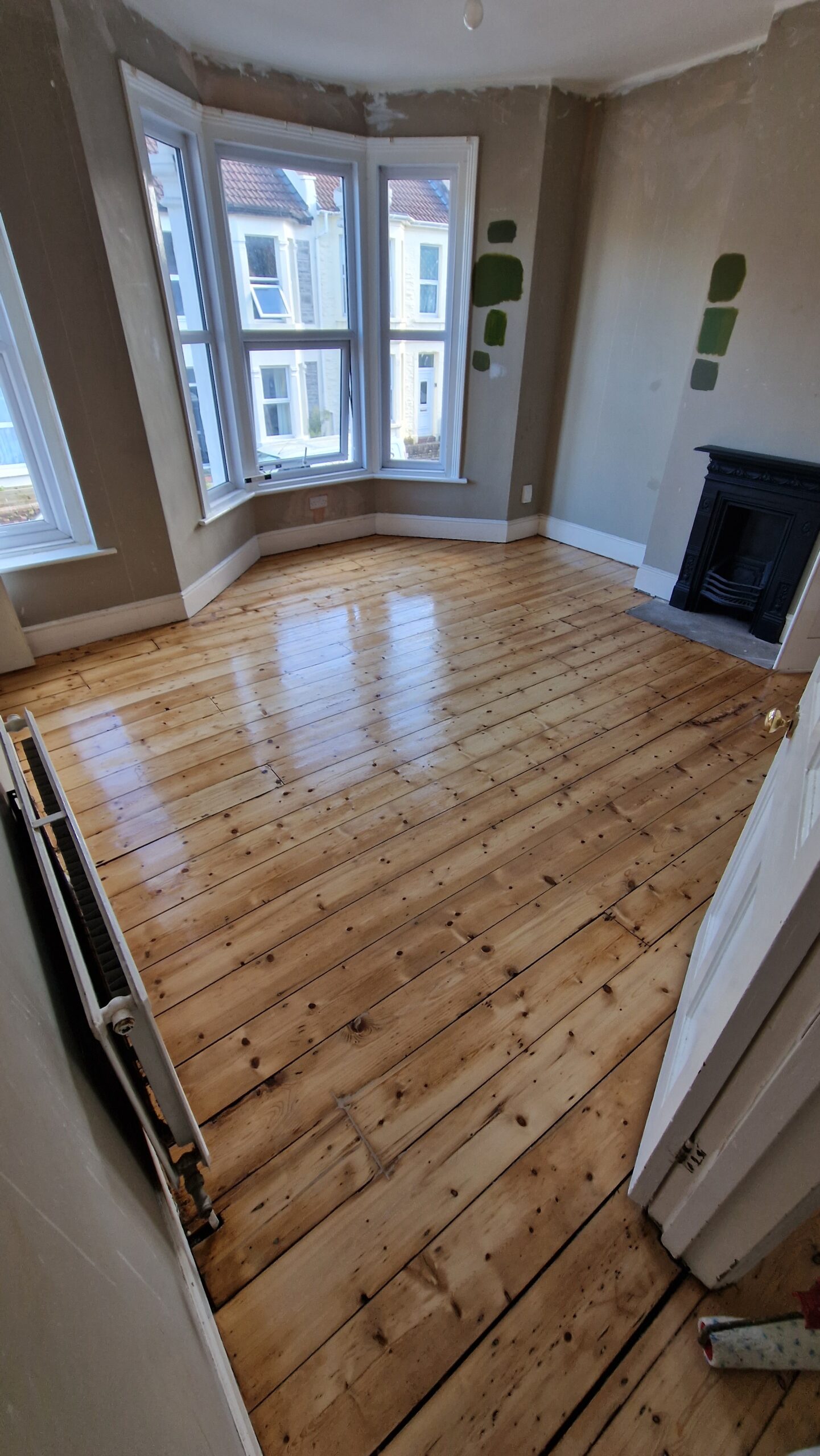
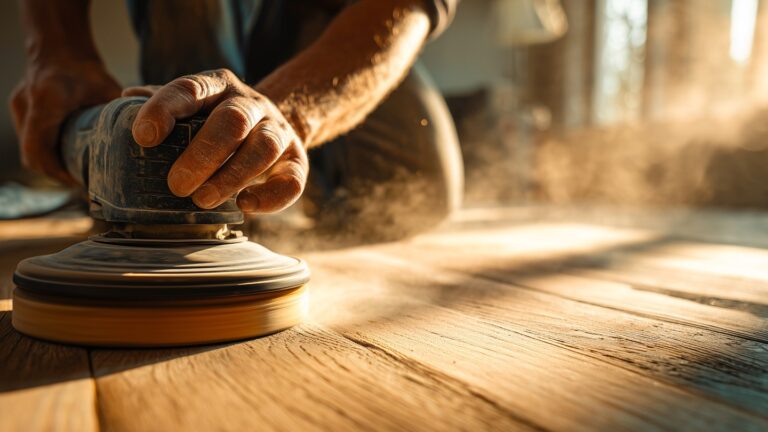
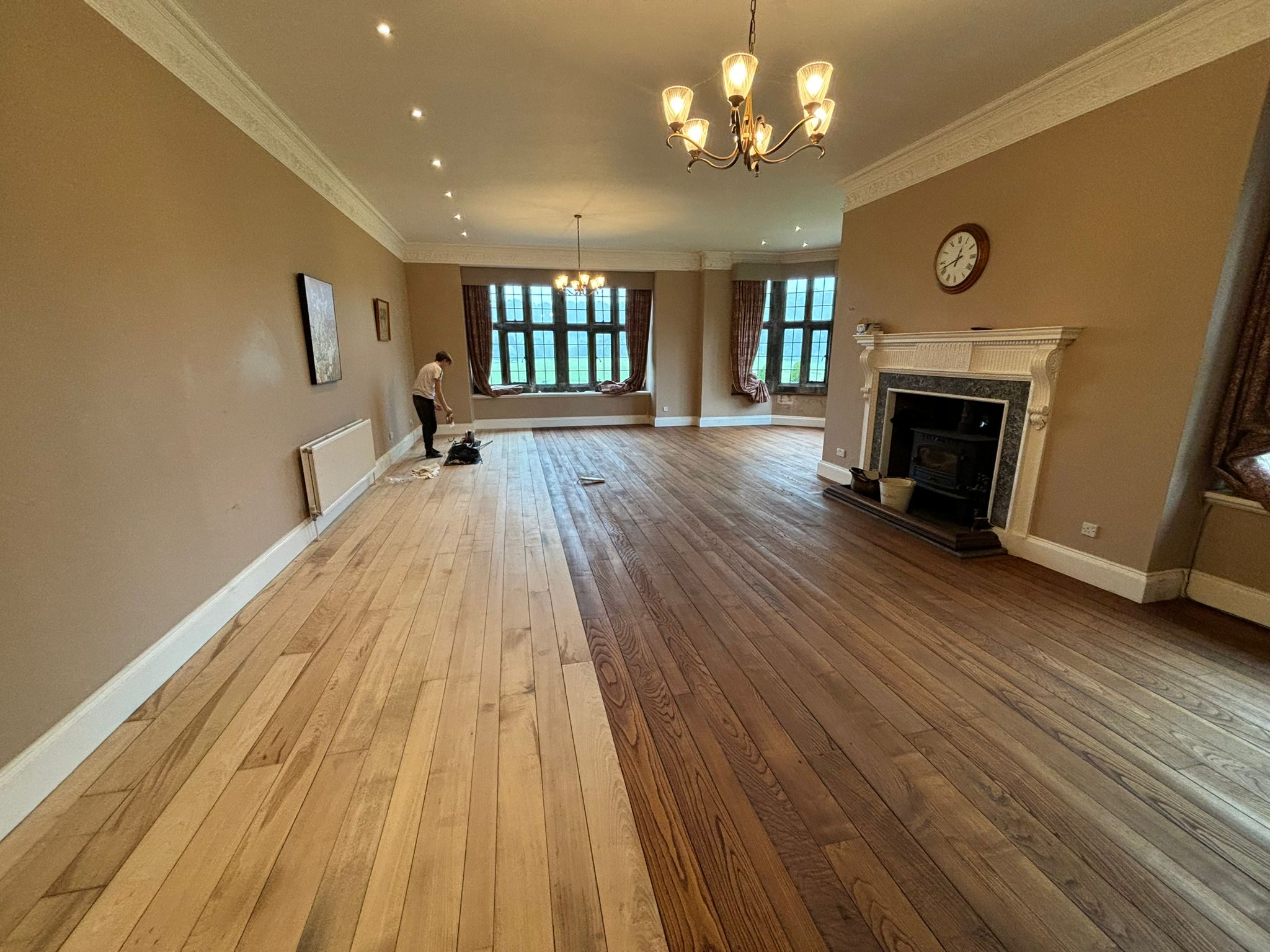
Our dust-free wood floor sanding covers the whole of Wiltshire, with local pages for Salisbury, Swindon, Chippenham, Trowbridge and Bradford-on-Avon, and full coverage of Devizes, Marlborough, Warminster, Westbury, Melksham, Calne, Corsham and the villages between. Every job follows the same sequence — assessment and moisture readings, repairs, staged sanding with sealed extraction capturing the overwhelming majority of dust at source, then a finish specified for the room — confirmed in a fixed written quotation. The county borders our home patch, so surveys rarely wait more than a few days.

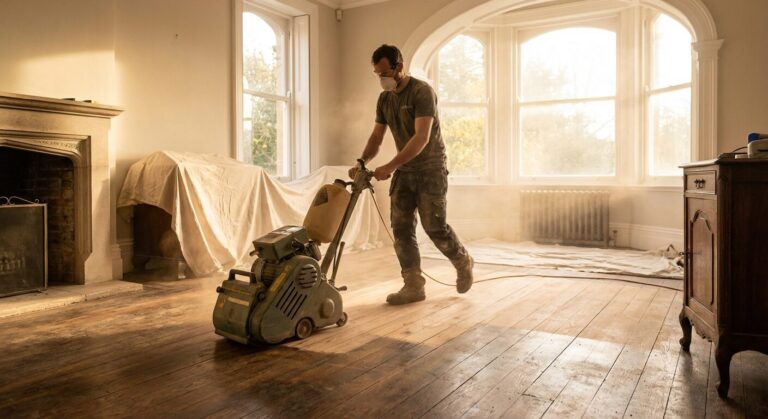
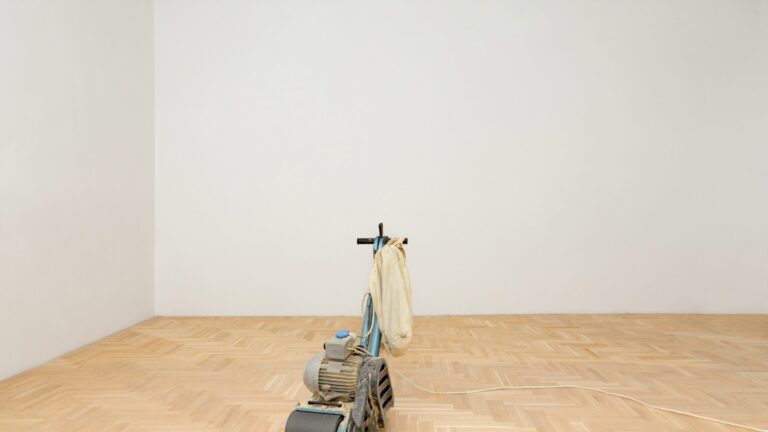
Dust-free deserves explaining, because it is a machine specification rather than a slogan. Our sanders run connected to sealed extraction units that pull the dust away at the point the abrasive creates it, so it never reaches the air of the room. What that means in practice: shelves and pictures can usually stay put, adjoining rooms do not need sheeting over, and the household is not wiping fine timber dust off surfaces for weeks afterwards. A small amount of hand-sanding dust is unavoidable in corners, and that is cleaned as we go.

On old boards the specification errs conservative by policy. Cottage and farmhouse floors that have been walked for two centuries often carry undulations that are part of the floor’s character, and chasing them dead flat takes thickness the boards cannot spare. We measure what timber remains before choosing grits, take the minimum cut that gives a clean sound surface, and set expectations honestly — a well-restored old floor should look cared for, not factory-new.
Commercial Floor Sanding in Wiltshire

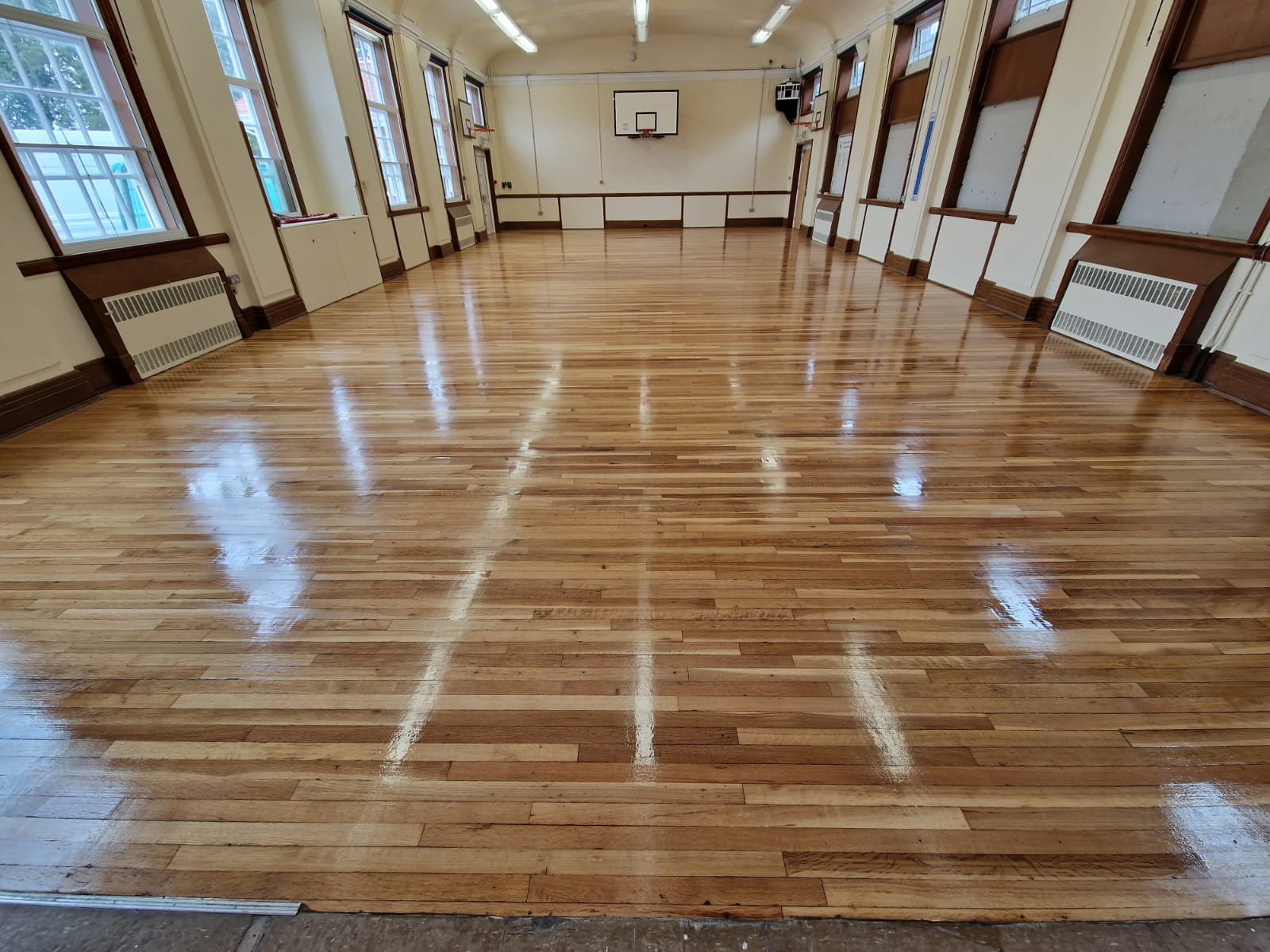
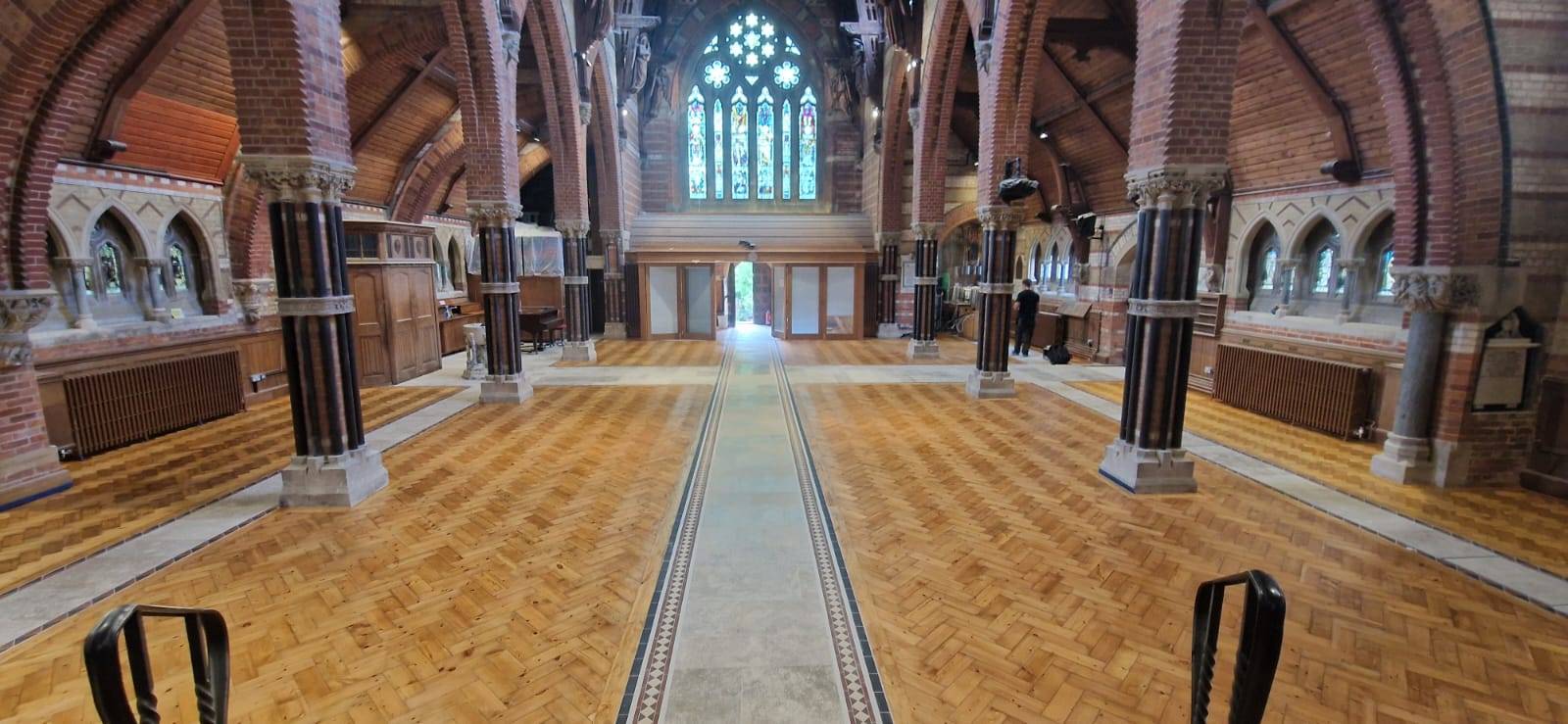
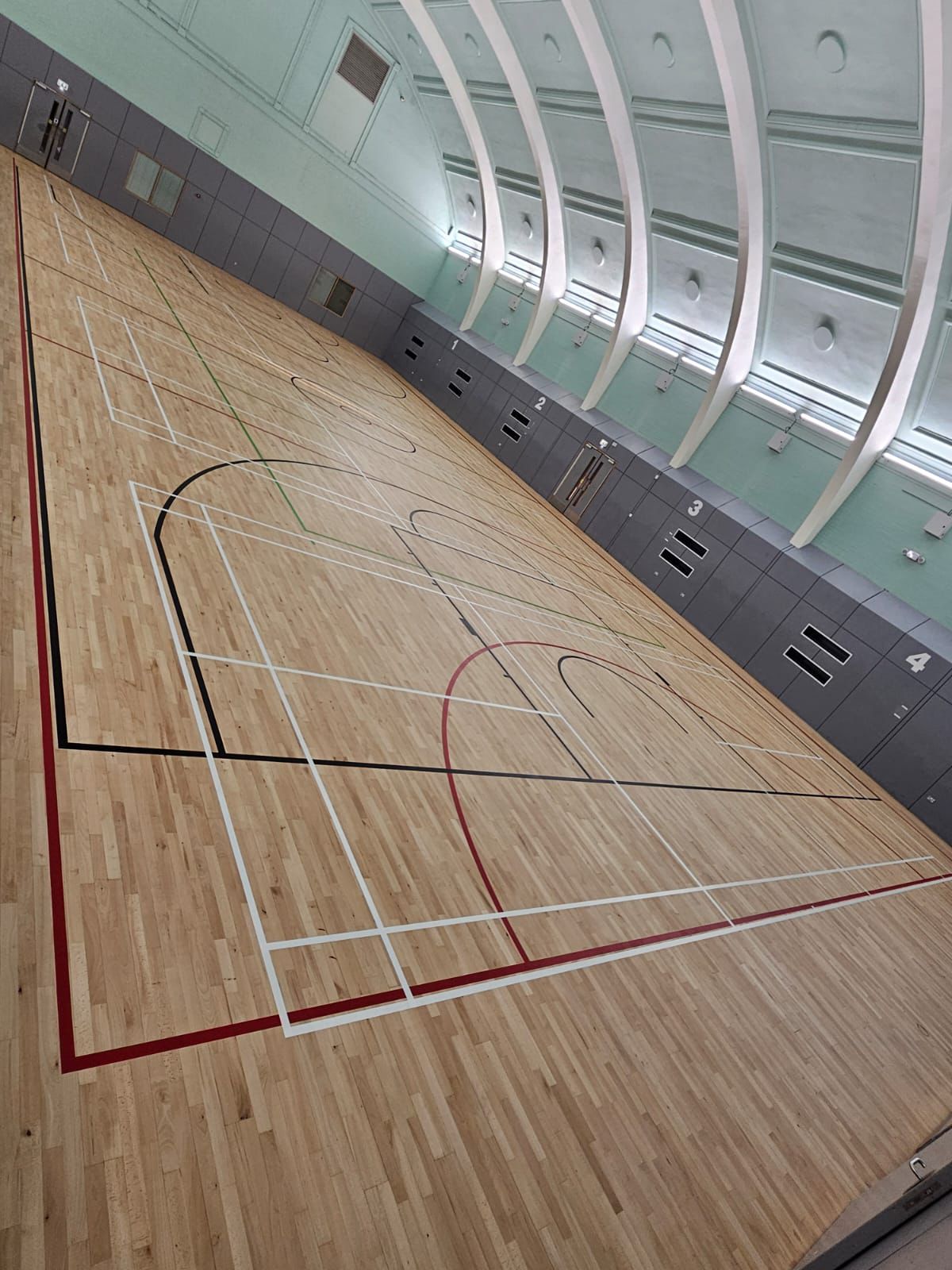
Commercial floor sanding across Wiltshire is planned around trading: coaching inns, pubs and restaurants sanded overnight or on closed days with fast-curing seals, shops phased behind barriers, Swindon offices completed over weekends, village halls re-sealed between bookings, and school halls booked into holiday windows with line marking to governing body specification. Garrison-area buildings around the Plain add maple and pitch pine floors laid for parade boots — hard-wearing and superb when refinished properly. Method statements and insurance documentation come as standard.

A village hall or function room lives by its diary, so the programme is built backwards from the next booking. We calculate the full sequence — repairs, sanding, court or badminton lines where the hall wants them, and each coat of seal with its drying interval — and confirm in writing the day and hour the floor can take chairs, trestle tables and foot traffic again. Fast-curing two-component lacquers shorten that window considerably, which is often the difference between losing one weekend of bookings and losing three.

Heavier commercial floors are specified by their traffic rather than by habit. A bar with stools dragged nightly, a shop doorway that funnels grit, and an office corridor each wear differently, and the seal build — number of coats, product class and sheen — is chosen accordingly. Where floors meet food service, slip performance is part of the specification, not an afterthought.

Floor sanding south east London
Commercial Hall Floor Refurbishment

Wood Floor Repairs and Restoration

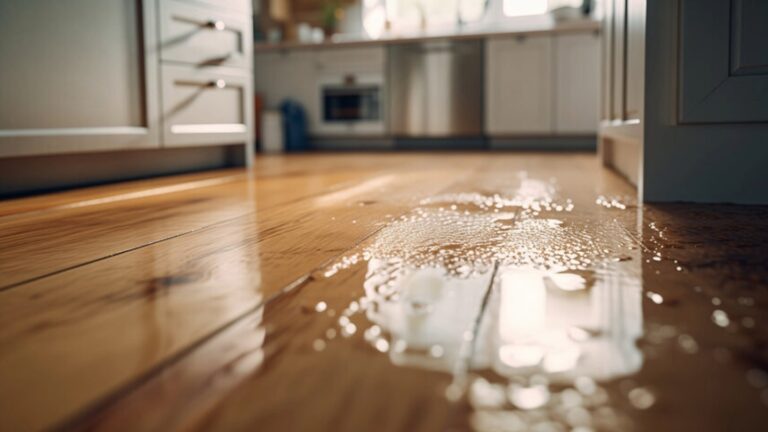
The repair services carry Wiltshire’s older housing: wooden floor repairs, squeak fixes, floorboard replacement in reclaimed timber matched for species, width and age — including the elm common in the limestone-belt cottages — scratch repair and gap filling. Stone-village ground floors are moisture-read before anything is promised: damp is the county’s great floor-killer, and we will say plainly when a floor needs drying or a builder before it needs a sander.

Gap treatment is a decision, not a default. Wide, uneven gaps in a draughty ground floor are best filled with slivers — tapered strips of matching timber glued in, planed flush and sanded with the floor, which move with the boards and kill draughts properly. Fine, consistent gaps suit a resin-and-dust fill that disappears into the joint lines. And on some old floors the honest advice is to leave the gaps alone: where boards still swell and shrink strongly with the seasons, a rigid fill will crack out within the year, and we say so before anyone pays for it.

Stone-built ground floors get a specific technical routine. Boards over solid or sleeper-wall construction are checked for sub-floor ventilation — blocked airbricks are behind a surprising share of decayed joist ends — and moisture readings are taken through the room and compared front to back, because damp in these buildings is rarely uniform. Only when the numbers sit in the safe range for the chosen finish does sealing go ahead; a breathable finish is specified where the building needs to keep moving moisture the way it always has.

Parquet Floor Restoration in Wiltshire

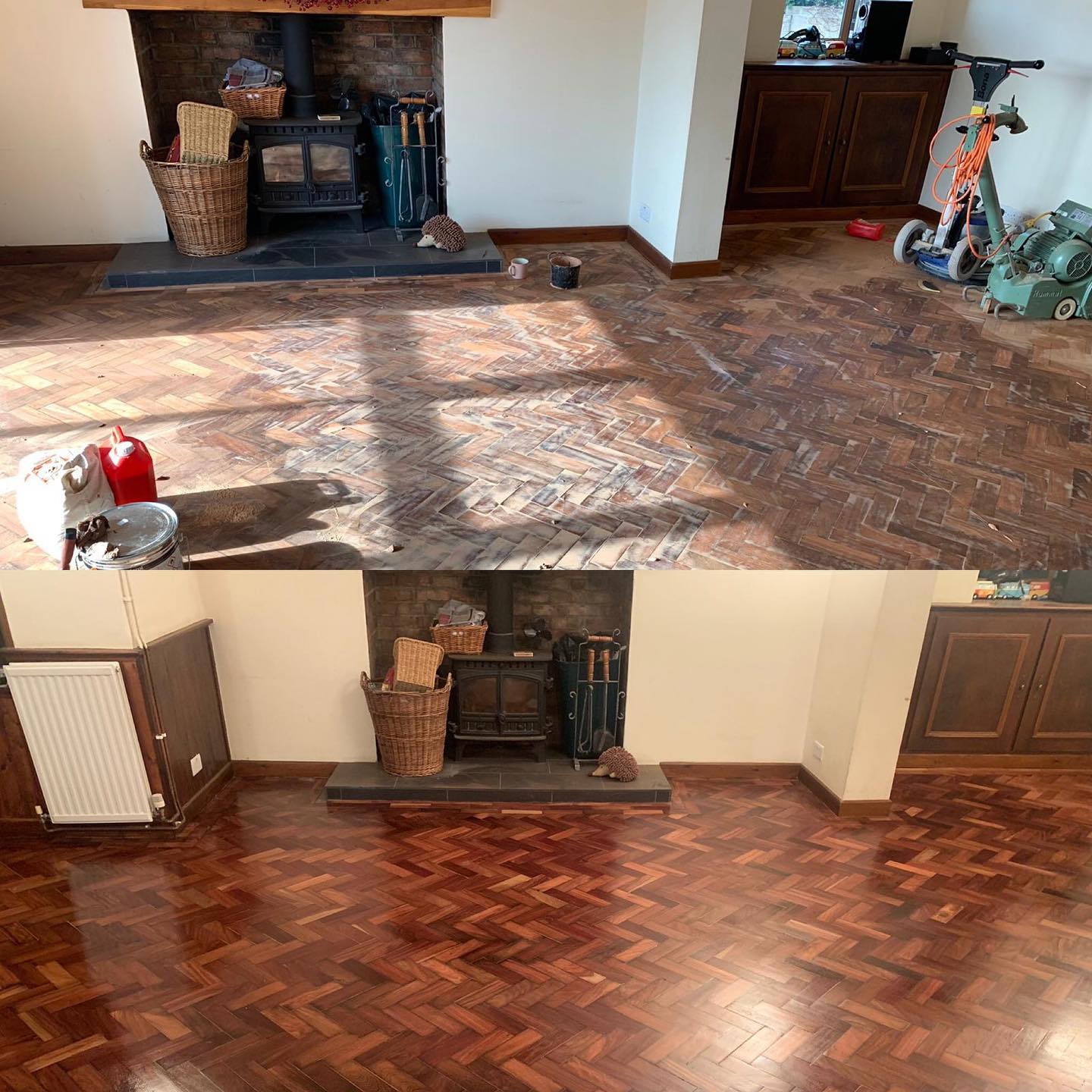
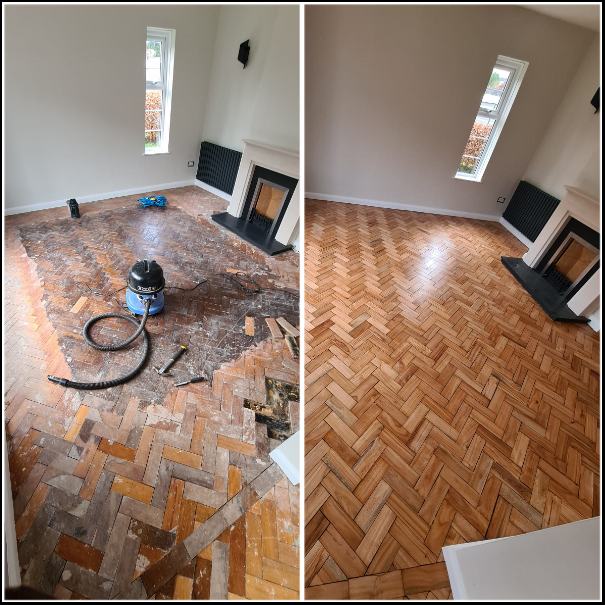
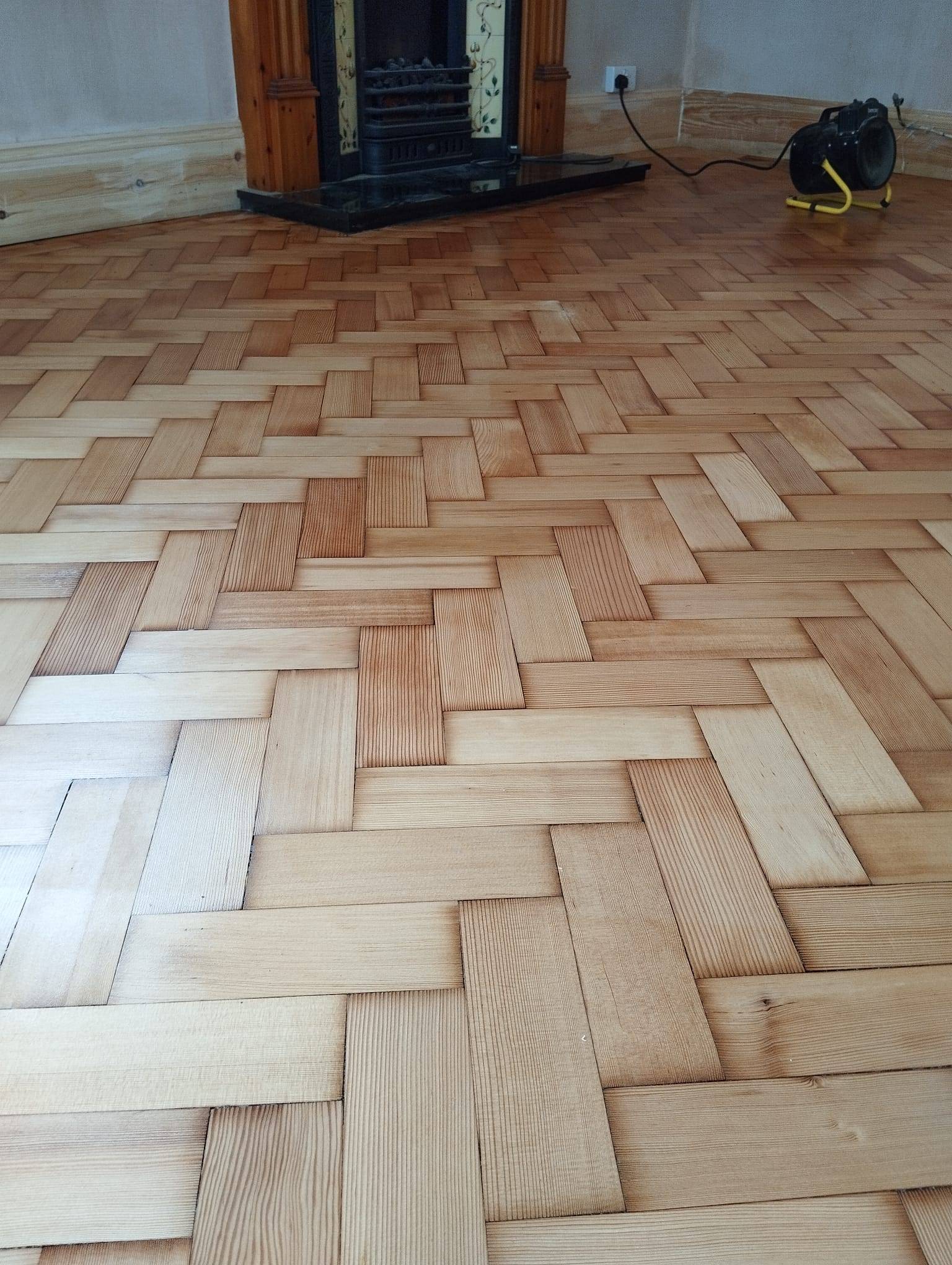
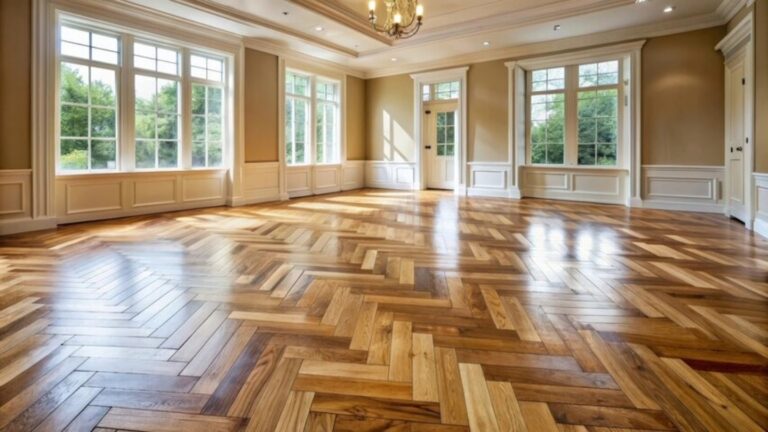
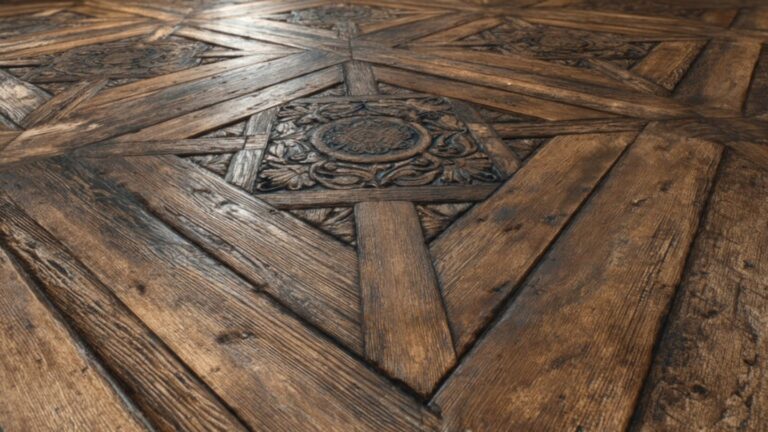
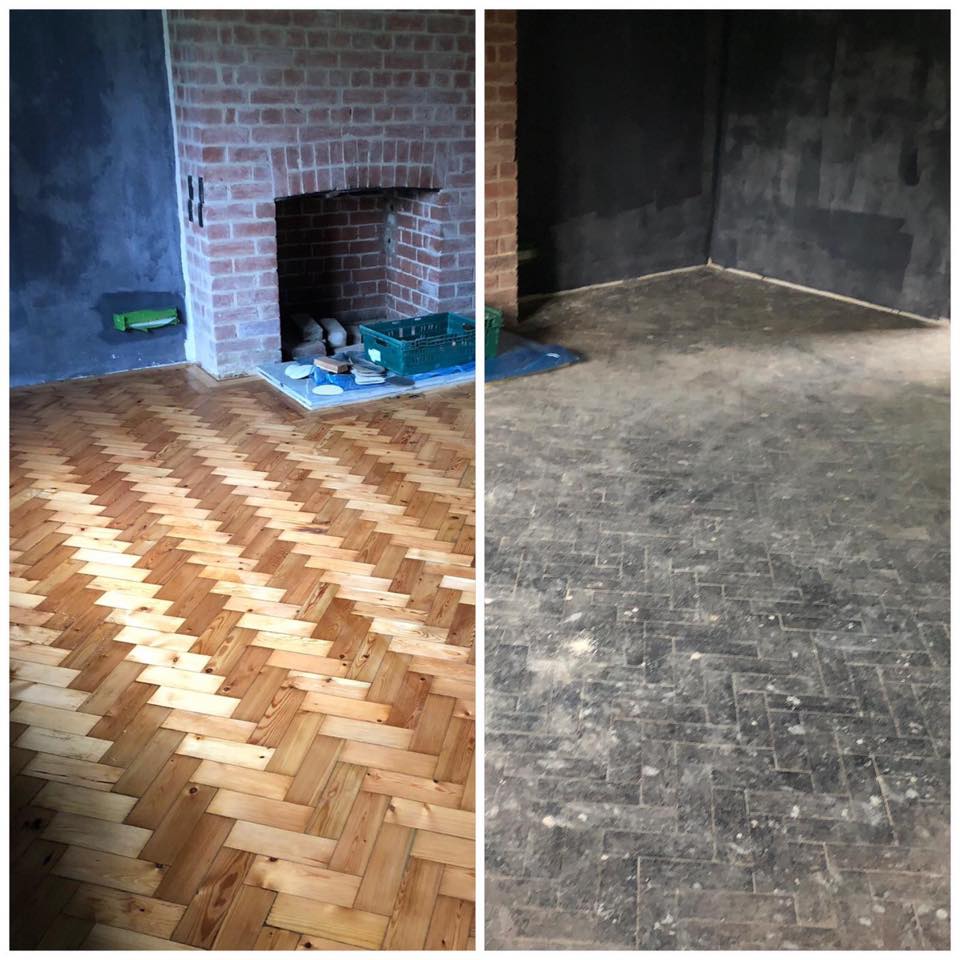
Parquet restoration serves herringbone halls in the interwar streets of Swindon, Salisbury and the market towns, plus block floors in schools, halls and public buildings: loose blocks lifted and cleaned of bitumen, re-laid on modern adhesive, missing blocks matched from reclaimed stock, then the floor sanded with the pattern and sealed for its use. Previously botched parquet is usually recoverable with the right sequence — and honestly assessed when it is not.

Bitumen is the first hour and often the first day of a parquet job. The blocks were originally bedded in it, and after eighty years it has turned brittle and lost its grip, which is why blocks rattle. Every loose block comes up, is scraped clean on its back and edges, and the subfloor is taken back to a sound surface — modern adhesives are excellent, but only on clean substrates. Blocks that were never loose stay put; there is no benefit in disturbing a bond that is still working.

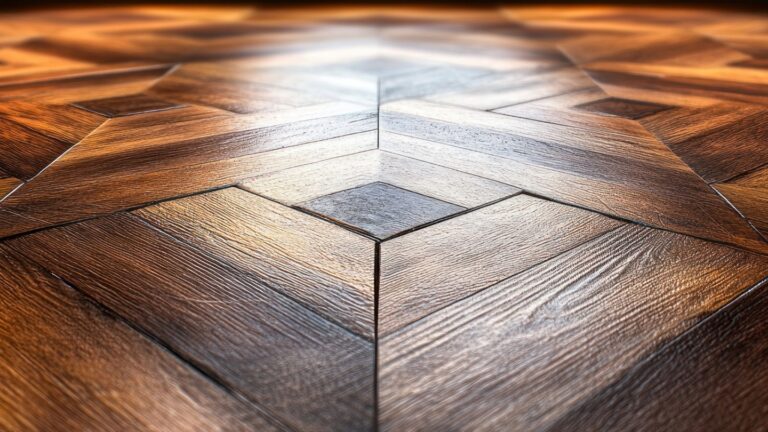
Once re-bonded and cured, the floor is machined diagonally across the pattern so both directions of block are cut evenly, finishing with a fine pass down the room. The joints are then filled with a slurry made from resin and the floor’s own dust, sanded off, and sealed — usually with a lacquer for hallways and a hard wax oil where a softer, repairable surface suits the room better.

Floor Sanding Essex
parquet floor restoration near me

Staining, Finishes, New Floors and Maintenance

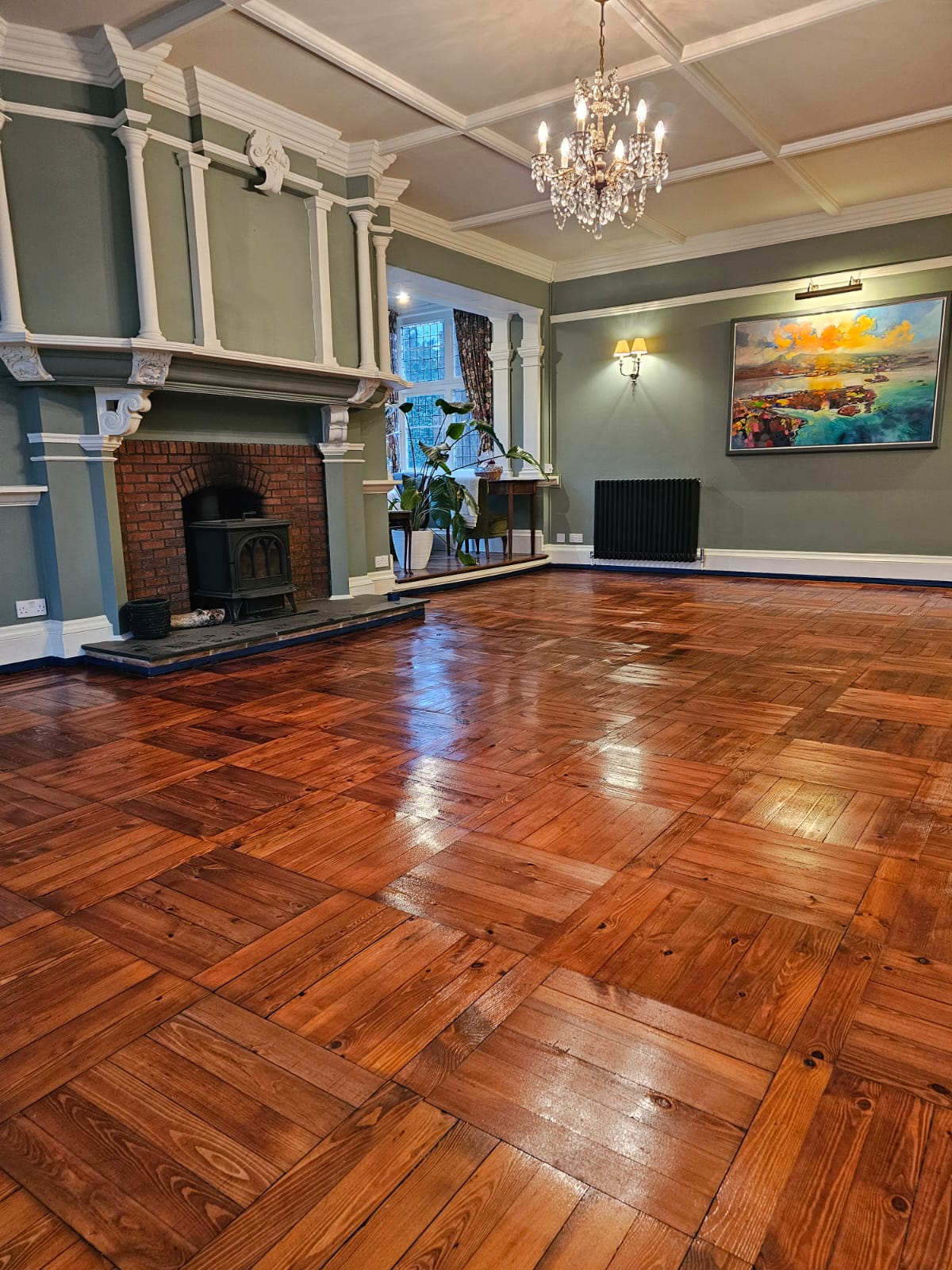
Finishing options cover staining — colour changes tested on your own boards first — hard-wearing lacquer seals for family and commercial traffic, hard wax and natural oils, and traditional wax for period rooms, with breathable products specified for stone buildings. New floor installation supplies and fits solid, engineered, reclaimed and parquet floors; buffing and recoating renews sound floors in a day; and aftercare guidance closes every job.

Sheen is the most underrated decision on the specification sheet. Gloss shows every footprint, dust mote and fine scratch; satin gives depth of colour while hiding daily wear; matt lacquers make even a hard-working hallway look calm and are the closest a sealed floor comes to the look of bare timber. Most of our county work lands on matt or satin, with gloss reserved for formal rooms that are lightly used. Whatever the sheen, drying and curing are different things: a floor dry enough to walk on in socks overnight still wants days before rugs go down and furniture returns without protection.

Traditional wax earns its keep in period rooms — it feeds old timber, deepens patina and can be renewed indefinitely — but it asks for regular buffing and offers less resistance to spills, so we are candid about where it belongs: dining rooms and bedrooms yes, kitchens and busy halls rarely. For those rooms a modern seal with a wax-like matt appearance often gives the period look without the housekeeping.

Get a Floor Sanding Quote in Wiltshire

Send two photographs — the room from the doorway and a close-up of the worst patch — with your town or village for an honest opinion and usually a fixed written quotation. Bigger jobs and commercial premises get a free, no-obligation site survey anywhere in the county.

Call 01823 674562, email info@ryansrestoration.co.uk, or use the form on this page.

All services available across Wiltshire: floor sanding, restoration, repairs, board replacement, gap filling, parquet, staining, installation, stairs and commercial floors.

Town pages: Salisbury, Swindon, Chippenham, Trowbridge and Bradford-on-Avon.

Parquet Flooring Restoration

FAQ: Floor Sanding in Wiltshire

All of it — sanding, restoration, repairs, floorboard replacement, gap filling, parquet, staining, oiling and waxing, stairs, buffing and recoat, new floor fitting and commercial floor sanding.

All of it — Salisbury, Swindon, Chippenham, Trowbridge and Bradford-on-Avon have their own pages, plus Devizes, Marlborough, Warminster, Westbury, Melksham, Calne, Corsham and the villages.

Usually within a few days — the county borders our home patch and we are passing through it constantly.

It needs a moisture reading first. Stone-village floors often hold damp, and sealing over it fails — we measure, find the cause, and tell you honestly whether the floor is ready.

Yes — elm is common in west Wiltshire and needs different machines, grits and finishes from oak or pine. We assess it board by board.

Almost always — overnight and closed-day working with fast-curing seals means coaching inns and dining pubs keep every service.

Yes — herringbone and block floors re-laid, patched from reclaimed stock and sanded with the pattern before sealing.

Yes — solid, engineered, reclaimed and parquet, supplied and fitted county-wide.

Two photographs and your village or town get a fast first opinion; a free, no-obligation survey and a fixed written quotation follow before anything is booked.