45 years’ experience  ·  Rated 4.9 on Google  ·  Family-run, from our workshop near Wellington

45 years’ experience · Rated 4.9 on Google · Family-run

Floor Sanding and Wood Floor Restoration in Braunton

Floor sanding and refinishing for Braunton homes that take sand, wetsuits and muddy boots every day, with honest advice on choosing between oil and lacquer.

QUICK QUOTATION

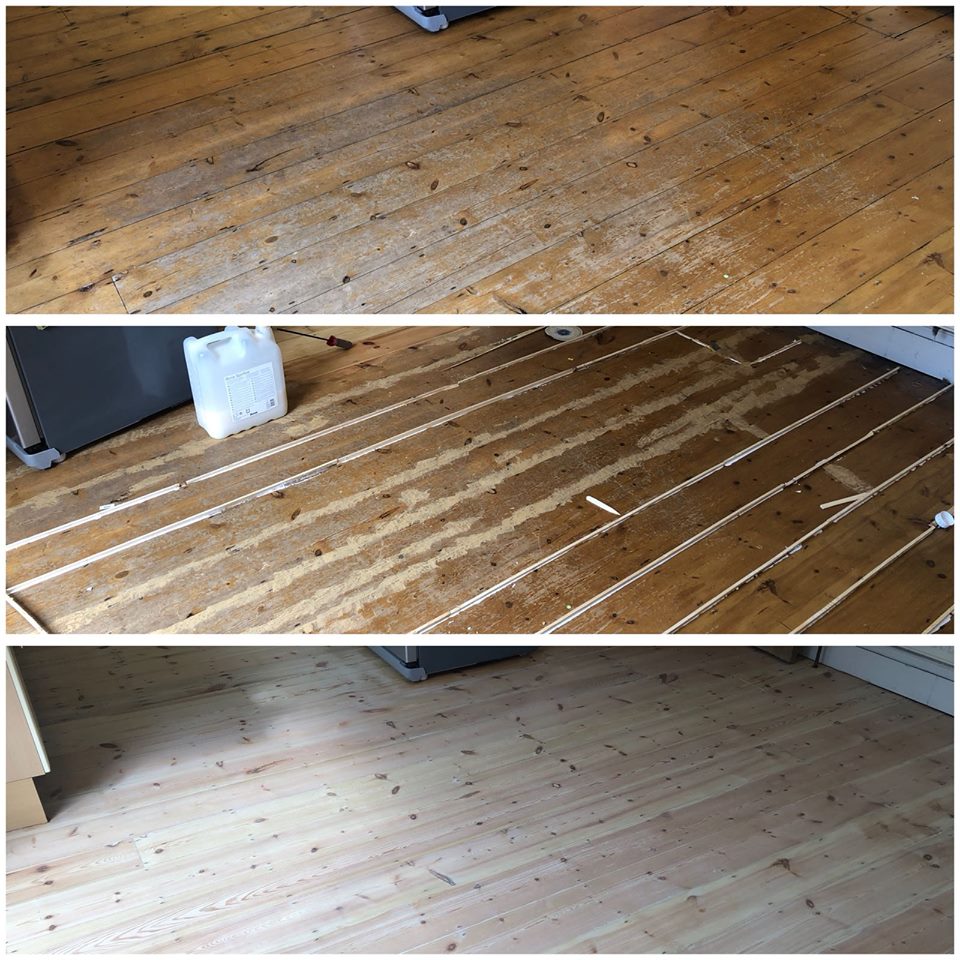
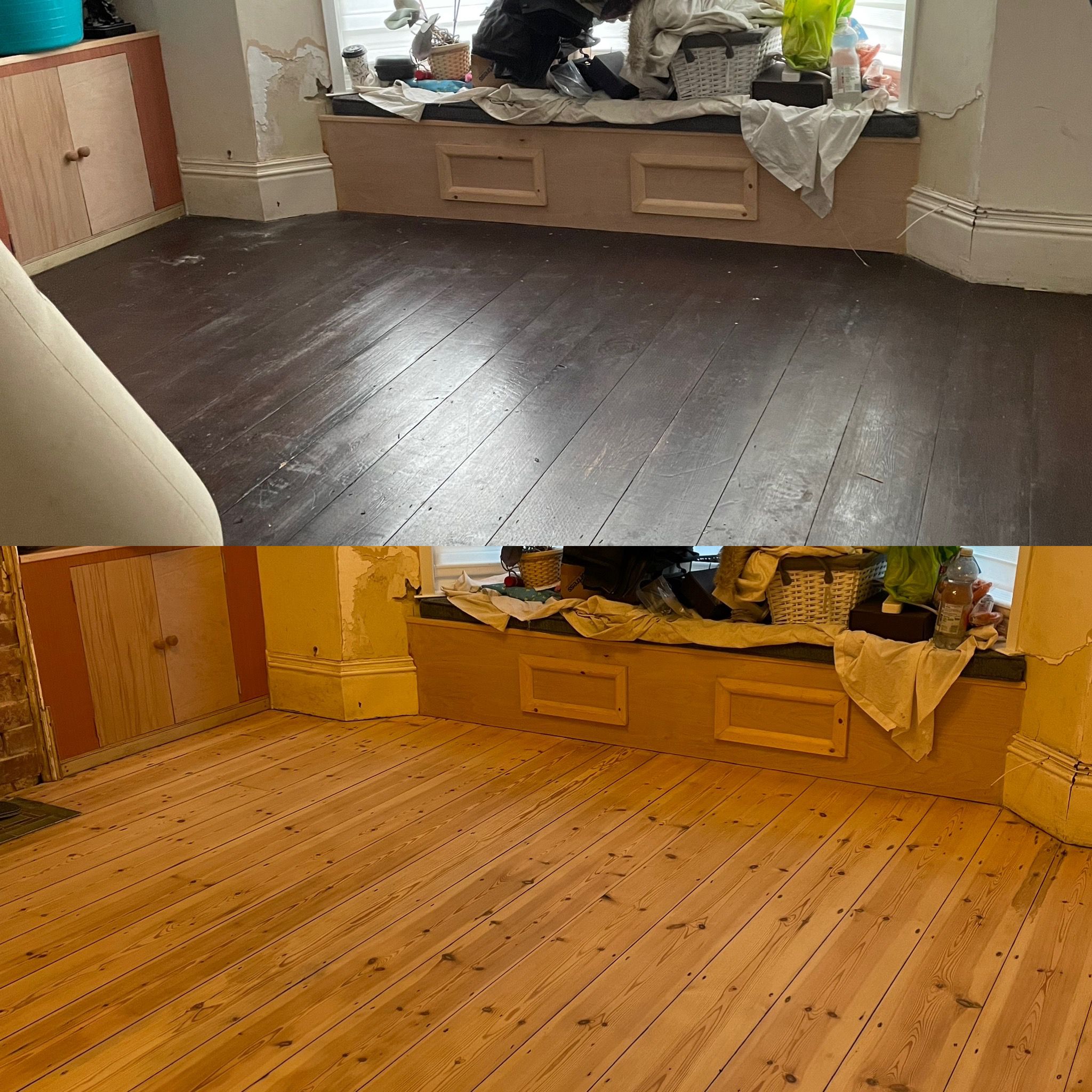
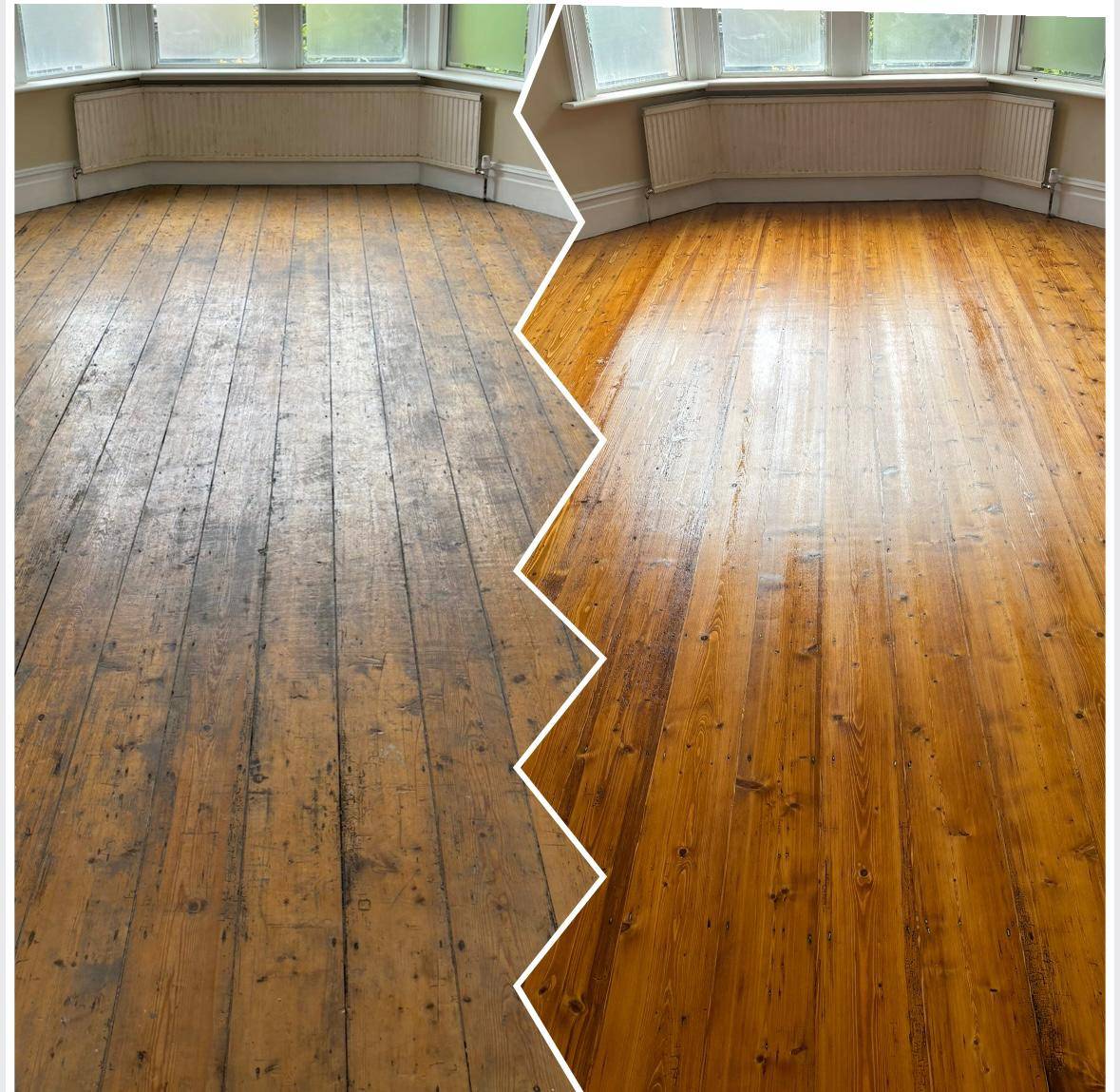
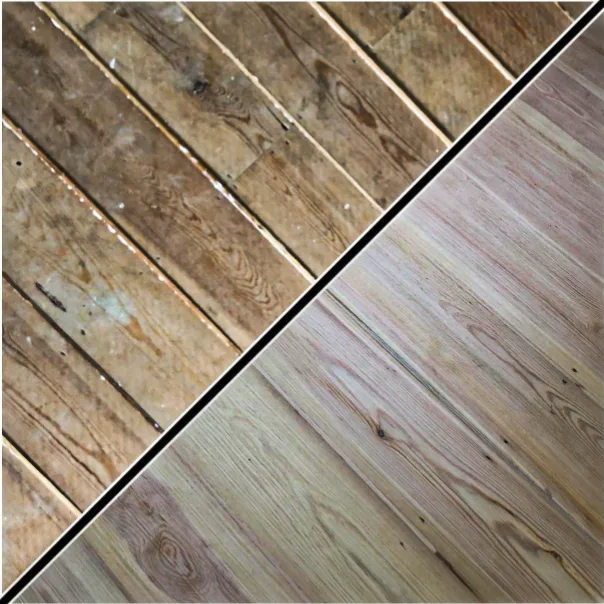
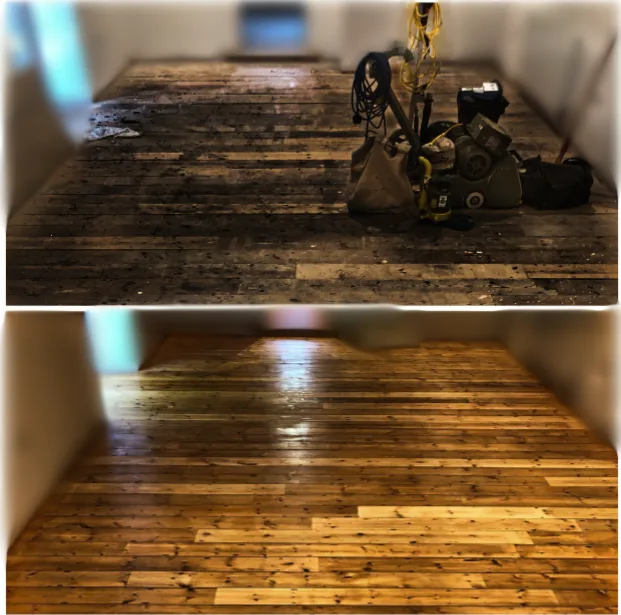
Floor sanding before and after

Floor Sanding in Braunton: Living With an Abrasive You Never Chose

Braunton is often called one of the largest villages in England, and with Saunton Sands and the surf breaks so close, plenty of its households are in and out of the sea several times a week. The floors keep score. Beach sand is mostly quartz and broken shell, and quartz is harder than any lacquer or oil sold for floors. Each grain carried in on a damp heel, shaken from a towel or tipped out of a child’s bucket behaves like a tiny piece of glass paper under the next footstep. By the end of a summer you can usually trace the household’s routes across the boards: a misty, flattened track from the garden door past the kettle and up towards the bathroom, with untouched gloss in the corners where nobody walks.

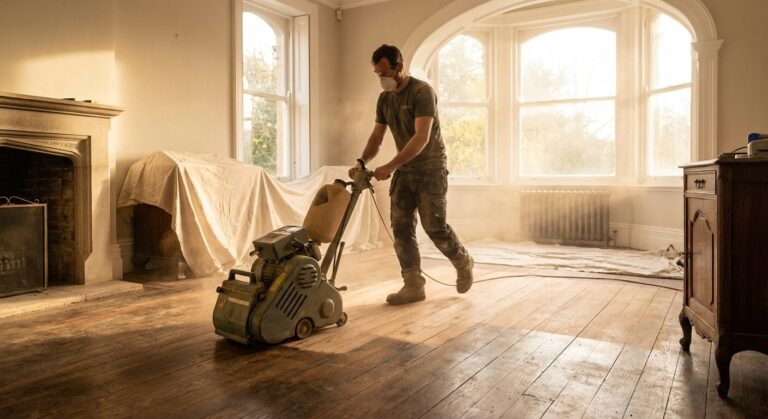
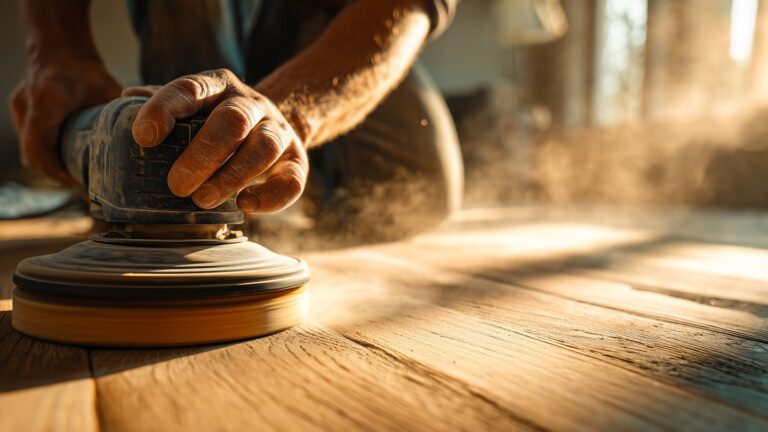
Those sand-worn tracks are the reason floor sanding in Braunton usually means the whole room rather than a patch. On a lacquered floor, once the film has gone in the busy lanes, the exposed wood weathers grey and soaks up dirt, and patching only those lanes leaves an obvious join between old and new coating. In most cases the honest answer is to take the whole room back to clean timber so the new finish starts level everywhere. For solid boards that is routine work. First comes a coarse belt to bite through tired lacquer and the silvery, weathered fibres beneath; each finer belt after that exists only to erase the marks the previous one left. An edging sander follows the skirtings, and the last few centimetres in each corner are taken back with a scraper.

Sand adds one complication of its own. Grains lodged in the joints between boards can be flicked out by the spinning drum and dragged across the fresh surface, so the joints are vacuumed out with a narrow nozzle before any sanding and again between grades. Our machines run with sealed extraction, which matters in an open-plan beach house where the sitting room flows straight into the kitchen; the dust-free floor sanding page explains how much that captures and where a little still lands. The step-by-step method is on our wood floor sanding page, and for other towns across the county see floor sanding in Devon. The family firm runs from near Wellington, and Braunton is part of the North Devon coast we work along week to week.
Oil Versus Lacquer for a House That Goes to the Beach Every Day

No question comes up more often in Braunton than whether to oil or lacquer. Neither is wrong. One sits on the wood and the other sits in it, and which suits you comes down to wet kit, dogs, children and how often you fancy getting the oil out.

A lacquer builds a clear layer on top of the timber. Water-based lacquers dry almost invisible and keep oak and pine near their sanded colour; oil-based versions bring a honey warmth that deepens with age. For the room the wetsuits come through, a two-pack lacquer, where a separate hardener is stirred in just before it goes down, makes the most resilient skin of all. What lacquer does superbly is keep things out. A puddle from a dripping board bag sits on top and can be wiped away hours later with no harm done. What it does badly is age gracefully under sand. Once grit wears through the film, the bare patch greys, and a little dab of new lacquer on that patch stands out as a shinier island. The trick is to recoat the whole floor while the film is thin but still intact.

Oils behave differently. Hard wax oil and the purer plant oils are absorbed into the upper fibres and set there, so there is no film to scratch white and the boards keep a matt, almost bare look and a slightly dry feel under bare feet, which many surfers prefer. Their real strength in a sandy house is local repair. A worn track by the garden door can be washed, given a fresh coat of oil by itself and left to blend in, with no sanding and no visible edge. The trade-off is a little more routine care, and less patience with water left lying about. A soaking towel left in a heap overnight can mark an oiled board where lacquer would not care.

In practice many households here split the difference: a tough lacquer in the hall, utility and kitchen where wet kit and grit never stop, and oil in the sitting room and bedrooms where the feel of the wood counts for more. Our guide to oiled wood floors and the lacquer and sealing page each go further into the products, and for a traditional finish in a quiet bedroom there is wax, though it is a poor match for any room that sees sand.

parquet wooden floor sanding
wooden floor sanding

Commercial Floor Sanding in Braunton's Surf Shops, Cafés and Pubs

The village centre has a lively mix of surf shops, cafés, pubs and independent retailers, and on a hot August afternoon a busy beach café or hire shop may see several hundred pairs of sandy feet cross its floor. Commercial floor sanding in Braunton is about getting those floors back to a clean, sealed surface without giving up the best trading weeks of the year, which in practice means booking the work into the shoulder months or the depths of winter.

Finish choice follows the domestic logic, with heavier traffic. For a café or bar, a two-component commercial lacquer is normally the right call because it tolerates dropped drinks, frequent mopping and sand far better than single-pack products, and its quick-curing versions mean a floor sanded after closing can take customers when the doors open next day. A surf shop fitted out in scaffold boards and reclaimed timber may prefer the raw look of hard wax oil, knowing the patch inside the door and the strip in front of the counter will want re-oiling every few months in season. Whichever is chosen, the stretch of floor just inside the door decides how long the rest lasts, and a commercial floor this close to the beach can expect a full resand every four years or so, perhaps five if the matting is generous.

Because the summer season dictates almost everything, dates for commercial work are fixed early and then held. Larger floors can be worked in sections over consecutive nights so part of the shop stays open. Breweries and landlords sometimes ask for the job on paper; we can send over a method statement, proof of our insurance and the names of commercial clients happy to be contacted. Our commercial floor sanding page sets out the general approach; owners of food and drink premises should also see café, bar and restaurant floors, and retailers sanding shop floors around fixtures. For guest accommodation there is hotel and guest house floor work.

Wood Floor Restoration in Braunton After Years of Wet Kit

Water is the other half of the coastal story. Wetsuits hung in the porch, boots dropped by the back door and towels left in a heap on a bedroom floor all put moisture onto the boards. Where the finish is intact this is a nuisance at worst. Where it has already worn through, water goes straight into the timber, and that is behind a large share of the requests we get for wood floor restoration in Braunton.

The two common timbers react differently. Pine tends to grey and go slightly furry at the surface where it has been wet repeatedly. Oak behaves worse. A rusty surfboard fin left on the boards, a dripping radiator valve or a corroding nail lets iron seep in with the water, and the oak’s own tannin turns it inky black from inside. Grey weathering on pine usually sands away. Black iron marks in oak may lighten with sanding or with an oxalic acid wood bleach, but some go too deep to shift. In those cases the sensible repair is to cut out that length of board and let in a replacement of similar age and grain from our reclaimed timber stock, so it sands and finishes in step with the rest. Our wood floor restoration page explains the wider process, and oak floor restoration and pine floor restoration look at each timber in detail.

The salt air itself does a well-sealed floor no harm. It does, however, keep coastal houses a little damper than those inland, and that matters for older homes with suspended timber floors. Airbricks that have been buried by raised paths, blocked by an extension or simply clogged with sand and leaves let moisture build up under the boards, and a floor that is damp underneath will cup, then crown if it is sanded flat before it dries. For that reason, a moisture meter and a walk around the outside walls to look at the airbricks are part of the survey before any sanding date is agreed.

Once the wood has been dealt with, the finish has to suit the room. A board that was ruined by standing water near a back door is a strong argument for lacquer in that spot, even if the rest of the house is oiled.

flooring sanding company
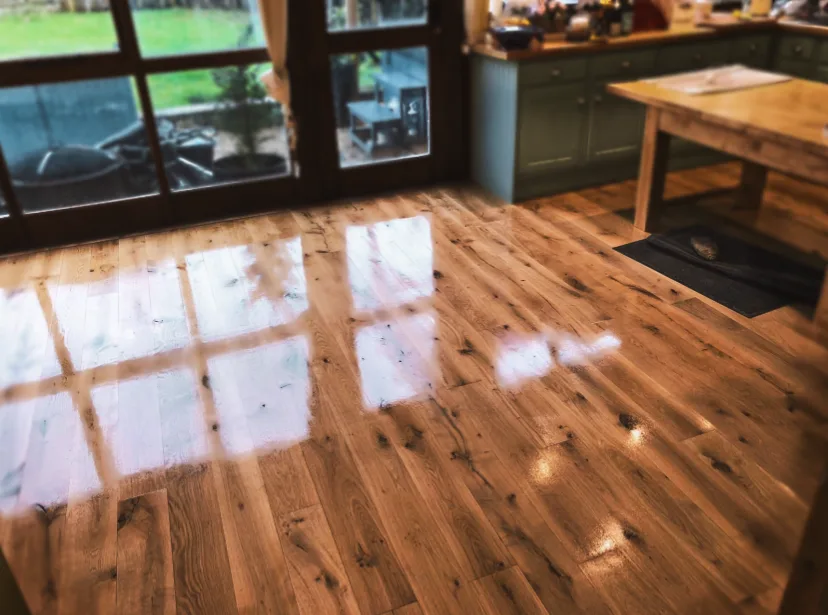
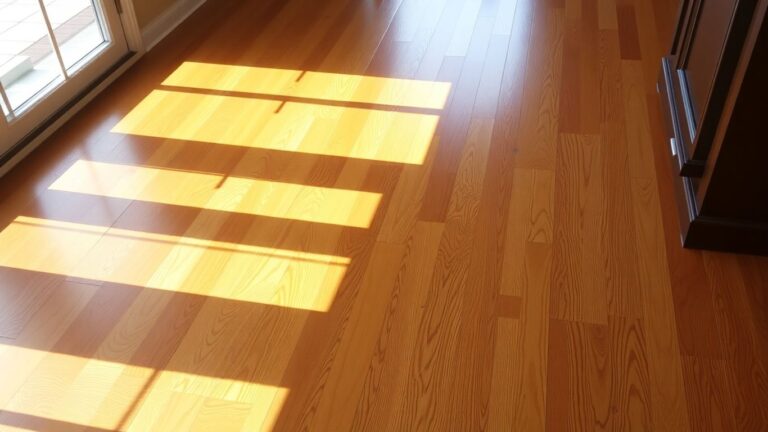
Sunlight across freshly lacquered wooden floorboards

Porch Boards, Gaps and Creaks: Wooden Floor Repairs Before the Finish Goes On

The few square metres just inside a Braunton back door work harder than any other part of the house. They take dripping kit, sandy feet, dog paws and the weight of everyone pausing to kick off shoes. Over a few years the boards there are often more cupped, more gappy and more scuffed than the rest of the floor, and they need putting right before any finish will last.

Gaps are the first issue. Wetting and drying makes boards swell and shrink more than usual, so joints near the door open wider than elsewhere. For hairline joints, a binding resin is mixed into the very dust the drum has just collected from those boards and knifed in, so the filler shares their colour. Wide ones are better closed with slim wedges of timber glued along one edge only, leaving the board free to move without cracking the repair. Our gap filling page compares the two.

Creaks usually come next. Boards that have swollen and shrunk repeatedly loosen around their nails, and the nails squeak as the board moves under each step. Driving screws through into the joist normally silences them, and the squeaky floorboard repair page explains how the cause is found. Where a board has softened, split along its length or rotted near a leaking door frame, it is lifted and replaced, as described under floorboard replacement; anything involving joists or broken tongues falls under wooden floor repairs.

Scratches are the last item. A dog that rushes in from the beach drags claws across the boards, and grit under a chair leg scores arcs on a kitchen floor. If the marks are only in the lacquer, a fresh coat can be enough; if they cut into the wood, they come out with sanding. Scratch and dent repair covers how to tell which you have. Getting these jobs done first means the new coating is laid on boards that no longer move, gape or squeak.

Sand in the Joints: Herringbone Blocks and Beach-House Stairs

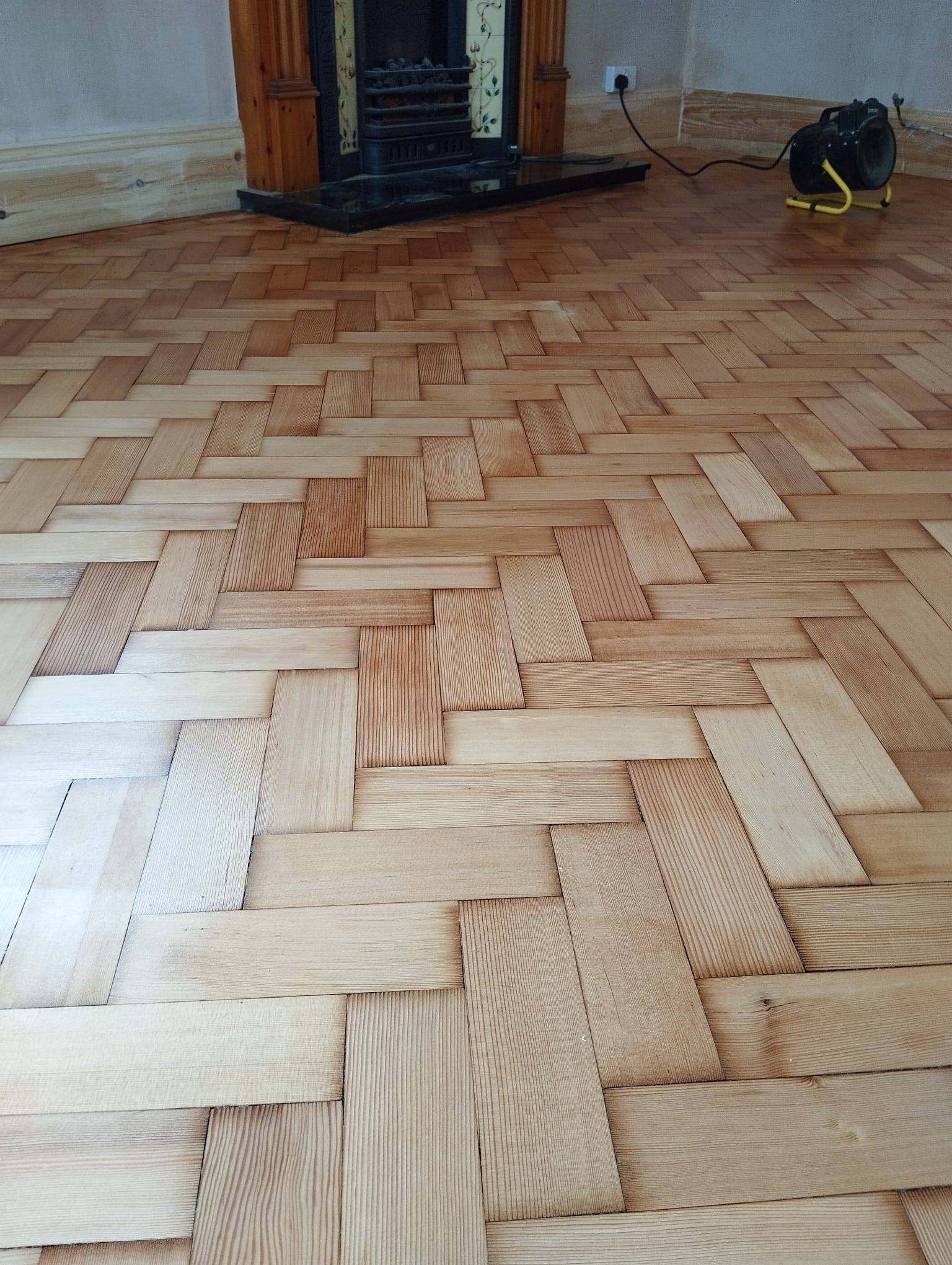
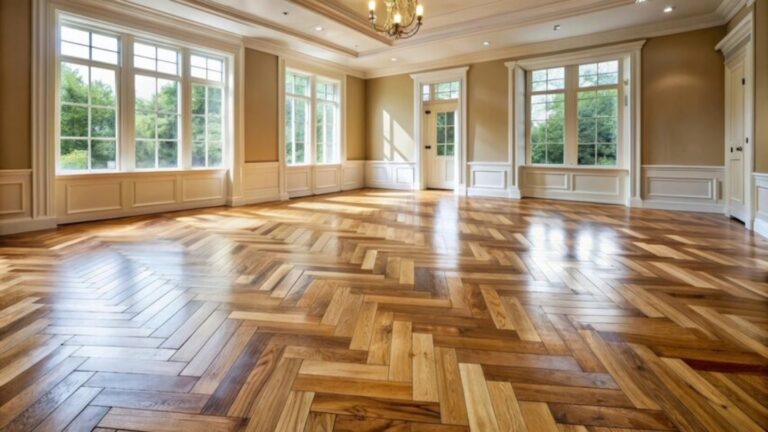
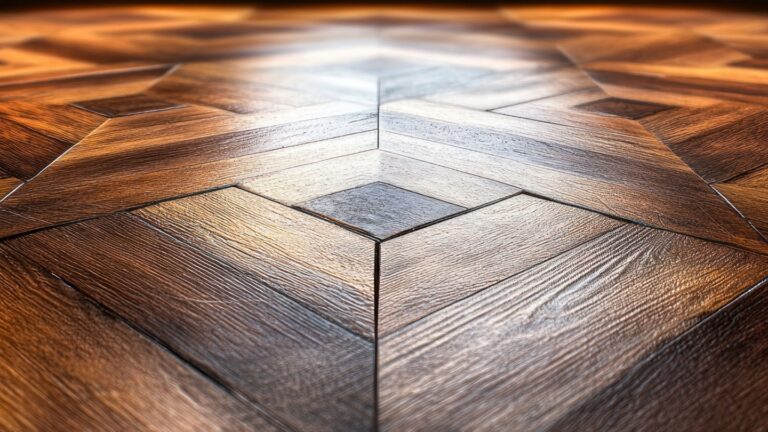
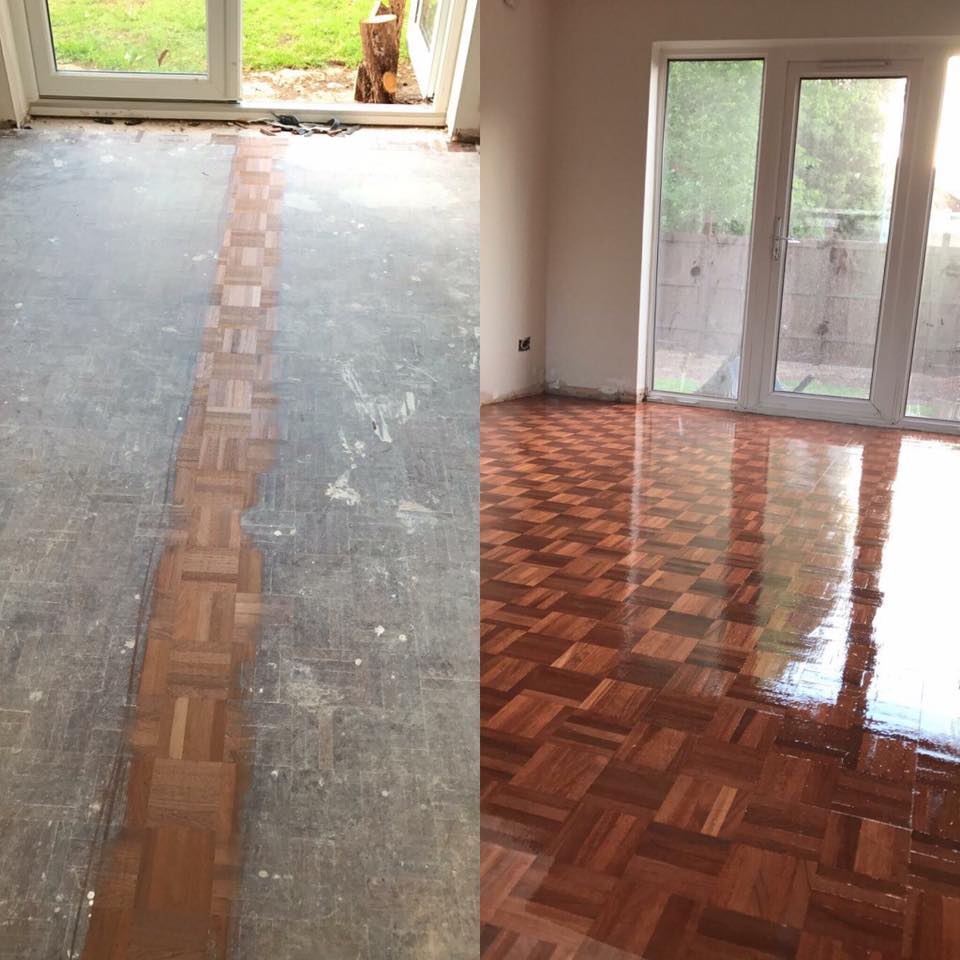
Parquet appears in Braunton in post-war houses and now and again in older ones, often as herringbone in a hallway or sitting room. Block floors have more joints per square metre than any board floor, and in a house near the beach each of those joints can hold a line of sand. Before anything else, the whole floor is vacuumed thoroughly, joint by joint, because a grain caught under a sanding pad will leave a curling scratch that shows clearly through the finish.

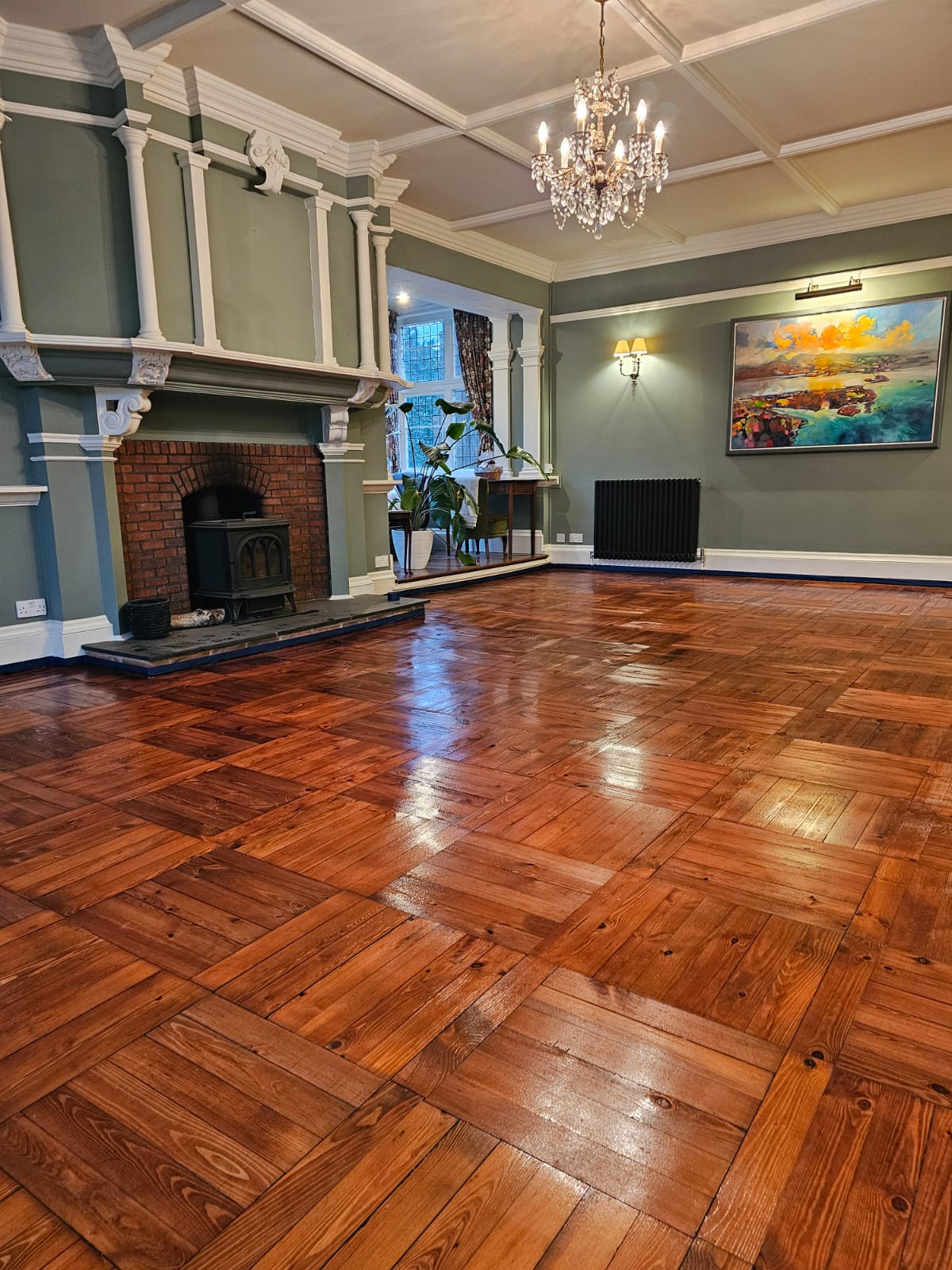
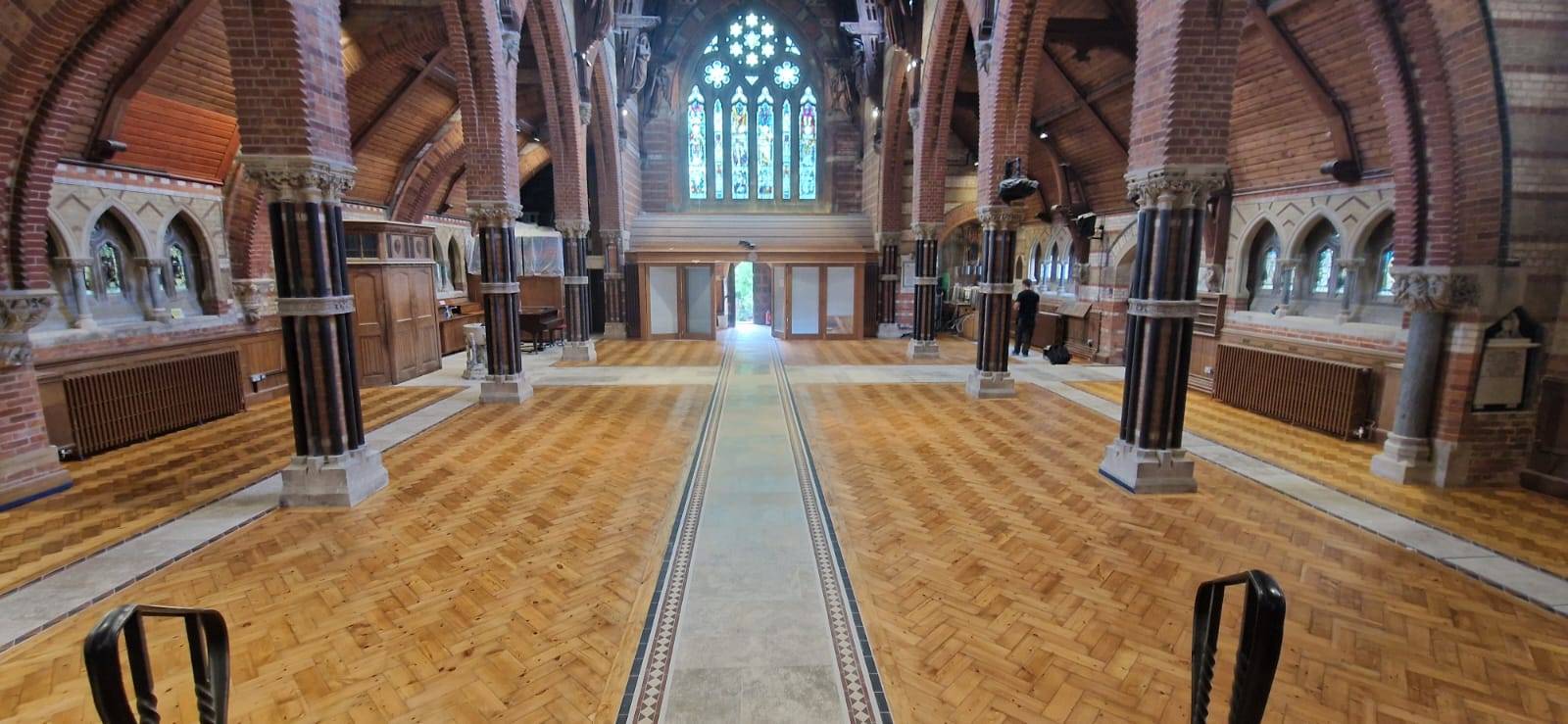
The next job is to find the loose blocks. Post-war parquet was usually stuck into black bitumen that, decades on, has turned dry and crumbly; a knuckle or a mallet run across the floor finds the blocks that have parted company with it. Each one is eased out, scraped clean underneath along with the patch of screed it came from, and glued back with a modern flooring adhesive. Where a block has vanished altogether, a replacement of the same wood and dimensions is cut to fill the hole. After that, parquet floor sanding proceeds diagonally in more than one direction so no block is sanded purely against its grain, and a planetary multi-disc sander does the final pass to clear swirl marks. Our parquet sanding page has the detail, and a completed example is in the Paignton parquet case study.

Stairs in a surf house collect sand from bare feet heading up to the shower, and the treads and nosings wear faster than in an ordinary home. Each step is sanded with a palm-sized machine, and a scraper deals with the crease at the back of the tread where sand and dust collect. Nosings are shaped by hand to keep their curve. Even in a house where the downstairs floors are oiled, a hard lacquer on the treads usually makes sense, because sand on a stair is concentrated on a very small area. Treads with painted risers is a popular combination that keeps the stairs easy to see. Stair sanding and refinishing explains the process.

Wood floor sanding company
Floor sanding taunton

Driftwood Tones, Grit Control and Arranging a Visit in Braunton

Many Braunton households want a paler, more relaxed look after sanding, closer to washed-up driftwood than to dark Victorian varnish. On oak that can be done with a white-pigmented oil, a pale stain or a water-based lacquer designed to keep the wood near its raw colour. Pine is harder to keep pale because most finishes warm it towards yellow, which is why a few sample squares go down in a hidden corner, each sealed with the real topcoat, before anyone commits to a colour. Staining a wood floor explains the choices, and for floors that only need their shine lifted there is wood floor polishing.

Keeping a coastal floor in good order is mostly about stopping sand at the door. A long coir mat outside and a washable mat inside, together with a soft-brush vacuum through the hall every couple of days, will do more for any finish than a cupboard full of products. Washing is simple: a damp, not dripping, mop and a gentle neutral cleaner made for timber. Steam is for the shower tiles, not the boards. An oiled floor wants its traffic lanes topped up with maintenance oil now and then, more often in summer. For a lacquered floor, the moment to act is when the sand tracks first lose their sheen: a light abrade and one fresh coat then saves a full sand later, as our buffing and recoating page describes. Kept like that, even a beach-house floor ought to see eight years or more before the drum comes back.

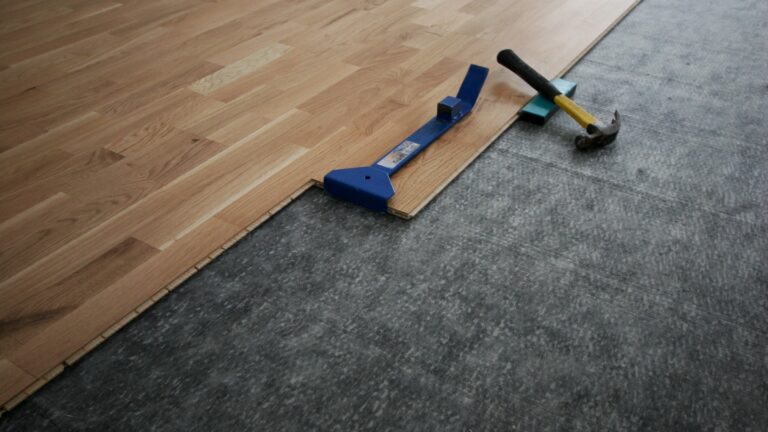
Some floors are beyond rescue, and a new garden room or surf-kit utility might have no wood floor at all. For those rooms we can lay a new solid or engineered floor ourselves, or drop off the material for whoever is building the extension, using ranges such as Bona and Junkers. See installing a new wood floor.

A pair of pictures sent to info@ryansrestoration.co.uk is the best first step: a wide view taken from the doorway, and another right down at floor level on the grey sand track or the blackened board under the wetsuit hooks. If the floor looks worth saving, we arrange a visit, free and usually around half an hour, to measure how much timber is left, check moisture and airbricks, and note earlier repairs. The quote then comes to you in writing, item by item, and the figure is fixed for that scope of work. If you would rather talk, 01823 674562 is answered eight till six through the week, Saturdays can be arranged, and our online form is there for written enquiries. For a sanded and sealed board floor elsewhere in the county, see our East Anstey case study, and if you also own property in town, floor sanding in Barnstaple may be useful.

Braunton Floor Sanding Questions

Both can work. Lacquer, especially a two-pack type, resists water and grit better, which suits a hall or kitchen that takes wet kit and sand daily. Oil looks more natural and worn areas can be refreshed on their own without sanding, but it needs regular top-ups. Plenty of Braunton homes use lacquer in the working areas and oil in the living rooms.

Yes. The grey track is bare timber that has weathered once the finish wore through. A full sand removes that grey layer from the whole room so the surface is even again, and a new finish seals it. On an oiled floor, smaller worn areas can often be cleaned and re-oiled without sanding at all.

It might. Oiled timber copes with brief splashes, but water left sitting for an hour or more can leave a pale or dark ring. Hanging wet kit on hooks and keeping a mat by the door avoids most trouble. Should a ring appear, the oiled area around it can usually be washed and re-oiled without disturbing the rest of the room.

Up to a point. Pine has a natural yellow cast that most finishes deepen. White-tinted oils, pale stains and some water-based lacquers can soften that, but results vary between floors. So test squares are laid on a hidden part of your floor and sealed with the chosen topcoat, letting you judge the true shade in your own light.

Allow one to three days for most Braunton homes. A single lacquered room is quick; a whole ground floor with porch repairs and an oil finish that needs longer between coats is at the other end. Socks are fine on the boards a day after the last coat, the sofa can come home a couple of days after that, and rugs should stay rolled for a fortnight.

Yes. Cafés along the main street generally book in the quiet months, and even then the sanding can happen after hours or on a closed day, with coatings that cure fast enough for the next morning. Bigger floors can be worked in sections over a few nights so part of the café stays open. Booking early means you can choose a week that suits the business.

An oiled floor usually benefits from fresh oil in its busiest areas once or twice a year. A lacquered floor should be recoated as soon as the paths start to dull, before bare wood shows. Stick to that and keep generous mats at every door, and a family floor in Braunton should last around eight to ten years between sandings.

Yes. Those villages and the hamlets around Braunton are all within the North Devon area we work across regularly, so they are treated the same way as the village itself. If you are not sure whether your address is covered, mention the postcode when you send your photographs.

Engineered boards can be sanded if there is enough hardwood left in the top layer, which is measured on the survey. Laminate is a different story: the timber look is printed on paper beneath a clear plastic skin, so there is nothing to sand. Where laminate is badly scratched, replacing it with real wood that can be sanded in future is often the better long-term answer.