45 years’ experience  ·  Rated 4.9 on Google  ·  Family-run, from our workshop near Wellington

45 years’ experience · Rated 4.9 on Google · Family-run

Floor Sanding and Wood Floor Restoration in Callington

Wide farmhouse boards, town-centre pine and busy village halls around Callington, sanded flat, repaired and finished with hard wax oil or lacquer.

QUICK QUOTATION

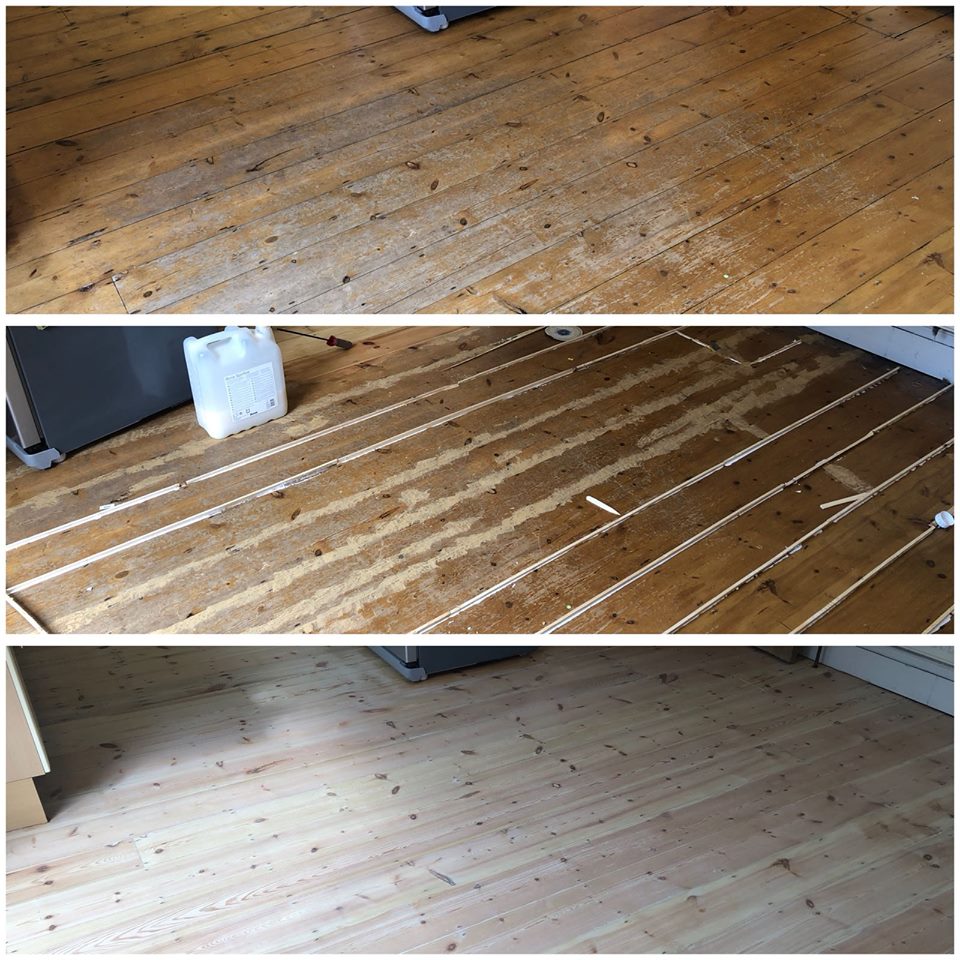
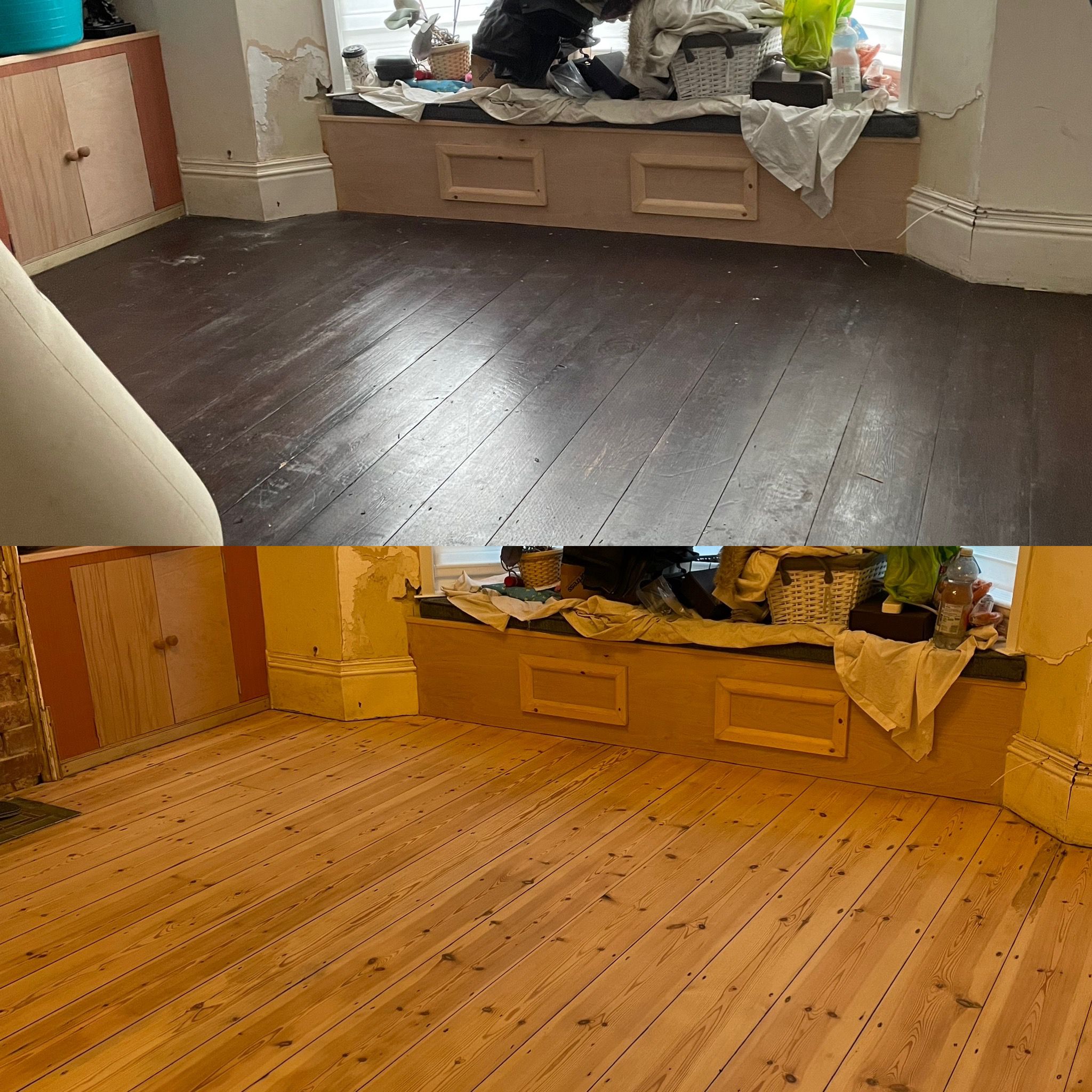
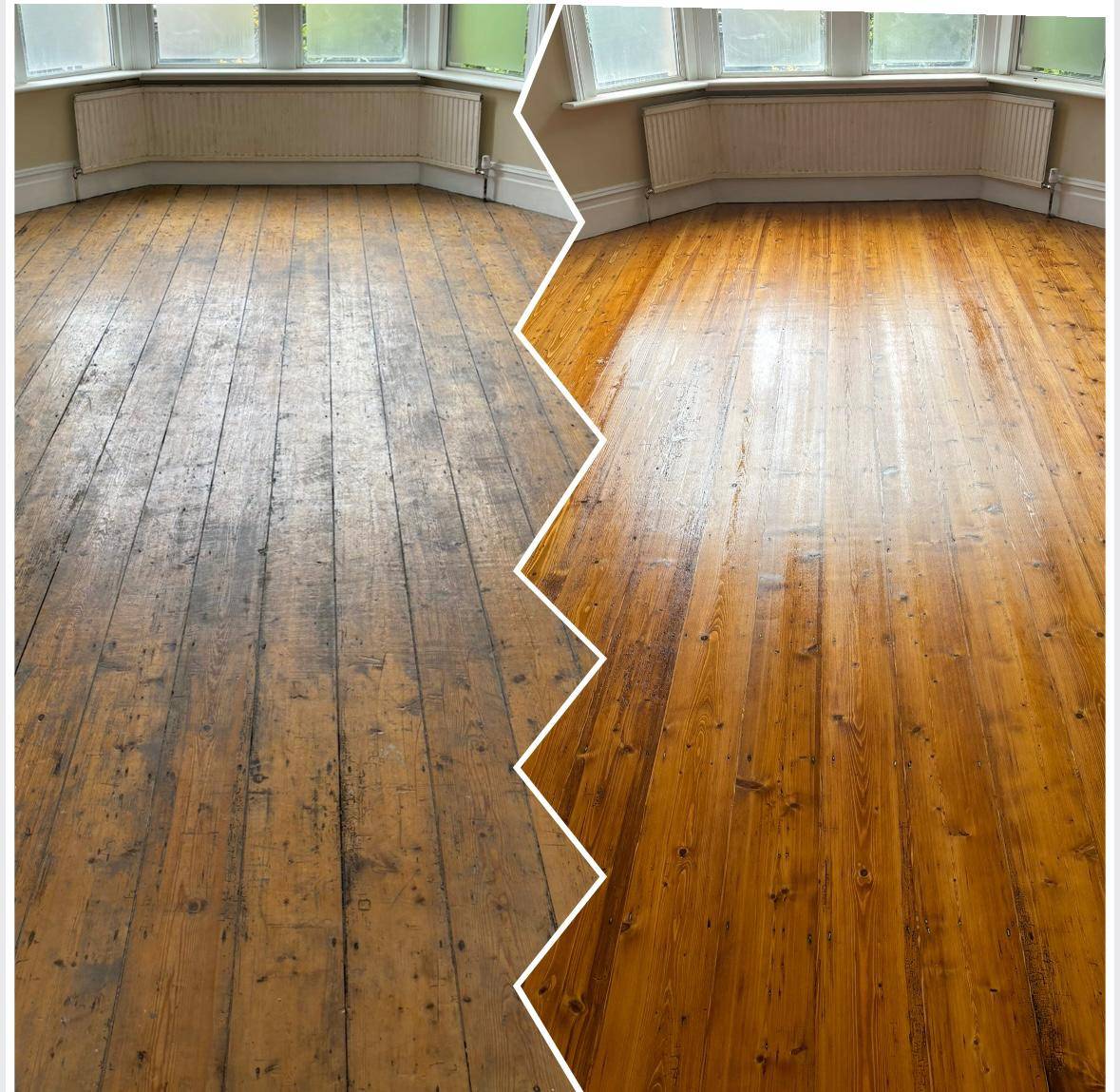
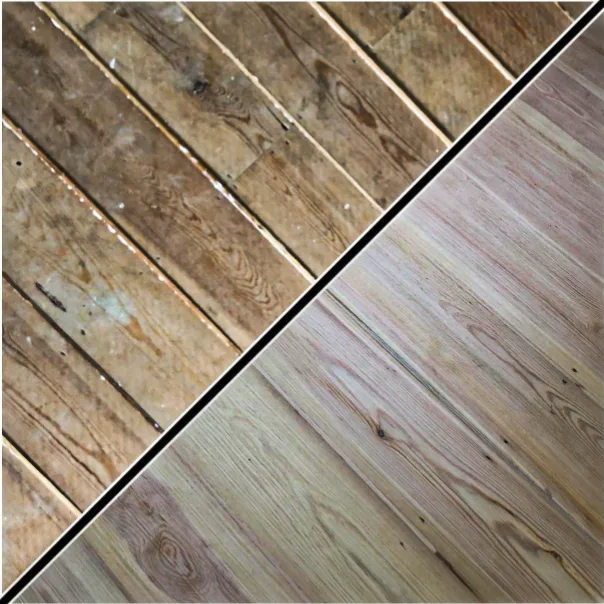
Floor sanding before and after

Floor Sanding in Callington: Farmhouse Boards and Town-Centre Homes

Around Callington a fair number of enquiries come from beyond the town itself: stone farmhouses, barns turned into homes and cottages along the lanes out towards Kit Hill and the Tamar. That matters, because farmhouse boards behave differently from the neat pine in a terraced street. Some are ten or eleven inches across, nailed to joists that have sagged a little with each generation, so the surface undulates like a ploughed field seen from the hill. Here and there a board stands a few millimetres proud of its neighbour.

Run a big sanding machine carelessly over that kind of surface and it skims the high spots down to almost nothing while barely touching the hollows. So sanding an old wooden floor out here begins with a torch held low along the boards and a slow walk round the room. We are looking for thin boards, nail heads that have worked their way up, and the modern screws someone drove in to cure a creak, any of which would rip an abrasive sheet in seconds. Every fixing is punched or set below the surface before a machine is switched on. On a badly cupped floor the first coarse passes can run at a slight angle to the boards, taking the ridges down evenly, before the finer grits follow the grain.

The houses nearer the middle of town are usually a gentler job: narrower pine boards, often hidden under carpet for decades, with gripper strip and staples round the edges. Those floors tend to be flatter, and the work is more about clearing up old alterations than levelling.

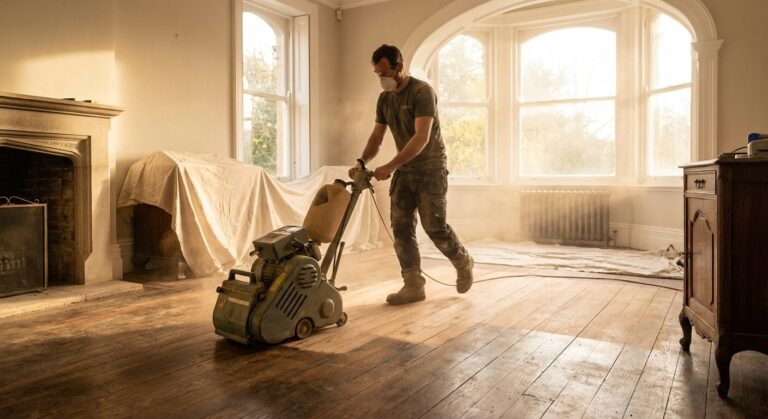
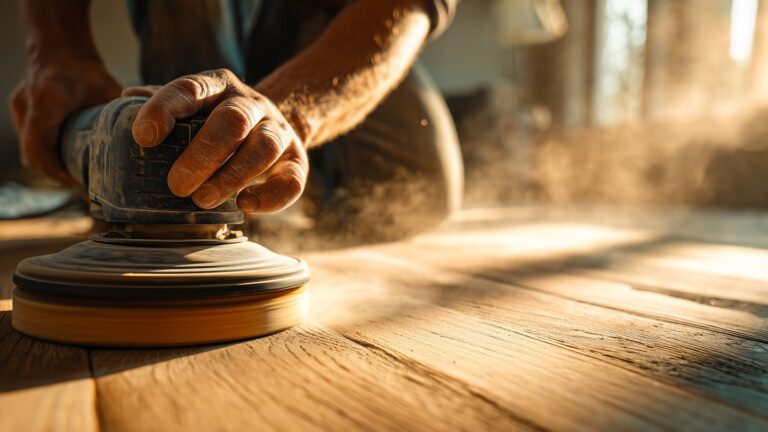
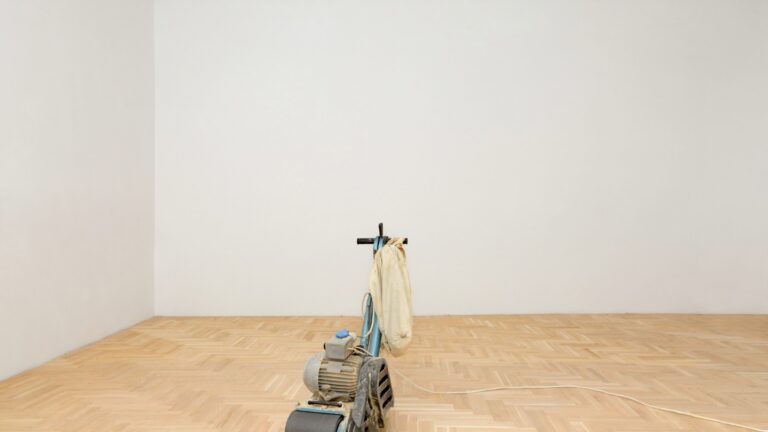
Floor sanding in Callington follows the same underlying logic either way. Start with the coarsest grit that will remove the old coating and flatten the boards, then remove its scratches with progressively finer grits until the surface is ready to take a finish evenly. Edges and corners are done with a smaller machine and finished by hand. Dust is pulled off the drum into a sealed collection bag as the machine runs; the Welsh dresser should still have its plates taken down, because a little always escapes. The page on dust-free floor sanding is candid about what extraction can and cannot catch.
Wide Boards, Cupping and Wood Floor Restoration Around Callington

Cupping is the fault we meet most often in farmhouses around Callington. A cupped board has edges that sit higher than its middle, and that shape almost always means the underside is wetter than the top. Farmhouses are prone to it: rubble or bare earth under the joists, a yard surface built up over the years until the vents in the wall are half buried, and a kitchen that steams every morning. Sanding a cupped board flat while it is still damp is a trap. Once the moisture evens out, the board can crown the other way, so the centre ends up higher than the edges and the floor looks wavy again under its new finish.

That is why a moisture meter comes out at the free survey. Readings are taken across the room and near the outside walls, the thickness of the boards is checked wherever an edge can be seen, and we look at how the void is ventilated. High numbers mean waiting. Dig the yard back from the vents, let air through the void, give a floor that has just come out from under lino a month to breathe, then sand it when the meter agrees it has steadied.

When the floor is ready, restoring a wooden floor of this age is mostly about keeping as much of the original timber as possible. Wide boards are thinner than they look after generations of wear and the odd earlier sanding, so we take off only what the floor actually needs. A board split along its length can usually be glued and kept. One that has gone soft from rot, or is too thin to sand again, is better replaced, and floorboard replacement from our reclaimed timber gives the best chance of finding something the right width with the depth of colour that only age provides. Old imperial sizes rarely line up with modern stock, which is exactly why reclaimed boards are worth hoarding.

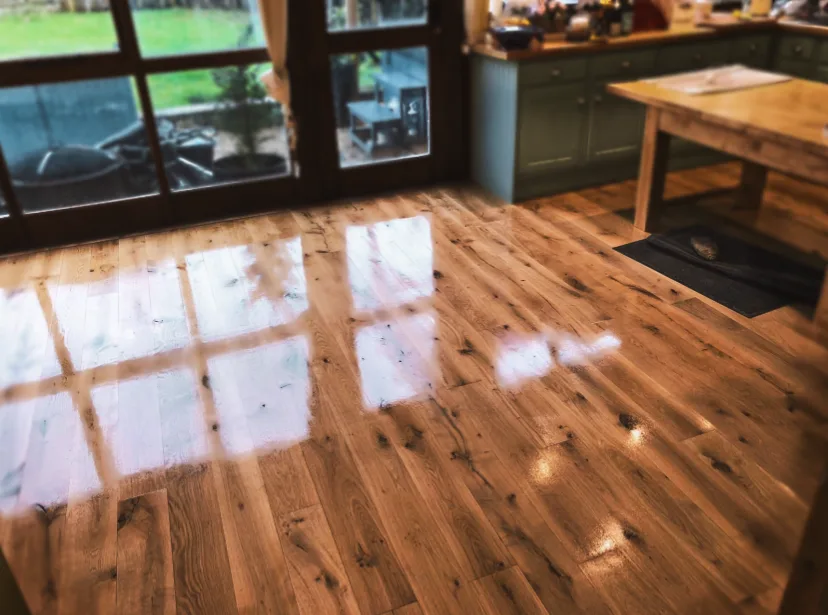
Most farmhouse floors are pine or deal, so pine floor restoration is what many of these houses need. A few of the older and grander ones have oak, which sands to a tighter surface and takes oil beautifully, and oak floor restoration has its own page. Wood floor restoration in Callington is rarely about making an old floor look new. It is about making it sound, reasonably flat and fit for another long stretch of family life.

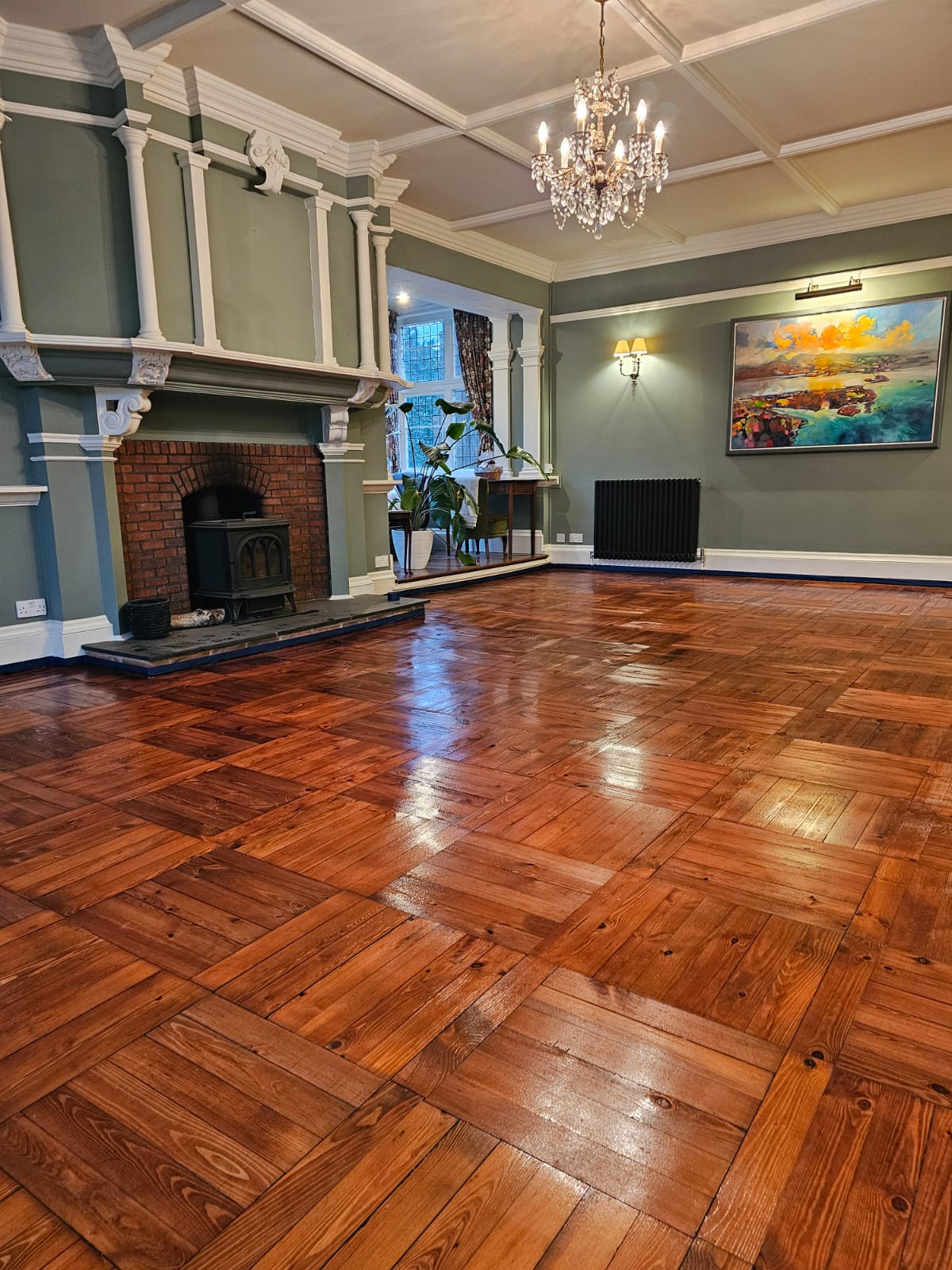
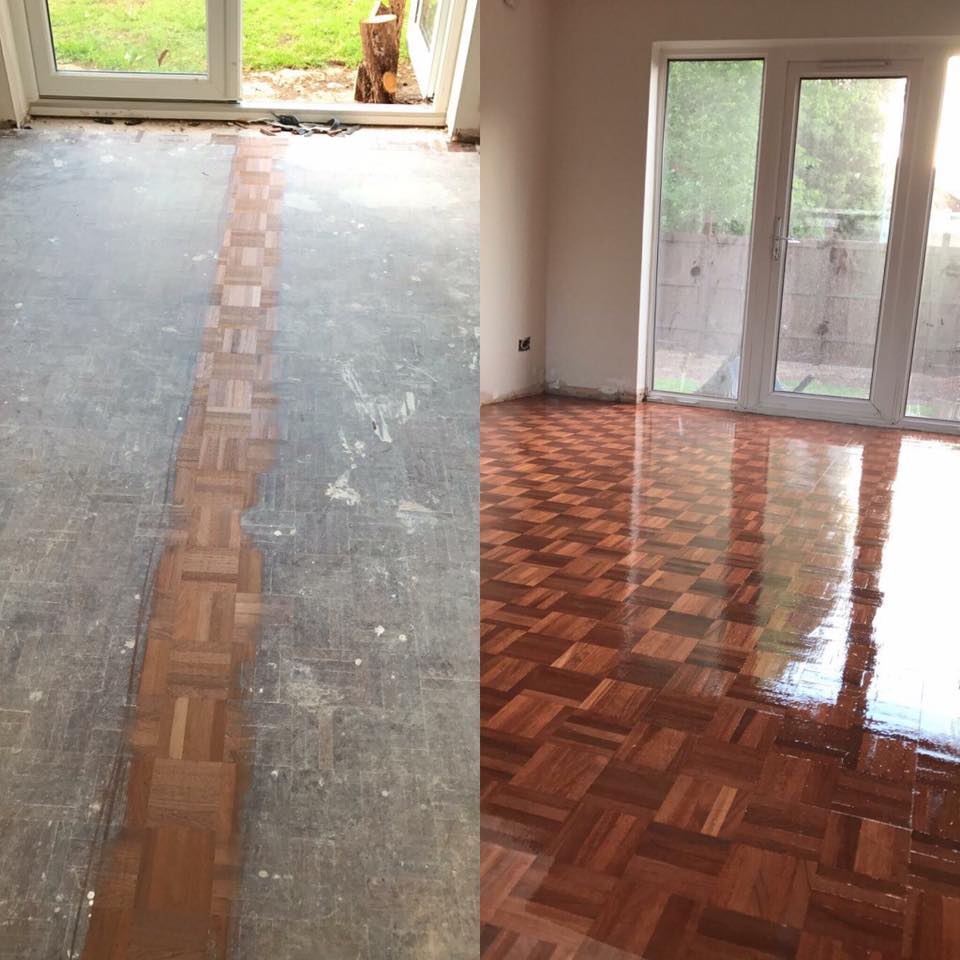
parquet wooden floor sanding
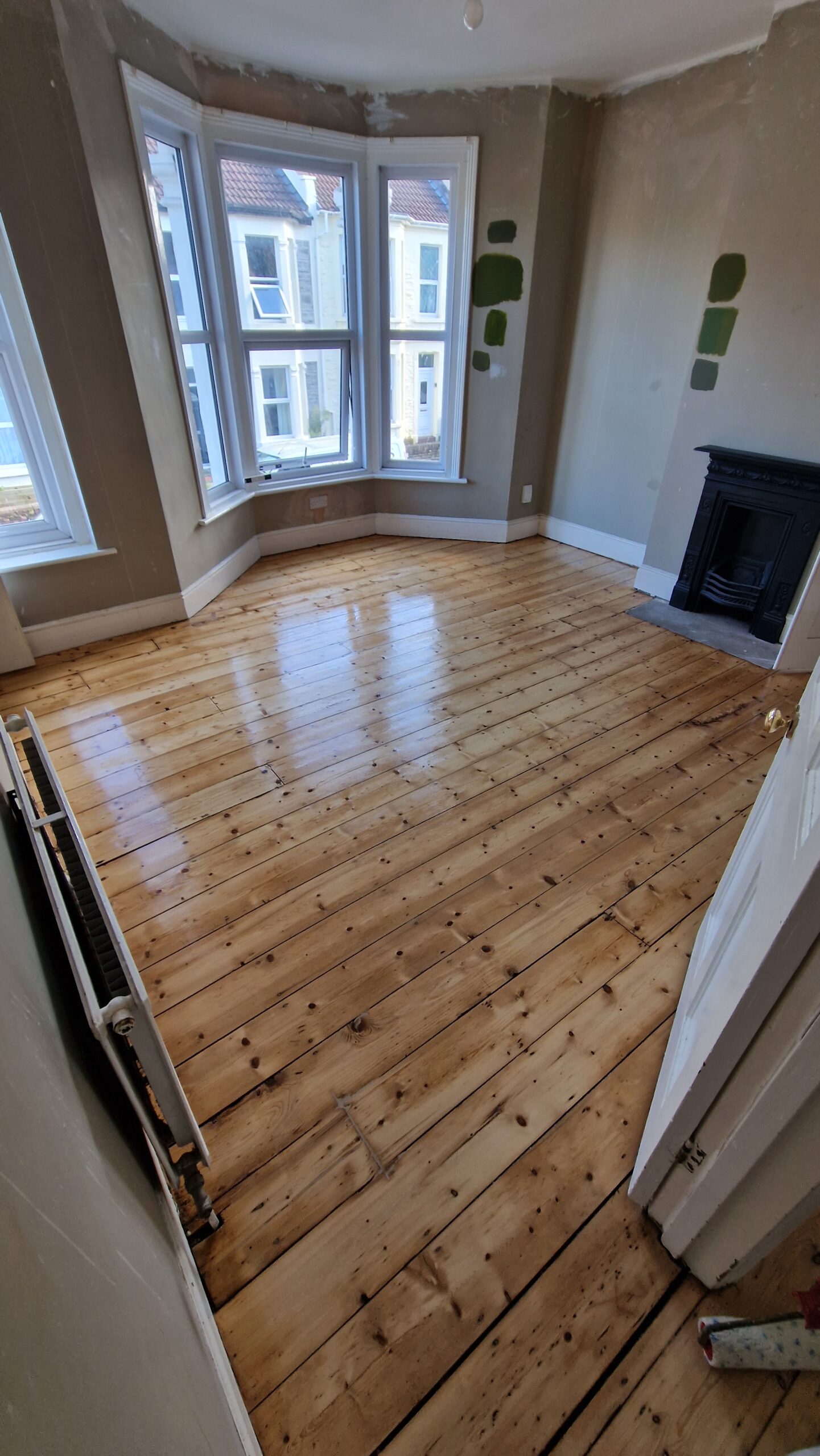
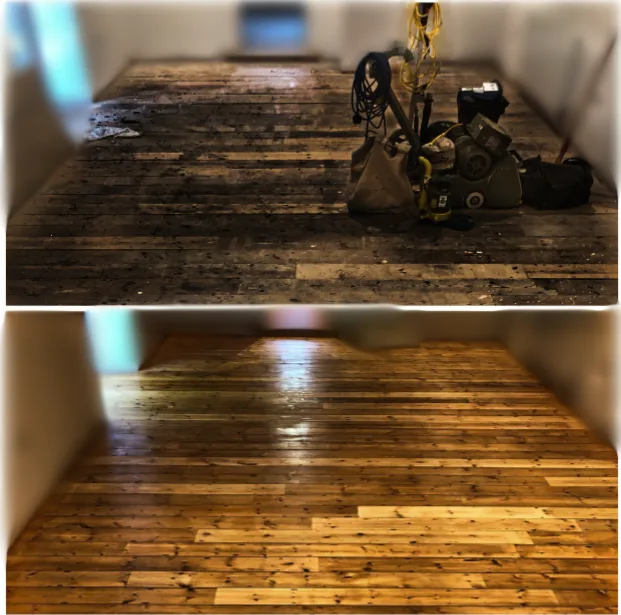
wooden floor sanding

Hard Wax Oil on a Floor That Meets the Farmyard

Lacquer is an excellent finish, but it is not always the right one for a floor that sees muddy boots, a couple of collies and a back door that never quite shuts. Lacquer forms a clear film on top of the wood. When grit finally wears through that film in a walkway, the bare patch shows, and blending a repair usually means abrading and recoating a much wider area so the sheen matches.

Hard wax oil works in another way. The oils in it penetrate the upper fibres of the boards and set there, and the wax content gives a soft, satin face, so the protection lives inside the timber instead of sitting on it like varnish on a gate. Scuffs show less, because there is no film to turn white when it is scratched. When the strip by the yard door goes dull, you clean that strip, rub it lightly with a fine pad and oil it again; the sitting end of the kitchen is left alone. In a farmhouse kitchen that local repair is often the deciding factor.

Applying it is simple but punishes shortcuts. After the final sanding pass the floor is vacuumed thoroughly and checked by hand, because any dust left behind is sealed in by the first coat. The oil goes on thinly and is worked into the grain, and the surplus is taken off so it cannot stay tacky. A second thin coat follows once the first has dried. Two thin coats beat one heavy one; a thick layer skins over and stays soft underneath for days.

It has limits. Hard wax oil needs topping up more often than lacquer, typically when the walkways begin to look dry and pale, and it will not tolerate standing water from a leaking washing machine for long. In a narrow hallway that takes every boot in the house, a two-component lacquer may still be the better call. Our guide to oiling wooden floors compares the oil options, and a traditional wax finish remains an option for a house where the floors were always waxed. For a darker or warmer tone, stain is tried first on your own boards, because farmhouse pine can soak up colour unevenly, as the page on staining wooden floors explains. For clear coatings, floor sealing with lacquer covers water-based, oil-based and two-component products.

Commercial Floor Sanding in Callington and the Parishes Around It

The commercial floors in and around Callington are mostly modest in size and hard-working: shops on the main streets, pubs and cafés, offices on upper floors, and village and community halls across the surrounding parishes. Commercial floor sanding in Callington is fitted round opening hours, so we might start after a pub has called last orders, take the one weekday a shop shuts, or work through a fortnight of school holiday. Dates are fixed well ahead, and finishes that cure quickly are used whenever the floor has to carry people again within hours.

A shop floor wears out in a predictable pattern. Look at any shop floor and the lacquer has vanished in two places first: the mat-shaped zone by the entrance and the strip where people queue to pay. Spot it while there is still lacquer on the boards and a scuffing pass plus one new coat will see the shop through, no stripping required. Left until the timber is grey and bare, it needs the full process. The page on shop floor sanding covers both routes, and the same thinking applies to a café or a bar counter.

Pubs and restaurants need a finish that shrugs off spilled drinks, dragged chairs and daily mopping, which normally points to a two-component lacquer, a far harder product than the single-pack lacquers used in most homes. The work can start after the last customers leave; floor sanding for restaurants and pubs explains how an overnight job is usually organised.

Village halls are a category of their own. One floor may host a toddler group in the morning, a keep-fit class at lunchtime and a dance in the evening, then be swept by volunteers. It needs enough grip for dancing without being sticky, and a finish that tolerates basic cleaning. Sanding a dance floor and gym and fitness floor sanding deal with those uses.

Hall trustees who meet once a month can have our method statement, insurance certificate and a couple of references in the pack for that meeting. Our main commercial floor sanding page has more detail. Trade floors wear roughly twice as fast as domestic ones, so think of a full sand for a busy bar every four or five years, with a well-timed recoat in between stretching that out.

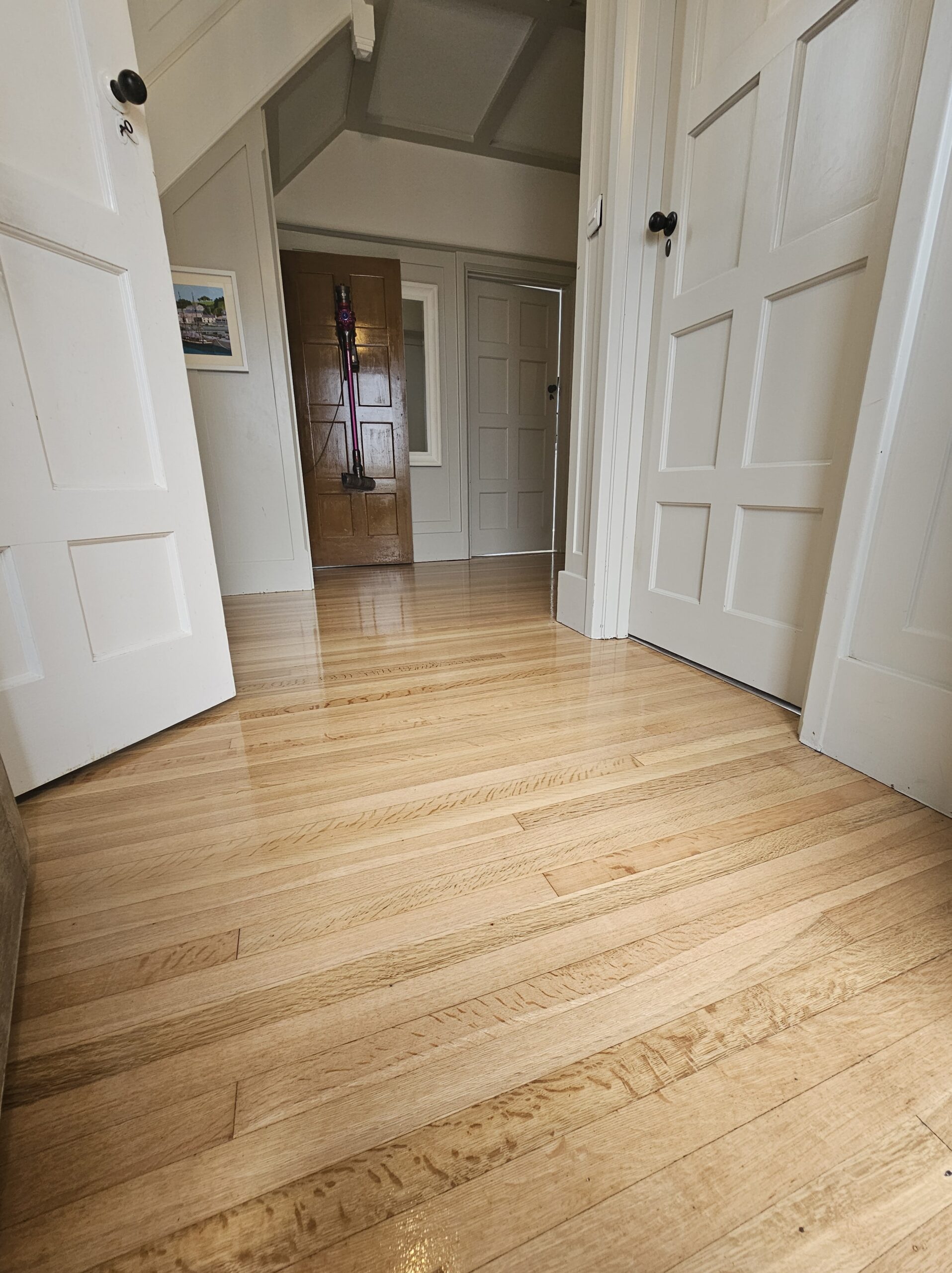
flooring sanding company
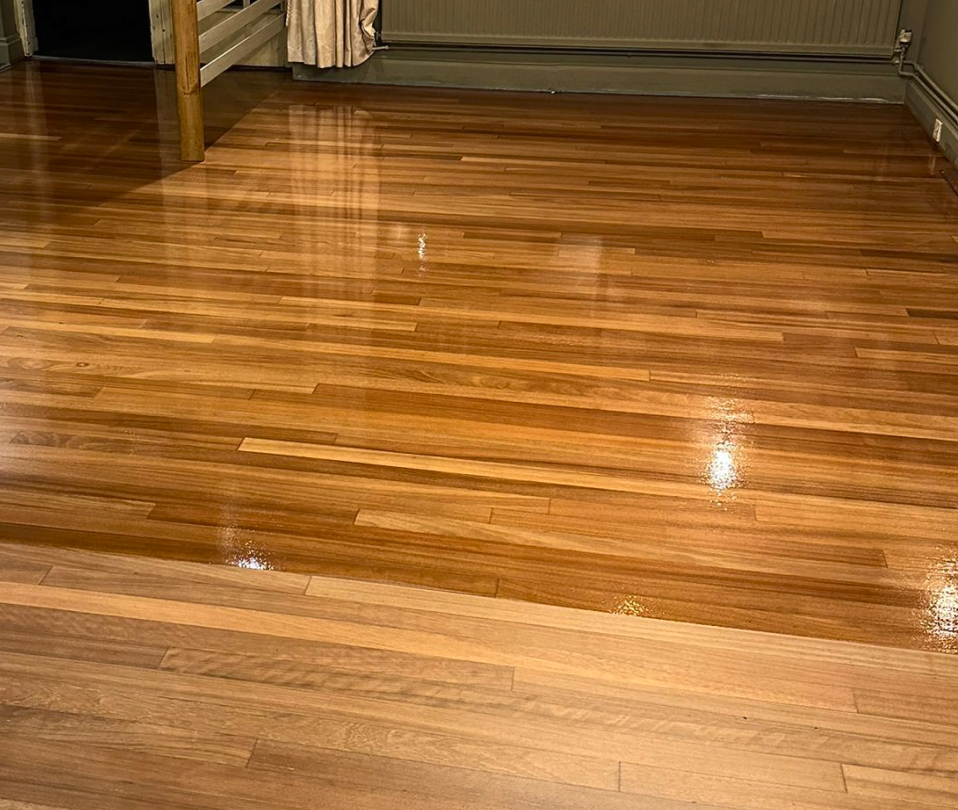
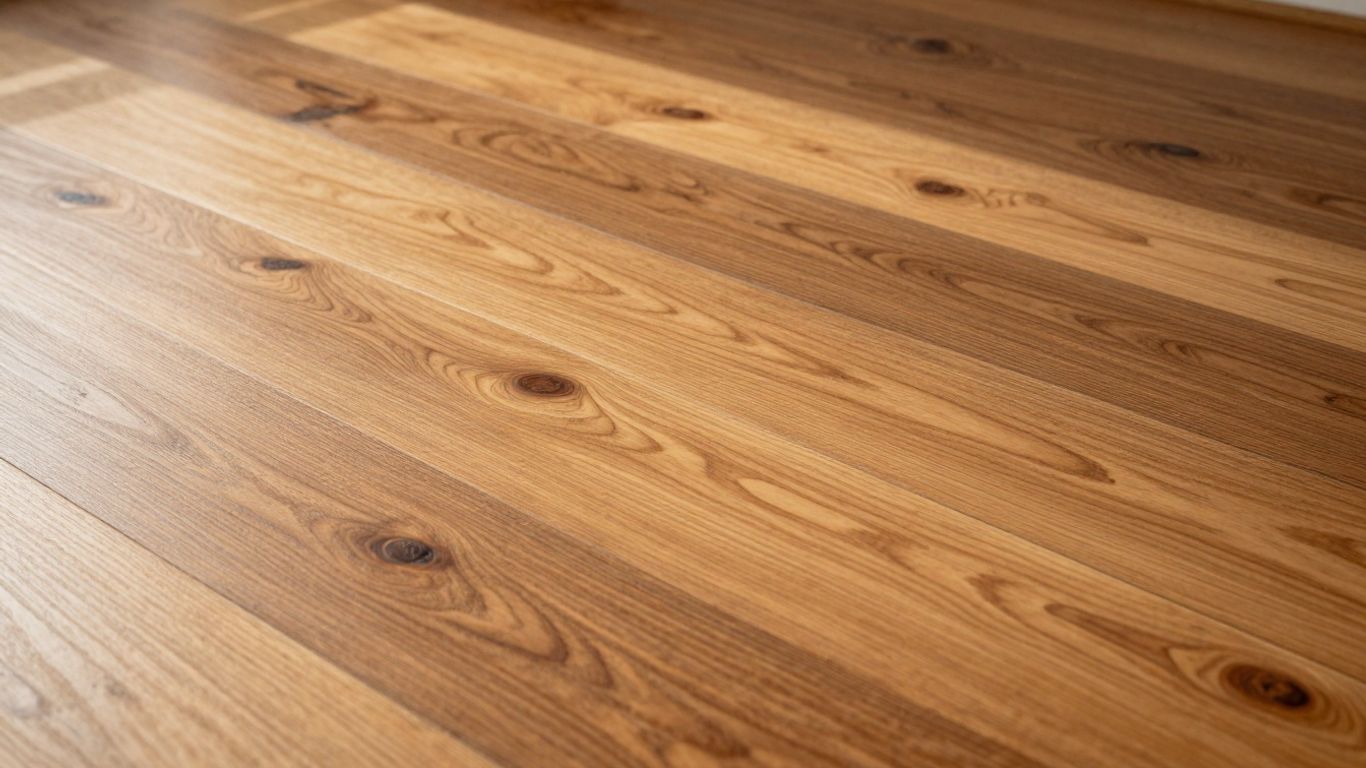
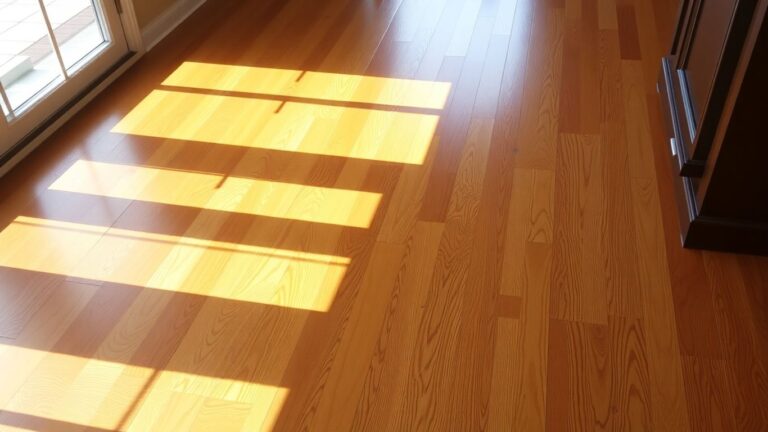
Sunlight across freshly lacquered wooden floorboards

Split Boards, Open Joints and Creaks in Older Callington Homes

Almost every old floor needs some mending before the sander goes down, and in Callington houses the list is usually a familiar one. Boards have been cut for central heating and cables and dropped back on without proper support. A gap has opened along the wall where skirting was renewed. Something heavy has dented the boards in front of the fireplace. And there is always one board on the landing that creaks loudly whenever anyone gets up in the night.

Creaks are movement made audible: a board rubbing on a nail, a loose nail rubbing in its hole, or a board flexing over a joist that has dropped a fraction. The cure depends on which it is. Sometimes a single screw driven into the joist settles it. Sometimes the board has to come up and the joist needs packing or a noggin. The page on curing squeaky floorboards goes into the detail. Boards cut for pipes are refixed on proper bearers so they stop bouncing, or swapped for a reclaimed board if the cut ends are split.

Gaps between boards call for judgement rather than a rule. Pine over a heated room shrinks in winter and swells again in summer, so a gap packed tight in August can crack its filler by January. A gap that stays much the same width all year and lets a draught up from the void is a good candidate for a pine sliver, tapered, glued along one face only and trimmed level, so it travels with one board instead of being torn between two. Fine cracks are better closed with a resin filler coloured by sanding dust collected from that very room. Our page on gap filling sets out the choice. Scratches and gouges mostly disappear in the sanding; where one runs deeper than the board can safely give up, a local repair keeps the original timber in place, as described under repairing scratched wood floors.

All of this sits under wooden floor repairs, and it is done before sanding begins so the mended areas are sanded and finished together with the rest of the room. A repair that has been through the same grits and the same coats as its neighbours is far harder to pick out than one patched in afterwards.

Block Floors in Bungalows and the Back Stairs of Old Farmhouses

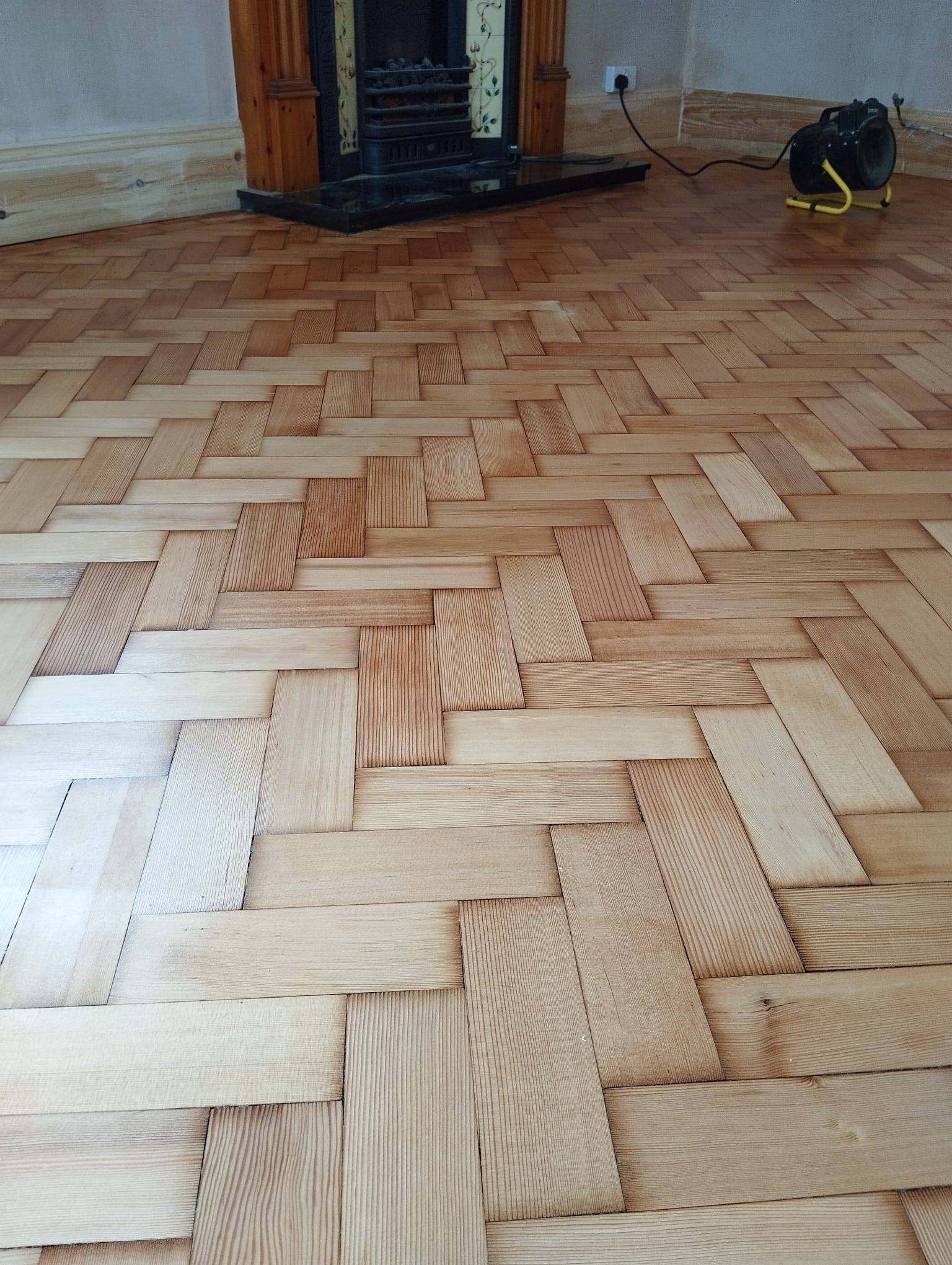
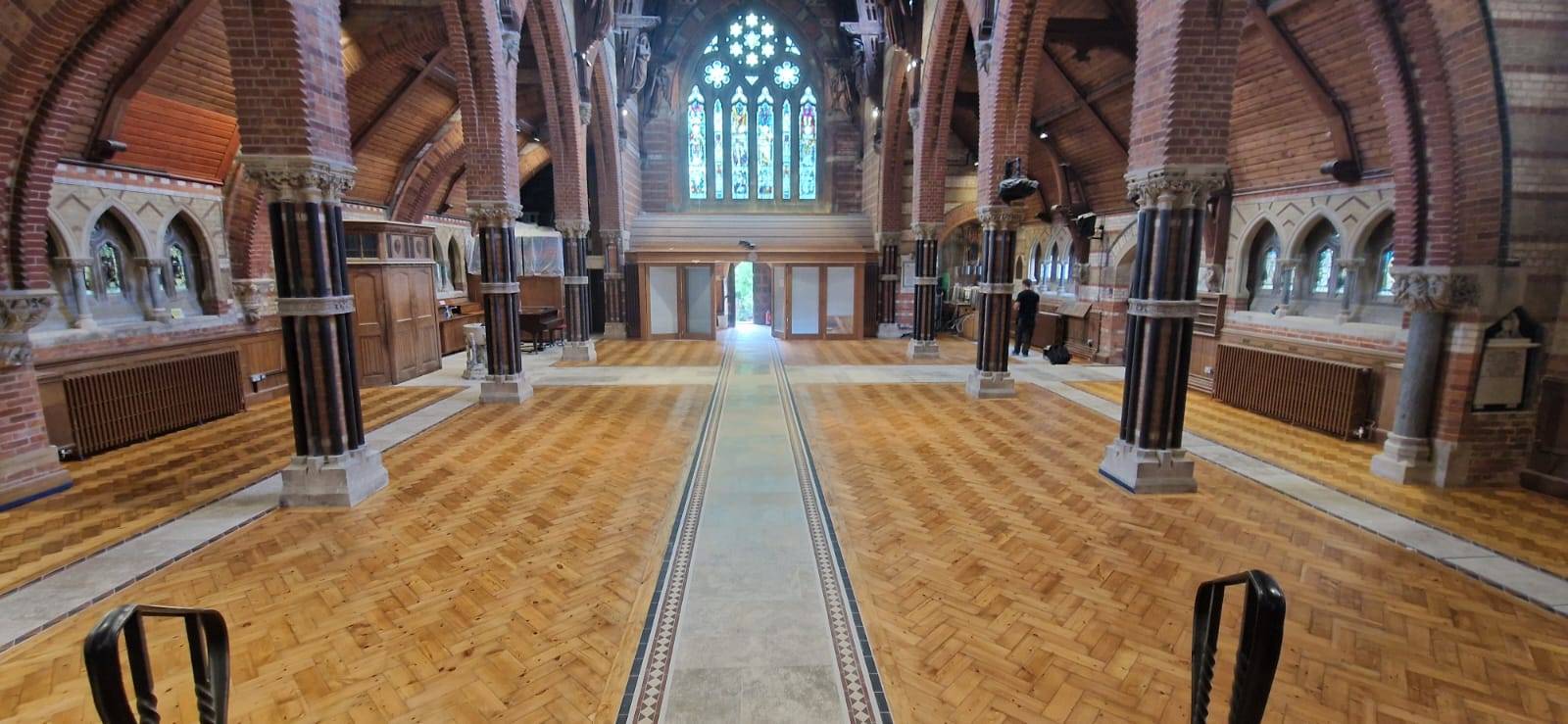
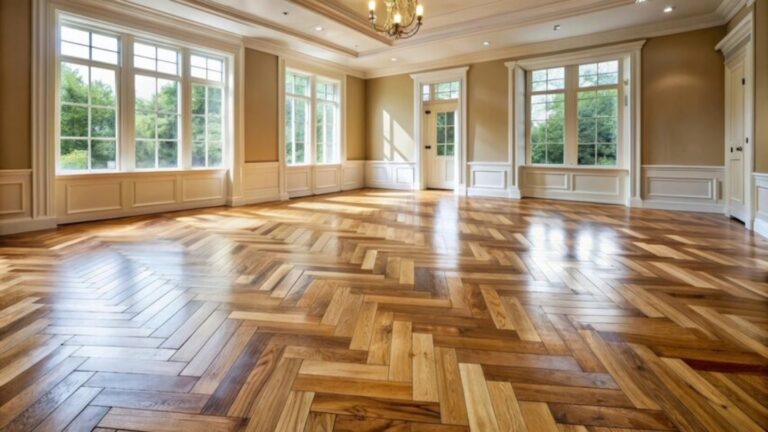
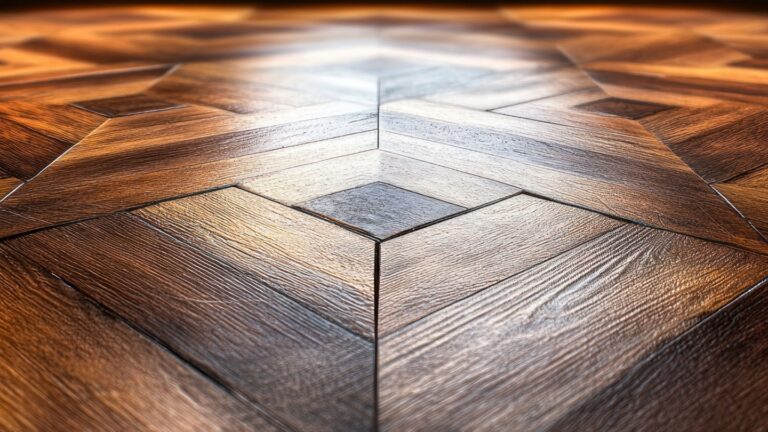
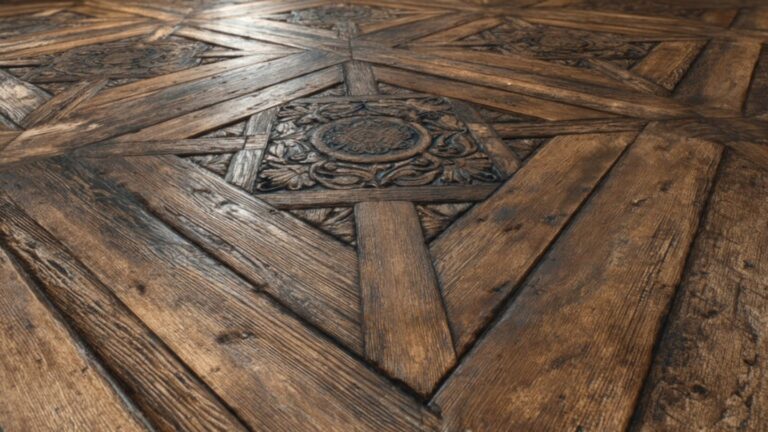
Parquet turns up around Callington more often than people expect. It is usually under carpet in a bungalow or a mid-century house on the edge of town, occasionally in a hall or a chapel building. The usual patterns are herringbone and basket weave, stuck to the screed with black bitumen, and no two of these floors age in quite the same way. Some floors are tight and solid. Others rattle underfoot because the adhesive has given up, often near a back door, a radiator or anywhere water has once crept in.

We tap across the whole floor listening for hollow blocks. Those that sound dead are lifted, scraped clean on both faces, and stuck down again on new adhesive, and only then does sanding begin. Missing blocks are made up from reclaimed stock of the same timber and dimensions. Because the grain runs in two directions across the pattern, a sander is always cutting across the grain of half the blocks, so the finer grits and the final hand work carry more of the load than on a boarded floor. The parquet floor sanding page explains the process, including why bitumen has to be watched carefully, since a hot abrasive can smear it across the face of the wood. Herringbone parquet that has spent forty years under carpet often comes back with a mellow colour new blocks take years to match.

Farmhouse staircases bring their own puzzle. Many houses have a broad main stair and a steep, narrow back stair up from the kitchen, and the back stair’s treads are frequently dished in the middle by two centuries of feet. A stair is a hand job. Stair sanding means detail sanders, a scraper and paper on a block, working tread by tread, and the bullnosed front of every step is followed by eye and fingertip so it keeps its curve. A deeply dished tread can be eased but not made level without going too thin, and on a working back stair that softened profile is often part of its character.

Painted risers and strings can be kept painted while the treads are cleaned back and given clear lacquer or oil. It is a practical, good-looking compromise on many farmhouse stairs, and it avoids sanding through layers of old paint of unknown age.

Wood floor sanding company
Floor sanding taunton

Refreshing the Oil, Fitting New Boards and Getting a Callington Quotation

A well-finished floor asks for less than most people expect. Grit is what wears a finish, so sweep or vacuum often and lay a proper mat inside every outside door, above all the one the dogs and wellies come through. For washing, a damp mop and a cleaner meant for oiled or lacquered wood is enough; keep the steam mop for the tiles, since heat and harsh detergent pull oil out of the grain and turn lacquer milky. Felt pads under chair and table legs prevent a great many scratches.

An oiled kitchen floor in a farmhouse may want a fresh thin coat once or twice a year, whenever the walkways start to look thirsty. Lacquer is different: once every few years, with the film thin but still intact, it can be keyed and given one more coat, and that small job keeps the sanding machines away for years. Floor buffing and recoating explains how that is done, and our page on wood floor polish covers maintenance products that suit oiled and lacquered surfaces.

Walk on fresh lacquer in socks from roughly the next day. The farmhouse table and dresser are heavy, so hold them back for two to three days while the coating firms up. Leave rugs rolled up for a week, because a fresh finish covered too soon cures more slowly.

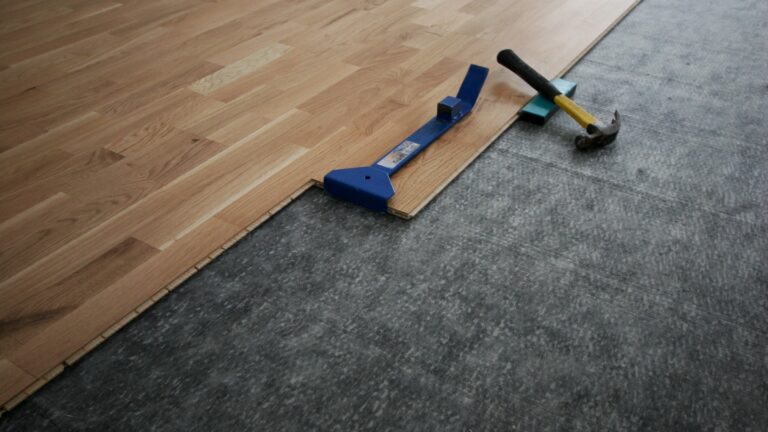
Barn conversions and new extensions sometimes need timber laid from nothing. For a barn, we can lay the boards ourselves or hand them over to the builder doing the conversion, choosing from makers such as Junkers and Bona. Fitting work of that kind is covered under new wooden floor installation.

Begin with two photographs to info@ryansrestoration.co.uk, one taken from the doorway to show the whole room and the other close to the worst part of the floor. Pictures of a cupped board or a dished tread often tell us enough for some first advice. From there we book a free visit of roughly thirty minutes, meter in hand, and send an itemised quotation in writing, which stays as written unless the scope of the job is altered. We are in and around Callington regularly. Ours is a family firm, with a workshop at Higher Poole outside Wellington, Somerset, and timber floors have been the family trade since the 1980s. If milking and feeding fill the week, a Saturday visit can be arranged; otherwise phone the office on 01823 674562 Monday to Friday or fill in our enquiry form. More is said about floor sanding across Cornwall on the county page, and our neighbouring town page covers floor sanding in Launceston.

Callington Floor Sanding Questions

Usually, but only once the cause of the cupping has been dealt with. If boards are cupped because the void below is damp, sanding them flat now can leave them crowned when they dry out. The meter at the survey settles whether it is dry enough to commit. If it has, careful sanding at an angle and then along the grain brings it back.

It depends on the traffic. A farmhouse kitchen with a back door into the yard might need a thin top-up coat once or twice a year in the walkways, while a sitting room may go several years. The advantage is that a worn patch can be refreshed on its own, without sanding the whole room again.

Very often, yes. We keep reclaimed timber, including older widths and thicknesses that modern suppliers no longer produce, so a damaged farmhouse board can usually be replaced with one of similar age and character. Sanding it alongside the original boards and coating everything together is what makes the new piece hard to spot.

Yes. Hall floors are normally planned around the bookings calendar, using quiet days, a run of cancelled sessions or a few days in a holiday period. Quick-drying coatings mean the hall is usable again soon after we pack up. Committees can see our method statement, insurance and references at the planning stage.

Both work. Oil gives a softer, more natural look, disguises scuffs and lets you mend a worn patch on its own, though it wants regular topping up and will mark if water sits on it. A two-component lacquer is harder and more water-resistant, but worn areas are harder to blend. Households with dogs and a yard door often lean towards oil; busy family kitchens with little mud sometimes prefer lacquer.

Much less than people fear. Each sander is connected to sealed extraction, which catches most dust at the point it leaves the wood. Expect a faint film on nearby surfaces at most; moving china off open shelving and shutting doors to other rooms keeps even that away.

The answer lies in how much hardwood sits above the plywood or softwood core. Some engineered boards have enough for several sandings, others barely enough for one, and a few have a veneer too thin to sand at all. That can be checked at the survey by looking at a cut edge, often at a threshold or under a removed vent.

Yes. Callington and the surrounding parishes are part of our regular area, along with much of east Cornwall. Farmhouses, cottages, halls and businesses out in the countryside are treated exactly as town properties are, with a free survey and a written, itemised quotation before any work is agreed.

A wide shot of the room and a close picture of the problem, be it a cupped board, an open joint or a grey path to the back door, are usually enough. Send them to info@ryansrestoration.co.uk, add a sentence about what you are hoping for, and we will reply with first thoughts and, if useful, a time to visit.