Floor Sanding Camelford

Floor Sanding and Wood Floor Restoration in Camelford and Boscastle

QUICK QUOTATION

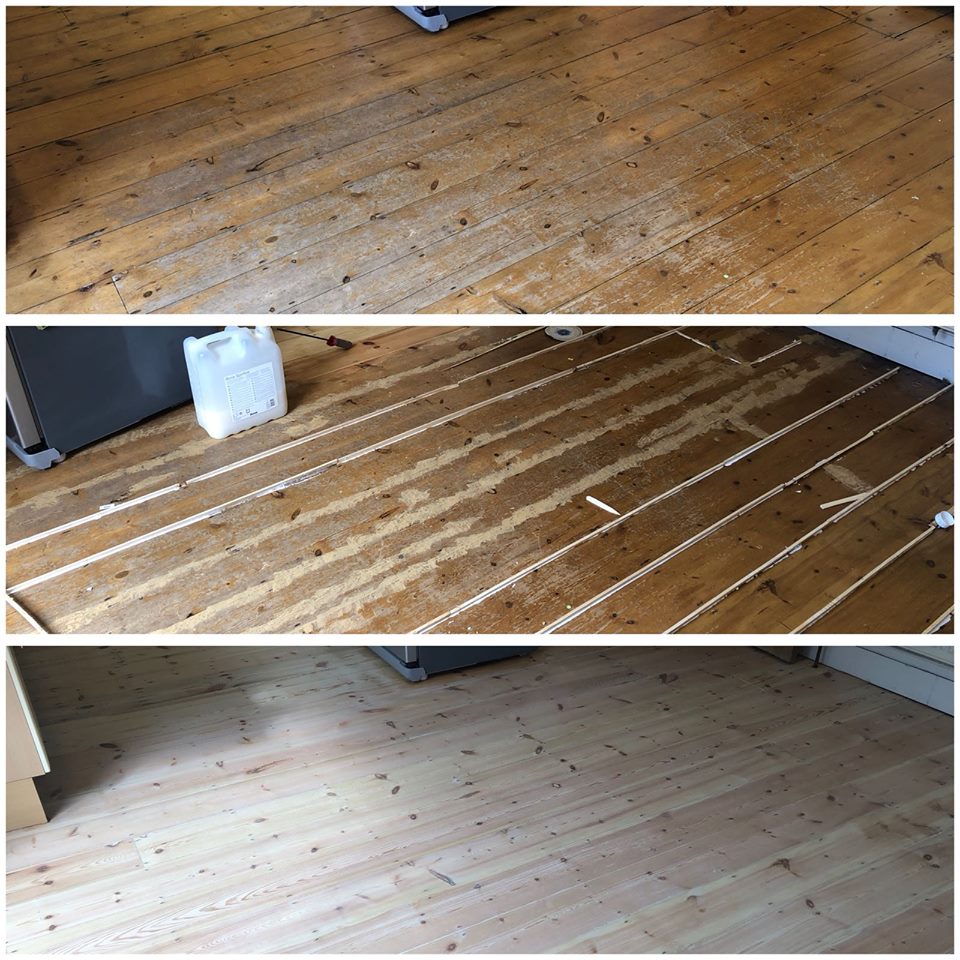
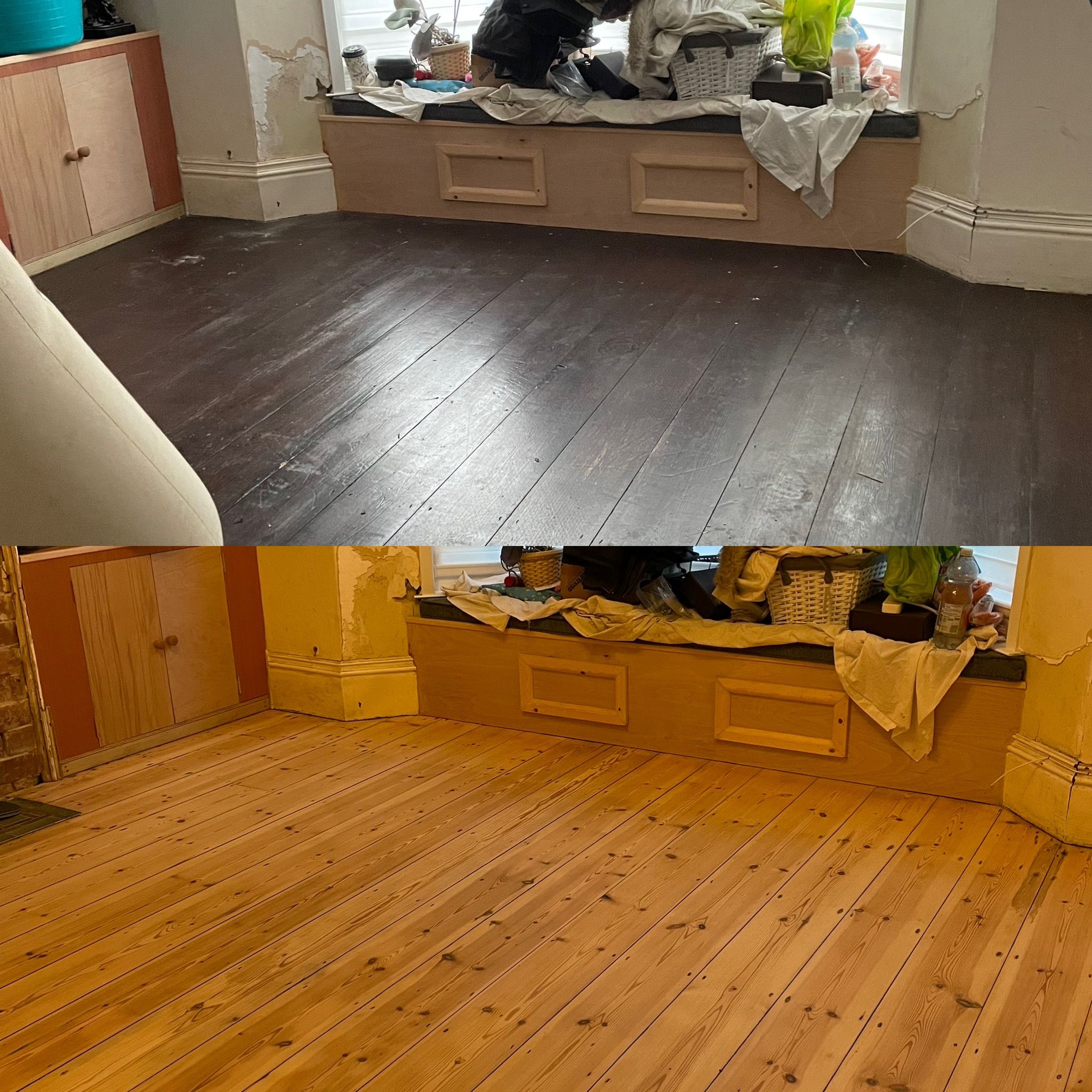
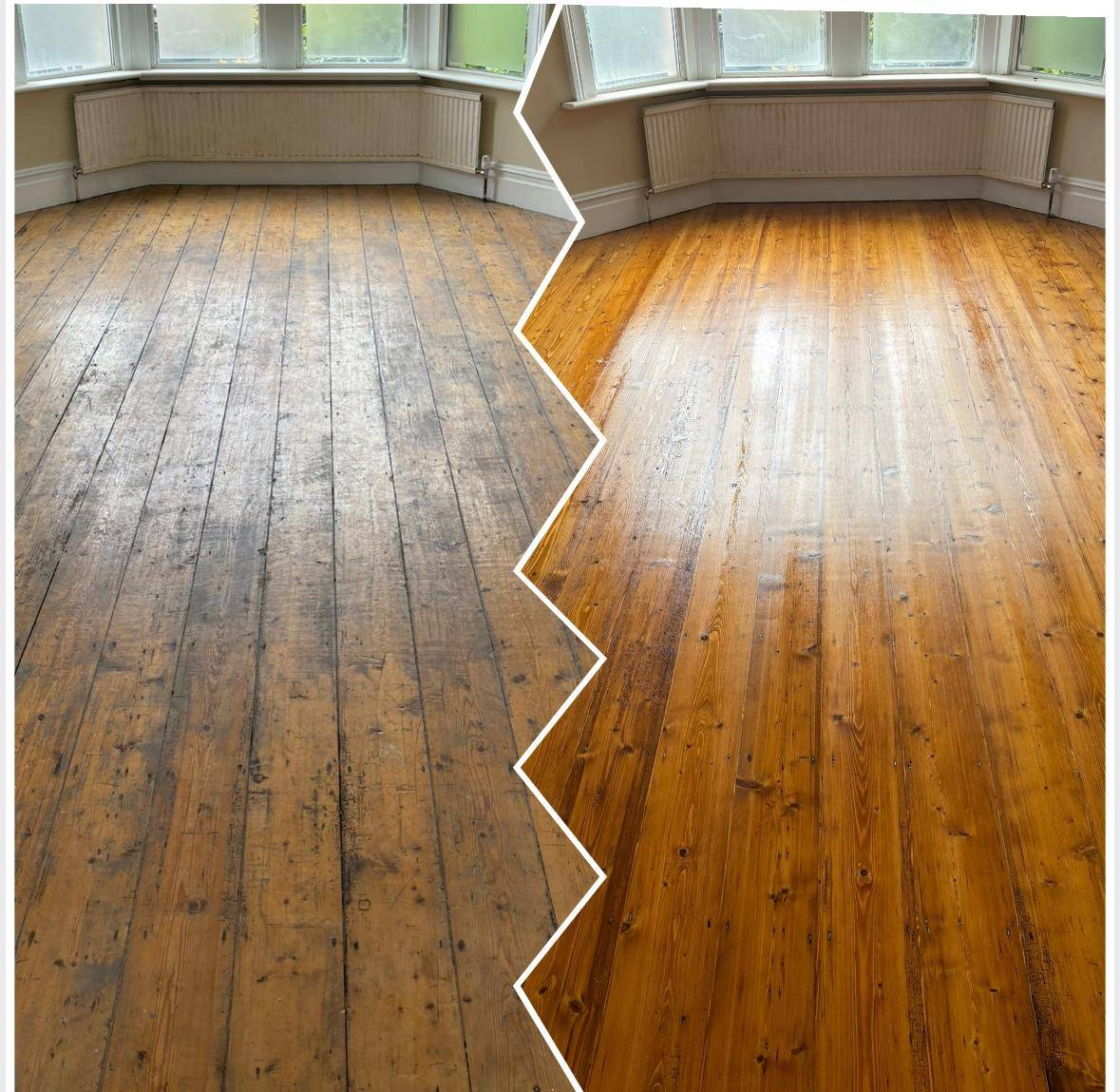
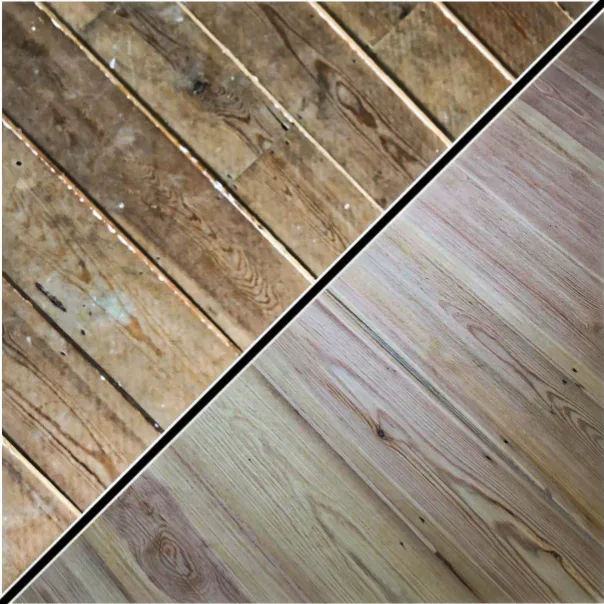
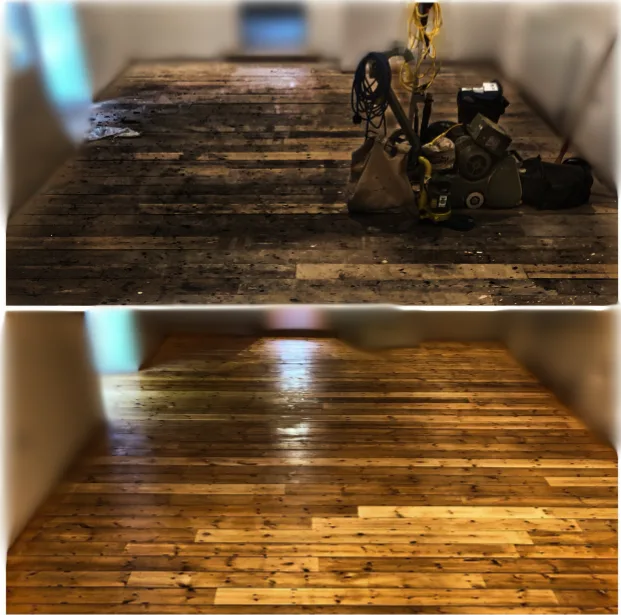
Floor sanding before and after

Floor Sanding in Camelford

Between the moor and the coast, our wood floor sanding service covers Camelford, Boscastle, Tintagel, Delabole, Port Isaac, St Teath and Davidstow. Cottage floors here are often wide elm and early pine, thin after two centuries, so we measure remaining timber before quoting, sand with finer grits and more passes, and switch to a screen and recoat whenever a full sand would take too much.

This is the wettest corner we work, so moisture readings open every job, and listed cottages — of which this coast has plenty — get a written method for any conservation questions.

A gentle sequence works differently from a fast one. Starting at a finer grit means each pass removes far less timber, so flattening happens by accumulation — several patient passes rather than one aggressive cut — and the machine is kept light on the boards throughout. It takes longer and uses more abrasive, and on a floor with two hundred years behind it that arithmetic is exactly right: the surface comes clean and smooth while the thickness that remains stays where it belongs, in the floor. We plan the sequence board-thickness-first on every old cottage job.
Commercial Floor Sanding Along the North Coast

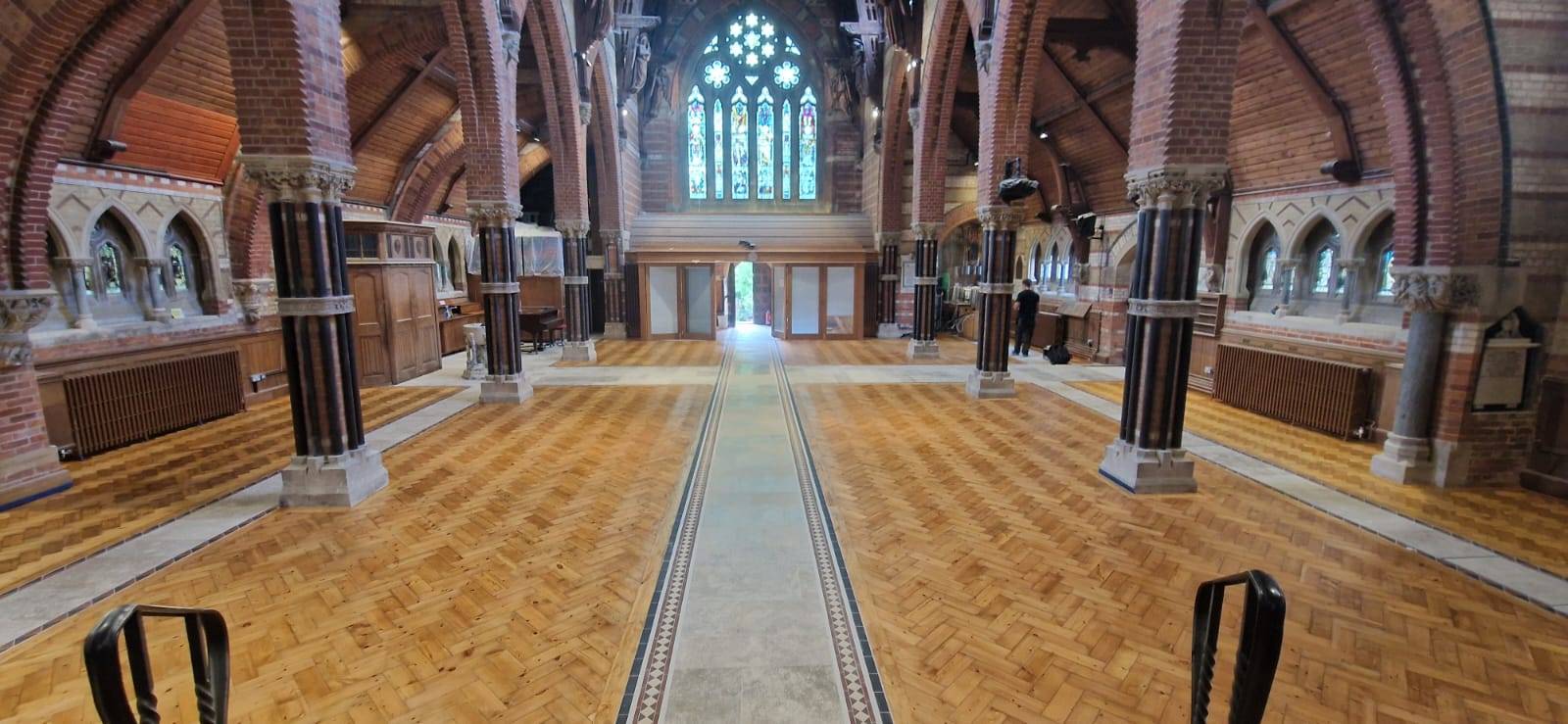
Pubs, cafes, galleries and guest houses from Camelford out to Port Isaac use our commercial floor sanding service overnight, on closed days or in the shoulder season, sealed with fast-curing products so a dining room loses one service at most. Village halls are completed inside a closed week.

School floors are booked into holiday windows, sports floors re-marked to governing body specification, and method statements plus insurance documentation issued before we set out — along with an access plan, because Boscastle’s lanes reward preparation.

Winter is quietly the best season for commercial floors on this coast, and not only because premises are empty. With a building to ourselves we can run longer machine days, hold the heating at the steady temperature seal coats cure best in, and let each coat harden fully before the next — luxuries a trading-hours job never gets. The result is a thicker, better-cured finish going into the season, which is why we encourage owners to think about floors in November rather than March, when everyone else does.

parquet wooden floor sanding
wooden floor sanding

Repairs and Board Replacement

Weather this hard generates repair work, and our wooden floor repairs service handles it: cupped and lifted boards, joist ends softened in wet stone, splits and historic patching done with whatever was to hand. Floorboard replacement draws on reclaimed elm and pine from our own stock so repairs sit invisibly in very old floors.

Squeaks and scratches are fixed as smaller jobs where that is all the floor needs.

After storm water gets in — a failed slate, a blocked gully, a door that lost to horizontal rain — the repair must wait for the drying, and we are firm about the order. Surface-wet boards often recover completely once the room is warmed and aired; saturated timber swells, distorts and only shows its true state after weeks of drying. We measure, leave the floor to reach a stable reading, then repair what genuinely failed rather than what merely looked alarming while wet. Patience at this stage regularly halves the scope of the repair.

Gap Filling for Exposed Cottages

Wind finds every gap in a moorland cottage floor, and our gap filling service closes them properly — fitted timber slivers for wide-board floors that still move with the seasons, resin bonded with the floor’s own dust where boards are tight and stable. The difference on a February night above Boscastle is not subtle.

Filling is done within the main sand so the result finishes flush and seals as one surface.

One caveat we always raise in older cottages: the gaps between ground-floor boards are sometimes part of how the building breathes, moving air through a shallow void that has no other ventilation. Before filling we check what is underneath — where airbricks or vents serve the void, filling is pure gain; where the gaps are the only airflow, we either add ventilation first or advise leaving well alone. A warm room above a suffocated void is a poor trade, and we will not make it.

flooring sanding company
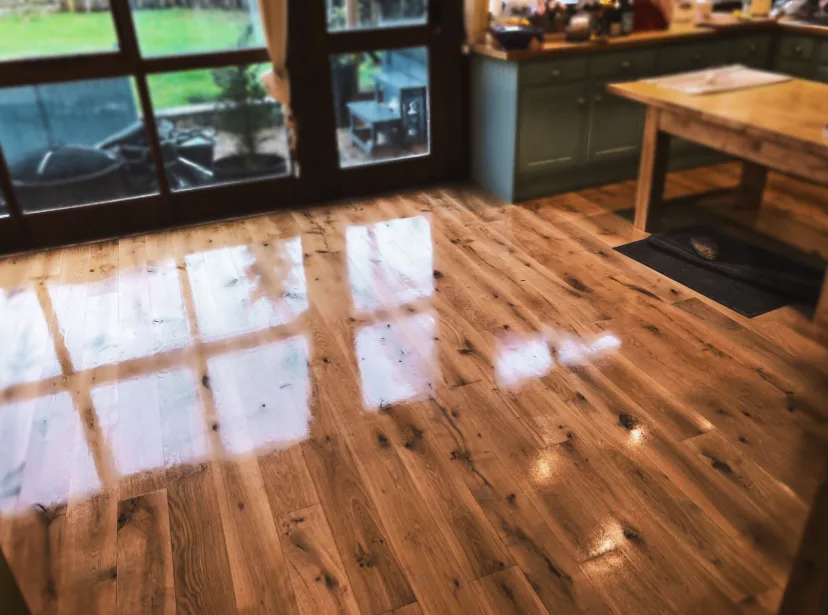
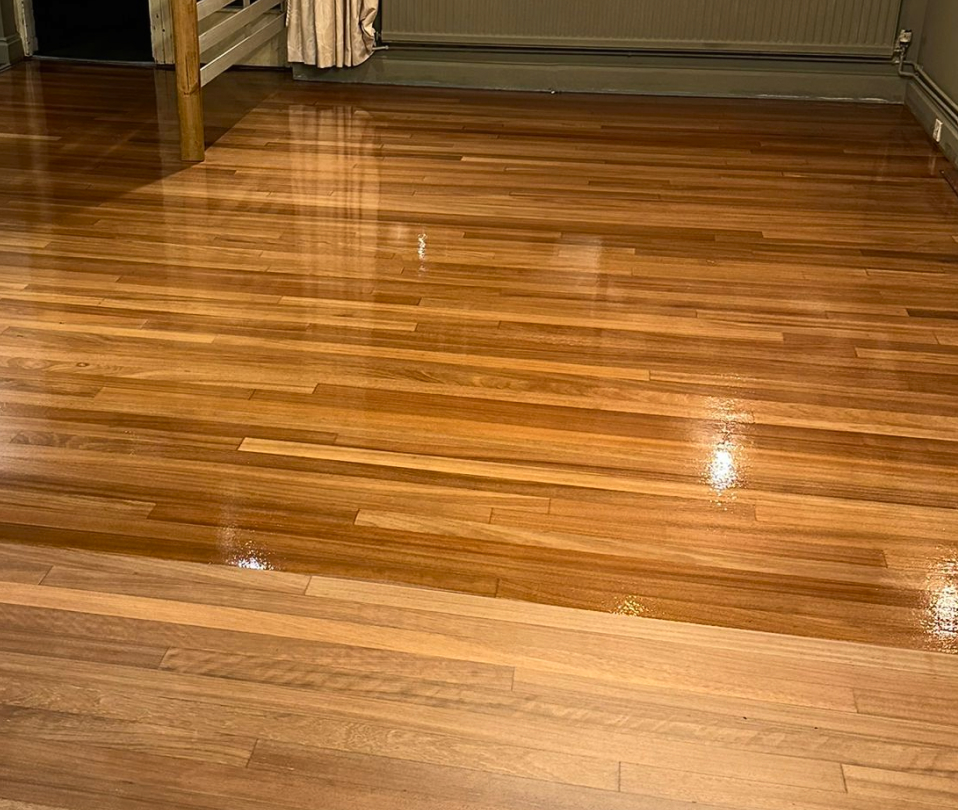
Sunlight across freshly lacquered wooden floorboards

Parquet Floor Restoration

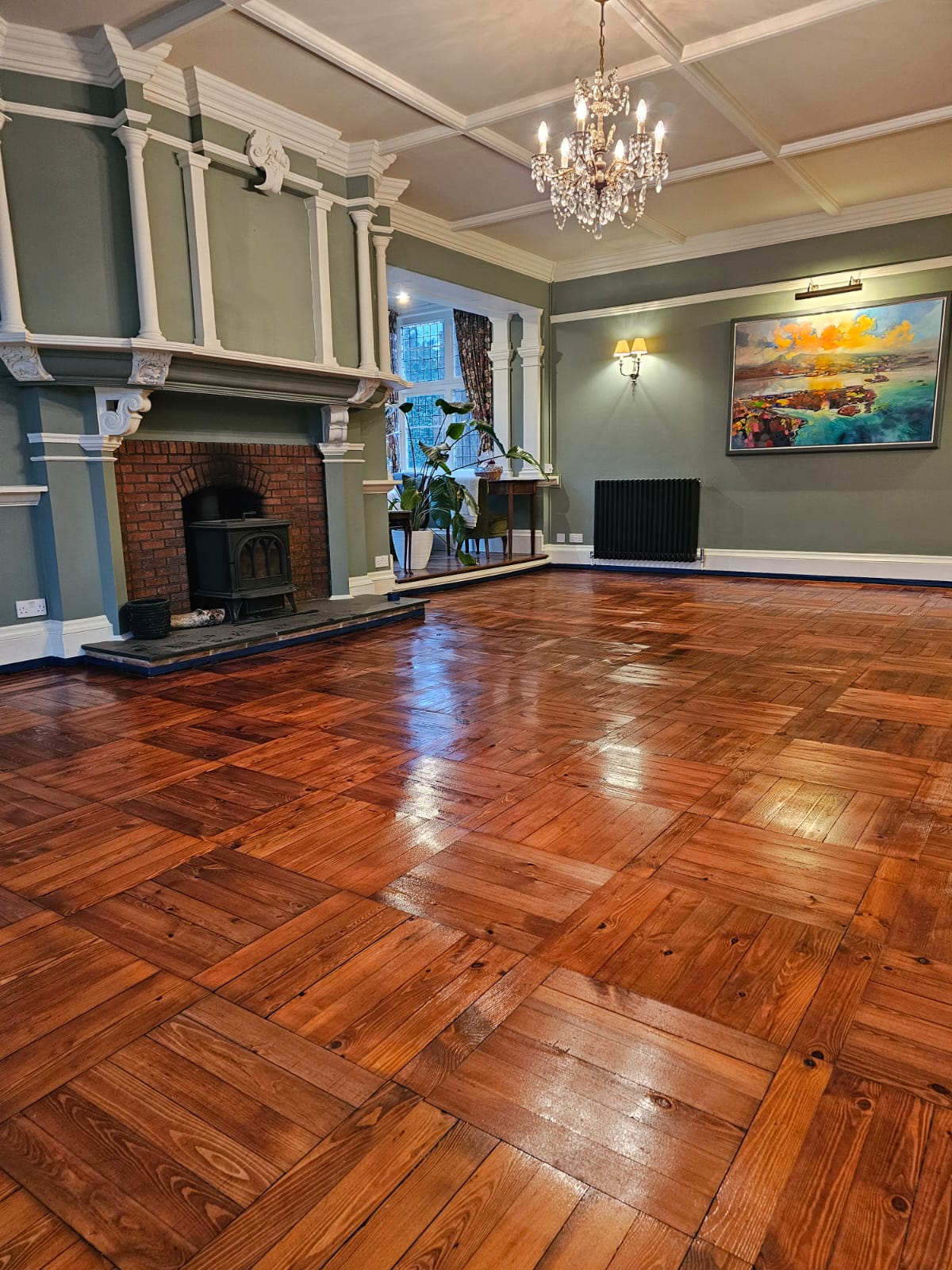
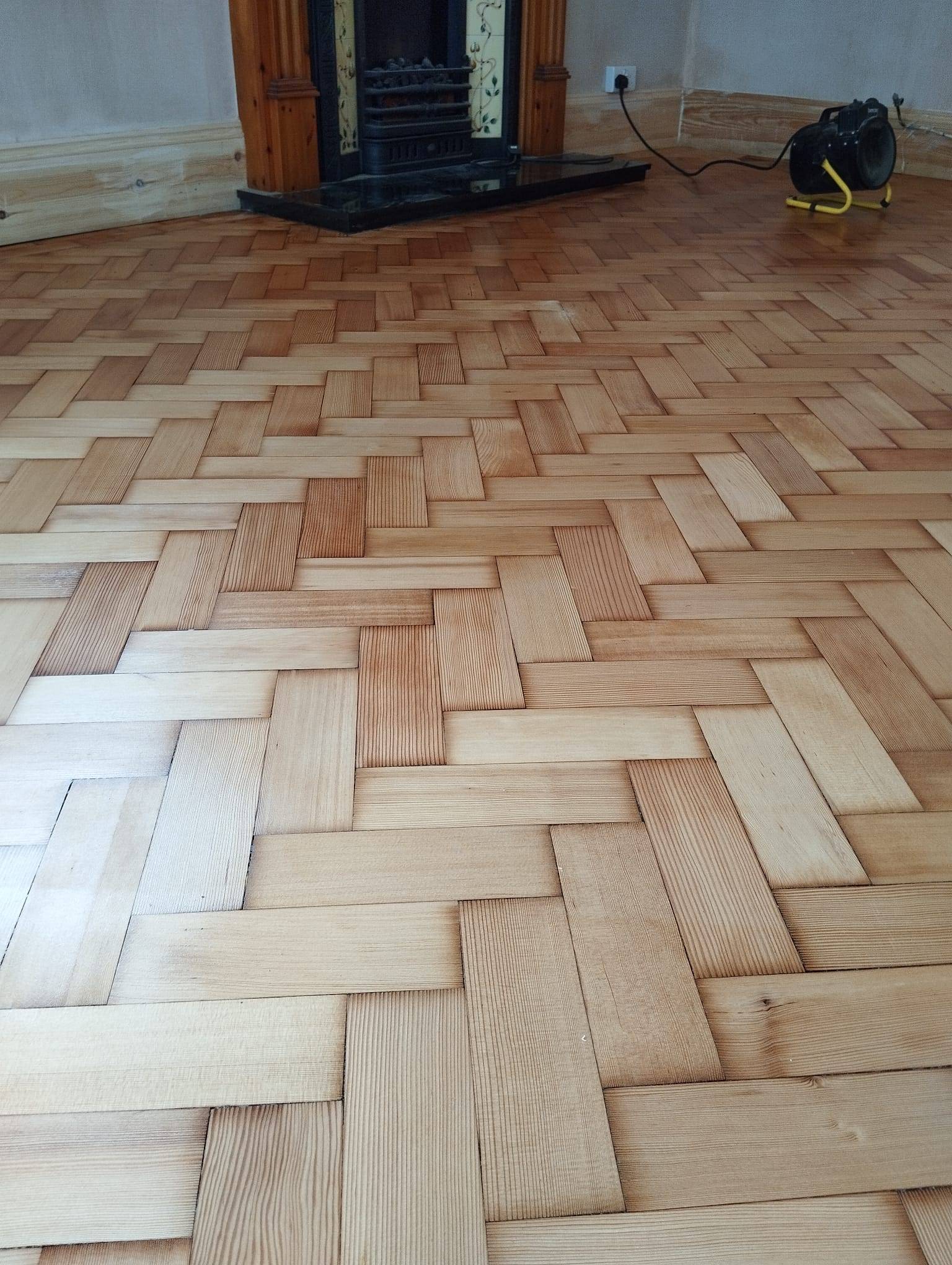
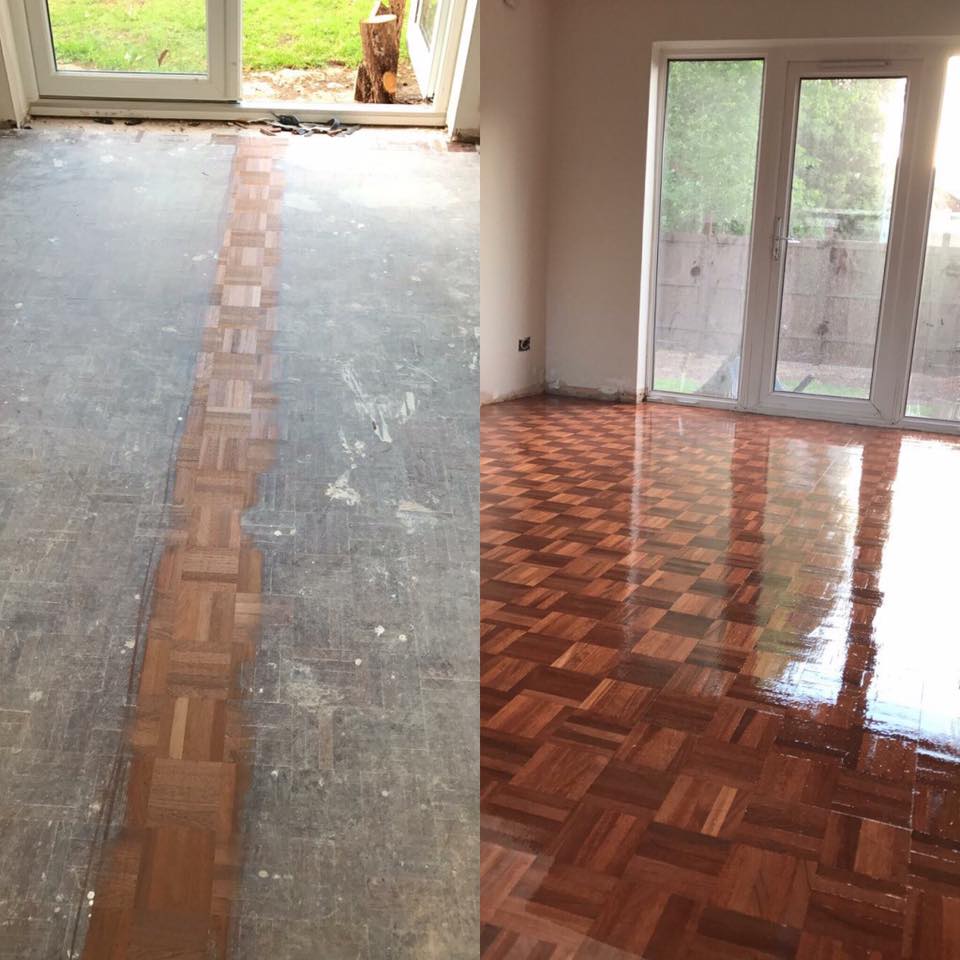
Block floors in halls, schoolrooms and larger houses across north Cornwall are restored by our parquet floor sanding team: perished bitumen cleared, loose blocks re-bonded, missing pieces matched from reclaimed stock, and the pattern sanded flat before sealing.

Parquet this far out is often assumed beyond help after decades under carpet — a photograph usually proves otherwise.

Distance makes block matching a photographic exercise first: clear pictures of the pattern, a close-up of one lifted block’s face, side and back, and a count of what is missing let us pull candidate blocks from reclaimed stock at the workshop and bring the right timber out on the run. The final selection still happens dry-fitted on the floor itself, but arriving with the match already close is how a remote parquet job finishes in one visit rather than two.

Sealing, Oiling, Staining and Waxing

Lets and homes taking wet boots straight off the coast path get hard-wearing water-based lacquer; sheltered period rooms suit breathable hard wax oil with its patchable surface; wax stays right for the oldest slate-and-elm interiors.

Staining is sampled on your own boards in your own light — moorland grey does strange things to colour charts — and an off-season buff and recoat keeps let floors ahead of each season’s wear.

Finishes are chemistry, and chemistry cares about conditions: seal coats want a mild, dry room — neither a cold damp parlour in January nor a greenhouse-hot sunroom in August — and drying times stretch dramatically outside that window. On winter jobs we ask for the heating to run low and steady through the coating days, and on unheated buildings we schedule the sealing for the mildest stretch available. It is invisible in the finished floor, and it is half of why one finish lasts and another fails early.

Wood floor sanding company
Floor sanding taunton

Get a Floor Sanding Quote in Camelford

Two photographs — the room and its worst patch — plus a note about parking and access bring an honest opinion and a fixed written quotation. Free no-obligation surveys are grouped into our multi-day north Cornwall runs, agency-managed lets can run entirely through the agent with completion photographs supplied, and November to February is the window we recommend for let owners.

Call 01823 674562, email info@ryansrestoration.co.uk, or use the form on this page.

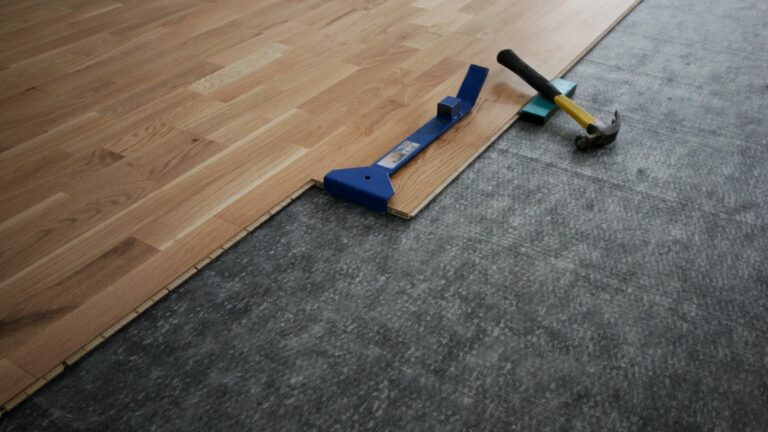
All services available in Camelford: floor sanding, commercial floors, repairs, board replacement, gap filling, parquet restoration, sealing, oiling, staining, buffing, stair sanding and floor installation.

Nearby areas we also cover: Bodmin, Bude, Wadebridge and Callington. There is a page for each, and the full list of towns is on our areas we cover page.

Photographs of the access matter as much as the floor this far out — a lane, a flight of steps or a shared courtyard changes the crew and kit we bring, and knowing in advance keeps the quoted dates honest.

FAQ: Floor Sanding in Camelford

Sanding and refinishing, repairs, floorboard replacement, gap filling, parquet restoration, staining, sealing, oiling, waxing, stair sanding, buffing and new floor installation — one family-run team, grouped into regular north-coast runs.

Yes — we sand between services or overnight, seal with rapid-curing products, and phase multi-room premises so somewhere is always trading. Winter gives the smoothest schedule.

Where they fail, yes — crude old patches are lifted and replaced with reclaimed timber that matches, and where an old repair is sound and characterful we simply leave it be.

Almost certainly — the black is usually adhesive and oxidised finish, not the timber. It sands away, missing blocks are matched from reclaimed stock, and the floor seals as new.

Yes — sanding removes the darkened old finish, and from bare timber we can hold the natural tone or stain lighter still, sampled on your boards before the room is committed.

We measure first. Where a full sand would take too much, a screen and recoat refreshes the finish without touching the timber, and we quote that honestly instead.

Yes — changeover jobs are planned backwards from the deadline with extra hands and rapid-cure seals, and we confirm in writing beforehand exactly what fits the window.

Photographs by email bring an honest opinion and a fixed written figure quickly; the free no-obligation survey then rides along with our next north Cornwall run.