45 years’ experience  ·  Rated 4.9 on Google  ·  Family-run, from our workshop near Wellington

45 years’ experience · Rated 4.9 on Google · Family-run

Floor Sanding and Wood Floor Restoration in Cirencester

Careful sanding, repair and refinishing of oak, pine and parquet floors in Cirencester homes, shops, schools and halls, from first photographs to final coat.

QUICK QUOTATION

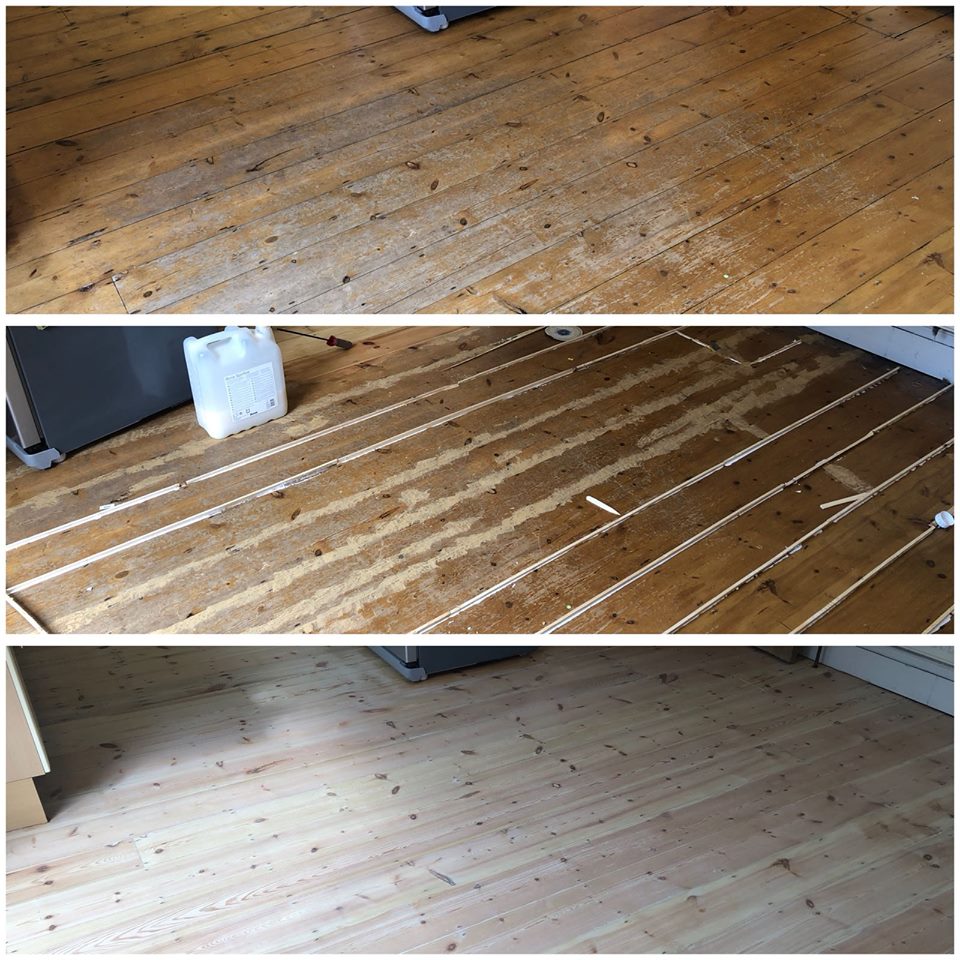
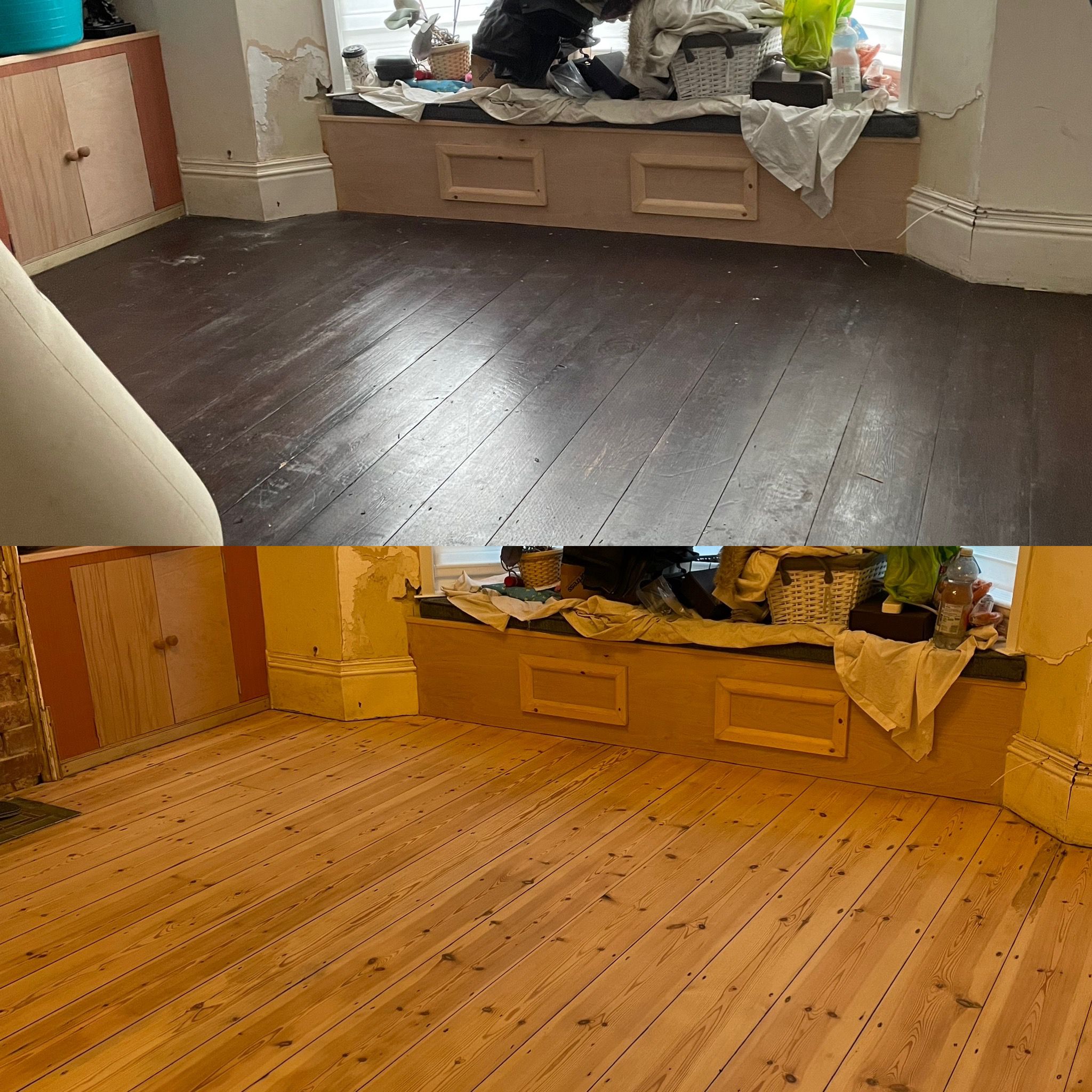
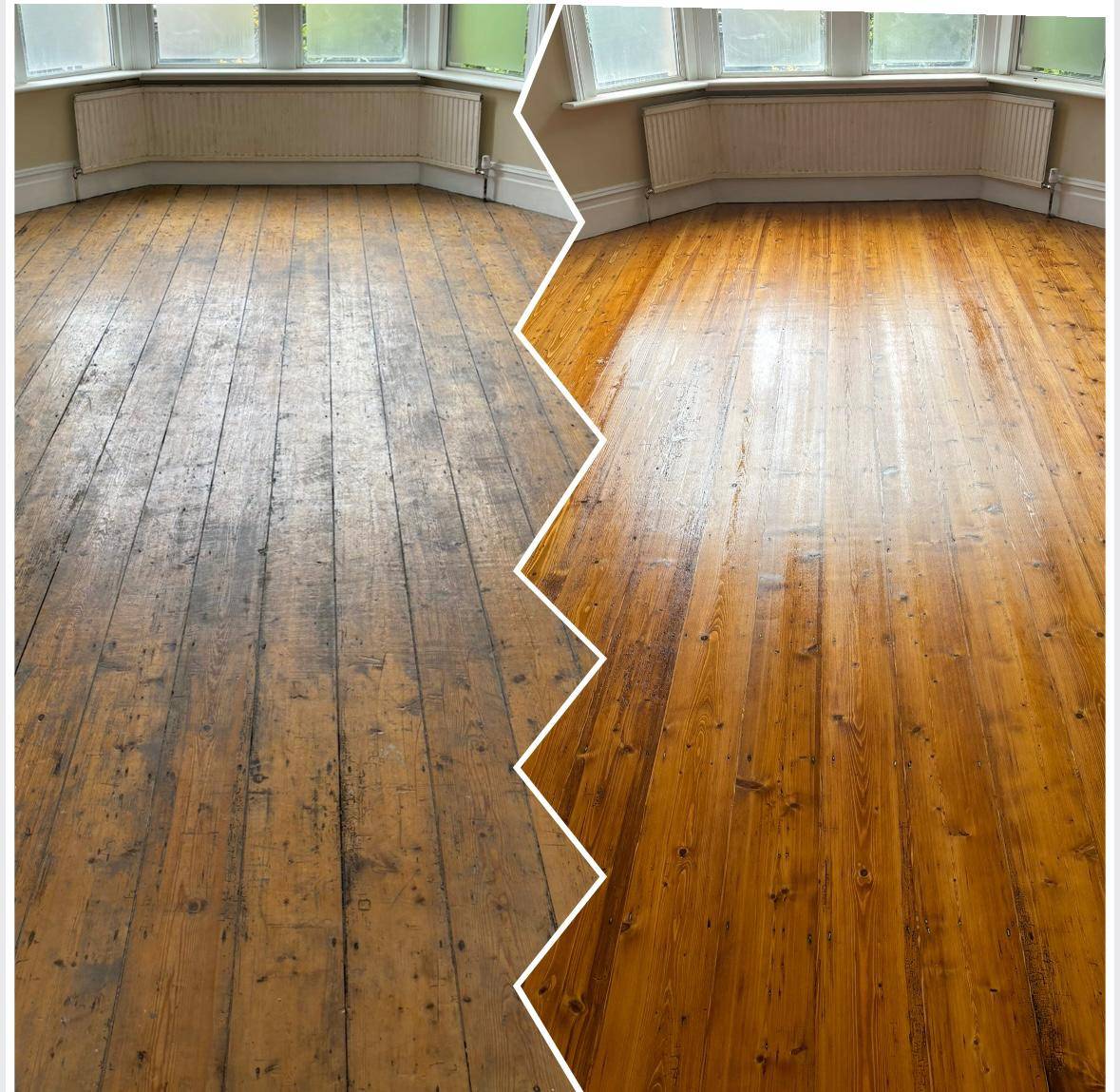
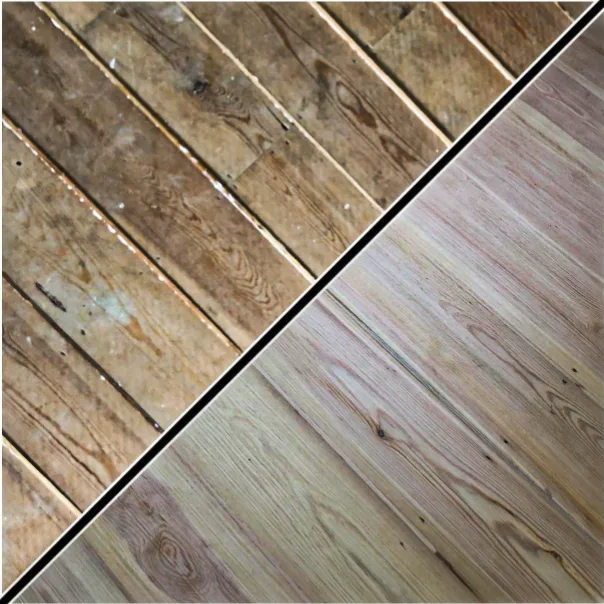
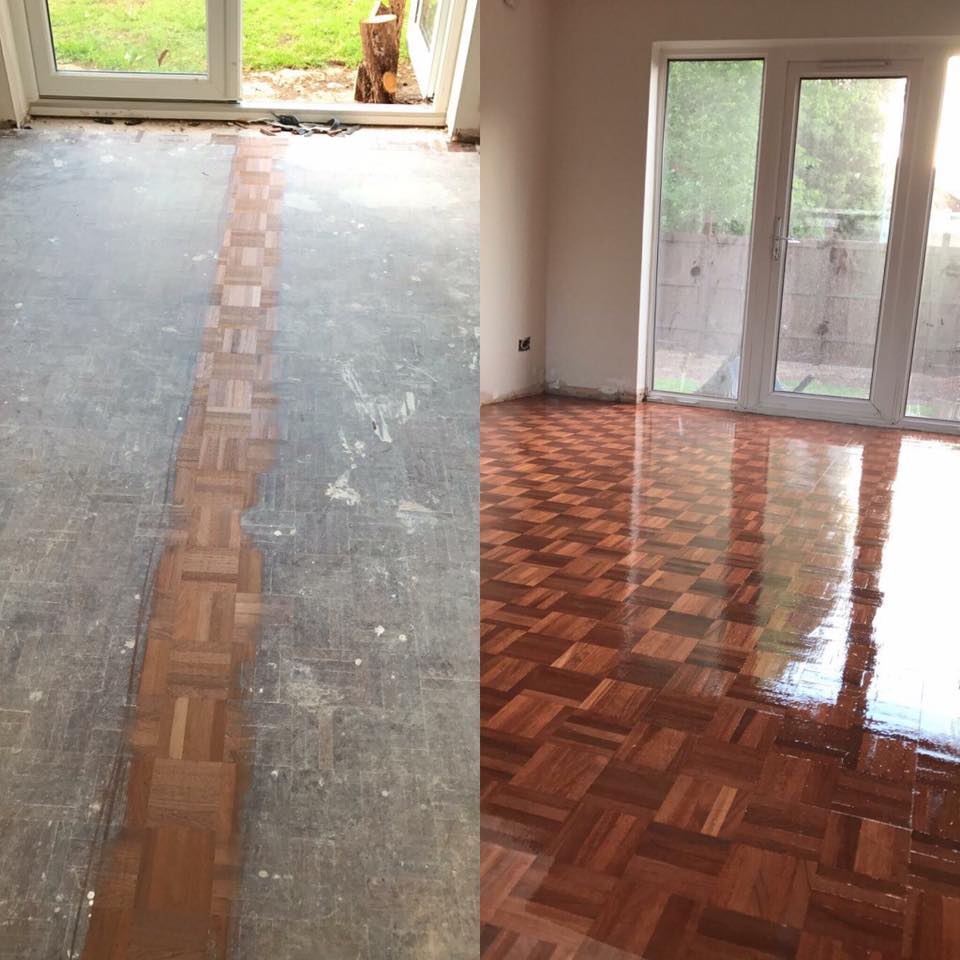
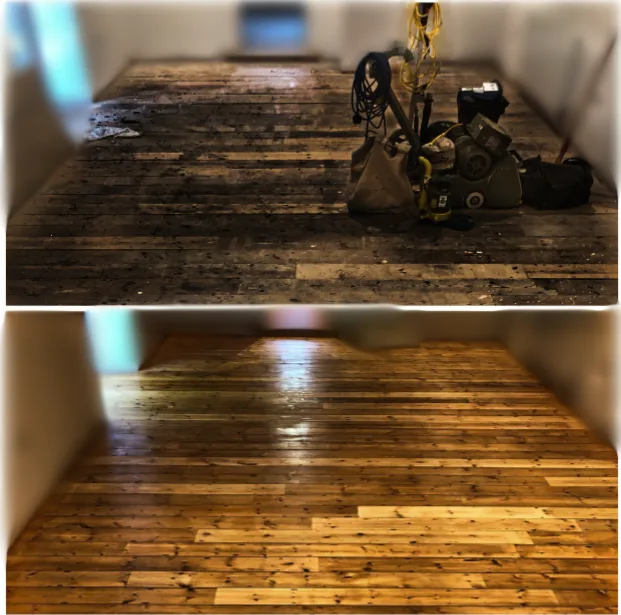
Floor sanding before and after

How We Approach Floor Sanding in Cirencester

A good result from floor sanding in Cirencester depends less on the machine than on the preparation that goes before it. Before a sander touches the boards we punch down nail heads standing proud, pull out old carpet gripper and staples, and look closely at how the floor has been treated in the past. Paint splashes around the edges, bitumen left by old linoleum and layers of varnish that have turned orange all need different handling, and spotting them early prevents torn abrasives and patchy results later on.

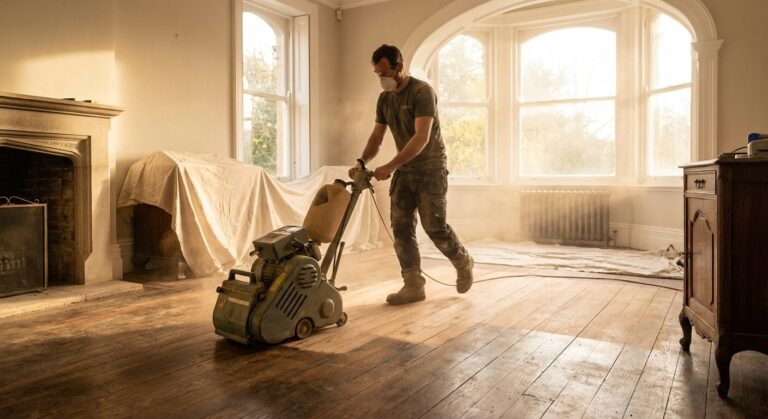
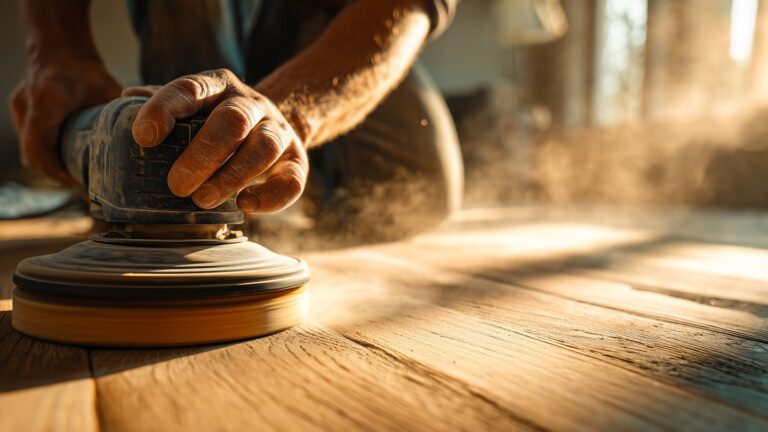
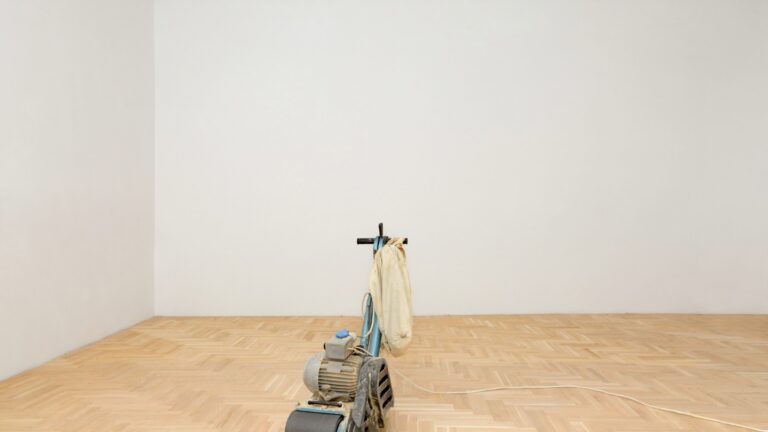
The sanding itself runs through a sequence of grits. On a floor that is badly cupped or heavily coated, the first pass may run across the boards at a slight angle to level them, before the following passes go with the grain to remove the scratch pattern. Edges, corners and the strip beneath radiators are worked with smaller edging and detail sanders, and the final stage is a fine pass that leaves the surface ready to take a finish evenly. We take off only as much timber as the floor needs, because every sanding uses up part of a wear layer that can never be replaced.

All of our wood floor sanding is carried out with the sanders plumbed into a sealed dust extraction unit. We call it dust-free floor sanding, and in practice it keeps a house far cleaner than the old open-bag sanders ever did. No system is completely free of dust, though, so we still sheet off doorways and cover anything nearby that cannot be moved.

Cirencester is part of our regular working area. Our family-run team travels up from the workshop near Wellington in Somerset, and we plan the visit so the right abrasives, fillers and reclaimed timber are on the van from the first morning. A typical domestic job takes between one and three days, depending on the number of rooms, the amount of repair and the finish you choose.
Wood Floor Restoration in Cirencester's Stone Houses

Wood floor restoration in Cirencester often involves older houses built of Cotswold stone, including the merchants’ houses that still stand in and around Coxwell Street and Dollar Street. Floors in buildings like these have usually been altered many times: boards renewed in one room, a hearth filled in another, a section lifted and put back after rewiring. What we want is one floor that feels as if it has always been part of the house, not a showroom surface that sits awkwardly in an old room.

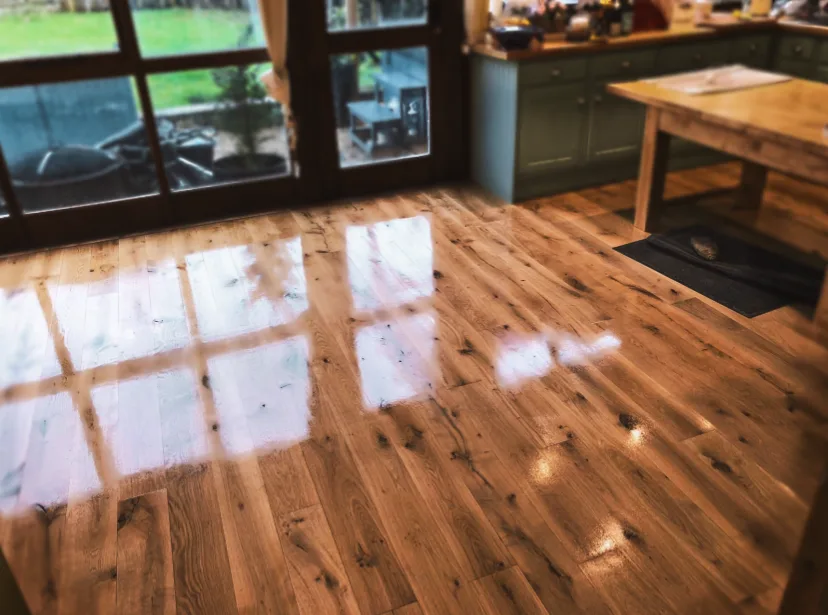
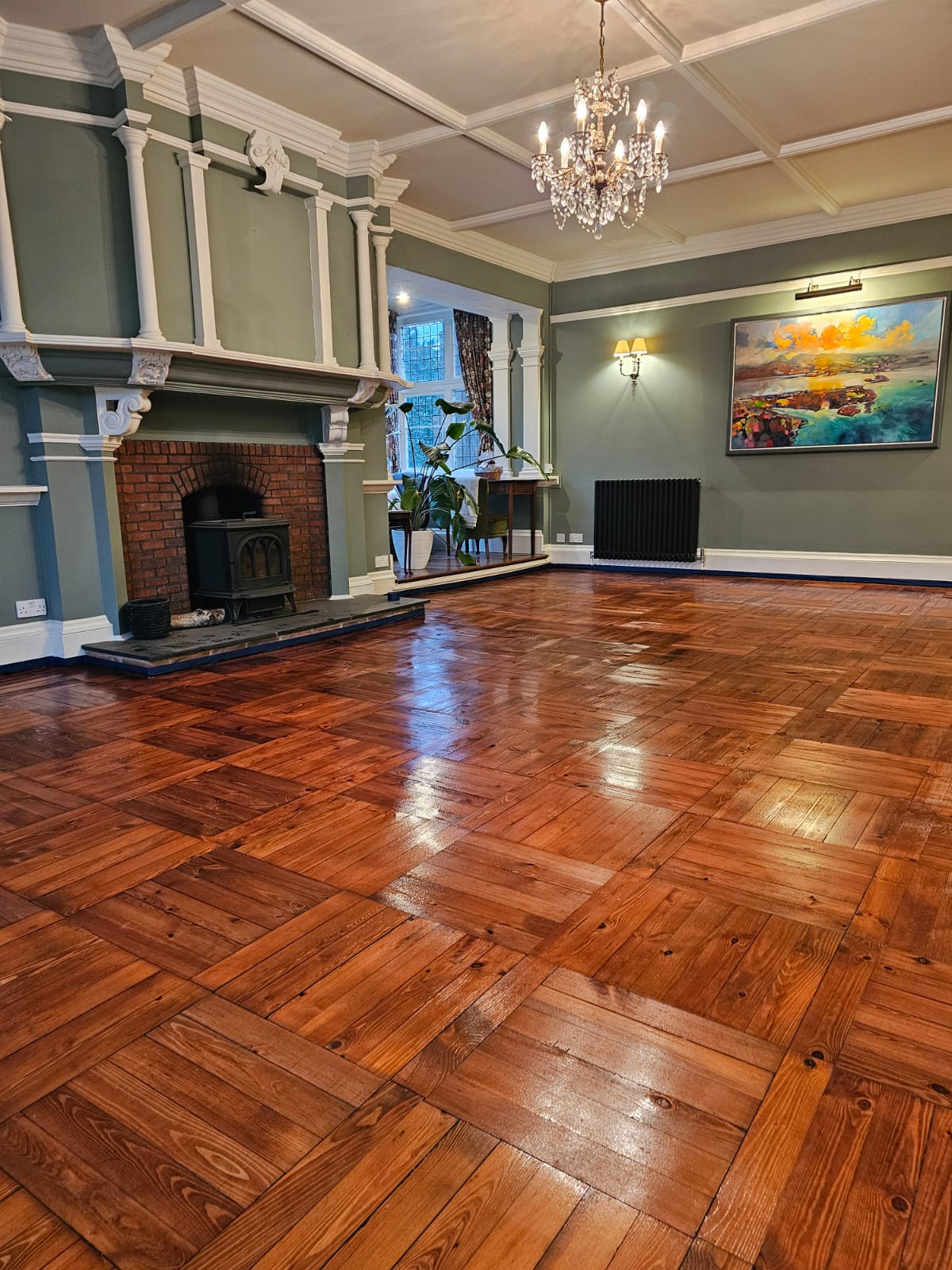
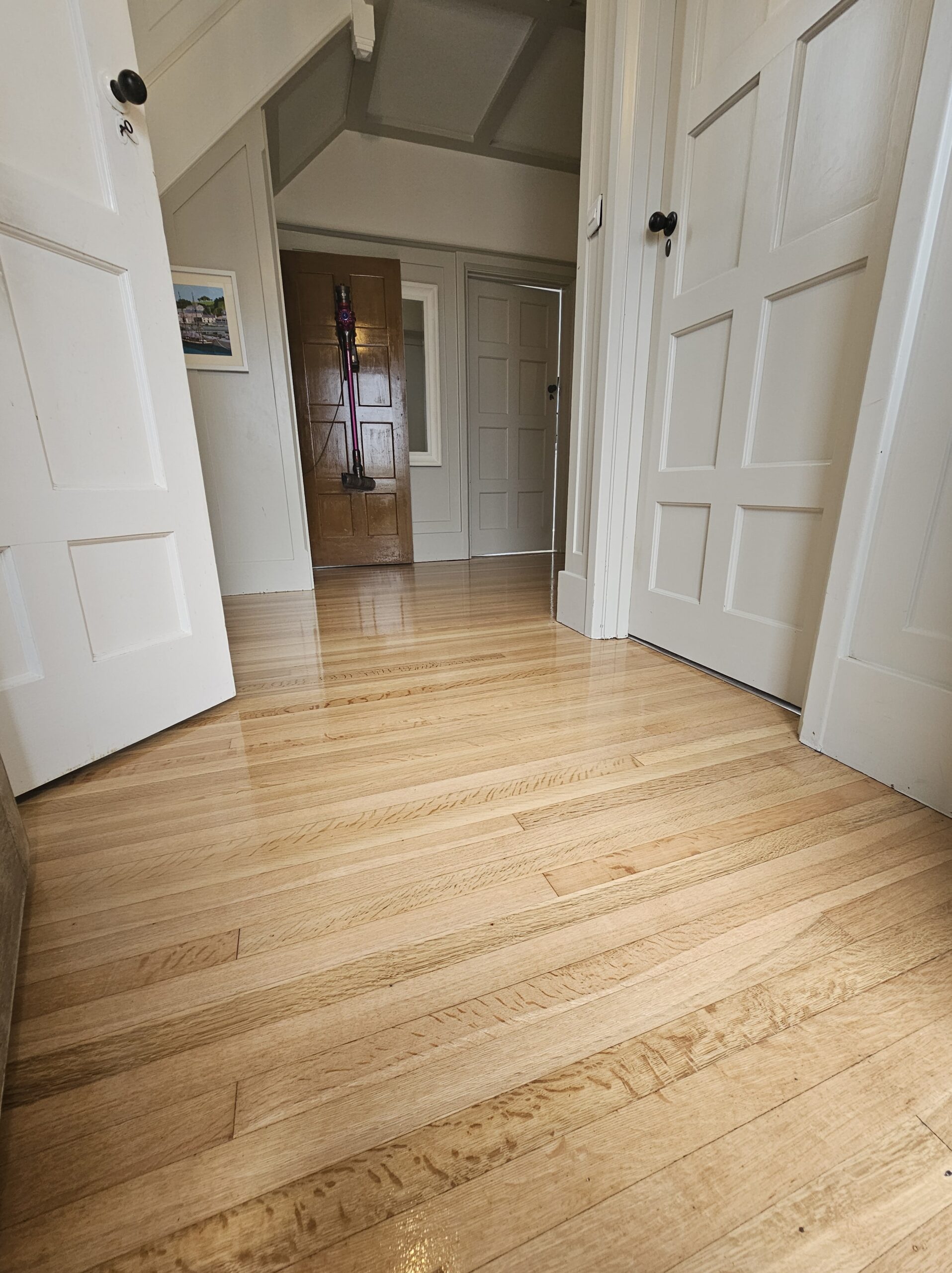
That shapes the way we work. On old oak we keep the sanding light, so the gentle undulations and wear patterns that give the floor its character are softened rather than ground flat, and we try the finish on a hidden or lifted board before treating the whole room. Our oak floor restoration work often uses oil or hard wax oil for exactly this reason, as they deepen the figure of the grain without the plastic sheen a heavy gloss can give an antique floor.

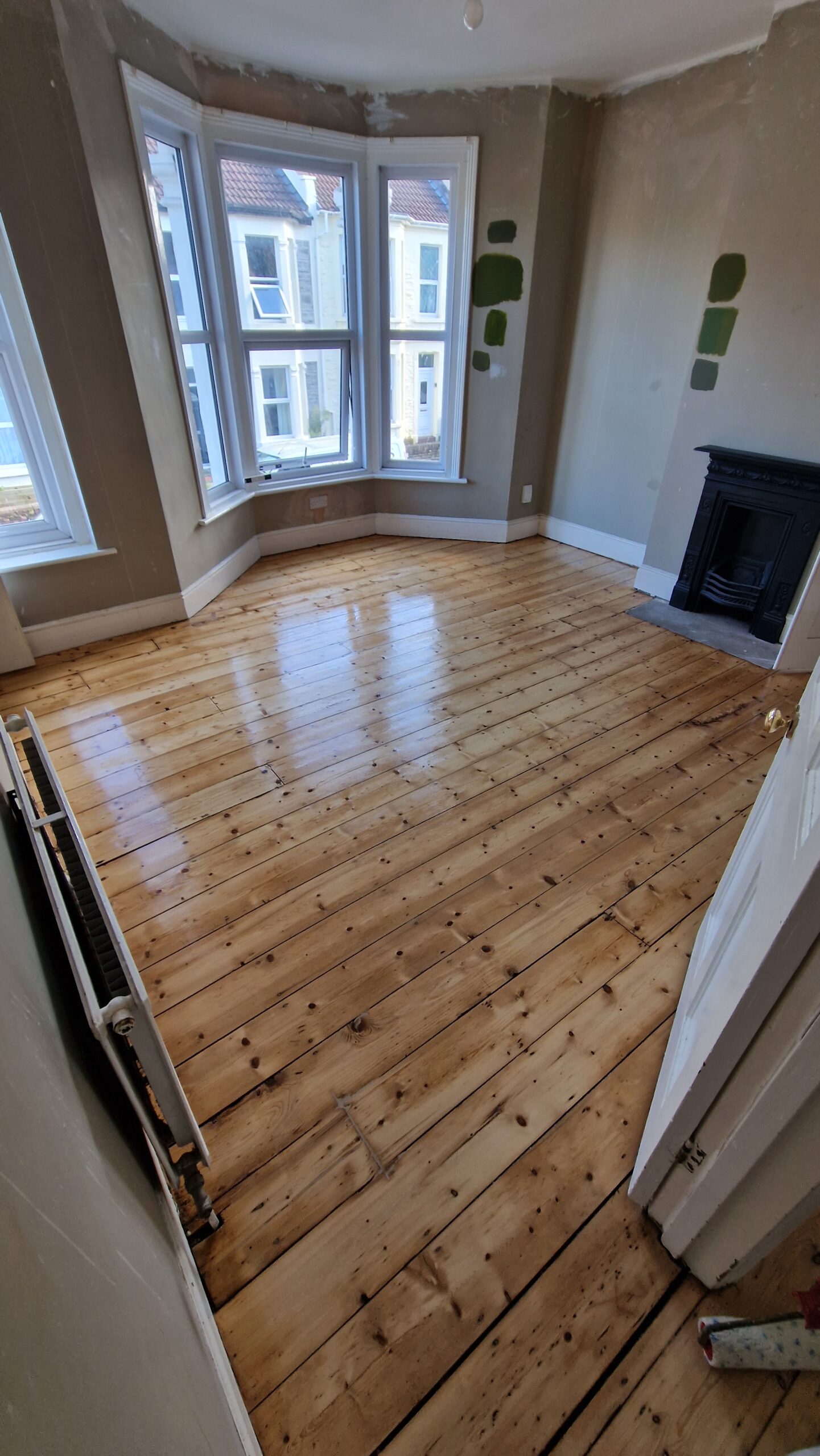
Pine is softer and much less forgiving. Boards that have spent decades under carpet tend to carry deep dents, worn thresholds and old dark stain that has soaked well into the grain. Pine floor restoration usually means more filling, careful choice of grit, and sometimes accepting that a few marks are part of the floor’s history. You can read more about our wider approach on the wood floor restoration page.

Stone buildings bring one more consideration. Ground floors suffer most, because solid walls with no modern damp-proof course can wick water into the ends of the joists and the boards resting on them. At the free survey we take moisture readings along the walls as well as in the middle of the room, check that airbricks are clear and look for evidence of earlier repairs. If something underneath needs attention, we would much rather say so before sanding than refinish a floor that starts moving again within a year.

parquet wooden floor sanding
wooden floor sanding

Lacquers, Oils, Wax and Stains for Oak and Pine Floors

Choosing the finish is where many customers spend the most thought, and with good reason, because it decides both the look of the floor and how it will need looking after. Wherever possible we test the finish on your own boards, since a single product can read one way on freshly sanded oak and another on pine that has been under carpet for decades.

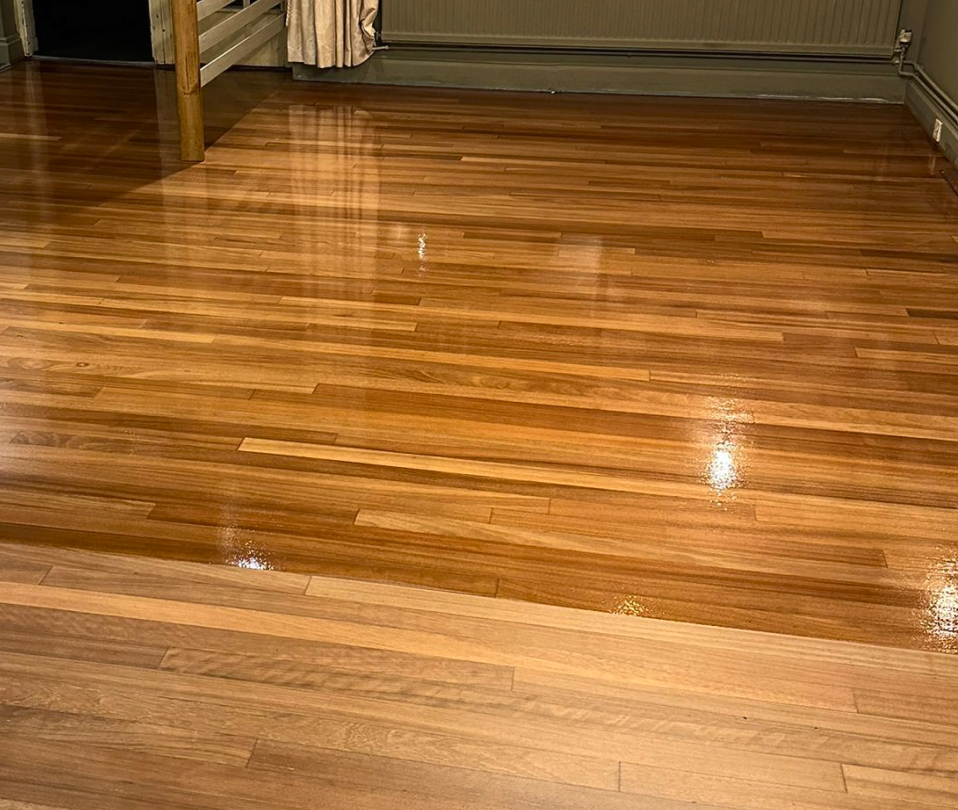
Lacquer sits on the surface as a tough, clear skin. Water-based lacquers stay clear and close to the natural colour of the wood, while oil-based versions warm the tone, which some people like on pine. Both come in matt, satin and gloss, and our wood floor sealing service builds up several coats, lightly de-nibbing the surface between them so each one keys to the last. Lacquer suits kitchens, hallways and busy family rooms where spills are part of daily life.

Wood floor oiling behaves differently. Natural oils and hard wax oils soak into the fibres, so the surface looks and feels like timber rather than a coating, and worn patches can be refreshed locally without stripping the whole room. Traditional wood floor waxing is slower to apply and needs more upkeep, but it is still the right answer on some antique floors where a modern product would look wrong.

Colour is a separate decision. Wood floor staining can calm down orange pine, darken new oak repairs so they sit with the original boards, or take a whole floor towards a grey or smoked tone. Stain is always tried in a corner first, because timber takes it up unevenly and a sample on your own floor tells us more than any colour chart. Once the work is complete, wood floor polishing with the right maintenance products keeps the sheen even without leaving a sticky build-up.

Commercial Floor Sanding in Cirencester for Schools, Shops and Halls

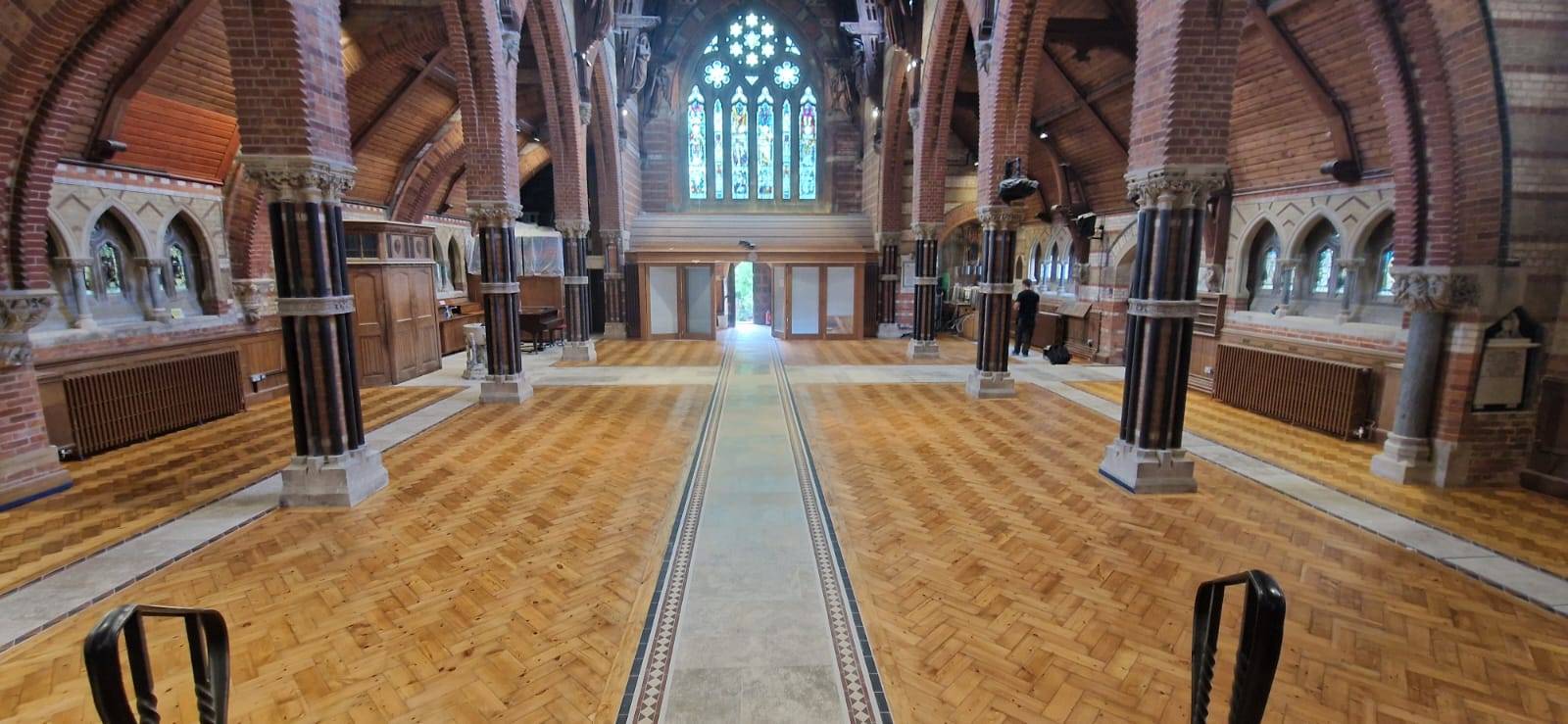
Commercial floor sanding in Cirencester covers a wide mix of buildings. The town serves a large rural area, so alongside the shops and cafes in the centre there are secondary schools, a further education college, a university campus, community halls and performance venues, each with timber floors that take far heavier wear than anything in a private house.

Education buildings are planned around the academic calendar. School floor sanding is normally booked into the summer break or a half-term week, with dates agreed well in advance so the work does not clash with other contractors on site. Sports halls need more than sanding: once the floor is refinished, court lines are marked to the relevant governing body specification by our own team before the final protective coats go down. Our sports hall floor sanding page explains that sequence step by step.

Shops and food businesses usually want the opposite, which is the shortest closure possible. For retail units we often work overnight or across a closed day, using fast-curing finishes that let stock and fixtures go back quickly. Shop floor sanding and restaurant floor sanding follow the same pattern, and a dining room can be split into sections if part of the building has to keep trading.

Halls used for dance classes, fitness sessions and community events need a surface with the right grip and a finish that copes with chairs and tables being dragged across it. Bursars and facilities managers who need paperwork before signing off a job can ask us for our method statement, insurance documents and references from previous clients. Our main commercial floor sanding page sets out how larger contracts are organised from survey to handover.

flooring sanding company
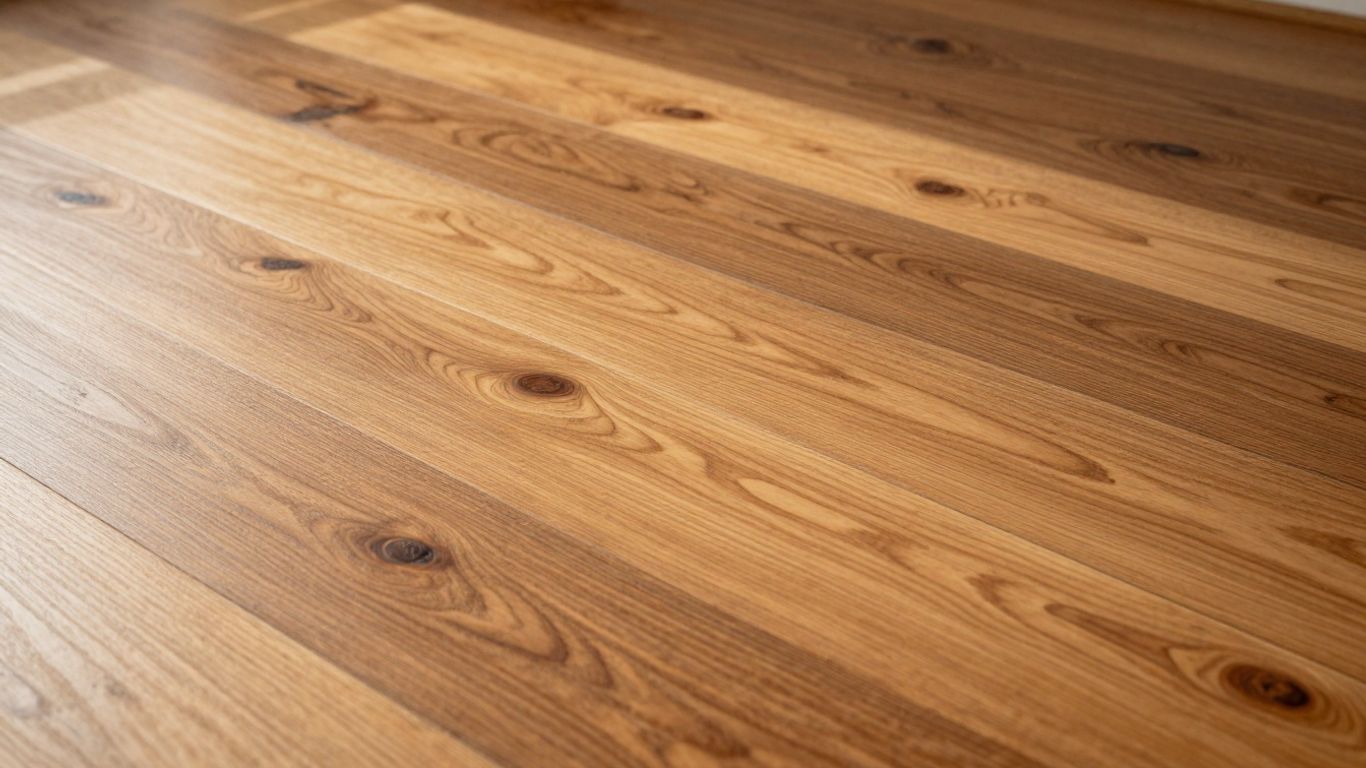
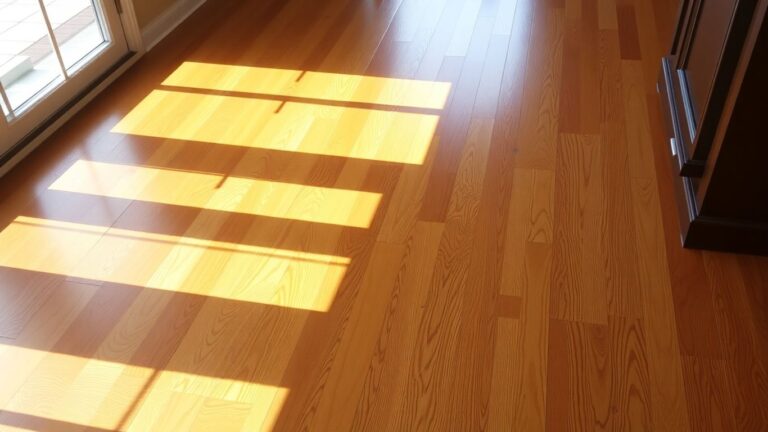
Sunlight across freshly lacquered wooden floorboards

Repairs Before Sanding: Boards, Gaps, Squeaks and Scratches

A floor cannot be sanded well if it is not sound. Most of the floors we survey need at least some wooden floor repairs first, and the list tends to be familiar: boards that bounce because the nails have lost their grip, split tongues, broken nosings at doorways, and access hatches cut roughly by a plumber or electrician years ago.

Where a board is beyond saving, floorboard replacement is carried out with timber from our reclaimed stock, matched for species, width and thickness. Old boards are rarely a standard size, and a new softwood board from a timber yard will stand out however carefully it is stained. Reclaimed timber has already shrunk and aged, so once sanded it blends into the surrounding floor far better.

Gaps between boards are a common complaint in older houses, both for the appearance and for the draughts that come up from the void beneath. Gap filling is done in one of two ways depending on the width: narrow gaps are packed with a filler bound together from the sanding dust of your own boards, while wider ones get thin strips of timber, glued into the gap and then sanded level with the boards either side. We explain at the survey which method suits each room, because boards move a little with the seasons and the repair has to allow for that.

Noise is another reason people get in touch. Squeaky wood floor repair usually means fixing loose boards down to the joists with screws, packing where a joist has dropped, or easing boards that rub together. For surface damage, wood floor scratch repair can sometimes deal with a localised problem without a full resand, which helps when only one part of a room has been marked by furniture or a dog.

Restoring Parquet and Sanding Staircases in Cirencester

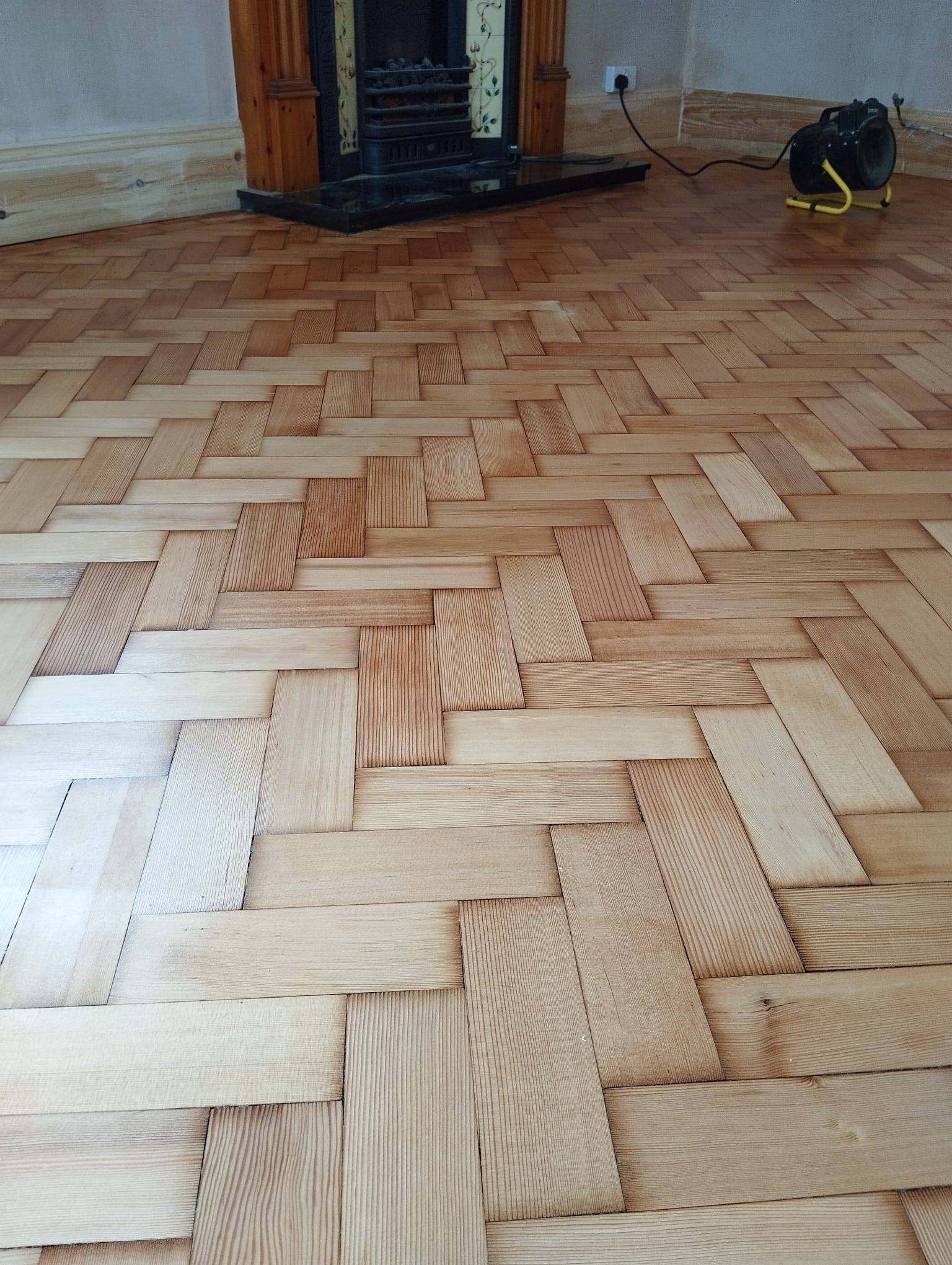
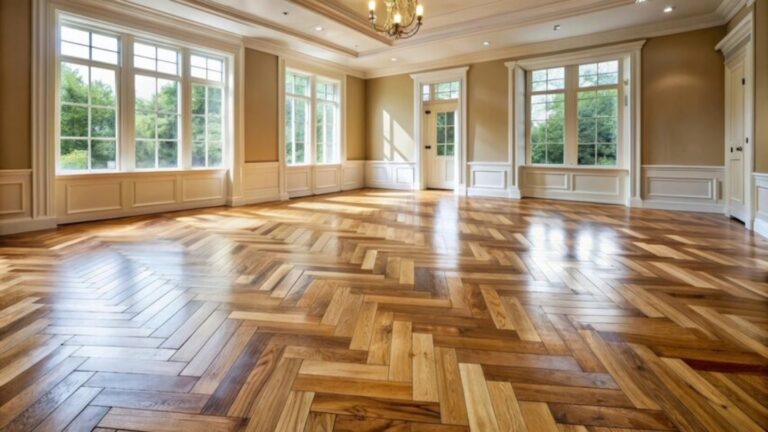
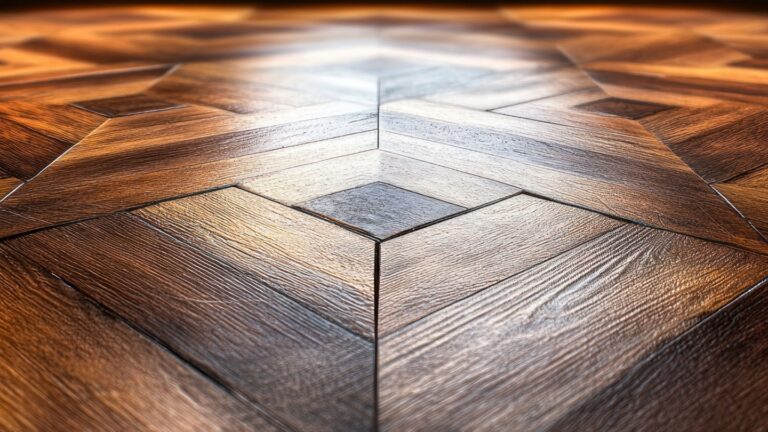
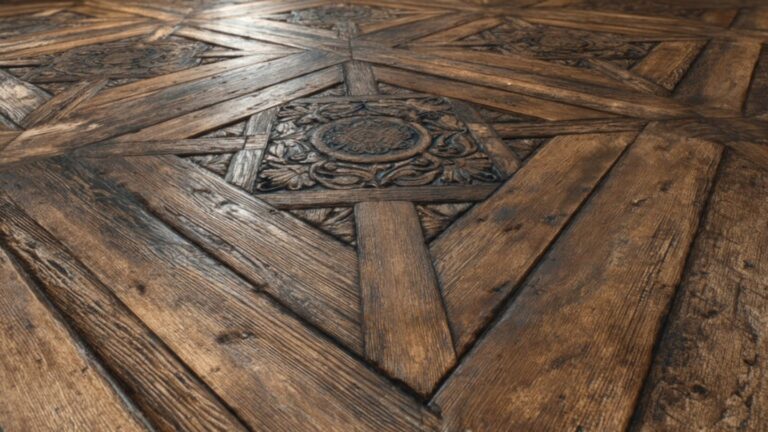
Parquet can turn up almost anywhere, from the hallway of a private house to long runs of woodblock in older school and office buildings. When it has been hidden under carpet or vinyl, the first job is to find out whether the blocks are still bonded. Hollow-sounding blocks are lifted, the old bitumen or adhesive is scraped back, and they are relaid with a modern adhesive. Where blocks are missing, salvaged ones of the same timber fill the holes, and any herringbone border broken by a later doorway or radiator is rebuilt.

Sanding parquet takes patience, because the grain changes direction every few inches. We move to finer grits earlier than we would on boards and finish with a multi-head or orbital sander to take out the cross-grain scratches that would otherwise show once the finish goes on. Our parquet floor sanding and parquet restoration service covers herringbone, basket weave and straight block patterns.

Staircases are almost entirely hand work. Treads, risers, strings and handrails are out of reach of the big belt sander, so we work them with detail sanders, cabinet scrapers and abrasive paper, then finished to suit the floors above and below. Stair sanding is often added to a hallway job so the whole route through the house matches, and a hard-wearing lacquer on the treads makes sense in a family home where the stairs are in constant use.

Wood floor sanding company
Floor sanding taunton

Aftercare, New Floors and Arranging a Survey in Cirencester

Once the last coat is down, the floor needs time to cure. After 24 hours most finishes are hard enough for walking about in socks; allow 48 to 72 hours before furniture goes back, with felt pads fitted under the legs. Rugs should stay rolled up for longer, as most finishes take a week or two to reach full hardness; we confirm the timing for the product used. Ask us which cleaning products suit your finish, because those made for an oiled floor can damage lacquer and the other way round.

In most homes a full resand is only needed every eight to ten years. In between, wood floor buffing (the trade calls it a screen and recoat) means scuffing the worn top layer of finish with a fine mesh and laying a new coat over it. The sheen returns and no timber is lost. Commercial floors take far more punishment, so four to five years between full sands is more realistic there, with buffing in the intervals.

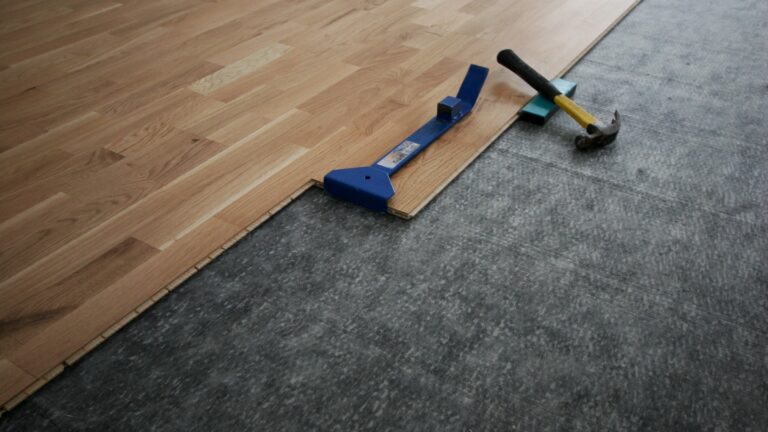
Some floors are too thin, too damaged or simply not there. For those we offer wooden floor installation. We can lay the new floor ourselves or simply supply the materials for your own fitter, using flooring and finishing systems from Junkers, Bona and similar manufacturers. A new floor can be finished on site to match the rooms around it.

To get started, take two photos: a wide shot showing the whole room, and a close shot of the part that worries you most. Those two pictures are usually enough for initial advice and for deciding whether a visit is worthwhile. The free survey takes about half an hour, and afterwards we send an itemised quotation in writing, and that figure is the one you pay unless the work itself has to change. Fill in the enquiry form, call 01823 674562 or email info@ryansrestoration.co.uk. Phones are answered between 8am and 6pm on weekdays, and Saturday visits can be arranged. For other towns in the county, see our page on floor sanding across Gloucestershire, or our page for floor sanding in Stroud.

Questions About Floor Sanding in Cirencester

At the survey we measure how much wood remains above the tongue on boards, or the depth of the wear layer on block and engineered floors, usually at a threshold or pipe run. If a floor has been sanded several times before, we plan a gentler grit sequence or suggest a screen and recoat instead of a full sand.

Usually, yes. Our stock of reclaimed boards and blocks lets us pick pieces that match the species, width and thickness of the originals. After sanding, a test of the chosen finish shows whether the repair needs a touch of stain to sit comfortably with the boards around it. Reclaimed oak has already settled and aged, so it blends in far better than new timber.

Yes. Most education work is booked into the summer holiday, half-terms or Easter, and dates are agreed with the school or college well ahead. Sports halls can be sanded, line marked to governing body specification and refinished during the break, with method statements and insurance documents provided beforehand if required.

For rooms with heavy foot traffic, spills and grit from outside, we usually suggest a hard-wearing water-based lacquer in matt or satin. It resists water marks and is easy to keep clean. Hard wax oil is the alternative for anyone who wants an oiled look in those rooms, although the busiest patches will need topping up more often.

Possibly, but it needs checking first. At the survey we take moisture readings at the edges and centre of the room, look at the airbricks and ventilation beneath the floor and note any earlier repairs. Boards that are too wet will move after finishing, so the cause should be dealt with before sanding goes ahead.

Yes, most people stay at home. We work room by room, sheet off doorways and connect the sanders to sealed dust extraction, which keeps the rest of the house far cleaner, though no system is completely dust-free. You will just need to keep off newly finished floors until they are dry enough to walk on.

Yes. After sanding, stains can warm, darken or grey a floor, and some lacquers and oils shift the tone slightly on their own. We always test the options on your own boards before going ahead, because each timber takes colour differently and a printed chart is only a rough guide.

Start with two photos sent through the quote form or by email: a wide view of the room and a detail shot of its most worn or damaged patch. We reply with initial advice and, where a visit is worthwhile, book a free survey lasting roughly thirty minutes. A written, itemised quotation follows the survey.