Floor Sanding Stroud

Floor Sanding and Wood Floor Restoration in Stroud

QUICK QUOTATION

Floor Sanding Taunton

Floor Sanding in Stroud

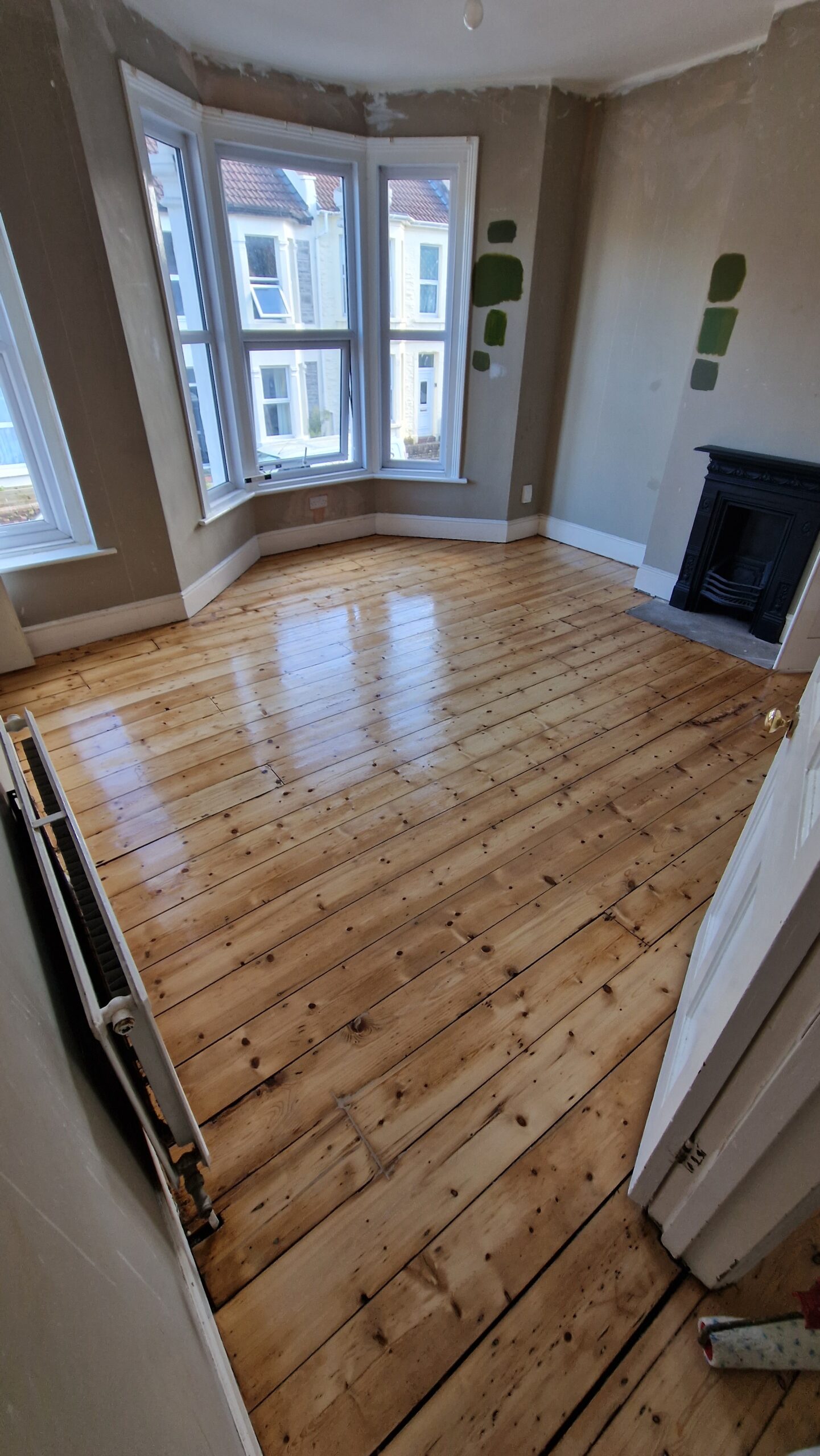
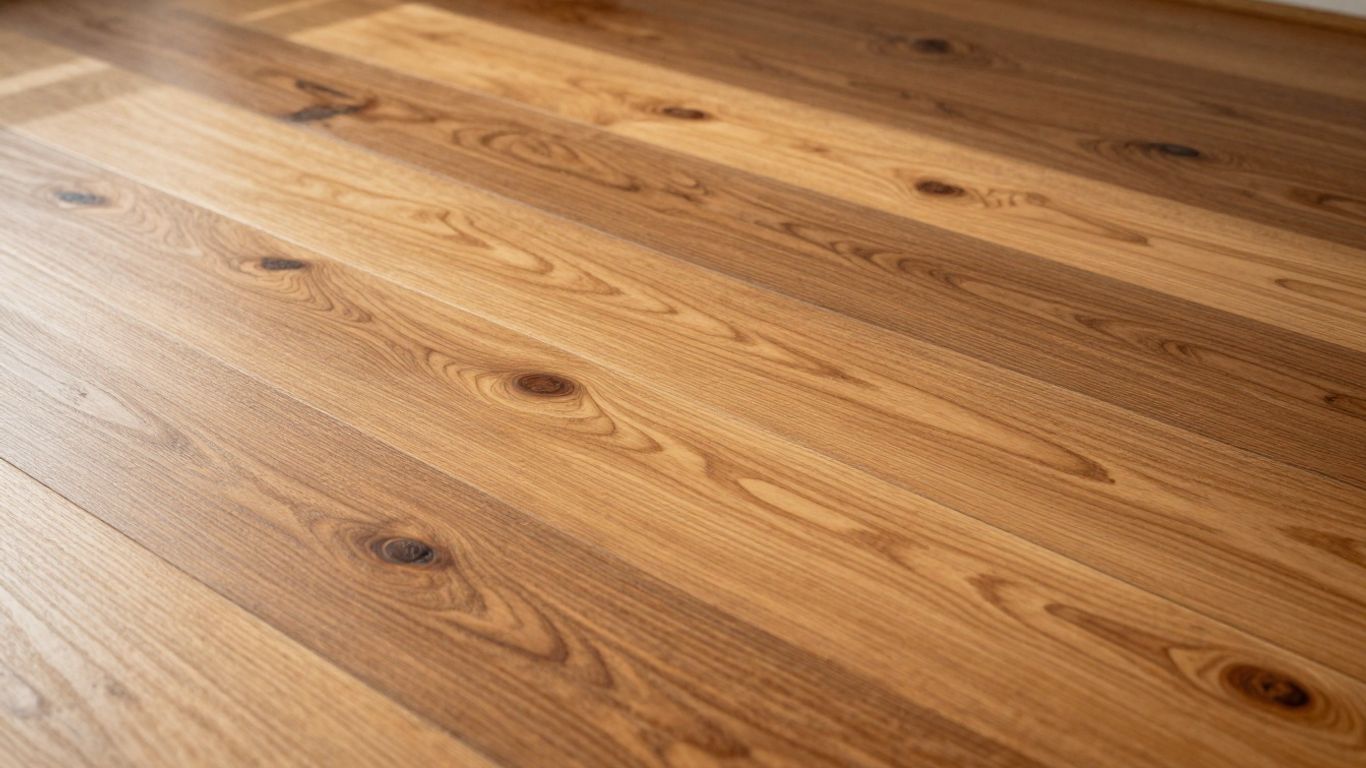
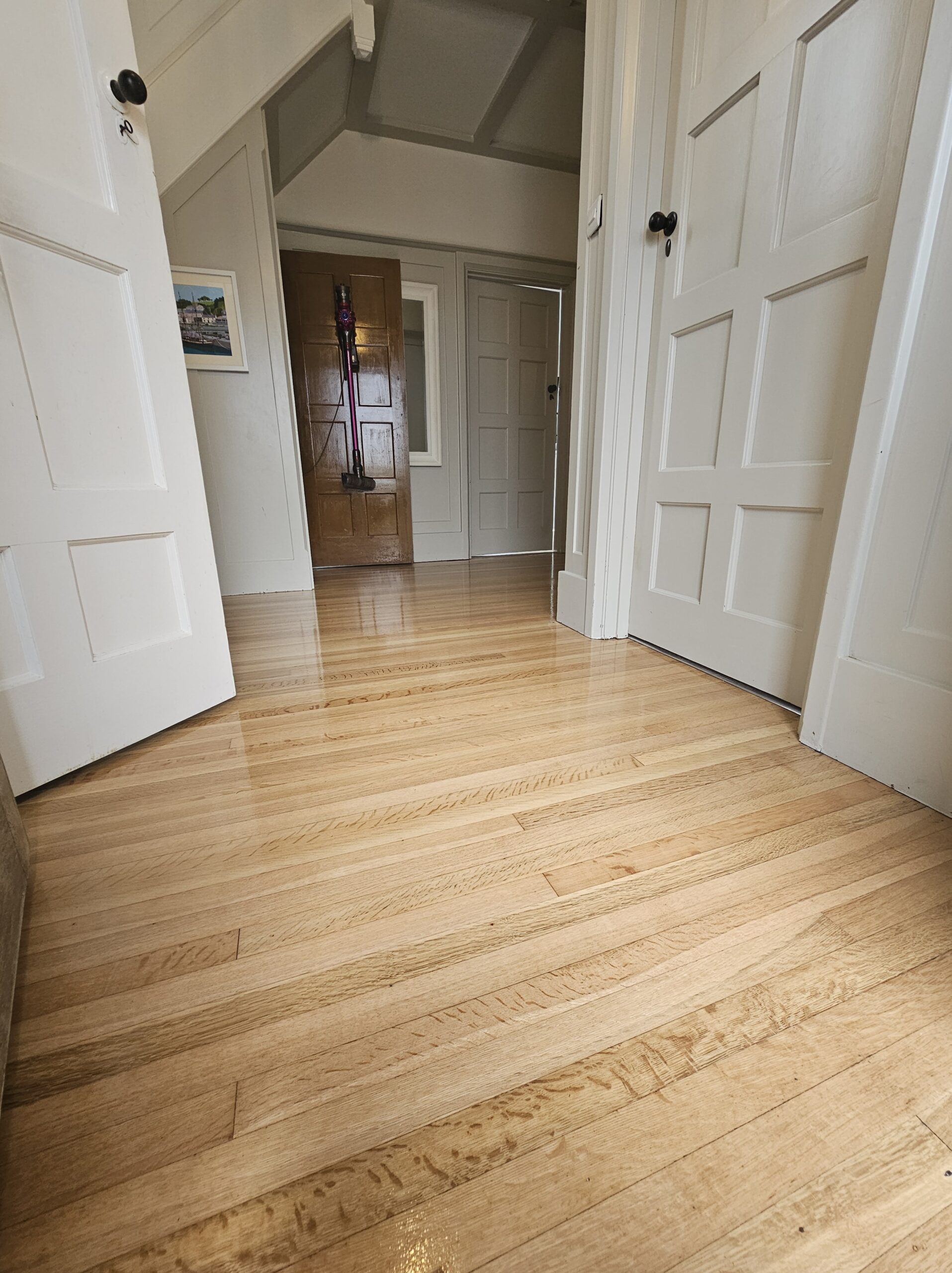
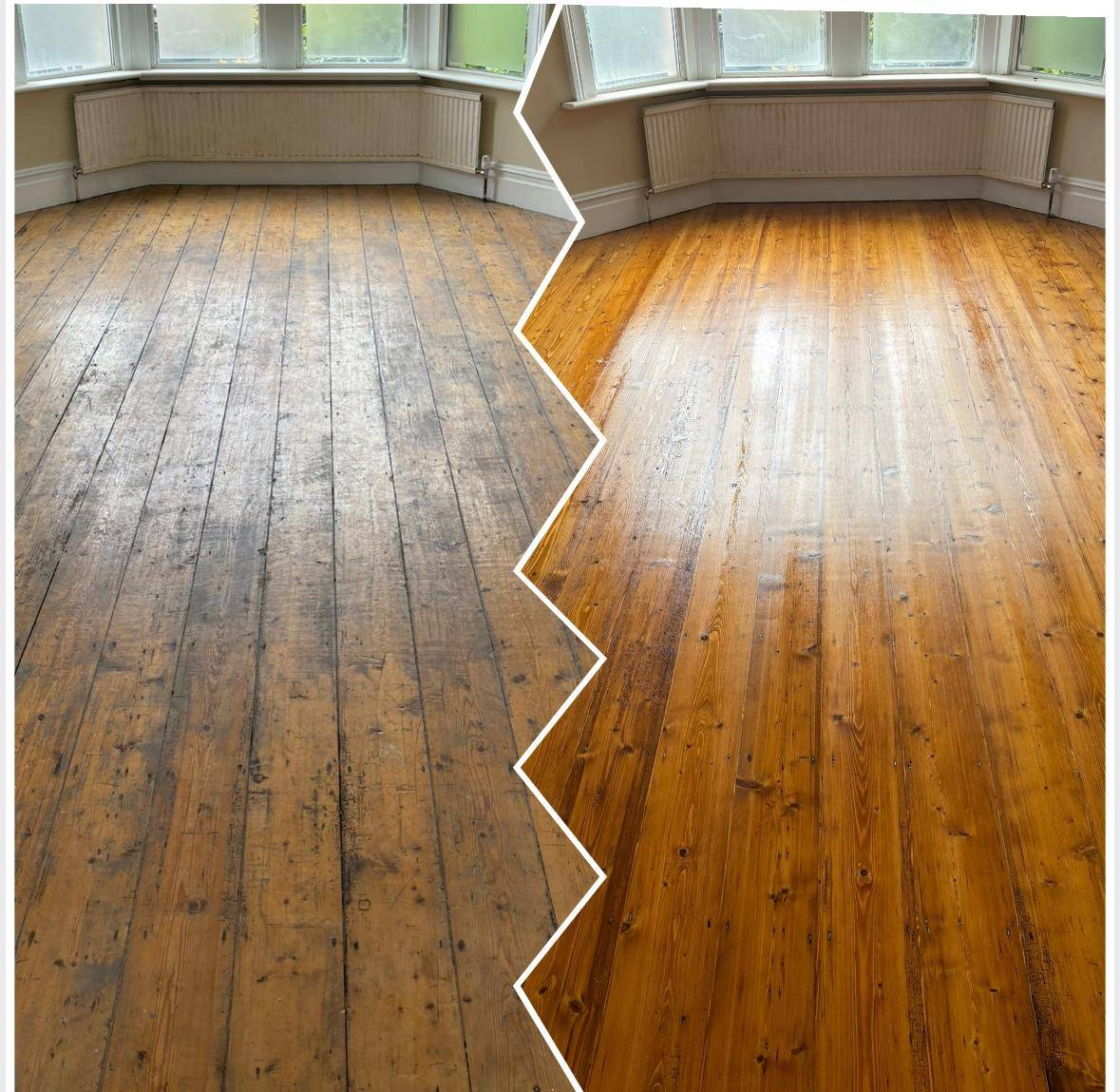
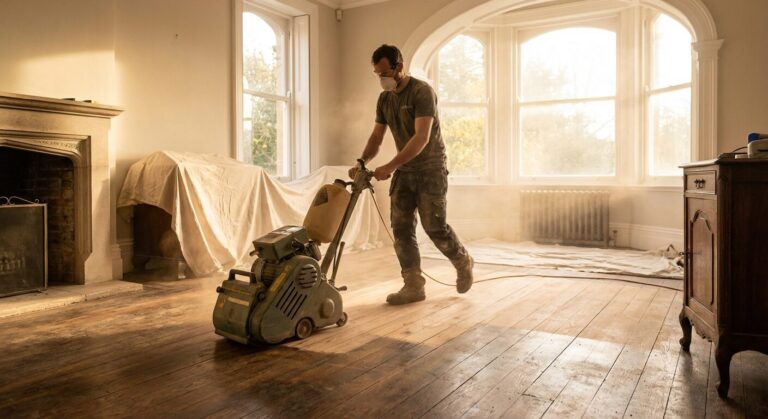
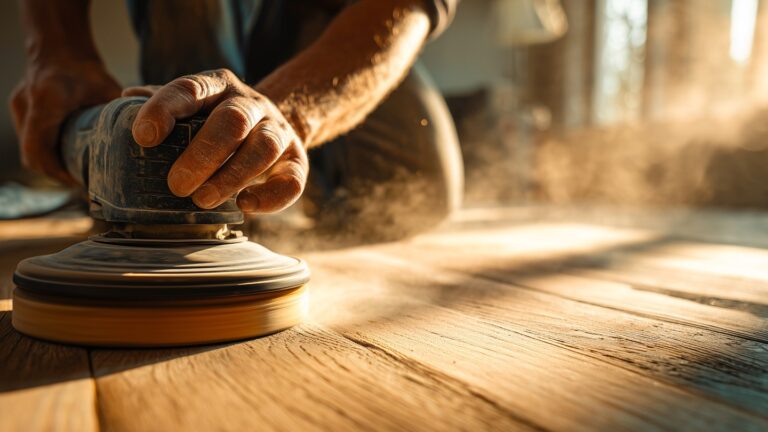
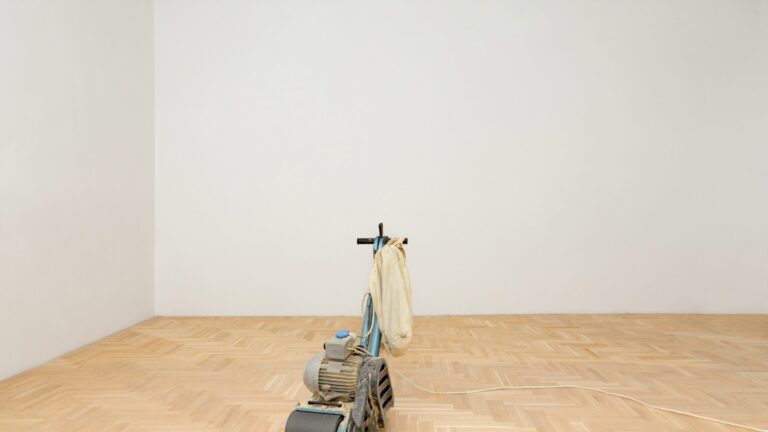
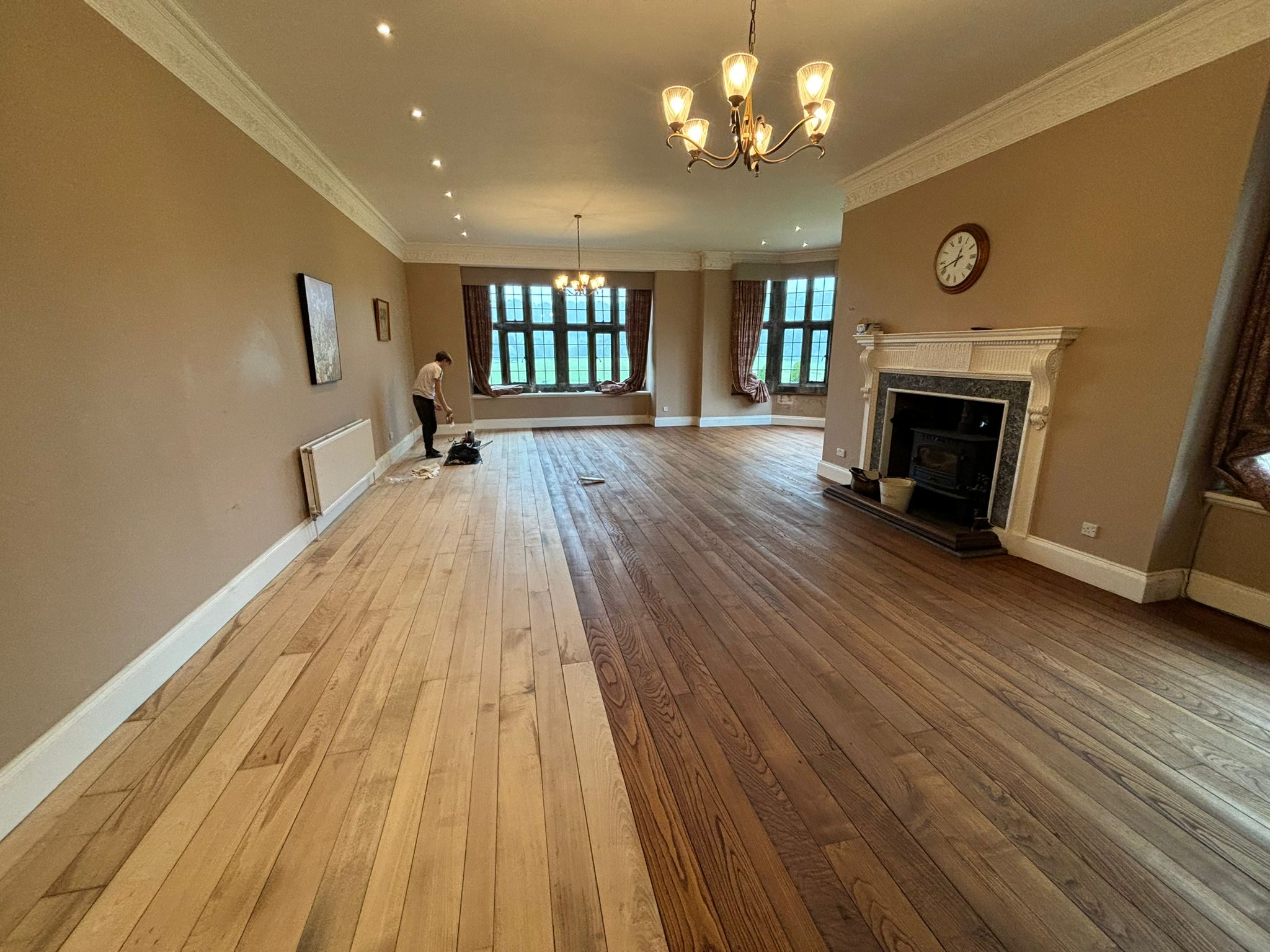
From narrow softwood boards in weavers’ cottages to thick pitch pine in converted mill buildings, our wood floor sanding service is built around assessing each floor before a machine ever touches it. Cottage boards that have already had a previous sand are measured for remaining thickness and worked lightly; heavy mill boards can take a firmer cut to clear old wear and staining. Sanding runs through graded abrasives to a smooth, even surface, with sealed dust extraction on every machine capturing the overwhelming majority of dust at source — essential in an occupied flat or cottage.

Floors that only need their finish refreshed are candidates for a no-sand restoration, which we will recommend whenever it is the better answer.

Pitch pine deserves a word of its own, because it behaves unlike any other softwood under a sanding machine. The resin that makes it so hard-wearing also gums up abrasives quickly, so the papers are changed far more often than on ordinary pine and the machine is kept moving to stop heat softening the resin into smears. Worked properly, the reward is a rich, striped board with real depth of colour that modern timber rarely matches.

Old cottage floors are rarely flat, and we do not pretend otherwise. Rather than grinding a wavy floor level — which would eat through the boards — the machines are run to follow the gentle undulations, with hollows and worn thresholds brought up by hand. The floor keeps its age and character; it simply gains a clean, sound, sealed surface.
Commercial Floor Sanding in Stroud

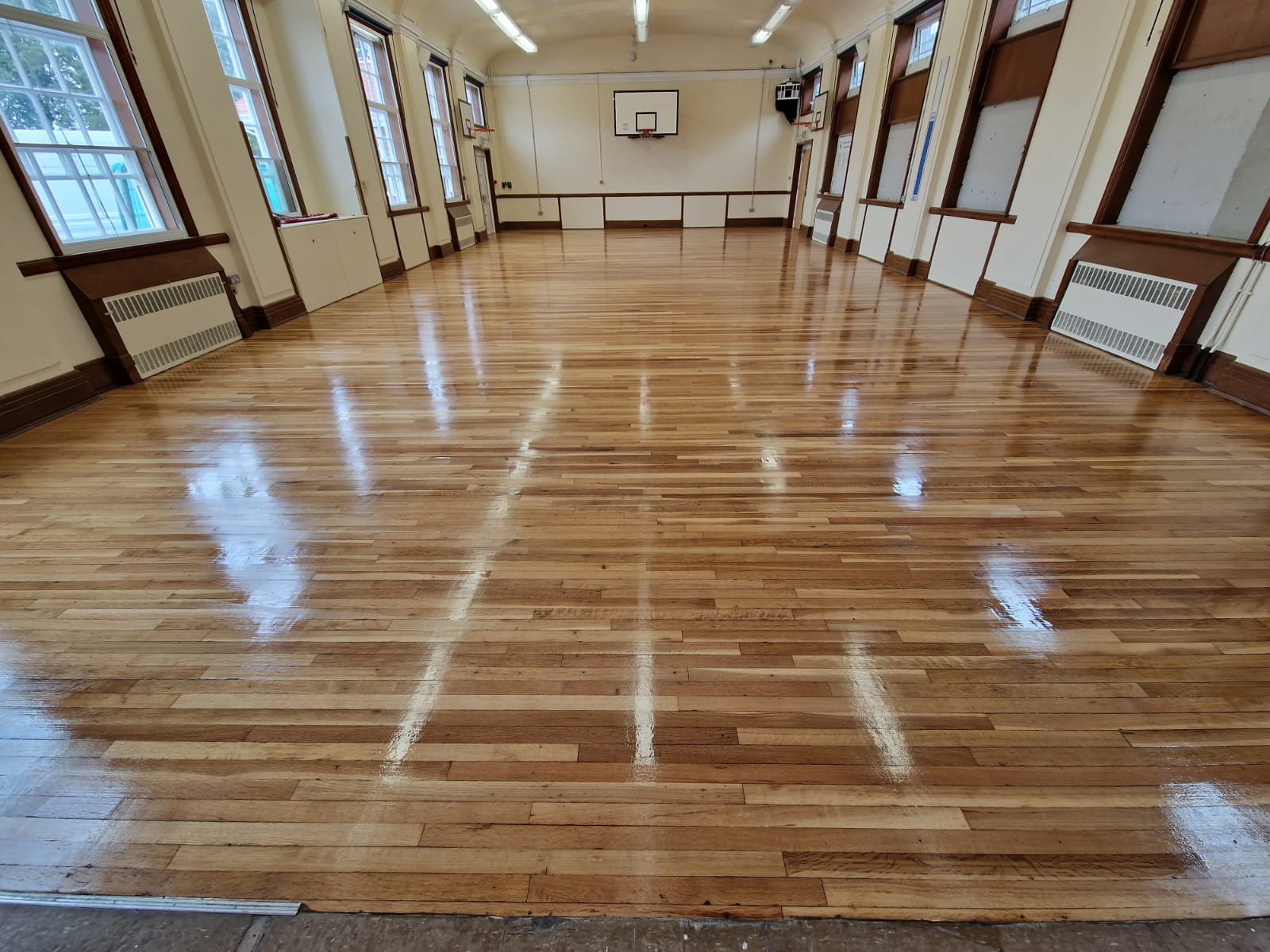
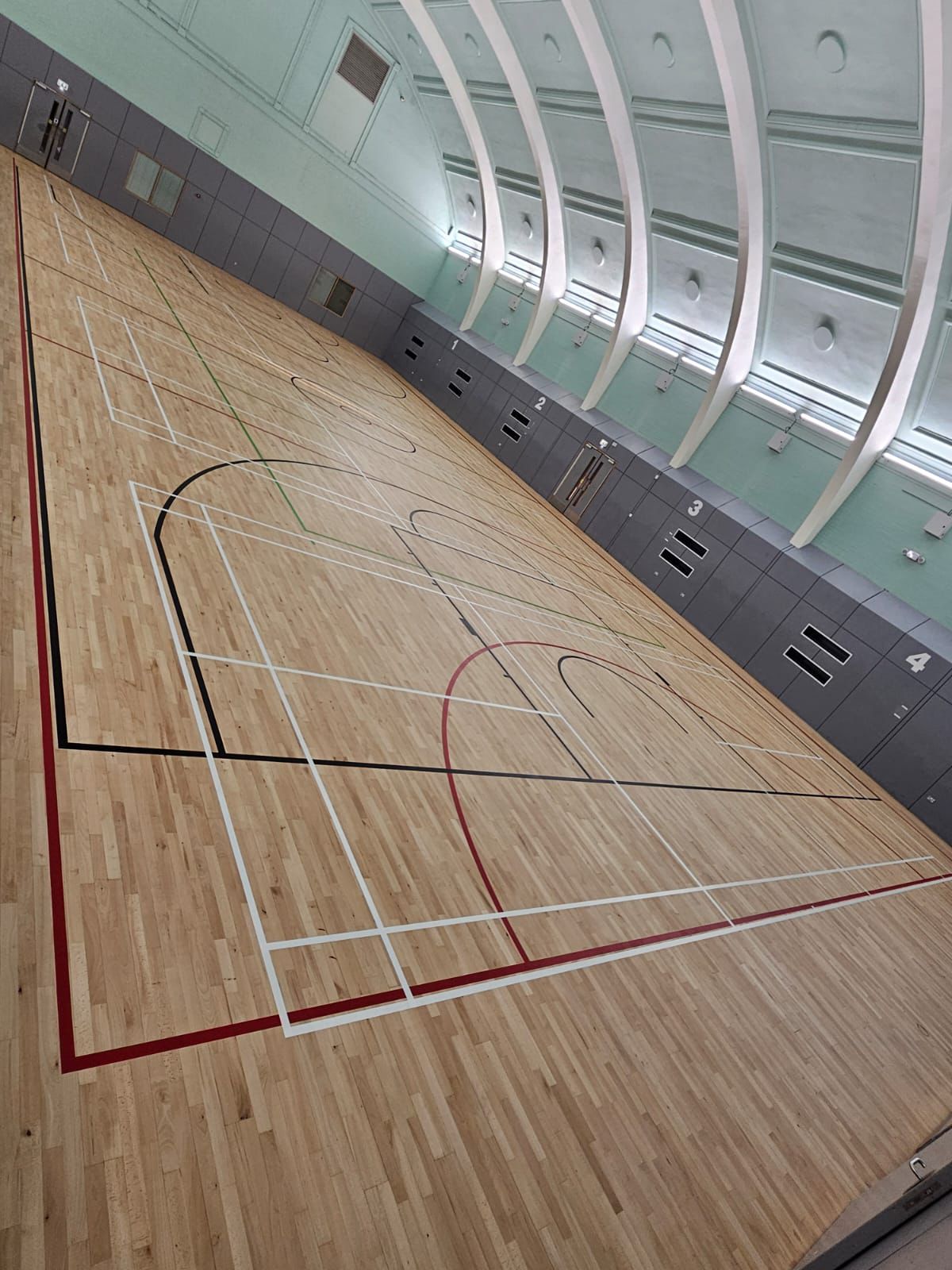
Our commercial floor sanding service keeps Stroud businesses trading while their floors are restored. Cafés and restaurant floors are refinished overnight, shop floors over a weekend, and larger venues in phased sections so part of the space is always usable. School halls and gym and sports floors are sanded, sealed and line-marked to governing body specification. Method statements and insurance documentation are provided as standard, and studio or workshop spaces in converted mills are well within scope.

An overnight commercial shift runs to a strict sequence. Furniture and fittings are moved and protected first, the floor is sanded and vacuumed, any filling is done while the machines move to the next zone, and sealing starts as soon as the surface is dust-free — timed so the final coat has its full drying window before the doors open. We test that the finish is ready to take traffic before handing back, not after, and each visit ends with the space cleaned and reset the way it was found.

For cafés and bars we also advise on the small things that make a refinished floor last: pads on chair and table feet, entrance matting that actually gets used, and a maintenance recoat booked before the wear reaches bare timber.

Floor sanding south east London
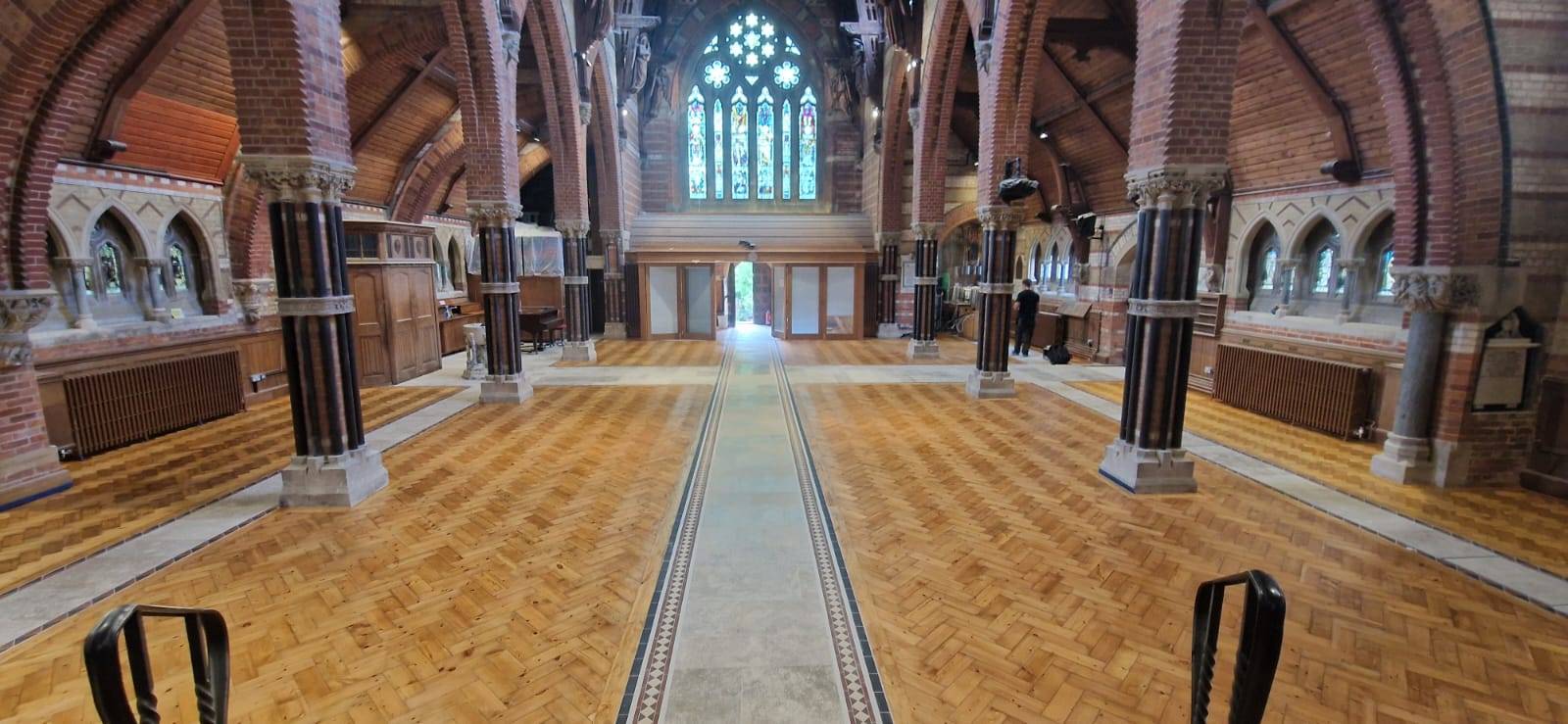
Commercial Hall Floor Refurbishment

Wood Floor Repairs, Squeaks and Board Replacement

Repairs come before abrasives. Wooden floor repairs deal with loose or lifting boards, patched areas and old bolt holes left over from mill machinery; squeaky floor repair fixes the boards that announce every footstep; and wood floor scratch repair handles localised damage without redoing the room.

Where boards are split or rotten, our floorboard replacement service draws on a stock of reclaimed timber so replacements match the originals in species and age. We also carry out gap filling, closing shrinkage gaps with timber slivers or resin so cottage floors stop funnelling draughts.

Mill conversions bring their own repair vocabulary. Old fixing holes and bolt positions are drilled out and plugged with pegs cut from matching timber, set with the grain running the same way so they all but vanish after sanding. Larger scars from removed machinery are let in — a neat rectangle of matched board pieced into the floor — rather than smothered in filler, which always shows.

We are straightforward about structural problems. Sagging joists, sleeper-wall settlement or timber weakened by historic notching are building repairs, not floor finishing, and if we find them we will tell you what we can fix and what needs a carpenter or builder before refinishing makes sense.

Parquet Restoration in Stroud

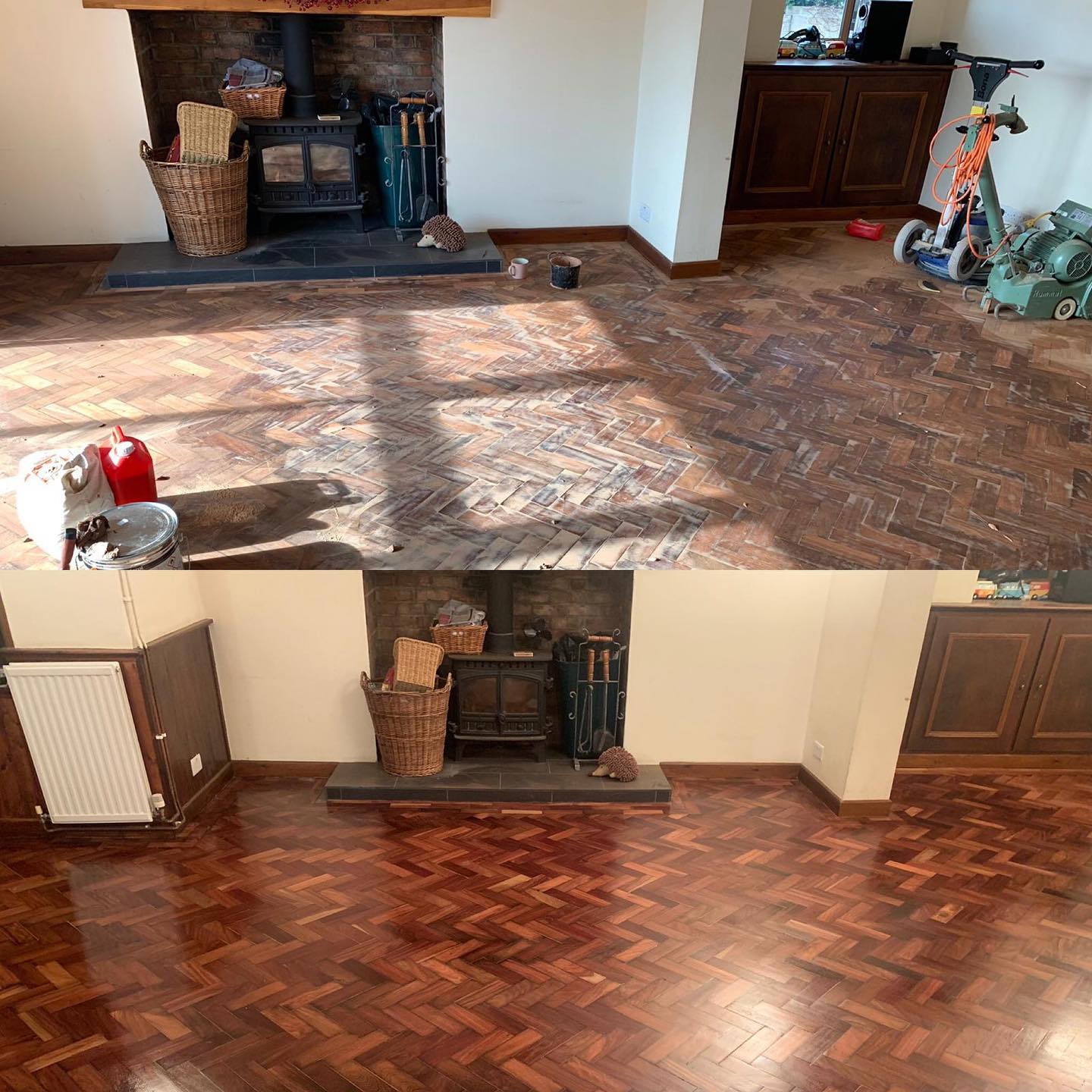
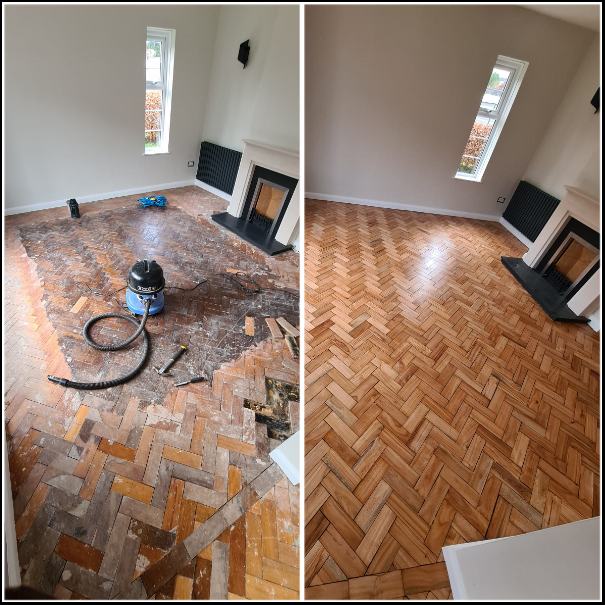
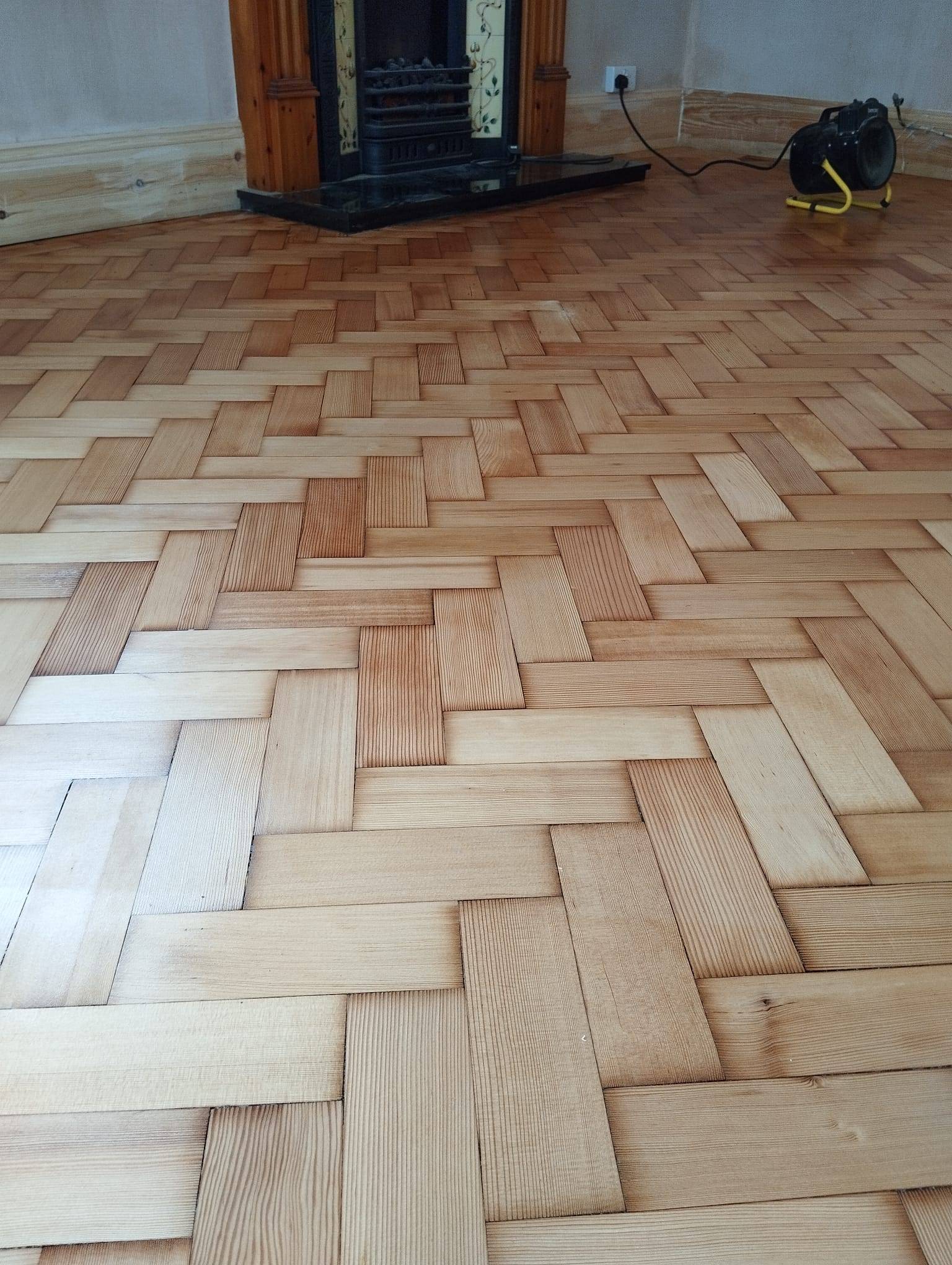
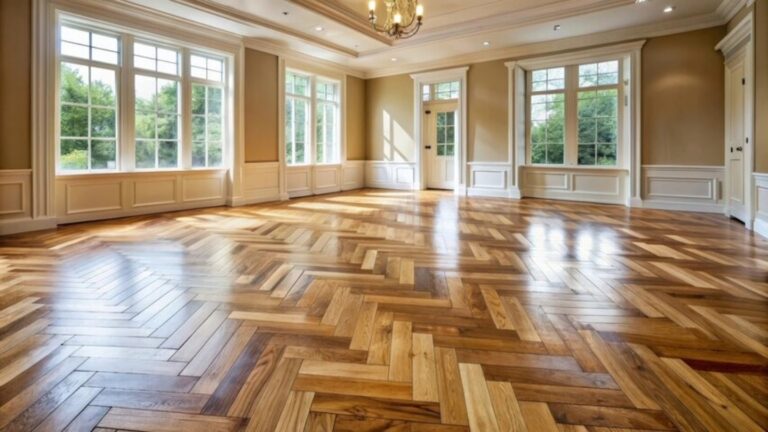
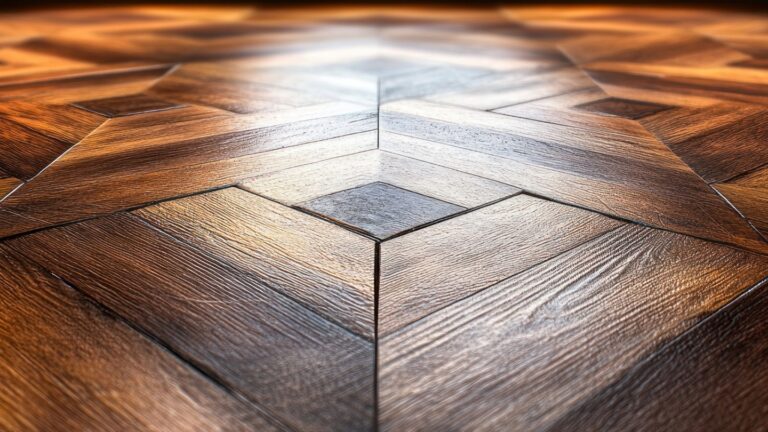
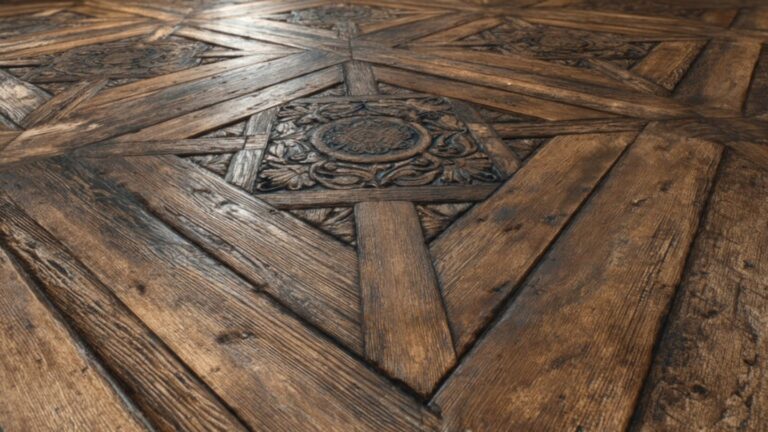
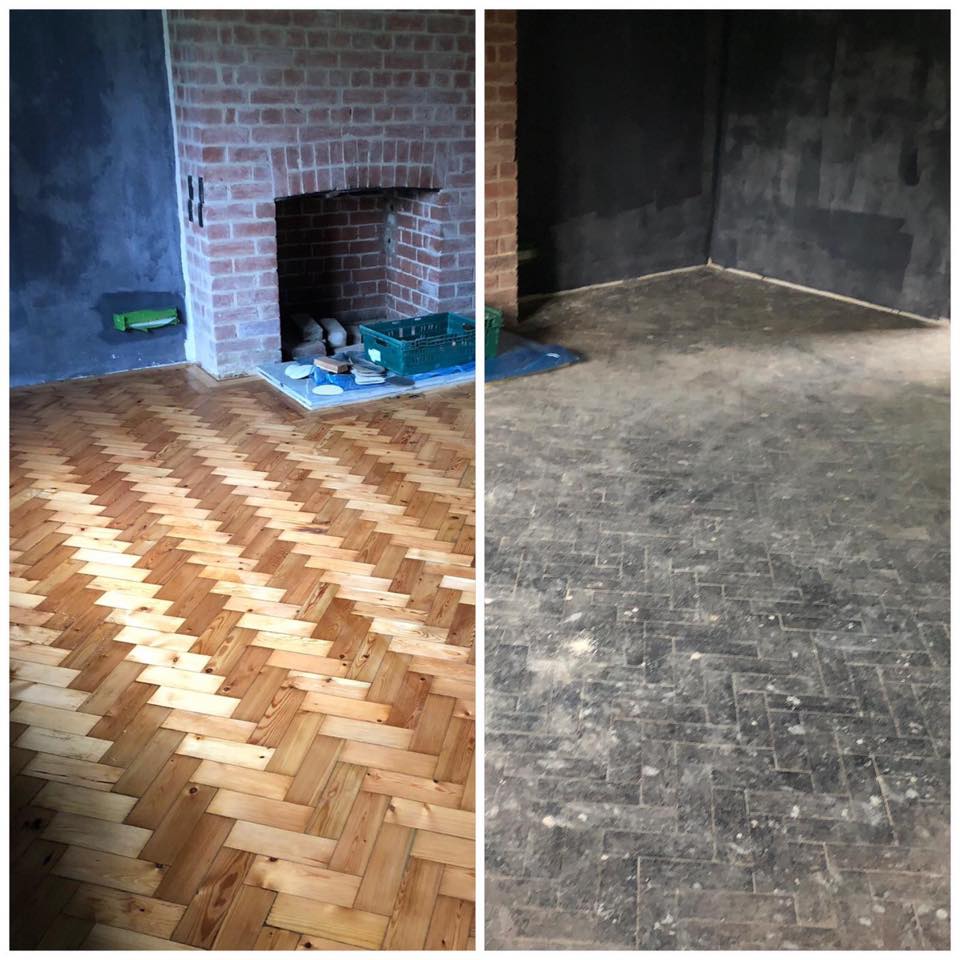
Block and herringbone floors are a speciality. Our parquet floor sanding service lifts and re-bonds any loose blocks, replaces missing ones from reclaimed stock, strips back old bitumen, and then sands the pattern dead flat before finishing. School halls, chapels and mid-century houses across the Five Valleys all turn up parquet worth saving, and a restored pattern outlasts almost any modern replacement.

The bitumen most old blocks were bedded in is the hardest part of the job. It cannot simply be sanded off the floor surface — it melts under friction and drags across the timber — so it is scraped and cleaned back mechanically, and block backs are stripped before re-bonding in a modern flexible adhesive. Beyond herringbone we restore basketweave and brick-bond patterns too, along with the double-block borders many period floors carry, keeping the original layout intact rather than simplifying it.

Floor Sanding Essex
parquet floor restoration near me

Staining, Oiling, Sealing and Waxing

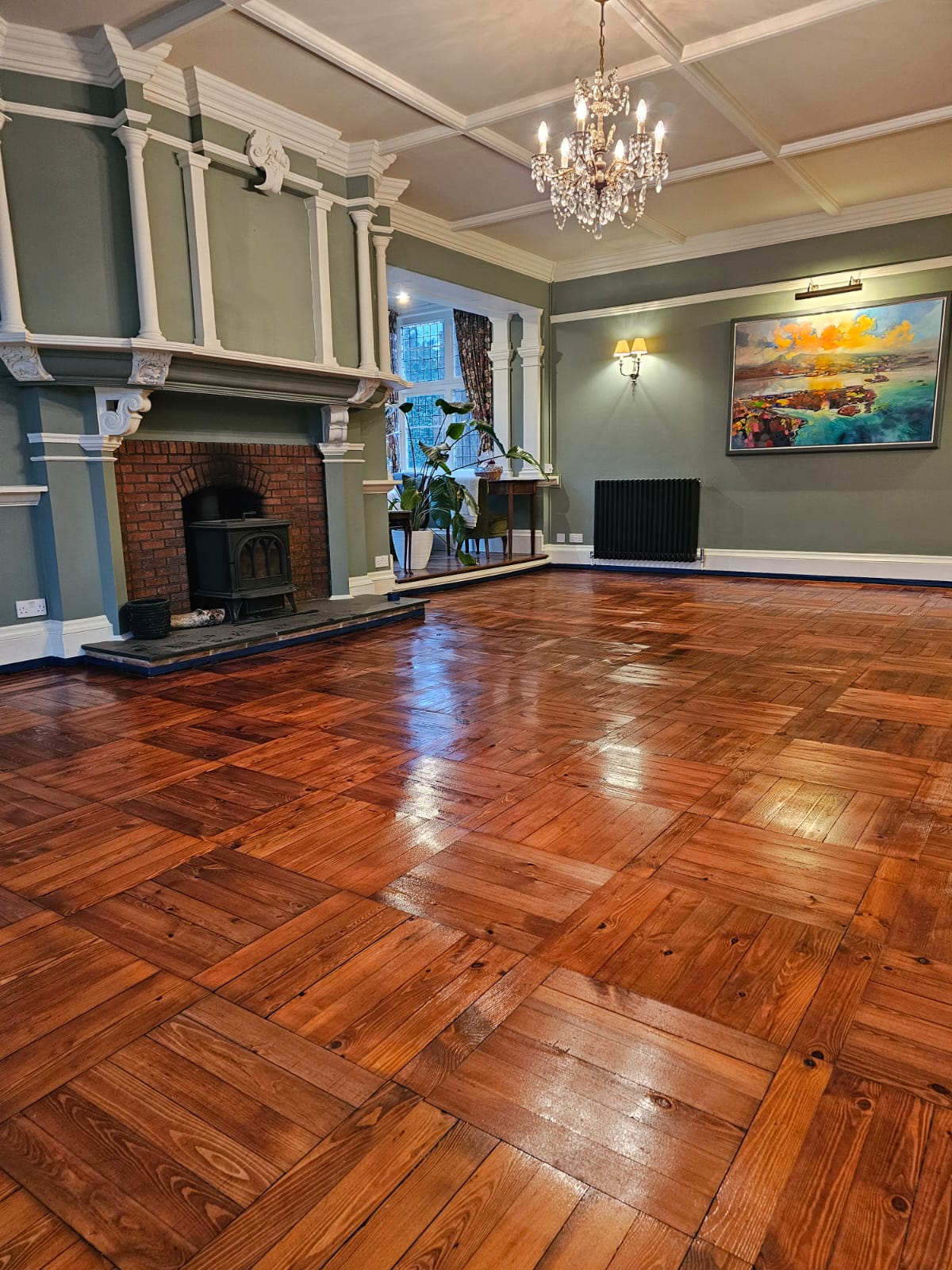
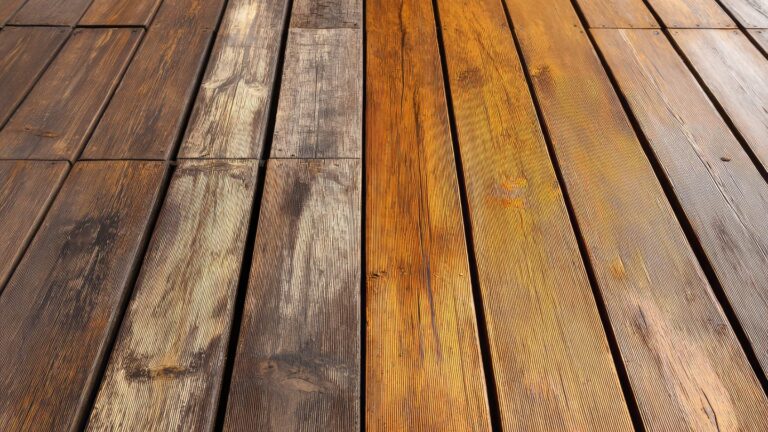
Choosing the finish is as important as the sanding. Hard-wearing lacquer through our wood floor sealing service suits kitchens and hallways; wood floor oiling gives a natural matt surface that can be repaired locally; waxing suits older cottage interiors. A colour change is handled through wood floor staining, always sampled on your own boards first.

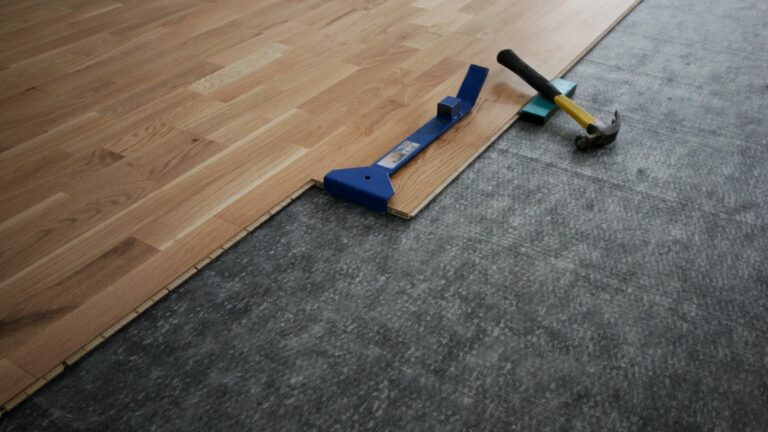
To keep a finished floor at its best we offer buffing and recoating and polishing, plus stair sanding and new wooden floor installation where a floor is past saving.

Wax remains the most sympathetic finish for genuinely old boards. Applied thinly and buffed to a soft sheen, it sits in the surface rather than forming a plastic film, deepens with every polish, and can be renewed room by room without machinery. It asks a little more of its owner than lacquer does, and we say so plainly — but on cottage floors the glow is hard to beat.

Oiled floors take a middle path: the traffic lanes that dull first can be cleaned and re-oiled on their own, without touching the rest of the room, so the floor is maintained in patches over the years rather than redone in one go. Which finish suits which room is exactly the conversation we have at survey.

Get a Floor Sanding Quote in Stroud

Send two photographs of your floor — one from the doorway, one close up — and we will give you an honest opinion and a fixed written quotation. A free, no-obligation site survey is available across Stroud and the valleys; mention parking if your lane is steep or narrow and we will plan for it.

Call 01823 674562, email info@ryansrestoration.co.uk, or use the form on this page.

All services available in Stroud: floor sanding, commercial sanding, floor repairs, floorboard replacement, gap filling, parquet restoration, staining, sealing, oiling, waxing, stair sanding and installation.

Nearby areas we also cover: Cirencester, Gloucester, Cheltenham and Gloucestershire. There is a page for each, and the full list of towns is on our areas we cover page.

Parquet Flooring Restoration

FAQ: Floor Sanding in Stroud

Sand and refinish it, repair it, replace individual boards, fill gaps, restore parquet, stain it a new colour, seal, oil or wax it, sand the stairs to match, or fit a new floor entirely — domestic and commercial alike.

Yes. We plan commercial work for nights and weekends and split large areas into phases, so cafés, shops and venues stay open throughout.

No — repair is the first option. We only swap a board when the timber is truly gone, and then we use reclaimed stock so the newcomer blends in with its neighbours.

Usually, yes. Even blocks that are loose, patchy or blackened with bitumen generally re-bond, sand flat and finish beautifully, at a fraction of the upheaval of replacing the floor.

We can. Staining takes floors darker or shifts their tone, and we always put sample patches on your own timber first so the decision is made on evidence, not a brochure.

Engineered floors do if the wear layer is thick enough — we measure it during the free survey. Laminate has no real timber surface, so it cannot be sanded.

No. Sealed extraction on every machine captures the overwhelming majority of dust at source, which matters all the more in a mill flat where airborne dust has nowhere to go.

Two photographs by email earn you an honest opinion and a fixed written quotation; a free no-obligation survey is a phone call away on 01823 674562.

Yes, but the technique differs. Pitch pine is dense and resinous, so abrasives are changed frequently and the machines kept moving to stop the resin smearing. Handled properly it finishes beautifully, with a striped figure and depth of colour modern softwood cannot match.

It can, though not by sanding alone — bitumen melts under friction and smears. We scrape and clean it back mechanically, strip the backs of any lifted blocks, and re-bond them in a modern flexible adhesive before the floor is sanded flat.