Floor Sanding Gloucestershire

Wood Floor Sanding and Restoration Across Gloucestershire and the Cotswolds

QUICK QUOTATION

Floor Sanding Taunton

Floor Sanding Across Gloucestershire

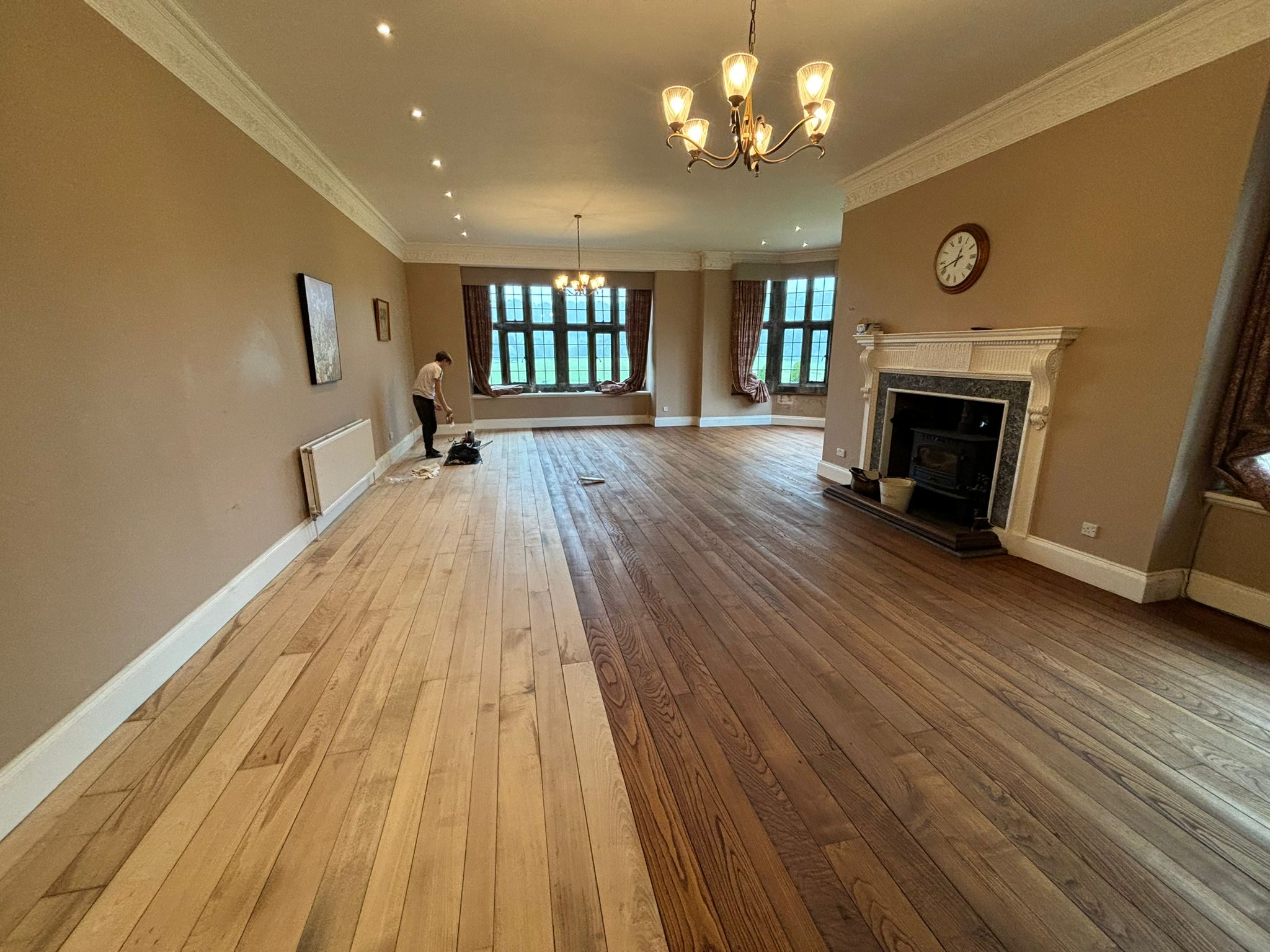
We provide dust-free wood floor sanding across the whole of Gloucestershire and the Cotswolds, with local pages for Gloucester, Cheltenham, Stroud, Cirencester, Tewkesbury, Thornbury and Yate, plus coverage of Tetbury, Nailsworth, Dursley, Winchcombe, the north Cotswold towns and the Forest of Dean. The method is the same everywhere: assess and measure, repair, sand in stages with sealed extraction capturing the overwhelming majority of dust at source, then finish to a written specification with a fixed quotation agreed first. The M5 makes the whole county an easy run.

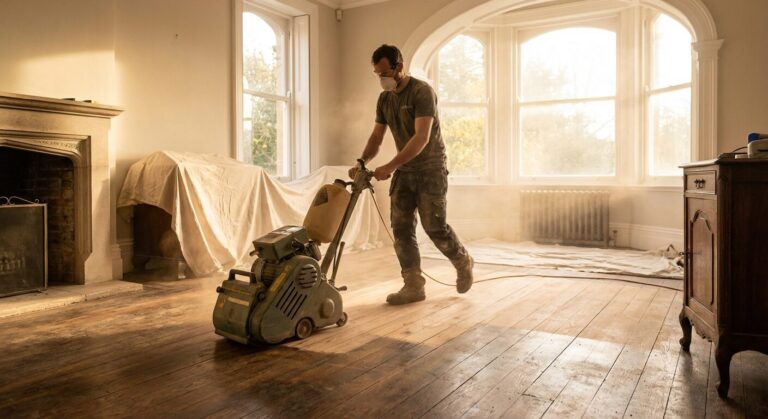
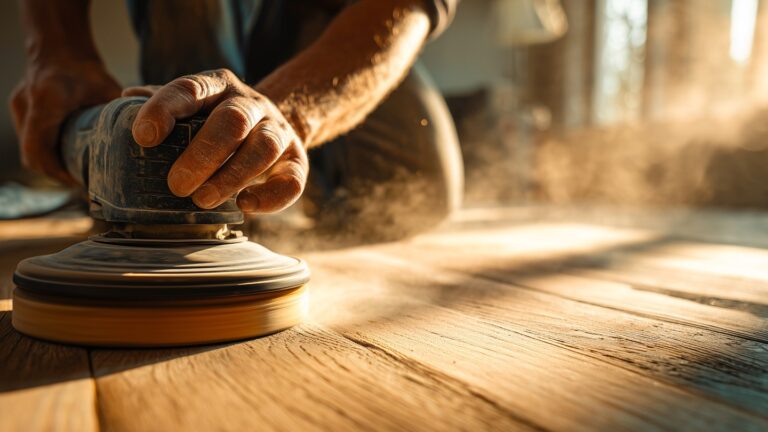
Why sand in stages at all? Because a single coarse pass leaves deep scratches that a seal magnifies rather than hides. The opening grit does the heavy work — stripping finish, flattening wear — and every grade after it exists to erase the marks of the grade before, until the final pass leaves a surface fine enough for the finish to lie evenly. Cutting a stage out shows up on the finished floor as faint tramlines under low sunlight, which is exactly when Cotswold rooms are at their best, so the sequence is never shortened.

Preparation gets the same discipline. Every fixing across the floor is sunk below the surface before the machines start, protruding staples and tacks from old coverings are drawn, and any board that flexes is refixed — a moving board sands unevenly because it dips away from the machine. The belt is run along the length of the boards, following the grain, and the room is vacuumed and wiped between grades so spent grit from one pass cannot scratch the next.
Commercial Floor Sanding in Gloucestershire

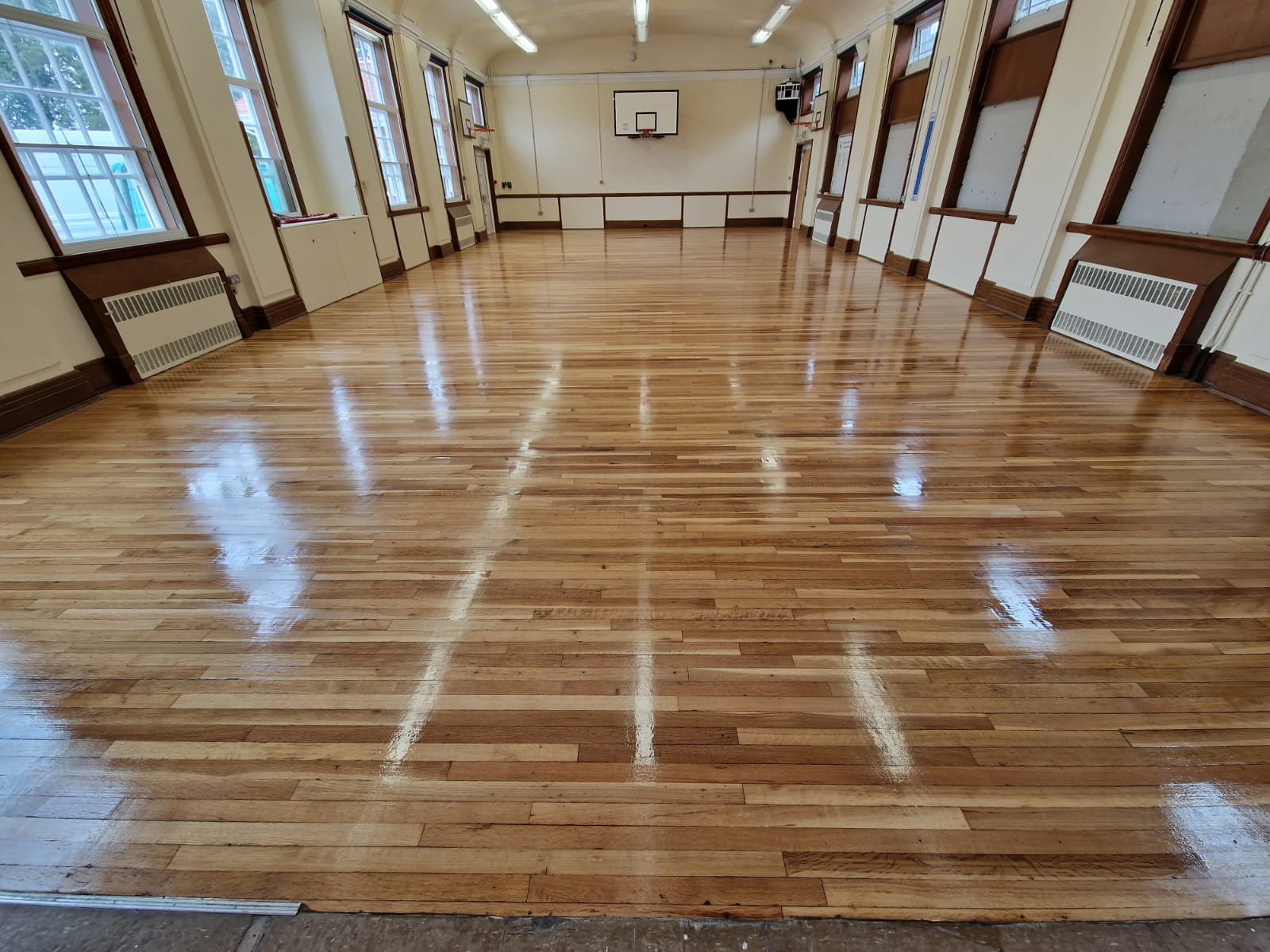
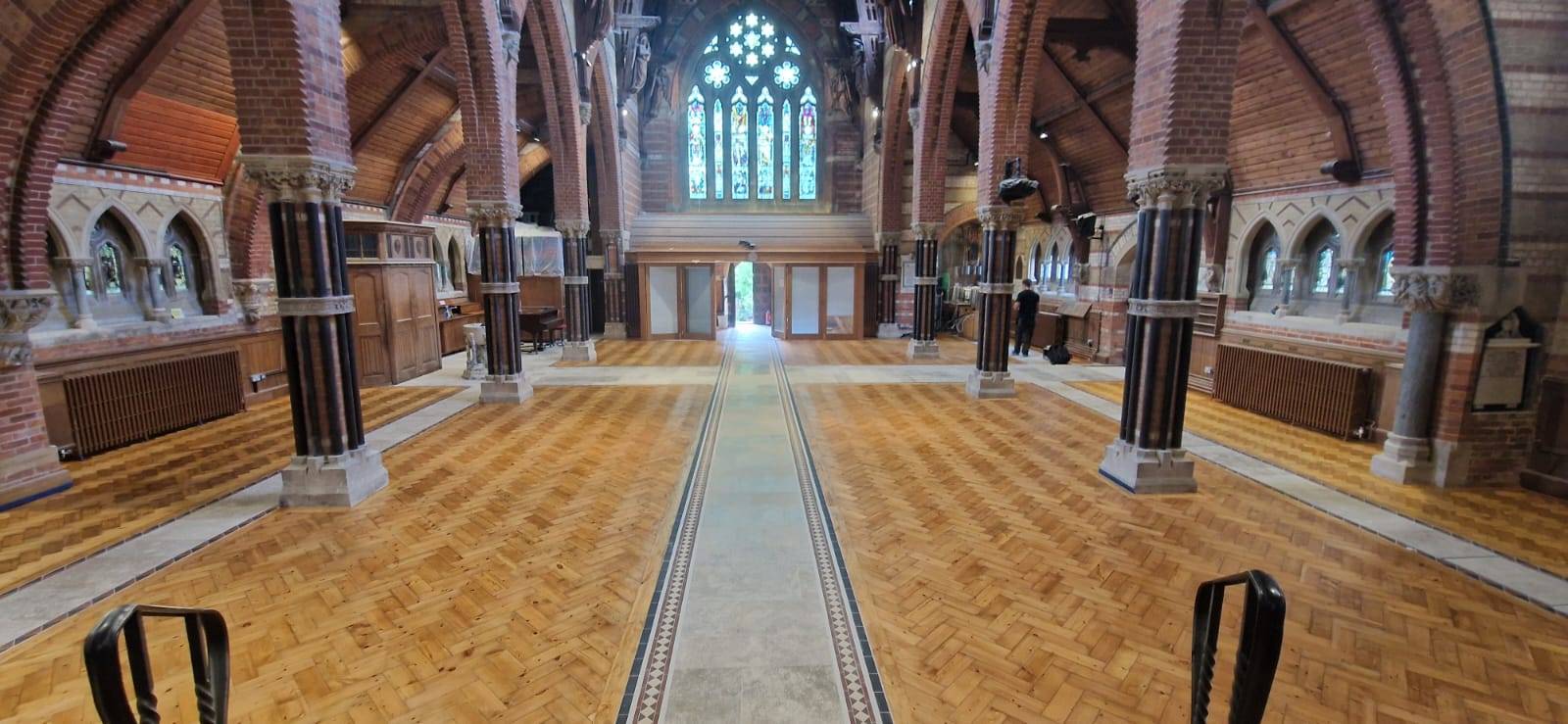
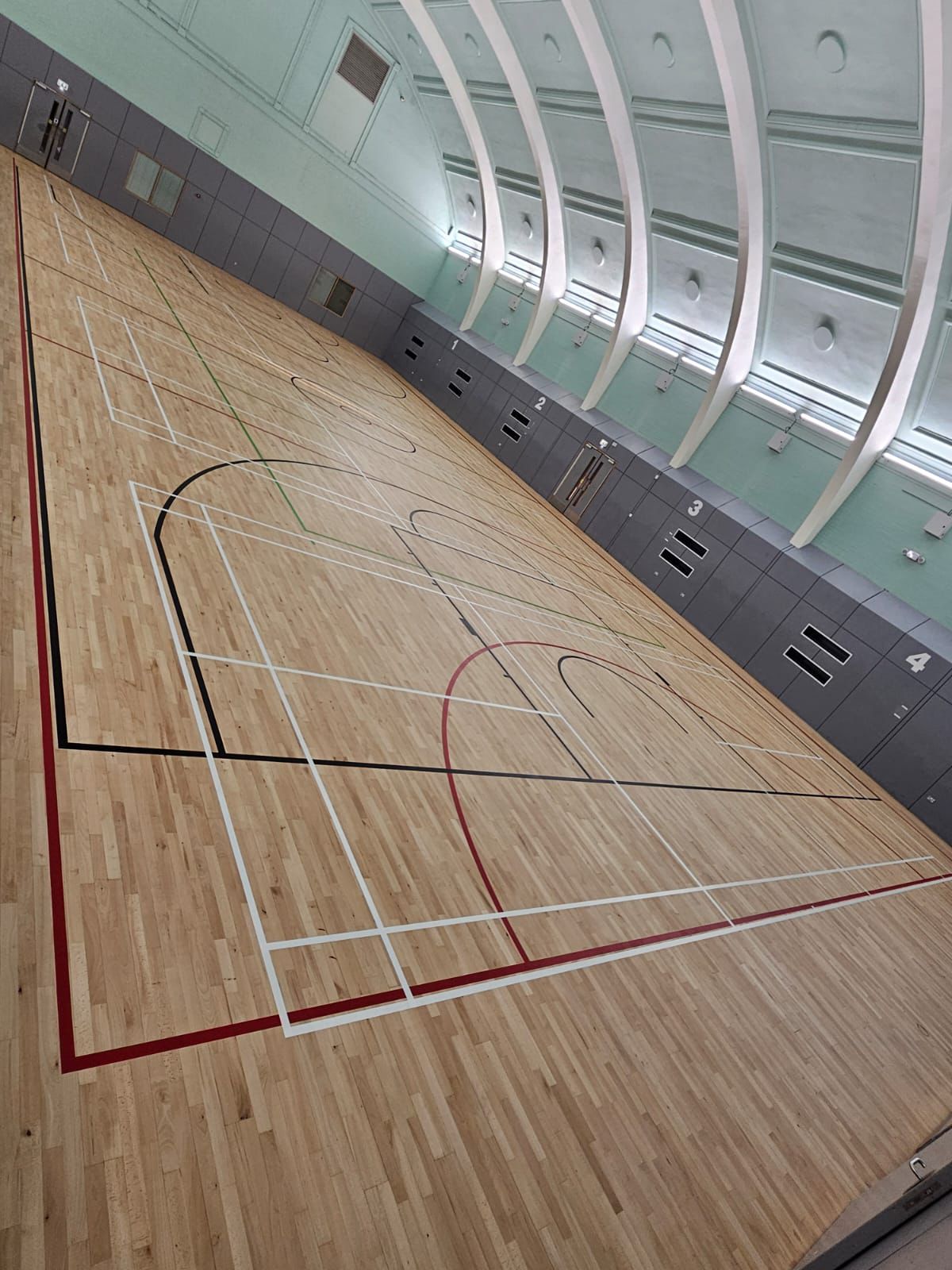
Commercial floor sanding keeps the county’s businesses open while their floors are renewed: Cotswold dining pubs, inns and restaurants sanded overnight with fast-curing seals so no service is lost, shops phased behind barriers, Cheltenham and Gloucester offices completed over weekends, village and church halls refinished between bookings with court lines re-marked to specification, and school halls booked into holidays. Method statements, risk assessments and insurance certificates come as standard on every commercial job.

Line marking on hall and sports floors is a specification exercise in its own right. Court dimensions, line widths and colours come from the governing body of each sport, and where a hall hosts several — badminton over a five-a-side outline over short tennis — the colour hierarchy is agreed with the hall committee before anything is painted. The lines go down onto sealed timber and are then locked under the final coat of lacquer, so they wear at the rate of the floor rather than scuffing off its surface.

Every commercial programme also fixes the reopening sequence in writing: when the surface takes foot traffic, when furniture and equipment return, and when normal cleaning resumes. A newly sealed floor is at its most vulnerable in its first days, and a hall that drags its stacking chairs back six hours early can undo a holiday’s work — so the handover note says exactly what can happen when, and why.

Floor sanding south east London
Commercial Hall Floor Refurbishment

Wood Floor Repairs and Restoration

Repair services cover everything the county’s housing needs: wooden floor repairs, squeak and movement fixes, floorboard replacement with reclaimed timber matched for species, width and age, scratch and gouge removal and gap filling. Elm and oak in the Cotswold cottages are repaired by piecing in rather than wholesale replacement; listed-building consent questions are handled at survey; and anywhere the Severn has ever reached gets moisture readings before any promise is made.

Piecing-in is the default repair philosophy: cut out only the damaged length of board, back to the nearest joist so the new piece lands on solid bearing, and let the rest of the original floor stay where it has been for a century. Wholesale board replacement is reserved for timber genuinely past saving. The reclaimed stock makes this work, since a pieced-in repair only vanishes when the infill matches the surrounding boards in species, width, thickness and age of surface — modern timber in old floors reads as a patch forever, however carefully it is finished.

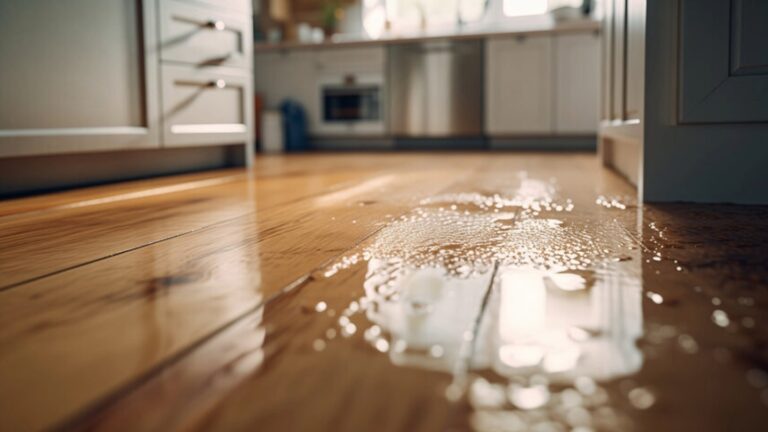
Floors in the Severn and Avon flood plains follow a strict drying protocol before restoration is even scheduled. Timber that has stood in water swells, cups and holds moisture deep in its thickness long after the surface feels dry, so we take readings through the boards and into the subfloor over time, not on a single visit. Sanding cupped boards flat while they are still wet guarantees they dry hollow; waiting until the numbers stabilise means the floor is sanded once, correctly, and stays flat.

Parquet Floor Restoration in Gloucestershire

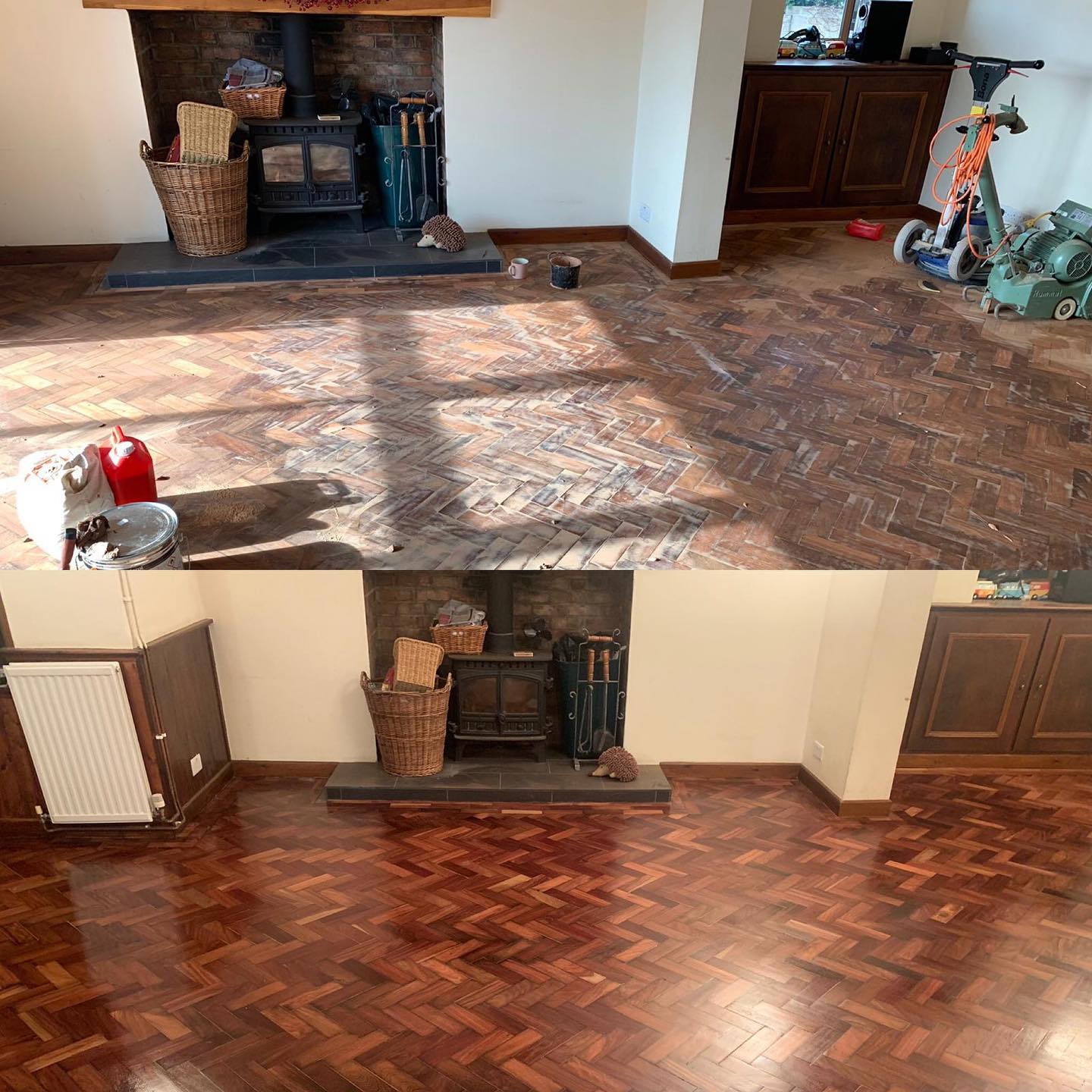
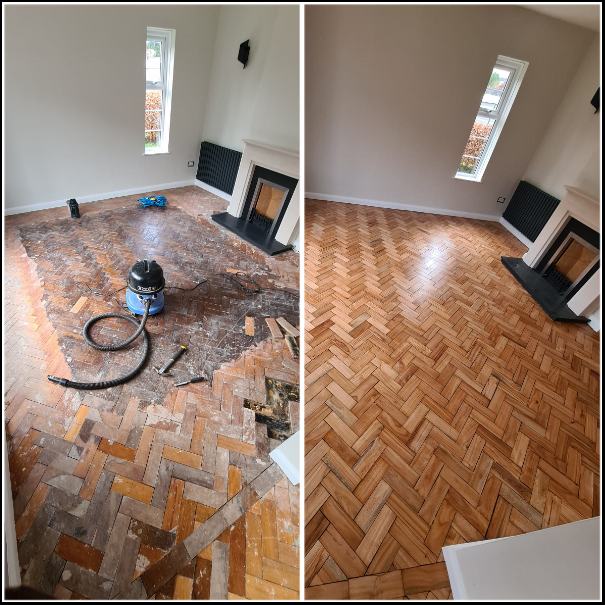
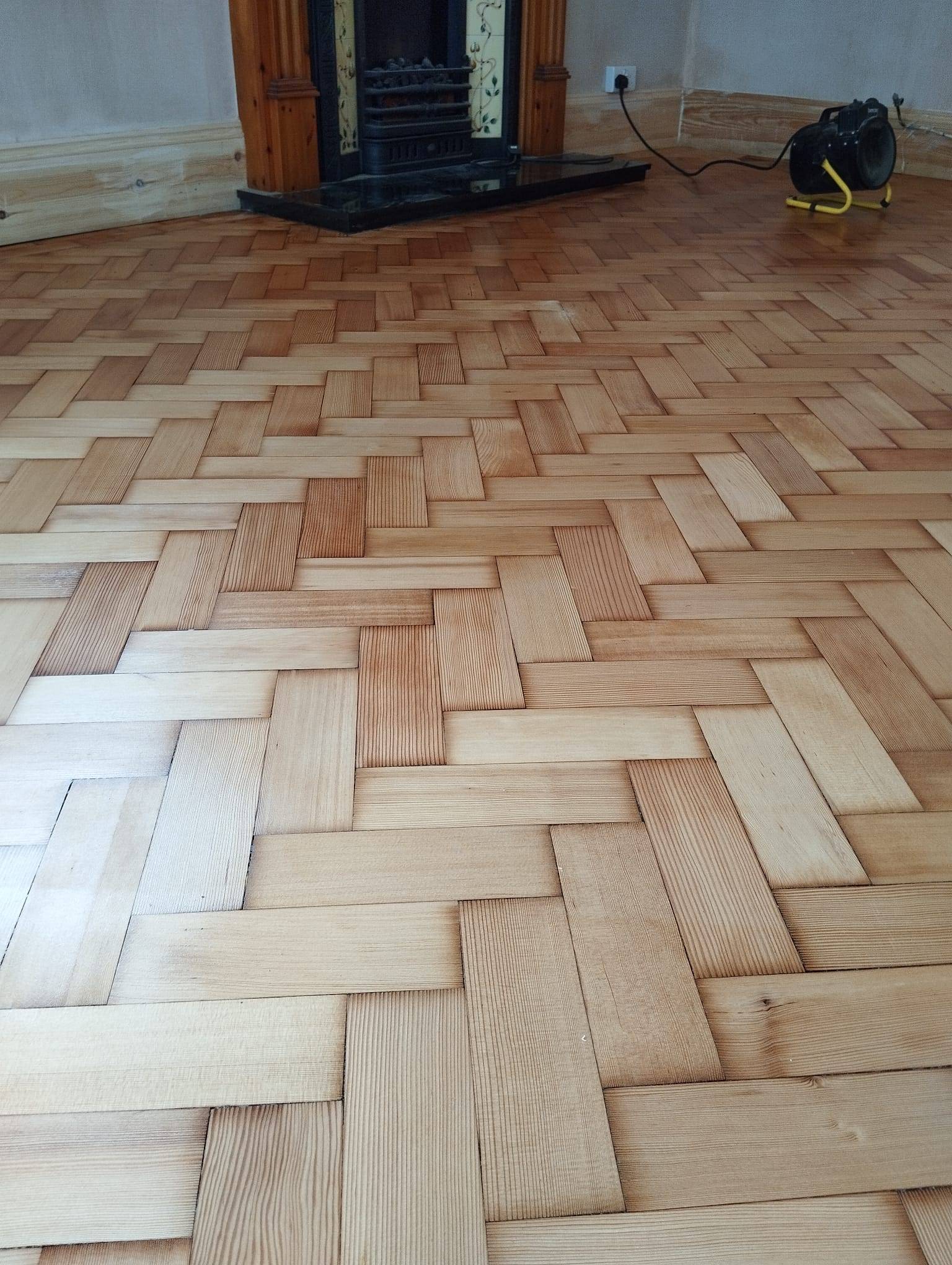
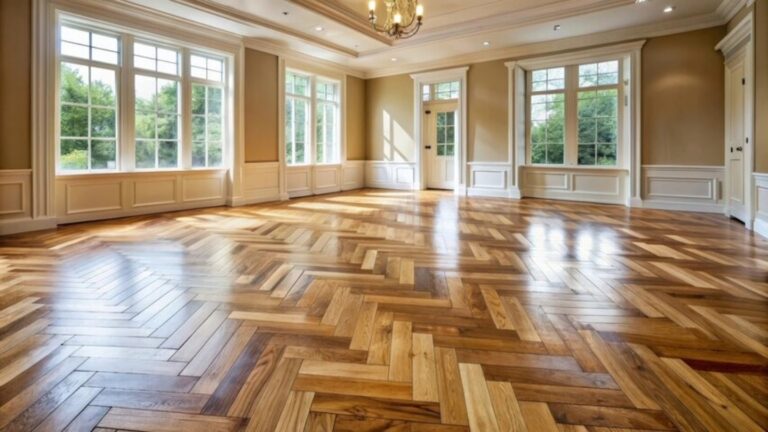
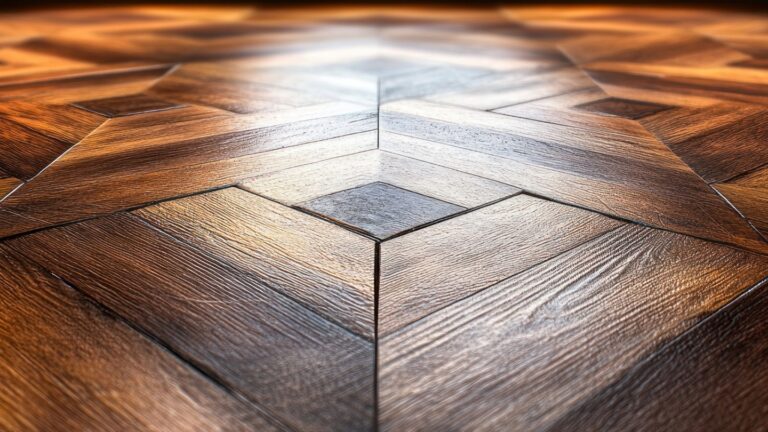
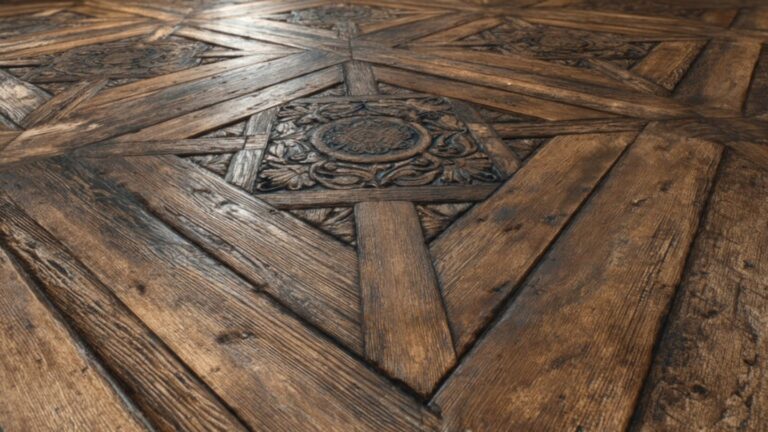
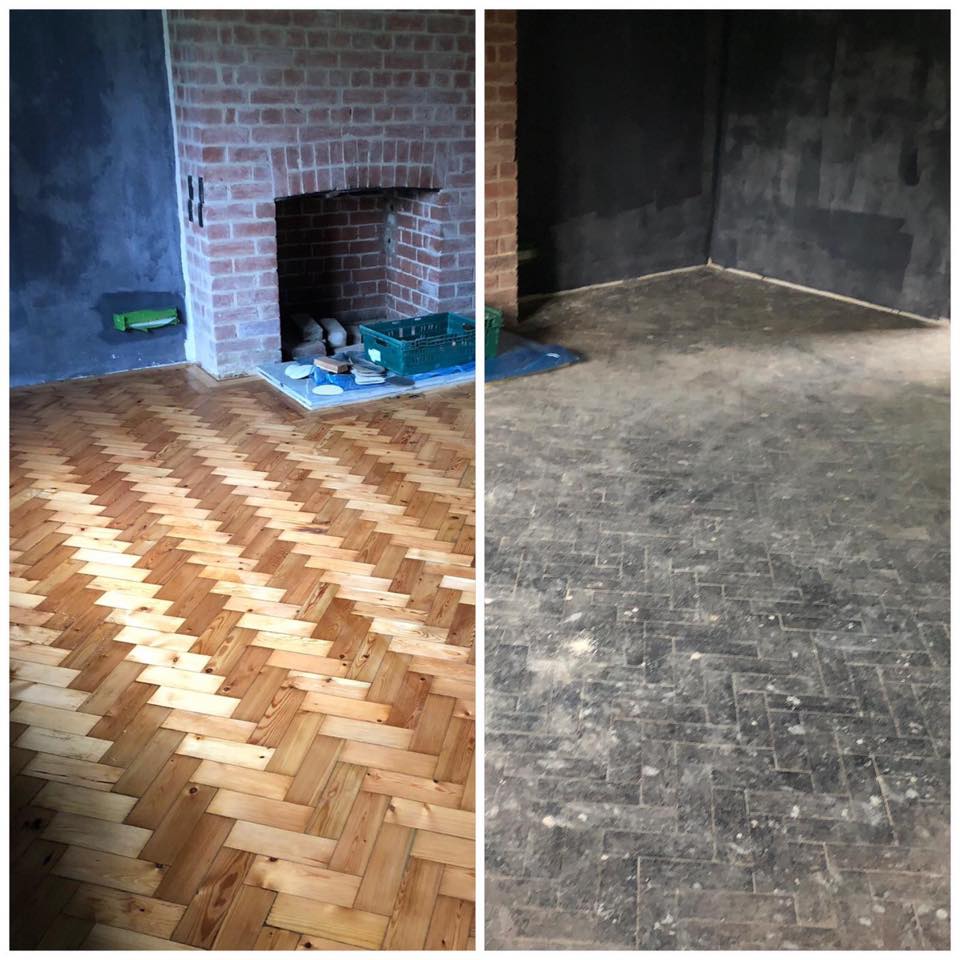
Parquet restoration serves herringbone halls in the interwar avenues of Cheltenham and Gloucester, block floors in schools and public buildings, and the occasional fine parquet in the county’s larger houses: loose blocks lifted, cleaned of old bitumen, re-laid and matched from reclaimed stock, then sanded with the pattern and sealed. Regency Cheltenham’s boarded rooms restore just as gratefully — sun-fade, heat marks and old stain borders all come out in a proper restoration.

The first question on any parquet job is whether the floor is truly saveable, and the assessment is methodical: how much thickness remains above the tongues or nails, how far the adhesive failure extends, whether missing areas can be matched from reclaimed stock, and whether past sanding has already rounded the block edges. The honest answer is usually yes — parquet is thick, forgiving material — but where a floor has been machined to the point of exposure we say so plainly, because a restoration that cannot survive its own sanding helps nobody.

Re-laying is where the pattern is won or lost. Herringbone and basketweave depend on true lines, so lifted areas are set back out from a datum string rather than eyeballed against neighbouring blocks, and border courses are re-established square to the room. A few millimetres of drift in a hallway becomes a visibly bent pattern by the far door; setting out properly takes an hour and saves the floor.

Floor Sanding Essex
parquet floor restoration near me

Staining, Finishes, New Floors and Maintenance

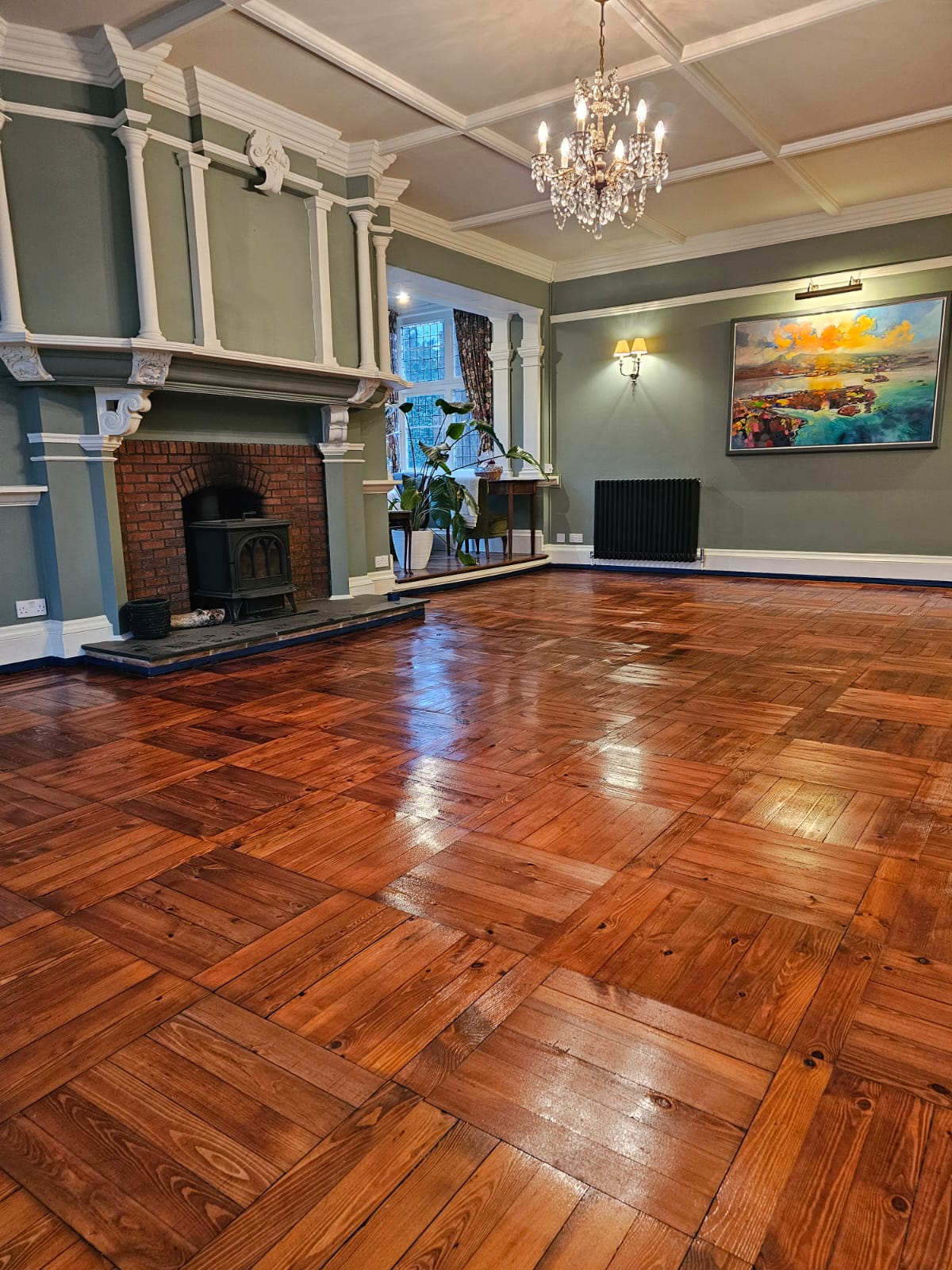
Finishing options span wood floor staining — tested on your own boards before any room is committed — hard-wearing lacquer seals, hard wax and natural oils and traditional wax, with breathable specifications for stone buildings. New wooden floor installation supplies and fits solid, engineered, reclaimed and parquet floors; buffing and recoating refreshes sound floors in a single day; and every completed job leaves with practical aftercare guidance.

Hard wax oil suits a great deal of the county’s housing because of how it ages and how it is mended. The oil hardens within the top of the timber, so wear shows as gradual dulling rather than the peeling or white scratching a failing lacquer produces — and a dulled area can be cleaned, lightly abraded and re-oiled on its own, without machines and without the rest of the room noticing. The trade-off is routine: an oiled floor expects a maintenance coat in its busy zones on a regular cycle, and owners who prefer to forget their floor entirely are usually better served by a robust lacquer.

A buff-and-recoat visit is the intermediate option most floors never get told about. If the existing seal is intact but tired, the surface is abraded with a fine screen, cleaned, and given a fresh coat of compatible lacquer — one day, no bare timber, no colour change, and the wear clock wound back to zero. We check suitability first, because silicone polishes and certain older finishes stop a new coat bonding; where the test patch fails, the honest route is a full sand.

Get a Floor Sanding Quote in Gloucestershire

Send two photographs — the room from the doorway and a close-up of the worst area — with your town or village for an honest opinion and usually a fixed written quotation. Farmhouses, listed buildings, parquet and commercial premises get a free, no-obligation site survey anywhere in the county.

Call 01823 674562, email info@ryansrestoration.co.uk, or use the form on this page.

All services available across Gloucestershire: floor sanding, restoration, repairs, board replacement, gap filling, parquet, staining, installation, stairs and commercial floors.

Town pages: Gloucester, Cheltenham, Stroud, Cirencester, Tewkesbury, Thornbury and Yate.

Parquet Flooring Restoration

FAQ: Floor Sanding in Gloucestershire

The whole menu: dust-free sanding, restoration and repairs, board replacement, gap filling, parquet, staining and sealing, stair sanding, buffing, new floor installation and out-of-hours commercial work.

All of it — Gloucester, Cheltenham, Stroud, Cirencester, Tewkesbury, Thornbury and Yate have their own pages, plus the Cotswold towns and the Forest of Dean.

Constantly — refinishing rarely needs consent, repairs sometimes do, and we keep specifications conservation-friendly with consent flagged at survey.

Yes — elm is common in the county’s cottages and needs different machines, grits and finishes from oak. We assess it board by board.

Often, once moisture readings confirm they have dried properly. We replace only what is beyond saving and match replacements from reclaimed timber.

Yes — halls are a staple of our county diary, with badminton and other court lines re-marked to specification.

No — overnight and closed-day working with fast-curing seals means Cotswold inns and dining pubs keep every service.

Yes — solid, engineered, reclaimed and parquet supplied and fitted county-wide, specified for subfloor and underfloor heating.

Two photographs and your town or village get a fast first opinion; a free, no-obligation survey and fixed written quotation follow before any work is agreed.