45 years’ experience  ·  Rated 4.9 on Google  ·  Family-run, from our workshop near Wellington

45 years’ experience · Rated 4.9 on Google · Family-run

Floor Sanding and Wood Floor Restoration in Dawlish

Sanding, gap filling and refinishing for Dawlish terraces, seafront flats and holiday lets, with finishes chosen to cope with salt air and beach sand.

QUICK QUOTATION

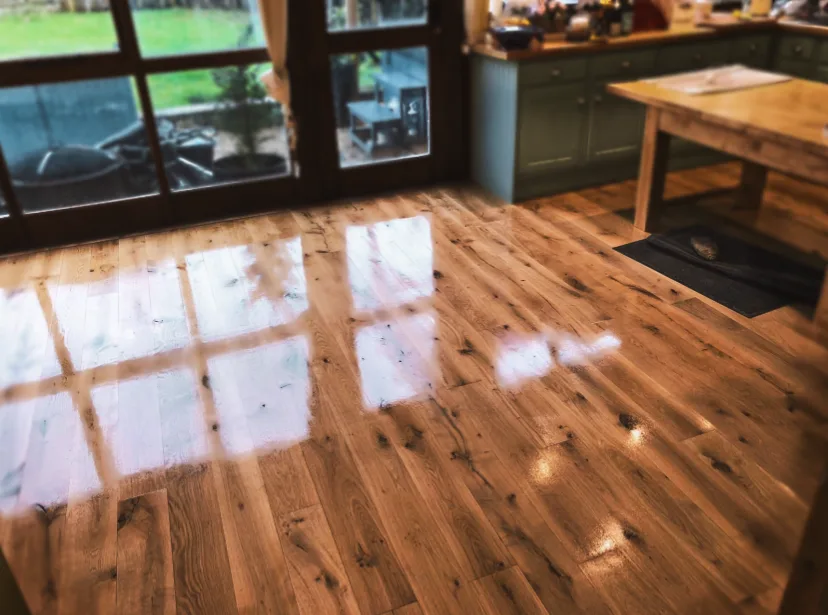
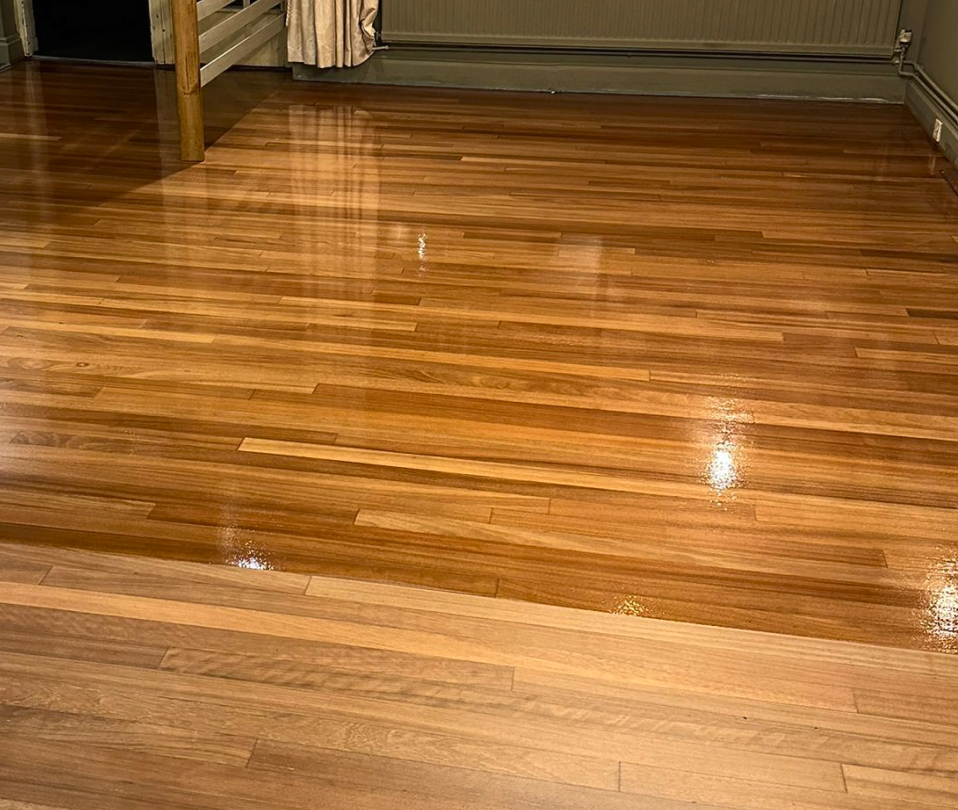
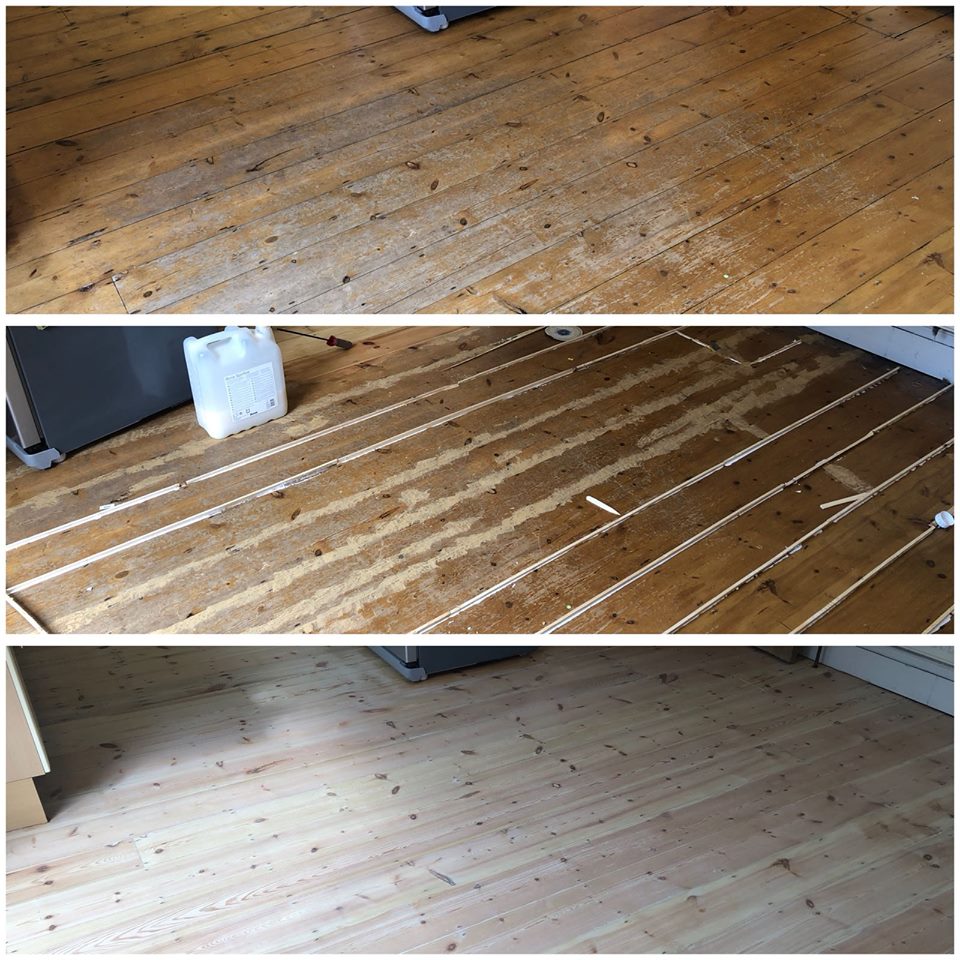
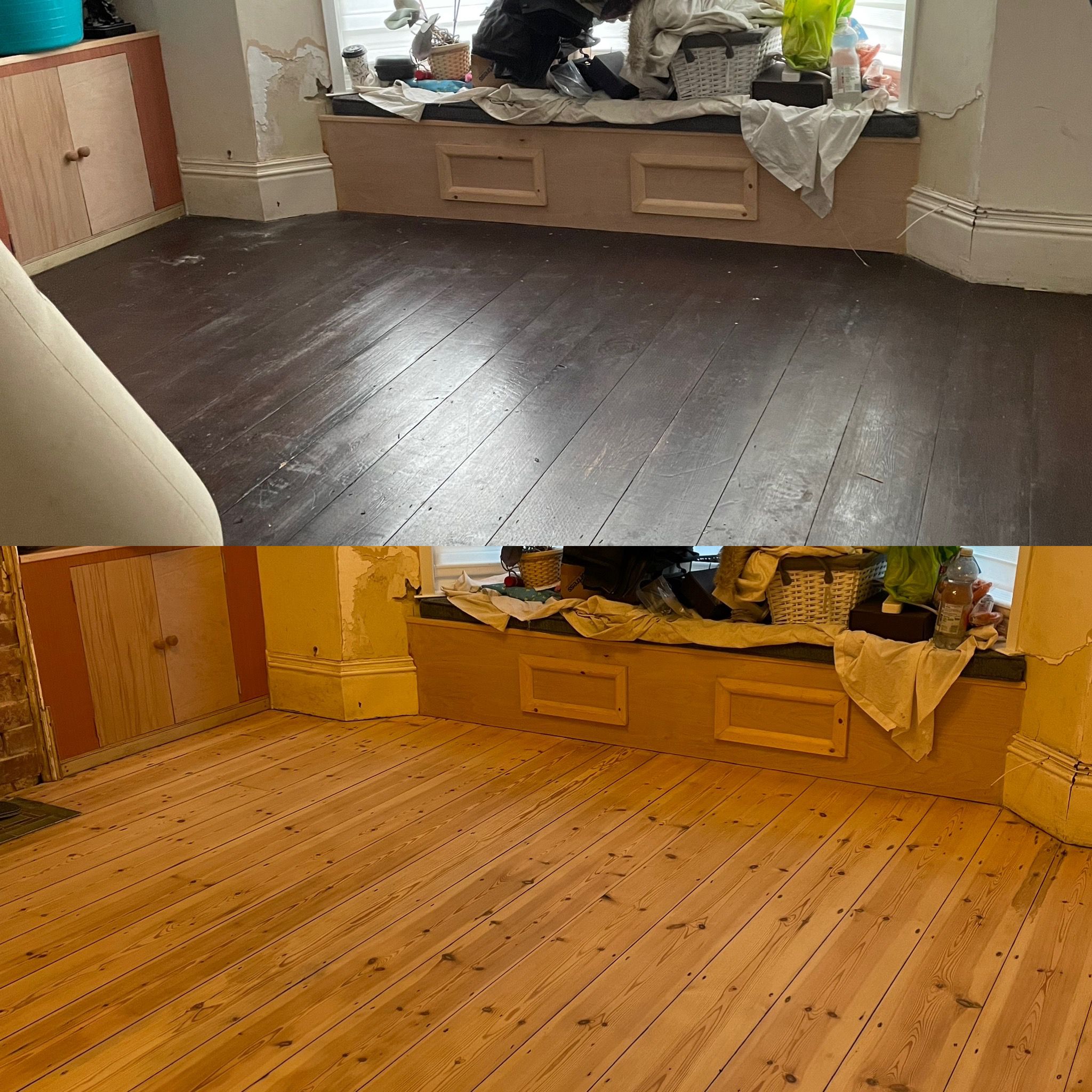
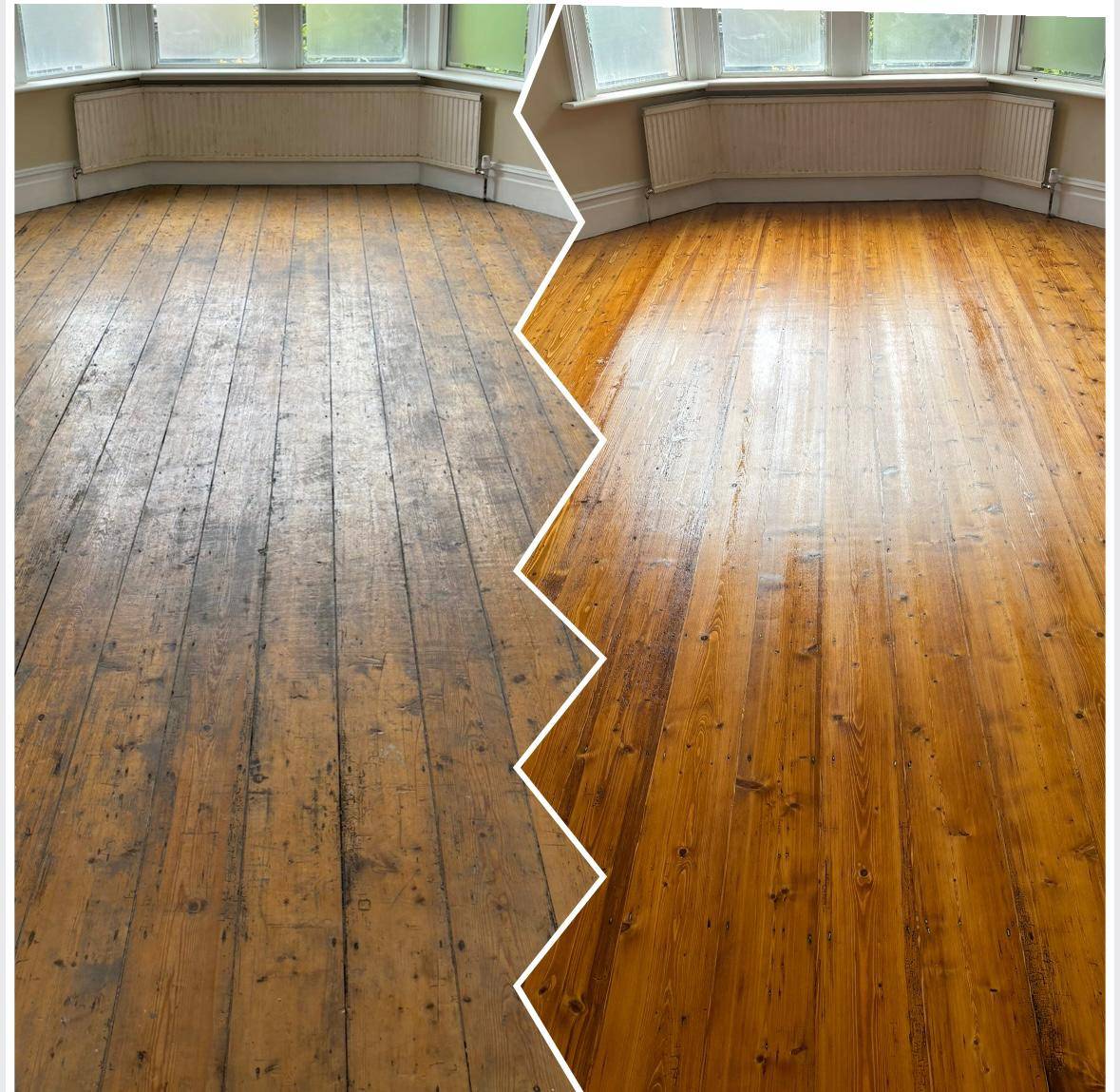
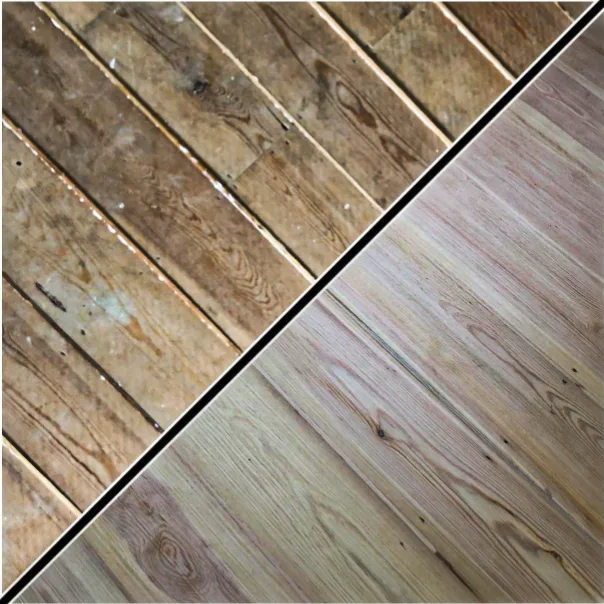
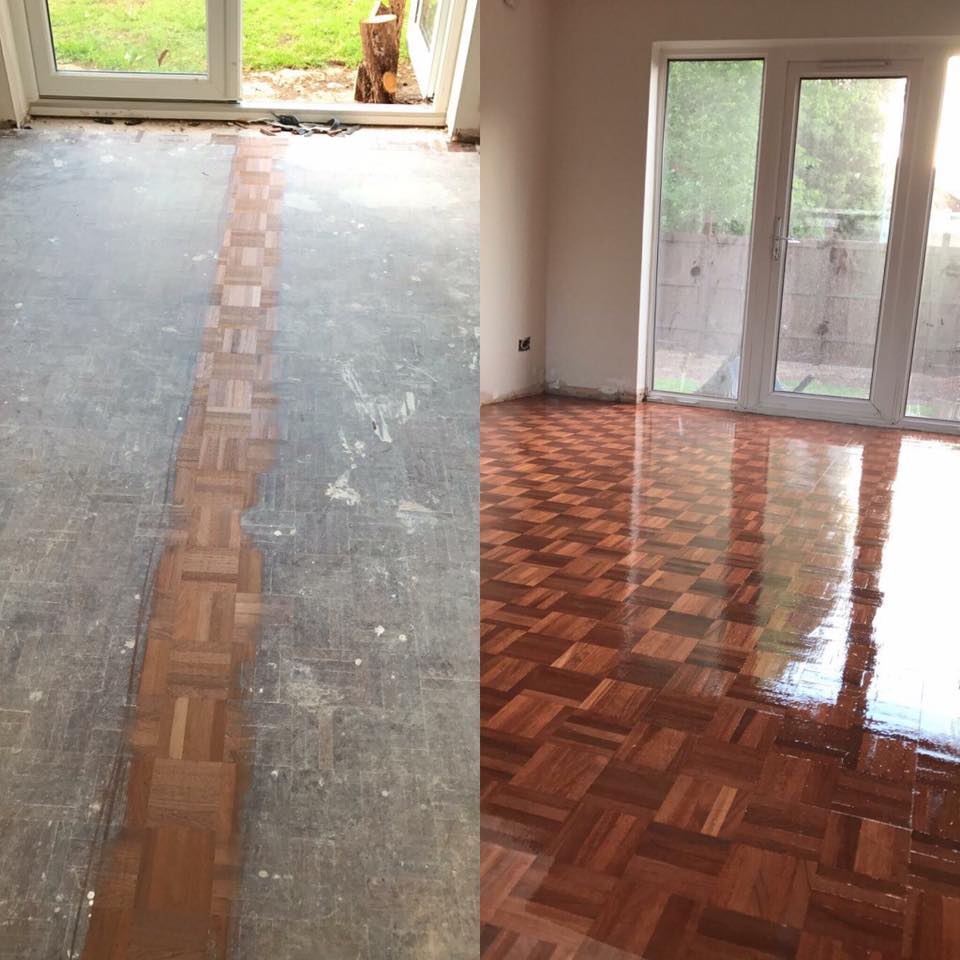
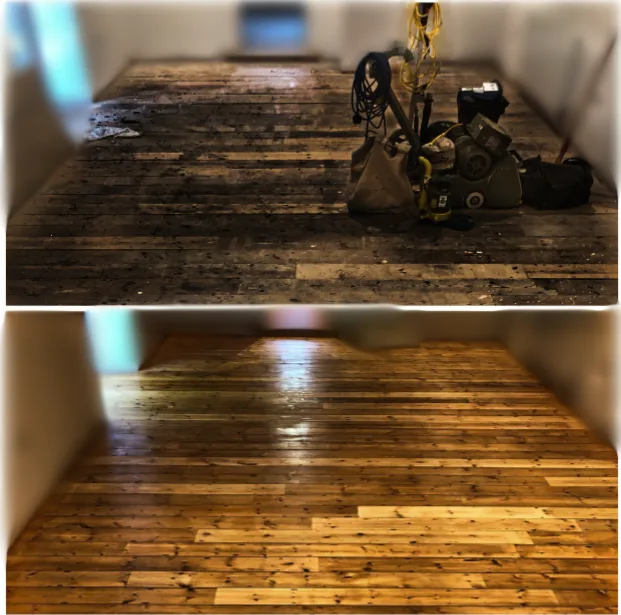
Floor sanding before and after

Floor Sanding in Dawlish: Terraces, Villas and Later Homes

Dawlish floors, in our experience, sort themselves into three broad families. First come the early nineteenth-century terraces facing the Lawn and lining The Strand, where the ground and first floors are usually softwood boards that have been painted round the edges, carpeted for decades, lifted for wiring and put back with whatever nails were to hand. Then there are the Victorian and Edwardian houses on the slopes behind the town centre, with deeper skirtings, wider deal boards and the occasional woodblock hall. Finally there are the post-war houses and bungalows on the edges of town, where oak strip or 1960s parquet under the carpet is as likely as plain pine.

Each group sands differently. Boards in the older terraces have usually been sanded once already, perhaps twice, so a probe slipped between two of them shows how far the face still stands above the tongue. Victorian boards are generally thicker but are prone to cupping, which is covered in the next section. The later floors tend to be the most forgiving, and they are often in better shape than the owners expect once the underlay is peeled away.

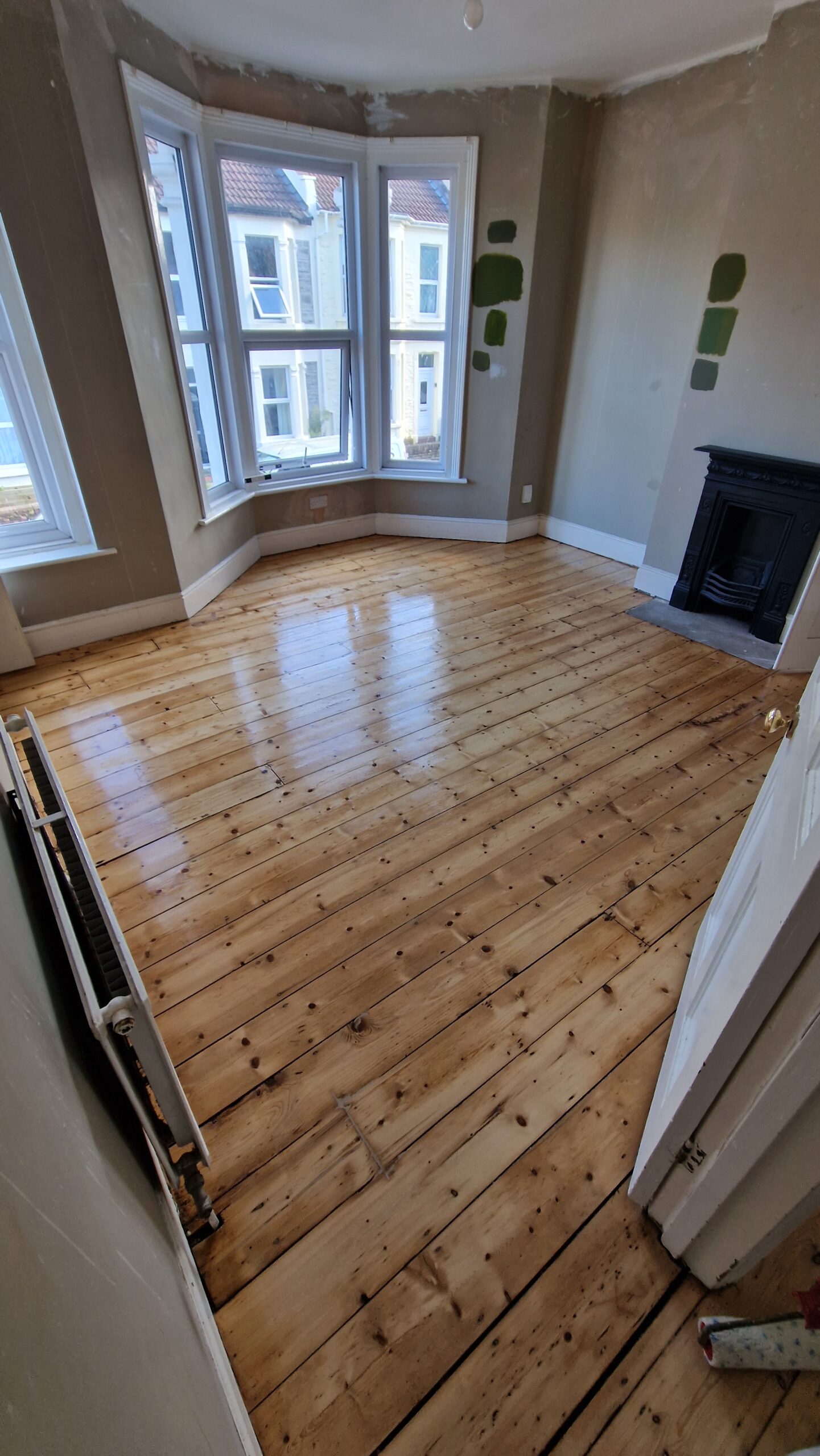
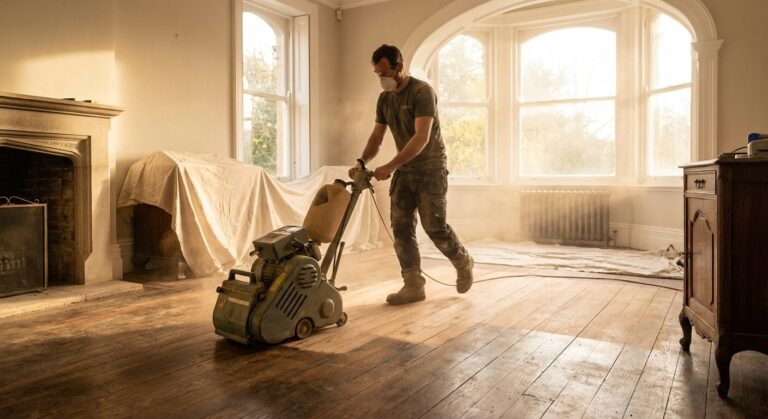
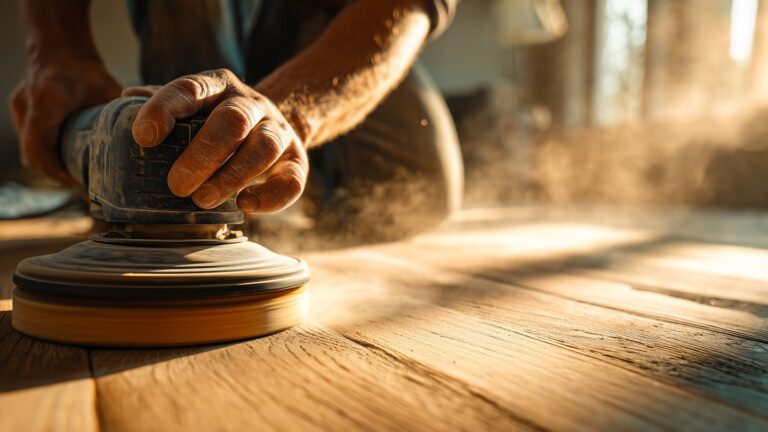
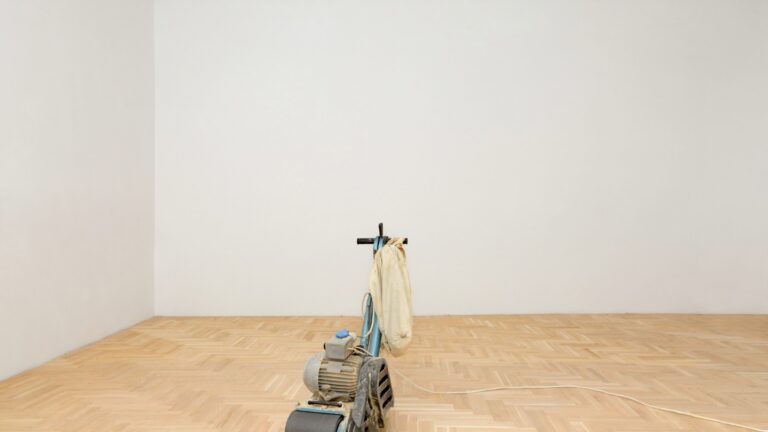
Our wood floor sanding service works through the abrasive grades in order. A coarse belt pass cuts through old varnish and flattens the boards, then progressively finer grits on a rotary machine remove the scratch pattern the belt leaves behind. Skipping a grade is the usual cause of the swirls and chatter marks seen on rushed jobs. Edges are done with an edging sander, and the awkward places, such as around radiator pipes or inside a shallow bay, are finished by hand.

The machines run on sealed extraction, so the air stays far cleaner than it ever did with old bag sanders. Terrace owners near the Lawn often worry about lime-washed walls and cornices; with dust-free floor sanding those generally stay clean, give or take a whisper of powder on a picture rail. For floor sanding in Dawlish, the town is part of our regular Devon territory, and the wider county is covered on the Devon floor sanding hub. Any wider wood floor restoration is planned only after that first look at thickness and moisture.
Cupped Boards and Salt Air in Dawlish Seafront Houses

A board cups when its underside holds more moisture than its top face. The underside swells, the edges lift and the middle sits low, so a run of boards looks like a shallow corrugated roof when you crouch and sight along it. In a house near the sea wall the moisture almost always comes from below: a suspended floor over a void that has stopped breathing, with damp air lying under the boards for months at a time.

Salt makes it worse. Sea salt carried on the wind and on shoes is hygroscopic, meaning it draws water out of the air, so walls and floor voids at the front of a building can stay damp right through a dry spell. Add airbricks that have been painted over, buried by a raised path or stuffed with newspaper to stop a draught, and the void loses the through-flow it was built to have.

Flattening cupped boards with the sander while the void beneath them is still damp is the trap. It looks fine for a season. Then the void dries, the underside shrinks back, and the edges that were sanded away leave every board crowned, high in the middle and low at the joints. Correcting that means taking off yet more timber, which old terrace boards rarely have to spare.

So a Dawlish wood floor restoration job near the front tends to start on hands and knees with a pin meter, not with a belt machine. At the free survey we take readings across the room and close to the outside walls, and look at the airbricks and the general ventilation. If the void is the problem, it needs sorting before the floor is touched, and the boards are then given time to settle. Mild cupping often relaxes by itself once the ventilation is restored. Our wood floor restoration is planned around that sequence. Where an earlier sanding has already left the boards crowned, some may need lifting and turning over, or replacing with matched reclaimed stock.

parquet wooden floor sanding
wooden floor sanding

Gap Filling and Board Repairs in Dawlish Homes

Gaps between boards are normal in a house of this age and are not a fault in themselves. Timber shrinks across its width as it dries, and a floor laid two centuries ago has been through coal fires, then central heating, and a constant supply of damp sea air. What matters is whether the gaps are stable, because that decides how they should be filled.

There are two main methods. Resin filling mixes a clear binder with fine dust collected from your own floor during the final sanding, so the filler comes out the same colour as the boards. It is quick and suits narrow, even gaps in a floor that does not move much. Its weakness is seasonal movement. In a room that is heated hard in winter and shut up damp in summer, the gaps open and close, and a rigid filler cracks or drops out. That pattern is common in second homes and holiday lets along the front, where the heating goes off between bookings.

For wider or moving gaps, thin strips of pine are cut to a slight wedge, glued along one face only and tapped home, then planed and sanded flush. Gluing just one side lets each strip travel with the board it is fixed to, so the floor can still move without the repair breaking. It takes longer, but it lasts, and it cuts the cold draughts that rise from a well-ventilated void. Blocking airbricks to stop those draughts only brings back the cupping described above. Both approaches are set out on our gap filling page.

Other repairs usually fit into the same visit. Squeaking or creaking boards are generally loose on the joist or rubbing against a neighbour, and the usual cure is refixing with screws once pipes and cables have been located. Boards split by old plumbing work are swapped through our floorboard replacement service using reclaimed pine of matching width, and deep gouges that would take too much timber to sand out are dealt with as localised scratch repairs. On softwood floors, gaps and repairs are often half of any pine floor restoration.

Commercial Floor Sanding for Dawlish Cafés, Guest Houses and Shops

Commercial floor sanding in Dawlish has its own calendar. A café on the front or a guest house a few streets back has a few months of heavy trade and a long, quieter stretch, and floor work belongs in the quiet part. The dates are worth fixing well ahead, and the work itself goes into the hours the premises are shut anyway: overnight, on a closing day, or across a short planned closure.

Beach sand is the main enemy of a commercial floor here. It comes in on shoes, pushchair wheels and dog paws and behaves like loose abrasive under every footstep, so the doorway and the route to the counter lose their finish first. That shapes the choice of finish. Two-pack products arrive as a tin of lacquer plus a little bottle of hardener; once combined they set into a film tough enough to take a summer of beach shoes. Fast-curing versions let a room return to use quickly, which is what makes overnight working realistic.

Matting matters almost as much as the lacquer. A barrier mat inside the entrance, long enough to take two or three strides, catches most of the sand before it reaches the timber, and it is the simplest protection a business can add.

Bed-and-breakfast owners tend to block out a pair of rooms on the calendar at a time and keep the others let while we work, the approach behind our hotel and guest house floor sanding. Cafés and bars come under restaurant floor sanding, and timber sales floors under shop floor sanding. Halls used by schools or clubs are covered by school hall floor sanding, usually in the holidays. Expect a sandy seafront floor to want a full sand-back every four or five summers; a maintenance coat each winter stretches that interval. The full range sits under our commercial floor sanding services.

flooring sanding company
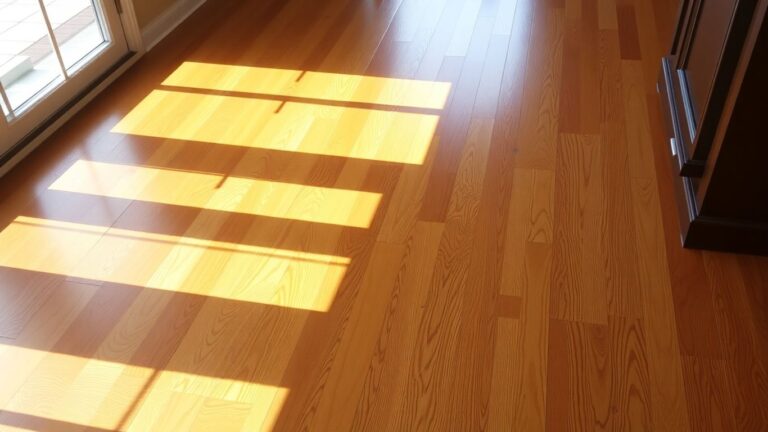
Sunlight across freshly lacquered wooden floorboards

Herringbone Blocks, Stair Treads and Landings

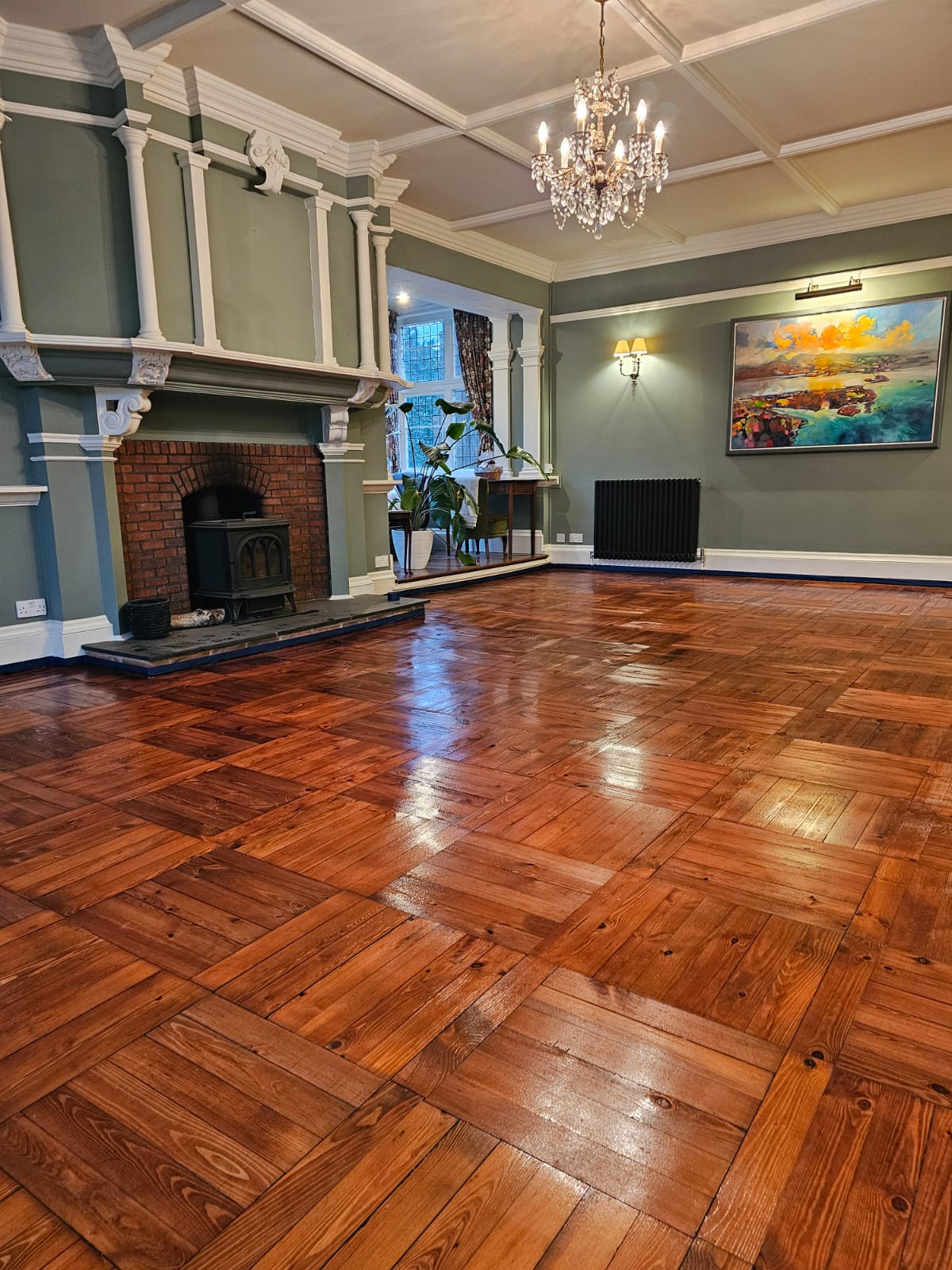
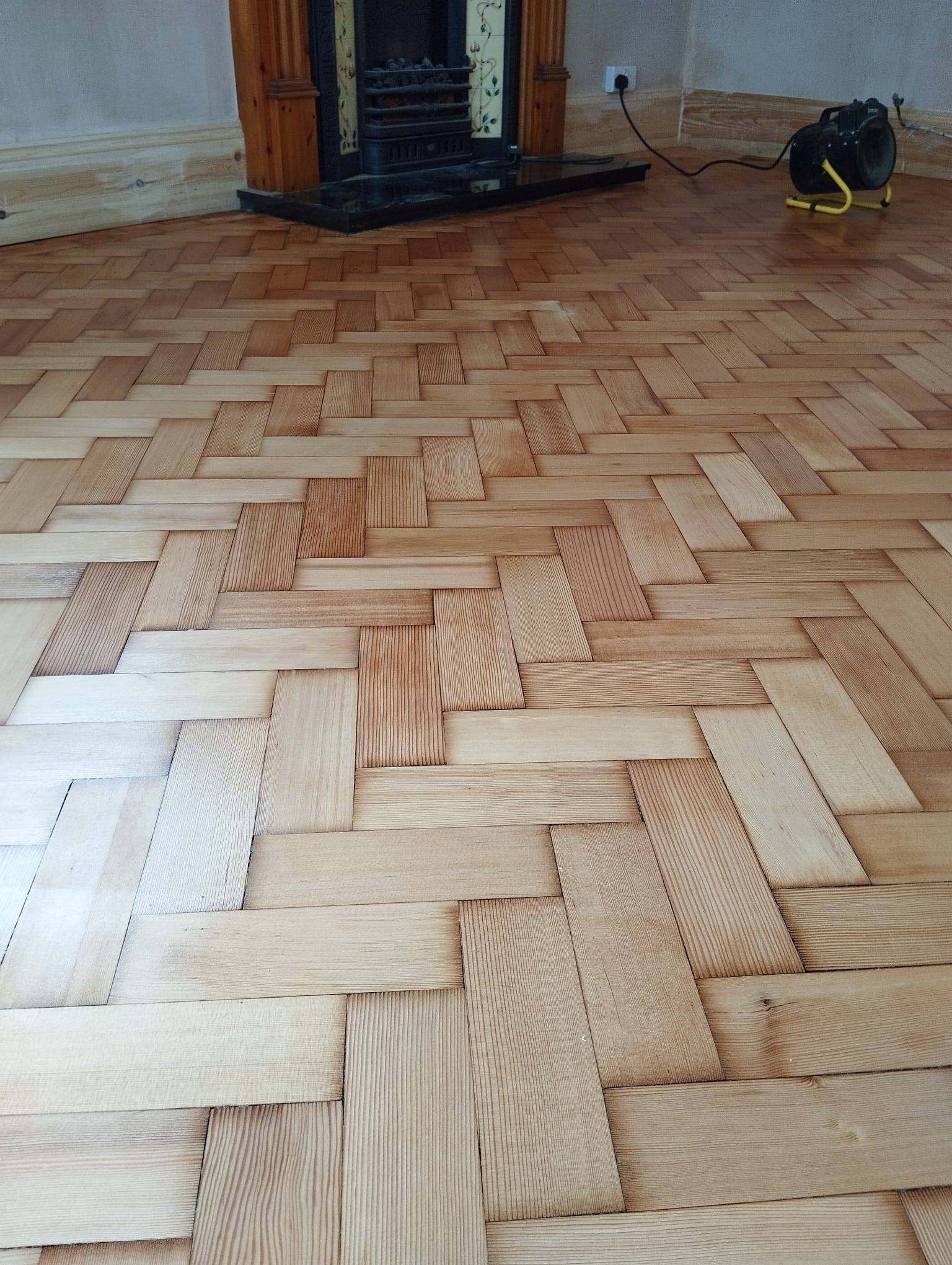
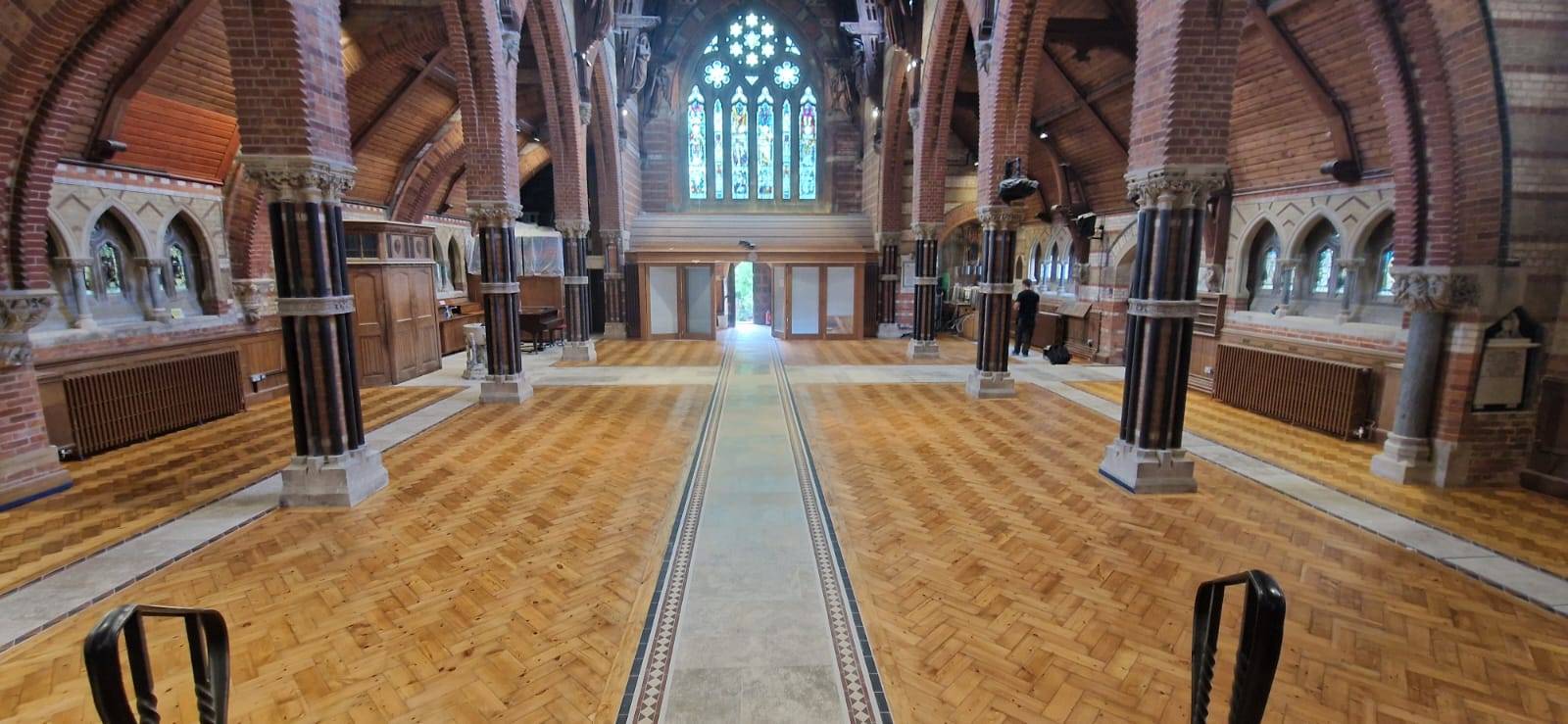
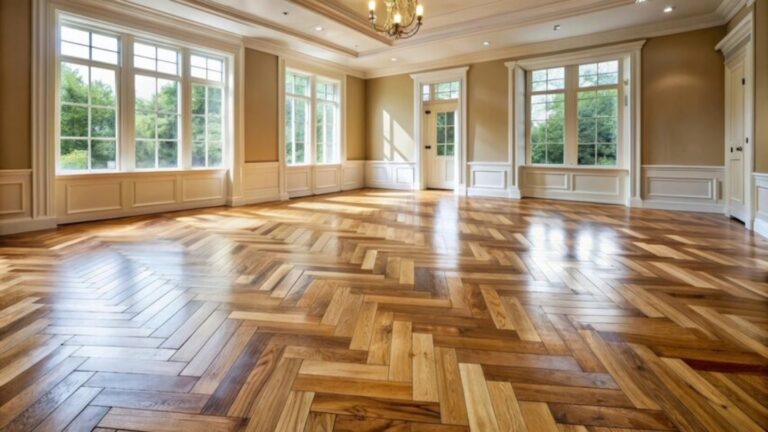
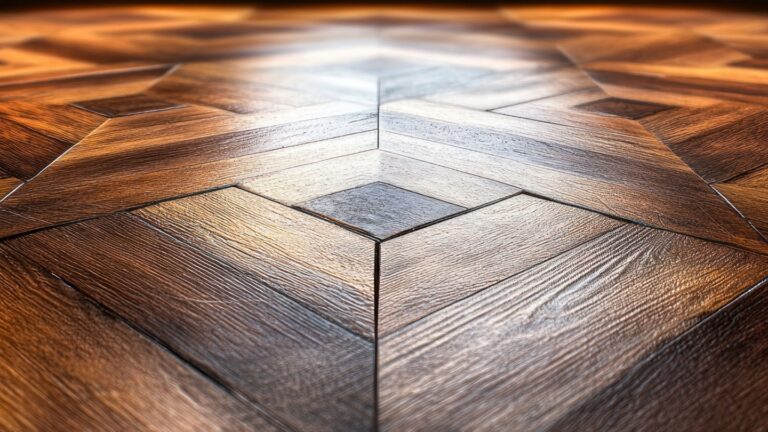
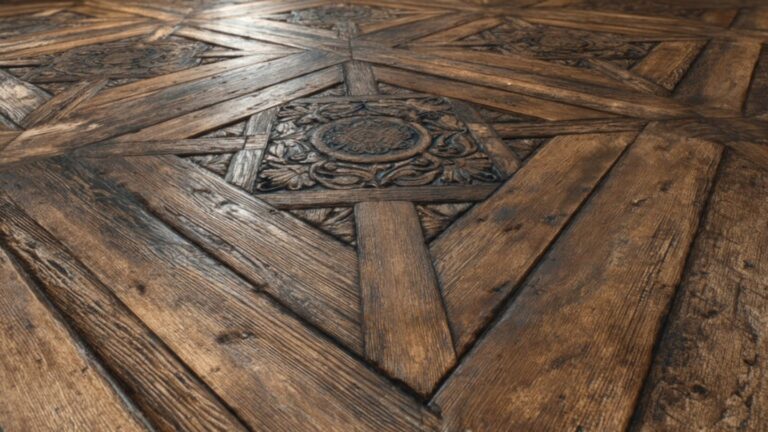
Parquet turns up in Dawlish more often than people expect, usually in the hall or front room of a house built or modernised between the 1930s and the 1960s, and nearly always under carpet or vinyl. Typically the blocks are oak, sometimes iroko or merbau, set into black bitumen in a herringbone or basket-weave layout. Carpet fitters rarely spared the border row, so expect split blocks around the walls. These are lifted, their old bitumen scraped off, and they are glued back, with gaps made good from reclaimed blocks.

Herringbone takes longer than plain boards for a simple reason: whichever way the sander travels, half the grain lies crosswise to it. The early passes go diagonally across the pattern to flatten it, and the finer grits then follow the length of the room, so no cross-grain scratches show when low winter light comes through the window. That diagonal-then-straight routine is the heart of our parquet floor sanding, and for a finished Torbay example there is the Paignton parquet we sanded and sealed.

Stairs in the older terraces are usually painted deal with a carpet runner, leaving a bare strip down the middle and paint either side. Getting paint off stringers and nosings is hand work. If the paint is old, treat it as possibly containing lead and never dry-sand it without controlling the dust; it needs a careful approach. Under the runner the treads are often sound, and a nosing hollowed in the middle by long use is shaped back by hand so it keeps its rounded edge. Stair sanding is normally done in two halves where the staircase is the only route to the bedrooms, so the household can still get upstairs at night.

In the occasional house with oak boards or an oak stair, oak floor restoration is gentler work. Oak is dense, takes a finish evenly and usually needs far less filling than pine, though its tannins can react with some water-based products, so finishes are tested first.

Picking a Finish That Copes With Sea Air in Dawlish

Wood floor refinishing on the coast comes down to two jobs: keeping moisture and salt out of the grain, and standing up to sand on the soles of shoes. Lacquer does both best. Water-based lacquers stay close to the natural colour of the timber, dry quickly and have little smell, while oil-based lacquers warm the colour and give pine a honey tone that suits some period rooms and looks wrong in a pale modern flat. For a hall that takes the beach traffic, a two-component water-based lacquer is the hard-wearing choice. These options sit under floor sealing and lacquering.

Hard wax oil soaks into the surface and hardens there. By the sea that matters: a grey, sand-worn path from the garden door can be revived on its own with a clean and another thin coat, leaving the rest of the room untouched. It needs topping up more often, perhaps once a year in the busiest spots. Plain oils are at the most natural end of the range and ask the most of the owner, so floor oiling suits people who are happy to keep up with it. Traditional wax gives a soft, deep sheen but marks with water, so a waxed finish belongs in a bedroom or a quiet front room rather than anywhere wet feet arrive.

A colour change can be made at the same time. Stain on pine is unpredictable, since the pale spring growth drinks it in and the darker summer bands resist, which is why floor staining always starts with a sample on one of your boards near the skirting. Pale greys and whitened tones suit the light in many seafront flats; very dark stains show every grain of sand that crosses them.

Sheen is the last decision. In a sandy house a matt or satin sheen forgives fine scuffing and grips better under a wet foot from the beach; high gloss highlights both problems. For a deeper shine on a formal room, our floor polishing options cover that.

Wood floor sanding company
Floor sanding taunton

Looking After It, Fitting New Boards and Next Steps in Dawlish

Most of the wear on a Dawlish floor comes from sand, so most of the aftercare is about keeping it out. Beach towns need a tighter regime. Shake out door mats daily in summer, use the soft-bristle tool on the vacuum, and damp-mop only with a wood floor cleaner that is pH-neutral. Steam mops force hot moisture into the joints and should not be used on timber at all. Stick felt under the dining chairs too, because one trapped grain of beach sand beneath a chair foot draws an arc across the boards at every meal.

Plan the job around the curing time. You can pad across in socks a day after the final coat. Heavy pieces should stay in the next room for 48 to 72 hours, because lacquer keeps curing well after it feels dry. A one-room flat can be finished in a day; a terrace with stairs and a hall more often takes three.

A finish dulls long before it wears through. At that stage a machine buff and a fresh maintenance coat bring it back without sanding to bare timber; floor buffing covers how that works. A full resand in a home is normally due every eight to ten years. Catching damage early, such as a split board by the back door, keeps work small, and wooden floor repairs can be done on their own between resands.

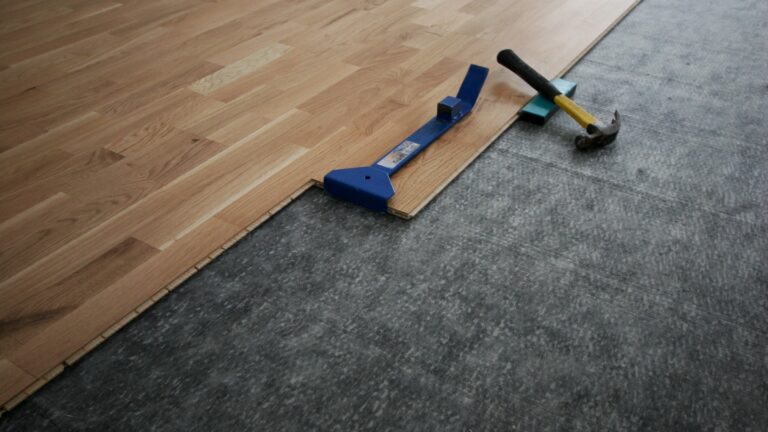
Some boards are simply too thin to sand again, and some houses never had timber at all. For those we can lay new wooden flooring ourselves or just supply it for your builder.

Two phone pictures get things started for floor sanding in Dawlish: the room seen from its door, and a close look at whichever board has cupped worst or gap has opened widest. That is usually enough for first advice. From those we can say whether a visit is worthwhile; the survey is free, takes about thirty minutes, and is followed by an itemised quotation in writing. Send them by email to info@ryansrestoration.co.uk, upload them with our enquiry form, or ring 01823 674562 in office hours (weekdays, 8am until 6pm; Saturdays by arrangement). Neighbours a few miles north can find details of floor sanding in Teignmouth.

Dawlish Floor Sanding Questions

Not on its own. Cupping is a moisture problem, usually caused by a damp or poorly ventilated void, and sanding a wet floor flat leaves the boards crowned once they dry. First we track down where the damp is coming from, meter in hand, and check whether the airbricks are clear. Once the floor has settled, slight cupping can usually be sanded out safely.

Salt air on its own does little harm to a sealed floor. The real wear comes from sand carried in on shoes, which scratches the surface, and from damp beneath the boards. A hard-wearing lacquer, generous mats at the doors and a properly ventilated void deal with most of it, and hard wax oil makes patch repairs easy.

That depends on how much the floor moves. Resin mixed with dust from your own boards suits narrow gaps in a stable, evenly heated room. For gaps wider than a coin’s thickness, or in a seafront let heated only when guests arrive, wedge-cut pine slivers glued on one edge cope with the movement where resin would crack.

Often, if the gap is long enough. Small flats can sometimes be finished in a day or two, while a whole house may need three days. Allow a day before guests in socks, and two or three before beds and sofas return, which is why a midweek gap in November or February is the comfortable choice.

Yes, though it is careful hand work rather than machine sanding. Old paint layers can include lead, and dry-sanding them without containment would spread it through the house. Once the paint is removed from treads, risers and stringers, the timber underneath is often in good condition, because it has been protected by that paint for decades.

In most cases, yes. Parquet blocks are thick, and even after decades under carpet there is normally plenty of timber left to sand. Blocks damaged by gripper nails are lifted and refixed, loose ones are re-bonded, and missing ones can be matched from reclaimed stock. A restored block floor is very hard to match with anything new.

Very little compared with old-style sanding. Dust is drawn off at the drum and edging heads into a sealed extraction unit, so very little reaches the room. It is not completely dust-free, so close internal doors and take ornaments off shelves beforehand. Expect a light wipe of ledges afterwards rather than a clean of the whole house.

Yes. Dawlish is part of our core Devon territory and we work there regularly for both homes and businesses. Dawlish is regular ground for our family business, which travels down the coast from its workshop near Wellington, Somerset. Sending photographs first lets us tell you whether a survey is worthwhile before anyone travels.

Send the two photographs, or phone the office on 01823 674562, and a free survey date is agreed. You then receive an itemised written quote, which holds firm unless lifting the carpet or boards reveals work nobody could have seen.