Floor Sanding Fowey

Floor Sanding and Wood Floor Restoration in Fowey, Cornwall

QUICK QUOTATION

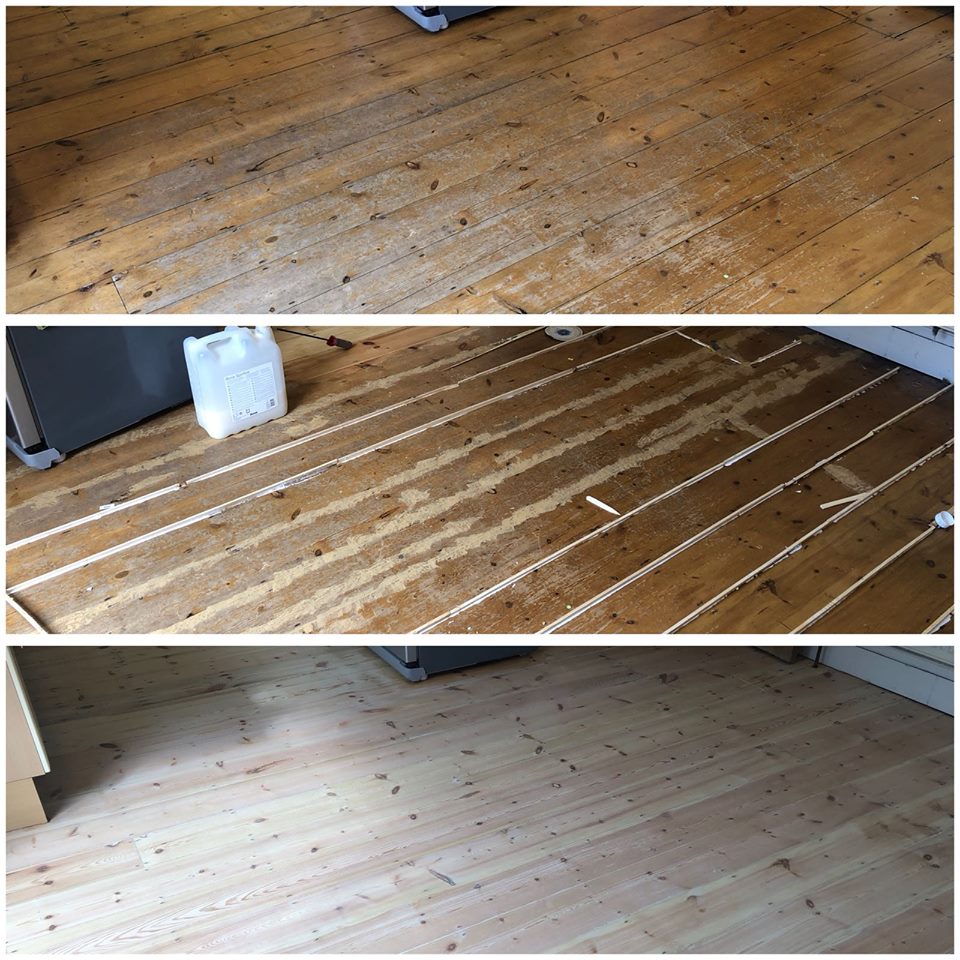
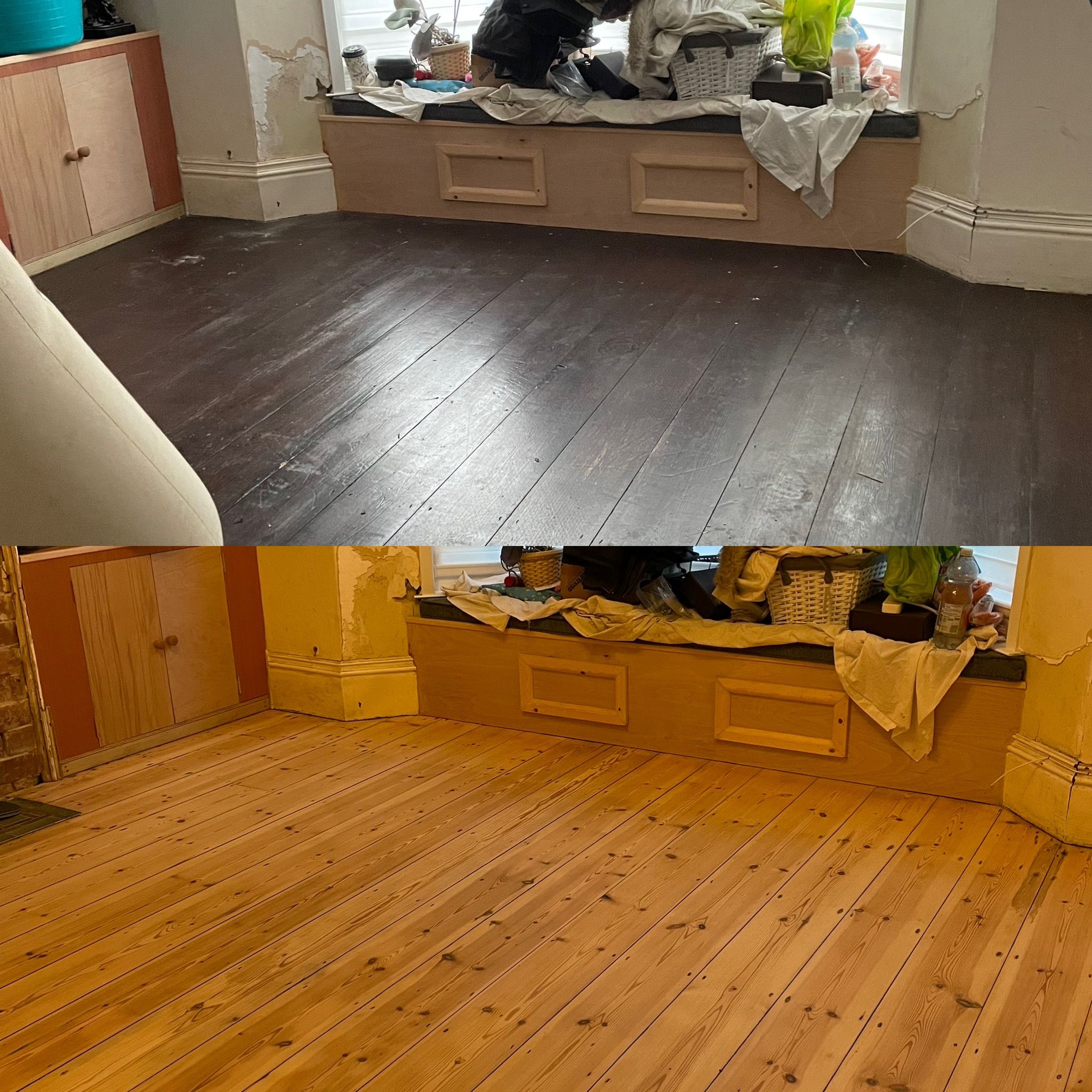
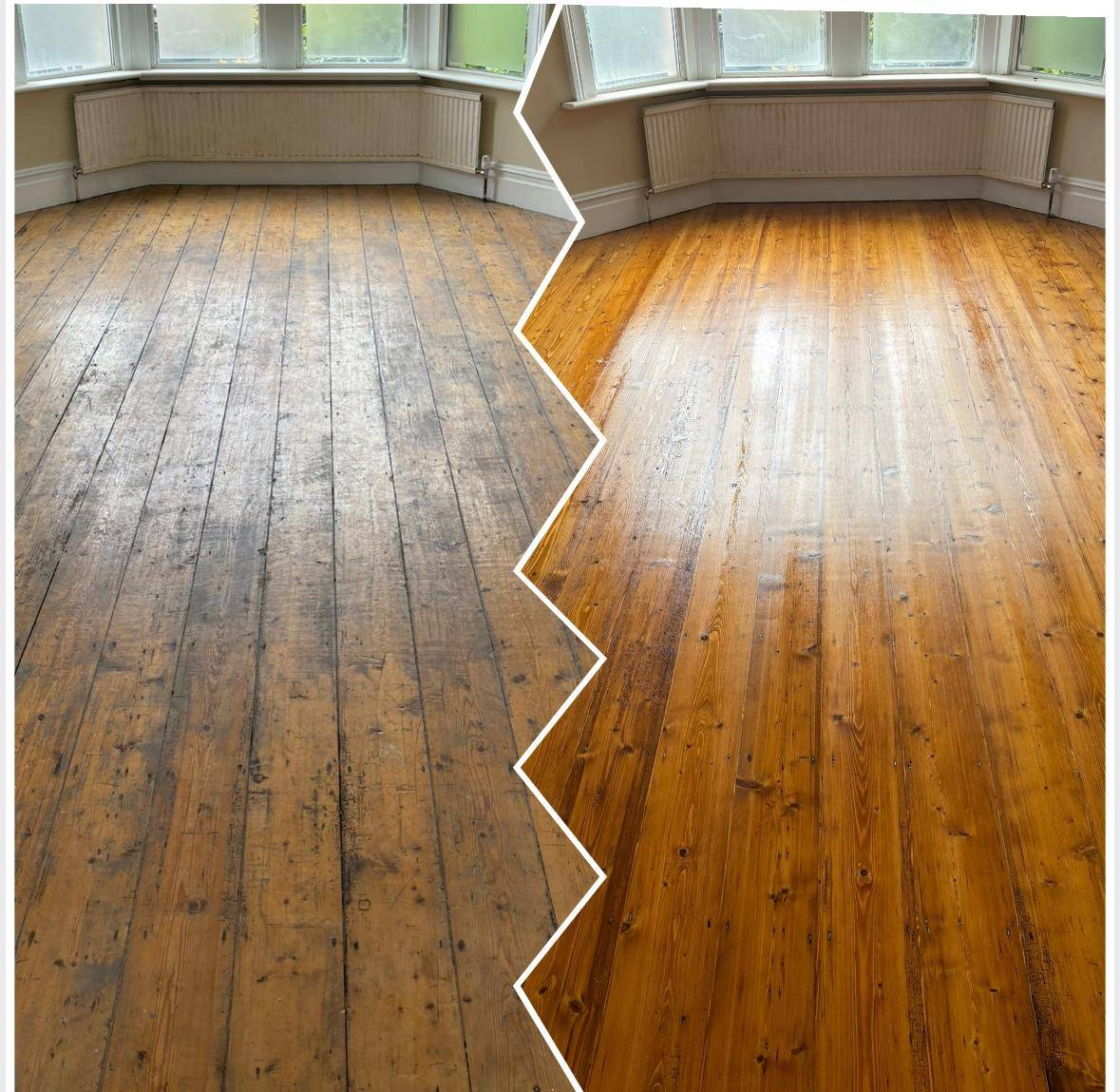
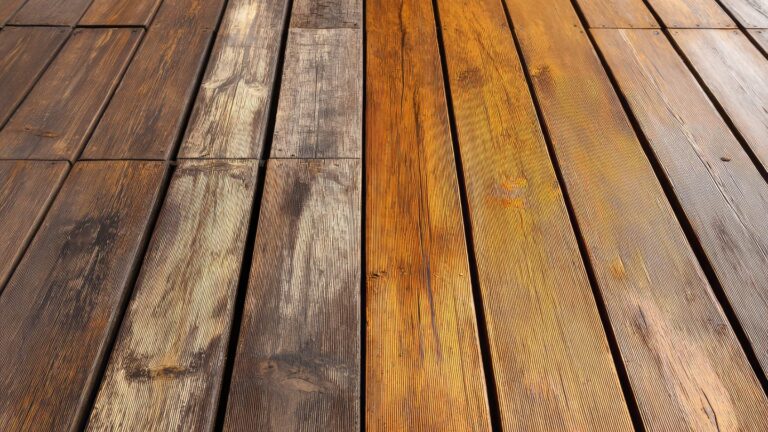
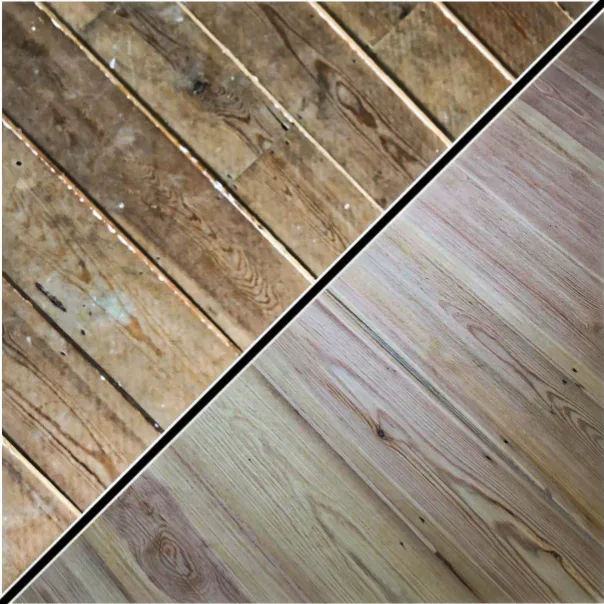
Floor sanding before and after

Floor Sanding in Fowey

Our wood floor sanding service covers Fowey, Polruan, Golant, Bodinnick, Tywardreath, Par and Polkerris — medieval oak and elm near the church, Georgian and Victorian pine on the slopes above. In buildings this old the rule is minimum removal: finer grits, extra passes, settlement left alone, and board thickness measured before we promise anything.

Much of the old town is listed, so where consent questions arise we supply a written method for the conservation officer, and estuary humidity means moisture readings open every job. Steep streets and steps are planned for at survey, not discovered on the day.

The oldest boards in the old town sometimes carry their original worked surface — subtle ripples left by hand tools centuries before machine sawing — and running a modern sander over that would destroy something no restoration can put back. Floors like these are cleaned, waxed or oiled by hand instead, with machines reserved for later, flat-sawn floors that were always meant to be smooth. Recognising the difference is the first judgement of the survey, and it is one we make conservatively: when in doubt, the machine stays in the van.

Where machining is right, oak asks for patience at the fine end — its dense grain rewards an extra grit step, and the surface it gives back under a hand-rubbed finish is the best in the trade.
Commercial Floor Sanding in Fowey

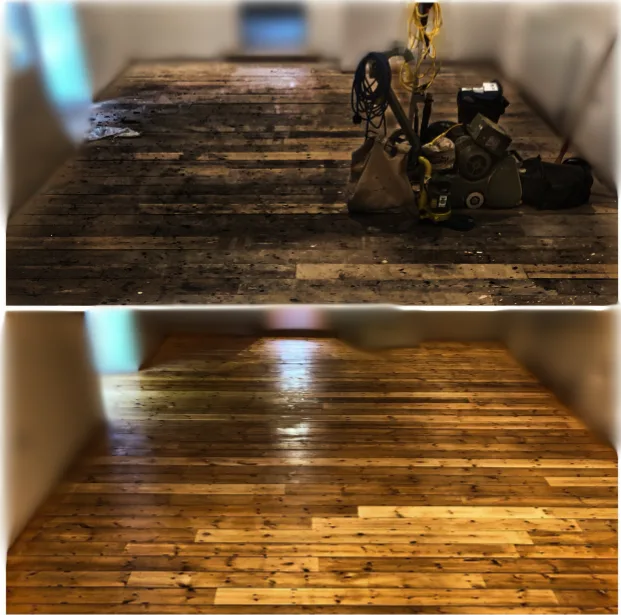
Hotels, sailing clubs, galleries, pubs and restaurants keep our commercial floor sanding team coming back to the estuary. Dining rooms are refinished overnight or on closed days with fast-curing seals; hotels are phased so rooms keep letting; galleries and shops are turned around between weekends.

Halls, schools and sports floors across mid Cornwall are handled in closed weeks and holiday windows, with line marking to governing body specification and full method statements and insurance documentation beforehand. Regatta week we leave well alone.

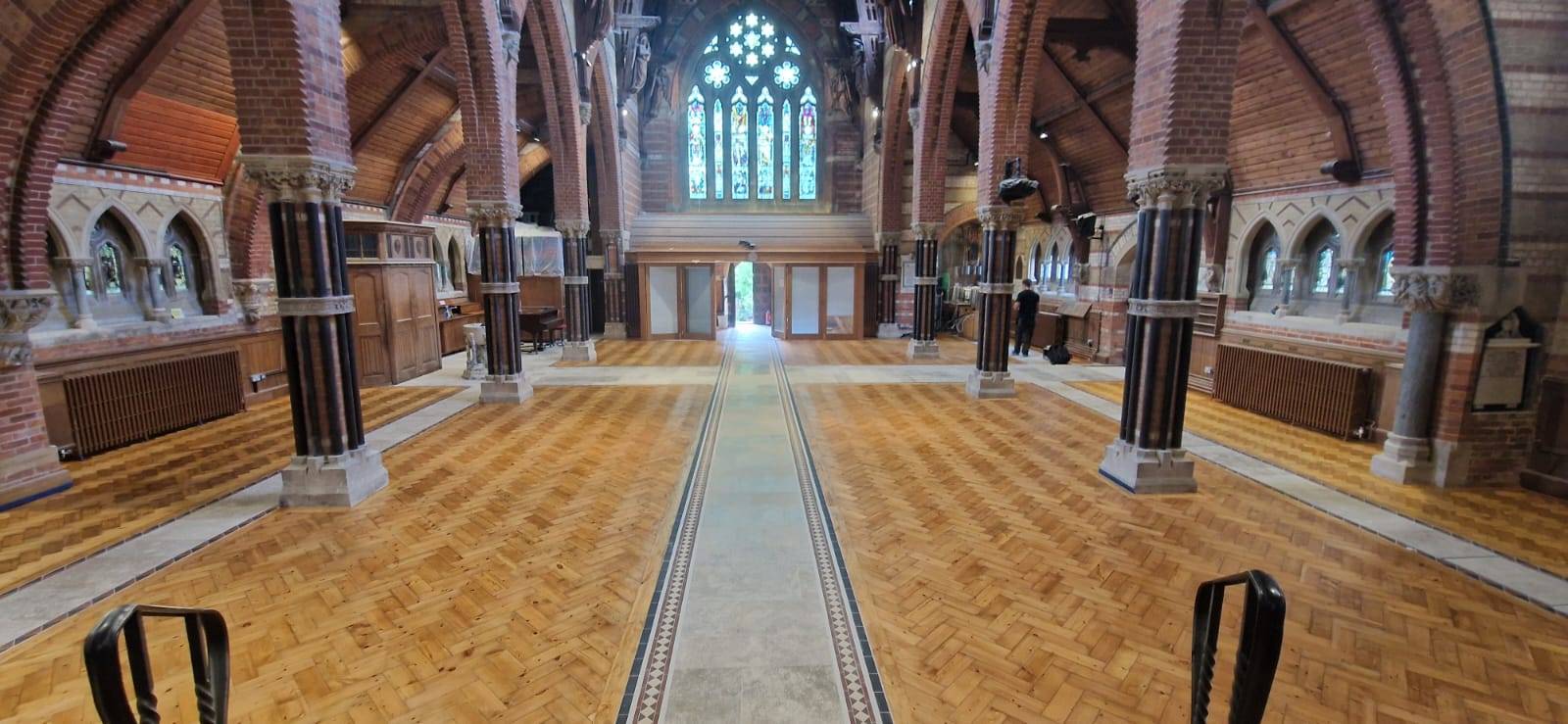
Commercial work inside listed buildings runs to a gentler specification: machine weights and belt aggression are chosen to suit fragile structures, skirtings and historic joinery are protected before any cutting starts, and the method is agreed in writing with the owner — and where relevant the conservation officer — before a date is fixed. It takes an extra week of paperwork at the front and saves every kind of grief at the back, which is why hotels and clubs in old buildings tend to become repeat customers.

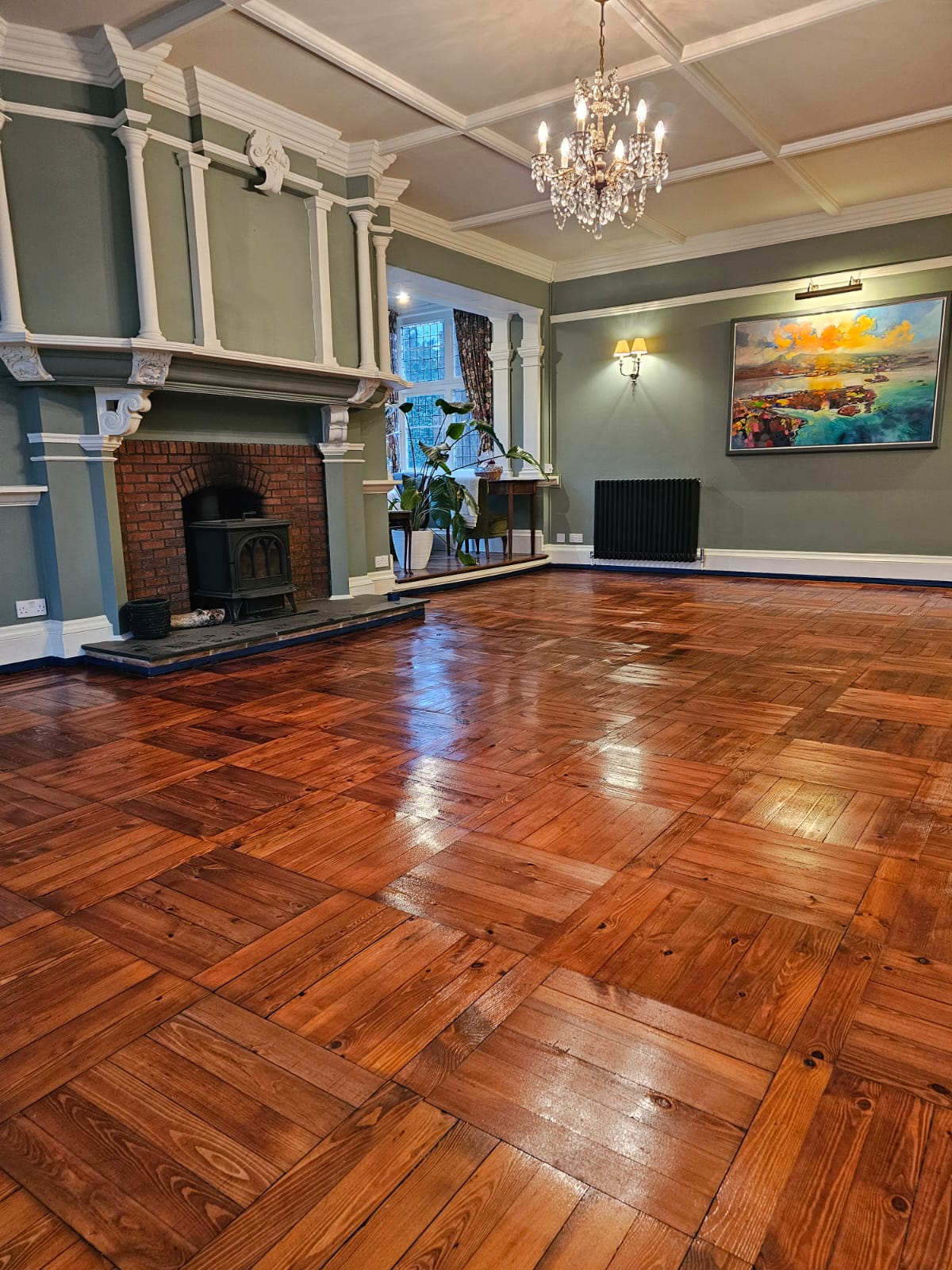
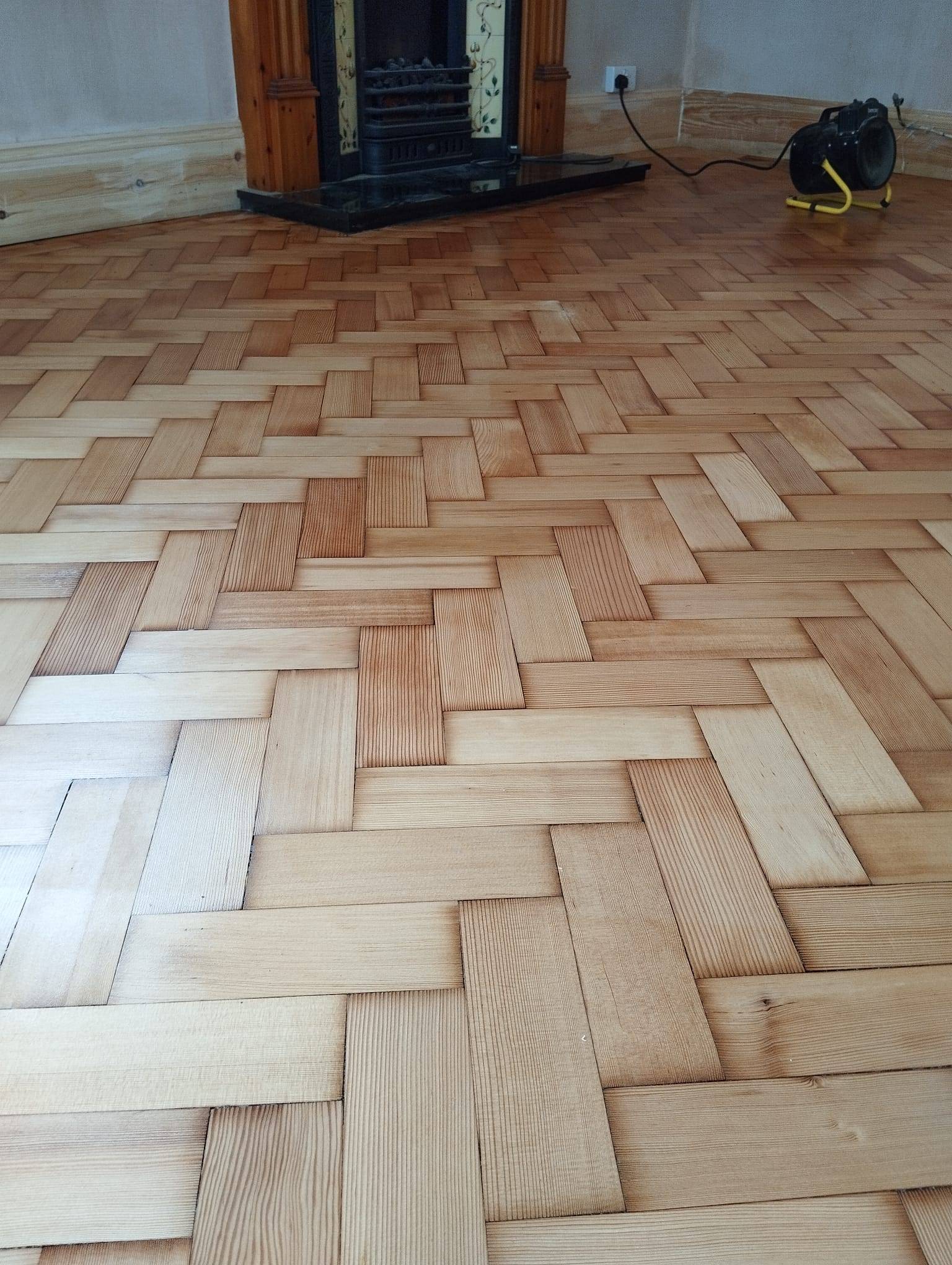
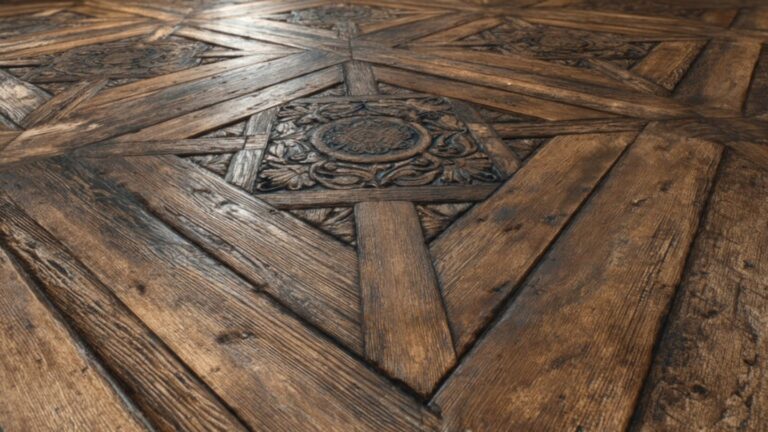
parquet wooden floor sanding
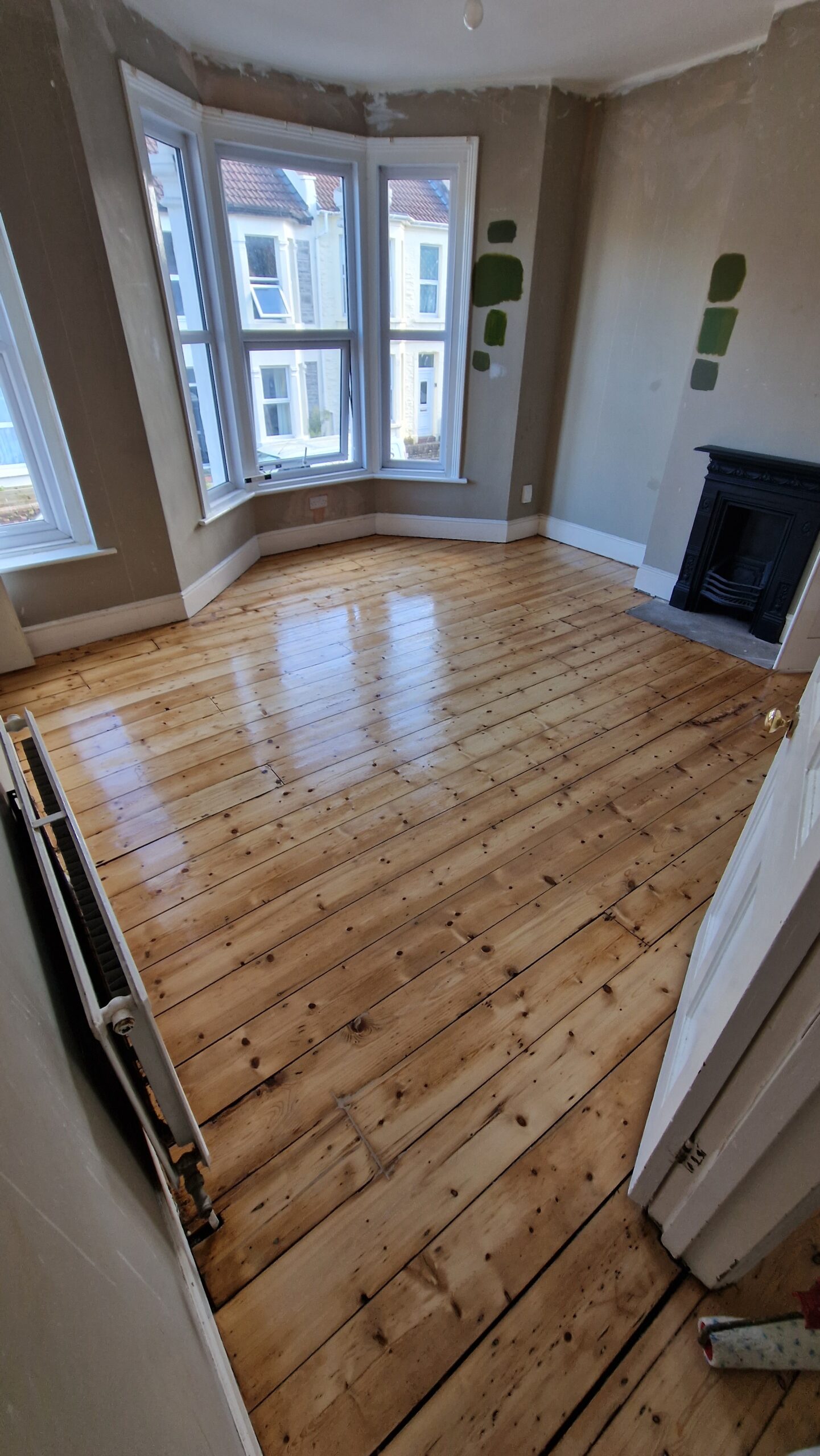
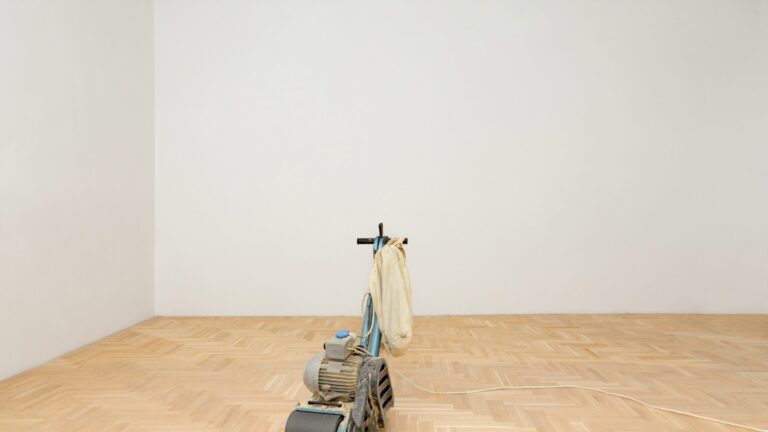
wooden floor sanding

Repairs and Sensitive Board Replacement

Centuries of alteration leave Fowey floors full of old patches, and our wooden floor repairs service improves on them without erasing the building’s story — rot cut back to sound wood, worm assessed honestly, historic boards kept wherever they can be. Floorboard replacement uses reclaimed oak, elm and pine from our stock, matched to age and width.

Squeaks, scratches and gap filling — timber slivers for boards that still move, resin for stable floors — complete the repair list.

Not every old patch is a defect. A neat Victorian repair in a Georgian floor is part of the building’s record, and we leave good historic mends alone — the ones we replace are the failures: ill-fitting modern softwood, plywood squares, patches proud or loose underfoot. On listed buildings we keep a simple record of what was lifted, what went in and why, so the owner has something concrete for the building’s file. Conservation is as much about knowing when to stop as knowing how to cut.

Parquet Floor Restoration

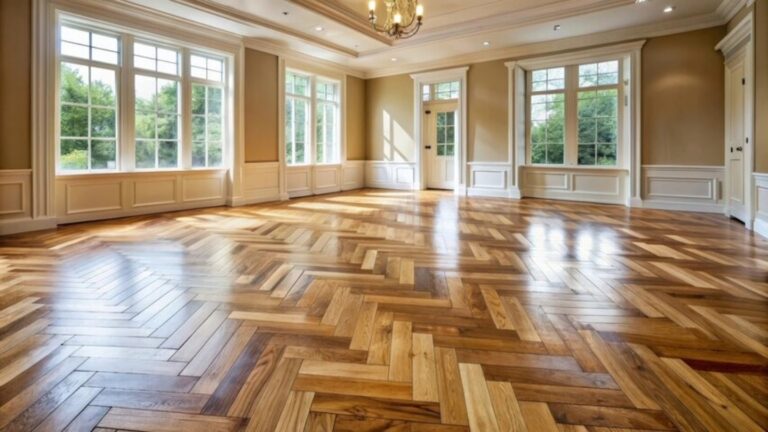
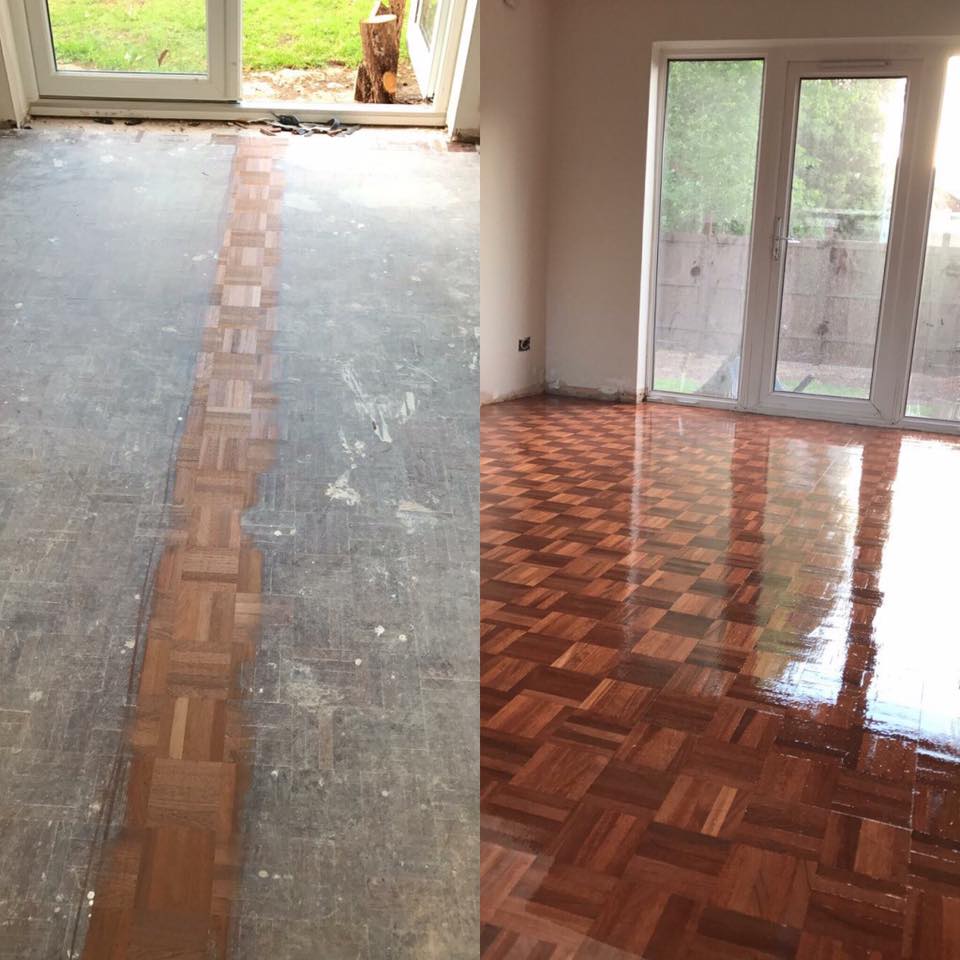
The Victorian villas and inter-war houses above the estuary hide a fair amount of parquet, and our parquet restoration service brings it back whole: loose blocks re-bonded once the failed bitumen is cleared, missing pieces matched from reclaimed stock, then the entire pattern sanded flat and sealed so the geometry reads sharply.

Herringbone under carpet is a common Fowey discovery — and almost always a happy one.

Villa parquet from the early twentieth century was usually laid over timber subfloors rather than slab, which changes the checks: we look for spring in the boarding beneath, refix it where it moves, and only then re-bond blocks — adhesive cannot hold a pattern steady on a subfloor that flexes underfoot. Once the base is quiet, the familiar sequence follows: bitumen cleared, reclaimed blocks matched in dry, the pattern sanded diagonally through the coarse grits and finished fine before sealing as one surface.

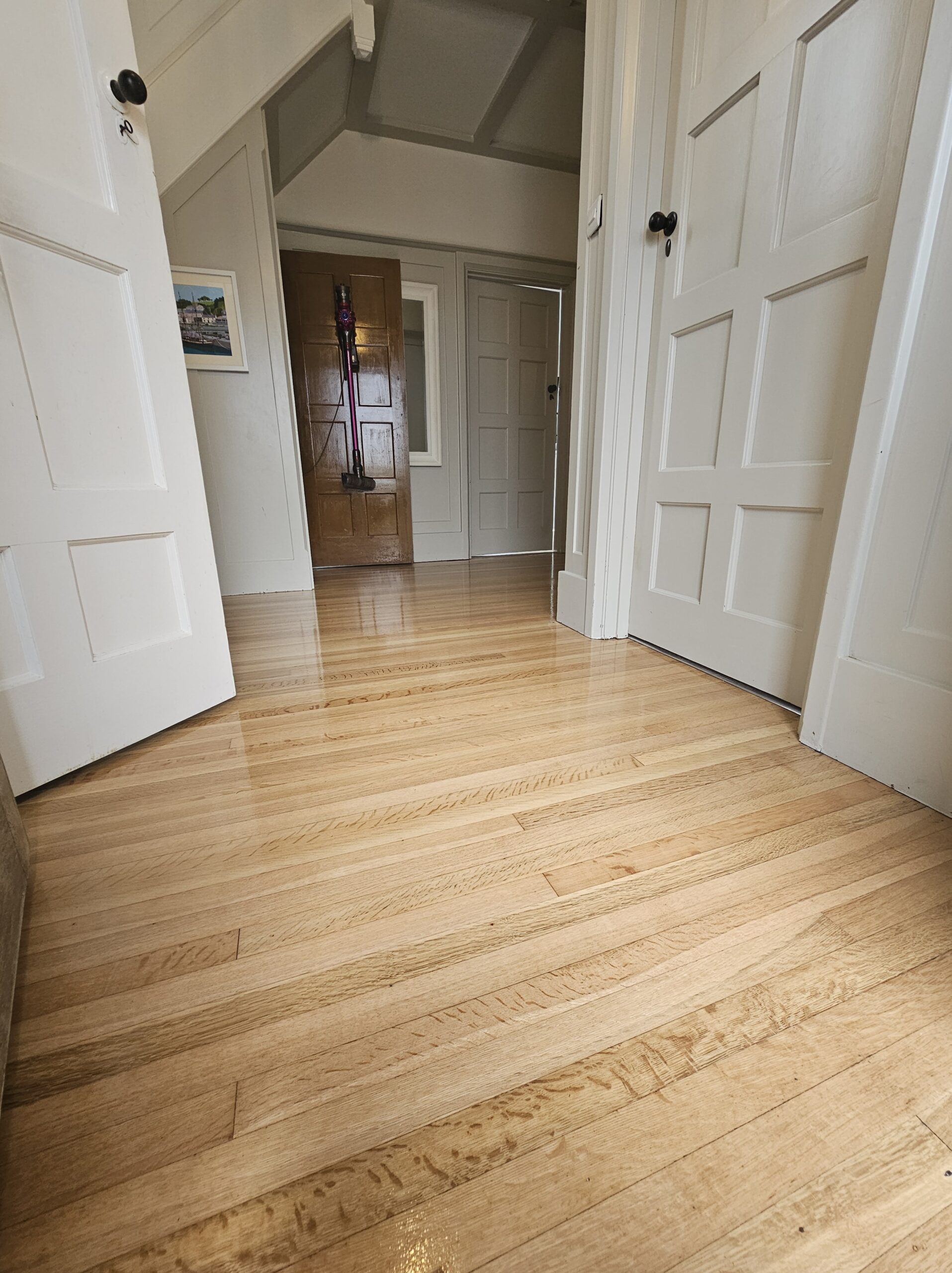
flooring sanding company
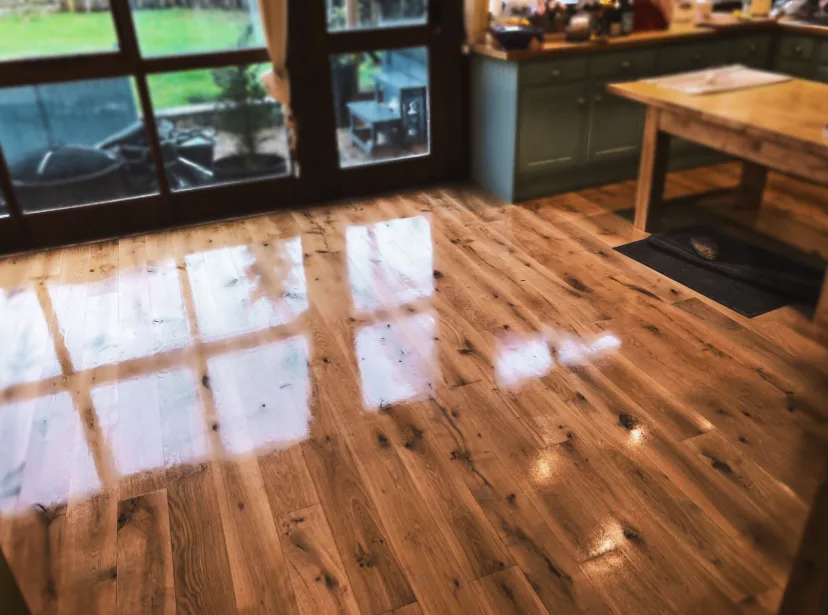
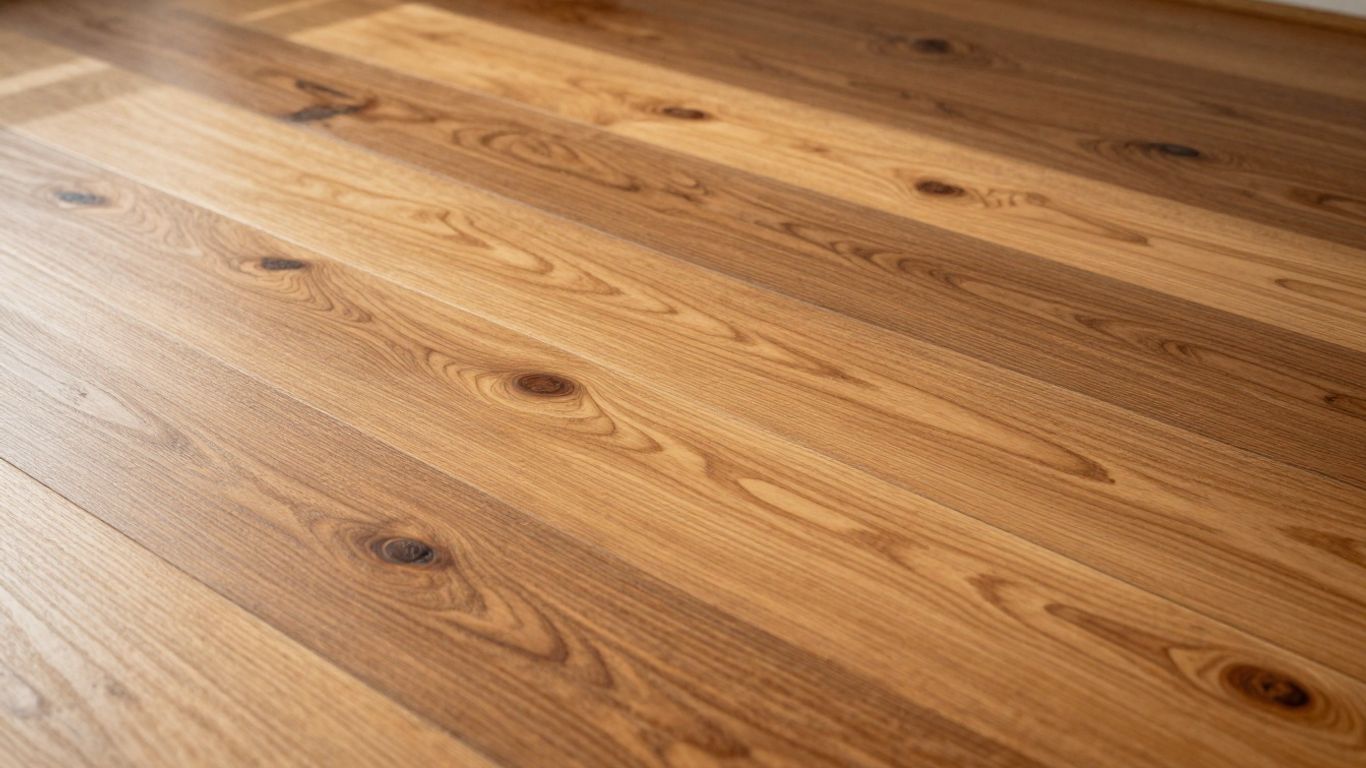
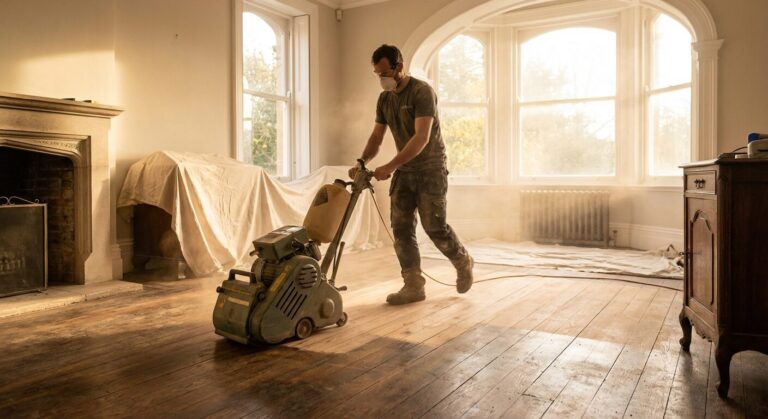
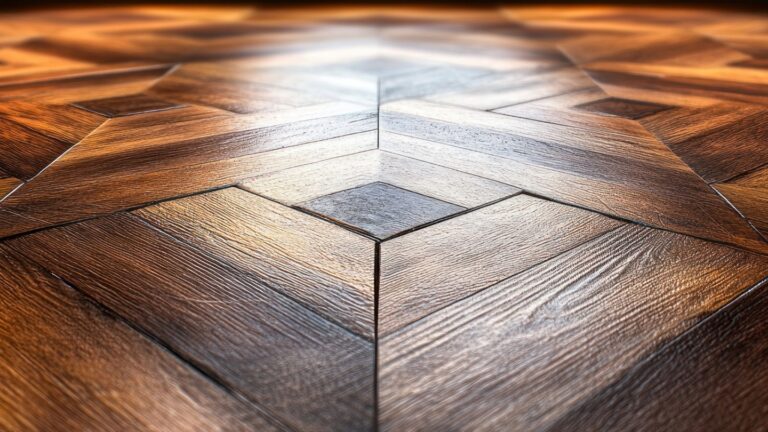
Sunlight across freshly lacquered wooden floorboards

Staining, Oiling, Sealing and Waxing

Estuary humidity and empty winters push us towards breathable hard wax oils in period Fowey houses — they flex with the seasons and patch-repair invisibly — while lets and hard-working family rooms get durable water-based lacquer. Wax belongs in the oldest rooms, over oak that has never known plastic.

Staining is trialled on your own boards, because five-hundred-year-old oak and Victorian pine take colour in entirely different ways.

Wax rewards a particular rhythm: thin applications buffed well, repeated seasonally at first and then only when traffic dulls the sheen — and never layered thickly, because over-waxed floors go sticky, hold dirt and eventually need stripping back to bare timber to start again. On old oak the effect justifies the effort — a depth and softness of surface that no modern coating quite reproduces — and maintenance visits can be added to our regular runs for owners who would rather we kept the rhythm going.

When a Floor Should Not Be Sanded

Some Fowey floors have simply run out of thickness, and the responsible answer is not another sand. A buff and recoat keys the old finish and lays a new coat over it, removing no timber; polishing revives sheen between coats; and many tired floors can be restored without sanding at all.

We measure, we tell you which camp your floor is in, and we quote for the treatment it actually needs — not the biggest one.

A floor announces that it is running out of thickness before any gauge confirms it: nail heads begin resurfacing as the boards thin around them, tongues glint through the gaps at board edges, and previous fillers stand proud where the timber has worn away beside them. Any of those signs at survey moves the conversation from sanding to surface renewal, and we would rather have that conversation honestly than take a fee for the cut that finishes a historic floor for good.

Wood floor sanding company
Floor sanding taunton

Get a Floor Sanding Quote in Fowey

Send two photographs — the room and its worst corner — plus one of the street access, and we will respond with an honest opinion and a fixed written quotation. Free no-obligation surveys join our mid-Cornwall runs, second-home owners can run everything remotely through an agent with completion photographs supplied, and November to February remains the ideal window for old-town work.

Call 01823 674562, email info@ryansrestoration.co.uk, or use the form on this page.

All services available in Fowey: floor sanding, commercial floors, repairs, board replacement, gap filling, parquet restoration, oiling, staining, sealing, buffing, polishing and stair sanding.

Nearby areas we also cover: Liskeard, Lostwithiel, St Austell and Bude. There is a page for each, and the full list of towns is on our areas we cover page.

FAQ: Floor Sanding in Fowey

Sanding, refinishing, sensitive repairs, board replacement, gap filling, parquet restoration, staining, sealing, oiling, waxing, polishing, buffing and stair sanding — with particular experience in listed and very old buildings.

Yes. Dining rooms are done overnight, hotels floor by floor so bedrooms keep earning, and everything is sealed with fast-curing products so no trading day is lost.

Repaired, almost always. Timber of that age cannot be bought new, so we conserve it and let in reclaimed boards only where a piece is genuinely gone — with the method agreed in writing for listed buildings.

Yes, on the same mid-Cornwall runs as our other work. Loose blocks, bitumen failure and missing pieces are all routine, and the finished pattern seals as one crisp surface.

Certainly — after sanding we can stain lighter, darker or more neutral, testing on your boards first because old oak and pine respond to colour very differently.

Sealed extraction takes the overwhelming majority at the machine — essential where fine dust would settle into beams and lime plaster that cannot be scrubbed. Doorways are sheeted and rooms cleaned as we finish.

Yes. Keys through your agent, moisture readings and photographs before we start, completion photographs when we finish, and the quotation fixed in writing throughout. Winter is the ideal slot.

Photographs bring an honest opinion and a fixed written figure; the free no-obligation survey then confirms thickness, moisture and access. The written figure is what you pay.