45 years’ experience  ·  Rated 4.9 on Google  ·  Family-run, from our workshop near Wellington

45 years’ experience · Rated 4.9 on Google · Family-run

Floor Sanding and Wood Floor Restoration in London

London floor sanding for whole houses, mansion flats, restaurants and offices, planned around leases, neighbours and tight access by a Somerset family firm.

QUICK QUOTATION

Floor Sanding Taunton

Floor Sanding in London From a Somerset Workshop

A fair question from anyone in the capital is why a firm from the West Country would be sanding their floor. The honest answer is that we do not pick up every London enquiry. Ours is a family firm, and home is Higher Poole near Wellington in Somerset; London lies far beyond our usual West Country round. We make the journey for the jobs that suit it: a whole Victorian or Edwardian house with boards on every floor, a large mansion flat with parquet throughout, a restaurant, a run of offices or a hotel. A single bedroom in a Zone 3 flat is usually better handled by someone nearby, and we will say so.

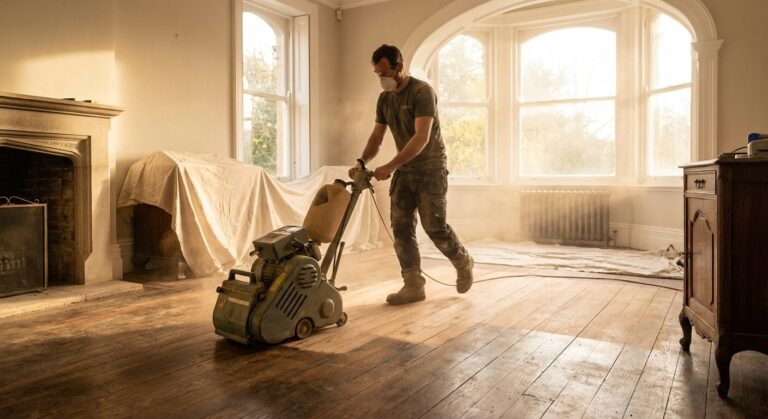
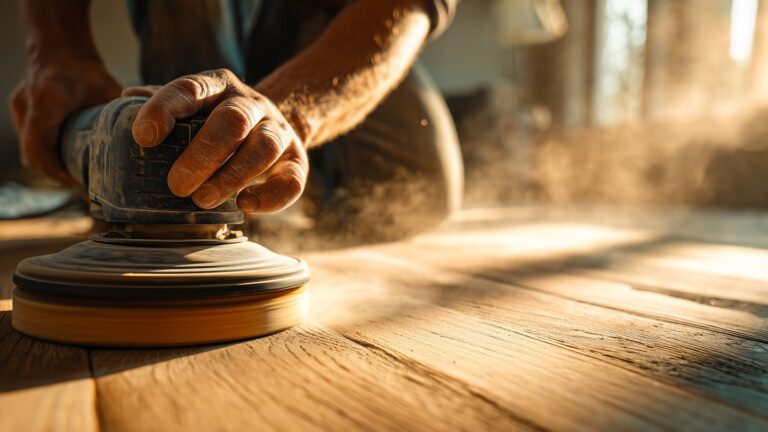
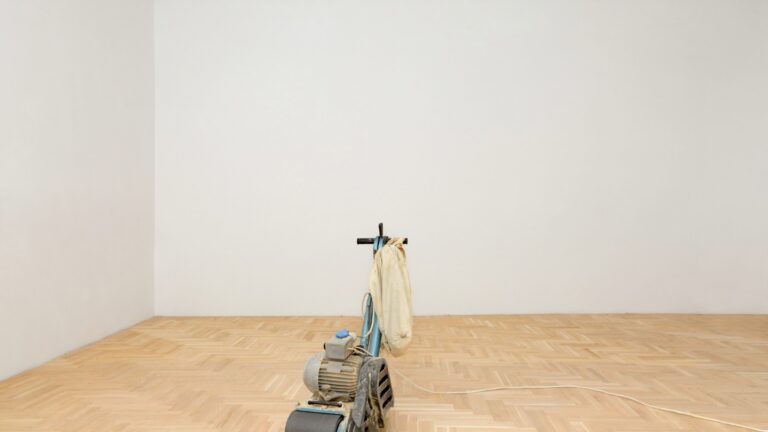
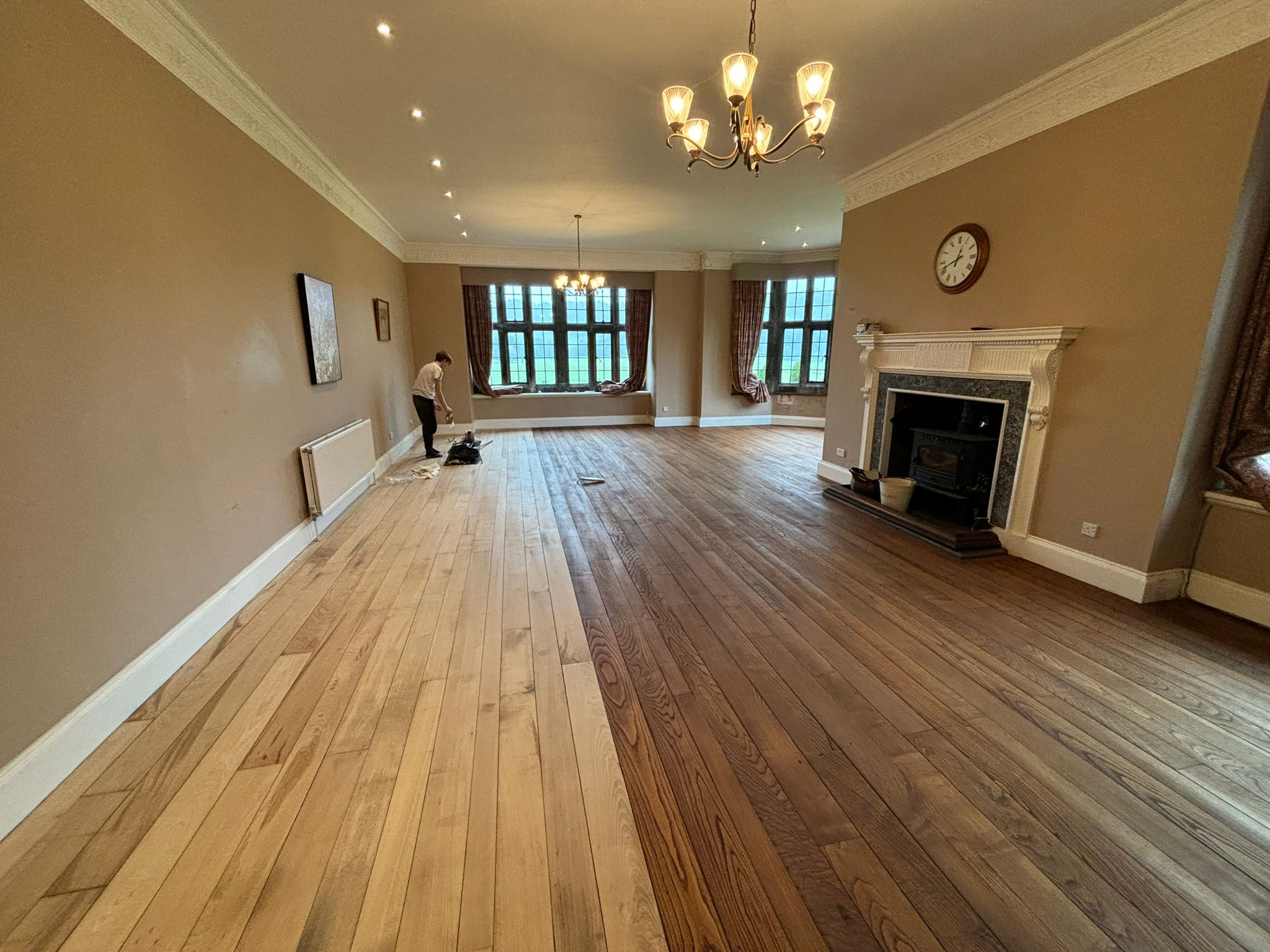
When we do come, the work itself is what distinguishes floor sanding in London from the same job elsewhere. Access is tighter, parking is harder, many homes are flats with neighbours above, below and either side, and the building may have rules about when noisy work can happen and how the common parts must be protected. All of that shapes the plan before a machine is carried up the stairs. Our wood floor sanding is organised around it: compact machines that fit in a lift or round a tight stair landing, sealed extraction connected directly to the sanding head, and a schedule agreed in advance with the building where needed.

Dust is a bigger worry in a flat than in a detached house, because it can travel through gaps around doors and into shared hallways. Dust-free floor sanding equipment captures most of it at the drum and edger as it is produced, which is why it is our standard for London work, although sensible masking of doorways and vents still matters and no extraction system is completely perfect.

The London pages for individual areas go into more depth: floor sanding in Greenwich covers the riverside and its older houses, and floor sanding in Dulwich covers the south London suburb with its large Victorian and Edwardian family homes. For the full picture of where we travel, see the areas we cover. If your project is a whole house, a commercial floor or a large flat, it is worth a conversation.
Flats, Leases and Noise: Planning Wood Floor Restoration in London

More of our London enquiries come from flats than from houses, and flats carry obligations that houses do not. Leaseholders should dig out their lease before booking wood floor restoration in London, because the answer to whether bare boards are allowed is usually written there. Many leases, particularly in purpose-built blocks and mansion buildings, require floors to be covered with carpet and underlay, or allow hard floors only with an approved acoustic layer beneath, because footsteps on bare boards carry straight down into the flat below. Others require the freeholder’s or managing agent’s consent for any work to the floors. Restoring boards that have been carpeted for decades may therefore need permission first, and in some buildings it may not be allowed at all.

Where the lease permits exposed boards, noise during the work is the next issue. Sanding machines are loud, and in a block of flats the sound and vibration travel through the structure. Many buildings set hours for noisy work, often limiting it to weekday daytimes, and some ask contractors to register with the porter or managing agent and to protect lifts, stairs and hallways with sheeting. A short note to neighbours a few days beforehand, explaining which days the machines will run, tends to prevent most complaints. Our wood floor restoration is planned within whatever rules the building sets.

Noise after the work matters too. If boards are to be left exposed in an upper-floor flat, thinking about the people underneath is part of a good job. Gap filling helps to reduce sound passing through the floor as well as draughts, rugs in the busiest areas absorb footfall, and felt pads on chairs stop the scraping that neighbours below notice most. Where a lease requires an acoustic layer, refinishing the existing boards may not satisfy it, and a new floor laid over an approved underlay can be the answer instead.

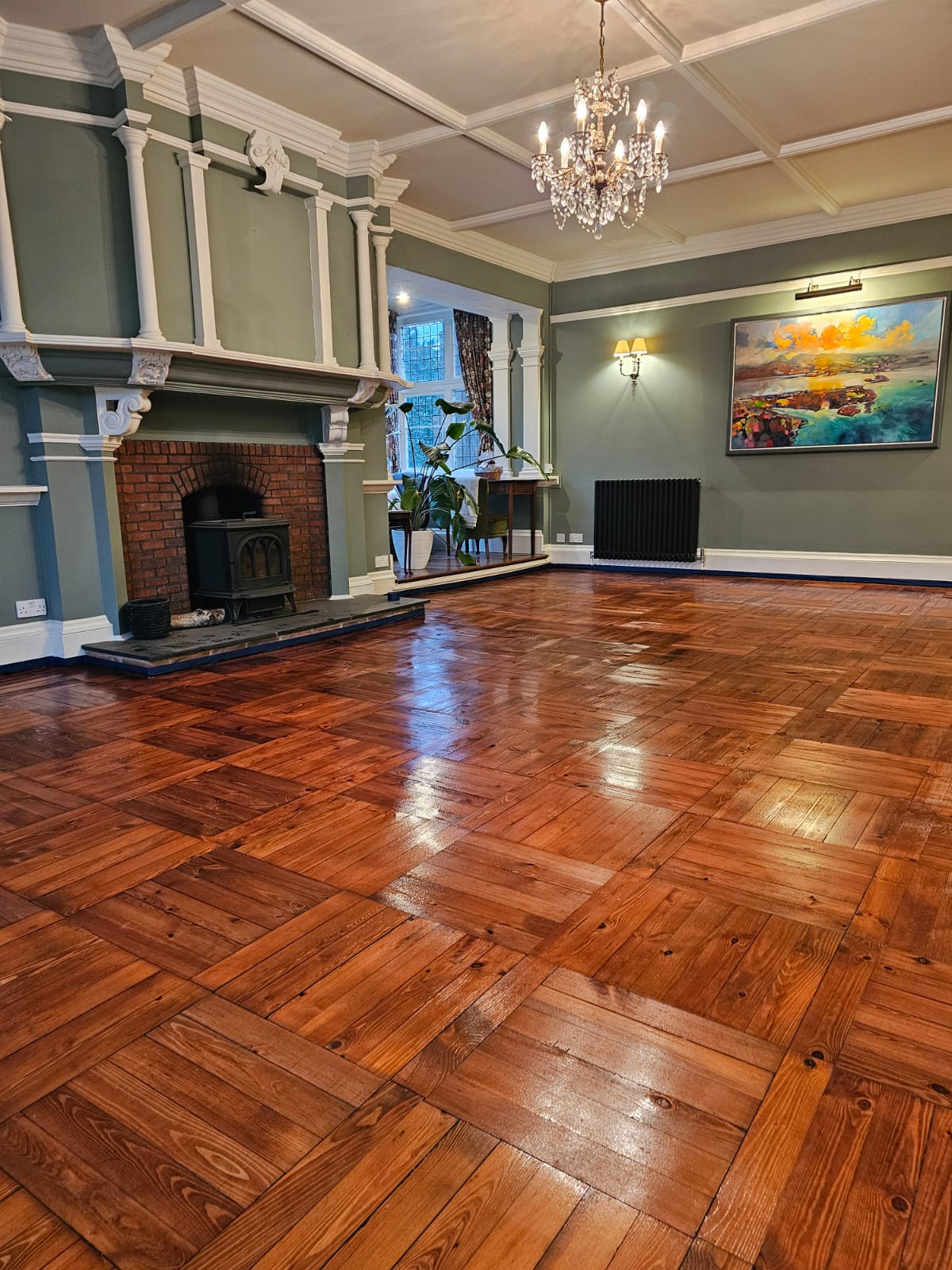
Access also shapes the work. Equipment and materials have to come up in the lift or by the stairs, and parking near the building is often limited to a loading bay or a paid space nearby. On a big flat that is easily managed; it is part of the reason a small single-room job rarely suits the journey from Somerset. Mansion flats from the late Victorian and Edwardian period frequently have generous rooms and good-quality floors, often woodblock in the halls and boards elsewhere, and they are exactly the kind of project where the planning pays off.

Floor sanding south east London
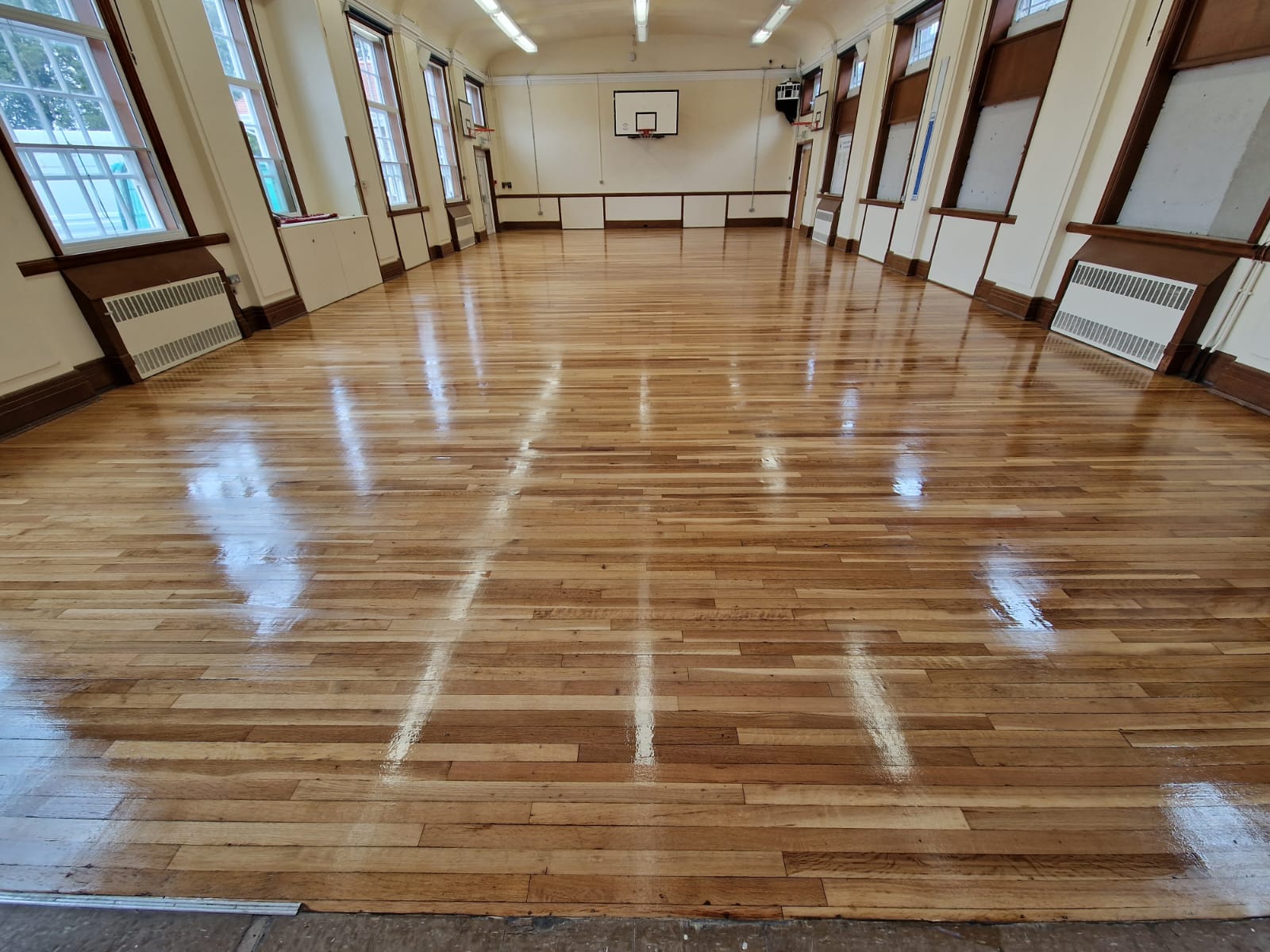
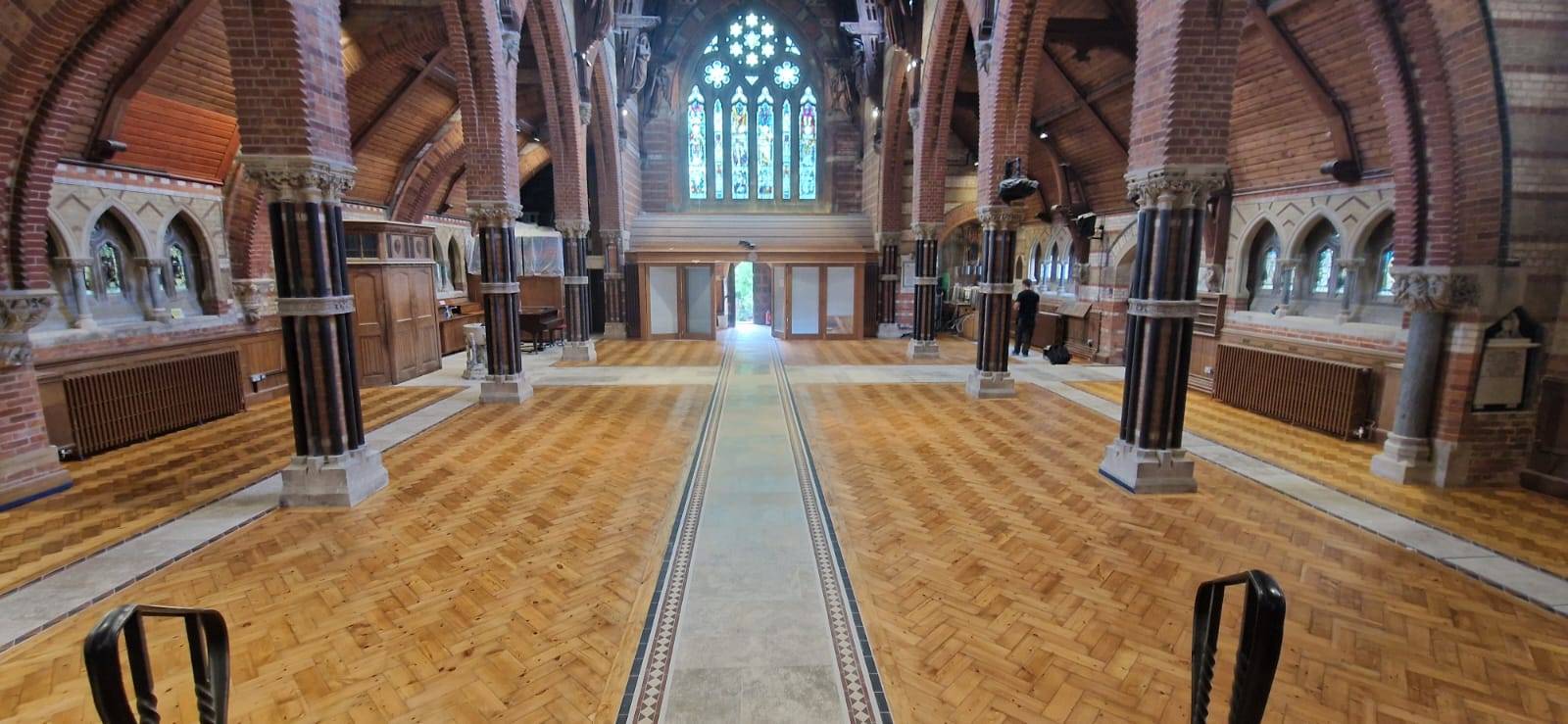
Commercial Hall Floor Refurbishment

Victorian and Edwardian London Houses: What Sits Under the Carpet

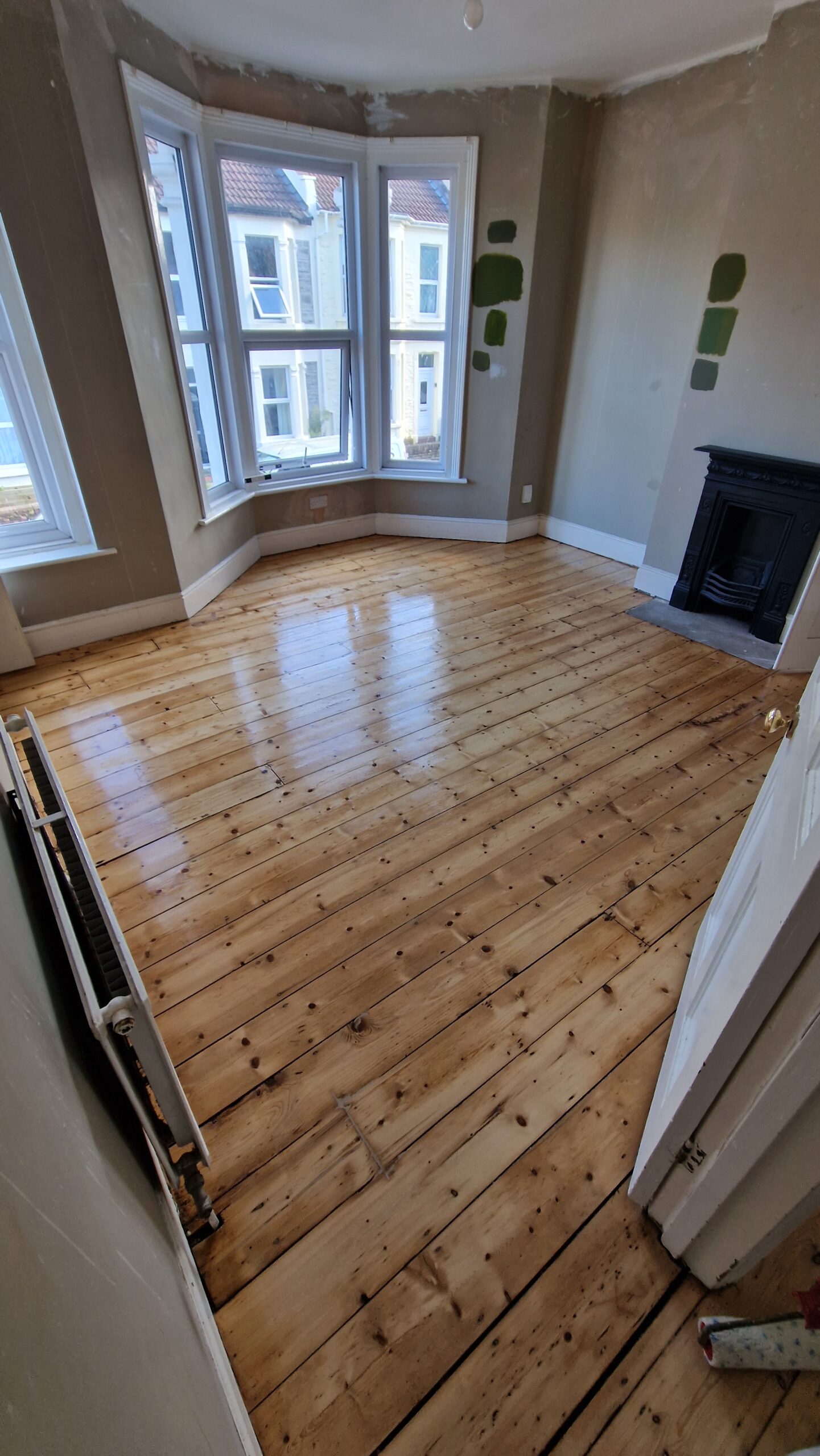
Most of London’s housing stock dates from the long building boom between roughly the 1850s and the First World War, and that period dominates the floors we see. Terraced houses and semi-detached villas from those decades usually have pine boards, often Baltic pine of good quality, nailed to joists over a ventilated void at ground level and over the ceiling of the room below upstairs. The boards are commonly tongued and grooved or square-edged, with widths that vary from house to house.

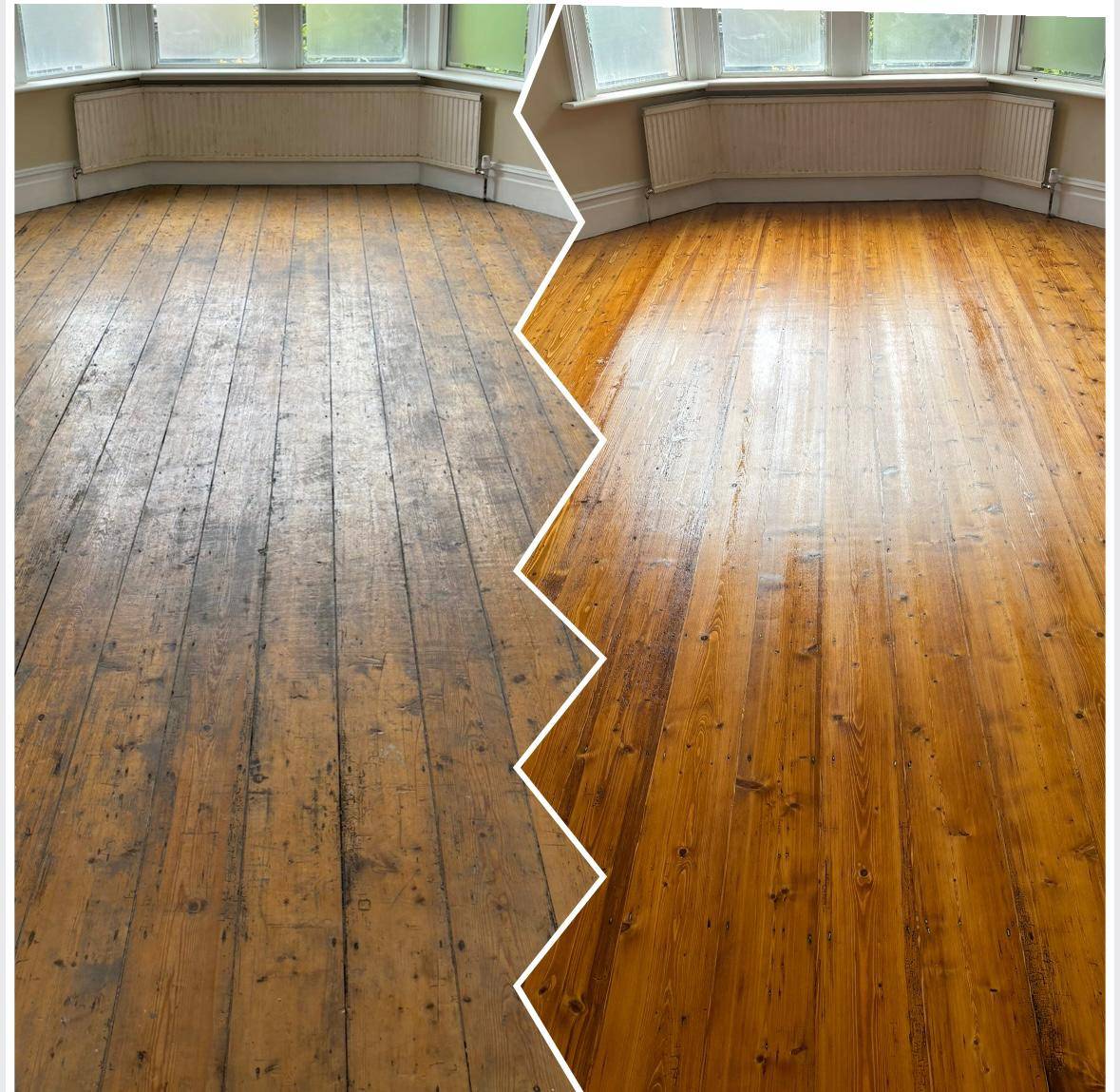
What sits on top of them varies far more. A floor might have been varnished dark in the nineteenth century, painted around the edges, then covered with linoleum, later with carpet tacked down with gripper rods, and at some point patched by an electrician who lifted a board to run a cable and nailed it back slightly out of line. Removing the layers is a large part of the job: lifting old gripper rods and thousands of carpet staples, scraping away underlay residue and taking up old hardboard sheets that were often nailed every few inches. Paint and varnish from the Victorian period may contain lead, and testing before sanding is the sensible course.

Ground floors in these houses depend on airbricks to keep the void ventilated. London’s back extensions, raised patios and rendered walls have blocked many of them, and a ground floor with cupped boards or a musty smell may be showing signs of a damp void. Fixing the ventilation before sanding gives a far better result than sanding boards that are still moving.

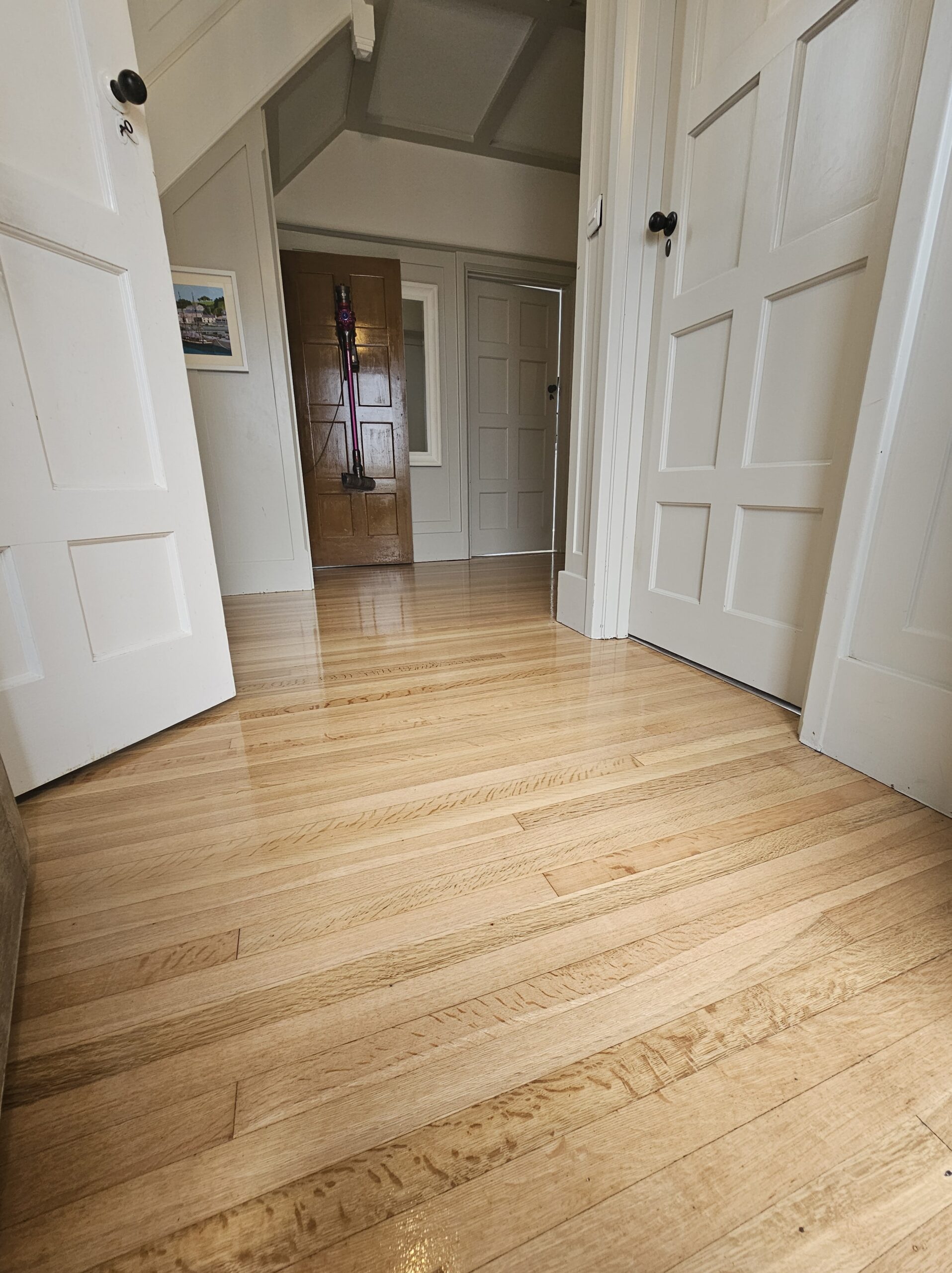
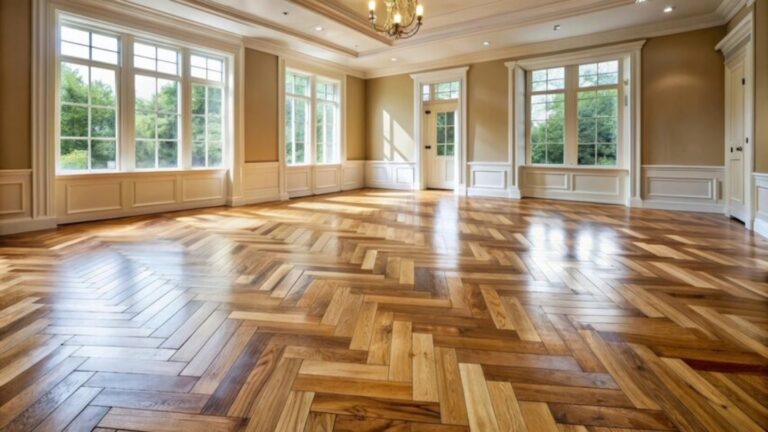
Upper floors are usually drier and in better condition, though floorboards cut by generations of plumbers and electricians are common, and stair landings tend to be heavily worn. In a typical terrace, pine floor restoration spends more hours on stripping out tacks, rods and hardboard than on the sanding itself. Some grander houses, especially in the larger Edwardian villas, have hardwood floors in the reception rooms, and oak floor restoration on those is lighter work because oak wears more slowly and colours more gracefully than pine. Herringbone parquet in hallways became popular in the early twentieth century, and many London houses and mansion flats still have it under later coverings.

Commercial Floor Sanding in London Restaurants, Bars and Offices

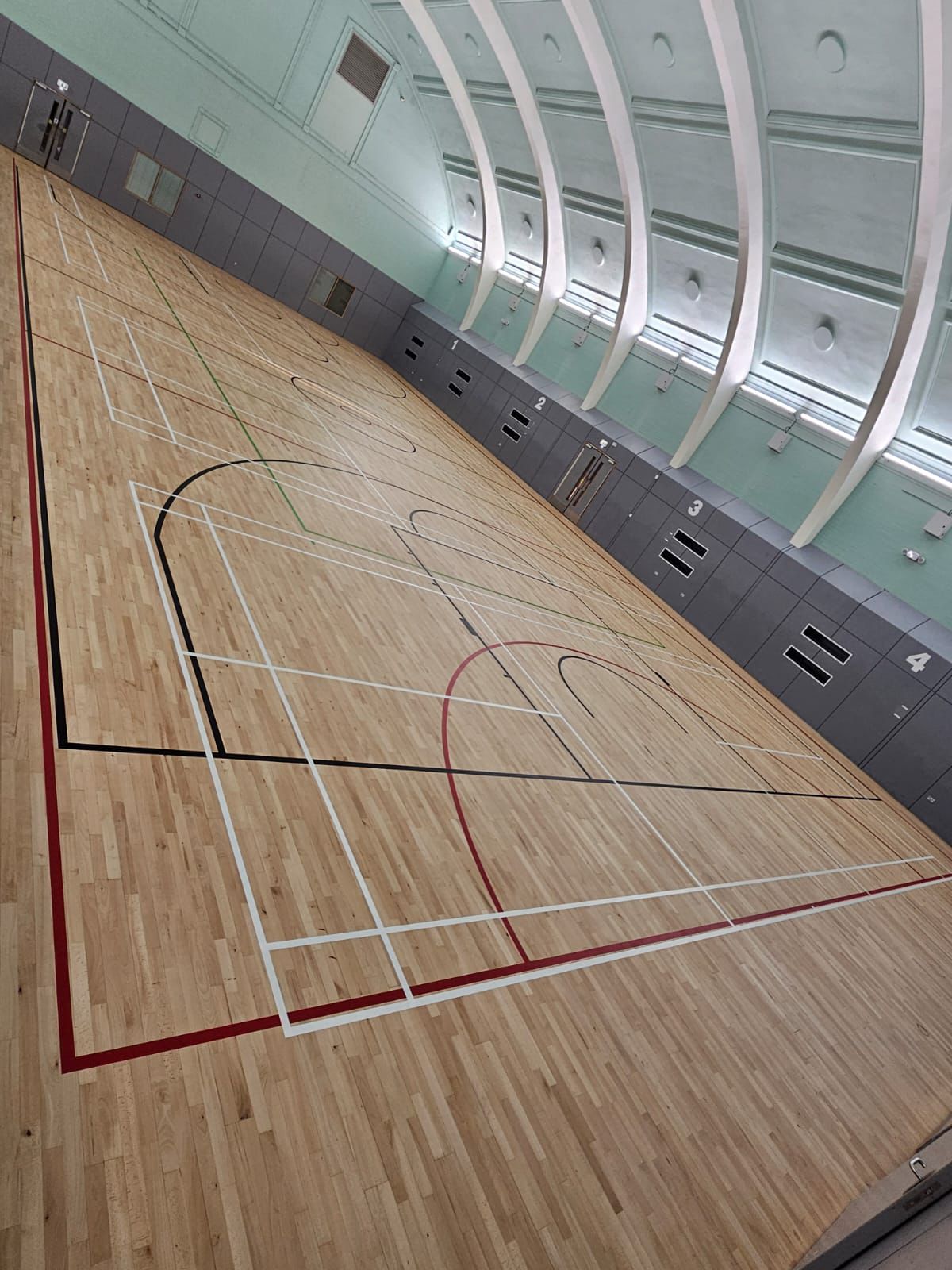
The city’s commercial floors are among the hardest-working in the country. A busy restaurant may see hundreds of covers a day, a bar floor takes spilled drinks and grit on every shift, and an office floor carries dozens of chairs on castors from Monday to Friday. That kind of commercial floor sanding in London, where a large area justifies the journey, makes up a good share of the capital work we accept.

Restaurants and bars cannot close for a week. We arrive once the last covers have left, or on the dark day of the week, and a big dining room is split into halves so one side can trade while the other cures. A two-component lacquer cures quickly enough that a dining room sanded and coated through the night can be set up again for the following service, and it stands up far better than a single-pack product to the combination of spills, chair legs and cleaning. The area in front of the bar and the route between kitchen and tables wear fastest, so they are given extra coats. More on that sequence is set out under restaurant floor sanding, and a boutique hotel follows the same idea through hotel floor sanding, taking one landing of rooms out of use at a time.

Offices are usually done over a weekend. Desks are cleared when the staff leave on Friday, the machines and coatings take the weekend, and depending on the product the team can usually return on Monday or shortly afterwards. Chair castors are the biggest enemy of an office floor, and chair mats or soft castors make a large difference afterwards. Shops and showrooms, often in older buildings with timber floors that have seen generations of footfall, come under shop floor sanding.

Schools and studios follow their own calendars. Dance and yoga studios need a finish that gives the right amount of grip rather than the highest gloss, and our dance floor sanding work covers that balance, while school halls are scheduled for the holidays through school floor sanding. Facilities managers and landlords who need a method statement, insurance certificates or references before booking can have them, and the general commercial floor sanding page covers other premises.

Floor Sanding Essex
parquet floor restoration near me

Cut Boards, Loose Blocks and Tall Stairs in London Houses

A London floor is usually a record of every trade that has worked in the house. Gas fitters lifted boards for pipes in the early twentieth century, electricians did it again when the house was rewired, and central heating in the 1970s brought another round, often with boards sawn mid-span and dropped back onto nothing. The result is a floor with short offcuts that bounce, joists notched so deeply they sag, and creaks along every line of nails. Wooden floor repairs deal with all of that before any sanding, adding noggins under unsupported board ends and refixing anything that moves.

Replacement boards are where London houses get tricky. Victorian Baltic pine grew slowly, so its rings are tight and its colour deepens to a rich amber; new softwood from a timber merchant is pale, soft and fast-grown, and it stands out like a fresh plaster patch. Floorboard replacement in these houses relies on salvaged pine of the right age, carried up from our Somerset stock and chosen for ring count and width as much as for length. Noisy boards on a Hackney or Islington landing generally quieten once a slim screw is driven into the joist next to each loose nail, part of our squeaky wood floor repair. A single deep dent left by a removal firm or a fallen radiator may only need wood floor scratch repair in that spot.

Central heating dries the air in a London terrace hard through winter, and the boards shrink to match. Gap filling closes those openings with glued slivers where they are wide and with a resin-and-dust paste where they are fine, which cuts draughts from the void and, in a flat, reduces the sound that passes to the neighbours below.

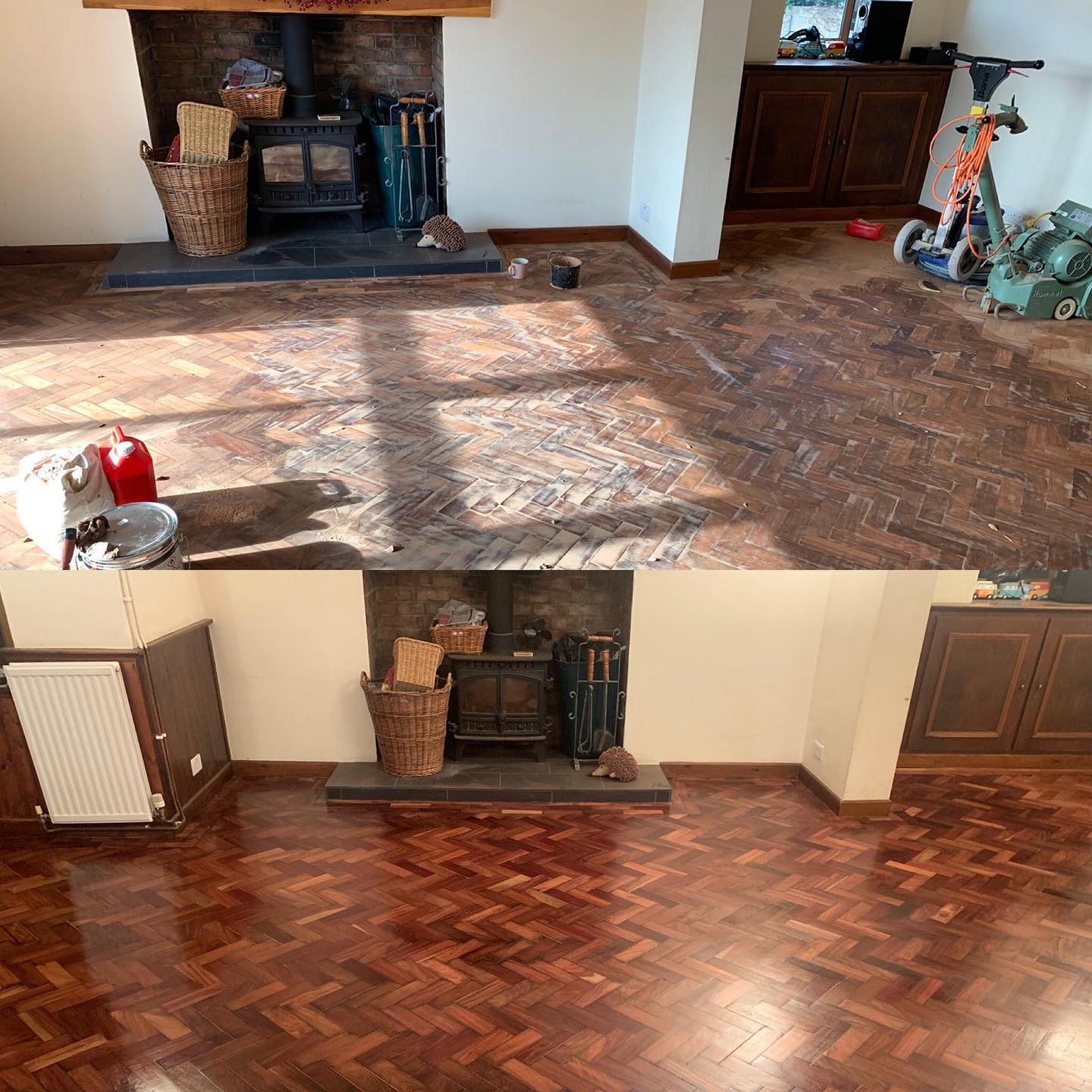
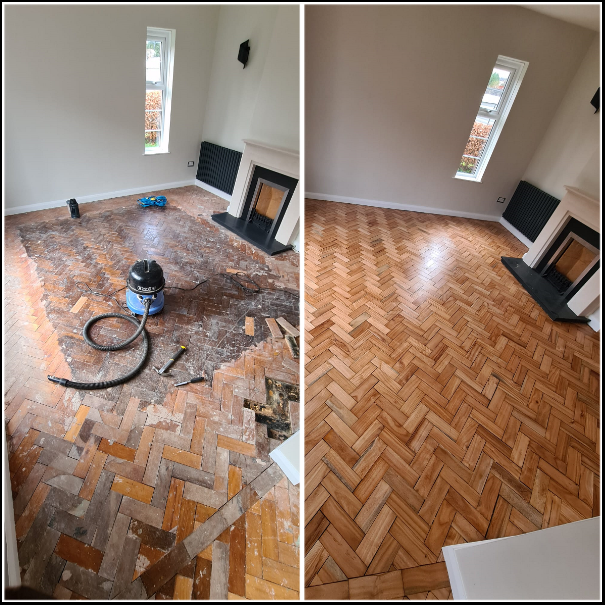
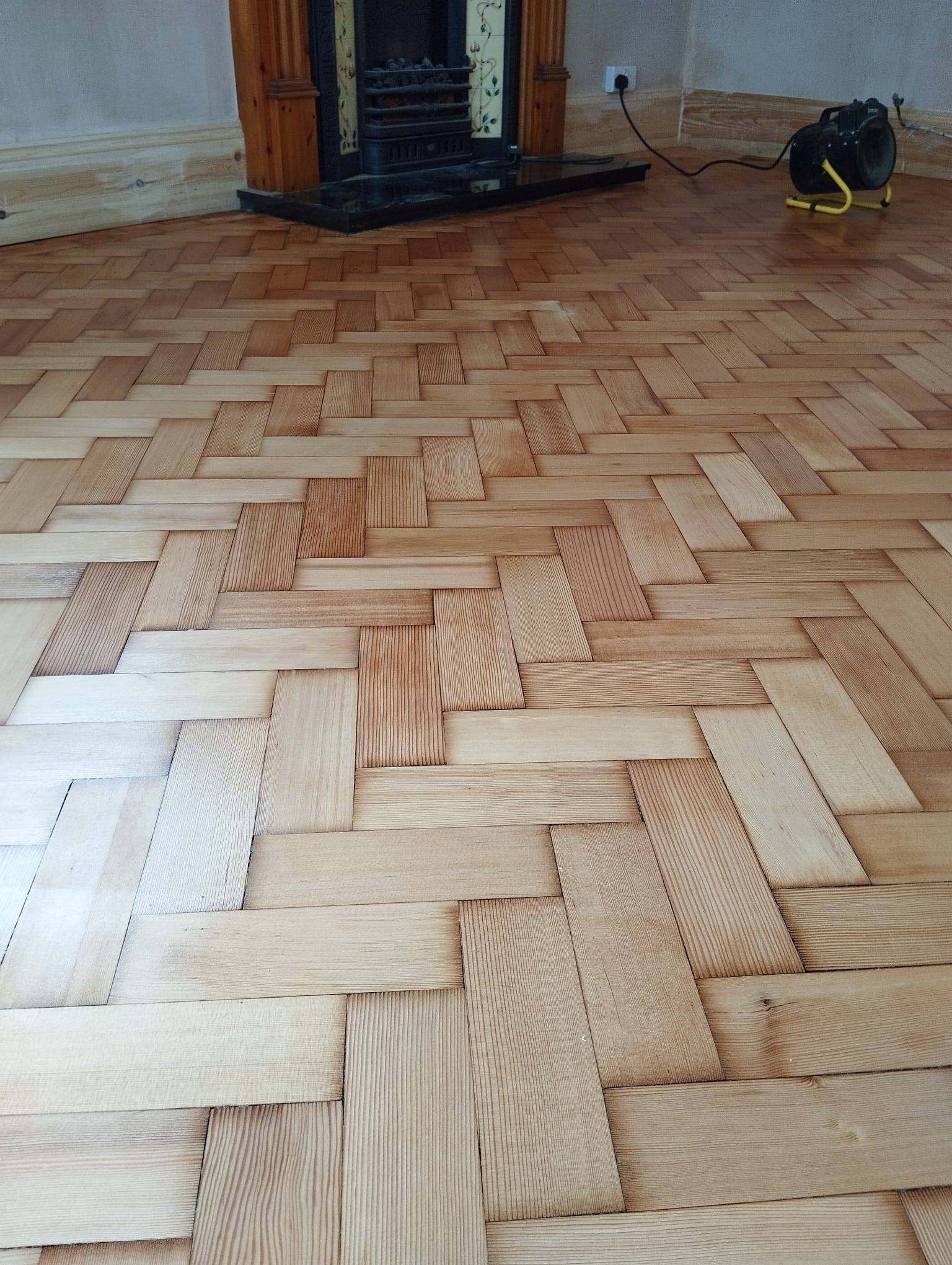
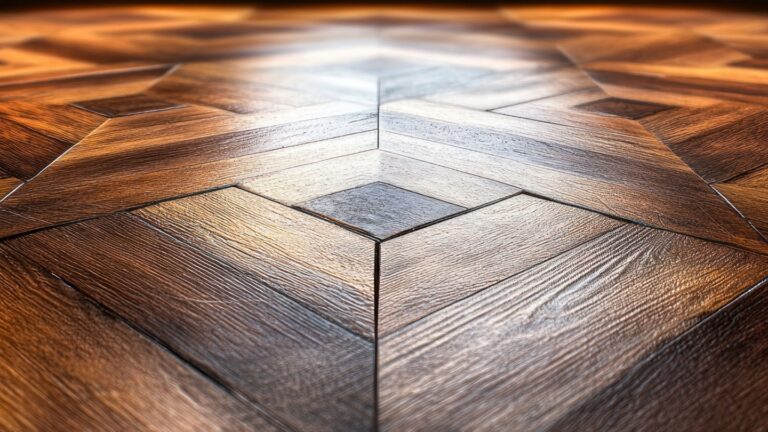
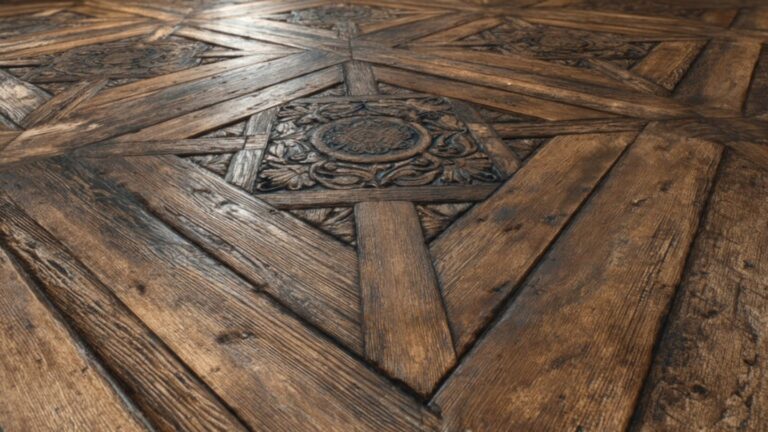
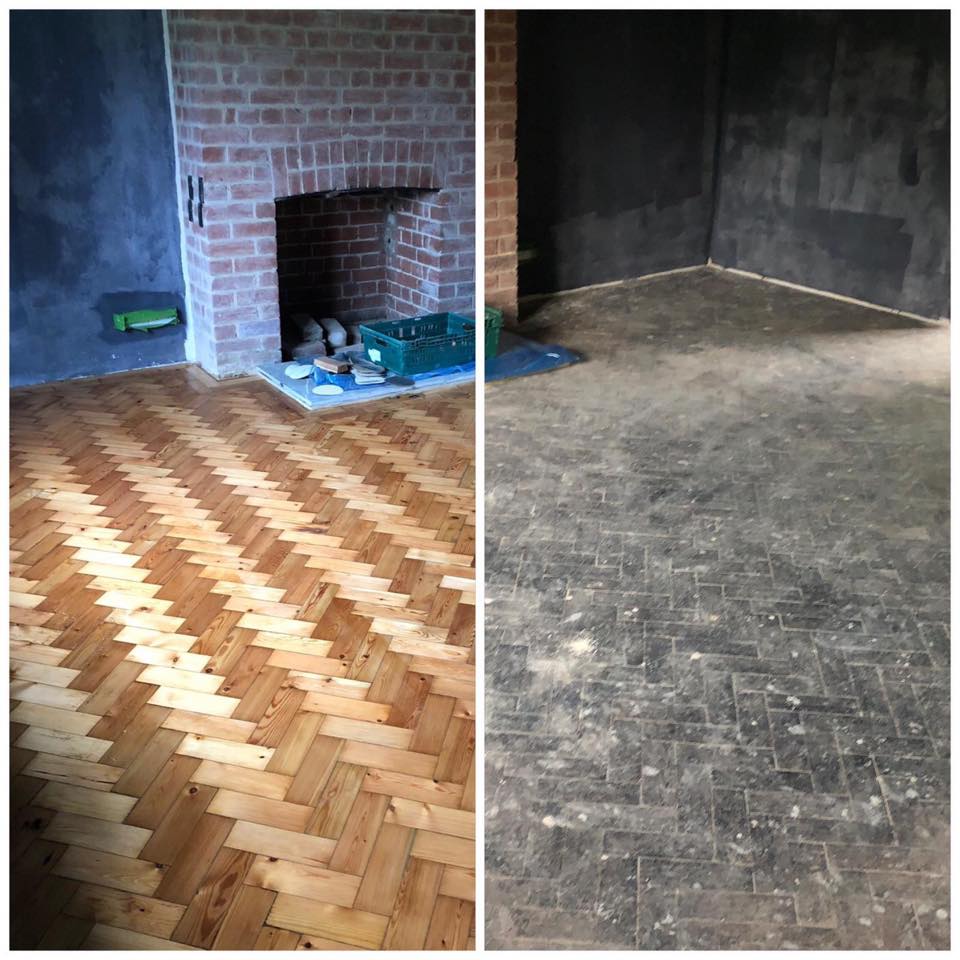
Herringbone in mansion blocks and Edwardian hallways is usually sound in the field but loose at the edges and near doorways, where the old bitumen has given up. Blocks that rattle are taken up, their undersides scraped back to clean timber and set down again in modern adhesive, with gaps filled from reclaimed blocks of matching size. Parquet floor sanding then starts on the diagonal before a multi-head machine takes out the cross-grain scratches. Staircases in four-storey houses are long, steep and often painted at the edges; stair sanding there is tread-by-tread work with small machines and scrapers, keeping clear of balusters and walls.

Coatings, Upkeep and Getting a London Survey Booked

The finish for a London floor is chosen around how the room is used and who lives underneath. Garden doors, school shoes and a dropped saucepan or two make a terrace kitchen-diner the obvious candidate for wood floor sealing using two-pack lacquer. A first-floor sitting room in a period flat, with oak or good pine and a neighbour below who will hear every chair, is often better under hard wax oil, which is quieter in appearance and easy to spot-repair; our wood floor oiling covers natural oils as well. With Baltic pine, wood floor staining can blotch where resinous latewood resists the colour, so samples belong on the floor itself. Some period rooms still suit wood floor waxing or the deeper sheen of a polished wood floor.

Afterwards, think about the building as much as the floor. In a flat, felt glides on dining chairs do double duty, saving the lacquer and sparing the downstairs neighbour. Sofas and tables return on day three or so, with rugs held back about a week. Pavement grit then becomes the floor’s main adversary, so a good mat at the street door and frequent vacuuming do more good than any polish. A mop that is barely damp with a neutral cleaner is enough; steam cleaners will damage most finishes. When the traffic lanes dull, wood floor buffing adds a fresh coat without returning to bare wood. At home that kind of care can stretch the gap between full sands to the best part of a decade, while a restaurant or bar floor will normally need the full treatment every four or five years.

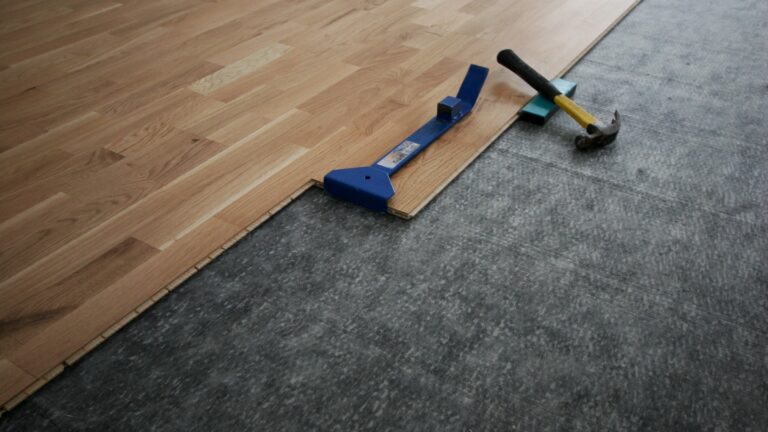
Where the boards are beyond saving, or a lease requires an acoustic layer that old boards cannot provide, wooden floor installation covers fitting a new floor over the right underlay, or simply supplying one, from ranges such as Junkers and Bona.

Because of the distance, the first contact matters. Write to info@ryansrestoration.co.uk attaching two photographs, one wide and one close, and tell us the postcode and whether we would be working in a house or a block. From that we can say whether the project suits the trip. There is no charge for the half-hour survey. The quotation that follows is in writing, separates each task and holds as long as the scope is unchanged. If talking it through suits you better, 01823 674562 reaches us between 8am and 6pm on any weekday.

Parquet Flooring Restoration

London Floor Sanding Questions

Not every postcode or every job. Travelling up from near Wellington in Somerset only makes sense for substantial work, so we concentrate on whole houses, large flats and commercial premises like restaurants, offices and hotels. Send photographs and an idea of the floor area and we will tell you straight away whether the job is one we can take on.

Usually, but check the lease first. Many leases require carpets or an approved acoustic underlay to protect the flat below, and some require consent from the freeholder or managing agent before floors are altered. If exposed boards are permitted, we plan the work within the building’s rules on noise, working hours and protection of common parts.

Sanding is noisy while the machines are running, and in flats the sound carries. Most buildings limit noisy work to weekday daytime hours, and we work within those. Letting neighbours know which days the work will happen usually prevents complaints. Once the floor is finished, rugs, felt pads and well-filled gaps help reduce noise passing to the flat below.

Very often, yes. Victorian pine is usually good-quality timber, and carpet tends to protect it. Expect preparation work: gripper rods, staples, underlay residue and sometimes hardboard to remove, and boards cut by past plumbing or wiring to repair. Old paint and varnish may contain lead, so testing before sanding is sensible.

Usually, yes. Restaurant and bar floors are sanded overnight or on closed days, in sections where necessary, with fast-curing two-component lacquers that let the room be set up for the next service. Areas that wear fastest, such as the bar front and the kitchen route, are given extra coats. Head offices that insist on seeing our insurance and a written method statement ahead of an overnight booking can be sent both.

Yes. Parquet in mansion flats is often sound beneath later coverings, though some blocks may be loose. Loose ones are bedded again in new adhesive, and spaces where blocks vanished during past building work are made good with salvaged blocks. The floor is then sanded diagonally and finished with a multi-head machine before being sealed or oiled.

A typical house floor takes one to three days, depending on the area, repairs and finish. Flats may take a little longer where the building limits working hours. Restaurants and offices are fitted around trading, through the night or across a weekend. Because we travel, it helps if rooms are cleared before we arrive so the work can run straight through.

As far ahead as possible, particularly for commercial projects or flats where the managing agent needs notice. We plan London work in advance so that travel, access and building rules can be arranged. Restaurants and offices should allow time to agree overnight or weekend dates that fit their own calendars.

Begin with our contact form or an email. Include two pictures (the room from the doorway, the boards up close), the postcode, a rough floor size and whether the property is a house or a flat. When the project fits the journey, a free half-hour visit follows, and the quotation we put in writing afterwards splits the job into its separate parts and does not move unless the job does.