45 years’ experience  ·  Rated 4.9 on Google  ·  Family-run, from our workshop near Wellington

45 years’ experience · Rated 4.9 on Google · Family-run

Floor Sanding and Wood Floor Restoration in Lyme Regis

Sanding, repairs and hard-wearing finishes for Lyme Regis cottages, guest houses and cafés, planned around steep access, sandy footfall and narrow stairs.

QUICK QUOTATION

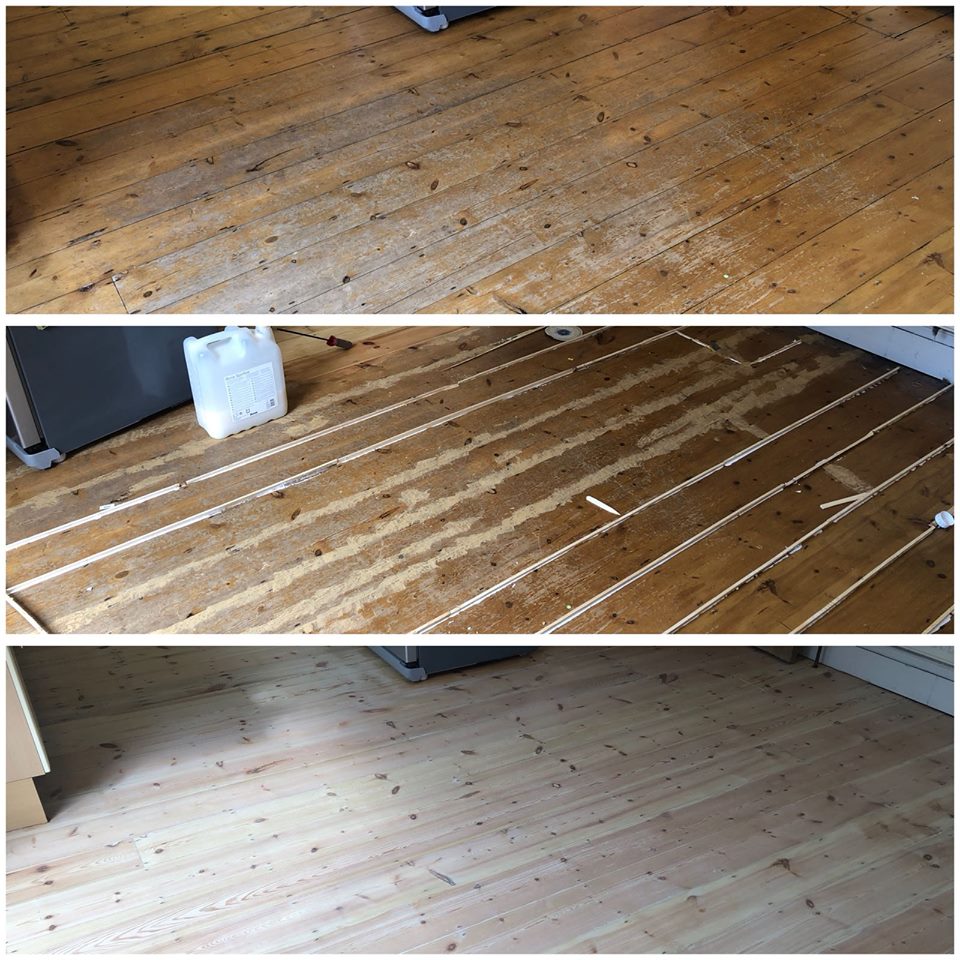
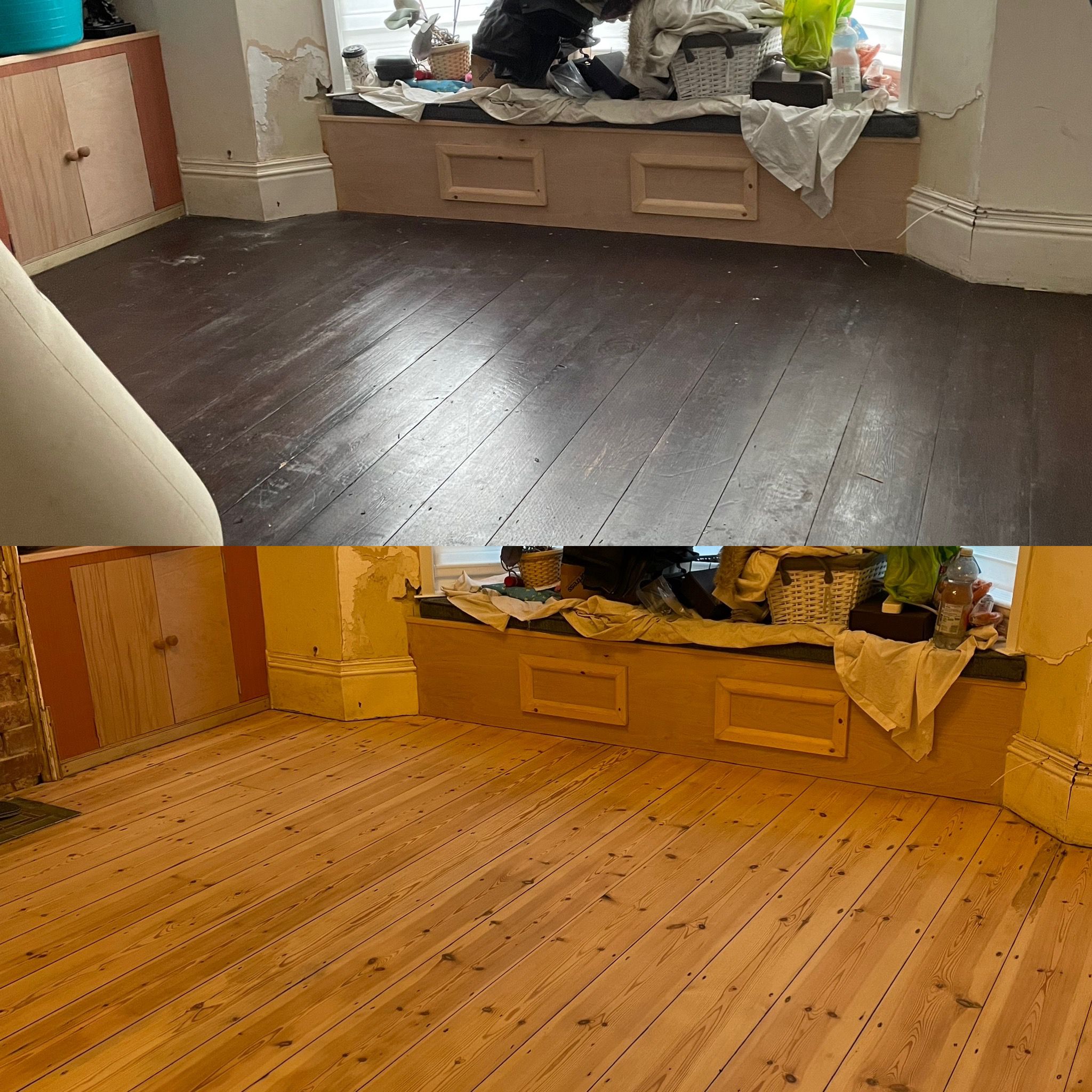
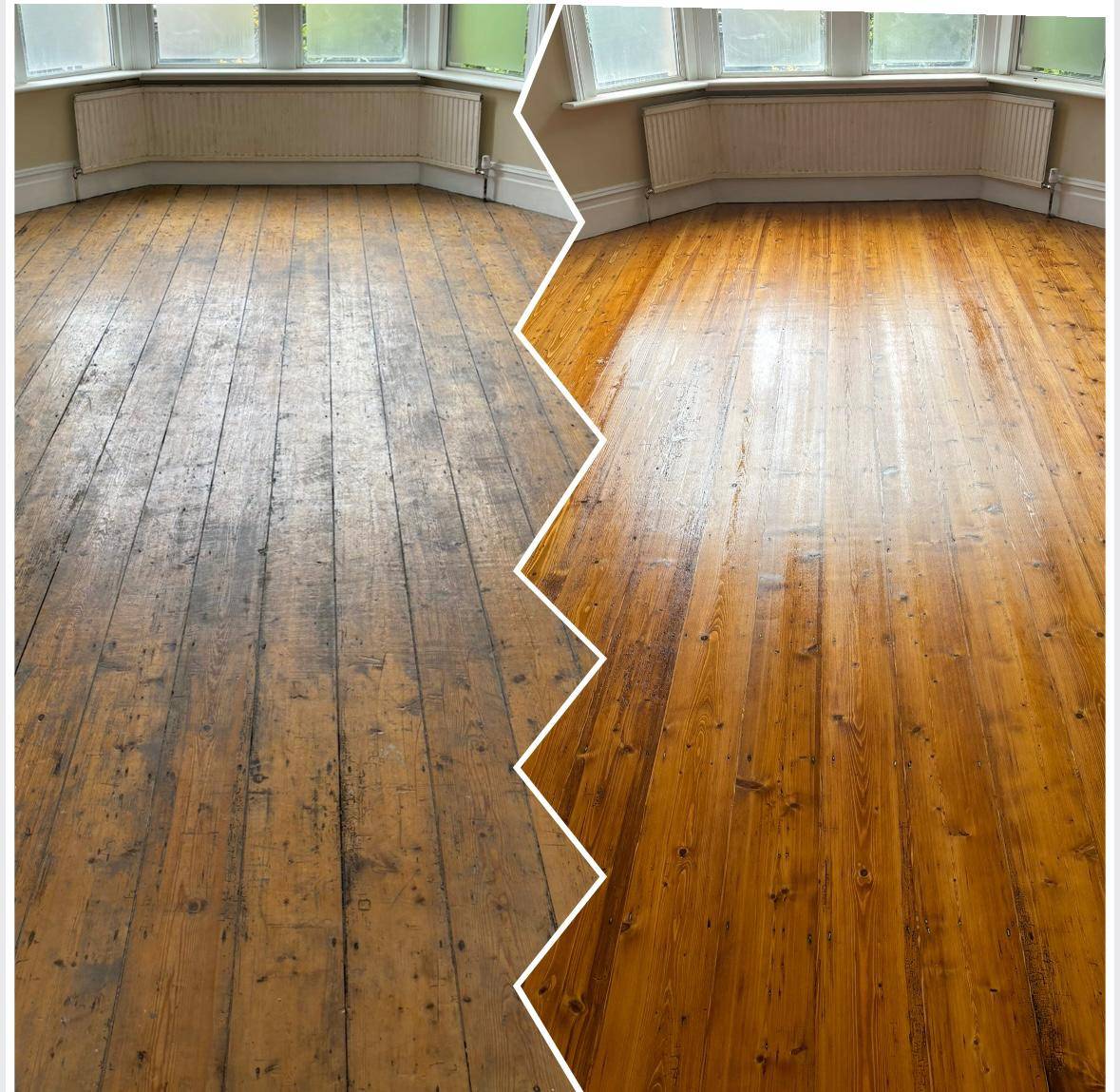
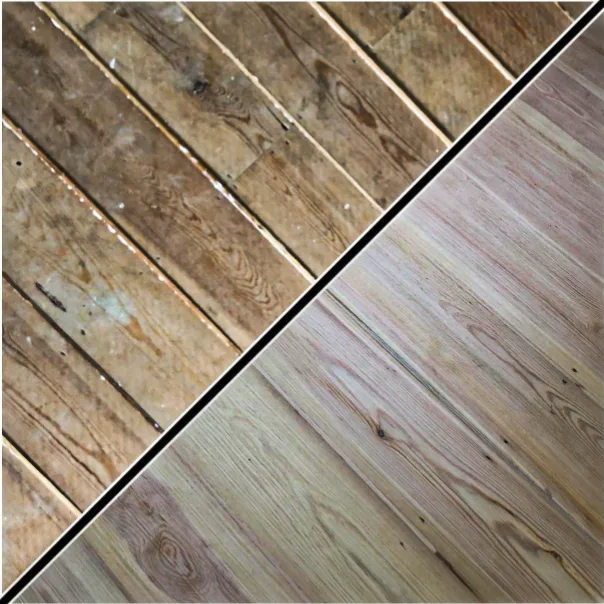
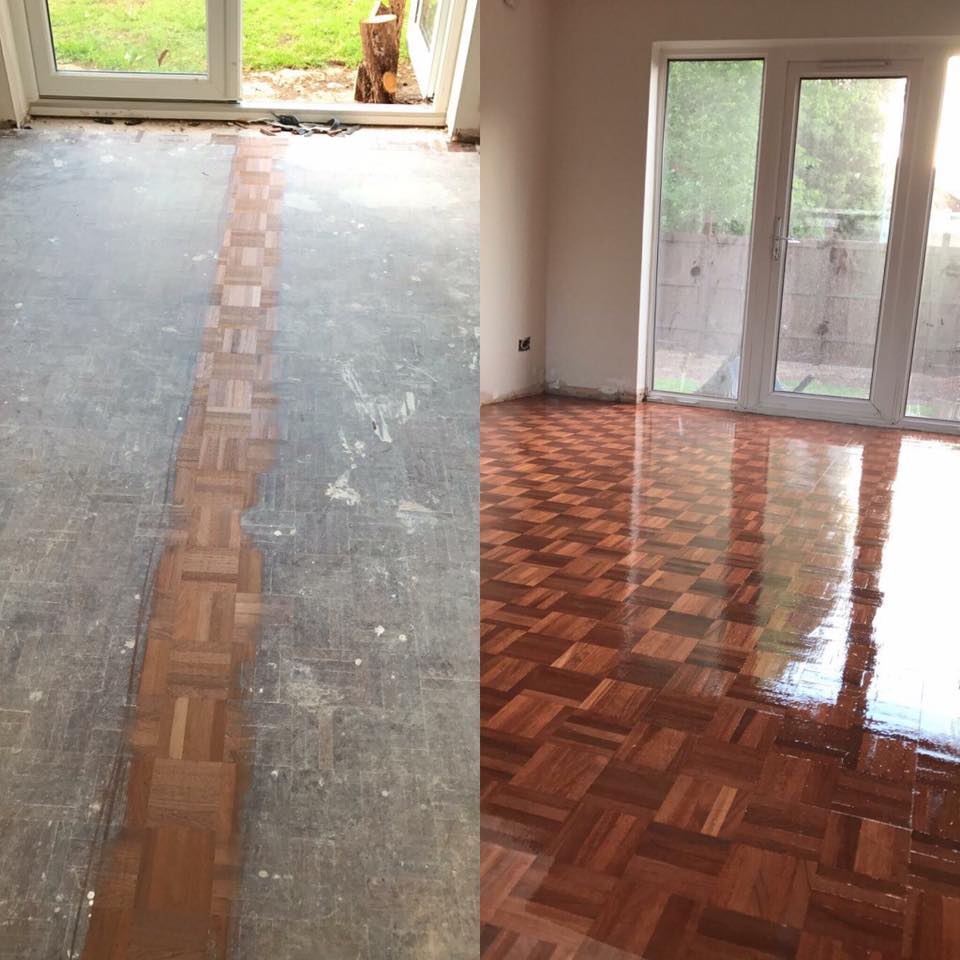
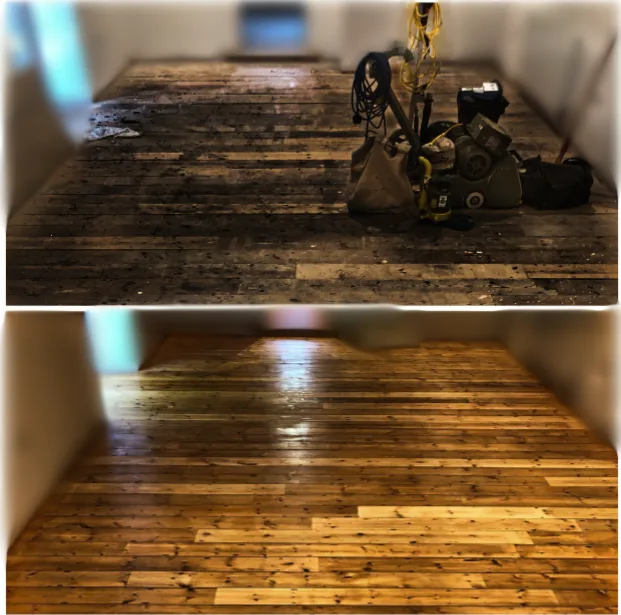
Floor sanding before and after

Floor Sanding in Lyme Regis, From the Seafront Up the Hill

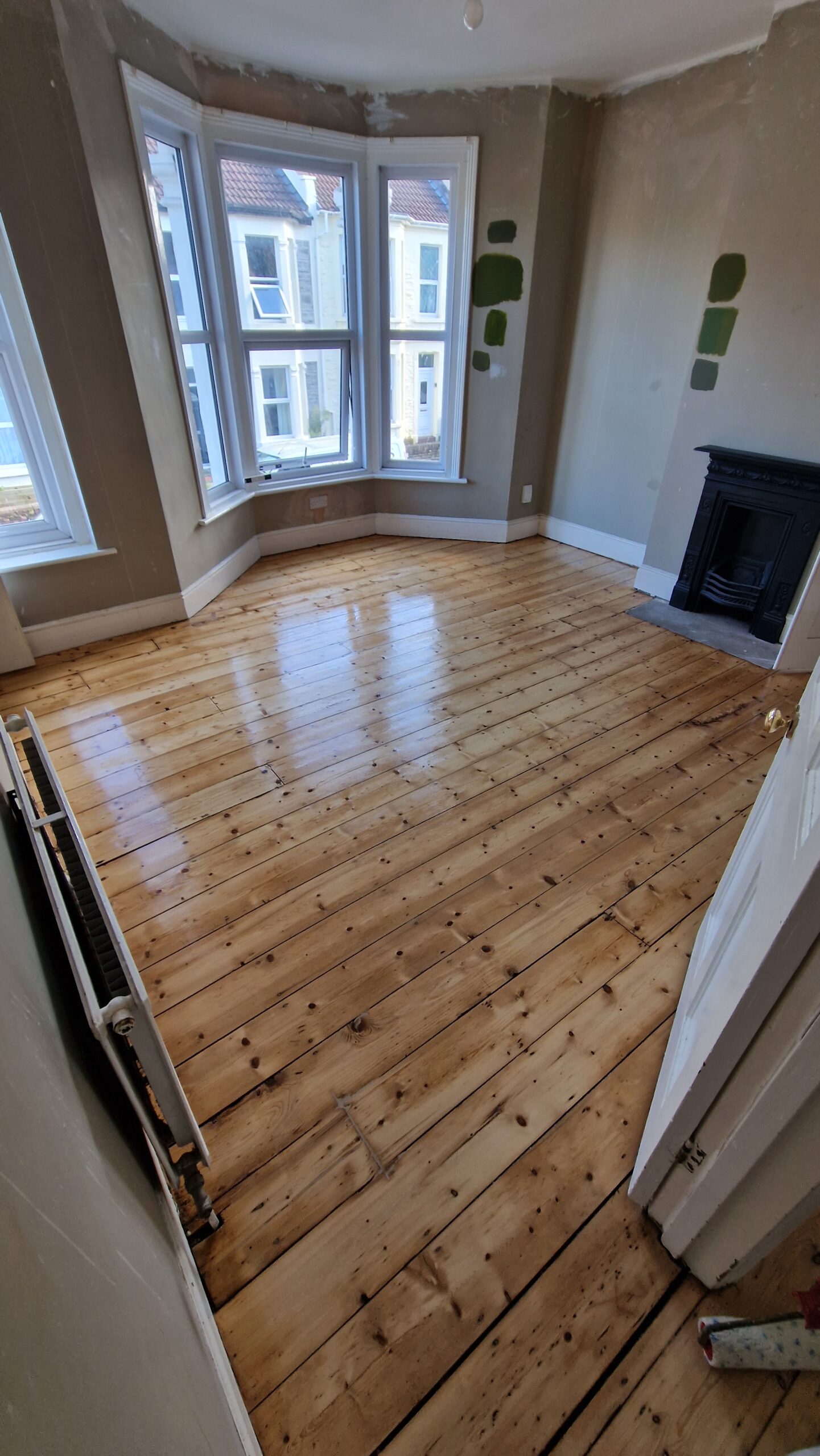
A good many of the floors we sand in Lyme Regis are reached on foot for the last stretch. The town climbs steeply away from the sea, and plenty of cottages sit on stepped paths or lanes too tight for a van to stop outside. That matters more than it sounds. Proper wood floor sanding depends on heavy kit: a belt machine for the main field of the floor, an edger for the margins, a small corner tool, and an extraction unit that pulls dust away from the abrasive as it works. Mention in your first message that the house is up a long flight of steps or along a footpath, and the day can be planned around that instead of being discovered on the doorstep.

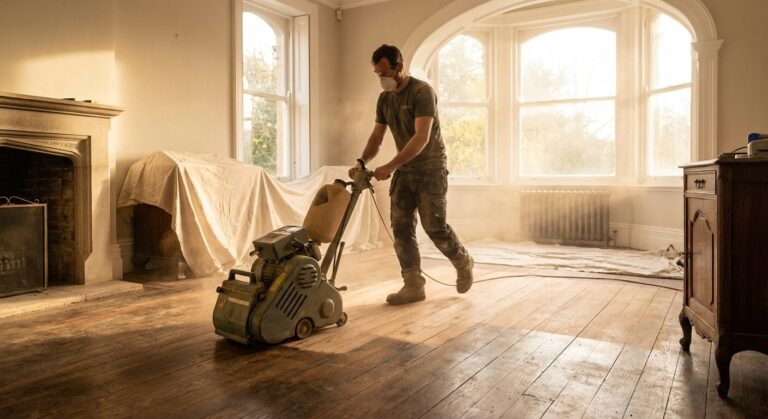
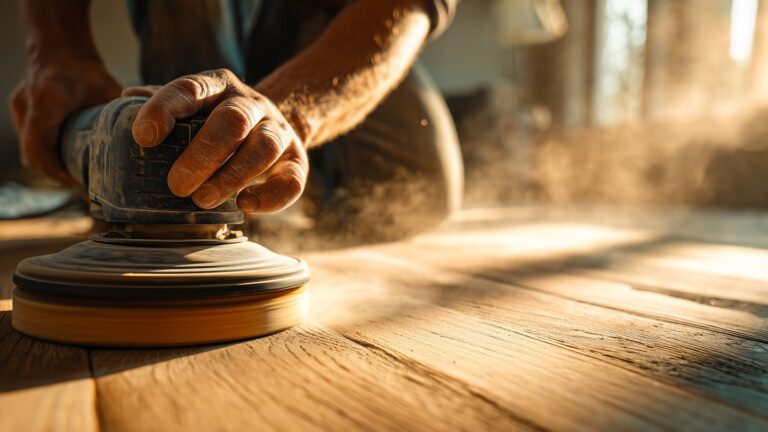
The sanding itself follows the same logic on any floor. A coarse grit cuts through old lacquer, wax or varnish and flattens boards that have cupped. After that, each step down to a finer paper is there purely to wipe out the scratch pattern the coarser paper cut. Miss out a grade to hurry things along and faint swirls survive, invisible on bare wood but obvious once lacquer goes on and low winter sun comes in sideways off the sea. Edges are worked separately and blended into the open floor so there is no tell-tale band beside the skirting.

Dust is the other worry in a small house where the front room opens straight onto the stairs. Our sanders are coupled to sealed extraction, so the fine powder is drawn off at the abrasive before it can drift up the stairwell. Hence the name dust-free floor sanding, which in practice means a cottage stays clean enough to live in, give or take a faint film on a picture rail. Shutting internal doors and hooking long curtains up off the floor deals with most of what remains.

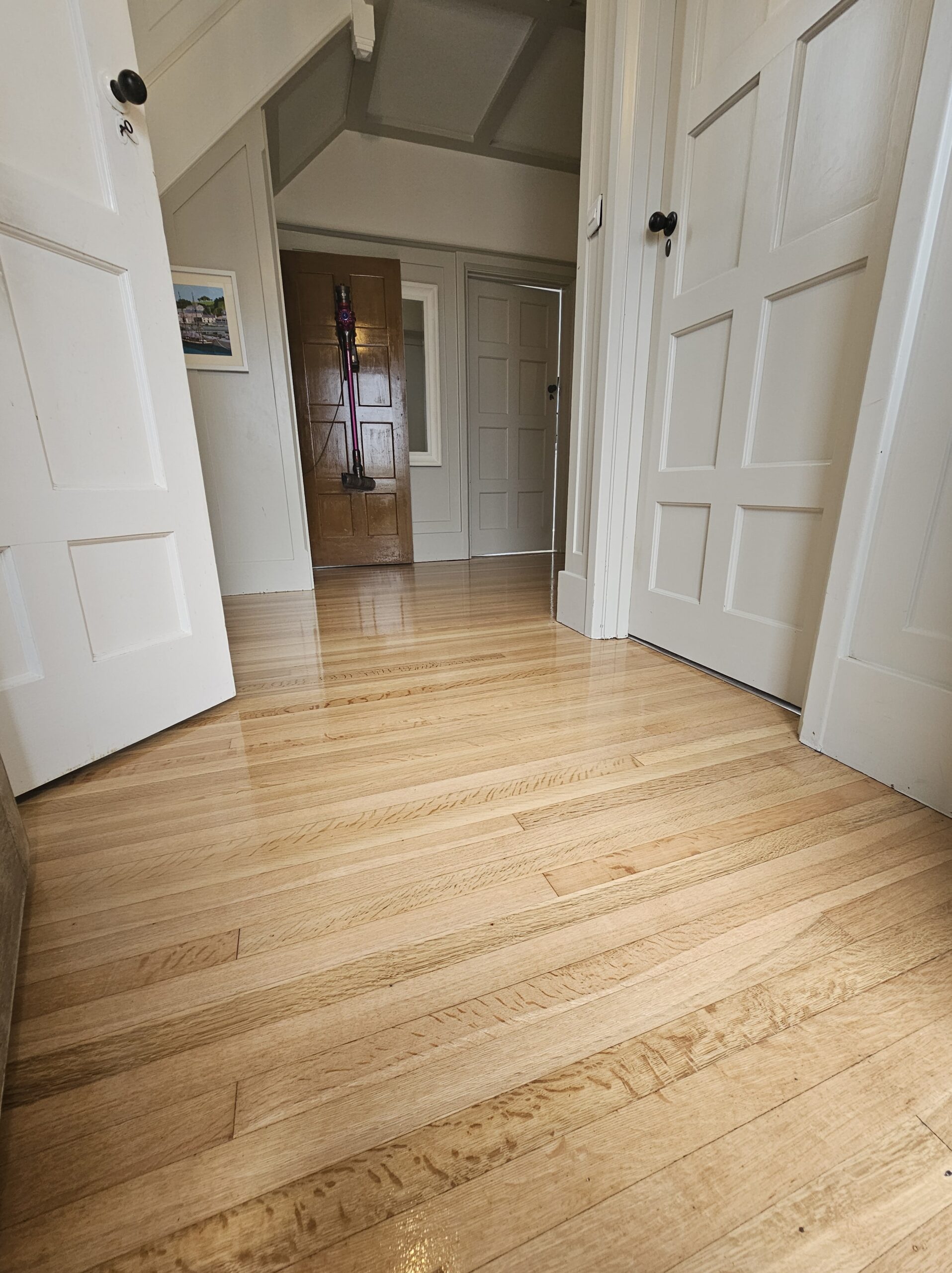
Floor sanding in Lyme Regis takes in everything from narrow softwood boards in an old terraced cottage to oak strip in a later villa. The same family-run team, working from a base near Wellington in Somerset, carries each job from survey to final coat, whether it is a straight sand or a fuller wood floor restoration, and West Dorset is regular territory for us rather than an occasional trip.
What Salt Air and Beach Sand Do to Wooden Floors in Lyme Regis

Sand is an abrasive. On a beach that is obvious; indoors it is easy to forget that every grain carried in on a shoe, a pushchair wheel or a wet dog acts like a speck of sandpaper under the next footstep. In seaside houses the wear follows a recognisable map: a dull grey track from the front door to the kitchen, a hazy patch where people stand at the sink, and fine arcs of scratches wherever chairs are pushed back from a table. The finish goes first. Once it has worn through, bare timber soaks up moisture and dirt and begins to turn grey.

Salt brings a slower problem. Salt crystals carried in on clothing and damp sea air are hygroscopic, meaning they draw water out of the atmosphere. On a worn or unfinished floor that can leave faint tidemarks, and in a house shut up for the winter it keeps the surface of the boards a little damper than they would be a few miles inland. Second homes and holiday lets left closed for months are the usual example, often with boards that have also moved because nobody was heating or airing the rooms.

Wood floor restoration in that setting is about more than a fresh surface. The survey takes moisture readings in the boards and looks at whether the airbricks outside are clear, because a damp void under a sea-facing room will undo good work above it. The floor is then sanded back to clean timber, and any dark marks are judged on their merits: water rings often sand out, while the black staining around old iron nails sometimes goes deeper than is sensible to chase.

Pine and oak behave differently near the sea. Softwood dents easily and holds grit in its open grain, so pine floor restoration in a busy hallway usually ends with a tougher lacquer. Oak shrugs off more punishment, and oak floor restoration can reasonably finish with an oil that is easy to patch later. Whatever the timber, wood floor restoration in Lyme Regis works best when there is a doormat big enough to catch the beach before it reaches the boards.

parquet wooden floor sanding
wooden floor sanding

Commercial Floor Sanding for Lyme Regis Guest Houses, Cafés and Shops

A guest house needs more planning than almost any other commercial floor in a seaside town, because the areas that need attention are the ones that are never empty: the breakfast room, the entrance hall, the landing outside the bedrooms. Commercial floor sanding in Lyme Regis is therefore mostly a question of sequence. The usual approach is to work in phases, closing one or two rooms at a time while guests carry on using everything else, and to leave the breakfast room for a day when service can move elsewhere or pause.

The quieter months are the obvious window. Between the end of the autumn half-term and the start of the spring bookings, owners can usually shut a floor of bedrooms without losing much trade, and dates can be agreed well ahead so the work never collides with a late reservation. Where a room cannot close for long, fast-curing finishes shorten the wait before it can be used again, and overnight working lets a café or shop keep its normal opening hours.

Bedrooms, stair halls and corridors suit hotel and guest house floor sanding carried out a few rooms at a time. Cafés and tearooms face spilt drinks, chair legs and sandy feet, which is where café and restaurant floor sanding with a two-component lacquer earns its place. Gift shops and galleries see heavy, concentrated wear in the first two metres inside the door, and shop floor sanding can be arranged for after closing or for a day the shop is shut.

Paperwork tends to come up before the first visit. A landlord, insurer or building manager may want to see how the work will be carried out, so a method statement can be written for the job, and copies of our insurance and references from other commercial clients are available if asked for. The wider approach to commercial floor sanding, from pubs to offices, rests on the same principle of fitting around the business rather than the other way round.

Expect a hard-working commercial floor to need sanding again after four or five years, roughly twice as often as a floor at home, though a maintenance coat at the right moment can stretch that interval.

Steep Cottage Stairs, Winders and Herringbone Hallways

Older houses in the town were built tight, and the stairs show it. Many rise steeply, turn through winders instead of a landing, and have treads barely deep enough for a whole foot. They are also the hardest-worked timber in the house. Every trip up or down lands on the same few centimetres at the front of each tread, so the nosing wears round and the finish disappears in a pale crescent while the back of the step still looks almost new.

Stair sanding is hand-guided work. The big floor machines are no use on a tread, so each step is taken back with smaller sanders and detail tools, and risers, strings and spindles are dealt with separately. Winders are the awkward part because the treads taper to almost nothing at the newel; that narrow end is where old paint, tack holes and broken gripper nails collect, and it can take longer than the straight flight put together.

Many staircases come to light when a carpet is lifted. Gripper strip leaves a row of holes along the back of every tread, and the staples that held the underlay can run into the hundreds. Staples come out one at a time, since sanding over them shreds abrasive and scores the wood, and holes are filled with a filler coloured to match the sanded timber.

Safety shapes the finish. A glossy lacquer on a steep stair can be slippery in socks, so matt or satin is the sensible choice, and a central runner with finished timber either side is a common compromise. Painted strings and balustrades in a house of this age may carry lead-based paint; that should be tested before anything is sanded, and chemical stripping is often the safer route.

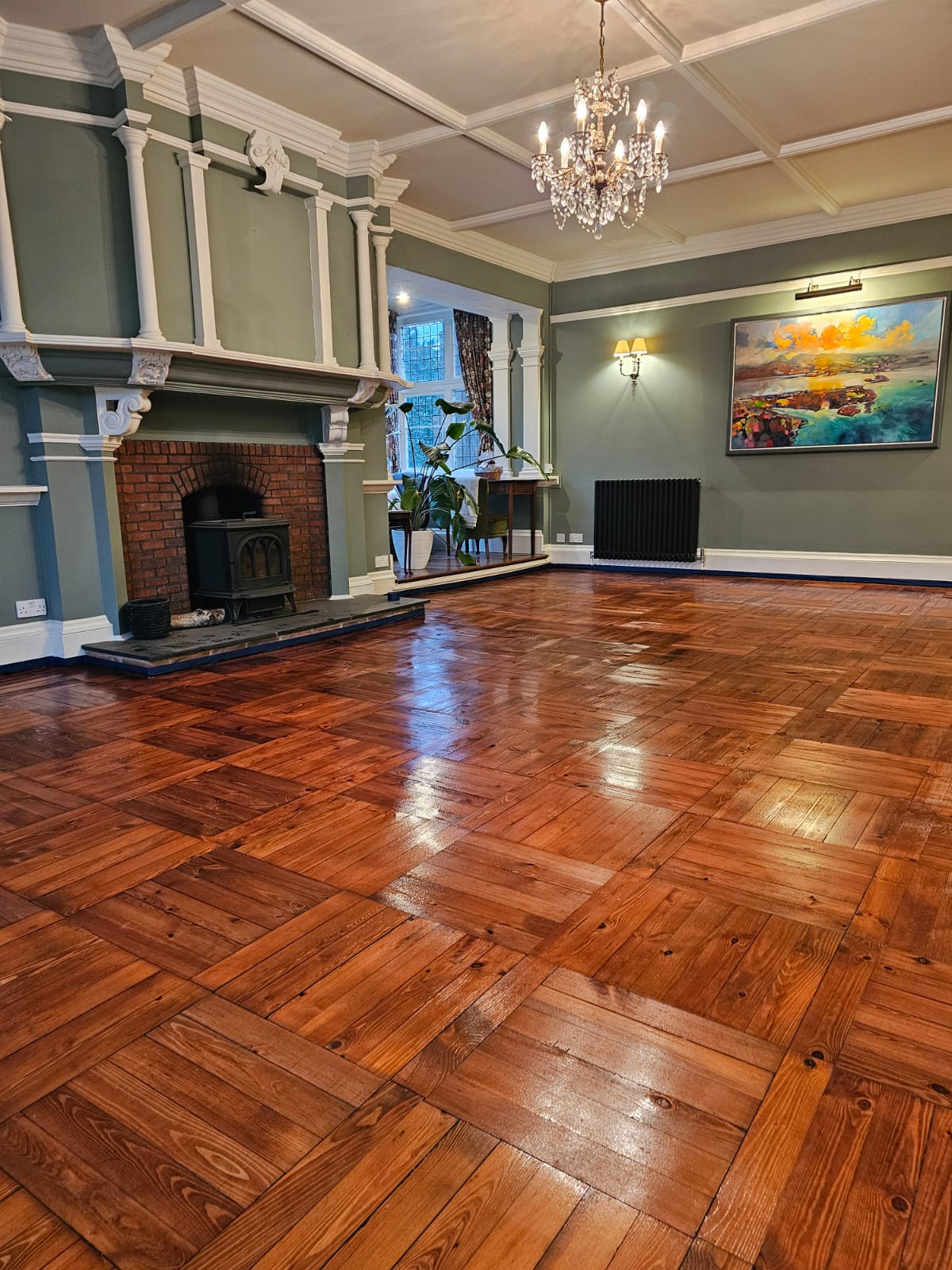
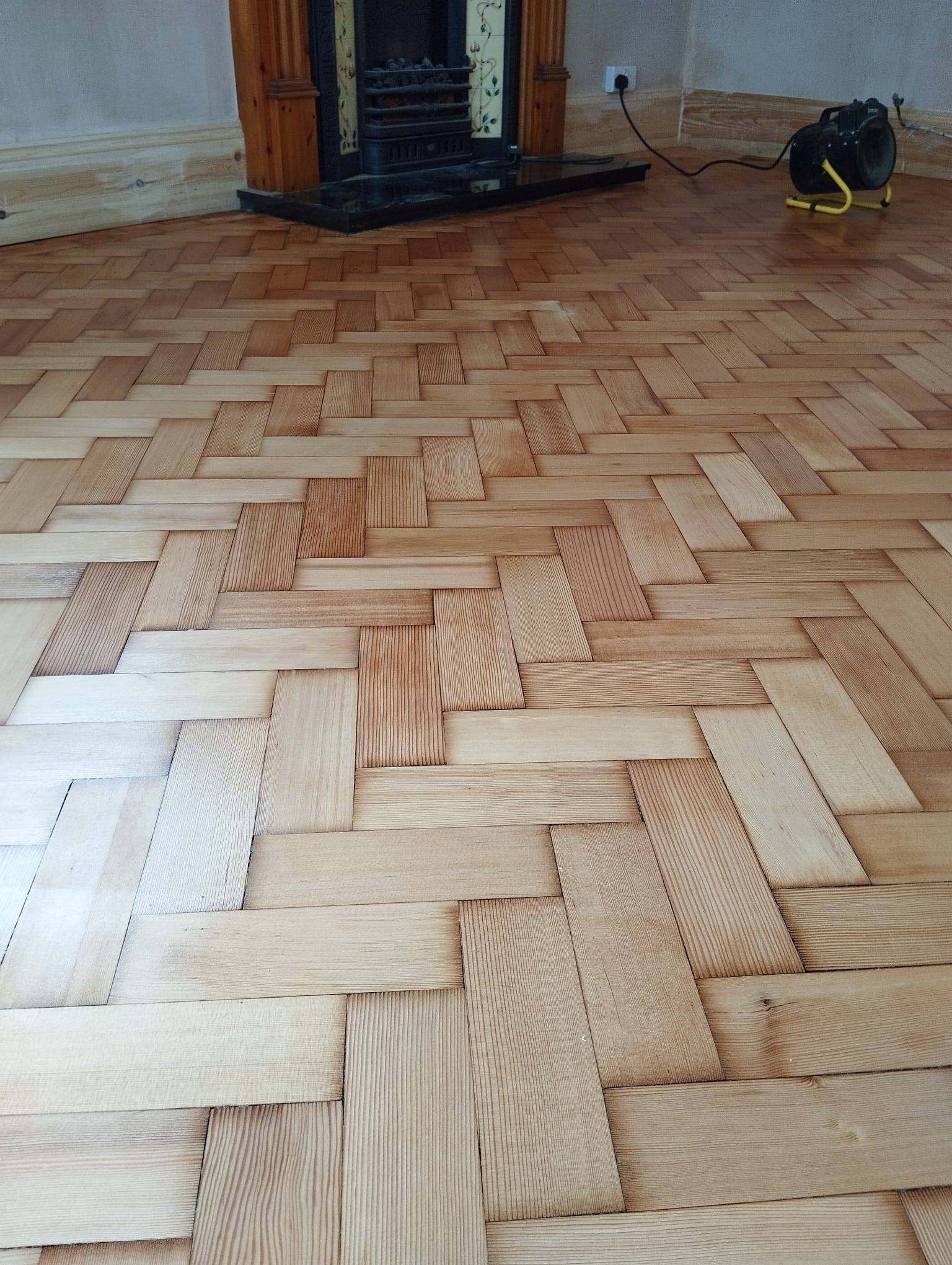
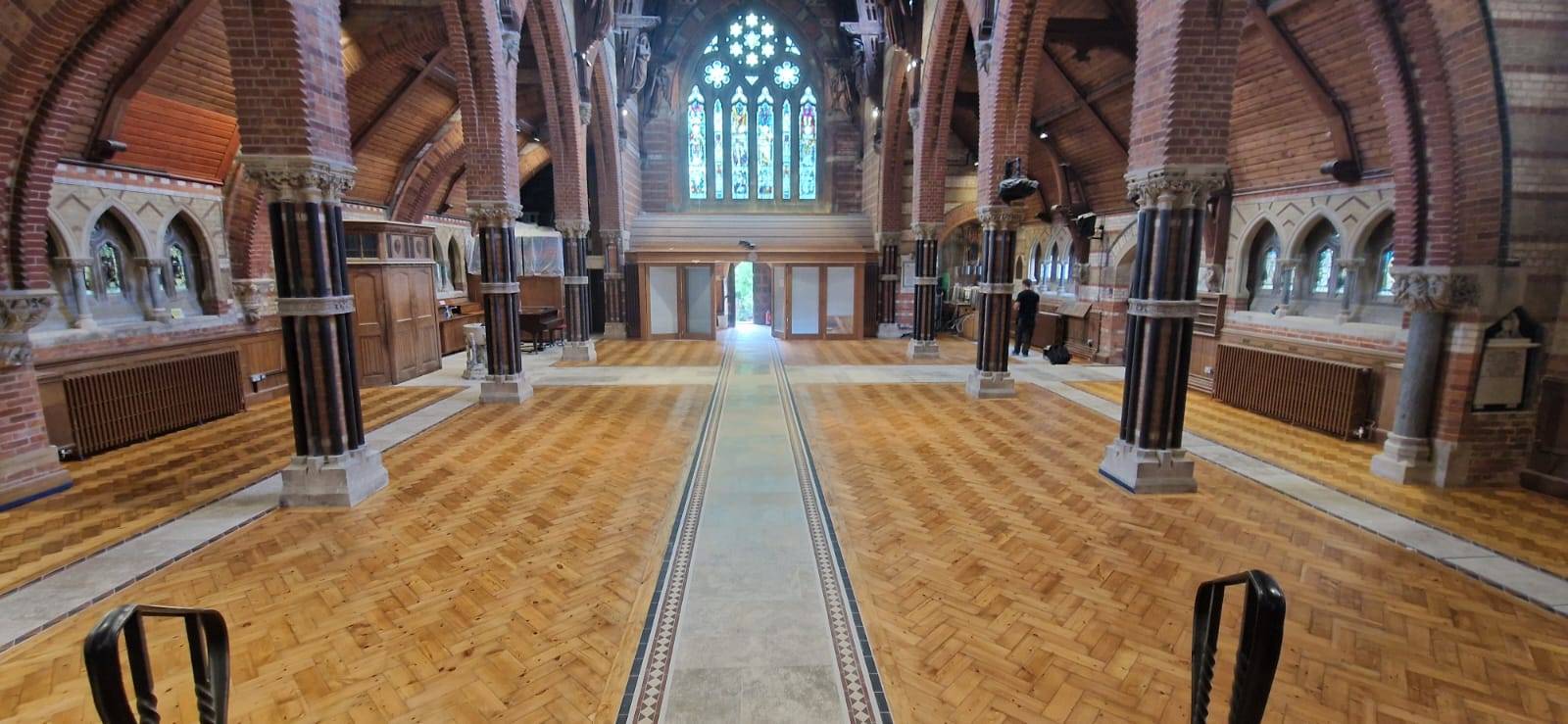
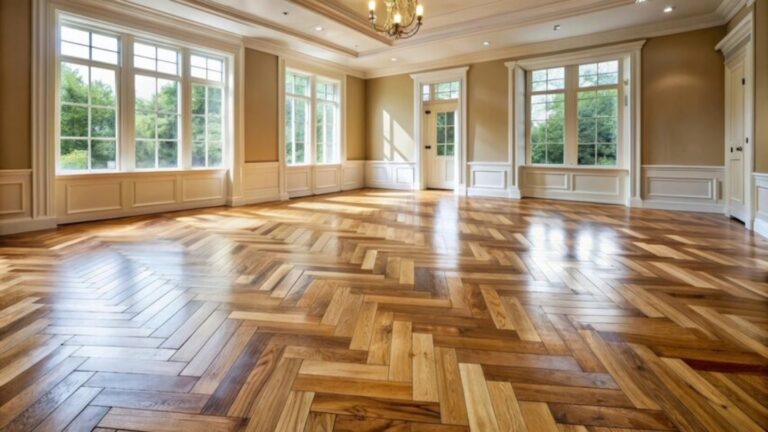
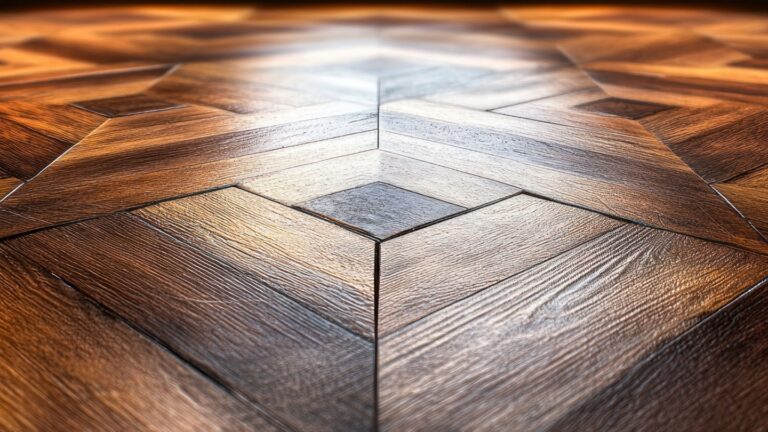
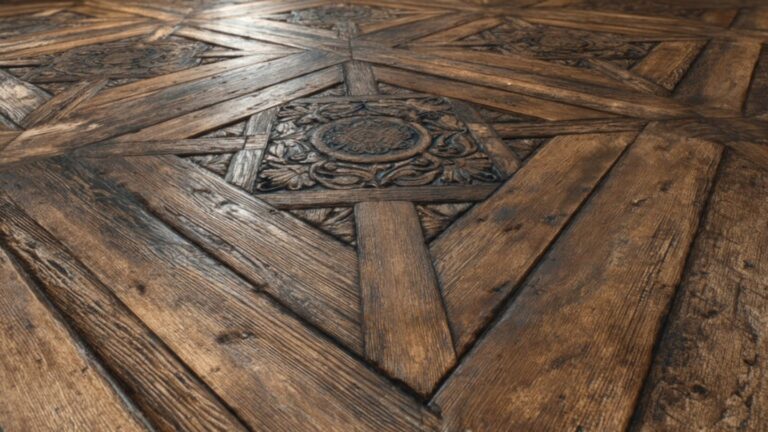
When the hall at the foot of the stairs is laid in herringbone parquet, the two are usually done together so the colours sit side by side. Parquet floor sanding needs its own approach: blocks laid in alternating directions are sanded on the diagonal for the early passes, which avoids tearing the grain on half of them, and any loose blocks are re-fixed before the machine goes near them.

flooring sanding company
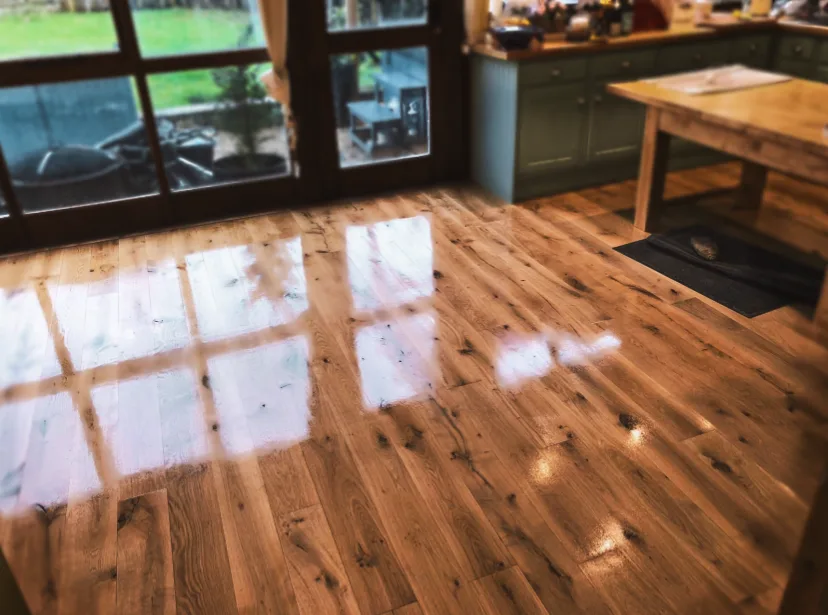
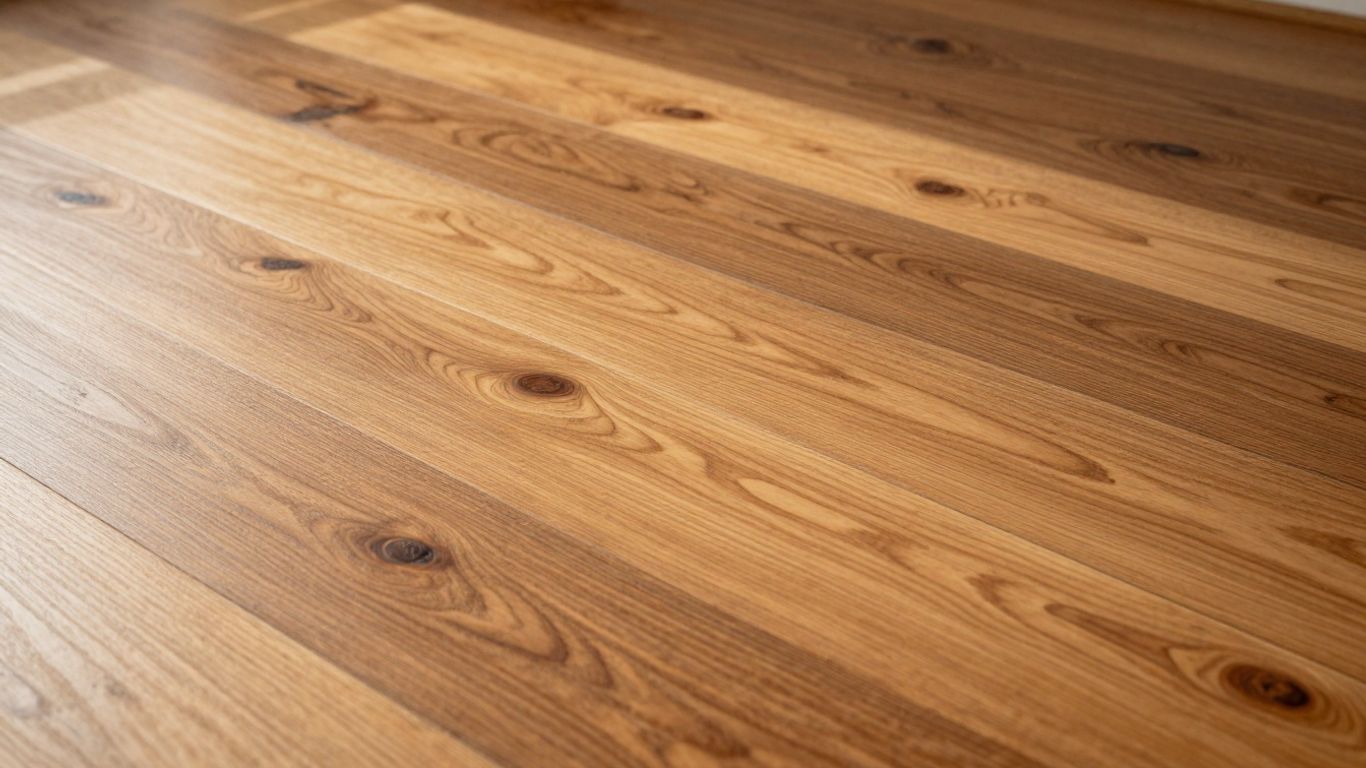
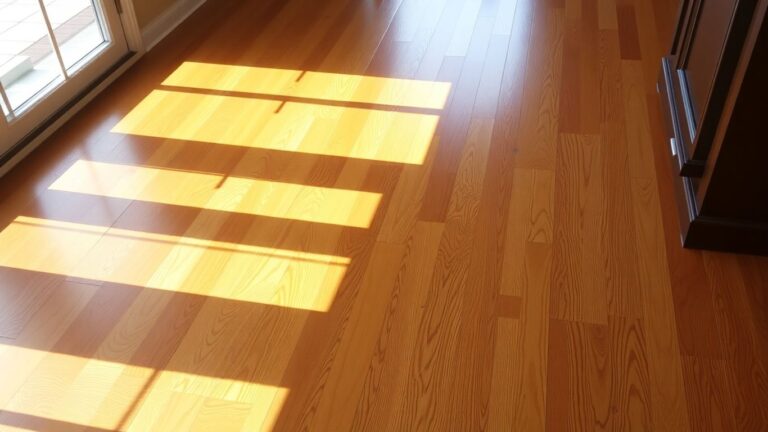
Sunlight across freshly lacquered wooden floorboards

Loose Boards, Creaks and Gaps Beneath the Worn Finish

Sanding exposes everything. With the old coating gone it becomes plain which boards are split, which were cut for a plumber and badly put back, and which dip when you stand on them. Those faults are dealt with first. A board that rocks will chatter under the sanding drum, and a gap that is ignored is still a gap after three coats of lacquer.

Most wooden floor repairs in older cottages fall into a few types. Short lengths cut for pipework get a timber batten fixed underneath so they stop bouncing. Split, burnt or rotten boards are cut out, and floorboard replacement is done with reclaimed timber held in stock so the new piece has a similar age and tone instead of shining out as fresh yellow softwood. Houses of this age were often boarded in imperial widths that modern timber yards do not supply, which is the main reason reclaimed stock matters.

The squeak you hear on the landing at night is normally timber moving against a slack nail shank, or one board edge grinding on the next each time the joist below gives a fraction. Cut nails slacken over a century or more of foot traffic; replacing the worst with screws, or adding a fixing into the joist, normally quietens things. Curing a squeaky wood floor is generally a matter of fixings rather than anything dramatic, and it is sensible to sort it while the room is already cleared for sanding.

Gaps are the last decision. Narrow joints take a resin binder stirred into the floor’s own fine sanding dust, which blends well in colour but tolerates little seasonal movement. Wider gaps are better closed with thin slivers of timber glued on one side and planed flush. In a house heated hard through the winter and thrown open to damp air in summer, boards shift more than people expect, so the method of gap filling is chosen at the survey once the gaps have been measured. A single deep gouge where a cast-iron pan landed, or a patch of claw marks by the back door, may suit local scratch repair on the boards rather than a full sand of the room.

Finishes That Cope With Sandy Feet in Lyme Regis

The finish is what the sand actually wears away, so it deserves more thought than the colour. There are four broad families, and each behaves differently in a house a few streets from the beach.

Lacquer dries to a tough skin sitting over the timber. Water-based lacquers stay pale and dry quickly; oil-based types deepen the colour, particularly on pine. For entrance halls, cafés and guest house breakfast rooms a two-component lacquer is the toughest choice available. Sealing the floor with lacquer also stops salt water and wet sand from soaking into the grain, which suits rooms with a door straight onto the street.

Oils soak in rather than sitting on top. Natural oils and hard wax oil leave the grain looking like timber rather than plastic. Their practical advantage by the sea is repair: the scuffed strip in front of the patio door of a holiday cottage can be cleaned and re-oiled by itself, and the rest of the room is left alone. The trade-off is more frequent attention. If that appeals, wood floor oiling is worth talking through at the survey.

Wax is the traditional finish for period floors and still looks right in a cottage, but it marks with water and needs regular buffing; on a floor that sees wet towels and dripping wetsuits it is a poor match. If you want it anyway, wood floor waxing can be discussed with that maintenance in mind.

Colour comes last. Stains are tried on your own boards, in a corner the furniture will hide, because the same stain reads differently on pine and oak and differently again on reclaimed timber. Pale, slightly greyed tones are popular near the coast, and they also hide fine sand far better than dark floors, which show every grain. Wood floor staining works under any of the finishes above.

Sheen matters too. Matt hides fine scratches, gloss shows every scuff, and most people settle on matt or satin. The look many describe as a polished wood floor usually comes from a satin coat that is kept clean, rather than high gloss.

Wood floor sanding company
Floor sanding taunton

Between Resands, New Boards and a Written Quotation

A newly finished floor is at its softest in the first week. Wait until the next day before walking on it in socks, give the coating two or three days before heavy furniture goes back, and put felt pads under every leg as it does. In a seaside house, leave beach bags, wet towels and buckets in the porch for that first week as well; a damp bag left on fresh lacquer can mark it.

Day-to-day care is mostly about grit. Vacuum with a soft floor head rather than a beater bar, damp-mop (never wet) with a pH-neutral cleaner, and avoid steam mops altogether, as the heat and moisture break down most finishes. Before the coating wears through in the busy tracks, the floor can be given a buff and fresh maintenance coat, a lighter form of wood floor refinishing that avoids a full sand. Left until it is bare, a home floor will usually want sanding again somewhere around eight to ten years after the last time.

Some floors are past saving, and some rooms never had timber in the first place. In those cases a new floor can go down through our wooden floor installation service; we can lay it ourselves or deliver the boards for a builder you already use, and Junkers and Bona are two of the ranges we work with. New boards in a coastal house need time to acclimatise to the room before fitting, and the survey is the moment to check whether the subfloor is dry enough to take them.

To get things moving, stand in the doorway and take one picture of the whole floor, crouch down for a second of the sandiest, most worn patch, and send the pair to info@ryansrestoration.co.uk. The phone line, 01823 674562, is staffed 8am to 6pm Monday to Friday, and Saturday visits can be fixed by agreement. That is usually enough for some first advice. A free survey at the house takes about half an hour and covers board thickness, moisture, ventilation and any earlier repairs, after which the quotation arrives in writing with each item listed, and it holds unless the job itself changes.

Lyme Regis is one of several West Dorset towns we work in regularly. For the rest of the county see Dorset floor sanding, and if your property is in the next town east, the page on floor sanding in Bridport is written around its own mix of buildings.

Common Questions From Lyme Regis Homes and Businesses

Yes. Plenty of homes in the town are like that, and it simply needs planning. The sanding machines and extraction unit are heavy but portable, so they can be carried in. Let us know about steps, narrow gates or a long walk from the nearest parking when you first get in touch, so the day allows time for it.

More often than an inland floor if sand is tracked in every day. A good doormat, regular vacuuming and felt pads slow the wear considerably. In a home, the boards usually need cutting back to bare wood once in eight to ten years; topping up the coating along the door-to-kitchen track before it goes through to bare timber is what lets a seaside floor reach that.

Usually, yes. Work is split into phases so one or two rooms are closed at a time, with communal areas left for overnight or closed-day working. Fast-curing finishes shorten the time each area is out of use. Fixing dates well ahead, ideally in the quieter months, gives the most freedom to plan around guests.

No. Stairs are worked by hand with smaller sanders and detail tools, step by step, because floor machines cannot sit on a tread. Winders take longest, since the narrow end of each tread gathers old paint and nail holes. A matt or satin finish is recommended on steep stairs, as gloss can be slippery underfoot in socks.

It depends on the room. Lacquer gives a sealed surface that keeps salt water and grit out of the grain, which suits halls and kitchens. Hard wax oil looks more natural and can be patched locally, which suits living rooms and bedrooms. Damp rising from below is a separate problem, so ventilation is checked at the survey before any finish is chosen.

It can. Photographs sent by email give enough for first advice, and a key holder can let us in for the free survey. The written quotation lists each item so you can see exactly what is included before agreeing, and the work itself can be timed to fall in a gap between existing bookings.

Sometimes. Engineered boards have a real wood top layer over a plywood or softwood core, and only that top layer can be sanded. If it is thick enough, a light sand and fresh finish is possible; if it is thin or has already been sanded, the safer option is a buff and recoat. Laminate and vinyl are printed surfaces and cannot be sanded at all.

A cottage floor is usually done inside three days, often fewer: the area, how much repair is needed and the drying time of the chosen coating decide where it falls. A single room with sound boards and a quick-drying lacquer sits at the shorter end. Stairs, a lot of gap filling or an oiled finish needing longer between coats push it towards the longer end.

Two pictures by email will do, the room as a whole plus its sandiest worn corner, or simply reach the office and describe the floor. From there a free survey can be arranged at the house, and you receive a written, itemised quotation that stays as quoted unless the scope of the work changes.