45 years’ experience  ·  Rated 4.9 on Google  ·  Family-run, from our workshop near Wellington

45 years’ experience · Rated 4.9 on Google · Family-run

Floor Sanding and Wood Floor Restoration in Marazion

Sanding, repair and natural oil or wax finishes for Marazion’s small seafront homes, cottages and businesses, chosen to stand up to salt air and beach sand.

QUICK QUOTATION

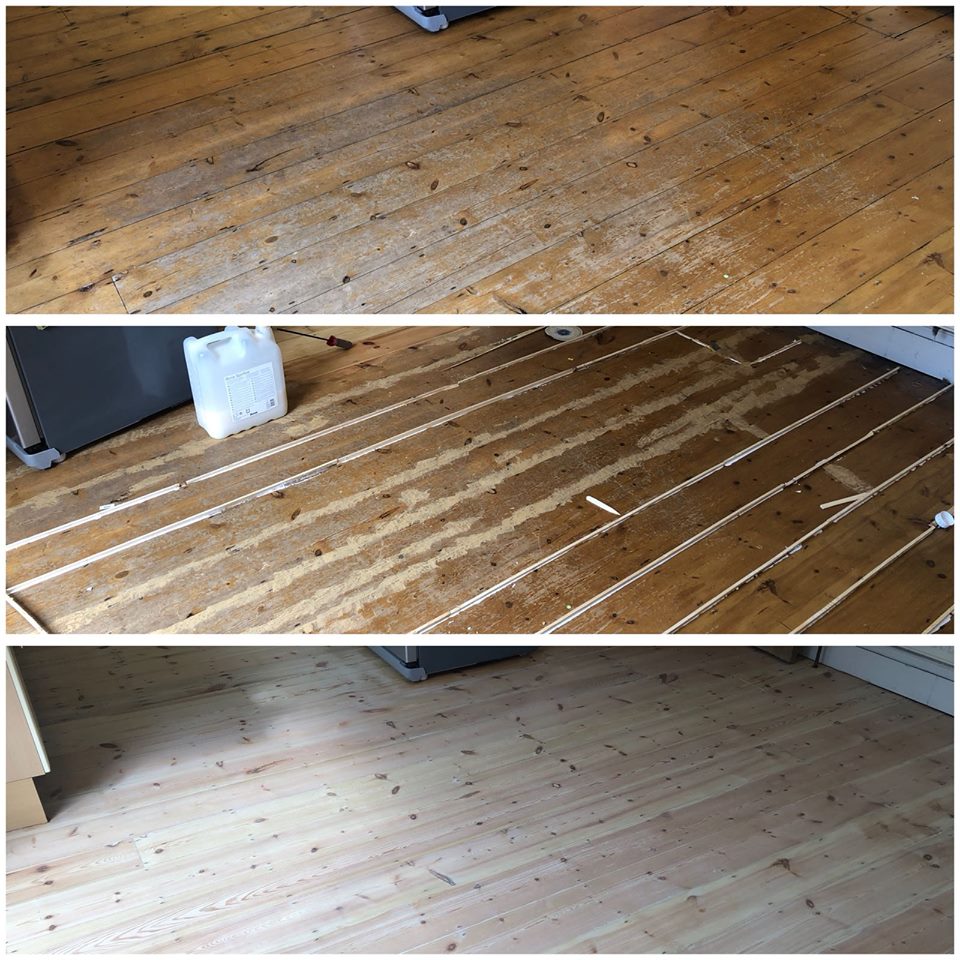
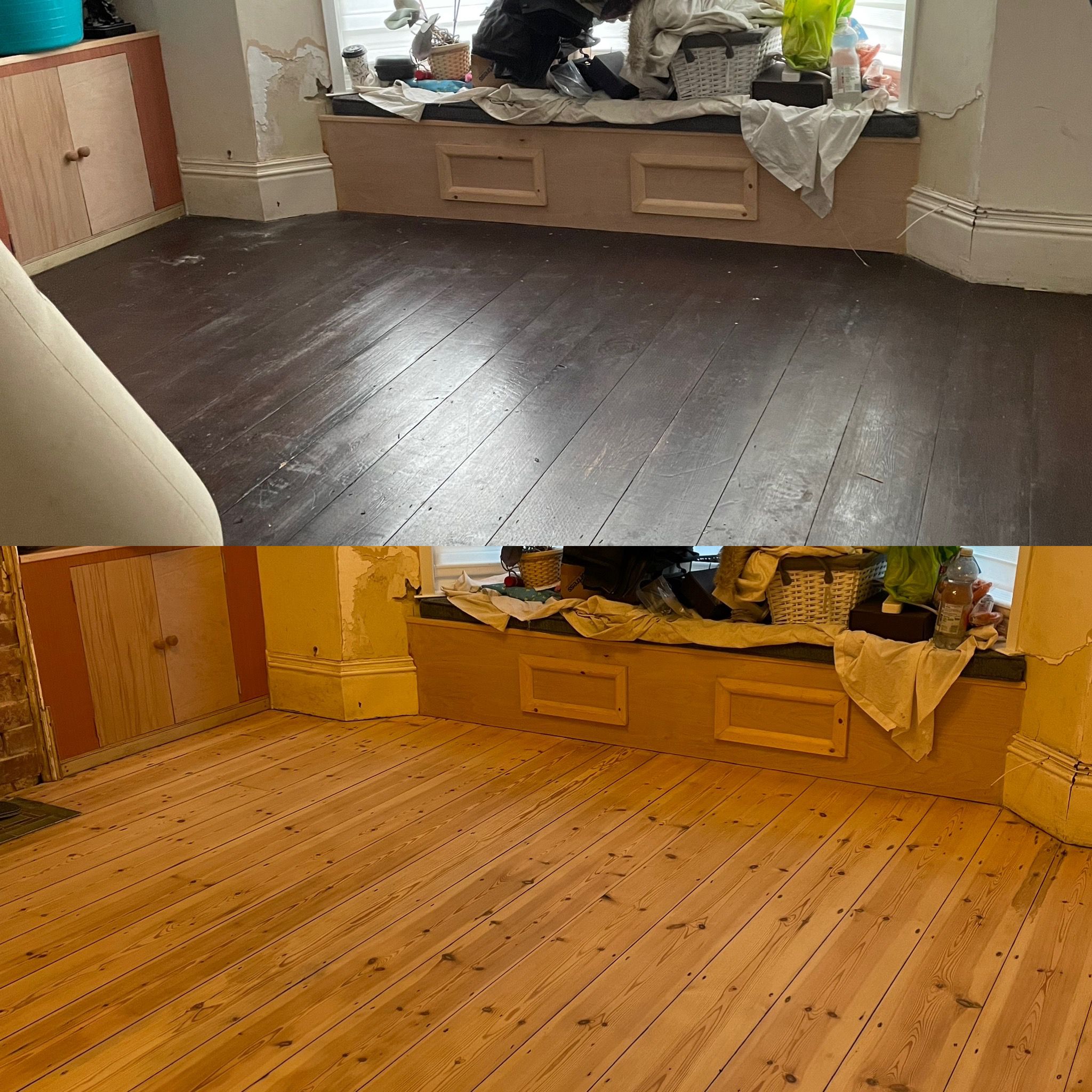
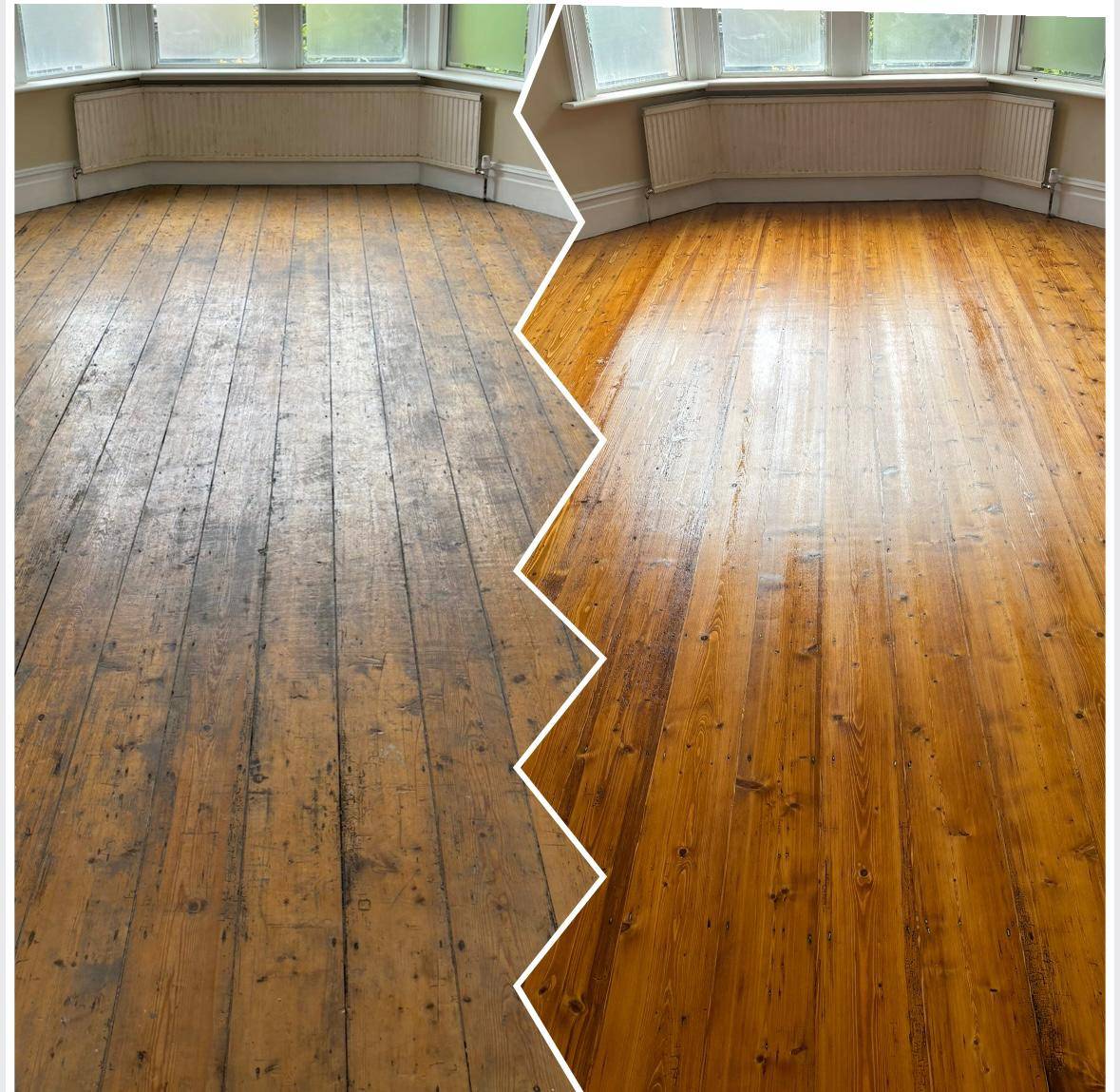
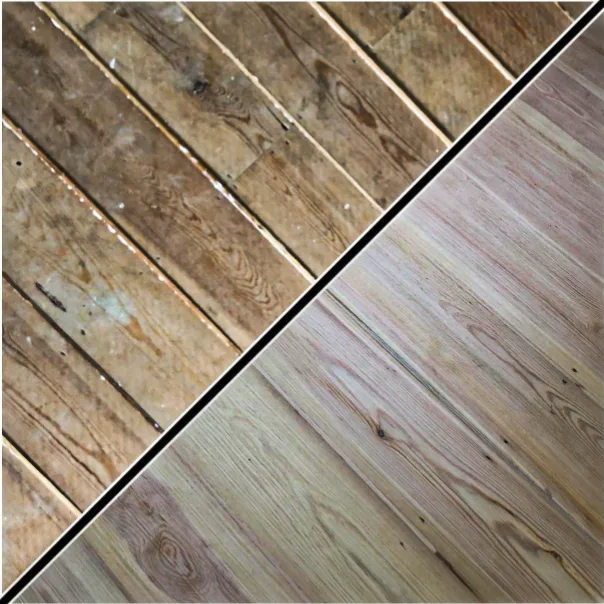
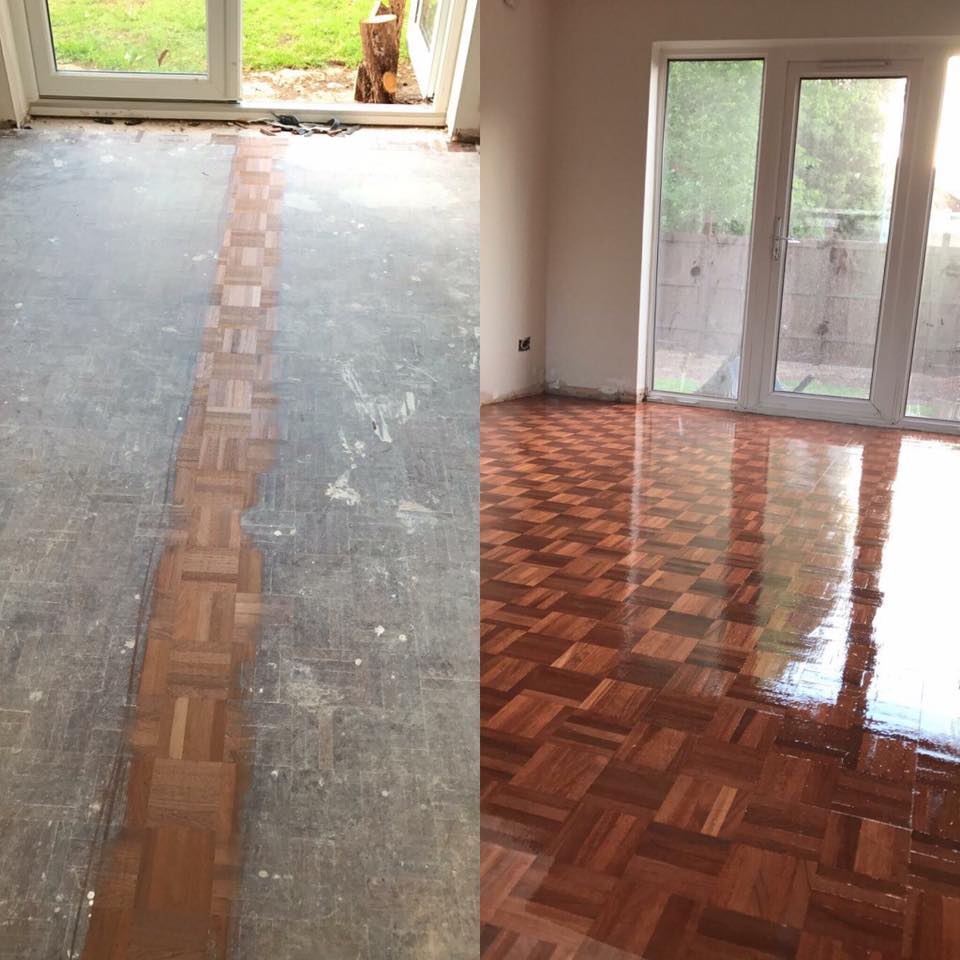
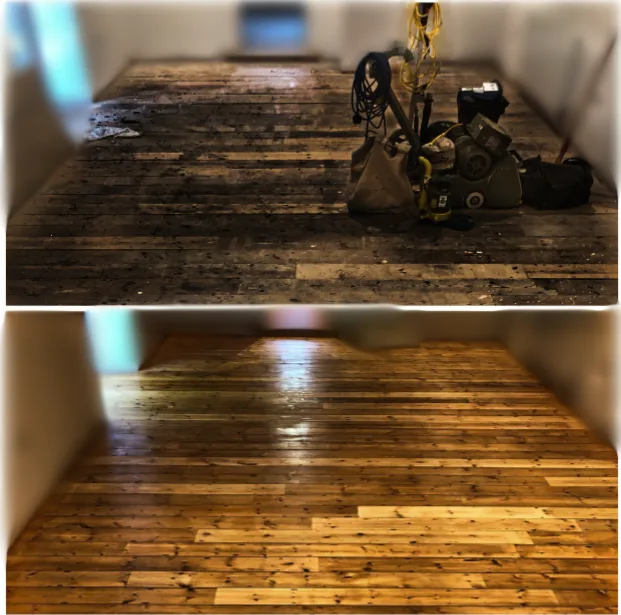
Floor sanding before and after

Floor Sanding in Marazion, Taken One Cottage Day at a Time

Most homes in Marazion are modest in size. Rooms are small, ceilings are often low, front doors open almost onto the street, and the sea is a short walk away in every direction. That scale shapes how floor sanding in Marazion actually unfolds, so it is worth walking through a typical two-room ground floor from the first morning.

Day one begins with clearing. Furniture goes into another room or a garden shed, and the floor is checked inch by inch with a pin punch and pliers. Old carpet gripper comes up, upholstery tacks and staples come out, and every nail head is driven a couple of millimetres below the surface so it cannot rip an abrasive belt. Loose boards are screwed down at this stage, before the machine ever touches them. In an older cottage that preparation can fill the first couple of hours.

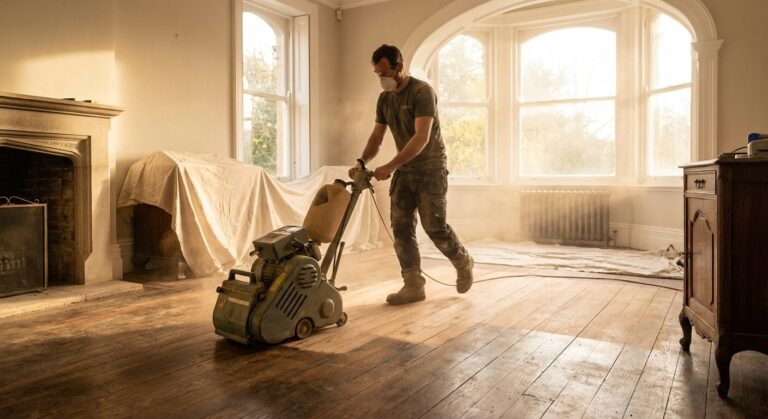
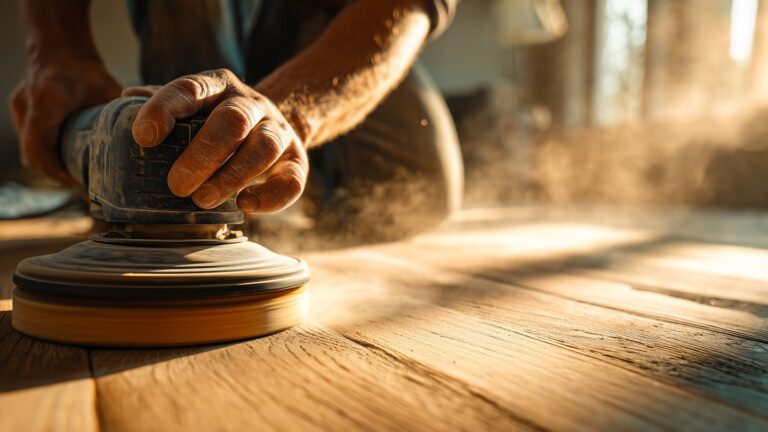
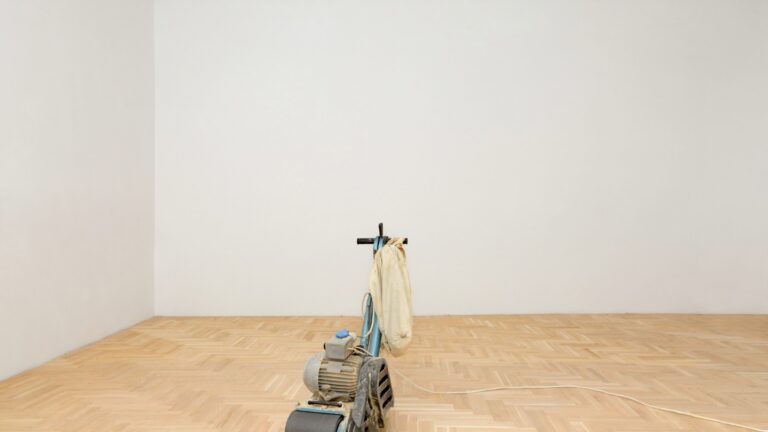
Then the main sander goes on. The first grit is chosen by what is on the floor: a thin, worn finish needs far less aggression than three coats of 1970s varnish over a dark stain. The machine follows the grain, never sitting still, because a drum that pauses digs a hollow. Each later grit is there to remove the scratches left by the coarser one before it. Near the walls a smaller edging sander works the margins, and in tight corners and behind radiator pipes, a hand scraper finishes what the machines cannot reach.

Day two is filling, final sanding and the first coats. Any resin filler laid in gaps is left to harden, sanded flush, and the whole floor gets a pass with a fine mesh screen to blend the edges into the middle. A vacuum and a tack cloth remove the last dust before the first coat goes on. Many cottage floors are finished by the end of the second day; larger or more damaged ones run into a third.

With a low ceiling and one small window, a cottage parlour would fill with powder in minutes if the sander were not hosed to a sealed collector, and dust-free floor sanding is frank about the small amount that still gets away. Our full floor sanding process is set out separately. We work along Mount’s Bay regularly as part of our wider Cornish floor sanding round, travelling from a family-run base near Wellington, Somerset.
Salt Air, Wind-Driven Rain and Wood Floor Restoration in Marazion

A house within sight of Mount’s Bay lives with salt. Fine spray is carried inland on onshore winds, it settles on window sills and doormats, and it arrives on the soles of everyone who has walked along the beach. Sea salt is hygroscopic, which means it pulls moisture out of the air and holds it. A thin film of salty grit on a floor stays slightly damp long after the rest of the room has dried, and that dampness sits against the finish.

On a lacquered floor the effect is usually a dull, hazy patch inside the front door. On a waxed or oiled floor it can be more obvious: white rings under a wet beach bag, or a grey bloom where wet shoes are left overnight. Bare timber exposed by a worn-through finish soaks the moisture up and darkens. None of this ruins a floor quickly, but over a few seasons it explains why seaside floors often look tired sooner than inland ones.

Salt affects metal too. Steel nails, old radiator brackets and gripper pins corrode faster near the sea, and on oak the iron reacts with tannin in the wood to leave blue-black marks around nail heads. Light marks sand out. Deep ones may need a chemical treatment or a small inlaid repair.

Wind-driven rain is the other coastal factor. A south-westerly gale drives water into granite and render for days at a stretch, and the board ends and joist bearings nearest that wall slowly take some of it up. Readings near that wall are often higher than in the middle of the room. So wood floor restoration in Marazion opens with meter pins pushed into the boards by the seaward wall; a high figure there means looking for the cause before any abrasive is fitted.

Restoring a seaside wood floor is not about fighting the climate; it is about choosing materials that cope with it. In cottages with old softwood, pine floor restoration often brings back a warm, honey colour that suits a bright seaside interior. Newer houses with oak strip or engineered boards fall under oak floor restoration, where the iron-staining issue above comes up most.

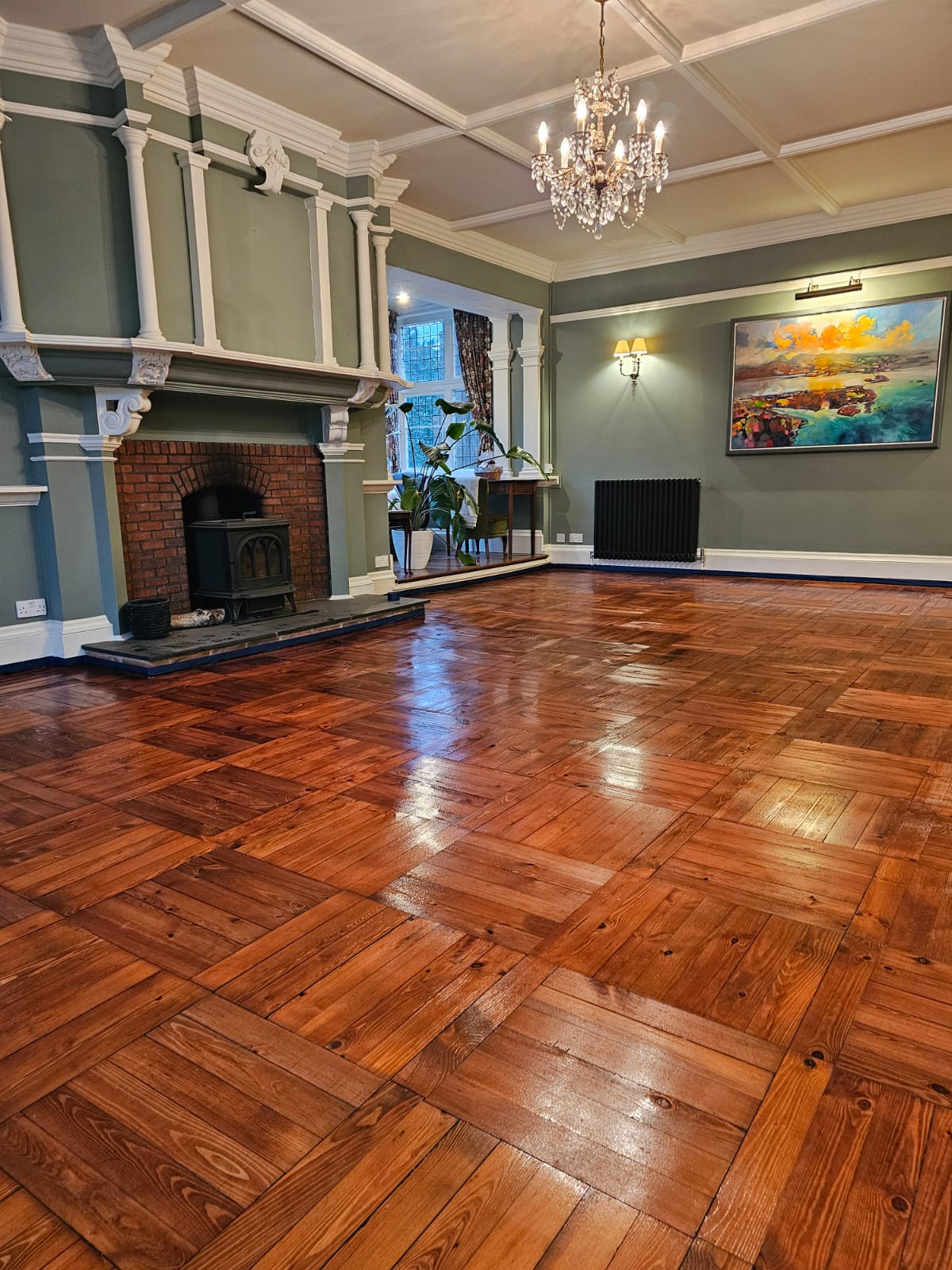
parquet wooden floor sanding
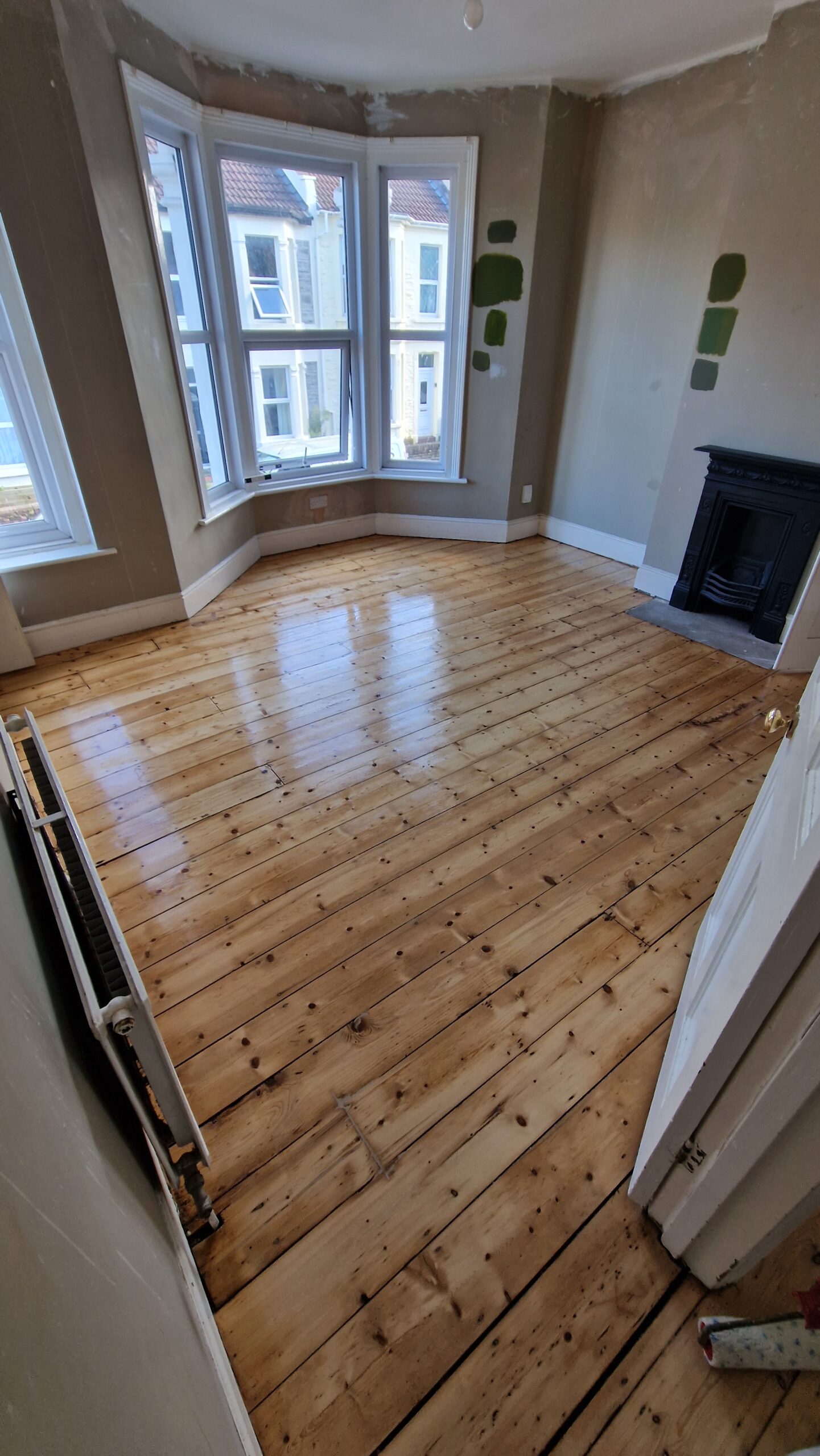
wooden floor sanding

Wax, Oil and Hard Wax Oil: Natural Finishes Near the Sea

Natural finishes suit Marazion homes particularly well, and they are worth understanding properly before choosing.

Wax is the oldest finish of all. It sits in the top layer of fibres and is buffed to a soft sheen. The appeal is in the look and the ease of repair: a scuff can be rubbed out and fresh wax buffed in. The drawbacks are real, though. Water leaves white spots on wax, a freshly buffed floor can be slippery, and wax needs topping up regularly to stay protective. A waxed wood floor works well in a sitting room or bedroom and poorly by a door where wet feet come in from the beach.

One practical point about wax matters a great deal for anyone thinking of changing finish later. Wax gets into the grain, and no lacquer will bond to a waxed surface. Removing an old wax finish means sanding through it, and wax clogs abrasive quickly, so the first stages take longer and use more paper. It also means any trace left behind will cause the next finish to fail in patches.

Oils behave differently. Natural oils soak into the wood and harden inside it, so the protection is in the timber rather than on top. Hard wax oil combines oils with waxes to give a tougher surface that still looks and feels like wood. Neither needs the whole floor redoing when one area wears. When salt has turned the strip inside the porch a tired grey, that strip alone gets scrubbed and re-oiled. An oiled floor darkens and warms pine over time; white-tinted oils keep oak pale.

One warning that applies to every drying oil: a crumpled oily rag warms itself as it cures and can, in the wrong conditions, burst into flame. They should be laid flat outdoors to dry or soaked in water before disposal.

Lacquer remains an option where toughness matters most. A water-based or two-component lacquer gives a harder surface than any oil, and lacquer sealing suits a busy hall or a let. To shift the tone, a wood stain goes on before any of these, after a trial on a few of the home’s own boards. Finally comes the level of shine, and our floor polish guide compares how a matt or satin surface copes with sandy feet.

Commercial Floor Sanding in Marazion's Cafés, Galleries and Lets

Commercial premises in a town this size are small and mostly seasonal: cafés, restaurants, a handful of galleries and shops, and a good number of holiday lets and bed and breakfasts. Commercial floor sanding for them is mainly about timing and about finishes that cope with beach traffic.

Timing first. A café trading through the summer usually wants its floor done in the quiet months, ideally on days it is already shut, with the sanding and first coats overnight if needed and a fast-curing finish so tables can go back in time for opening. Commercial floor sanding in Marazion is easiest booked in autumn for a winter slot, and the dates we agree are the dates we turn up. Restaurant floors need a finish that shrugs off spills and chair legs, which usually means a two-component lacquer.

Galleries and shops have different priorities. Footfall is steady but concentrated, and beach sand acts like abrasive underfoot. A matt finish hides that wear better than satin or gloss, and a good mat at the door does a remarkable amount to slow it down. Shop floor sanding is usually done after closing or out of season.

Holiday lets and guest houses sit between domestic and commercial. Floors take heavy, careless traffic from wet feet, sandy shoes and suitcases, and work has to slot into changeover gaps. A bed and breakfast need not close: two bedrooms come out of use at a time while guests carry on in the others, the usual pattern for hotel and guest house floors. With a let, ask who will look after the floor. An absent owner relying on a cleaning firm is better off with lacquer; one who lives nearby and does an end-of-season tidy can keep hard wax oil looking good.

Business owners, agents and landlords can ask for our method statement, proof of insurance or references whenever they need them. A café floor that sees beach traffic all summer will typically want a full sand after four or five years.

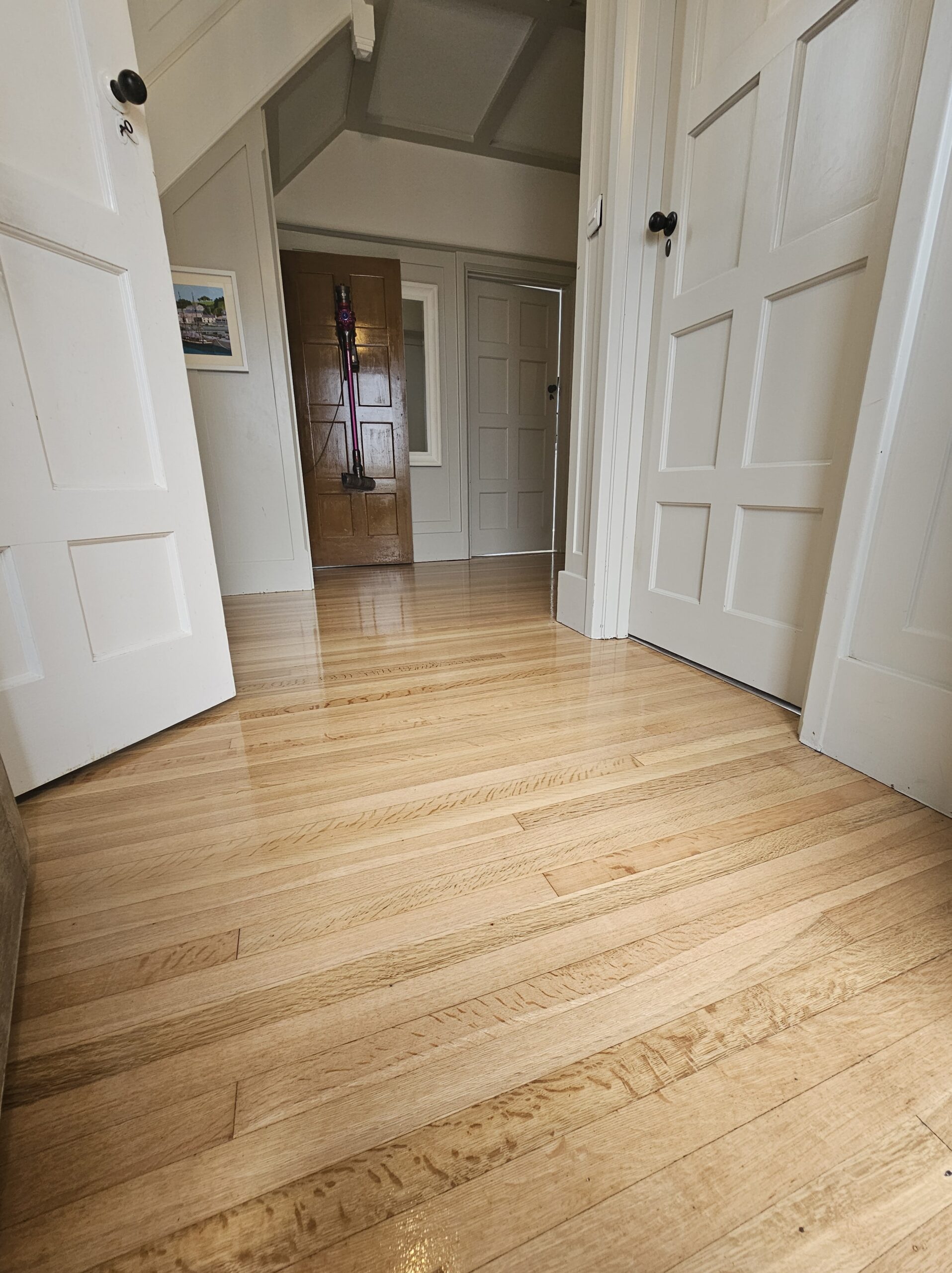
flooring sanding company
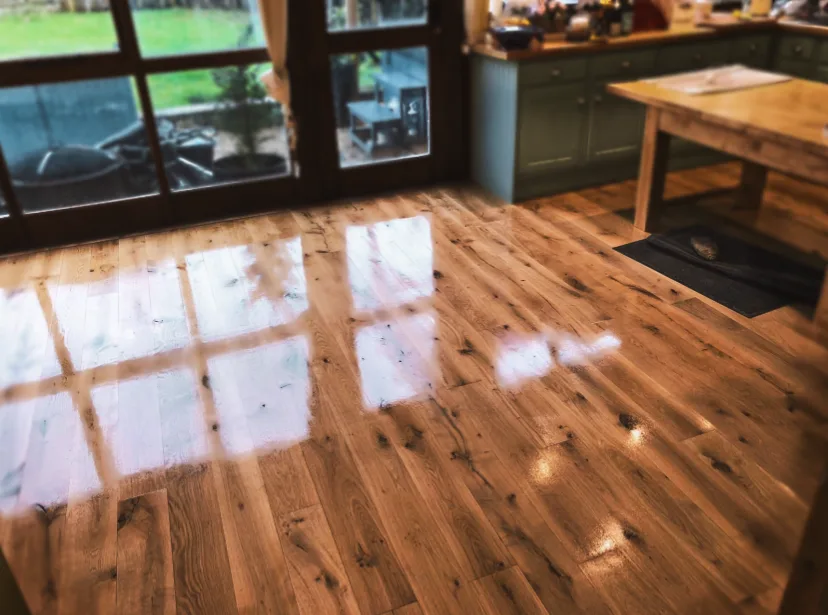
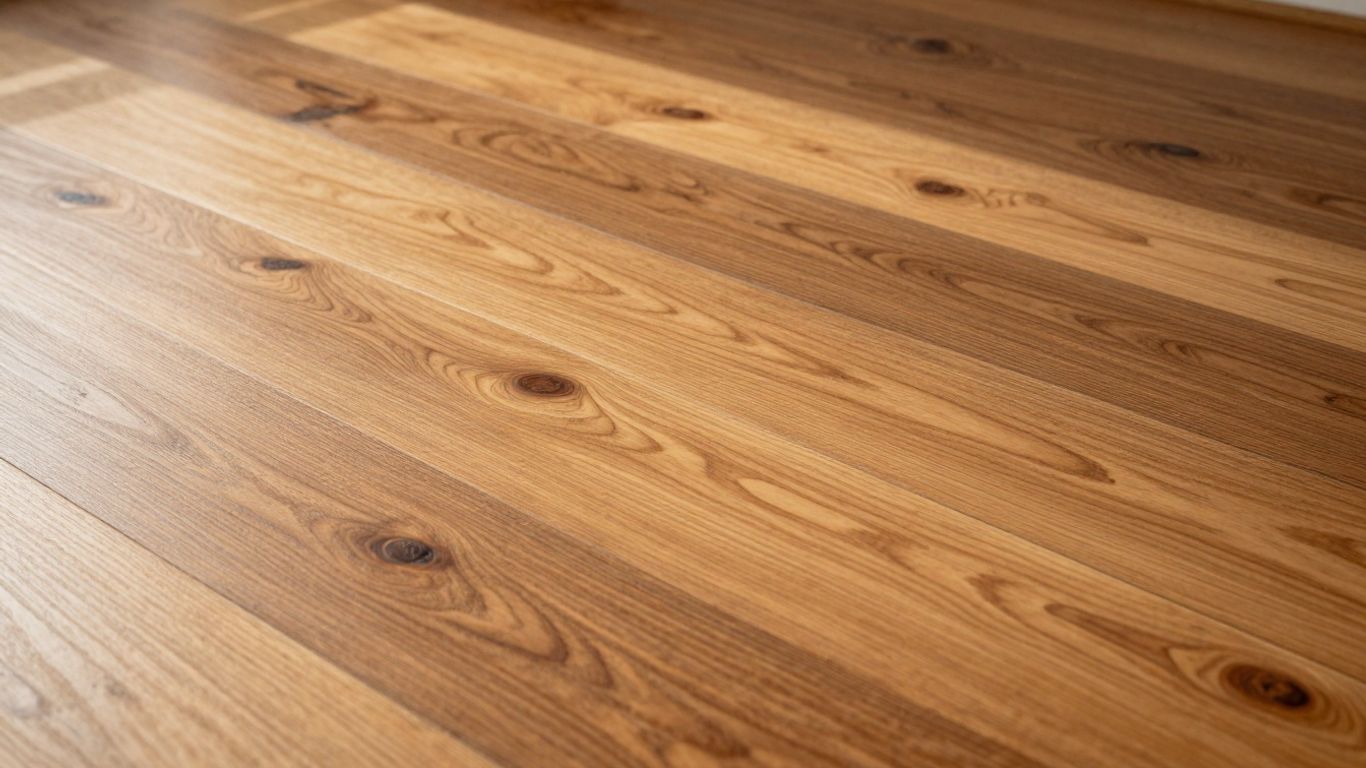
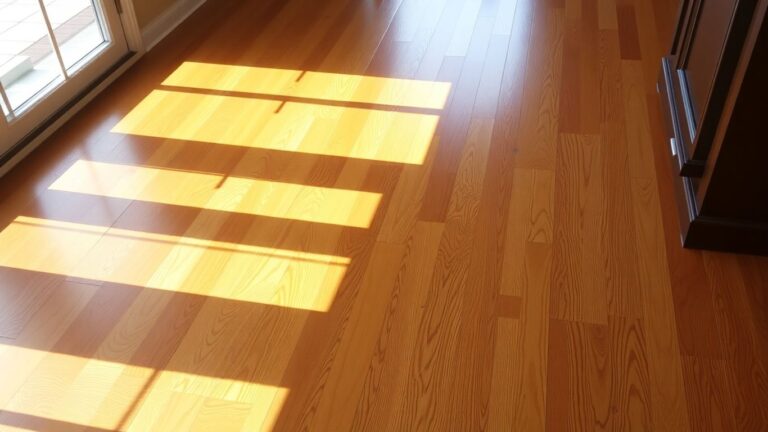
Sunlight across freshly lacquered wooden floorboards

Patching, Refixing and Closing Gaps in Small Cottage Floors

In a small room, every repair is visible, so it pays to get them right before the finish goes on.

Typical problems in Marazion cottages include boards that were lifted for pipes or cables and put back loosely, boards split at the ends by old nails, scorch marks near old fireplaces, and earlier patches in a different timber. Wooden floor repairs cover the full range: refixing, gluing and pinning splits, cutting out damaged sections and splicing in new timber.

Where a board cannot be saved, replacing it with a reclaimed one of similar age, width and colour gives a repair that disappears after sanding. Modern boards rarely match old imperial sizes, and their faster growth shows in the grain. Floorboard replacement with salvaged timber avoids that obvious new strip in the middle of the room.

Creaks are especially noticeable in small houses where the bedroom is right above the sitting room. They usually come from boards that have loosened on their nails. A screw sunk through the board into the joist below, set just beside the original nail, tends to end the noise for good. Our squeaky floor repair service deals with this.

Gaps between boards are the last step. For slim cracks, a resin binder stirred with the floor’s own fine dust makes a filler of nearly the right shade. Broader gaps near a seaward wall, the kind that whistle in a winter wind, are better closed with fine pine strips glued to just one board and shaved level. Coastal floors move more with the seasons, swelling in damp winters and shrinking in dry summers, so the choice of gap filling method has to allow for that movement.

Herringbone, Basket Weave and Narrow Stair Treads Near the Bay

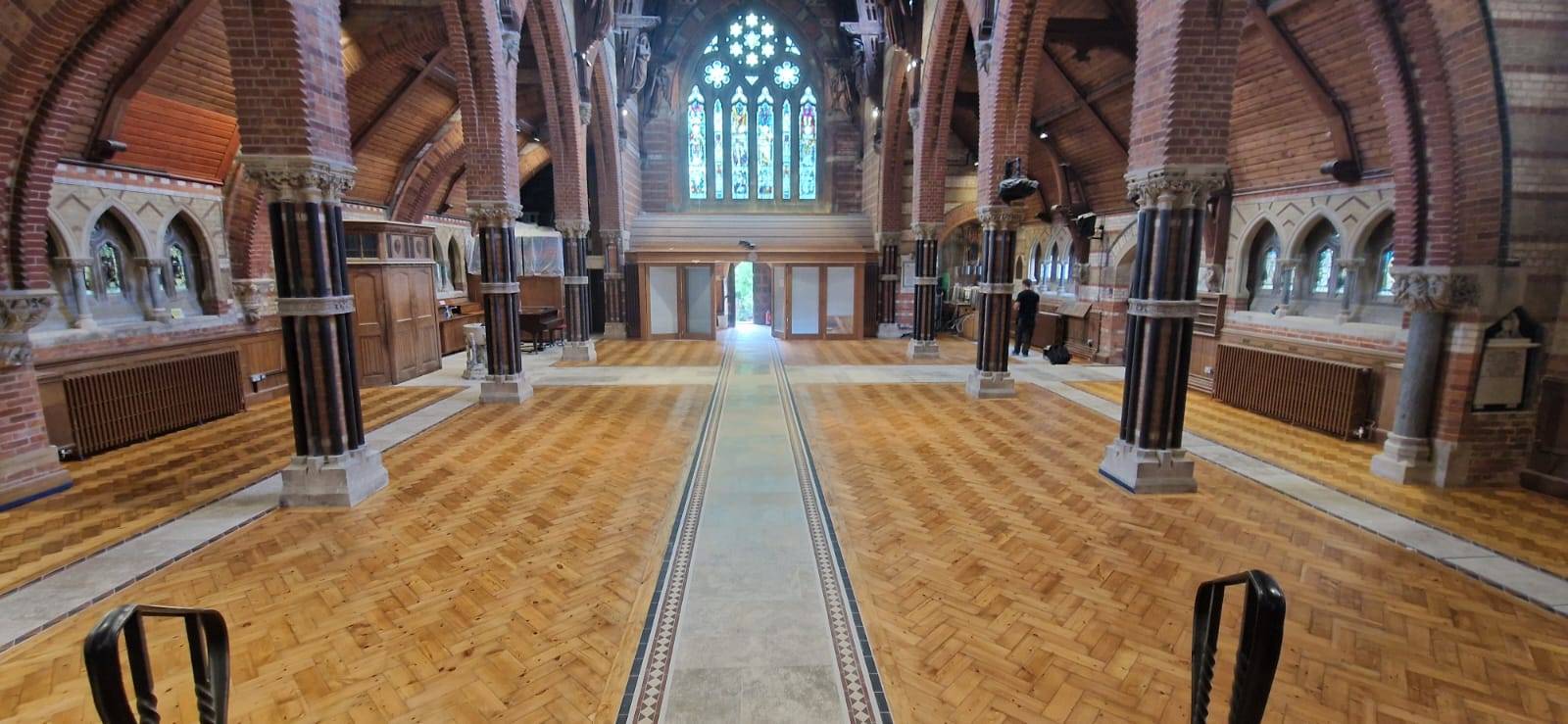
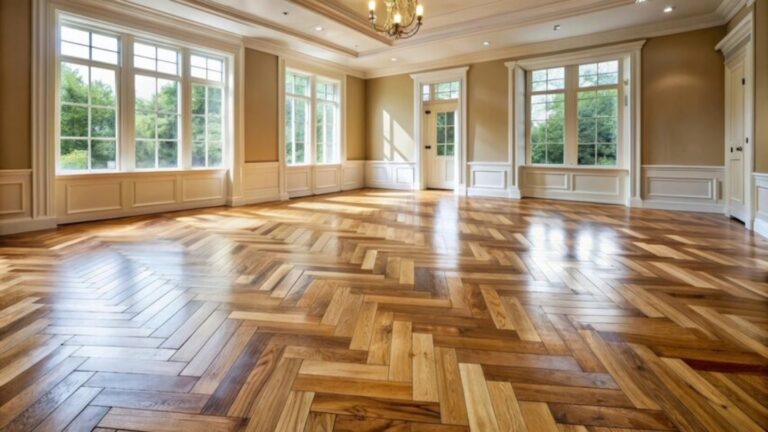
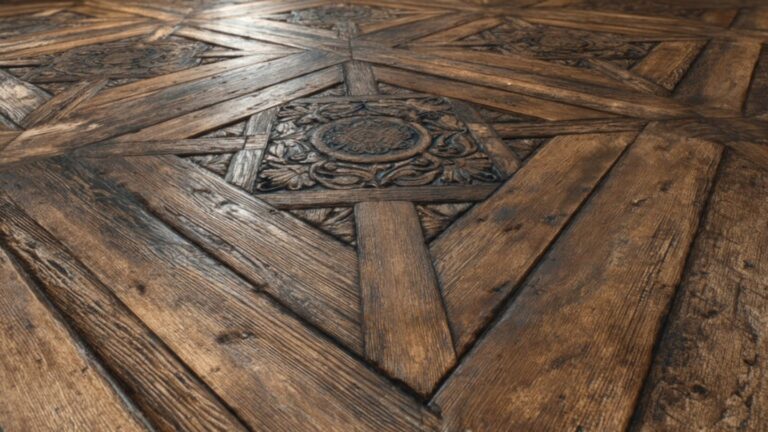
Parquet is less common in small cottages but turns up in larger houses, newer homes and older public buildings. Herringbone parquet is the most frequent pattern, followed by basket weave. Older blocks usually sit in black bitumen, and once damp gets under it that bed turns brittle and lets go.

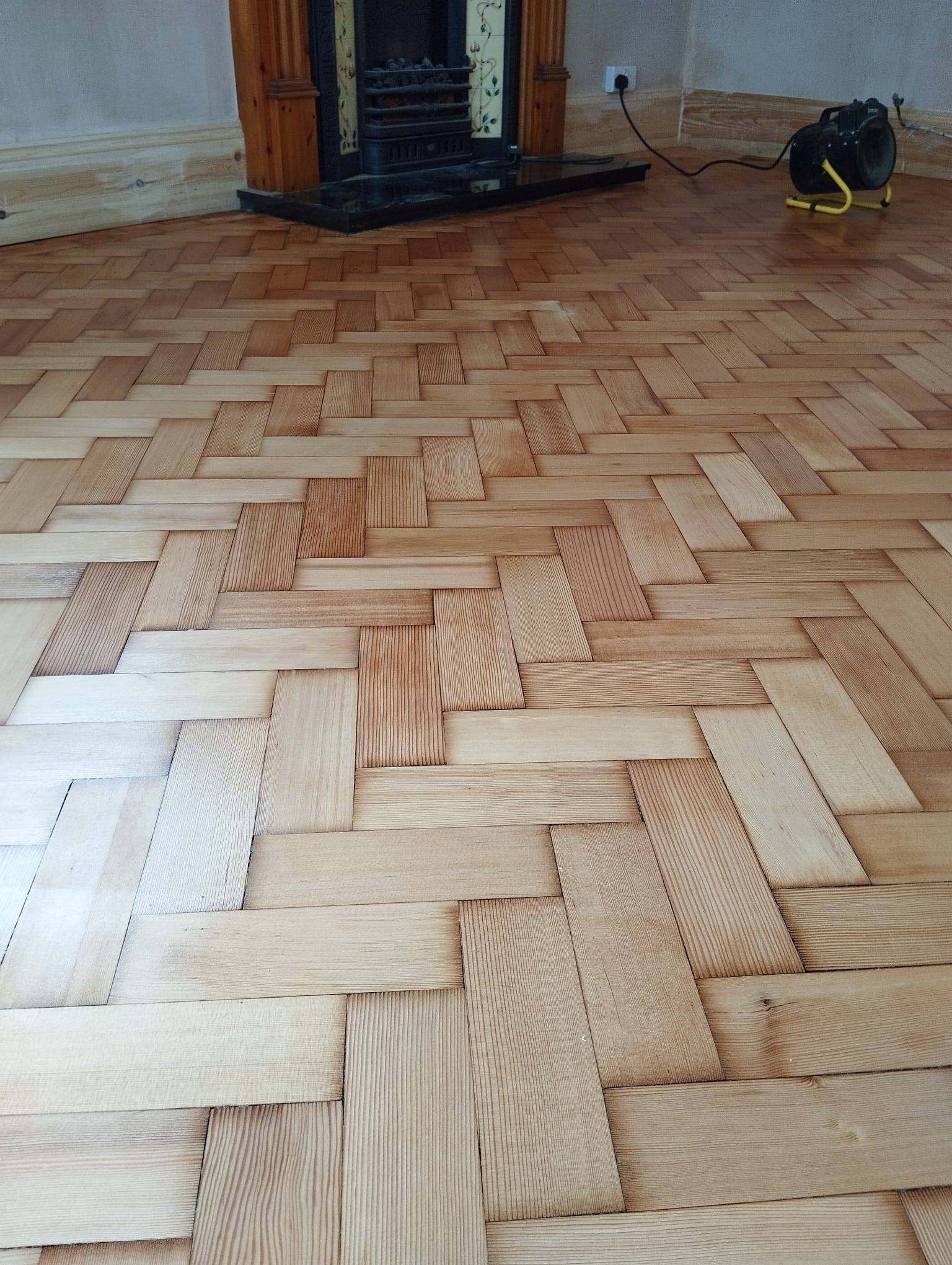
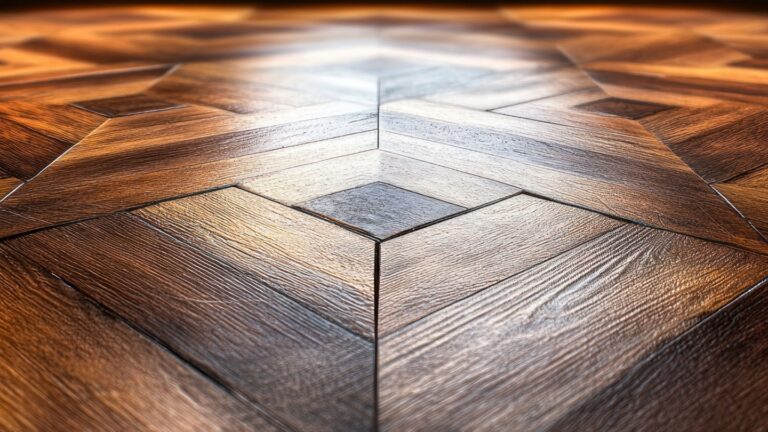
Parquet floor sanding needs care. Every block lies at an angle to its neighbour, so a coarse scratch that runs with the grain on one becomes a visible dark score across the next. The early passes run diagonally, followed by finer grits that clean up every cross-scratch. Loose blocks are taken up, the old adhesive scraped off, and the blocks stuck back with modern adhesive before sanding. Missing blocks can sometimes be matched from reclaimed stock.

An oiled finish is a good match for parquet in a seaside home. It brings out the pattern because each block reflects light slightly differently, and worn patches can be refreshed without sanding the whole floor.

A typical Marazion cottage stair climbs steeply between two walls with treads barely wider than a boot. Stair sanding here is careful hand and detail work, tread by tread, riser by riser, keeping the nosing edges crisp rather than rounding them away. On a steep stair, a matt finish is safer than gloss, and an oil or hard wax oil leaves treads with a little more grip than a slick lacquer. Old paint on strings and spindles may contain lead and should be removed by a wet or chemical method rather than dry sanding.

Wood floor sanding company
Floor sanding taunton

Keeping an Oiled Floor Going, New Boards and Quotes in Marazion

Once the final coat is on, a floor needs time to cure. Most finishes take light foot traffic in socks after about a day. Leave the furniture out for forty-eight to seventy-two hours, and hold the rugs back a few days beyond that.

The everyday care of a natural finish is simple but different from lacquer. Sweep or vacuum often, because sand and salt do the damage. Use a mop that is only just damp, with a cleaner made for oiled or waxed floors, since general household cleaners can strip oil out of the surface. Avoid steam mops entirely. Once or twice a year, a maintenance oil or refresher wiped over the busy areas keeps the finish topped up. Felt pads under furniture prevent scratches.

Lacquered floors benefit from buffing and recoating when they start to look dull in busy areas: a light abrasion and a fresh coat renew the surface without sanding to bare wood. Done every so often, that sort of wood floor refinishing means a home might go eight to ten years, or longer, before the boards need sanding again. A single deep gouge from a dragged table may be handled on its own through scratch repair.

Where the old boards are finished, or you simply fancy something new, our wooden floor installation side can fit a floor or supply the boards alone, with Junkers and Bona in the range.

Start by taking a couple of pictures, the room in full from the doorway and the most weathered patch close up. From these, initial advice can be given. If it is worth a look in person, the survey is free and lasts about thirty minutes: board thickness, meter readings near the seaward wall, airflow beneath, and any old patching. An itemised written quotation is then sent and stands unless the scope changes.

Telephone 01823 674562 from 8am to 6pm Monday to Friday (Saturdays by arrangement). Email goes to info@ryansrestoration.co.uk, and the enquiry form takes photos too.

Marazion Floor Sanding Questions

In quieter rooms, yes. Wax looks lovely and is easy to touch up. But it marks with water, can be slippery when freshly buffed, and needs regular rewaxing. By the front or back door, where wet feet and sandy shoes come in, an oil, hard wax oil or lacquer will cope much better.

Yes, but the wax has to be sanded away completely, because lacquer will not bond to it. Wax clogs abrasive, so this takes longer than sanding an ordinary varnished floor. Any wax left in the grain can cause the new finish to peel in patches, so thoroughness matters.

Salt and sand. Salt holds moisture against the finish, and sand scratches it. If the floor is oiled, that one strip can be cleaned and given fresh oil without touching the rest. On a lacquered floor, a recoat usually sorts it. A good mat at each door slows the wear considerably.

Usually. The work can be done on days the café is closed or overnight, with fast-curing finishes so tables go back before opening. Quieter months are the easiest time. We fix the dates early so staff rotas and deliveries can be arranged around them.

Iron from the nails reacts with tannin in the oak, especially where there is moisture. Near the sea, nails corrode faster, so the marks are more common. Light marks sand out; deeper ones may need a chemical treatment or a small inlaid repair.

Yes. Marazion is regular ground for us, and so is the country towards the Lizard, including floor sanding in Helston. The team travels from near Wellington in Somerset, so giving notice of preferred dates helps with planning.

Most small floors take one to two days, sometimes three if there are a lot of repairs or several rooms, and the order of rooms can be planned so the kitchen stays usable each evening. Socks are generally fine on the floor by the following day, and armchairs can return after forty-eight to seventy-two hours.

A wide photo of the room taken from its doorway and a second, close up, of the most worn or damaged spot. Often that is enough to tell whether sanding, repair or a simple recoat is the right call. If the floor looks worth restoring, a free half-hour survey follows, and after that an itemised quotation in writing.