45 years’ experience  ·  Rated 4.9 on Google  ·  Family-run, from our workshop near Wellington

45 years’ experience · Rated 4.9 on Google · Family-run

Floor Sanding and Wood Floor Restoration in Midsomer Norton

Sanding, repairs and refinishing for Midsomer Norton homes and businesses, from carpeted-over terrace boards to busy shop and hall floors

QUICK QUOTATION

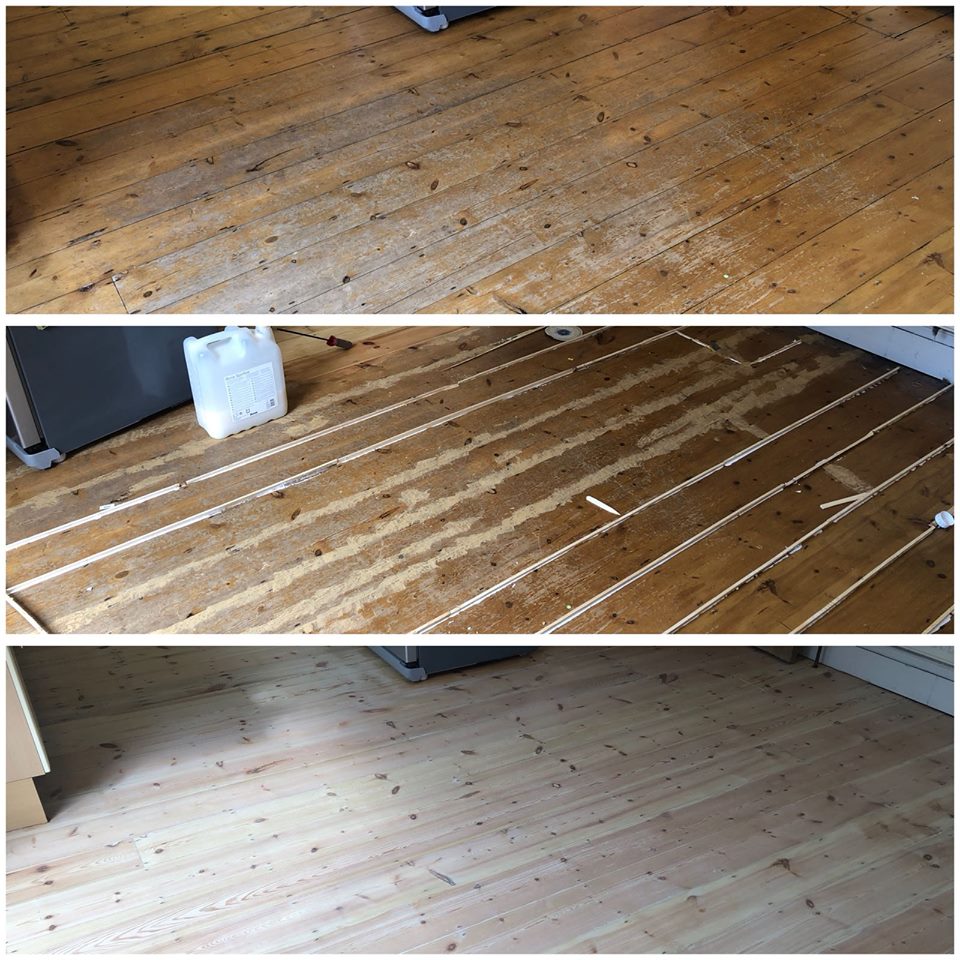
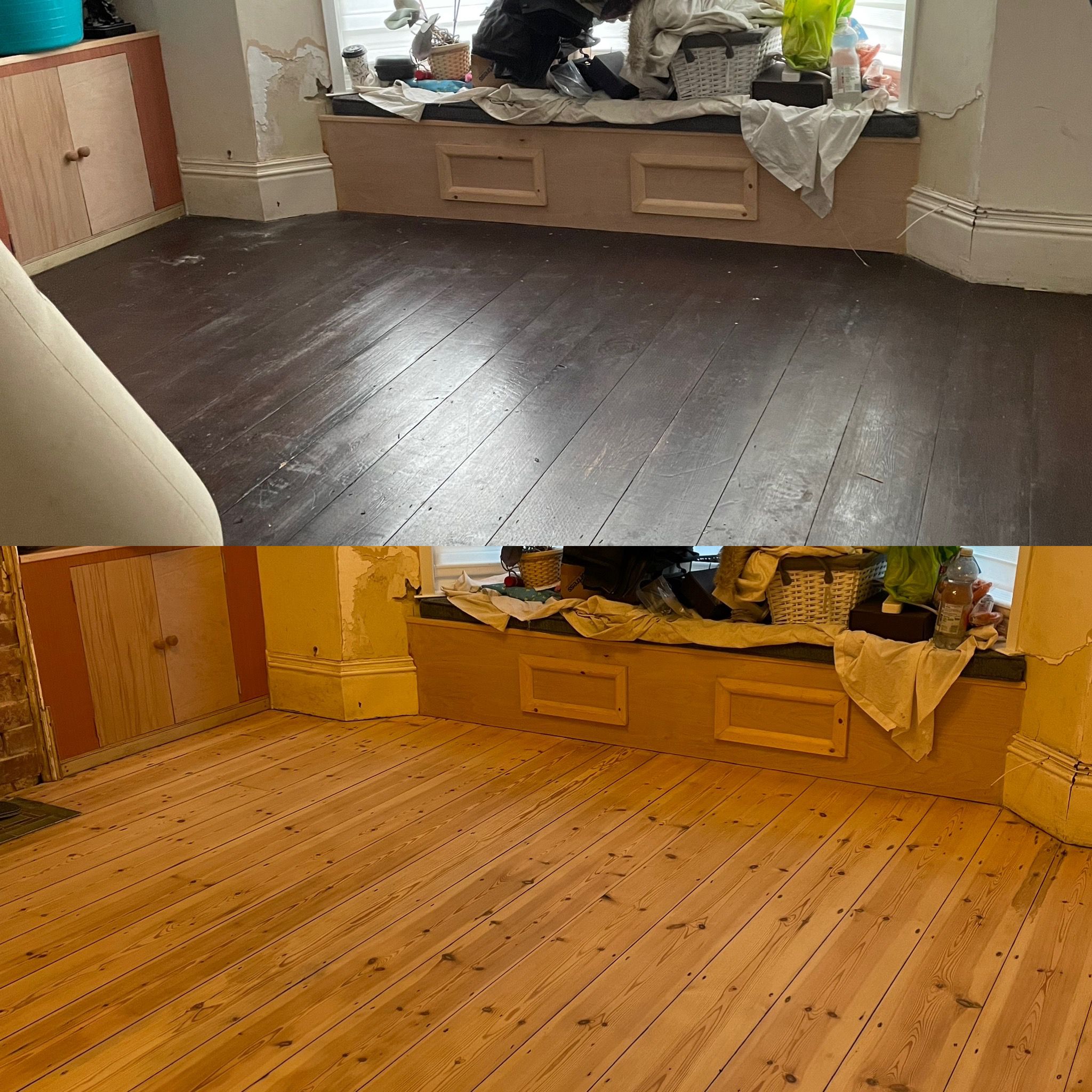
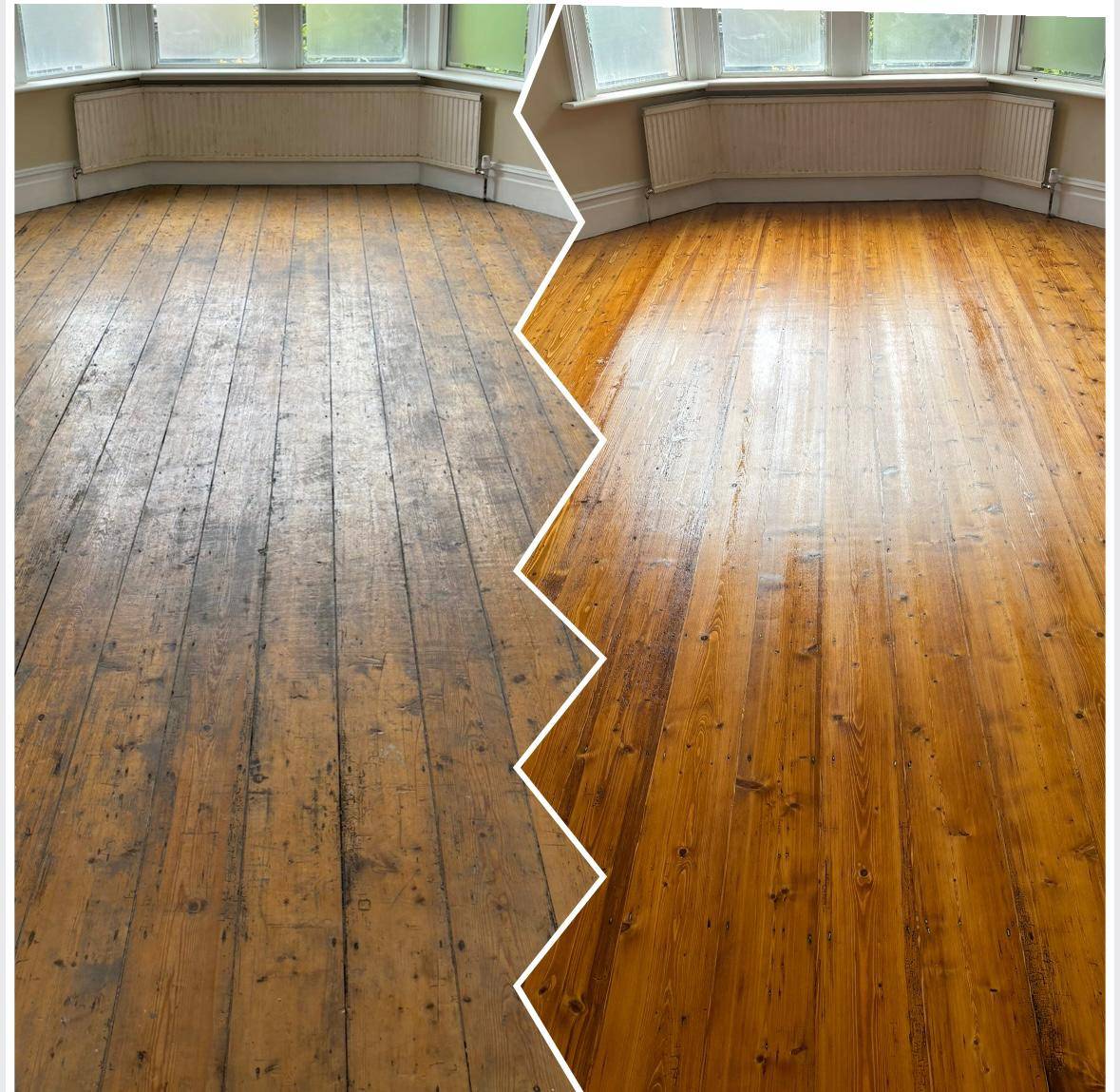
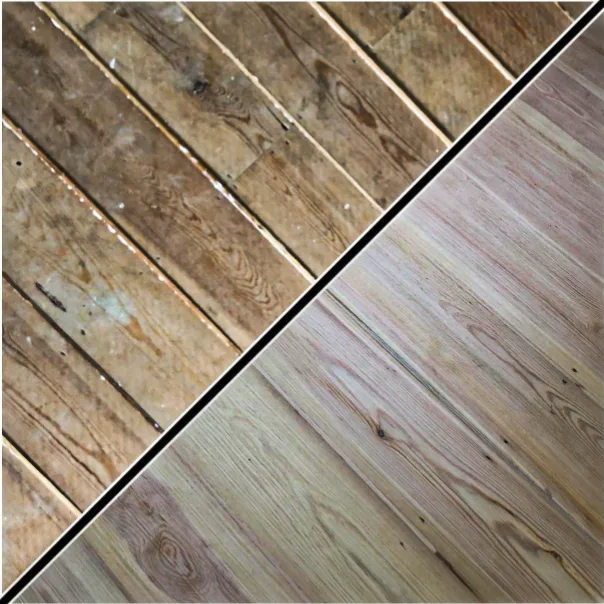
Floor sanding before and after

Floor Sanding in Midsomer Norton, From Pit-Era Terraces to Later Semis

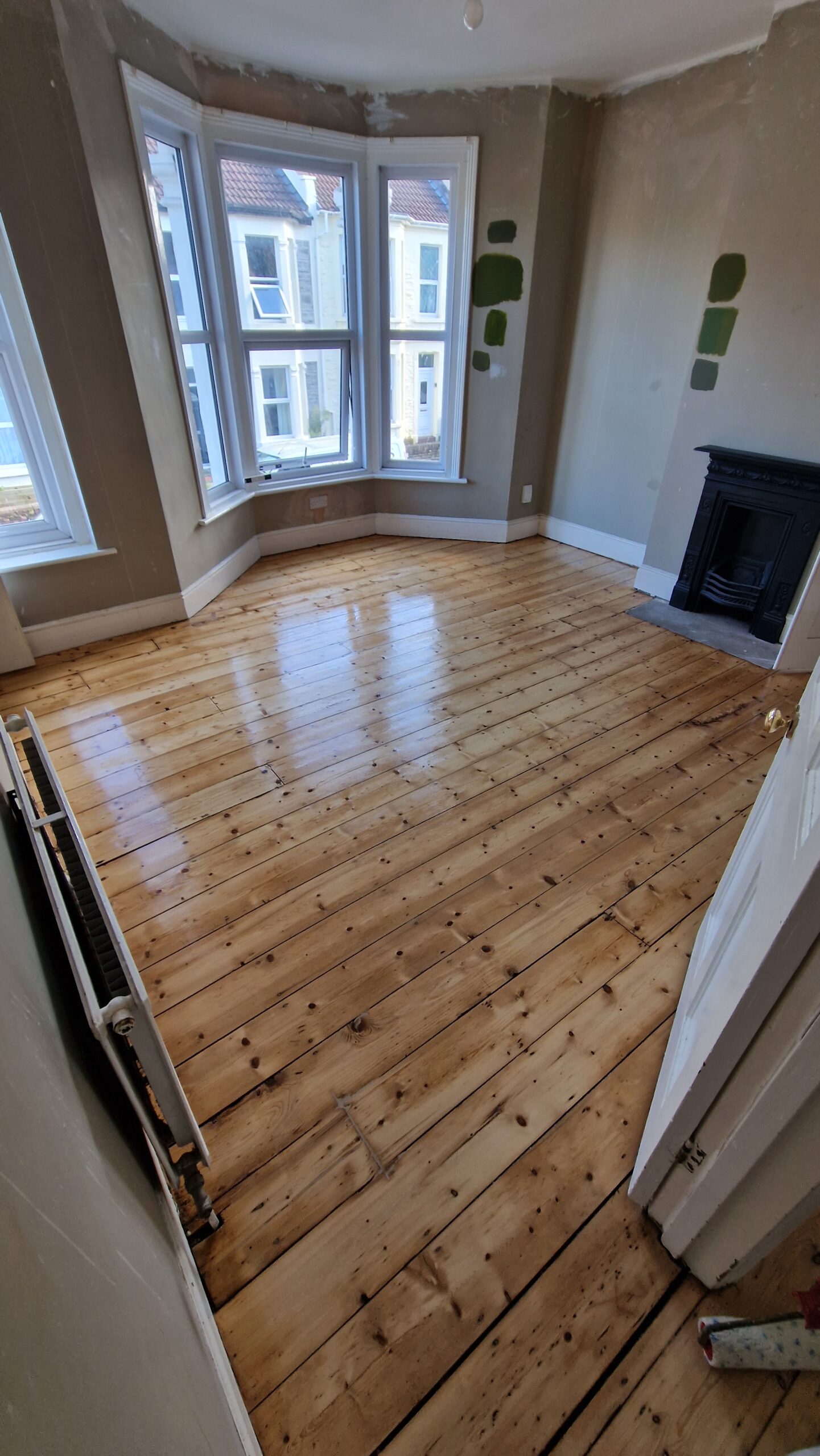
Plenty of the older houses in Midsomer Norton were built while the town still had working coal pits, and the last of those, at Norton Hill, closed in 1966. Terraces and cottages from that long stretch tend to share a type of floor: pine boards nailed straight onto timber joists, with a ventilated void below and the ground floor sitting only a short way above the soil. Upstairs the boards are often in decent order because they have spent most of their life under lino or carpet. Downstairs, where the coal was carried in and the family lived, is usually where the trouble is.

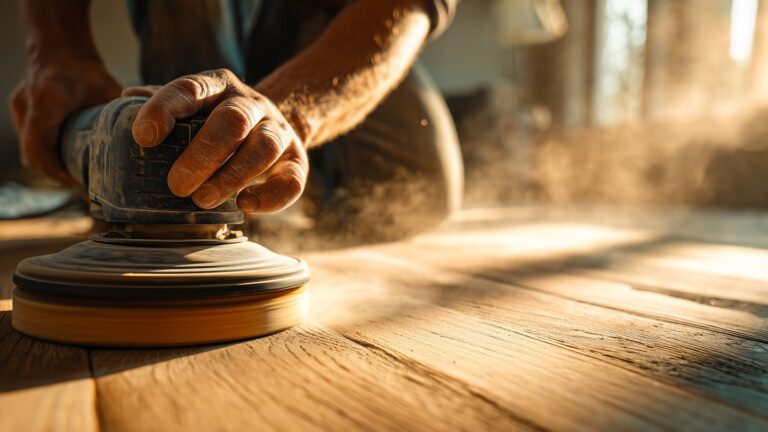
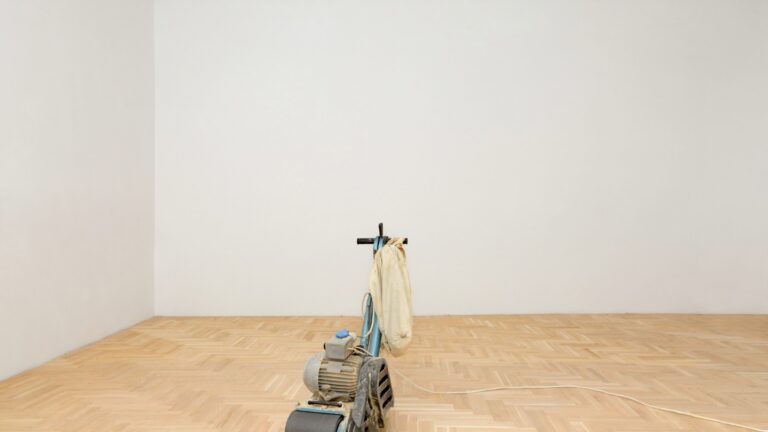
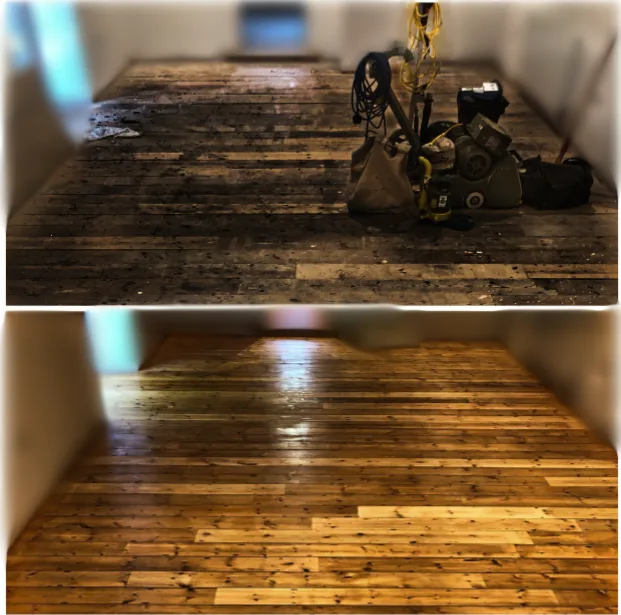
That is why floor sanding in Midsomer Norton starts with a good look at what the boards have been through, not with the machine. A front room that has been carpeted three or four times will have hundreds of tack holes, a line of gripper nails a few centimetres in from each skirting board, and quite often a layer of hardboard pinned over the lot. With the fixings gone, our floor sanding service begins with a rough grit that bites through decades of grime and old varnish, steps down to a middle grade that erases the furrows of the rough one, and ends on a fine paper so the lacquer or oil soaks in evenly from wall to wall. Edges are done with a smaller rotary edger, and the last few millimetres behind radiator pipes and inside door reveals are scraped by hand.

Most of these floors are softwood, and pine floor restoration has its own quirks. Pine is softer than oak, so the coarse grit has to be chosen with care, and a drum left turning in one spot for a second too long will dig a hollow that shows under lacquer for years.

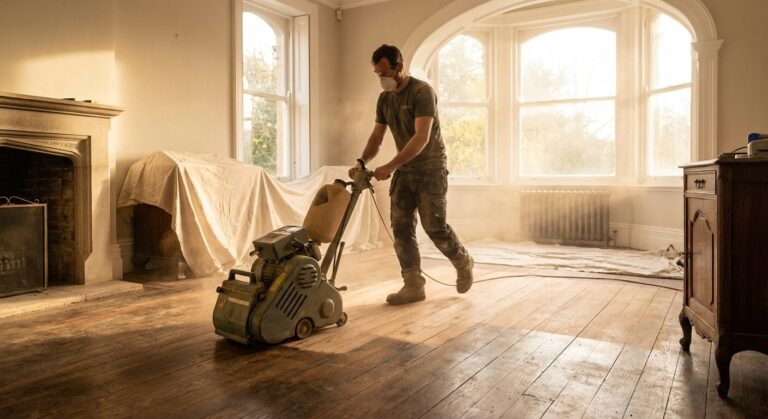
Dust is the first worry people raise, particularly in a two-up two-down where the stairs drop straight into the living room. Our machines pull their dust down sealed hoses into a separate extraction unit, so the bulk of it is caught at the drum instead of drifting up the stairwell. The trade calls this dust-free floor sanding; in practice a fine film still lands on window sills, and we would rather say so now than have you surprised.

A single terraced front room with sound boards normally takes one or two days. A knocked-through lounge, or a whole ground floor with the hall, runs to three.
Wood Floor Restoration in Midsomer Norton Starts With the Hardboard Coming Up

Hardboard was the standard answer to an uneven floor for much of the last century: lay sheets of it over the boards, pin it down every few inches, then carpet or tile on top. In local terraces it is common to find two generations of it, the bottom layer brittle and patched with old lino adhesive, the top layer held with ring-shank pins that will not pull out cleanly. None of it can stay. A sanding drum would catch on the first pin head and tear a strip out of the board underneath.

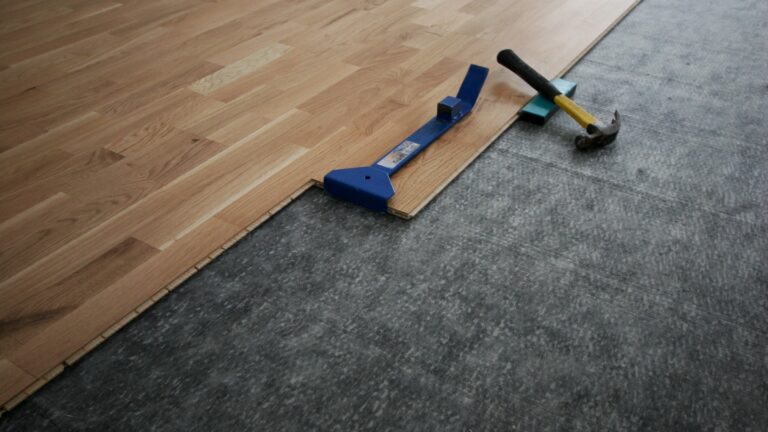
Getting it up is slow work, and it is the stage that does most to decide how the finished floor looks. Each sheet is levered from an edge with a wide flat bar, so the force spreads across several boards rather than splitting one. Pins that snap off flush are punched below the surface. The gripper strip round the perimeter comes away with its nails, and any that shear are drawn with pincers or punched down. Then come the staples. Carpet underlay was stapled down in their thousands, and each one has to be lifted with a staple remover or side cutters. Miss one and it shreds the abrasive sheet and leaves a scored line that no amount of finish will hide.

Adhesive residue is dealt with next. Old lino glue and carpet tape clog sandpaper within seconds, so the worst patches are scraped off first and the coarse pass is run with frequent paper changes.

Most wood floor restoration in Midsomer Norton turns on what this stage reveals, and it is where proper wood floor restoration parts company with a quick sand and varnish. With the boards bare you can see their real condition: a dark stain from a leaking washing machine, a run of boards cut short for a gas pipe, joints that have opened up, a board split along its length by a pin driven in at an angle. All of it gets noted before any sanding starts, so the repairs happen in the right order and the finish goes onto a floor that is sound.

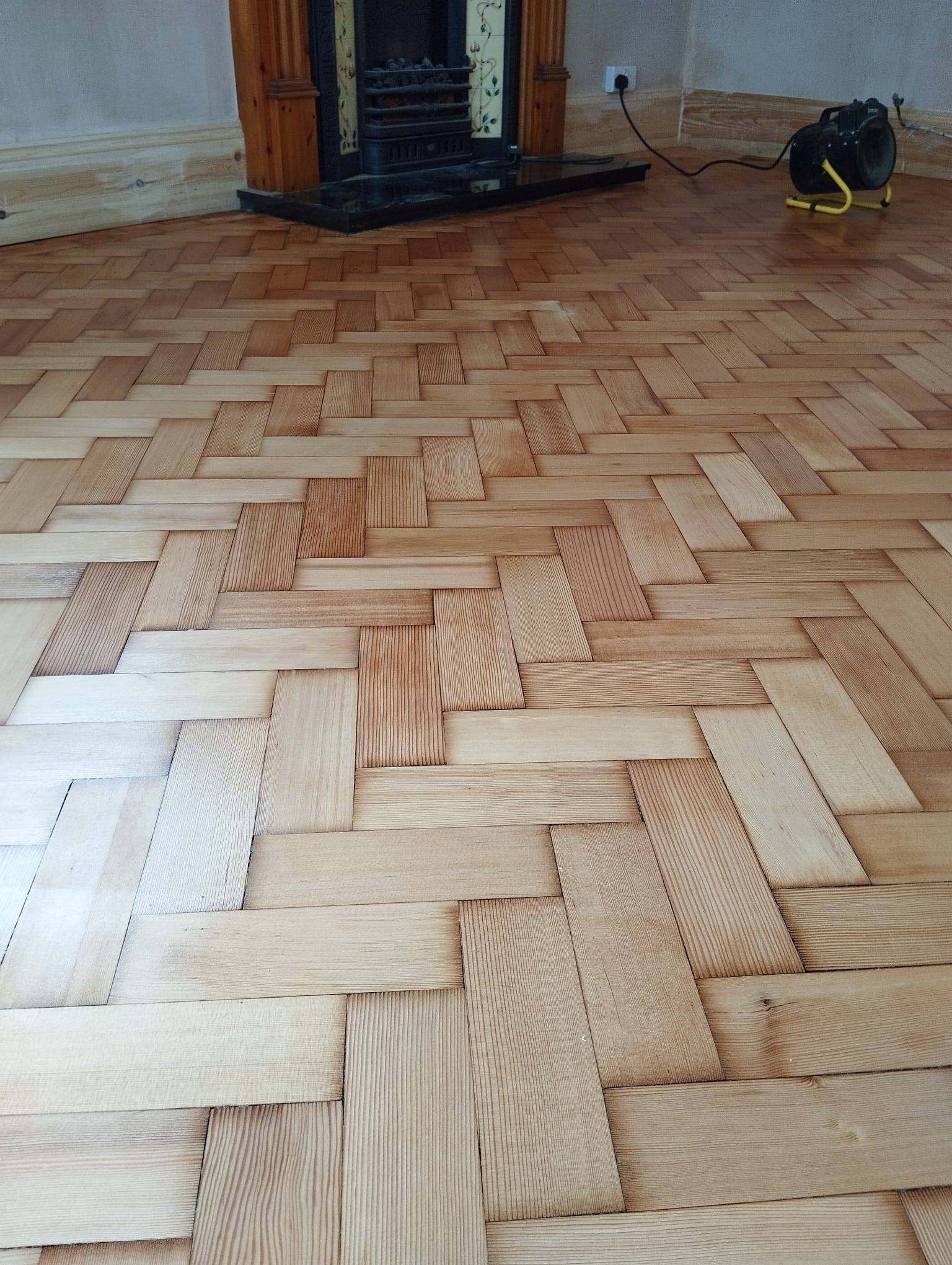
parquet wooden floor sanding
wooden floor sanding

Painted Borders, Old Stain and the Finish That Goes Back On

Lift the carpet in an older house here and there is a fair chance of a dark band running round the edge of the room while the centre is bare. That border dates from the days when a square carpet sat in the middle and the visible boards around it were stained or painted with dark varnish, a bitumen-based stain or ordinary gloss. On soft pine it soaks in deeper than you would expect, and it usually needs more than one coarse pass to get through.

Old paint calls for care. Coatings applied before the 1970s may contain lead, and sanding them dry without precautions can spread fine lead dust round a house. If a border looks more like gloss than stain, it is sensible to test it with a simple kit before work begins. Where lead is found, the safer route is to soften and scrape the paint first, keeping machine sanding of that zone to the minimum, with extraction running and the room closed off. Stain-only borders are less of a concern, though the darker ones can leave a faint shadow in the grain that appears once finish goes on.

That shadow is one reason the choice of finish matters. A clear water-based lacquer keeps pine close to its freshly sanded colour, so any ghost of an old border stands out. Something with an amber tint, such as a solvent-borne lacquer or a plain oil, mellows the pine overall and lets that faint outline disappear into it. If you want colour, staining the boards is tried first on offcuts and a patch in a corner of your own floor, because pine drinks colour unevenly and a printed swatch tells you very little.

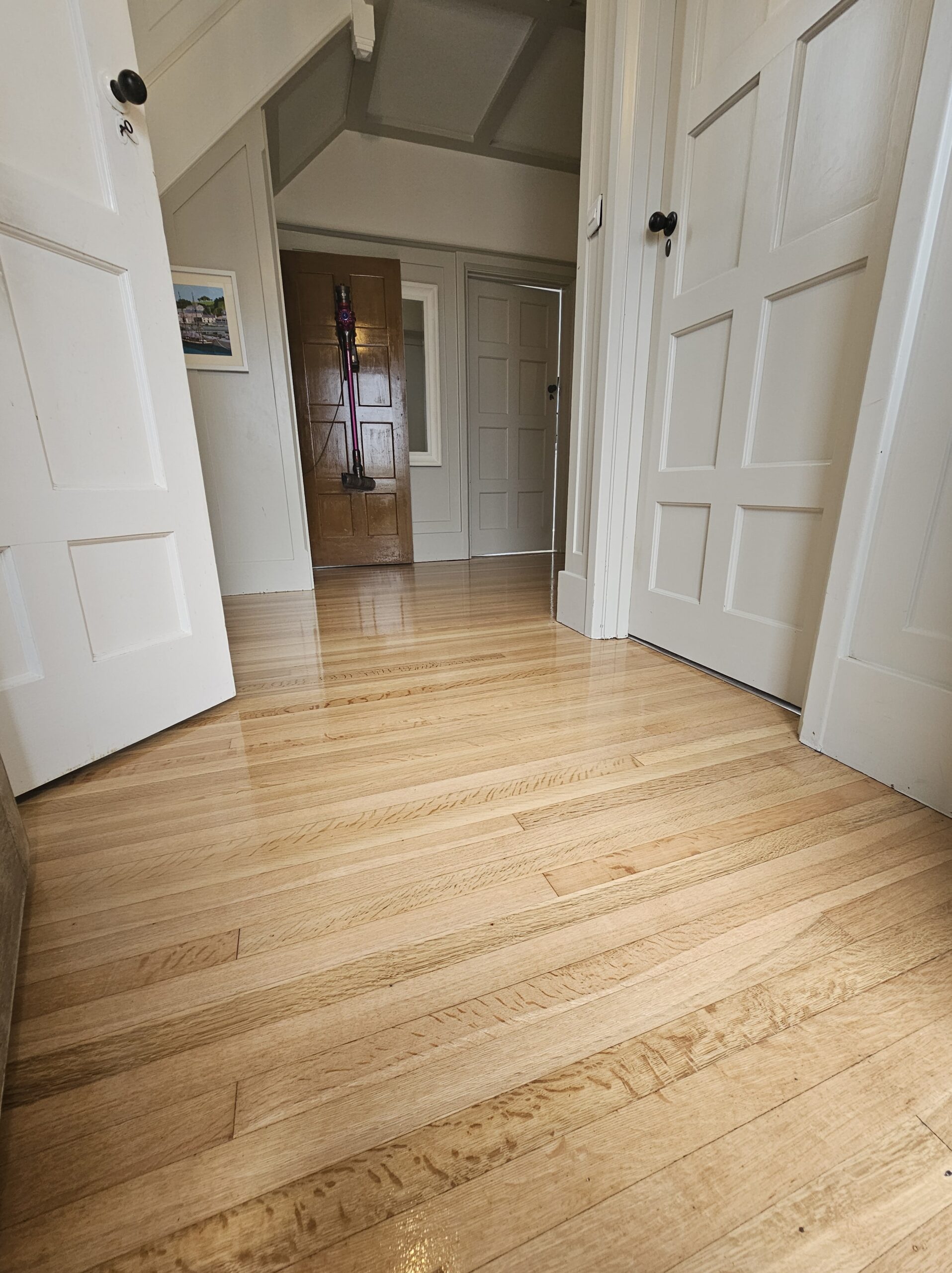
Broadly there are three families of finish. Lacquers, either water or oil-based, or a two-component lacquer for a hallway that takes a hammering, give the most protection. Natural oils and hard wax oil soak into the timber and can be patched locally. Traditional wax gives a soft sheen on an older floor whose owner is happy to keep it up. For sealing the surface against spills and wear, the options are set out under wood floor sealing.

Floorboard Replacement, Gap Filling and Quietening a Creaking Landing

Old pine in this part of Somerset was cut to imperial sizes, and a board around five or six inches wide and just under an inch thick will not be matched by anything off the shelf at a builders’ merchant. That becomes a problem when a plumber has cut out a section for central heating pipes and filled the hole with chipboard, or with a new board that sits a few millimetres proud. For floorboard replacement we hold a stock of reclaimed timber, so a patch can be made with old pine of a similar width, depth and age that sands and takes finish like its neighbours.

Gaps come next. A suspended pine floor moves with the seasons, opening up in a dry, centrally heated winter and tightening again in a damp summer. Narrow cracks, no wider than a fingernail edge, are packed with a paste of filler resin stirred into dust from this very floor, so the repair dries to roughly the same tone. Wider gaps are better filled with thin slivers of pine, glued along one face and planed flush, because they flex with the boards rather than cracking loose. Gap filling also cuts the draught coming up from the void, which you notice in an end terrace with an exposed side wall.

Creaks are mostly about fixings. Original cut nails work loose as the boards shrink and swell, and each time someone crosses the landing the board rubs on the nail or on the board beside it. Screwing the board into the joist, with the head sunk and plugged where it will show, usually cures it. The stubborn cases, where a joist has dropped or a strut between joists is missing, are covered by our squeaky floor repair work.

Smaller damage is less dramatic. Dents, scorch marks from a coal ember that jumped the hearth decades ago, and scratches from furniture often disappear with the general sanding. Anything deeper is treated as a scratch and dent repair before the finish goes on. The full range of wooden floor repairs, including rotten board ends near outside walls, is handled the same way: fix it first, sand it second.

flooring sanding company
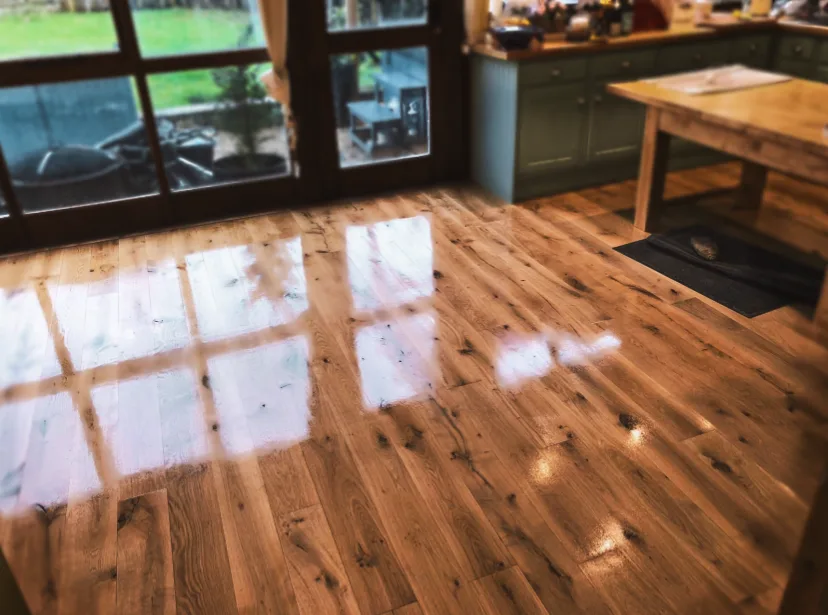
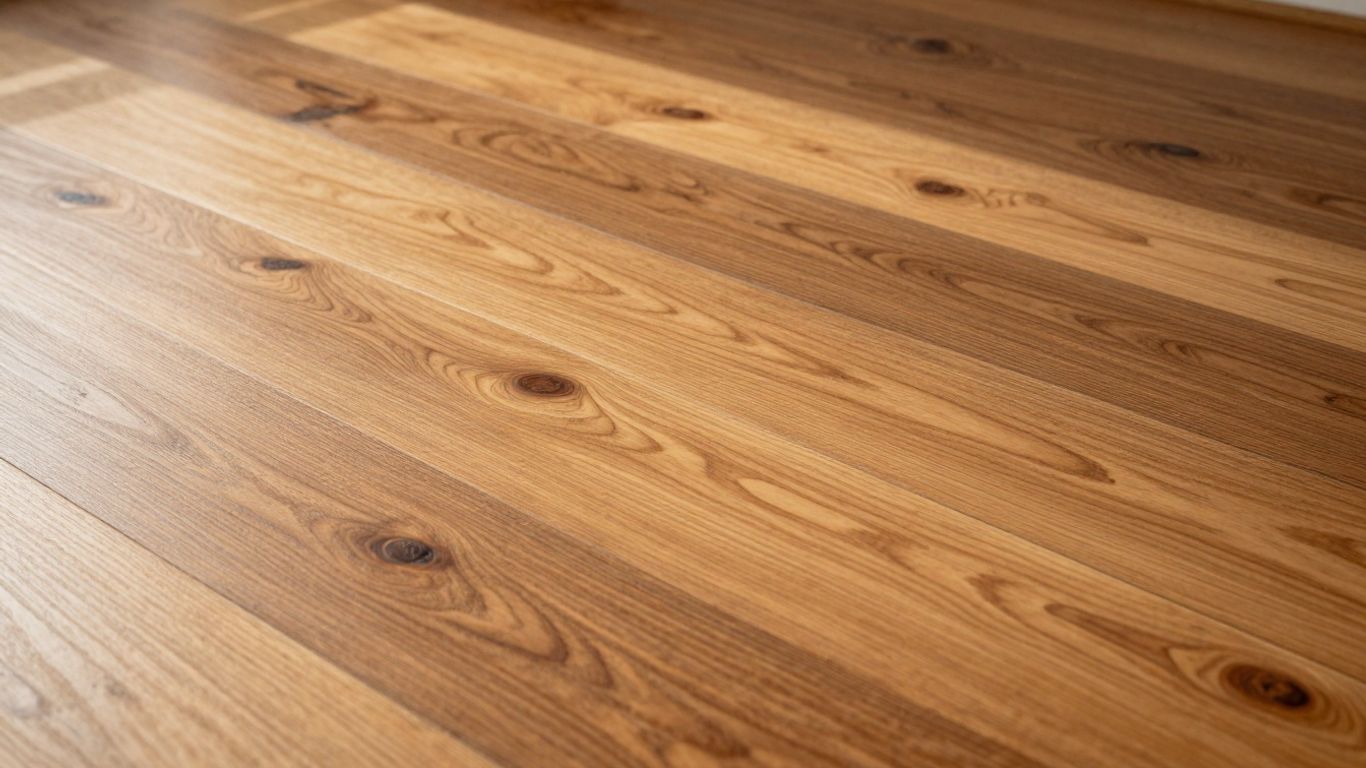
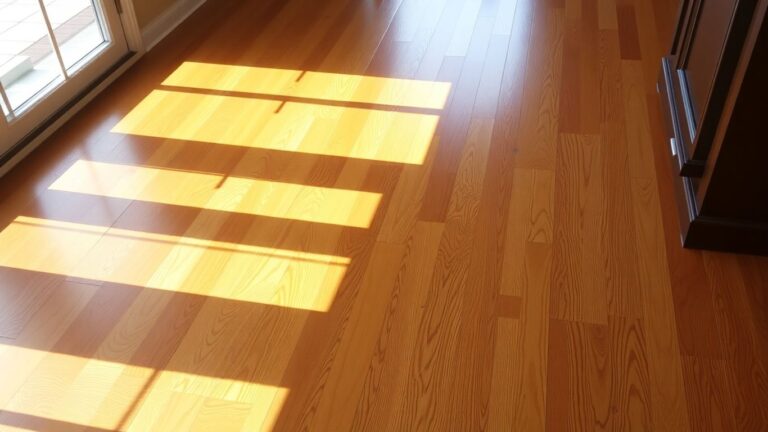
Sunlight across freshly lacquered wooden floorboards

Commercial Floor Sanding for Midsomer Norton Shops, Halls and Pubs

Midsomer Norton’s High Street and the streets around it have the usual mix of small shops, cafes and pubs, with church and community halls and school buildings further out. Each wears a wooden floor down in its own way: grit carried in from the pavement, chair legs dragged across boards, spilled drinks, or a hall used for toddler groups in the morning and badminton at night.

Commercial floor sanding in Midsomer Norton fits the opening times of the premises, so the machines come in once the till is closed. A shop floor can be sanded after closing, coated with a fast-curing lacquer, and given its final coat the following night. In a pub, the bar area and a side room might be done on separate nights so one part always stays open, and restaurant and bar floor sanding is set up with spills and chair traffic in mind. Halls and school floors fit best into the holidays, and we agree those dates well ahead because everyone wants the same fortnight in August.

Our commercial floor sanding service uses the same sealed extraction as our domestic work, which matters in a shop with stock on open shelves. On a shop floor that sees hundreds of pairs of boots a day, we would normally lean towards a two-pack lacquer: once its hardener has reacted it shrugs off the scuffing and the mop bucket far better than a standard one-pot coating. The area behind a bar sometimes suits an oil finish instead, because worn patches can be revived without sanding the whole room.

Where a hall doubles as a games space, court lines are part of the job. We paint them in-house to the relevant governing body’s layout once the floor is sanded, then seal them under the final coats so they wear with the floor. There is more on sports hall floor sanding and on shop floor sanding elsewhere on the site.

Commercial floors generally want sanding back every four or five years. A hall committee or landlord who wants paperwork first can ask for our method statement, insurance certificates and references.

Block Floors in Chapels and Halls, and Steep Terrace Staircases

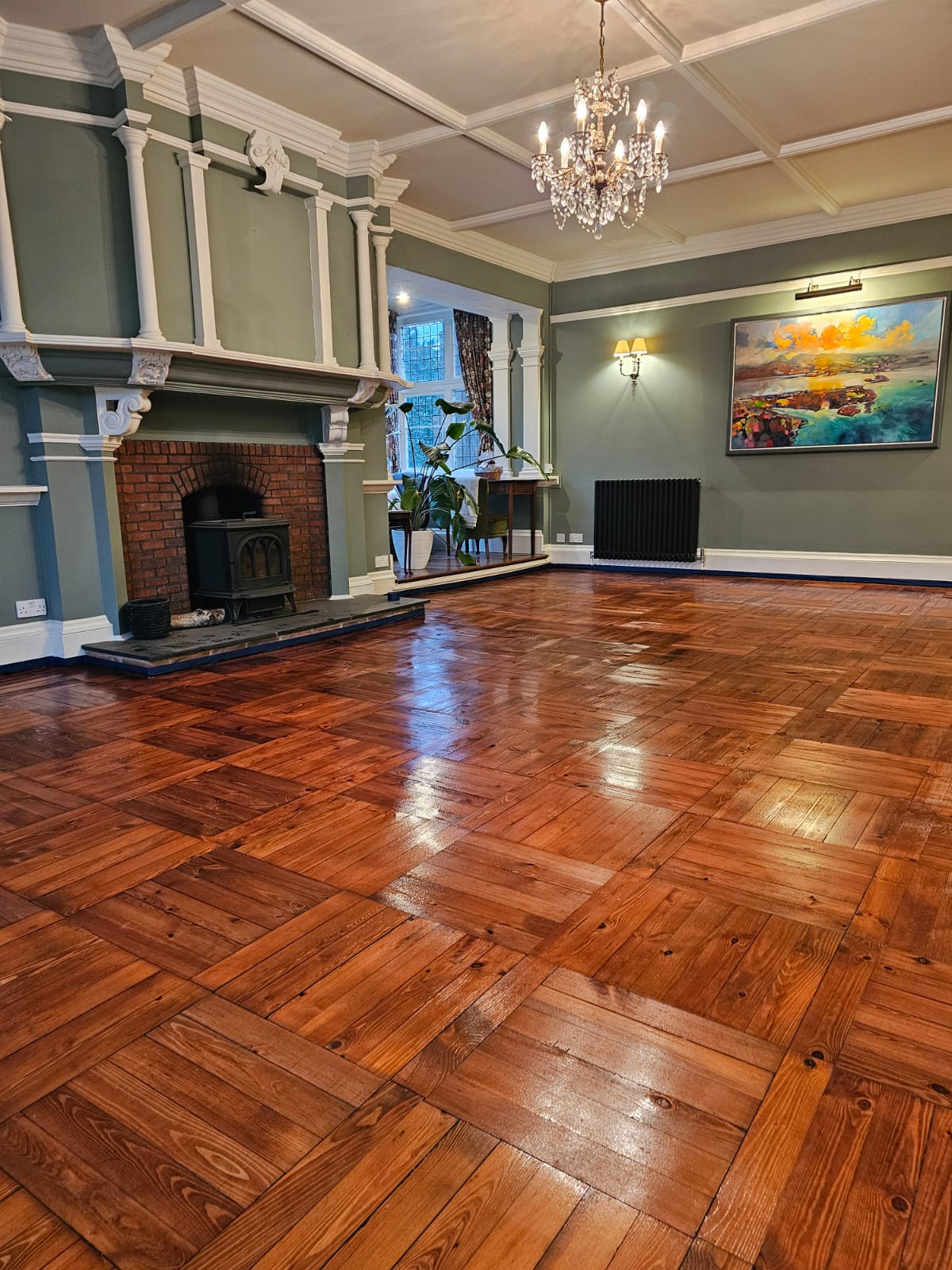
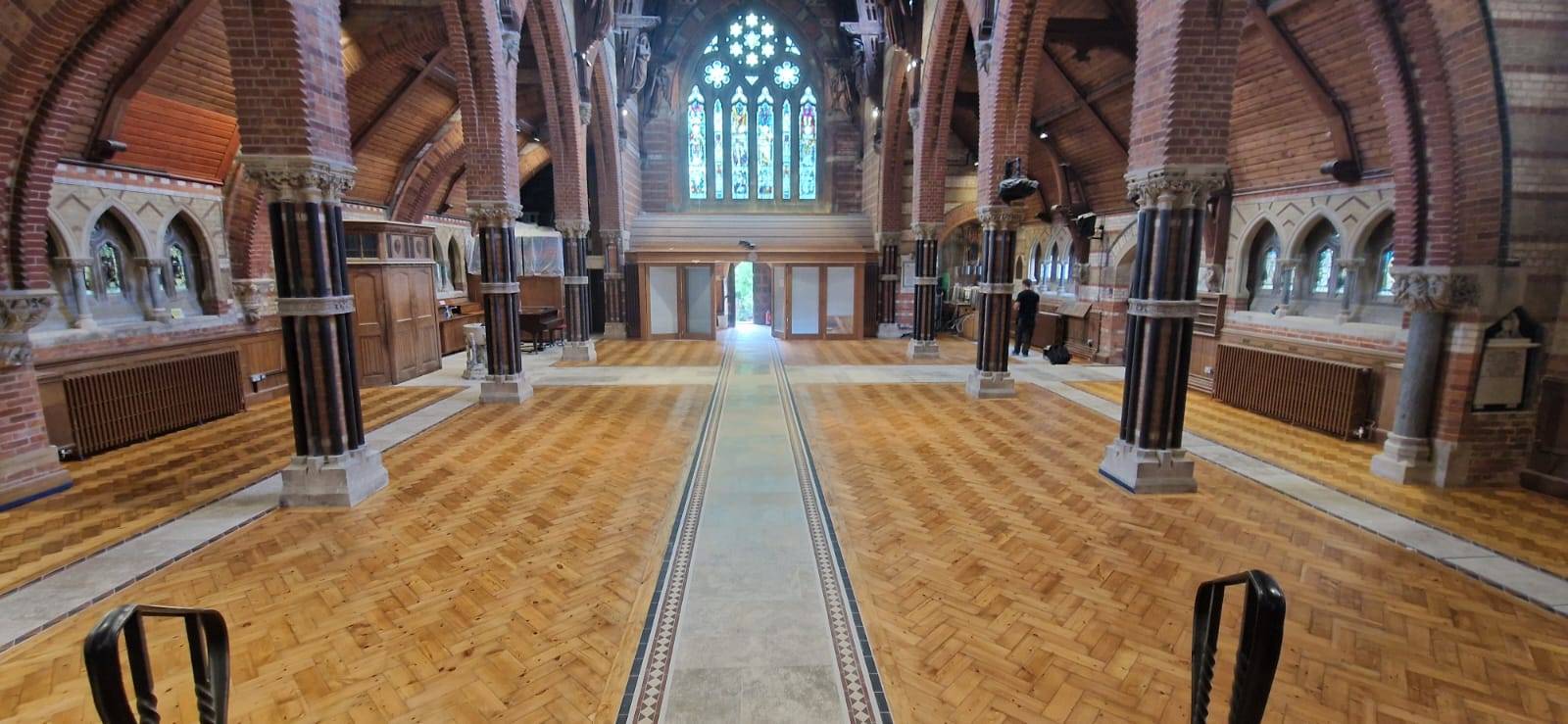
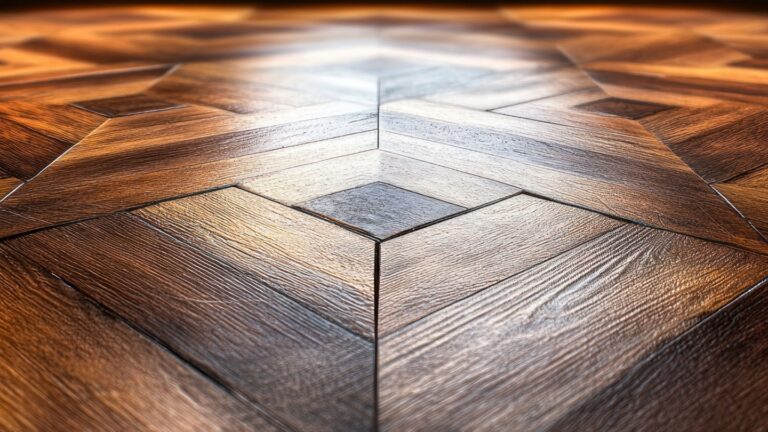
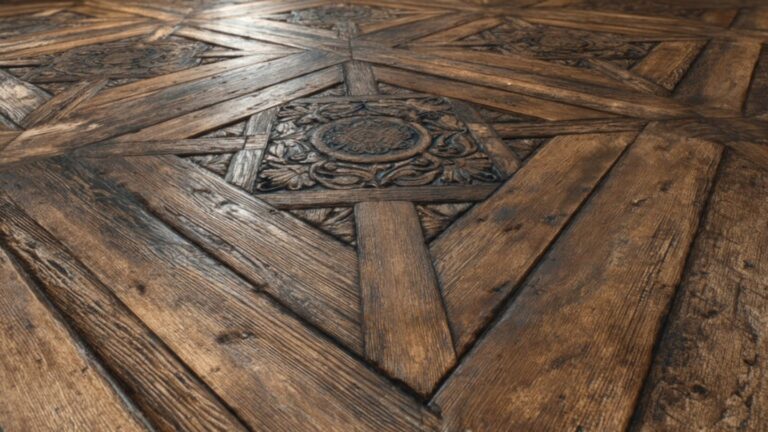
Wood block floors turn up in older chapels, halls and some interwar houses around the town, usually laid as herringbone parquet or a basket-weave on a bed of black bitumen adhesive. Over the decades that adhesive dries out, and loose blocks start to click and rock underfoot. The sound repair is to lift each loose block, scrape the old adhesive from its underside and from the screed, and bond it back with a modern flexible adhesive. Gaps where a block has vanished altogether are filled, wherever we can, with an old block of the same wood and dimensions taken from our reclaimed pile.

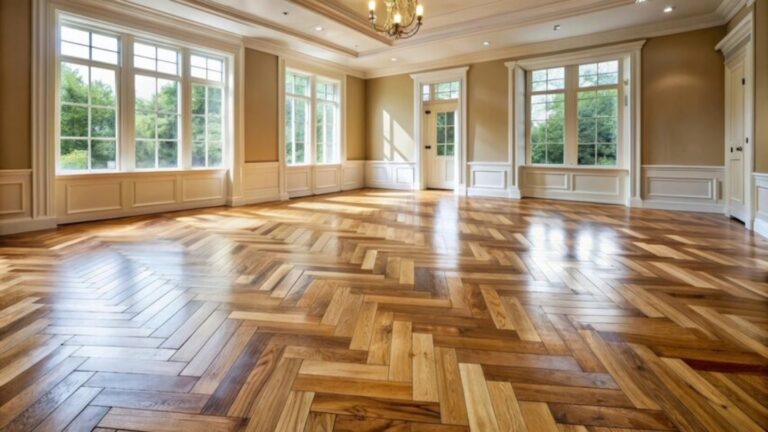
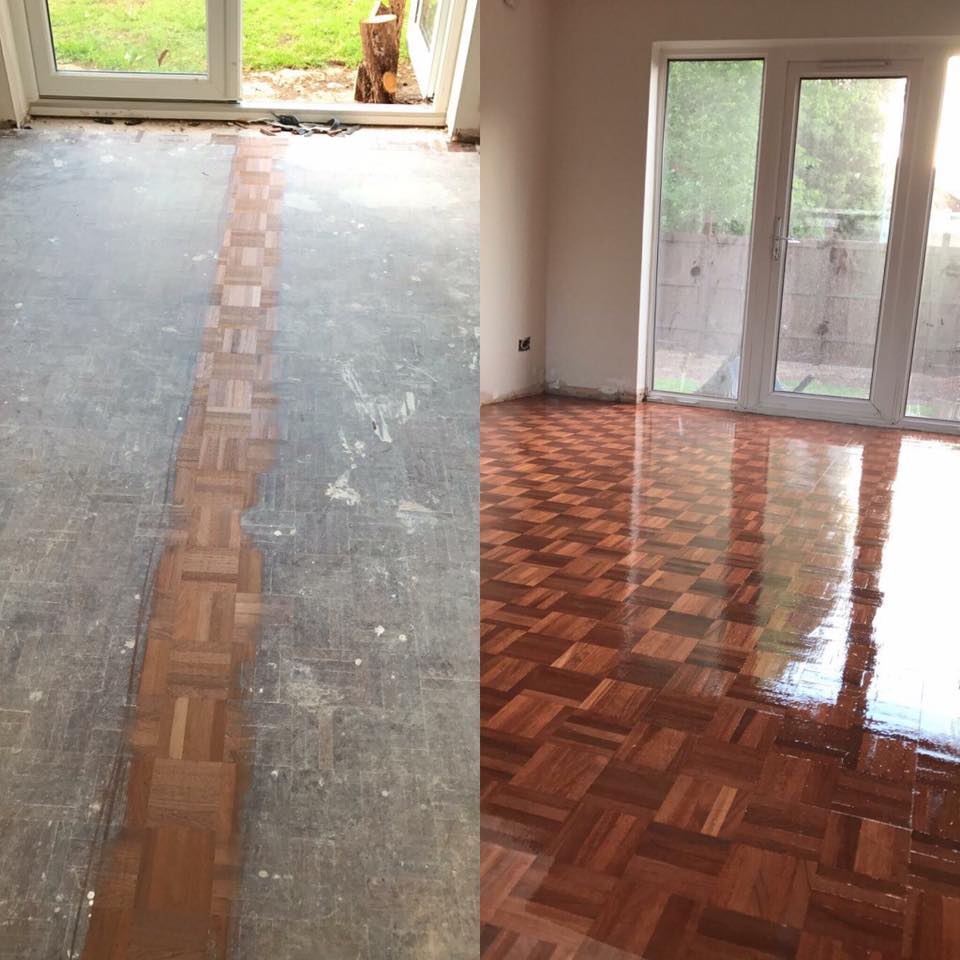
Parquet floor sanding is different from sanding boards. The grain changes direction with every block, so there is no single direction to sand with. One sound method is to cross the herringbone at forty-five degrees with the rough grits, switch to the other diagonal, then finish in line with the longest wall so faint swirls do not show through the coating. Much of this block flooring is oak, and oak floor restoration brings back the warm colour and figure that decades of polish and grime had buried.

Stairs in a terrace are often steep and narrow, with each tread worn into a shallow dip where generations of feet have landed. Stair sanding is done mostly by hand and with small detail sanders, because a full-size machine will not sit on a tread. The nosings, the rounded front edges, take most of the wear and need careful work to keep their profile. Painted strings and spindles are common, and whether they are stripped or just repainted is your choice. If the paint is old, the lead precautions described for painted borders above apply here as well.

A staircase needs a finish with some grip. Matt or satin lacquer is safer on stairs than gloss, and a runner fitted afterwards, with the outer edges of each tread left showing, is a popular way to combine quiet feet with visible timber.

Wood floor sanding company
Floor sanding taunton

Looking After the Floor, New Installations and Getting a Quote in Midsomer Norton

Most of what keeps a refinished floor looking good is ordinary housekeeping. Grit does the damage, so a proper mat inside the front door earns its keep. Felt pads under chair and table legs stop the fine scratching that dulls a lacquer within a year. Day to day, run the hoover over it on the hard-floor setting and go over it now and again with a well-wrung mop and a mild, pH-neutral cleaner made for wood. Steam mops are best avoided, as they drive moisture into the joints and can lift the finish.

Walk on it in socks after a day. The sofa and dresser can come back in after two to three days, but give rugs an extra week or so, as a rug laid too soon can leave a lighter patch.

A domestic lacquered floor generally needs a full sand after eight to ten years, though you can stretch that by having it buffed and recoated before the finish wears through to bare wood. That process lightly abrades the existing surface and lays fresh finish over it, without cutting back into the timber. On oiled floors, a maintenance polish between times does a similar job.

Sometimes a back kitchen has concrete and quarry tiles where you would like timber, or a front room floor has been patched once too often. For those rooms there is wooden floor installation: we can lay it ourselves, or simply deliver the boards to whoever is fitting your kitchen. Junkers and Bona are two of the makers we stock from.

The first step needs only a phone. Take one picture of the whole room from the door, then take a close-up of the worst bit, whether that is the gripper line, a plumber’s patch or the old painted border, and send both to info@ryansrestoration.co.uk. You can also ring 01823 674562, weekdays 8am to 6pm, with Saturdays by arrangement, or use our enquiry form. If the job suits us, the next step is a free survey of about half an hour, measuring board thickness, taking moisture readings and checking the airbricks, ventilation and any earlier repairs. The written quotation itemises each stage, from lifting hardboard to the final coat, and we stick to it unless the work itself changes. Midsomer Norton is regular territory for our family-run team from the workshop near Wellington; for nearby towns see our floor sanding across Somerset page, including floor sanding in Shepton Mallet.

Midsomer Norton Floor Sanding Questions

Nearly always. Hardboard was usually laid to level a floor for carpet or lino, not because the boards were ruined, and the pine beneath is often in better shape than people expect. Lifting it, pulling every pin and staple and cleaning off the adhesive takes time, but it is the only way to get a floor that sands flat and finishes cleanly.

It might, if it is old gloss paint rather than a stain. Paint from before the 1970s can contain lead, so it is worth testing with a home kit before any sanding. Where lead is present, the paint is better softened and scraped off first so that dry sanding of that area is kept to an absolute minimum.

Small holes are part of the character of an old pine floor and most people leave them. They can be filled with a resin and sanding dust mix, though the filler rarely takes finish quite the same as the wood around it, so a peppering of tiny dots may still be visible. Larger holes are better filled or plugged with timber.

The sanders are connected by sealed hoses to an extraction unit, which removes most of the dust at source. It also helps to keep internal doors shut and hang an old sheet across the bottom of the stairs. A light film will still settle on surfaces, so it is worth clearing ornaments and covering anything you would rather not wipe down.

Most homes, including a whole terrace with its stairs and landing, are done in one to three days, with the more involved jobs at the top end of that. The amount of hardboard and carpet fixing to come up, and the number of repairs, make the biggest difference. The survey will give you a firmer idea for your own house.

In most cases, yes. Commercial work is done overnight, on the days you are closed, or in stages so part of the premises stays in use. Fast-curing finishes keep the downtime short. Dates are agreed well in advance, so you can plan deliveries, staffing and any events around them without a last-minute scramble.

Often it can, as long as enough real hardwood sits on top of the core. Engineered boards vary widely, and some have a wear layer that will only stand one light sand. It is worth lifting a threshold strip or a vent cover to check the thickness before booking anything. Laminate, by contrast, is a photograph of wood under a plastic layer, so a sander would go straight through it.

Some seasonal movement in a suspended pine floor is normal, which is why wide gaps are best filled with timber slivers that move with the boards. Resin filler suits narrow gaps but can crack if the boards shrink a lot over a dry winter. Keeping the heating steady and the room ventilated helps limit how much the floor moves.

Start with two pictures, one of the room as a whole and one close in on the worst patch, sent to info@ryansrestoration.co.uk. Alternatively ring 01823 674562 on a weekday. If the floor looks suitable, a free survey is booked at a time that works for you, and a written quotation follows. Midsomer Norton is part of the area we cover regularly, so travel is not an issue.