Floor Sanding Saltash

Floor Sanding and Wood Floor Restoration in Saltash, Cornwall

QUICK QUOTATION

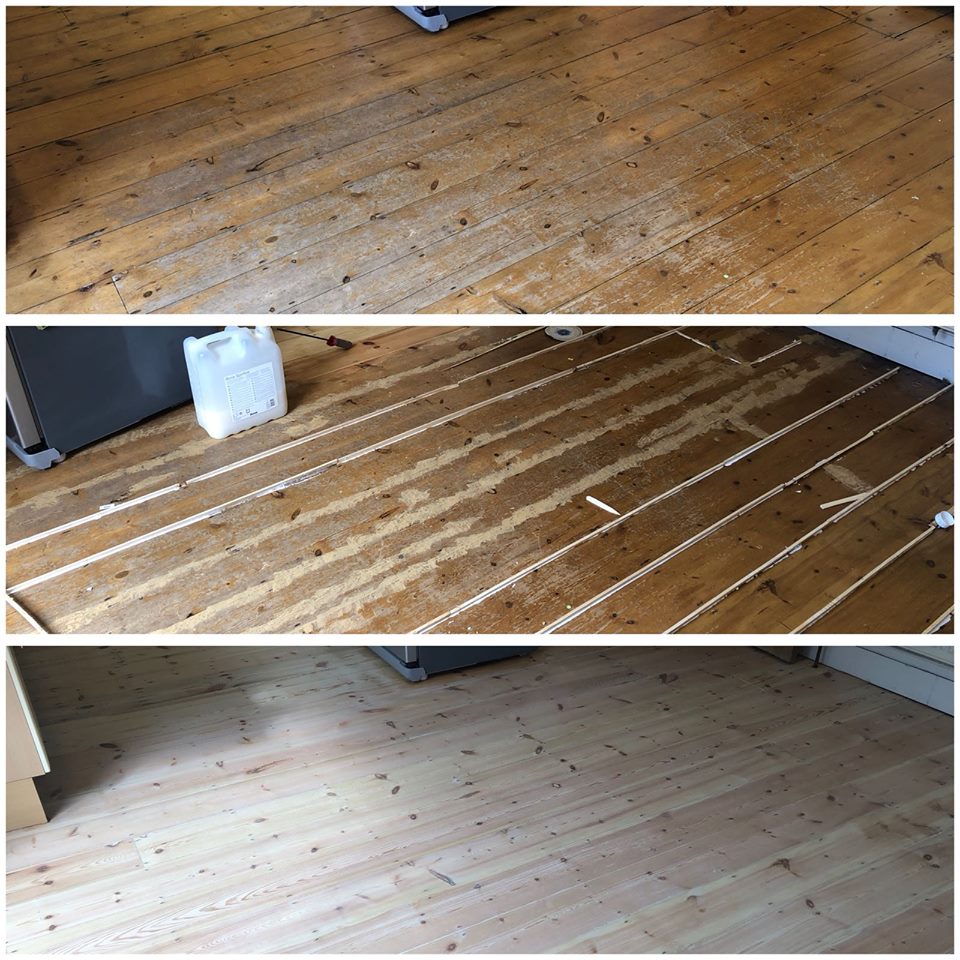
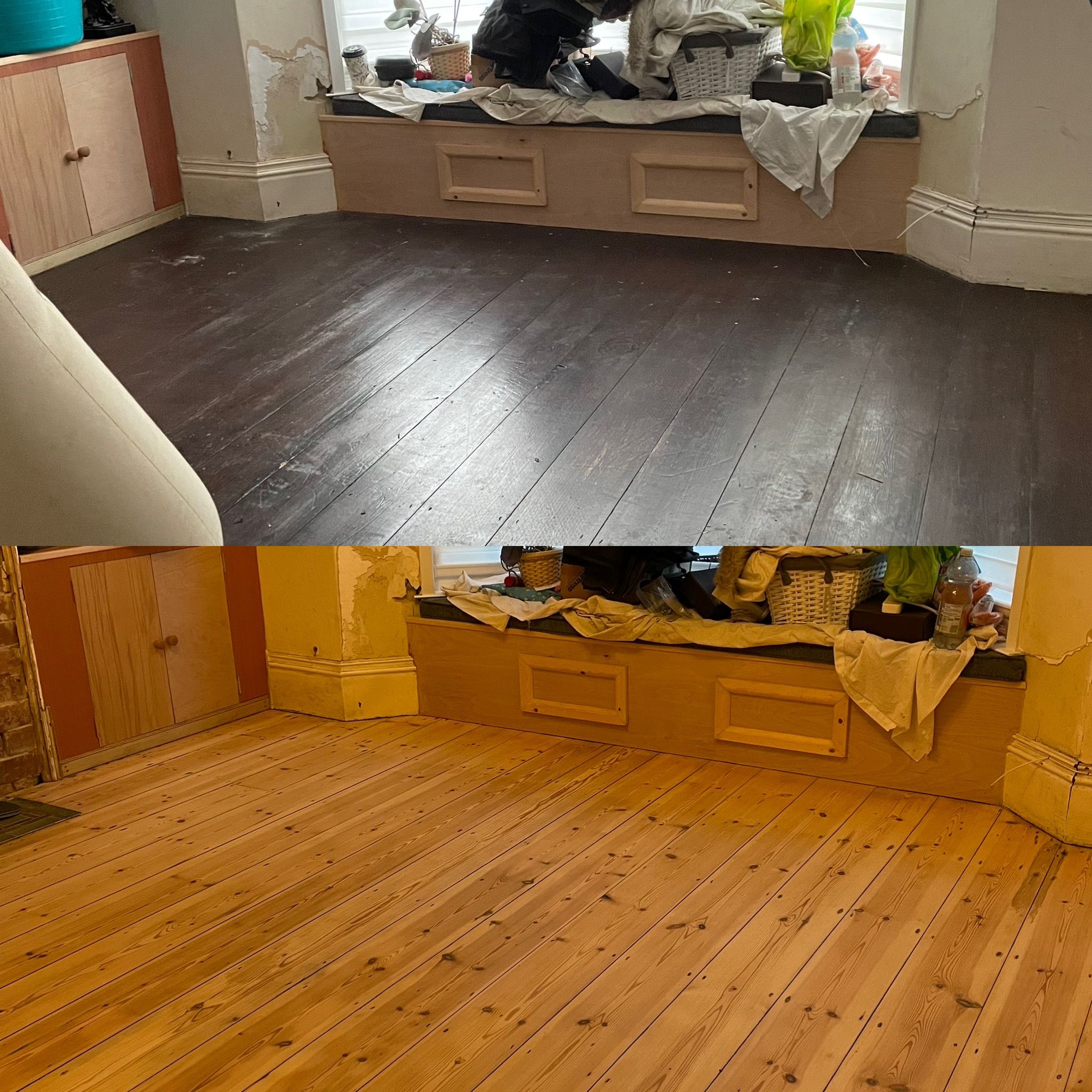
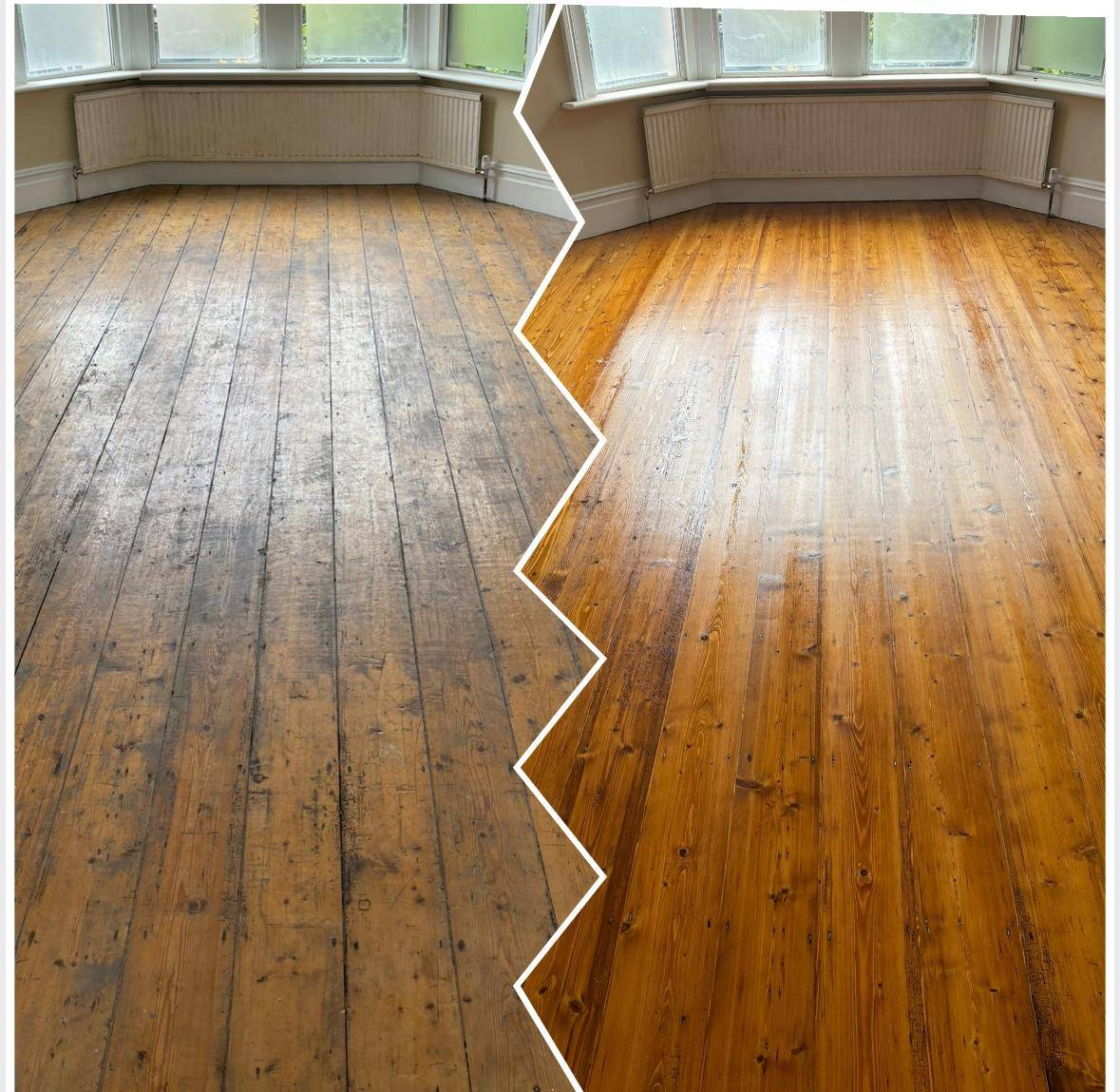
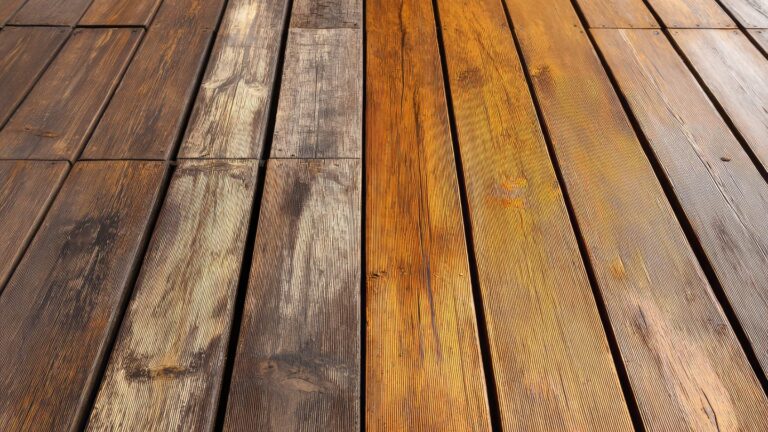
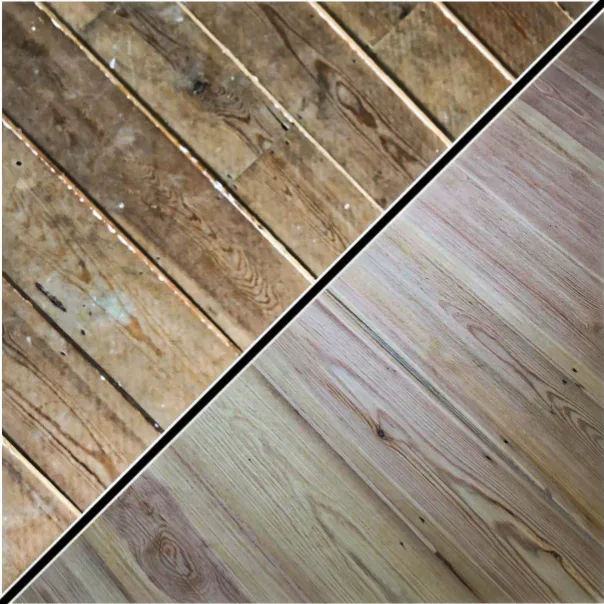
Floor sanding before and after

Floor Sanding in Saltash

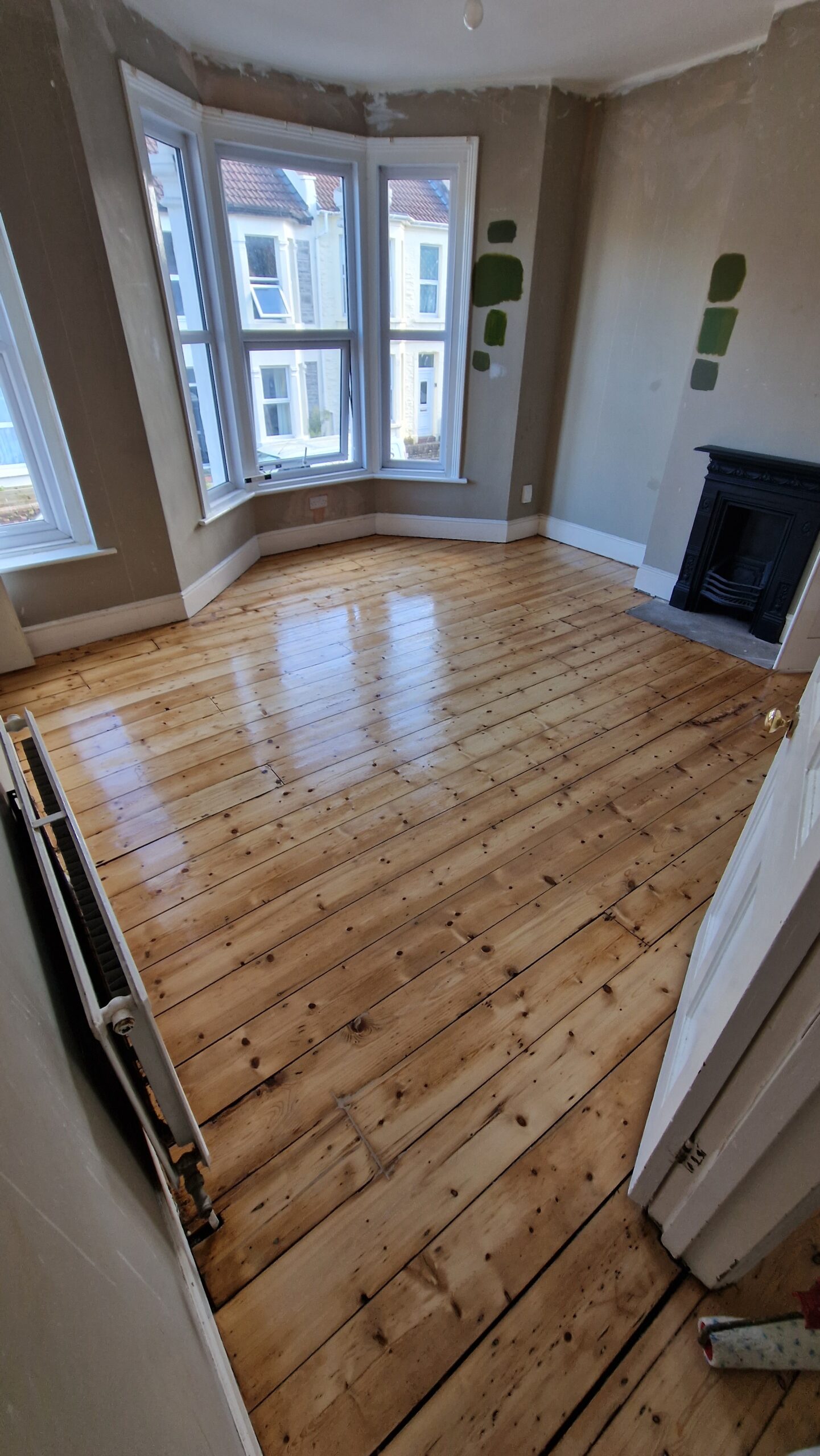
Our wood floor sanding service covers Saltash from the waterside cottages below Fore Street to Burraton, Latchbrook, Pillmere, Landrake and Trematon. Elm and pine on sleeper walls in the old town, Victorian boards in the railway terraces, oak blocks in the interwar estates — each is assessed, moisture-tested and sanded to suit its own timber.

Being the first town over the bridge, Saltash is simple for us to schedule, and jobs here often anchor a wider multi-day Cornwall run. Every quotation is fixed in writing before work begins.

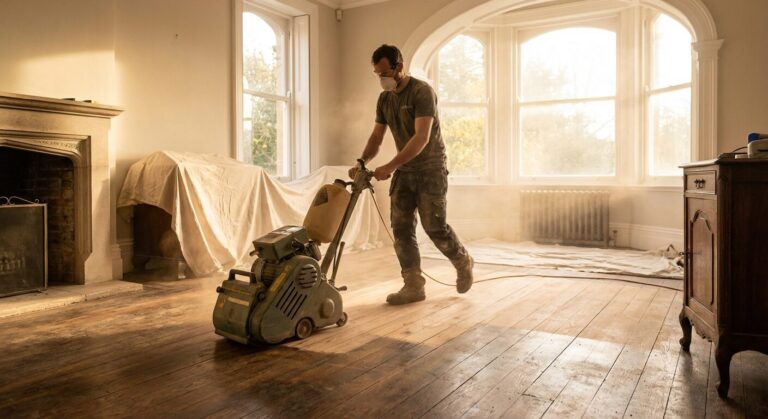
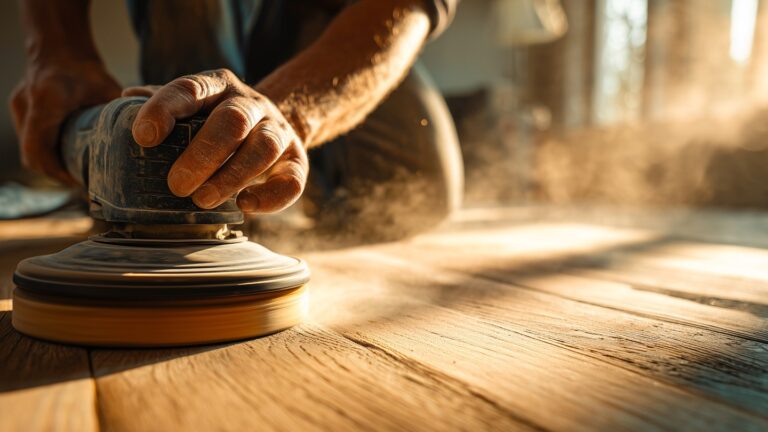
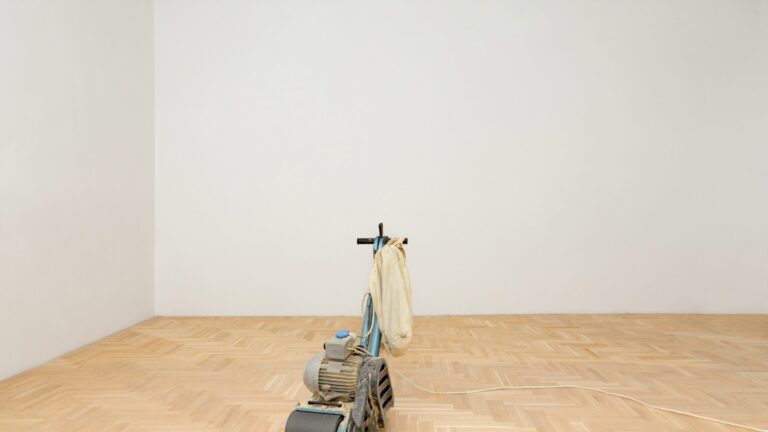
Three machines share every job, and each has a territory. The belt sander owns the open field of the floor, cutting in straight overlapping runs; the edger, a disc machine built to work tight against skirting, brings the margins down to the same level; and the corners, pipe collars and stair returns that neither can reach fall to scrapers and hand blocks. Flatness is checked as the work proceeds — a straightedge across board junctions, raking light along the surface — because a floor that measures flat before sealing is the only kind that looks flat after.

Elm and pine on the same job get different pass speeds and grit steps; treating every species the same is how hire-shop weekends go wrong.
Commercial Floor Sanding in Saltash

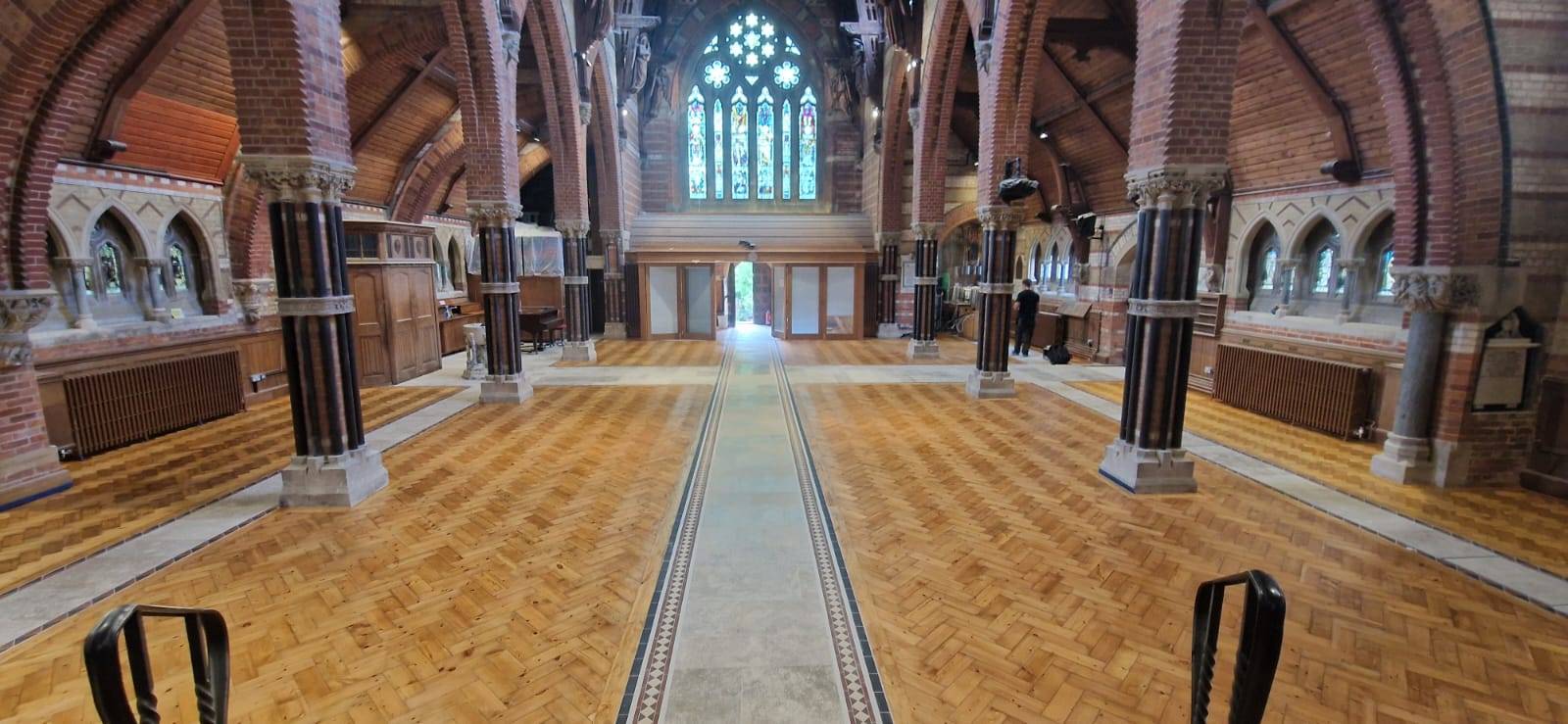
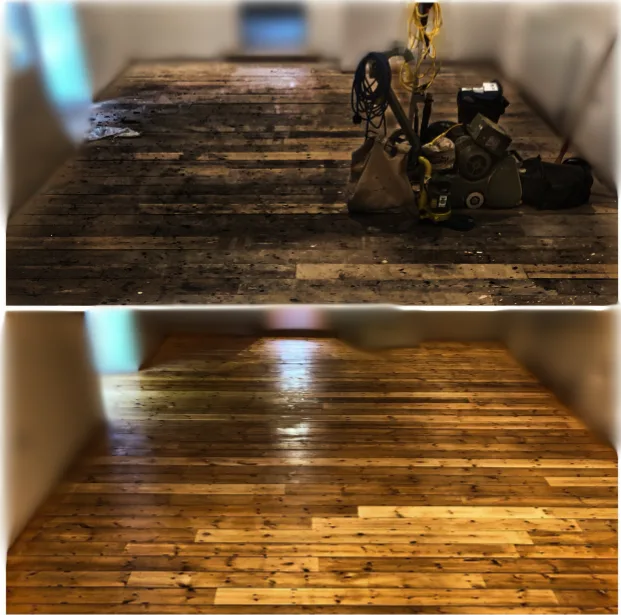
Businesses on both banks of the Tamar use our commercial floor sanding service — pubs and restaurants overnight, shops on closed days, church and village halls inside a single quiet week. Schools, colleges and nurseries are booked into holiday windows a term ahead.

Sports and dance floors get their lines re-marked to governing body specification once sealing is complete, with method statements and insurance documentation issued before any commercial booking starts.

A shop with a single closed day gets the compressed version of the service: more hands, two machines running in tandem, filling done while the first areas are still being cut, and a fast-drying water-based seal that takes its first coat by mid-afternoon and its second before the evening is out. Shelving, counters and stock stay in place under sheeting where they cannot move — the extraction keeps airborne dust off them, and the edger works around fixed units cleanly. By opening the next morning the floor is trading again.

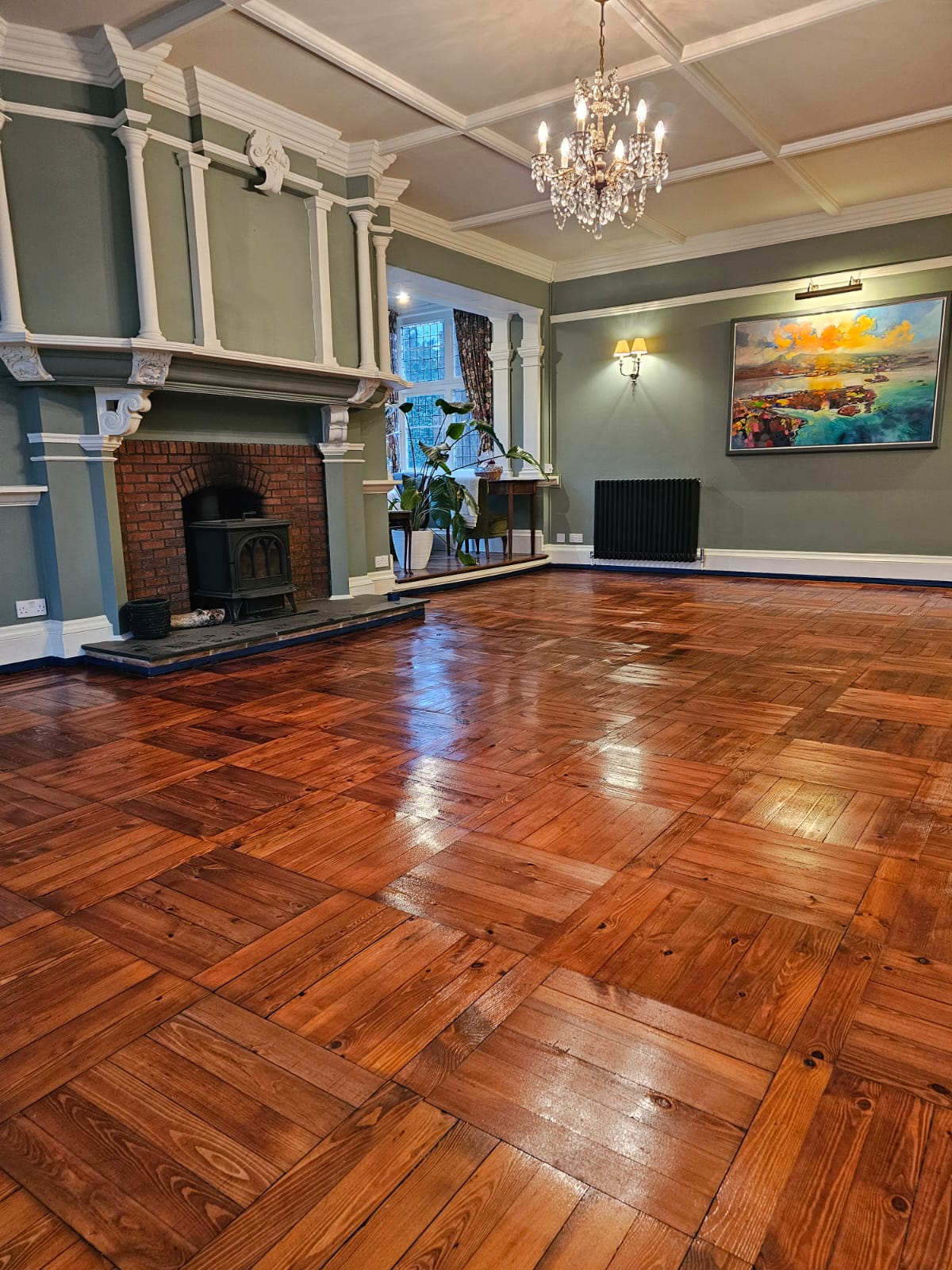
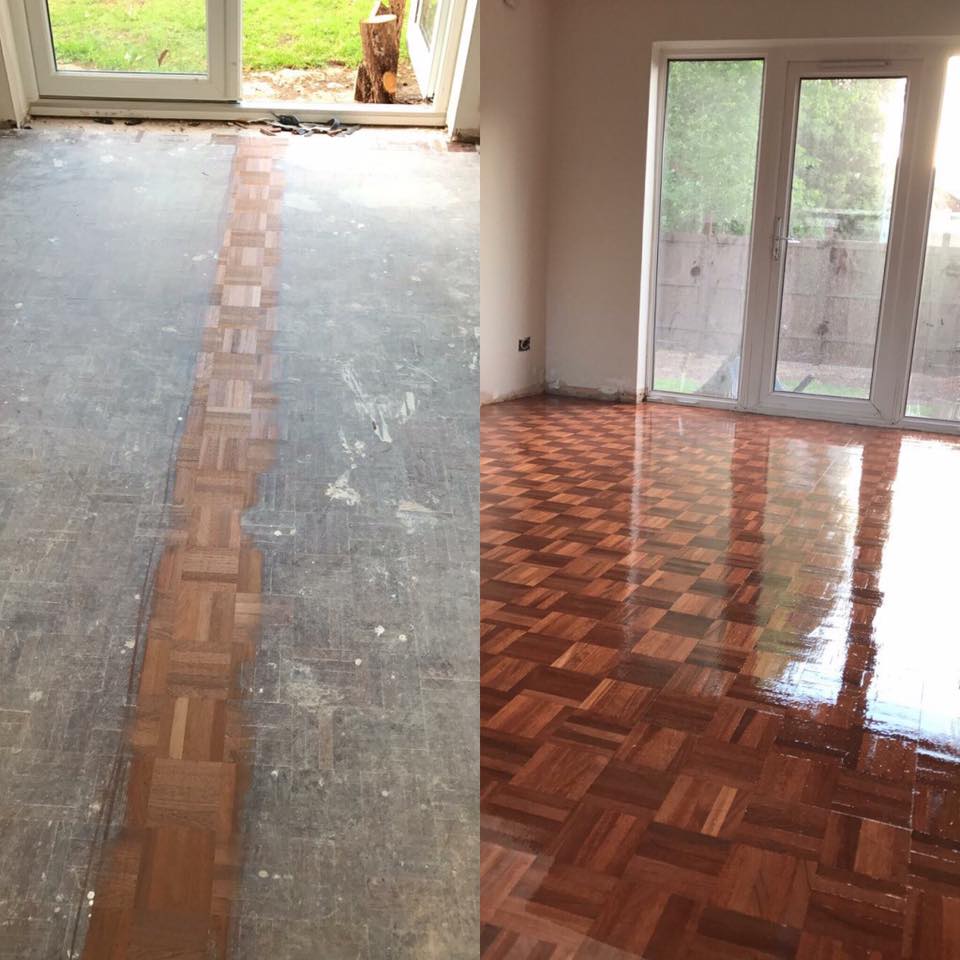
parquet wooden floor sanding
wooden floor sanding

Repairs, Squeaks and Board Replacement

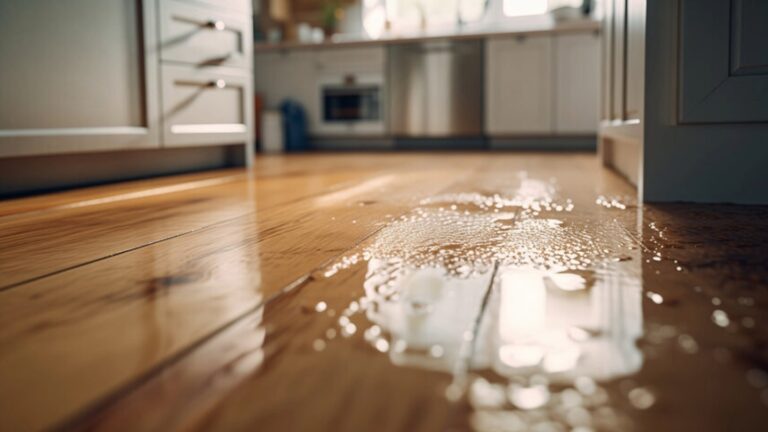
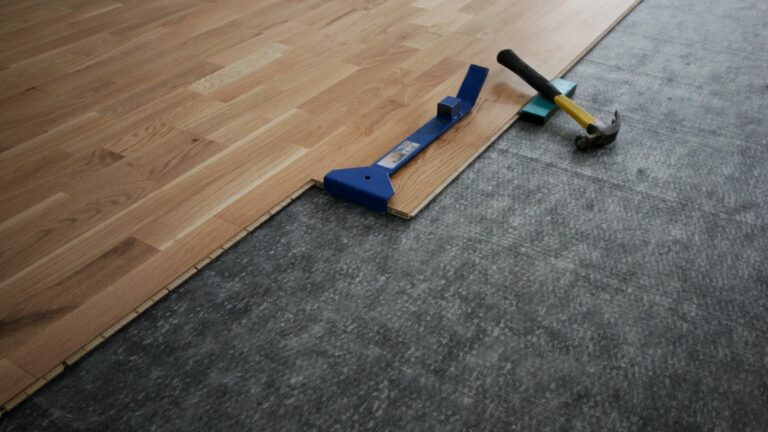
Waterside humidity gives Saltash floors their share of trouble, and our wooden floor repairs service deals with it: cupped and split boards, soft joist ends in wet stone, worm-damaged softwood. Floorboard replacement uses reclaimed timber from our stock so a repaired floor stays looking like one floor.

We also stop squeaks at the joist, tidy scratched patches without a full refinish, and close draughty boards with gap filling in sliver or resin, whichever the floor’s movement calls for.

Ground floors in the old town often ride on joists over low sleeper walls, with a shallow void that lives or dies by its ventilation. Before repairing boards down there we check the void itself: air paths open, no debris piled against the sleeper walls, no plumbing drips keeping the space humid. Repairs made into a healthy void last; repairs made into a stagnant one are a subscription. Replacement timber is brought to the moisture level of the surrounding floor before fixing, so new boards neither shrink loose nor push their neighbours.

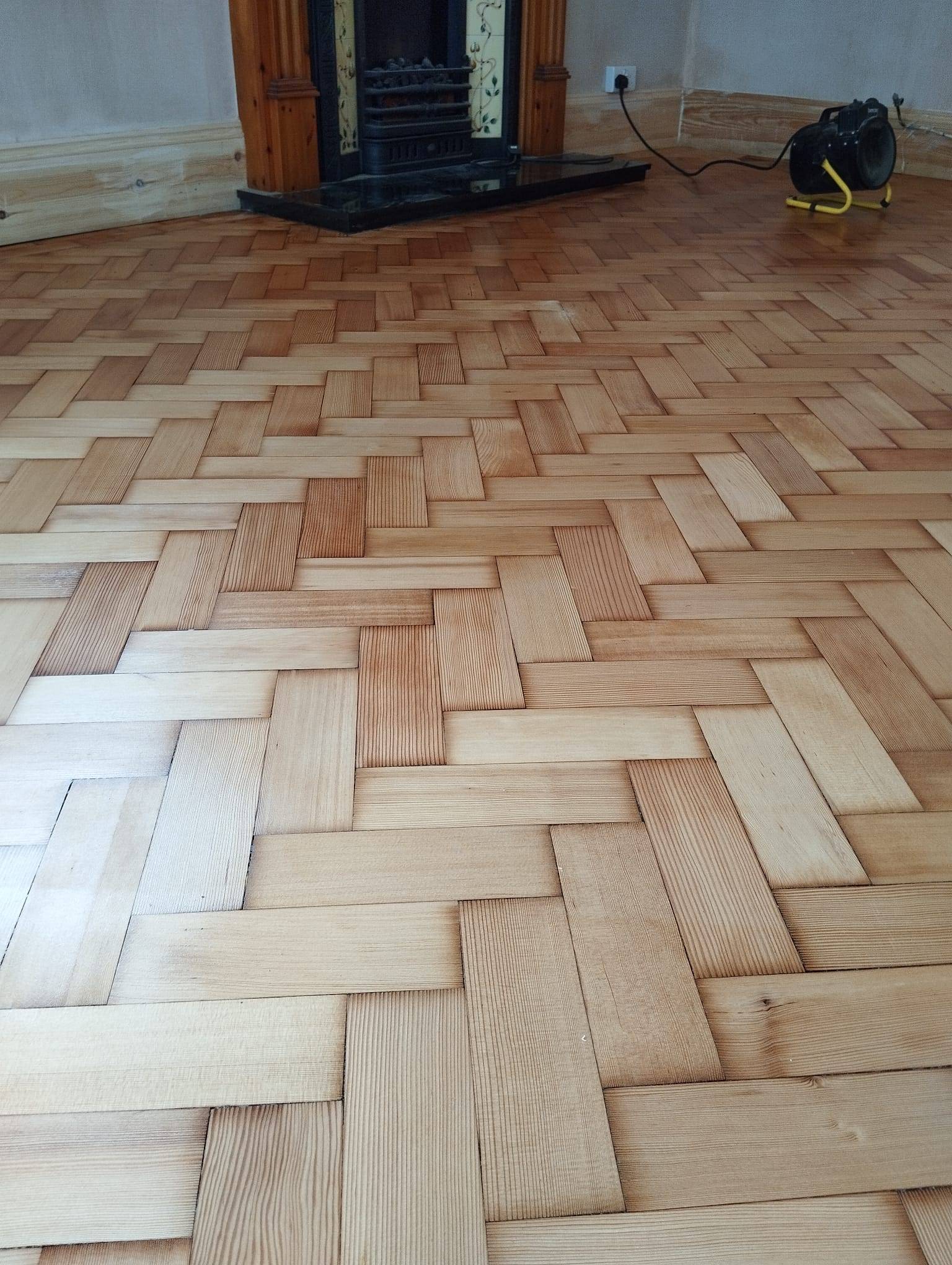
Parquet Restoration — a Saltash Speciality

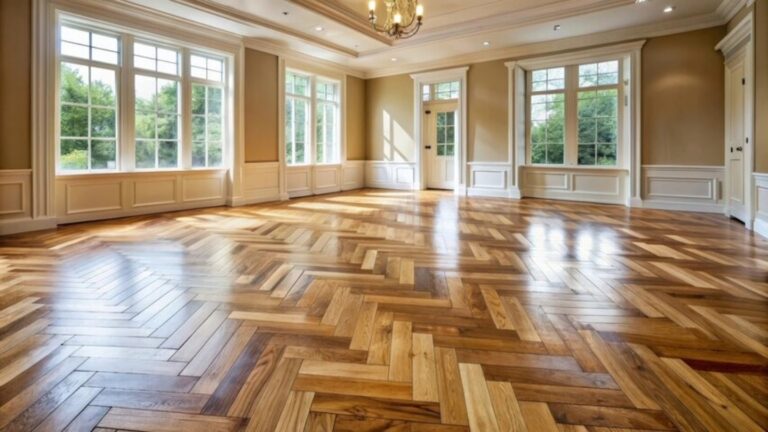
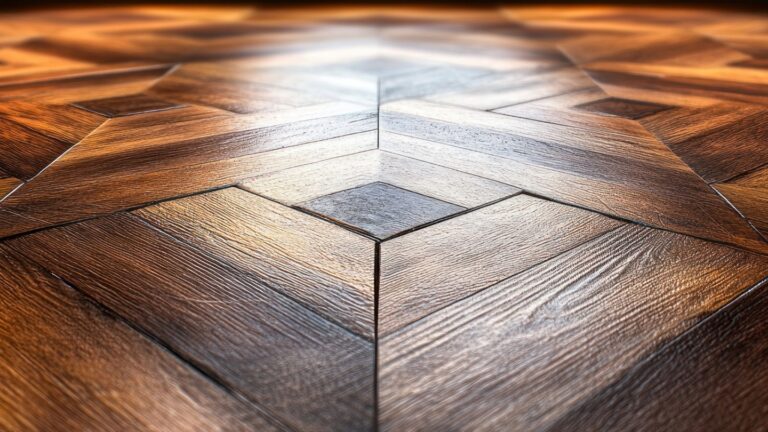
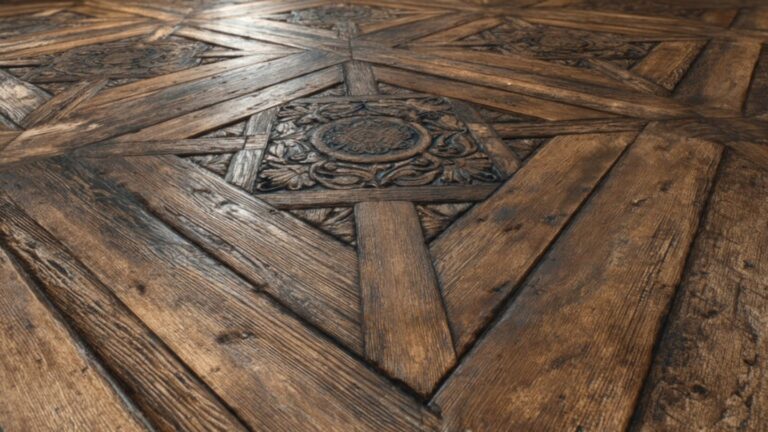
The interwar and fifties estates around Saltash hide more herringbone than almost anywhere we work, usually oak or pitch pine under carpet. Our parquet floor restoration service re-lays loose blocks, clears the brittle bitumen, fills gaps from matched reclaimed stock and sands across the pattern so the grain never tears, before sealing the whole field flat.

The timber in these old blocks outclasses most modern flooring — restoring it is nearly always the better decision.

Estate herringbone from this era was laid in a handful of standard block sizes, which works in your favour: our reclaimed stock holds the common dimensions, so losses can usually be filled without cutting blocks down or fudging the pattern. Where a repair meets the original field, we set the new blocks into the existing bond — continuing the zigzag rather than patching in a square — so once the floor is sanded and sealed the eye reads one unbroken pattern from wall to wall.

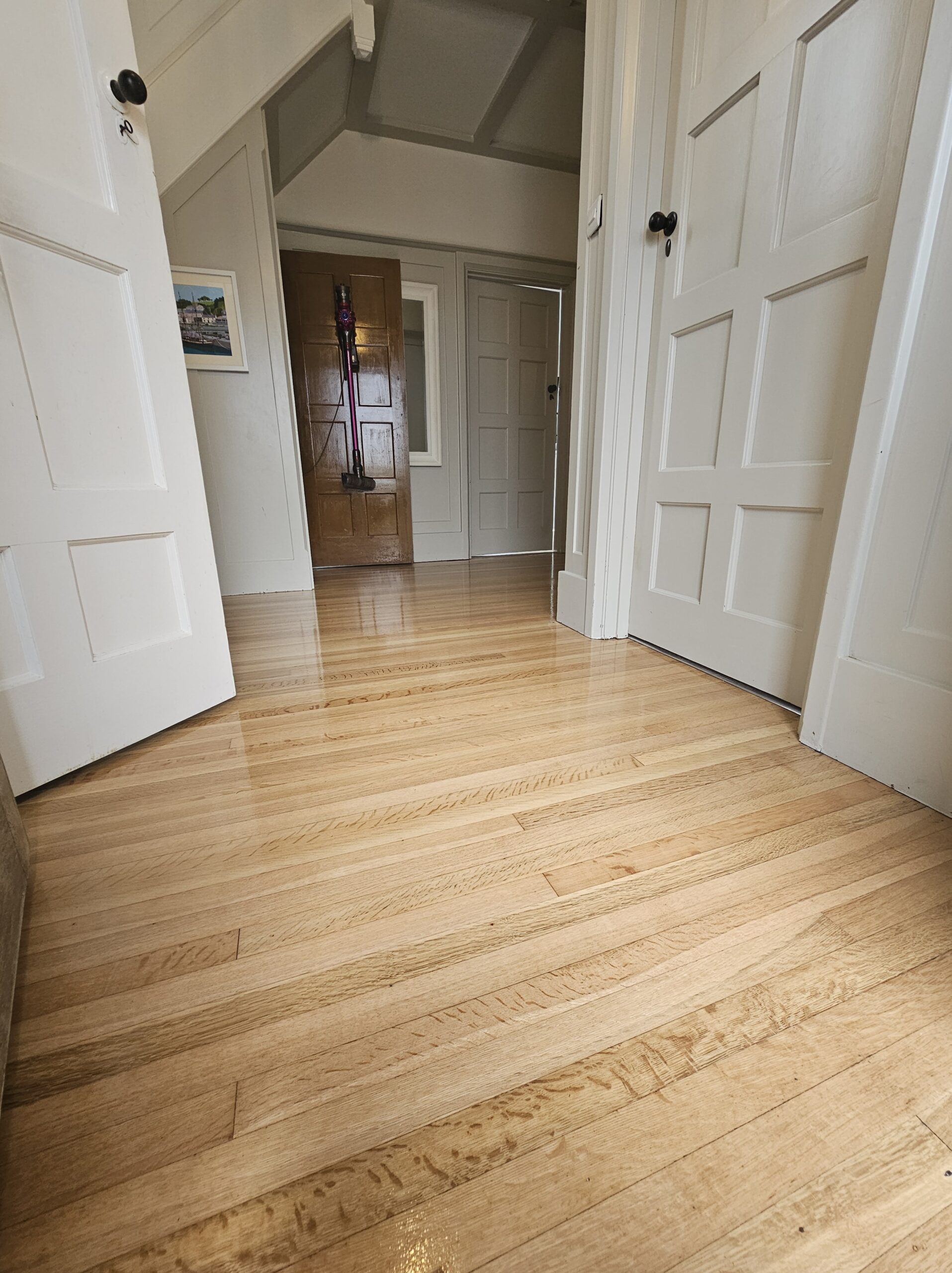
flooring sanding company
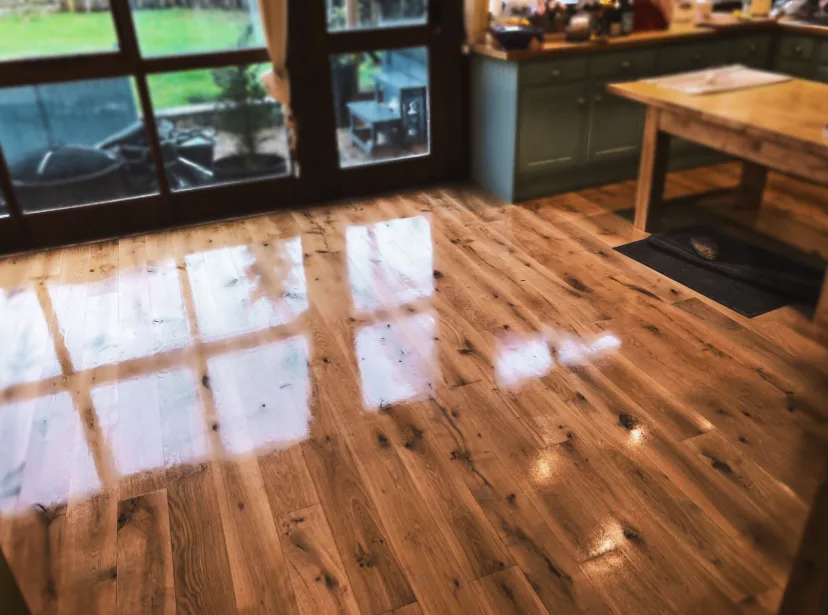
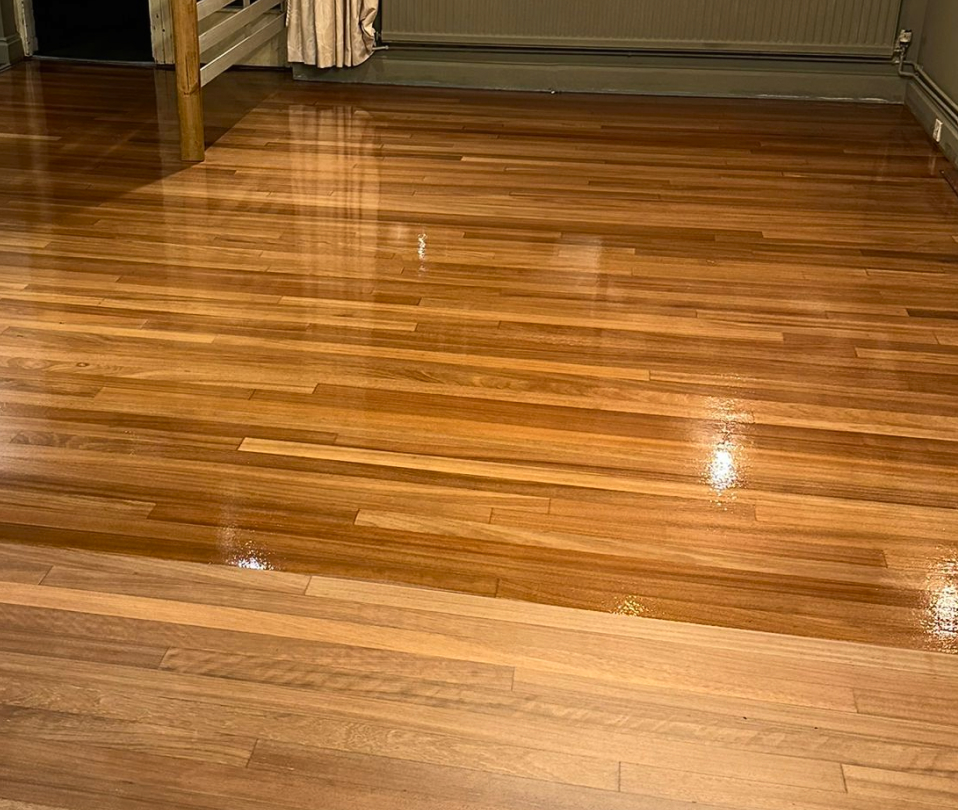
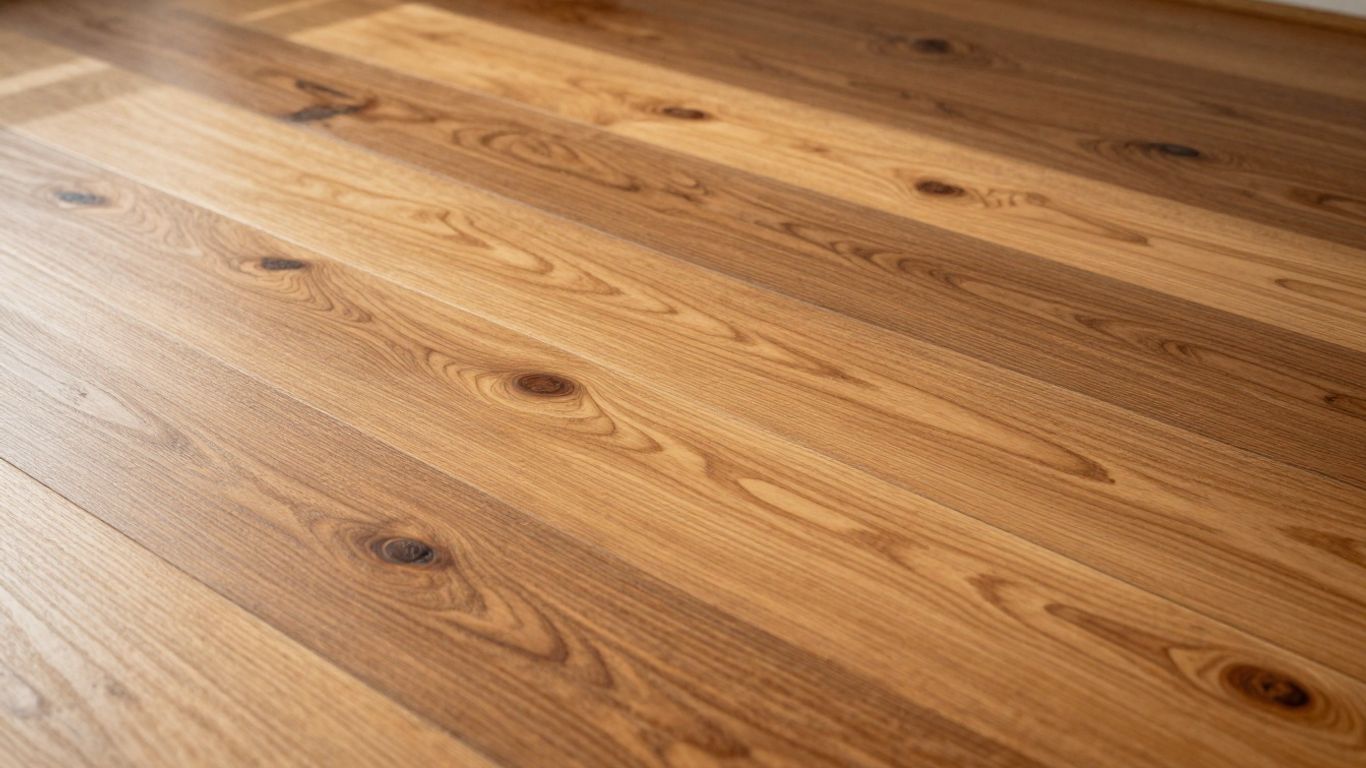
Sunlight across freshly lacquered wooden floorboards

Oils, Lacquers, Stains and Waxes

On restored parquet we lean towards hard wax oil, which lifts the grain where lacquer can flatten it and repairs in patches. Busy family halls and rentals get tough water-based lacquer; wax suits the oldest waterside rooms.

Staining is available wherever a colour change is wanted, always trialled on your own boards through a full day of changing light before the decision is made.

Applying hard wax oil well is a matter of thin coats and buffing. The oil goes on sparingly, is spread until the surface refuses to take more, and the excess is machine-buffed off — what protects the floor is the oil in the timber, not a layer sitting on top. Two thin coats worked this way outlast one generous one by years and leave a surface that feels like wood rather than plastic, which is exactly why we favour it on freshly restored block floors.

Buffing, Recoating and Polishing

Floors that are dulling rather than damaged do not need a full sand. A buff and recoat keys the existing finish and lays a fresh coat in a single day, polishing restores sheen between recoats, and sound-but-tired floors can often be revived without sanding at all.

Done every few years, this light maintenance postpones the next full sand almost indefinitely — useful in commuter households where the hallway takes a daily beating.

Telling which side of the line your floor sits on is straightforward. If the surface is dull, scuffed or lightly scratched but water beads on it, the seal is intact and a recoat will renew it. If boards are greying in the traffic lanes, or a drop of water sinks in and darkens the timber, the seal has been breached and honest advice points to sanding. We make that call at the survey and will happily recommend the smaller job when the smaller job is the right one.

Wood floor sanding company
Floor sanding taunton

Get a Floor Sanding Quote in Saltash

Send two photographs — the room from the doorway plus the worst area in close-up — for an honest opinion and a fixed written quotation. The survey is free and without obligation; it covers moisture readings, timber depth and, in the old town, the practicalities of access and parking, which we plan around rather than grumble about.

Call 01823 674562, email info@ryansrestoration.co.uk, or use the form on this page.

All services available in Saltash: floor sanding, commercial floors, repairs, board replacement, gap filling, parquet restoration, oiling, staining, buffing, polishing and stair sanding.

Nearby areas we also cover: Callington, Torpoint, Bude and Camborne. There is a page for each, and the full list of towns is on our areas we cover page.

FAQ: Floor Sanding in Saltash

The lot: floor sanding and refinishing, repairs, board replacement, gap filling, parquet restoration, staining, sealing, oiling, waxing, polishing, buffing and recoating, stair sanding and new floor installation — family-run, 45+ years in the trade.

No — the sanding happens after closing and the seal cures overnight, so the tables go back out for the morning trade. Multi-night jobs are split so the room is always usable by day.

Yes. Localised damage — a leak stain, split boards, worm in one corner — can be cut out and patched with reclaimed timber without committing to the whole house.

It comes out. Perished bitumen is why blocks lift, so we clean it off the blocks and the slab, re-bond with modern adhesive and only then sand and seal. Skipping that step is why rushed parquet jobs fail.

Easily — the orange is mostly aged varnish, and it goes with the sanding. A clear water-based seal then holds the timber close to its bare colour, or a stain shifts it wherever you like.

Generally once or twice, wear layer permitting — we measure it first and give you a straight answer, with a buff and recoat as the fallback where the veneer is thin.

Sealed extraction captures the overwhelming majority at the machine, stairwell doors are sheeted, and each room is cleaned before we move on — so the household stays in residence.

Two photographs by email or the contact form brings an honest opinion and a fixed written figure; the free no-obligation survey follows for anything that needs measuring in person.