45 years’ experience  ·  Rated 4.9 on Google  ·  Family-run, from our workshop near Wellington

45 years’ experience · Rated 4.9 on Google · Family-run

Floor Sanding and Wood Floor Restoration in Torpoint

Parquet uncovered under old carpet, pine boards in grid-street houses and floors that share the house with dogs, sanded and refinished across Torpoint.

QUICK QUOTATION

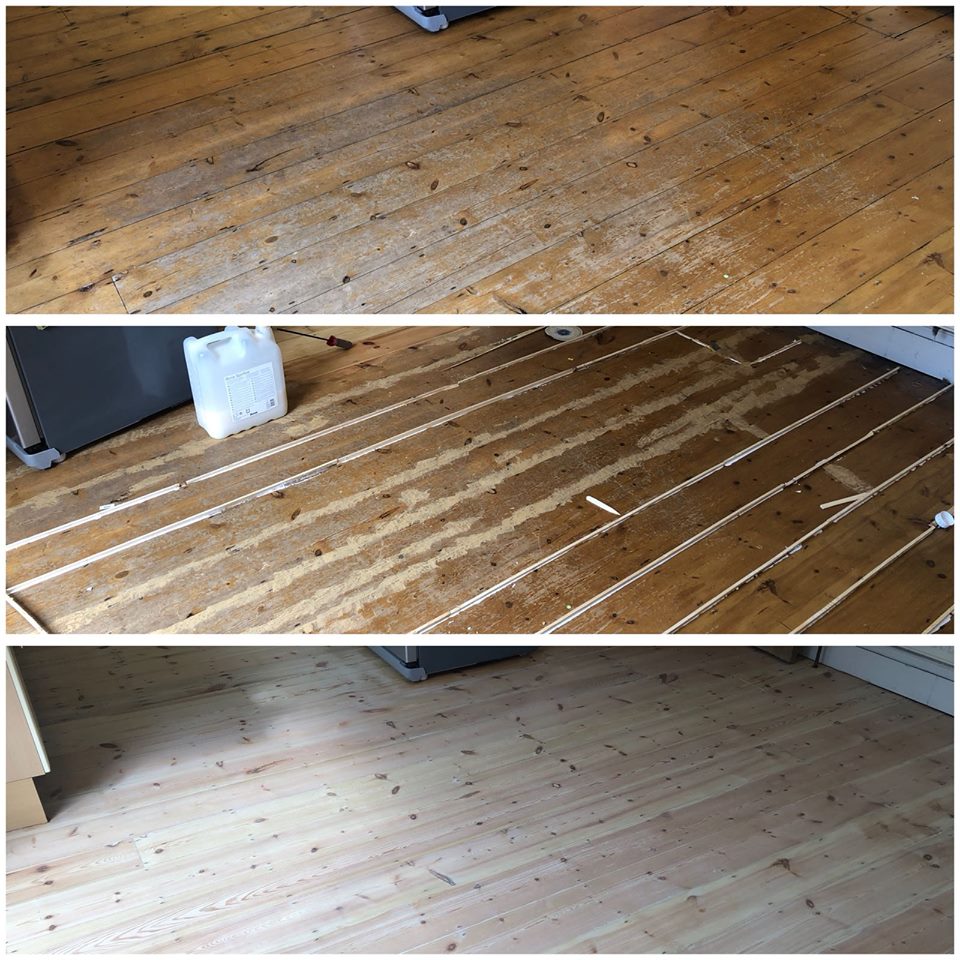
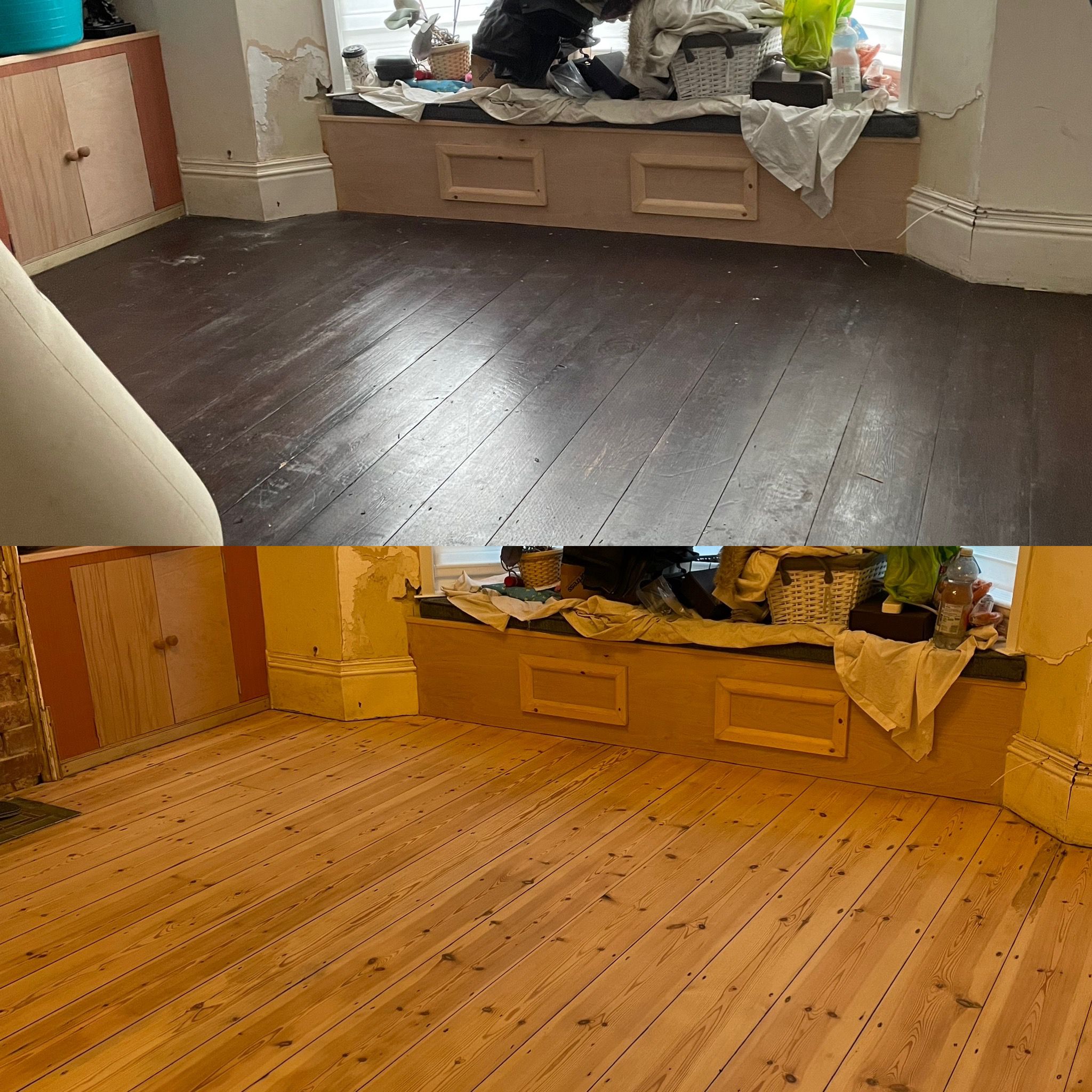
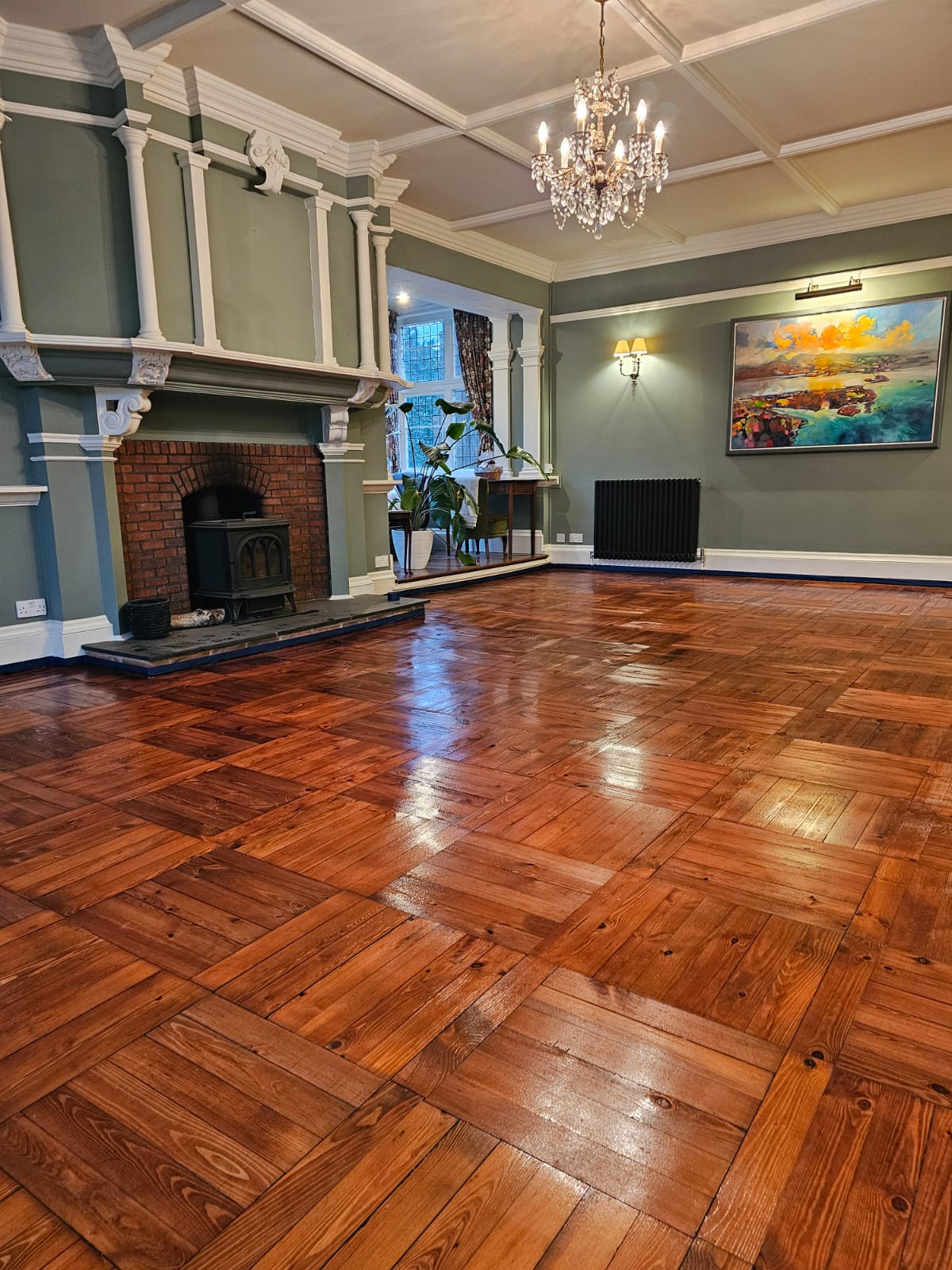
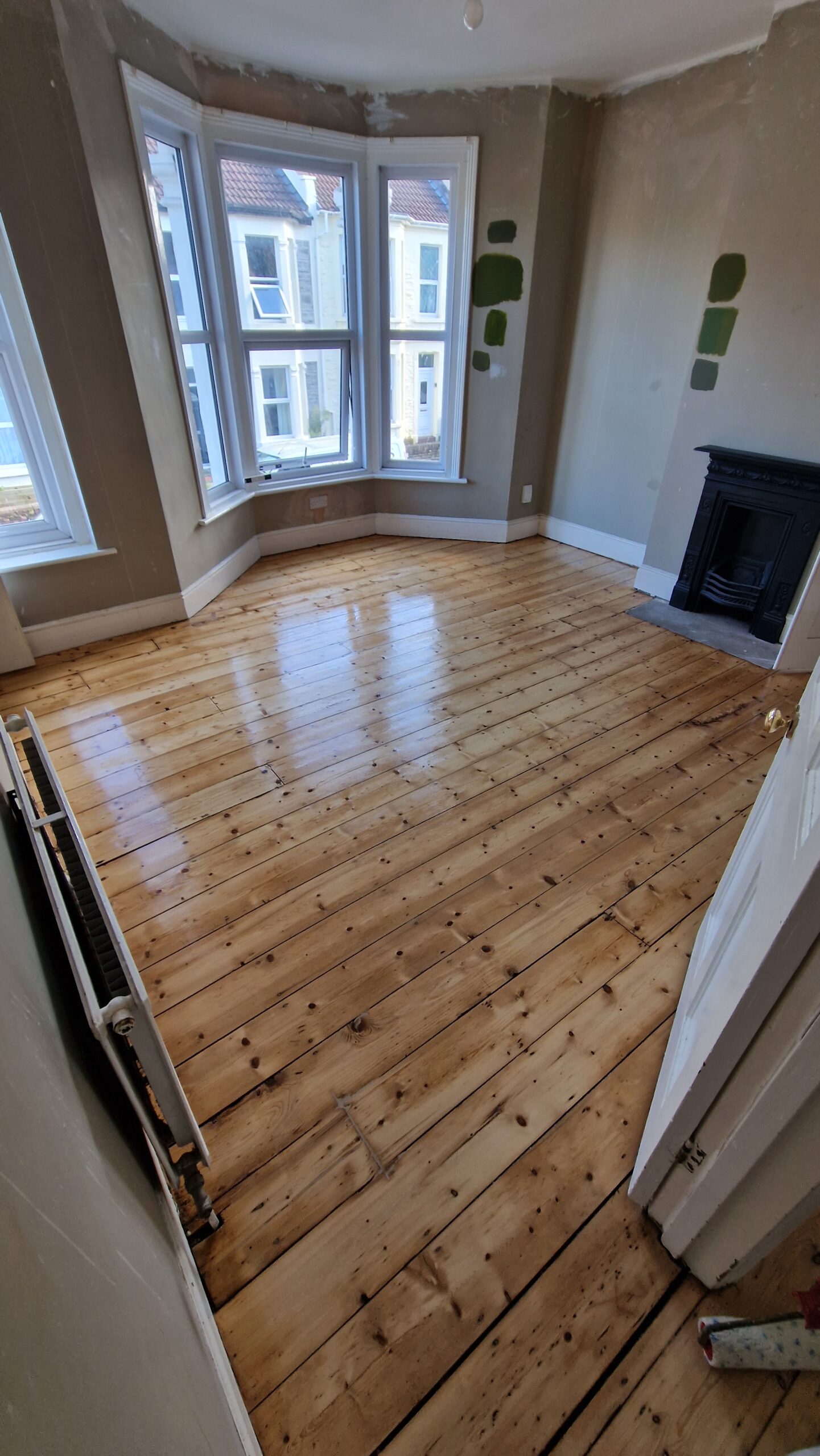
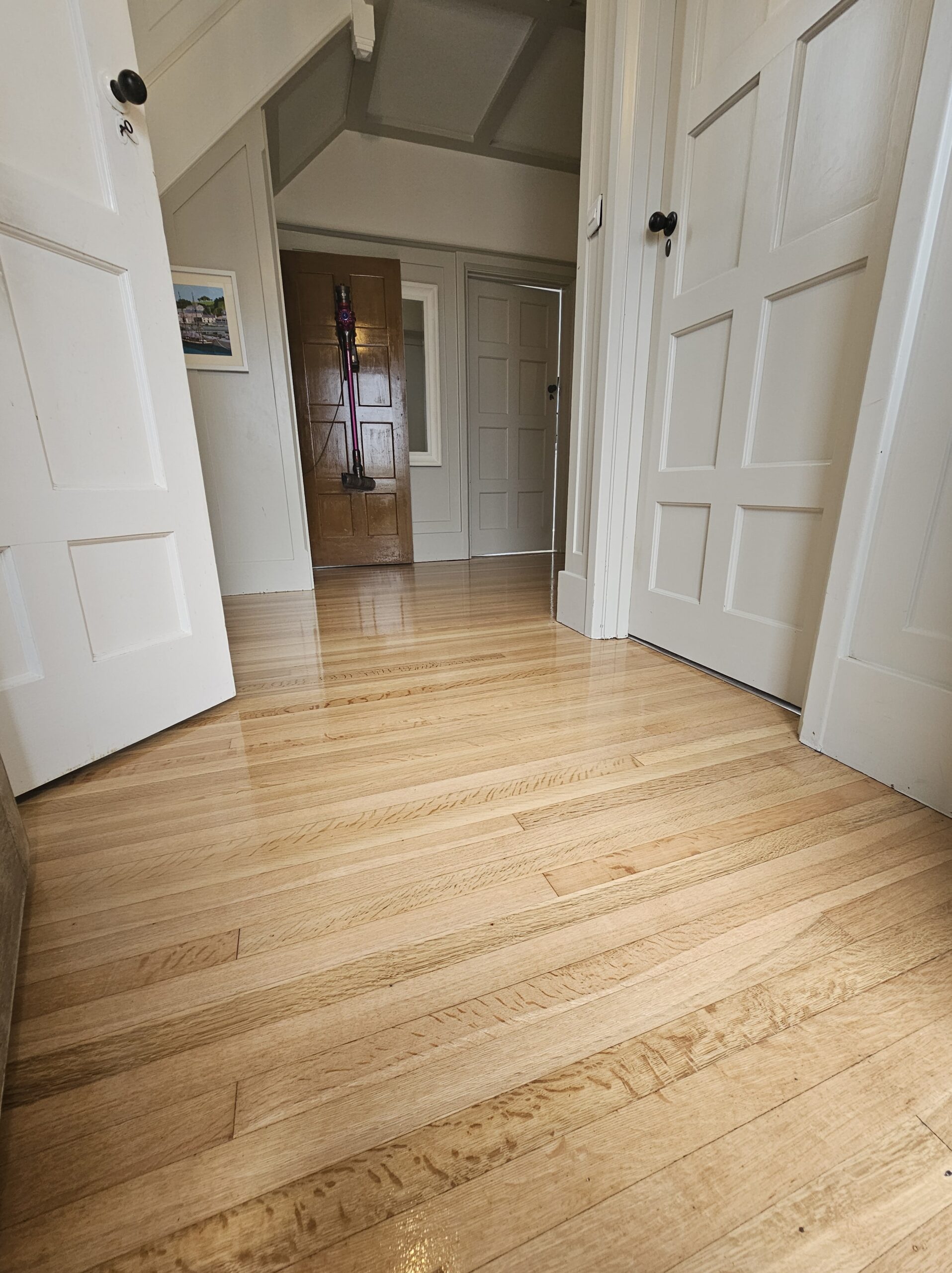
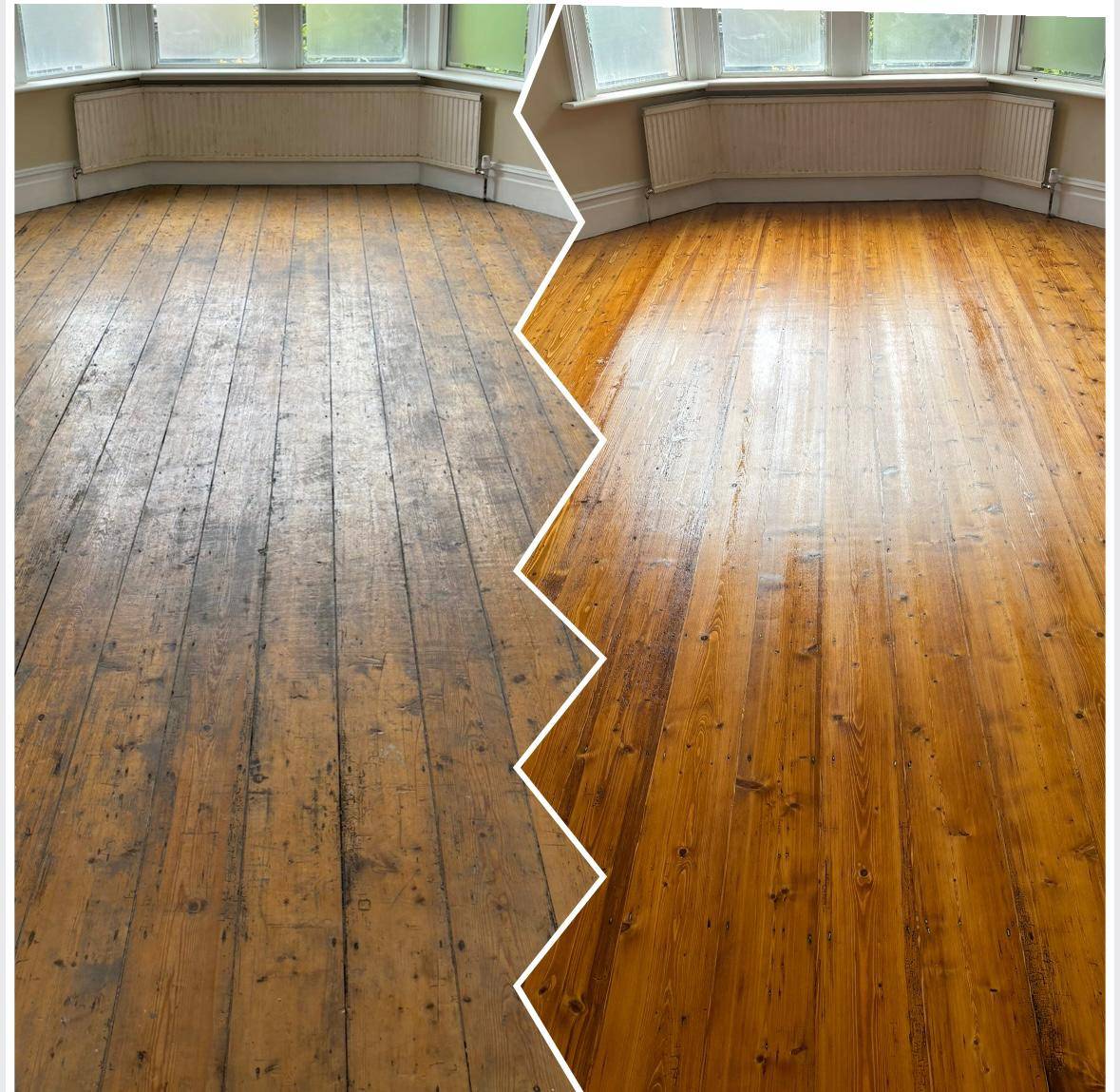
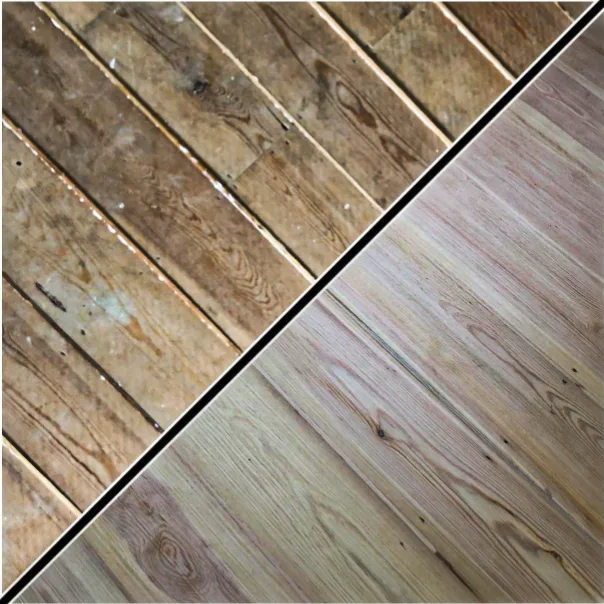
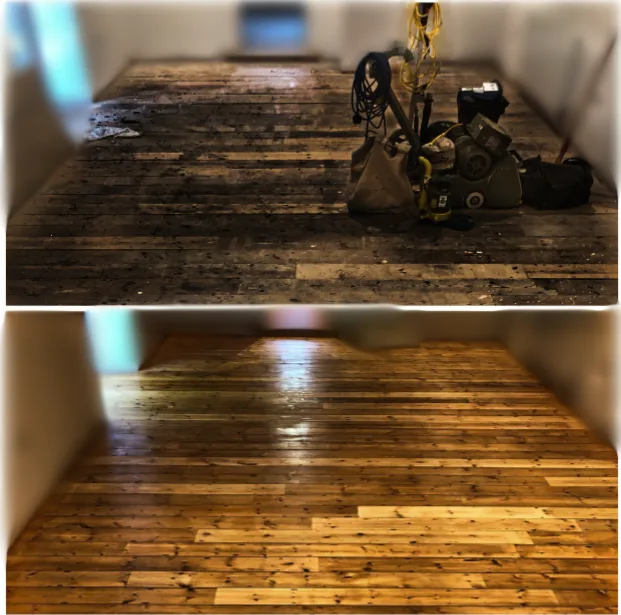
Floor sanding before and after

Floor Sanding in Torpoint: Grid Streets, Dockyard Homes and What Lies Under the Carpet

Torpoint was laid out as a planned town in the late eighteenth century, on a grid of straight streets, and it grew as workers from Devonport Dockyard settled on the Cornish side of the river. Later, the Royal Navy’s training establishment at HMS Raleigh added to the population, and the town filled out with homes from many different decades. For anyone sanding floors, that mix means one street can hold softwood boards that have been down for well over a century, while the next has houses from the middle of the twentieth century where the ground floor turns out to be woodblock under a fitted carpet.

That variety is why we never assume what a floor is until we have seen it. Floor sanding in Torpoint might mean taking a run of pine boards in a terraced front room back to clean timber, or lifting and re-bonding a hallway of loose oak blocks, or measuring an engineered board in a newer house to see whether it has enough hardwood left for a sanding. Each needs different machines, different abrasives and a different order of work.

Whatever the floor, the visit comes first. It is free and takes around thirty minutes. We lift a corner of carpet if one is loose, look at the board edges, check thickness where we can, take moisture readings at the outside walls and look at how the void underneath is ventilated if there is one. In houses with pets, we also look at the kind of damage the floor has suffered, because claw scratches, water-bowl stains and accident marks each call for a slightly different plan.

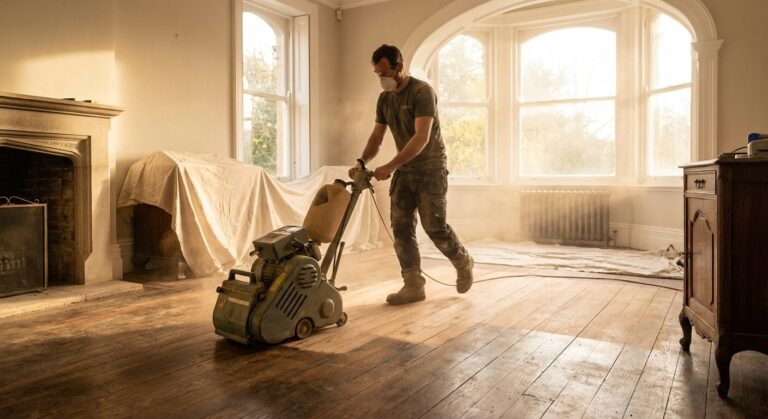
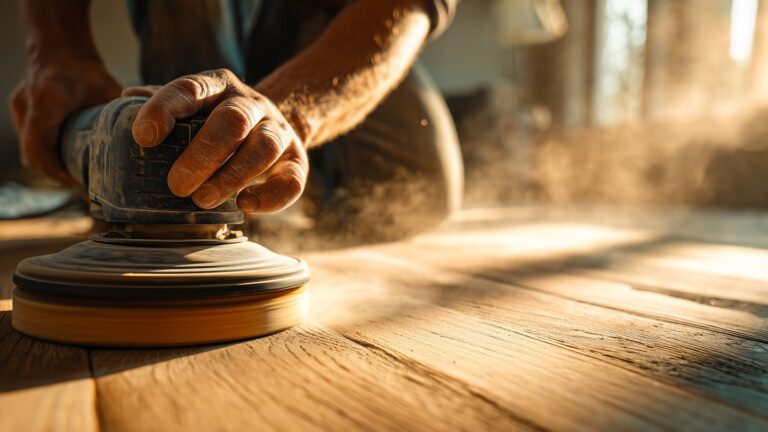
On the day, the floor is cleared of tacks, staples and gripper strip, protruding nail heads are punched down, and sanding begins coarse enough to cut beneath the old coating and the damage, then moves through finer grits to a smooth, even surface. Our page on professional wood floor sanding runs through the sequence. Each sander has its own sealed extraction line, drawing dust from the drum the moment it is cut. It is not perfect, and a fine trace can settle in the room next door, but it is a long way from the clouds most people remember from hire-shop sanders; dust-free floor sanding explains how the system works.
Parquet in Torpoint Homes: Loose Blocks, Bitumen and Missing Pieces

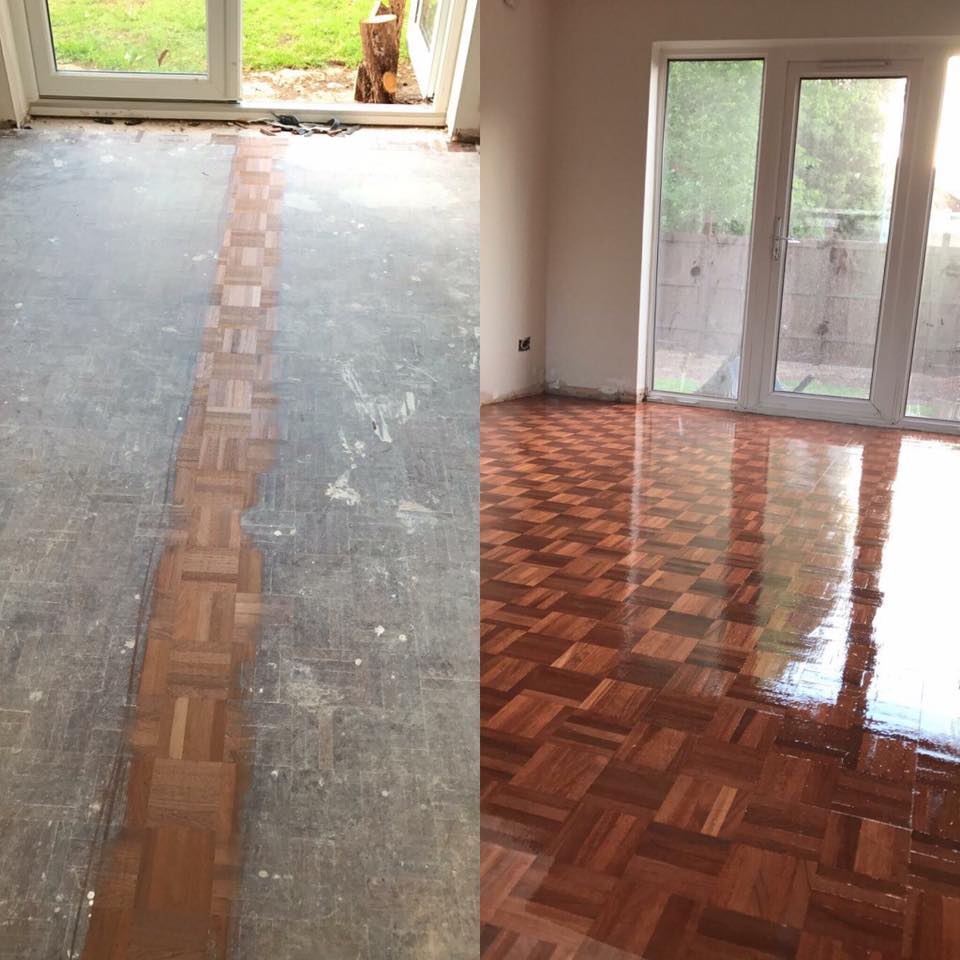
Woodblock flooring was laid widely in British homes in the middle decades of the twentieth century, and plenty of it in and around Torpoint is still in place, usually under carpet or vinyl tiles that went down later. When it is uncovered, the reaction is often surprise at how good the timber looks, followed by worry about the blocks that rock, the ones that are missing near the kitchen door, and the black tarry patches between them.

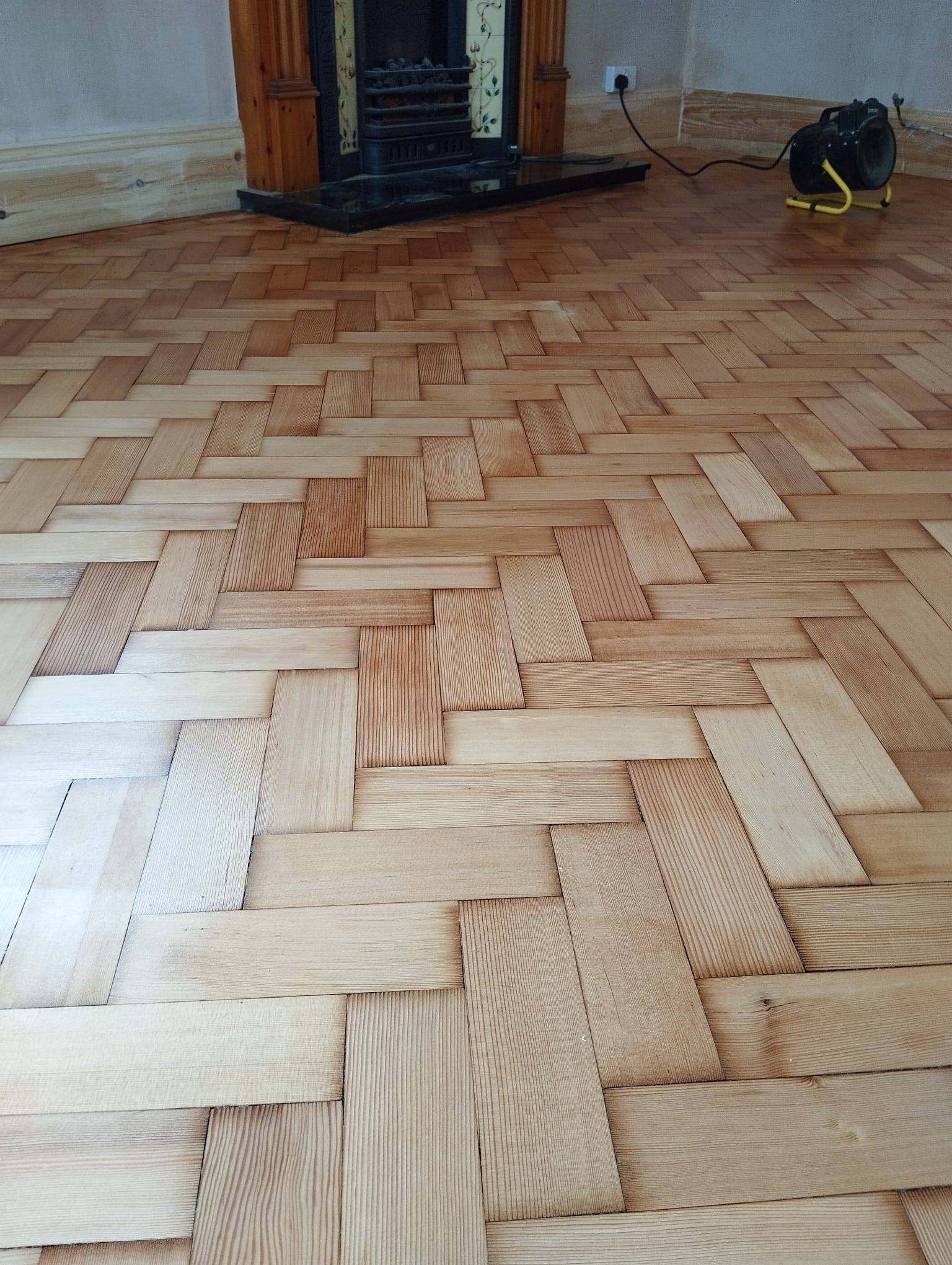
Those black patches are bitumen, the adhesive most of these floors were laid on. Sixty-odd years on, it has turned brittle in places: by the back door where rain blew in, beside the washing machine that once leaked, and in a warm strip under the hall radiator. A block that has lost its bond moves underfoot, clicks, and eventually works loose altogether. Sanding over loose blocks is pointless: the drum lifts them, chatters across them and leaves a rippled surface. So the first stage of parquet floor sanding is to go across the whole floor tapping each block and listening. Hollow ones come out, the old bitumen is scraped back from both the block and the base, and they are glued down again with a modern flooring adhesive.

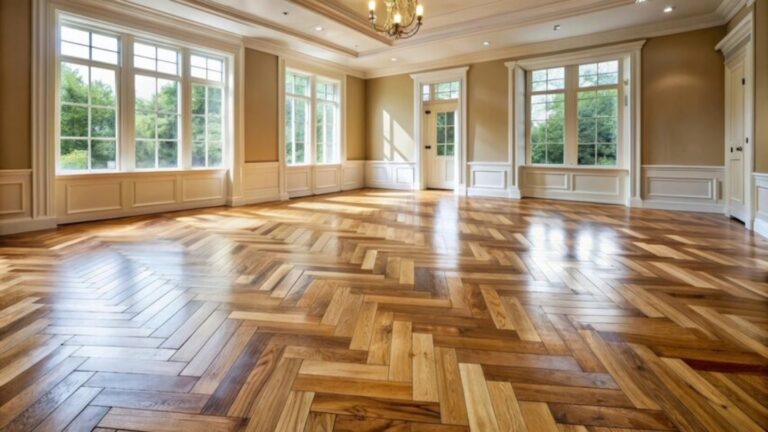
Missing blocks are the next problem. Some will have gone when a pipe was run through, others when a wall was removed or a fireplace hearth taken out. Matching them means finding blocks of the same species, length, width and thickness, and ideally of a similar age so the colour comes close after sanding. Reclaimed stock is the obvious source, and old blocks salvaged from other floors are far better than new timber cut to size. A repaired herringbone parquet floor in which the replacement blocks have been cut, oriented and laid to follow the pattern correctly is usually hard to spot once everything has been sanded and sealed together.

Sanding parquet is slower than sanding boards. In herringbone, every other block lies at right angles to its neighbour, so whatever direction the drum travels it is tearing across somebody’s grain; the cure is to step through the finer papers patiently and finish with a rotary machine that leaves no direction at all. Bitumen in the joints softens with heat and can be dragged across the face of the wood, so abrasives are changed often and the floor is never sanded in one place for long. Parquet that has had this care is one of the most rewarding kinds of wood floor restoration there is.

parquet wooden floor sanding
wooden floor sanding

Dogs, Cats and Wood Floor Restoration in Torpoint Homes

A lot of the floors we look at share the house with a dog or two, and pets change the brief. Claws scratch, water bowls get knocked over, muddy paws track grit through the hall, and accidents happen, especially with puppies and elderly animals. None of that means a wood floor is a bad idea. It does mean the finish, the maintenance routine and the expectations need thinking about before the first coat goes on. Wood floor restoration in Torpoint homes with pets is as much about choosing the right surface as it is about sanding.

Start with scratches. No finish is genuinely claw-proof. A large dog pushing off to chase a ball will mark lacquer, oil or anything else, and the question is how visible the marks will be and how easily they can be dealt with. A matt or extra-matt sheen hides fine scratches far better than satin or gloss, because there is little shine for the scratch to break up. A two-component lacquer resists scratching better than a single-pack product and protects the timber well. Hard wax oil marks just as easily, yet the scratches read as soft and pale rather than white, and you can re-oil the spaniel’s favourite corner without touching anything else.

The timber matters too. Pine is soft and dents easily under claws, while oak is harder and holds up better, though not perfectly.

Accident stains are a different matter. Urine soaks into the timber, particularly into joints and end grain, and in oak it reacts with the tannins in the wood to leave dark grey or black marks that can run a surprising depth into the board. Light marks often sand out. Black rings in oak beside the back door are usually beyond sanding; chasing them would thin the board too far, so the stained pieces come out and old timber of the same kind goes in. The pages on restoring oak floors and restoring pine floors both cover what each species can tolerate.

Water bowls are best placed on a mat or tray, especially on oiled floors. Trimmed claws make a real difference, and so do mats at the garden door to catch grit before it reaches the boards. For the overall approach, see our wood floor restoration service.

Commercial Floor Sanding in Torpoint and Around the Rame Peninsula

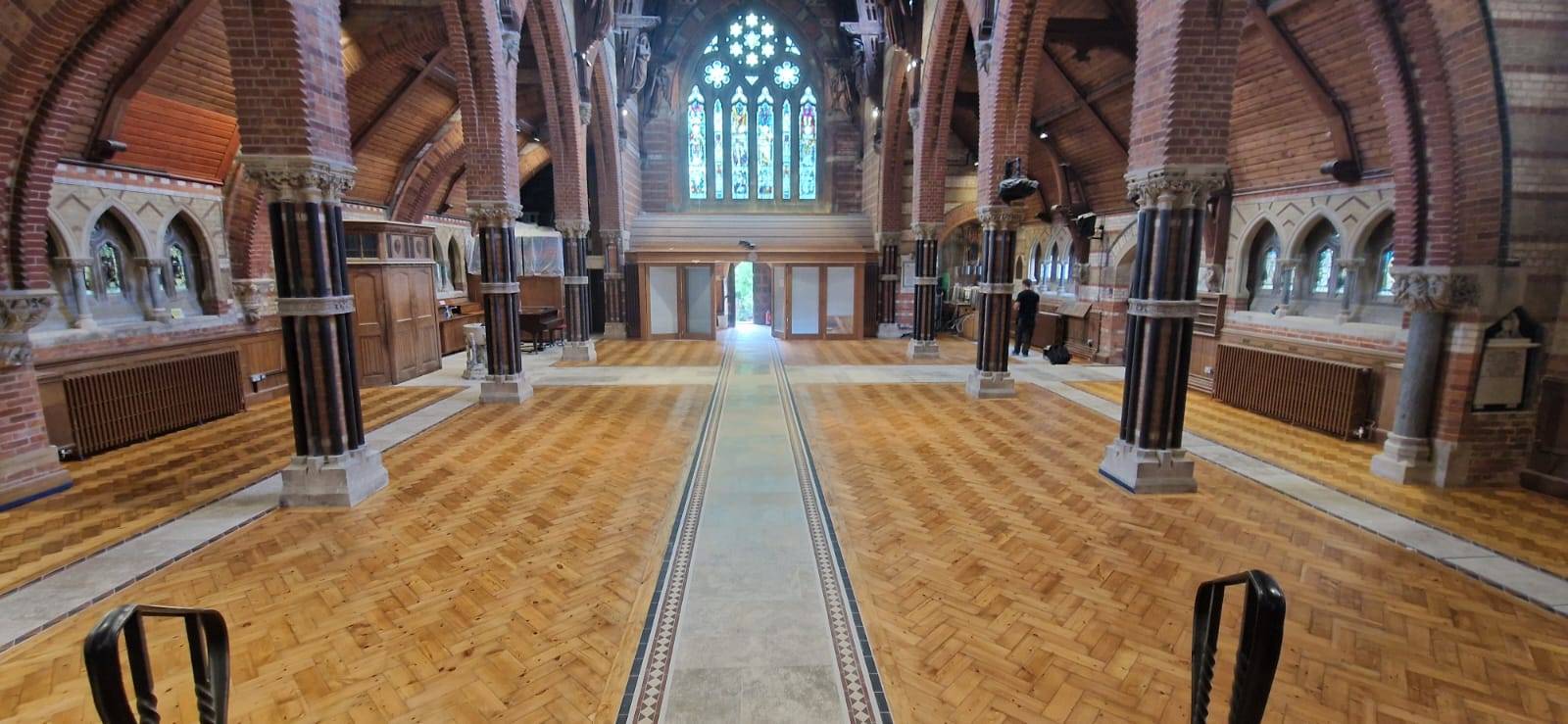
The commercial floors in Torpoint are typical of a small town: shops and takeaways, pubs and cafés, offices, chapel and community halls and the town’s schools. Beyond the town on the Rame peninsula there are village halls, pubs and holiday businesses. Commercial floor sanding in Torpoint is booked into the gaps in that trading week: once the last drinkers have gone home from a bar, on early-closing day for a shop, or inside the long summer break for a school, with the dates pencilled in months ahead.

Pubs are a good example of how the work is scheduled. Sanding can start after closing time, with the furniture stacked and moved away, and the first coats can go down overnight. Fast-curing lacquers make it possible to apply several coats in a shift and have the floor walkable again in hours rather than days. Behind and in front of a bar, spilt lager and a nightly wet mop call for two-pack lacquer. For pubs and dining rooms, see floor sanding for restaurants and bars.

Shops wear in a familiar way, with grey paths through the finish from the door to the counter and around the displays. Recoating before the timber is exposed can save a full sanding; once it is bare, the floor needs the full process. Our page on sanding shop floors describes both routes.

Halls and schools are often multi-use, with exercise classes, clubs, assemblies and events all on one floor. Sports lines can be marked to the governing body’s specification by our own team, painted between finish coats so they are protected. Head teachers can find the term-time approach under school floor sanding, club secretaries under sports hall floor sanding, and peninsula B&B owners under hotel floor sanding, which shows how a handful of bedrooms is closed at once while the rest stay let.

Organisations that need paperwork before a job is confirmed can ask for a method statement, insurance documents and references. Trade floors usually go back to bare timber about twice as often as a home, every four or five years, with top coats added between. More is on our main commercial floor sanding page.

flooring sanding company
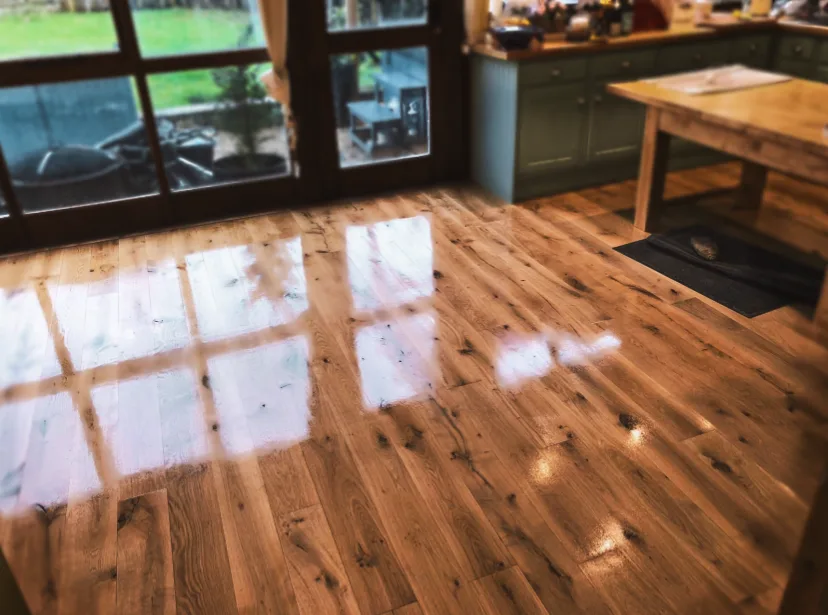
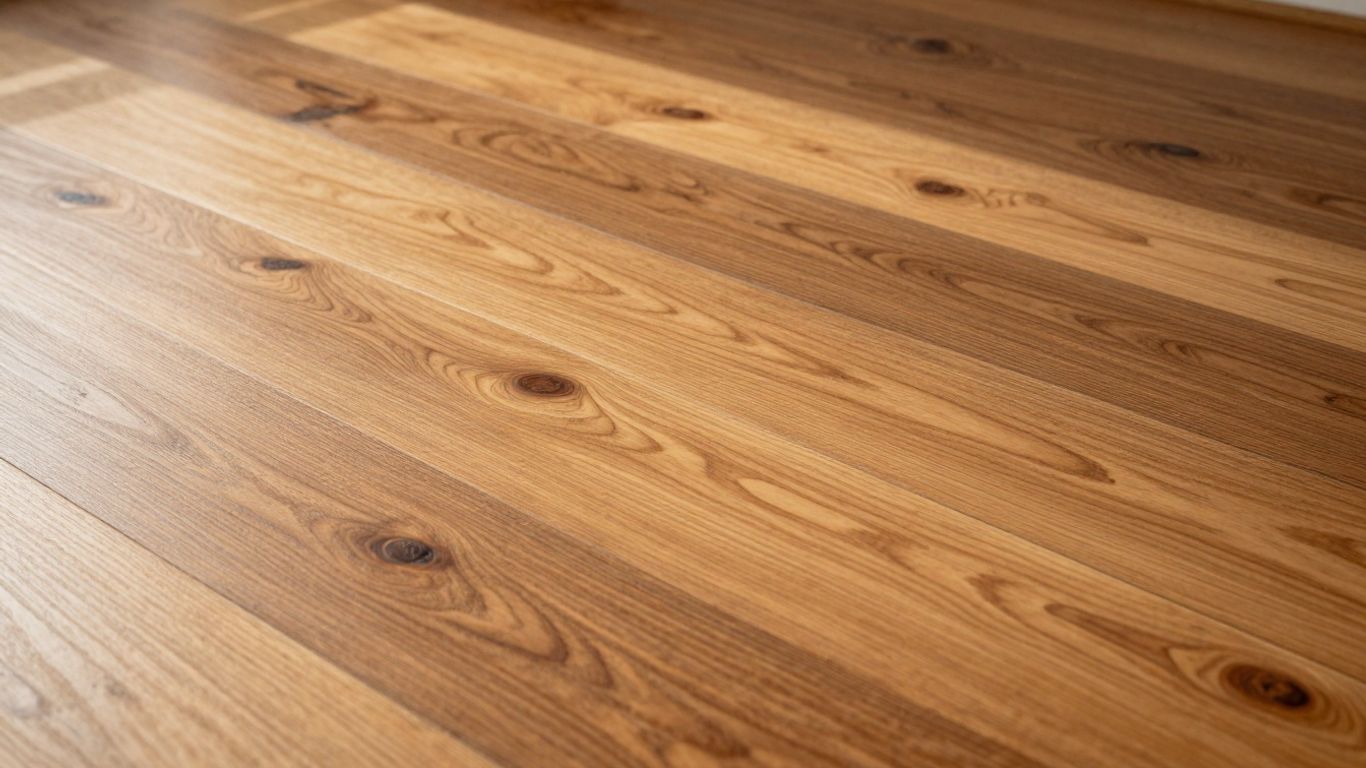
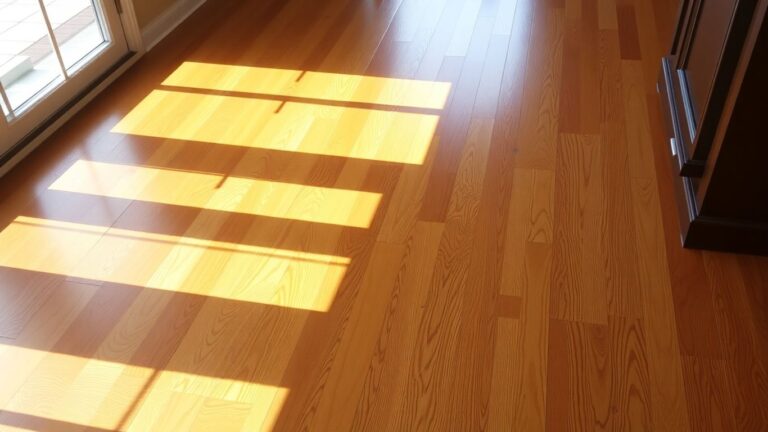
Sunlight across freshly lacquered wooden floorboards

Patched Boards, Draughts and Dented Pine in Older Torpoint Houses

The pine and deal boards in Torpoint’s older terraces have usually been through the same sort of life. Every new boiler, rewire and bathroom since the war has meant boards prised up somewhere. Some put them back carefully, screwing them down on proper supports. Others dropped them in loose, cut across the middle of a span, so the board bounces when stepped on and the ends sit slightly proud.

Repair starts by putting those right. Cut boards are refixed on new bearers screwed to the joists, so they sit flat and firm. Where a board has split, floorboard replacement with an old pine board from our reclaimed pile brings the right inch-based width and depth and a colour that settles in once the room is sanded.

Creaks are next. Most come from a nail that has loosened in the joist, letting the board move against it. A screw beside the old nail, countersunk and filled, usually cures it. Others come from a joist that has sagged, or from two boards rubbing along their edge, and need packing or a different fix. Squeaky floor repair lists the common causes.

Gaps between boards can let cold air rise through the floor from a ventilated void, which is uncomfortable in winter. For gap filling the rule is simple: a wide gap that stays wide gets a strip of pine glued in and planed down, a thin one gets resin coloured with the room’s own sanding dust. Because softwood moves through the seasons, filler in a gap that opens and closes will eventually crack, so filling is done with an eye on the time of year.

Dents and scratches mostly disappear in the sanding, but a deep gouge from a dropped tool or a heavy piece of furniture can sometimes be steamed or filled rather than sanded out completely, which saves timber. Wood floor scratch repair covers that. All of this is part of our wooden floor repair work, completed before sanding so everything is finished together.

Grip, Sheen and Durable Finishes for Stairs, Halls and Busy Kitchens

In a home with children and pets, the staircase and the hall take the hardest wear. Stairs are also where the finish matters most for safety, because a polished tread in socks is a slip waiting to happen. That makes them a good place to think about finish in general.

Sheen is the first choice. Gloss shows every scratch and is slippery underfoot. Satin is a middle ground. Matt and extra-matt finishes look more natural, show far less wear and give better grip, which is why they are increasingly popular for stairs and halls. On stair sanding jobs the treads are taken one by one with detail sanders and scrapers, and the round front lip of each step is eased by hand rather than flattened. Many owners keep the risers and strings painted and finish only the treads, which is practical and smart.

The type of finish comes next. Water-based lacquers are clear and pale, dry quickly and have little smell, which suits a family that wants to keep using the house. Oil-based lacquers give a warmer, deeper colour. Two-component lacquers are the toughest and are a sensible choice for a busy hall or kitchen, particularly with dogs. Floor sealing compares them.

Natural oils and hard wax oil sit in the grain and can be refreshed locally, and in a home with pets that ability to repair a single patch is a real advantage. Floor oiling explains how they are applied, while floor waxing is still an option for those who prefer a traditional finish.

Colour can be changed too. A dark stain can hide some wear, while a pale or natural finish hides dust and fine scratches better. Colour is trialled on a hidden board in your room before anything else, the reasoning for which is on staining wooden floors.

Wood floor sanding company
Floor sanding taunton

Keeping Claws and Grit at Bay, New Floors and Your First Torpoint Enquiry

A freshly finished floor needs a few days of patience. A coat feels dry within the hour yet stays tender below the surface for days. Plan on socks the next day, the sofa back after two or three, and the dog bed and rugs after about a week. With pets, it helps to keep them off the new finish for the first day or two if possible, or at least to keep their claws trimmed.

Grit is the main enemy. A coir mat at the garden door, a quick hoover after the dog’s walk and felt under the dining chairs will save the finish more than any polish. Avoid steam mops. Our page on wood floor polish lists products that suit lacquered and oiled floors. When the finish starts to dull, especially in a hallway or kitchen, a light abrasion and a fresh top coat can bring it back long before a full sanding is needed. That is described under floor buffing and recoating. Most family floors go eight to ten years before they want the machines again.

Sometimes the kinder answer is new timber. Should you go that way, Junkers and Bona are two names in our range, and fitting is optional. See wooden floor installation.

Snap the room as a whole, then kneel and photograph the scratches or black rings the dog left, then send both pictures to info@ryansrestoration.co.uk. For a parquet floor, include a shot of any missing or loose blocks. If a visit makes sense it is free, and the written quotation lists each item, holding firm while the job stays as described. We are across in Torpoint often. Behind all this is a family workshop in Somerset, near Wellington, sanding and repairing floors since the 1980s. Ring 01823 674562 on weekdays during office hours, ask if a Saturday suits a naval shift pattern better, or send the contact form whenever is convenient. Across the county, see Cornwall floor sanding; upriver, our neighbours have a page on floor sanding in Saltash.

Torpoint Floor Sanding Questions

Usually, yes. Rocking blocks come up, have the black adhesive scraped off and go back on fresh glue, and the gaps where blocks have vanished are filled with salvaged ones that match. Once the floor is solid again it can be sanded, and the repairs are finished alongside the original blocks so they blend in well with the rest of the pattern.

It will stand up to normal family life with a dog, but no finish is completely scratch-proof. Matt two-pack lacquer suits dog owners: it is hard, and the low sheen disguises light scratching. Keeping claws trimmed, using mats at doors and wiping up water spills quickly all help the finish last much longer.

Light marks often sand out. Deeper stains, especially in oak, where urine reacts with the tannins in the wood, can run too deep to remove without taking off too much timber. Then the stained board or block is cut out, a matching old piece takes its place, and the whole area is sanded and coated in one go.

Each has advantages. Hard wax oil has a natural look and lets you oil a scratched patch by itself. Lacquer is tougher overall and resists water better. For a busy hallway with a large dog, many people prefer lacquer; for a living area where easy spot repairs matter, oil often makes more sense.

In most cases, yes. We generally work through the night or on the day you are shut, with quick-curing lacquers so customers can walk on it again almost straight away. Larger spaces can be phased so part of the premises remains open. Licensees and landlords can see our method statement, insurance cover and references first.

Bitumen softens when it gets warm, so the main risk is a hot abrasive dragging it across the face of the blocks. Loose blocks are cleaned before refixing, abrasives are changed often, and the machine is kept moving. Any remaining marks are dealt with in the finer stages of sanding and by hand before any finish is applied.

Much less than most people expect. The sanding machines are connected to sealed extraction that captures most of the dust as it is produced. A small amount can still settle nearby, so it is worth closing doors to other rooms and covering anything delicate on open shelving. The extraction makes a real difference compared with hire-shop machines.

Yes. Torpoint and the Rame peninsula are part of our regular area, so both homes and businesses can be surveyed and booked without difficulty. Our half-hour visit is free, and what follows is a line-by-line written quotation, so nothing is agreed on a guess.