Floor Sanding St Austell

Floor Sanding and Wood Floor Restoration in St Austell

QUICK QUOTATION

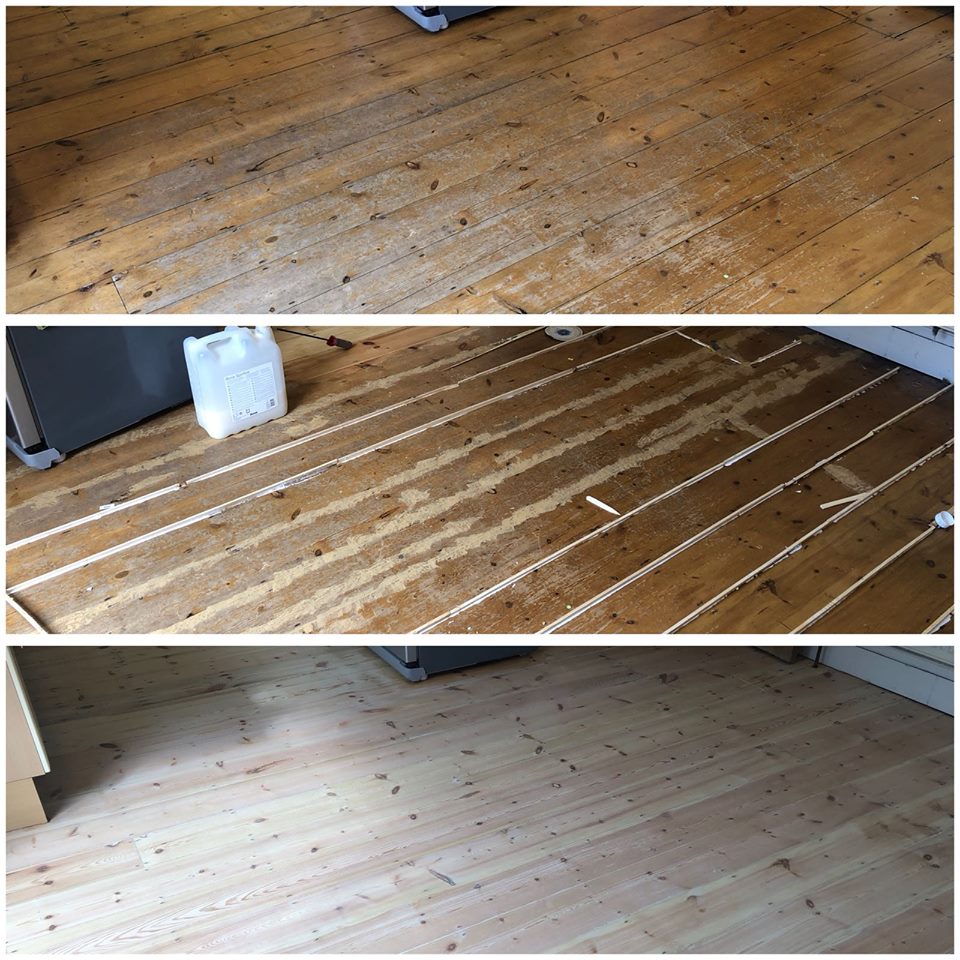
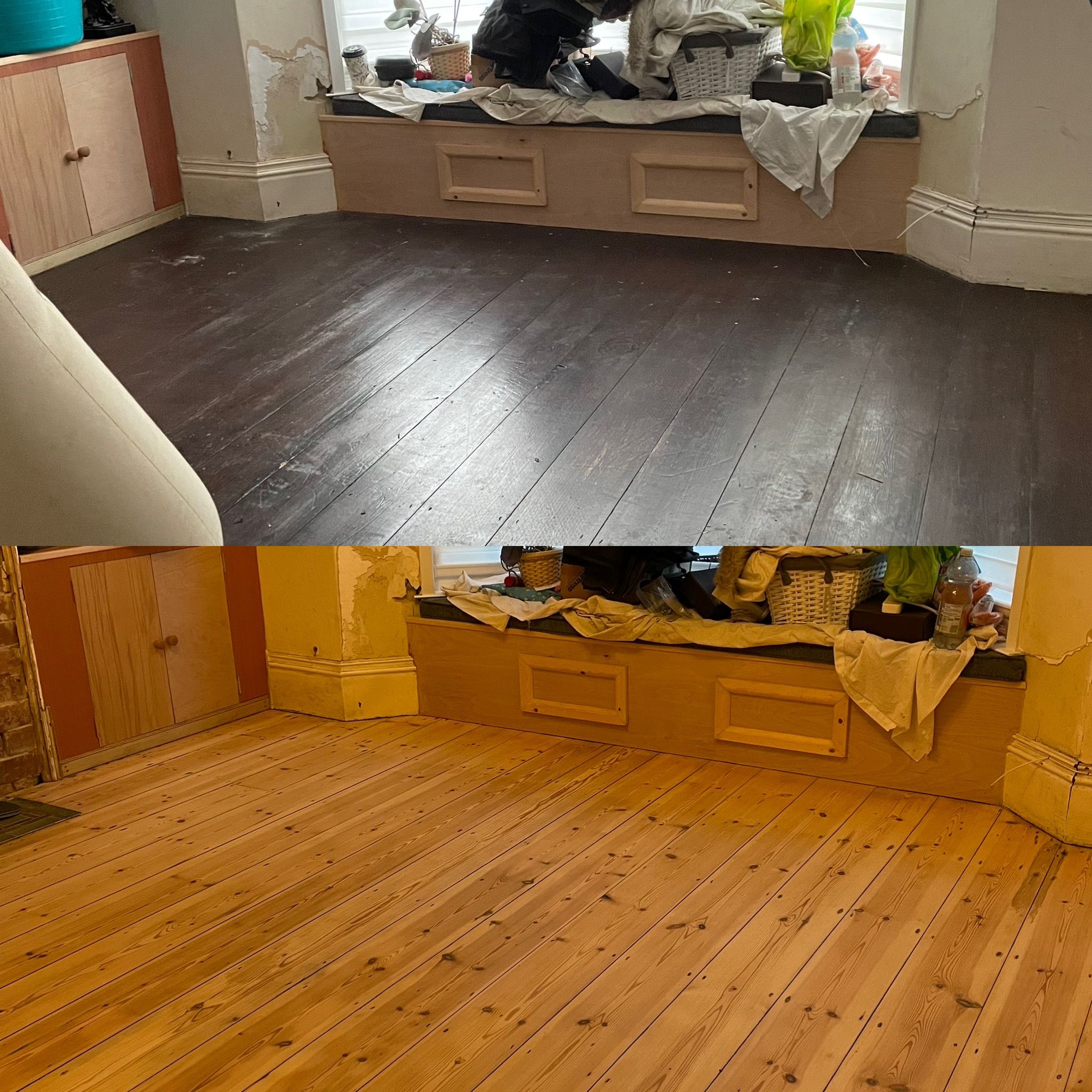
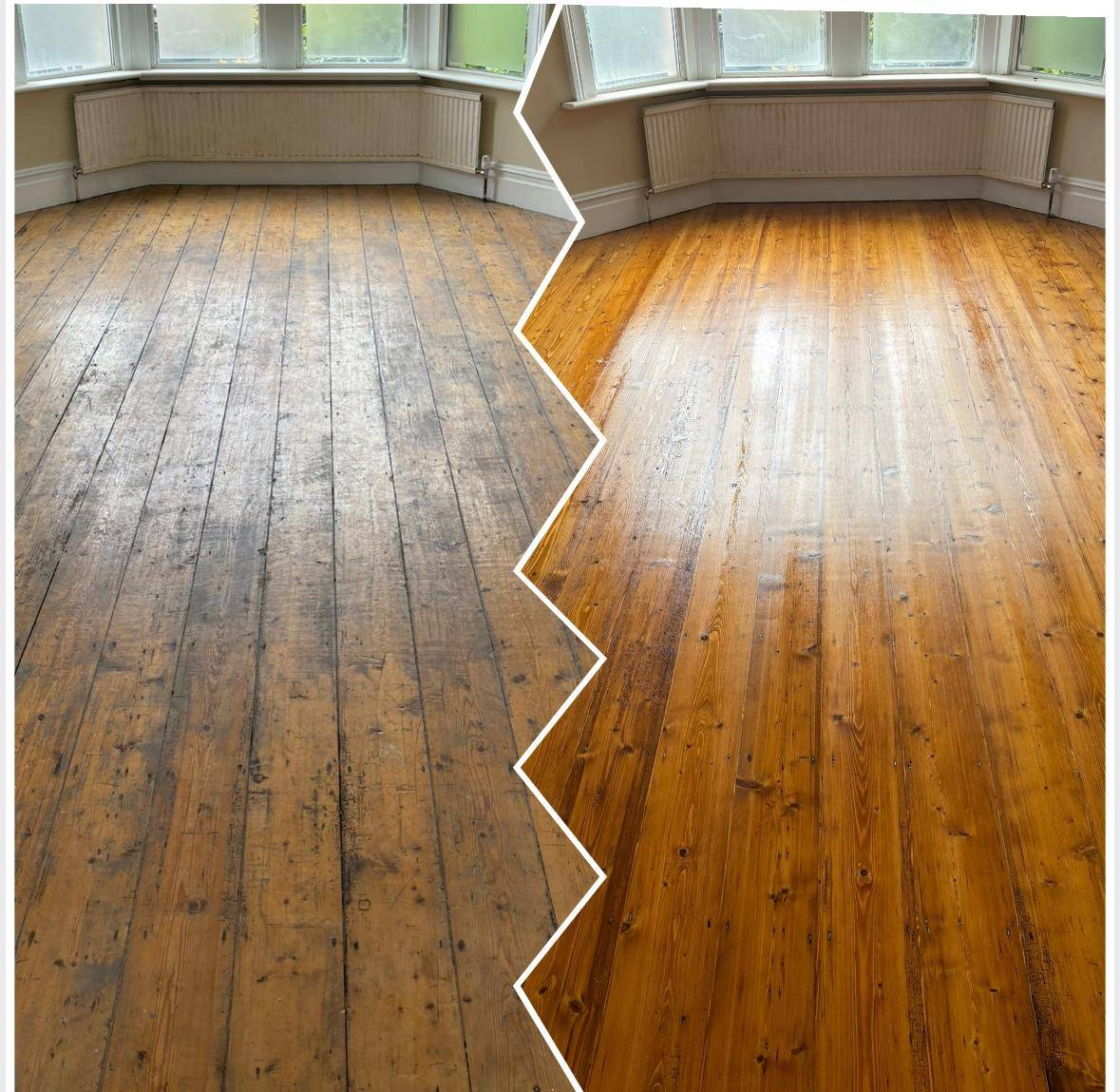
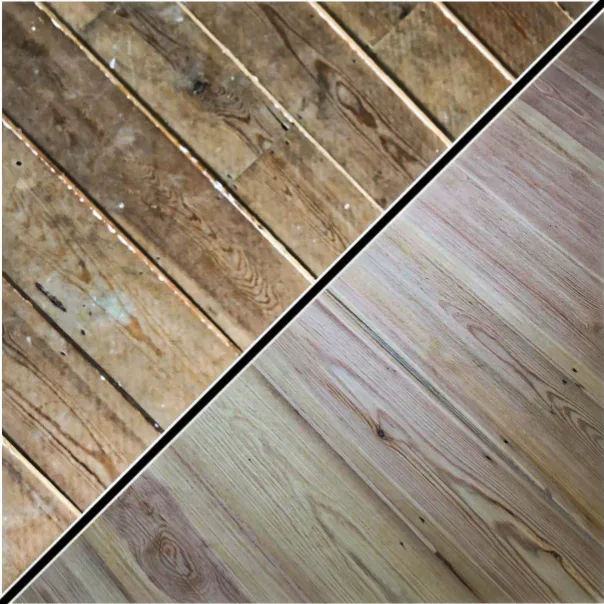
Floor sanding before and after

Floor Sanding in St Austell

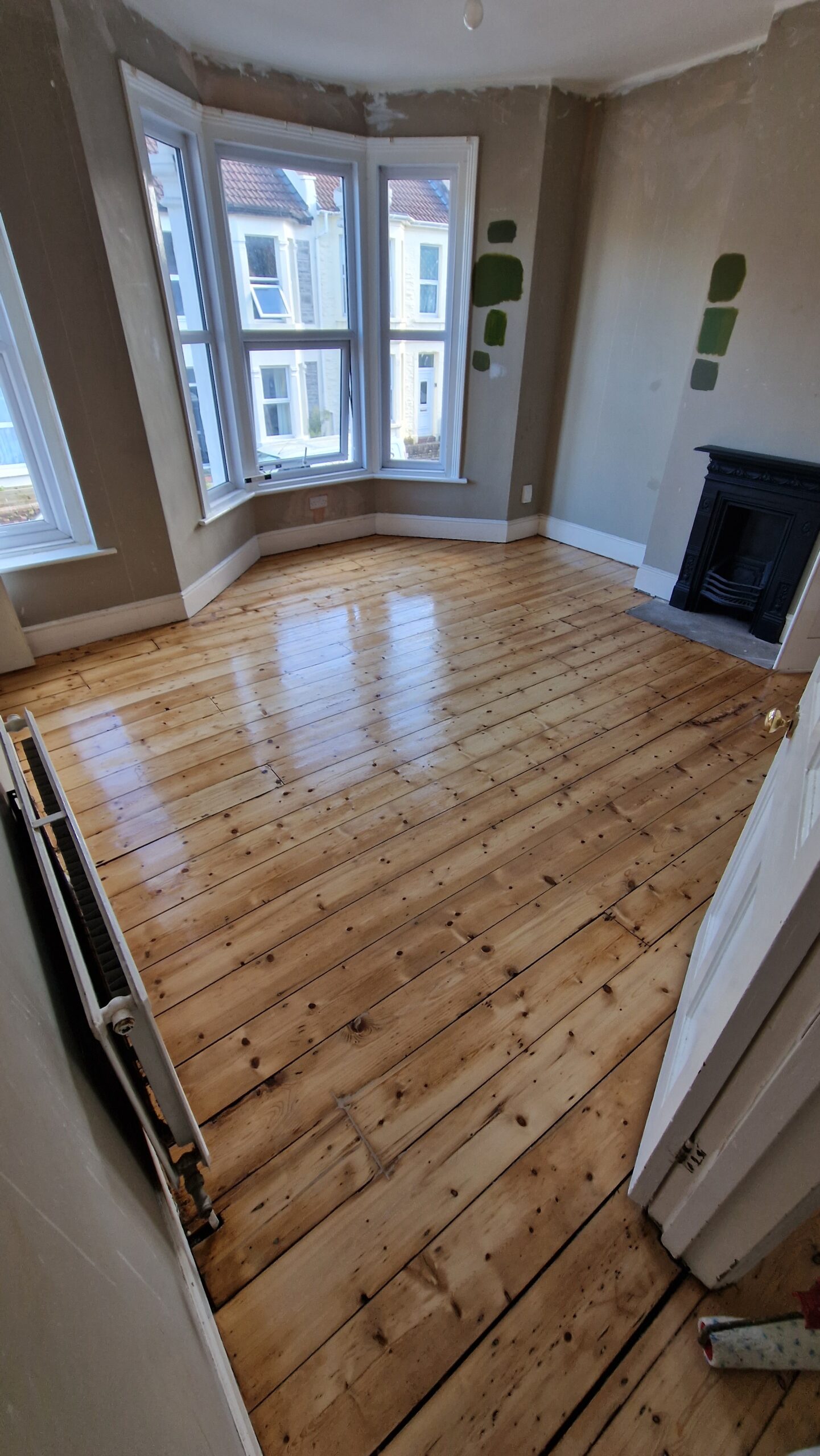
Our wood floor sanding service covers St Austell, Charlestown, Carlyon Bay, Par, St Blazey, Mevagissey and Pentewan. Clay-country terraces full of pitch pine, listed Georgian boards at Charlestown, oak in newer builds — each gets its own grit sequence and finishing plan, agreed in writing before we begin.

Two checks come first on every job: a moisture reading, because Cornish subfloors hold damp, and a board-thickness check on floors that have been sanded before. Machines run with sealed extraction that captures the overwhelming majority of dust at source, so the house stays livable throughout.

The thickness check is worth explaining, because it decides whether a floor can be sanded at all. Tongue-and-groove boards only carry a limited depth of timber above the tongue; every past sanding has taken a slice of it, and once that depth runs out the joint is exposed and the board is structurally spent. We lift a threshold or heating vent to measure what remains and plan the cut accordingly — sometimes that means a lighter sequence starting at a middle grit, taking off the finish and little else.

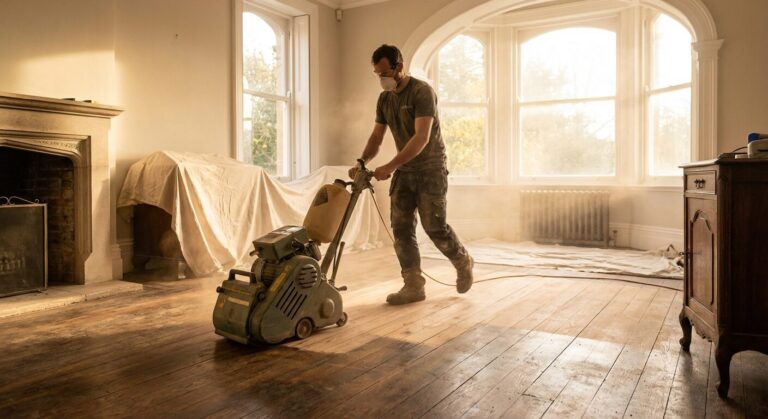
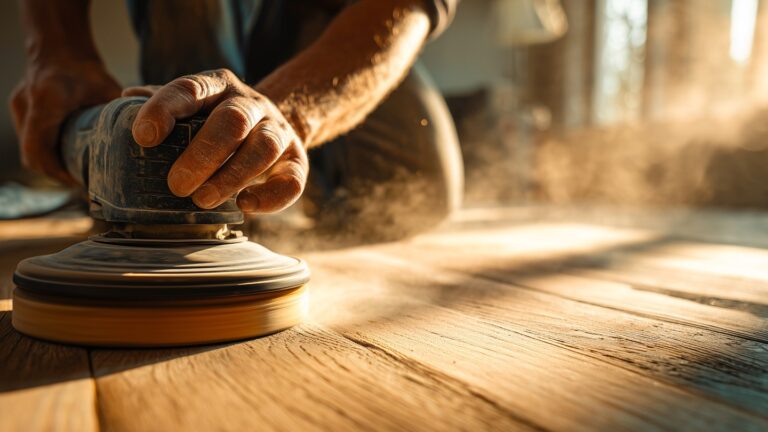
The passes themselves run with the direction of the boards, the edger works the margins to the same grit as the main machine, and the floor is vacuumed between cuts so loose abrasive never scores the next, finer pass.
Commercial Floor Sanding in St Austell

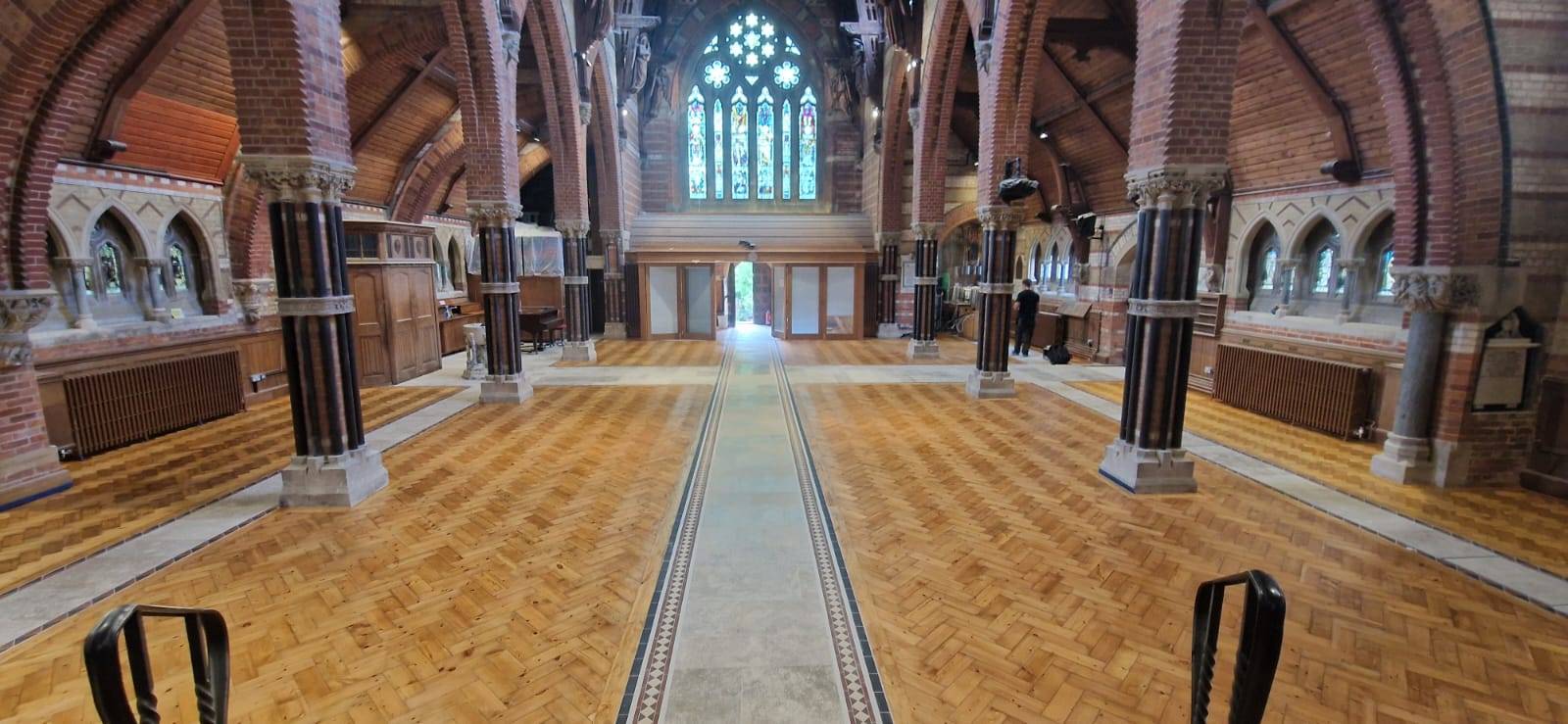
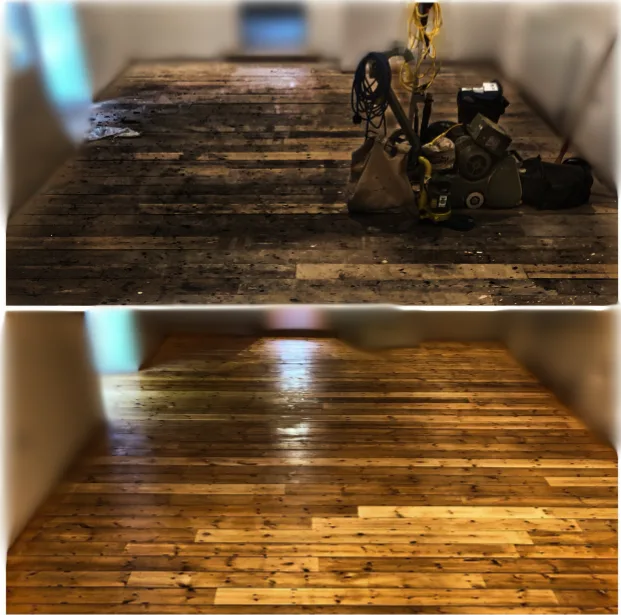
Commercial floor sanding here means pubs, chapels, village halls, shops and holiday accommodation around Charlestown and Mevagissey. We work evenings, overnight and weekends so a restaurant or shop never loses a trading day, and we phase larger buildings so part of the space stays in use.

School and college halls are refinished in holiday windows with line marking to governing body specification, and every commercial job comes with method statements and insurance documentation before we set foot on site.

Phasing is planned around how the building actually operates. In a pub that might mean the dining side one week and the bar side the next, each zone sanded, sealed and fully hardened before furniture rolls back; in holiday accommodation it means working unit by unit against the booking calendar. Every programme distinguishes between when a floor can be walked on and when it can be worked on — stools dragged across a seal that is dry but not cured will print it, so the handover date we give is the honest one.

Where a floor is mopped daily, the seal is specified for wet grip as well as wear, which matters in bars and kitchens more than any other property of the finish.

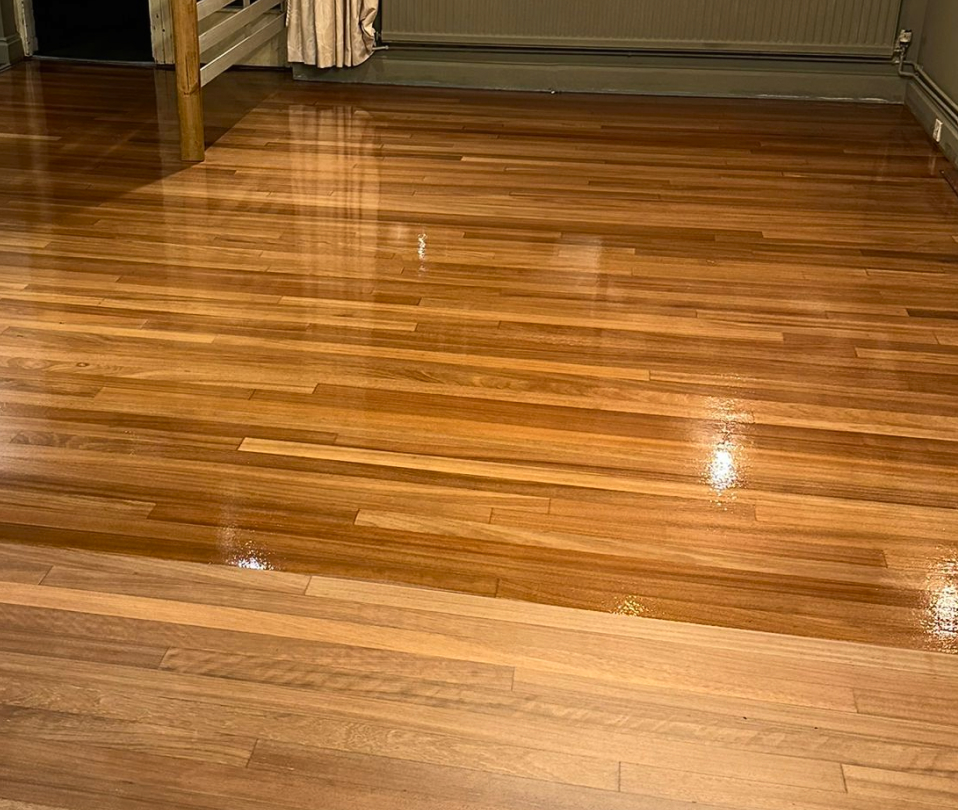
parquet wooden floor sanding
wooden floor sanding

Repairs, Squeaks and Board Replacement

Plenty of St Austell floors need surgery before they need sanding. Wooden floor repairs cover rot at joist bearings, woodworm, splits and loose boards; floorboard replacement uses our reclaimed timber stock so a new board in a Victorian terrace carries the same wear and colour as its neighbours.

We also stop squeaks at their cause, blend out scratches, and carry out gap filling where draughts pull through the boards — a common request in older clay-worker housing.

Finding a squeak is detective work done on hands and knees. We flex the floor board by board to find where movement lives: a loose surface fixing gets screwed and plugged; a board rubbing its neighbour’s tongue gets eased or lubricated with talc worked into the joint; movement at the joist calls for refixing from above or packing from below where there is access. Fixing the wrong one of those three just relocates the noise, which is why we diagnose before we drive a single screw.

Gap treatment follows its own rule of thumb — resin bound with the floor’s sanding dust for narrow, stable gaps; glued timber slivers planed flush for anything wider or seasonal.

Parquet Floor Restoration

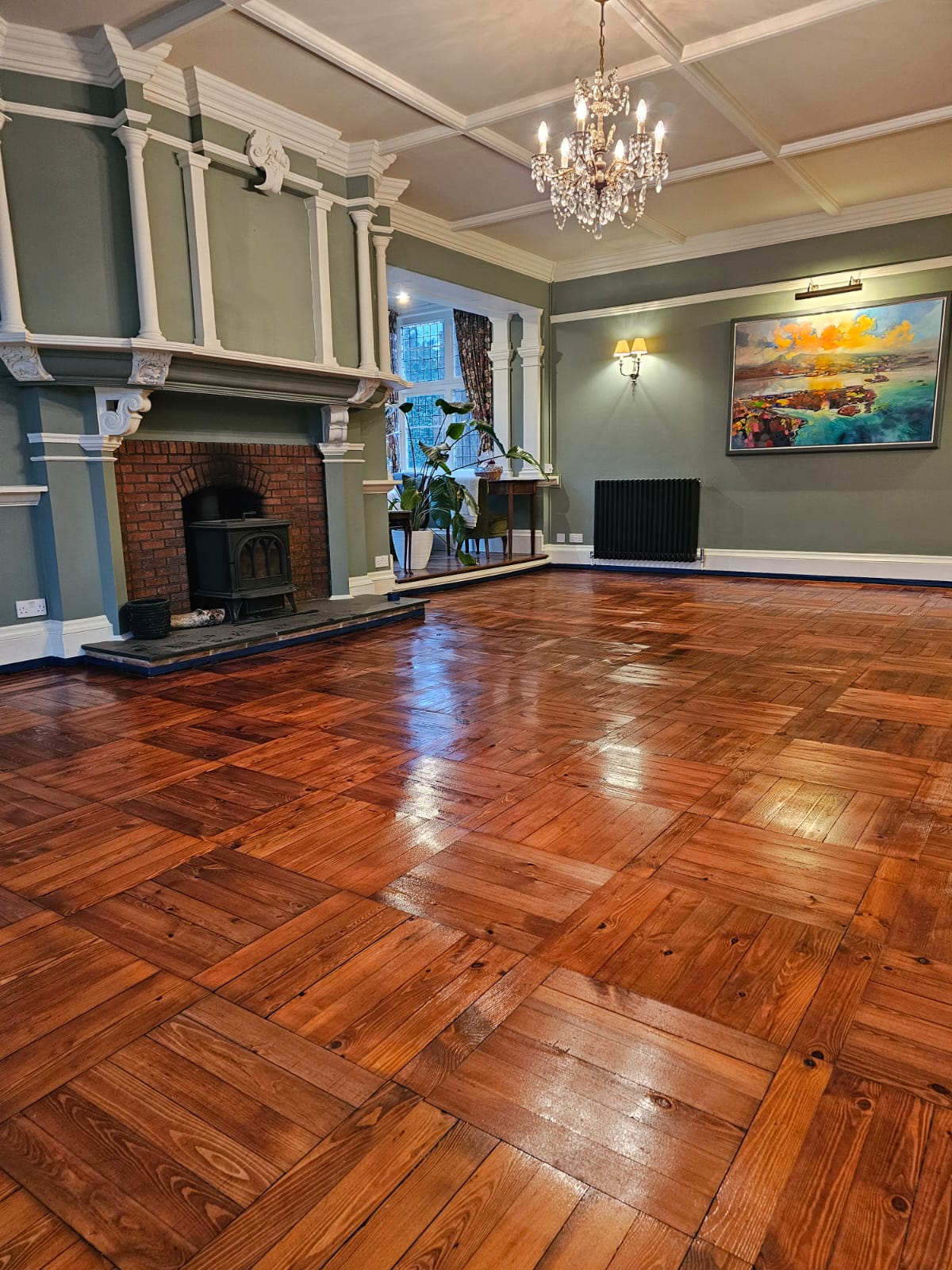
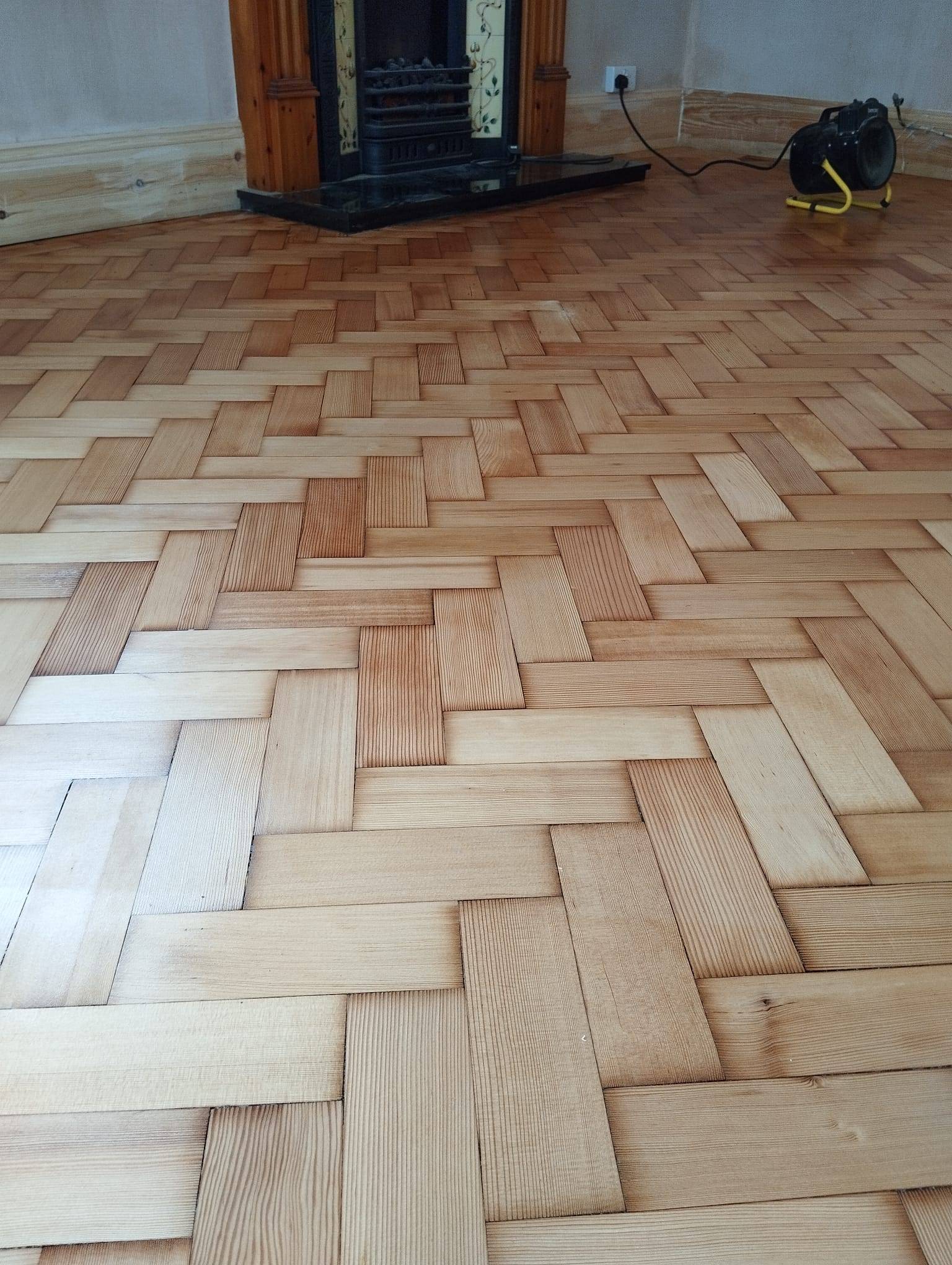
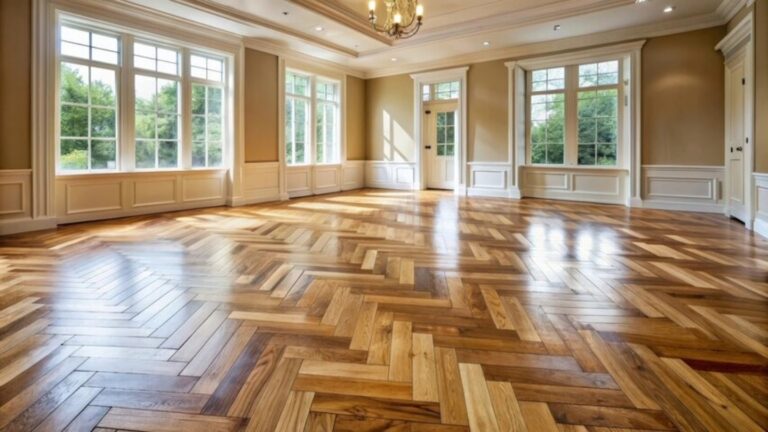
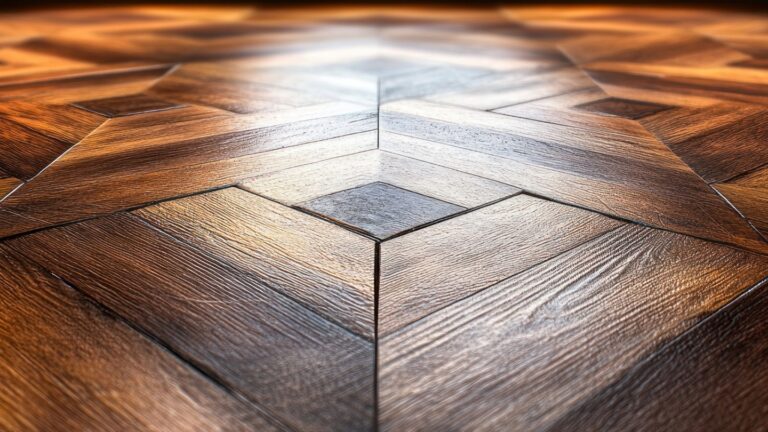
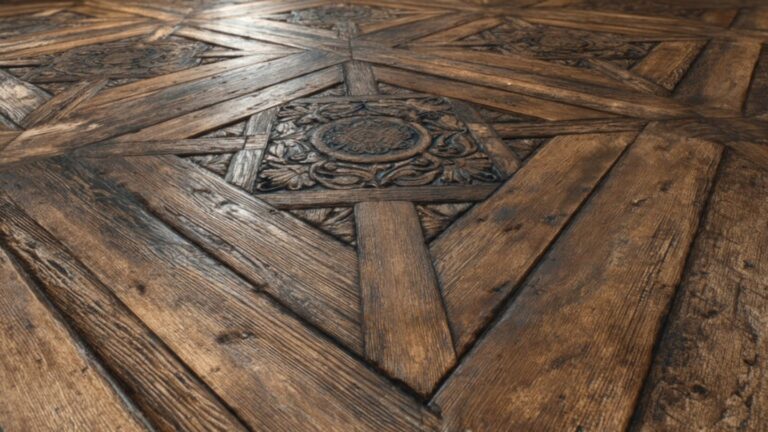
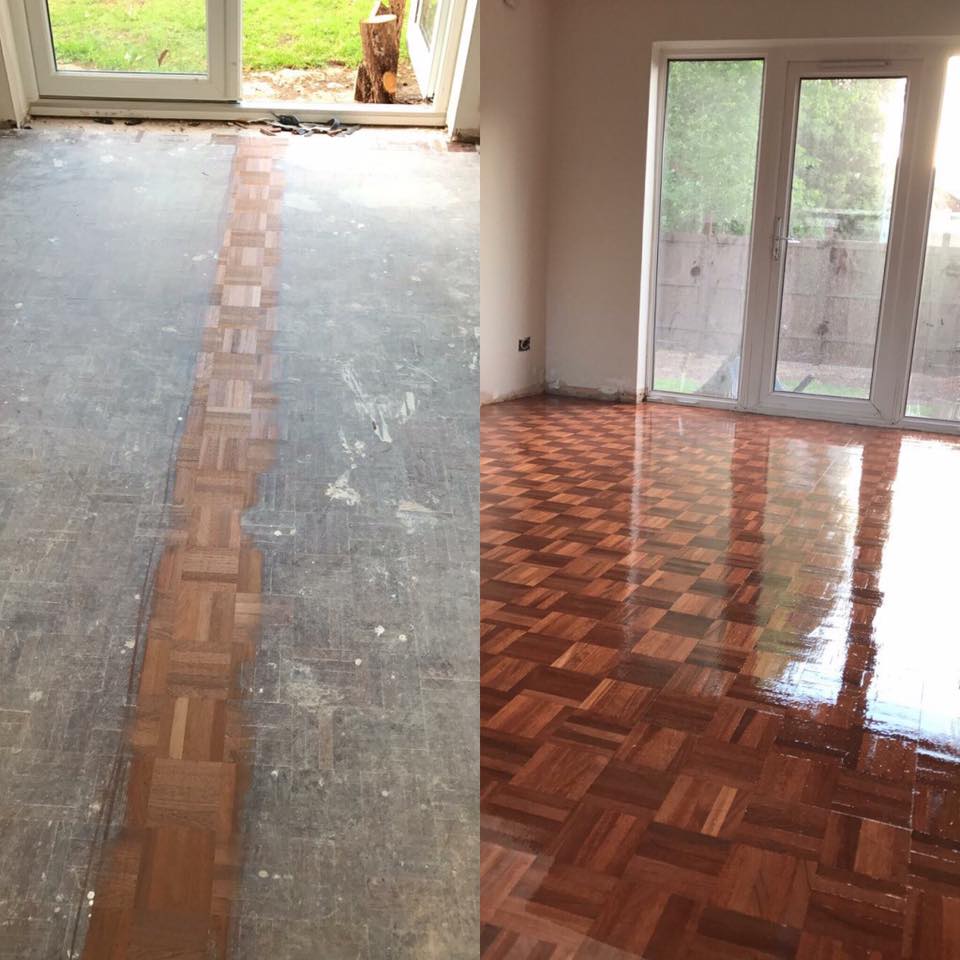
Block floors survive in surprising numbers around St Austell — chapels, halls, schoolrooms and post-war houses. Our parquet restoration process deals with the usual failures: blocks lifted by damp are re-bonded, crumbled bitumen is cleared, losses are filled from our reclaimed block stock, then the pattern is machine-sanded flat and sealed in one piece.

Even a floor with decades of polish build-up and pew bolt holes usually restores well.

Decades of polish come off in the first coarse passes, but old fixing holes need individual attention: each is plugged with matching timber or filled hard before the fine cuts, so the finished floor carries its history without carrying holes. Sanding direction changes with the pattern too — herringbone is cut on the diagonal so neither grain direction gets dragged across, then finished with fine passes that leave the blocks reading crisp under the seal.

flooring sanding company
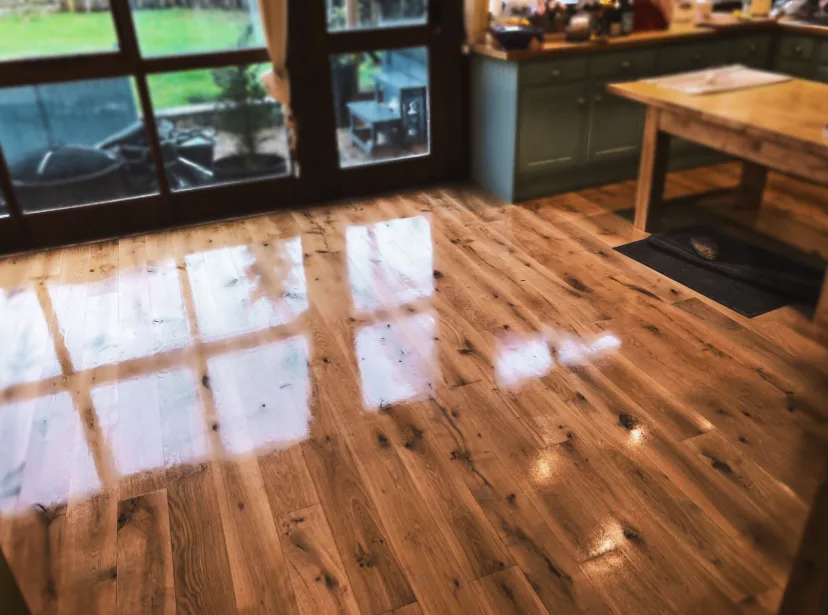
Sunlight across freshly lacquered wooden floorboards

Staining, Sealing, Oiling and Waxing

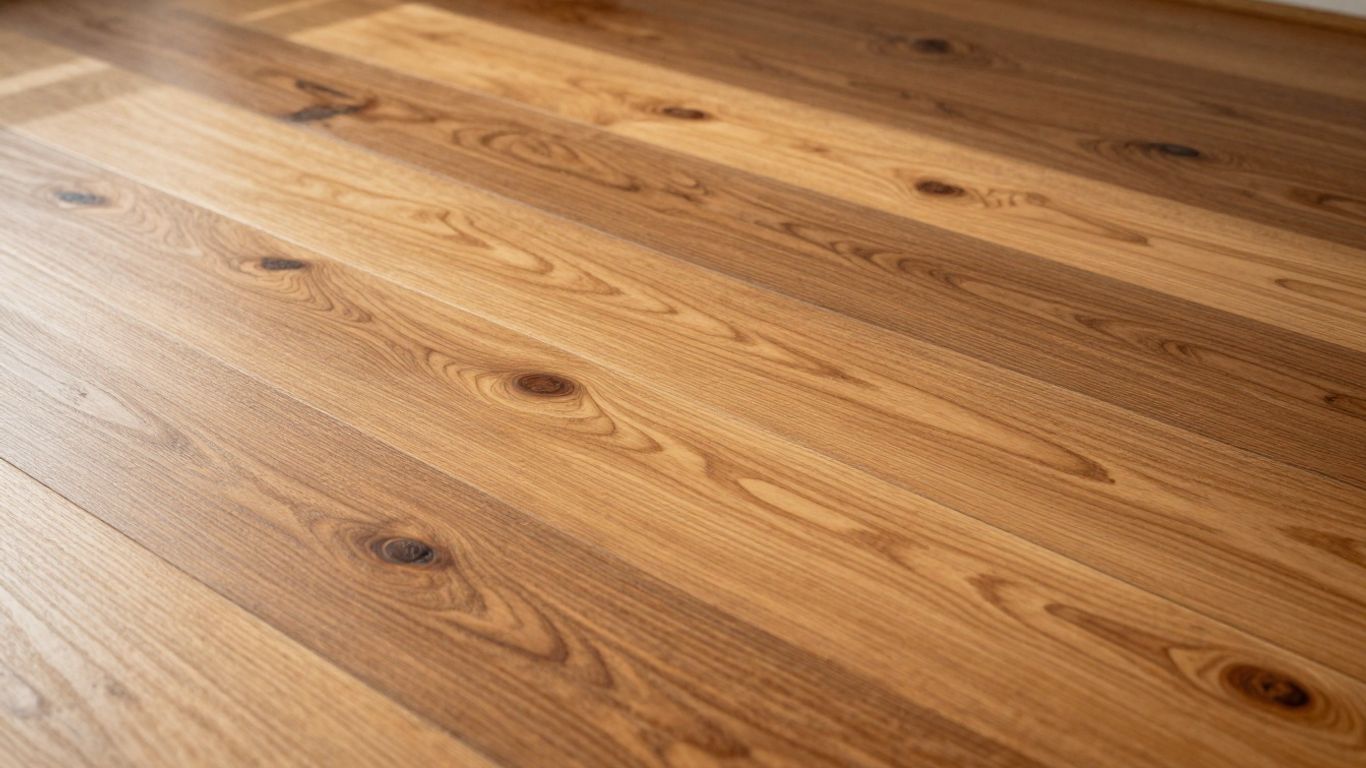
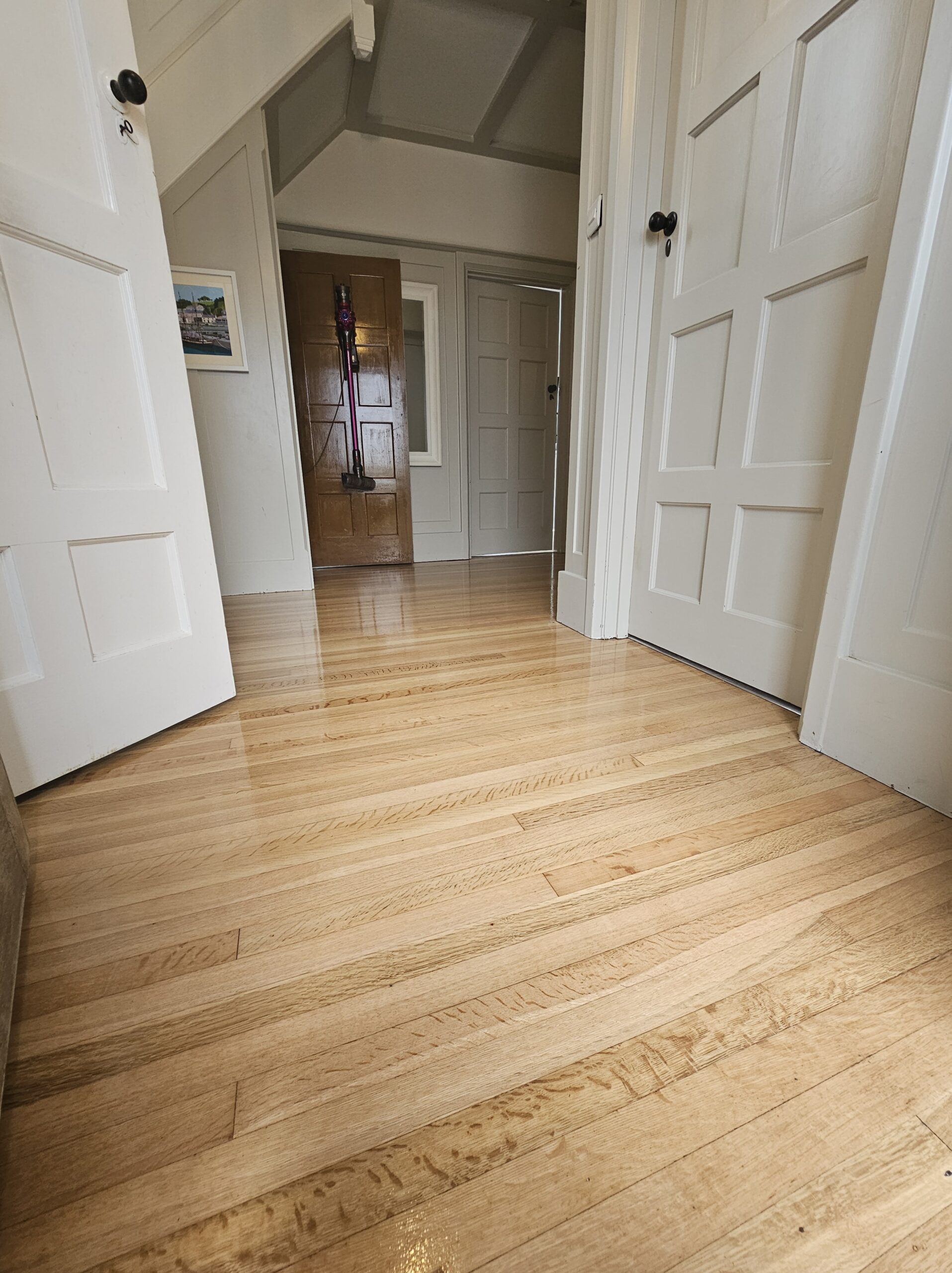
We match the finish to the room. Breathable hard wax oils suit most older Cornish property because they flex with seasonal movement and patch-repair cleanly; lacquer sealing stands up best to hard daily use and quick turnarounds; wax keeps its place in period rooms.

Staining after sanding lets you change the colour entirely or even out a patchy floor, and later maintenance is a light buff and recoat rather than another full sand.

Among the lacquers, the choice is mostly between water-based products — low odour, fast between coats, keeping pine close to its natural colour — and traditional oil-based versions that deepen the timber towards amber and take longer to cure. Sheen is a separate decision: matt disguises daily scuffing, satin gives a gentle lift, and full gloss is honest only about how much maintenance you enjoy. All of it is agreed at the survey with samples, never assumed.

Stair Sanding

Stair sanding is hand-and-detail work — treads, risers and nosings finished to match the floors they connect. In the terraces around St Austell a stripped and refinished staircase transforms a narrow hallway, and painted stairs can often be taken back to clean timber.

We fit stair work alongside a main floor job or book it on its own during one of our Cornwall runs.

Stairs cannot take the big machines, so nearly everything happens with orbital sanders, scrapers and hand blocks: treads flattened and their nosings rounded back to a clean profile, risers taken to the same standard, corners picked out by hand. On the finish side we lean towards low-sheen products for treads — a glossy stair is slippery in socks — and where a painted string or riser is staying painted, we cut clean lines against it rather than sanding blind.

Wood floor sanding company
Floor sanding taunton

Get a Floor Sanding Quote in St Austell

Send two photographs — one of the whole room, one close-up of the roughest patch — and we will give you an honest opinion on the right treatment, then a fixed written quotation that does not shift. Chapels, halls, lets and larger houses get a free survey with no obligation, scheduled with our other Cornish work.

Call 01823 674562, email info@ryansrestoration.co.uk, or use the form on this page.

All services available in St Austell: floor sanding, commercial floors, repairs, board replacement, gap filling, parquet restoration, staining, sealing, oiling, stair sanding and new floor installation.

Nearby areas we also cover: Bodmin, Fowey, Lostwithiel, Newquay and Truro. There is a page for each, and the full list of towns is on our areas we cover page.

FAQ: Floor Sanding in St Austell

All of it — sanding and refinishing, repairs, board replacement, gap filling, parquet restoration, colour and stain work, sealing, oiling, waxing, stair sanding, buffing and new wooden floors, from one family-run team.

Yes. We plan the job for closed hours — typically overnight or across quiet days — and use finishes that cure fast enough for the bar to open on schedule.

Rarely. Rot is usually confined to bearings and board ends; we cut back to sound timber and let in reclaimed boards that match, then refinish everything together.

Almost certainly. We re-bond loose blocks, strip old polish and bitumen, replace missing blocks from reclaimed stock and sand the lot flat before sealing. We are used to working with committees and phased budgets.

Yes — sanding removes the aged finish that causes much of it, and stains or tinted oils then take the timber towards more neutral or darker tones. We sample on your boards before doing the room.

Very little. Sealed extraction on the machines captures the overwhelming majority of dust at source, which is why furnished and occupied homes are no problem.

Yes, changeover scheduling is standard for our Cornish work. Give us the free window and we confirm in writing what fits, with finishes guests can walk on the next day.

Two photographs get you an honest opinion and a fixed written quotation; bigger or listed properties get a free no-obligation survey first. The written figure is the one you pay.