45 years’ experience  ·  Rated 4.9 on Google  ·  Family-run, from our workshop near Wellington

45 years’ experience · Rated 4.9 on Google · Family-run

Floor Sanding and Wood Floor Restoration in Torquay

Phased hotel and guest house floor work, hard-wearing two-pack lacquers, and careful sanding of long staircases in Torquay’s tall villas.

QUICK QUOTATION

Floor Sanding Taunton

Floor Sanding in Torquay Villas, Flats and Hotels

A large share of Torquay was built in one confident burst during the nineteenth century, and that period still sets the pattern for the floors. The big Italianate villas on the slopes of Wellswood and the Lincombes have tall rooms, long joist spans and wide softwood boards. Many were later divided into flats, and one villa may now contain Victorian deal in the bay-windowed front room, a chipboard square where somebody squeezed in a galley kitchen, and ply under the shower room. Along the front and up the hills there are hotels and guest houses of every size, many of them former private houses with the same construction underneath.

Planning floor sanding in Torquay therefore begins with who owns which floor. In a converted villa the floor you want sanded is also somebody else’s ceiling, so before exposing bare boards it is worth reading the lease. Many require carpet or an acoustic underlay on upper floors, and a hard floor that was never allowed can turn into a dispute with the flat below. Access matters too. Machines and extraction units travel up communal stairs, which means protecting shared carpets and walls on the way in and working out where the power will come from.

The sanding itself starts with a large machine to level the boards and strip old coatings, then finer abrasives on a rotary sander to take out the coarse scratch, with a smaller edging machine along the skirtings and a scraper in corners the machines cannot reach. Our wood floor sanding page goes through that in more detail. In shared buildings the sealed extraction behind our dust-free floor sanding is a particular help, because the neighbours do not get a stairwell full of fine powder.

This part of Torbay is regular working ground for us, and the rest of the county is set out on the floor sanding across Devon page. In a villa, a hotel or a 1930s semi up the hill, wood floor restoration in Torquay hinges on three things we look at before choosing machines or finishes: the depth of timber left above the tongues, moisture in the void, and the history of patching by past owners.
Commercial Floor Sanding for Torquay Hotels: Working in Phases

The question every hotel manager asks first is whether the building has to close. Usually it does not. Commercial floor sanding in Torquay hotels is really an exercise in sequencing: carve the building into parcels, finish each parcel, return it to the front desk, then start the next.

Bedrooms are the simplest part. Reception blocks out, say, rooms 201 to 206 for a few nights; the beds and wardrobes go into storage, the boards are sanded and coated, and housekeeping makes the rooms up again once the lacquer will take the weight of furniture. Then the next run follows. Doing a floor at a time keeps noise and equipment in one area and away from guests elsewhere in the building.

Corridors are harder, since they are both the way to the rooms and, usually, an escape route. They are best handled overnight in lengths between fire doors, using a fast-curing lacquer so each stretch can be walked on by morning. Planning the order of those lengths with the duty manager means guests never meet a closed passage with no way round.

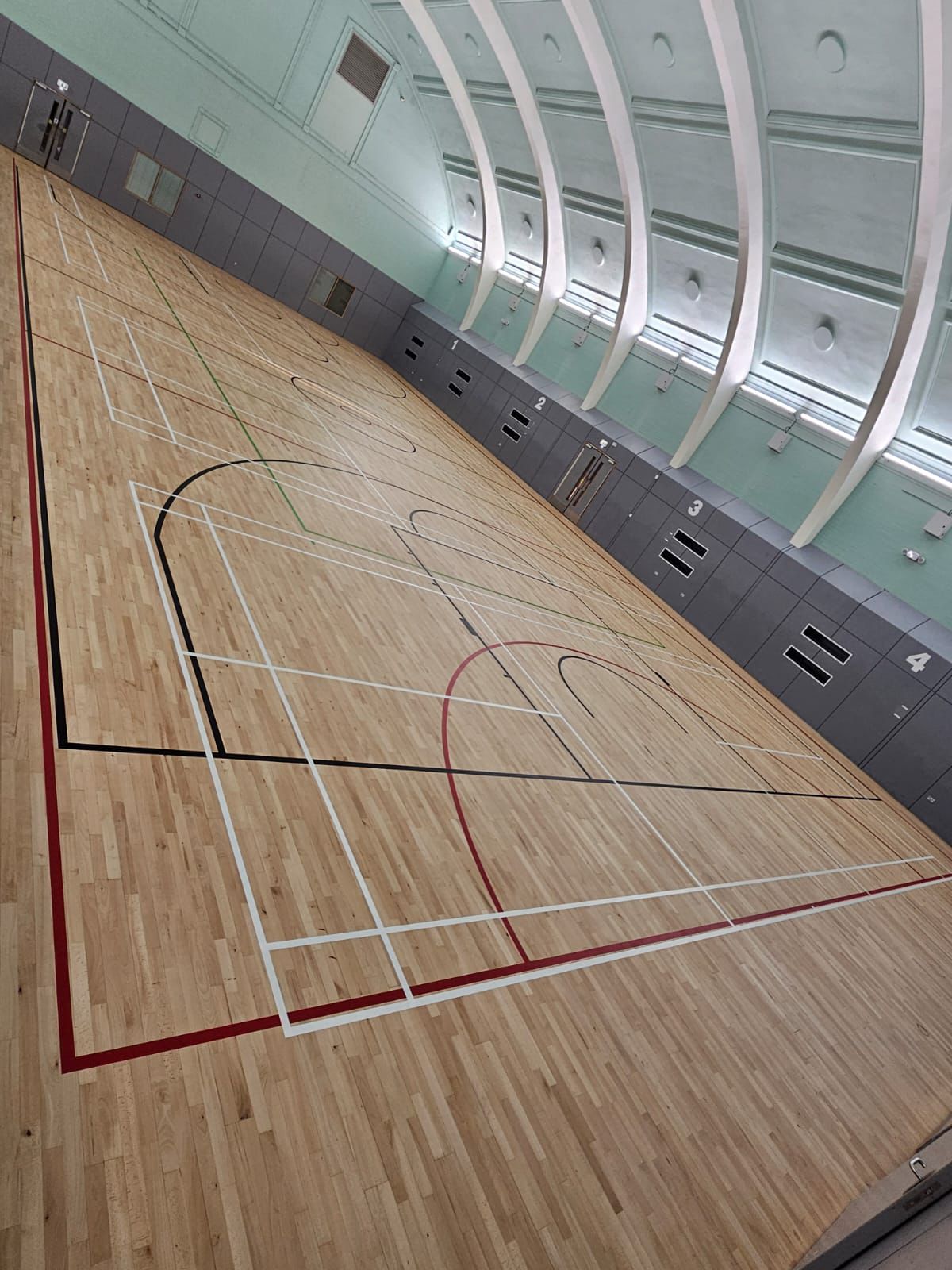
Dining rooms and bars follow the service. Once dinner is cleared, the tables go out, sanding starts and the first fast-drying coats follow; the second night completes the build, and the room is back to breakfast duty within a day or so. Function rooms with a timber dance floor are usually booked weeks ahead, so the work slots in between events; our dance floor sanding covers sprung and laid floors of that type. Leisure suites with a timber studio floor fall under gym floor sanding.

Dates are agreed well in advance, often for the late autumn and winter months when occupancy drops. If the general manager needs to show compliance paperwork to a regional office, ask, and the relevant documents will be with them before the first bedroom is cleared. The room-by-room method is described on our hotel floor sanding page, food and drink premises under restaurant and bar floor sanding, and harbourside or Fleet Street retail units under shop floor sanding. A hotel corridor taking suitcases every day will want sanding to bare wood every four to five years, with buff-and-recoat visits in the winters between. All of it sits under our commercial floor sanding service.

Floor sanding south east London
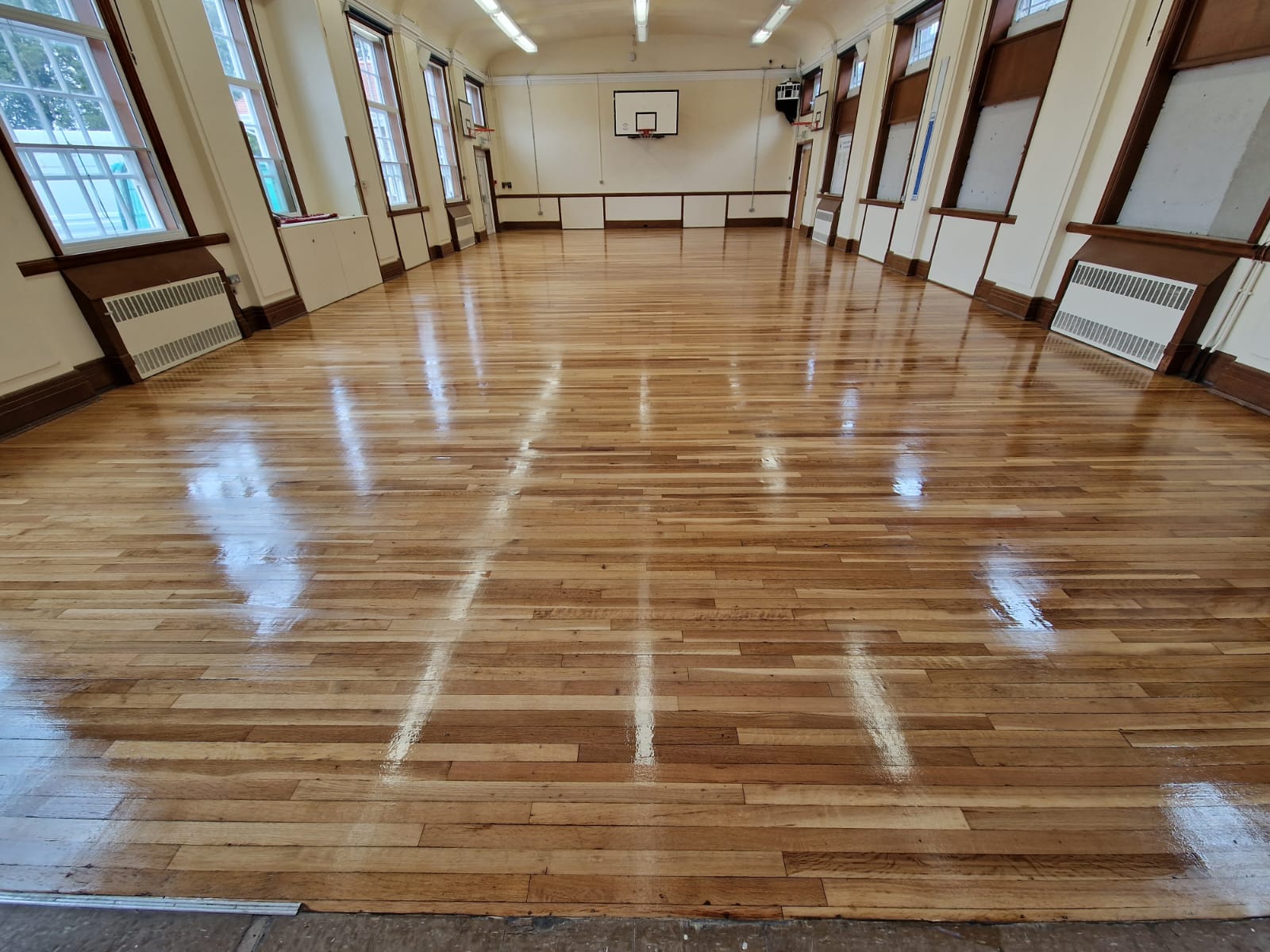
Commercial Hall Floor Refurbishment

Two-Pack Lacquer and Other Finishes for Torquay Floors

For a hotel, the finish decides how long the floor stays presentable, so it is worth understanding what the options actually are.

One-pack lacquer, usually labelled 1K, cures simply by losing its water or solvent to the air, leaving the resin to knit into a skin. It is easy to apply and perfectly adequate in most homes. A two-component lacquer, or 2K, comes with a separate hardener. When the two are mixed, a chemical reaction links the resin into a much tighter network, and the result resists abrasion, scuffing and chemicals far better. That last point matters in a hotel: spilt wine, alcohol-based hand sanitiser and strong cleaning products all mark a 1K film sooner. The trade-off is pot life. Once mixed, 2K has to be used within a set period, so it is made up in small batches as the work goes along. It feels dry within hours, but full chemical resistance takes several more days to develop, which is why rooms should be cleaned gently for the first week.

In a hotel the low smell of water-borne lacquer is a real advantage, as guests next door to the work will not wake to fumes, and the pale timber stays pale. Oil-based lacquers warm the colour noticeably. Oak can react with some water-based products because of its tannins, sometimes producing a greyish or greenish cast, so a test patch or a suitable base coat is used first. More on these options is on our floor sealing and lacquering page.

Private houses have more choice. Hard wax oil leaves boards looking less coated and allows a worn doorway to be touched up on its own, and the wider range of oil finishes suits owners who accept a periodic top-up. Traditional wax finishes are best kept to bedrooms and quiet rooms. Colour changes are possible with floor stains, always trialled on the actual floor first, and a richer shine is available through floor polishing.

Sheen affects safety as well as looks. Breakfast service means orange juice and coffee on the floor most mornings, and a matt or satin lacquer copes with that better than gloss, which both shows the scuffs and looks treacherous when wet. Some lacquers can also take a grit additive for extra grip at a buffet station or bar.

Long Staircases in Tall Torquay Villas, and Herringbone Halls

The stairs in a Torquay villa can be the largest single item on the job. A main staircase that climbs three or four storeys, with half-landings and sometimes a narrower flight with winders up to what were once the servants’ rooms, has a lot of surface and almost none of it is flat enough for a large machine. Treads are usually pine, risers often painted, and a mahogany or painted handrail runs on turned or square spindles. The marks of a carpet runner are almost always there: a worn strip down the middle, painted margins either side and a row of holes where stair rod clips were screwed in.

Each tread is sanded with hand-held machines, then the nosings are shaped by hand so their rounded profile survives. Holes from rod fittings can be filled or, where they are large, the area is let in with a small piece of matching timber. Spindles and handrails are scraped and hand-sanded rather than machined, which is slow but avoids flattening the turned detail. Our stair sanding page covers the process.

Access is the other problem. In a house of flats, or a hotel, the stair might be the only route between floors, so it cannot simply be closed for three days. One practical approach is to finish alternate treads first, leaving every other tread usable, and then complete the rest once the first set has hardened. Work generally proceeds from the top down so the team never traps itself above wet finish. In a converted building the stair may belong to the freeholder, so permission is needed first.

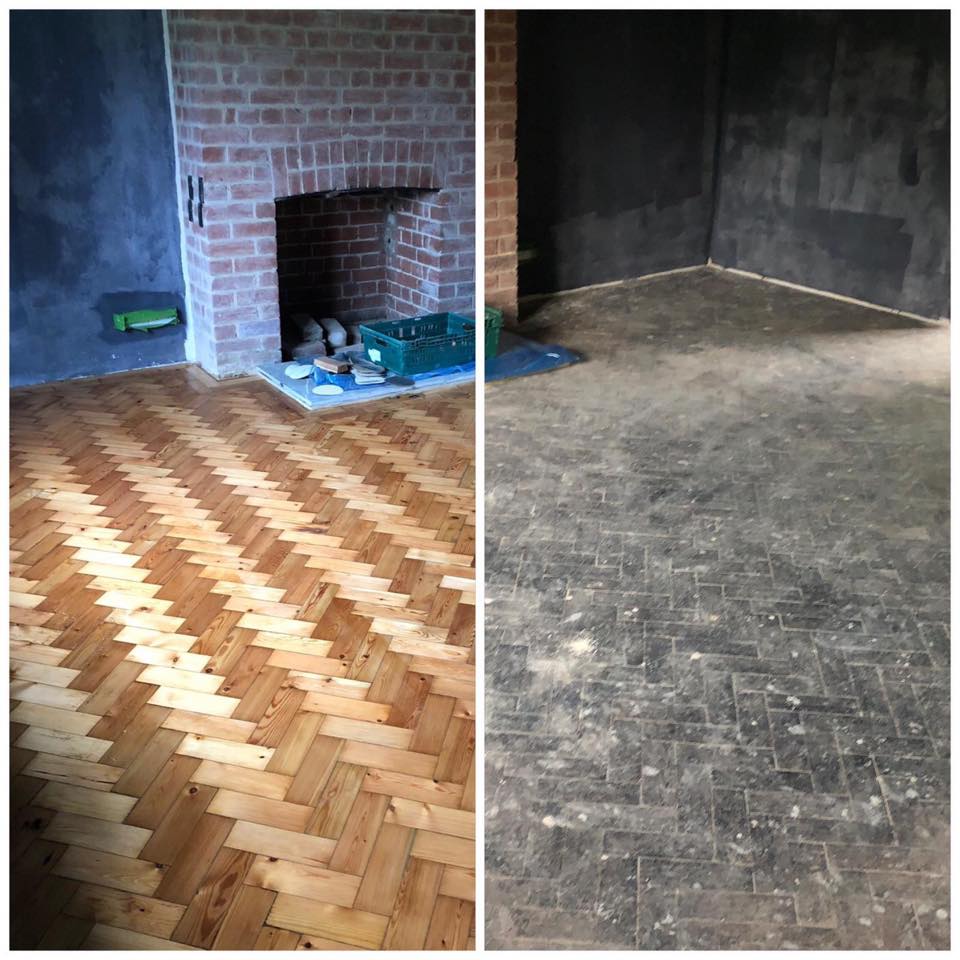
Many of these houses also have woodblock floors in the hall or a front room, and hotels often have parquet in a lobby or lounge. Loose blocks in a hotel lobby rattle under wheeled cases; each one comes up, has its black bitumen scraped back and is stuck down again in fresh adhesive before a sander goes near it, and any lost blocks are replaced from our reclaimed stock. Our parquet floor sanding page covers the method, and our Paignton parquet sand and seal case study shows the result on a floor just round the bay.

Floor Sanding Essex
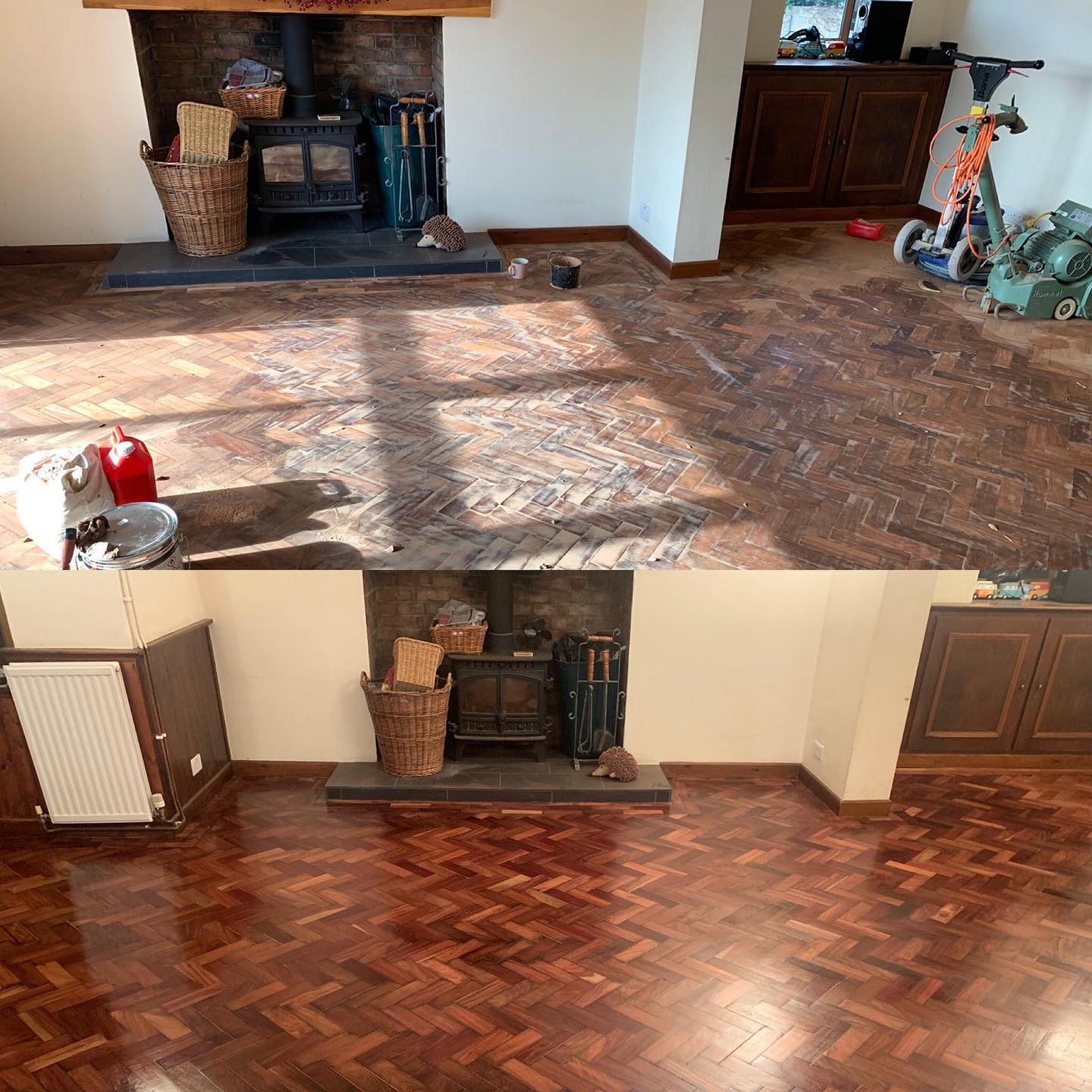
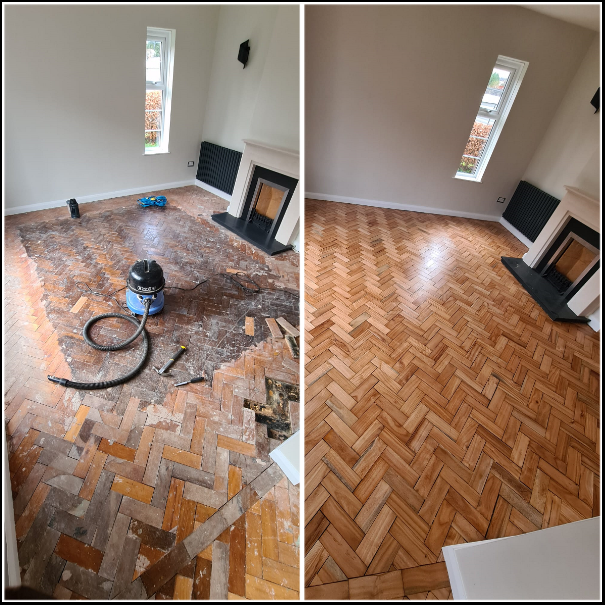
parquet floor restoration near me

Repairing Torquay Floors Cut About by Conversions

When a villa is turned into flats, the floors take a beating. New heating runs, rewiring, soil pipes and kitchen plumbing all go under the boards, and the boards that were lifted to get them there are often cut into short lengths and screwed back down unevenly. Sometimes they are replaced with a square of chipboard or plywood. Before sanding, all of that has to be put right, or the finished floor will show every patch.

The first job is identifying which boards are sound. Short offcuts that wobble are refixed to new noggins between the joists. Boards that are split, rotten or full of old fixing holes are taken out and replaced. Victorian boards were made to imperial widths, which seldom match modern metric stock, so new timber from a merchant rarely sits right. Reclaimed boards of the same width and thickness, which we keep in stock, are the better match, and once sanded they blend in. That work is described under floorboard replacement.

Creaks are common in these houses because joist spans are long and nails loosen over time. Most are cured by screwing the offending board down to its joist once pipe and cable runs have been traced, as our squeaky floor repair page describes. Gaps in a tall villa can be surprising, because the upper rooms run warmer than the lower ones; narrow stable joints take a resin-and-dust filler, wider ones get pine slivers, both explained under gap filling. Scorch marks in front of old fireplaces, and furniture gouges from decades of guest-house use, are treated as scratch and burn repairs when sanding them out would thin the board too far.

These jobs are grouped under wooden floor repairs, and they can be done on their own. Most of the old boards in Torquay are softwood, so pine floor restoration is the usual end result, though oak strip turns up in later houses and the occasional villa, and oak floor restoration follows a slightly different approach with less filling and different finishes. Sound structure first, surface second: that order is the core of our wood floor restoration service.

After the Final Coat: Upkeep, New Floors and First Steps in Torquay

In a hotel, how the housekeeping team cleans the floor matters as much as the lacquer chosen. Many all-purpose cleaners are strongly alkaline, and over months they soften and dull a lacquer film. A pH-neutral wood floor cleaner applied with a damp microfibre mop, never a steam mop, will keep the finish in good condition much longer. Luggage trolleys with hard wheels should have rubber tyres, and dining chairs need glides. Entrance matting long enough to catch two or three strides stops grit from the street and the beach before it reaches the timber.

In a home, rooms are usually back in use quickly. In a private flat, plan on a sock-footed day after the final coat, then leave the heavy furniture out for another day or two. A flat in a converted villa is often done in one or two days; a whole house with a long stair nearer three.

The finish will dull before it wears through. At that point a machine buff and a fresh coat of lacquer restore it without sanding to bare wood; floor buffing and recoating explains when that works. Hotels often book this once a year in the quiet season. A domestic floor, looked after, should not need a full resand for roughly eight to ten years.

Where a refit takes a wing back to bare joists, new boards may make more sense than salvage. We can install them, or hand the timber over to the main contractor, with Junkers and Bona among the brands available. Ask about wooden floor installation when we visit.

Hotel or home, floor sanding in Torquay starts with a pair of pictures: a wide shot taken from the door, plus a close-up of the most worn patch. For a hotel, a floor plan marking the rooms involved helps too. After that comes a free visit lasting around thirty minutes, and then a written quote broken down item by item. Upload the images, plus a plan if you have one, through our contact page; the inbox is info@ryansrestoration.co.uk. Managers who would rather discuss phasing by phone will find the office line, 01823 674562, staffed through the working week; Saturday visits can be arranged. We also work across the bay, with floor sanding in Paignton covered on its own page.

Parquet Flooring Restoration

Torquay Floor Sanding Questions

In most cases, yes. We break the hotel into parcels. A handful of bedrooms come off sale at once, each corridor is tackled overnight between fire doors with a rapid-cure lacquer, and the restaurant is sanded after dinner and ready again for breakfast or soon after. The plan is agreed with you in advance so guests are always able to reach their rooms and the exits.

Two-component lacquer reacts with a measured dose of hardener stirred in on site, and that reaction gives a far tougher film, one that resists alcohol, detergents and scuffing. For corridors, dining rooms and bars it is usually the right choice, because it stands up to luggage wheels, spills and strong cleaning products for much longer. Most homes do well with a single-pack product.

With fast-curing finishes, a dining room can often be sanded and coated over one or two nights and back in service the following morning or the morning after. For the first week the lacquer is still gaining hardness, so housekeeping should stick to a barely damp mop and neutral cleaner and keep strong chemicals away.

Check your lease. Many leases for flats above other flats require carpet or an acoustic underlay, and exposing bare boards without permission can cause trouble with your neighbours or the freeholder. If the lease allows it, the boards can be sanded as normal, and rugs in the busiest areas help reduce noise below.

Usually, yes. We coat odd-numbered steps first, leaving the even ones to tread on, and come back to the remainder when the first batch is hard. This takes a little longer but means people living or staying upstairs can still get to their rooms. Landings are done in sections for the same reason.

Sample patches go down on boards in a corner of the actual room, so the shade you approve is the shade you get. Pine and oak take stain differently, and the same stain looks different on each, so a sample on the actual floor is the only reliable guide. In busy areas, mid-tones are more forgiving than very dark or very pale colours.

Yes. Yes. Yes. Before the first night shift we can email the paperwork a Torquay hotel or guest house usually asks for, covering how each phase will run, our insurance and contact details for previous commercial clients. If your insurer or head office needs particular documents, let us know when you book so everything is ready ahead of the start date.

Very much so. Torbay is regular territory for us, for houses and flats as well as hotels and bars. The family business has been at this since the 1980s from its Somerset base near Wellington, and Torbay is a routine trip for us. Photographs sent first help us advise you before any visit.

Begin with photos sent to info@ryansrestoration.co.uk; a hotel may prefer to call 01823 674562 and talk through dates first. A free half-hour visit is then booked, and its findings go into an itemised written quote. For larger commercial jobs, mention your preferred dates early so they can be held for you.