Floor Sanding Chelsea

A Chelsea floor sanding company with over 45 years experience in commercial and domestic wooden floor restoration.

QUICK QUOTATION

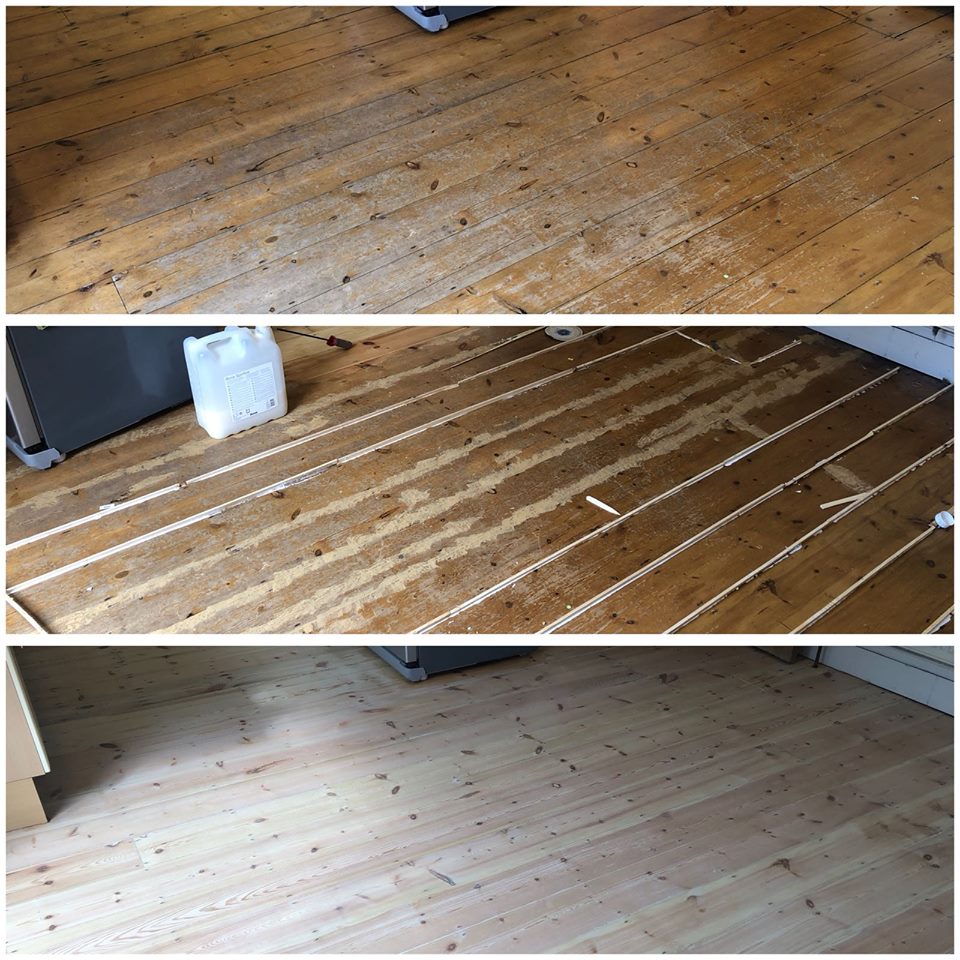
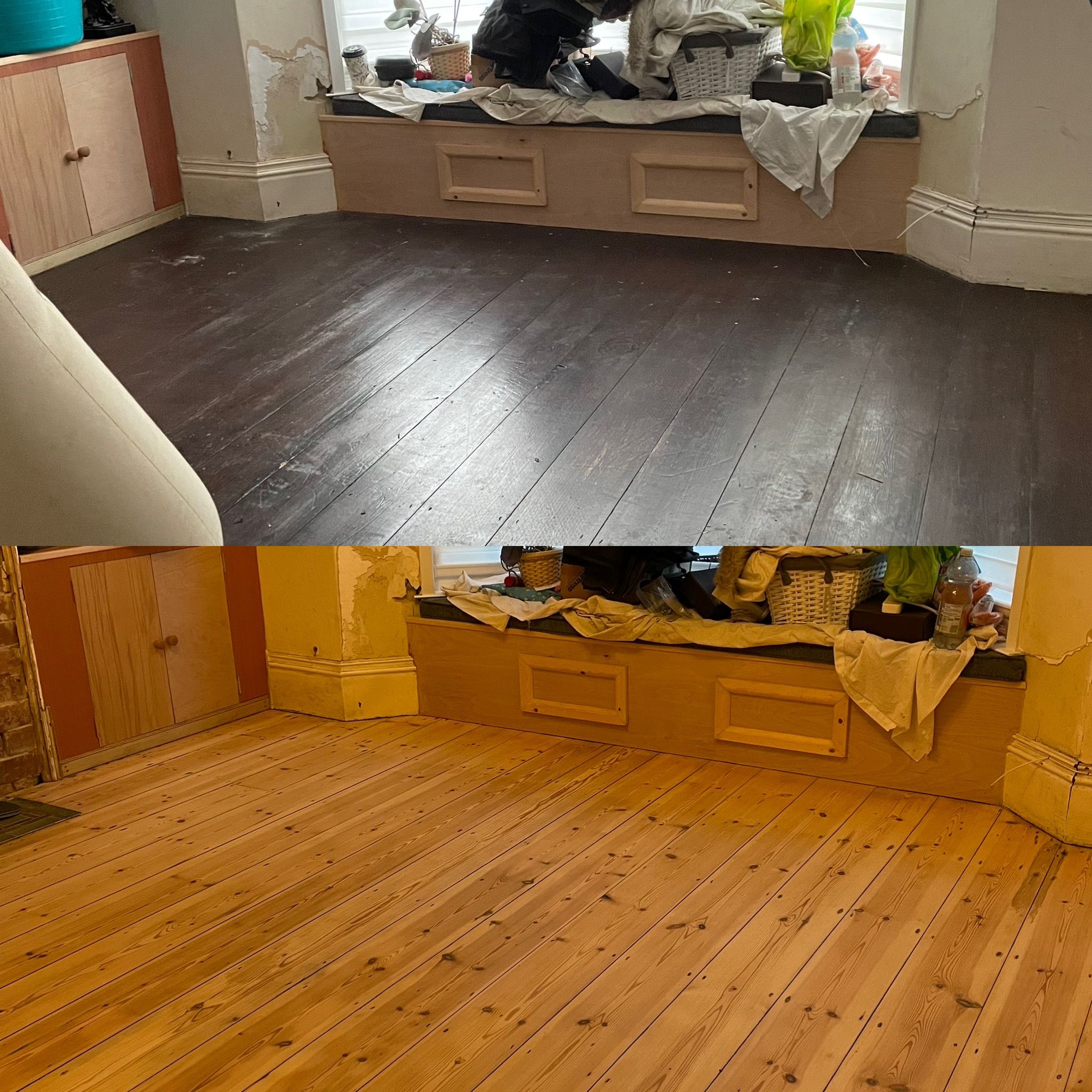
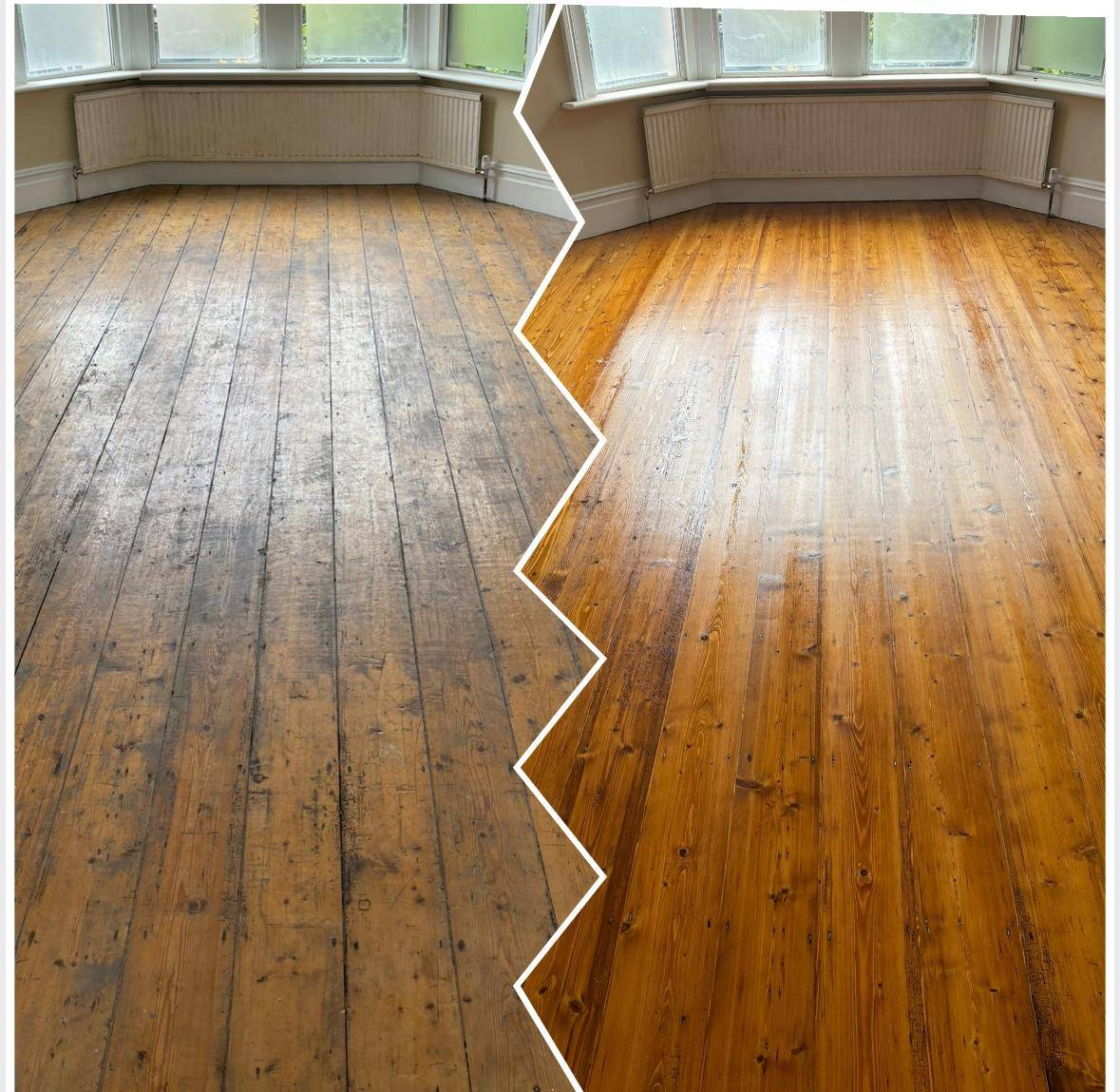
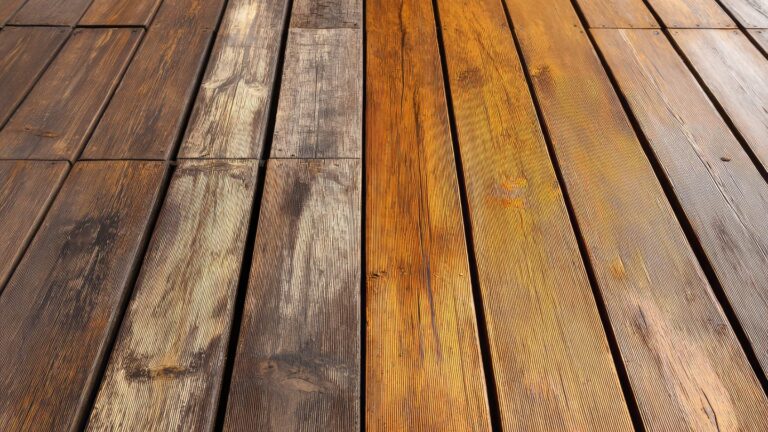
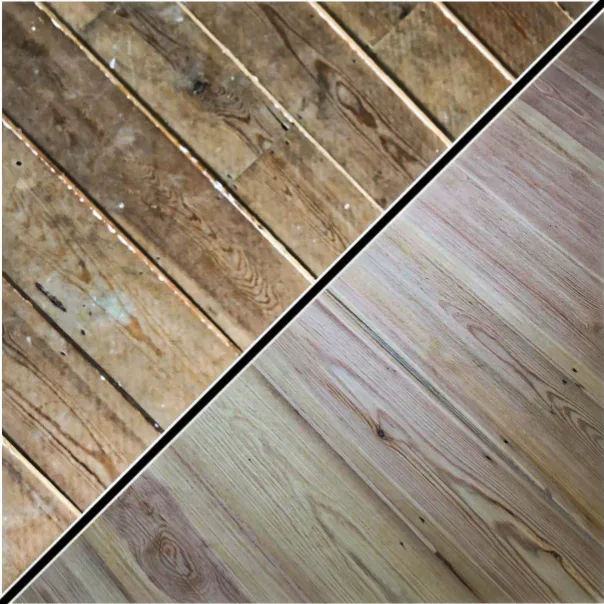
Floor sanding before and after

Floor Sanding in Chelsea

Ryan’s Restoration provides wood floor sanding throughout Chelsea, from the terraces off the King’s Road to riverside apartments and mansion flats. We are a family-run firm with more than 45 years’ experience, and the job is always the same at heart: take the floor back to sound, clean timber, repair what needs repairing, and build up a finish that suits the way the room is lived in.

Boards in Chelsea houses have frequently been refinished before, so we check how much timber remains before quoting. You get a straight answer about whether the floor will sand well, and a fixed written quotation before anything begins. More on our wider London work is on the floor sanding London page.

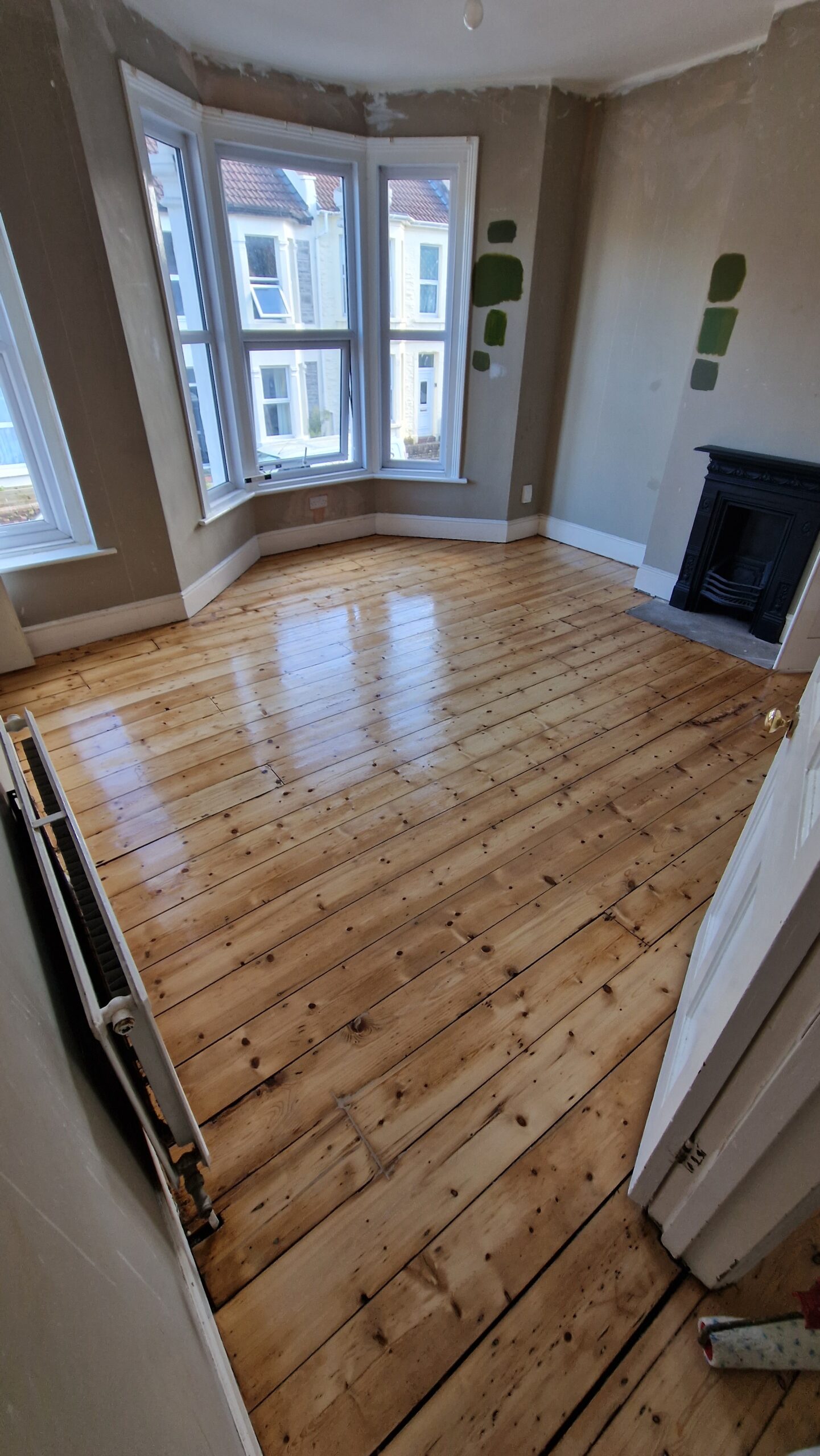
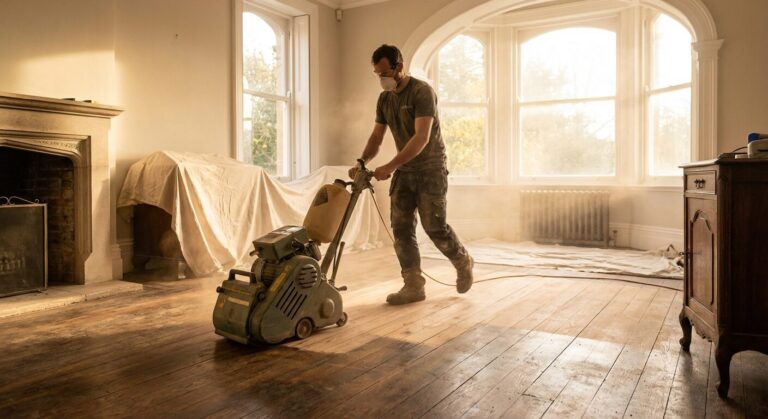
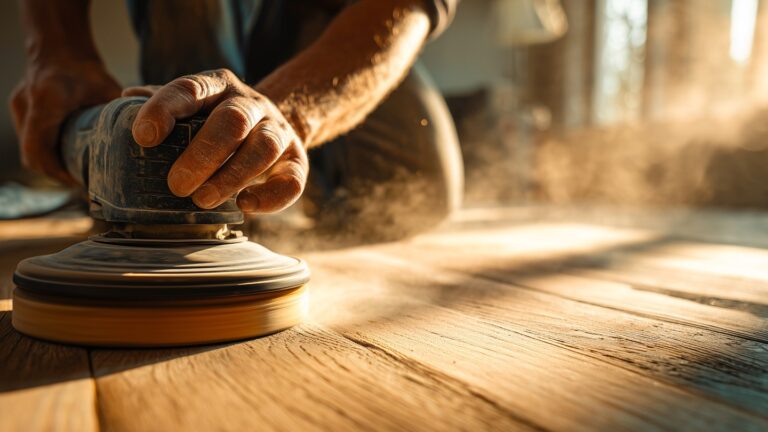
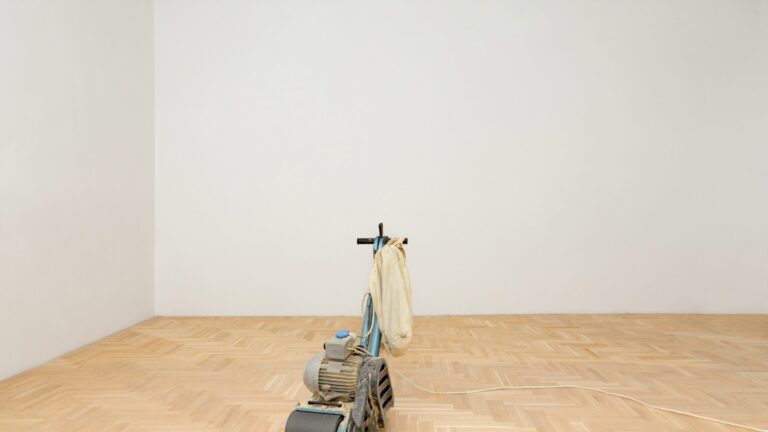
Here is how a typical job actually unfolds. Before any machine is switched on we punch every protruding nail below the timber and lift old staples, because a single missed fixing will tear an abrasive belt. The first cut is coarse enough to remove the existing finish and flatten any cupping; each pass after that uses a finer paper whose only job is to remove the scratches left by the one before. We hoover the floor and run a tack cloth across it between grits — stray coarse particles under a fine belt are how swirl marks happen — and always finish sanding along the length of the boards.

The big belt machine only reaches to within a few inches of the skirting, so the edges are cut with a dedicated edging sander and the true corners, stair nosings and pipework recesses are scraped and sanded by hand. Done properly, you cannot tell where one machine stopped and another started.
Commercial Floor Sanding in Chelsea

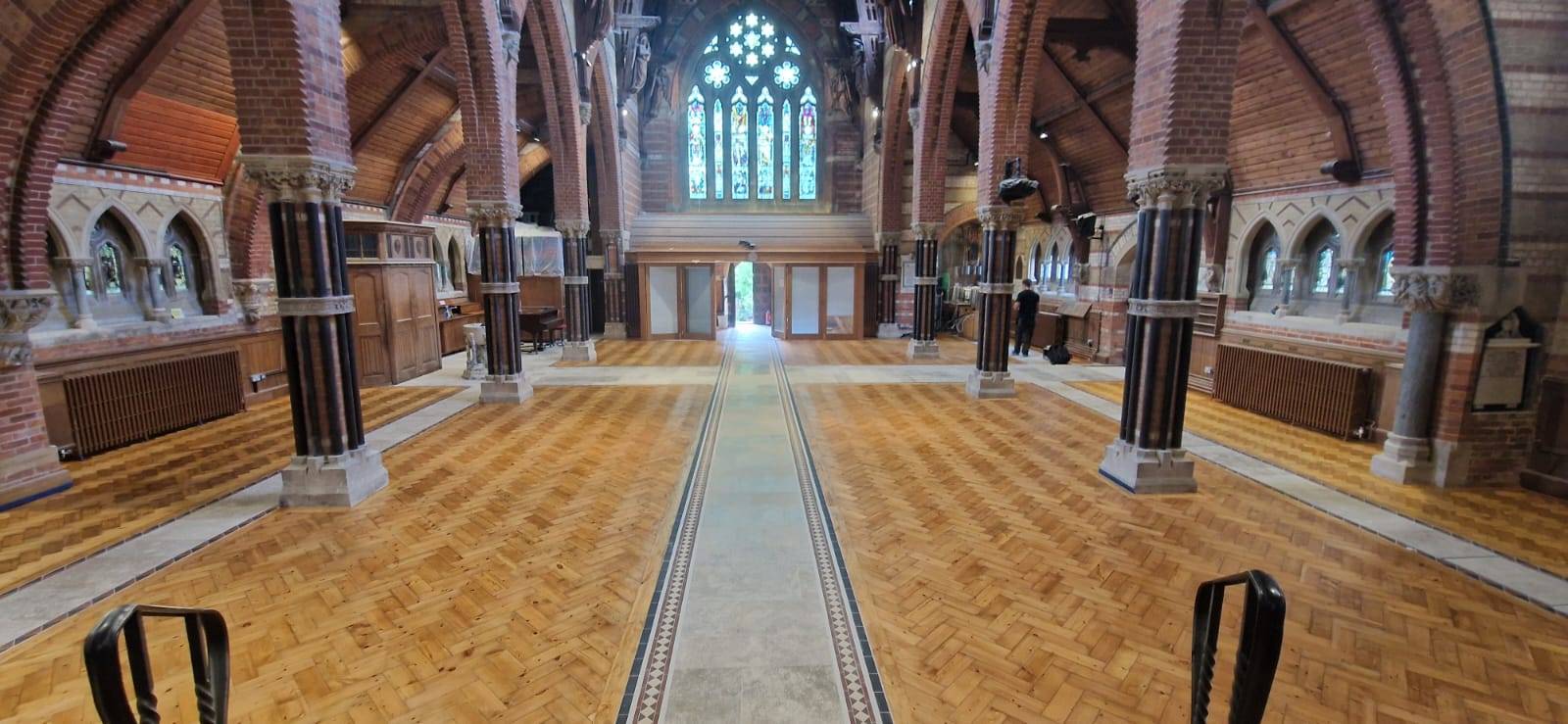
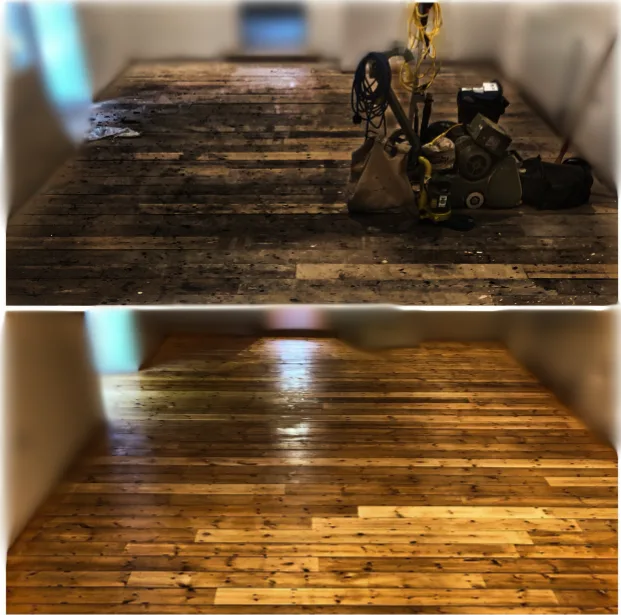
Our commercial floor sanding service keeps Chelsea businesses trading while their floors are brought back. We work overnight and at weekends as standard, provide method statements and insurance documentation in advance, and use fast-curing finishes so the space is usable again by morning.

Typical settings include restaurants, boutiques and shops, hotels and gallery spaces. Details of larger contracts are on our commercial floor sanding in London page.

A boutique or office turnaround usually runs Friday night to Monday morning: strip and sand on the first night, repairs and filling as we go, then successive coats of a hard commercial lacquer with proper drying windows between them. We tell you in advance when the floor will take foot traffic, when display units and furniture can be moved back, and when protective felt pads should be fitted — walk-on time and full cure are days apart, and rushing the second is what shortens a finish’s life. Barriered, phased working is available for floors that cannot be cleared in one go.

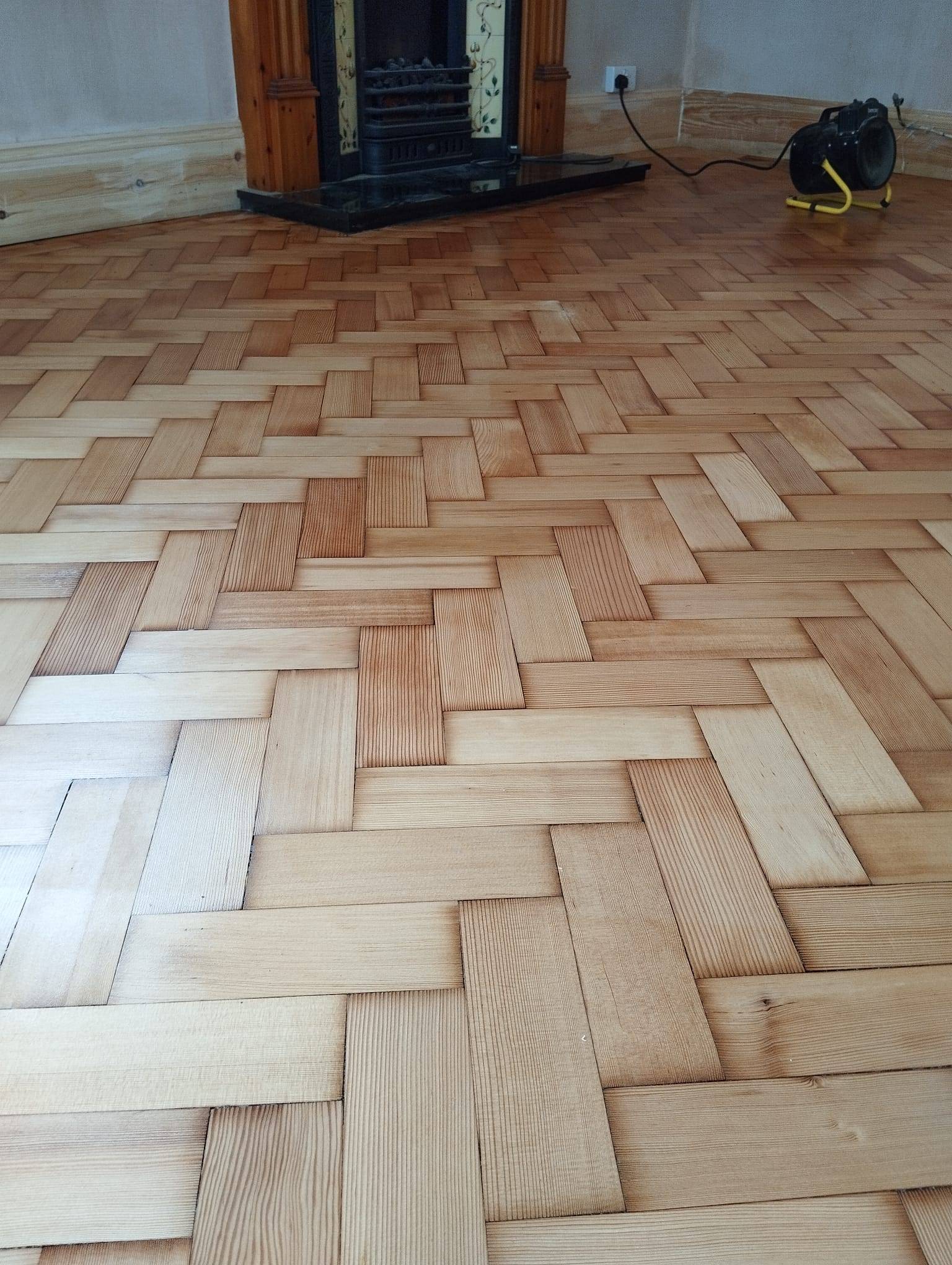
parquet wooden floor sanding
wooden floor sanding

Repairs, Board Replacement and Gap Filling

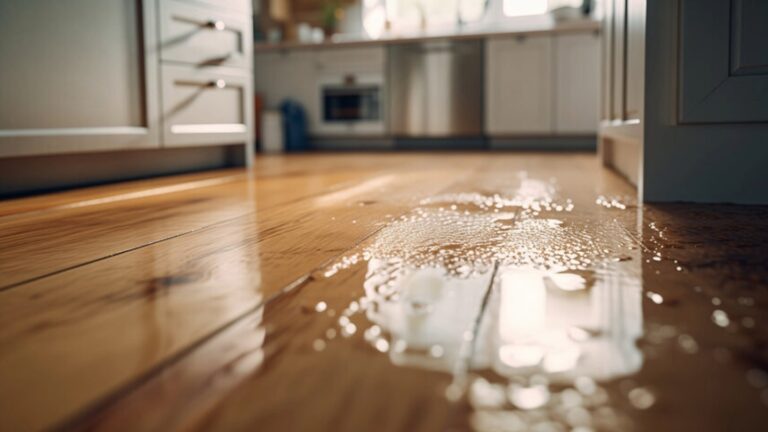
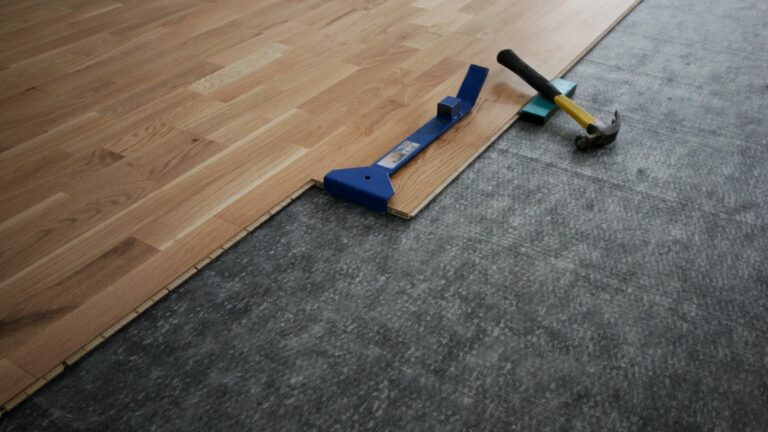
A good result starts with a sound floor. Our wooden floor repairs cover split, burnt and water-marked boards, and where a board is past saving we carry out floorboard replacement using reclaimed pine from our own stock, chosen to sit naturally alongside period timber.

We silence squeaking boards by securing them back to the joists, blend out scratches, and offer gap filling to stop draughts and dust rising between boards — worth having done at the same time as sanding.

We are honest about the line between repair and replacement. A board with a clean split can be spliced; localised burns and stains can often be cut out and pieced-in with a short length of matching timber rather than losing the whole run. Replacement only wins when rot, woodworm or repeated sanding has left too little material to work with. Our reclaimed stock is sorted by width and thickness as well as species, because a Victorian pine board is a different animal from anything sawn today — and even then we choose pieces whose wear and colour sit quietly among the originals.

Gap treatment is matched to the gap. Fine, stable joints take a resin filler bound with dust from your own floor; anything wider gets glued timber slivers, planed flush, which hold up far better where boards still move seasonally.

Parquet and Block Floor Restoration

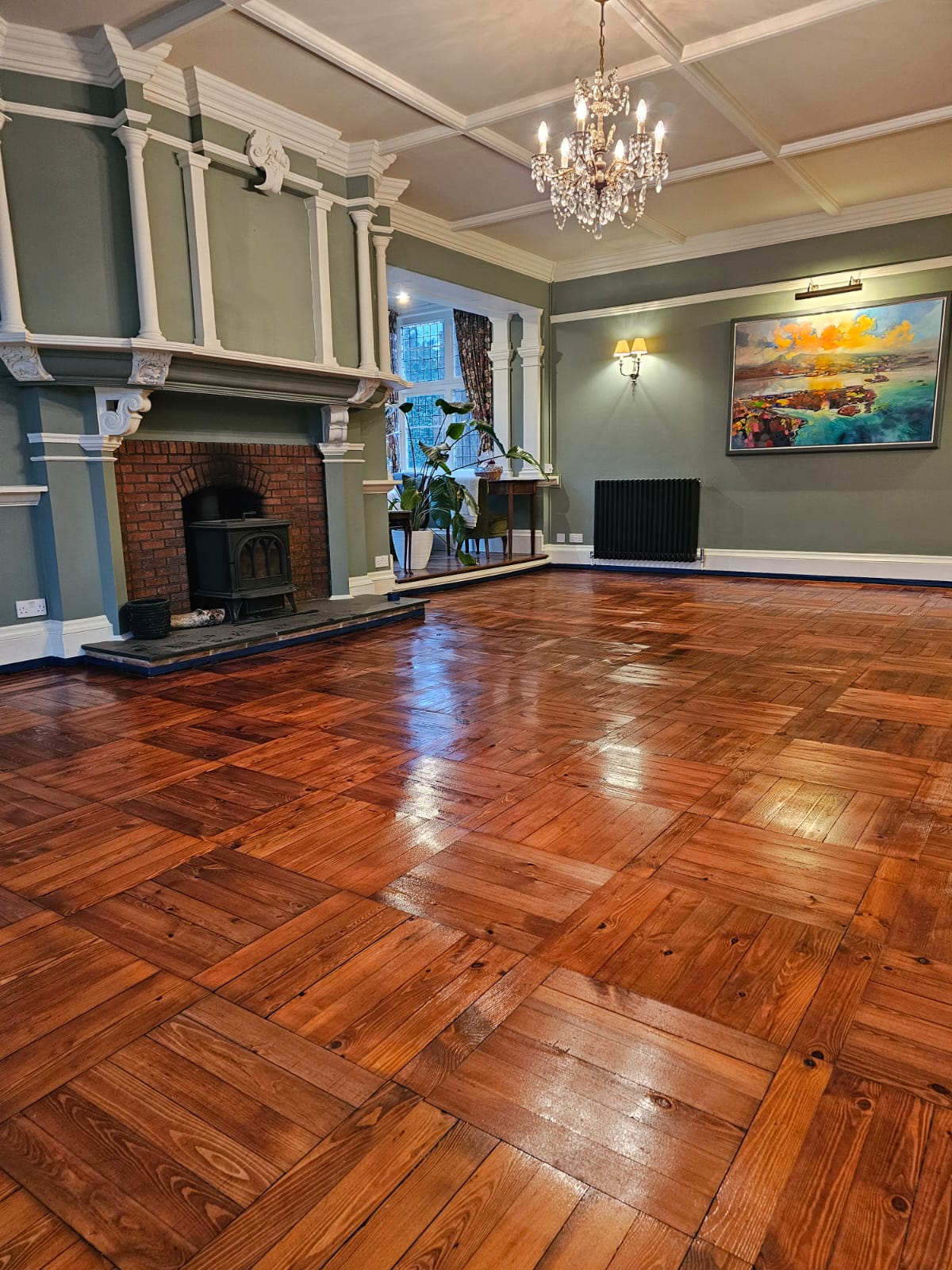
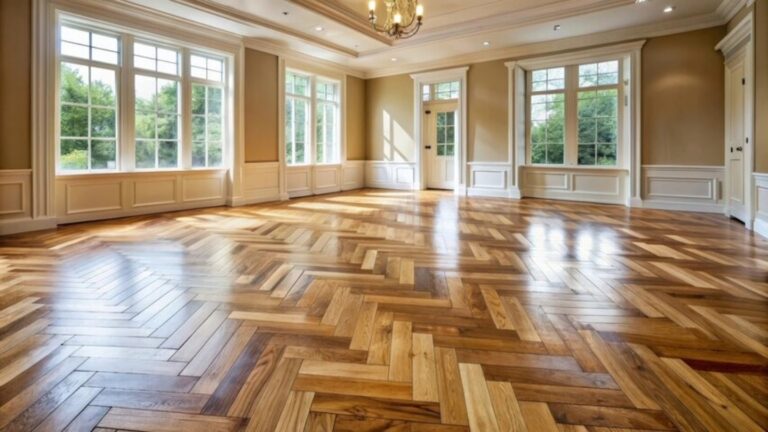
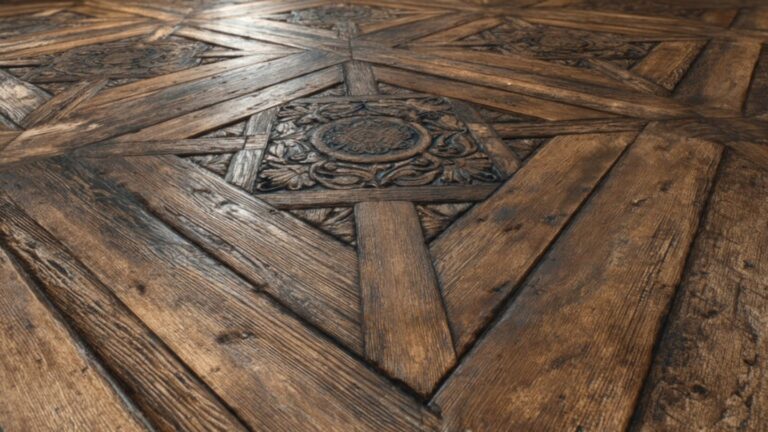
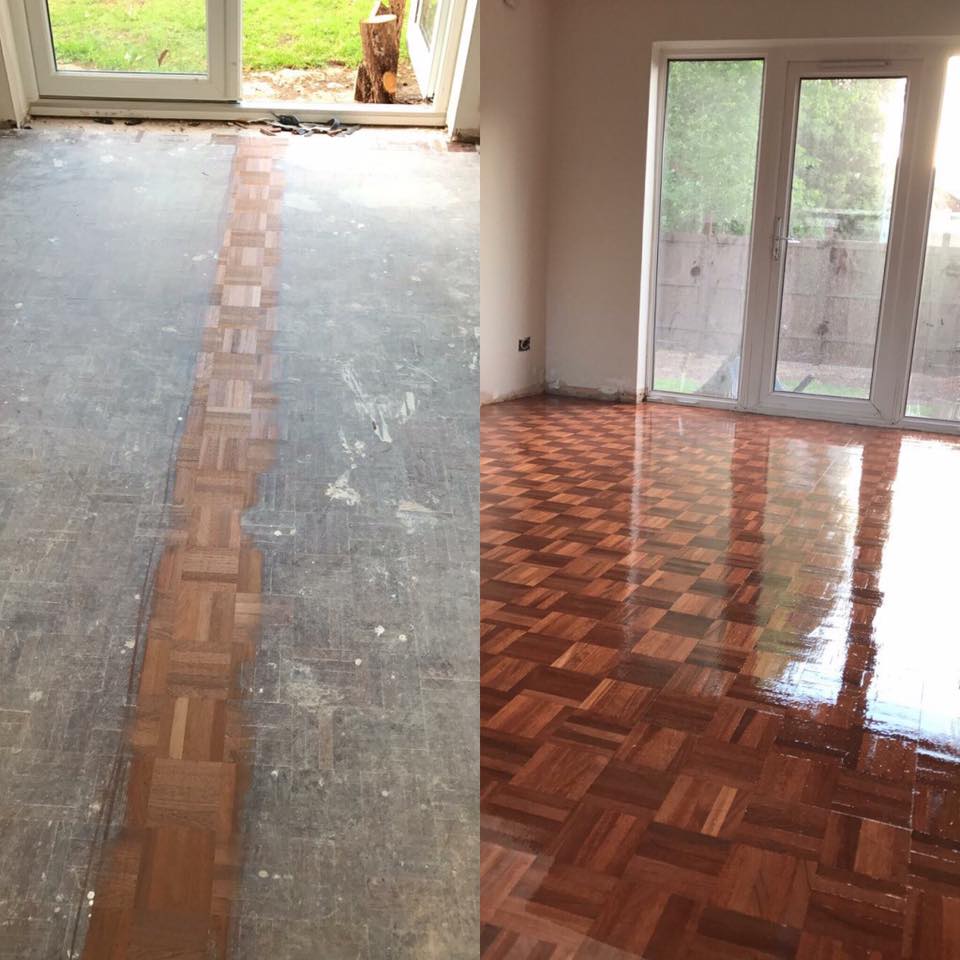
Chelsea’s mansion blocks and larger houses hold a lot of herringbone, and parquet floor restoration is a service we particularly enjoy. Lifted and drummy blocks are re-bonded, missing blocks are cut and fitted to match, and the pattern is sanded flat with machines run diagonally so no grain direction is favoured.

Old bitumen, ingrained polish and uneven earlier repairs all come out in the process. Once filled and finished, a block floor of this age has decades of service left in it.

Blocks laid before the 1960s usually sit on black bitumen, and dealing with it properly matters. When a loose block comes up we scrape the bitumen back to clean timber and level the void beneath, then re-fix with a modern adhesive that stays slightly elastic — gluing over old bitumen is a repair that fails within a year or two. For missing blocks we cut replacements from our reclaimed timber, matching thickness first and colour second, since a block that stands proud will telegraph through every later sanding pass. The joints are filled with resin and fine dust from the floor itself so the finished surface reads as one piece.

flooring sanding company
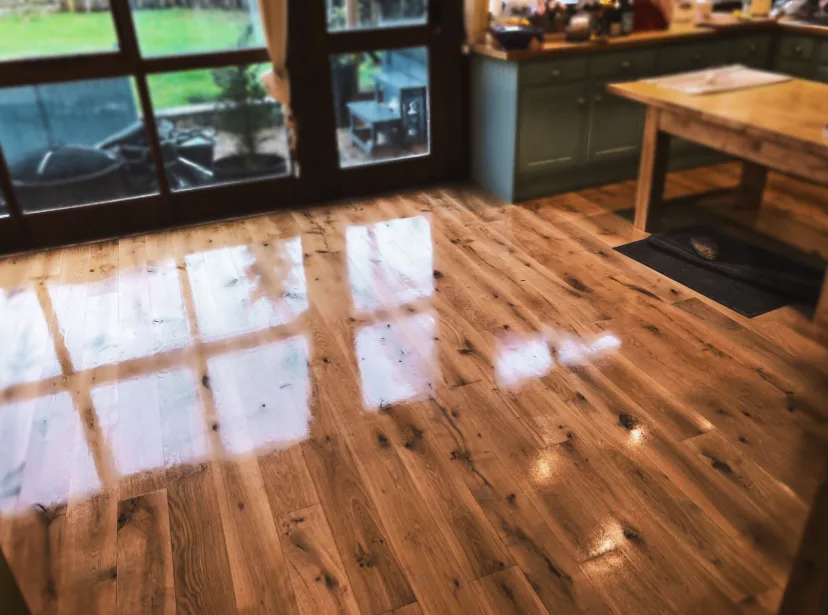
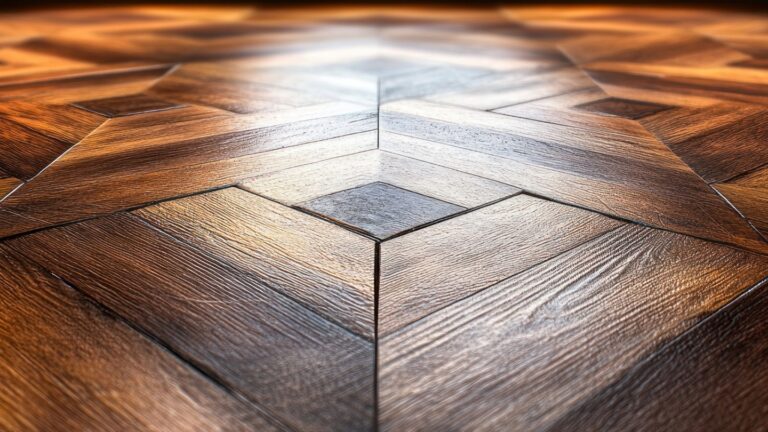
Sunlight across freshly lacquered wooden floorboards

Colours and Finishes: Stain, Lacquer, Oil and Wax

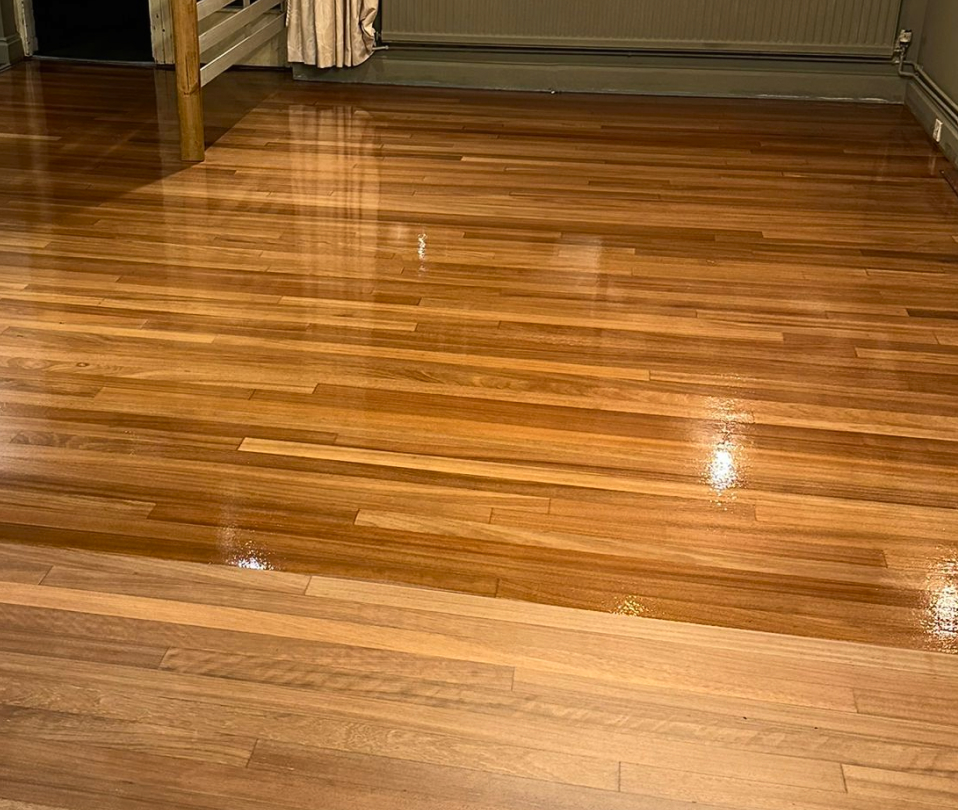
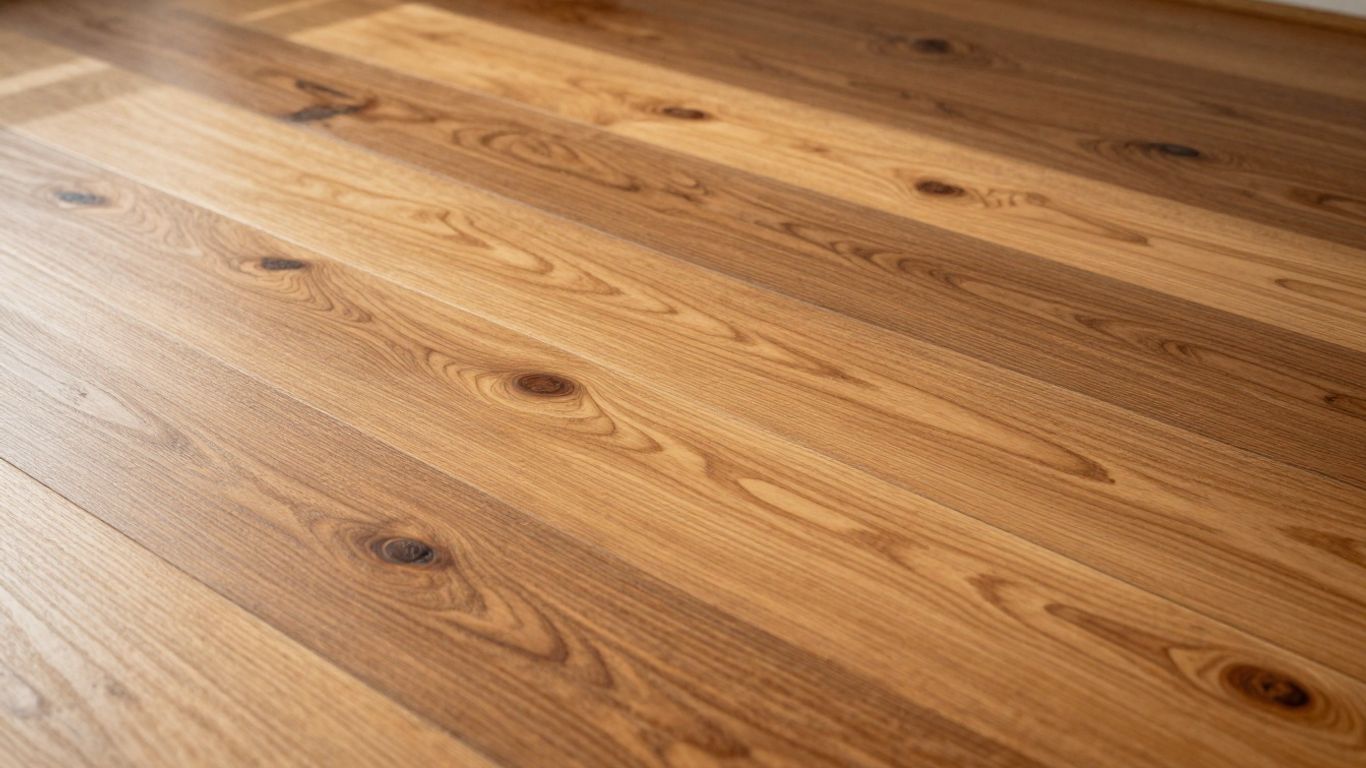
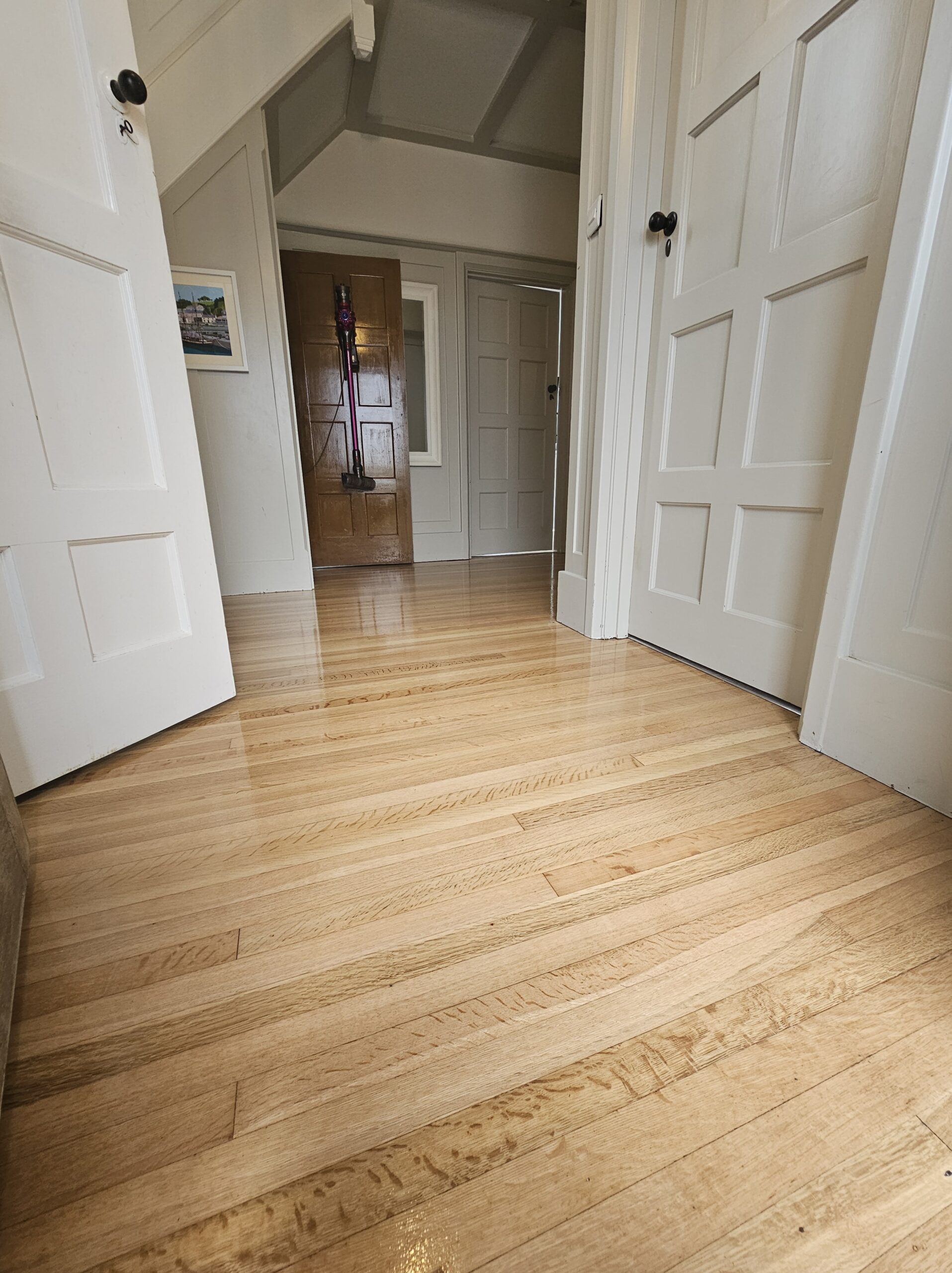
Finishing is where the character of the floor is set. Staining can take pine down to a deeper tone or neutralise orange tints; sealing with a modern lacquer gives the toughest everyday surface; oiling keeps a natural, matt character; and waxing suits period interiors where sheen would look wrong.

We sample finishes on your own floor during the free survey rather than asking you to choose from a brochure. Down the line, buffing and recoating keeps the surface fresh without another full sand.

Stain testing is part of the survey, not an afterthought. Old pine takes colour unevenly — dense late-growth grain resists stain while soft early growth drinks it — so a shade chosen from a chart can land two tones darker on a real floor. We put the shortlisted colours onto a sanded patch of your own boards, seal over them, and let you judge in the room’s own light. It is also worth knowing the difference between drying and curing: most lacquers walk in hours but harden fully over days, and a hardwax oil wants its first proper wash left even longer.

Working in Chelsea Flats and Period Houses

Flats bring paperwork, and we are used to it. Managing agents and freeholders receive written specifications, insurance details and proposed working hours before we start, and where a lease calls for acoustic underlay we include it in the specification. We keep to sociable hours and plan parking and access around permit zones and porters.

Our dust-free process uses sealed extraction that captures the overwhelming majority of dust at source, so corridors and neighbouring rooms stay clean. Very thin floors that will not take another sand can often be revived instead — see restoring wood floors without sanding.

In occupied homes we sequence the work so life carries on around it: bedrooms first while living space stays furnished, or the reverse, with furniture shuffled room to room rather than into storage. Protective sheeting runs from the front door to the work area, service lifts are booked where a block has one, and machinery only runs during the hours the building allows. We favour water-based finishes in occupied flats — the odour is minimal and each coat can be walked on in socks within a few hours, which keeps the household moving.

Wood floor sanding company
Floor sanding taunton

Get a Floor Sanding Quote in Chelsea

Two photographs are enough for us to give an honest opinion — one showing the whole room, one close-up of the roughest patch — and we follow that with a fixed written quotation. If you would rather we looked in person, the site survey is free and carries no obligation.

Call 01823 674562, email info@ryansrestoration.co.uk, or use the form on this page.

All services available in Chelsea: sanding, parquet, floor repairs, board replacement, gap filling, staining, sealing, stair sanding and installation.

Nearby areas we also cover: London, Kensington, Dulwich and Greenwich. There is a page for each, and the full list of towns is on our areas we cover page.

FAQ: Floor Sanding in Chelsea

Everything from full sanding and refinishing to parquet restoration, board repairs and replacement, gap filling, staining, sealing, oiling, waxing, stair sanding and fitting new wooden floors.

Yes — overnight and weekend working is how most of our commercial jobs run, so the doors open as usual the next day.

Usually repair. We splice in matching reclaimed timber where needed and replace only boards that are genuinely beyond rescue, which keeps the character of the floor intact.

Very much so. Re-bonding, patching and sanding flat brings back a floor that will outlast almost any replacement, and matching blocks can be cut for gaps.

Stains and tinted finishes give a wide range of tones, and we trial them on your own boards during the survey so you see the real result first.

Engineered floors with a decent wear layer can usually be sanded at least once — we measure before advising. Laminate has no real wood to sand.

Sealed extraction on every machine traps the overwhelming majority of dust at source, we screen doorways, and all waste goes with us at the end of each day.

Email two photographs for an honest opinion and a fixed written quotation, or arrange a free no-obligation survey on 01823 674562 or through the form on this page.

Light furniture can usually return after a day or two on felt pads, but rugs and heavy pieces should wait until the finish has fully cured — typically around a week for lacquers, and we confirm exact timings for the product used on your floor.

Yes. We cut replacement blocks from reclaimed timber, matched for species and thickness, and fit them before sanding so the repair blends into the finished pattern rather than sitting on top of it.