Floor Sanding in Frome, Day by Day
People often ask what will actually happen once we arrive, and how long they will be without the room. For most floor sanding in Frome the honest answer is between one and three days, and it helps to know what fills them.
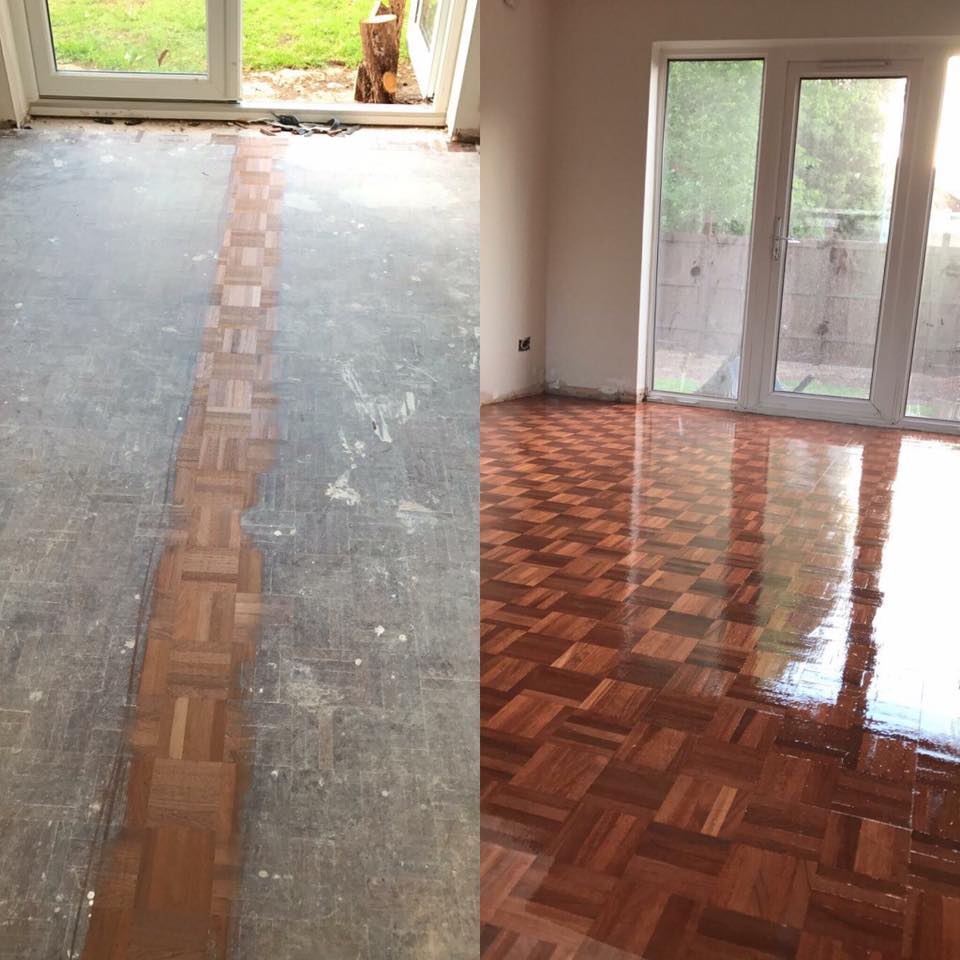
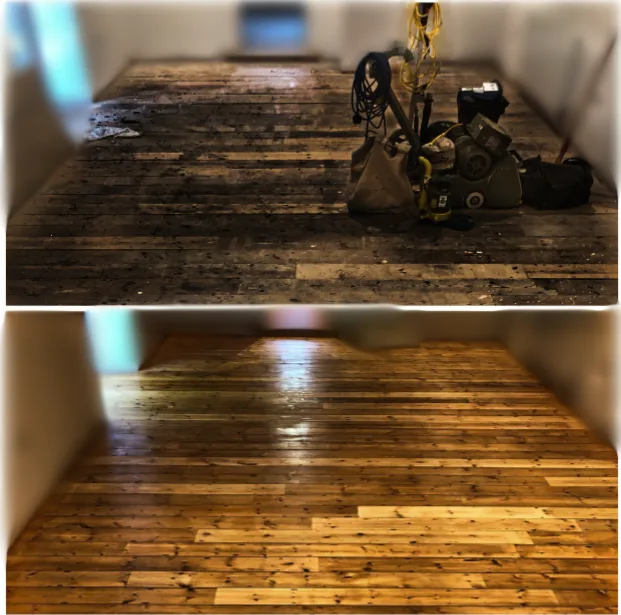
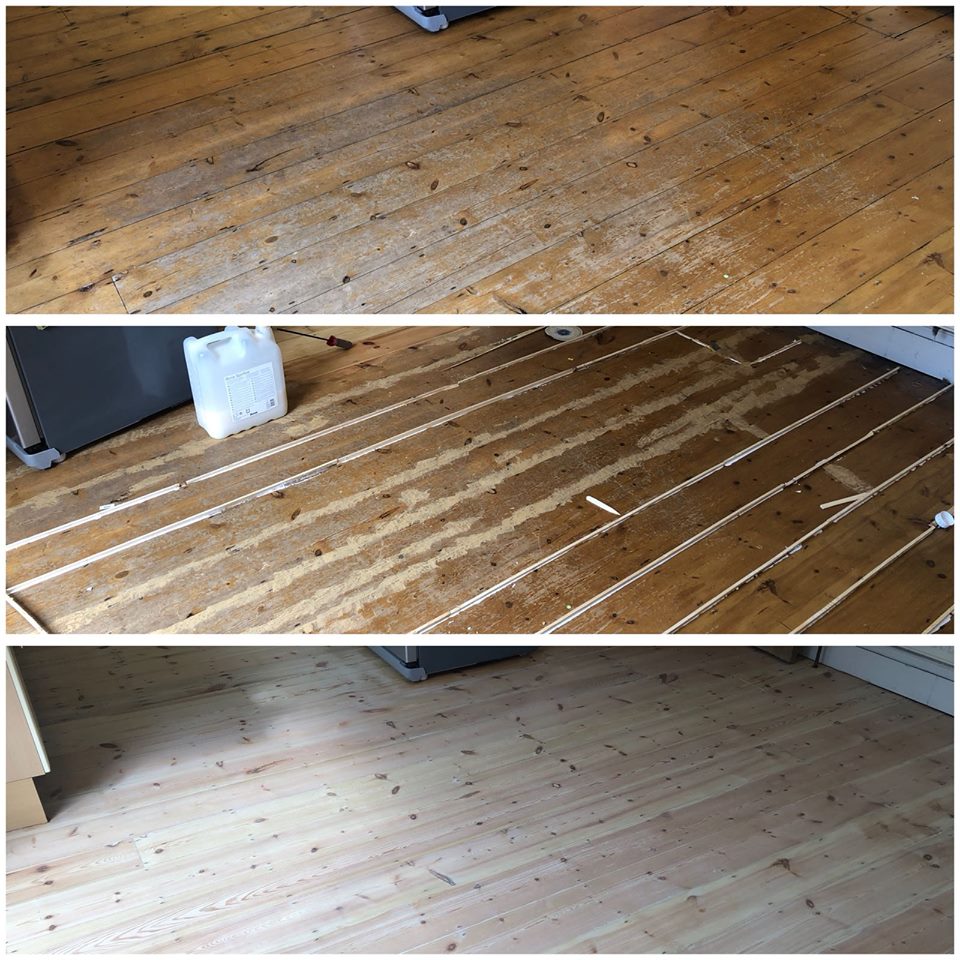
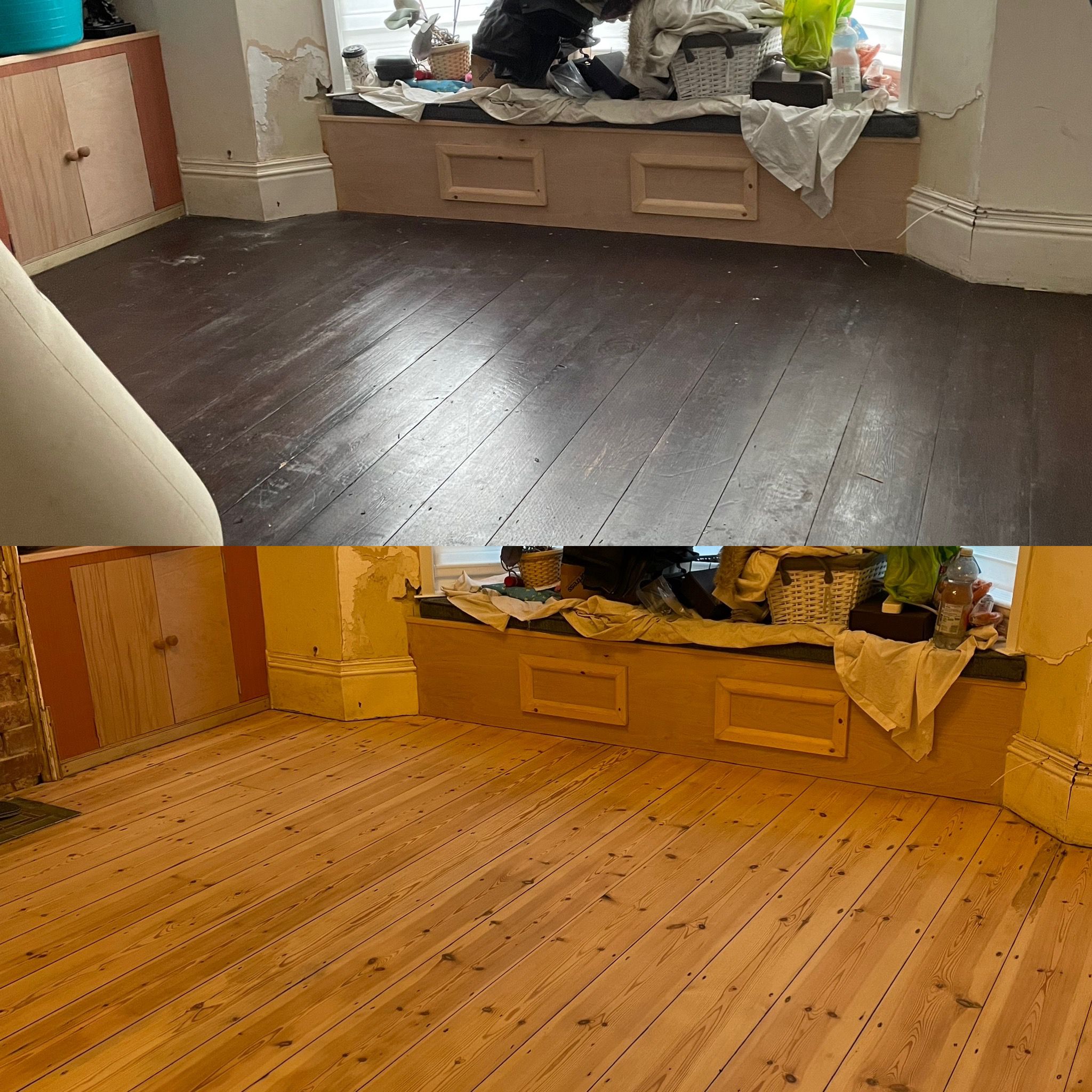
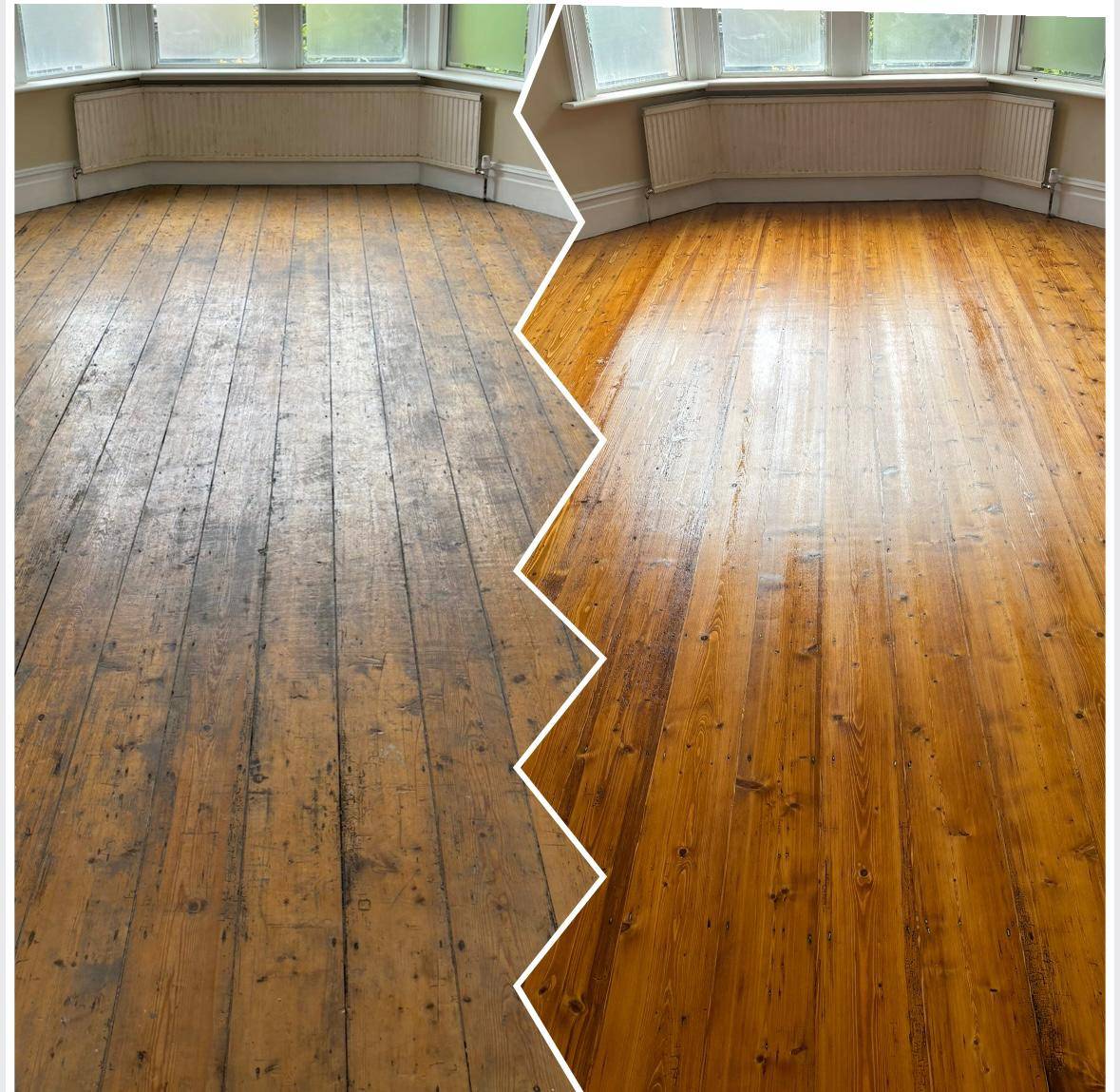
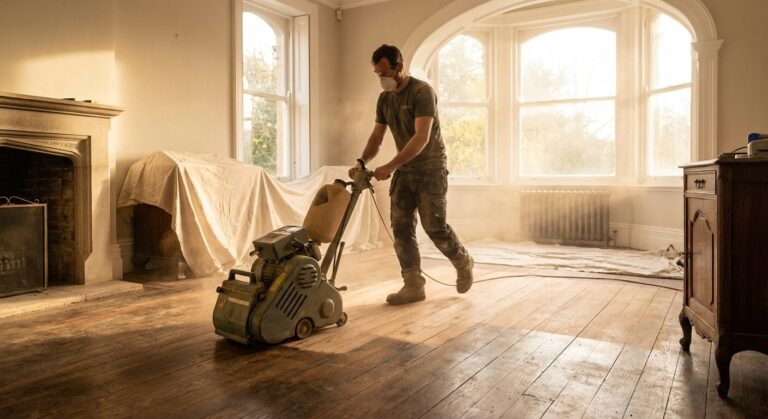
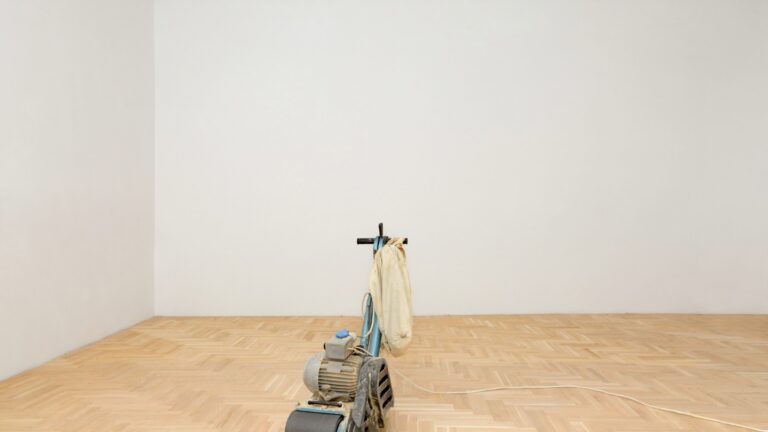
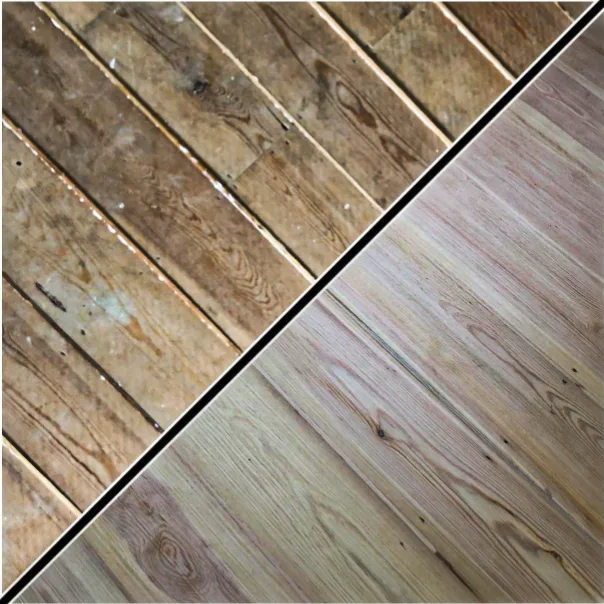
Day one usually starts with protection. Doorways are sheeted, radiators and fixed furniture covered and the room checked for anything that would snag a machine: carpet gripper, staples, tacks, protruding nail heads. Nails are punched below the surface and loose boards screwed down. Then the main belt sander makes its first, coarse pass to strip old varnish or paint and take out any cupping. On an old floor in one of the town’s cloth workers’ cottages that first cut tells us a great deal, because it reveals where boards have been patched, where gaps are widest and whether any damage hides under the old coating.
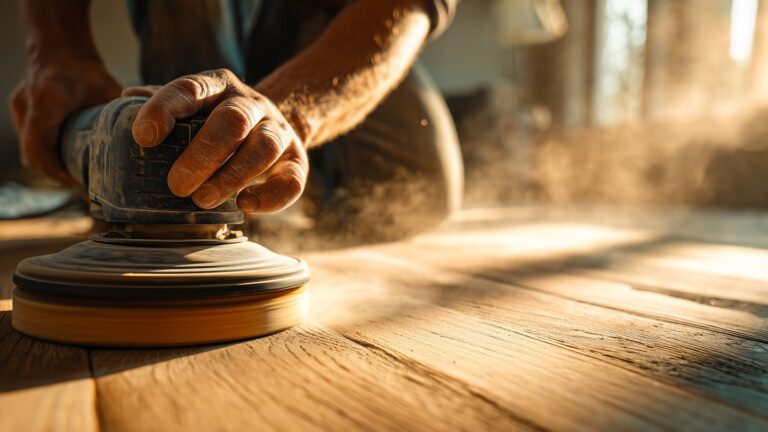
Any repairs and gap filling usually fall between the coarse and fine stages, so the filler is levelled by the later passes. Edges are worked with a rotary edger and corners by hand. Day two belongs to the finer abrasives, working down until the surface feels like paper under the hand, and to a last pass with a multi-disc machine that knits the edges and the field together.
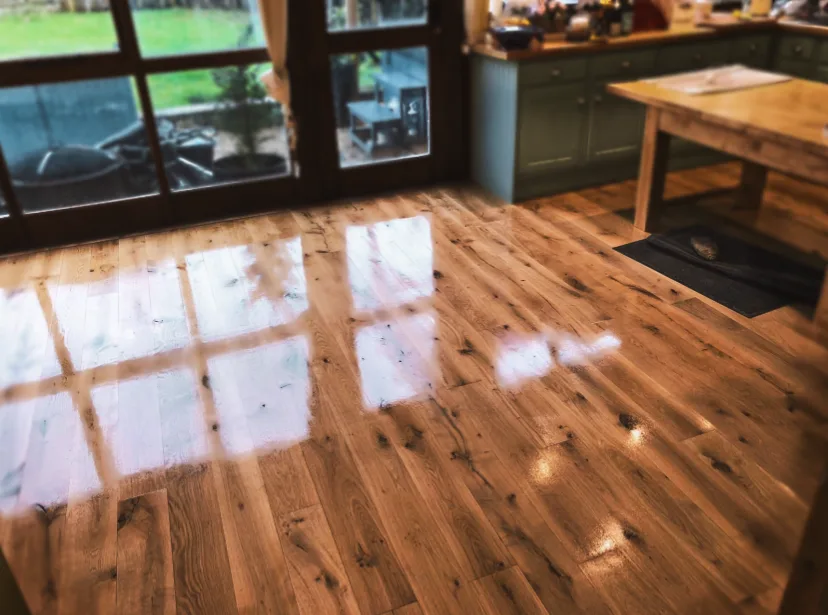
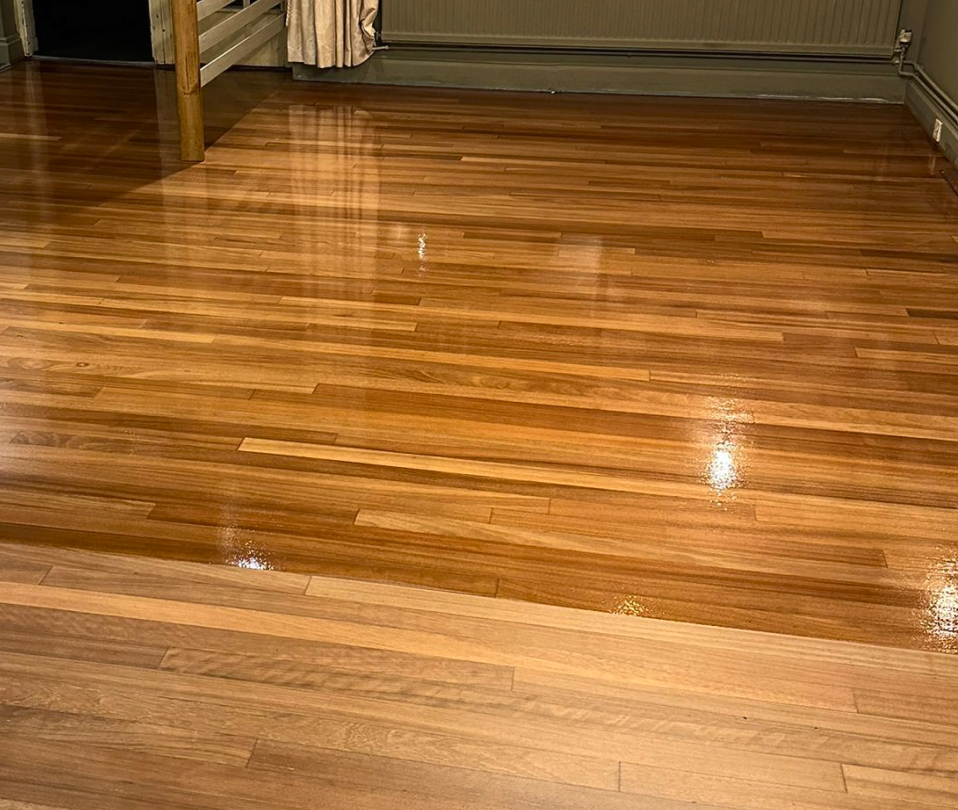
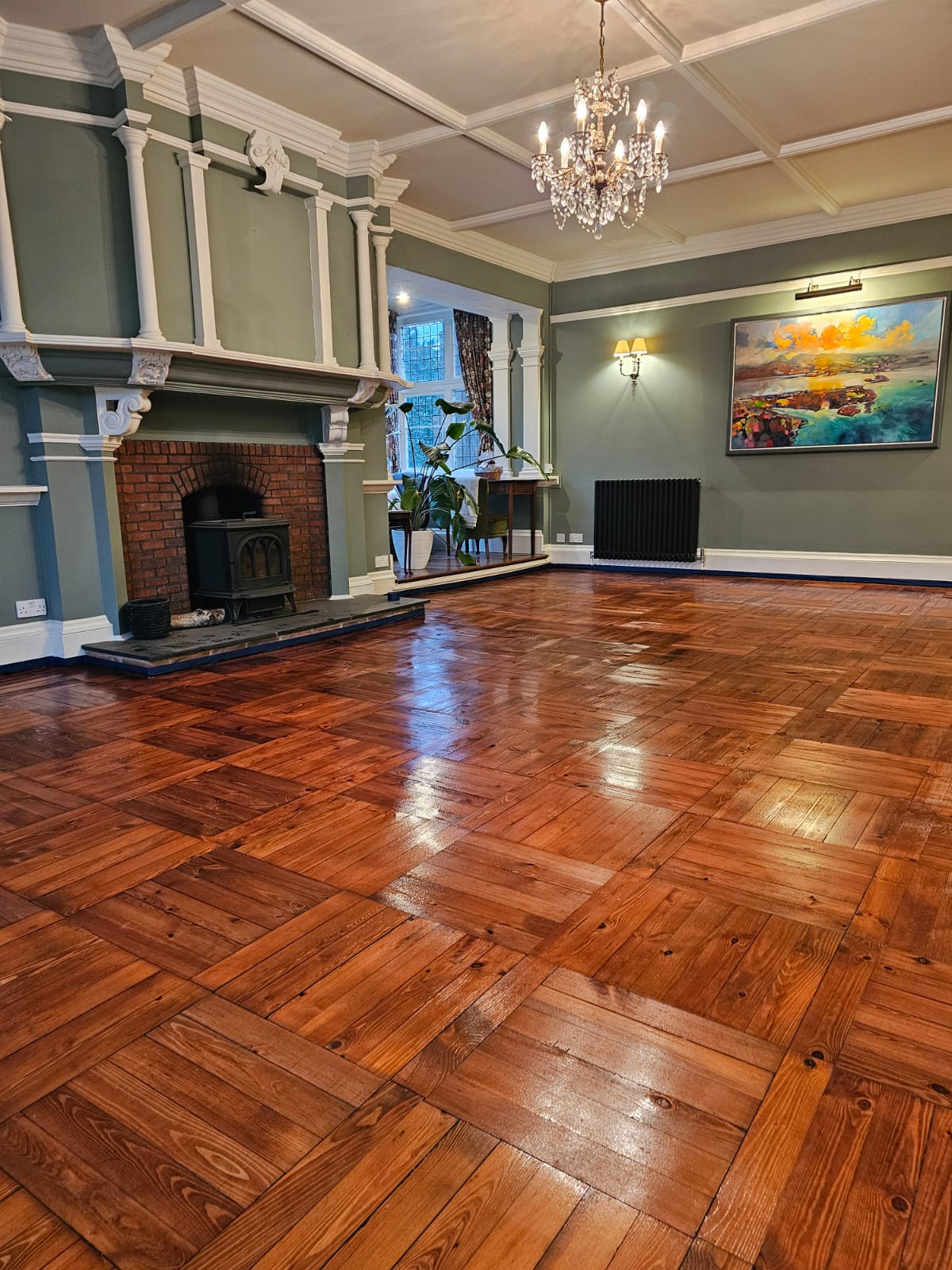
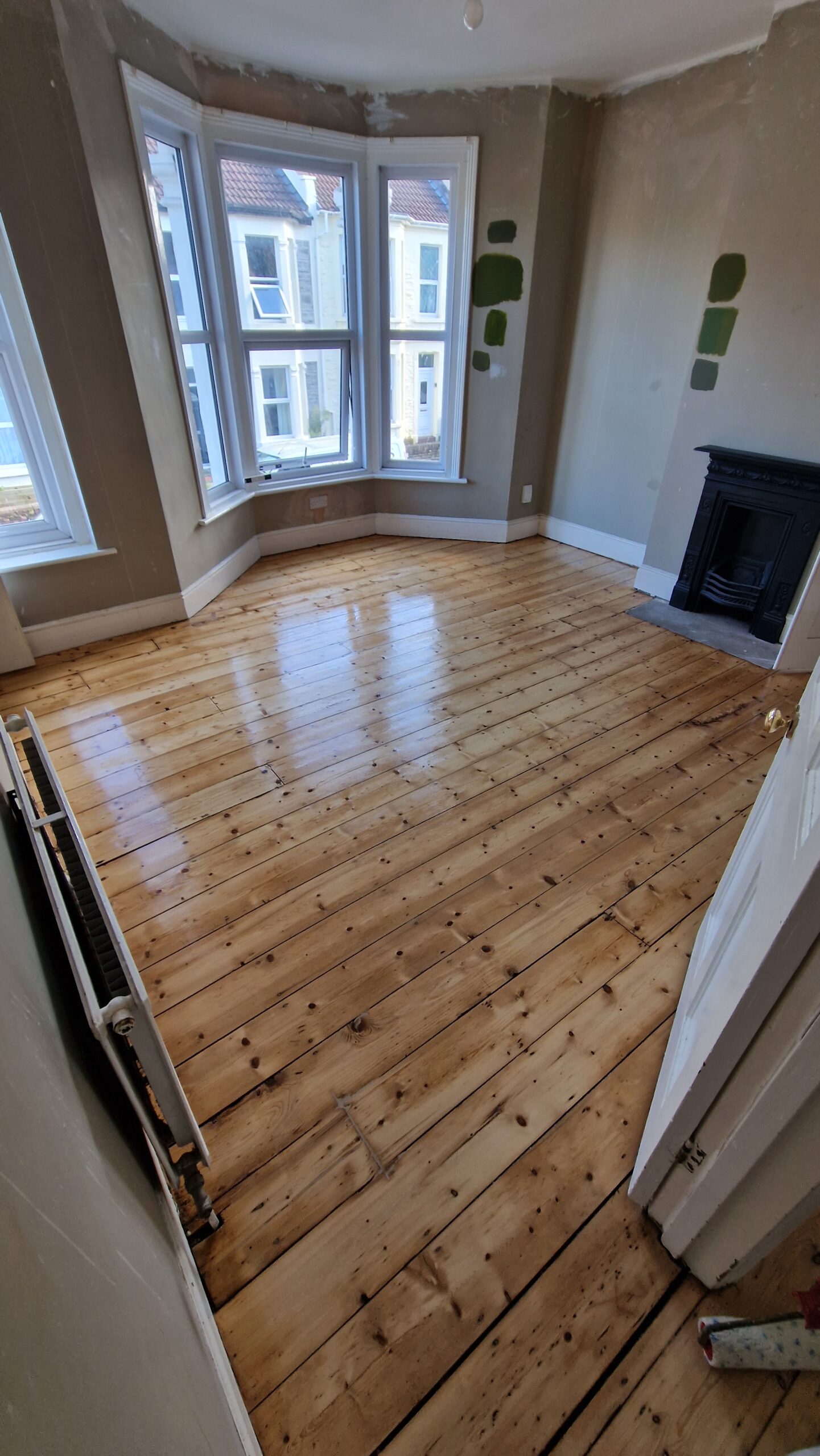
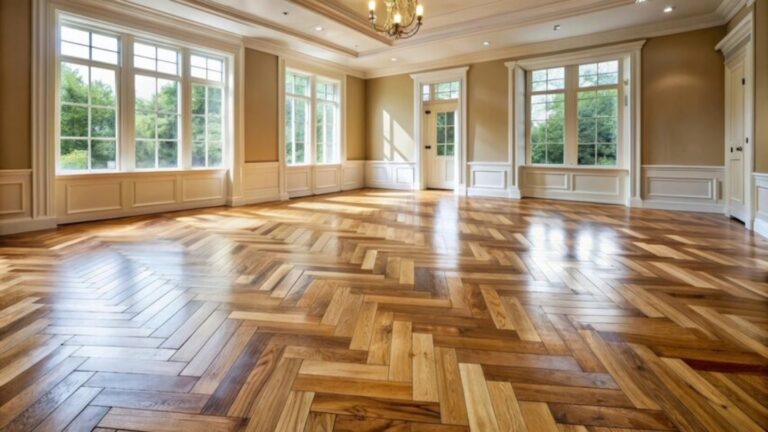
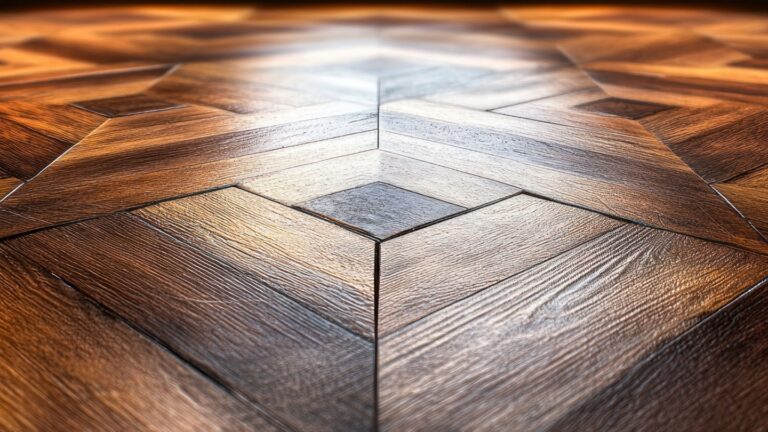
The last day is for finishing: vacuuming and tack-cleaning, then the first coat of lacquer or oil, a light de-nib once it is dry, and further coats. Dust control runs through all three days. In our wood floor sanding the belt machine, edger and finishing sander each draw into a sealed unit, which is why the cottage next door to a job barely knows we are there and why we describe the service as dust-free floor sanding.