Professional Floor Sanding Cheshire: Expert Wood Floor Restoration

Wooden Floor Restoration Company Ryan’s Restoration Have Been Floor Sanding in Cheshire for Over 45 Years

QUICK QUOTATION

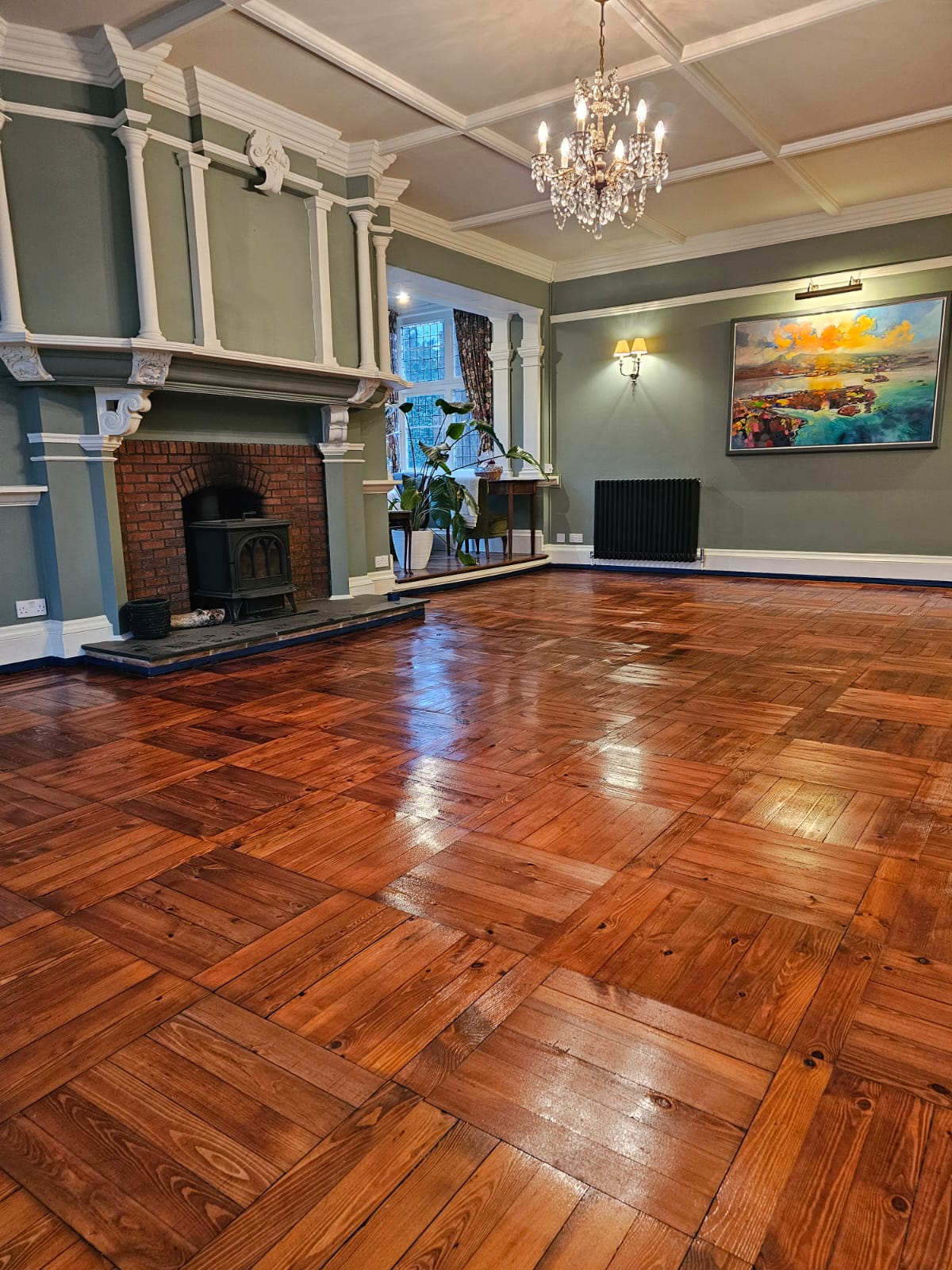
Parquet Flooring Restoration

Floor Sanding Across Cheshire

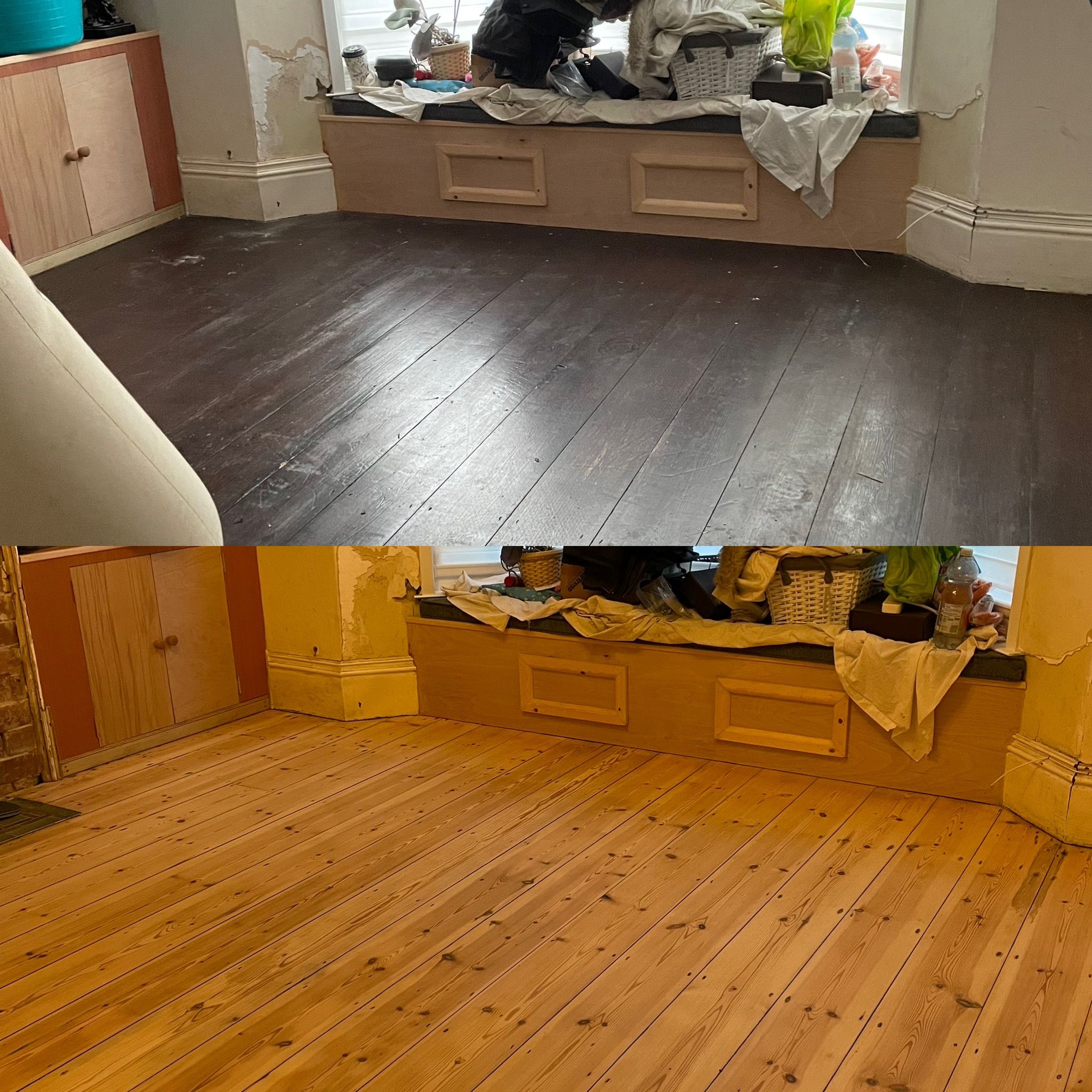
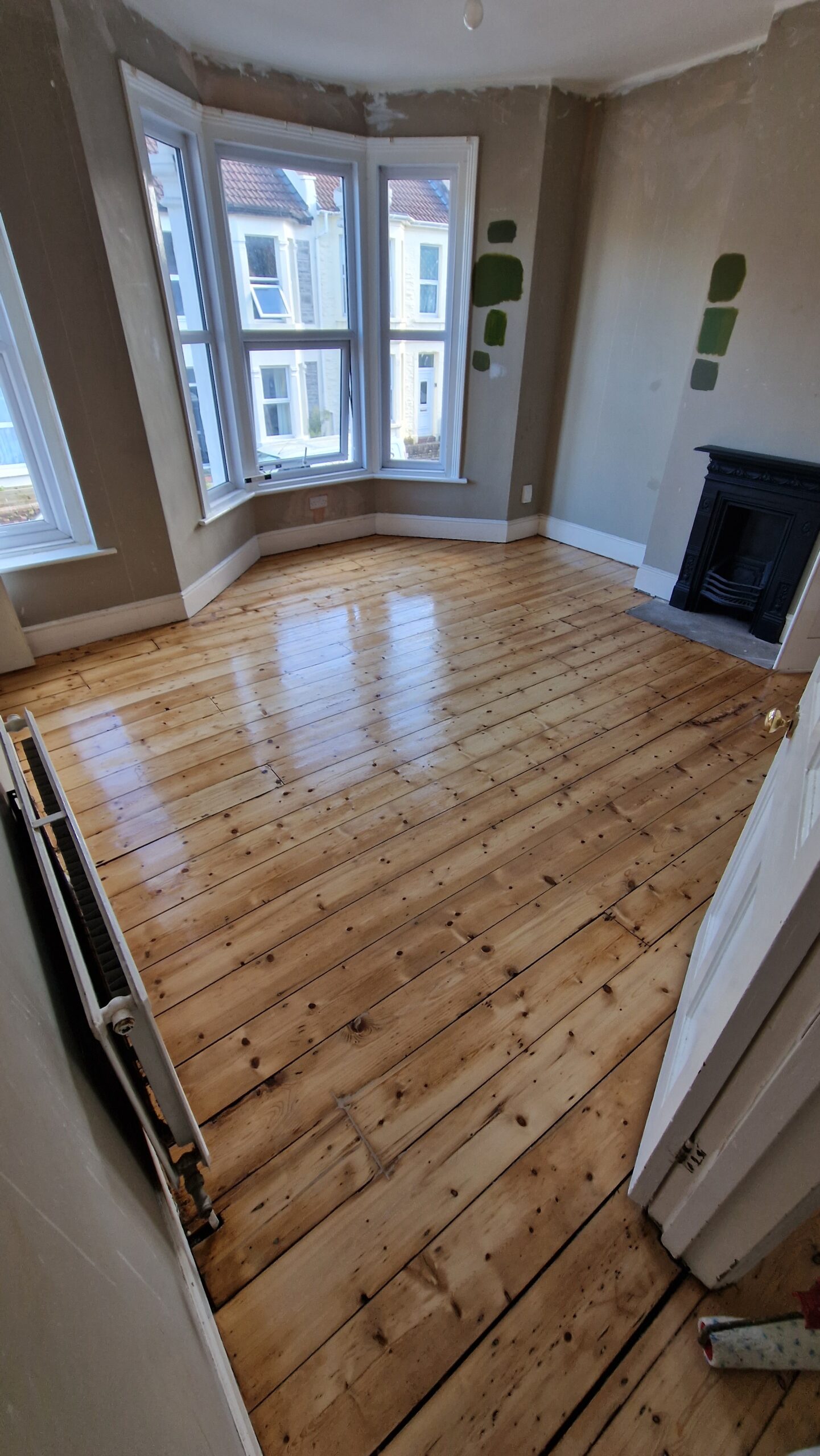
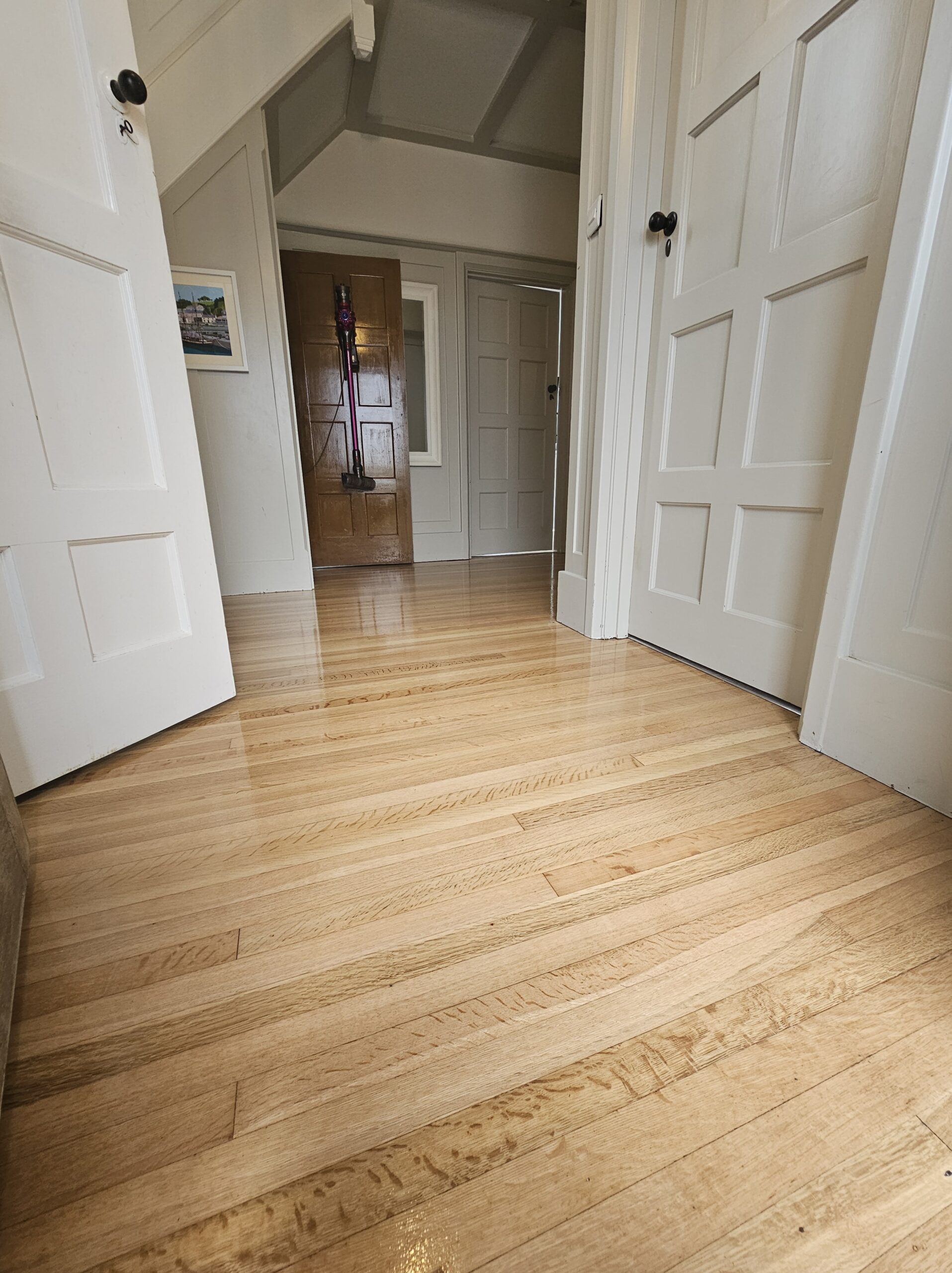
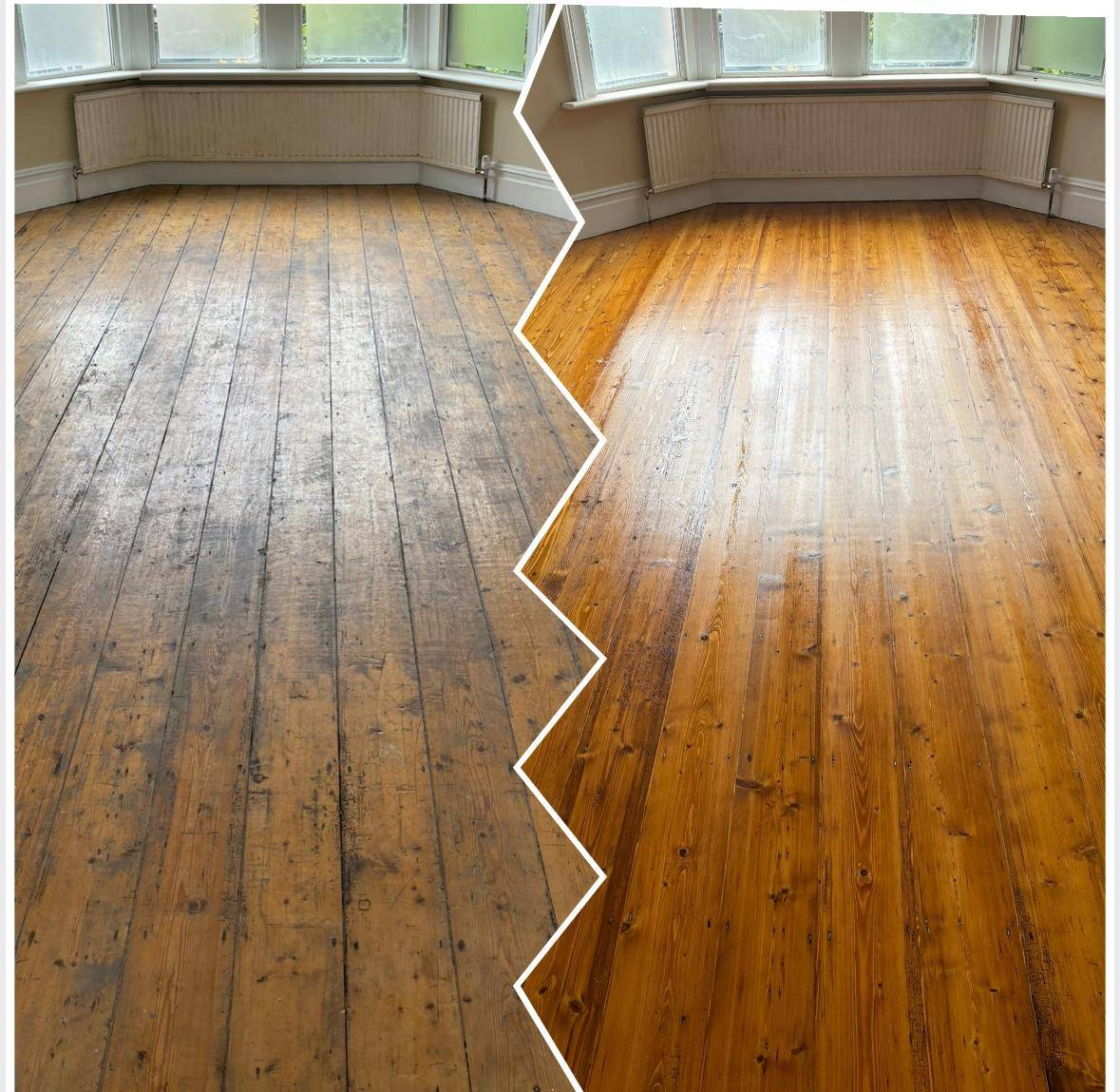
Ryan’s Restoration has been sanding wooden floors for over 45 years, and we cover the whole of Cheshire — Chester, Warrington, Macclesfield, Wilmslow, Northwich, Crewe, Nantwich, Knutsford and the villages between. Because the county sits a fair distance from our Somerset workshop, we schedule Cheshire work in multi-day runs, grouping jobs so each visit is used well. Wood floor sanding follows the same discipline everywhere: assess the boards, make them sound, sand through the grits, edge carefully, finish properly — with a straight answer first about whether the floor needs a full sand at all.

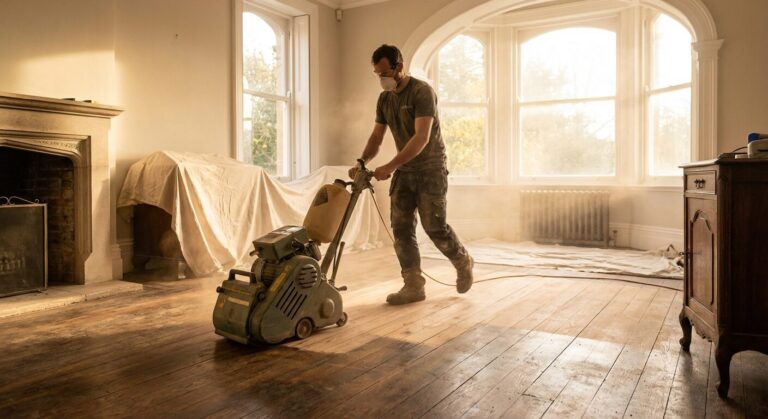
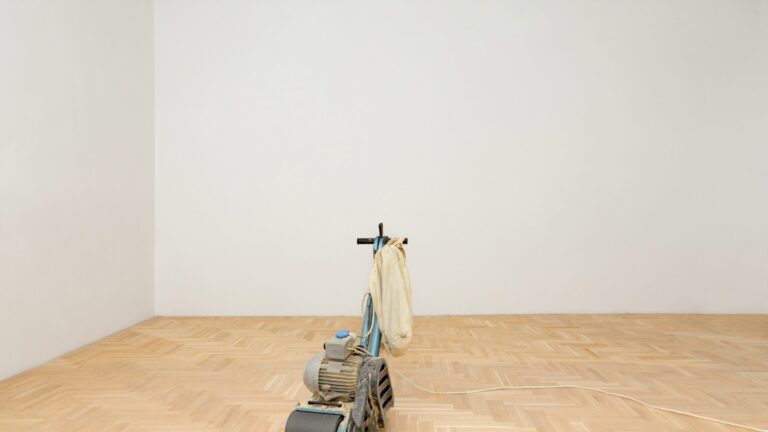
A fair number of Cheshire enquiries begin with a DIY attempt that stalled. Hire-shop drum sanders are unforgiving machines: pause for a moment and the drum digs a hollow, press unevenly and it leaves chatter marks that only show once the finish goes on. Rescuing these floors is routine work for us — the ripples are cut out with controlled diagonal passes on professional belt machinery, the surface is re-levelled, and the grit sequence is restarted from the point the floor actually needs rather than the point the hire machine gave up.

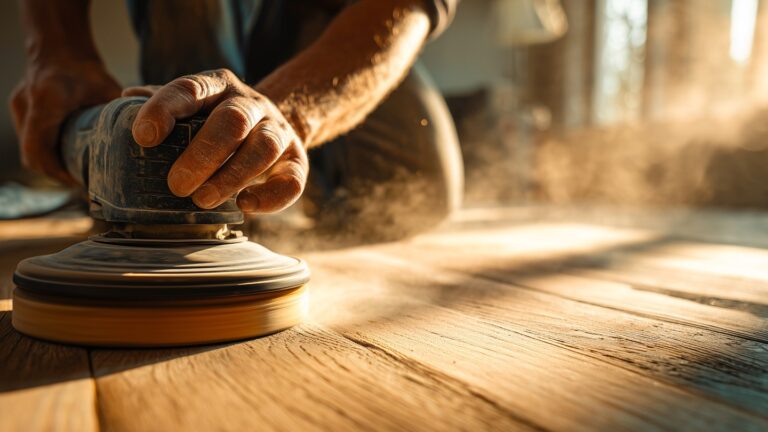
Professional kit earns its keep at the edges too. The border left by the big machine is blended with a dedicated edging sander rather than an orbital DIY tool, so there is no visible ring around the room where two different scratch patterns meet, and corners, stair nosings and thresholds are worked by hand to the same grit as the open floor.
Commercial Floor Sanding in Cheshire

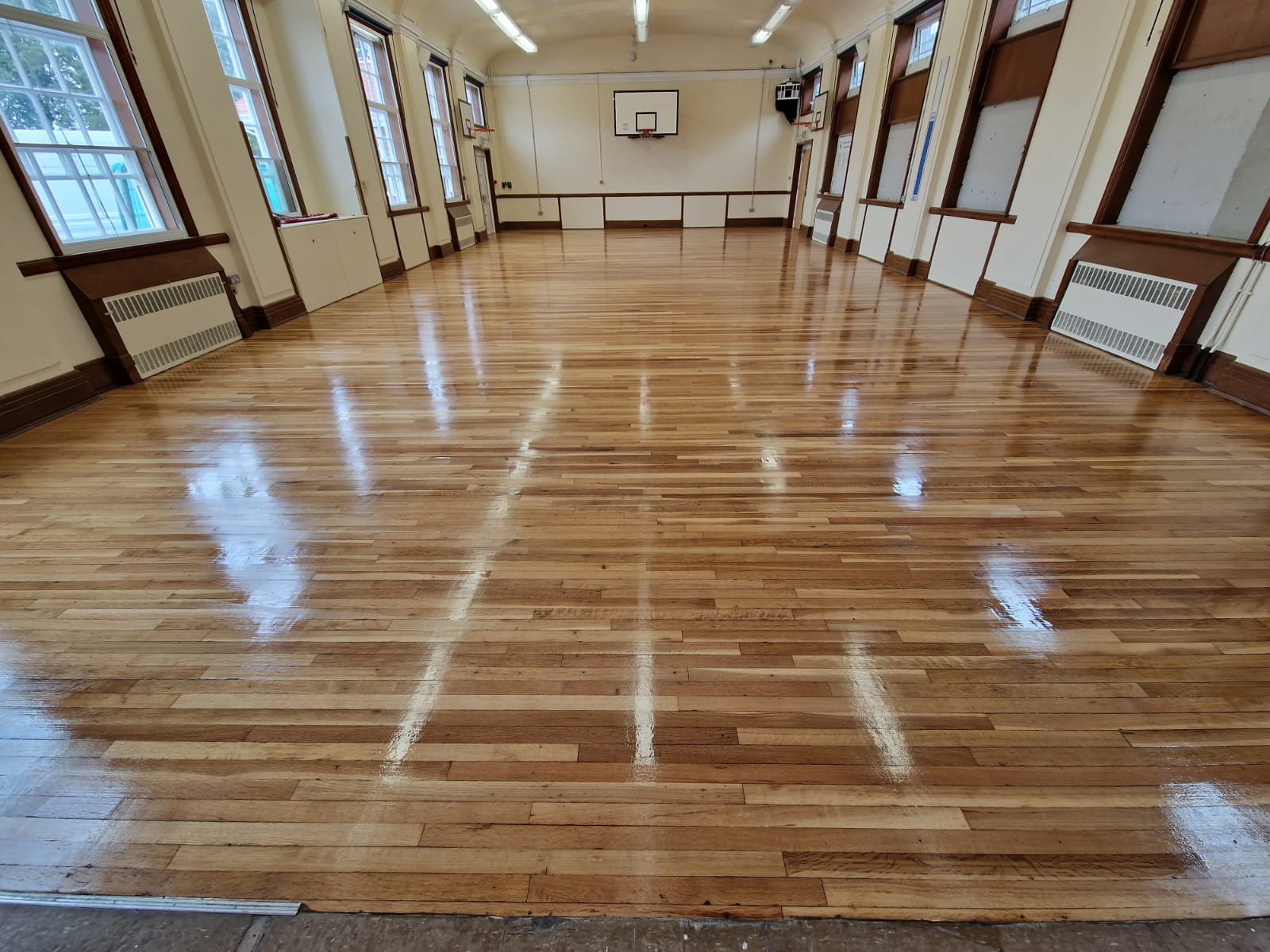
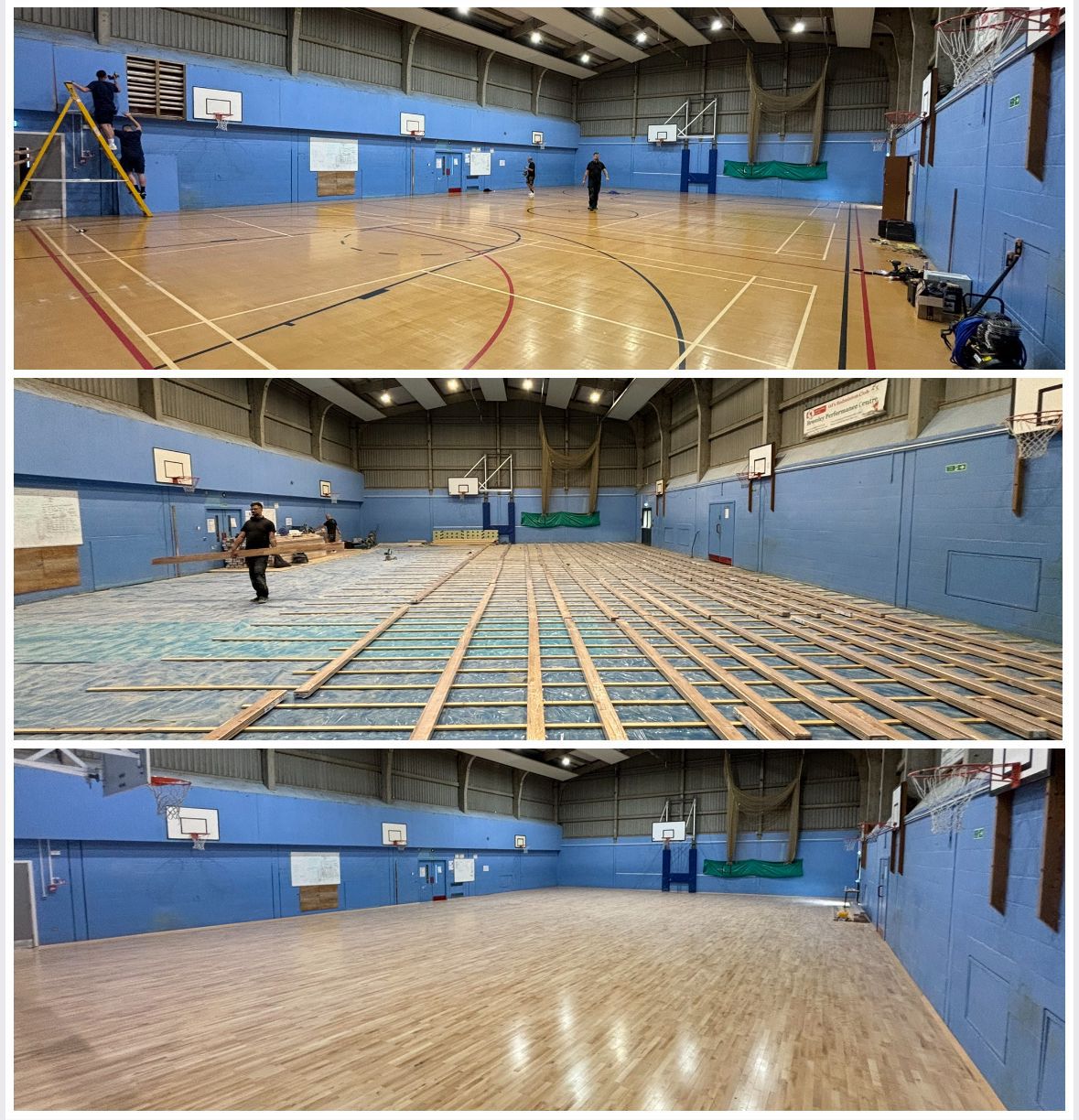
We take on commercial floor sanding for premises that cannot afford downtime — restaurants, shops, hotels and schools — working overnight and across weekends so the floor is cured before trade resumes. Method statements and insurance documentation come as standard, and hall and court markings are reinstated to governing body specification where needed.

Hospitality floors have a particular enemy: liquid. Spilt drinks, mop water and doorway slush find any weakness in a seal, so for bars and dining rooms we specify lacquer systems with strong resistance to standing moisture and build them in enough coats to take nightly cleaning. We also encourage hospitality clients to plan a maintenance recoat into the quiet season each year or two — an evening’s work at the right moment involves a fraction of the full re-sand that becomes necessary once wear breaks through to bare timber.

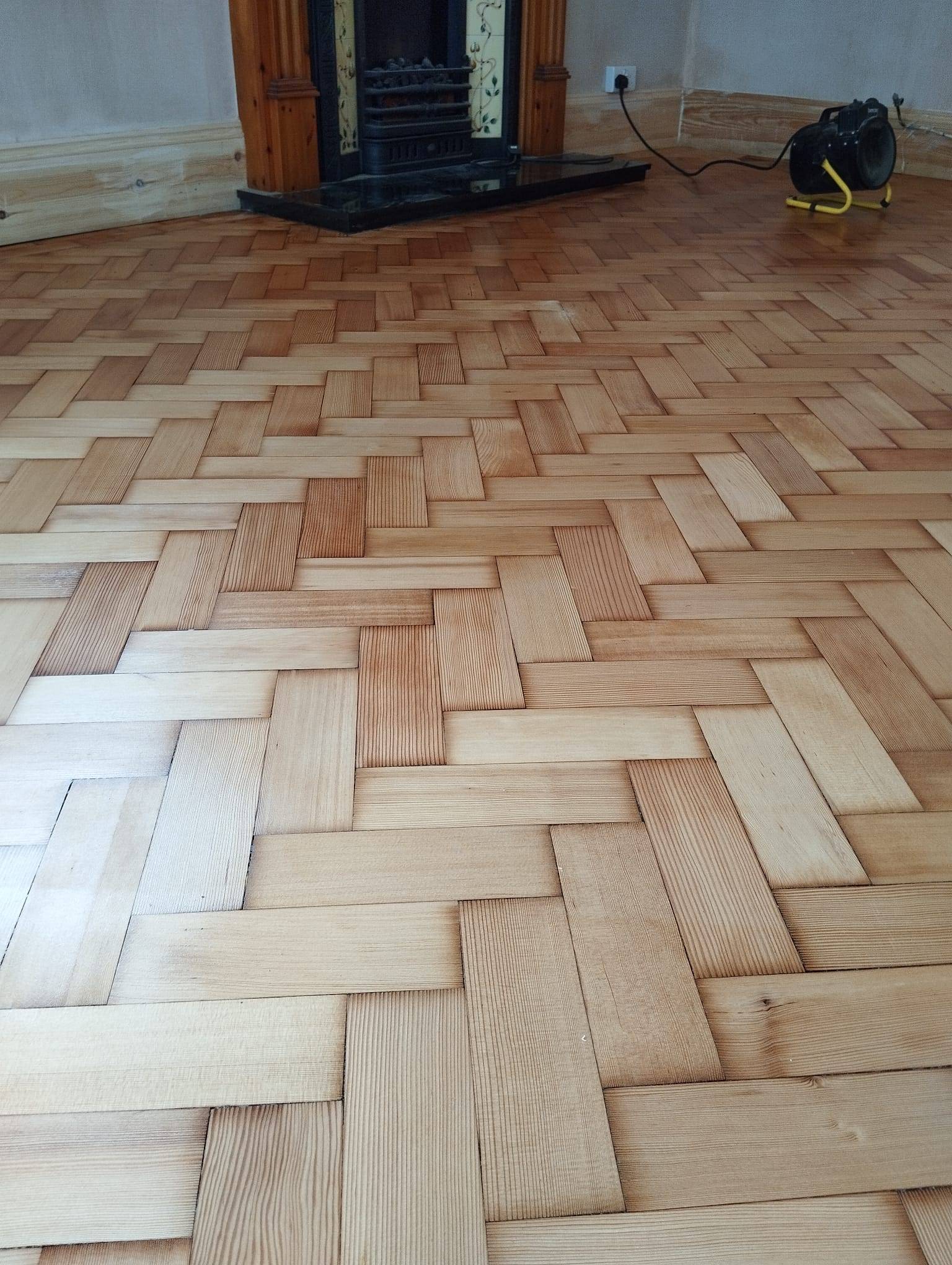
If your parquet floors are looking worn, scratched, or dull, professional restoration could be the perfect solution. At Ryan's Restoration, we specialise in restoring the natural beauty of parquet floors, using the latest techniques and high-quality finishes to achieve stunning results. Whether you need restoration for a single room or an entire property, our team has the skills and expertise to get the job done right. Contact us today to learn more about our parquet flooring restoration services and to schedule a consultation. We look forward to helping you transform your floors and enhance the beauty of your home.
parquet wooden floor sanding

Repairs and Floorboard Replacement

A floor is only as good as its worst board. Wooden floor repairs address splits, water damage, burns and woodworm before sanding starts, and floorboard replacement draws on our reclaimed timber stock so a patched board in a Chester period house carries the same age and grain as its neighbours. Persistent creaks are resolved with squeaky floor repair, and single deep marks with scratch repair.

Leaks and floods generate their own category of repair, and timing is everything. Boards that have cupped after a soaking will often relax substantially as they dry, so the worst mistake is sanding them flat while wet — the floor dries, keeps moving, and hollows appear where the cupping was cut off. We measure moisture across the affected area, wait until readings match the unaffected floor, then decide board by board what recovers, what needs replacing from reclaimed stock, and only then bring in the machines.

Gap Filling for Draughty Boards

Suspended timber floors in older Cheshire houses leak heat through every open joint. Gap filling puts that right: narrow gaps take resin mixed with sanding dust from your own boards for an invisible match, while wider ones are fitted with pine slivers planed level. The result is a warmer room, a cleaner line across the floor, and no more grit sifting into the void below.

Floor Sanding Essex
Commercial floor sanding

Parquet Restoration Across Cheshire

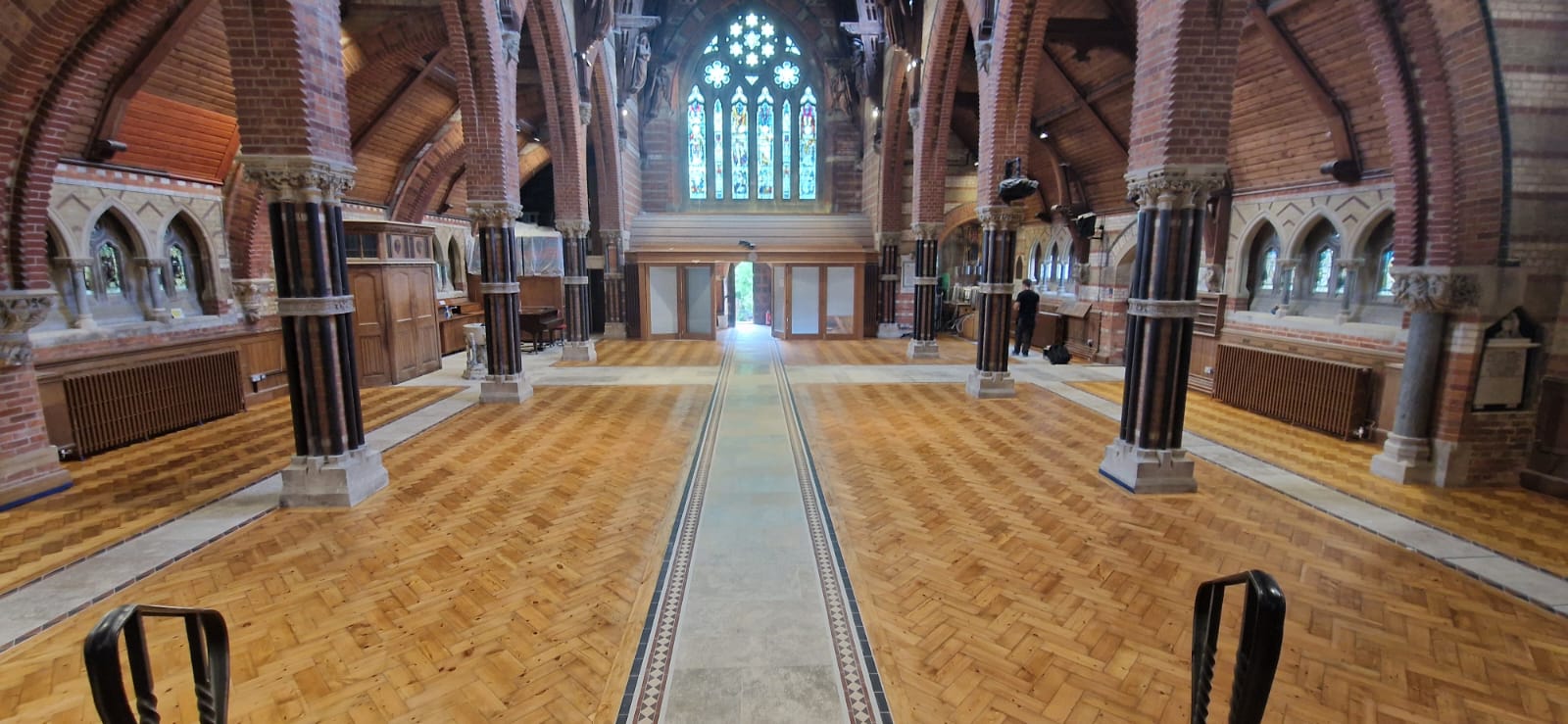
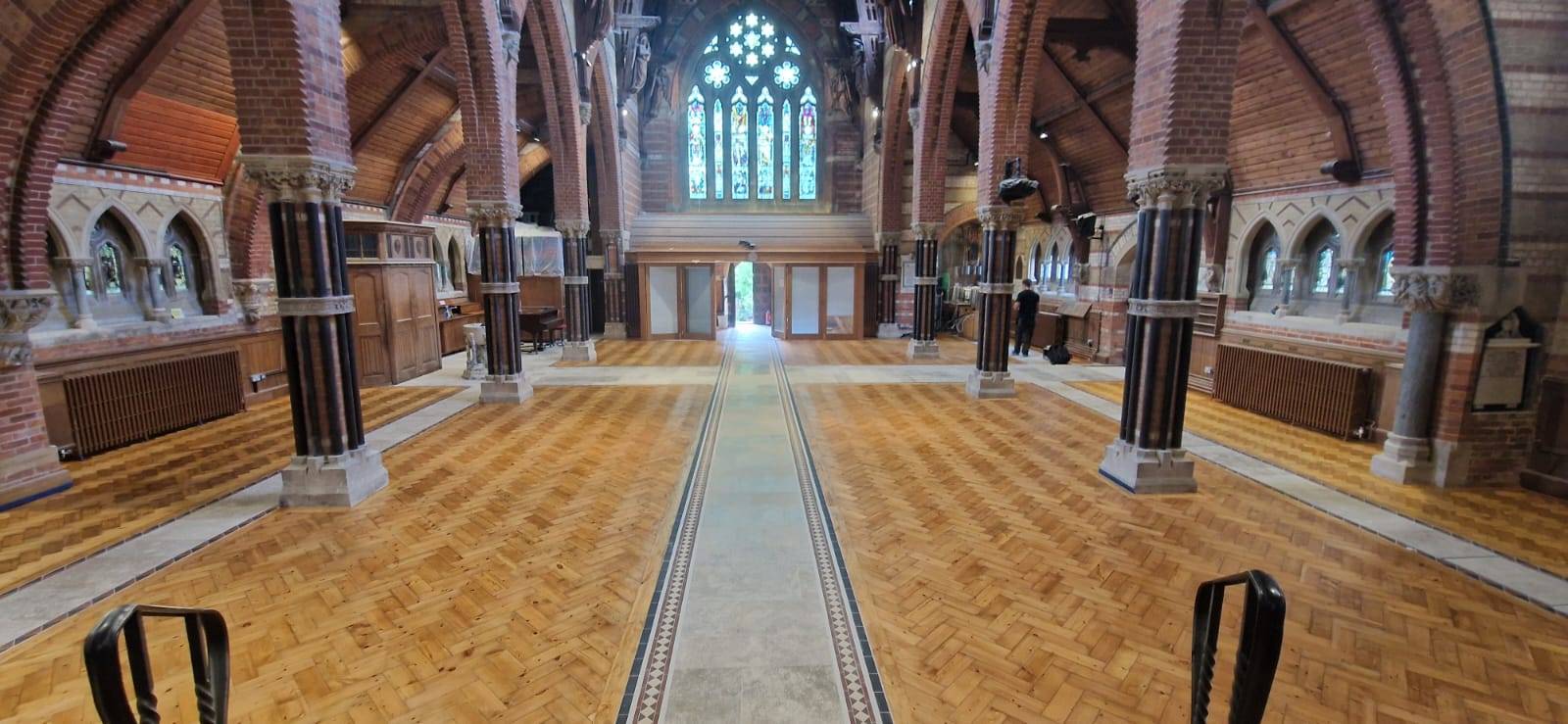
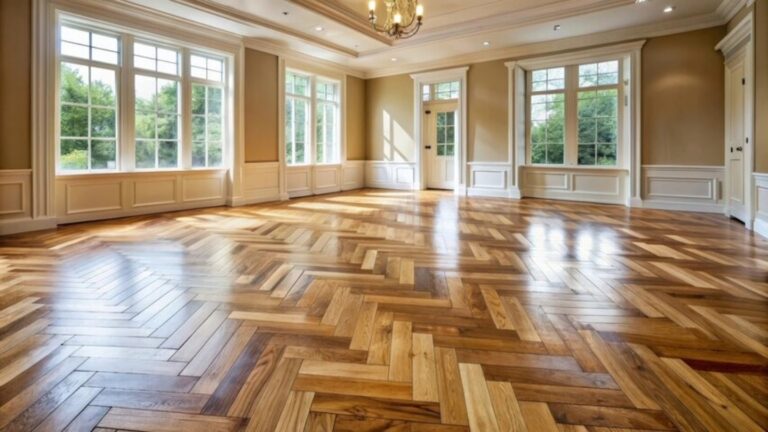
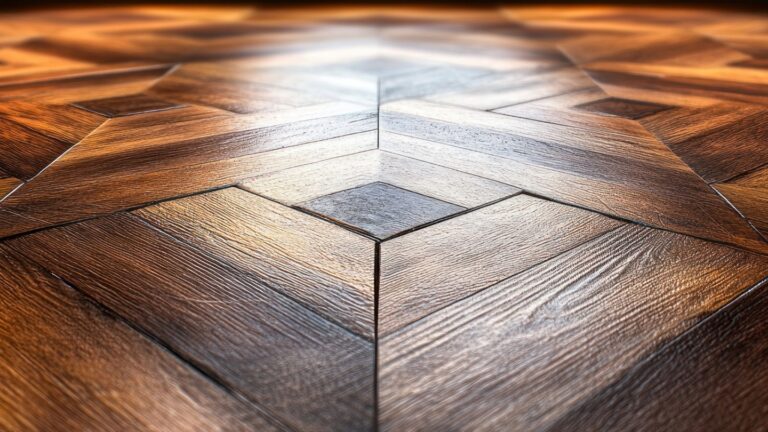
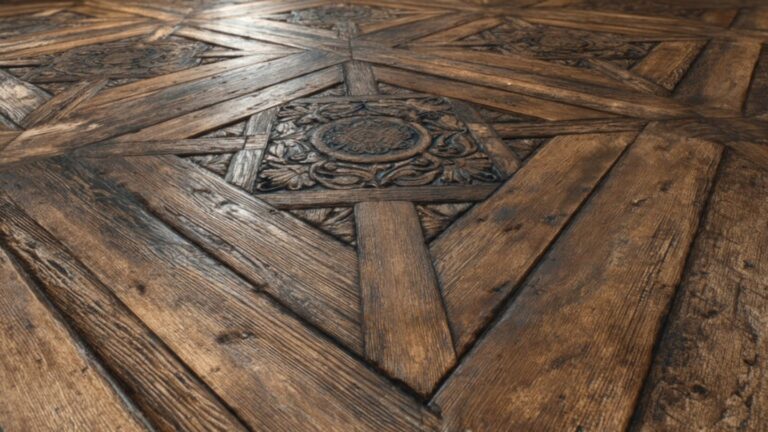
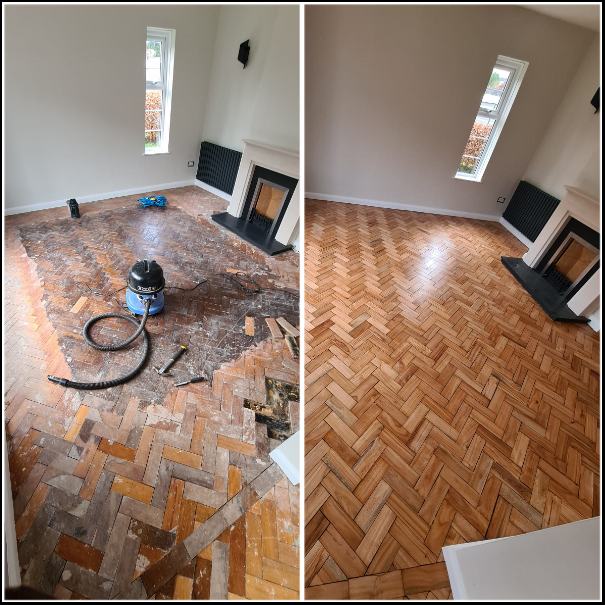
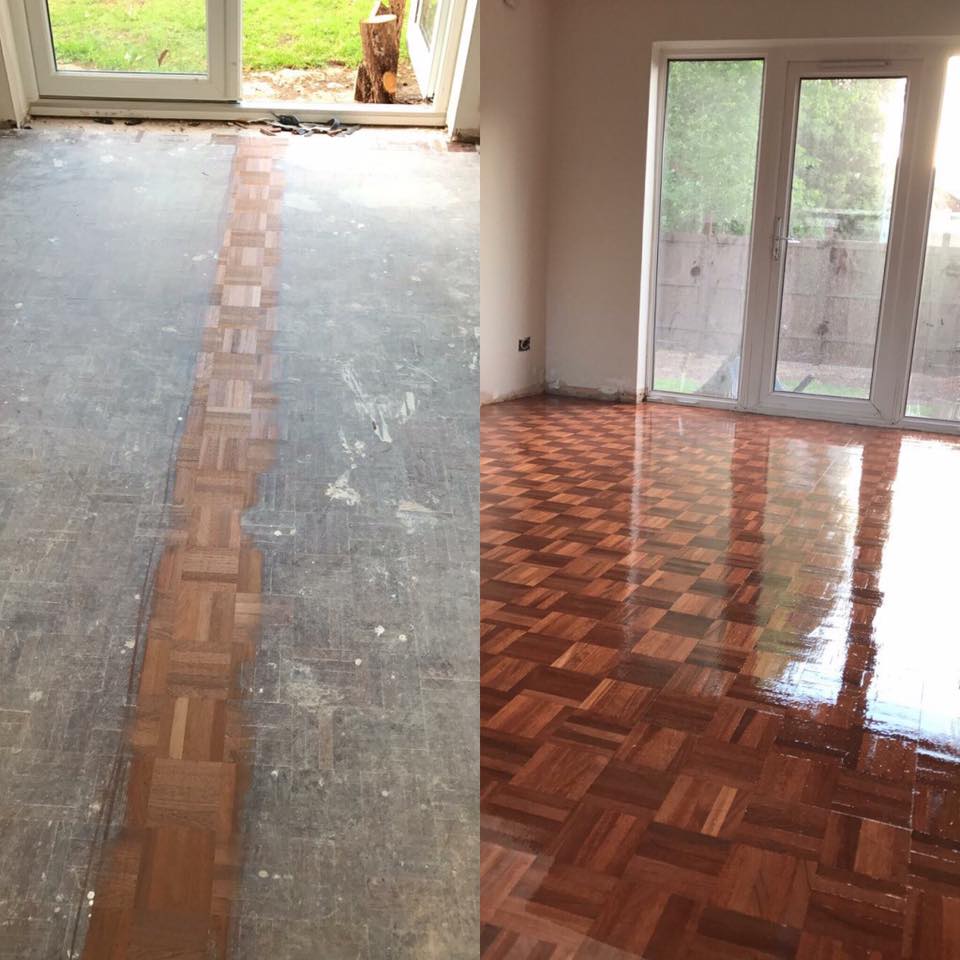
Herringbone and block floors survive in schools, chapels and mid-century homes across the county, and parquet floor sanding brings them back: loose blocks lifted and re-bonded, missing pieces matched from stock, bitumen ground away and the pattern sanded truly flat. Finish options run from tough lacquers for busy hallways to oils and waxes for period rooms.

Knocked-through rooms present parquet’s most interesting puzzle: a strip of bare screed where a wall once stood, cutting the pattern in two. We bridge these gaps by extending the original bond with reclaimed blocks of matching species and size, weaving the new work into both existing fields so the eye follows the pattern across without snagging. Where two rooms carry slightly different block sizes — common when they were laid years apart — a deliberate border strip between them looks far better than a mismatched weave, and we will show you both options before cutting anything.

Staining, Oiling, Sealing and Waxing

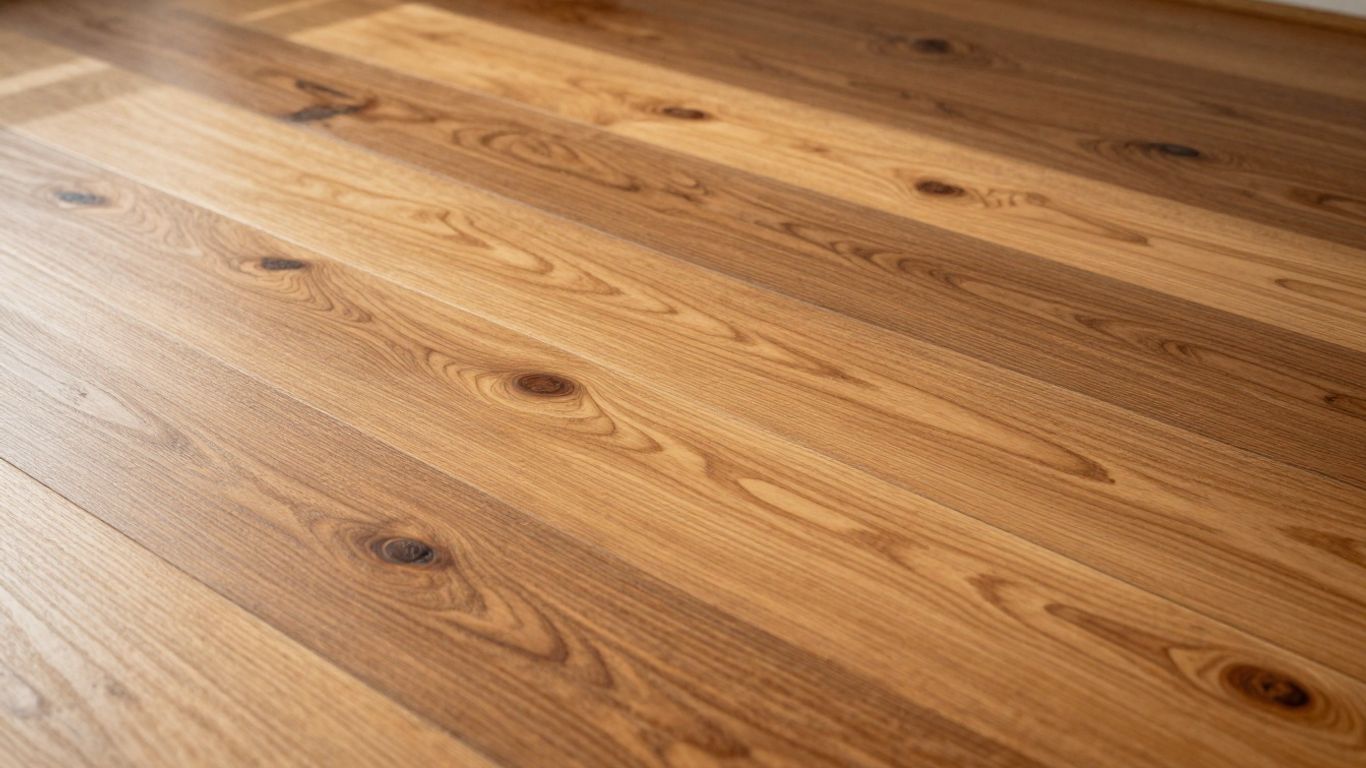
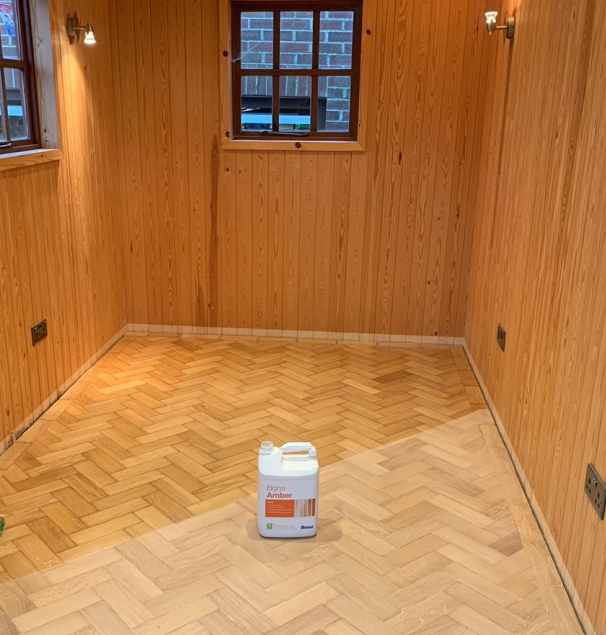
Colour and protection are decided after sanding, when the timber is bare and honest. Staining can lighten, darken or unify mismatched boards; oiling keeps a natural feel and mends invisibly; sealing in lacquer takes the hardest daily use; and waxing suits interiors where tradition matters. Whatever the choice, we sample it on your own floor before committing the room.

Sampling is done properly or not at all. We lay two or three candidate shades side by side on a sanded patch of your own floor, seal over them with the intended topcoat — because a stain under lacquer reads deeper than a bare stain — and ask you to look at the patch in morning light and under the evening lamps before deciding. Ten minutes of looking at real timber prevents the most expensive kind of disappointment, which is a whole floor finished in a colour that only looked right on a chart.

Floor Sanding
Commercial Floor Sanding London

Buffing, Recoating and Aftercare

Finished floors last far longer with light, timely attention. A periodic buff and recoat refreshes the wear layer without removing timber — the sensible option for floors sanded once too often — and polishing keeps sheen consistent between recoats. Every completed job leaves with plain-English care guidance, and sand-free restoration is available where boards are too thin for another pass.

A recoat is quick when it is done in time, and the floor will tell you when that is. Watch for the sheen going flat in walkways while it survives under furniture, pale grey patches where the lacquer is thinning, or water soaking in rather than sitting on the surface. Caught at that stage, the job is a single day: the old surface is keyed all over with a fine screen, vacuumed and tacked clean, and fresh lacquer applied — no bare timber exposed, no sanding down, and years added to the floor.

Get a Floor Sanding Quote in Cheshire

Because we plan Cheshire visits in advance, the easiest first step is to send two photographs of your floor — one wide, one close — for an honest opinion and a fixed written quotation. A free site survey with no obligation can be arranged around our next run to your area.

Call 01823 674562, email info@ryansrestoration.co.uk, or use the form on this page.

All services available in Cheshire: floor sanding, commercial sanding, repairs, board replacement, gap filling, parquet restoration, staining, sealing, stair sanding and new floor installation.

Nearby areas we also cover: Brentwood, Cambridge, Chelsea and Dulwich. There is a page for each, and the full list of towns is on our areas we cover page.

Floor sanding taunton

FAQ: Floor Sanding in Cheshire

Every wooden floor service we offer at home in Somerset: sanding, restoration, repairs, replacement boards, gap filling, parquet work, all finishes, stair sanding, recoating and new installation — delivered in planned multi-day visits.

Yes. Overnight and weekend working is how we handle most commercial floors, so the finish cures while the building is empty and nobody loses a day of trade.

Wherever needed. We carry reclaimed timber chosen to match age, species and width, fit it before sanding, and let the final finish tie old and new together.

Rarely. Most parquet needs re-bonding and a level sand more than anything else, and once the bitumen and grime are gone the pattern usually looks better than its owners have ever seen it.

Yes. Bare sanded timber takes stain predictably, and we always prove the shade on a patch of your own floor so the whole room is only treated once you are happy.

Engineered flooring can, within the limits of its wear layer — measured before we quote. Laminate cannot be sanded at all, and we will say so rather than attempt it.

Our sanders run through sealed extraction that captures the overwhelming majority of dust at source, so furnished and occupied properties present no difficulty.

Two photographs get you an honest opinion and a fixed written quotation without waiting for a visit; free no-obligation surveys are slotted into our next run. Call 01823 674562, email info@ryansrestoration.co.uk, or use the form on this page.

Yes, and it is common work for us. Drum-sander hollows and chatter marks are cut out with controlled passes on professional belt machinery, the surface is re-levelled and the grit sequence restarted, so the earlier attempt leaves no trace in the finished floor.

Look at the walkways: flattening sheen, pale thinning patches or water soaking in rather than beading all mean the finish is wearing. Caught early, a screen and recoat restores protection in a day without touching bare timber.