45 years’ experience  ·  Rated 4.9 on Google  ·  Family-run, from our workshop near Wellington

45 years’ experience · Rated 4.9 on Google · Family-run

Floor Sanding and Wood Floor Restoration in Gloucestershire

Floor sanding, repairs and refinishing for Gloucestershire homes, schools and businesses, from Cotswold stone cottages to Severn Vale terraces.

QUICK QUOTATION

Floor Sanding Taunton

Floor Sanding in Gloucestershire, From Cotswold Stone to the Severn Vale

For a floor sander, Gloucestershire is really two counties sharing one name. On the Cotswold side, around Cirencester, Northleach, Stow and the villages strung between them, houses are built from the local limestone with thick solid walls, and their upper floors are often wide oak or elm boards resting on hand-cut joists. Down in the Severn Vale, in Gloucester, Tewkesbury and much of Cheltenham, the housing is mostly brick or stucco: Victorian and Edwardian terraces, tall Regency townhouses, and large areas of post-war and modern housing where the timber is as likely to be engineered board as solid. The way we approach floor sanding in Gloucestershire shifts with that divide, so the first useful question about any floor is which kind of house it belongs to.

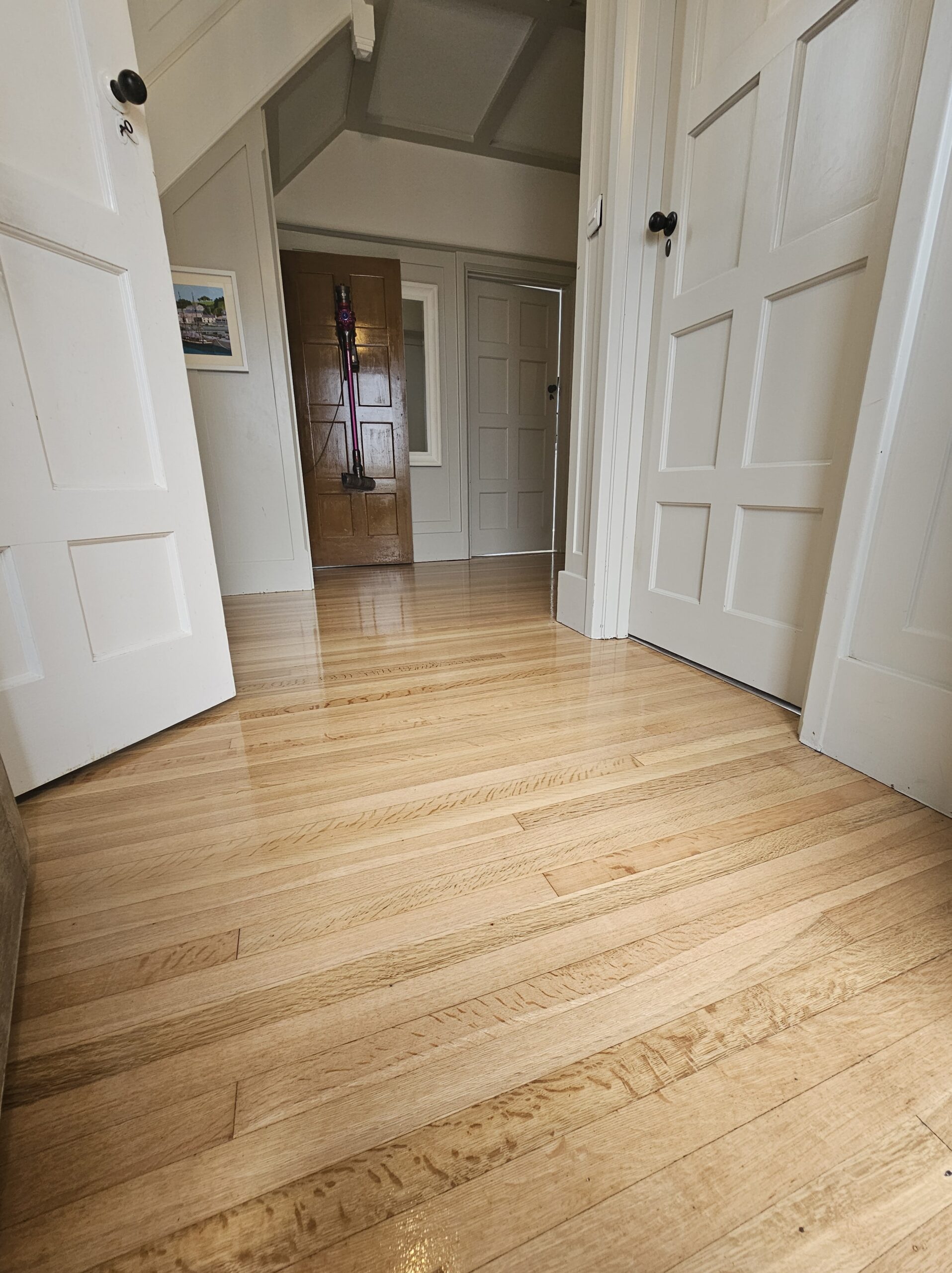
Old Cotswold boards are seldom flat. They cup across their width, dip where a dresser or a bed stood for generations, and many were face-nailed with square-headed cut nails that rise proud as the surface wears down around them. On boards like these the aim is to lift the grime and tired varnish without chasing every hollow, because grinding a 250mm elm board dead level can take away far more timber than the board has to give. Before any machine goes on, every proud nail is knocked down with a punch; the first cuts then go at an angle to the boards to take the tops off the curled edges, and only later does the work follow the grain. The gentle undulations that remain are part of the floor’s character, and most owners of these houses want them kept.

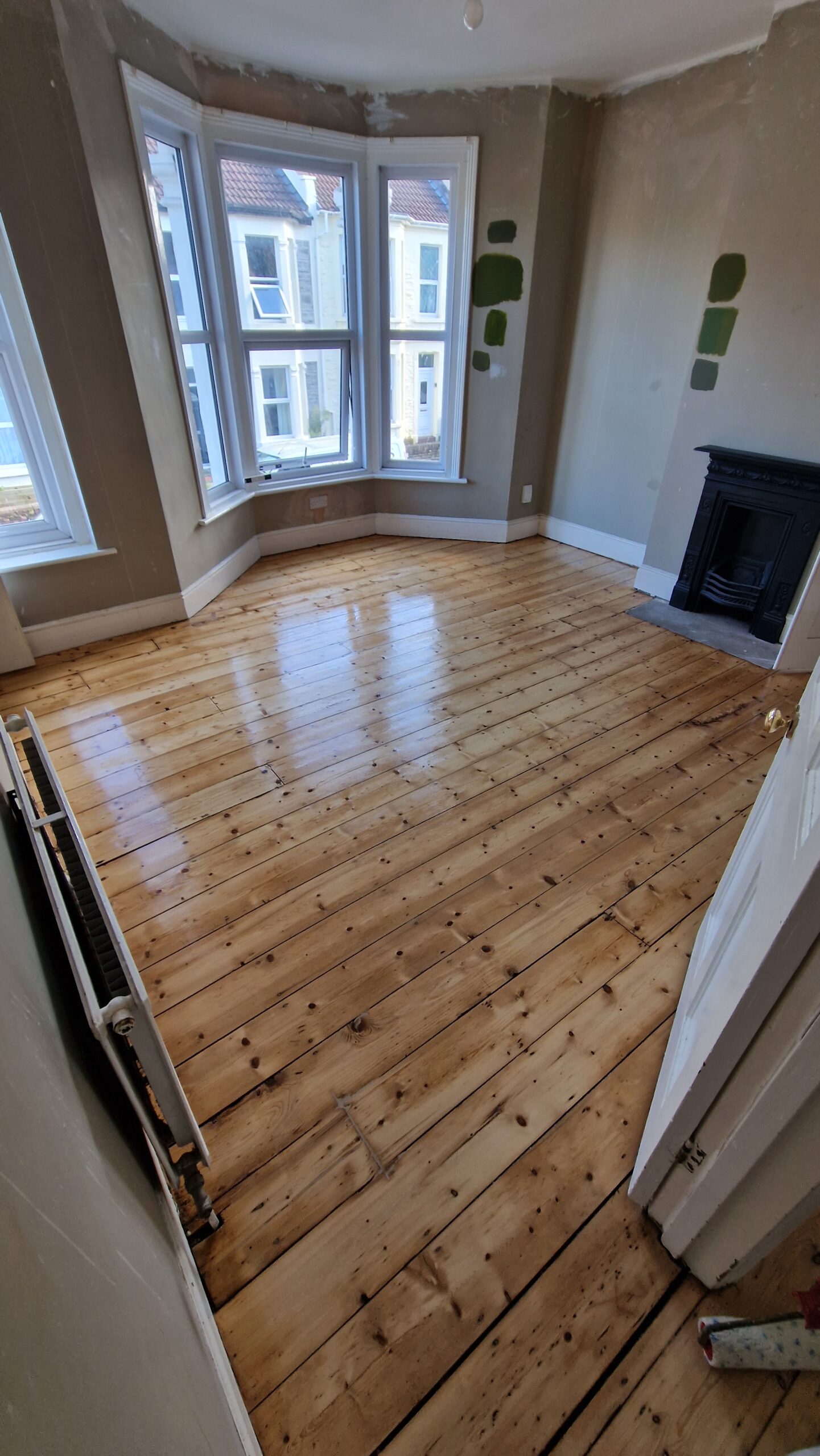
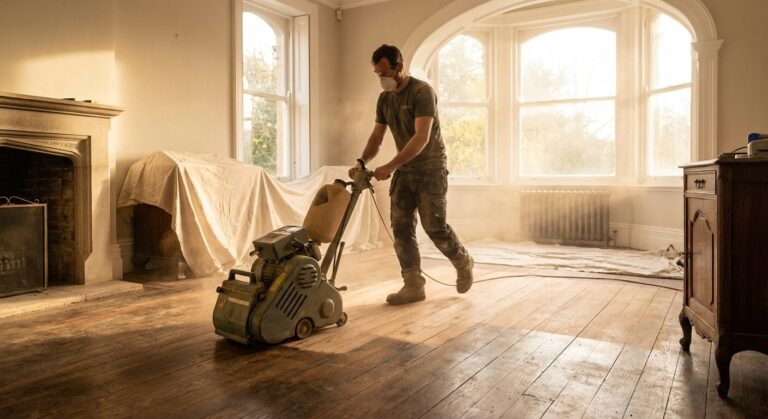
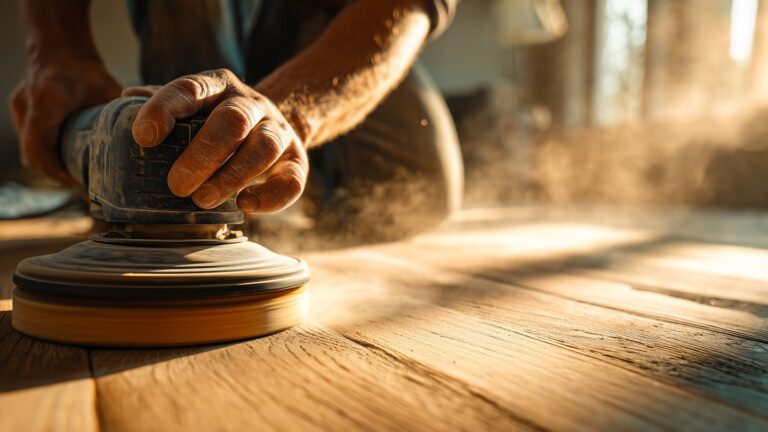
Severn Vale pine asks for something different. The boards are thinner and usually tongue-and-groove, they have often spent decades under carpet, and much of the effort goes into clearing gripper rods, staples and painted borders before working up an even, scratch-free face. Our wood floor sanding service handles both kinds of floor. Families who stay in the house during the work usually ask about mess. Our dust-free floor sanding machines pull dust off the drum into sealed collection as they cut, leaving a far cleaner house than the old bag sanders ever did, if not a perfectly spotless one.

We work in this county week in, week out, and the M5 puts most of it within easy reach of our Higher Poole workshop outside Wellington. Stroud sits between the two housing types, with steep valley terraces and converted cloth mills, and floor sanding in Stroud tends to involve as many staircases and landings as whole rooms. Floor sanding in Cirencester leans towards the older Cotswold stock, while floor sanding in Tewkesbury is shaped by the two rivers that meet beside the town, which brings us to damp.

Looking for a particular town? See floor sanding in Gloucester, floor sanding in Cheltenham, and our pages for Stroud, Cirencester and Tewkesbury.
Damp, Airbricks and Wood Floor Restoration in Gloucestershire

More floors in this county are spoiled by moisture than by footfall. The older vale terraces, some of them in streets the Severn and the Avon have flooded, mostly have hollow ground floors, where joists span a shallow void and a cross-draught from vents set low in the brickwork is all that keeps the timber dry. Over the decades paths get raised, patios are laid hard against the walls and airbricks vanish behind render or a flower bed. The void then stays damp, the underside of each board takes up moisture while the top is dried by central heating, and the boards cup. Sand a cupped floor in that state and it will crown, rising along the middle of each board, once conditions settle down.

So a survey here always involves a moisture meter on the boards, and on the joists too if a loose board lets us reach them, plus checks on the vents, any patched areas and the depth of wood remaining above each tongue. If the readings are high, sanding waits. Clearing blocked airbricks, adding ventilation or fixing a leaking downpipe often brings a floor back into a workable range over a few weeks, and the finished surface is far better for the delay. Where a floor has actually stood under flood water, the building needs to be thoroughly dried first; only after that can anyone judge which boards have recovered and which have split, softened or lifted for good.

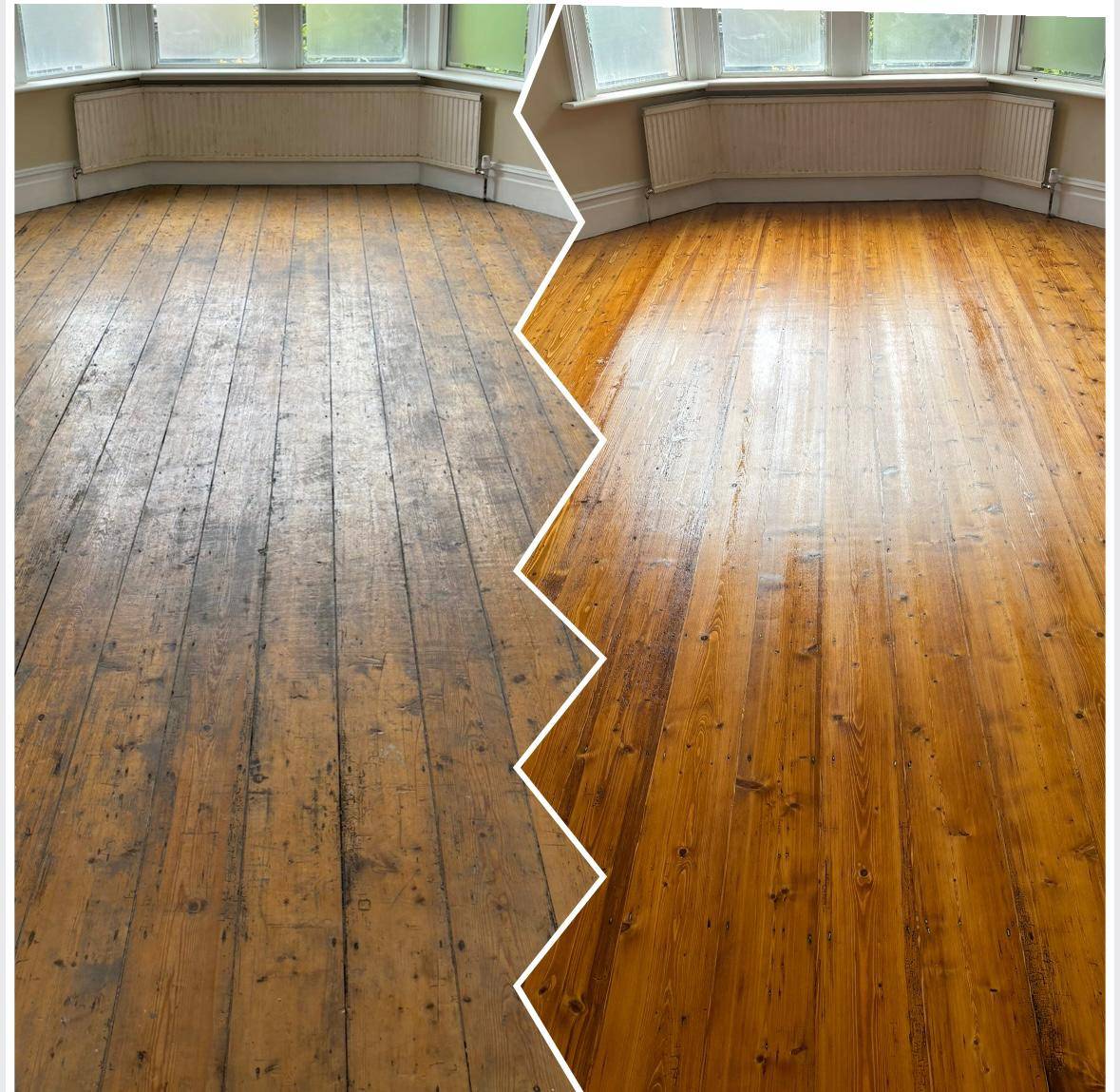
Cotswold houses bring a different damp pattern. Solid limestone walls and lime mortar were built to breathe, but cement repointing, modern renders and plastic-based paints trap moisture in the masonry, and upper floors beside chimney breasts or under valley gutters can show it as dark staining and soft board ends. Wood floor restoration in Gloucestershire therefore starts with finding where the water is coming from, not with switching on a sander. Our wood floor restoration work follows that sequence: diagnosis, repair, sanding and finishing, in that order and not the other way round.

Species matters as well. Oak tolerates a damp spell better than pine, but the tannin in old oak reacts with iron, so black rings form wherever water has sat around a nail head or under a metal plant pot. Light marks sand out; deep ones can sometimes be lightened with an oxalic acid treatment, and the worst may call for a replacement section as part of oak floor restoration. Softwood that has stayed damp for years tends to rot at the board ends nearest external walls, and pine floor restoration in that situation usually means cutting back to sound timber over a joist and splicing in reclaimed board of the same width.

Floor sanding south east London
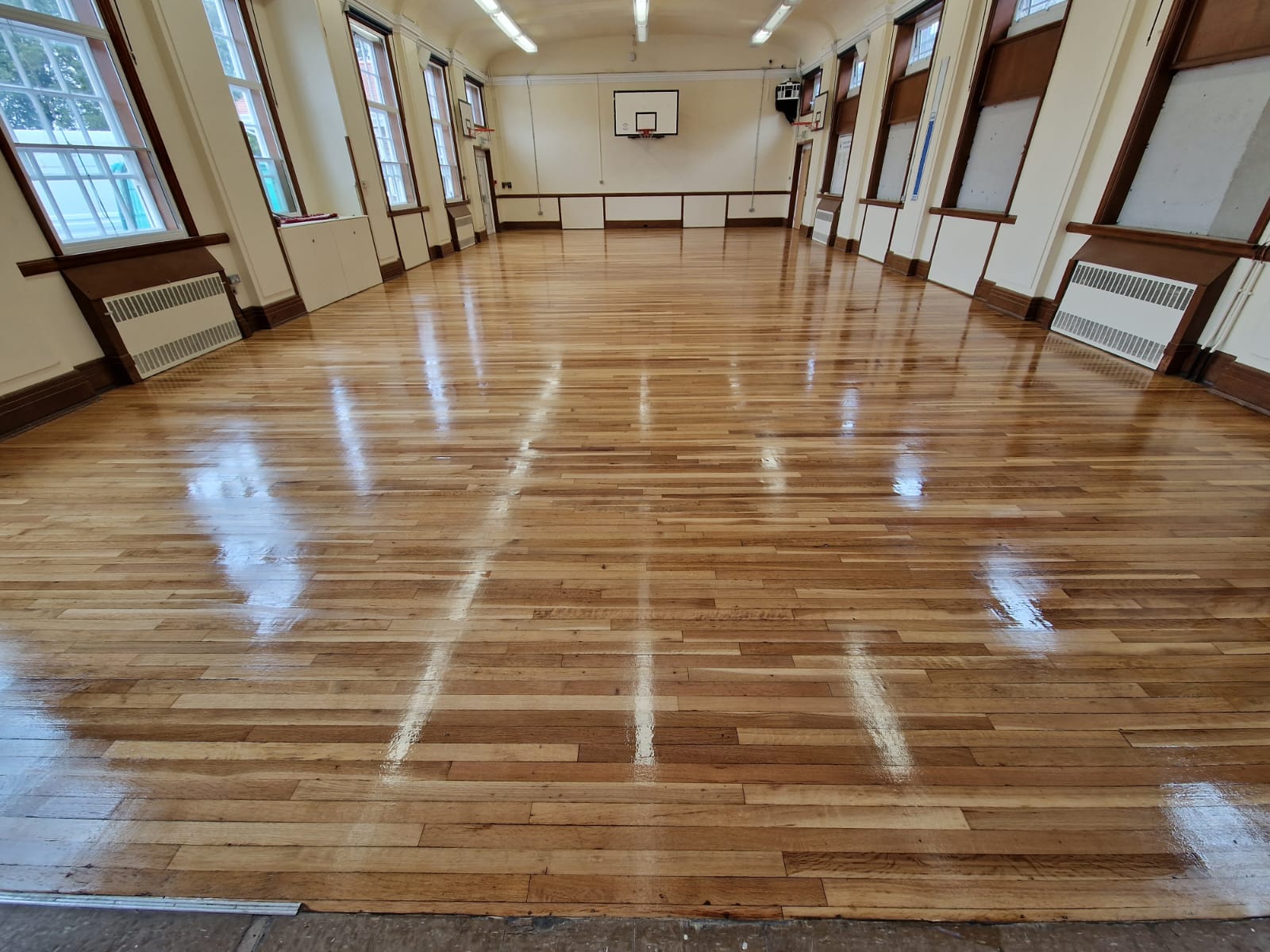
Commercial Hall Floor Refurbishment

Commercial Floor Sanding in Gloucestershire Schools, Halls and Pubs

Schools account for a large share of the timber floors across the county, and they come with a fixed calendar. Assemblies, dinner sittings and PE lessons keep a hall busy all day, so the machines can only come in once pupils have gone home for a long break: August for a complete sand, or occasionally a half-term week for a quick maintenance coat. Those weeks fill quickly, so the sensible approach to commercial floor sanding in Gloucestershire schools is to agree the scope in spring and have the dates fixed in the diary long before the last day of term. Our school floor sanding is planned around fast-curing finishes so the surface is hard enough for caretakers to bring chairs and staging back before pupils return.

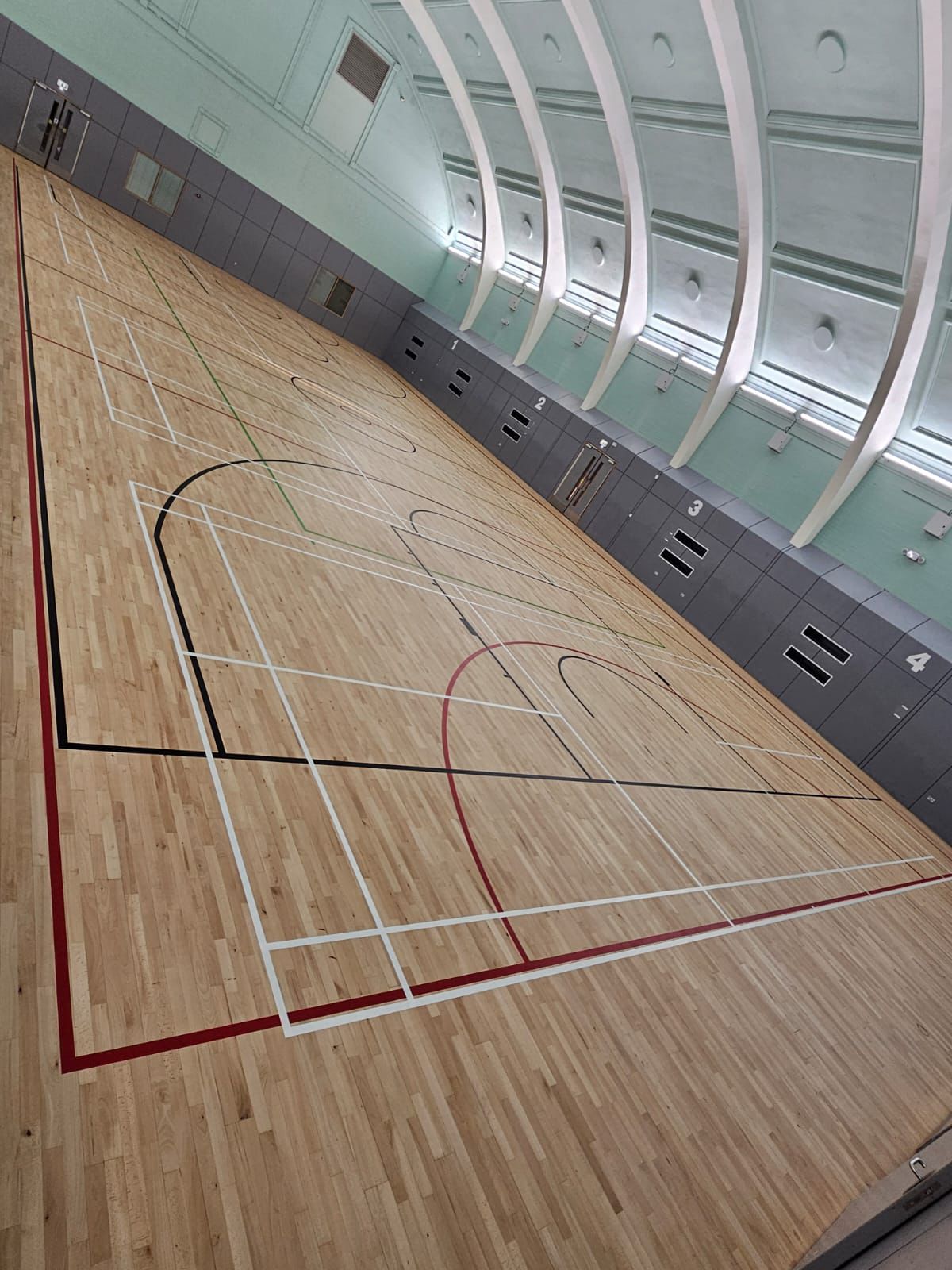
Most older school halls are maple strip or oak woodblock, and the two behave differently under a machine. Pale maple is hard and unforgiving. Rushed work leaves circular swirls that glow under hall lights, so each grade of paper has to erase the marks of the grade before it, and a planetary machine gives the surface its final smoothing. Hall woodblock from the mid-twentieth century usually sits in black bitumen adhesive. Warmed by friction, that tar turns tacky and loads the abrasive within seconds. Blocks that rock underfoot are therefore prised up first, scraped clean on the back and stuck down again in new adhesive. For PE the finish needs grip as much as hard wear. A two-component lacquer made for sports use provides both, and the sheen is kept moderate, because a high gloss throws glare under hall lighting and can feel slippery to children in plimsolls.

Court markings are the other half of a hall floor. We paint badminton, netball and other courts ourselves to governing body dimensions, setting the lines between coats so they sit inside the lacquer rather than wearing on top of it. Leisure centres and clubs get the same treatment through our sports hall floor sanding service.

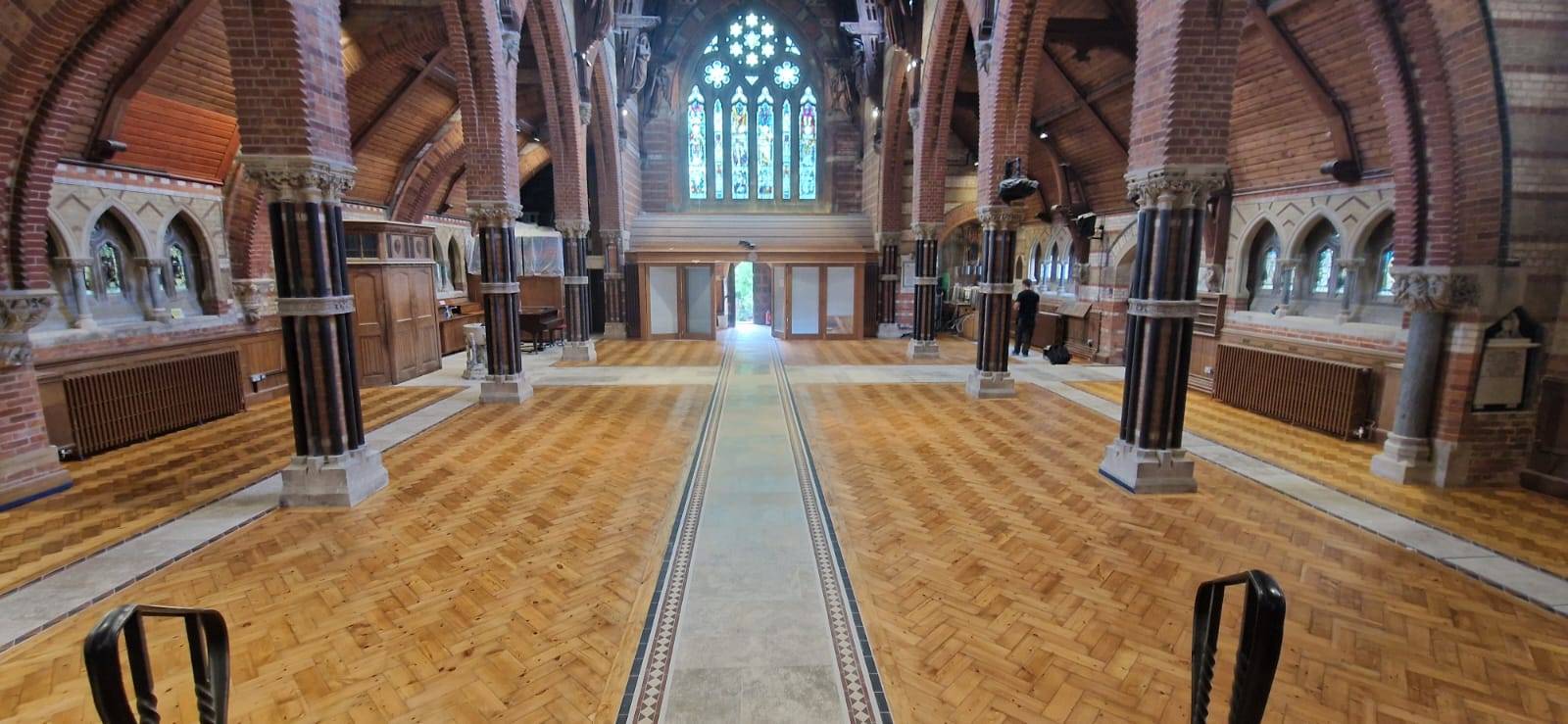
Market-town pubs and restaurants set their own deadlines. We start after last orders or on the weekday the kitchen is closed, and whichever area is being treated has to be hard enough for chairs and diners by the time the doors reopen. The strip in front of a bar takes the worst of spilt drinks and stool legs, so it is given extra coats. Restaurant floor sanding and shop floor sanding both work round trading hours in this way. Governing bodies tend to want the safety file first. A written method statement, a copy of the insurance certificate and referees from past jobs can go to the school office well ahead of any decision on dates. Offices, churches and community halls come under the same commercial floor sanding service.

Wide Boards, Open Gaps and Creaking Joists

Before a sander touches the surface, the floor has to be sound, and in older Gloucestershire houses that usually means three jobs: replacing boards that are split or rotten, closing the gaps, and quietening the creaks. Boards fail for predictable reasons. In Gloucestershire houses the usual culprits are a heating engineer’s access hatch refitted with odd screws, a slow drip from a radiator tail, beetle damage along the softer sapwood, or splits running out from nails driven close to a board end. Each of these is put right through our wooden floor repairs before sanding starts, since a board let in afterwards almost always ends up a fraction proud of, or below, everything around it.

Matching is the hard part in old houses. Many Cotswold and Victorian floors were laid in imperial widths, around seven or nine inches for older pine and wider still for elm and oak, and modern timber is neither the same size nor the same colour. We keep a stock of reclaimed boards at the workshop near Wellington for this reason, and our floorboard replacement draws on it so that a new piece has the right grain, age and thickness once it has been sanded with its neighbours. Where no close match exists, one common approach is to take a board from inside a cupboard or beneath a fitted unit, move it to the visible spot, and put the reclaimed piece where nobody will see it.

Gaps come down to seasonal movement. Boards shrink in winter when heating dries the air and swell again in late summer, so a gap filled the wrong way cracks out within a year. Wide openings in pine or oak are best closed with tapered strips of the same timber, glued to one board only and trimmed level, so each strip travels with its host board through the year. Narrow cracks can take a filler made by blending resin with fine dust collected from that same floor. Our gap filling uses whichever suits the width and the timber, and a draughty Victorian ground floor over a ventilated void will always do better with slivers than with filler.

Creaks usually come from a board moving on a loose nail or rubbing against its neighbour. Old cut nails lose their grip as the wood around them wears, and refixing with screws into the joist, or slipping a packer under a joist that has dropped, silences most of them. A squeaky floor repair is far easier with the boards bare, so it makes sense to deal with it while the room is empty. Deep gouges and scorch marks are handled at the same stage, and wood floor scratch repair on a floor that only needs local attention can sometimes avoid a full sand altogether.

Floor Sanding Essex
parquet floor restoration near me

Parquet Blocks, Cottage Stairs and the Finish on Top

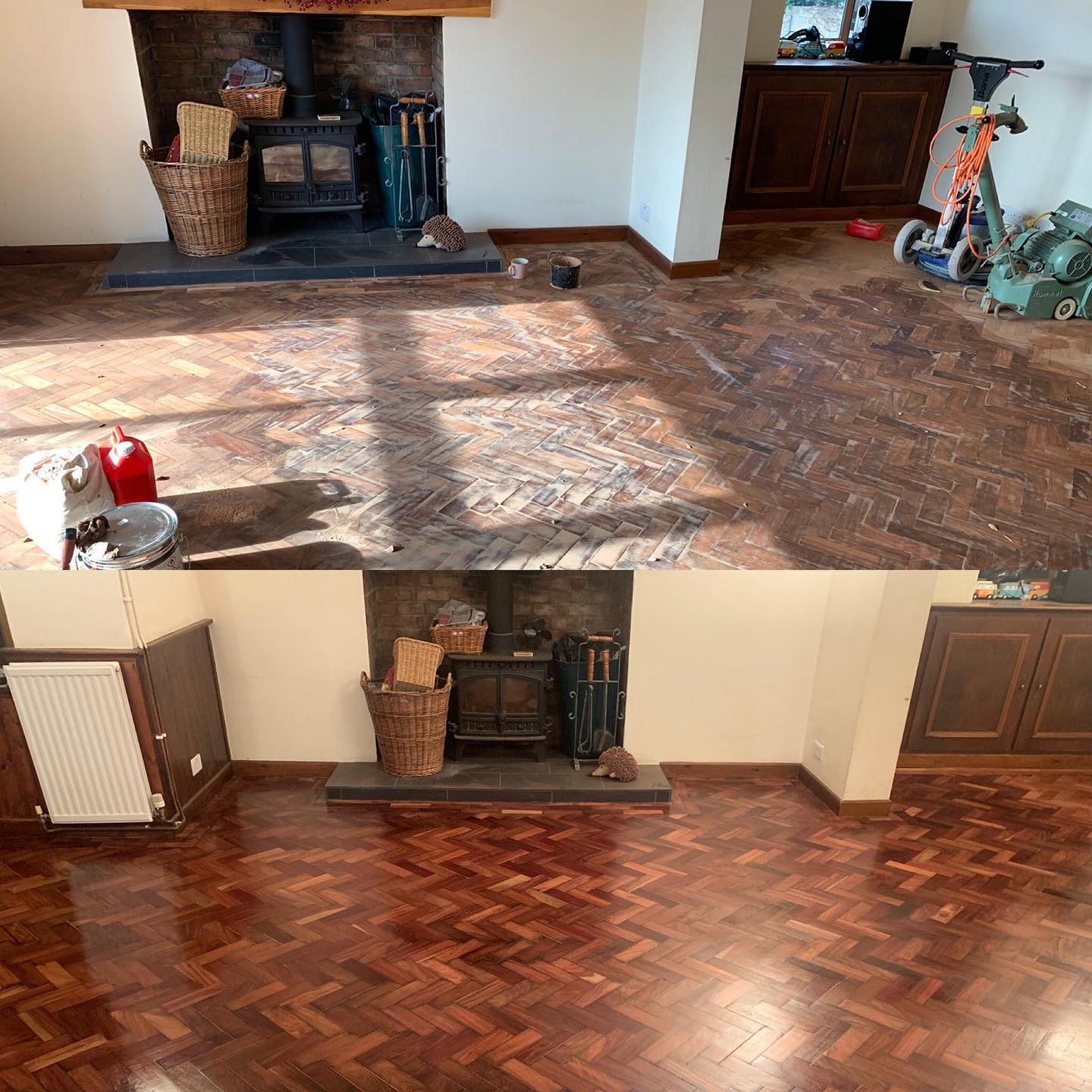
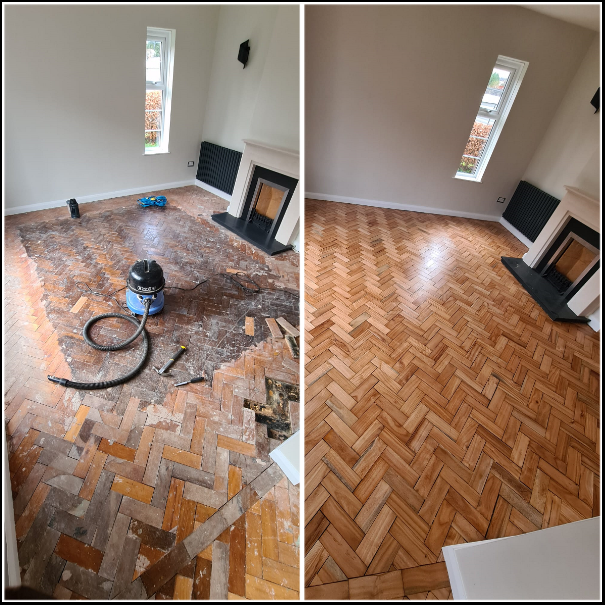
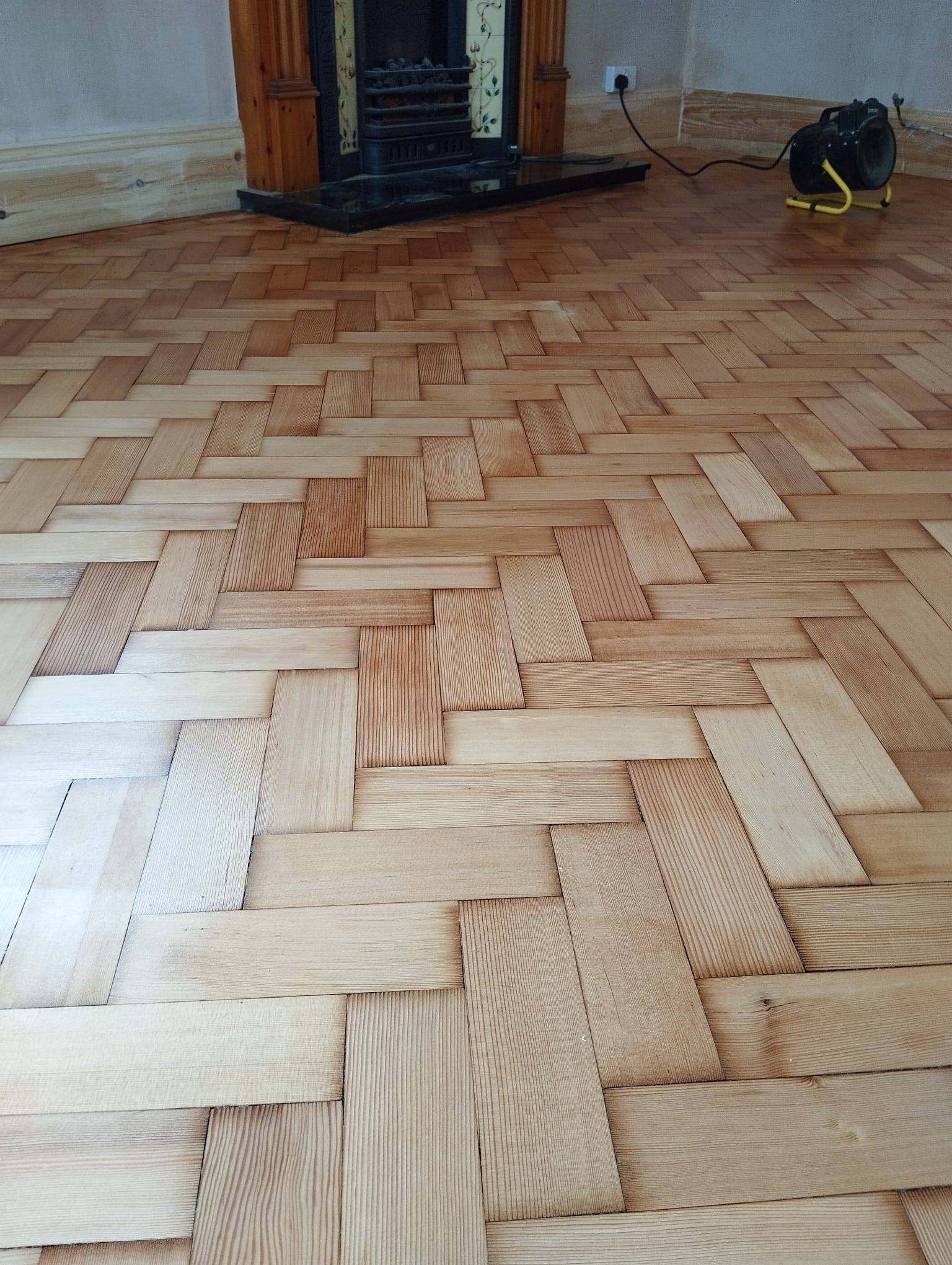
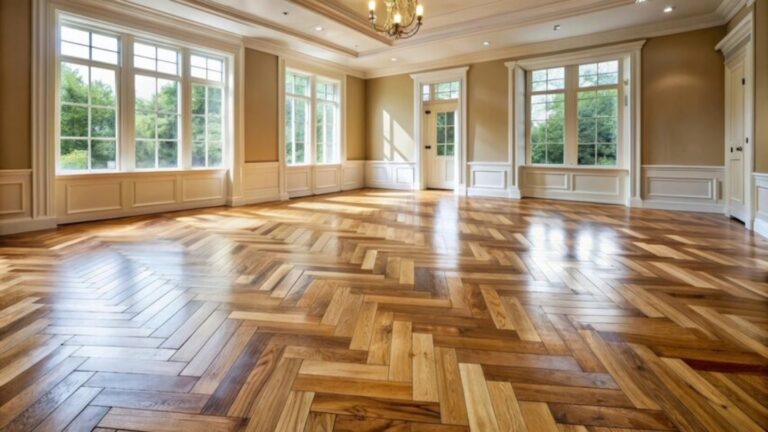
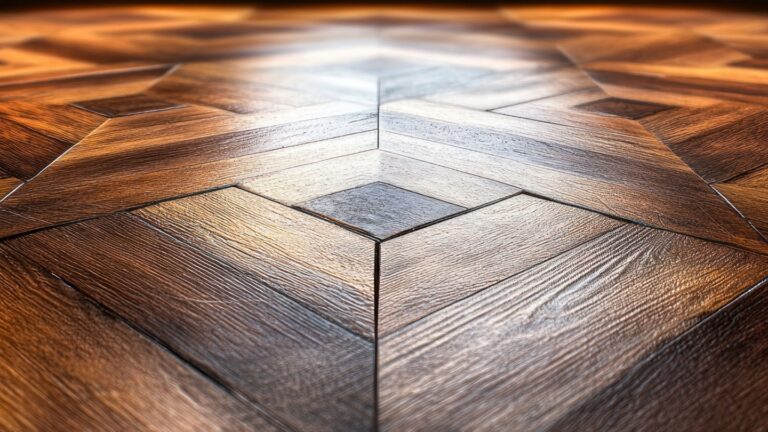
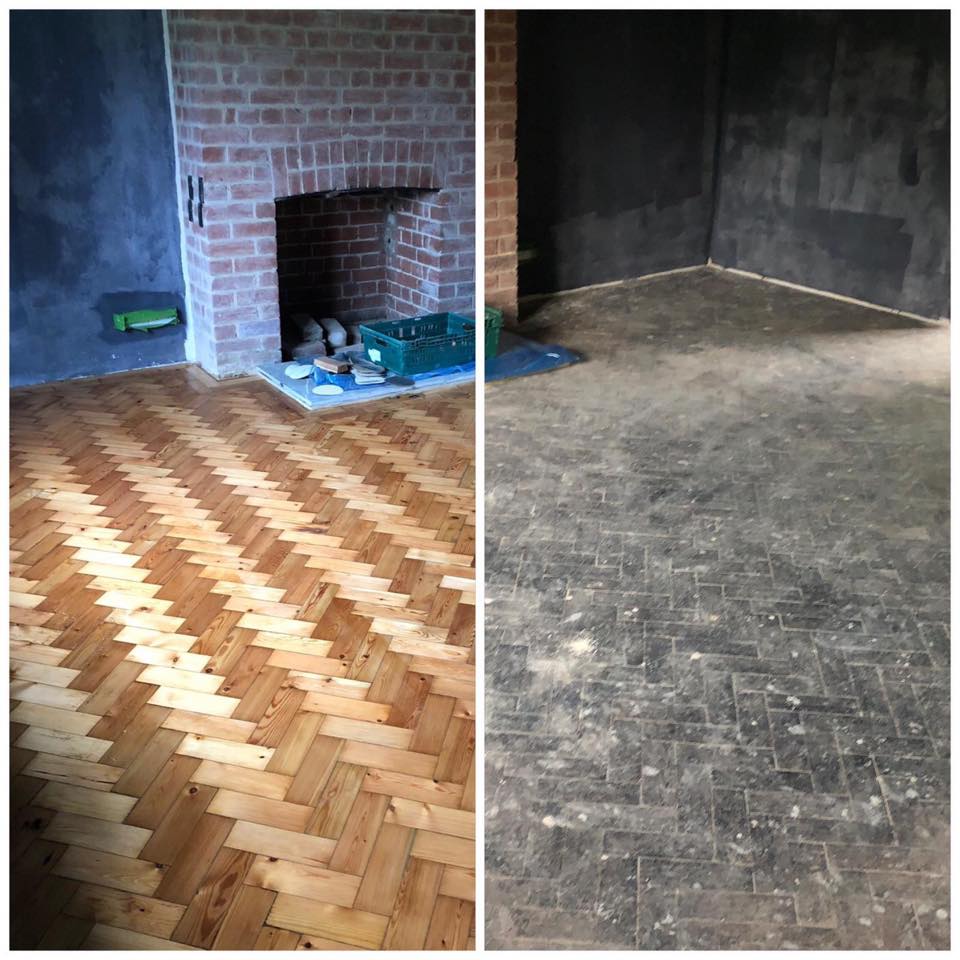
Woodblock floors turn up all over the county, most often in the halls and front rooms of 1920s and 1930s houses on the edges of Gloucester and Cheltenham, and in public buildings of the same era. Many have spent forty years under carpet and come up dull but structurally fine. Herringbone parquet laid in bitumen is sanded with the belt running diagonally to the pattern, so that blocks pointing both ways are cut evenly, followed by finishing passes with a multi-head machine that removes the cross-grain scratches the belt leaves behind. Tapping across the floor reveals the blocks that have lost their grip. They go back down on fresh adhesive, and any vacant spaces in the herringbone receive salvaged blocks of the same wood and size. Our parquet floor sanding service covers block, herringbone and mosaic panel floors alike.

Stairs in Cotswold cottages are often steep, narrow and winding, with treads worn into a dip by generations of feet. Full-size sanders are useless on cottage flights. On a winding Cotswold flight, stair sanding comes down to hand-held machines, a triangular detail head for the risers and plenty of careful scraping; the bullnose of each tread gets the lightest touch of all, since centuries of boots have often thinned it. Painted strings and spindles are a common find. In older houses it is sensible to test old paint for lead before sanding it, because dust from lead paint is a real hazard to anyone breathing it.

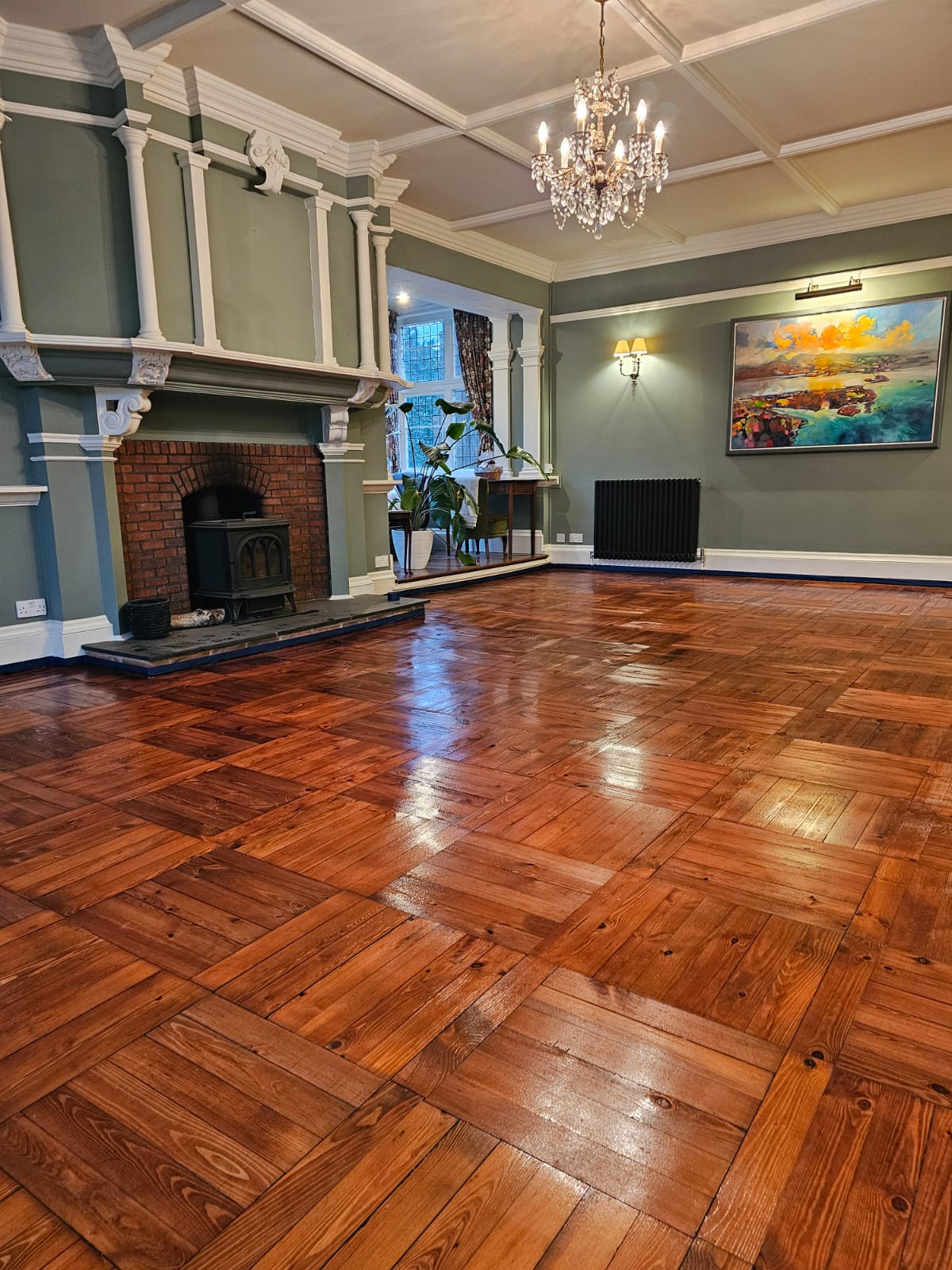
Then the finish. Pale, dry-looking Cotswold oak suits a natural oil or hard wax oil that keeps the surface matt and is easy to touch up later, and our wood floor oiling uses both. Hallways, kitchens and any room shared with a dog do better under lacquer: water-based for a clear look that will not yellow, oil-based for a warmer tone on pine. For the hardest-working rooms, wood floor sealing with a two-pack lacquer gives the most durable surface available. Colour changes are possible through wood floor staining, and because pine drinks stain unevenly while oak takes it well, every stain is tried on a sanded patch of the owner’s own boards before a whole room is committed. Wax remains the traditional answer for some period floors, and wood floor waxing gives a soft sheen that builds over time, while a polished wood floor finish suits rooms where depth of shine matters more than resistance to grit.

Looking After the Floor, New Installations and Arranging a Visit

Once the last coat goes down the floor needs time. Keep everyone out for the first day. On the second day the household can usually cross a lacquered room in socks. Sofas, wardrobes and the dining set belong in another room until the third day or so, and should come back with felt fixed under every foot. Rugs are better left off longer still, because a lacquer that has not fully cured can mark under a rubber backing. Day-to-day care is simple: sweep or vacuum grit away, and wash occasionally with a barely damp mop and a neutral cleaner made for timber. Keep steam cleaners and household bleach away from it altogether.

When traffic lanes start to look grey but the wood itself is still covered, a fine abrasive pad and a single extra coat bring the surface back. Our wood floor buffing does exactly that, and in a family home it can stretch the interval before the next full sand to something like eight to ten years, depending on how hard the floor is worked. Busy commercial floors in pubs and halls generally need the full treatment more often, typically after four or five years.

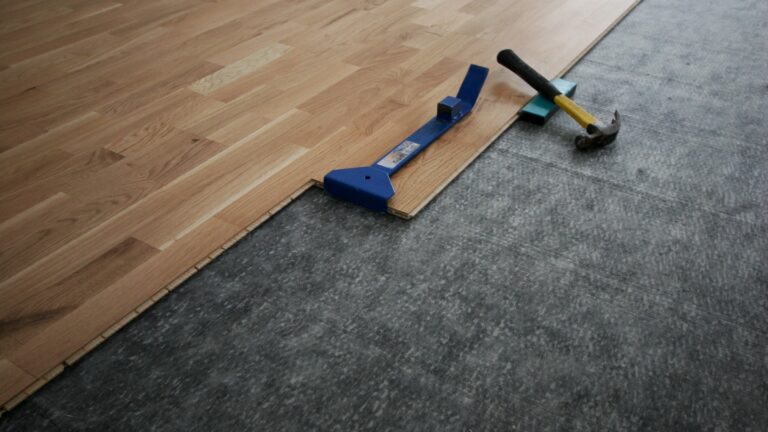
Not every floor can be saved. Occasionally the tongues are already showing from past sanding, or a room was concrete and carpet all along. For those rooms a new timber floor is the answer, and we can either source and lay it ourselves or just supply the boards to a builder you already use. Our wooden floor installation covers solid and engineered ranges, Junkers and Bona among them, and any new timber should spend time in the room to acclimatise before it goes down, particularly in a stone house where the air can be cooler and damper than the warehouse it came from.

To get started, photograph the room from the doorway so the whole floor is in view, then take one close shot of the boards near the window where the light shows up the surface. From those two pictures we can usually tell whether the job is mainly sanding, mainly repair, or a mix. A free visit lasting roughly thirty minutes follows, measuring the timber and checking the void, and the written quotation sent afterwards lists sanding, repairs and finishing as separate items and is not revised unless the job itself alters. Someone is in the office from 8am until 6pm on weekdays, and Saturdays are possible if agreed beforehand. Email the pair of photographs to info@ryansrestoration.co.uk and mention the town or village. Callers are welcome too on 01823 674562. For places beyond Gloucestershire, the other areas we travel to are set out on a separate page.

Parquet Flooring Restoration

Questions From Gloucestershire Homeowners, Schools and Landlords

Yes. We are in Gloucestershire most weeks, reached up the M5 from our base near Wellington in Somerset. We work in the Cotswold towns and villages, the Stroud valleys, Gloucester, Cheltenham, Tewkesbury and the Forest of Dean side of the county, for households as well as schools, churches and commercial premises. If you are unsure whether your village is included, ring and ask.

Not entirely, and usually it should not. Wide elm and oak boards in old cottages can be surprisingly thin once the worn areas are measured, and grinding them level would remove timber they cannot spare. The usual aim is to clean back to fresh wood, ease the worst ridges and leave the gentle hollows that show the floor’s age. Thickness is checked at the survey before anything is agreed.

Hold off until the reason is known. Mustiness together with cupped boards usually point to a damp void with poor ventilation, often from blocked or buried airbricks. At the survey a pin meter separates boards that are actually holding water from ones that are simply old and grubby. Sorting the ventilation first and letting the timber settle gives a flatter, longer-lasting result than sanding a floor that is still moving with the seasons.

In most cases, yes, provided the dates are booked well ahead. A hall needs several days for sanding, coats of lacquer and line marking, and fast-curing two-component finishes let it take chairs and equipment again before term begins. Because we mark the courts ourselves between coats, there is no second contractor to fit in. Spring is the right time to fix summer dates.

Usually. We keep reclaimed timber at our workshop, including older oak and pine in imperial sizes, so a replacement can be chosen for width, depth and grain. Once it has been sanded and finished alongside the original boards, a well-chosen reclaimed piece is very hard to pick out. Where nothing suitable is available, a board from a hidden part of the same room can be moved instead.

Nearly always. Interwar woodblock is often solid hardwood with plenty of thickness left for sanding, and carpet tends to have protected it from wear. Loose blocks can be re-bonded, stains sanded out and missing blocks replaced with matching ones. Underlay sometimes leaves rubber residue or adhesive on the surface, but that generally comes away during the coarse first pass with the sander.

A lacquer rather than an oil or wax. Claws scratch every finish to some degree, but a hard lacquer shrugs off scuffs and splashes from the water bowl far better. Two-pack lacquer stands up to paws best of all, and keeping the sheen low means the inevitable fine scratches catch the light far less than they would on gloss. Keeping claws trimmed and putting a mat under the bowl will help the surface last between maintenance coats.

Allow around twenty-four hours before walking on it in socks. Bookcases, beds and tables go back after another day or two, carried rather than pushed across the new surface, and every foot wants a felt pad. Hold back rugs for about a week, since a finish that is still curing can be marked by rubber or latex backing. Oiled floors follow similar timings, although they cure more slowly in a cold room, which is common in stone cottages.

Usually, with planning. A church floor can be tackled in sections or during a quiet week in the calendar, and a village hall can be fitted between bookings using finishes that cure quickly. Parochial church councils and hall committees normally want to see documents before voting on dates, and a method statement and insurance certificate can go to them at an early stage. Use our enquiry form to start the conversation.